

Look Back in Horror by Kathryn Foxfield
29/6/2020
 Today we welcome Kathryn Foxfield to the site with her article on her discovery and journey into becoming a fan of horror fiction. Kathryn Foxfield is a germ-loving scientist turned writer. She’s the author of a popular science book about tuberculosis but her first love is children’s literature. She writes young adult and middle grade novels about monsters, magic and mental health. She lives near Oxford with her partner, 4 year old daughter and the world’s clumsiest cat. Her debut novel, Good Girls Die First, was selected by teen readers for the Write Mentor Novel Award shortlist. My teenage years were an Impulse body spray-scented haze of bad fashion choices, dead Tamagotchis, and crushing self-doubt. So perhaps it’s no surprise that my chosen brand of escapism was horror. And these early dabblings in the genre continue to set the scene for my own writing, some thirty years on. Back in the 1990s, the YA market was yet to experience its Twilight-flavoured explosion and books aimed specifically at teens felt few and far between. Aged nine or ten, I made the leap from the furry heroes of the Redwall series to the furry corpses in Pet Sematary. Thanks for the lifelong nightmares, Mr King. And then I discovered Point Horror. Introduced by Scholastic in the UK in 1991, Point Horror was a series of titles written by the likes of RL Stine, Diane Hoh, and Richie Tankersly Cusick. They were short, glossy, and a revelation to the teenage me in that they didn’t centre middle aged men. Instead, there were crushes, stalkers, and cheesy taglines. Think: April Fools—Revenge is no joke and The Lifeguard—Don’t call for help. He may just kill you. But then the series died out and was presumably buried in a shallow grave in the woods. Necromancy rarely ends well for those involved, but I found myself in a nostalgic mood. So I dug up a few of the books for old time’s sake. And like many aspects of the 1990s, they probably only make sense to someone who was there. The plots aren’t exactly well-developed and there are some issues with portrayal of female characters and a lack of diversity. Yet, the cheesiness! And the tropes! And deranged cheerleaders! As much as they would struggle to meet the expectations of modern day teens, Point Horror got a whole generation into reading and ignited a love of horror in my own black, shrivelled heart. For me, Point Horror occupies the same place in history as weekly trips to the local Blockbuster to pick out a family film. It was within these yellow and blue walls that I discovered another gem of the 1990s—the trashy teen movie. The cinematic equivalent of the Point Horror books, only more. And instead of relying on tropes, they smashed them to pieces with a blood-soaked axe. Unlike earlier horror films, teen flicks such as Scream, The Craft, and The Blair Witch Project featured well-developed female characters that the teenage me actually cared about. Gone was the sexually promiscuous girl who died in the first act. And the ‘final girl’ had been granted a reboot in that she no longer had to be a morally superior virgin in order to survive. The Craft, in particular, had a deeper message about society’s fear of female sexuality and how attitudes of the day hadn’t moved on from the 16th century witch hunts as much as they should have. For a teenager who struggled to know how she fitted in, this film was everything. In fact, the books I write today all revolve around embracing the person you want to be, even when that means defying gender roles and embracing your outsider status. My debut novel, Good Girls Die First, is a love letter to the horrors that shaped me as a teenager. Point Horror, teen movies, and trying to decide who you want to be in a world that doesn’t always make sense. Some things never change.  Welcome to the most gripping thriller of the year: hugely entertaining, high-octane and read-in-a-single-sitting.Mind games. Murder. Mayhem. How far would you go to survive the night? Blackmail lures sixteen-year-old Ava to the derelict carnival on Portgrave Pier. She is one of ten teenagers, all with secrets they intend to protect whatever the cost. When fog and magic swallow the pier, the group find themselves cut off from the real world and from their morals. As the teenagers turn on each other, Ava will have to face up to the secret that brought her to the pier and decide how far she's willing to go to survive. For fans of Karen McManus' One of Us is Lying, Agatha Christie's And Then There Were None and films like I Know What You Did Last Summer.   GHOST STORIES BY SIMON R GREEN
26/6/2020
 My most recent Ishmael Jones mystery, The House on Widows Hill, features a murder in a haunted house. There’s a telling moment when one of the characters asks everyone to tell their own personal ghost story. Because everyone has one. We can and should argue about exactly what it is people see when they see ghosts, but you can’t say people don’t see ghosts; they always have. The venerable historian Pliny wrote about a haunted villa more than two thousand years ago. Encounters with ghosts have been recorded in all countries and cultures. Here are three of my own experiences, which appear in my novel. Because writers never waste good material. A few years ago, I woke up in the early hours of the morning. An invisible figure was leaning over me, holding me down. I couldn’t see anything, but I could feel its weight. Feel its hands on my arms, the individual fingers as they dug into my flesh. But I wasn’t scared; I was furious. I fought the invisible presence and threw it off. The sense of a presence was gone, and I thought: I know what that was! That was sleep paralysis! When we’re sleeping, a part of our brain paralyses us so we don’t physically act out what we do in dreams. But sometimes we wake up too quickly and, in our half-awake state, the brain manufactures an explanation; like an invisible presence holding us down. Going back some thirty years, I used to work in my father’s shop in Bradford-on-Avon. It was very old, parts of it dating back to the Thirteenth Century. There was a ground floor for the shop, and a second floor for stock. And sometimes, when I was on my own, I would hear footsteps moving about upstairs. But when I went up to check, there was never anyone there. It took me ages to work out what was going on. The shop had a wooden floor, connected by wooden stairs to a second wooden floor. I was hearing my own footsteps that had travelled up the stairs and reverberated in the upper floor. Just a delayed echo; not a ghost at all. Go back still further, to when I was about six years old. I woke up in the early hours of a summer morning. The room was full of light. I was just lying there, waiting to go back to sleep, when a dark human shape walked out of the wall to my left, crossed in front of my bed, and then disappeared through the right-hand wall. At that age, you tend to accept things. I waited to see if it would show up again, and when it didn’t I went back to sleep. In the morning, I told my mother what I had seen. She said it must have been my father, looking to check I was all right. I said no. Then it must have been a dream, she said. She was starting to sound a bit impatient, so I just got on with my breakfast. What was it, really? I have no idea. Ghosts are only dangerous if you let them haunt you.  Ishmael Jones investigates a haunted house . . . but is haunted by his own past in the latest of this quirky paranormal mystery series. "That house is a bad place. Bad things happen there . . ." Set high on top of Widows Hill, Harrow House has remained empty for years. Now, on behalf of an anonymous prospective buyer, Ishmael and Penny are spending a night there in order to investigate the rumours of strange lights, mysterious voices, unexplained disappearances, and establish whether the house is really haunted. What really happened at Harrow House all those years ago? Joined by a celebrity psychic, a professional ghost-hunter, a local historian and a newspaper reporter, it becomes clear that each member of 'Team Ghost' has their own pet theory as to the cause of the alleged haunting. But when one of the group suddenly drops dead with no obvious cause, Ishmael realizes that if he can find out how and why the victim died, he will have the key to solving the mystery. Simon R. Green was born in Bradford-on-Avon, Wiltshire, where he still lives. He is the New York Times bestselling author of more than fifty science fiction and fantasy novels, including the Nightside, Secret Histories and Ghost Finders series, and eight previous Ishmael Jones mysteries, including Into the Thinnest of Air, Murder in the Dark, Till Sudden Death Do Us Part and Night Train to Murder. WEBSITE LINKS Personal website: www.simonrgreen.co.uk Publisher website: http://severnhouse.com/book/The+House+on+Widows+Hill/9108 Twitter: @TheSimonRGreen Goodreads: https://www.goodreads.com/author/show/41942.Simon_R_Green  the heart and soul of horror promotion websites "that nothing about this film is subtle. It’s a textbook example of a series of messages being crammed down your throat." 1979 brought the beginning of three major horror franchises (Alien, The Amityville Horror, Phantasm), iconic cult movies (Dracula, Driller Killer, Zombie or Zombi 2), and masterful entries from great auteurs (The Brood, Nosferatu the Vampyre). However, lost from this list is one of the most ridiculous eco-horror movies ever made… Prophecy (not to be confused with The Prophecy,1995). Prophecy tells the story of Dr. Robert Verne (Robert Foxworth) and his wife (Talia Shire) who travel to Maine, USA to investigate the impact of a lumber company on the local ecosystem. What they find is a mutated bear hellbent on killing any human that crosses its path. Despite sporting a seasoned cast and crew with some decent effects for the time, Prophecy is either forgotten, chalked up to an Alien or Jaws knockoff, or referenced in jest because of a kill involving an exploding sleeping bag. Prophecy throws a laundry list of hot button issues that you cannot escape. One story is about pollution from a major company. The other is the conflict between the Native Americans and lumberjacks. Even the relationship between the Verne and his wife is based around her deciding if she should get an abortion, and then panicking because she ate fish that had mercury in it. Within the first fifteen minutes we are presented with gentrification, classism through race in the inner cities, and healthcare. The dialogue itself is so on-the-nose with Verne’s stance on these topics that there’s no chance for confusion. By now I assume you understand that nothing about this film is subtle. It’s a textbook example of a series of messages being crammed down your throat. The in-your-face commentary of Prophecy is prime for a discussion that has spread across the horror community. Though horror seems inherently political, can it be overt in its message? Did Prophecy’s reliance on “preaching” these themes lead to its failure at engaging the audience through storytelling? Does a horror movie require that buffer between theme/message and story? And if they are enjoyed is it for the original intention and not because of a ridiculous bear and a sleeping bag kill? Right before the release of 2019’s Black Christmas, a film critic/TV personality wrote the following controversial tweet in response to an article discussing the film’s overt feminist themes: “What I love about directors from the 70s and 80s is that they had no political ax to grind, no message, no social justification for horror. It was just "get a load of this great story." I don't wanna be told how to watch a movie.” Sadly, any insightful discussion that could’ve been, was blurred by outrage because of its insensitivity or dismissed as an ignorant baby boomer. Night of the Living Dead and The Texas Chainsaw Massacre have been referenced as a response of politics in horror. Comments were made that those directors didn’t have the internet which has allowed for more explanation of their work. But until their deaths, both George A. Romero and Tobe Hooper would avoid discussing themes (if they could) despite universal consensus of what they were. This approach can be seen across most of the directors and writers of that time, even to this day. In fact, Texas Chainsaw, NOTLD, They Live, The Fly, The Amityville Horror, The Birds, to the more socially driven works of Jordan Peele (Get Out, Us) and Rod Serling (The Twilight Zone) can be enjoyed without understanding the message. It’s difficult to avoid the messages from Peele and Serling but this is where the concept of a “buffer” comes in through sci-fi or fantastical elements. The use of Aliens, underground societies, characters turning into horse people, even transferring a brain into another body acts as a level of separation from the very real topic that it’s commenting on. Proof of this belief can be found in constant “Horror Twitter” comments of a person stating, like comedy, “I don’t like politics in my horror.” 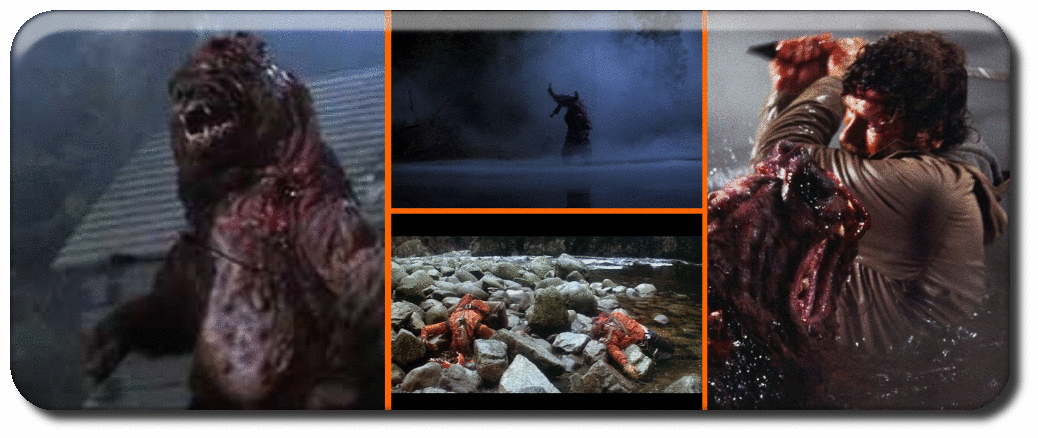 The idea that “story is king” and “if you want to send a message, use Western Union” (commonly credited to Samuel Goldwyn and Moss Hart), has been used in some form across races, genders, cultures, and ages. I’ve listened to countless horror podcasts and watched many vlogs that when analyzing a movie, it’s inferred that “the audience’s reaction is what matters, not the director’s intent.” I’ve read think pieces, describing how the more a director discusses their film the more the critic dislikes it. My memorable connection to the phrase is during a screenwriting class where a student asked David Lynch if he had any advice on pushing a message on an audience. Now Mr. Lynch is not a poster child for narrative structure, but even he believes themes or messages are for the audience and scholars as each viewer has their personal interpretation based on their own life experiences. A director or writer telling how you should or shouldn’t interpret the piece takes away the individualized relationship and discourse that art provides. Maybe the critic’s crude delivery was outdated. Or maybe he’s just another person that should’ve given his tweet a read over before hitting send, who knows. In Prophecy’s case the major theme is based in environmentalism, which for the average horror or sci-fi fan, I’m sure you’ve come across several plots of pollution/toxic waste mutating something causing destruction (Godzilla). Most of these will then feature a more personal story, Boon Jong-ho’s The Host (2006) starts with the pollution creating a monster and then becomes a family drama at its core. Street Trash, a shopkeeper finds and sells bottles of toxic liquor and then it’s about… something. You get the point. So, is Prophecy just a flawed movie or can the lukewarm reaction be the result of its multiple messages being too much on an audience wanting to participate in escapism with a mutated bear? What sets it apart from the praise that The Host received? Other potential issues that may have compromised John Frankenheimer’s film. Alcoholism lead him to making decisions that he agreed ultimately hurt a film with far more potential. Alien was released only a few weeks prior, stealing the spotlight. It should be known however, that Prophecy made roughly $22.7 million off a $12 million budget, covering the cost with profit. Yet even the audiences that enjoyed Prophecy on initial release, had criticism dealing with the “trivial” story, “cardboard characters,” not a strong payoff for all the buildup, and not scary. Tim Pulleine said, “Once the narrative gets properly under way, the ecological sub-text virtually drops out of sight. As, even more confusingly, does the sub-plot about the heroine's pregnancy, leaving only a surfeit of creature-on-the-rampage hokum.” Gary Arnold stated, “essentially an indoctrination course in liberal guilt, shabbily disguised as a monster melodrama.” One of the more positive reviews from Patrick Naugle couldn’t avoid the “message” with, “In an age of self-referential and cynical Scream horror movies and Silence of the Lambs knock offs, Prophecy has a certain something that just can't be denied. Prophecy even contains a MESSAGE (re: don't mess with Mother Nature or you'll be sorry), which is more than I can say for most horror movies produced today. Is it scary? No. Vastly amusing? You bet your bottom dollar.” “Genre” films have the ability to examine an issue without ever having to discuss said issue. As exceptional as 12 Years a Slave is, we know it’s about slavery and race in the United States, it’s not going to be a commentary on Cold War hysteria. It also requires a different mindset. You’re not going into Slave expecting a creature-feature and vice versa. So, was it hard for horror audiences to adjust to a more message-driven movie or was it like Frankenheimer believed? Potential to be great if it was handled better. As a fan of the movie (and not because of its silly elements) I want to believe in the latter and that something amazing just wasn’t reached. But other message-driven examples pop up like 2018’s Winchester, that received criticism of not being effective because it spent too much time discussing gun control. The Black Christmas remake received similar commentary from reviewers such as Kimberley Elizabeth, “The feminism-heavy message of the film comes off more manufactured than genuine, and too blatant to be anything but an orchestrated cash-grab…” Could these have worked without going back to the writing stage and toning down the “politics”? I don’t know, I thought I’d have a better sense by the end. However, evidence suggests it doesn’t matter how experimental the piece may be or how important the message, because this is a storytelling medium. Once something else is given priority such as, message/theme, special effects, new technology, jump scares, gags, or even star power, there’s the risk of an audience not connecting. I believe we all can agree, “connection” is the most important aspect when creating content meant to be viewed by as many people as possible.  THE HEART AND SOUL OF HORROR REVIEW WEBSITES The sequel to the seminal The Last of Us - the 2013 Naughty Dog PlayStation game - is imminent/already released, depending on when you’re reading this, so what better time to revisit and remind ourselves of the original? I'm holding my breath and crouching behind a desk. There's a Clicker in the room, scarred legs shuffling awkwardly as he stumbles around looking for me, his head now a bloated and blind fungal mass. It’s acting on pure animalistic instinct, years of infection having removed any vestiges of humanity he once possessed. A guttural tick echoes from his mouth as he claws at the air in desperate frustration. I'm about to breathe a sigh of relief when he shuffles on me by but then I hear it - the sound of one of those less infected but as deadly nonetheless who has spotted me - and realise I'm going to run for it. I've only made it two or three steps before the Clicker hears me and screams after me in pursuit. Shitshitshitshitshitshitshitshit My vision is fading from the blood loss as I slide down behind cover, hurriedly trying to craft myself a medical kit from the few scavenged remains I've pocketed. Bullets ricochet off a nearby wall as the soldiers advance from behind their cover, suspecting I'm out of ammo. Which I am. I could have made a Molotov cocktail with the same kit, but it's too late for that now. I have no time so run towards one of them in desperation, my fist swinging towards his face. Shitshitshitshitshitshitshitshit The Last of Us is a survival horror game set 20 years after an apocalypse has devastated the Earth. And for once it's not World War III or Zombies (in as much as 28 days sort of isn't a zombie film), but in a world where the fungal insect disease Cordyceps has spread to humanity, making a mammalian leap as in the excellent Mike Carey novel The Girl with all the Gifts. The remaining surviving populace have been herded into Military controlled quarantine zones. The prologue - which introduces you to the lead character of Joel - is one of the best openings to a videogame I've encountered since the original Prey and Bioshock. It's very reminiscent of the opening to Zack Snyder’s 2004 remake of Dawn of the Dead in that it does a great job of introducing something quite horrific into a typical domestic scene - it's powerful, well written, perfectly paced and - most unusually for a video game - is phenomenally well acted. I haven't been as moved by watching anything that took such a short period of time since Pixar's Up. 20 years later sees your character Joel eking out an existence as a smuggler, skilled in the art of survival and travelling between the quarantine zones. It’s a living, of sorts. And in the introduction - which does the great thing of being a tutorial that doesn't feel like a tutorial - sees you and your partner Tess reluctantly press-ganged into a most unusual smuggling operation; To escort a young girl named Ellie - with a very important secret - out of the city and to safety.  What follows is a breath-taking journey across a plague ravaged America where the military who seek Ellie are almost as deadly as the disease-ridden infected who wander the wastes. You'll be forced to scavenge for every piece of equipment you can get your hands on - every piece of ammunition is scarce with value beyond compare, and you'll rarely be in a position where you can afford to plough dozens of bullets into an enemy to take him down. Yeah, yeah, yeah. So far, so video game. The survival horror genre has been done to death, so what makes this any different? Any seasoned gamer must have wandered across hundreds of post-apocalyptic landscapes fighting three dozen varieties of mutants/zombies/maniacs, etc. Well for once the script doesn't feel like it's been cobbled together by a couple of games designers who thought they were up to the task because they watched the Mad Max Boxset at the weekend. With music composed by a decent musician (Gustavo Santa Olalla) as opposed to somebody who was roped into the task because they had a Casio SA-46 keyboard in the attic which still had some batteries in. With the roles acted out by a decent cast instead of dragging people in from the street or getting a developer who was in the school’s performance of Oliver a decade ago. The Last of Us is an immaculately presented package. Originally one of the last big titles for the PS3, it was a perfect swansong for the console - a perfectly worded eulogy for what gaming can be if the ingredients and recipe are right. I'll go out on a limb and say that it's probably one of the best videogames I've played in the last 30 years. Nigh on perfection. A PS4 remaster soon followed, giving me the perfect excuse to play the game again from scratch. The film critic Roger Ebert wrote a brilliant yet contentious piece back in 2010 describing why he thought that videogames could never be art. It's a piece I don't necessarily agree with, but it's a shame he died - not least of which because I'd love to have known what he thought of The Last of Us. He probably still wouldn't admit it was art, but I think he'd have loved it as one of the closest links between cinema and gaming I've seen in a long, long time.  "After all we've been through, everything that I've done. It can't be for nothing." “Okay.” And with that single word spoken by Ellie, the screen fades to black and the end credits roll. After all that had happened, all we’d been through, she’d looked at me for reassurance. And I’d lied to her - and she knew but didn't mind. It was more convenient for us both to believe the lie, or the entire journey – all the friends we’d lost, the sacrifices we'd made, the horrors we'd seen from both the infected and what humanity had become – be they fungus-infected monstrosities or desperate cannibalistic survivors and the sheer barbarity that both were capable of – would all have been for nothing. It had been a couple of days since the end credits rolled and the last of the names scrolled up the screen, and I realised I’d been thinking about ending of The Last of Us a lot. Like the poor zombie ants infected by the Cordyceps fungus that the game takes its inspiration that are compelled to do nothing but climb towards the light and then die, the path of Joel and Ellie was inevitable – It was always going to end like that. Not with a huge boss fight in which Joel would emerge holding a vaccine aloft, declared as a hero and the saviour of humanity, but with the two of them blinking into the sunlight having finished the journey as very different people to those who had begun it. The infected are horrific, and chilling. There are those who haven’t been infected for long, those people who still have some semblance of humanity. They’re feral and murderous, with the Ophiocordyceps Unilateralis growths wrapped around their brain compelling them to perform inhuman atrocities. Unlike their more infected brethren, they’re quick and they’re noisy, shrieking aloud to alert others of your presence. Clickers are the worst and, like the fungal growth that drives them, prefer the dark. They’ re blind, the fungus within them expanded through long-empty eye sockets and mouths and they hunt by sound, their clicking acting as a rudimentary sonar. Once you’ve been spotted by one, probably best just to take your own life. It’ll be easier, in the long run. Never has a videogame put me through as many emotions as The Last of Us. Fear - Absolute fear. There is no sound quite as terrifying as the guttural click-clicking of a distant clicker as it tries to locate you, or the frenzied snarling of the infected as they hunt you in the dark. I haven't been as scared playing a computer game since zombie dogs bursting through a police station window in a Resident Evil nearly gave me a heart attack, and in more than one such situation I had to remind myself to breathe and blink. I'd relax with the characters in the all too rare situations when they too could relax. When for a few fleeting moments it wasn't about hiding and killing but about the fascinating growing relationship between a jaded killer and a young girl enthusiastic about her first trip into the world. I groaned and laughed with Joel as Ellie shared her dreadful jokes and awful puns. I felt genuine anger when I saw that young Henry had become infected but chose not to tell his companions, and anguish when his brother Sam took the horrible unthinkable step of taking his own life - anything but continue this horrible existence without Henry. Anger when the apparent friendship between Ellie and the survivor David turned into the very worst and base of betrayals. There’s an affecting moment towards the end of the game, in Salt Lake City. Joel and Ellie are nearing journey’s end. They’re in the upper remains of an old subway station, and Joel loses her. When he finds her again, she’s transfixed by something she sees through a hole in the wall. And then a herd of giraffes wander into sight. Ellie is a girl who has seen little of nature, born to the compound, suddenly confronted with such overwhelming beauty. Even Joel is moved by it all. They’d presumably escaped from an abandoned zoo long ago, wandering the remains of the city. I’ll admit, I cried. It was a moment of innocence wonder in an unforgivably bleak and harsh world. The Last of Us is truly brilliant. Beautiful, thought-provoking and - most importantly - a simply great game. It’s as perfectly paced and script as the best horror film, and the sequel will have to go some way to match or beat it. The Last of Us is available for the PS3 and PS4. The Last of Us 2 is released on the 19th of June 2020 for the PS4. Further reading/viewing: The Girl with all the Gifts by Mike Carey; An excellent book, and an equally good cinematic adaptation. Starring the ever-reliable Paddy Considine, it’s refreshing to see a horror film set in Britain. Sleeping too well these days? Watch this clip of national treasure David Attenborough on Cordyceps; https://www.youtube.com/watch?v=XuKjBIBBAL8. There’s a lovely short piece by National Geographic as well at https://www.youtube.com/watch?v=vijGdWn5-h8. If it wasn’t real, you wouldn’t believe it. You’re welcome. David Court  David Court is a short story author and novelist, whose works have appeared in over a dozen venues including Tales to Terrify, StarShipSofa, Visions from the Void, Fear’s Accomplice and The Voices Within. Whilst primarily a horror writer, he also writes science fiction, poetry and satire. His last collection, Scenes of Mild Peril, was re-released in 2020 and his debut comic writing has just featured in Tpub’s The Theory (Twisted Sci-Fi). As well as writing, David works as a Software Developer and lives in Coventry with his wife, three cats and an ever-growing beard. David’s wife once asked him if he would write about how great she was. David replied that he would because he specialized in short fiction. Despite that, they are still married. His new collection, Contents May Unsettle, will be his next release. Website: www.davidjcourt.co.uk Twitter: @DavidJCourt  the heart and soul of horror promotion websites Why are children afraid of the dark?One of my favourite things about Stephen King’s writing (in particular The Shining) is that he remembers what it’s like to be a child and afraid. I was often afraid. Night time was worse, because the monsters had more opportunity to hide, but the fear was never far away. This was equally fuelled and eased by the stories I read as a child. My house seemed to be full of horror anthologies and two stories have always been with me: The Vampire Of Croglin Grange by Augustus Hare is the first. It’s a famous tale about a vampire attack (although the line between it being fiction, folklore or fact is somewhat blurred) that has always gripped me because of its gothic malevolence. The second is Raspberry Jam by Angus Wilson, still one of the weirdest stories I’ve ever read and quite grotesque. It involves a boy having to watch while two women torture a bird to death. Additionally, some of the childrens’ dramas on British TV in the early 1970s were quite extraordinary and one especially resonated with me; Escape Into Night was about a girl who dreams about being inside the drawings she does during daytime. It includes huge boulders – with eyes - that move towards her house, which confirmed my belief that rocks are living creatures. I found these tales reassuring because the authors knew what horrors were really out there and were brave enough to admit it. I’ve never (knowingly) seen a vampire or a werewolf but I’m sure a version of each exists. And I’ve had enough experiences with ghosts to know that they’re ‘real’ – in whatever way that means. Basically what I’m saying here is that my childhood fears were reflections of my childhood experiences. Some did prove to be groundless – the Moon, which I was terrified of for a while, hiding in my bedroom cupboard to escape what I took to be its angry glare, until I realised that it was a friendly face that kept me safe with its light – but many others have just been confirmed over the years. Fictional monsters are said to be metaphors (and this is quite apparent in a lot of the horror fiction I’ve read) but I consider my stories to be quite literal, almost to the point of being non-fiction; somewhere, at some time, these tales are taking place. Life gives you skills to cope with many situations. As a child my encounters with ghosts were incredibly frightening. The ghosts in my childhood home were angry and threatening and I had no idea how to deal with them. Most adults would dismiss those experiences as childish imagination. Rationality is supposed to take over with age, but I’ve found no ‘rational’ explanation for those manifestations. Or for the strange event in a north London squat when I was 17. Or, for that matter, for the figure that walked across the room one night in a Cornish hotel a couple of years ago. And countless others. But as I’ve got older, I’m less frightened. Many of these fears have been addressed in my writing over the years. I write about all kinds of monsters – those who are perceived as monsters by mainstream society due to their difference, be it physical, mental or any kind of ‘otherness’. There are other kinds too, of course; monsters to be terrified of and many are in human form but not all. I think perhaps the main fear I address is death. As a child I thought death was oblivion unless you were a tortured soul, in which case you’d return as a vampire or a ghost. Over many years I’ve learned that death doesn’t necessarily mean either of those things, that it’s a transformation, a different and higher form of existence. See Dion Fortune’s Book Of The Dead, which, I was staggered to find, spelled out almost word for word the conclusions I’d eventually come to (apart from the references to Christianity). I think this belief/knowledge has made my writing a little less bleak and because I’ve been writing about death a lot over the last several years it’s allowed me to explore/speculate what it means. So why are children afraid of the dark? Is it because they don’t understand it? Or is it because they do?  Julie Travis has been writing dark fiction since the early 1990s and has been published in the UK, North America and France. Born in London, she was bass player in a punk band and co-founded the international Queeruption festival. Now living in West Cornwall, she continues to write stories and is co-founder of events company and zine publishers Dead Unicorn Ventures.  Best to put him out of his misery. The Spoiler stepped into view and picked up the knife. "You can’t touch that! The cops will need it for evidence," said the man. The Spoiler winced. She’d never liked a Texan drawl. "They won’t,” said the Spoiler, “the knife doesn’t exist yet." Enjoying the man’s confusion, the Spoiler continued. “It hasn’t been manufactured yet. It will spend some years in a kitchen drawer a few streets away from here. And this is what it’ll look like in eleven years’ time, when it’s been used to cut your throat with.” He was gawping at her; she was the maniac. The Spoiler held up her free hand. “Not by me. I don’t kill people. I just bring tidings. Shall I tell you who does kill you?” It wasn’t really a question; of course she was going to tell him. The second short story collection from British writer Julie Travis presents nine new tales of horror, dark fantasy and Surrealism. This is where you’ll find the landscape is a living thing, that monuments are built to the future and where Death is just the beginning. Enjoy contemporary fairy tales mingling amongst stories of escape from desperate times and a culture where difference is seen as a blessing, not a threat. "A feeling akin to sanctity… a reverence for the bleak and wild landscape… a kind of pantheism or Gaia worship. There’s a whiff of writers like Machen or Blackwood, echoes of Barker, a combination of ghost story and folklore." Peter Tennant, Black Static  THE HEART AND SOUL OF HORROR REVIEW WEBSITES Preparing to lose a loved one is, in my opinion, worse than losing them in an accident. Everybody knows one day they will die but knowing a loved one will die from a terminal disease or illness makes you start to see death everywhere. On the street, in the shops, even in your own home. Death looms around every corner. Waiting. My dad has terminal cancer. We found out last month. He’s fifty-three years old. He’s just started chemotherapy, however, it’s more a form of palliative care, for his body is riddled with cancer, and he will inevitably die. I’m not sure how I’m supposed to feel. When I found out I cried every day for a week. Now, I randomly cry while walking down the street. It doesn’t help there are three funeral homes nearby. I need to pass one of them to go to the shops. At first, I would sprint past them. But now, I simply stand there and stare at the mourners huddled outside. I stare at the hearse, at the coffin inside. I stare at the building, at the garden, at the driveway. I’ve memorised the exterior of the place. I’m not sure why I do it since my parents live around half an hour away, and the service is unlikely to be held there. I deal with my grief in many ways. I’ve collected photos from my aunts of his childhood, and photos of my dad from my sister’s wedding. Photos of him on several occasions. Yet collating them to create a photo album isn’t the only way I process my grief. I also watch horror movies and read horror stories. Horror is a form of catharsis. It allows me to witness death, to witness monsters, and gore in an entirely safe environment. I know these deaths aren’t real. I know the violence is staged. Some films create an opportunity for people to come back from the dead, not only in zombie films. While many slasher films tend to kill everyone off, there are several films where the monster or supernatural entity is defeated, and everything is OK. Often, it provides a strange sense of comfort. While you know the movies or books aren’t real, they still represent a very realistic form of grief that everyone experiences in some form or another. Horror can be frightening, of course. It can be confronting, terrifying, and even sad. Yet it’s one of the most truthful and unique ways of exploring the human experience. Why we hurt one another, why we are obsessed with death, and why we turn to violence when we feel unheard or there is no other way to project our feelings. Some people dislike horror because they think it's perverse, degrading, or derogatory. And sure, some horror films are. But the better ones reflect the things we cannot ignore. The world is an unsettling and unpredictable place. Brutality is everywhere – on the news, in magazines, newspapers, social media – you name a form of social communication, and it’s there. Wars, famine, murder, murder-suicides – violence surrounds us like a fog, reflected through a filter which allows us to process such injustices. Death is intrusive, and there is no way to ignore it. Animals die, nature dies, everything has a lifespan. It’s just the way the world works. And sometimes that lifespan is shorter than others; sometimes it’s cut too short from incurable maladies that cannot be controlled. My dad’s father had cancer, too. He died when I was younger, just a little older than my dad is now. Yet the cancer is a coincidence, not hereditary. While I was saddened by my grandpa’s death, I was too young when he died to properly understand it and to understand my father’s grief. But now I think I understand. And I think my dad knows that, too. Horror films are kind of like fairy tales, in which innocents stray from the path and find themselves in life-threatening situations. The witch, the giant, the wolf – predators seek to kill them, and there’s often nothing they can do about it. But in the end, they triumph, either by tricking the giant, pushing the witch into an oven, or escaping a truly horrific demise. They conquer their demons, their fears, their assailants, and move on with their lives with the knowledge they are capable of defending themselves in similar situations. They discover their own strengths and use them to their advantage. While in films the witch, the giant, and the wolf are replaced by the chainsaw-wielding murderer, the axe-wielding serial killer, and the seemingly charming cannibal, the premise is essentially the same. There are monsters out to get you. I suppose you could say cancer, as well as other terminal illnesses, are monsters of which you cannot escape. Chemotherapy is your attempt to stay alive to convince the witch it’s best to fatten you up before killing and eating you. It’s discovering a hiding place that will prolong your death, even if the killer finds you in the end. You know there is no escaping your demise, but you accept the fact you have to try to live as long as you can. There are many stories about preserving life, or reanimation. ‘Frankenstein’ by Mary Shelley is perhaps one of the greatest and more well-known examples. Shelley had several miscarriages, and only one of her children survived into adulthood. This sense of loss possibly fuelled her interest in experiments with electricity. In one of her letters, Shelley wrote: “perhaps a corpse would be re-animated; galvanism had given token of such things: perhaps the component parts of a creature might be manufactured, brought together, and endued with vital warmth.” H.P. Lovecraft also wrote about reanimation. In his short story, ‘Herbert West – Reanimator’, Lovecraft describes two medical students fascinated by the theory that a human body is merely a machine and, after death, can be ‘restarted.’ At first, the students pay people to rob graves for their experiments, in which they inject the corpses with a serum, but over time they steal corpses themselves. Both stories feature scientifically reanimated corpses, and both stories conclude ‘playing God’ is a dangerous game that disrupts the natural order of life. Death is inevitable, and something we must accept, as depressing and terrifying as that is. My dad’s favourite genre of books and movies is science fiction. He loves Star Trek and anything to do with the exploration of space. He’s also Catholic and wears a cross on a chain around his neck. While I am agnostic and sceptical about religion, he believes in the afterlife, which I am hoping is a comfort for him. I’m not sure what he thinks of ‘Frankenstein’ or ‘Herbert West – Reanimator’, for we’ve never really spoken about the idea of life after death. As a child, he used to teach my sister and I about planets and stars and everything to do with outer space. We’d be outside while he cooked a barbecue for dinner and he’d tell us all about the solar system, and his hope for life in on other planets. I always found that interesting, for how could a Catholic also believe in science? It didn’t make much sense to me as a child, but now, as an adult, I find it incredibly interesting. He’s never limited his imagination, and always encouraged my sister and I to continuously learn about the world, and what lies beyond. I think that’s one of my favourite things about him. I don’t know how I’ll process his death. I worry about being agnostic since I don’t have the comfort of necessarily believing he’s in heaven with his own father, and his friends and loved ones he’s lost throughout his life. It’s the truth of this worry that scares me more than any horror movie ever could. I cannot control this fear in the safety of my home with a rum and some popcorn. It’s no longer their grief and their fear, but my own, and that is what makes it terrifying. I can only hope that when he does pass away I can find some comfort in the knowledge that horror can assist with the processing of my grief. It’s something that’s been discussed and studied for years now and is a proven form of catharsis. I’m not sure what I’ll watch, or what I’ll read, but whatever it is I know they represent fears and monsters I can control. And I suppose there’s some comfort in that. The End.  Bio: Claire Fitzpatrick is an award-winning author of speculative fiction and non-fiction. She won the 2017 Rocky Wood Award for Non-Fiction and Criticism. Called ‘Australia’s Queen Of Body Horror’ and ‘Australia’s Body Horror Specialist,’ she enjoys writing about anatomy and the darker side of humanity. Her debut collection ‘Metamorphosis,’ hailed as ‘simply heroic,’ is out now from IFWG Publishing. She’s currently studying a Master’s degree at the University of Queensland in Health and Rehabilitation Sciences. She lives with her partner, her daughter, and her cat Cthulhu somewhere in Queensland. Facebook: facebook.com/witch.of.eldritch Instagram: wetoo.arestardust Twitter: CJFitzpatrick1991 Website: www.clairefitzpatrick.net/ METAMORPHOSIS: SHORT STORIES BY CLAIRE FITZPATRICK  This short story collection includes 17 tales of terror. Madeline will never become a woman. William will never become a man. Does June deserve to be human? Does Lilith deserve a heart? If imperfection is crucial to a society's survival, what makes a monster? "Simply heroic." - R.J. Joseph [reviewer] "Wonderful carnage among the formalities and forced smiles." - Aaron Dries, author of 'A Place For Sinners.'" A wickedly gruesome collection." - Tabitha Wood, author and editor. "Visceral and demented, full of flesh that twists and transforms and even sprouts feathers, Fitzpatrick's stories will either sicken or delight." - Brian Craddock, Shadows Award-winning author of 'Ismail's Expulsion.'  the heart and soul of horror review websites |


Archives
April 2023
|
 RSS Feed

|

|