• HOME
  • CONTACT / FEATURE
  • FEATURES
  • FICTION REVIEWS
  • FILM REVIEWS
  • INTERVIEWS
  • YOUNG BLOOD
  • MY LIFE IN HORROR
  • FILM GUTTER
  • ARCHIVES
    • SPLASHES OF DARKNESS
    • THE MASTERS OF HORROR
    • THE DEVL'S MUSIC
    • HORROR BOOK REVIEWS
    • Challenge Kayleigh
    • ALICE IN SUMMERLAND
    • 13 FOR HALLOWEEN
    • FILMS THAT MATTER
    • BOOKS THAT MATTER
    • THE SCARLET GOSPELS
GINGER NUTS OF HORROR
  • HOME
  • CONTACT / FEATURE
  • FEATURES
  • FICTION REVIEWS
  • FILM REVIEWS
  • INTERVIEWS
  • YOUNG BLOOD
  • MY LIFE IN HORROR
  • FILM GUTTER
  • ARCHIVES
    • SPLASHES OF DARKNESS
    • THE MASTERS OF HORROR
    • THE DEVL'S MUSIC
    • HORROR BOOK REVIEWS
    • Challenge Kayleigh
    • ALICE IN SUMMERLAND
    • 13 FOR HALLOWEEN
    • FILMS THAT MATTER
    • BOOKS THAT MATTER
    • THE SCARLET GOSPELS
GINGER NUTS OF HORROR

Thirteen for Halloween:  Sanitarium 

19/10/2016
Picture
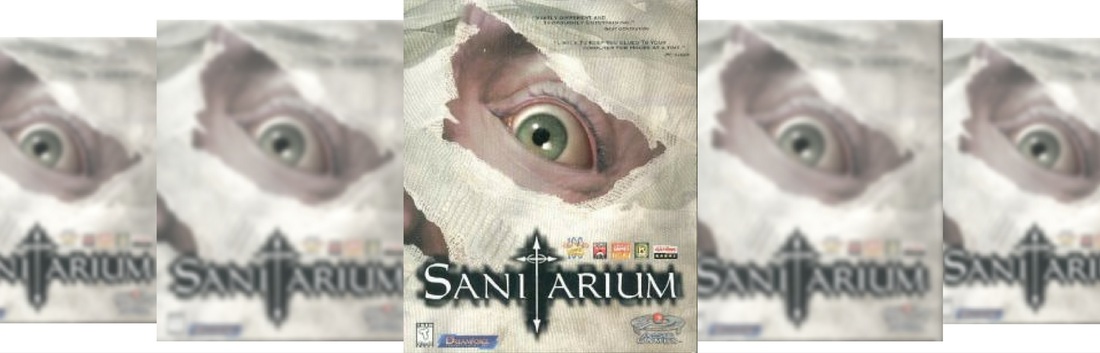
Weird. Weird, weird, weird, weird. Weird. Very, deeply, disturbingly, lingeringly, weird. Hailing from an era when extremely weird adventure titles were ten a penny on the burgeoning PC format, Sanitarium stands out from the crowd in terms of its story and presentation. Ostensibly a fairly standard point and click adventure title, Sanitarium boasts everything you'd expect from an entry in that genre: interaction with puzzles, items and characters, an unfolding story, a variety of situations and environments...
Read More

  Thirteen For Halloween:   Clive Barker's Undying

18/10/2016
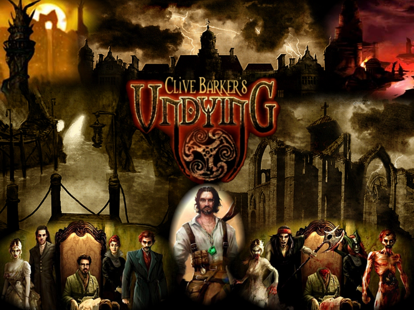
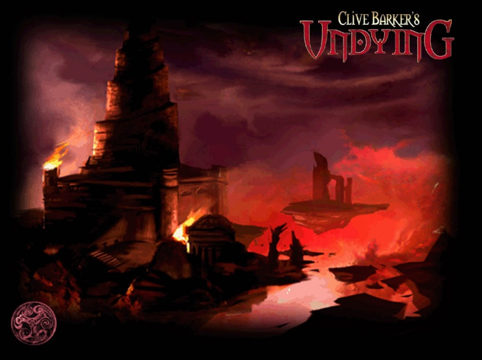
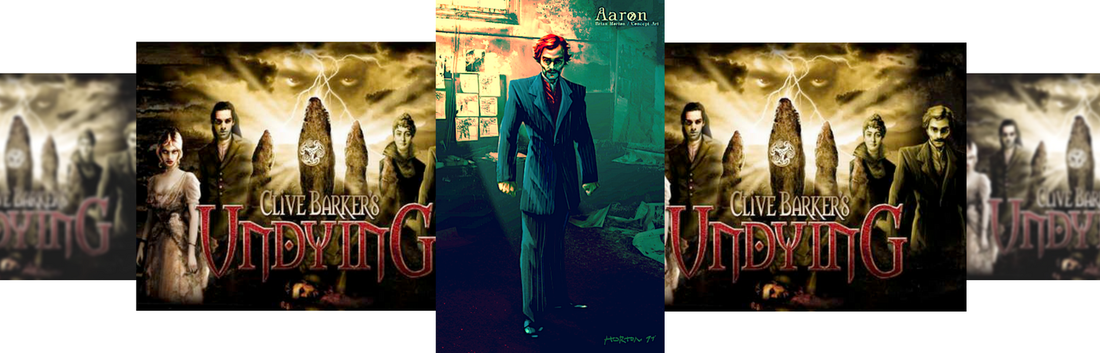
clive barkers undying videogame review  Picture

 
Thirteen For Halloween:
 
Clive Barker's Undying

​ 
Clive Barker really doesn't have a great deal of luck when it comes to video game adaptations of his work: if you examine the author, artist and director's back history with the video game industry, you will find a sad trail of burned out or abandoned projects, some of which came almost the point of release before being canned, others of which found their ways to store shelves in hideously unfinished or mechanically broken states (Jericho springs instantly to mind).
 
Easily the most successful, but often the most overlooked and certainly the most poorly marketed, is Undying, a project that was originally intended to catapult Barker's peculiar brand of bizarre and disturbing horror into the video game world and beyond, but which ultimately ended up being a beloved but not terribly well known cult classic.
 
According to Barker's own accounts, the game was designed to be the first in the series; a series which, in itself, was intended to be a stepping stone into a far wider franchise, including books, comics and, potentially, maybe even films and TV series.
 
For those of us who have played the game and come to love it, the failure of this wider franchise to manifest is tragic beyond endurance: the game, whilst flawed in certain technical areas, maintains a fantastic style and sense of immersion; an elaborate and fascinating, almost Lovecraftian mythology and a number of scares ranging from the extremely subtle to the garishly overt.
 
As protagonist Patrick Galloway, the player is charged with answering a summons from Galloway's old field Sergeant and personal friend, Jeremiah Covenant. During the years of their estrangement from one another, Galloway has unwittingly become the video game equivalent of Barker's consistent character, Harry D'Amour, in that he seems to attract or be drawn to bizarre and occult phenomena, resulting in his development of certain powers and capabilities (not least of which is a peculiar psychic capability, allowing him to see what others can't and hear what others refuse to: more on that later), not to mention myriad enemies, both terrestrial and otherworldly.
 
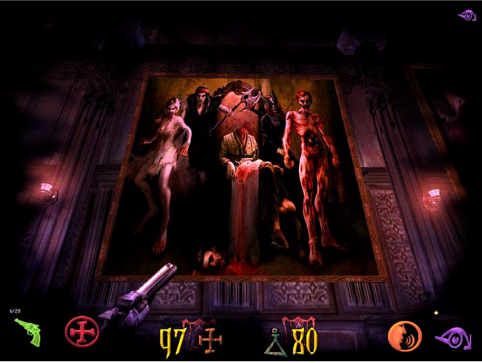
Upon arrival on the island that hosts the ramshackle but expansive Covenant estate, Patrick is immediately assaulted by bizarre sights and portents: if the player immediately turns around after entering the estate, a monstrous, lumbering shape will lope past the gates, disappearing into the distance before it can be clearly discerned. Wandering the grounds, the player will hear sibilant whispers urging them to “look” or “see.” This is where the game's most prominent horror mechanic comes into play; a psychic power (of which Patrick will eventually gather an array) that allows him to temporarily see things that, whilst providing clues on how to solve particular puzzles, also twists and distorts the environment, allowing Patrick to see spectres, echoes of murder and mutilation, to hear conversations long, long past. In the grounds before the mansion's main entrance, activating the power will result in a spectral sight of corpses strung from the surrounding trees and lamp posts. Later manifestations become even more elaborate; in a room that was once a nursery for the covenant children, Patrick hears echoes of an encounter between a nursemaid and Jeremiah's youngest sister, Lizbeth, who, infant that she is, bites the nursemaid, drawing blood and screams. Later still, Patrick will see writing in blood on walls; testimonies of what has occurred within the house and its grounds, visions of Jeremiah's deceased brother, Aaron; an encounter in the billiard room between Jeremiah's Father and eldest brother, Ambrose, who, it transpires, bludgeons his Father to death with a pool cue. 
Picture
​Later, when the game moves beyond the bounds of the house and even of this world, into realms both alien and bizarre, the power reveals even more abstruse and dimension warping phenomena: a statue that tears open its own breast, that urges you take its bleeding heart before flooding the room with its blood, paintings that become warped and demonic, presaging transformations and encounters to come.
 
The “scry” power, as it is known, is a key element of the game's atmosphere and horror credentials; it lends the player a degree of agency over the phenomena they encounter (in that, they do not have to encounter them, if they do not want to) and renders the playing environment sinister and fascinating (many of the revelations provided by “scry” are extremely subtle, meaning that players must be paying attention in order to catch them). It also means that almost every element of the playing world is packed full of secrets, both minor and significant, rendering the player somewhat paranoid as to what they might find.
 
Upon entering the mansion, Patrick is greeted by one the house's few remaining staff ( most of them fled after witnessing or experiencing strange phenomena about the grounds) who takes him to the bed-ridden Jeremiah, who is purportedly dying of some unspecified ailment. There, Jeremiah recounts the tragedy of the Covenant family; how, as children, they snook into their Father's library, Jeremiah absconding with a tome that contained all manner of bizarre rites and rituals. How, called by strange dreams and some unknown force, he took his siblings out to the small island where a ring of ancient stones stands, and coerced them into performing the ritual. How, since that time, he and his siblings have been plagued by misfortune; all of them dead, now, barring Jeremiah, through circumstances both tragic and peculiar (Lizbeth to a wasting sickness, Aaron and Bethany simply disappeared, Ambrose in apparent suicide after being hunted down by the local police forces), but far, far from gone.
 
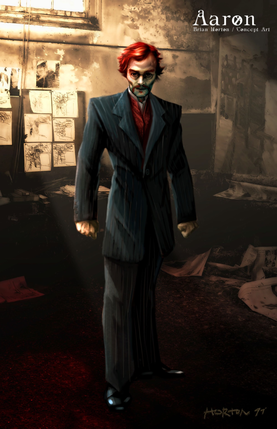
During the conversation, a disturbance from below -crashing glass, cries, demonic howls- drawers Patrick out of the room, into the wider mansion. There, he not only encounters the first of the other-worldly creatures that plague the Covenants, but also the lingering spectre of the youngest Covenant himself: Aaron. A perpetual encounter throughout the game, he can often be heard whispering and laughing, muttering to himself throughout the Covenant household. Initially, more playful and mischievous than malevolent, he soon becomes far, far more than an irritant when he tires of Patrick's interference in “family matters.” Again, Aaron is a key source of the horror within the game, as the player never quite knows where he'll crop up: sometimes, he appears behind the player character in mirrors, only to fade when they turn to face him, others, he lingers in doorways, slamming them in the player character's face when they approach. He's also a source of some narrative revelations, as he knows more of what's happening than most, having been tethered to the mansion since his death; having seen its comings and goings; its descent into decay and delirium.
 
 
Picture
 
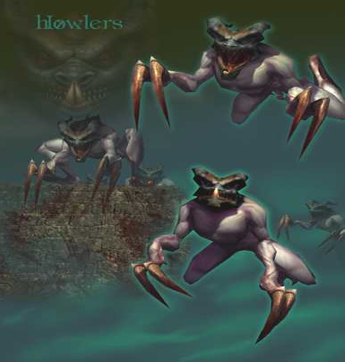
As for the creatures that Patrick encounters, the first are loping, dog-like humanoids called “Howlers,” extremely faced and vicious, demonic pack-hunters that crash through windows and doorways, slaughtering the serving staff before absconding again.
 
This is the first instance in which it becomes apparent how bizarre the game gets from its earliest instances: whilst overt and evidently supernatural, the Howlers, as the game's primary enemies, are fast, frightening and always, always threatening; their speed and the strange howls and growls that accompany them make them genuine threats, able to take Patrick down even towards the end of the game. Like all enemies, the Howlers have their own variety of death animations, ranging from leaping on Galloway and ripping out his intestines, to slicing off his head and eating it whole. Also, the Howlers, like all creatures in the game, have their own implied back mythology: through diaries and journal entries, it becomes apparent that Lizbeth had a particular love for dogs, a painting of the youngest Covenant alongside the animals shifting to a demonic rendition under the “Scry” power, in which she stands side by side with Howlers in the same manner as the previous hounds. The implication is that Lizbeth somehow breeds or creates the Howlers; that they are, in a very real sense, her children. 
Picture
​ 
The various journals are the primary means by which back story is communicated, many of them lending not a great deal to game play or technical clues, rather enhancing depth and atmosphere; making the various monsters and encounters more than they might otherwise be. For example, through the journals of various maids and man servants, we learn of Ambrose Covenant's hell raising when he was alive; of his gambling debts, his physical viciousness, his constant run ins with the law...we learn of another player in the drama; one who Galloway knows from old: an occultist by the name of Otto Keisinger, invited to the manor at Bethany's insistence. We also learn of Bethany and Aaron's estrangement; the bitter rivalry that developed between the twins in their older seasons, Aaron's penchant for painting (many of the bizarre works that litter the manor his own), the spectral encounters groundsmen have had with what they believe to be the ghost of Lizbeth...every note and revelation swills together, creating a dense and florid atmosphere, especially in context with the dim and dismal nature of the game; every inch of the Covenant manor in disrepair, shadowed and poorly lit; many of its wings sealed off or deemed too treacherous to navigate.
 
This is where one of the game's principle flaws manifests: in order to funnel the player down a particular narrative path, doors that were previously open will become mysteriously “locked,” “stuck,” or “jammed.” This is extremely frustrating, as it would have benefited the game massively to have a more “free roaming” quality; to be allowed to explore the manor at whim and uncover its various secrets. That said, this was likely simply a technological limitation above all else; a means of conserving space and memory in what is an absolutely sprawling adventure.
 
The play later takes Galloway beyond the bounds of the mansion and even the known world; whilst investigating Keisinger's quarters within the manor, a strangely askew door, around which pale, scarlet light filters, breaks away from its hinges, revealing a portal to the metaphysical realm of Oneiros. This is the point at which the tone and style of the game shifts dramatically, becoming highly Lovecraftian in its imagery (Oneiros is a state in which the laws of accepted physics in our own world do not apply; a shattered realm of red, seething storms, it is littered with what look to be fragments of a lost, extra-dimensional civilisation; islands of land and fragments of architecture suspended in nothing, linked by magical walkways that form as you walk upon them), not to mention its atmosphere. Here, Galloway encounters creatures that Keisinger has been dealing with and dominating during his occult experiments; entities that, after a brief trip through Oneiros's ruins and a face to face encounter with Keisinger himself, follow Galloway back to the manor and harrass him through a goodly portion of the game.
 
 
Picture
 
This stands as an excellent example of the game's primary strengths: it is not in any way formulaic; just when you feel you have a handle on it, it throws some new element into familiar environments, changes pace and rhythm or introduces a new mechanic to get to grips with.
 
From there, the game becomes essentially an occult investigation mingled with elements of survival horror, Galloway slowly discovering more and more of the Covenant's past, learning that Jeremiah's siblings, far from being dead, have been resurrected and transformed, owing to the ritual they performed as children and the curse they brought down on themselves. Furthermore, he learns that the source of this curse is an entity buried beneath the stones; one placed there by a monkish cabal known as The Order of St. George, and that the “Undying King,” as it is known, is the source of their immortality and their transformations after death. Only a mystical artefact known as The Scythe of the Celt can truly undo the curse, and finally put the cursed Covenant children to rest. Wielding the scythe, the payer must track down, face and defeat each of the Covenants in turn, the hunt taking him not only to every inch of the island and its surroundings, but also to various realms beyond sane or standard reality (as well as Oneiros, Patrick finds himself visiting the medieval past, when an abbey of St. George still stood on the island, a realm fashioned from Bethany Covenant's own dark dreams and fantasies and more besides).
 
The Covenants themselves are certainly highlights of the game; each one twisted and altered according to their own idiosyncrasies: Lizbeth Covenant become a stalking, vampiric ghoul, haunting the Covenant family mausoleum with her Howlers, Ambrose a demonic, piratical figure worshipped by his followers, the Trysanti. Meanwhile, Aaron, as well as being a disembodied spectre, is revealed to have been murdered by his twin sister and strung up in an old, sealed away stable, Hellraiser style, his corpse a flayed, mutilated thing festooned with chains and flesh hooks...each of these encounters often comes after hours of gameplay, and is extremely satisfying, as are the showdowns with Otto Keisinger and the Undying King.
 
Barring its terrible marketing (which is the principle reason why the game failed to make any significant impact on the market), the game does suffer from a number of technical flaws that have been emphasised in the years since its release: as well as the aforementioned funnelling of the player along proscribed paths, there are also areas that are extremely overlong (Bethany's “Eternal Autumn” segment takes the prize in this regard) and somewhat repetitive. It is also an extremely difficult game, requiring a great deal of precision dodging, shooting and timely application of spells, weaponry etc. Some sections are baffling owing to the imagery they throw at you (some of the path finding and puzzles in Oneiros are extremely oblique) and others incorporate “instant death” traps if not negotiated correctly.
 
There's also the voice acting. Good, sweet Baphomet, the voice acting. The game does hail from an era in which it was more common to get the office temps to do voice over work than to hire genuine actors (notable exceptions include the Legacy of Kain series), and here, that short-coming is in danger of ruining an otherwise immersive and atmospheric experience. Galloway in particular is extremely frustrating, in that he is supposed to be Irish, yet is clearly played by someone whose experience of such consists exclusively of “Lucky Charms” commercials. Notable exceptions in this regard include Ambrose Covenant, who is played quite well by none other than Clive Barker himself, and Otto Keisinger, who has the right amount of “Bond Villain” smarm to make him engaging.
 
 
The game ends on a cliff hanger that is never resolved. Clearly, the developers believed it to be only the beginning of a franchise (a consistent issue throughout most of Barker's work), but one that never got off the starting block. Quite clearly, there is more to tell come game's end concerning the Covenants, Galloway, Keisinger, the Order of St. George and the Undying King,
 
But, even given these snags, the game is well worth a play through, if only to see how sophisticated horror in video gaming was and can be, not to mention as a melancholic reminder of what might have been: this franchise could have easily been something big, with the right marketing, not only in video game terms, but in other media, too.
 
Personally, I still ache for the day Barker authors novel or comic series about the Covenant family, though I have an inkling that's an ache that will never, never be satisfied.
Picture

Check out the rest of Thirteen for halloween here 


Picture

THIRTEEN FOR HALLOWEEN: CLOCK TOWER 

17/10/2016
Picture
 
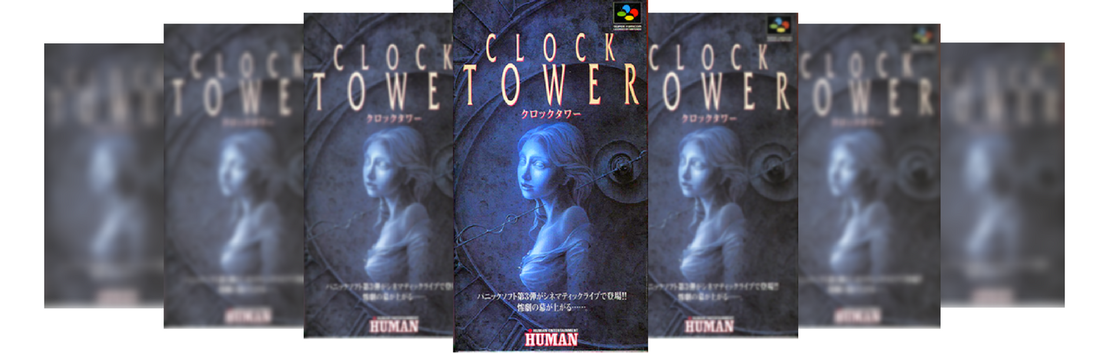
A simple premise: 13 truly disturbing video games in the run up to Halloween, starting here, with arguably the most obscure, certainly here in the West, but a game that has garnered something of a mythic status owing to its exclusivity to Japanese release:
 
Clock Tower. A game produced in an era when the video game market in the West primarily catered to children, when Nintendo in particular led the way in clean, cutesy fun...it would have been wonderful, absolutely wonderful, to see the reactions of the Daily Mail, Mary Whitehouse crowd had this work made it to British shores:

Read More
Forward
    Picture

    RSS Feed

    George Lea

     is an entity that seems to simultaneously exist and not exist at various points and states in time and reality, mostly where there are vast quantities of cake to be had. He has a lot of books. And a cat named Rufus. What she makes of all this is anyone's guess.

    find out more at George's website 

    CAMP SUNSHINE 
    A 16 BIT HORROR GAME 

    Picture

    purchase here 

    Archives

    October 2016

    RSS Feed

https://l.facebook.com/l.php?u=https%3A%2F%2Fmybook.to%2Fdarkandlonelywater%3Ffbclid%3DIwAR1f9y1sr9kcIJyMhYqcFxqB6Cli4rZgfK51zja2Jaj6t62LFlKq-KzWKM8&h=AT0xU_MRoj0eOPAHuX5qasqYqb7vOj4TCfqarfJ7LCaFMS2AhU5E4FVfbtBAIg_dd5L96daFa00eim8KbVHfZe9KXoh-Y7wUeoWNYAEyzzSQ7gY32KxxcOkQdfU2xtPirmNbE33ocPAvPSJJcKcTrQ7j-hg
Picture