
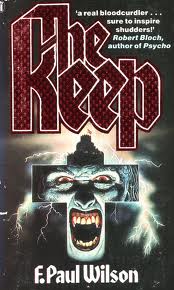
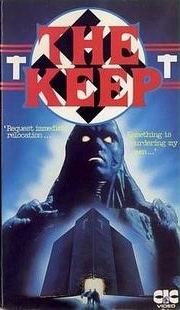
THE BOOK (AND FILM) THAT MADE ME : F. PAUL WILSON'S AND MICHAEL MANN'S THE KEEPWRITTEN BY ADRIAN CHAMBERLIN F Paul Wilson’s 1981 novel The Keep opened my eyes to the real power of the horror genre. It is my favourite kind of horror story: the supernatural thriller set in the past. The theme of good versus evil is given added depth and complexity by the historical setting and the protagonists: German soldiers in wartime Romania. We instantly empathise with Captain Klaus Woermann, a Wehrmacht officer and veteran of the Great War, who is sick of what the German Army has become under the Nazi regime and struggles to keep his men alive in the face of a lethal, mysterious and seemingly unstoppable assassin. Enter SS Major Erich Kaempffer, bringing a squad of einsatzkommandos into the keep in answer to Woermann’s request for relocation. SS terror and brutality will, German Army High Command believe, be sufficient to stop the killings of Woermann’s garrison. “Let them come. Let them taste the fear they so dearly loved to spread. Let them learn to believe in the unbelievable.” 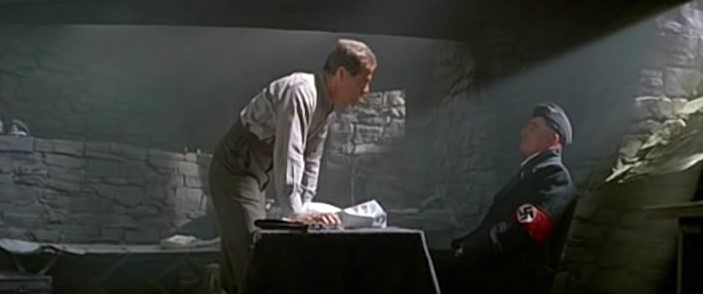 MICHAEL MANN'S THE KEEP The film doesn’t need to be three hours long. Ninety minutes is fine, trust me. The character of Woermann fascinated me. It was the first time I’d seen such a powerful, human portrayal of German soldiers – Woermann isn’t the two-dimensional cartoon Nazi I’d come across in comic books and war films. This is a man of honour and courage and, as Professor Theodor Cuza considers later, one of flawed nobility. The battle of wills between Woermann and Kaempffer is gripping in itself, but also enriches the book; this is no straightforward battle between ‘good’ and ‘evil’, neither is it a conflict of evils – “Nazis versus vampires!” the back cover copy of the NEL paperback implies, and The Keep is not about that at all. Further richness and complexity is given by the arrival of Professor Theodor Cuza and his daughter Magda, seemingly the only ones with the solution to the killings. Being Jews puts them in direct jeopardy from their hosts, and takes some of the power from the SS Major; Kaempffer is at a distinct disadvantage, his future career dependant on the answers Cuza can supply. The interplay between the German military and the Romanian civilians creates unbearable tension, and all this is before we meet the supernatural adversary. We first glimpse Rasalom (initially called Molasar) through Magda’s eyes, a third of the way through the novel, and sense the otherworldliness, the chaos and evil he brings and represents, but it is only halfway through the book that we fully meet him – via Cuza – and hear him speak. We take him to be what he claims: a fifteenth century vampire. But what makes this encounter so breathtaking is its conclusion. Cuza discovers that the creature, immune to garlic and silver, is terrified of the cross. “If a creature such as Molasar finds the symbol of Christianity so repulsive, the logical conclusion is that Christ must have been more than a man. If that is true, then our people, our traditions, our beliefs for two thousand years, have all been misguided. The Messiah did come and we failed to recognise him!” Cuza’s agony, his crisis of faith, utterly gripped me. When we later discover that everything Rasalom has said is a lie, we can breathe a sigh of relief – the religious implications of the cross and the vampire are laid to rest. But that theme stayed with me right throughout the book and repeated readings of it. In every horror novel I read afterwards – and every story I attempted to write – I looked for exploration of the traditional religious beliefs and talismans used to counter monsters, and thrilled to the works of writers who did what F Paul Wilson did in this novel: made us question the power of these symbols and beliefs and ask what human cost their usage demands. Before I carry on, it’s time for a confession. I saw Michael Mann’s much-derided 1983 film adaptation before I read the book. I loved the movie, but it left me baffled and frustrated as much as I was exhilarated and thrilled. Wanting to know more, I sought out the source novel. When I read the book it blew me away, and I thought “Why on Earth did the film leave so much out?” I wasn’t alone in this, but over the years, with repeated viewings of the film and re-readings of the novel, I’ve come to admire the film even more – and some parts I actually prefer to the novel. In particular, the design of Molasar/Rasalom himself. “He is a survivor of the First Age. He pretended to be a five-hundred year old vampire because that fit the history of the keep and the region. And because it generated fear so easily.” Personally, I found the cinematic portrayal of the creature far more terrifying than the fifteenth-century vampire guise he takes in the book. Rasalom looks alien, unearthly, and his slow regeneration over the nights leading to his showdown with Scott Glenn’s character predates Frank’s similar rebirth in Clive Barker’s Hellraiser by a good five years. Blood spilt, lifeforce stolen, to enable a creature of shadows to become flesh – the film visualised this remarkably well. It adds a mystique to Rasalom that the book lacks. Having said that, this effect is rather spoiled by the film’s hints that the creature is a physical manifestation of the evil brought by the Nazis’ presence in the keep. 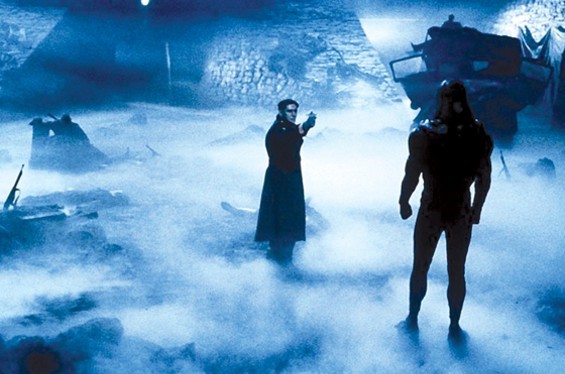 MICHAEL MANN'S THE KEEP “Where am I from? I am…from you.” The film tries too hard to be mysterious, and Glenn’s lack of dialogue is frustrating. (Although the rumoured three- hour cut would have explained a lot more.) And yet, in the novel, this character reveals a little too much near the end. A minor criticism, and a personal one, but it felt there was too much exposition, which took some of the mystique away. Two immortal warriors of differing sides battling through the centuries – the film implied that well, and I would have preferred a stronger sense of mystery to overhang Rasalom’s adversary. “I need an ally. But you…you collaborate!” I’m still undecided which of Glenn’s weapons I prefer: the sword in the book, or the spear in the film. Both have their appeals, and the ‘laser show’ of the latter looks a bit silly now, but does imply a timelessness, a sense of unearthly power from a different world – a weapon of the First Age, perhaps? On a side note, I didn’t get the Mythos references F Paul Wilson made when I read the book in my childhood, but after discovering Lovecraft I really enjoyed the name checking of the arcane texts Cuza pours over for answers: the Pnakotic Manuscripts, the Book of Eibon, Prinn’s De Vermis Mysteriis, the Comte d’Erlette’s Cultes des Goules, and of course, the Al-Azif by our old friend Abdul al-Hazred. The casting of Jurgen Prochnow and Gabriel Byrne as Woermann and Kaempffer respectively is spot-on, and their scenes capture the tension between the Wehrmacht captain and the SS major superbly. Why Ian McKellen was asked to change his delivery of Cuza’s lines from a Romanian accent to an American one is baffling, and a serious flaw on the part of the filmmakers. Cuza’s corruption by Rasalom is far better drawn in the book, of course. As Glenn says: “Rasalom has done a masterful job on him, destroying his character by tiny increments, peeling away layer after layer of all the things he believed in, leaving only the base, venal aspects of his nature.” To me, this is the key theme of the book. Evil is not defined solely by its capacity to harm or destroy, but by its ability to corrupt what is good – or, at least, what makes us human. The most disturbing aspect of the Rasalom/Cuza relationship is how Rasalom deceives Cuza by giving him false hope of destroying Hitler, of pretending to be a fellow countryman, of lying about his own nature and reason for inhabiting the keep – and persuading the professor to betray Glenn to the SS. The capacity of human goodness to be corrupted by deceit, by a force that pretends to be something other than it truly is, is a theme that has stayed with me ever since reading The Keep and inspired me to create the adversary in my first novel The Caretakers. Andraste, like Rasalom, convinces men of power that she is something from their country’s history, rather than the true cosmic horror ‘she’ truly is. As Rasalom pretends to be a contemporary of Vlad the Impaler to fit the history of his surroundings – and to inspire terror – so Andraste pretends to be a Celtic goddess empowered by Boudicca’s propitiations. In truth, both entities are far older and far more unearthly than the guises they adopt – but both thrive on the power of deception and their ability to turn people against each other; they take an almost human delight in the results. One thing the film failed in was to show the true devastating potential of the adversary’s release from the keep. The book makes it clear that mankind will suffer an eternity of darkness under a free Rasalom, a world turned into one giant extermination camp, a world without hope. The truly epic sense of destruction that awaits influenced me greatly – I’m not a huge fan of quiet horror, where the terror is more psychological and intimate – I much prefer to read (and write) more operatic, full-on tales of apocalyptic horror and despair, with the page-turning suspense and grasp of human psychology that master thriller writers like F Paul Wilson and Graham Masterton (another huge influence on me) supply. Believe me, that type of writing isn’t easy! F Paul Wilson’s The Keep – and Michael Mann’s film version - inspired me in ways I didn’t realise until I started writing myself. My fascination with horror stories set in the past – in particular the second world war - can be firmly linked to this tale; when I wrote ‘Warpigs’ and ‘Kriegsmaterial’ the themes and monsters of The Keep (and Robert McCammon’s The Wolf’s Hour) were feeding my monster-creation juices, and will continue to do so. “You mean Satan? The Devil? Put aside every religion you’ve ever heard of. Rasalom predates them all. 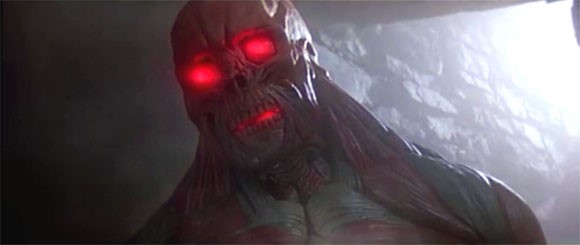 RASALOM He does indeed… About Adrian Chamberlin ADRIAN CHAMBERLIN ADRIAN CHAMBERLIN Adrian Chamberlin lives in the small South Oxfordshire town of Wallingford that serves as a backdrop to the UK television series Midsomer Murders, not far from where Agatha Christie lies buried, dreaming in darkness. He is the author of the critically acclaimed supernatural thriller The Caretakers as well as numerous short stories in a variety of anthologies, mostly historical or futuristic supernatural horror. He co-edited Read the End First, an apocalyptic anthology with Suzanne Robb (author of the acclaimed thriller Z-Boat). His most recent release is the English Civil War thriller “Shadrach Besieged” in the Lovecraftian novella collection Dreaming In Darkness, which introduces the 17th century warrior Shadrach to the Mythos. While hunting for a publisher for his second novel Fairlight he edits for the Lovecraft eZine. Live readings of his work are extremely popular and well-attended. He is aware of the concept of “spare time” but swears it’s just a myth. Further information can be found on his website: www.archivesofpain.com For more great horror novel reviews and horror author interviews click the links below HORROR NOVEL REVIEWSHORROR AUTHOR INTERVIEWSFile under horror novel review10/3/2014 16:29:09
Wonderful article! I'm a big fan of F. Paul Wilson, and saw the film with my parents when I was much younger. Still have a copy of it. Despite it's flaws, I really think it is highly underrated. Comments are closed.
|

 RSS Feed

|

|