
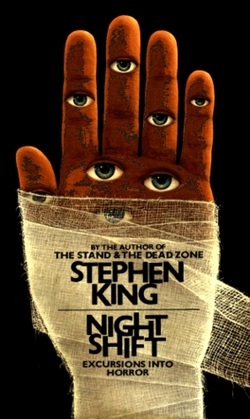
 I have always been a writer, I guess. I was able to read by the time I was three and I could write a little when I started first grade, thanks to my grandmother. And I’ve always loved scary stuff; ghost stories, the supernatural – anything that would keep me up at night, the overhead light on, eyes and ears on full alert for any sound or movement. The problem was that all that deliciously scary stuff was forbidden in my house. My father, a Hoboken police officer and ex-Marine (although according to him, there is no such thing as an ex-Marine,) despised any talk of ghosts, ghoulies, zombies and other morbid subjects, so I had to keep that kind of reading material under the table. I went to a Catholic grammar school where they encouraged us to read the classics and to write well. That’s the one thing I can honestly say that I benefitted from during the twelve years I spent in Catholic schools. I read books like To Kill A Mockingbird and The Summer of ’42; when I was in sixth grade; read most of Shakespeare’s works by the time I was in high school – so I had a good foundation to work with as a writer. I was the one kid in grade school who got all excited about having to write an essay or a story while everyone else moaned and wished they were dead. More often than not they wished I was dead for being so enthusiastic. I loved writing and those essays usually saved my final grades from slipping below a C average – something my parents would not have appreciated. I guess you could say I learned to bullshit with class. My English teacher in sixth grade was Sister Joan Eileen. She was younger and a bit more modern than the other sisters at Our Lady of Grace – she never wore a veil and was very energetic and supportive on the lines of an overenthusiastic cheerleader. Sister Joan was thrilled by reading aesthetic and encouraged my writing for the most part. However, when I wrote a short story for class one day she scribbled a note in red ink on the last page: “no contractions.” Confused, I stayed after class and asked her to clarify her remark. She told me that a writer never used contractions in their work. This baffled me because the contractions she referred to were part of a conversation between two characters. I pointed out that when people spoke they always used contractions. It would sound unnatural otherwise. Sister disagreed. She maintained that all true writers wrote in the same formal manner, whether it was fiction or non-fiction – even when writing dialogue. To put it mildly, I was rather upset with this criticism. I had been very comfortable with the way I wrote and I just could not imagine writing or even reading a story where people spoke in such a stiff manner. I found myself considering that perhaps I was not meant to be a writer after all. That weekend my aunt and uncle came in to visit my parents and play a few hands of cards. They brought with them my odious cousin who I found rather unpleasant so I spent the night walled up in my bedroom. The next day I found a paperback on one of the end tables in the living room. My cousin had left behind a copy of Stephen King’s Nightshift. I leafed through it, read a few pages and ran up to my room where I stayed for the rest of the weekend. I read the entire book in less than 24 hours; went back and reread my favorites: The Bogeyman, Children of The Corn, Strawberry Spring, Sometimes They Come Back, Quitters Inc., - pretty much the entire book. Monday morning I took the book to school and after English class I spoke to Sister Joan and showed her my copy of Nightshift. “This guy writes the way I want to – he uses contractions,” I told her. She took the paperback from me and without even opening it declared, “This is not writing. This is pulp.” I returned to my seat with my nose out of joint. I remember sitting there, not listening to the instructions Sister was giving the class at the time and I was fuming. I looked at the cover of my paperback and made a decision. I liked the way I wrote and I liked the way Stephen King told a story. To this day I’m surprised at the wishy-washy, jellyfish age of eleven I was able to verbalize something that would impact my life to such a profound degree. I decided, “Screw this! This is the way I tell a story and I like telling stories my way! This guy Stephen King isn’t all formal and stuffy when he tells a story and he’s got a whole book of his stories published!” The fact that Sister Joan Eileen (who was a pretty damn good teacher, by the way) disliked the way I wrote seemed to make it even more important to write the way I wanted. As time went by I wrote stories just for me. It made me happy while I was doing it and later on I’d go back and read them in awe that I actually created those words and put them on paper. My first short story was published by Pseudopod in 2008 on my very first try at submitting and I took that as a sign I was doing something right. 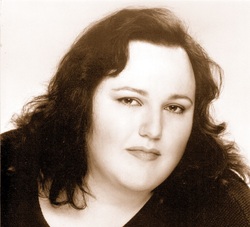 Florence Ann Marlowe has been writing fiction since she was about six. Her favorite authors range from John Steinbeck to Stephen King, Walker Percy to Peter Straub and Neil Gaiman. Florence has been published by several online magazines such as Macabre Cadaver, Demon Minds, Psuedopod, 69 Flavors of Paranoia, Death Head Grin and Wiley Writers ezine. Her stories have published in the Anthology books Reflux, Peep Show Volume 2 andFantastic Horror's Temptations and Other Sins. She is currently working on a novel, Beneath The Wings of The Phoenix. Florence lives in south Jersey, in the same neighborhood where the Jersey Devil was born. Rumor has it, he lives next door. For more great horror author interviews and horror fiction reviews follow the links below HORROR AUTHOR INTERVIEWHORROR NOVEL REVIEWFILE UNDER HORROR NOVEL REVIEWComments are closed.
|

 RSS Feed

|

|