
|

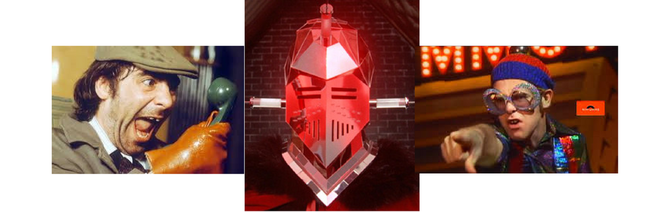 My Life In Horror Every month, I will write about a film, album, book or event that I consider horror, and that had a warping effect on my young mind. You will discover my definition of what constitutes horror is both eclectic and elastic. Don’t write in. Also, of necessity, much of this will be bullshit – as in, my best recollection of things that happened anywhere from 15 – 30 years ago. Sometimes I will revisit the source material contemporaneously, further compounding the potential bullshit factor. Finally, intimate familiarity with the text is assumed – to put it bluntly, here be gigantic and comprehensive spoilers. Though in the vast majority of cases, I’d recommend doing yourself a favour and checking out the original material first anyway. This is not history. This is not journalism. This is not a review. This is my life in horror. Sickness Will Surely Take The Mind So, then. The ghost is back. A genuine haunting, too, this time. At the time this movie entered my life, the ghost had not yet made his in-the-flesh appearance in my world. But he surely haunts this film. I am in my Grandmother’s house, with my sister, my Grandma, and my mother. Due to a combination of dull-even-to-me biographical facts surrounding the occasion, including which house Grandma is living in and who else is at the house, I can peg my age precisely to seven years old. I am also, as I think on it, almost certainly unhappy, in a general sense. Having spent my childhood - my life, to this point, at least as far as remembered existence goes - in a rural setting (by which I mean the nearest village was a four mile walk and we didn’t have a car, so, you know, really fucking rural) I’d recently been transplanted to a large, just-beginning-to-slip-into-post-industrial town in the north of England, and basically, I hated everything about it. A combination of my haircut and accent made me stick out a mile, making any friendships conditional and one sided, always carrying a vague undertone of pity or charity. And going from twenty kids in your classroom to two hundred kids in your year was… well, disorientating is an understatement. I remember the sheer noise of the playground feeling like a physical assault, and the scale of the school canteen, with attendant sounds and smells, frequently induced nausea. Add in being one of the shortest kids in the year, and having a natural inclination to try and impress teachers, and it was never going to be a smooth transition. It occurs to me now that one of the surest signs that I’m unlikely to get on with another adult, to this day, is if they happen to say of their time in school, ‘oh, but/and it was the best days of my life’. I mean, fuck off. Anyway. So I am - precisely - seven years old. And we’re at the portion of the evening universally known as ‘T.V. Time’. Grandma and mum are channel hopping, and my sister and I are pretending not to be tired, and also trying to be invisible - TV time at Grandma's house typically rendering bedtime a kind of elastic concept, especially if we can avoid the enormous temptation to argue with each other about, well, everything. And channel hopping circa 1986 in the United Kingdom is a hilariously sparse affair, given that there are precisely four channels on offer. My memory is that it was BBC Two that gained my mother’s delighted attention. “Oh, look, it’s The Who! I like The Who. Let’s watch this!” Sure, mum. Okay. Why not? And the thing is, it’s freaky from the get-go. Before a single overtly horrific thing has happened on camera, the experience is deeply disorienting. Everything’s… off.I mean, there’s the obvious thing, which is that nobody talks. All spoken communication is via song. And I must have seen musicals, but there’s a step change difference between that and… this. Also, well, the horror really isn’t slow in coming. By the end of the opening song, Tommy is born on VE day, but his dad has already (apparently) died, our last sight of him burning in his plane as it plunges towards the earth. World War Two was still enough of an all-encompassing national story in ‘86 that as a seven year old, I could engage with the iconography - the flag waving, the nurses uniforms, the gas masks on the school kids. Who needs Moffatt? So already, the prickly heat from Grandma’s gas fire is starting to feel uncomfortable - no longer the soothing soporific, increasingly like the early onset of a fever. And when Oliver Reed slimes into frame as Uncle Frank (and was that a deep cut reference by Clive Barker, I find myself asking myself, at thirty one years remove?), the discomfort kicks up a whole order of magnitude. I mean, he’s scary. I can’t tell why, exactly, but he is. He drinks. He’s sweaty. The way he acts towards Tommy’s mum, something about it is badly wrong, and she seems oblivious, like a princess under a spell. The whole camp is deranged, an off-centre energy and cheer that’s scary, like a place where terrible things would happen if your smile wasn’t wide enough, and when Uncle Frank is taken back with Tommy, it feels like they’ve taken the madness home with them, invited it into their lives. When his mother asks Tommy if he likes Uncle Frank, and he replies sleepily ‘He’s very nice, I think…’ - I want to shout at them both. And then of course, Tommy’s real dad comes home. This, I remember vividly. He visits Tommy’s room first, looking upon his son’s sleeping form, his face scarred from the fire. Then he leaves. The music goes wild - crashing, clattering drums, keyboards, guitars, Tommy’s father, shouting, his mother, sweating, crying, also shouting soundlessly, Tommy leaving his room, walking down the hall, my heart is pounding along with the maniac drums, don’t go, kid, don't look, don’t see, and Frank snarls, reaches for the lamp, Tommy throws the door open as his father is struck and crumples to the floor. I mean, fucking hell. His mother screams, bedsheets pressed to her naked body “What about the boy? He saw it all!” They fall to their knees before him, talking, imploring, demanding. “You didn’t see it. You didn’t hear it. You won't say anything, to anyone, ever.” It’s an incantation, a spell, a curse. Their faces scared, angry, pleading, threatening, the music building to a crescendo, and as it breaks, Tommy looks into the camera, and there’s a moment of movement, at though some door inside him has slammed shut. “Now he is deaf. Now he is dumb. Now he is blind.” His mother and Frank lead him down a corridor, a brick tunnel, endless. Lit from overhead. Like a prison. Like a dungeon. As the overture is played, he’s taken to a funfair, an arcade, we see this kid sat in a waltzer, on a ferris wheel, in a hall of mirrors. He is vacant, and the camera swirls and dives around him, lights swirling in and out of frame. Dissolves, wipes, as the music plays “Sickness will surely take the mind, where minds don’t usually go.” Sickness of the mind. Not an alien concept to me, thanks to Floyd’s Dark Side Of The Moon, but all the same, a deeply unsettling concept, one made worse by the fluid, unsettling imagery and the knowledge that this sickness was not organic but inflicted. Damage. And really, it should have ended there. It was past my bedtime. But, of course, that was the very definition of a double edged statement, wasn’t it? Because this was The Forbidden Time. I wanted to stay up. And to stay up meant to see. And so it went. Christmas. Tommy sat in a toy car, hugely expensive. Staring into space. The other children encircling him, blowing horns he can’t hear in his face, taunting. His mother’s pleading, Frank angry (of course) the fear for Tommy’s soul, and the moment when he smashes the baby Jesus toy into the manger scene. I remember thinking, poor kid. Crossfade, and the child is an adult, still staring into space. He’s in a church, but again, something is wrong. The preacher is playing a guitar, and the altar boys are musicians with wild eyes and long hair. The song goes on and on, an ode to the healing power of The Woman. A huge statue is brought down the aisle, the goddess in a frilly dress. The congregation file past her, touching the hem of her dress, kissing her feet. Those in wheelchairs are pushed past, their helpers touching the statue and transferring that touch to their heads. Finally, the church is empty. Tommy’s mother takes him forward, but he does not want to kneel, to kiss the feet, and she pushes his head down, he resists, and in the struggle, the statue tips, falls, and breaks. Her face fractures into three pieces. I remember feeling horrified by that, without knowing why. Then, oh shit. So, Uncle Frank takes Tommy to.. A place. A room. A girl. She claims that she can cure him. She just needs one night. She’s the Gypsy. The Acid Queen. As soon as Frank leaves, she produces a syringe full of a bright red liquid. If I’d had a sofa to hide behind, this would have been the moment. Instead, I watch as she places Tommy in a giant metal suit covered in needles. The suit closes on him, puncturing him, my mind assures me, in several places, and then all the syringes on the outside fill up with the red liquid, before the plungers depress, sending it into his bloodstream. Also, the silver device starts to rotate. The music goes mental again, the song crashes around, the thing spins faster and faster while the woman wails and laughs, and then it slows, and I don’t want it to, and it stops, and I don’t want it to, and it slowly opens, and inside is a skeleton with snakes crawling over its bones, silver ball bearings pouring out into the floor. It closes. It spins. It slows. It opens again. This time, Tommy has a crown of poppies. Also poppies covering each puncture wound, though blood helpfully trickles down his limbs, to remind you of what lies beneath. At some point, he also turns into his father. At some point the spinning contraption shrinks until it enters her mouth. At some point, roughly 4.7 billion years later, Frank comes in, and takes Tommy home in disgust. Time to get off? Fuck, yes. Waaaay past time. But then, I’ve come this far. It’s late. “Do you think it’s all right? To leave the boy with cousin Kevin? Do you think it’s all right? There’s something about him I don’t really like. Do you think it’s all right?” “I think it’s all right, yes I think it’s all right.” It fucking is not all right. Cousin Kevin plays the piano, lamenting his lack of a play friend, and then opines that there’s a lot he can do with a freak. Before slamming a paper bag over Tommy’s head. And then it’s just an express elevator to hell. He’s the school bully. And his victim can’t speak. Can’t fight back. Tommy has a cigarette put out on his arm. He is held down in a full bathtub, then hung from the door by his collar and whipped. There are six inch nails sticking up through his toilet seat, and glass in his dinner. And I have fucking had enough. I protest. Loudly. Mum turns over. Reluctantly. She flips back, briefly, after a short interval - ‘I’m sure it’ll have finished now’ - and I see Tommy pushed down a flight of spiral stairs. She tunes away again.But she’s not done. And as she tunes back, and Tommy is ironed dry by cousin Kevin, she assures me, it’s all over, the scary bit has finished, and isn’t the music good? I couldn’t tell you how I responded. Anyway, Tommy is taken home. Cleaned up. And then they need another sitter. “Do you think it’s all right…” FUCKING NO!!!!!! And of course, it’s Uncle Ernie. And roughly two nanoseconds after he cracks a raw egg into a pint of ale and downs it before pulling on sweaty red rubber gloves, I am done. This time, there is no protest, or attempt to turn it back over. And, you know, when I finally got to finish the movie (not at fifteen, or nineteen, both of which I had to abort at the same point, unable to make it past Uncle Ernie and his heavy breathing, but finally in my mid twenties), it turned out that I’d bailed at pretty much the moment of maximum discomfort. From that point, the narrative turns, with Tommy’s discovery of pinball and eventual cure, and while you couldn’t fairly call it a happy ending, it’s never quite as bleak, as menacing, as fever-dream terrifying as the moment his parents walk out of the room and leave young Tommy alone with wicked Uncle Ernie. But as a kid, I couldn’t know that. So I bailed, and I left Tommy in that room. And I think somehow, in my mind, because of that, Tommy is always in that room - trapped within himself, helpless, at the mercy of a horror of a man, a creature without empathy, only dark appetites. There’s a metaphor in there somewhere. KP 2/9/16  
2 Comments
|
Archives
April 2023
|
 RSS Feed

|

|