
|

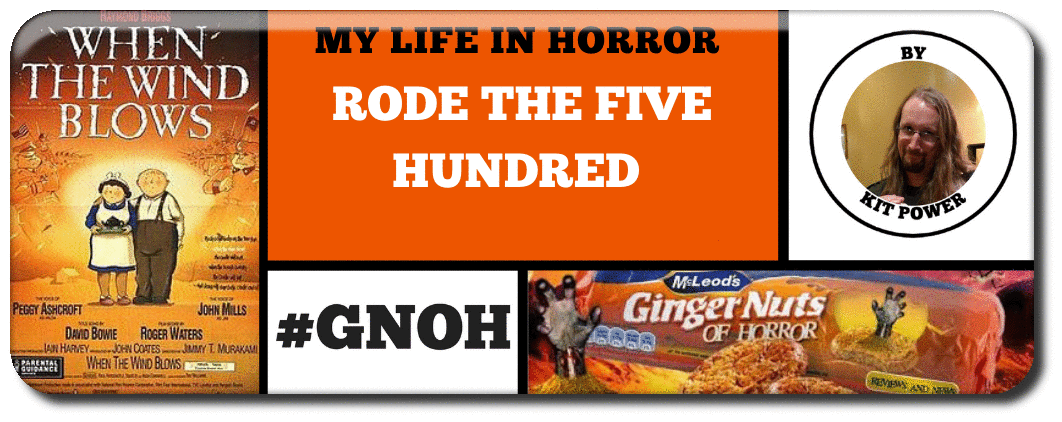 My Life In Horror Every month, I will write about a film, album, book or event that I consider horror, and that had a warping effect on my young mind. You will discover my definition of what constitutes horror is both eclectic and elastic. Don’t write in. Also, of necessity, much of this will be bullshit – as in, my best recollection of things that happened anywhere from 15 – 40 years ago. Sometimes I will revisit the source material contemporaneously, further compounding the potential bullshit factor. Finally, intimate familiarity with the text is assumed – to put it bluntly, here be gigantic and comprehensive spoilers. Though in the vast majority of cases, I’d recommend doing yourself a favour and checking out the original material first anyway. This is not history. This is not journalism. This is not a review. This is my life in horror. As previously noted, most of my childhood fascination and terror regarding what appeared then to be the likelihood of dying in an irradiated hellscape a couple of weeks after a nuclear war between the US and Soviet Russia came from my mother, and her peace activism. That’s true, Teddy Bears Against The Bomb an all, but it’s also true that at least one major piece of the puzzle came from my father. And I was young - 9 or 10. I remember discussing the book with a school friend - the same one who got hooked on The Dark Knight Returns and started producing drawings based on it, now I think about it - and by then it was a revisit. So, yeah,childhood. A time when all art is vivid and exciting, because it’s all new - every idea exciting, every character fresh, every joke funny. It’s a pretty amazing state of being, and I think explains why children always seem at least mildly drunk or high, because in a very real sense, they are. And in that sense, When The Wind Blows is a very bad trip indeed. Part of what makes it so devastating is contextual, of course. Raymond Briggs is a writer and artist whose familiarity to the children of the 80’s can hardly be overstated. The comics Gentleman Jim (about a janitor of a public lavatory) and Fungus The Bogeyman (I can't even - look it up if you don’t know) were staples of pretty much every school library or book corner in the country, despite (or, perhaps, because of) the grossness and subversive nature of the latter title. Fungus looms large in my childhood, even though I have little memory of the narrative itself, mainly because of the incredible green art of the lead character; surely the inspiration for Shrek, though Fungus is, for my money, the spikier and more interesting of the two characters. And then, of course, there was The Snowman. I guess here we could take a moment to reflect on how much of the art we aim at children contains traumatic scenes of loss. Bambi and Dumbo, of course, feature scenes of parental loss that are shatteringly sad, and represent the elemental fear of all children of loving parents. UK kids in particular will also recall with a shudder the utterly nightmarish visions and prophecies of Watership Down (strong contender for a future essay in this series), as well as some keenly felt casualties during the quest. And you can’t swing a cat in a Roald Dahl story without hitting something frightful that the humor does little, if any thing, to mitigate. Children's entertainment has transformed in any number of ways in the last thirty to forty years, and as someone with a nine year old who has consumed a fair amount of ‘kids movies’ over the last few years, this seems like one of the principle ways it’s changed, because they just don’t, generally, do trauma like this anymore. It’s rare anybody dies, and even rarer that they stay dead, especially in the age of the superhero blockbusters, whose source materials, with the necessity for monthly story production, seem to bounce from dramatic death to rebirth every couple of years. Is that for the best? Oh, hell if I know. I’m not a child psychologist, and despite five years of archeology on my own childhood traumas as relates to art, I feel no more qualified to even begin to formulate a response to that than I did at the start. What I do know is that when I watched The Snowman with my kid for the first time one Christmas, she burst into tears at the end. And, I mean, you can't possibly need me to recap it. Suffice to say, both the film and the book were childhood stapes, even beyond the other works herein mentioned, as much a part of the Christmas TV tradition as Star Wars was, the adults loving the hand drawn art style and music, the kids the story… right up to that final shot of a scarf sitting in a puddle, anyway. The reason I bring all this us is it’s important to understand the context of how I came, as a child, to When The Wind Blows. Even as a kid, I was starting to recognise the names of authors, and given how large The Snowman and Fungus loomed, both the writer and the art style were instantly recognisable to me. Known and trusted - again, while both works had elements that in retrospect are clearly subversive and/or emotionally mature and complex, they were unambiguously labeled as children’s entertainment. So when I found my father’s hardback edition of When The Wind Blows, at whatever probably-single-digit-age I was, I knew it’d be okay for me to read. Well, not so much. It’s tricky, too. It’s a slow build, with the first third just being this depiction of domestic rural life - cooked breakfasts, reading the paper at the local library, catching the bus, notes out for the milkman. It’s maybe just a touch overplayed - but as someone who grew up in rural UK (mainly south west rather than up north, but still), maybe not. Certainly, I recognised the contours of the slightly-too-much-time-on-your-hands conversations and snails pace of activity all too well - in fact it’s giving me a mild but definite unpleasant visceral reaction right now, as I recall it. Similarly, the speech patterns and malapropisms of our two leads are clearly both played for laughs, and/but with affection. Jim is often adrift when discussing world affairs, and Briggs conveys this in a number of ways - by inserting capital letters as Jim reels off the names of the various missile systems and defence protocols, sometimes having him hy-fer-nate the words as he sounds them out. It’s also fun how his wife veers between being mildly impressed, disinterested, and baffled - and again, it’s played for laughs, but it feels like only the mildest of fun is being poked at the couple; certainly they seem both harmless and sweet, the kinds of people nobody writes a story about. As a child, I absorbed this with delight, even as I skimmed over the technical details (as, I suspect, I was supposed to), and, also as a child, I had no conception of just how beautifully crafted the whole thing was; how skillfully the couple were evoked, how pitch perfect the dialogue was, how brilliantly observed some of Jim’s reaction faces were to a remak from the missus. There’s even a humor over the construction of the fallout shelter, as the absurdity of the advice collides with Jim’s well meaning nature, including an epically hilarious bit of cringe as he tries delicately to explain to his wife what, exactly, the sand bucket is for. The edge does start to creep in here, though. Jim’s description of the bombs, the force of the blast, and the terms megadeath and overkill are delivered in the same, repeating-stuff-I’ve-read-without-really-engaging-with-the-substance way as before, and it’s left to the reader to experience the chill of recognition, and the creeping fear that grows as Jim calmly places a series of doors at a 30 degree angle from the wall, and paints the windows of the house white to help deflect the blast. In a really canny piece of writing, World War II is invoked, with both remembering fondly a war where ‘you knew where you were’, and it’s really hard in 2019 not to read it and think of the current crop of Brexiteers blitely intoning that we’ll survive Brexit ‘the way we survived the Blitz’, in the process neatly ignoring a) not all of us fucking survived, actually, and b) we didn’t have any fucking choice about the Blitz - it wasn’t self inflicted, people didn’t campaign for it. Certainly in this book, as in the current day, the comfort blanket of our national myth - courage in the face of adversity, keep calm and carry on, and all the rest of that shit - sits very uneasily with the scale of what’s going on outside the cottage, and the juxtaposition of the nostalgic reminiscences with the uncomfortable reality is an object lesson in building tension for the reader, while the characters blithely bimble through their lives, carrying on as normal. And then, the bomb goes off. Following which, over the space of a few days, we get to watch these sweet, good natured, not-too-bright but utterly harmless people die of radiation sickness, as they bare witness to the initial changes that will soon lead to most, if not all life on earth dying off, leaving us an empty rock floating in an unimaginable void, nothing left to view the buildings and rubble and remains that will become a mute monument to what once was. And he doesn’t spare us any detail. They get sick, then better, then sick again. There are stomach upsets, and later skin conditions, bleeding gums. With the water off, dehydration becomes an issue. And sure, they make ‘mistakes’ - leaving the ‘Inner-core-or-refuge’ before the allotted two weeks, and later drinking captured rainwater - but part of what’s being skewered here is the government survival guide, a real document that is laughable in it’s inadequacy, in terms of actual protection from even a limited exchange, and which poor old Jim is faithfully following to the letter. Throughout, it’s his simple faith in The-Powers-That-Be that is the bitterest pill to swallow, in a lot of ways; he literally dies without that faith apparently diminishing, leaving us, the readers, with a sense of helpless rage and sorrow that finds no expression within the book. There is a single moment here Jim appears, momentarily, to snap, as he realises they’ve run out of water, but it’s there and gone, his humanity and desire to comfort his wife immediately re asserting themselves. It’s wretched, and heartbreaking. Mawkish? I mean, it should be, but it doesn’t feel that way to me - perhaps because of the age I was when I first read it, perhaps because it really does manage to transcend that by sheer force of talent. But the decision to leave the rage with the reader, unexpressed on the page (that I believe was entirely deliberate on the part of the writer) is what elevates the piece to the level of genius. In an interview discussing the making of the movie of Easy Rider, Peter Fonda described watching the film with Bob Dylan, prior to release. After the shocking final 5 minutes, Fonda reports Bob was sad and angry - ‘Why can’t he turn the bike around and drive into the truck, take them both out, have that be the end?” Fonda grins. “Payback! You want payback! Well, the move ain’t gonna give you that. You’re gonna to have to go out into the world and get it.” I think - I am sure - that’s what’s going on here. Briggs gives us horror without resolution, shock without release, anger without catharsis, and then just sits back and says ‘yup, this is how it ends’. When The Wind Blows stands as a towering rebuke to anyone that claims art and politics can’t or shouldn’t co-exist. This is unapologetically political, and undeniably art. And by letting the story end as it does, as it would, Briggs challenges the reader to go out into the world and find a different ending; to break the prophecy. I was - maybe - nine years old. And, sure, this particular horror is firmly in the rearview mirror, these days. It’s mainly images of my daughter swimming in an endless sea, surrounded by the floating detritus of our flooded cities, that haunt my dreams, rather than the flash-bang of light and mushroom cloud on the horizon. My novella, The Finite, which would not exist without When The Wind Blows, is in many ways a callback to that old nightmare, an attempt to wrestle with the childhood trauma of this then-seemingly-inevitable-apocalypse. But the end of the world is still on the agenda, and if the science is close to right, still very much on the cards, absent an international effort the likes of which we’ve never seen. We may yet simply pollute ourselves out of existence. And if that scares the living piss out of you, as it does me, I’m not going to sit here and tell you it’s going to be okay. Because it won’t be. Unless you go out into the world and make a difference, this is how it will end. KP 14/5/19 For further discussion of When The Wind Blows, featuring fellow Gingernutters George Daniel Lea, Laura Mauro, and I in conversation, please see: https://www.youtube.com/watch?v=-UsNPNgNSew&t=86s The Finite is out now and can be ordered now from Black Shuck Books, in ebook or print formats: https://blackshuckbooks.co.uk/the-finite/  
0 Comments
Leave a Reply. |
Archives
April 2023
|
 RSS Feed

|

|