• HOME
  • CONTACT / FEATURE
  • FEATURES
  • FICTION REVIEWS
  • FILM REVIEWS
  • INTERVIEWS
  • YOUNG BLOOD
  • MY LIFE IN HORROR
  • FILM GUTTER
  • ARCHIVES
    • SPLASHES OF DARKNESS
    • THE MASTERS OF HORROR
    • THE DEVL'S MUSIC
    • HORROR BOOK REVIEWS
    • Challenge Kayleigh
    • ALICE IN SUMMERLAND
    • 13 FOR HALLOWEEN
    • FILMS THAT MATTER
    • BOOKS THAT MATTER
    • THE SCARLET GOSPELS
GINGER NUTS OF HORROR
  • HOME
  • CONTACT / FEATURE
  • FEATURES
  • FICTION REVIEWS
  • FILM REVIEWS
  • INTERVIEWS
  • YOUNG BLOOD
  • MY LIFE IN HORROR
  • FILM GUTTER
  • ARCHIVES
    • SPLASHES OF DARKNESS
    • THE MASTERS OF HORROR
    • THE DEVL'S MUSIC
    • HORROR BOOK REVIEWS
    • Challenge Kayleigh
    • ALICE IN SUMMERLAND
    • 13 FOR HALLOWEEN
    • FILMS THAT MATTER
    • BOOKS THAT MATTER
    • THE SCARLET GOSPELS
GINGER NUTS OF HORROR
horror review website ginger nuts of horror website

YOUNG BLOOD LIBRARY'S 2019 CHRISTMAS GIFT BUYING GUIDE

18/12/2019
YOUNG BLOOD LIBRARY'S 2019 CHRISTMAS GIFT BUYING GUIDE
Christmas will soon be with us and you may well be looking to buy a literary gift for your favourite niece, nephew, or any kid who might appreciate a book instead of a box of chocolates or novelty socks. As usual we feature books which cover the broad areas of ‘dark fiction’ rather than straight horror which always seems to be in short supply. All these books were published in 2019 and have been previously reviewed at some point in the year.
​

There are some very original and engaging titles and are all excellent reads. I guarantee there are some real winners for budding horror fans out there….

They are presented in alphabetical order by author.
If you wish to purchase any of these books, simply click on the book's title, or use the widget at the end of this article ​
Picture
ANN AGUIRRE: HEARTWOOD BOX

Ann Aguirre’s highly engaging Heartwood Box is not a traditional horror novel, but there is much to enjoy in a teen thriller which blends elements of science fiction, messages passing through time (in the Heartwood Box) and an outstanding female leading character in Araceli Flores Harper. This spunky teenager finds herself living in a tiny town with her ancient great aunty Ottillie as her parents are going to be working abroad whilst she completes her final year at high school. Upon arrival Araceli notices missing posters all over town and soon realises people have been disappearing in this town for twenty years, including the husband of her great aunt and kids from her new school.

The clever plot has several different layers; first up, Araceli is half-Mexican in a town which is incredibly white and so it has interesting stuff to say about race. The teenager also likes to dance and tries to get on the school team. It convincingly tells a teenage story of a girl trying to fit it and her developing friendship with the nice boy who lives across the road, who also happens to be the sheriff’s son and has issues of his own. As the disappearances continue Araceli finds a freaky way of writing to an American soldier who has just shipped to France way back in 1917 and much of the plot focusses on this time-slip development. It could have been something out of the X-Files, but I found it worked very well and the relationship between Araceli and her great aunt was perfectly pitched. Make sure you hang around for the wonderful knock-out ending! AGE 13+

LAURA BATES: THE BURNING
 
If you’re on the hunt for a YA novel which effortlessly blends the horrors of teenage social media with the tale of a 400-year-old witch trial, then look no further. This was a superb read which carries a powerful message about the dangers of posting the wrong stuff and peer pressure, delivering it in a naturalistic style, which never becomes heavy handed or preachy. In no time at all you will be rooting for the teenage protagonist Anna who is dragged through a horrific emotional wringer. The Burning is horror with a light touch, the pain and long-term repercussions of one naive decision becomes scarier than any supernatural bogeyman. The fallout was severe, and The Burning opens with Anna and her mother leaving their old life in Birmingham behind to live in a small coastal village near Saint Andrews on the east side of Scotland.
 
Starting any new school is difficult and Laura Bates completely nails the awkwardness of this transition, but before long she becomes friends with local girls, but bullying is never far away and soon her past catches up with her. The Burning has a second main story which nudges it into the horror genre, beyond the horrors of everyday teenage life. As part of a school history project everyone researches a topic of local interest and after Anna discovers an obscure reference to someone who was suspected of being a witch centuries earlier. As she uncovers the story, the plight of Maggie, she realises the ‘witch’ has many startling similarities to her own story and starts to feel a strong connection to the long-dead young woman, part of which whose story is told in flashback. In my experience in YA fiction kids generally avoid books which obviously have a heavy-handed message, The Burning works because its warning are very subtle with a top-notch story, believable story and a convincing dose of history. AGE 13+
 
AMELINDA BERUBE: HERE THERE ARE MONSTERS 

I was really captivated by this slow-burning YA horror/fantasy novel which genuinely nailed the troubled psyche of a sixteen-year-old girl who is trying to deal with the sudden disappearance of her little sister, aged thirteen. The younger girl Deirdre has issues, which are revealed slowly as the plot moves backwards and forwards through narratives before and after the disappearance. Although Skye was not to blame, she feels guilty and it puts a strain on her relationship with her struggling parents who try not to accuse her. But when they’re so stressed tensions run very high. 

The supernatural aspect is slowly filtered into the book and the haunting aspect of the story is cleverly connected to Skye, her new friends and what lives within the local forest. Or is it something which has followed the sisters throughout their childhood? The compelling friendship dynamics Skye has with her new school friends works very well as she struggles to cope even more as the length of the disappearance stretches. The mystery quickly deepens, and I found this to be an excellent and atmospheric read for teenagers looking for a subtle supernatural slow burner. AGE 13+

JIMMY CAJOLEAS: THE GOOD DEMON

The Good Demon was a very refreshing, rather different, and quite funny spin on the possession story which begins after a demon is forcibly removed from teenage Clare by two charismatic Christians. This was not exactly an exorcism, as exorcisms are Catholic ceremonies, this was a ‘deliverance’ and what makes this slightly odd is that Clare is sad to be without her demon, which had lived within her for several years. She always looked upon the demon as a friend and a comforting experience which she referred to as ‘Her Only’. She is struggling to get on with her life when she meets the teenage boy who helped with the deliverance and they become friends, with him feeling a certain about of guilt for his part in the ‘deliverance’.
​
Bizarrely, although the demon is gone Clare believes she is receiving messages from ‘Her Only’ she begins to search for her demon, with the teenager whom she begins to fall for. You’ll have great fun following the clues, meeting irrelevant characters and will be rooting for Clare in no time, who was a lovely character with an authentic voice. There was a lot going on and the book has much to say about fundamentalism, family, first love in a very entertaining and non-judgemental manner. AGE 13+
Picture
ANN DAVILA CARDINAL: FIVE MIDNIGHTS

I thoroughly enjoyed this fast-paced supernatural thriller set over a few hot and sweaty days in Puerto Rico. An American teenager (who has a Puerto Rican father) who speaks rubbish Spanish visits the island for the summer she gets sucked into a supernatural mystery surrounding the disappearance of her cousin and several of his friends. Luckily her uncle is the chief of police and so she has some insider knowledge on what is going on and inserts herself into a convoluted and brooding mystery.

The horror aspect revolves around a Puerto Rican version of the boogieman who is killing teenagers with birthdays whose are very close together and known to Lupe. Has someone activated a curse, or how is this create targeting its victims? This is all part of the drama Lupe is sucked into.  Seen from multiple points of view, throw in a splash of romance, a musical heartthrob, Lupe is an energetic lead character who is not scared to clash with the tough local women who see her as a ‘gringo’ interloper who needs to be put in her place. A highly entertaining supernatural thriller with a convincing and enlightening culturally different setting.  AGE 13+

GABRIEL DYLAN: WHITEOUT

A huge snowstorm is brewing whilst a group of British sixth form school pupils retire to their hotel after a hard day of skiing, in the remote mountains of Austria. The hotel is weirdly short of staff and all the locals have abandoned their shops. In the middle of the night one of the girls screams after blood is found and the pupils soon discover some of their teachers have also disappeared. They quickly realise something horrible is outside and once a ski instructor is ripped out of the door and they are under attack. This all happens incredibly quickly and soon the group are attempting to hide and wait it out but with the storm raging they realise there is no help coming anytime soon.

Whiteout is an outstanding addition to the Red Eye series. It was a very gripping book that wasted no time introducing the horror elements and was unrelenting once it got going. I say this because the deaths start mounting up as early as page sixty.  This very violent opening section gives the reader terror, action and humour revolving around the time the enemy makes its first bloody appearance. I would recommend this novel to anyone who reads the Red Eye series or who enjoys action and horror novels. Overall, it was a great page turner and an easy, quick and undemanding read that will leave you satisfied. AGE 12+

CAROLINE FLARITY: THE GHOST HUNTER’S DAUGHTER

Sixteen-year-old Anna is having a tough time at school, often known as ‘Zombie Girl’, because she has a prominent scar on her face and a father with a very odd job. He is a type of ghost hunter (or exorcist) and specialises more in ‘cleaning’ haunted objects, rather than ghosts. They struggle to pay the bills and Anna still reflects on the death of her mother eight years earlier and the fact that her soul may be stuck in spiritual limbo and could still be possessed by a demon. I thought this novel cleverly balanced its supernatural story with the normal trials and tribulations of a teenage girl who comes from a weird family and does her best to deal with it. Anna has two good friends she can count on (Freddy and Dor) but has a major crush on a boy from school which plays an important part in the story.

As well as covering stuff like social media shaming, bullying and peer pressure the supernatural angle builds nicely as the plot develops into a much wider conspiracy. As Anna is her dad’s assistant in his supernatural dealings she is bullied at school, but at the same time strange stuff really does seem to be happening, which many people believe is because of a rare solar storm which will light up the night sky. Anna is an engaging character, she is not perfect, makes a lot of wrong decisions, but nobody gets it right all the time and shines when the chips are down. A great combination of school life, teenage angst and a few demons. AGE 13+
​

FRANCES HARDINGE: DEEPLIGHT
 
Hardinge’s last three novels have mixed the supernatural and historical fiction, Deeplight is set on a sprawling archipelago called the Myriad. There are hundreds of tiny islands which trade with each other for survival and the action begins on the Island of Lady’s Crave where two fourteen-year-old street urchins Hark and his best friend Jelt scrape a living. You could be forgiven for thinking an adventure story with two orphans sounds slightly familiar, however, it is the setting and the world-building which marks this book apart from the competition. Myriad is a superb creation and if you’re after a location to fire the minds and imaginations of young teenagers then look no further than Deeplight, as the backdrop is something special and positively brimming with clever ideas.
 
For centuries the islanders lived in awe and dread of the grotesque and terrible gods that lurked in the deep seas, which were effectively giant sea-monsters who could attack boats and ships at a moment’s notice. However, thirty years before the novel begins there was a cataclysmic event where all the god-monsters unexpectedly killed each other. In the three decades since the monster gods died, fisherman and travellers have discovered fragments of the dead creatures whilst out fishing or swimming. These finds supposedly have exciting and useful properties, so a diving and submersible salvage and scavenger culture has emerged all over the Myriad. Ultimately finding valuable ‘godware’ can make your fortune, but much of it is fake and the two teenagers get sucked into this world when they find a very strange piece of godware, which is most definitely not fake. Children novels which allow youngsters to forget technology and escape to faraway places are vitally important as we all need to dream of these places. Lands which are drawn so vividly they become real enough to touch are truly special and Frances Hardinge has created such a place in Deeplight.  AGE 12+
Picture
JUSTINA IRELAND: DREAD NATION

During the American Civil War battle of Gettysburg, the dead begin to walk and suddenly both sides of the bloody conflict realise there is a new enemy and temporarily put their differences aside. This stunning novel picks up the story fifteen years later. The word zombie is never used (‘shambler’ is the preferred term) and there is not the slightest hint of anything supernatural, it is merely portrayed as some sort of infection which science cannot yet explain. As Dread Nation is set fifteen years after the outbreak and America has begun to recover.  Many cities in the east have been lost and there is now a Thirteenth Amendment that ensures there is still no equality between white and black people who are still severely downtrodden, a key recurring theme.

On one level Dread Nation is a convincing horror novel, but it is much more than that, having much to say about race, equality and gender. It also has both a beautiful and memorable voice, being narrated in the first person by fifteen-year-old Jane McKeene who is black (or mixed-race) and is used as a virtual slave as a type of bodyguard (called Attendants) to a white woman. A new law, the ‘Negro and Native Re-education Act’ forces young black women to be taught a mixture of fighting skills and house etiquette and are the first line of defence against any shamblers which might attack the walled settlements. Jane is a funny, sassy, proud and terrific character whom you’ll be rooting for all the way. AGE 13+

LIZ KERIN: THE PHANTOM FOREST

If you’re looking for a read which mixes horror, fantasy and a dash of ancient mythology then Liz Kerin’s The Phantom Forest is well worth investigating. Part of the novel is set in a Hell type location called the Underworld where a cursed demon called Haben lives. He’s a sympathetic character, whom at certain times turns into a creature called ‘The Savage’, when this transformation occurs, he is unable to resist the taste of human flesh. Above ground, in the town of Khronasa where most of the story is set, several times a year, there is a human sacrifice to this creature. When the novel opens a teenage girl Seycia gets into a fight and catches the eye of General Simeon who is the feared dignitary in charge of the local area. Due to bad blood with Seycia’s dead father soon the girl and her little brother are next in line to be lunch for ‘The Savage’. Thrown into the pit, which fills with water, everyone awaits the appearance of the fearful creature. Seycia is one tough girl and is not going to be an easy kill for anyone, not even an immortal demon.

There were many plot strands in this fresh and entertaining novel which had me guessing where and when it might be set? There were guns and cars, but there was also talk of long ended wars, but it remained elusively difficult to pinpoint it as post-apocalyptic. Interestingly, the overruling empire had banned human sacrifices, but General Simeon allowed the practice to go on anyway. He was a great character with a horribly deformed face and a long memory; throw in a spunky little brother, the seeds of rebellion and the quest to discover the Forest of Laida where human souls were kept it was all great stuff which licked along at a nice pace.  At a point human and demon get confused and the developing friendship of the demon Haden and Seycia was a major highlight. AGE 13+

CAITLIN KITTREDGE: DREAMING DARKLY

I was quickly sucked into Caitlin Kittredge’s moody and twisty gothic mystery, Dreaming Darkly, which was loaded with a tasty dose of moody teen romance. Set on Darkhaven, an American island off the New England coast, whose sole occupants are two feuding families, this atmospheric, fast-paced page-turner featuring a teenager who moves to the island after the death of her mother. Sixteen-year-old Ivy Bloodgood ends up staying with her uncle, a man she never knew existed until he claimed her after her mother’s death. At first it looks like things might be working out for Ivy, who is a great leading character, until odd things begin to happen around her and she begins to see weird things, has crazy dreams, wakes up in odd places and begins to question her own sanity.

Along the way Ivy meets the teenage son of the neighbouring feuding family and hears of an old family curse; the majority of which either end up committing suicide or murdering someone. Friendship soon develops and the boy helps her solve the mystery of who she is and who her absent (or dead) father is. Nothing is quite what it seems and Dreaming Darkly is a fine mix of moody family drama, teenage angst, mystery novel with heavy supernatural overtones.  AGE 13+

DAWN KURTAGICH: TEETH IN THE MIST

I am a huge fan of Dawn Kurtagich and we have featured both her previous novels The Dead House and Creeper Man on Ginger Nuts. Her latest novel Teeth in the Mist is perhaps even more ambitious and is a complex story, set in a huge mansion in rural Wales, split over three narratives in the present day, 1851 and 1583 with a strong supernatural theme permeating through the story. It was a very chunky book, with different fonts and voices and took a bit of time to get into the flow but it is worthy sticking with. This was the case with both her previous two novels, let us hope teenage readers give it a chance as it is not an easy read and may overwhelm many.
​

Sixteen-year-old photography buff Zoey ends up at Medwyn Mill House and is fascinated with the ruin and after spending the night there with her friend Poulton and is sure they are not alone.  Jumping back to 1851 seventeen-year-old Roan arrives at Mill House as a ward and soon realises she is connected to an ancient secret and must try and escape the house, but that is not as easy as it might sound. However, there is something connecting the three young women, which also includes Hermoine who relocates with her husband to the same area in 1583.  This was a very strong blend of mystery, horror and dark fantasy, resulting in another highly original read. AGE 13+
Picture
KIM LIGGETT: THE GRACE YEAR

Kim Liggett’s The Grace Year is a very clever mix of teenage angst and gender suppression in an unnamed, superstitious and backward society. Tierney James lives in an isolated village where at the age of sixteen girls are chosen to be brides and there is shame upon the families of those not chosen. The rejected individuals are then given menial jobs and will never marry. Tierney is a tomboy and does not expect to be chosen…. However, before the marriages take place the girls (both chosen and not chosen) are banished for a calendar year to an isolated camp to survive for themselves, they are not allowed to leave and there are many dangers.

Why does this happen? It is believed that for this year girls develop magical powers and if they’re kept isolated then they cannot cause any harm to the rest of the village, particularly men who may fall under their thrall. Kim Liggett creates a very believable setting and society in which suppression dominates the everyday lives of girls who do not know any better. This is a world in which a woman can be hung with little evidence and certainly no trial.  As the girl’s time in the isolated camp lengths the author plays an excellent game of smoke and mirrors as the full extent of the conspiracy is revealed. The Grace Year was an outstanding thriller with a young woman fighting against oppression in a society where she had no voice.  AGE 13+

JACQUELINE WEST: LAST THINGS
 
Young Adult novels with a musical theme are notoriously tricky to get right and when you throw in heavy metal it becomes even more difficult to avoid the dreaded devil-horn clichés. Amazingly, Jacqueline West superb Last Things avoids these pitfalls in a gripping tale of a tortured teenage musician who believes his success might be because of a strange conversation he can’t get out of his head. The music scenes with Anders truly sizzle, equally his obsession with improving his guitar style and the comedown when the gig is over is completely convincing when he is alone brooding in his bedroom. The story is told via two uniquely different first-person narratives in alternating chapters; ‘Thea’ and ‘Anders’, with all the action taking place in the small Minnesota town of Greenwood. The band are beautifully portrayed as three young men, with dreams of escaping their small town, until the cracks begin to show after Anders makes a few rash big decisions on his own. They are big news and it is easy for the reader to get carried along by their success.
 
Where’s the supernatural angle you might ask? Anders believes, even if he practices for hours every day, he plays better than he should. He suspects something has happened to make him this good and feels that deep down he is a cheat and does not deserve this success.  The blend of atmosphere, the music vibe, the subtle supernatural approach and a host of engaging characters made this one of the best YA supernatural thrillers I have read in a while. Make sure you’re listening to Rage against the Machine if you’re checking out this book! AGE 12+
 
ALEXANDER YATES: HOW WE BECAME WICKED

How We Became Wicked was an odd, but entertaining, mix of apocalyptic and dystopian thriller. At some point in the past a type of ultraviolet mosquito like insect, which become known as ‘Singers’, carry an infection which leads a huge proportion of the human population being murdered by the other half (or third…) The plague, which is called ‘Wicked’, spreads through the world creating three types of people which effectively ends the world as we know it. The story picks up the action some years later when humanity is on its last legs.
​​
Modern teen dystopian fiction is forever splitting people into groups, but the idea in How We Became Wicked is quite a neat one. Group one is ‘The Wicked’ who have been bitten by the ‘Singers’ and live solely to kill those who have not been infected. They are not mindless thugs and maintain an intellect and can hide their infection before casually adding something like “I would really like to explore the inside of your brain” into the conversation. The Second group is ‘The True’ who live in contained and isolated communities and the novel is set in one of these communities on a remote Canadian island, which has been cut off from the rest of the world for years. The third group is ‘The Vexed’ which is a much smaller group who are immune to the mosquitoes, some of which live with ‘The True’. The story is  mostly seen from the point of view of two teenagers, who were once a couple, one is ‘True’ and the other ‘Vexed’ and a complex and clever plot as they begin to dig into the history of the plague, weird goings on at the lighthouse on a neighbouring island and how it is to be the two youngest inhabitants at the island by some years. This book was outstandingly quirky, had lots going for it, many clever observations and an outstanding ending. AGE 12+
ginger-nuts-of-horror-the-heart-and-soaul-of-horror-reviews-and-horror-promotion-in-the-uk_orig
LEE GLENWRIGHT IS RIPE WITH OTHERS- A FIVE MINUTE INTERVIEW
Comments

THREE IS THE MAGIC NUMBER… THE POWER OF THE TRILOGY

12/12/2019
Picture
Three is most definitely the magic number when it comes to sequels and series; the classic beginning, the powerful middle and the knockout ending, famously captured by trilogies such as Tolkien’s The Lord of the Rings. It’s also fair to say that many series, with yet another unwelcome entry, overstay their welcome and after a while begin to stink. Sadly, a significant number of these lurk in YA and children’s fiction which is full of authors which have found a moderately successful formula and refuse to budge from it, or their publisher will not let them.
 
We recently ran an accompanying article on duologies and today we list our favourite trilogies. Many of the best of these were always intended to be three books, a few might have been extended due to unexpected success and a few yet may yet develop into quartets.
 
If you’re looking for something to buy a teenager for Christmas there are lots to choose from here, many featured ventures into science fiction and fantasy, generally inhabiting the world of ‘dark fiction’. Enjoy, both the old and the new!
 
They are listed alphabetically and the date of first and last book is noted. Do get in touch if you think there are any glaring omissions.
Picture
ILSA BICK: ASHES (2011-13)

Nail-biting fusion of science fiction and horror sees huge casualties after an unexplained and potentially apocalyptic EMP strike. Worse things are to come though, some of the survivor’s morph into beings which are no longer human and are incredibly dangerous. But Alex, who was suffering from a brain tumour is strangely unaffected and was in an isolated location when the EMP went off, fights to survive in this tremendous series which is begging to be made into a great film. The author previously wrote Star Trek fiction, but Ashes is a cut above that with an engaging and sympathetic female lead who puts her own serious health problems aside to survive the day. AGE 12+
 
ALICE BROADWAY: INK (2017-19)

I adored this quirky and highly original dystopian tale of a land where the whole population have the significant moments from their life tattooed on their skin to record the event. The whole culture and society are built around this weird concept and when teenage Leora leaves school she hopes to get a top job working in tattoo design. After death the deceased are skinned, and their tattoos are turned into remembrance books, this acts as a story of their life and is stored in a type of library. However, a few are refused this type of ‘burial’ and this happens to Leora’s father and she investigates uncovers a conspiracy and a group without tattoos, the ‘blanks’. AGE 12+
 
SCOTT CAWTHORN: FIVE NIGHT’S AT FREDDYS (2015-18)

I was going to give this one a swerve, but my daughter really enjoyed it, so I bowed to her greater wisdom and paraphrased her thoughts. Based on the horror video game series, Five Nights at Freddy's, the first book The Silver Eyes, was originally self-published by the creators of the videogame and after over-night success was picked up by Scholastic and is making inroads into becoming a franchise. It is very similar in look, style and content to old school Point Horror novels, and as page turners go by daughter was a very happy customer and she said it had lots of good creepy scares. They are standalone stories and there may well be more to come. AGE 11+.
 
JOHN CONNELLY: SAMUEL JOHNSON VERSUS THE DEVIL (2009-12)
​​

 This superb adult writer can turn his hand to just about anything and is best known for the Charlie Parker series featuring his own brand of detective, thriller and horror. However, I would recommend this great supernatural kids series which begins with The Gates in which a comedy of errors leads to a gate to hell opening and poor little Samuel (and his pet dog) is just the boy to close it and save the world in an outstanding blend or the supernatural and fantasy. AGE 11+.
Picture
JANET EDWARDS: EARTH GIRL (2012-14)

In 2788 only the handicapped and those with blood disorders and diseases live on Earth, whilst everyone else portals between worlds. Eighteen-year-old Jarra is among one of a small percentage of people born with an immune system that cannot survive on other planets, this means that she can’t planet hop anywhere else and has been abandoned by her parents and forced to live amongst the rejects. Called an 'ape' and a 'throwback', Jarra is a terrific central character who finds a way of piggybacking onto a research party that is on Earth to excavate the ruins of the old cities that have always intrigued her. With echoes of Blade Runner, this is an outstanding science fiction series which also has inter-connected novellas. AGE 12+
 
ANDREW FUKUDA: THE HUNT (2012-13)

Humans have been hunted to near extinction by vampires in this gripping series top-loaded with clever observations of how a world ruled by vampires might look like and function on a day to day basis. This is a million miles away from Twilight and although it borrows ideas from The Hunger Games, has some tremendous scenes with a teenager who becomes very, very good at hiding the fact he’s human. When the novel opens, shockingly, he does not know anybody else who is human. Which is a tough ask when you attend (vampire) school and cannot afford to show any emotions whatsoever, otherwise you’re dogfood and will be ripped to shreds by the creatures. AGE 12+.  
 
SALLY GREEN: HALF BAD (2014-16)

If you’re after a top-notch thriller which perfectly blends the supernatural and magic, then look no further than Half Bad. In modern-day England, witches live alongside humans: White witches, who are good; Black witches, who are evil; and central character 16-year-old Nathan, who is both. Nathan's father is the world's most powerful and dangerous Black witch, and his mother is dead. He has a very tough life. Trapped in a cage, beaten and handcuffed, Nathan must escape before his seventeenth birthday, or else he will die before inheriting full witch powers. Throw in a dash of romance and the result is an outstanding pare-turner. AGE 12+
 
SARAH GOVETT: THE TERRITORY (2015-18)
​

In The Territory school exams truly are a matter of life and death, as those who fail are shipped off to the Wetlands, which is the lawless area of the UK which has been destroyed by Global Warming and rising water. Fifteen-year-old Noa Blake is academically very strong, however, she still has a disadvantage, those who come from rich families can download information and facts straight into their brains, bypassing the need to study. Fearing failure and a life in the Wetlands Noa must fight for everything she has and loves in this outstanding trilogy in which success is unfairly balanced towards those who are rich. AGE 11+
Picture
KATE HARRISON: SOUL BEACH (2011-13)

Suspenseful and thoughtful supernatural thriller about a virtual cyber world full of dead souls stuck in an online type of Purgatory which has been billed ‘Facebook for the Dead’. Alice receives an email from her dead sister she assumes it must be a sick joke, but it includes details that only her sister would know. Later, Alice receives an invitation to the virtual world of Soul Beach which is much more than it seems in this neat self-contained trilogy which builds an intricate story around with social media, thrillers, technology and loss. AGE 12+.
 
LILY HERNE: DEADLANDS (2012-14)

This is a very cool horror adventure series set ten years after a zombie plague almost destroyed South Africa written by a prolific author who also writes under other names. The survivors are protected by a shadowy group known as Guardians and their yearly ‘lottery’ picks a ‘Chosen One’, this happens to be the main character Lele who goes on the run in the Deadlands rather than face what the Guardians have in store for her. This really isn’t a lottery you want to win.  In recent years there has been a real glut of YA zombie reads which has thankfully now petered out, but this remains one of my favourites. AGE 12+.
 
JOHN HORNOR JACOBS: THE TWELVE FINGERED BOY(2013-15) 

This is one of my very favourite YA novels of the last few years from a versatile author who effortlessly moves around genres; from YA to adult horror and fantasy. I first came across him after loving his adult horror debut Southern Gods and followed that with an entertaining zombie novel This Dark Earth and his fantasy series The Incorruptibles which moved more into fantasy but retained strong whiff of YA. I reckon this author could turn his hand to just about anything and this dark coming of age tale set in a juvie prison about a boy with special powers is hard to beat and very easy for teenage boys to connect with. AGE 12+.
 
LEO HUNT: 13 DAYS OF MIDNIGHT (2015-17)
​

Outstanding series about a teen who inherits both a substantial sum of money and a house from the father (who was a famous TV magician) he did not know when he was alive. To his surprise he also inherits the ghosts who are trapped in his house and were used as slaves by his father. Sensing he is both new, naive, and not exactly supernatural savvy, the ghosts try to break free and kill him and anybody else they can get their hands on. Very quickly things start to go wrong and the ghosts start to cause havoc around the local town as the boy is a very inexperienced master who also has to contend with school, GCSEs, and friends, never mind the Devil who is after his soul! AGE 12+.
 ​
Picture
WILLIAM HUSSEY: WITCHFINDER (2010-11)

In the opening novel, Dawn of the Demontide, Jake Harker does his own thing, has few friends and loves comic horror books. However, things are about to change. The comic horror soon becomes real when Jake meets the Pale Man and his demon Mr Pinch on a dark, lonely road and his previously humdrum life goes out the window as he is sucked into a thrilling supernatural mystery in which he has to fight for survival once the barriers to the darkness on the other side start to disintegrate. A very nice series and introduction to horror for younger children looking for a good scare. AGE 11+.
 
ROBIN JARVIS: DANCING JAX (TRILOGY 2011-13)

Outstanding return to form for one of the top fantasy writers of the 1990s. With echoes of Alisteir Crowley, amateur ghost hunters find an old book, probably cursed, in a haunted house and then weird things start happening in a sleepy seaside town which just happens to be Whitby, older fans of Jarvis will know of the author’s love of that famous old town and its connections to the supernatural. These are chunky books, but for fans of fantasy with a good blend of the supernatural, they are of the highest quality. AGE 12+
 
DEREK LANDY: DEMON ROAD (2015-16)

Sixteen-year-old Amber is forced go on the run when she uncovers a horrible secret: her parents are monsters which are hundreds of years old and to prolong their own lives will eat her on her sixteenth birthday, which is just around the corner. Not exactly the birthday present she was expecting! What happened to a new phone?!? Once she is on the road Amber realizes threats and traps lurk beyond every corner as she is hunted down, as her parents are not the only monsters after her huts. This has the same sort of pace and style as the author’s mega selling Skullduggery Pleasant series but is probably aimed at a slightly older audience. AGE 12+
 
EMMY LAYBOURNE: MONUMENT 14 (2012-14)
​

Six teens hide in a huge American supermarket whilst there is an apocalyptic disaster occurring outside which begins with a massive hailstorm with potentially deadly pollution in the air. Trapped, scared and not trusting each other the kids must band together to survive as they go stir crazy within the centre, unaware of what is going on outside. This entertaining mix of horror and dystopia is much better known in the USA and has an accompanying novella. AGE 12+
Picture
DAYNA LORENTZ:  NO SAFETY IN NUMBERS (2012-14)

This super cool trilogy is better known in the USA, but well worth checking out if you haven’t come across it in the UK.  The action is tightly built around a group of teenagers trapped and later quarantined in a giant shopping mall after there has been some sort of biological germ attack which affects the air ducts. The exciting story is told via several points of view and is a riveting read of survival and near-apocalyptic fiction when society quickly collapses. AGE 12+
 
GEMMA MALLEY: THE DECLARATION (2007-10)

This is one of my favourite dystopian trilogies and deals with children who are born illegally, known as ‘surpluses’ in a world where people can live for hundreds of years, but as a consequence are not allowed to have children. The main character of The Declaration, Anna Covey, is a 'surplus'. In a society in which aging is no longer feared, and death is no longer an inevitability, children are an abomination. Like all surpluses, Anna is living in Grange Hall which is a cross between a prison camp and an orphanage.  She is quietly accepting of her fate until, one day, a new inmate arrives. But is she brave enough to believe this mysterious boy when he claims he knows both her real parents and name? This is a tense and utterly compelling story about a society behind a wall and how the selfish take from those who are not allowed to have a life. AGE 11+
 
ISAAC MARION: WARM BODIES (2010-17)

Odd novel seen from the point of view of a zombie who can both feel and think and explains his humdrum existence as he wanders aimlessly around an airport. When these zombies chow down on the human brain, they have flashes into the lives of those they are eating, and a reminder of what life was like when they were human. Sure, that idea is lifted from lots of other zombie films, but it’s written with a very engaging style and the narrator has a very quirky voice. It was originally sold as an adult novel, but wisely repackaged as a YA read when the decent film version came out. AGE 13+  
 
JON MAYHEW: MORTLOCK (2012-14)
​

Fantastically imagined horror set in the Victorian era following the story of orphaned twins Josie and Alfie as they try to uncover the mysterious secret connected to their past, that has been passed on to them in in a note by Josie's dying guardian. This is a great atmospheric chiller which has a nice level of gore child readers will lap up.  Although it’s billed as a trilogy, these historical horror novels can happily be read as standalone novels as the further books head into demon and djinns with new plots. A collection of short stories, Mr Grimhurst’s Treasure, published in 2018 takes us back to the world of Mortlock. AGE 12+
Picture
LISA McMANN: WAKE (2008-10)

Janie is pulled into other people’s dreams. It’s a pretty nasty curse; when someone falls asleep close to Janie, like on a bus or train, the poor girl is pulled into their dream, like it or not.  Because of this Janie ends up struggling to cope with life in school in this series which convincingly blends drama and the supernatural. Soon she realizes she is being stalked within the dreams by another who has a similar ability. McMann is a highly prolific author and has had some successful supernatural themed novels which are popular in the USA and deserve to be more widely read in the UK. AGE 12+
 
KATHLEEN PEACOCK: DEADLY HEMLOCK (2012-15)

Lupine Syndrome, the werewolf virus, begins to infect more and more of the population in this clever series which takes the werewolf story into the world of science and viruses and away from the supernatural. It combines this scientific angle by cleverly blending paranormal romance with a well written thriller. Book two develops the story in an innovative way; introducing the werewolf rehabilitation centre. AGE 12+
 
JEYN ROBERTS: DARK INSIDE (2011-16)

Great teen series in which a huge earthquake releases a poisonous gas which turns vast numbers of the population into uncontrollable killers.  ‘Inner rage’ is released from the cracks and many people succumb and turn to horrible violence as they become violent psychopaths. Soon anarchy and chaos become common bedfellows as society begins to quickly disintegrate in this fine apocalyptic series which will have you running for cover, or the next in the series. AGE 13+
 
CARRIE RYAN: FOREST OF HANDS AND TEETH (2009-11)
​

A gated community, protected by the Sisterhood, which lives in fear of zombie like creatures known as the ‘The Unconsecrated’ which stalk their boundaries beyond the forest and their wall of protection. A great riff on the zombie novel which has many twists and turns revealing its secrets slowly; cleverly throwing in fundamentalism, feminism and ideas you wouldn’t normally come across in this type of horror novel. Like the best zombie stories, the ‘Z’ word is never actually used at all. So, calling this striking and thoughtful series ‘a zombie novel’ is a real disservice, it’s much more than, which also has several added novellas, including a prequel. AGE 12+
Picture
NEAL SHUSTERMAN: SKINJACKER (2006-11)

Everlost is the place where people who suffer violent deaths are sent before they completely severe their connection with our world, it is a type of Purgatory and a place that is very dangerous with its own set of rules. This is a gripping horror fantasy which explores questions of life, death, and what just might lie in between from a fantastic and versatile author. AGE 12+
 
NEAL SHUSTERMAN: ARC OF A SCYTHE (2016-19)

The setting is a world where due to population overcrowding anyone can be randomly killed (‘gleaned’) by ‘Scythes’. These are individuals whom have been appointed by law, judge and jury to effectively kill or cull a certain amount of people every year, meeting their own quota, which is around 300 people. Each Scythe uses their own criteria on how to reach their 300+ criteria. The main drive of the story concerns Citra and Rowan, two teenagers who are selected to be apprentices to a Scythe, and despite wanting nothing to do with the vocation  are sucked into a dangerous conspiracy and realise the Scythe they are connected to is perhaps not all bad. AGE 12+
 
SCOTT SIGLER: GENERATIONS (2015-17)

Sigler ranks amongst my favourite ever authors and has written many terrific adult novels, but Alive is his first full foray into YA which expertly blends science fiction, dystopia and horror with a group of kids waking up in coffins, not knowing who or where they are; all suffering from amnesia and feeling rather weird in the bodies they now inhabit. It’s an outstanding move into YA from the author of the horrific Infected trilogy and the inter-connected trilogy has many outstanding twists along the way. AGE 13+
 
LISA STASSE: FORSAKEN (TRILOGY 2012-14)
​

 Alenna fails a genetic ‘test’ which predicts she has the genetic makeup to become a violent criminal and her life changes overnight. She is sent to an island for the criminally insane and all the other teenagers who have failed the test has to fight for survival and her own sanity where joining a gang seems like the only chance of survival where life-expectancy is very low. A fine mash of dystopia, thriller and horror and one of my favourites of the many dystopian reads which have dominated the bookshops in recent years. It’s not that well known in the UK and deserves to be much more widely read.  AGE 13+
Picture
TERI TERRY: DARK MATTERS (2017-18)

Contagion opens the very clever Dark Matter trilogy about the horrific effects of a biological experiment gone wrong which spreads a disease with a mortality rate of about 95%. The epidemic spreads incredibly fast and soon quarantines are being set up everywhere and people cannot travel. Much of the action is set in rural Scotland and delves into dodgy experimentations, teenagers on the run and gives an outstanding portrayal of Britain pushed to the brink in a very short space of time. Forget Suzanne Collins and Veronica Roth, Teri Terry is the queen of apocalyptic dystopias with this fine follow-up to the outstanding Slated series, itself a trilogy until a prequel recently arrived. AGE 13+
 
MARK WALDEN: EARTHFALL (2012-17)

This is one of my favourite ‘invasion of Earth’ style stories for kids which packs a lot of adventure, technology and monsters into its three books. Sam wakes to see strange vessels looming above the skies of London. As he stares up, people stream past, walking silently towards the enormous ships which emit a persistent noise obviously in a type of trance. Only Sam seems immune to the signal and very quickly there are very few people left and the boy is left hiding and alone. Picking up the story six months later Sam is hunkered down in an underground bunker and is wounded by a scouting alien drone, but this chance encounter makes Sam realise he is not alone, and that the resistance exists, and he is now part of it. AGE 11+
 
SCOTT WESTERFELD: MIDNIGHTERS (2004-06)

Brilliantly scary series which begins with The Secret Hour about a town that freezes in time for one-hour every day at midnight; but having a secret hour, when there is a supernatural threat to the local area. However, the town is defended by a group called ‘The Midnighters’ and when fifteen-year-old Jessica Day arrives she realises she is one them  and develops special abilities which help her fight ancient creatures that try to enter our world in the secret hour. Before long the creatures are determined to destroy Jess and make a special beeline for this spunky leading character. This was a clever series which would have made a very nice television show. AGE 13+
 
SAM WILSON: EXTINCTION TRIALS (2017-19)
​

The Extinction Trials is set in a world very much like ours; dealing with its own problems of hunger, overcrowding and lack of healthcare. As it’s also a dystopian setting life is cheap, wealth is shared unfairly and there are regular life-threatening contests held for participants to win much needed supplies and medicine. This world is split into two continents; on one live humans (Earthasia), squeezed together competing for space and the scant resources which do exist, on the other landmass live huge dinosaurs (Piloria), with potential living areas and food supplies that we might be able to utilise should there be no monsters. The winners of the various competitions which take place in the first half of the novel are those chosen to explore and extract valuable resources from Piloria, including dinosaur eggs. AGE 11+
GINGER NUTS OF HORROR THE HEART AND SOAUL OF HORROR REVIEWS AND HORROR PROMOTION IN THE UK
book-review-to-the-bones-by-valerie-nieman_orig
Comments

WHY NOT GIVE TWO CHRISTMAS GIFTS INSTEAD OF ONE!THE POWER OF THE YA ‘DUOLOGY’

4/12/2019
WHY NOT GIVE TWO CHRISTMAS GIFTS INSTEAD OF ONE!THE POWER OF THE YA ‘DUOLOGY’
It’s hard to argue that three is not the magic number when it comes to sequels and series; the classic beginning, the powerful middle and the knockout ending magically famously captured by trilogies such as Tolkien’s The Lord of the Rings. It’s also fair to say that many series, with yet another sequel, overstay their welcome and after a while begin to stink. Sadly, a significant number of these lurk in YA and children’s fiction which is full of authors which have found a moderately successful formula and refuse to budge from it, or their publisher will not let them.
 
Considering that kid’s fiction is cursed by sequels this article salutes the duology which when done well is an absolute artform which can leave the hooked child crying for the third book which does not exist. One of the finest modern examples of this is Peader O’Guilin’s The Call which is so perfectly formed, ending with such beautiful closure, one imagines it must have been born a duology in the author’s head! 
 
I have a feeling many of the books featured below were always intended to be duologies, but who knows. Many would have been sold to publishers as two book packages, others might have been cut short due to poor sales and a few are perhaps extended due to unexpected sales.
 
Note also, we have cheated slightly, in that some of these books such as Emily Suvada’s Mortal Coil have a third book in the offing. YA series can often take time to build momentum and those which have a 2019 date may well still have more to come.
 
If you’re looking for something to buy a teenager for Christmas there are lots to choose from here, many of those chosen move into science fiction and fantasy, generally inhabiting the world of ‘dark fiction’. Enjoy!
 
They are listed alphabetically and the date of first and last book is noted. Do get in touch if you think there are any glaring omissions.
If you like the sound of any of these books, please click on the titles to purchase via our multi region Amazon link 
Picture
LINDSEY BARRACLOUGH: LONG LANKIN & THE MARK OF CAIN (2011-12)

Simply terrifying tale of a house cursed by an ancient evil. Two unlucky children who are sent to live with their great aunt are next on this bogeyman’s hit list. It’s roughly based around a real ghostly character from local English folklore and this horrible creation is as nasty as anything you’ll find in adult horror fiction. If Adam Nevill wrote a kid’s book it might be a bit like this. I’ve met Lindsay at book events in the past and it’s amazing such a charming lady can create such an evil creation. (AGE 12+)
 
VIRGINIA BERGIN: THE RAIN (2014-15)

The Rain and sequel Storm are a highly entertaining pair of novels which open during a pretty normal teenage party with kids getting pissed, snogging and stoned. The next morning most are dead, something in the rain, and I mean a tiny drop, results in death. Large swathes of the population are killed off very quickly, as something nasty in the water eats you from the inside. Sixteen-year-old Ruby, with a huge pack of neighborhood dogs, tries and find her father in the very distant London and goes on a very dangerous journey. (AGE 12+)
 
ELSIE CHAPMAN: DUALED (2013-14)

If you’re after an entertaining science fiction, dystopian mashup then look no further than Dualed which has an exceptionally cool concept at its core. When kids turn eighteen, they must prove their worth by defeating a cloned version of themselves in a timed 24-hour battle. The twist is that neither of the combatants know whether they or their opponent is the ‘Alternate’ and who is the original. Get ready to meet West Grayer who has been training for years to battle her Alternate, but soon things go horribly wrong. (AGE 12+)
 
ELLE COSIMANO: NEARLY GONE (2014-15)

Perhaps UK kids cannot relate to American teens who live in trailer-parks, this is a shame as this outstanding duology genuinely deserves to find a UK audience. Leigh (known as ‘Nearly’) is a top student, trying to win a college scholarship, her mother works as a stripper and she hides the fact that she lives in a trailer from her classmates. ‘Nearly’ is an outstanding main character, who when she touches someone can feel the emotions they are experiencing, so she avoids contact whenever possible. She is also obsessed with his missing father and the possibility that he might secretly be trying to contact her through the small newspaper ads. Throw a killer into the mix, who might also be stalking Leigh, you have an outstanding supernatural thriller. Nearly Found is an equally good second book. AGE 13+
Picture
HELEN FALCONER: THE CHANGLING (2015-16)

If you’re after an engaging fantasy with an Irish mythology twang, then look to further than The Changeling. Aoife mysteriously begins to develop mysterious powers after she follows a little girl nobody else seems able to see. After some investigation and prompting her parents confess that she isn't their real daughter. Their human child was stolen by the fairies, and Aoife is the changeling left behind in her place. Unsure what to do, she and a friend embark on a dangerous journey, which takes them deep into the underworld and changes everything they thought they knew about fairies and their complex relationships with people. The second book The Dark Beloved is a straight sequel and picks up Aoife’s story on her return. AGE 10+
 
MICHAEL GRANT: MESSENGER OF FEAR (2014-15)

Grant has written a massive number of novels and is probably best known for the multi-book Gone series which is more science fiction than horror and BZRK which fuses action with genetic manipulation. I’ve got a soft spot for this rather odd novel and sequel, which is the closest he gets to horror, in which a supernatural being known as the Messenger of Fear punishes those who act maliciously by balancing  out the injustice done via a game, and if they lose they must pay by enduring their worst fear as their penance and if they win go on with their lives. (AGE 12+)
 
SARA HOLLAND: EVERLESS (2018-19)

Sara Holland’s excellent dark fantasy debut Everless was based around an intriguing idea; a world where time (in days, weeks or years) can be extracted from individuals, turned into a potion, and then ingested by others to prolong their lives. Jules and her father are behind on their rent, but to stop her father draining himself of even more life-force she takes a job at the nearby and rich estate of Everless and gets much more than she bargained for when she is sucked into a world of intrigue after the royal visit of the Queen. This was a very clever fantasy novel, with a genuinely spunky heroine, which has been a well-deserved hit. There could be more life in this series yet!  (AGE 12+)
 
TOM HOYLE: ADAM GRANT SERIES (2014-15)

I really like the jib of this author…. Nobody knows much about him, except that ‘Tom Hoyle’ might be a pseudonym for a school headmaster! It’s a cool story if it’s true…. In the first novel Thirteen Adam is the target of a cult that believes boys born close to midnight on 31st December 1999, Millennium night, must die before the end of their thirteenth year so that some dastardly prophecy will come true. Spiders is the second book in the series, I really hope he is a headmaster, that would be very neat. He has other excellent thrillers which blend adventure, fantasy and horror. (AGE 11+)
Picture
JAY KRISTOFF: LIFELIKE (2018-19)

Lifelike is more science fiction that horror, from an author who is developing an impressive back-catalogue of genre fiction. Set in a gloriously described post-apocalyptic world full of have and have nots, Eve discovers the wreckage of an android boy named Ezekiel in the scrap pile she calls home, her entire world comes crashing down when she realises the robot is far from it seems and not a pile of junk at all. With her best friend and her robotic sidekick in tow, Eve and Ezekiel will uncover the dark secrets of her past and the origins of her ability to frazzle technology with her mind. A top-notch science fiction thriller with likable characters and outstanding action sequences. AGE 12+
 
MARIE LU: WARCROSS (2017-18)

Think of the most popular computer game you ever played and then multiply it by ten thousand and you’ll have Warcross. I’ve had fun recommending this science fiction thriller to kids who are deeply into Fortnite and Minecraft, as it is the literary equivalent of those games. The computer game ‘Warcross’ has been so successful it has become a way of life for many and this engaging page-turner is much more accessible than Ready Player One, involving a teenage hacker, Emika Chen, who works as a bounty-hunter tracking down Warcross players who bet on the game illegally.  Trying to outmanoeuvre other bounty hunters she accidently glitches herself into the game and as a result is offered a job which sucks her into a dangerous conspiracy. A wonderful book for tekkies everywhere, don’t be surprised to see a book three as some point from an author who also wrote the excellent Legend and Young Elites sequences. AGES 12+
 
KIRSTY McKAY: UNDEAD (2011-12)

A kick-ass teen action zombie fest which plays it for laughs in amongst the gore.  A group of teens returning from a Scottish skiing holiday run into a zombie plague.  An enjoyable read as Bobby tries to avoid being eaten by her classmates in this fun mix of teen angst and horror. Kirsty also wrote a serial killer thriller set in a boarding school called Killer Game which I also enjoyed. (AGE 12+)
 
PEADAR O’GUILIN: THE CALL (2016-18)

The Call was one of the finest mesh of horror and teen fantasy I’ve read in years and should be read by absolutely everyone. It has a great plot: in this weird version of Ireland the country has been sealed off from the rest of the world by a supernatural barrier. In this Ireland teenagers can be ‘Called’, this means they are summoned to another realm where they do battle with the Aes Sidhe, the ancient rulers of Ireland before they were banished in a great war. These as very evil fairy creatures and down-right nasty beasts which are incredibly cruel and live to torture humans for sport. Although they are only gone for three minutes in the alternative world this is 24 hours or longer, so avoiding death is almost impossible. The plot revolves around a girl called Nessa, who has a leg defect, and cannot run properly, so nobody gives her a sniff of survival, however she is one TOUGH cookie and sooner or later she is ‘Called’. AGE 12+
Picture
LAURA POWELL: BURN MARK (2012-13)

Witchcraft is an acceptable, but feared, part of modern society in this dark thriller set in a slightly skewered version of the UK today where witch  burnings are seen as popular entertainment on TV and where getting a job for the Inquisition is seen as a cool thing to do.  Glory is our main character, who hails from a family of witches, and is desperate to develop the 'Fae' and become a full witch herself. A funky update of Witchfinder General for the teen generation, until Fae meets a witchfinder who is slightly out of the ordinary. AGE 12+
 
AMY PLUM: DREAMFALL (2017-18)

Seven teenagers which have various types of serious sleep disorders are the test cases in a new technology called DreamFall in which the kids are put into a deep sleep and the technology is supposed to eradicate their nightmares and problems over the next few hours. However, something goes wrong and all seven teens, who spend virtually the whole novel asleep, start sharing each other’s nightmares. The story is told from the point of view of a couple of the teens and an intern helping with the experiment. This was terrific stuff, with all sorts of monsters, nightmares and nasty stuff going on. AGE 12+

REBECCA SCHAEFFER: MARKET OF MONSTERS (2018-19)

Not Even Bones was a very clever and original debut which had me hooked from the beginning with an intoxicating blend of fantasy and horror. Nita is a teenage girl who works as a mortician for her psychopathic mother and dissects the bodies of supernatural beings she has caught and killed. Nita’s mother auctions bits and pieces of her kills on the internet with her daughter helping. However, in the opening stages of the novel the mother brings home a live boy and expects Nita to cut his ear off so she can make some cash from it. After that she intends to sell his eyes and Nita decides to help him escape. I hope this series expands into a trilogy. AGE 13+  
 
VICTORIA SCHWAB: CASSIE BLAKE (2018-19)

When Cass was younger, she had a near-death-experience which resulted in her being able to see ghosts. Her best friend, Jacob, is a ghost, whom her parents believe is an invisible friend she will grow out of. After her parents get a new job presenting a TV programme about true supernatural hauntings her family relocate from America to Edinburgh, in Scotland. Once in Edinburgh, The City of Ghosts of the first book, Cass begins to see even more ghosts and even meets another little girl who has the same gift as her who teaches her to use it properly. Aimed at primary aged kids and a gentle introduction to ghost stories.  AGE 9+
Picture
EMILY SUVADA: MORTAL COIL (2018-19)

If you’re into far-out science fiction, with a strong apocalyptic, an end of the world vibe, then look no further than Mortal Coil which should stretch into a trilogy early in 2020. Catarina’s father is one of the dying world’s leading geneticists who is trying to find a cure to a virus which has destroyed humanity. But his sudden death leads to fears that all hope is lost, until Cat realises that her father has left her secret coded messages within the genes of other people and only she has the ability to crack the codes whilst a powerful organisation which controls the world’s technology lurks in the background.  AGE 13+
 
GP TAYLOR: SHADOWMANCER (2002-06)

The highly entertaining Shadowmancer meshes fantasy, adventure and horror together an old-fashioned tale of an evil sorcerer trying to take over the world with only a few plucky kids standing in his way. This book was one of the earliest examples of self-publishing being hugely successful and then being bought in a bidding war in the quest to find the ‘next’ Harry Potter. The sequel reunites the same characters and another battle against the evil lord Demurral. AGE 12+
 
AMY TINTERA: REBOOT (2013-14) 

Reboot has a very clever concept behind in; set in the future where technology has advanced, but life is very cheap, those who are killed can be brought back to life as cyborg policemen, which retain a certain amount of their human emotions and personality. However, the longer they have been dead, the less human feelings they have once they are ‘rebooted’. The story revolves around Wren Connolly who was revived five years earlier and has developed into a deadly policewoman as her revival times was very long at 178 minutes. Now 17 years old, she serves as a soldier for HARC (Human Advancement and Repopulation Corporation) and is deadly and barely human. Wren is given the job of training a new ‘Reboot’ called Callum Reyes, who was revived after 22 minutes and is still very human and the pair clash, but also hit it off in other ways.  I don’t know how many teenagers have seen Robocop, these books certainly have part of its vibe, but it’s clever and entertaining stuff. AGE 13+
 
MARY WATSON: THE WREN HUNT (2018-19)

Two supernatural factions (‘Judges’ and ‘Augers’) battle for survival in a version of modern-day Ireland which is top heavy with magic, superstition, and strange goings on. The two factions are eternal enemies, and the main character is an Auger, ‘Wren Silke’, who has a powerful supernatural gift which is one of the main thrusts of the novel. Wren is a really engaging character, and for the sake of her family, goes undercover, as an intern, at the family home of their sworn enemy hoping to discover anything which might tip the ancient battle in her family’s favour. However, with magic the reality is rarely black and white, and the teenager gets into trouble along the way, especially as her power and gift is slowly revealed. The second book is a companion piece rather than a sequel but features some of the same characters. AGE 13+
Picture
SCOTT WESTERFELD: PEEPS AKA PARASITE POSITIVE (UK) (2005-6)

Exciting, vaguely futuristic vampire novels Parasite Positive and Last Days have a twist in which vampirism is seen as a disease. Cal picks up this infection and is a carrier who gives it to his girlfriend and tracks down those he has infected with the disease which is called ‘peeps’ creating ghoul like vampire creatures. The second novel cleverly develops this supernatural apocalypse with five teenagers fighting for survival as the deadly epidemic spreads. AGE 13+
 
MATT WHYMAN: THE SAVAGES (2012-14)
​

I reckon this author must be a fan of the cult 1980s horror film Parents as it has some major similarities and is an entertaining and blackly funny look at quite a different family who are shocked when their daughter Sasha brings home a vegan boyfriend. This is a major problem for the ‘Savage’ family as they descend from a long line of cannibals. Matt Whyman is such a cool author, impossible to pigeonhole, always trying something new, and I’m a huge fan of Boy Kills Man a gun crime thriller set in Columbia and many of his other novels. AGE 13+

WHY NOT GIVE TWO CHRISTMAS GIFTS INSTEAD OF ONE!THE POWER OF THE YA ‘DUOLOGY’ GINGER NUTS OF HORROR PROMOTION 04 DEC 2019
Comments

THE YOUNG BLOOD LIBRARY: DEEPLIGHT BY FRANCES HARDINGE

4/11/2019
THE YOUNG BLOOD LIBRARY: DEEPLIGHT BY FRANCES HARDINGE
 Welcome to ‘The Myriad’ a fantastical island world
from one of the best writers of dark fiction in YA
Picture
I always look forward to a new novel from Frances Hardinge, her rich run of superb YA releases is surely unrivalled and Deeplight sits comfortably alongside the outstanding Cuckoo Song, The Lie Tree and A Skinful of Shadows. This author is the absolute master at blending genres and Deeplight is no different, effortlessly dancing between dark fantasy and horror, with a dash of steampunk thrown in to mix things up. Ginger Nuts of Horror recently interviewed Frances about Deeplight and her other fiction, if you missed it you can catch up here:
 
https://gingernutsofhorror.com/young-blood/interview-with-frances-hardinge-the-art-of-blending-fantasy-horror-and-historical-fiction-genres
 
Whereas Hardinge’s last three novels have mixed the supernatural and historical fiction, this latest tale is set on an alternative, fantastical world, on a sprawling archipelago called the Myriad. There are hundreds of tiny islands which trade with each other for survival and the action begins on the Island of Lady’s Crave where two fourteen-year-old street urchins Hark and his best friend Jelt scrape a living. Both boys were brought up in an orphanage and have run with gangs and wheel and deal to survive, often taking hard knocks along the way. The novel is seen from Hark’s point of view, but much of the mischief the boys find themselves in is Jelt’s doing, who lives particularly close to the edge and is often the dominant side of the friendship. 
 
You could be forgiven for thinking an adventure story with two orphans sounds slightly familiar, however, it is the setting and the world-building which marks this book apart from the competition. Myriad is a superb creation and if you’re after a location to fire the minds and imaginations of young teenagers then look no further than Deeplight, as the backdrop is something special and positively brimming with clever ideas. For centuries the islanders lived in awe and dread of the grotesque and terrible gods that lived in the deep seas, which were effectively giant sea-monsters who could attack boats and ships at a moment’s notice. However, thirty years before the novel begins there was a cataclysmic event where all the god-monsters unexpectedly killed each other, and the reason is shrouded in mystery, a part of recent history strangely forgotten. It takes its time getting there, but this background information surrounding the gods eventually becomes critical to the plight of our young heroes Hark and Jelt.
 
The relationship between Hark and Jelt is key to the success of the book. Jelt is the instigator of many of the dodgy schemes which often leave them in trouble, however, Hark feels duty bound to follow him as his sturdier friend protected Jelt in their orphanage days and never lets him forget it. Jelt is not a particularly sympathetic character and the teenage reader will enjoy the backwards and forwards relationship between the two boys. Hark knows Jelt is not good for him but is still not strong enough to break free and readers will undoubtedly pick up on the elements of peer pressure relevant to kids today.
 
How are poor kids meant to survive once they’re ejected from the orphanages? How can they make any money? The answer is pretty cool…. In the three decades since the monster gods died, fisherman and travellers have discovered fragments of the dead creatures whilst out fishing or swimming. These finds supposedly have exciting and useful properties, so a diving and submersible salvage and scavenger culture has emerged all over the Myriad. Ultimately finding valuable ‘godware’ can make your fortune, but much of it is fake and the two teenagers get sucked into this world when they find a very strange piece of godware, which is most definitely not fake, and although it looks to bring them easy money, it brings even more trouble in a very clever and original story strand.
 
The perception different characters had of the monster gods was fascinating; Hark dreams of them through romantic eyes, but an old priest who remembers the reality reveals the true story. Other characters search for ancient scripts which would make clear what really occurred thirty years earlier, whilst dangerous fanatical sects plot to see the return of the gods. Deeplight is loaded with clever observations that add to the richness of the world Hardinge has created; I loved the idea of the ‘Sea Kissed’, those who have spent too much type underwater which can lead to a loss of hearing and communication in sign, including the teenage girl Selphin who has an entertaining friendship (of sorts) with Hark. The steampunk elements are developed when we meet the scientist Dr Vyne and her exhilarating ‘Butterly’ submarine. The dead god monsters also have all sorts of creative names, including ‘The Glass Cardinal’ and ‘The Hidden Lady’. Fantasy lovers are going to adore this book and its many quirks. 
 
Children novels which allow youngsters to forget their mobile phones and television and escape to faraway places are vitally important as we all need to dream of faraway places. Lands which are drawn so vividly they become real enough to touch are truly special and Frances Hardinge has created such a place in Deeplight.  As the story develops Hardinge slowly reveals the bigger geographical picture of where the Myriad archipelago is in relation to the wider world and has planted the seeds for a location which is ripe for exploration in future stories. I have said many times in my commentaries on Ginger Nuts of Horror that there are quite simply too many never-ending sequels in teen fiction, but with Frances Hardinge I am happy to make an exception.


Tony Jones

Picture

 DEEPLIGHT BY FRANCES HARDINGE

Picture
'One of our finest storytellers,' Sarah Perry, author of The Essex Serpent

From Frances Hardinge, the Costa Award-winning author of The Lie Tree comes Deeplight.

The gods of The Myriad were as real as the coastlines and currents, and as merciless as the winds and whirlpools. Now the gods are dead, but their remains are stirring beneath the waves . . .

On the streets of the Island of Lady's Crave live 14-year-old street urchins Hark and his best friend Jelt. They are scavengers: diving for relics of the gods, desperate for anything they can sell. But there is something dangerous in the deep waters of the undersea, calling to someone brave enough to retrieve it.

When the waves try to claim Jelt, Hark will do anything to save him. Even if it means compromising not just who Jelt is, but what he is . . .

GINGER NUTS OF HORROR THE BEST HORROR REVIEW AND HORROR PROMTION WEBSITE DFOR HORROR BOOKS AND HORROR FILMS
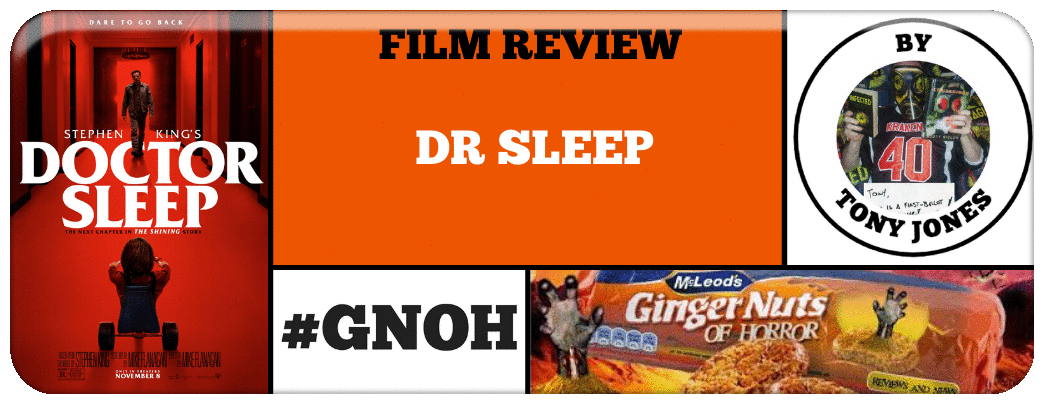
FILM REVIEW- DR SLEEP
Comments

THE YOUNG BLOOD LIBRARY: ​13 YA HALLOWEEN HAUNTINGS

29/10/2019
THE YOUNG BLOOD LIBRARY: ​13 YA HALLOWEEN HAUNTINGS
The thirteen offerings in this Halloween Hauntings feature have several things in common, the most important of these is that they are all outstanding reads and rank amongst the best YA dark fiction novels I have read in the cast couple of years. There is an outstanding mix of newcomers to the genre such as Amelinda Bérubé and Theresa Braun, mixing with genre big-hitters Amy Lukavics whom I have frequently reviewed and recommended on Ginger Nuts of Horror.

As it is Halloween time the inter-connecting theme of this article is hauntings, either in the context of haunted house fiction, or more personal individual hauntings. So, there are no zombies or vampires, just good old-fashioned scares. Which is, after all, the lifeblood of the genre and Halloween. 

All thirteen books have been previously reviewed on Ginger Nuts over the previous four years, so you might say I am cherry-picking some of my ‘haunting themed’ favourites in this article. All have been published in the last two or three years and the majority of the reviews are brief rewrites of longer original reviews.

They are not ranked, although the ‘Queen of YA Horror’ Amy Lukavics is undoubtedly first and she is the only author to feature twice. Sadly, Amy did not publish a novel in 2019, let us hope Her Majesty returns in 2020.  ​

1. Amy Lukavics – The Women In The Walls
​

Picture
The Women In The Walls is a complex, character driven, and highly enjoyable supernatural tale which reveals its secrets gleefully slowly through an excellently paced story. Seventeen-year-old Lucy lives in a huge house in the countryside with her cousin Margaret, they rarely see anyone except for her distant and distracted father and Margaret’s mother, her aunt, who acts like a surrogate mother.  Much of the early action focusses on the two teenagers, who are very close, and how they deal with the suicide of a servant in the opening few pages. Although they are cousins they are as close as sisters and are inseparable.  I loved the vagueness of the setting, time period and location, and although the odd hint thrown in here and there it was hard to pin-point. Considering they are two seventeen-year-old girls, there are no mobile phones, internet, boys, sex, very little mention of TV, school or other pop culture references. Neither do they go to school as we are told Margaret got into too much trouble. They seem to live in their own bubble in this big empty house.
 
Lucy is very close to her aunt, in many ways closer than Margaret which leads to some friction, especially after aunt Penelope disappears. No police come to look for the missing aunt and both Lucy and Margaret become suspicious. As do we the readers.  As the plot picks up the pace Margaret becomes withdrawn and believes she hears the voice of her missing mother in the walls, particularly the attic. Lucy, of course, doesn’t believe her. The novel has several very clever twists, a couple of which I didn’t see coming. You really can’t beat the cracker with the replacement cook! If you ever read it you’ll know what I mean.  The biggest compliment I can give a YA novel is when I read it with the same intensity as an adult novel, which I did with this and everything by this outstanding author.

2. Courtney Alameda - Shutter

Picture
After reading the brilliant science fiction horror Pitch Black I found Courtney Alameda’s Shutter highly impressed and it was top heavy with the supernatural. As with her other novel, the level of intricate supernatural world-building is first rate and there are a lot of ghosts. Micheline Helsing is a tetrachromat, a girl who sees the auras of the undead in a prismatic spectrum. So, in this world supernatural occurrences, ghosts, and much nastier beings are common as mud. As one of the last descendants of the Van Helsing lineage, she has trained since childhood to destroy monsters both corporeal and spiritual: the corporeal undead go down by the bullet, the spiritual undead by the lens. Hence why the book is called Shutter, the analogue SLR camera as her best weapon, Micheline exercises ghosts by capturing their spiritual energy on film.
​
Early in the novel a job goes wrong and one of Michelle’s friends is infected with a curse which will lead to death in seven days. As a YA horror novel Shutter really delivered in spades, it was fast paced, powerfully drawn characters, loaded with creatively drawn monsters, and Micheline’s team of sidekicks had more than enough whack to kick both the Ghostbusters and Buffy the Vampire Slayer into retirement.

3.  RIN CHUPECO - The Girl from the Well 

Picture
At first glance The Girl from the Well looks like a rip-off of Ringu, but in actual fact there is much Japanese folklore written into the context of the book. This novel is largely narrated by a ghost named Okiku, who being dead for several hundred years, was originally killed when she was thrown down a well. The main thrust of this story revolves around the ghost who rather brutally kills child murderers and rapists. She can see the dead children almost hanging around the neck of killers and the way she seeks revenge is pretty nasty and gruesome. Killing the murderers frees the spirits of the children which is what she wants to do.
 
The ghost Okiku is attracted to a teenage boy whom she can sense the aura of death around, but he is no killer, but is most certainly troubled. Also, the boy can see her, as can the boy’s cousin, a likable trainee teacher. So, these are the three main characters as we enter the realms of demon possession, exorcisms and some bloody killing. The book is initially set in America, before moving to Japan, where there is lots of stuff about Japanese culture involving the supernatural. It’s a well-paced read and you really feel for seventeen-year-old Tark who really has to face his inner demons. Literally. I really liked this book a lot, I thought it was very well balanced and the quirky three way friendship with the ghost (who let’s not forget was a multiple murderer) worked really well, as did the family dynamics of the boy who doesn’t realise he comes from a family who have powerful connections with the dead. The cover bills this book as ‘14+’ but I would be happy enough giving it to most kids who like horror, have a passing interest in folklore and legends or just want an entertaining page turner.

4. Richard Farren Barber - Closer Still
​

Picture
Richard Farren Barber’s Closer Still is a ghost story with a seriously good haunting, much of which never stretches beyond the bedroom of a deeply troubled teenager. This book was probably was not written with the YA market in mind, but the believable and engaging characters make it a book lots of young teenagers will identify with. Pulling in under 130-pages, with absolutely no flab or a word wasted, it could be the perfect gift for a kid who does not read much or is put off by big books and is interested in a very contemporary ghost story.Fifteen-year-old Rachel is bullied by a group of girls who used to be her best friends, with the tormenting often taking place at school. Much of the rest of the novella takes place in Rachel’s bedroom where she sees the ghost of her dead ex-best friend Katie. The ghost is not exactly unpleasant, more unnerving, but has an agenda of her own. Before the death all the girls were fast-friends and much of the novella is about what happened to the friendship and the circumstances which led to her death. The author expertly shrouds this shocking revelation until late into the story which picks up pace nicely as the ghost grows more powerful. This was a terrific novella which combines many clever story lines utilising social media, bully, teenage angst, friendship, guilt and the supernatural.

5. Alex Bell - Frozen Charlotte

Picture
 Alex Bell’s dark and unsettling tale of tiny porcelain dolls, the size of two pence pieces, is an edgy read loaded with tension and dark atmosphere. Right from the opening pages, with teenagers unwisely fooling with online Ouija boards it builds into an outstanding page-turner with these evil little creatures whispering from behind a locked glass cabinet and in their words they have the power to kill.  Equally demonic, the Charlotte’s have the ability to control and influence others to do their bidding, sneaking around a vast haunted house sowing horrible plans and turning characters against each other.
 
Loaded with gothic atmosphere, with a superb setting, a huge house converted from Dunvagen School for Girls which was closed in 1910, poor Sophie is sucked into a mystery which takes her all the way back to 1910.  But first she must solve the mystery of what really happened to her dead cousin Rebecca. Bearing in mind this novel is aimed at kids it has some hair-raising scenes, these nasty little dolls, once they escape from their cabinet even blind one of the characters with their “stick a needle in their eye game”. However, some of the most unsettling scenes are character driven, rather than perpetrated by the dolls. The pace moves fast, the characterisation is strong and the combination of mystery and the supernatural is finely balanced. It’s perfectly pitched at children who like a good mix of horror, thriller and mystery.

6. Laura Bates - The Burning
​

Picture
 
If you’re on the hunt for a YA novel which effortlessly blends the horrors of teenage social media with the tale of a 400-year-old witch trial then look no further. This was a superb read which carries a powerful message about the dangers of social media and peer pressure, delivering it in a naturalistic style, which never becomes heavy handed or preachy. In no time at all you will be rooting for the teenage protagonist Anna who is dragged through a horrific emotional wringer. The Burning is horror with a light touch, in reality the pain and long-term repercussions of one naive decision becomes scarier than any supernatural bogeyman. The fallout was severe and The Burning opens with Anna and her mother leaving their old life in Birmingham behind to live in a small coastal village near Saint Andrews on the east side of Scotland. Anna also changes her name and dreams of a fresh start.
 
Starting any new school is difficult and Laura Bates completely nails the awkwardness of this transition, but before long she becomes friends with local girls, but bullying is never far away and soon her past catches up with her. The Burning has a second main story which nudges it into the horror genre, beyond the horrors of everyday teenage life (which were more than enough). As part of a school history project everyone has to research a topic of local interest and after Anna discovers an obscure reference to someone who was suspected of being a witch 400 year earlier. As she uncovers the story, the plight of Maggie, she realises the ‘witch’ has many startling similarities to her own story and starts to feel a strong connection to the long-dead young woman, part of which whose story is told in flashback mode. This very clever novel, both in the 400-year-old story and Anna’s predicament raise startling similarities in how the woman is very often seen as the blame or cause, rather than the victim in these types of cases. In my experience in YA fiction kids generally avoid books which obviously have a heavy-handed message, The Burning works because it combines the message of the dangers of social media with a top-notch story, believable story and a convincing dose of history.

7. Amelinda Bérubé – Here There Are Monsters 

Picture
I was really captivated by this slow-burning YA horror/fantasy novel which genuinely nailed the troubled psyche of a sixteen-year-old girl who is trying to deal with the sudden disappearance of her little sister, aged thirteen. The younger girl Deirdre has issues, which are revealed slowly as the plot moves backwards and forwards through narratives before and after the disappearance. Although Skye was not to blame, she feels guilty and it puts a strain on her relationship with her struggling parents who try not to accuse her. But when they’re so stressed tensions run very high. 

The supernatural aspect is slowly filtered into the book and the haunting aspect of the story is cleverly connected to Skye, her new friends and what lives within the local forest. Or is it something which has followed the sisters throughout their childhood? The compelling friendship dynamics Skye has with her new school friends works very well as she struggles to cope even more as the length of the disappearance stretches. The mystery quickly deepens and I found this to be an excellent and atmospheric read for teenagers looking for a subtle supernatural slow burner.

8. Jimmy Cajoleas - The Good Demon

Picture
The Good Demon was a very refreshing, rather different, and quite funny spin on the possession story which begins after a demon is forcibly removed from teenage Clare by two charismatic Christians. This was not exactly an exorcism, as exorcisms are Catholic ceremonies, this was a ‘deliverance’ and what makes this slightly odd is that Clare is really sad to be without her demon, which had lived within her for a number of years. She always looked upon the demon as a friend and a comforting experience which she referred to as ‘Her Only’. She is struggling to get on with her life when she meets the teenage boy who helped with the deliverance and they become friends, with him feeling a certain about of guilt for his part in the ‘deliverance’.

Bizarrely, although the demon is gone Clare believes she is receiving messages from ‘Her Only’ she begins to search for her demon, with the teenager whom she begins to fall for. You’ll have great fun following the clues, meeting irrelevant characters and will be rooting for Clare in no time, who was a lovely character with an authentic voice. There was a lot going on and the book has much to say about fundamentalism, family, first love in a very entertaining and non-judgemental manner.

9. Ann Dávila Cardinal - Five Midnights 

Picture
I thoroughly enjoyed this fast-paced supernatural thriller set over a few hot and sweaty days in Puerto Rico. An American teenager (who has a Puerto Rican father) who speaks rubbish Spanish visits the island for the summer she gets sucked into a supernatural mystery surrounding the disappearance of her cousin and several of his friends. Luckily her uncle is the chief of police and so she has some insider knowledge on what is going on and inserts herself into a convoluted supernatural mystery.

The horror aspect revolves around the Puerto Rican version of the boogieman who is killing teenagers with birthdays whose are very close together and known to Lupe. Has someone activated a curse? Seen from multiple points of view, throw in a splash of romance, a musical heartthrob, Lupe is an energetic lead character who is not scared to clash with the tough local women who see her as a ‘gringo’ interloper who needs to be put in her place. Ultimately the rationale behind the supernatural part of the story was slightly weak and the evil entity could have had more page time to ramp up the fear levels and developed more for the non-Puerto Rican audiences who know little of this type of being connected to this Central American culture. They are small quibbles though for an entertaining supernatural thriller with a convincing and enlightening culturally different setting.

10. Dawn Kurtagich – Creeper Man

Picture
Creeper Man was a challenging, twisty, unpredictable and layered in such an intelligent manner, adults could enjoy it as well as any teen reader. On the simplest level the plot revolves around two sisters who escape London and their violent father to live with an aunt in a remote country house in the middle of a forest. Something happens to the aunt and she seemingly shuns the girls and locks herself in the attic. The intimidating dense and surrounding forest seems almost alive and threatens the sanity of the girls, which is questioned repeatedly throughout the novel. For much of this multi-layered corker you can never really be sure whether there is a supernatural entity at work or whether everything is psychological.

 
The Creeper Man of the title is a superb creation and is as effective as any bogeyman creation in most adult horror as he and the imposing forest move closer to the girls as the sanity of the elder girl disintegrates. You’ll find yourself asking questions, such as when is it set? Why don’t the girls go to school? Why are there no phones? Is there a war going on? And not all these questions are answered as this claustrophobic read has a truly remarkable unreliable narrator in Silla.  The merging of her delusions with reality play a crucial part of this exceptionally clever psychological horror novel which is fiendishly well plotted with a superb ending and very clever twist. I highly recommend this challenging novel which is teen horror of the very highest order.

11. Amy Lukavics – Devils Unto Daughters
​

Picture
 
It’s rare to see a ghost or horror story set on the plains of the pioneer era American outback so Daughters Unto Devils was a rather unique experience.  ​This wickedly well-crafted chiller had more creeps in it than many adult horror novels and has an edginess you rarely find in horror aimed at teens. Written in the first person, with a very authentic 16-year-old female narrator, who lives with her parents and four younger siblings in a remote cabin near the bottom of a mountain. She is secretly having an affair with a post delivery boy and early in the novel realises she is pregnant. There is a second narrative which flicks back to the previous year when there was a severe snowstorm, stranding the family in their home, while their mother became ill while heavily pregnant. In the midst of all this stress, Amanda flips out, claiming to see the Devil after which she struggles to grasp onto reality. Whether her visions are merely cabin fever or something else isn’t revealed, but this ‘episode’ is something which the family don’t talk about and is the elephant in the room.
​

Amanda feels guilty over everything, particularly praying for the death of her unborn child and her youngest sibling who screams and screams all the time, while the reader isn’t sure how sick the child is. Imagine ‘The Little House on the Prairie’ with demons and you are heading in the direction this novel moves into. As the plot develops the family uproot themselves, based on superstition again, and relocate to a prairie close to a forest. Moving into an abandoned cabin the supernatural element of the novel kicks in and you feel the helplessness of the young children who are easy prey without their parents. Thrown into the mix are demons, madness, guilt, nutty neighbours, young love and teenagers struggling to hold their family in the face of real nastiness, real and very probably supernatural. There is also a meat pie you really wouldn’t want to eat, and don’t even mention the ant scene! At 200 pages it’s the perfect length for teenagers who enjoy intelligent horror. It has a strong, spunky, female lead, who although she is pretty tough on herself, is both engaging and a great girl to root for.

12. Theresa Braun - Fountain Dead
​

Picture
Mark and his family relocate due to work reasons and he finds himself friendless and lonely in a big old house which right from the start gives him the creeps and feelings of unease. Crucial to the story, he is also becoming aware that he is gay. The sexual awakening part of the story is handled very well and is convincingly woven into the supernatural plot which spirals back to the early inhabitants of the house in the 1860s. Mark also has a dominating mother, and a little sister, both of which play an important part of creating a convincing family dynamic.

Although Fountain Dead is not a long book and I hope potential teen readers find the 1860s storyline set in the Civil War period concerning American Indians as engaging as the present-day sequence which takes place in 1988. The way in which the paranormal activity escalated and morphed into a creature story was entertaining but the tension could have been ramped up even higher. Often in haunted house novels it is the location which dominates proceedings, but on this occasion I thought the central character Mark was the real strength of the story and that’s a key ingredient to a successful YA novel. This thoughtful and entertaining ghost story has much to catch the eye of teens you enjoy character driven supernatural thrillers.  

13. Pam Smy - Thornhill

Picture

Thornhill by Pam Smy is a huge book weighing in at around 500 pages which an adult could easily read in a couple of hours, mainly because it is a time-slip story with the present-day element told only in pictures, which are just so easy to read! So, the haunting story of Thornhill has a lot of illustrations, in a style made popular in recent times by Brian Selznick’s The Invention of Hugo Cabret and his other novels.

Thornhill itself is a care home for kids in 1982 which is shortly going to close for good, the story focusses on Mary who is a lonely orphan who suffers from selective mutism and is bullied mercilessly by other girls and one particularly nasty girl who is the ringleader. Flick forward to 2017, Ella moves into a new house which overlooks the burned-out shell of Thornhill and she is sure she can see a ghostly figure watching her in the derelict building and in her loneliness feels an attachment to her. Adult readers will be able to tell where the story is going, but it is so beautifully told you will still have a tear in the eye come the end. The drawings are so simplistically great they really do tell the 2017 story of Ella without the needs of any words at all.

GINGER NUTS OF HORROR THE BEST HORROR REVIEW AND HORROR PROMTION WEBSITE DFOR HORROR BOOKS AND HORROR FILMS
the-world-of-the-unknown-ghosts-part-2-matt-cash_orig
Comments

​INTERVIEWING ALDEN BELL OR IS IT JOSHUA GAYLORD? I’M CONFUSED!

21/10/2019
​INTERVIEWING ALDEN BELL OR IS IT JOSHUA GAYLORD? I’M CONFUSED!
My dad reviews a lot of horror novels and gives me most of my reading material. About six months ago he gave me a book called Reapers are the Angels, he watched me closely as I read it, especially as I got near the end, I think he hoped I would cry. I did, the ending was so sad. I think my dad was secretly pleased about my tears. A few weeks ago, he brought home a book called When We Were Animals, I did not cry, but I still loved it. My dad told me it was written by the same author who wrote Reapers are the Angels, but he used a different name.
 
My dad had known Josh/Alden for a few years on social media, so we contacted him about this interview and review. Both books really caught my attention and I could not quite figure out whether they were adult or Young Adult (YA), whichever, they both genuinely moved me. I’m sure Josh had been asked these questions many times before, but I loved his answers and it was a real thrill for him give me book recommendations and reveal more about the amazing character ‘Blackhat Roy’ (my favourite) from When We Were Animals.
 
AJ: Why do you write under two names Joshua Gaylord and Alden Bell?
 
Josh: This was my editor’s idea.  My first book, Hummingbirds, was a very straight-forward literary New York girls’ school novel.  Nothing supernatural, nothing scary.  So, when my second novel turned out to be a post-apocalyptic Southern Gothic zombie novel, the people who are in charge of the marketing end of my life thought it would be a good idea to develop a separate brand. 
 
AJ: Both novels feature incredibly convincing teenage girl characters. How did you do it? Why girls?
 
Josh: For my money, teenage girls are the best kinds of characters to write about.  Somehow, whatever they’re doing is believable.  I think it’s because teenage girls are masters of disguise—professional adopters of roles.  They luxuriate in their own drama and they are taught by culture to don a different mask for every circumstance.  What more could you ask from a character?  Also, when I was a teenager myself I think I was more of a teenage girl than a teenage boy.  I had no idea how to interpret boys.  They wanted me to hit a ball with a stick and run around in a circle. 
 
AJ: Why did the ending of ‘Reapers Are The Angels’ have to be so sad? Did you ever consider any alternative? Both my dad and I cried at the end.
 
Josh: I cried at the end too.  I think I chose that ending for a few reasons.  *Spoilers ahead* First, I didn’t want to be pressured to write a sequel.  I love the character of Temple, and I wanted her to exist in her most perfect form.  I think I was worried that if I wrote more about that character she would get diluted over time.  Or she would become a parody of herself.  It’s like Housman writes in “To an Athlete Dying Young”—sometimes it’s best to make your exit when you’re at your peak.  Also, I think Temple’s death is a beautiful inevitability.  I love that character all the more precisely because she’s doomed.  To have taken away her doom would have been to do her an injustice.
 
AJ: My favourite character in ‘When We Were Animals’ was Blackhat Roy can you tell us a little bit about how you dreamed up this character? He had this really engaging edge and layers which I found genuinely intriguing and way more interesting than ‘boring’ Peter!
 
Josh: You have made the classic and inevitable choice.  Have you read Wuthering Heights?  Blackhat Roy is exciting, dirty, violent, passionate, problematic Heathcliff.  And Peter is gentle, boring, pleasant Edgar.  Everyone chooses Heathcliff.  You have to choose Heathcliff.  And then you have to reckon with what it means about you that you have chosen the dangerous option, the “bad” option.  That’s the fundamental question for Lumen in the book: She is a classic “good girl” developing a taste for things that are unquestionably “bad”—and she is forced to ask herself what that means about her identity.  Where exactly does she fit in—and what aspects of herself is she fighting against?
 
AJ: Do you see ‘Reapers Are The Angels’ and ‘When We Were Animals’ as Young Adult novels or adults? Do you know of many teenagers reading them? I probably would never have discovered them except for my dad.
 
Josh: When I wrote them, I didn’t think of them as YA books.  I didn’t think of them as adult books either.  I just thought of them as books I would like to read.  My publishers like to market them as YA/Adult crossover novels—but I’m less concerned about categories and labels.  I think teenagers can certainly read them, and I think they would recognize a lot of themselves in the books.  But I think that’s true of adults too.  If you try to write something authentically human, then I don’t think such writing has age limits.
 
AJ: I read you are an English teacher? Do your pupils know you write horror and if so do they read it?
 
Josh: They do know—and, sadly, they don’t care.  It’s an odd phenomenon.  When you’re standing in front of a classroom, you’re just an English teacher.  They know I write books, but I think they see me as too common or goofy to be taken seriously as a writer.  Once you start giving people pop quizzes on their reading, they stop being able to see you as a high intellect.  The funny thing is that I have a friend who teaches at another school, and she has told her students that she knows a writer.  Her students are fascinated with me, apparently.  There’s an adage in there somewhere.  If you get too close, the luster wears off.  I’ve stopped trying to be impressive to people I see every day; I’ll stick with trying to impress people I don’t know. 
 
AJ: My dad says ‘Reapers Are The Angels’ is the finest zombie novel ever written. I loved it too. Do you read zombie fiction and if so what do you recommend or were inspired by?
 
Josh: Actually, I don’t read zombie fiction.  But the books that inspired it are Southern Gothic novels.  If you like Temple, try Tom Franklin’s Smonk or Daniel Woodrell’s Winter’s Bone.  Those are both books with main characters who inspired Temple.  And, of course, William Faulkner.  Just read all the Faulkner you can stomach.  There’s nothing better.  In terms of the zombie mythology, I was inspired by movies—especially George Romero’s Dawn of the Dead.  I’m a fan of traditional slow zombies.  Once zombies start running, they hog too much of the story space.
 
AJ: In ‘When We Were Animals’ there are no mobile phones and the time period is very vague, when the teenagers go out ‘breaching’ is it supposed to symbolise periods when kids fooled around without phones and social media?
 
Josh: I know—it’s kind of anachronistic.  My first novel is also about a contemporary high school, and there are also no mobile phones.  Honestly, it’s hard for me to incorporate mobile phones into my books.  Those things are like where drama goes to die.  Even in real life.  I see my students spending so much time on their phones, and it makes me sad to think what their version of human communication has become.  I know I sound like an old man—but I do notice how teenagers’ interactions with each other have started losing their spark and spontaneity.  Their reactions IRL are dulled.  Their conversations are curtailed.  When I wanted to talk to a girl in high school I had a crush on, I was a blathering mess.  It was like my own personal journey through hell, because there was was—right in front of me.  For teenagers now it’s too easy to avoid those journeys into hell.
 
AJ: ‘When We Were Animals’ came out in 2015, do you have anything new coming out soon or what are you working on?
 
Josh: I have a number of projects I’m working on—but they’re all in various stages of incompleteness.  There’s actually a third book in the Reapers series that I’m currently trying to find a home for.  Fingers crossed - I would love to see that one in print.
 
AJ: Which horror authors would you recommend to a fourteen-year-old (me) or the kids in your classes?
 
Josh: When I was fourteen, I was immersed in Stephen King and Clive Barker—but I also had a real fixation on gore and the grotesque.  Clive Barker is wonderful because so much of his stuff involves body horror—which is particularly apt for teenagers.  But, of course, you have to have the stomach for it.  I wouldn’t recommend it to the faint of heart. 
 
AJ: In ‘When We Were Animals’ the phenomenon of ‘breaching’ when teenagers run wild and crazy at night is never truly explained why it happens, but the moon seems to play a key role, could you expand upon this a little bit? To begin with I thought it was werewolves!
 
Josh: Yes, the story is definitely my version of werewolf mythology.  But it also comes from the fact that when I was younger I always romanticized werewolves because of their freedom.  I was like Lumen—a good student who was always overly concerned with what people thought about me.  When I thought about what it would be like to be a werewolf, I imagined not caring about all the mundane daily concerns of image or moral consequence.  I loved the idea of just running through the streets, not caring what people thought about me.  For me, the werewolf mythology was always about fulfilling the fantasy of being selfish, of dropping the choirboy façade I was so intent on maintaining.
 
AJ: Could you explain the lack of speech marks and punctuation in ‘Reapers Are The Angels’? It was confusing at first, but I quickly got into the rhythm of it.
 
Josh: That’s a convention of the Southern Gothic style—and I wanted to acknowledge that I was writing in that style.  For me it represents the breakdown of the barrier between dialogue and exposition.  I like the fact that my characters’ voices don’t always seem realistic.  Temple’s voice is too inexplicably poetic and majestic for her character.  That’s the author’s voice creeping in.  That’s the exposition merging with the dialogue.  The lack of quotations marks represents that.
 
AJ: Thank you so much Josh, I’m going to read ‘Wuthering Heights’ next!
 
AJ
Check out Aj's feature on Alden Bell / Joshua Gaylord by clicking here 
GINGER NUTS OF HORROR THE BEST HORROR REVIEW AND HORROR PROMTION WEBSITE DFOR HORROR BOOKS AND HORROR FILMS
​THE MAN WHO WITH TWO NAMES, EXPLORING-‘REAPERS ARE THE ANGELS’ AND ‘WHEN WE WERE ANIMALS’
Comments

​THE MAN WHO WITH TWO NAMES, EXPLORING:‘REAPERS ARE THE ANGELS’ AND ‘WHEN WE WERE ANIMALS’

21/10/2019
​THE MAN WHO WITH TWO NAMES, EXPLORING:‘REAPERS ARE THE ANGELS’ AND ‘WHEN WE WERE ANIMALS’
The man who with two names, exploring:
‘Reapers Are The Angels’ and ‘When We Were Animals’
I recently read two very different novels by Alden Bell and Joshua Gaylord only to discover they are in fact the same person. Those novels were Reapers Are The Angels and When We Were Animals and had me wondering which guy was the real deal; Josh or Alden? Or both maybe? I enjoyed both books mainly because they both had very strong female protagonists who both moved me in different ways. What else did they have in common? Not much really, except that they were both brilliant and I highly recommend them.

My favourite leading female of the two was most definitely ‘Temple’ (from Reapers) who was the ultimate free spirit. A fifteen-year-old girl seeking redemption, who had lived her entire life in the aftermath of a zombie apocalypse, trying to survive in a world slowly beginning to recover. She’d lived by herself for most of her life, struggling to connect with the other people she met along her journey. On the other hand, we have ‘Lumen’ (from Animals) who narrates her story in first person and has a different kind of inner strength. Lumen was a very introverted person, in many ways the opposite of Temple, who hangs in the background, watching from afar and never quite sure whether to join in, or whether she would be wanted.

The Reapers Are The Angels follows Temple as she is hunted down by a man called Moses after killing his brother, who tried to rape her. Along the way she runs into many characters including Maurey, who has special needs, and takes him with her on her journey or race away from Moses. Throughout the story flashbacks reveal why she decided to help Maurey and the underlying reason for her guilt. One of the most memorable scenes in the novel, which truly creeped me out, was when Temple ran into new, different type of zombie which I like to call ‘zombie hillbillies’, an inbred super-zombie which had been experimenting with other substances.

The beautiful novel, which ranks amongst my favourite books, is very much a journey for Temple both literally and figuratively. It seems weird to call a zombie novel ‘beautiful’ but there was just something about it which really moved me. Another powerful scene was when Temple goes on a date with a random boy she met at a town that is beginning to reclaim areas street my street. She has a cola-cola with ice, hangs out, although deep down she feels she doesn’t belong and wants to hit the road again. I also enjoyed the moments between Moses and Temple, even though he’s the villain because they were so similar to each other.

What sets this book apart from other zombie fiction was that the creature aspect of the novel is not the centre and lurks in the background leaving space for plot development and the characters to breathe. I recommended that you keep some tissues nearby while reading it because I cried my eyes out at the end of it. My dad, who recommended the novel, was very pleased with my tears.  

When We Were Animals is a strange novel about a small town where when teenagers reach a certain age, they go ‘breaching’. Although the concept of breaching is never fully explained, it is best described as a pull where the teens lose control, running wild in the streets, sometimes naked, losing all normal inhibitions. Their parents don’t do anything about this because they did it themselves years earlier and it is seen as a peculiar right of passage into adulthood.

Lumen, however, swears she’ll never breach because of her mother. Soon everyone around her is breaching apart from her, including her only friend Polly. When the sound of the teens howling echoes the streets she hears her classmates calling her name and the pull becomes almost irresistible. The story also has many notable characters such as: Blackhat Roy, who is a personal favourite of mine and a real standout figure in the story. The novel also flashes forward to see Lumen as a married adult with a son, as she reflects back on her past and begins to feel the urge again.

I felt both novels had similar aspects; both are coming of age stories that include love, death and teenagers with strange types of freedom. Both also spend a lot of time alone.  In the world of 2019 technology is a huge part of life but in these stories it is barely ever mentioned. Allowing the plot to flow and the roaming of the characters to be rich and be grounded in reality. Though Lumen and Temple live in two very different worlds, they are both young girls growing up in hard places and in the end they are both human and very fragile characters which really touched me.

It was very hard to tell whether both books were adult or Young Adult novels, my dad gives me a mixture of both to read. When I get into a book I have real tunnel vision for it and I had that feeling for both these stories.

One of the stands out of When We Were Animals was the bad boy Blackhat Roy. He wasn’t a main character but his shadow dominated the book and I felt myself pulled to his dark, irresistible, side. Blackhat Roy was nasty, interesting, layered, violent and very human character that was entertaining to read and was the only true choice of Lumen. (RIP Peter).

I’m not too sure how well-known Angels Are The Reapers and When We Were Animals are, but I would recommend them for strong teenage or adult readers who enjoy clever horror about people in tough situations. My dad is a massive fan of this author also and we both hope he brings out another book soon.

I wonder how Lumen survive in a zombie-apocalypse? Or what would Temple make of the drama of high school? Maybe Alden or Josh will tell us in the accompanying interview.
AJ
Check out our interview with Alden Bell here 
GINGER NUTS OF HORROR THE BEST HORROR REVIEW AND HORROR PROMTION WEBSITE DFOR HORROR BOOKS AND HORROR FILMS
​INTERVIEWING ALDEN BELL OR IS IT JOSHUA GAYLORD? I’M CONFUSED!
Comments

THE YOUNG BLOOD LIBRARY:  SEPTEMBER HORROR AND DARK FICTION ROUND-UP

16/10/2019
THE YOUNG BLOOD LIBRARY:  SEPTEMBER HORROR AND DARK FICTION ROUND-UP
In the last couple of months some terrific titles have come my way, which include dark fantasy, some juicy romance and the usual taste of teen dystopia. There are ten to choose from and hopefully you will be able to find something to catch the eye of a bored teenager, favourite niece or nephew, or stock up your library with new selections. They are not ranked in any particular order.


Alexander Yates - How We Became Wicked

Picture

How We Became Wicked was an odd, but entertaining, mix of apocalyptic and dystopian thriller. At some point in the past a type of ultraviolet mosquito like insect, which become known as ‘Singers’, carry an infection which leads a huge proportion of the human population being murdered by the other half (or third…) The plague, which is called ‘Wicked’, spreads through the world creating three types of people which effectively ends the world as we know it. The story picks up the action some years later when humanity is on its last legs.

Modern teen dystopian fiction is forever splitting people into groups, but the idea in How We Became Wicked is quite a neat one. Group one is ‘The Wicked’ who have been bitten by the ‘Singers’ and live solely to kill those who have not been infected. They are not mindless thugs and maintain an intellect and can hide their infection before casually adding something like “I would really like to explore the inside of your brain” into the conversation. The Second group is ‘The True’ who live in contained and isolated communities and the novel is set in one of these communities on a remote Canadian island, which has been cut off from the rest of the world for years. The third group is ‘The Vexed’ which is a much smaller group who are immune to the mosquitoes, some of which live with ‘The True’. The story is  mostly seen from the point of view of two teenagers, who were once a couple, one is ‘True’ and the other ‘Vexed’ and a complex and clever plot as they begin to dig into the history of the plague, weird goings on at the lighthouse on a neighbouring island and how it is to be the two youngest inhabitants at the island by some years. This book was outstandingly quirky, had lots going for it, many clever observations and an outstanding ending. Highly recommended. Aimed at kids aged thirteen or older.

Caitlin Kittredge – Dreaming Darkly

Picture
I was quickly sucked into Caitlin Kittredge’s moody and twisty gothic mystery, Dreaming Darkly, which was loaded with a tasty dose of moody teen romance. Set on Darkhaven, an American island off the New England coast, whose sole occupants are two feuding families, this atmospheric, fast-paced page-turner featuring a teenager who moves to the island after the death of her mother. Sixteen-year-old Ivy Bloodgood ends up staying with her uncle, a man she never knew existed until he claimed her after her mother’s death. At first it looks like things might be working out for Ivy, who is a great leading character, until odd things begin to happen around her and she begins to see weird things, has crazy dreams, wakes up in odd places and begins to question her own sanity.

Along the way Ivy meets the teenage son of the neighbouring feuding family and hears of an old family curse; the majority of which either end up committing suicide or murdering someone. Friendship soon develops and the boy helps her solve the mystery of who she is and who her absent (or dead) father is. Nothing is quite what it seems and Dreaming Darkly is a fine mix of moody family drama, teenage angst, mystery novel with heavy supernatural overtones. Aimed at kids aged thirteen or older.

Kiran Millwood Hargrave - The Deathless Girls

Picture
There seems to be a neverending supply of books, particularly in YA, with new stories being spun out of famous fictional stories. The Deathless Girls is a fine YA version of one of these and builds a story out of minor female vampire characters in Stoker's Dracula. In actual fact, they are so small I think they only featured in a few background scenes as his brides. So, it's an interesting, but very inevitable story, as readers of Dracula will know what is going to happen in the end. You do not have to have read Dracula to enjoy this though, the Count is barely in the book until the latter stages, but his mystique and reputation pre-empts his eventual appearance and he is nicely foreshadowed.  

The story is told through twins, Lil and Kizzy, who see their home burned and their family slaughtered and they are then sold as slaves. Much of the novel is about their unfortunate progression to eventually end up in the clutches of Dracula. Teen readers may find this a tad slow, but it is worth sticking with, both girls were engaging lead characters, with Lil narrating the story. Her sister always being the more outgoing and popular of the two and was greatly admired by Lil. The book puts much focus on the origins of the girls, who are gypsies and are looked down upon most of the others and culturally much information is provided on their background and Lil follows her sister who is taken to Dracula's castle first. This was an engaging historical fiction novel which wisely spent more time on the girls, their history family and culture, than on the vampire. Although I would not necessarily call it a horror novel, it will probably have more appeal to girls than boys and has much to say about how women and gypsies were treated in earlier centuries. Aimed at kids aged thirteen plus.

​Dawn Kurtagich - Teeth in the Mist

Picture
I am a huge fan of Dawn Kurtagich and we have featured both her previous novels The Dead House and Creeper Man on Ginger Nuts. Her latest novel Teeth in the Mist is perhaps even more ambitious and is a complex story, set in a huge mansion in rural Wales, split over three narratives in the present day, 1851 and 1583 with a strong supernatural theme permeating through the story. It was a very chunky book, with different fonts and voices and took a bit of time to get into the flow but it is worthy sticking with. This was the case with both her previous two novels, let us hope teenage readers give it a chance as it is not an easy read and will challenge many.

Sixteen-year-old photography buff Zoey ends up at Medwyn Mill House and is fascinated with the ruin and after spending the night there with her friend Poulton and is sure they are not alone.  Jumping back to 1851 seventeen-year-old Roan arrives at Mill House as a ward and soon realises she is connected to an ancient secret and must try and escape the house, but that is not as easy as it might sound. However, there is something connecting the three young women, which also includes Hermoine who relocates with her husband to the same area in 1583.  This was a very strong blend of mystery, horror and dark fantasy, even if it did not quite unsettle me in the way the magnificent Creeper Man did. But is certainly another highly original read as I have come to expect from this talented writer. Aimed at kids aged thirteen plus.

Jimmy Cajoleas - The Good Demon

Picture

The Good Demon was a very entertaining, rather different, and quite funny spin on the possession story which begins after a demon is forcibly removed from teenage Clare by two charismatic Christians. This was not exactly an exorcism, as exorcisms are Catholic ceremonies, this was a ‘deliverance’ and what makes this slightly odd is that Clare is really sad to be without her demon, which had lived within her for a number of years. She always looked upon the demon as a friend and a comforting experience which she referred to as ‘Her Only’. She is struggling to get on with her life when she meets the teenage boy who helped with the deliverance and they become friends, with him feeling a certain about of guilt for his part in the ‘deliverance’.

Bizarrely, although the demon is gone Clare believes she is receiving messages from ‘Her Only’ she begins to search for her demon, with the teenager whom she begins to fall for. You’ll have great fun following the clues, meeting irrelevant characters and will be rooting for Clare in no time, who was a lovely character with an authentic voice. There was a lot going on and the book has much to say about fundamentalism, family, first love in a very entertaining and non-judgemental manner. Highly recommended. Aimed at kids aged thirteen or older.

Rory Power - Wilder Girls

Picture

For a book which Amazon claims was “an instant New York Times bestseller” it was incredibly difficult to find a copy and one presumes it will become easier when the paperback surfaces in the UK next February. Wilder Girls begins eighteen months into a quarantine in which the Raxter School for Girls has been cut off from the rest of the world. Because it’s set on an island, once a weird illness called the ‘Tox’ begins to manifest, keeping the girls isolated on a corner of the island is not too difficult. However, the government airdrop in minimal food and switch off the telephones and internet and the reader soon realises something truly fishy, or some kind of conspiracy, is going on. 

The ‘Tox’ can lead to strange body altering manifestations such as developing a second spine, or an eye closing over, bits of anatomy fall off or grow in weird ways….. Over the eighteen months many girls have died and as the promised cure has failed to materialise the ‘Tox’ forces the girls to go to extremes to survive. It is not difficult to see why it has been compared to Lord of the Flies, but I thought it had more in common with Kim Liggett’s The Grace Year which I reviewed last time out, even though it was not set on an island, it has the same strong female vibe to proceedings. The story is seen from three rotating perspectives Hetty, Reese and Byatt who have complex relationships and friendships with each other. Although it was a very enjoyable read which I’m sure teenagers will get sucked into, I thought the ending was a bit tame, but it did successfully blend the troubled teenage psych with extreme situations. Aimed at kids aged thirteen or older.

Carrie Jones and Steven E Wedel - In the Woods

Picture

Although it offers nothing new In the Woods was a very enjoyable and engaging collaboration between Carrie Jones and Steven Wedel, set in a small Oklahoma town in the Ozrak mountains. The book was split into two very distinct first-person narratives ‘Chrystal’ and ‘Logan’ perhaps the authors each created a ‘voice’ and if so it worked a treat. The action opens in Logan’s farm where he hears something attacking one of their calves, although he does not get a clear view of the assailant he is certain it is not human. Meantime, Chrystal who is on holiday in New York, is dismayed to be pulled away from her fun to head to Oklahoma with her cryptozoologist father who is obsessed with finding evidence of everything from Big Foot to aliens. The story ends up in the National Enquirer and before long Chrystal and her father are knocking on Logan’s farm door not for the scoop, but to investigate further.

From then on In the Woods hits the ground running and is a fine horror Scoobie Doo style monster-mash-up mystery with a tasty dose of awkward romance. Both lead characters are very likable and really carry the novel and develop a friendship, or something more, when it seems like the creature is targeting locals after the disappearance of a teenage girl. The support cast were terrific also, I especially loved the way Chrystal tolerated her very quirky father, who when he wasn’t creature hunting was a kinder garden teacher!  It was a well-paced novel when built suspense nicely before its big reveal. If you’re a fan of big hairy monsters stalking spunky teenagers jump right in, there is a lot of fun to be had here. Aimed at kids aged thirteen or older.

Emma Berquist Missing - Presumed Dead

Picture

With a brief touch, Lexi can sense how and when someone will die in Emma Berquist’s second novel Missing Presumed Dead, this is nothing new and the idea has been used in many similar YA novels, the best of which is probably Rachel Ward’s Numbers. To Lexi this is a curse and because of it she struggles to make friends, isolates, and spends much of her time alone. After Lexi forsees a brutal murder, but is unable to stop it, the ghost of the dead girl repeatedly appears to Lexi and she feels she has more connections with the dead rather than those she lives with. The dead girl is also very beautiful and Lexi is more than happy to help the ghost solve her own murder as there is a strong attraction.  It was a nicely paced supernatural murder mystery with a convincing LGBTQ element to the story. Aimed at kids aged twelve to fifteen.

Mary Downing Hahn – The Girl in the Locked Room

Picture
​
The Girl in the Locked Room is the perfect start for kids aged around nine or ten looking for haunted house stories which are not too scary, or long and have believable likable characters. Jules and her family move into a big old house which needs a lot of construction, the building gives her an odd vibe and before long she believes there is a girl (or a ghost) living in the locked top floor room. Moving back and forwards in time to when the ghost was alive Jules soon begins to unravel the secrets of what happened in the house over a century earlier. Not all ghosts are scary or nasty and this is a nice play on the ‘friendly’ ghost theme which also looks at friendship in a non-threatening manner and if parents are reading it aloud to younger children there is much to discuss. Aimed at kids aged eight to ten.

Susan McCauley – The Devil’s Tree

Picture

Although Susan McCauley’s debut The Devil’s Tree was an easy enough read, it contained little in the way of originality to distinguish it from the overcrowded YA pack and relied upon overfamiliar horror tropes. The main character Kaitlyn is fooling around with boyfriend Hunter and other best friends Dylan and Keisha; after some heavy drinking head to a local spot which has the reputation for being haunted, an old tree which nothing grows round. Before long they feel a disturbing presence and after a car crash manage to escape, however, there are terrifying casualties and consequences.

Believing the tree, or a curse to be involved, Kaitlyn wracked with guilt and with her own family problems begin to investigate the history of the tree. Before long we head into yet more Scoobie Doo territory, Ouija board and all, none of which is remotely scary or believable. Throw into the mix some social commentary regarding Kaitlyn’s attempts to get to college and escape the family trailer park with her alcoholic mother, a new romance and an unconvincing exorcist story. The end result is a bland horror novel which many teens might struggle to engage with, or quickly realise there is a lot better stuff out there. Aimed at ages twelve plus.
​
Tony Jones

GINGER NUTS OF HORROR THE BEST HORROR REVIEW AND HORROR PROMTION WEBSITE DFOR HORROR BOOKS AND HORROR FILMS
book-review-soon-by-lois-murphy_orig
Comments

THE STRANGE DISAPPEARANCE OF THE MALE LEAD IN YA DARK FICTION

24/9/2019
THE STRANGE DISAPPEARANCE OF THE MALE LEAD IN YA DARK FICTION
When I recently read both Jacqueline West’s excellent YA novel Last Things and Frances Hardinge’s dark fantasy Deeplight I sighed with relief as both featured something which is seemingly becoming an endangered species in teen horror and dark fiction… male leading characters. Ginger Nuts of Horror probably reviews more YA dark fiction novels than anywhere else on the internet and when we look back at the books featured the bias towards lead female characters in the last couple of years is startling. This article, in a very general manner, bounces around some observations based upon over 200 books we have featured since 2015.

Is the main character?                                FEMALE                  MALE                       BOTH/MIX
Books reviewed 2015/16                               35                              38                              37
Books reviewed 2017/18/19                        72                              15                              18

 
When Ginger Nuts seriously started covering YA novels back in 2015, many of our early posts included the equivalent of ‘best of’ lists based upon books I read over many previous years, as time progressed this has evolved to predominately feature new fiction. The books reviewed in 2017 and beyond are almost exclusively new titles and are a very good reflection of what is readily available on the market. I work as a School Librarian and actively select/seek out books which are aimed at both boys and girls and have recently been struggling to resource books with leading male characters. Indeed, recently a respected and well-informed American horror blogger contacted me and asked for good suggestions which featured leading YA male protagonists. I struggled to come up with a list and that initial enquiry partly inspired this article.
 
So, where have all the boys gone? There is no single answer, but lots of contributing factors, many of which are connected to YA in general, not singularly horror. Here’s some food for thought, feel free to disagree….
 
Are there any ‘best-selling’ YA horror authors in the UK?
 
Sadly, YA horror is not a huge market and at the moment, perhaps the UK in particular, is struggling for a horror poster boy (or girl) author. Who are the biggest names in the market? The answer is disappointing: there are none. Many of the top dogs of yesteryear have either dimmed in popularity or moved onto other things. Some examples; Darren Shan, who has sold millions of books, now writes adult titles as Darren Dash, William Hussey hasn’t written a YA novel since 2015, Cliff McNish hasn’t written a YA horror novel since 2011 and Jon Mayhew hasn’t written a horror novel since 2011. Others dark fiction writers I enjoy include who seem to have disappeared include Tom Becker, Charlie Higson, Sam Enthoven, Andrew Hammond, Dean Vincent Carter, Rick Yancey and FE Higgins. Note, however, I still heartily recommend all these authors.
 
Other authors have obviously found it more profitable to move onto other areas of fiction. To drive home this point I recently bumped into Sarah Naughton who was once nominated for the Children’s Costa Book Award for a horror novel but hasn’t written a YA book since The Blood List in 2014. Why is that?  Sarah also writes as Sarah J Naughton and since 2017 has written four successful adult mainstream thrillers. We all have to pay the bills and if you write YA horror don’t give up the day job.
 
However, a few do continue to proudly fly the horror flag. Marcus Sedgwick expertly flits between genres and still writes horror, Jonathan Stroud entertained with his Lockwood and Co series and Chris Priestley is always reliable for slightly younger readers and once in a while Neil Gaiman writes a novel, such as The Ocean at the End of the Lane, which YA audiences can tap into. All three also feature male characters.
 
Is Red Eye the only truly genuine YA horror brand in the UK?
 
We think so. Those of us who are old enough feel nostalgic when articles appear about Point Horror and Goosebumps, these books were equally popular with both male and female readers and the main protagonists were also split between the sexes. Their golden age was the 1990s, but they have seen smaller revivals here and there. These books were written to follow a certain formula and the marketing appealed equally to both sexes.  Interestingly, in 2019 there is only one genuine equivalent to Point Horror and that is the popular series Red Eye which is the first point of reference for school librarians recommending horror to their kids. It is worth noting that their covers are very gender neutral and from the blurbs it is often difficult to tell whether the main characters are male or female and often contain both.
 
This ‘brand’ has a wide range of authors writing for it, in the same way Point Horror did and when a kid asks me; “are there any new Red Eye book?” I’m always delighted! Funnily enough the most successful of the ten titles published thus far is Frozen Charlotte which you could argue is the most ‘girl-friendly’ and was picked up in a major marketing WH Smith campaign by Youtube personality Zoella. At the moment they seen to be releasing two books a year and have a wide range of talented authors writing for them. They should consider upping their publishing output.
 
It is worth noting that Badger Learning, who specialise in special needs such as Dyslexia, also regularly publish excellent horror aimed at older kids with lower reading ages. These are usually series which have around six books and include Tales of Horror, Horror Hotel, Paper Cuts and Dark Reads, many have the content for fourteen-year-old teens, but the reading age of much younger kids. Many of the stories also feature boys and are excellent for diversity.   
 
Few boys were interested in the bestselling subgenre Paranormal Romance
 
When Stephanie Meyer’s Twilight arrived in 2005 it kicked-off the sub-genre of paranormal romance, which was to dominate the horror teen charts for the next decade. Few boys bothered with Twilight and the YA publishing world quickly realised there was a massive industry here and the shelves heaved with everything from PC Cast’s never-ending House of Night series to Rachel Caine’s Morganville Vampires.  Before long paranormal romance expanded beyond vampires into angels (fallen or otherwise), werewolves, banshees and fairies. Once again, few boys ever read the works of the most popular authors which included Lauren Kate, Melissa Marr and Becca Fitzpatrick and the ‘non-romantic’ side of horror was underrepresented during the long reign of popularity these books had and has struggled to recover in the years since.
 
Does the publishing industry prefer girl empowering narratives?
 
If it nets them more sales then definitely. There is also plenty of statistical evidence to show girls spend more of their disposable income on books than boys. Twenty years ago, it was normal to presume books with blue covers were for boys and those which were pink were for girls. This is no longer the case, and quite right too, but you cannot get away from the fact that the likes of Paranormal Romance were predominately aimed at a female audience.  Since then, the literary and publishing industry has continued to favour girl empowerment narratives.  In the endless cycle of publishing perhaps more fiction aimed at girls has ultimately created more writers writing fiction aimed at girls. Budding authors will find it easier to sell their manuscripts if they have strong female narratives as they are more likely to get publishers biting.
 
Are boys more likely to jump to the ‘real stuff’ and skip YA horror altogether?
 
Has the publishing market pinpointed the fact that boys are more likely to read fiction that isn't categorised as YA or are more likely to skip straight to the ‘real’ stuff, particularly in horror? Possibly, but girls are just as likely to be mature readers. Recently there has been some discussion in the media that YA is too concerned with 'teen interests' and this is less likely to appeal to male adolescent readers, everything from refugees to people trafficking.  I frequently chat with plenty of young teenagers (boys and girls) skipping straight onto the likes of Stephen King who find the idea of reading ‘watered down’ YA horror a waste of time when they can tap into the real thing and who can blame when? The advertisement campaign of the film IT Part 2 is bound to suck a proportion of the film watchers to the original King masterpiece.
 
Also, the reality is many school librarians will not lend kids 11 and 12 years old (Years 7-8 in England) the likes of Stephen King for fear that parents may complain. This is the reality of the nanny-state we now live in. Whether you read IT or The Fog is as a 12-year-old twenty years ago is not the point most librarians would not give it to a kid in 2019 and so we really do need a wider selection of YA horror to attract these younger readers, both boys and girls.
 
Boys seriously dug Katniss Everdeen
 
Whilst lots of kids were sucked into both the Twilight books and films a new heroine was soon to appear on the horizon, Katniss Everdeen. The Hunger Games trilogy was equally popular with boys as it was with girls and heralded in a new wave of dystopian YA fiction, much of which tackled contemporary political, social and gender issues in dark, almost horror, settings. The Hunger Games may have been the leader of the pack, but there were other terrific examples which included male protagonists, such as The Maze Runner.
 
So, if paranormal romance was attempting to tap into the teenage girl audience, the dystopian fad was equally popular with boys. It has also been said that politically motivated series, which featured powerful messages about race and equality, such as Malorie Blackman’s Noughts and Crosses series has contributed to the politically motivated age-group which are now in their twenties but read these books as teenagers. The popularity of dystopian fiction may have peaked, but the likes of Teri Terri, Neal Shusterman and Virginia Bergin remain very popular with both boys and girls. Check out Shusterman’s outstanding Arc of the Scythe dystopian series with a superb split boy/girl narrative.

This more realistic horror pushed the horror of demons and monsters into the background and in a sense horror, in a wider sense, got more serious taking in politics and the environment.
 
The internet has dimmed the power of horror non-fiction
 
Halloween sees the rerelease of the 1977 cult classic World of the Unknown: Ghosts a non-fiction pictorial book published by Usborne which I vividly remember reading as a kid. In the pre-internet days kids lapped these types of books, could it be for pre-teenagers or those slightly older these types of books are now just seen as a little bit old hat when there is much freakier stuff available on Youtube?
 
As a teen I recall being amazed seeing pictures of poltergeists or spontaneous human combustion in books like this, but again these days the internet has replaced these images for sheer shock value. It is often said that boys read more non-fiction than girls, but when it comes to horror both boys and girls borrowing books on vampires, werewolves or aliens is a fraction of what it once was. It will be interesting to see whether there will be any interest in Ghosts, I have a feeling the children of today will view it as a time-capsule from another era, which it undoubtedly is.
 
Do girls really read more widely than boys?
 
There has long since been an assumption that girls read more widely than boys and there is statistical evidence to back it up. There is a certain amount of truth in this: as a rule boys did not read or borrow from my library paranormal romance and moving away from horror boys simply do not read books with a pink cover or, for example, the mainstream novels of the likes of Jacqueline Wilson or Cathy Cassidy (this type of fiction was once called ‘pink lit’). However, girls are not put off by gory covers and happily borrow adventure thrillers by the likes of Anthony Horowitz or Robert Muchamore, which you think might be more aimed at boys. Ultimately girls do seem to be more open to experimentation when it comes to books and are more likely to participate in reading challenges which might include books which seem to be geared towards a particular sex.
 
One of my top recommendations of the last couple of years is Amy Lukavics who has written four outstanding YA novels on the bounce, the first two of which were picked up by UK publishers and even though girls are the main characters in all the books, the covers are fairly neutral. Have I managed to get many boys to read these books? Not a chance and that’s a real shame.  
 
I was recently at a school librarian meeting about a book award and we discussed Justina Ireland’s stunning American Civil War novel Dread Nation and a couple of the librarians present who work in boys’ schools were very disappointed to see a girl predominately displayed on the cover. The main character is a teenage girl, but anyone would love it, but the reality is most boys will not see beyond the cover. The publisher should have known better, the book is about zombies, and there was scope to do something much more imaginative with the cover.
 
The new wave of female horror authors is setting the bar very high
 
The current wave of successful female horror writers and some of the very best YA dark fiction titles have been written by women an although they occasionally write with a male voice, most stick to their own gender. Are many of these books aimed at the female audience? Yes and no. I just mentioned one of my all-time favourites, Amy Lukavics; her leading characters are always girls and gender usually plays a key role in her stories. I interviewed Amy a while ago and danced around this subject:
 
“GNoH: There are a distinct lack of men/boys/boyfriends in all three of your novels, why do you write such female driven fiction? This is not a criticism! Only an observation…
Amy: It's not necessarily something I've done on purpose, but at the same time I've always written the books that I would want to read myself. And it just so happens that most of my favourite stories, horror or not, are centred around women. I especially love a good female villain!”

I could talk forever about the range of superb female writers, many of whom are American. The deep pool of talent include: Courtney Alameda, Rin Chupeco, Kami Garcia, Danielle Vega, Maggie Stiefvater, Holly Black, Adriana Mather, Lauren Myracle, Cat Winters, Madeleine Roux, Jeyn Roberts, Kimberley Derting, Dawn Kurtagich, Victoria Dalpe, Amanda Hocking and many more.
 
Interestingly there are also many more men writing with female voices, but very few women writing with a male perspective, Theresa Braun’s excellent Fountain Dead is one of the few I have come across recently. Male writing as female characters as common as mud, from Scott Sigler’s Alive Trilogy to Matt Whyman’s cannibal romp The Savages and Dave Jeffrey’s splendid Beatrice Beecham series. 
 
On the other hand, I have noticed that more experienced authors, tend to have both boys and girls as voices, especially in series, Jonanthan Maberry being a good example. This obviously spreads the net wider and is more likely to be what the publisher is after.
 
Do boys spend more time playing computer games than girls?
 
Do boys spend more time playing computer games than girls? Almost certainly. Are computer games more addictive than in previous decades? Younger versions of myself would say no. The ten-year-old version of me found Pacman very addictive and the twenty-year-old version of myself found Resident Evil equally intensive. Potential male teen readers have always been lost to the home computer since the days of the Atari 2600 and then the Spectrum 48.
 
Of course, there are female computer gamers and girls who play off-shoots like Dungeons and Dragons, but this is primarily a male market and is geared at teenage boys. Perhaps publishers have clicked that girls are their primary YA fiction consumer as they have realised male readers have moved onto other things including comics and graphic novels or interconnected fiction like Warhammer. Having said that, my library deleted a significant collection of Warhammer novels a few years ago as nobody borrowed them at all. Ultimately their niche has moved away from the traditional book and at a certain age the videogame dominates and the YA book market, not just horror, has shrunk accordingly.
 
The lack of American YA horror being picked up by UK publishers is worrying
 
At the moment very few American YA horror novels are being picked up by UK publishers and being distributed with a British ISBN. This means they are unlikely to be available in UK bookshops and are not available through most traditional book suppliers which public and school libraries might use. A significant number of the new books we review on Ginger Nuts are not readily available in the UK unless you use Amazon, an option which will be unavailable to many schools and public libraries. It is a shame to see YA horror so under-represented in our last remaining bookshops, Waterstones and WH Smith, which concentrate on the tony selection of mainstream titles and the bigger selling 9-12 age group.
 
The disappearance on the garish/trashy horror YA novel
 
The massive success of Darren Shan in the early noughties led to a whole host of trashy, but very fun, horror cycles, which might not have been as big as Shan, but were still popular and often featured boys as leading characters. I hail David Gatward for his Dead Trilogy and the standalone Doom Rider, who is yet another author to abandon YA horror. I also lament the disappearance of the wonderful EE Richardson who set the horror world alight between 2005-07 with three wonderful horror novels, all of which had male lead characters; The Devil’s Footsteps, The Summoning, and The Intruders, although she has written other novels none of them touch these first three offerings. Around that period, it was fairly normal to see trashy kid versions of Guy N Smith novels filling the shelves, but this is no longer the case and they seem to have been a major casualty in the cutbacks in publishing.
 
It would nice to see a return of old-fashioned gore, guts and the gates of hell being ripped open for a new generation of young teens. If you’re nostalgic for this kind of stuff here’s a few suggestions from recent yesteryear: Stephen Cole’s The Wereling Trilogy, Steve Feasey’s The Changeling Series, Seb Rook’s Vampire Plague Series, Nick Gifford’s Flesh and Blood, Justin Somper’s Vampirates Series, and Simon Holt’s The Devouring Trilogy.
 
Conclusions
 
It would be terrific to see more boys represented in new and upcoming YA horror releases. However, our next Ginger Nuts YA round-up features more of the same, of the ten books reviewed nine include girls as the main character and one book has both male and female. Dark fiction titles aimed at the 9-12 age group, as they are often bracketed in the bookshops, usually have a more equal spread of boys and girls and it is disappointing that the teenage boy is sorely unrepresented in the older section. Boys get identification from ‘boy stuff’ and heroes fighting monsters which they can relate to and for many boy’s novels starring thoughtful teenage girls are just not what they want to read. The borrowing trends in my school certainly back this up.
 
Which YA horror novel am I reading at the moment? Only Ashes Remain by Rebecca Schaeffer, starring, you guessed it, another feisty teenage girl.
 
If you’re a reader of YA do let us know if there are any books featuring male characters we might have overlooked published in the last couple of years. 
 
Tony Jones
GINGER NUTS OF HORROR THE BEST HORROR REVIEW AND HORROR PROMTION WEBSITE DFOR HORROR BOOKS AND HORROR FILMS
BOOK REVIEW- ​LIMBS BY TIM MEYER
Comments

JACQUELINE WEST TALKS ABOUT HER LAST THINGS

6/9/2019
Picture
Picture
Jacqueline West is the author of the YA horror/dark fantasy novel Last Things, as well as the New York Times-bestselling middle grade series The Books of Elsewhere and the award-winning middle grade fantasy The Collectors. Her first full-length poetry collection, Candle and Pins: Poems on Superstitions, was published in 2018 and was selected for the preliminary ballot of the Bram Stoker Awards. Her poetry and short fiction have appeared in journals including Mythic Delirium, The Pedestal Magazine, ChiZine, Mirror Dance, and Liminality. She lives in Minnesota with her family. Visit her online at www.jacquelinewest.com. ​

WEBSITE LINKS 
www.jacquelinewest.com
Instagram: jacqueline.west.writes
Amazon
Facebook
Could you tell the readers a little bit about yourself?

I write poetry and fiction of the dark and twisty variety. My books for young readers, including The Books of Elsewhere, The Collectors, and Last Things, have been published in the US and in twelve other countries to date, and I also write poetry and short fiction for adults. 

To get the ball rolling and get everyone relaxed, here is a hopefully lighthearted question to break the ice, which one of your characters would you least like to meet in real life and have them complain at you about they way you treated them in your work.

Probably Flynn from Last Things. He gets a pretty crummy deal, I’ll admit.

Other than the horror genre, what else has been a major influence on your writing?


Poetry has been hugely important. Growing up, I devoured everything from Shakespeare to Poe to Plath. Fantasy is another major pillar: Bradbury, Gaiman, Kelly Link, Tolkien. And Last Things could not have been written without the influence of music—specifically metal. Several bands were so integral to the book, they all get thanked in the acknowledgements. 

The term horror, especially when applied to fiction always carries such heavy connotations.  What’s your feeling on the term “horror” and what do you think we can do to break past these assumptions?

Some writers I admire really dislike the “horror” label – they prefer something like “dark fiction” and its broader connotations. Personally, I don’t mind seeing the label applied to some of my work, although in a lot of people’s minds “horror” just means blood and entrails and masks made of human skin. 

I really like Stephen King’s breakdown of the term in Danse Macabre. He writes that the horror genre exists on three different levels: Terror is the top level, the one where subtlety counts, where the source of the fear often goes unseen and readers’ imaginations do all the powerful work, where classics like “The Tell-Tale Heart” and The Haunting of Hill House belong. The level below that is straight-up horror, where the violence is much more exposed, and the fear tends toward the physical instead of the psychological, and where King places some of his own novels, like ’Salem’s Lot. The bottom level is “the gag reflex of revulsion,” as he puts it. And that bottom level seems to be what a lot of people think of when they hear the term “horror”. 

When I write, I’m usually aiming for that highest “terror” level, but sometimes I’ll dip (or dive) below it, if a scene or a line needs it. I’m never trying just to disgust a reader. Then again, everybody’s disgust threshold is different. A line from The Books of Elsewhere that I thought of as a dark little joke has bothered at least a few young readers so much that they quit at chapter one. 

So maybe we need to try out other terms, like “dark fiction” or “terror” – although I’m not sure I see those catching on. The better course is probably to keep producing, supporting, and spreading all the kinds of horror fiction that don’t fit into the bottom level, or even the middle level, while proudly claiming them as “horror” too; books like Jac Jemc’s The Grip of It, Carmen Maria Machado’s short stories, films like Get Out. There’s so much good stuff out there. 

A lot of good horror movements have arisen as a direct result of the socio/political climate. Considering the current state of the world where do you see horror going in the next few years? 

The state of the real world is so terrifying right now, I wonder if horror fiction will move in a more escapist, fantastical direction, maybe with monsters and alternate worlds. Or it might do the opposite and become small-scale and eerily realistic, with evils like racism, sexism, and the dangers of new technology at its core. We’ll see. 

Given the dark, violent and at times grotesque nature of the horror genre why do you think so many people enjoy reading it? 

Fear is fascinating. It’s so human to recognize what scares us, and then to seek it out, to test ourselves and our feelings. Horror fiction gives us a safe place to do that. 

What, if anything, is currently missing from the horror genre?

Diversity. The publishing world is slowly catching up with the real world, but I’d still love to see a wider variety of voices: more women, more LGBTQ+ writers, people of different backgrounds and experiences. 

In the past authors were able to write about almost anything with a far lesser degree of the fear of backlash, but this has all changed in recent years.  These days authors must be more aware of representation and the depiction of things such as race and gender in their works. How aware are you of these things and what steps have you taken to ensure that your writing can’t be viewed as being offensive to a minority group?  

I try not to worry about backlash, and I don’t seek out reviews of my work – nothing I write is going to please everyone, and once something is published, there’s nothing I can do to change it anyway – but prepublication, I have a team of readers who give me feedback: my family, my critique group, my agent, and of course my editors/publication team. And when I write about a character whose life experiences are vastly different from mine, I do some serious research first. For example, the main character of one of my middle grade fantasies is hard of hearing, and I spent many, many hours interviewing kids who are hard of hearing or deaf, observing at schools, reading memoirs and textbooks, talking to DHH teachers, and I also had expert readers go through the manuscript, noting anything I had missed. Even with all that research, I’m sure I didn’t do a perfect job. I know that there are writers and critics who think writers shouldn’t even try to use major characters whose backgrounds are different from their own…but I don’t want to live or write in a world that’s this limited. Writing and reading are empathetic acts. They let us grow beyond ourselves.

Does horror fiction perpetuate its own ghettoization? 


I suppose it does…but a lot of this is due to the packaging, which is often totally out of the writer’s hands. 

What new and upcoming authors do you think we should take notice of? 

I already mentioned Carmen Maria Machado; I’m buying anything she comes up with next. And the YA world is all on fire about Rory Power’s debut novel Wilder Girls, which was just published in the US. 

What are the books and films that helped to define you as an author?

Oh god. Alvin Schwartz’s original Scary Stories to Tell in the Dark collections, with Stephen Gammell’s illustrations. In grade school, my friends and I would pore over these books during slumber parties, scaring ourselves witless. Gammell’s pencil drawings are seared into my mind. 


Around the same time, I found the books Haunted Wisconsin and Haunted Heartland in my grade school library – they were written by a local author, full of carefully researched stories of the most famous haunted homes (and other locations) in the region – and I became obsessed. These books may be the reason that eerie houses feature so strongly in my fiction.

As a young reader, I was also drawn to the intersection of horror and humor. Books like the Bunnicula series (and to a lesser extent, Goosebumps and Tales from the Crypt), shows like The Addams Family, and some of Tim Burton’s earlier movies all had a big impact on my tastes. 

Are there any reviews of your work, positive or negative, that have stayed with you?

As I said, I tend not to seek out reviews—but I’ll admit that the blurbs V.E. Schwab and Claire Legrand wrote for Last Things had me over the moon. (Victoria Schwab wrote: “West has an eerie way with words, an uncanny ability to conjure the perfect image. Last Things is at once poetic and urgent, evocative and authentic, everything I love in a book,” and Claire Legrand called it “the kind of taut, atmospheric thriller that gets your heart racing and sets your imagination on fire. Sensational.”) When I’m losing faith, I can reread those words and feel a bit stronger.

What aspects of writing to do you find the most difficult?

Everything. Every story, every poem, every book is different. Sometimes the hard part is the drafting, sometimes it’s the revising, sometimes it’s the publication. There are stumbling blocks and bruises waiting everywhere. 


Is there one subject you would never write about as an author? 

I don’t think I’ll ever write about abuse of small children or animals, at least not in a way that gives the spotlight to the abuse itself. 


How important are names to you in your books? Do you choose the names based on liking the way it sounds or the meaning?

Finding the right character and place names is extremely important. I use both sound and meaning to make name choices (there are lots of character hints in the meanings of the names I chose in Last Things), and I try to give a lot of thought to the family and culture a character comes from (Rutherford Dewey in The Books of Elsewhere is the son of two physicists, so I decided that he was named after Ernest Rutherford, the father of nuclear physics; Anders Thorson in Last Things is from a predominantly Scandinavian town in northern Minnesota, etc.). 


I also have synesthesia, so each letter of the alphabet has a specific color in my mind. I tend to use darker-colored letters for the initials of dangerous or mysterious characters, and lighter-hued letters for the more heroic characters. (Of course, no one will notice this practice but me.) 

Writing is not a static process. How have you developed as a writer over the years?

Writing has gone from being the thing I did entirely in secret—I used to hide my drafts in my dresser drawers, under layers of clothes—to being the thing I do for a living. I guess admitting that I was a writer was the first step. 

Over the past nine years of full-time writing, I’ve figured out a process that tends to work for me. I draft longhand, with pen and paper; I work on multiple projects at once so that I can always make progress on something; I revise extensively (often before I let anyone else get even a glimpse at what I’m doing); I’ve found people who I trust to give me useful, honest feedback. And I’ve grown a much, much thicker skin. 

What is the best piece of advice you ever received with regards to your writing?

Well, he didn’t give this advice to me in particular, but Neil Gaiman once said: “Write the next thing. Perfection is like chasing the horizon. Keep moving.” Whenever I’m crushed by the scope and challenge of this work, that’s what I tell myself. Just write the next thing.

To many writers, the characters they write become like children. Who is your favorite child, and who is your least favorite to write for and why?

I never think of my characters as my children (I do far too many awful things to them for that), but I truly love both Anders and Thea, the dual protagonists/narrators of Last Things. Getting to know them, and speaking with their voices, was one of the greatest pleasures of writing that book. 


For those who haven’t read any of your books, which of your books do you think best represents your work and why?

Last Things is my personal favorite of the books I’ve written so far. I’d say anyone who reads Last Things, my poetry collection Candle and Pins, and The Shadows, volume one of my Books of Elsewhere series, should have a very good idea of who I am and what I do. 


Do you have a favorite line or passage from your work, and would you like to share it with us? 

I think this passage from Chapter One of Last Things gives some decent hints about the book as a whole:

I take the path straight through the woods. The trees lean back as I pass. They whisper and hiss. They know what I am. They know what I know.

My own house isn’t far away, on a mossy dead-end road deep in the oaks and pines. I’ll pass Anders’s house first. Take one more look. Make sure he’s inside. Watch his windows. Wait until he shuts off the lights. Maybe.

Maybe I’ll wait even longer than that. Maybe I’ll watch all night. 

Can you tell us about your last book, and can you tell us about what you are working on next?

Last Things, my most recent book, was published in May 2019 in the US, and it’s a modern-day, metal, Minnesotan reimagining of the legend of the musician who may have sold his soul to the devil.

I’m currently at work on another YA novel—this one is titled Black Point--set in a very small, very insular midwestern town with a dark secret history. 

If you could erase one horror cliché what would be your choice?

The young, beautiful, personality-free girl victim whose only purpose is to be tortured and/or die gruesomely. 

What's the one question you wish you would get asked but never do?  And what would be the answer?
​

“Hey, I’m part of an insanely talented up-and-coming metal band—Howard Jones, Trent Reznor, Maynard James Keenan, and the guys from In Flames are collaborating with us on our debut album—and we’d like to write, record, and perform songs based on the lyrics in Last Things. Would that be all right?” Nobody ever asks me that. 

LAST THINGS BY JACQUELINE WEST 

Picture
New York Times-bestselling author Jacqueline West captivates readers with a dark, hypnotic story about the cost of talent--and the evil that lurks just out of sight. Fans of Holly Black and Victoria Schwab will be mesmerized by this gorgeous, magnetic novel.

High school senior Anders Thorson is unusually gifted. His band, Last Things, is legendary in their northern Minnesota hometown. With guitar skills that would amaze even if he weren't only eighteen, Anders is the focus of head-turning admiration. And Thea Malcom, a newcomer to the insular town, is one of his admirers. Thea seems to turn up everywhere Anders goes: gigs at the local coffeehouse, guitar lessons, even in the woods near Anders's home.

When strange things start happening to Anders, blame immediately falls on Thea. But is she trying to hurt him? Or save him? Can he trust a girl who doesn't seem to know the difference between dreams and reality? And how much are they both willing to sacrifice to get what they want?
​
Told from Anders's and Thea's dual points of view, this exquisitely crafted novel is full of unexpected twists and is for fans of Holly Black's The Darkest Part of the Forest and Melissa Albert's The Hazel Wood.

"Everything I love in a book."--Victoria Schwab, author of #1 New York Times bestseller This Savage Song
"The kind of taut, atmospheric thriller that gets your heart racing and sets your imagination on fire. Sensational."--Claire Legrand, New York Times-bestselling author of Furyborn

CLICK HERE to CHECK OUT OUR REVIEW OF LAST THINGS  

GINGER NUTS OF HORROR THE BEST HORROR REVIEW AND HORROR PROMTION WEBSITE DFOR HORROR BOOKS AND HORROR FILMS
LAST THINGS BY JACQUELINE WEST- A YOUNG BLOOD LIBRARY REVIEW
Comments
Previous
Forward
    Picture

    Archives

    April 2023
    March 2023
    February 2023
    January 2023
    December 2022
    November 2022
    October 2022
    August 2022
    July 2022
    June 2022
    April 2022
    February 2022
    December 2021
    November 2021
    October 2021
    August 2021
    July 2021
    June 2021
    April 2021
    March 2021
    February 2021
    January 2021
    December 2020
    October 2020
    September 2020
    August 2020
    July 2020
    June 2020
    May 2020
    April 2020
    March 2020
    February 2020
    January 2020
    December 2019
    November 2019
    October 2019
    September 2019
    August 2019
    July 2019
    June 2019
    May 2019
    April 2019
    March 2019
    February 2019
    January 2019
    December 2018
    June 2018
    May 2018
    March 2018
    September 2017
    June 2017
    April 2017
    February 2017
    January 2017
    December 2016
    November 2016
    October 2016
    September 2016

    RSS Feed

https://l.facebook.com/l.php?u=https%3A%2F%2Fmybook.to%2Fdarkandlonelywater%3Ffbclid%3DIwAR1f9y1sr9kcIJyMhYqcFxqB6Cli4rZgfK51zja2Jaj6t62LFlKq-KzWKM8&h=AT0xU_MRoj0eOPAHuX5qasqYqb7vOj4TCfqarfJ7LCaFMS2AhU5E4FVfbtBAIg_dd5L96daFa00eim8KbVHfZe9KXoh-Y7wUeoWNYAEyzzSQ7gY32KxxcOkQdfU2xtPirmNbE33ocPAvPSJJcKcTrQ7j-hg
Picture