
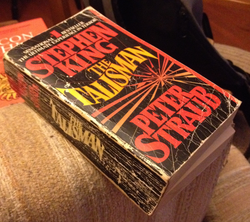
 THE TALISMAN THE TALISMAN I’d somehow, when I was in sixth or seventh grade, managed to slip a Stephen King book past my parent’s discerning gaze. I read Skeleton Crew first, and then Carrie, and then The Shining, and then Pet Sematary. Then one day, while waiting in the dreary brown halls of the medical center for my mom to get out of an appointment, I discovered the book that changed my life.
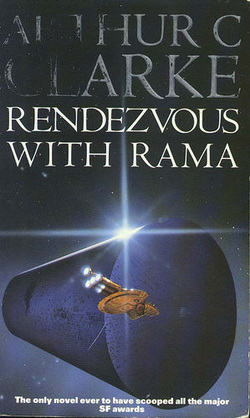 In the year 2130, a very large object happens through the solar system. It is so large that at first astronomers take it for an asteroid, and even give a it name, Rama, as they would for any newly discovered astronomical body.
Closer investigation of Rama reveals a startling fact. The object is a cylinder, 50 kilometers long and 20 kilometers in diameter. It is a made thing, not a natural object. Furthermore, the creatures who built it clearly had advanced technologically far beyond humankind. Wonders increase when the survey ship visits Rama. The survey crew easily passes through the air-locks—the doors are not locked—and find an inhabitable, self-contained world in the hollow interior. But there are no signs of the intelligent life that built Rama. The crew explores the vast interior for days, but Rama remains virtually the same enigma as when first discovered.  My first instinct when approaching this article was to discuss Stephen King’s ‘Salem’s Lot, a book I’ve written, rhapsodised and generally banged on about at some length before, but if we’re talking ‘the book that made me’ as opposed to ‘my favourite book’, then to do so wouldn’t really be right. ‘Salem’s Lot is still my favourite book in any genre, but it’s not the book that made me (although it is, perhaps, the book that taught me most about how to write a novel). My next thought was that I should write about Carrie, the first King book I read (indeed, the first horror novel I read, hiding from the family in my grandparents’ top room as the rest of the Unsworth mob bickered over the remains of a roast dinner), enjoyed across several long Sunday afternoons when I was maybe seven, or perhaps MR James’ collected ghost stories, given to be by my granddad when he saw my burgeoning interest in supernatural fiction, but neither of these is right either.
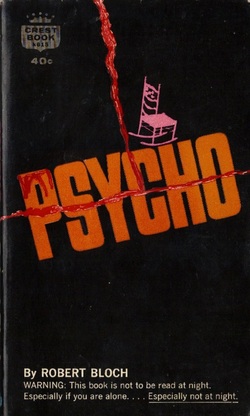 ROBERT BLOCH’S PSYCHO ROBERT BLOCH’S PSYCHO It was publisher Dez Skinn, who first introduced me to Robert Bloch. Following the success of Warrior, the seminal British comic that unleashed Alan Moore, Garry Leach, Dave Gibbons and David Lloyd on the world, Dez decided to bring his classic horror mag House of Hammer back from the grave. Now renamed Halls of Horror the first revamped issue featured an in depth interview with Mr Bloch. I was a huge fan of Warrior so I snapped up Halls of Horror the minute I saw it in the newsagent.
Bloch’s much anticipated sequel to Psycho had just been released and in the interview he spoke about his reasons for picking up the story after twenty years and dwelt at length on his long career in both Hollywood and the pulps. I remember being quite struck by his macabre imagination and his dry urbane wit. "Despite my ghoulish reputation, I really have the heart of a small boy. I keep it in a jar on my desk," Bloch quipped at the beginning of the interview. 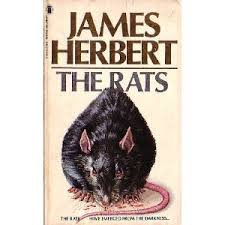 I had only recently read my first novel without pictures in it (The River of Adventure by Enid Blyton), so I thought I was a proper grown-up and could read anything. I’d worked my way through several Pan Books of Horror, Fontana Ghost Books and some similar things that were in the house before I tackled this. I was probably about nine. The content was entirely unsuitable for a boy my age – there is extreme violence and some quite graphic sex. The violence is described with the kind of leering relish that would make Lucio Fulci proud, and The Rats, along with other Herbert novels, were my first sex education – he describes sexual activities I still haven’t tried forty years on. The prose, however, is perfect for children. It’s simple, accessible, and highly visual. There were better writers working in the genre at the time who could effectively convey every emotional and sensual detail in nicer and more concise prose, but I wouldn’t have got all that. I saw everything that happened in that book. I knew exactly what a man’s innards looked like as they were pulled from under his exposed ribcage by giant rats’ teeth because it happened in full colour in my imagination. At that age, boys love icky stuff, and Herbert delivers ick by the bucketload. It’s as if he had a preteen audience in mind, like a creepy old man at a funfair beckoning with a gnarled finger, “Hey son, want to see something squishy and really horrible?” What normal boy could resist? Importantly, it was a horror story set in the present day. Most of the scary stuff I’d read was either old and good or modern and trashy (I could spot exploitative trash before I could spell it). Modern and good was a novelty. I already wanted to be a writer, specifically a horror writer, but I thought that was the preserve of Victorian gentlemen drinking brandy by a roaring fire in someone’s country mansion, not something a working class boy from Govan could ever aspire to. James Herbert was not posh, and he wrote in simple modern English. He made me realise it could be done. I still have most of his novels on my bookcase, even though I realised as I got older that he wasn’t actually that good. I retain an affection for his brand of horror, and have struggled through some dross out of loyalty. If he has a successor today, it’s none of the current horror authors, except perhaps the blood-thirstiest end of the zombie genre. It’s the YA authors who most closely recreate his style - Darren Shan especially reads like a tribute band sometimes. And I’ve realised, now that I think about it, that I’ve never handed a James Herbert book to any of my children, or recommended them to anybody. The Rats was a part of my childhood, and helped make me the man I am today.  Stewart Horn is a professional musician based on the Ayrshire Coast in Scotland. His fiction has appeared in various online and print magazines and anthologies, and he reviews books and movies and anything else he fancies for British Fantasy Society.
He blogs intermittently at stewartguitar.wordpress.com 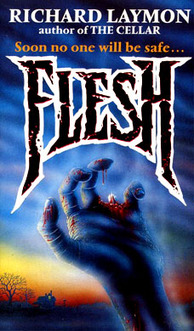 FLESH BY RICHARD LAYMON FLESH BY RICHARD LAYMON Whenever I discuss my influence in the horror genre only three names spring to mind. Laymon, King and Herbert. All three authors had a pivotal role in shaping my literary horror taste as a youngster. True, there are other names that would join this list over the years (Hutson, Hitchcock and Clive Barker to name three). However, when you strip it down to the bare bones and I want to select one book, it has to be Flesh by Richard Laymon.
HORROR AUTHOR INTERVIEW : BRYN FORTEY
21/4/2014
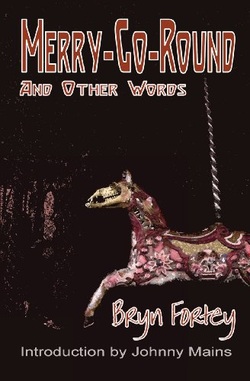 Bryn Fortey appeared in various anthologies during the 1970s, including: New Writings in Horror & the Supernatural and New Writings in SF. He was also published in various Fontana anthologies edited by Mary Danby. Bryn’s beat-styled poetry magazine Outlaw was Best UK Small Press Magazine of 2004 in the Purple Patch Awards. In the same year he won the Undercurrent Aber Valley Short Story Competition with “The Dying Game”. In 2009 his “A Taxi Driver on Mars” was first in the Data Dump Awards for SF poetry in the UK.
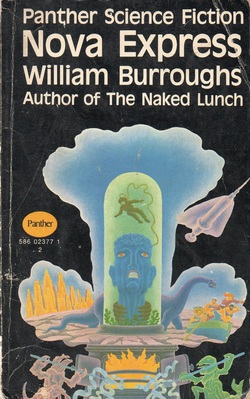 The very first book I can remember reading was about intrepid Earthmen discovering and combating a race of Moon beings living beneath the surface of our satellite. The title, author and conclusion are lost in the mists of time, but it did help shape a lifetime’s interest in what we now term speculative fiction. I do wander off into other genres from time to time, but always in addition to my helpings of sf and horror, never replacing them.
Choosing one book above all others, as this series insists you do, is an almost impossible task. My reading history has been littered with ‘important moments’. Catch 22, Something Wicked This Way Comes, I Am Legend, Dying Inside and any number of Philip K Dick novels came to mind as part of an even longer list of possibilities. Pushing very hard near the top was Jack Kerouac’s On the Road, but that has been so many people’s coming-of-age experience and so many words have already been written about it. In the end I settled on William Burroughs’ extraordinary Nova Express. The Book that Made Me: Jeremy Bennett on Alvin Schwartz. Scary Stories to Tell in the Dark
18/4/2014
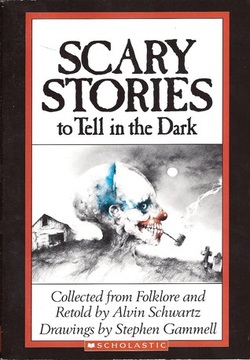 As far as I can remember I’ve always been into horror. By the time I was ten or eleven I was already a late night cable addict watching shows like USA Up All Night, Monster Vision, and Elvira. I was able to watch almost anything as long as it wasn’t Beavis and Butt-head, Ren and Stimpy or the Simpsons as a kid. How those shows were worse than say Friday the Thirteenth or Halloween I still haven’t figured out, but that was the deal. I also lived in a mobile home that was right behind a grave yard; so, every time I looked out my window I could see the head stones and a massive statue of the Virgin Mary standing on a snake, and it was a little ritual for us to tell ghost stories out around a camp fire in the back yard. Horror was just always kind of there for me.
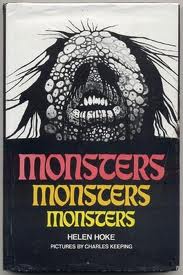 The library was home. The library was a world away from the school it sat in the middle of. It wasn’t big and it wasn’t old in a classical Victorian way. It was a pre-fabricated space with off-white walls and grey carpet. But it was quiet in there; seemingly at peace unlike the rest of the school – to my mind, anyway. It was where I spent my lunchbreaks while other pupils went outside, come rain or shine, to play football, fight or do other things I wasn’t interested in.
|

 RSS Feed

|

|