
|

 My Life In Horror Every month, I will write about a film, album, book or event that I consider horror, and that had a warping effect on my young mind. You will discover my definition of what constitutes horror is both eclectic and elastic. Don’t write in. Also, of necessity, much of this will be bullshit – as in, my best recollection of things that happened anywhere from 15 – 40 years ago. Sometimes I will revisit the source material contemporaneously, further compounding the potential bullshit factor. Finally, intimate familiarity with the text is assumed – to put it bluntly, here be gigantic and comprehensive spoilers. Though in the vast majority of cases, I’d recommend doing yourself a favour and checking out the original material first anyway. This is not history. This is not journalism. This is not a review. This is my life in horror. Surrender To Me The below discussion assumes you’ve seen Candyman, and will contain comprehensive spoilers for the film. This one loomed large in my childhood. At the time of the films release I was 14 years old, and while I didn’t see it until at least a couple of years later, when it finally broadcast on UK TV (my video from the broadcast started 30 seconds or so late and missed the title card, though it still captured much of that beautiful overhead traffic shot), the premise of the legend at the centre of the movie was electric playground gossip. I don’t know how many of the kids had actually seen the film, but everyone was talking about it; and specifically talking about the ‘say his name five times’ thing. Like, it was an obsession; who had claimed to have done it, whether or not they believed they’d really done it, who’d chickened out, who would never even think about doing it; on and on the conversation went, for what felt like weeks. And this may be false memory, but my recollection is that the legend wasn’t immediately connected to a film. The legend came to me first. I have a lot to say about this film, and not all of it straightforwardly positive, but it’s worth starting there; this is a piece of storytelling that was staggeringly successful at what it set out to do. A story about the perpetuation of urban legend in Chicago that itself became a delicious piece of playground gossip and goosebumps as far afield as North Devon, England. I don’t know a horror writer worth their salt that doesn’t dream of creating something with that kind of reach and impact. And at its core, that’s about simplicity, right? The trappings don’t really matter; whether it happened to a friend of a friend, a relative of a relative, boy or girl; no, all that matters is someone staring into a mirror… and saying his name five times, and then… and then… It hits every archetype you want this kind of urban legend to hit; grusome murder, sure, ferocious monster with a hook for a freakin’ hand, check… but the best bit, of course, is the invitation. Say his name five times! Why would anyone…? And yet, once you’ve heard it, especially as a kid, how can you not at least think about it? You look in the mirror every day, your own youthful, immortal face looking back at you. You’re on the surface rational, maybe even aggressively so, depending on your temperament… or maybe you’re superstitious and ashamed of that, wanting to prove something… or maybe you’re just curious, desperate to know if any of it, the supernatural, is real… I’ve talked before about how horror is often small-c conservitive, and really, this boiled-down horror story archetype is as clear a demonstration of that tendency, the clarity perhaps exacerbated by the purity of the distillation. Because in the legend of the Candyman, he isn’t some manic that follows you home, or stalks you in the street, or even kills you in your dreams. In the legend of the Candyman, you summon your doom. This is one of the darkest, most incendiary concepts in all of horror, maybe the darkest, one that lurks in the depths of many of the most outright disturbing works in the genre; the notion that victims are complicit in their undoing. This is not new territory for Clive Barker (on whose source material Candyman is based) of course. Hellraiser is an exemplar of the form in many ways - “The box. You Opened it. We came.” and so on. But even there, the picture is complicated; nobody in the first movie actually knows the consequences of opening the box, after all. Frank may have been chronically unwise, but that’s hardly an eviscerating offence; and Kirsty is entirely innocent. Candyman, on the other hand, is pure death-drive in action. Consider the opening telling of the story. The movie, all about stories and storytelling, starts with our hero, Helen, being told the story, but then desolves to a flashback/dramatisation as the voice over continues. In it, ‘good girl’ with ‘good’ boyfriend has decided that tonight, she’s going to shag ‘bad boy’. This is classic teenage Sex And Danger territory, a narritive that could play out any number of ways, from porn to romance to crime to horror, or pretty much any combination of the above. I’d argue it naturally skews slightly horror, because at core she’s breaking taboos - fidelity, chastity, and valuing libido over heart - and we know how small c-conservitive horror feels about Women Who Enjoy Fucking, but I recognize other avenues are possible. And then they’re in the bathroom, in front of the mirror, and she’s in her white bra, and they’re both fully panting, and then she tells him the story, and dares him to do the thing. Sex and death, baby. Sex and death and teenagers. There’s a nice twist here, too; one that might not leap out at the first viewing, but a significant moment, I think. The narrator tells us that having said the name four times together, and then sending the horn dog boy downstairs to await ‘surprise’, the girl says Candyman’s name the final time on her own (at which point, we’re treated to the first of several brief but brilliantly executed, erm, executions). And the thought that might fairly occur at that point is; how does anyone know that she said his name a final time, given her extreme deadness? It reminds me of the great urban legend about how, if you have a falling dream, and you don’t wake up before you hit the ground, you die in real life. It’s great because most of us have had falling dreams, and almost all of us have been woken up by the dream, the sensation of falling causing us to start awake (that sensation in turn often caused by some form of snoring or apnea that’s preventing proper breathing). But I’ve never spoken to anyone who has had a falling dream where they’ve hit the ground. So. You know. Maybe. Like all great supernatural premises (including the biggest ones of all, religion) it’s by its nature unfalsifiable. We’ll only ever know for sure it's true if we have that falling dream, land, and die. Or not. Same principle applies here; assuming any part of the story is true, if the girl died, there’s no way of knowing what caused it, because she was alone when it happened. Interestingly, the moment is repeated later in the film, when Helen and her friend Beatrice look into her apartment's bathroom mirror and say his name in unison; Beatrice chickens out, and Helen alone makes the final intonation. The movie is also implicitly about religion in another way, too; it’s about belief. According to the man himself, Candyman is a legend, an urban myth, a ‘whisper in the classroom’ and so forth. Belief sustains him, and when Helen takes actions that challenge his existence (in the eyes of his… followers? Congregation? We’ll come back to that part, because it’s complex and messy and problematic) he is ‘obliged to come’; to reassert the myth and expand the legend, using Helen to do so. I always find stories about stories to be dicey affairs, personally. I always feel there’s a non-trivial risk that they can puncture the entire enterprise. Suspension of disbelief is a tricksy, nebulous phrase that likely obscures as much, if not more, than it illuminates. Nonetheless, one of the things I come to fiction for is immersion, absorption; I want to be taken into another world, or another part of this world, and see it as clearly as I can through the eyes of someone else. And if, in the course of telling me a story in that way, you start banging on about storytelling, you run the risk, I think, of exposing the wires that show me how the effect is done. I don’t mind a ‘making of’ documentary, but it’s not a substitute for watching the actual movie, and I certainly don’t want to sit down expecting one and getting the other. All that said, done well, it’s brilliant; the much-maligned Last Action Hero does a bang up job of interrogating the logic of Action Movie Land, using arguably the biggest action star of all time to do it, and King’s work is no worse for the many, many writers who often serve as heroes or protagonists in his stories. And I think Cnadyman does it about as well as it’s possible to do. It does so by leaning all the way in. The lead characters are academics, researching urban legends. They are sceptics, in other words; but also bright and inquisitive people. This means they can voice every objection the audience will have to the premise of course; but for my money the cleverer part is that when things do start getting actually hinky - when they locate an actual, real-world murder that has been ascribed to the urban legend - their reactions of unease transmit to us very clearly. They are the experts, after all. If they can’t explain it… That said, the movie is playing an interesting game here, because the opening monologue of the film is from Candyman, extolling the virtue of myth as the camera slowly zooms into a swarm of bees. We know the rationalists are wrong, that Candman is real, because he told us so at the beginning. In this respect, we’re converts, believers, watching a tale of the faithless as they stumble around in their blindness. This is ballsy stuff, because it inverts the standard horror trope of ‘what if it’s not real?’ that is usually the staple of this kind of narrative; a series of escalating spooky events, any one of which could have a rational explanation but which cumulatively wear down the protagonist until they are not sure what’s real and what isn’t - at which point either a monster or explanation presents itself. Jacob’s Ladder does this about as well as it’s ever been done, IMO. But Candyman, like Hellraiser, is doing something quite different. That should make the first half of the narrative suffer, really. We should be frustrated by the investigation Helen and Beatrce undertake, knowing as they cannot that they are stalking a legend, not the gang leader who has taken the trappings of the myth to spread fear and intimidation. But I didn’t find it to play out that way; instead, I found those scenes played out with a sense of fatalistic dread that heightened the tension, rather than dissipated it. The sure and certain knowledge that it was all going to turn horribly to shit at some point created for me an almost sickening tension; akin to the classic thriller scenes like the climax of Silence Of The Lambs, as Clarice moves blindly through the darkened cellar, stalked by the killer we know is right behind her. It works, is what I’m trying to say, or, anyway, it works for me. Helen working out how the killer may have entered the victims apartment (a genuinely creepy-as-fuck notion that behind the bathroom cabinet mirror is a crawl space to the apartment next door, way to make sure no-one who lives in a towerblock ever sleeps agian, assholes), and the extended field trip to Cabrini Green drips with tension, as Helen explores the murder scene, and the space the killer must have come from. Even her epically unwise solo return to the Green that eventually leads to her assault and mugging somehow works; at least partly down to some great performances from all concerned, and another story-within-a-story that is brief but incredibly gory. All that said, it’s interesting to reflect on, because even as the film textually removes doubt from the moment of the opening monologue that this is a supernatural tale, you could still read the whole movie as Helen’s psychosis. Sure, there’s no apparent root cause for her to go kill-crazy, but I like the idea that to the outside world, she is someone who researched one to many gruesome stories, and became obsessed enough to start acting them out via a series of psychotic breaks. Even the moments where Helen appears to be hypnotised by Candman fits into that; seeming to suggest her mind slipping from reality (the first occasion, when she finds herself back in the Green, a severed dog head lying in a pool of blood next to a meat cleaver, is another gore-ridden tour de force of performance, direction, and effects). Though that brings us on to the vexed topic of race. So, let’s start by sounding two claxons - white guy over here, talking about race; and also, white Brit talking about US race relations. Chances I say something unintetionally dumb, fairly high. Fair warning, though if/when I fuck up, please let me know - it’s the only way I’ll learn. See, Candman is black. And Helen is a white woman. That matters, textually, for two reasons; one involves Candyman’s origin story, and the other Helen’s exploitation of her white privilege (and, sure, class privilege also) to first investigate The Green, and later, to help bring down a gang leader operating in the tower - about which the movie is explicit, by the way, I’m not reading that in. Helen fully calls out how gross it is that it takes a white middle class woman getting assaulted before the cops get involved (the older black cop does point out that it’s because she’s not from the Green that she feels safe pressing charges - if she’d had to live in the same tower as the man’s accomplices, she’d have had a powerful incentive for keeping her mouth shut). So in that sense, it feels like the movie understands it's playing the white saviour trope, grounding it in the reality of the extreme poverty of the Chicago projects. When Helen and Beatrice, who is black, first visit Cabrini Green, they dress in smart clothes, and in doing so convince the gang that runs the tower that they are cops. In this moment, they are obviously playing on class privilege as well as Helen’s race; but again,the movie is later explicit that Helen’s whiteness is part of the equation. But then we have the origin story for Candyman, and there, race is also a critical factor. It turns out that, according to legend, Candyman was a black man who lived in the city at the turn of the century. He fell in love with a white woman.They had a love affair, but were eventually discovered, at which point the white menfolk tortured and murdered him, before scattering his ashes where Cabrini Green now stands. The racist fear of a black man and a white woman is deeply ingrained; it's a pivotal image in the KKK-approving film Birth of a Nation, and has been referenced by Ice T, Public Enemy, and many others. Making such a relationship pivotal to the origin story of our titular monster makes sense, and follows a long tradition of including real life horrors within wider supernatural narratives. But it does also mean that the central plot of the movie revolves around a white woman being stalked by a physically imposing black man. And it's a seduction of a kind, albeit one with frankly rapey overtones. Candyman appears to have a hypnotic power over Helen, causing her to black out and wake up in strange places.In the finale, he commands her to surrender to him, as the price for allowing a baby to live, and when Helen aquiesses, he appears to sexually assault her with his hook. This is utterly incendiary subject matter, combining one of the most powerful racist tropes with ambiguity, at best, around sexual consent. And really, I’m being gross by giving it that much leeway; there’s no difference in form between what happens to Helen and what happens to any victim of a date rape drug, or anyone who hase been forced to have sex due to intimidation or threat of violence. It’s fucking vile. It does also highlight the unanswered mystery at the heart of the story; why does Candyman do what he does? Why does he kill? Or, outside of the events of this movie, does he kill at all? After all, in his opening monologue and later in the film he claims to be rumour, to not actually ‘be’. So one reading is that he doesn't kill, but instead becomes attached to murders committed in the area by virtue of the legend. Until Helen solves a ‘Candyman’ murder, putting the myth in doubt. So in one sense, his motives are clear; by killing and framing Helen for the murders before bringing her back to the Green to die, he can reignite the legend. But the question underlying that is why kill at all, and to it's great credit, the movie leaves that question to the imagination of its audience, not providing any answers. What the film does imply, however, is that the ability to become a legend is there for anyone, under the right circumstances. And so it is that when Helen does surrender, only to find herself in the bonfire with Candyman and the baby, she is able, through no small suffering on her own part, to supplant the Candyman image and become a legendary monster in her own right (in a for-the-ages closing scene when her weeping ex-husband says her name five times into the mirror). Still, for all that it’s clear that the movie is aware of the valences of its subject matter, I still found some of the handling of race… difficult, especially in the final scenes when the residents of the Green congregate to burn the bonfire, seemingly knowing it contains the Candyman; and later show up en mass at Helen’s funeral, to drop his hook into her grave. It felt uncomfortable to me, this group of almost exclusively black people behaving in such odd group behaviour, and it’s one of the few moments where I feel like the storytelling comes just a little loose; are they under some form of mass hypnosis? Is the bonfire an annual Gren tradition, part of the legend? Absent that, it came across to me a little odd - an irrational group behaviour that seemed to render the Green residents ‘other’, when the movie had elsewhere taken such pains to humanise those characters. Still and all, I think Candyman hold up exceptionally well, as a horror story with an underpinning as traditional as the form that manages to make a unique film experience. And spawned its own urban legend that fired childhood imagination. No mean feat. KP 14/12/19 PS - Gingernuts regular George Danil Lea and I discuss this fim in some detail here. Kit Power has launched an IndieGoGo campaign for My Life In Horror Volume One! My Life In Horror Volume One!, A collected volume of his My Life in Horror essays, where every single essay has been fully revised, expanded, and will be professionally edited for this edition. The essays themselves have been rearranged to be presented in the order in which he first experienced the subjects. This volume will represent the definitive edition of this work, creating a book that serves as both a passionate appreciation of the works of horror that have shaped his life and as a memoir of my development as a writer. This is a project that I am passionate about, Kit is an amazing author, and these essays have been a highlight of my time running Ginger Nuts of Horror. With that in mind, I would like to sweeten the deal. With Kit's permission, I would like to offer up to prizes available to two lucky people who back this project from the paperback up perk. Prize one Two signed books from my personal limited edition collection, Brian Keene's A Little Silver Book of Streetwise Stories, (valued at around $100) and Night of the Crabs from Guy N Smith (no idea of the value as the publisher went of business before these books went on sale to the public)
Prize Two One year's free advertising on Ginger Nuts of Horror on one of our high visited pages. The advert will appear on all articles published to that page and backed up with a weekly social media advert valued at £80. I am determined to see this project become fully financed, so please, consider supporting Kit, even a £1 pledge just to support will edge this amazing book to completion. And if you can't afford this, then please share this article far and wide by using the social media buttons to the left. To support Kit's project follow this link https://www.indiegogo.com/projects/my-life-in-horror-volume-one/x/6879211#/  
0 Comments
MY LIFE IN HORROR: ENTERTAIN US BY KIT POWER
15/10/2019
 My Life In Horror Every month, I will write about a film, album, book or event that I consider horror, and that had a warping effect on my young mind. You will discover my definition of what constitutes horror is both eclectic and elastic. Don’t write in. Also, of necessity, much of this will be bullshit – as in, my best recollection of things that happened anywhere from 15 – 40 years ago. Sometimes I will revisit the source material contemporaneously, further compounding the potential bullshit factor. Finally, intimate familiarity with the text is assumed – to put it bluntly, here be gigantic and comprehensive spoilers. Though in the vast majority of cases, I’d recommend doing yourself a favour and checking out the original material first anyway. This is not history. This is not journalism. This is not a review. This is my life in horror. Entertain Us It seems impossible that I was eleven years old - and yet, it seems most likely. Surely no older than twelve. We've previously discussed - at arguably too much length - the transformative power that Guns N Roses had on my young mind. There’ll never be a part of me that doesn’t want to be the singer in a long haired rock and roll band. I’ve had enough experience of being in a band by now to know it was never, ever going to be a viable career path for me; but still, I’ve tasted the zone often enough, that sweet, sweet moment when the wall of perfect noise surrounds you, when the part of you that is you is both amplified and totally subsumed by the living moment of vibration in the air; the moment where The Living Now becomes All, and you are fully present in an instance of pure expression. It’s a drug, of course, a rush they can’t touch you for. The Disciples of Gonzo are unlikely to ever play again, and I miss it, and them, already. We made a good noise, in our day. As for writing, it’s just always been something I knew I could do. There’s no way to say that without sounding arrogant, and I apologize for that - and, to be clear, I’m not actually saying, even now, it’s something I can do particularly well, necessarily, only that it always felt like a natural avenue of expression - but it’s undoubtedly one of my biggest regrets that I didn’t go much harder, much sooner on writing. It’s very clear to me that if I’d started writing twenty years ago, or even ten, instead of five… well, I’d have five to fifteen years more experience, and that couldn’t fail to be helpful. But, so it goes, we are where we are, and damn if the journey isn’t fun. Regret? Sure, but nothing more work won’t cure. But there was another love, one I’ve rarely spoken about. We touched on it briefly back when I was laying out The Ballad Of Scott. And yet, from the ages of ten to eighteen or nineteen, it was, ostensibly, My Calling - the profession that was to dominate my existence, the art I was committed to. I’ve mentioned before that I failed BTEC in Performing Arts (yes, I actually managed that); given my oft expressed proclivities, you might fairly have assumed that was in the music strand. Whereas, in point of fact, it was Theatre. People often say they feel like they haven’t really grown up; that they feel, inside, perpetually stuck in their late teens or early twenties. I can relate to that in a lot of ways. To this day, the movies and music of my youth resonate with me on a bone deep level (as this five-year-and-counting project is clear testament to). I will absolutely make a complete idiot out of myself at any wedding disco where Sweet Child O’ Mine is played, for example, because I have air guitar game that can rarely be matched. But I have to say that this part feels utterly alien to me now. I know, intellectually, that I did it, that I was kinda in love with it (or, at least, with performing in front of an audience)... but there’s no resonance there at all anyone. Tell me you’ve got a pub rock band looking for a front man, I do believe I’d be there in a second (as long as it was reasonably local), but tell me you’re putting an amdram production of Hamlet together, and there’s not a flicker of anything. It’s possible that doing the music turned out to be the cure, as I think about it. It was always what I really wanted, anyway, and it was only a combination of crippling low self esteem, pretty low raw talent, and a couple of incredibly toxic people who I trusted telling me I was dreadful at singing that kept me from trying it. Theatre felt safer. It wasn’t really you on stage, after all, it was the character. You got to disappear for a little while, and bathe in the rapt attention of being someone else. Plus it was storytelling. I’ve always had a thing for storytelling. Still, the fact remains - form the age of ten to the age of nineteen, I was always attached to some stage production or other. In panto, I played the genie of the ring (the green makeup took hours to wash off, and made the Coke I drank smell of farts), and King John in Robin Hood. That was properly brilliant. The Sheriff was the comedy villain, who did all the slapstick and stupidity, but I was the straight up flint eyed villian. There was a moment in the final scene where I marched in, back of stage to front, coldy cutting down the good guys scheme and seemingly killing the happy ending. The boos and hisses were loud enough to rattle my fillings. Fantastic. At college, I played one of the teachers in Spring Awakening, Prof. Strychnine, behind a heavy, cod-Comedia mask. I played one of the shepherds in an abridged version of the NT’s mystery plays (learning the yorkshire accent was a job of months, mimicry never being a particular strong suit of mine - again, in retrospect, a pretty worrying gap in the skill set for someone aspiring to acting). Even better, in the first act, I got to play Isaac, and was almost-sacrificed every night, to stunned silence. Good times. I also played a psychopathic killer in a play I co-wrote with two other students. Growing Pains was a one-night-only production. I’d love to see the script now. I remember it fondly. But before all of that, there was A Midsummer Night’s Dream. So, there were two youth theatre groups running out of this arts centre. There was a juniors group, which ran 10-13 year olds, and then there were the teenagers. The teenagers got all the good parts, of course - often, in fact, all the speaking parts. The kids, we just fit around whatever was going on. And for Midsummer Night’s Dream, that meant fairies. Goth fairies, I feel I should add. Oberon was played by Brian, an impossibly tall pale goth with jet black hair down to his arse. He strode about the theatre like he owned the place, and indeed all of creation besides. I worshipped him. Titanya was impossibly beautiful, also pale, and black haired. And we of Oberon’s train were made up in the image of our king - faces painted white, with black and silver work around the eyes, hair sprayed black, torn black jeans and T-shirts (any visible skin beneath the holes also painted white - we were a professional outfit). We looked fucking awesome, is what I’m trying to say. Best faeries ever. And I got to drive the tree. I have no idea how it happened, at this distance. Obviously, none of us had speaking parts, but we were instructed to react to what was going on when we were on stage, becoming part of the psychodrama between Oberon and Titania. My suspicion is that I gave good react. Regardless, the upgrade was pretty sweet; we had a tree that was spray painted silver and mounted on wheels, and my job was to move it around the stage at certain points, to simulate being in a different part of the forest, and also the effect of the fairies interactions on the lovers. The practical upshot of which being that I was on stage a lot. I remember getting a note, about two or three weeks from curtains up, where the director praised me for, at one point, coming out from behind the tree and jumping up and down in delight as the lovers fought. I can't think of a clearer testament to how much respect I had for our director that I still feel a surge of pride at the memory. You’d better believe I did the move at least once every night of the run. Sometimes twice. My memory is that rehearsals were every weekend, for three months. What I am certain of is that we were all expected to attend every rehearsal, without exception, and missing even one was grounds to be removed, unless we were actually ill. I have no idea if the rule was enforced, but I do know that I never missed a single one. It paid dividends in two ways - neither, sad to say, involving the installation of anything resembling a work ethic on your humble correspondent. Both payoffs had the same root, which was that as a consequence of my attendance, by the time the play went on, and for several months afterwards, I could recite the entire play, from cover to cover, word for word, without hesitation, deviation, or repetition. Eleven year old brains are like that, I guess; or at least, mine was. I retained enough of it that when we came to study it at school when I was 13, I could cruise through the lessons paying basically zero attention and still scored an A for the work for that year. Yes, I am counting that as dividend one, and no, I clearly wasn’t kidding about the work ethic. The second major benefit came about because of an encore performance. We did a four night run. It was very well received, even though we had to abandon one performance right at the end due to a fire alarm - a garment had been thrown over one of the bulbs surrounding a mirror backstage, and the smoke had triggered the premature evacuation. It went down so well (the play, not the fire alarm) that we got invited to put on a performance at a local school. I remember the dimensions of the performance space were narrower than the stage at the theatre, which meant I had to work on my tree blocking to make sure I didn’t overshoot my marks. Hey, us tree fairies are serious business. Shrubbery doesn’t drive itself. Anyway, that went well enough that we were invited back to the home theatre for a command performance on the final night. This was basically unheard of, and we were absolutely thrilled. And then Peter Quince got ill. She was the sister of a friend of mine, so I was often around her house. I’d seen her the night before, and she’d said to me that I might have to step in if she didn’t recover. I’d laughed it off, then spent the entire walk back to my house running through her part in my head (or, knowing me, probably out loud). Just in case. I walked from school to the theatre the following day, a 20 minute stroll, entering the premises around three thirty. “What does your uniform look like?” The director asked, in place of a hello. “Erm, it’s black…” I began. “Take your coat off, let me have a look.” I did. “Do you have a tie?” For reasons passing understanding, I did. I had a purple clip on bow tie. Not part of the uniform. I think… I think I had it in my bag because I’d worn if for a stage magician act I’d done earlier in the year and never taken it out again, but who the fuck knows why eleven/twelve year old boys do anything. Either way, I had it, and I put it on. “Yes, it could work… you’ll need a jacket. And a clipboard.” “So… what’s going on?” “Peter Quince is ill. You’ll be playing the part tonight. The other mechanicals are upstairs. We’ll be rehearsing in ten minutes.” And here and now, decades after the fact, I can be honest; I pretended to be nervous, but in truth I was absolutely thrilled. And honoured, of course. This was a promotion from the kiddie league to the teenagers, and it happened with absolutely no hesitation. I was in, and I was in because the director knew I could do it. She was right, of course, but that doesn’t mean I didn’t feel a kind of pride and confidence and acceptance I have rarely felt as strongly or clearly since. Looking back, I can’t help but wonder if most of my devotion to acting for the following six to eight years didn’t have it’s root in that one simple moment; a feeling of belonging, a feeling of a challenge that I knew I could meet that others could not. As buzzes go, friends and neighbours, I gotta tell you, it’s elusive to find, and very, very tough to beat. The rehearsals went like a charm. I had the script on a clipboard that I was to use as a prompt, but I didn’t need it. The other cast members mouthed every single word I was supposed to be saying whenever I made eye contact, and I didn’t need that either, but I did appreciate it. I even got a mention in the local paper review, and they damn near spelt my name right. It was, and I can't find a more apt word, in spite of it’s troublingly confrontational implications, a fucking triumph, and it gives me joy to recall to this very day. Funny, how something as simple and knowing you can do something well can feel so transformationally good. Damn if there isn't a lesson in there somewhere. And if you’ve come this far and are wondering why on earth this is a My Life In Horror column, as opposed to a My Life In Nostalgia For Childhood Glories, I hear you, and here’s why; there was a party in the theatre to celebrate the last night of the show, and at that party, I got drunk for the first time in my life. I stole the beer, I remember that. There was a crate of possibly-stout that had been left under the bar. It came in a glass bottle with one of those rubber corks attached to a metal contraption you had to pop open. When I did so, it foamed out and splashed everywhere. It also tasted, to my twelve year old pallet, almost undrinkably bitter. Keyword there; almost. I *think* I took two bottles under the bleachers, and drank them there. I don’t *think* I drank them openly. I feel like someone - even a group of Devon teenagers, mostly themselves also underage and drinking, though not as underage as me - might have said something. I do remember - later, once I was definitely drunk - confessing my state to at least one of them. His girlfriend thought I was joking, but he, after looking into my eyes gravely for a few seconds, declared with a friendly grin that I was. I can also remember the surge of pride and validation I felt in that moment. It gets fragmentary from there. There was a guy who ran the sound effects, who played the Sweet Child O’ Mine riff on the keyboard, to demonstrate a specific sound, and I remember a rush of recognition and joy at that. Later, that same guy, incredibly drunk, would film drunk me rambling and swearing incoherrently. He was drunk enough that he dropped the camera at one point. Years later, I bumped into him again, and he told me he still had the tapes, but I never saw them. I still can't tell if I hope that footage is still out there or not, at this point. Part of me would love to see it. Another part… wouldn’t. Later, I remember a drunken not-quite-row with one of the older girls, concerning the bi-or-homosexuality of Freddy Mercury, and the wieldy apposite nature of the lyrics to Bohemian Rhapsody, given the cause of his death. I was arguing against his being gay, not out of homophobia, but rather a visceral distrust of the tabloid press who had run the stories. So, I was being an idiot, but at least a well meaning one. Was someone running the lights, or where they on some kind of auto pilot? I don’t know. What I do know is that they were flashing more or less in time with the music, and the stage itself was empty - everyone was congregating around the sound desk, or copping off in the bleachers. The stage was mine. And when Smells Like Teen Spirit came on, I took it. Now, just a refresher for those of you not down on your early 90’s musical tribal allegiance. I was a Guns N Roses kid in ‘91. And that means that… well, okay, it means I was definitely twelve when all this happened, because Teen Spirit came out in ‘91. In point of fact, I’d just turned thirteen. So, okay, I was thirteen. Fine. The point is, GnR was my band, which meant I wasn’t allowed to like Nirvana, from a purely legal standpoint. Grunge was The Enemy, y’see, and as I’ve previously noted, one that claimed many former friend from the rocker tribe over the course of that summer and autumn. I mean, full disclosure, I actually did have a copy of Nevermind on cassette that one of my mum’s cooler friends had recorded for me - the same cool friend who would later take me to my first rock show, The Pixies at Exeter Uni, so pretty fucking cool - and sure, I’d listened to it, but… Well, here’s the thing; while I could freely admit Nevermind had many of the qualities I’d come to find desirable, even admirable, in music - namely, that it was ear splittingly loud - something about it didn't connect with me. I think in retrospect, my issue was with the nihilism. I love me some angry tunes - then, now, always - but there’s a coldness at the heart of Nevermind, I always think; a darkness that’s more despair than anger, like the anger is a symptom rather than the focal expression. And while I appreciated it some then, and appreciate it a great deal now, it doesn’t speak to me, doesn’t resonate with my soul. I am angry, of course - perpetually so. But I find that anger to be life affirming. In my anger with injustice, I am reminded that justice can exist, that better ways are possible, that we, collectively, deserve better, and that sometimes, via an expression of collective will and outrage and struggle, we can achieve better. I am angry, but I also believe in change-for-the-better, and in the transformative power of anger to help facilitate that change. And the anger of Nevermind is absent that. The anger of Nevermind is an ill-fitting mask for desolation, hopelessness. Appetite For Destruction (vile misogyny, snarling misanthropy and all) felt like a call to arms, a battered grin that said it could take every punch you could throw and would spit blood back in your eye and just keep grinning. And maybe that’s projection, probably that’s projection, but it’s how it made me feel, how it still makes me feel, and Nevermind…doesn’t. Nevermind is a howl of pain into an all consuming void. And as Teen Spirit started playing in the theatre, my drunken teenage brain started firing a new synoptic pattern, and - suddenly - I got it. And I danced, flinging my head around, the last (the first?) of the mad moshers, alone on the stage where I’d taken what would prove to me my finest moment in theatre, and one of my most straightforwardly good days ever, and I span and headbanged, letting the guitar riff fling me across the stage. I danced like nobody was watching, and probably nobody was. I felt through the booze haze the turn of that song, that band, and I danced not because I wanted to but because I had to, to express something I had no language for but felt right down to my bones. Alcohol is a shit drug. It’s a depressant, and an irritant; it makes us dumber, and angrier, and clumsier, and really, as a species, let’s face it, those are not qualities that we are well served by exacerbating. It’s telling that we use this substance so freely at our moments of greatest triumph; indeed that our very celebrations involve profound overuse of a depressant; it’s almost as though we feel the need to punish ourselves for feeling joy. I still drink. Often in moderation, occasionally to excess. I love whiskey, with the kind of passion I normally reserve for gaming, and like gaming, it’s something in my life that can be healthy, and can be… not. It does bring me pleasure, on occasion. And truth be told, as I’ve gotten older, I’ve found the numbness and relative stupidity comforting, in a way I doubt young me could begin to comprehend. Still, I think back on that moment, that day, from time to time. My biggest stage moment ever. My first drunk. And connecting to Nirvana on a level that had hitherto eluded me. And I can’t help but feel - and I’m kidding, but I’m not - that God is a terrible, terrible hack. Because there’s no way, as a writer, I could get away with making that shit up, is there? KP   MY LIFE IN HORROR: I SURVIVED THE TERROR
17/9/2019
 My Life In Horror Every month, I will write about a film, album, book or event that I consider horror, and that had a warping effect on my young mind. You will discover my definition of what constitutes horror is both eclectic and elastic. Don’t write in. Also, of necessity, much of this will be bullshit – as in, my best recollection of things that happened anywhere from 15 – 40 years ago. Sometimes I will revisit the source material contemporaneously, further compounding the potential bullshit factor. Finally, intimate familiarity with the text is assumed – to put it bluntly, here be gigantic and comprehensive spoilers. Though in the vast majority of cases, I’d recommend doing yourself a favour and checking out the original material first anyway. This is not history. This is not journalism. This is not a review. This is my life in horror. I Survived The Terror I recently returned from Florida, along with my father, stepmum, wife, and nine year old daughter, following what has become a generational pilgrimage to the Land The Mouse Built. It was my third trip to Disney World/Universal Studios, having first gone as a ten year old, and then ten years ago, with my step kids (now teenagers, then nine and ten). It was, as always, a trip; and one of the big ways it’s a trip is a mixture of familiarity and change. There’s always something new - several somethings, in fact, most significantly to me a new King Kong ride which was 1000 kinds of awesome - and inevitably, something missing (in my case, the old Kong ride, Jaws, and no more Earthquake were the biggest pangs). So there’s that. But there’s also the intensely, comfortingly familiar - The Indiana Jones stunt show, for example, is still running, 30 years after my first visit, and it’s basically identical, even though I doubt any of the performers I saw last month will be the same as the ones I saw on that first visit - they almost can’t be, in fact. Perhaps the best example of all is Star Tours; a sit-in simulator ride with 3D glasses that’s run for 30 years. You’re supposed to be on a space tour shuttle, but C-3PO ends up unexpectedly piloting (with R2D2 up top, natch) and you don’t even get out of the hanger before the empire tries to stop you, and you’re off on a hyperspace tour of the Star Wars universe. The way Star Tours has managed to last so long is the same way the franchise has; new shit, all the time. As a kid, the three jumps we went through were all connected to the original trilogy; in 1990, that’s all they had, after all. Then, with the big kids, there were prequel parts added. But I need to unpack that, because when I say added, I don’t mean rotated in - I mean, added into the pre-existing mix. Star Tours is rarely the same ride twice. This time out, the queues were very low (for reasons passing understanding) and I took the ride five or six times, and whilst some sequences were repeated (I ended up in the Gungan underwater city on three occasions, and was menaced by Darth Vader and Kylo Ren twice a piece in the opening sequence), there wasn’t a single sequence that didn’t have at least one variant; even the moment when you’re informed that there’s a rebel spy on board the ship who has attracted the Empire’s/First Orders attention was delivered by both Admiral Ackbar and Poe Dameron, on different occasions. It’s the kind of thing you could go through life never knowing. You do the ride once and it feels complete and a full experience, and sure, if you get all the prequel sequences, you might feel a bit meh about it - but only a bit, because it’s still the best action sequences from those movies, and you’re still flying through them with C3PO wittering and R2 blooping and bleeping away. Bad Star Wars is like bad pizza, in other words; it’s still pizza, at least when it comes to the ride. The biggest buzz for me, this time, was finding myself flying over the climactic battle of The Last Jedi, with walkers sending up clouds of red-on-white dust and almost stomping us. Glorious times. I think the only thing that would have topped that would have been being dropped into the assault on the records archive in Rogue One, but I suspect the implied bummer of that might have been a deal breaker. Or maybe I just missed it. Anyhow. So the kid is nine, and brave for nine, but she doesn’t want to go upside down, and she doesn’t want to go backwards; the last we discovered unfortunately after the fact, having done the yeti ride in Animal Kingdom as her first coaster. There’s only a handful of rides these restrictions eliminated, and a phenomenal time was had by all, but it did mean that I had to sneak a morning to go to the Disney Hollywood park solo, so I could single-rider the Rock and Rollercoaster and Twilight Zone Tower Of Terror. The Rock and Rollercoaster is as good as I remember, basically, with that breathtaking 0-60 mph launch leading into a loop, and then off to the races. It’s fast as hell, but smooth. Great ride. I was disappointed not to find any Aerosmith themed tat that appealed in the shop, but it’s not like I don’t already have four or five shirts, so. But something funny happens on the way to The Twilight Zone. What happens is, I get to the Tower Of Terror, and I look up at the doors opening in the side of the tower, 5 or 6 stories up, and I hear the people in the ride screaming… And all of a sudden, I kind of don’t want to do it. It’s the weirdest fucking feeling. I love thrill rides. Love ‘em. I love being high up, scared as I am of heights, and dropped/flung/inverted at speed. I adore it. And suddenly I’m on my own, and I’m looking up at the ride, and my belly turns over, and I’m not sure I want to do it. I examine the feeling. I don’t mean I can’t do it, I discover; not at all. Of course, I could. Can. Will. Probably. But… And it’s safe, right? Sure. Safer than flying, never mind crossing the road. The laws governing my safety while I sit on that ride will be among the most strenuous in the world. For the 30 - 40 seconds I’m sat in the ride, I’ll be pretty much as safe as I’ll ever be in my entire life. Stay on the ride, live forever. Ha ha. So it’s not that it’s not safe. On the other hand, I hate heights. I mean, really hate them. It’s a phobia that I’ve had since a child, linked in my mind to being abnormally short for much of my formative years (does that even make sense?) and though it’s waxed and waned a bit, it's never gone away, and right now is as bad as it’s ever been. And to be really clear, it’s an intense fear of falling, not the height per se. I can’t look over any substantial drop, under normal conditions, without experiencing a lurching sensation, as though I am falling forwards, falling over and down. It’s fucking horrible. So, put like that, why in the hell do I want to do the ride? It’s a question I ponder as I browse the tat shop, again failing to find anything to spend money on (and seriously, Disney - up your tat game, for crying out loud. If you can’t sell me anything in either an Aerosmith or Twilight Zone themed shop, you are Fail). I don’t have to do it. I’m on my own. I can go anytime. I can say I didn’t feel like it. I can lie and say I did it. No-one need ever know. So, why? # It’s the summer of 1984. I am six years old. My father takes me to, as far as I can recall, my first theme park, along with my sister and step brother. I am insanely excited. I will do All The Rides. I remember looking up at The Corkscrew. Seeing it on the horizon, as the park opened. My first thought, as my brian tried to make sense of it, was that it was some kind of oversized monkeybar setup. With the distance, I had no sense of scale, you see. I imagined the kid brave enough to climb it, swinging over the inside of the loop-the-loop. Quite how I thought that was in any way possible or sane or within a galaxy of safe is a mystery lost to me now. I can only report the memory, and kind of dig the kid whose mind came up with it. At some point, it became clear it was a coaster. At some point, I realised I’d get to ride it. And then, at some point, I found out I wouldn’t be able too. I mentioned being short, as a kid. Well, it turns out, too short for The Corkscrew. I wish this was a lie, that I had a better sense of proportion from an occurrence so far distant. But I don’t, and I have to tell you, I can still taste the disappointment. Did I cry? Oh, hell, probably. It sure as shit put a crimp on what until then had been a pretty good day. Either way, I must have communicated my disappointment well enough, because when we reached the queue for The Black Hole, my dad measured me up against the ‘astronauts must be at least this tall to ride’ and declared me, against the evidence of my own eyes, tall enough. And so it was that my first coaster ride was one taken indoors, under cover of darkness, and in a state of ecstatic terror. I’m sure it would look awful to my adult eyes, but my child memory is that even the queue was cool. I’m still a sucker for sci-fi trappings and aesthetics, and back then, I was an indiscriminate fiend, so no level of shabbiness or neglect will even have registered; it was Space Shit, and I was enraptured. And the rides themselves were brilliant; red metal framed shuttle shapes, single file bench seats. My memory is that I sat at the front, butterflies in my stomach as my father cheerfully insisted I was tall enough as he sat down immediately behind me. That said, I also know I dreamt about the ride a lot, after that day, so it may be a dream memory, and the reality may have been that I sat behind him. What I am certain of is that I remember feeling the enormous comfort of his immediate physical presence, his smell the most powerful reassurance in the world. Whatever happened, I was safe. Or was I? As the ride began, a leisurely spiral up, around a lit model of figures in a space suit alongside some asteroids, I had all the time in the world to think about the fact that I was, in point of fact, a good centimeter short of the required ride height (in the interest of fairness, I have to point out that this, too, may be false memory, in that I may have only believed that, so please don’t assume my dad was insane. Probably he wasn’t). And boy did that weigh on me, the higher we got, oh so slowly, lazily, the model that had been above us now below, and passing out of sight... How high were we? Genius design, this; sensory deprivation to create a feeling of infinite peril. The slow pace of the elevation adding to the sense of dislocation. And then the cheesy-unless-you’re-six-years-old launch warning. My heart absolutely pounding. And then, pitch black… a split second of suspension… and then a plummet into darkness, the scream forced from my throat, my blood absolutely singing with raw adrenalin. The rest is, appropriately enough, a blur, with sharp lefts, rights, and a sudden hill the only features I have any impression of. This’ll sound odd, but I have vivid memories of the vivid memories, of replaying what I could remember over and over on the car ride home, in bed that night. I had a verbal version of the story prepared that I would tell pretty much anyone I met for months afterwards. I didn’t end up with the ‘I survived the terror’ T Shirt, but I did get a Black Hole eraser that I kept for years. It was in the shape of a T-shirt, with blue sleeves. Funny, the things you treasure, the things you remember, and the things you remember treasuring. # Back at Disney World, I end up taking the ride. I do it for two conscious reasons. The first is shame. Disney are running a new digital scheme to manage the whole get-a-slip-when-your-photo-is-taken thing that so rarely leads to your picking up said picture. Now, you pay upfront, and then anytime a person or ride snaps you, you scan your wristband. The photo is then linked to your app account, and you can download it to your phone. Pretty nifty. But it occurs to me that it also means I can’t convincingly lie about not taking the ride. We’ve already seen photos show up for rides where we didn’t scan the wrist band. But/and/also, it means telling two lies; one, that I took the ride, and two, I didn’t scan the band. And, as most people who know me could cheerfully tell you, I’m a pretty awful liar at the best of times. I might sail one past the fam, but two in a row? Not hardly. And I don’t want to admit that I’m scared to do the ride. I just… don’t. And then there’s the second reason, and the second reason is love. I’ve discussed before how I can trace my messed up relationship with sleep in large part to staying up until 3am on a Friday night, to try and watch Raw Power (later Noisy Mothers), the only terrestrial broadcast TV show that featured metal music videos and interviews. An incidental side effect of this was that I ended up watching The Word regularly, despite hating everything about it except the live music (which is, admittedly, a big exception, because they got some off-the-hook bands on occasion). A more pleasant side effect, however, was the midnight Twilight Zone reruns that were often on ITV. In glorious, grainy black and white, Rod Serling would walk me through some wierd/scary/miraculous scenario. The show had a reputation that preceded it, meaning that everything about it felt familiar, from the title credits and theme to the stories themselves, even though most of it was new to me. To this day, I find episodes of the show incredibly comforting to watch, whatever the actual content - like my other great genre love, Dr. Who, I’ve not seen anything like any episode, and have no strong urge to either. Also like that show, I find that the wildly variable quality bothers me not at all. Bad pizza is still pizza. It’s the story equivalent of comfort food, is what I’m trying to say. And, despite the relative severity of the ride itself, the way the ride is dressed and presented is absolutely exquisite, even by Disney’s obscenely high standards. It’s is set in an old, crumbling hotel, once an exclusive venue for the brightest Hollywood stars to cavorte in comfort, now dusty, cobwebbed abandoned… and, well, haunted, probably. So in addition to the catnip of Twilight Zone nostalgia, we have a perfectly dressed haunted hotel to walk through - and, before the ride proper starts, we’re even put into a room where a CGI Serling talks us through the history of the hotel and hints at what is to come, in glorious black and white. I’m getting emotional just thinking about it, and how fucking cool it is. It’s a form of immortality for a working storyteller that you feel is genuinely affectionate, and that the man himself might have approved of. Even the slightly macabre nature of the presentation plays into it, given how he made his coin. It’s the best bit of the ride, honestly. And if I could have done it and then skipped the drop afterwards… well, I dunno, actually. Probably not. Hopefully not. Because actually, the atmosphere continued after that room, with an impeccably put together boiler room style queueing area, and an incredibly atmospheric pre-drop sequence that used the music and iconography of the series, and it filled me with joy. And, oddly, when we got to the drop, I dug that too. It felt fun, in the spirit of the material, somehow. I felt safe, wrapped up in genre, hugged tight in the arms of the imagination thrill ride of The Twilight Zone. # On our penultimate afternoon in Florida, my seventy five year old father and I scored fast passes to Space Mountain. As we sat in the single file, four-to-a-car coaster seat, and the familiar rattling, clanking of the chain dragged us up towards the top of a steep slope, red lettering around the top asking us to prepare for launch… honestly, I was too in the moment to really feel the moment. Which is probably as it should be. And this time, after the ride, I bought the damn T shirt. KP 30/4/19    My Life In Horror Every month, I will write about a film, album, book or event that I consider horror, and that had a warping effect on my young mind. You will discover my definition of what constitutes horror is both eclectic and elastic. Don’t write in. Also, of necessity, much of this will be bullshit – as in, my best recollection of things that happened anywhere from 15 – 40 years ago. Sometimes I will revisit the source material contemporaneously, further compounding the potential bullshit factor. Finally, intimate familiarity with the text is assumed – to put it bluntly, here be gigantic and comprehensive spoilers. Though in the vast majority of cases, I’d recommend doing yourself a favour and checking out the original material first anyway. This is not history. This is not journalism. This is not a review. This is my life in horror. Every Town Has An Elm Street Before I remember liking this a lot. It wasn’t up there with 3 and 4, but it was a solid favourite. I remember cool deaths - the kid with the hearing aid whose head explodes, the kid who gets stuck in a videogame. I remember a finale in 3D, with the old school 3D glasses, and old school 3D sight gags with swords and whatnot. Guest stars. Rosanne Barr, Alice Cooper. Freddy saying ‘any street can be an Elm Street’. Aren’t all the teenagers from Freddy’s hometown dead now? Doesn’t the plot revolve around him somehow pulling teenagers back to his town? Hell if I know. Hell if I remember. Time to find out. After *sighs* I mean, you could make a case that it’s the most Elm Street of all the Elm Street movies. DIsturbed teens? Check. Spectacular setpiece death scenes? Check. Innovative twist on the franchise that is inadequately explained, leading to final resolution that feels arbitrary and unearned? Acting that veers wildly from competent to awful? An underlying assumption that if the effects work well enough, the story can just skate? Check, check, checkmate. You’ll have detected a note of increasing disappointment as this series has gone on. It’s been frustrating, to revisit such an iconic part of my childhood and find it so lacking in so many fundamental, basic ways. It strikes me that it’s surprising it hasn’t happened more often, given the nature of the My Life In Horror project; sure, there’s been the odd nasty shock, but as a whole, where I have revisited the source material, it’s been a pleasant surprise to note how well pieces have held up, and even where the work has become dated, and/or my wider understanding provided a clearer and less uncritical perspective, there’s often - almost always, in fact - been something of merit to discuss, some useful insight or perspective or grace note. These films are just… meh. Blah. A genius, world class idea for a horror movie franchise that continuously squanders that potential on mediocre acting, subpar stories, and a paper-thin mythos that leads to unearned resolutions (Freddy’s Dead is arguably the worst offender in this regard, introducing never-before-mentioned, placeholder-name-that-never-got-replaced The Dream People, for fuck’s sake, as the wierd demons that gave Freddy the power to kill people in dreams because No Fucking Reasons, lap up your slop horror fan and enjoy the show, look, 3D snake puppets whose animator got his own credit, eat your fucking popcorn and shut the fuck up). I know the Hellraiser franchise basically goes off a cliff in the third movie, and, from what I understand, from there proceeds to drill ever deeper into the ocean floor to seek out a molten core of awfulness at the very centre of the planet… but at least the first two movies show promise, ambition, and an understanding of how to build a mythos. The Elm Street movies, especially from the fourth film onwards, seem content to coast entirely on empty iconography; one, two Freddy’s coming for you, dream logic death, and the dude himself, hat, claws, sweater. It’s no wonder 4 was my favourite as a kid, really; as I noted in that essay, it’s in the fourth movie that they finally, fully embrace Freddy as an icon, making every reveal shot an event. But it's also in that movie where the writers appear to all but give up on the notion of having an earned resolution, trusting that if they merely provide a series of highly inventive and spectacular dream death shots, the audience simply won’t care that the story is so stupid, or the ending so forced. And the worst part is, it worked, at least for 13 or 14 year old me. I didn’t give a shit that the stories were stupid or that the endings made no sense - I was too busy being wowed by people turning into cockroaches and getting squished. I was just one more mark for the VHS sales/rentals, proving the point of the cynics that made the franchise - as long as it’s inventively bloody, these kids’ll lap it up. On the other hand, if I’ve forgiven myself for loving The Lost Boys… well, no, okay, I haven't, so that doesn’t help. Well, how about this? What I can take forward as a positive is that I was able, back then, to fall in love with an idea. Even if the execution was flawed, like Doctor Who, the central premise of the Elm Street franchise is an all-time great one; and unlike Who, an all-time great horror premise, as opposed to an idea that could serve to tell horror stories. And I think that’s okay. I think it’s okay that I was such a fan of Freddy Kreuger as an icon, a monster so complete that he committed the worst crimes possible, and then went on to do it all over again, in our dreams, just because he could. A maniac that got ever more heavy on the quips and poses as the series progressed, a villain we felt safe cheering and enjoying as he sliced up our teenage avatars, knowing the monster would always be bested… and always be back. And of course he was back. New Nightmares followed, as did Freddy Vs. Jason, both of which I saw at later dates and about which I Have Thoughts… but they fall outside the scope of this series, not being anything I could fairly claim as a source of youthful influence. No, it’s classic Freddy I grew up with, and it was classic Freddy I returned to (with the exception of part 2, probably for the last time). And given how hacky those movies now seem, especially in terms of plotting, it feels appropriate to sign off this revisit with a hack observation of my own; one that I’ve found not to be true for most of these works, but that undoubtedly holds weight for these films; sometimes, you’re better off leaving yourself with the memories. KP 25/7/19    My Life In Horror Every month, I will write about a film, album, book or event that I consider horror, and that had a warping effect on my young mind. You will discover my definition of what constitutes horror is both eclectic and elastic. Don’t write in. Also, of necessity, much of this will be bullshit – as in, my best recollection of things that happened anywhere from 15 – 40 years ago. Sometimes I will revisit the source material contemporaneously, further compounding the potential bullshit factor. Finally, intimate familiarity with the text is assumed – to put it bluntly, here be gigantic and comprehensive spoilers. Though in the vast majority of cases, I’d recommend doing yourself a favour and checking out the original material first anyway. This is not history. This is not journalism. This is not a review. This is my life in horror. As previously noted, most of my childhood fascination and terror regarding what appeared then to be the likelihood of dying in an irradiated hellscape a couple of weeks after a nuclear war between the US and Soviet Russia came from my mother, and her peace activism. That’s true, Teddy Bears Against The Bomb an all, but it’s also true that at least one major piece of the puzzle came from my father. And I was young - 9 or 10. I remember discussing the book with a school friend - the same one who got hooked on The Dark Knight Returns and started producing drawings based on it, now I think about it - and by then it was a revisit. So, yeah,childhood. A time when all art is vivid and exciting, because it’s all new - every idea exciting, every character fresh, every joke funny. It’s a pretty amazing state of being, and I think explains why children always seem at least mildly drunk or high, because in a very real sense, they are. And in that sense, When The Wind Blows is a very bad trip indeed. Part of what makes it so devastating is contextual, of course. Raymond Briggs is a writer and artist whose familiarity to the children of the 80’s can hardly be overstated. The comics Gentleman Jim (about a janitor of a public lavatory) and Fungus The Bogeyman (I can't even - look it up if you don’t know) were staples of pretty much every school library or book corner in the country, despite (or, perhaps, because of) the grossness and subversive nature of the latter title. Fungus looms large in my childhood, even though I have little memory of the narrative itself, mainly because of the incredible green art of the lead character; surely the inspiration for Shrek, though Fungus is, for my money, the spikier and more interesting of the two characters. And then, of course, there was The Snowman. I guess here we could take a moment to reflect on how much of the art we aim at children contains traumatic scenes of loss. Bambi and Dumbo, of course, feature scenes of parental loss that are shatteringly sad, and represent the elemental fear of all children of loving parents. UK kids in particular will also recall with a shudder the utterly nightmarish visions and prophecies of Watership Down (strong contender for a future essay in this series), as well as some keenly felt casualties during the quest. And you can’t swing a cat in a Roald Dahl story without hitting something frightful that the humor does little, if any thing, to mitigate. Children's entertainment has transformed in any number of ways in the last thirty to forty years, and as someone with a nine year old who has consumed a fair amount of ‘kids movies’ over the last few years, this seems like one of the principle ways it’s changed, because they just don’t, generally, do trauma like this anymore. It’s rare anybody dies, and even rarer that they stay dead, especially in the age of the superhero blockbusters, whose source materials, with the necessity for monthly story production, seem to bounce from dramatic death to rebirth every couple of years. Is that for the best? Oh, hell if I know. I’m not a child psychologist, and despite five years of archeology on my own childhood traumas as relates to art, I feel no more qualified to even begin to formulate a response to that than I did at the start. What I do know is that when I watched The Snowman with my kid for the first time one Christmas, she burst into tears at the end. And, I mean, you can't possibly need me to recap it. Suffice to say, both the film and the book were childhood stapes, even beyond the other works herein mentioned, as much a part of the Christmas TV tradition as Star Wars was, the adults loving the hand drawn art style and music, the kids the story… right up to that final shot of a scarf sitting in a puddle, anyway. The reason I bring all this us is it’s important to understand the context of how I came, as a child, to When The Wind Blows. Even as a kid, I was starting to recognise the names of authors, and given how large The Snowman and Fungus loomed, both the writer and the art style were instantly recognisable to me. Known and trusted - again, while both works had elements that in retrospect are clearly subversive and/or emotionally mature and complex, they were unambiguously labeled as children’s entertainment. So when I found my father’s hardback edition of When The Wind Blows, at whatever probably-single-digit-age I was, I knew it’d be okay for me to read. Well, not so much. It’s tricky, too. It’s a slow build, with the first third just being this depiction of domestic rural life - cooked breakfasts, reading the paper at the local library, catching the bus, notes out for the milkman. It’s maybe just a touch overplayed - but as someone who grew up in rural UK (mainly south west rather than up north, but still), maybe not. Certainly, I recognised the contours of the slightly-too-much-time-on-your-hands conversations and snails pace of activity all too well - in fact it’s giving me a mild but definite unpleasant visceral reaction right now, as I recall it. Similarly, the speech patterns and malapropisms of our two leads are clearly both played for laughs, and/but with affection. Jim is often adrift when discussing world affairs, and Briggs conveys this in a number of ways - by inserting capital letters as Jim reels off the names of the various missile systems and defence protocols, sometimes having him hy-fer-nate the words as he sounds them out. It’s also fun how his wife veers between being mildly impressed, disinterested, and baffled - and again, it’s played for laughs, but it feels like only the mildest of fun is being poked at the couple; certainly they seem both harmless and sweet, the kinds of people nobody writes a story about. As a child, I absorbed this with delight, even as I skimmed over the technical details (as, I suspect, I was supposed to), and, also as a child, I had no conception of just how beautifully crafted the whole thing was; how skillfully the couple were evoked, how pitch perfect the dialogue was, how brilliantly observed some of Jim’s reaction faces were to a remak from the missus. There’s even a humor over the construction of the fallout shelter, as the absurdity of the advice collides with Jim’s well meaning nature, including an epically hilarious bit of cringe as he tries delicately to explain to his wife what, exactly, the sand bucket is for. The edge does start to creep in here, though. Jim’s description of the bombs, the force of the blast, and the terms megadeath and overkill are delivered in the same, repeating-stuff-I’ve-read-without-really-engaging-with-the-substance way as before, and it’s left to the reader to experience the chill of recognition, and the creeping fear that grows as Jim calmly places a series of doors at a 30 degree angle from the wall, and paints the windows of the house white to help deflect the blast. In a really canny piece of writing, World War II is invoked, with both remembering fondly a war where ‘you knew where you were’, and it’s really hard in 2019 not to read it and think of the current crop of Brexiteers blitely intoning that we’ll survive Brexit ‘the way we survived the Blitz’, in the process neatly ignoring a) not all of us fucking survived, actually, and b) we didn’t have any fucking choice about the Blitz - it wasn’t self inflicted, people didn’t campaign for it. Certainly in this book, as in the current day, the comfort blanket of our national myth - courage in the face of adversity, keep calm and carry on, and all the rest of that shit - sits very uneasily with the scale of what’s going on outside the cottage, and the juxtaposition of the nostalgic reminiscences with the uncomfortable reality is an object lesson in building tension for the reader, while the characters blithely bimble through their lives, carrying on as normal. And then, the bomb goes off. Following which, over the space of a few days, we get to watch these sweet, good natured, not-too-bright but utterly harmless people die of radiation sickness, as they bare witness to the initial changes that will soon lead to most, if not all life on earth dying off, leaving us an empty rock floating in an unimaginable void, nothing left to view the buildings and rubble and remains that will become a mute monument to what once was. And he doesn’t spare us any detail. They get sick, then better, then sick again. There are stomach upsets, and later skin conditions, bleeding gums. With the water off, dehydration becomes an issue. And sure, they make ‘mistakes’ - leaving the ‘Inner-core-or-refuge’ before the allotted two weeks, and later drinking captured rainwater - but part of what’s being skewered here is the government survival guide, a real document that is laughable in it’s inadequacy, in terms of actual protection from even a limited exchange, and which poor old Jim is faithfully following to the letter. Throughout, it’s his simple faith in The-Powers-That-Be that is the bitterest pill to swallow, in a lot of ways; he literally dies without that faith apparently diminishing, leaving us, the readers, with a sense of helpless rage and sorrow that finds no expression within the book. There is a single moment here Jim appears, momentarily, to snap, as he realises they’ve run out of water, but it’s there and gone, his humanity and desire to comfort his wife immediately re asserting themselves. It’s wretched, and heartbreaking. Mawkish? I mean, it should be, but it doesn’t feel that way to me - perhaps because of the age I was when I first read it, perhaps because it really does manage to transcend that by sheer force of talent. But the decision to leave the rage with the reader, unexpressed on the page (that I believe was entirely deliberate on the part of the writer) is what elevates the piece to the level of genius. In an interview discussing the making of the movie of Easy Rider, Peter Fonda described watching the film with Bob Dylan, prior to release. After the shocking final 5 minutes, Fonda reports Bob was sad and angry - ‘Why can’t he turn the bike around and drive into the truck, take them both out, have that be the end?” Fonda grins. “Payback! You want payback! Well, the move ain’t gonna give you that. You’re gonna to have to go out into the world and get it.” I think - I am sure - that’s what’s going on here. Briggs gives us horror without resolution, shock without release, anger without catharsis, and then just sits back and says ‘yup, this is how it ends’. When The Wind Blows stands as a towering rebuke to anyone that claims art and politics can’t or shouldn’t co-exist. This is unapologetically political, and undeniably art. And by letting the story end as it does, as it would, Briggs challenges the reader to go out into the world and find a different ending; to break the prophecy. I was - maybe - nine years old. And, sure, this particular horror is firmly in the rearview mirror, these days. It’s mainly images of my daughter swimming in an endless sea, surrounded by the floating detritus of our flooded cities, that haunt my dreams, rather than the flash-bang of light and mushroom cloud on the horizon. My novella, The Finite, which would not exist without When The Wind Blows, is in many ways a callback to that old nightmare, an attempt to wrestle with the childhood trauma of this then-seemingly-inevitable-apocalypse. But the end of the world is still on the agenda, and if the science is close to right, still very much on the cards, absent an international effort the likes of which we’ve never seen. We may yet simply pollute ourselves out of existence. And if that scares the living piss out of you, as it does me, I’m not going to sit here and tell you it’s going to be okay. Because it won’t be. Unless you go out into the world and make a difference, this is how it will end. KP 14/5/19 For further discussion of When The Wind Blows, featuring fellow Gingernutters George Daniel Lea, Laura Mauro, and I in conversation, please see: https://www.youtube.com/watch?v=-UsNPNgNSew&t=86s The Finite is out now and can be ordered now from Black Shuck Books, in ebook or print formats: https://blackshuckbooks.co.uk/the-finite/    My Life In Horror Every month, I will write about a film, album, book or event that I consider horror, and that had a warping effect on my young mind. You will discover my definition of what constitutes horror is both eclectic and elastic. Don’t write in. Also, of necessity, much of this will be bullshit – as in, my best recollection of things that happened anywhere from 15 – 40 years ago. Sometimes I will revisit the source material contemporaneously, further compounding the potential bullshit factor. Finally, intimate familiarity with the text is assumed – to put it bluntly, here be gigantic and comprehensive spoilers. Though in the vast majority of cases, I’d recommend doing yourself a favour and checking out the original material first anyway. This is not history. This is not journalism. This is not a review. This is my life in horror. Want To Make Babies? Before Again, I remember basically nothing about this. I mean, I remember the premise - Freddie attacks teenage girl via the dreams of her unborn kid. Which seems like an idea with potential, albeit potential that could very much cut either way. A teenager is murdered when Freddie takes over his motorbike. Maybe. And I think she’s saved by her kid in a dream, like the kid double crosses Freddy somehow. And that’s really it. Popular theory has this as the low point of the series, and if I remember correctly it was by far the lowest grossing. That said, when I re-watched it 15 years ago, I remember thinking it was significantly better than my teenage appraisal, and that it was kind of good. Who the hell knows? Let’s find out. After Okay. So as previously noted, this one is, in terms of critical appraisal and box office, widely regarded as the worst of the series. I'll see how I feel about that when I’ve finished the run, but right now, I’m really conflicted. Because here’s the thing; it’s not bad. In fact, I would strongly argue, by Elm Street standards, it’s pretty fucking good, and occasionally brilliant. Seriously. It absolutely shares some of the narrative flaws of the previous entry, especially around a rushed resolution that feels arbitrary and unearned in a really frustrating way. Unlike the last two entries, it does also suffer from a pretty severe pacing problem, whereby after the first 30-40 minutes, things really do crawl along for a bit, especially around a well-acted-but-narratively-pointless scene where Alice’s dead boyfriend's parents threaten to adopt her still-unborn kid - it’s well acted, but narratively is just wheel spinning. And as we’re apparently doing the complaints section, sure, that section also includes by far the most cringeworthy Freddy sequence in the series so far, when an initially promising drag-the-kid-into-his-comic book ends up degenerating into skateboarding Freddy, kid made into paper, and oh, lord save us, SuperFucking Freddy please make it stop now and pretend it never happened, okay, thanks so much. But, so, okay, the bad bits are bad, big shocker there, but there are also good bits, and they are many, and they are very good. Like, for example, the first entire 30 minutes, which are as batshit as any Elm Street movie has managed so far. See, Alice’s unborn kid is dreaming most of the time. And because he is Alice’s kid, he shares Alice’s power to pull Freddy into the dreams. But what it also means is that Alice a constant connection to Freddy’s dream world. She can be in a dream at any moment. And through her power, so can her friends. What I really like about this is the sheer balls of having this as the premise... and then not explaining it for the first half an hour or so. Meaning that as an audience, all we know is that it seems like Alice is asleep all the time, or that she’s instantly narcoleptic or something, or Freddy has just taken over total control of reality… or whatever. Like, all we really know is that things can go totally nutso nightmare logic at any second and we don’t know why. And I totally get how this will have been frustrating, perhaps even a turn off, for many. Given the amount of words I spent in the past entry complaining about sloppy resolutions and poorly sketched lore, you might fairly be wondering why I come down on the other side with this film. It’s a fair question, and the answer is, this is different because firstly, it is subverting what we think the existing rules are (you have to be asleep for Freddy to get you), rather than just hand waving something out of the blue, and secondly, it does offer an in fiction explanation that ‘makes sense’. It just makes you wait for it, through thirty glorious minutes of utterly, wonderfully batshit insane Freddy moments. We get the aforementioned boy eaten by a bike sequence, we get the birth of Freddy (Amanda Krueger returns, and this time, the way to defeat Freddy is to ‘lay her soul to rest’, a not-terrible idea that sets up a twin ‘real world/dream world’ finale a la Part 3 that works well, though it turns out the way you lay someone’s soul to rest is by touching their skeleton, which, erm, okay). The birth of Freddy! And it’s basically a remake of the canteen scene from Alien only with childbirth, and if that sounds hilariously distasteful and bonkers, I’m telling it about right. We even get a not-unreasonable conversation around abortion, where Alice’s friend points out that if the unborn kid is literally going to get them all killed, maybe not have it? And sure, as Alice has already met her future son in dream form, we know the film is not going to actually go there (and frankly, given the gloriously poor taste of the franchise so far, probably just as well), but still, that’s an actual thing that happens in Elm Street 5. There’s also the central image that as Freddy kills the kids, their souls are being fed via umbilical cord to the fetus, the implication being that Alice will, eventually, give birth to Freddy. Why Freddy would want this is unclear, given the enormous power he can wield in the dream realm, but I think it’s actually a testament to the strength of the movie as a whole that this has only occurred to me as an issue as I write this essay; I was more than happy to go with the flow as the movie unfolded, largely, I think, because the sheer scale of the idea and the bonkers nature of the accompanying imagery proved overwhelmingly distracting. This is also a movie unambiguously on the side of the teens, by the way. Unlike with Craven’s later Scream series, which seemed more generically misanthropic, in Elm Street 5, it’s the parents who come in for by far the biggest kicking - bullying, controlling, and callously indifferent, if not actively hostile to their kids, with the notable and rater sweet exception of Alice’s dad, who between the last movie and this has beaten the bottle and is now a repentant AA type; you do find yourself rooting for Freddy to start picking off the older generation, and let the kids sort things out for themselves. But we’re straying into complaining about what the film isn’t rather than what it is. And what it is, is another Elm Street movie. One that has a *very* bonkers premise, one that opens strong, drags a bit in the middle, and comes back pretty strong at the end. One that tilts the rules of the franchise, opening up new ground, and that builds on the mythology of Freddy’s conception to good effect. And it’s a movie with some truly striking imagery, especially the aforementioned bike of death and umbilical cord of soul eating. Add in the brief but incredibly disturbing image of Amanda Kreger reclaiming Freddy as her child, clutching her bloody stomach as the iconic calw emerges, and this is an entry that delivers the visual shocks for which the franchise is rightly remembered. I’ll grant that the set piece highs aren’t quite at the level of 4, and the mid-movie pacing slump is pretty brutal; still and all, I think I prefer this movie. Mainly for the wonderful insanity of the first 30 minutes, which manage to be genuinely disorienting, gleefully shredding the rulebook of what our villain can do, and in the process delivering some of the most vivid imagery of the series. One more to go. KP 22/6/19    My Life In Horror Every month, I will write about a film, album, book or event that I consider horror, and that had a warping effect on my young mind. You will discover my definition of what constitutes horror is both eclectic and elastic. Don’t write in. Also, of necessity, much of this will be bullshit – as in, my best recollection of things that happened anywhere from 15 – 40 years ago. Sometimes I will revisit the source material contemporaneously, further compounding the potential bullshit factor. Finally, intimate familiarity with the text is assumed – to put it bluntly, here be gigantic and comprehensive spoilers. Though in the vast majority of cases, I’d recommend doing yourself a favour and checking out the original material first anyway. This is not history. This is not journalism. This is not a review. This is my life in horror. You Can’t Check Out Before My memory is I loved this one. Not as much as three, but a whole lot. The video had a making of, that I remember. It ran through how they did some of the big set piece effect shots - Freddie’s death, and of course the roach transformation. Ah, the roach transformation. That’s kind of it, though. The big stuff. Soul pizza. Some kind of time slip (us Who kiddies tend to remember time slips). I had a pretty good sense of the narrative shape of three, at least in the broad brush strokes, but this one, it’s just ‘Absolutely all her friends die in really inventive ways, and then she kills Freddy somehow’ and that’s about it. Which, given how this experiment has gone so far, doesn’t rally engender confidence. But what the hell. We’ve come this far… After Okay yeah, that was a lot of fun. I will start with the negatives, because there are a few. The music and hair are both firmly in none-more-80’s territory, which long time readers will know is epicly not my jam. There’s a moment when one of the fabulously big haired teenage women references watching Dynasty that feels painfully dated (though I guess for nostalgia lovers it’s a thing of beauty). Elsewhere, we have the bespectacled geek friend who Does The Homework, big brother who does Karate to bad 80s AmeriPunk to deal with the Loss Of Mum, and obligatory bad parenting (one overworked alcoholic single dad, one mother perfectly happy to secretly drug her teenage daughter with dream dysphoria to force her to sleep - that last especially egregious considering her daughter survived the last movie). At the point at which the camera scrolled past an MTV ident on it’s way to a particularly amusing death reveal, my 80’s pop culture bingo card had been filled in, and I was only 25 minutes into the movie. Whilst the performances overall are a step up from the last film, the love interest for Alice, ‘hunk’ Dan, is a bit of a plank - though in fairness, there isn’t much going on in the script, either. His job is entirely to look pretty and be ineffectual - so, I guess, kudos to the movie for at least flipping that particular gender stereotype, though this execution does rather ram home the point that, male or female, such characters basically don’t work at all. I guess it’s good that he wasn’t actually killed off, and his removal for the final confrontation did give Alice the needed (and deserved) spotlight - but still, can we please just stop doing this? Probably my biggest beef with the movie is the lack of any explanation as to how and why Alice becomes a sponge for her dead friends personality traits/powers. Unless I missed a line of dialogue somewhere, it seems to make no sense at all, with Kristen passing her power to pull others into her dreams as she dies utterly arbitrarily. Later dialogue seems to indicate Freddie actually needed this to happen, as Kristen is the last of the Elm Street kids, and Freddie could only kill the kids of the parents who killed him, so he needs Alice to have Kirsten’s power so she can keep pulling other kids into her dreams so Freddy can kill them and it literally makes no sense at all because Alice isn’t one of the Elm Street kids, so… It’s particularly galling because it’s such an easy narrative fix. Either make Alice the last of the Elm Street kids, or have Freddy tied more to the location than the bloodline of his killers. As for Alice, The Human Personality Absorber, again, we’ve had Kristen and her powers in part 3, so it can be done easily enough, but either I missed a key line of dialogue, or the film just doesn’t bother even the most cursory of explanations - which is a bold narrative choice, given that this premise is what the entire of the rest of the movie plot hinges on. I await correction on this from seasoned Elm Street fans, but right now it feels like a frustrating and avoidable misstep. Still, for all of that, Elm Street 4 was a hugely enjoyable outing, and in many ways feels like the best yet. Certainly, this film seems to really get Freddy - seems to understand and embrace his status as a horror icon. From the opening shot of him standing in the scrapyard (with the admittedly nonsensical voiceover line/non-explanation for his return; “they shouldn’t have buried me - I’m not dead”), to a reveal shown in a reflection as a soon-to-be-victim lifts weights, through to Soul Pizza and the final confrontation in the church, his appearance has weight. Hell, at one point he even parodies Jaws, with his claws standing in for dorsal fins cutting through the water. It’s funny, sure, but there’s still an edge, with the film walking that classic 80’s horror line of gruesome deaths we enjoy/are repulsed by. In that sense, Freddy is the perfect ringmaster for this kind of movie, because he attracts the same push/pull audience response; He is disgusting, and we are delighted and disgusted by him, and he in turn is delighted by our disgust. This is aided by the best effects work of the franchise so far. You'll Believe A Woman Can Be Turned Into A Cockroach! You’ll also see Joey slaughtered in a waterbed (complete with a nice throwback to his Playboy bunny obsessions, and callback to the Johnny Depp fountain o’blood from Part 1), a nifty trip into a black and white movie, and a Freddy death scene that is as spectacular as it’s trigger is dumb and arbitrary. We’re back to the narrative flaws here, and it’s pretty egregious; the entire story revolves around a re-purpose of the ‘now I lay me down to sleep’ child's prayer, with some gubbins about ‘The Dream Master’ and seeing it’s own reflection, and, um, really? Turns out 4 movies worth of horror could have been resolved if Freddy has just gotten a look at himself? And it’s not like we haven’t seen him in reflective surfaces, like, a lot, over the course of the last 8 hours. For all that I ragged on the incredible disappearing nun in the last movie, the idea behind it was sound, and it created a really fun twin track finale, as the chaps in the real world try and bury Freddy’s remains while the kids in the dream realm try and stay alive. Here, we instead have this basically-unexplained power where every time Freddy kills one of her friends, Alice gains some of their power and personality, and then she literally kills Freddy by remembering a nursery rhyme we’ve never heard all the way through before and I’m winding myself up again with how stupid it is, and it is, but once we’re past the stupid, the effects extravaganza as the souls of the murdered children tear Freddy apart from within is awesome. It’s grotesque, and glorious; one of the few moments in the franchise where the effects work rubs up against Hellraiser territory, albeit with Freddy as victim, meaning we can enjoy the carnage with a clear conscience. Overall, narrative irritations aside, this is a brilliant entry in the franchise. The revamped Freddy makeup reflects the fact that this film understands who the star is, and that’s underlined by some of the most imaginative deaths to date. Add in the uptick in acting from the cast, a well-paced story, and the continuity with the previous title, and what you’ve got is a slice of premium Freddy based entertainment. And, for me, that’s kind of a problem. I had incredibly fond memories of this franchise, and high hopes that revisiting it would be one of the highlights of this project. In most of the other cases where I’ve gone back to the source material, that’s proven to be the case. But not here. I think there’s a lot of ways in which this movie is the best so far in the franchise (though I enjoyed 2 more), and it’s…. just okay. No great shakes. It feels like the series is cursed with mediocracy; like each movie is held back from greatness by some avoidable flaw or another. It’s still a great idea for a series of films, and Freddy is still, here especially, iconic… But we’re four movies in and it still doesn’t know what it is in the big picture. This is the closest we’ve come in four films to establishing a mythos, and it’s perfunctory, muddled, and kinda at odds with what’s gone before. There’s no coherence. I mean, bloody hell, even Friday 13th had, by movie four, worked out a narrative arc that made sense for it’s protagonist. I know with all these movies they were making it up as they went along, but it’s equally clear from this entry that they just don’t care about joining things up in a remotely coherent way. And that’s pretty damning. Doubly so, when you consider the care they’ve taken with the fantastic effects work. Like, they can spend all that time and effort making shit look this good, but nobody can be bothered to sit down and dope out a half convincing arc? What’s dispiriting about this is the realisation that the creative team, by this point, just didn’t care. They didn’t give a shit about getting the story right, because they knew Freddy was the star, and as long as he was right, and the effects were good, they’d be set. And, you know in a narrow view, they were right. There a lot of ways in which this is the most assured entry in the series so far; it knows exactly what it’s trying to achieve. But my issue with that is, by not giving a shit about the story, they are, ultimately, showing contempt for an audience that gives a shit about story. And as a fan of both horror and storytelling my entire life, showing that contempt for your audience is about the worst sin you can commit. I had a good time with Elm Street 4. But it has confirmed what previous entries seemed to suggest to me, which is that this series simply isn’t worthy of the love I gave it as a child. The joy it gave me was real, and the pleasure it’s given me today is too, but it’s not brilliant, earth shattering horror film making. It just isn’t. It’s a fine central premise executed to various degrees of competency by people who didn’t seem to quite understand what they were doing, and apparently never cared to learn. So, I’ll finish the experiment, but, part two aside, I suspect as I do so, this’ll be my last trip to Elm Street. Well, so it goes. Ratings so far: 2 4 3 1 KP 28/4/19 READ KIT'S OTHER ARTICLES IN HIS NIGHTMARE ON ELM STREET SERIES BELOW    My Life In Horror Every month, I will write about a film, album, book or event that I consider horror, and that had a warping effect on my young mind. You will discover my definition of what constitutes horror is both eclectic and elastic. Don’t write in. Also, of necessity, much of this will be bullshit – as in, my best recollection of things that happened anywhere from 15 – 40 years ago. Sometimes I will revisit the source material contemporaneously, further compounding the potential bullshit factor. Finally, intimate familiarity with the text is assumed – to put it bluntly, here be gigantic and comprehensive spoilers. Though in the vast majority of cases, I’d recommend doing yourself a favour and checking out the original material first anyway. This is not history. This is not journalism. This is not a review. This is my life in horror. I’m A Teacher Of Little Children. It’s entirely possible I was eleven. Ten feels more likely, but not certain. I am still at junior school, and still blissfully unaware of how the benign neglect of my regular teachers is soon to convert to an order-of-magnitude more damaging form of the indifferent, impersonal violence of active and willful neglect, as I transition to secondary school. I know I was that age because I can still visualise the ten-or-eleven-year-old bullies who I was at that time facing on a daily basis, as I read the fictional six-year-old bullies of the opening scenes of this book. Which isn’t a surprise. One of the brilliant qualities of Orson Scott Card’s writing that is often unfairly overlooked, I think, is his deep understanding of how little physical descriptions of people matter, in prose; he has a perfect grasp of just how little you need to say (and what that little should be) in order to allow the reader to fill in their own life experiences. He’s a master of getting out of the way of the reader's imaginations, inviting you to project and build your own version of the characters he’s telling you about. That’s far from the only brilliant thing about Ender’s Game. Indeed, with the admittedly rather large exception of the politics in general (and especially and specifically the gender and racial politics, which are so backwards that Card’s writing IQ plummets at times, with a shocking suddenness, to Lovecraft-writing-German-U-Boat-Commander levels of terrible), most of this book is either quietly or loudly brilliant. What I mean by the quiet part is that, as Card discusses in the gloriously defensive and passive aggressive intro to the revised edition of the book - I mean, seriously, dude, you won the Hugo and Nebula for this puppy and you’re still this absurdly angry about the criticisms? - he shares Stephen King’s disdain for much of the ‘gimmicks that make “fine” writing so impenetrable to the general audience’. And yes, that’s an actual Card quote, and yes, we could indeed spend a considerable chunk of time unpacking the layers it reveals, but that’s not the essay I’m writing today, so I will leave that as an exercise for the reader. Astonishingly chippy phrasing (and questionable reverse snobbery w/r/t literary fiction) aside, the core truth behind the claim, one borne out beyond doubt by the text, is that Card writes lethally readable prose. The pages and chapters fly by, and they do so not because the story and themes are not weighty or impressive or difficult, but because on a sentence level, Card is an incredibly highly skilled craftsman who understands how to write prose that is pleasurable and easy to read. It’s a talent that goes massively undervalued in general criticism, and I think many critics dismiss it as something that anyone can do, despite the evidence of, like, the vast majority of books written in the entire history of, well, history. Additionally, as Daniel Harper noted when we recorded a podcast on the subject of this novel recently, this book is, amongst other things, a stunning and pretty devastating portrait of a child suffering sustained psychological, emotional, and physical abuse. It’s interesting how as a child reading it I mainly focussed on Ender’s suffering at the hands of the other children, but missed entirely the brutalities his training is inflicting upon him. I think it’s very telling (and not especially to my credit) that I took General Graff very much at face value, as a conflicted father figure morally agonizing about the suffering he was causing his surrogate son, and I think I ended up concurring with his assessment that what was going on was ultimately necessary. As I reflect upon that now, and the relationship between Graff and the ghost who haunts this blog series, I am struck with great force by the dangers inherent in the near universal myth of the older, wise man and his child apprentice. Anyway. It’s worth digging a little deeper here into why I bought into this for-your-own-good bullshit so uncritically, at ten/eleven years old - an ideology now I consider to be howlingly immoral, and actively cancerous to the human experience. And the answer is, in part, that Card is a really fucking good writer, and also because he’s especially good at writing about bullying. The opening chapter of the book sets up the morality in microcosm. Ender has been protected for three years by the ‘monitor’, a device the government attaches to promising children to assess their potential to join Battle School. The longer a monitor is left in place, the closer you are to being selected. The device ‘sees what you see and hears what you hear’, and as those outputs are being monitored by the military (who are also the government) the opportunity for bullies to make life difficult are severely limited - even though Ender’s birth circumstances as a third child make him a prime target for such treatment, as overpopulation has meant there’s a general prohibition on having more than two kids. (And I know I keep going on about it, but seriously, the way all the above is crammed into 3 or 4 pages of the opening chapter, walking you through it all without ever once feeling clumsy or like an info dump, as Ender moves through the process of having the monitor removed and returning to his class is an object lesson in How To Write Genre Fiction Amazingly Well Without Showing Off Even A Little Bit). So, Ender no longer has Big Brother directly looking out for him, and sure enough, on his way out of class, three mean kids block his way, making it clear that there will be violence. We’re inside Ender’s mind for this sequence, sharing his thought processes. And, yes, for six year old, they’re definitely a bit too sophisticated, but ten-or-eleven year old me had absolutely no trouble tracking the contours of his argument, or agreeing with the basic thrust of it. Ender decides he has to win not just this fight, but all the fights. He has to not just beat the other kid, but beat him badly - so badly, so decisively, that the other kids will simply be too scared of him from then on to ever mess with him again. His assessment of the bullies is that only a display of overwhelming force will keep them away from him for good. And as a bullied kid - hell, as a man in his 40’s who is a former bullied kid - it feels like a seductive argument. So much of it is true, that’s part of it. Bullies do thrive on fear as much as anything else; most bullies are not interested in a fight, but exerting dominance - by which I mean, simply, bullies want to beat you, not get in a fight with you; a conflict where they could also be hurt, or even lose, doesn’t generally appeal. That’s not universal, of course - for a relatively small subset, sadism is the overriding motivation, and for a similarly small group, there may be an indifference to personal pain (though again that can often be performative, to a degree). Still and all, the notion that one should ‘stand up to bullies’ (should one be fortunate enough to have both the physical and psychological tools to do so, of course, which is far from all of us and not something to feel a second’s shame about if you don’t possess them for whatever reason - it is never your fault if you are bullied) has, at least situationally and subject to the above caveats, some merit. There’s an element of wish fulfilment too, let’s just own that. As a child, especially once I started attending a secondary school where the bullying was more widespread, systemic, and to some degree even institutionally sanctioned, through a laughably ineptly implemented Prefect system, I would often indulge in savage, bloody fantasies involving my inflicting severe violence against my tormentors, in a suspiciously similar style to Ender. I don’t suppose there’s anything unusual about me in that regard, psychologically speaking - apart from being prepared to admit it in writing, perhaps - and I am sure a lot of bullied kids will have had a similar reaction to the book: essentially, give him one from us, Ender. And I believe absolutely in the right to self defence, and the right to employ violence to defend your person from violent attack. Your rights end at the precise moment your fist meets my nose - or, more accurately, at the precise moment I see the fist coming and can reasonably assume it’s intended destination is my nose. And this revenge power fantasy builds on that entirely reasonable notion, adds in the rocket fuel of aggrieved injustice, and then whispers in your ear turnabout is fair play and retires to a safe distance. This is dark and bloody stuff, right here; the intersection of justice and violence, the notion of the righteous infliction of pain and humiliation, beating a bully to a bloody pulp to send a message. Because he started it. This is the fantasy we tell ourselves, over and over, especially in cinema - Death Wish, Dirty Harry, Pale Rider, The Brave One, Taken, on and on and on, the bullies finally messing with The Wrong Guy, and hell itself - the righteous fury of the victimised - being visited upon them. And again, as a man who was once a bullied child, I’m basically fine with that. I think power fantasies for people who’ve been victimised are probably healthy forms of entertainment - a way to indulge the darker parts of our emotional imagination without actually doing something crazy and unforgivable in the real world. The problem with this scene in Ender’s Game is not that Ender beats the kid, nor even that, as we later discover, he beat the kid to death; the problem is that the book wants us to believe that Ender was right to do it. Well, okay - that’s where the problems begin. And again, I give Card credit for his psychological honesty here; Ender isn’t happy about it. Throughout the book, Ender suffers many of the symptoms of PTSD as he relives the beating he gave his bully (and the others that inevitably follow, given the highly militarised environment he is thrust into and the meteoric nature of his success there). It’s is one of the primary sources of psychological torment that both plagues and drives Ender through the entire narrative. And on this score, Card does not censor or cheapen; as a psychological portrait of a bullied and victimised child, Ender’s Game is unflinching and devastating. In this regard, I would even argue the portrayal is moral; far more so than the many revenge fantasy movies I talked about above. One of the biggest lies action movies tell us (sure, in the name of entertainment, and I love the genre, but still) is that violence - righteous, good guy violence, anyway - is, in psychological terms, consequence free. If such storytellers were remotely interested in a realistic portrayal of violence (and again, I know they are not, and am not suggesting they should be) the sequel business would consist almost entirely of watching the heroes of the prior film disintegrate under various PTSD symptoms, and the addictions and erratic behaviour such symptoms often cause. And yes, this is *exactly* why First Blood is one of my favourite movies of all time. So, Card does way, way better than Hollywood on this one, and way way better than a lot of genre fiction, especially military SF, of which this book is, I would argue, both a foundational text and a pinnacle of what that genre has so far achieved. He does it by displaying incredible empathy for Ender, and also by digging deep into human psychology - asking himself what would really happen? - and then reporting back as honestly as he could what he saw. The problem - and really, that’s too weak a word for it - is that the book then extrapolates from this personal conflict to justify genocide. No, really. See, there’s aliens (called, and I wish I was making this up, The Buggers) - insect type humanoid creatures (controlled, of course, by a queen hive mind) who attacked earth’s colonies some time before our story began. They were beaten back, barely, and now there’s a world government lead by a global military holding an uneasy truce based entirely on the fear that the aliens will be back - indeed, it's precisely to find the leaders of tomorrow that the monitors and the Battle School system exist in the first place. Those of you familiar with Verhoeven’s Starship Troopers will likely already be seeing the startling parallels, but what’s scary here is that Card is clearly batting for the Federation, and he doesn’t seem to realise that’s the wrong side to be on. Because what Card does, over and over, is have the adults in Ender’s life put him in situations where there is no help coming, and he has to fight as hard as he can - to kill - to survive. And he does. And eventually, he uses that same training to commit xenocide, using a chain reaction weapon to destroy the alien homeworld. And yes, he’s tricked into doing it, told that he’s fighting a simulation program created as the ultimate training tool; but the fact remains that he’s morally extrapolated from those earlier fights, and applied that same logic - I have to win not just this fight, but all future fights - to its logical conclusion. And when you strip away the they started it justification - a line we’re taught as children to treat with disdain, as some of our most rudimentary moral upbringing - what we’re really talking about here is the raw brutality of might making right. Because it’s not okay for me to murder you and your family and enslave your children just because you threw a rock at me - even if you threw it first. Lurking barely beneath the surface of this exciting tale of How A Bullied Child Became The Saviour Of Mankind is a pretty straight no-chaser moral justification for colonization and genocide. That last is made utterly explicit, by the way, when we learn that Earth is going to send out colony ships to the fertile planets that used to home the aliens and are now conveniently mapped out and empty. It’s one thing for a bullied kid to stand up for himself, use violence against the violent, even take it too far out of fear or misguided logic. It’s quite another to treat an entire group of intelligent beings as existential threats just because you can’t communicate with them. That’s what’s so insidious, so morally troubling about the narrative of this book, above and beyond the awful gender and racial stereotyping. It mercilessly plays on our strongest moral instincts to manipulate us into accepting acts of evil as morally justified. I suspect the author would deny it - or at least, hedge. Sure, it’s evil, but the lesser of two - kill them before they eat you. Leaving aside how in the real world, for most of the history of colonisation, the fight is between gunpowder and spears, and the ones with gunpowder were also the ones aggressively seeking out people to murder and enslave, even on the terms of the book’s own narrative this justification fails. Because the aliens can communicate. Turns out, via a computer program, they’ve been doing it all along, sending messages to Ender through a game he’s been obsessed with in his downtime. Now, the book uses this to absolve Ender, both by letting him off the hook for the genocide by leading him to a queen egg, and also, in a passage that makes me want to vomit with rage, by having the queen, via telepathic link, forgive Ender for murdering her species on the basis that she understands that they just didn’t understand and it was all a simple communication issue. But here’s the thing - the humans knew the aliens were intelligent. Indeed, we learn towards the end they’d even cracked the queen/hive mind thing, and won the first war by killing the queen. And, as the book tells us, the aliens were trying to communicate with us, and had even found a way to obliquely do so. So what if, instead of turning the entire planet into a resource gathering machine for a world army, they’d spent anything like the same effort just trying to figure out the coms? What if they’d taken a child as gifted and troubled as Ender and developed his empathy rather than his brutality? When all you have is a hammer, every problem looks like a nail. Ender’s Game is a story about evil. It’s a story about an evil society, driven by evil men, who do evil things to children in order to manipulate them to commit evil acts. That the evil men who do these evil deeds agonise and argue and weep over their decisions does not change the fact of their culpability, or the harm of their actions. It’s a story of how the human instinct for self protection and survival is manipulated to create child soldiers who are capable of committing acts of genocide. It is also - grossly, unforgivably - a story that has the victims of colonisation and genocide forgive those who have brutalised and oppressed them - words put into the mouths of the murdered by a man who, for all of his considerable skills of empathy for those who share his gender and skin colour, is utterly incapable of seeing the other as of equal worth. And that really is what it comes down to. The notion that we and our lives are worth infinitely more than theirs. One of the most unoriginal ideas in all of human history, and one of the most bloodsoaked. Ender’s Game is an agonising, sentimental, but ultimately powerful endorsement of and justification for that position. As such, it’s an incredibly powerful study of the anatomy of evil, and how that evil ingratiates itself into the minds of men. It’s brilliant. It’s superb. It’s utterly, utterly vile. And it’s a story that I will always carry with me. KP 5/10/18     My Life In Horror Every month, I will write about a film, album, book or event that I consider horror, and that had a warping effect on my young mind. You will discover my definition of what constitutes horror is both eclectic and elastic. Don’t write in. Also, of necessity, much of this will be bullshit – as in, my best recollection of things that happened anywhere from 15 – 40 years ago. Sometimes I will revisit the source material contemporaneously, further compounding the potential bullshit factor. Finally, intimate familiarity with the text is assumed – to put it bluntly, here be gigantic and comprehensive spoilers. Though in the vast majority of cases, I’d recommend doing yourself a favour and checking out the original material first anyway. This is not history. This is not journalism. This is not a review. This is my life in horror. Straight Talk Only In This Room Before This one looms large, for me. Massive, in point of fact. It could well be the first one I saw, as I think back - I know I watched them out of order, and I don’t think I started with 2. Regardless, it remained consistently my favourite throughout my teenage years, and I’m sure it’s the entry I've seen the most. Consequently, I have extremely vivid memories of it - though I guess we’ll find out how many are correct, and how many misappropriated from later entries. I remember a child’s red trike, in a now dusty and abandoned house of Elm Street - Nancy’s old house. I remember a teenage girl staring into a bathroom mirror, as the steam rose and her reflection is replaced by Freddie’s face. I remember - vividly - the faucet handles morphing and becoming hands - one clutching her arm to hold it in place, the other growing claws to slice at her. I also remember how that scene changes as she’s woken up, and instead of Freddy attacking her, she’s holding a razor blade to her arm. It’s a brilliant evolution of Freddie’s powers from the first movie - the notion that now, he’s effectively controlling the kids as they sleep, turning them into sleepwalking puppets (an idea that is later made explicit, in one of my favourite scenes in the franchise). It’s creepy on its own terms, the invasive lack of agency, the compulsion masquerading as self harm, but narratively it really opens things up, with the kids being placed into psychiatric care by well meaning parents convinced their kids are suicidal. It’s so brilliant because it’s a logical expansion of the original themes. If Freddie is seen as a representational force - of that with is monstrous and lives in our subconscious - then giving him the power to induce what looks like suicide makes perfect sense. More, it allows Freddy to occupy the space of a self destructive mental illness - in the context of the movie, a shared delusion, even, which is a phenomenon not unknown to occur in teenage groups, from time to time (there’s a thread I could tug on there about incels, to pick a recent example, but I won’t). And what’s so great about that is that’s exactly how the adult world does treat the kids, with predictably awful results. Because ultimately, in the movie, Freddie isn’t a representation - he’s a real malevolent entity that wants to murder teenagers in their sleep. In this respect, the movie gets to have its cake and eat it, form following theme, allowing the theme to be reflected back by the characters, yet still delivering a brilliant horror movie that manages to find a way to square the ‘nobody believes us’ cannard with the premise. Tying into that, the return of Nancy as a dream therapist is inspired. Enough time has passed (and Heather Langenkamp was old enough to start with, probably) that she seems plausible as a medical professional - and of course her career arc makes perfect sense, given the events of the first movie. My memory is she enters the movie 20 or 30 minutes in, once the kids and their situation is well established, setting up the brilliant scene where she sits in the group therapy session and tells the kids she believes them, before teaching them how to fight back. This is the second development, and one that if memory serves carries over into 4. The notion that dream logic is a two way street - that our subconscious and imagination can give us power as well as fear. It may feel cheesy on a re-watch, but I remember as a kid really digging seeing the kids discovering the power of their dream selves, and having Nancy, the Nightmare survivor, as the narrative key to unlock that potential is smart storytelling. Of course, as we’ve come to expect from an Elm Street movie, there is also bloody death in abundance. Again, memory suggests a high tide mark in that regard, both in terms of bodycount (worryingly, something I vividly remember being a key indicator of quality for me as a kid) and in terms of inventive gruesomeness. Certainly, the ‘fuck the prime time, bitch!’ execution looms large in the imagination, as does the fatal heart stabbing of the wizard master, and the death by overdose - the image of her needle tracks opening and closing like hungry mouths retains a clarity borne of righteous disgust. But for all that, and others no doubt forgotten and soon to be rediscovered, the big one has to be the death by puppetry. As noted above, the movie throughout is playing on the strengths and weaknesses of dreams, and dream self image. In this murder sequence, Freddie grows from one of the kids puppets, and then proceeds to slice open the kids arms and legs, and pull out the major veins, tugging them to manipulate the kid into walking. My memory of this sequence is so visceral that I wince as I recall the bloodied clump of torn flesh at the top of the kid’s foot as it drops into shot. In my memory, it’s a gore effect shot for the ages. As, screw it - let’s go see if it holds up, shall we? After Okay. So, to pick up where I left off, hell, yes, that scene holds up. There are only a couple of effect shots that really highlight the veins ending at the wrists and feet, but they are as vividly grizzly as I remember, and made me wince as I saw them, Sure, the effect shot that ends the sequence, of giant sky Freddie cutting them to make the kid fal,l is sloppily executed, but that doesn’t do anything to dull the power of the central image, for me. That one was a keeper. As was a sequence I’d forgotten until it happened, where a giant worm/snake with Freddy's head explodes out of the floor of Nancy’s house and starts eating Kirsten - goddamn, what a delightfully horrible effect that is! It’s also the moment where Nancy is drawn into the dream for the first time, and is brought face to face with Freddy, and the look on the snakes face as it spits the word ‘You!’ is just superb - a real franchise punch the air moment. It’s on, people. Likewise, hungry mouth needle tracks (they make a little slurping noise as they open and close which is as visceral ikky as it sounds), ‘Fuck the primetime, bitch!’ and bathroom taps turning homicidal are all present and correct. I’d also forgotten the delightfully weird image of poor mute Joey, literally tied to a bed frame with tongues over a firey pit. The tongues that bind his wrists and ankles move. That’s a thing that happens in this movie. So some great bonkers imagery, and effects work that mostly holds up, as well as a full-on Harryhausen style scrap with Freddy’s skeleton in the last act which feels like a loving homage to a bygone era, so far, so good… ...and here comes the but, and it’s this; it’s just not that great. Good, sure; fun, frequently, in a gross out kind of way. But there’s too much holding it back from actual brilliance. I think the acting is part of the problem. The kids are various shades of okay to good (especially given some of the sucky dialogue they get in places - the writing varies wildly between well observed and ‘literally no-one has ever talked like that’ and riding that kind of horse as an actor takes rare talent), but the two leads are just not too good, either on the page or in performance. Heather Langenkamp still seems to have basically two and a half performance modes - terrified, ernest, and insistent (which looks like ernest, but sullen), and Craig Wasson is similarly hampered - his problems exacerbated by being lumbered with the spooky nun/Freddy’s mom subplot, which is I think genuinely poorly handled on just about every level. It’s not that the core idea that Freddy’s remains need to have a decent burial is a bad one - it’s plausible enough within the fiction, and sets up a tight final act dual narrative, with Nancy and the kids fighting in the dream and her father and Dr. Gordon - it’s just that the scenes with the spooky old nun are slow and go on for a million years, and the whole thing could have been done even in the pre-internet age in a less hokey way. It’s particularly annoying because the pacing otherwise is spot on, with the movie zipping along - you’re never more than 15 minutes away from Freddy delivering gruesome death to an unfortunate teenager, and let’s face it, that’s what we signed up for. Freddy’s morphing is also an interesting facet this time around - he’s a shapeshifter, here, animating and inhabiting objects, the aforementioned giant worm appearance - hell, he even gender flips to play a sexy nurse right out of Penthouse Forum at one point, which I imagine raised a few eyebrows at the time. I’m taking myself back into liking it again, which I did, but… Well, okay, here’s where I land - I did like it. A lot. But I didn’t love it, the way I loved it then. It is still a gleefully imaginative movie, in a lot of ways, and yeah, Englund finally feels like he’s fully inhabiting the role, that Freddy has become more than a prosthetic with attitude. On the other hand, the kids are kinda goofy and cheesy, and not in a good way - by which I mean, unlike in Elm Street 2, it doesn’t feel intentional here, and that’s a damn shame. They almost work as a group, but they don't quite; just one too many cliches, in both writing and performance, to keep me from rolling my eyes once in a while. All the thematic strengths I highlighted in the ‘before’ section are present, but there’s a detectable quality gap between idea and execution - principly, for me, at the level of characterization. I’m glad I revisited it - to quote Freddy, it was like seeing an ‘old friend’. But, unlike 2, I think it’ll probably be a very long time before I decide to put this one on again. Maybe it’s just down to personal experience. Maybe with Elm Street 3, I’ve simply done my time. Next up: Nightmare on Elm Street 4: The Dream Master KP 28/1/19 FURTHER READING 
 My Life In Horror Every month, I will write about a film, album, book or event that I consider horror, and that had a warping effect on my young mind. You will discover my definition of what constitutes horror is both eclectic and elastic. Don’t write in. Also, of necessity, much of this will be bullshit – as in, my best recollection of things that happened anywhere from 15 – 40 years ago. Sometimes I will revisit the source material contemporaneously, further compounding the potential bullshit factor. Finally, intimate familiarity with the text is assumed – to put it bluntly, here be gigantic and comprehensive spoilers. Though in the vast majority of cases, I’d recommend doing yourself a favour and checking out the original material first anyway. This is not history. This is not journalism. This is not a review. This is my life in horror. Only Time Will Heal The Pain Of Loss  Note: What follows serves as a companion piece to the article I wrote for the Sinister Horror Company Annual - available now: https://www.amazon.co.uk/Sinister-Horror-Company-Annual-Park/dp/1912578093/ Each piece stands alone, but should you read them back to back, there are connections. So, let’s say I’m eleven. Could be ten, could be twelve at the outside. We’ve finally moved to the small village that I’ll see out my childhood in, transitioning to the teenager that I apparently still am (functionally, if not chronologically). Small village life is one of those things. My mum loves it - to this day she lives in a rural community of a few hundred people out in the countryside. For her, there’s a sense of belonging; that everyone knows everyone, neighbours look out for each other (even if they don’t especially get on), day to day is for the most part very routine and predictable. For myself, it was hellish, for exactly the same reasons - I found the ‘everyone knows everyone’ thing smothering and creepy, the constant feeling of being under surveillance claustrophobic (and the forced bonhomie with people I had nothing in common with or actively disliked even worse), the routine stultifying and excruciating. It’ll come as zero surprise to regular readers of this series that I took refuge in various forms of escapism: books, movies, music, computer games… and of course comics. As I mentioned in my piece in the Sinister Horror Annual, getting hold of US comics was functionally impossible for me until the age of 15 or so, when I was finally allowed to take the bus into Exeter of a weekend solo, therein to spend my pocket money on either a new album in HMV or a book at Waterstone, where they’d carry the trade collections of my beloved Batman. Other than that, I had a very small handful of trades my dad had picked up god-knows-where, which I would reread until they collapsed… and the annuals. The annuals were a few-and-far-between thing also. The ones I’d be gifted each Christmas were inevitably Beano or Dandy types. I’d consume them, but they certainly didn’t do a lot for me beyond providing a sense of vague amusement and time passing - which, again, given the circumstances, not nothing, but in retrospect a kind of sad memory, of accomodating blandness as an improvement on outright boredom. But then there were the US ones. I owned only a small handful of these - a couple of Spidermans, A Superman from 83 or 84, and The Mighty World Of Marvel from 1979, starring Daredevil and also featuring Black Panther and Namor the Sub-Mariner. The Superman was okay, but even back then, I was much more of a Batman fan - possibly as much for the amazing rogue gallery as the hero himself - and so it was the Marvel titles I was most drawn to. I picked them up exclusively at bring and buy and jumble sales, church or local school fundraisers where parents would offload unwanted toys, games and books. They’d often still have the names of their previous owners written in the front - and sometimes graffiti inside as well. I cared not a bit. All I was interested in was the stories. The stories contained within the annuals were reprints, selecting standout stories from the previous 12 months (or often, I would later discover, significantly older). As such, they offered a tantalizing window into a wider world forever out of reach, even as they were, for the most part, deeply satisfying collections on their own terms. The Daredevil collection is a good example of what I’m talking about. The A story is a two or three issue arc featuring a kidnapping story that’s complicated by the fact that the father of the kidnapped kid is also trying to build a controversial new power station that Namor is worried will cause irreparable harm to ocean temperatures (and therefore marine life). Additionally, Namor (who the comic makes clear is short tempered at the best of time) is also on some kind of day release from forced servitude to Dr. Doom (the reasons for which are not made clear, but do a wonderful job of creating a sense of a wider narrative universe, with stories weaving together to create a tapestry I would only ever be able to glimpse parts of). Later, in my teenage years, I’d come to sneer at this approach, both in terms of the soap opera feel of it, and in what I’d by then see as a rather cynical marketing ploy that meant you had to buy All The Damn Comics in order to know what was going on - and in fairness to teenage me, both are accurate charges. But back then as a child, and now, again, as an adult, I find myself in love with the idea, and faintly in awe of it… at least partly because I’m at peace with not having to know it all, content to enjoy the implication of the bigger story. The story is a belter, though, with Black Panther eventually solving the issue by agreeing not to supply the industrialist with the vibranium the station needs to function, before crashing the kidnapper party, beating up the baddies, and creating and then defeating a new supervillain in the space of about 12 action filled pages. The B story, Death Times Two, features a teamup of The Beetle and Gladiator, as they hijack a train and crash it into Grand Central station - all, apparently, just to get the attention of DD so they can beat him to a bloody smear. It should be a hollow action slugfest, but the art and writing elevate a basically-not-there plot into a thrill ride, the action of the big punch up flowing effortlessly, with the power balance between the villains and hero shifting almost on a panel by panel basis. And the ending resists triumphalism, instead having DD express a surprising sadness - a sense of futility, even. It cuts against all the cliches the genre is criticized for, and seems to be trying to honestly answer the question ‘what would it really feel like?’. For a kid stuck in the real world version of Tatooine, it was a window into two worlds - the fictional world of Marvel, of course, but also the equally fictional feeling world of America - land of skyscrapers, dollars, and these amazing stories, that span out by the dozen of titles every single month. It engendered a yearning that stayed with me well into my teenage years, for a country that seemed impossibly massive, and wealthy, and exciting.  And then there was the ‘83 Spiderman annual. It’s a reprint of a ‘73 story, in that classic Silver Age art style that I still think of as How Comics Look. And it has so many of those brilliant Spidey ingredients - his troubled friendship with Harry Osbourne, the awkward Sarah-Jane/Gwen Stacy triangle - hell, even JJJ makes an appearance, chewing out Peter Parker for coming to work ill, before reluctantly paying him for photos of The Hulk. It’s archetypal, is what I’m trying to say - none more Spidey. The virus Parker is suffering from feels crucial, somehow. Like, superheros basically never get ill. It’s I guess one of the assumed by-products of superpowers; the idea that your immune system can suddenly fight off the common cold is just one of those untested assumptions of the genre. Well, not here. Here, Peter is definitely under the weather - bad enough that he slaps on the Spidey suit to get home quicker, even though he’s struggling with his coordination. It’s that famous vulnerability that Stan Lee would talk about in interviews, a canard that was repeated so routinely it’s easy to forget the simple force of it in narrative terms, how much impact it can have, way beyond simple colour or added tension. It can mean the difference between life and death. So sure, when Gwen is kidnapped by a newly-snapped Osbourne senior, we assume that Peter’s illness is there to add a bit of extra tension, as the two battle it out over the George Washington bridge, while Miss Stacey is held Fay Wray-like at the top of one of the support towers. And it certainly plays out that way to start with, as Green Goblin and Spiderman trade blows and gymnastics as they web sling and glide around the superstructure of the bridge. It’s thrilling stuff, for sure, but it’s the kind of safe excitement we’ve come to know and love from the franchise.  So when Goblin knocks Gwen’s unconscious body off the top of the tower, we’re worried, but we’re not afraid. We - I - have been to this rodeo before. I’m all but yelling as Spidey to do the webslinger thing, and it’s a punch-the-air moment as the webbing catches Gwens ankle, with several feet to spare before she hits the water. Hardly even close. The final panel of the page shows Spidey pulling Gwen up, crowing about his spidey powers, and I can feel the familiar endorphin rush of the hero pulling it out in the nick of time… And then I turn the page. And the world ends. It’s all in the first frame. Spidey stops, mid-quip, and just says, ‘Gwen?’. There’s the Spidey sense lines around his head, but the danger here is not to Spidey’s physical self - it’s to his entire being. He’s lost. He’s lost her. The mask is the mask, iconic, impenetrable, but I see pain. So much pain. The ground shifts underneath my feet. The impossible has happened. Spiderman has failed. This is The Night Gwen Stacy Died. Stan Lee was not an uncontroversial figure. He took too much credit (and probably more cash) than he deserved. He was a shameless self-promoter, and in some ways a bit of a pirate. But he was also a spokesman, an ambassador, and a key creative force behind one of the most impressive and pervasive storytelling universes in modern culture - a statement that was true well before the ten year juggernaut of Marvel Cinematic Universe arrived to lay waste to box office receipts worldwide. He reached all the way across the ocean from New York, into the bedroom of a Devon boy who was already feeling hemmed in and hungry for stories with a bit more bite, and the characters he’d helped create showed me that no hero is too big to fail, and fail big. That even superpowers don’t make you immune to tragedy. And, in the second act of the same story, that vengeance offers no guarantee of satisfaction or closure. I mean, what the hell are any of us in this business for, if not to try and have that kind of reach, make that kind of connection? Rest easy, Mr. Lee. And for whatever part you played in bringing those stories into the world - thank you. KP 25/11/18 
|
Archives
April 2023
|


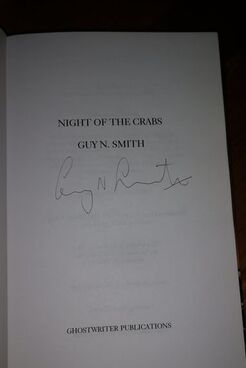

 RSS Feed

|

|