• HOME
  • CONTACT / FEATURE
  • FEATURES
  • FICTION REVIEWS
  • FILM REVIEWS
  • INTERVIEWS
  • YOUNG BLOOD
  • MY LIFE IN HORROR
  • FILM GUTTER
  • ARCHIVES
    • SPLASHES OF DARKNESS
    • THE MASTERS OF HORROR
    • THE DEVL'S MUSIC
    • HORROR BOOK REVIEWS
    • Challenge Kayleigh
    • ALICE IN SUMMERLAND
    • 13 FOR HALLOWEEN
    • FILMS THAT MATTER
    • BOOKS THAT MATTER
    • THE SCARLET GOSPELS
GINGER NUTS OF HORROR
  • HOME
  • CONTACT / FEATURE
  • FEATURES
  • FICTION REVIEWS
  • FILM REVIEWS
  • INTERVIEWS
  • YOUNG BLOOD
  • MY LIFE IN HORROR
  • FILM GUTTER
  • ARCHIVES
    • SPLASHES OF DARKNESS
    • THE MASTERS OF HORROR
    • THE DEVL'S MUSIC
    • HORROR BOOK REVIEWS
    • Challenge Kayleigh
    • ALICE IN SUMMERLAND
    • 13 FOR HALLOWEEN
    • FILMS THAT MATTER
    • BOOKS THAT MATTER
    • THE SCARLET GOSPELS
GINGER NUTS OF HORROR
horror review website ginger nuts of horror website

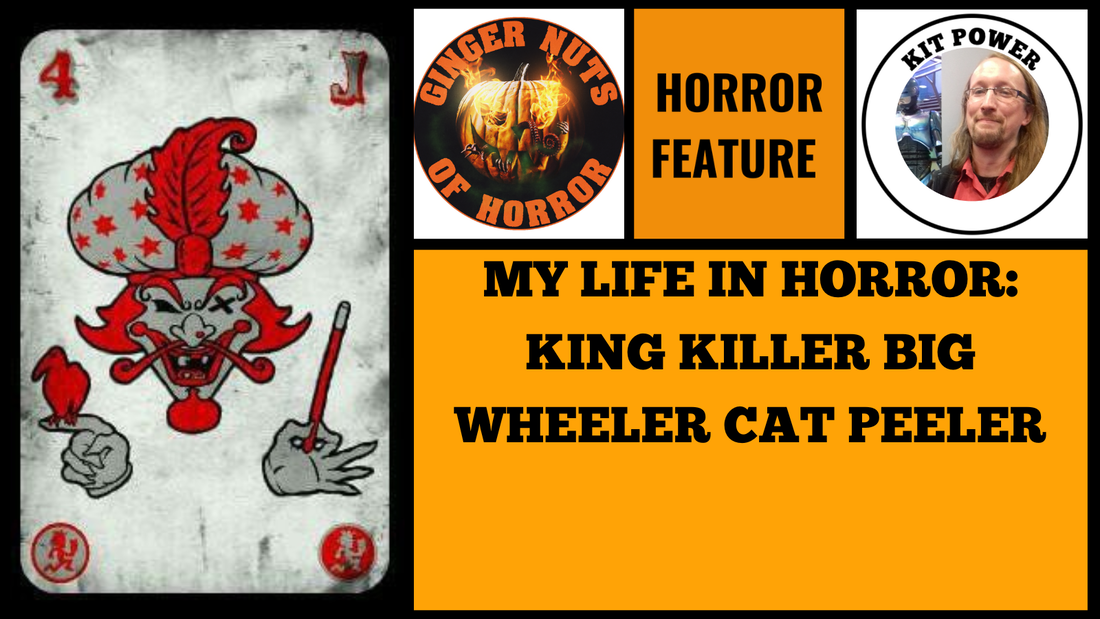
MY LIFE IN HORROR: KING KILLER BIG WHEELER CAT PEELER

30/8/2022
HORROR FEATURE MY LIFE IN HORROR- KING KILLER BIG WHEELER CAT PEELER
Whereas Limp Bizkit feel like something the record industry dreamed up - ‘what if Rage Against The Machine but without all the messy politics?’ - ICP have remained absolutely committed to a bit that has been mercilessly mocked from the moment of inception onward
My Life In Horror


Every month, I will write about a film, album, book or event that I consider horror, and that had a warping effect on my young mind. You will discover my definition of what constitutes horror is both eclectic and elastic. Don’t write in. Also, of necessity, much of this will be bullshit – as in, my best recollection of things that happened anywhere from 15 – 40 years ago. Sometimes I will revisit the source material contemporaneously, further compounding the potential bullshit factor. Finally, intimate familiarity with the text is assumed – to put it bluntly, here be gigantic and comprehensive spoilers. Though in the vast majority of cases, I’d recommend doing yourself a favour and checking out the original material first anyway.


This is not history. This is not journalism. This is not a review.


This is my life in horror.


King Killer Big Wheeler Cat Peeler
So. The ghost is all over this one like a bad smell. It came out in ‘97, and I have no idea how he came by it - must have been through his Uni connections, I suppose - and I must have made a cassette copy, because I can picture the CD he had, and I didn’t have a CD player back then.


Anyway.


As previously discussed, ‘97 wasn’t a good year for me. ‘98 was worse; that was when the wheels actually fell off. But ‘97 was the guy with no chute halfway between the plane and the ground, saying ‘so far, so good’. My friend group and I are in the death trap house where we will play many hours of Werewolf (and I will play many hours of X-Com) and I aggressively ignore the fact that I'm failing college, and that merely having some level of talent at acting isn’t going to mean shit in a world where I simply can not get my arse out of bed with anything resembling a regular pattern.


So there’s a good chance that this was the first outright hip-hop album I ever owned. Rage Against The Machine had forcibly disabused me of the notion that rapping was a somehow inferior form of expression (‘they only talk because they can’t sing’ is something I almost certainly said at some point, because, yeah, I was that kind of ignorant dumbshit kid) but I still needed loud guitars to engage my gut before the rest of me would be willing to come along for the ride. And, sure, the Judgement Night soundtrack punched another hole in the armour; still, tho, we’re pairing hip-hop artists off with metal acts, so it’s not exactly taking me over the cliff. And, look, true, this record features Alice Cooper, Slash and (I literally learned ten minutes ago, thanks to a Google search) Steve fucking Jones guesting on various tracks. So maybe that makes it the perfect bridge.


Regardless, the fact remains; looking at the Public Enemy, NWA, Ghostface Killah, and yes, sure, Eminem CDs on my shelf, there’s a non-trivial chance none of them end up there if I hadn’t first been exposed to The Insane Clown Posse’s The Great Milenko.


How did it appeal to me? Let me count the ways. Let’s start with the intro - a skit that starts with rednecks in a bar, putting on a country record for ‘a shindig’, only for the record to slow, before bleeding into an Alice Cooper monologue that sets out the stall of who - what - The Great Milenko is. It’s pure horror hype bullshit (‘The unleashing of the fourth joker’s card! The Necromaster!’), and it might as well have been precision engineered for my late teen brain.


See, as we’ll probably cover in greater detail later as this series comes to a close, I was at this point notionally still in training as a student of magic. And an album that set up its protagonists as magicians (albeit clearly cartoonish, carney magicians) had a deep appeal. One phrase I’d been given to conjure with at this point (yeah, sorry about that) was ‘hiding in plain sight’, and I think it’s possible teenage me half-believed ICP might just be doing something like that; setting up the exaggerated sense of magical carnage to hide a kernel of Actual Real Shit. Which, not to jump ahead, but of course they were, though their particular kernel - Born Again Christianity - was something I’d already found wanting (if you want to know what was going on for me on that subject, I have to recommend my debut novel, honestly).


If fact, fuck it, let’s deal with this now; how on earth did nobody notice ICP were Born Again? Viewed through the lens of hindsight, it’s kind of embarrassingly obvious; for all that they dress the idea up in terms of Shangri La and Juggalos at a never-ending live show/party, it’s clear that the final song is about heaven and hell. ICP and everyone else with ‘clown love’ (carefully described as multiracial, plus redneck truck drivers, implying an interesting class distinction we may return to) having a good old post-death time, while the ‘greedy skank motherfuckers’ burn forever. Sure, ‘free money, and mad bitches non-stop’ doesn’t sound exactly Biblical… but for white trash hip hop heaven? Sure, why not?


And when you start looking at some of the other songs, it’s striking how many of them run as pretty straight-up morality plays. The obvious ground zero for this is Halls Of Illusions, where a Cypress Hill tinged beat bleeds into a shredding chorus from Slash, as a series of men are shown visions of their families living happy, pleasant lives, only to be dropped back into a violent, squalid reality, created by their misdeeds (before being slaughtered by our faithful narrator). But elsewhere, How Many Times? lays out a litany of modern misery about the human condition (with an admittedly off-beam dig at being taught science in school that feels like a precursor to their infamous ‘magnets? Fuckin how do they work?’ moment), and Under The Moon feels like an Old Testament rumination on the hollowness of violent revenge. Now, with that last, you might fairly ask how that squares with the rest of the gleeful horrorcore slaughter of nasty people; I’d answer that Under The Moon doesn’t feature any supernatural elements or characters, so it feels like a slice of ‘realism’, dropped in an album that is constantly swinging between genuine portrayals of deprivation and desperation alongside EC Comics level blood, guts, and humour. In other words, vengeance belongs to God (or at least, in the case of this album, God’s agent, The Great Milenko), not man. And Piggie Pie has a vengeful wolf taking out a series of worthy targets - a racist redneck, a sadistic judge, and in the final verse a very, very rich man. Yes, the album does equate obscene wealth with The Devil.


And I think that last begins to signpost how they got away with it.


Because I did find myself wondering, as a kid. The final one-two of Just Like That and Pass Me By clearly pointed at a belief in an afterlife predicated on your behaviour when alive. And though some of the subject matter of Pass Me By fits the same mold as their earlier celebrations of The (Juggalo) Life - Faygo root beer, women with a bit of meat on their bones who like shagging Clowns, hip-hop being awesome and Elvis sucking - there’s a shift in tone, both in the beat (which samples an evangelical preacher talking about ‘mansions above’ over an insistent piano) and in the voices of the performers. Throughout the album, Shaggy 2 Dope and Violent J (yes, really, that’s what they’re called) have yelled, shrieked, snarled, voices constantly under some physical or emotional strain, an audible representation of Insane Clown energy… and in the last song, it all shifts, their tones lower, become calmer, working in an entirely human register. There’s a sincerity that comes from letting the act go… and sure, it’s in part an energy juxtaposition with the penultimate track, a man so frantically engaged in the concerns of the present that he doesn’t realise he’s hurtling towards his own end until it’s past him. But it felt like there was something more at play; like this was something that actually meant something to them, some deeper truth they actually believed in.


So, sure, I picked at it. But they disguised themselves so well.


Not so much with the misogyny or violence; even at that age, I’d known enough born agians to understand neither of those particular issues were seen as in any way a barrier to entry; especially as the violence was always either directed at ‘worthy’ targets, or presented as a symptom of poverty (though I remember having doubts even back then about the random claims that ICP had ever been involved in armed robbery - it seemed a bit ‘stolen valour’ then and seems even more so now). No, it was partly the class dimension, I think; the constant identification with the suffering of poverty, alongside a surprising willingness to blame rich people for the suffering, that felt very at odds with the materialism present so often elsewhere in Hip Hop. And the constant positive references to voodoo and ‘dark magic’ felt hard to square with even a relatively mild Christian doctrine.


But it was mainly because they seemed to hate evangelical preachers.


The track Hellaluja is a shotgun aimed right at the heart of prosperity gospel preaching. And throughout the song ICP aim, reload and fire over and over again. And they do not miss.


Their outrage is palpable, their fury audible with each spit lyric. The framing device for the song is a preacher delivering a cheesy healing ceremony, imploring the crowd to give ‘the first portion of their income’ before bringing on a disabled boy and promising that ‘for just $6000 we can heal this boy!’.  This skit interrupts the song at a couple of points, including at the end of the second verse with an absolutely outrageous phone call (‘people, that was the Lord! Today, he will heal this boy for just $5000!’) each interruption demonstrating the hypocrisy the verses excoriate. It’s the opposite of subtle, with ICP bringing a full-bore contempt for the subject that I found, and find, admirable.


We had a local born-again sect in the town I was living at the time, and they’d infrequently witnessed myself and my friends. I’d also had occasion while living in a halfway house for people at risk of homelessness to read some of their ‘literature’, left there by one of the residents, who was in a faith-based recovery from drugs and alcohol addiction. Of that read, I have retained only an emotional impression; a rising tide of incredulity and disgust, with an undercurrent of fear - just how crazy were these people, and how many of them were out there? The only concrete articles I can remember any detail of were both op-ed style pieces (though I suspect the whole magazine ran along similar lines), one explaining that capitalism could only work if it ran alongside a Christian society (which, erm, okay) and, I shit you not,  piece justifying private jets for preachers, on the basis that precious souls might be lost if said priest was too fatigued from an inferior form of travel to offer the correct words of spiritual comfort at the crucial moment.


Yeah, really.


So Hellaluja hit hard.


And, really, it kinda still does. It’s absolutely excoriating about spiritual conmen and the role they have to play in reinforcing poverty, by soliciting payments from those who can least afford it (the snarling bridge captures this best, with a menacing ‘pass the collection plate!’ cut alongside ‘Show me how you give, I’ll tell you how you live!’). And, knowing what I know now, it’s fascinating to revisit and realise the rage comes not from a generalised disdain for the religion as a whole, but rather the fury of a couple of believers at the commodification of faith for evil ends.


And look, here’s the thing; ICP are pretty much universally discussed and described in critical circles as a punchline. Sure, there was that moment of insanity when the FBI actually classified Juggalos as a criminal gang, but I think it’s telling that this was mainly met with howls of derision rather than outrage from the wider music community - because, seriously, ICP fans? Even before their spiritual coming out, the band was treated as a punchline; contemporary reviews of The Great Milenko were excoriating, and Eminem’s brutal, homophobic skit mocking them on one of the best-selling hip hop albums of all time, The Marshall Mathers LP (and, yeah, we’ll get to it, don’t worry) pretty much buried the band in terms of pop culture relevance (oddly, a fate not accorded to Kid Rock’s infinitely worse album from the same year, Devil Without A Cause, which is still inexplicably listed as ‘important’ somehow). Tellingly, that spreads even to your humble correspondent; despite loving The Great Milenko on release, and appreciating it a huge amount on a contemporary revisit, I can’t report any especial desire to engage with their more recent work. I remember playing MMLP to a friend of mine who’d encountered Milenko the same time as I did, and, despite that friend overall not being a hip hop fan, and certainly not being in any way as enamoured by Eminem as I was, nevertheless sadly concluded That Sketch was the most effective nail in the ICP coffin imaginable.  Not to jump ahead, but Slim Shady as a character shares enough characteristics with the ICP Juggalo aesthetic that the Wicked Clowns can’t help but be harmed by the comparison. It’s not that ICP are bad MCs; The Great Milenko is competent-to-good horrorcore hip hop, and it also has a genuine sense of humour, plus some class-based righteous anger that’s surprisingly well targeted. It’s just, you know, it’s Eminem; one of the finest natural talents hip-hop has ever produced. It’s not a remotely fair fight.


That said, this isn’t exactly Limp Bizkit Vs. Rage Against the Machine, either. For starters, ICP are legit contemporaries of Eminem, if not antecedents; the root of their entire beef was when a young Marshall Mathers added ICP as ‘possible’ guest stars at a party he was organizing, which unsurprisingly pissed off ICP, and there’s really no way to spin that to make Eminem the good guy in that situation (though it’s fair to say as the beef evolved that ICP probably took things a bit too far with the diss tracks).


Whereas Limp Bizkit feel like something the record industry dreamed up - ‘what if Rage Against The Machine but without all the messy politics?’ - ICP have remained absolutely committed to a bit that has been mercilessly mocked from the moment of inception onward, and it’s hard not to find that kind of admirable. Similarly, their relationship with their fan base remains strong; mutual solidarity of the mutually despised and mocked that, you guys, I just don’t have it in me to disrespect. I remember hearing some stand-up comedian laughing about Juggalos as ‘the “Uncle Harry ain’t going to bad-touch me no more!” gang’ and thinking, you know what, my smug dude, so fucking what if they are?


Because, not to jump ahead to the final essay I may or may not end up writing, but ICP, I have (re)discovered, actually meant a lot to me at the time they came along. The love affair may have been relatively short-lived, and their place supplanted by rappers with undeniably superior technical proficiency, but they spoke to me at a time I was sliding into a pretty dark place. They spoke with adolescent humour and rage about real-life concerns; there are differences between post-industrial collapse Detroit and North Devon… but there are similarities, too. This is an album written by men who understand the claustrophobia of poverty, and the crawling, sweaty feeling of shrinking horizons, door after door slamming shut. They understand dark humour as a response to horror, the powerless fantasy of supernatural retribution against the rich and powerful at whose whims we suffer, bleed, starve.


And here we are in 2022, and I am sad to report that doesn’t feel less relevant. My own personal circumstances may have improved almost beyond comprehension, but the big picture is bleaker than it’s ever been, the arc of descent clear and still accelerating, and for much the same reasons; an insane pursuit of wealth, a machine of appetite into which our bodies and the futures of our children are being fed, pulped, burned. We’re ruled by a tiny number of sociopaths with unimaginable power and influence, and they absolutely don’t consider anybody actually reading this as real, as you and I understand the term. And no, ICP’s The Great Milenko doesn’t exactly articulate that… but it doesn’t exactly not articulate it. The targets of the album's fury - racist rednecks, corrupt, evil judges, prosperity gospel grifters and, above all, very, very rich people - are all either the problem or enablers of the likely terminal cancer currently afflicting our species. And, I mean, I really, really love Eminem, I do, and we’ll get into it… but there’s really nothing in his body of work that comes close to this, in terms of identifying unapologetically with an underclass and against the oppressors. And let’s not forget that the reason this album obtained notoriety in the first place was because of a backlash from Christian groups that led to the label pulling release at the last minute. Unquestionably, that controversy helped sell more records, but that wasn’t inevitable. This is an album that spoke truth to power, and power hit back.


And while we’re on the subject; yes, it’s true that this album contains misogyny, of the type that appears as baked into Hip-Hop as it is Rock n Roll, but frankly it’s a lot less vicious than in many other artists. And unless I’ve missed something on my recent relistens, theres’ not a single even tacit bit of homophobia, which is, sad to say, itself kinda noticeable in the context of the general milieu. If that doesn’t strike you as anywhere near good enough, I’m not going to argue with you; but it’s not nothing, either.


You know, it’s genuinely gleeful to discover, after writing maybe sixty of these essays, that the process of My Life In Horror is still capable of surprising me. I knew I’d be writing about this album, and honestly, I was dreading it, certain that it’d be, at best, a Headless Children moment, and at worst, another Lost Boys disaster. Instead, I find myself, improbably, in the opposite position; not merely defending but damn near evangelising for a piece of work that was despised at the time, and has been basically reviled ever since, by a group that has near-universally become a synonym for embarrassingly bad music.


I knew The Great Milenko had been an important album for me when it came out. I could never have predicted that, in 2022, it would still be important.


But it is.


And it fucking rocks.


KP
4/7/22

CHECK OUT TODAY'S OTHER ARTICLES BELOW ​

JOSHUA MARTIN IS SEARCHING FOR THE  GHOSTS FROM THE RUINS
Horror Promotion website Uk

THE HEART OF HORROR REVIEW WEBSITES

0 Comments

MY LIFE IN HORROR: THAT’S YOUR SHADOW ON THE WALL

25/7/2022
MY LIFE IN HORROR: THAT’S YOUR SHADOW ON THE WALL
Never mind the action on screen, the very editing itself, the soundtrack, the lighting, it’s all fucking furious, and it wants you to know it.
​My Life In Horror

Every month, I will write about a film, album, book or event that I consider horror, and that had a warping effect on my young mind. You will discover my definition of what constitutes horror is both eclectic and elastic. Don’t write in. Also, of necessity, much of this will be bullshit – as in, my best recollection of things that happened anywhere from 15 – 40 years ago. Sometimes I will revisit the source material contemporaneously, further compounding the potential bullshit factor. Finally, intimate familiarity with the text is assumed – to put it bluntly, here be gigantic and comprehensive spoilers. Though in the vast majority of cases, I’d recommend doing yourself a favour and checking out the original material first anyway.

This is not history. This is not journalism. This is not a review.

This is my life in horror.

That’s Your Shadow On The Wall
This one has been on and off the list a lot. Up to very recently, I was leaning towards not covering it. Truthfully, if I hadn’t noticed I was heading towards writing not one but three essays about white hip-hop artists from Detroit as the finale, and realised it’d be best to break that run up, lest I test your already superhuman patience with my bullshit entirely past breaking point, you might not be reading this at all.

And a big part of the problem is that I can’t do the usual pack drill with regards to when, where, how old I was. None of it. Did I see it? Yes, yes I did, on a small screen, sometime in my late teens/early twenties. Did it peel the top of my skull back and take a loving shit over my brain? Well, now you mention it, yes, it did.

And yet.

The fucking rep this movie had, too. I mean, Reservoir Dogs had a rep, and so did Pulp Fiction, but this bad boy was next level; like, ‘banned’ from a video release (yes, it’s more complicated than that, but that’s what I understood at the time) next level. It ran into a couple of very UK-centered shitstorms, which, okay, yeah, I guess we do need to get into that, don’t we.
Okay.

So. In the UK, in 1993, a 2-year-old boy was abducted from a shopping centre in broad daylight, taken to a second location, tortured and murdered. His horribly damaged body was discovered two days later on a nearby railway line.

The perpetrators were charged 8 days later. They were two 10-year-old boys.

Yeah.

Now, a lot of people had an awful lot to say about what could possibly have caused this kind of unfathomably awful crime. And, because we have a uniquely vicious, virulent and stupid right-wing tabloid press tradition in the UK, every single aspect of the perps life was poured over in obscene detail.

And it turned out they’d probably watched a few horror movies.

The main focus of ire was, and I shit you not, Child’s Play 3, as there seemed some certainty that the boys had seen it, perhaps even owned a copy. Point is, it kicked off a weird and thankfully short-lived second ‘video nasty’ type scare, with all the attendant moral panic bullshit. You’re a horror fan, you know the drill by now; corruption of innocence, sick, depraved Hollywood, monkey see, monkey do: Won’t Somebody Think Of The Children?

So when NBK found itself up before the BFCC in the summer of 1994, the tabloid press went into full-on Ban This Sick Filth mode, and some nonsense reporting about possible copycat killings in the states led to a delay in certification. Ultimately, the movie (cut by 3 minutes to achieve a US R rating) was given an 18 certificate and made it to theatres, but the miasma of controversy was well established.

And look, I’ve talked about this before, but truthfully I’m kind of a wimp when it comes to ‘extreme’ cinema. Last House On The Left did permanent damage, I’ve never seen Texas Chainsaw Massacre, and I’m pretty confident I’ll go through my entire life without ever watching a Saw movie. Some of that is a basic squeamishness about blood and guts, sure... But I think there’s more to it. I think that certain movies have a reputation for me that, itself, has become a kind of psychological barrier to entry. 

And I think, for me, thanks to the sheer volume of tabloid panic (exacerbated when the movie’s proposed VHS date coincided with the Dunblane massacre, leading the distributors to unilaterally decide to ‘ban’ the movie until 2001, despite securing an 18 certification for home release), Natural Born Killers became one of those movies.

Which, when you consider what many of the obsessions are that drive the movie, is pretty fucking funny, really.

I don’t think I caught the Channel 5 broadcast, shown while the movie was still in limbo in terms of a home viewing release. For one thing, Channel 5 was a dicey proposition in North Devon at that time. For another, I suspect that rep just made me steer clear. So I think - and it really is just a guess, but - I think I must have bought it on DVD, when it finally came out in 2001. Which, logically, must be because I’d by then become familiar enough with Oliver Stone’s other work (especially JFK, which hit me with the force of revelation in my late teens) that my desire for more work from this man was enough to override my previous fears.

I was finally ready. Or so I thought.

It’s frustrating, not being able to do what I usually do, and reconstruct the shock of that first viewing. On the other hand, this is a movie that I’ve seen, many, many times, and yet its power to shock me has barely diminished at all; indeed, there are ways in which I find it even more disturbing now than I did as a young man.

The sheer ferocity of it, is what lingers the most. Sure, the violence; both the overtly, hyper-stylized opening diner massacre and the later gruelling and gruesome prison riot scenes. Both sequences have, in their own way, made their marks on me, on my imagination. But also, one of the things the movie does, with it’s shifting modes of storytelling, kaleidoscopic soundtrack and dizzying use of different film stocks, is present the viewer with an interrogation of the form itself; the movie, especially through the first half, appears to be in a state of constant transformation, creating moods, inhabiting genres, only for those states to collapse upon themselves, as if they’re unable to bear the weight of the story they’re trying to tell (or, perhaps, the rage of the characters the movie is concerned with). We shift from hyper-stylised action movie to oversaturated colour to sit-com (complete with monstrous laugh track); and in between, these collages of film and sound, as Mickey and Mallory’s Cadillac appears to be travelling through some portal between worlds, haunted by monsters and black and white streets.

Never mind the action on screen, the very editing itself, the soundtrack, the lighting, it’s all fucking furious, and it wants you to know it.

Because, sure, the film is about violence. Mickey and Mallory are both products of violent childhoods, escaping via the nihilism of a shotgun barrel pointed at anyone that gets in their way. Similarly, the deeply fucked up cop pursuing them is also a product of childhood trauma. Violence perpetuates violence throughout the movie, including, in the second half, the mass violence of the carceral state. I don’t think the movie revels in the violence, exactly (and the accusation that it celebrates it is not just fatuous but Actually Wrong, IMO), but it sure doesn’t pull away from it, either.

Still, that’s not all it’s about.

The story goes that as the movie was being made, Stone realised the movie could be much more than a straight-up fucked up crime thriller about two mass murderers. At some point in the process, Stone started to realize it was about America; and more specifically, how America saw itself, down the lens of a TV camera. As with Don't Look Up, later, NBK is absolutely excoriating in its treatment of the media, and the venal race-to-the-bottom of ratings uber alles.

And that tendency is given flesh in the person of Robert Downey Jr, giving for my money a career-best performance as the slug that walks like a man, Wayne Gayle.

He is magnificent. A surface smarm/charm that is almost instantly obliterated by his monstrous ego, Gayle quickly takes the movie over from about the one-third mark; as soon as he appears, the story of Mickey and Mallory starts to warp in his hands; footage of the pair replaced by actors shot from salacious angles, and full of artless cuts and inserts. It’s ballsy as hell, when you think about it, given just how gonzo the filmmaking has been thus far; almost as if Stone is winking at us as he says ‘of course, this can be done badly, if you don’t know what you’re doing’. And yet, does Gayle have his own dark, awful attraction? Sure he does. He’s so awful, you can’t take your eyes off him. You are - I am - both disgusted, and delighted by my disgust. Every time I feel he can sink no lower, Gayle plumbs yet further depths of narcissism. He’s the perfect avatar for the worst that infotainment represents.

I mean, is it any wonder the press weren't thrilled with this one?

They’re still at it, by the way; a recent Google search showed that on the 25th anniversary, The Guardian ran a piece saying the movie failed because it ultimately blamed the media for Mickey and Mallory’s violence. Yeah, somebody got paid to write that. Given what we’ve already discussed about how the film portrays violence as a cyclical, generational phenomenon, it’s hard not to take such a poor misreading as deliberate; in that respect, I guess you have to give Stone credit that more than 25 years later, the movie is still making media types sore enough that they feel defensive.

Because, no, obviously, the media isn’t to blame for the violence.

What the media - specifically, the news media - is guilty of, is the sensationalized coverage of the violence (If It Bleeds, It Leads), turning murderers into celebrities, trials into circuses, and, often, matters of scientific fact and political reality into matters of opinion and topics of ‘debate’ or ‘controversy’.

Seen through that lens, the fact the NBK predates the establishment of Fox News by two whole years gives the movie an aura of eerie prescience. The utterly amoral, value-free rendering of ‘reality’ as entertainment is a poison that, in 2022, feels likely to be terminal, as we continue to ‘both sides’ ourselves off the cliff of climate apocalypse and the flapping gums whose only job is to keep us informed of what’s actually going on shake their heads, shrug, and say ‘gosh, it's complicated, isn’t it?’

It’s not that NBK predicts that, exactly; it’s that in the movie, you can see the contours of the trends that will lead us there; you can almost feel the rough beast of Murdocks poisonous News Station child slouching into place.

I think that’s what I mean when I say I found it more disturbing on a rewatch than I did as a young man. Back then, sure, it seemed bad, but, well, a) it was America, they’re all nuts, everybody knows that, and, relatedly, b) It Couldn’t Happen Here. Back then it was the violence that got to me, the electric confrontation between Gayle and Mickey, and the teeth-grinding tension of the jailbreak - which, to be fair, is no less raw and darkly thrilling as it was on first viewing.

But now?

Shit. Now it’s 2022, and it is happening here, and it’s happening everywhere, and I just don’t know anymore. The anger of this film used to sing to me; it used to light me up, helped me feel like less of an alien. Because, on some level, based as it was in emergent trends and then-current concerns, it felt like satire, still; overblown, caricatured. It has some serious things to say, but it still felt like a warning.

Now? Shit. Now it feels like a prophecy of something it’s become too late to fix.

And a world in which Natural Born Killers no longer feels like an exaggeration is a scary fucking place to be.

KP
8/6/22


CHECK OUT TODAY'S OTHER ARTICLES BELOW ​

HORROR MOVIE REVIEW Director- Charles Band
Horror Promotion website Uk

THE HEART OF HORROR REVIEW WEBSITES

1 Comment

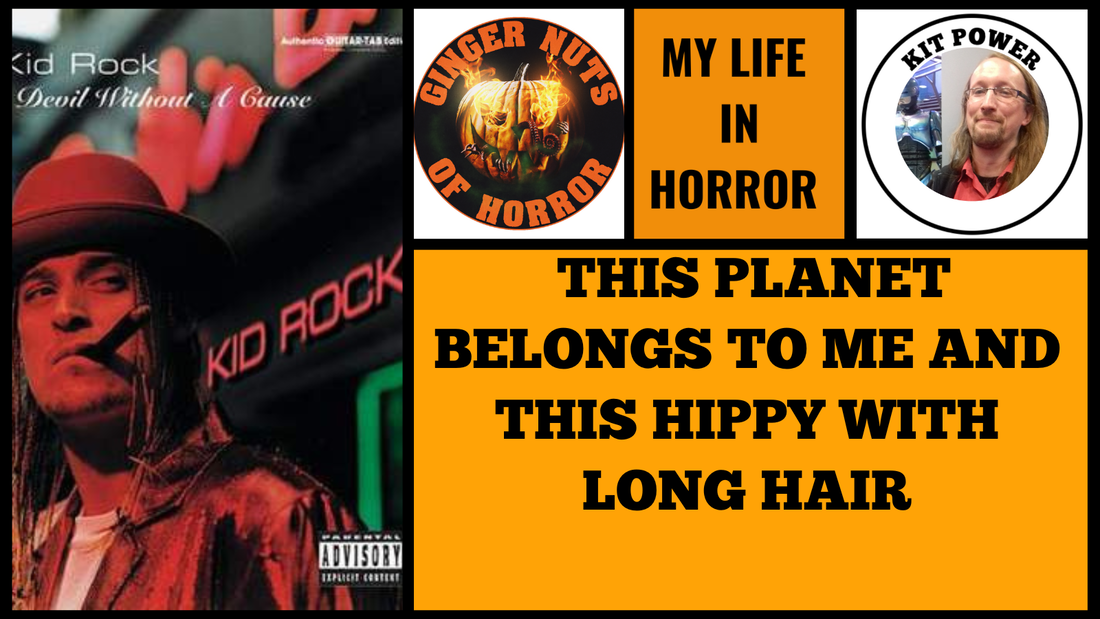
MY LIFE IN HORROR: THIS PLANET BELONGS TO ME AND THIS HIPPY WITH LONG HAIR

9/5/2022
MY LIFE IN HORROR: THIS PLANET BELONGS TO ME AND THIS HIPPY WITH LONG HAIR
My Life In Horror


Every month, I will write about a film, album, book or event that I consider horror, and that had a warping effect on my young mind. You will discover my definition of what constitutes horror is both eclectic and elastic. Don’t write in. Also, of necessity, much of this will be bullshit – as in, my best recollection of things that happened anywhere from 15 – 40 years ago. Sometimes I will revisit the source material contemporaneously, further compounding the potential bullshit factor. Finally, intimate familiarity with the text is assumed – to put it bluntly, here be gigantic and comprehensive spoilers. Though in the vast majority of cases, I’d recommend doing yourself a favour and checking out the original material first anyway.


This is not history. This is not journalism. This is not a review.


This is my life in horror.


This Planet Belongs To Me And This Hippy With Long Hair
Did it not bother anyone because Kid Rock was clearly just an awful person, or because he has a black son and therefore can’t be racist, or… what, exactly? Like, of course he could say it, but, I mean..
Well, well, well. The year 2000 AD, get down with your bad self.


Things have gotten better. I quit working at the fucking pub. I didn't have a job to go to, but I simply wasn't prepared to work millennium eve in that place for the princely sum of double the national minimum wage. It’s interesting; obviously through the strict lens of transactional logic, it was a bad move, in that I ended up earning nothing and being unemployed. But, you know, I knew I was worth more.


Yeah. That’s what mattered.


Anyhow, 3 months of being unemployed wasn’t fun, but then I landed an admin job at London Guildhall University, initially processing forms in their registration department. It was a 9 month fixed term contract job. For the first time in my life, I was being paid monthly.


And I was earning - after tax, mark you - £1000 a month.


My rent, on the shared house I was living in with The Ghost, was £270.
I felt like a fucking millionare.


I started there because I’d assumed this was the point I acquired this album. Like, I remember my first Saturday after payday (fuck, weekends were mine, now, rather than being the busiest and most soulcrushing days of my week), riding the tube to the west end, going into HMV on Oxford Street and grabbing a fucking basket; like, I am here to buy some damn music.


I denied myself nothing, and I walked out £120 lighter, and with a canvas bag bulging with jewel cases.


And I got some beauties that day, some all-time hall-of-famers: Queens Of The Stoneage Rated R, NiN’s The Fragile, and Slipknot’s debut (later that year, I’d queue for hours in that same store to get it signed by the band, when they were doing their first UK tour. I still have it). Sure, some misses too; the cover art for Limp Bizket’s Significant Other got me over the line, and spent frankly too long in rotation; it wasn’t until I saw the band playing at Leeds in 2000 that the scales fell and I realised I’d been mugged off. But, you know, hey, they can’t all pay off. Overall, it was a roaring success, and one of the most straightforwardly happy days of my life.


And I really thought I must have picked this one up then, but I checked the dates, and that cannot be the case.


See, I bought Devil Without A Cause as a present for The Ghost - likely as a birthday present. And it must have been near after it came out, because I’d picked it up as a result of XFM playing the absolute shit out of Cowboy for weeks, which must have been in 1998.


Except… I wasn’t working in the pub until December 98, because I phoned in sick for Christmas. I remember, because when I put in my notice in December 99, the boss said ‘Wow, that’s two Christmasses you’ve fucked me over’.  So…


Jesus, you know what? I think Cowboy must have lodged in my head so badly that I went and hunted the album out once I had money. Like, I think that almost has to be it. I know I had the album by the time I was at Guildhall because I remember talking with people about it, so…


Okay, so; either that shopping trip, or one of the subsequent ones.


Back in the room. Jesus, I know the past is a foreign country, but why does it have to be such a fucking maze?


Anyway. The Ghost had access to a CD burner and a colour photocopier, so I knew anything I was buying for him, I was also basically buying for myself, and sure enough I still have the burned copy, somewhere on a shelf or in a drawer.


And I fell pretty hard.


Now, in my defence, my entire experience of Rap music to this point was Rage Against The Machine and Insane Clown Posse’s Great Milenko (don’t worry, kids, we’ll get to it before our time is done), and the aforementioned LB record. And I was - hell, am - primarily and first a metalhead. Sure, my respect for HipHop as a form has grown over the years, and I’ve lately been listening to a lot of it, for reasons that will become clear. So one might fairly point out that this album was almost cynically tailormade to appeal to me. Hip-Hop, but with slamming rock/metal guitars and a lead singer rapping about being a white trash trailer kid? How could I resist?


And I’m listening to it now, and you know, it’s about as well produced as any rap/rock album from 1998 could possibly be. The guitars on Fist Of Rage, Bawidaba, and I Am The Bullgod chug and crunch like you want them to, and Fist Of Rage actually has a pretty good riff going on.


At the same time…


So, you’ll recall back when we were talking about The Lost Boys, I posited the entirely uncontroversial fact that it’s just a bad movie, regardless of what your nostalgia may be telling you? Well, I stuck Devil Without A Cause on a few months back, looking for some aggressive music to help me pretend I wasn’t hating every second on the crosstrainer, and despite knowing every word, I found myself itching to hit the skip button about halfway through Cowboy… then again as Devil Without A Cause entered it’s 17th minute… Until I skipped Rollin into Wasting Time, and just noped out entirely.


I have a shocking and terrible news flash from 1998; this album may have sold 11 million copies in the US, to widespread critical acclaim, but it’s actually not very good.


I know. Try and contain your shock.


The why of the badness is trivial. To start with, there aren't enough good songs; that’s a pretty fundamental issue. Bawitdaba is a strong opening; it builds well to the chorus intro, and the first verse sets out the stall well; it comes off like a classic chest-beater, but there’s a bit more going on under the hood. ‘This is for the questions that don’t have any answers’ is a fucking good opening line, and the parade of misfits the song (album?) is dedicated to (‘the G’s with the 40s and the chicks with beepers’, ‘wild mustangs/ The porno flicks/ and all my homies in the county in cell block 6’) feels like if Fun Loving Criminals were going dirty on this one, and the riff is solid. Cowboy is what it is; it was a good choice for single, but it’s certainly run through it’s replay value for me, at this point. Good comedy makes you laugh; truly great comedy makes you laugh the thousandth time you hear it. Cowboy no longer makes me crack a smile, though I remember why it once did.


But then we get to the title track, and the problems start to surface.


Like, it’s not terrible or anything, but it is just a bit too long. The Joe C verse is cute, and contains probably the best single line on the album  (‘I’m a freak, don’t call me sick/ 3 foot 9, with a 10 foot dick!’), but there’s one too many tours through the chorus. I understand this is something about which reasonable people can differ, but, for me, a rap metal song that has you checking how much longer it has to run has failed some pretty elemental test.


I Am The Bullgod makes some strange production choices with the guitar sound, an issue that’s exacerbated on subsequent tracks; by the end of the record, I feel like I’ve heard seven or eight different producers who have aggressively different approaches to the job, which in turn generates a track to track dissonance that I found tiring. That said, Bullgod makes a good case for Kid Rock’s drug consumption; it’s also the last straightforwardly good song on the album.


The issue from here is pretty simple; I’ve heard everything Kid Rock has to offer. The entire gamut of his emotions, the limits of his rhyme schemes, the subject matter (having sex, taking drugs, being White Trash, going platinum, okay). But the album still has 15 tracks to go. And a combination of lyrical diminishing returns and the aforementioned tonal production and beat/tune choices mean that I’m both bored and oddly exhausted by the time the risible Welcome To The Party and faux-cool I Got One For Ya kick in. Marking the halfway point.


The back half isn’t devoid of charm; Fist Of Rage has a sub-sub-RATM quality that still has enough blood in it’s veins to bring on a nod, and Fuck Off sees KR audibly upping his game, in a vain attempt to not be demolished by his special guest MC. It’s the definition of a doomed effort, but it does at least give you a glimpse of what could have been, if KR had put more effort into being The Hottest Shit Ever, instead of merely declaring it, like every success-visualising huckster in the embarrassing history of capitalism.


Oh, also, in the final track, Black Girl, White Guy, Kid Rock casually drops the n-bomb.


So, you know. There’s that.


And, no, of course I’m not sat here in 2022 trying to get Kid Rock cancelled; frankly, if, here in 2022, you’re still enjoying Kid Rock, you deserve each other, and it’s none of my business.


What I am curious about is why I liked this so much, at the time and place when I did, given how transparently mediocre it always was. Like, I had RATM’s debut when I was twelve or thirteen. Fear Of A Black Planet existed, Straight Outta Compton existed, and in two years, A Certain LP is going to demonstrate just what a white boy from Detroit can do in the realm of Hip-Hop, and without being some middle class twat cosplaying as a drug dealer.


So, let's start here; it’s not good, but it’s not aggressively and unremittingly awful; if I also enjoyed Limp Bizket and, heh, Methods Of Mayhem, maybe I should just cut myself some slack. Like, there’s some legit good guitar playing here, and the band behind him is rock solid. All Hip Hop is essentially new to me at this point, so I had no way of knowing just how reliant Kid Rock was on what had gone before. I was still green, about the past and the present-as-was; the point of the big shopping trip was to take some risks, see what was out there. I was terminally easily impressed, and the rap/metal thing was still new enough (and rap in general still essentially unknown enough) for the thrill of discovery to whitewash a multitude of sins.


Also, I guess let’s kick this about for a second; it’s the same record I heard in 1998. Not a note has changed. What’s changed is me; my positionality to the work, and therefore my relationship to it. The stuff I loved is all still there; if I love it no longer, is that just because I’ve since heard so much done so much better that what seemed impressive now sounds mediocre?


Sure, that’s part of it. Shit, this one goes all the way back to our early conversation about the music of WASP, doesn’t it? I loved that, too, and, well, yeah.


And intellectually, that’s a perfectly reasonable, defensible position to hold. I was young. I’m no longer as young. Considering how long it’s been with some of the work I’ve covered here, it’s honestly astonishing this hasn’t happened more often.


Sure. But also…


Well, look, I think, even by the subterranean standards of hip hop and metal, this album is kind of frighteningly misogynistic. Not that other titles in this series so far covered and still to come don’t have their share of, erm, issues, but fuck me, this guy just has nothing else to talk about. This is a man who, like Fred Durst, appears to hate women because his sex drive means he has to be in their company but they just won’t stop talking. Seriously. And, like, sure, welcome to patriarchy, welcome to toxic masculinity, and it’s not like it isn’t a crowded field. But with Rock it stands out so starkly, for me, because of the paucity of the rest of the material; when your entire persona is pimp/street hustler, and you don’t have the creative chops or imagination or confidence to ever move outside of that, it becomes a kind of relentless dirge of self-loathing; the party anthems feeling like dead eyed embracing of nihilistic abuse just to feel something.


Only, you know, a bit shit.


Like, I bought this for The Ghost, a horrifically misogynistic man, and I remember he loved it but was surprised that I’d know he’d like it because rap wasn’t his thing (oh, yeah, he was a massive WASP fan). And for those of you staring at me in Guns N Roses, sure, but in my defence, I called it out there, too. And I think what bugs me - and I admit this is subjective, but - is just how deeply felt the assumptions appear to be, just how much it feels like KR thinks these are simply Facts Of Life, obvious truths.


I dunno. I came here to work out why there was this gap between early 20’s me and mid 40s me and I feel like I’m trying to grasp smoke.


That fucking n-bomb does bother me too, though. And it bothers me a lot that it didn’t bother me at the time. Like, I didn’t even remember it, so little impression did it make. And, again, not trying to relitigate 1998, but at the same time, that’s not a fucking hundred years ago, is it? Did it not bother anyone because Kid Rock was clearly just an awful person, or because he has a black son and therefore can’t be racist, or… what, exactly? Like, of course he could say it, but, I mean..


Like, Axl Rose has spent decades, now, rightly apologising for One In A Million, and here we are ten years on from that songs release, and a white middle class kid cosplaying as a street hustler drops it in a song talking about his relationship with the black mother of his son, and… crickets all round? I dunno, man, it feels fucking odd to me, and defnately kind of shameful that I wasn’t more uncomfortable about it at the time.


Because what it comes down to is a faint bad taste the whole thing leaves in the mouth for me, at this point. I don't like Kid Rock, as a human; and that’s okay, there’s plenty of artists whose work I love who I don’t like either… but the work is pretty mediocre too, and that’s what I think pisses me off. It’s one thing to get taken in by a blinding talent that happens to be owned by a garbage human, but when it’s a garbage human who also doesn’t have a huge amount going on creatively, when it’s an album that, in retrospect, feels like a cynical rebranding of a struggling hip-hop artist who saw the nu-metal wave starting to crest just in time to grab it, creating an album that feels oddly half baked and inchoate… yeah, then it’s just a little bit upsetting to have gotten caught up it that, taken along by it.


I’m sure it won’t be the last time, but even so.


Still, there is one big fat, silver lining. On track 14, with the pleasingly direct title of ‘Fuck Off’, Rock delivers his best bars on the album, over a truly snarling guitar line. The subject matter’s the same as ever - getting fucked up, getting laid, determined to be The Biggest - but it’s delivered with more conviction and skill than anywhere else on the record; you kind of get the sense of why the suits thought they could make use of this guy.


And then, at the end of the song, he calls in his guest MC.


And for the first time in my life, I hear the high, nasal voice of someone KR introduces on the track as Slim Shady.


And on a few short bars, I get a sense of what this form can really deliver.


Everything he’s doing is next-level. He does Kid Rock's same subject matter but there’s an edge to it; the flow is more assured, more intelligent, the rhyme scheme far more complex, and yet the overall flow sounds effortless, as though he’s making it up on the spot. And it’s funny in a way that Rocks 2D machismo simply isn’t capable of. Slim sounds like a whiny brat, the anti-cool, the nerd kid, only with more skill than everyone put together, a swagger that knocks Kid Rock off the stage with one hip swing, borne not from a need to rooster strut to cover for insecurity, but from a place of total, furious confidence - I got this shit, I own this joint, just you sit back and let me go (if my sources are to be believed, at least some of that swagger came from young Mr Mathers enjoying a rare encounter with cocaine, supplied at Rock’s studio prior to recording). The track bleeds away behind him as he closes the song out (‘so when you see me on your block, you’d better lock your cars/’cause you know I’m losin’ it when I’m rappin’ to rock guitars!’) and he closes with an electrifying dedication/call to arms that sets me off in a way nothing has since Rage Against The Machine.


So, sure, I think Devil Without A Cause sucks, and Kid Rock sucks, and I’m embarrassed that I loved this deeply mediocre artist and album, as a young man.


But, on the other hand, it did introduce me to Eminem.


To be continued…


KP
12/02/22

CHECK OUT TODAY'S OTHER ARTICLES ON GINGER NUTS OF HORROR

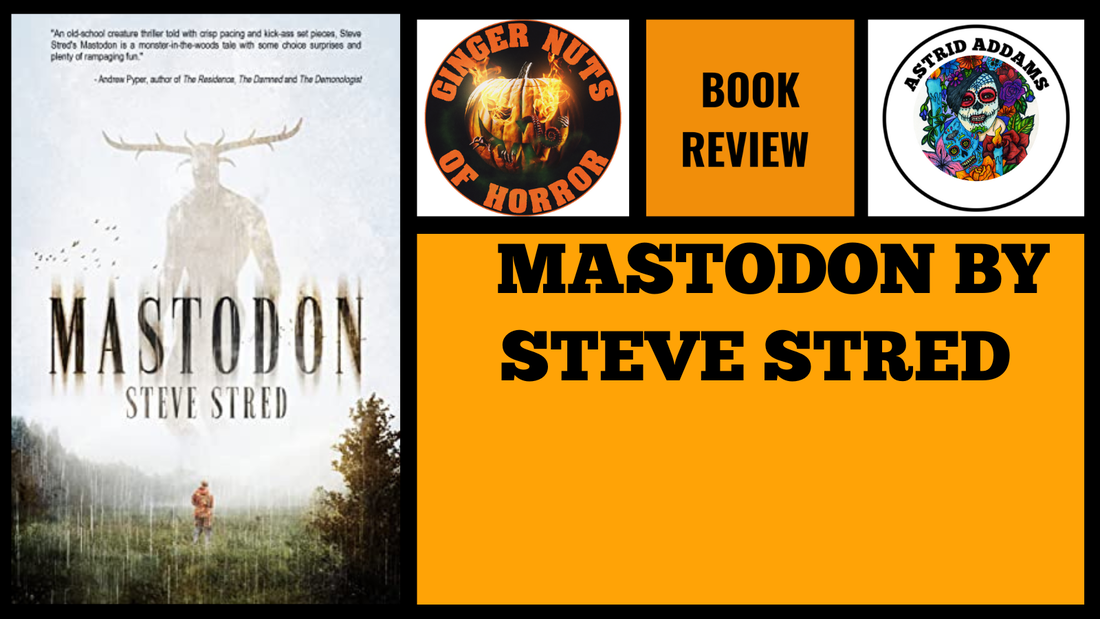
BOOK REVIEW: MASTODON BY STEVE STRED
Picture

The heart and soul of horror 

0 Comments

My Life In Horror: Where There’s A Will

11/4/2022
Picture
My Life In Horror


Every month, I will write about a film, album, book or event that I consider horror, and that had a warping effect on my young mind. You will discover my definition of what constitutes horror is both eclectic and elastic. Don’t write in. Also, of necessity, much of this will be bullshit – as in, my best recollection of things that happened anywhere from 15 – 40 years ago. Sometimes I will revisit the source material contemporaneously, further compounding the potential bullshit factor. Finally, intimate familiarity with the text is assumed – to put it bluntly, here be gigantic and comprehensive spoilers. Though in the vast majority of cases, I’d recommend doing yourself a favour and checking out the original material first anyway.


This is not history. This is not journalism. This is not a review.


This is my life in horror.


Where There’s A Will
It is Saturday 15th September, 1984. I am six years old.


And, for my sins, I am at my Nan’s house, in London.


Ah, Nan. See, the thing is, as a kid, I never really saw it. As a child, she was kind to me and my sister, and for me, that was the beginning and end of it. I know Dad used to make pointed jokes about her, and Mum made no secret of finding her ‘difficult’, but all I knew was when we went up to see her, we got to play with the skittles in her side alley, using the door of her garage as a backstop for any stray throws, and she fed us well, home-cooked dinners and deserts. Admittedly, on one memorable evening, we were served a baked bean, erm, bake, I guess, followed by prunes and custard, which led to an evening in front of the TV which became legendary among my mother, sister and I, capable of evoking guffaws, if not outright hysteria, as we recalled The Night Of The Long Farts.


But she really was a good nan to us, at least when we were little. Sure, there was some weirdly aggressive gender essentialism around me growing up to be ‘a big strong man’, but I distinctly remember, even as a very young child, thinking of it, indulgently, as Old Person talk, and I paid it no mind, even as mum angrily insisted I could grow up to be whatever I wanted. Later, I’d see it; when we visited Uncle Edward one Christmas as teenagers, she spent the entire evening stony-faced, before saying, just before leaving ‘Well, I don’t know what happened to you both, you were such beautiful children!’. It should have been hurtful, maybe even traumatic, but, honestly, my abiding memory is one of amusement. By that point, I knew she hated me and my sister, and I’d been informed several times that we'd been disinherited, and I took that undertaking as my cue to have nothing to do with her. It turned out to be a lie, as it happened, which again, I must sadly report I regard with only a kind of wry amusement. And at some point, I got my hands on one of the carefully typed letters she’d regularly send to mum - when they were still married, my father would refer to them as ‘Letters From The Deep Freeze’ - and I can still remember how that particular missive closed out: “Edith from down the road passed away last week, and I expect I shall soon be joining her. Are your dogs still tying you down?


Love,


Mum”


So, yeah. Nan, eh? Real charmer. And that bungalow; my other abiding memory is sitting on the sofa, me and my sister, with Nan and mum on the other couch, lights down low, gas fire chucking out a stupifying level of heat, while the huge colour TV in the corner blared out at us (yeah, Nan’s hearing was definitely on the way out). That was a treat, mind; we had no TV at home at this point, and when we did finally get a small portable in time for Colin Baker's final TV season as The Doctor, it was a black and white set. So outside of the school holiday trips to Dad, this was my only chance to soak up the good old CRT rays and get down with it.


My memory is that Uncle Edward and Auntie Jill were there too, but I’m not sure if that’s true; certainly, I talked about what we’d watched with Uncle Edward; but was it that evening, or had he just seen it the next time we talked? He’d agreed with me that the theme and opening credits were brilliant and creepy.


Anyway.


The opening was awesome; the music otherworldly, but also menacing, and there were shades of Who in terms of atmosphere, for sure, but this was something different, and that green logo, spelling out the title in giant letters… there’s a thing about when you’re that age, I think, and your kid brain is wide open, and some genius at the BBC knew how to create music and images that seemed to open up a universe of sinister possibilities.


I had no idea what Tripods were. But I was dying to find out.


My memory is I only saw the first episode. It seems unlikely that we’d stay with Nan longer than a week, given how hard she was on mum, and how any trip would have been in school holidays, and thus eaten into Dad visits. I feel like I saw that first episode there, and the final one at my father's house. Which… well, it was broadcast 8th December, so clearly that can’t be right. Yet I know I did see that last episode, in colour, as I have a vivid memory of the final shot of the story, and when I recently rewatched the show on DVD, it was exactly as I remember it. So, maybe a friend's house? Seems unlikely, but maybe…


Anyway. That Saturday evening, all I knew was I was falling, damn hard.
Picture


Sure, some of it was that Tripods had a thrilling pedigree with me, what with them being part of probably the first horror story I ever heard. And yes, absolutely, the BBC/Who pedigree was also in the mix. But, beyond that, there’s… well, it’s like this. I spent almost my entire childhood to the date of this broadcast living in highly rural settings. My earliest memory of home is a farmhouse that was a 4 mile walk from the nearest (very) small town, and, a brief, single term of school in a town near Middlesbrough aside, it had all been small village life. So, seeing children walking around in this intensely rural setting hit perhaps a little different with me than for many of the kids watching it. Sure, I could tell we were meant to realise this was a low tech world, what with the way a simple pocket watch is treated with almost reverential awe; still and all, it just wasn’t that different, or distant, from what I saw around me every day.  And, I mean, head says I must have been too young for concerns about puberty/coming of age to have resonated in any meaningful way, but my heart says different. It whispers about just how much anxiety my young mind was capable of; that bottomless well of sadness that opened up in my centre at the fact of my father’s absence, sure, but also just fundamentally my ability to imagine terrifying situations, even get a kind of perverse enjoyment from this kind of imaginative catastrophizing…


And the fucking Tripods were terrifying. They were impossibly huge, and the fact that they took you up inside them combined my fear of heights with a constant low-grade fear generated by moving about in a world fundamentally not friendly to a child’s height. I had frequent nightmares at this age, about giant railings that would in no way prevent me from falling from dangerous heights, huge walls of corrugated metal with an awful, painful, whining, grinding sound behind them…


And then, again, a Gandalf type figure who turns up to suggest The Way Things Have Always Been is hiding a deeper truth felt precision-engineered to appeal to my child mind, especially as I was likely partway through my first read of Lord Of The Rings around this time, my mother and I taking turns to read pages to each other as summer turned to autumn turned to winter. It’s often been observed that creativity and originality are really just finding ways to collide pre-existing ideas in new ways; in this particular case, replacing the journey to Mount Doom with a trek to join the resistance to the alien invasion, across a world that is both recognisably Europe and also changed in inexplicable ways certainly blew many doors off in this kid’s noggin.


I loved it so much, I bought the paperback.


It was a reissue for the TV show, with a cover featuring a photo of the actors huddled around a rock that reminded me of the County Durham moors I’d spent so many hours of my young life walking over. And within, I got so, so much more than that tantalising first episode; not only did I get the trip across the channel, I got the stupifying ruin of a modern city, confirming this was my world, or at least, had been. I got the incredible sequence where the author pulls the stunning trick of using the reader's real-world knowledge to create a moment of extraordinary tension while the POV, first-person narrator is entirely oblivious. In fact, let's zoom in on that moment, because it’s instructive; Will and the gang find themselves in a subway that has been converted for military use. Sandbags and a machine gun is described (the latter without Will having the slightest clue what he’s describing, to be clear) before he talks about finding a crate ‘full of little metal eggs in straw’. Will casually pulls out the inviting ring pull, then stares at the live grenade, wondering what’s going to happen.


Gotta tell you, folks, in terms of screaming tension, it doesn’t get much better. Utter genius.


The whole first book is like that, in fact; providing the reader with information that makes more sense to us than it does to the characters; painting the picture of an invasion that has become an occupation, the human population clearly strictly controlled and rendered docile by the coming-of-age ceremony that instals ‘caps’, metal grafts attached to the skull and which seem to convince the wearers of the benevolence of the Tripods. That somewhere around one in ten of the recipients are driven insane is a nicely macabre touch, as is the fact that such ‘Vagrants’ are treated with pity and kindness by the rest of the population. By the time Will desperately throws his final grenade up into the opening inside a Tripod that is picking him up I was edge-of-the-seat invested in his ragged band hooking up with the resistance.


The trilogy also escalates brilliantly; in Book 2, we learn the Tripods have built cities; humans are taken in from all over the world (boys who win some kind of athletic challenge similar to the Olympics, girls, and I wish I was making this up, from giant beauty pageants), and none ever leave. Our gang, fitted with fake caps, undergo training to compete, and once Will and the, sigh, German kid called Fritz who’s all taciturn and Will doesn’t like For Some Unknown Reason make it into the city, man, the whole thing just kicks into another gear. The human slaves have to wear masks because the air is toxic, the artificial gravity produces a crushing weight (which makes sense of the use of physical competition to select the entrants), and The Masters themselves are utter grotesques, with descriptions that would be difficult to realise in a movie without looking laughable, but on the page, ah, the mind’s eye is free to make it all work, and it really does.


The other big escalation from Book 2 is that we learn that even the remnants of humanity don’t have much time left; there’s a huge ship on the way, and it’s going to convert the earth’s atmosphere into the same poison as in the cities. There’s a brilliant moment, here, where Will’s master expresses this plan with clear signs of anxiety; there’s a lot of political disagreement amongst The Masters, about how much of a threat humanity represents, and what the ethical thing is to do about them/us. And as shitty as the setup of women’s only selection criteria for city entrance being beauty, the payoff is monstrous, as Will is taken into a museum inside the alien city, and is suddenly brought face to face with the girl he’d fallen in love with in the first book, and who had been taken by the Tripods after being declared the queen of the tournament. I can still remember the shock of the moment, and also the sick thrill of a setup that took a whole damn book to pay off.


What I’m trying to get to here is that this trilogy taught me a lot about storytelling; not because it necessarily did anything blindingly original, but because it was well written on a sentence level, with a ferocious readability on a par with Terance Dicks on his best days, combined with a rollocking plot that piled on event and tension and escalation in a manner most pleasing. I read it several times, wanting to revisit these kids, and their long, strange, dangerous journey. I also appreciated another entirely-new-to-me-trick; that Will, the narrator, was not actually much of a hero, and was in point of fact, somewhat of a dick - selfish, whiny, self-absorbed, and jealous of the friendship his travelling companions developed. That dickishness runs right through Book 2, with his judgemental treatment of Fritz, and it’s really not until Book 3 that he starts to develop maturity enough to rise to the moment; and even then, the final moment of heroism falls to his childhood frenemy, Henry, with Will bearing witness.


And with adult eyes, there’s tons going on under the hood; in addition to the above, there’s classic anxiety of empire (similar to War Of The Worlds, actually - what if someone landed in England with the kind of firepower and tech advantage the English were landing on other shores?), a hell of an excoriation of liberal apologias for slavery and colonialism, as personified by Wills tentacle wringing Master, and a brilliantly downbeat ending where, the extraterrestrial threat removed, the resistance starts crumbling and fracturing back along nation-state lines. I love how Will’s final act is to turn his back on his dream of being an explorer to leverage his status as a hero of the liberation of Earth to try and hold everything together; something about that really speaks to me.


And sure, there’s flaws; in addition to the gender issues highlighted (and more fundamentally, the entire absence of female characters that aren't either Will’s mum or Will’s love interest, FFS) there’s plenty of Eurocentric 'national character’ stereotyping that, erm, hasn’t aged well. But, acknowledging those real and present flaws, it’s absolutely still a rip-roaring narrative that’s genuinely about bravery and heroic resistance to tyranny, and, you know what, I think that’s an important thing for kid’s fiction to do.


And that’s why, a couple of years ago, I sat and read this series to my daughter, as bedtime reading. Before we started, I told her that the lead character was a boy, and so were almost all the other characters, and would she like it if we changed him to a her, and if so, what name would she like me to use?


And so it was that my daughter heard the story of Alice; an angry, selfish but brave girl, who undertook a dangerous journey, joined the resistance, became a boxing champion to infiltrate an alien city, gained crucial intelligence, and finally led the guerilla action that destroyed the enemy base once and for all.


And it fucking rocked.


KP
27/2/22


PS - A few months before Nan passed away, she was taken into care; she’d lost the ability to safely prepare food for herself and was increasingly disoriented. While in care, she was given medication, and her personality transformed; mum reported that she’d asked after myself and my sister, sent her love, and that she’d spoken kindly with mum, too. I’d made jokes for a while, after seeing the first season of The Sopranos, that Olivia was exactly like Nan, and that Nan had borderline personality disorder. The joke stopped being funny after she’d been taken in and received treatment.


Given who she was, and the generation she came from, there’s really very little realistic chance that she could have been diagnosed sooner. And, on a selfish level, I’m glad my mum got the closure of those last few kind chats, after a lifetime of vitriol. Still, I can’t help but reflect on the enormous harm done - to Nan, and to those about her - by a lack of understanding of mental health issues. It’s a mostly hidden cost and damage, I think, but it’s very, very real all the same. May we all somehow receive the care we need to be the best of ourselves.


27/2/22


My thanks to Daniel Harper, who recorded a podcast some years ago with me on the subject of this trilogy, which allowed me space to rehearse some of the above. He’s currently doing vital work documenting the American far-right via his I Don’t Speak German podcast; please check out his Patreon, and consider throwing him some support.


CHECK OUT TODAY'S OTHER ARTICLES ON GINGER NUTS OF HORROR

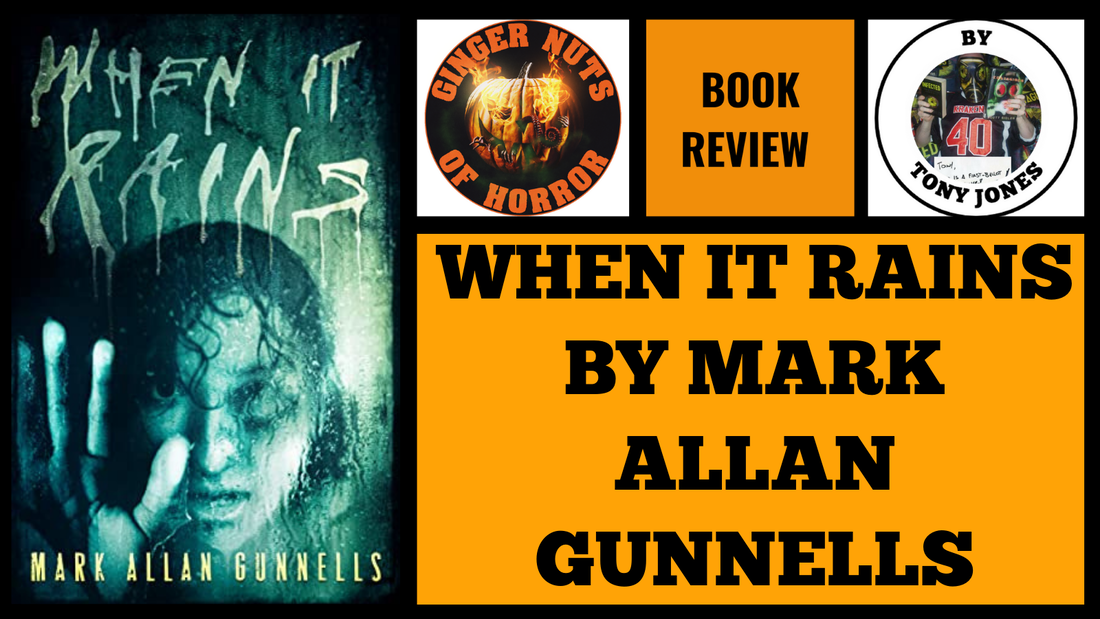
WHEN IT RAINS BY MARK ALLAN GUNNELLS
Picture

THE HEART AND SOUL OF HORROR PROMOTION WEBSITES ​
0 Comments

MY LIFE IN HORROR: DON’T THEY KNOW THE RULES??

21/3/2022
MY LIFE IN HORROR- DON’T THEY KNOW THE RULES??.png

My Life In Horror


Every month, I will write about a film, album, book or event that I consider horror, and that had a warping effect on my young mind. You will discover my definition of what constitutes horror is both eclectic and elastic. Don’t write in. Also, of necessity, much of this will be bullshit – as in, my best recollection of things that happened anywhere from 15 – 40 years ago. Sometimes I will revisit the source material contemporaneously, further compounding the potential bullshit factor. Finally, intimate familiarity with the text is assumed – to put it bluntly, here be gigantic and comprehensive spoilers. Though in the vast majority of cases, I’d recommend doing yourself a favour and checking out the original material first anyway.


This is not history. This is not journalism. This is not a review.


This is my life in horror.


Don’t They know The Rules??

Content note: discussions of racism, which includes use of racial slurs.
It’s 13th June 2017. And, accompanied by my dear friends Justin, Duncan and Rob, as well as my stepson, I’m inside my favourite music venue in the country (at least since they tore down The Astoria; yes, still bitter, thanks for checking); Brixton Academy, London.


We’ve had a beer and some grub in a nearby bar, and, T-Shirt acquired, we’re positioning ourselves in a good spot; centre stage, far enough back to hopefully not get caught in the initial crush, but plenty close enough to soak up the considerable atmosphere. 


And, sure, the boy and I had seen them just the previous weekend, as part of probably my favourite Download 3 day weekend ever, and they had been Mighty… but this was Brixton fucking Acadamy, and the crowd was, and I believe the kids used to say, lit. And as well as Prophets Of Rage had gone down in front of the Download crowd (very, very well indeed), the intimacy of this show, a feeling like we were in on the ground floor of what was sure to become a world-beating colossus of hip-hop/metal supergroupery, promised something truly epic.


So, we’re in the pit, and getting ready for some moderately serious jumping up and down action, and the reception that greets DJ Lord is raucous and rapturous. He acknowledges the crowd, and with an obligatory ‘Make some noise!’ (we do), he starts doing his thing.


And 90 seconds in, a guitar riff comes rolling out the speakers….


And suddenly it’s, fuck, mid to late 90’s and I’m an angry young teen, and I’m browsing The Ghosts moderately sizable cassette tape collection, and I notice the black on red script, gothic style, single word.


I pull it out, look at the cover. The image is so dark it’s hard to make out, but I can just about see a painting of a bare-chested, muscular, angry-looking black man, with a gun in his belt, and that same word - band or album name? - half on either side of him, in two columns.


“Is this any good?”


He looks up. “Yeah, it’s good. Heavy. It’s Ice T, but it’s metal.”


Huh.


I know of Ice T, of course; even in whitebread North Devon, we’ve heard of Ice T. I will have known very little about the man, and what I did ‘know’ was likely playground bullshit, potentially even filtered through second-hand tabloid panic, laundered by schoolkids too dumb to even know that’s what they were doing, absorbed by me, also too dumb to know better. Still, the name carried weight, cache. All I really knew was Ice T was Cool, and a Bad Ass. Despite the seismic influence of Rage Against The Machine, I still wasn’t connecting with hip-hop in a wider sense; screaming guitars still basically owned my soul, and with the depth of my passion and the shallowness of my pockets, I didn’t really have any way to explore other genres if I’d wanted to.


Still…


Ice T.


And Metal.


Interesting.


It opens with something that I now know as a standard of hip hop albums, but which at the time was deliciously alien to me; a skit. Ice T gets a gun from Mooseman (bass player in the band, we learn in the following track), goes over to a policeman, asks him for help changing a flat tyre, then shoots him.


The track is called Smoked Pork.
​
A guitar starts chugging. A siren wails. A voice says the name. Another voice yells “YEAH, MOTHERFUCKER!”. A second guitar joins. The drums roll in.


“BODYCOUNT!!”


Over a riff and chant (hypnotic, repetition, bodycount, bodcount), we hear the sounds of a car chase; police sirens, squealing tyres, gunfire popping off. The guitars are immense. As they drop into the second riff (still no sign of anything so dull as a verse or chorus) Ernie C shreds a wild flurry of notes out into a wailing bend that gives me chills. 


I have no idea what’s going on. It sounds like someone wrote a song to recreate the feeling of playing GTA; like, fuck verses, fuck choruses, just pure riff and attitude, get it.


I do. By the time Ice T has introduced the band and taken us back into the… verse? First riff? I am sold. It’s fucking glorious. “BODYCOUNT, MOTHERFUCKER!” I yell, then and now, joining in with Ice T as the song ends.


And, you know, sure, back then I couldn’t really say there was nothing like it, because I was a teenager, fucking everything was new to me; I had no idea what musical innovation really sounded like. I didn't have the terms of reference. I liked how RATM had made me feel, I liked how Bodycount was making me feel…. But I also liked how GnR and WASP made me feel, and I’d never heard anything like them, either. 


But coming back to BodyCount after thirty years… man, there really wasn’t anything quite like this, was there?


Sure, as noted above, the constant interjections - Opera, Now Sports, A Statistic - mirror hip hop ‘skits’ (though there’s not much in terms of humour, here), but there’s also the fact that there are no less than three tunes named after the band (the album opens with the one/two punch Bodycount’s In The House and Bodycount, with Bodycount Anthem towards the end of side 2), which, what? 


Then there’s the, uh, eccentric approach to song structure. So, in addition to the opener, whose lyrics consist entirely of the word Bodycount repeated a lot, the band being introduced like at a live show, and the phrase ‘Bodycount’s in the house!’, we have Bodycount, with a long spoken-word intro over a gently picked guitar riff, before, for the first time on the album, we get into something that resembles a verse/chorus structure. And even there, after the second verse, we get a drum solo into chorus into an extended guitar solo. And I want to be clear; it’s not that it’s bad. It is not bad. It’s pretty fucking awesome, combining a punk inventiveness and energy with metal musicality, and all the muscle of both, with the continued vibe of a live show (‘Yo, Beatmaster V! Take these motherfuckers to South Central!’). It’s a pure adrenaline shot, and in many ways it’s almost an ideal of metal, shedding the flab the genre is not infrequently known for, but preserving the musicianship. And this persists; There Goes The Neighborhood, Evil Dick, and Momma’s Gotta Die Tonight have similarly gonzo structures, and KKK Bitch has spoken intros to each verse, setting up the scene.


And sure, coming back after 30 years, it’s not flawless. Bowels Of The Devil is a metal/hardcore riff for the ages, but the lyric is pretty basic, and the chorus punchline (‘And you don’t want to die there! They call it going out the back door!’) only really lands the first time. Similarly, Voodoo chugs along perfectly serviceably, but there just isn’t enough there there in the lyric to really sustain the song. And I’m never going to be a fan of anti-drugs ballads like The Winner Loses; the sincerity is there, and the directness is admirable (opening line: ‘My friend’s addicted to cocaine’ lets you know what you’re in for), but it’s a genre that basically always bugs me. Like, I don’t even dig She Talks To Angels, you know?


Elsewhere, though, hearing the album is throwing open all these doors of memory; reconnecting me with a very teenage sense of rage at the state of the world that never entirely left, and seems to be resurging with some force as I approach the midway point of my fourth decade on this planet, given, well *gestures at the absolute state of the world*. But remembering that sad, angry, scared, lonely teenage boy, listening to this album at stupid volumes, I guess there are two things I really have to get into; the anti-racism, and the misogyny.


Let’s start with the anti-racism. As I may have mentioned before, I spent most of my childhood in one of the whitest areas of the country, if not the planet. In my entire school career, there was exactly one Asian kid, and zero teachers of colour; and that includes school and college. What flows from that? Well, I was raised leftie, and I knew discrimination was Wrong. And I think my mum’s feminism, especially, gave me a leg up, purely in terms of a ‘people have the right to do what they want, and love who they love’ mentality. At the same time, the absence of any chance for first-hand experience of anyone not-white led to a shy awkwardness, when I finally made it to London. I fucking loved the multiculturalism of that city - hell, still do - but I carried a mortal dread of saying or doing something stupid out of the ignorance I knew I carried, and, yeah, that took a bit of time to process. 


And that was compounded by the fact that the shared ignorance of my young white peers (alongside, in some cases, some good old fashioned bigotry) meant there was a lot of racism around me in Devon; at school, at college, and in society in general. Random examples float into memory; the bizarre piece of graffiti on a wooden locker at college, where someone had written across the dark door in tippex the phrase ‘Ja Rasta Fart’; the late 20s guy who, as part of a wider conversation about whether or not jealousy was innate to the human condition or a social construct, calmly asserted to me that he believed white and black people had evolved entirely separately. The apparently nice eccentric older gentleman who wandered around town barefoot, and was always up for a chat, who, upon hearing I was moving to London, frowned and said “Why would you want to do that? It’s full of wogs!”.


And the endless jokes about black people.


And I just can’t. And I don’t need to. You’ve heard them, one way or another, and I can see no value in rehearsing them here, devoid as they are of any scintilla of merit, as harmful as I now know them to be, as shameful as it is to recall now how I would listen, and God help me, sometimes even repeat these… I mean, jokes are meant to be funny, and they aren’t, so, I don’t even know what to say. I was young, I was dumb, I was surrounded by assholes, and I am deeply ashamed, and that’s kind of it, really.


I also, and I do want to note this, did know it was wrong.


I say that not to excuse, incidentally, rather the reverse. What kind of person, even a kid, goes along with something they know is wrong, harmful, for… what? Some kind of shitty awful badge of ‘cool’ or ‘edgy’? Some imbecilic and not remotely thought through ‘commitment’ to ‘free speech’? Repeating lies I knew were harmful to impress people I didn’t even like?


Jesus, what a wretch.


But that knowing it was wrong, that did matter.


Because when Bodycount came along, they were ready as fuck for my dumb white ass. And they had some shit to tell me.


There Goes The Neighbourhood is the riff DJ Lord hit that sent me spinning down the memory hole, even as I joined the crowd in a roar of approval. Jesus, that riff. And then the title, delivered staccato as the drums crash in, and then that piledriver verse riff as Ice T just rips the lid off. Earlier, on The Real Problem, he’d spoken about the fear of white kids liking a black artist; on this track, he takes that up to eleven, directly addressing racism in rock by ventriloquising the meathead position. He’s dropped n-bombs throughout the record, but here it’s different. Here, he’s voicing the ugliness, the fear, the hate. 


And, I mean, by this point, the start of side two, he’s completely won me over. This is a fucking awesome metal album, with a bluntness and brutality I’ve seldom experienced but always been looking for, and a (mostly) righteous fury that I feel as my own, despite the chasms of life experience and culture that divide us (and, fucking hell, isn’t that the point of music, of art, when you get down to it? Aren’t we all reaching out for that, either as creators or audience?). And if you want to call bullshit on a dorky white teenager in North Devon finding music written by a black man from LA relatable, I of course can’t really argue… but it doesn’t change how I felt, or how I feel now, as I listen back to the album.


I do feel a connection. And hearing There Goes The Neighbourhood, especially the breakdown when Ice T announces ‘We’re here/ we ain’t going nowhere/ we’re moving right next door to you/ Bodycount, motherfucker!’, man, my teenage fist is punching the air in mute agreement. 


And by taking on the stupid, racist position in the verses, the moral vacuum of that stance was revealed to me on a visceral level, in a way that no amount of well-meaning teaching about ‘we’re all the same’ could ever manage. Like, no disrespect intended to those teachers (well… maybe a bit) but this, this was precision-engineered to reach a kid like me - a white metal dork who knew racism was wrong… but maybe didn’t really understand why on a level beyond the intellectual, not having had occasion to see the impact up close, first hand. 


And then here’s Ice T, who, having kicked my arse for an entire side of punk-metal of variable quality but undeniable energy, gets right up in my fucking face and over the best riff on an album with an abundance of face-melters, says, in effect, ‘whose side are you on?’


And the correct answer on this issue, then and now; your side, Ice T. I’m with you. And I can’t unsay the things I said as a child, but I can - I could, I did - commit to talking less bullshit and more truth, from that point on. And it did mark a moment for me, a before-and-after, both in terms of how I’d behave, and what behaviour I’d tolerate in the people close to me. Looking back, Bodycount was the moment I first grasped that anti-racism was a verb, not a noun - not something you are, but something you either do, or do not.


Man, it’s really tempting to end things there. But, well, there is the small matter of the album’s cartoonishly awful misogyny.


Now, as we’ll be covered in posts past and future, this isn’t an issue particular to Ice T, or Hip Hop, or metal. It does, however, feature prominently in all those forms, and as uplifting as the anti-racism message of Bodycount is, if I’m being honest, I do also have to reckon with the comfort zone that the likes of Guns and Roses had given me for misogynistic art.


Because I mean, fucking hell.


Women, on this album, exist exclusively as objects of lust, or as pains in the ass, and that’s it. Voodoo features a woman with a voodoo doll fucking up Ice T just, you know, because, and Evil Dick features a sequence that is toe-curling even by Rocket Queen standards. And sure, that last is clearly a tongue-in-cheek riff on, as the Oprah intro phrases it, ‘male promiscuity’; still, it’s not exactly not a celebration of fucking whoever you want. And to be clear, as long as there’s enthusiastic consent, fine, but… well, I just think it’s not ideal if half the population is reduced entirely to their potential appeal as sexual partners, as opposed to being, you know, fully functional human beings.


And the two tracks where this tendency becomes most apparent and egregious are where the two themes collide; KKK Bitch and Mama’s Gotta Die Tonight.


KKK Bitch has some of the feel of a skit, given the aforementioned spoken intros to each verse, and sure, the story of Ice T dating the daughter of a KKK Grand Wizard is, I mean, if you’re not already grinning or even laughing at the concept, I dunno what to tell you. And it is, transparently, a gag, to be clear - right down to the third verse intro where Ice T says ‘...it really don’t matter, if you from mars and you got a pussy, we will fuck you, and you know that’s all we tryin’ to say…’


And I can’t tell you if that’s a funny line on the page, but in the context of a song where Ice T is touring southern states with Bodycount and shagging all the white women whose racist boyfriends can’t satisfy them, the way he delivers it… look, I’ll own that it still makes me grin.


At the same time, the ‘woman as object’ trope is all over the song; Ice T is ‘using’ the daughter to get to her dad; the song even has him getting turned on and having angry sex with her as her old man delivers a racist speech. And she has no appreciable personality or agency of her own, she exists purely to worship Ice T sexually, and…


Like, I get it, I get it, I get it. She’s not real. None of it is real. It’s a story, a goof, a joke, and the punchline is racists are awful. And teenage me is looking at adult me with total confusion, but like…


Well, the problem is, teenage me, and Ice T, for that matter, I guess; you didn’t dig those other jokes that denied humanity and agency to a whole segment of the population. And at this point, I honestly can’t tell if I’m an alien or I’m missing something that’s blindingly obvious to everyone else, but, like; misogyny has a bodycount, too, and violence against women is an endemic and ongoing crime against humanity, and obviously, fuck playing oppression Olympics, and fuck whoever even first coined that hateful phrase, but…


I grin, sure, but the grin doesn’t sit easy. And sometimes I listen, and sometimes, I skip. And I don’t have any answers, and I’m not saying the song shouldn’t exist or that you shouldn’t listen to it or shouldn't enjoy it. I’m just saying I think There Goes The Neighbourhood does it all way better, and doesn’t leave an unpleasant aftertaste.


And then there’s Momma’s Gotta Die Tonight.


And this one’s way tougher for me, because I really fucking like this song. I like it because it comes on like a horror movie, I like it because it’s about anti-racism as a verb, I like it because the core conceit is you really need to fuck off racists in your life, no matter who they are, because racism is Actually Evil. And as we’ve already rehearsed at painful length, that was a message I very much needed to hear, when I first heard it, and the internalisation of that message measurably improved my quality of life.


On the other hand, it’s a song about murdering a woman and chopping her up.


Yeah, but a racist woman, I know, teenage me, I did catch that bit ‘I learned my momma was an evil woman. She hated black people, Mexicans…’ on and on, yup, racism wrong, racists bad, got it. Still, tho… at a certain point, it’s hard not to notice that there’s at least a subtheme of the album, and it’s not ‘women are awesome’. And no, nobody is obliged to put out art that does that, of course not, but… It’s not just me, is it? 


Like, music; at least the music I really love, the stuff that goes down deep and really matters, has always had a liberatory quality; and I know that sounds both corny and laughably subjective, and it is both those things, but it’s also how I feel. And, as with much of the horror  literature I love, there’s a specific liberatory quality to laying bare dark truths; ugly impulses, unworthy thoughts, dangerous, unpleasant beliefs, vomiting them up and really poking about in the chunks and drool, see what’s what. There’s a purging, but also a reckoning; and let’s face it, we vomit for a reason, right? If your body is trying that hard to get rid of something in your stomach, you’re probably better off rid.


And viewed through that lens, and given the utterly pervasive nature of misogynistic patriarchy, the literal and metaphorical stranglehold it has over women and men alike, there’s a case to be made that art that doesn’t at least reflect that to some degree isn’t being honest (well, my kind of art, anyway - I guess utopians get to imagine what humans look like without this poison coursing through every interaction, and good luck to them). And Ice T is an artist, and I can’t see into his soul any more than I can into anyone else’s.


Still, I can’t get away from the lack of challenge. Bodycount, a band of black musicians that Ice T knew would primarily appeal to a white audience, comes right the fuck at racism from the off, understanding that the vast majority of metalheads would embrace the attitude and be moved in the right direction as a result. Bodycount was throwing the best party, and the only price of entry was to reject racism.


And, again, just to be crystal clear, fucking good show.


But there’s nothing here, or, really, in most of the music I love, from that era to this, that challenges the poisons of misogyny or patriarchy. Sure, in grunge, the outright misogyny is mainly absent, and of course, that’s not nothing, but nor is it doing what BC was doing here with racism.


And I think that’s a damn shame.


Not - one more time - because patriarchy was or is Ice-T's problem to solve. But because when I see and hear so much of how men still behave, in the year of our Lord 2022, I feel like a fucking alien, and I just wish some artist had done for them what Ice T did for my dumb teenage racist self.


Still. 30 years on, Bodycount still packs a punch, and I’m grateful to have had it in my life.


KP
16/3/22


PS Prophets Of Rage absolutely killed it. But that’s a story for another day. And, indeed, project.


 :)

CHECK OUT TODAY'S OTHER ARTICLES ON GINGER NUTS OF HORROR

childhood-fears-what-doesn-t-happen-to-people-like-me-by-vincent-tirado-horror-feature_orig
Picture

THE HEART AND SOUL OF HORROR PROMOTION WEBSITES

0 Comments

MY LIFE IN HORROR: I’M THE TYRANNY OF EVIL MEN

28/6/2021
Picture
I was a bundle of raw anxiety, proper fear sweat on, absolutely no fucking idea what was about to happen.

It was brilliant.
My Life In Horror

Every month, I will write about a film, album, book or event that I consider horror, and that had a warping effect on my young mind. You will discover my definition of what constitutes horror is both eclectic and elastic. Don’t write in. Also, of necessity, much of this will be bullshit – as in, my best recollection of things that happened anywhere from 15 – 40 years ago. Sometimes I will revisit the source material contemporaneously, further compounding the potential bullshit factor. Finally, intimate familiarity with the text is assumed – to put it bluntly, here be gigantic and comprehensive spoilers. Though in the vast majority of cases, I’d recommend doing yourself a favour and checking out the original material first anyway.

This is not history. This is not journalism. This is not a review.

This is my life in horror.

I’m The Tyranny Of Evil Men

my life in horror: I’m The Tyranny Of Evil Men
by kit power

There’s a lot I don’t know.

I knew the director by reputation. His first movie had been infamous, with That Scene the topic of delighted playground gossip and exaggeration, but I’m pretty sure, at this point, I hadn’t seen it. For a horror kid I could be oddly squeamish, and the notion of a straight up torture scene in a movie triggered my squeam.

So I’m pretty sure this movie was my first experience with this director.

What I can remember is that I bought it on VHS without ever having seen it.

That was a pretty serious commitment, by the way. It was a recent release, so it will have cost £10 brand new, and back then, a tenner was a tenner - four packets of fags, or two bottles of cider from the local pub that would serve anyone who could see over the bar plus one packet of fags. Big money.

And I remember interrogating my dad about it over the phone, who’d said it was both brilliant and horrible, and also brilliant. And then, well, there’s that goddamn poster, right? Surely one of the great pieces of static image advertising of all time; the book cover, the gun, the burning cigarette, and that beautiful pale face framed by that exquisite black bob.

And, obviously, the title itself; promising thrills and chills in equal measure.

I wasn’t eighteen. But somehow I bought it anyway; and in this particular instance, I can confirm Mia’s proposition - sometimes, it is more exciting when you don’t have permission.

There’s a phenomenon I’ve observed with the truly great crime cinema and TV, which is that, particularly on a first viewing, they are incredibly, almost unbearably tense. I think back to my first viewing of Goodfellas, Casino, Sopranos, Deadwood (yes, Deadwood is a crime show, don’t @ me), and the common thread of the experience is a screaming, desperate fear that imbues pretty much every scene. Because these are violent men, with volcanic tempers, and the spectre of that anger, and that capacity for violence, haunts every fucking scene they’re in; I can never relax on a first viewing, because, bluntly, I’m always having to mentally bolster myself for things kicking off in a major, mortal way in pretty much every scene. It makes for a viewing experience both thrilling and exhausting, a kind of low key adrenaline high that lasts for the couple of hours the movie runs. I find crime novels the same, and as I think on it more, that’s probably the reason I absorb crime fiction so voraciously but reread so rarely; once I know how it pans out, and where the explosions are going to happen, that particular part of the experience is gone.

And with this movie, given the reputation of both this title and the director, and my otherwise total absence of information (we’re pre-internet here; I’m almost certain I’ve seen only the poster, no clips, no trailer, probably not a cast list - what, exactly am I doing here? Flying on instinct, I guess), when I first put the tape in and hit play, I imagine even the piracy warning notice made me jump.

All of which is a borderline unforgivably long-winded way of saying I was psyched.

And within approximately two minutes of the movie starting, I was plain blown away.

I’m second-guessing the setup now, because my memory is that actually, I did know Tim Roth, and there’s a limited number of places that could have been, with Reservoir Dogs being the most likely contender. Rosencrantz and Guildenstern, maybe? Regardless, I knew/thought of him as cool, and this guy… wasn’t. He clearly hadn’t shaven for a day or two, his skin and teeth were both bad. And his girlfriend… something was off about his girlfriend. I mean, now, with my almost 43 years of watching movies, I could point you two half a dozen things QT is doing in this sequence, from camera positioning to script to sound design and on and on, to create and build that sense of tension. But in the moment, at 15 or 16 years old, all I know is that, despite the kookiness of the two characters, I am freaking the fuck out long before the gun hits the table with a startlingly percussive noise, and HunnyBunny yells “ANY OF YOU FUCKING PRICKS MOVE, AND I’LL EXECUTE EVERY MOTHERFUCKING LAST ONE OF YOU!!!”

The freeze-frame on her rage-filled yelling face before she’s finished speaking, coupled with the title card, and that guitar line kicking in… I get echoes of that first time thrill every time I watch it (hell, I’m getting a ghost of an echo of the thrill just recalling it now), but that first time… it felt like things in my mind being permanently rearranged; just plain picked up and put down again somewhere else.

And then, of course, we cut away, and now it’s two immaculately suited, unbearably cool looking gangsters sitting in a car talking about the ‘little differences’ in McDonald’s restaurants across Europe; every single line of which now feels like a weird kind of movie nerd scripture; like Python, lines that you can quote endlessly, and that your fellow tribe members will immediately fall into with you. Part of that’s the rhythm of the writing, of course (“You know what they call a Quarterpounder with Cheese in Paris?” “They don’t call it a QuarterPounder with Cheese?” “Nah, man, they got the metric system, they don’t know what the fuck a QuarterPounder is.” it’s exquisite, no?), part of it is how funny it is (the punchline of “I dunno, I didn’t go to Burger King” tells us so much about Vince and the hilarious limits of his ‘American abroad’ bit) but, again, what I think it’s easy to miss with the passage of time and the curse of the familiar is just how jarring and tense it was, alongside what had just happened and what was about to happen - this inane-yet-somehow-brilliant conversation is casually interrupted by a POV car boot shot where, in the same casual tones as they discuss international cuisine, they bemoan not having ‘shotguns for this deal’.

The film does this time and time again, at the micro and macro level, the fractured time structure setting up tensions, laying down strands - think about the casual confrontation between Travolta and Willis in the bar, Travolta’s dripping contempt for the aging boxer; we never find out why Vince is so contemptuous of Butch, but his petty unpleasantness is paid off in spectacular fashion in The Gold Watch portion of proceedings. Similarly, the movie rather ruthlessly exploited my 15-year-old racist face blindness such that I was convinced I’d found an actual flaw in the storytelling first time out, with Jules appearing in a scene with Vincent after he’d decided to leave The Life; of course, it’s not; it’s the barman from the earlier scene who has apparently been promoted to enforcer in Jules' absence, and given a cool new suit into the bargain.

I’m forcibly reminded - don’t laugh, or at least not yet - of the piece I wrote about Gremlins. There, as here, the subsequent viewings render the whole as a brilliantly crafted, rollicking black crime comedy, really; with, sure, thrills and spills aplenty, as the name implies, but ultimately a slice of entertainment. And, you know, sure, of course it is.

Now.

But… then? That first time?

The Gold Watch sequence is the obvious one; if you hadn’t been spoiled, the unbearably slow-motion release of The Gimp was, well, pretty much unbearable, and I think even knowing what Butch is going to find when curiosity drives him, Katana in hand, back to that basement, there’s still a kind of sick shock value to proceedings, the impact of which, for me, hasn’t really faded with rewatching.

But it’s Mia’s overdose scene, for me, that serves as an exemplar - maybe the exemplar, of the ‘first as horror, second as comedy ‘effect.

Because it is hysterical. Pulp Fiction is back in rotation of the Sky Movie channels right now, and consequently, I’ll often find myself watching 20 or 30 minutes of it before going to bed of an evening, and if I happen to tune in anywhere around Jackrabbit Slims (another scene which on a first viewing felt almost terrifying, the social bear traps Vince is surrounded by and the potential lethality of falling into one of them, my God), I know I’m strapped in until I see pale, sweaty, dishevelled Travolta blowing a kiss. And I know I’ll be laughing like a drain pretty much the whole time. Travolta’s dead-eyed, remorseless fixation, and the way it explodes into raw panic during the confrontation on the lawn, Eric Stoltz just losing his shit as every heroin dealers worst nightmare crashes into his garage and threatens to die in his living room, the escalating fury and utter pettiness of his interactions with his wife (exacerbated by her, through no fault of her own, being about a minute behind the conversation for most of it), the fixation on pointless detail (‘a little black medical book!’ ‘A fucking felt pen! A fucking fat magic marker!’), all while crime boss Marcellus Wallace’s wife twitches her way to heroin-induced oblivion… look, it’s not high art, exactly… but it’s not exactly not high art, either. I’ve seen it I don’t know how many times at this point, and like all truly great comedy, I find it at least as funny now, if not more so, knowing every single beat and every single piece of dialogue, as I did the first time.

Or rather, and this is the point, as I did the second time.

Because the first time, honestly? This was one of the most shit-your-pants scary bits of cinema I had encountered to date.

I was invested, that’s the thing. Like I suspect 80% of the male audience, I was half in love with Mia Wallace by this point, and I desperately wanted her to be ok. And, you know, Vincent is clearly a gangster and somewhat of a bad dude… but he’s also goofy and charming and clearly also half in love with Mia, and it’s already clear that the likely consequences for him if this goes all the way south are going to be Old Testament Biblical. And all the actors in the scene sell it magnificently; a lot of the second time viewing comedy comes from how everyone in the scene is just about out of their minds with fear about what's going on, and about what may or may not happen in the next ninety seconds. But first time? Nah, mate. First time, I was a bundle of raw anxiety, proper fear sweat on, absolutely no fucking idea what was about to happen.

It was brilliant.

And look, I know I keep saying it, by My Life In Horror really is nearly done, now; I’m hurtling towards the concluding essay, we’ve maybe five or six more of these to hang out in and shoot the shit. And one of the themes that comes up is the similarities between horror and comedy (applies to erotica as well, I guess, though that’s not really my area); tension and release, set up and punchline, stress and catharsis (even if, in horror, the catharsis is a gut punch rather than a smile). But I think Pulp Fiction exemplifies something else, something more complex; sometimes, it’s horror the first time and comedy the second, because the second time through, you know the punchline is a punchline, not a gutpunch.

I don’t know exactly what to do with this information, and it almost can't be an original observation, at this point. That said, I remain incredibly grateful to Pulp Fiction for delivering such a hand grenade of a movie, at a time and place where I’d simply never seen anything remotely like it. It changed the way I think about story, and like all great traumatising art, it has since become a comfort space - a go-to film where the dialogue and performances wrap around me like a warm blanket, and, for a couple of hours, take me away completely to another time and place; a place where horrible things happen, sure… but also a place where I know how it’s all going to shake out; freeing me to enjoy the horror of the absurdity of, well, people and circumstance.

It’s 2021, people. Take your joy wherever you can find it.
​
KP
5/6/21

TODAY ON THE GINGER NUTS OF HORROR WEBSITE ​

THE COUNTRY WILL BRING US NO PEACE BY MATTHIEU SIMARD (BOOK REVIEW)

horror website uk the best

THE HEART AND SOUL OF HORROR FEATURES ​

MY LIFE IN HORROR: I’LL SPEND IT ALONE

8/3/2021
MY LIFE IN HORROR: I’LL SPEND IT ALONE
My Life In Horror


Every month, I will write about a film, album, book or event that I consider horror, and that had a warping effect on my young mind. You will discover my definition of what constitutes horror is both eclectic and elastic. Don’t write in. Also, of necessity, much of this will be bullshit – as in, my best recollection of things that happened anywhere from 15 – 40 years ago. Sometimes I will revisit the source material contemporaneously, further compounding the potential bullshit factor. Finally, intimate familiarity with the text is assumed – to put it bluntly, here be gigantic and comprehensive spoilers. Though in the vast majority of cases, I’d recommend doing yourself a favour and checking out the original material first anyway.


This is not history. This is not journalism. This is not a review.


This is my life in horror.
​

I’ll Spend It Alone
​

It’s been a year since my first experience of a horror movie at the cinema. I remain scarred and hungry. And since then, there’s been the utterly remarkable Superman III (most likely on TV, over one Christmas, but clearly an experience that lingered). And it’s the summer of 1985, and I’m staying with my father, which means it is, once again, time to Go To The Cinema.


Now, dad’s taken a bit of stick in this series, in an affectionate sort of way, and I’m not really in a position where I could roll that back and remain remotely intellectually honest; at the same time, I feel like, as we’re getting close to wrapping up, some kind of apologia or contextualisation is needed.


So, to be fair to the man, it’s not actually his fault that it took the UK five years, following the hilarious debacle of giving Temple Of Doom the PG certificate to realise what the US clocked immediately; the need for something in between that says, effectively, ‘this one’s ***really*** PG, go see it first’.


In the US they invented the PG-13 certificate. Over here, we had to wait until Burton’s 1989 Batman for the existence of the now-standard certificate for superhero movies with any kind of bite at all, the 12 certificate. I can still remember The Sun headlines on that, incidentally - ‘Film Censors Ban Kids From Batman’, because moral panic only extends as far as gay teachers, and not in any way towards kids seeing potentially traumatic media, like, well, let’s be honest, Jack Nicholson, full stop.


And, again, the old man was strict about this stuff; if there had been 12’s back then, he’d have vetted, and likely we wouldn’t have seen either Temple or tonight’s topic. And in his further defence, alongside the ‘Spielberg presents’ tag, practically guaranteeing family popcorn entertainment, this was also connected to a franchise which has, rightly or wrongly, both feet planted firmly in mainstream, acceptable pop culture.


So, there’s that. On the other hand, Spielberg had a pretty heavy involvement in last summer’s Temple debacle.


So, should he have known?


Anyway. The lights go down, and we’re in Victoriana. I am almost certain this predates any Granada related experiences, but I’m an English child, so the imagery and iconography is, at seven years old, already familiar almost unto contempt; I can’t be sure, but I suspect part of my much-lamented antipathy towards Dickens is the degree to which it seems to me that English pop culture is so infatuated with and saturated by Victoriana it feels like you’re a member of the world’s biggest cult.


Still, given who the lead character is, at least I know it’s not going to be boring.


Hopefully.


Be careful what you wish for, kid.


So, cobbled streets, fog, gas lamps, horse-drawn carriages, yadda yadda, oh, look, it’s a gentleman with one of the tall hats, guess we’re following this dude, okay, let’s follow him. Truth to tell, I can't picture him, even having broken with tradition and completed a rewatch recently, but the folk memory is slightly portly, ruddy cheeks, and sideburns, so let’s go with that. And before long, we note that this gentleman has a shadow.


A figure, completely shrouded in a dark brown cloak that is hooded and falls to the floor, meaning the figure appears to glide as it follows the man. Also meaning we can see only darkness where the face should be.


I’m a Doctor Who fan, even at this age, so you can bet my SpideySense is tingling a three-alarm warning down my spine already; a feeling that spikes deliciously as… something slides into view, out of the hood.


I mean, it’s clearly a weapon of some kind, probably made of wood. At the same time, the smooth motion as it appears puts in mind a robot, to me, some piece of machinery opening to a firing position. And what the hell can you shoot from your face, anyway? I mean, it’s a period piece, so it can't be a robot, but… but on the other hand, I’m too young to know what canon is, but I’m not too young to understand that this story was made now, even though it’s based on stories from ago, so, maybe…?
Everything about the cloaked figure screams mystery, that’s the thing, and again, Whovian, mystery = alien/robot, I guess. Anyhow. The nozzle, as I think of it, comes into view, there’s a noise of some kind, and the man slaps his neck, as though bitten, and the nozzle slides back into place, in a reversal of the old movement, and the figure glides away.


We follow the man into a restaurant. There he is seated at a fine table, tucks in a cloth napkin, and is brought out a succulent roast bird (it’s the Victorian era; if it’s roast meat, it’s succulent, I’m only seven but I’m not stupid). He’s clearly wealthy, clearly happy. Even at seven, I have ambivalence about that, given what I know about Victorian poverty. It’s literally as I come to write this that I wonder if that wasn’t actually the point, if my teachers weren't trying to smuggle in class consciousness the only way they felt safe, via the medium of Ago, when Things Were Bad. In a week in which the Tory government of the United Kingdom have done the not-at-all Fashy thing of declaring we should no longer teach ‘a version of history’ that ‘does Britain down’, it’s hard not to look back on admittedly traumatizing and in many ways indefensibly insensitive teaching with a kind of weary acceptance that, yeah, better that than this ahistorical nightmare. A nation so strong and proud we need commissars - excuse me, freedom of speech champions, of course - in Universities to make sure the racists get equal time with the anti-racists, with presumably the flat earthers and creationists queuing up behind.
Very Unity. Much Strength. Not at all the screaming insecurity of the ignorant bully, terrified above all of being found out.


I swear to God, this fucking country.


Anyway.


He grabs his carving, erm, fork, I guess, and stabs it into the dark roast flesh, knife raised in the other hand, eager to get with the delicate rending of flesh.
And that’s the moment when, accompanied by a nerve-shredding attack of violins on the soundtrack, the bird grows a head and launches himself at the man.
It’s the mental shock of the moment I remember most clearly. I can't tell you if I dropped/launched my popcorn, flinched, what have you. But I remember that stab of cold, right in my gut, as the clearly-roasted-and-dead-and-equally-clearly-very-much-not-dead-and-profoundly-cross bird launched itself at, and I really can’t emphasise this enough, the man’s fucking face, there to peck and scratch and draw blood.


I mean, are you out of your fucking mind? Or am I?


As I think that, literally as I think it, we cut away to bemused restaurateurs, staring, the soundtrack snap-cutting from strings-in-full-fucking-Psyco mode to a Christmas carol, then back to the man waving his hands in front of his face, apparently wrestling with thin air…


Except then, no, the fucking bird is in his hands, and it is evil, twisting and pecking and writhing at supernatural speed, and his face is bleeding and holy shit it’s going to take a fucking eye out…


Sidebar: I’m watching this with kiddo, 10, and the second the cutaway happens she says, with engaged delight “Oh! He’s hallucinating! He must have been drugged!”


And I don’t know how to feel. I mean, glad, I guess, even proud; sure, she’s a couple of years older than I was, but still, that’s film literate, right enough, and that same glee carries across the rest of the sequence; for her, it’s the safest possible thrill ride, and they can chuck as much scary shit they want at the screen because fundamentally, it’s Not Real.


The rest of the sequence was burned on my brain, in no small part because I would describe it later, for weeks, to anyone who showed the slightest interest, and likely many who did not, doing what I always did (hell, looking at this two-volume series, what I am apparently still compelled to do); trying to exercise power over that which had scared me by retelling it for others, trying to convey my terror faithfully, and in doing so, by some process not entirely clear or remotely examined, to gain mastery over that fear, even as I relieved it.


So, the snakeheads on the hatstand, coming to life and attacking, the gas lamps rippling and spitting fireballs, the man’s final, frantic plunge from his apartment window; there's a good chance that some of the kids I went to school with have nightmares about what they imagined that film was like, based on my telling.


Or, I dunno, maybe not, maybe that’s hubris. Probably that’s hubris. Nice to imagine, though, that my world’s youngest Ancient Mariner shtick had a shelf life beyond the immediate. But the truth was and is; it’s a compulsion, nothing more. When something gets as deep under my skin and fucks me up as gloriously and completely as Young Sherlock Holmes did, I’m going to speak to it. Repeatedly. At length.


Welcome :D


And I think kiddo ultimately nailed it; she got it, straight away, and I… didn’t. This movie may have introduced the notion of hallucinogenic substances to me; it’s certainly clear that the idea was obscure enough, and the immediate impact of the moment so visceral and all-consuming that my own kid’s simple, obvious observation didn’t occur to me.


Which left me with… what?


Was the chicken invisible? Had the alien/robot shot the man with something that meant he’d be attacked by furious undead chickens and hatstand snakes that only he could see? To which the answer, from a certain point of view, was yes, but that was how my kid brain interpreted the moment when the man was flapping his arms in front of his face, clawing at the air. Not that there was nothing there, but that the others couldn’t see it.


My memory is that I didn’t finally work out what was going on until the characters did, which was some way into the narrative, and by that point, I’d half-watched several more hallucination sequences, peaking between fingers that I could snap shut over my eyes at the slightest provocation, and sure, some of that was no doubt Temple trauma revisited, but also, this damn film earned its keep, I think. The stained glass window Knight was eerie as hell, of course, but oddly, it was the ostensibly more lighthearted moment of Watson being attacked by cream cakes (no, really, that happens) that drove the terror levels all the way back up, for reasons I'm not sure, even now that I can fully articulate.


Well, okay, fair enough, I should try, shouldn’t I?


So as a kid I had a somewhat uneasy relationship with food. I’m not sure why, but especially restaurant dining would, sometimes, lead to me becoming suddenly nauseous and throwing up. Sometimes, I’m sure, it was a simple case of overeating food slightly too rich for me; and I think, over time, some kind of low-level negative feedback/anxiety loop was kicking in.


Which means a kid being attacked by food is going to inherently ring a little more sinister for me than maybe the average kid. Also, though, it’s a sinister sequence; the cream cakes have tiny, black, angry/evil eyes, and the chittering non-language is skin crawling, and they do end up using one of their own number as a cream horn battering ram, trying to literally ram it down Watson’s throat and make him choke, and, oh, look, I can hear you laughing from here, ok, fine, I was a weird kid, let’s just leave it there, but it freaked the fuck out of me. Again.


Despite (or let’s be honest, because) of the abject fear, and many, many nightmares, Young Sherlock Holmes became a vital part of my childhood pantheon of cherished movie memories, and though the relationship with the source material is, oh, let’s be charitable and call it tenuous, nonetheless I’m sure the film was at least part of the reason I ended up diving into the complete short stories as a young teenager. I loved them then, and love them still; enough that Patreon backers are getting to hear Jack Graham and I discuss each of the stories, in order, via a podcast series.


So, there’s that.


But I think I’ve discovered, in the process of writing this, that it’s that first moment of pure shock, the jump scare in the opening of the feast-turned-predator, that did the most damage. Both on its own terms; as a terrifying and inexplicable image, and for the deeper horror that lurked behind it; the notion that the world didn’t have to make any sense at all; that, something incomprehensibly weird and awful could not only happen, without warning, but happen and then immediately try and eat your face off while everyone else stared at you, bemused.


In retrospect, a pretty good warning, for secondary school, adolescence, and the world of ‘gainful employment’ in general. And, perhaps, the perfect object lesson for someone who wants to write about what scares him, and you.


You just never know when your Sunday Roast is going to decide you’re on the menu.


KP
19/2/21
the-best-website-for-horror-promotion-orig_orig
book-review-i-come-with-knives-by-s-a-hunt_orig
Picture
0 Comments

MY LIFE IN HORROR: EL EYE VEE, EE ARE PEE, DOUBLE OH EL

12/10/2020
EL EYE VEE,  EE ARE PEE,  DOUBLE OH EL
My Life In Horror
 
Every month, I will write about a film, album, book or event that I consider horror, and that had a warping effect on my young mind. You will discover my definition of what constitutes horror is both eclectic and elastic. Don’t write in. Also, of necessity, much of this will be bullshit – as in, my best recollection of things that happened anywhere from 15 – 40 years ago. Sometimes I will revisit the source material contemporaneously, further compounding the potential bullshit factor. Finally, intimate familiarity with the text is assumed – to put it bluntly, here be gigantic and comprehensive spoilers. Though in the vast majority of cases, I’d recommend doing yourself a favour and checking out the original material first anyway.
 
This is not history. This is not journalism. This is not a review.
 
This is my life in horror.

El Eye Vee, Ee Are Pee, Double Oh El

Back when I was bleeding my useless heart over crimes committed by the Thatcher era police forces of West Yorkshire, I mentioned in passing that as a child, I called myself a Liverpool supporter purely because in the one football match I had seen, they’d beaten Barnsley 2 - 0.  I also mentioned that it was literally just something to say to answer a question boys would sometimes ask me, and beyond that I cared not a jot. I *also* claimed in that article that I basically didn’t know anything about Hillsborough as an event until the time of  writing.
 
And you’re just going to have to take my word for it that, at the time I wrote that, I believed it.
 
But it’s total horseshit. Because one of my all-time favourite moments of TV horror occurs smack bang in the middle of a story in which the events of Hillsborough are intricately and inextricably woven.
 
Wikipedia informs me it is October, 1994. I am, therefore, 16 years old. And I think, though I cannot be certain, that as it’s the 17th October, I watch this particular episode of television at my father’s house, during the October half term week.
 
Cracker was a show that loomed enormous in my teenage brain. My memory is that I either wasn’t allowed to watch the first series, or possibly had just missed it first time round.I *think* the first story I saw was the S1 finale, maybe as an omnibus repeat prior to the S2 premiere. Except that can’t be right, because I have a distinct memory of talking to my dad, either over  the phone or face to face, about the characters in To Say I Love You. So maybe I just missed the first story in the series, The Mad Woman In The Attic, and was on board by the second story of Season 1. That feels right, actually.
 
Certainly, One Day A Lemming Will Fly had a gigantic impact on me. I videoed it off the telly, either on broadcast or the later omnibus broadcast, and I could quote whole chunks of that thing verbatim by the time I got to sixth form college, especially the monologue Fitz delivers to the hapless school teacher to talk him down from the ledge, which contains the episode title - a moment that culminates in Fitz apparently talking himself into jumping, making Mr. Cassidy pull him back from the edge, incredulously calling him a ‘crazy bastard’.
 
It’s an absolute tour de force of a scene, in a two part story not short on such moments. It’s also a ballsy-as-hell story  for several reasons, not least of which is that Fitz monumentally fucks the entire investigation up in pretty much the worst possible way. Bear in mind that up to now the show, over two stories and five episodes, has built this guy up as forensic psychologies answer to Sherlock Holmes (except, as I’m slowly working out in my Patreon-exclusive podcast on the subject of Mr. Holmes with dear friend Jack Graham, it turns out Holmes might have been a proto-forensic psychologist, actually). Sure, Fitz is an alcoholic, gambling addict, chain smoking manipulative womanizer and emotional rapist, but by golly he gets the job done, and when ethical-but-inevitably-compromised young DI Billsborough (payed with painfully sincere realism and angst by the mighty Christopher Eccleston, forever my Doctor) is up against it, of course he, against his better judgement, calls in The Bastard, and The Bastard gets it done.
 
 When One Day A Lemming Will Fly begins, Fitz has already managed to identify a man who has been murdering women in train carriages, in the process exonerating the prime suspect, a chap who had been at the scene of the first murder but had amnesia. From there, he’s drawn into investigating a murder, where, in a crime scene investigation worthy of The Great Detective, he finds several clues the police have missed that allow him to put together a profile of a male/female couple working together to kill. The final episode of that story is an absolute doozy, with Fitz interrogating the woman while her other half closes in on her parents, leading to an epic fear-sweat finale, as Fitz goes int to negotiate with the incensed boyfriend as he holds the women’s parents hostage in a house filling with flammable gas.
 
So, sure, we’re only three stories in, but the pattern has been set; whilst in the first story, Fitz’s ability to ‘crack’ a suspect is limited by having the wrong suspect on ice, the show goes out of it’s way to show that while the cops had the wrong guy in custody, Fitz’s assessment of the actual killers psychology is note perfect, and the scene in Episode Three of To Say I Love You, where he desperately tries to break down the killer’s partner, is one of those top-drawer-scripts-meets-world-class-performers moments that keep us coming back to telly as a medium, frankly.
 
So, having established that Fitz indeed Has The Goods, and is clearly streets ahead of the cops he works with in terms of intelligence and insight, when a school child is found murdered (initially suicide is suspected, as the child is found hanging, but the postmortem confirms foul play) and a school teacher ends up in the frame, we think we know where this is headed.
 
There’s also an incredibly poignant scene in this story, one that throws Fitz and his bullshit into (apparent) relief. Once the murder has been confirmed Fitz spends some time, with DI Penhaligan (a young female detective Fitz flirts with outrageously throughout the season, despite being twice her age, married, and, well, Fitz) councelling the family over their loss. Through a series of crossfades, we hear both parents talking through the inevitable feelings of guilt and grief as they try and come to terms with what’s happened. And Fitz is just brilliant; attentive, asking questions respectfully, skillfully drawing them out, and then, in a closing monologue, talking them through the reality of guilt as a step in the grieving process; and one that, with time, that will pass, leaving grief alone in its place. “Grief is good. Grief is your friend. It allows you to mourn. Allows you to remember.” He says this to their stricken faces, and you see them believe him, hesitantly, but definitely.
 
And it’s brilliant, and he’s brilliant, and you find yourself thinking ‘well, hey, look, say what you like about this chap, that was A Good Thing he did there’.
 
And then, if you’re anything like me, it occurs to you, somewhere on your forth or fifth rewatch, that… well, yeah, he did the Good Thing, sure, but also, Penhaligon, object of his flirty lust for the entire season, was there too, and when he later propositions her, and she, even later, accepts the proposition, you (okay, I) can’t help but wonder if Fitz hadn’t calculated the impact of seeing him do that kind of work up close would have on her. And I mean, let’s face it; it’s Fitz, so of course he had.
 
Anyhow, so when Fitz zooms in on the prime suspect - the aforementioned down-from-the-ledge school teacher - we kind of assume he’s right, and that the remainder of the story will be focussed on the long, slow wearing down of the clearly guilt ridden suicidal man. And after he attempts suicide again (this time by gassing himself), and then after the grieving father and his rather perfomitvely enraged friend try to murder the teacher by attacking his house with an actual wrecking ball (and yes ,that is every bit as surprising and awesome as it sounds) sure enough, Fitz, Mr. Cassidy, and DI Beck (the detective Fitz, in an utterly characteristic display of vicious belittlement, describes as ‘A man who can solve a Sun crossword in under two weeks’) are ensconced in a hotel room for ‘protective custody’  - the police station has been targeted by vigilantes, following Greiving Dad’s Wrecking Ball Escapade, making it unsafe for the actual murder suspect to be held there.
 
What follows is a sustained single scene of dialogue - between Fitz, Beck, and Cassidy - that is, in a quiet and unshowy way,  as brilliant and layered as you’re likely to see. It starts with Fitz apparently ignoring Cassidy and going after DI Beck's homophobia, describing a scenario wherein Beck took on performative, aggressive gay-hating at school, beating the boy he secretly had feelings for. Beck is incensed, angrily denouncing Fitz ‘sick’ and guilty of projection - 'Because you look inside as see something sick, something twisted, you think we’ve all felt it. Well, we haven't! Some of us are normal!’.
 
But it’s a blind, misdirection; the real target is apparently-closetted Cassidy (confirmed in Fitz’s mind as such, and by extension the audience, in the earlier scene where Fitz tells Cassidy’s girlfriend Cassidy is gay and she’s he’s beard, news she takes with shock but seems to believe). And over the next - what, ten? Fifteen, even? - minutes of dialogue, Fitz wears him down, finding every chink in Cassidy’s psycological armour and applying expert pressure an manipulation. It takes forever, Cassidy denying, Fitz pushing, angle after angle, Beck gradually stunned into silence as he realises what’s really going on. Every actor in the scene absolutely rocks it, and the near-sexual pleasure on Coltriane’s face as Fitz realises Cassidy is finally on the hook, needing only a promise to ‘share his pain’ in order to confess, is stomach churning.
 
But, you know, it’s okay, because he’s right. Cassidy did it, and Fitz, unpleasant, manipulative bastard though he undoubtedly is, has gotten his man.
 
Only he hasn’t.
 
In a gut punch twist in the final five minutes, Cassidy summons Fitz to his cell (Fitz already showing impatience, boredom, his promise to share the pain already ringing hollow, The Thing You Say To Get What You Want) and tells the truth. He didn’t kill Tim. He felt guilt, because Tim fancied him, and because he’d visited Cassidy and Cassidy had turned him away, and it was that guilt that had set off Fitz’s spidey sense. Cassidy tells Fitz; you said you’d share my pain. Well, now you’re going to. Because when Tim’s killer strikes again, you’ll feel what I felt - that you had a hand in it, could have prevented it, if only you’d acted differently.
 
Fitz shits the bed, button-hooking DCI Bilborough just before he goes in front of the press, demanding he not announce Cassidy’s confession, swearing that he’ll quit. Bilborough goes out to the podium, blinking in the harsh TV lights, hesitates… and then announces in a curt message that a suspect has been arrested and charged.
 
Fitz walks out, and goes home to his wife and kids, letting the answering machine catch an angry call from Penhaligon at the airport, realising that Fitz has stood her up.
 
I’m almost certain the show was intended to run one season only; or, at least, that it was prepared to only run one. The arc of these eight episodes of television is, after all, absolutely perfect, and the end note - Fitz quitting the cops and returning to the family unit, Penhaligon let down, Bilborough forging on alone - rounds the whole thing off brilliantly. At the same time, I’d imagine that once the word of mouth got out (looking at the viewing figures via Wikipedia, a hell of a lot of people jumped on for the second story and every single damn one of them stuck around for the rest of the season, word clearly having gotten out that this was a special one) a second season quickly became inevitable.
 
And before we actually get to what I thought, when I started this, was the point of the essay, namely the final five minutes of Episode 2 of Season 2 of Cracker, I need to make what is almost certainly a deeply unsurprising if still shameful confession; I basically hero worshiped Fitz, at 17.
 
I wasn’t a big drinker, but I smoked with all the pathological evangelism of a newly minted Bill Hicks fan, and where Fitz was overweight, I was skinny and short and with long hair and a pretty big chip on my shoulder. And here was a man who used his brain to get whatever the fuck he wanted out of whoever he wanted to get it out of; who lived for instant gratifcation and fuck any and all consiquences. A man who, without even trying, half drunk, could argue his way around anyone; outsmart, outhink, and leave them, rhetorically, bleeding from a thousand perfectly placed cuts.
 
And let's just put our finger on the really toxic part, and make it squirm, the little bastard; he could get away with all of this bullshit because he was smart and charismatic. Not handsome, not really; but magnetic, through sheer force of personality and will. But above all, because he was the best at his job, the thing he put his mind to. That meant he was needed, and, because he was needed, he could get away with any old shit, basically.
 
And yeah, of course, because he was white, and male, and middle class.
 
And at 17, I am ashamed to recall, that was a power fantasy I found incredibly attractive. I can rationalise why I did, understand the root powerlessness I felt, the slowly dawning realisation that in the real world, or at any rate the corner of it I inhabited, my smarts, such as they were, were not only not a magic bullet, but a kind of curse; the ability to understand the depth of the hole I and my peers were in better than almost all of them, alongside the understanding/belief that I had no power at all to change things.
 
And sure, that’s true, but it doesn’t change the fact that Fitz was/is a deeply toxic man, and my love for that character was/is very troubling and not at all to my credit.
 
Here be demons. And the ghost, of course.
 
Still, I was hooked, which brings us, 2000 words in, to where we started; October 1994, Season 2 of Cracker, and a story entitled To Be A Somebody. Because, yes, this is a show that’s demonstrated that it can, amongst many other very cool things, subvert expectations, pull the rug in quite spectacular fashion. But this is a matter I have given entirely too much thought to, and I don’t think a TV show has ever done to me what Season 2, Episode 2 of Cracker did; a moment of shock so profound I feel the echoes of it even nowm some... fuck, some 25 years after the event, sweet fucking Jesus I am OLD, goddamn.
 
Anyhow. The setup is pretty simple. Albie, played by one of my favourite screen psycho actors, Robert Carlisle, already frayed and worn down by a tough manual labour job, divorce, and PTSD from surviving the Hillsborough disaster, finally goes off the deep end shortly after burying the father he’s been caring for as the latter was dying of cancer. The final catalysing event is desperately trivial; the local corner shop owner refuses to accept underpayment for… I want to say a chocolate bar, something like that. Albie is 5 or 10p short,  and ‘I’ll bring it over later’ provokes a calm, polite, but clear refusal.
 
So Albie goes back to his room, shaves his head, takes his father’s sword, goes back to the corner shop and hurls racist abuse at the shop keeper before stabbing him to death.
 
And, I mean, talk about a redundant sentence, but it’s really horrible. The scene really sits in the gut, indigestible. Because Albie as set up is sympathetic, even pitiable; but at the same time, his explosion of racist violence isn’t merely wildly disproportionate to the shopkeeper’s offence, it’s an obscenity that, for me at least, erases any sympathy that may have built with him to that point. And in retrospect, I’m far from convinced by it as a psychological response to his circumstances. 2020 me has some very pointed things to say about how a depiction of racism as something that is generated spontaneously in response to trauma is kind of dangerous bullshit, to the degree that it erases how racism permeates white culture, and kinda-sorta makes excuses for it.
 
But it’s October 1994, and there’s every chance that 17 year old me thought it was Pretty Good, Actually - assuming he thought about it at all, which, you know, let's be real, probably not.
 
Albie leaves some numbers at the scene - 9615489.
 
And Fitz… doesn't get called in. Still raw about the bust up over Cassidy at the end of the previous season, DI Bilborough brings in a different forensic psychologist to profile the killer. Fitz, facing pretty serious money problems due to his insane gambling habits, and pressure from his justifiably irate missus, keeps hitting up Penhaligon (who is righteously furious about being stood up for a dirty fortnight away by a man twice her age) about the case. There’s a wonderful moment where Fitz gives her the kind of profile she can expect from the guy they’ve hired (‘and when he does say that, that’s how you’ll know he’s a prick!’) and when she visits the scene with the new guy, she is, indeed, able to finish his description based on what Fitz told her.
 
Sidebar (and I swear, I’m getting there, but goodman this show): There’s two delicious ironies here; firstly, Albie is so furious about the profile given him by the new police psychologist that is then leaked to the press that he hunts him down and murders him, all but guaranteeing that Fitz will be brought back into the investigation. And secondly, the profile ends up being, like, 90% accurate; white working class, male, 30’s, football fan. The scene later where Fitz delivers this description, having Done The Work, is hilarious.
 
We’re really getting to it, I promise, but look, this is one of the things the show does at a level I’ve rarely seen before or since; it’s as much about the relationships between the characters as it is about the cases they are investigating; indeed, the courses of the investigations are directly impacted by those relationships, for good and ill. In some ways, it’s soap opera elevated to high art (so… just opera, then? Without the singing, obv).
 
Case in damn point: Fitz is back, but the team dynamic is utterly borked; Billborough is still sore with him over Cassidy (not helped by Fitz making even-for-him tasteless references to gas chambers and ovens, in response to Billborough’s admittedly morally bankrupt ‘following orders’ defence of the prosecution). Penhaligon is still furious with him for being stood up. And as for DI Beck…. Well, Beck has always hated Fitz, for all the reasons you’d expect - he’s several orders of magnitude smarter than Beck, and he wastes no opportunity to wield that enormous intellect like a blunt instrument to bludgeon Beck, and belittle him. And there’s a lot to belittle: Beck is a detestable person, not merely not bright but with a kind of willful, proud ignorance that comes from a lifetime of profound insecurity marinated in toxic masculinity (which, by end of the season, will explode in the most powerful, awful fashion, with the events of this episode marking the tipping point). Add in Beck’s actually justified contempt for Fitz’s continued unsubtle attempts to get into the knickers of a woman half his age (but/and/also who Beck almost certainly fancies himself, adding salt to the wound) and… but I mean, just look at all that. The complex interviewing, the psychological depth and interplay, the sheer fucking dynamism of it all, constantly in flux, colliding, spinning off.
 
All this, plus a murder investigation. This fucking show.
 
Anyhow. The psychologist is murdered, Fitz is rehired, and gives, hilariously, basically the same profile, except he intuits no prior history of violence or hooliganism (which, again, yes, Cracker is explicitly about psychologically unusual limit cases, but, really?) and the coppers start going door to door in Albies neighbourhood. DI Beck, of course, knocks on Albie’s door. He notes the shaved head, and the white working classness. Albie, thinking fast, claims that his baldness is due to undertaking chemotherapy, and uses his dead father’s appointment letters as proof. My memory is that the same drawer also contains the sabre, just in case Beck doesn't fall for it.
 
But Beck, of course, falls for it.
 
My memory is that Beck has some family history with cancer that makes him overreact, but also, well, let’s face it, the man is a gullible chump at the best of times. His guilt reaction as he switches from mean investigating cop to so-sorry-let-me-put-out-my-smoke is priceless, but also weirdly heartbreaking; Beck is a callous man, a really questionable copper, not above witness intimidation (and, you suspect, brutality, if he could get away with it) but he’s also credulous enough to be manipulated by a pretty desperate ruse. And it’s that shred of humanity that leads him to make a mistake that, by the end of the episode, will have lethal consequences.
 
I can’t remember exactly how it plays out, at this distance, only that Albie lays a trap for Billborough, and that Fitz, Beck et al become aware of it in HQ as Billborough is approaching the house.
 
And, like, we’ve seen this one before, right? It’s the classic thriller nailbiter, where the Goodie walks into peril, the audience aware of the Lurking Baddie, HQ trying to get through. The signal normally arrives Just In Time, the Goodie able to anticipate the attack, deflect it enough to be safe, with the Baddie escaping, maybe injured, to set up Part 3 as the net closes in, followed by Fitz doing his thing in the interview.
 
And Cracker looks you right in the eyes and says, not this time, baby.
 
I can still remember the visceral shock that ran through me as Albie stabbed Billborough in the gut - memory suggests over total silence. I remember sitting bolt upright, and if I didn’t swear, it’s probably because I’d temporarily forgotten how to speak. Chris Eccleston. The fucking DI. Episode 2 of the season. And he is crawling, bleeding, turning pale, giving a fucking dying man’s statement over the radio (“I know what a defence attorney will try and do with this… I’m lucid.. I’m scared, yeah, I don’t wanna die…”) while Fitz, Penhaligan, and most of all, an utterly stricken DI Beck listen, helplessly…
 
And, like, the beauty of Cracker is that everyone is kind of a prick, to some degree or another, and Billborough was no exception - he was, at times, quite blatantly sexist towards Penhaligon, his ambition sometimes clouded his better judgement, and he wasn’t shy of using Beck for some pretty close-to-the-line bullshit if he thought it’d help his case. So, hero? Nah. But human, and clearly striving to do good, to be good, in a job where that’s basically impossible, and here he is, bleeding out in the street in the fucking second episode of the first three parter of the season, and I am profoundly shocked, both by the textual and metatextual implications.
 
The entire rest of the show pivots around this moment, by the way; Beck’s spiral into self destruction, the fallout of which will profoundly damage everyone else in the show, is triggered by this explosive moment. Nothing is ever the same. The show is permanently scarred by the passing of DI Bilborough.
 
And so was I. Like some of my very favourite stories, I realise, as I start to bring this series to a close, it’s this moment of profound transgression - as shocking to me as the death of Jason Todd, or for that matter the climax of Casino - that lodges the deepest, sends the largest ripples.
 
As a moment of TV drama, it’s rarely been equaled, and for my money never surpassed.
 
This. Fucking. Show.
 
KP
1/9/20
the-best-website-for-horror-promotion-orig_orig
tender-is-the-flesh-cadaver-exquisito-by-agustine-bazterrica_orig
0 Comments

MY LIFE IN HORROR: I HAD A JOB, I HAD A GIRL

25/3/2020
MY LIFE IN HORROR  I HAD A JOB, I HAD A GIRL
My Life In Horror
 
Every month, I will write about a film, album, book or event that I consider horror, and that had a warping effect on my young mind. You will discover my definition of what constitutes horror is both eclectic and elastic. Don’t write in. Also, of necessity, much of this will be bullshit – as in, my best recollection of things that happened anywhere from 15 – 40 years ago. Sometimes I will revisit the source material contemporaneously, further compounding the potential bullshit factor. Finally, intimate familiarity with the text is assumed – to put it bluntly, here be gigantic and comprehensive spoilers. Though in the vast majority of cases, I’d recommend doing yourself a favour and checking out the original material first anyway.
 
This is not history. This is not journalism. This is not a review.
 
This is my life in horror.

​I Had A Job, I Had A Girl

The album came out in June of ‘84, about a week before the birthday I share with my father. I don’t know when he got it, just that it appeared on cassette at some point, and made heavy rotation as part of the frequent long car journeys that seemed to take up so much of our time together.
 
I was five years old when my parents split up, and I have no concrete memory of them living together. What I do remember is the subsequent geographical distance between them, my mother living first in rural County Durham, then rural North Devon with my sister and I, dad living in London. The immediate impact of this was that we only saw him at half term and school holidays, and one of the further consequences was that those holidays seemed to consist to a quite unreasonable degree of eleventy billion hour long car journeys, sat on the back seat across from my highly irritating sister, while my dad and stepmum sat up front, having conversations from which all I could make out were tones of voice.
 
The journeys out weren't as bad, of course - lots to look forward to, cinema trips, McDonalds, my beloved ZX Spectrum, video rentals. Good times. And we had the cassette tapes to keep us company; Bonnie Tyler’s Faster Than The Speed Of Night, a AOR compilation called American Heartbeat, Now That’s What I Call Music 1, and the BBC adaptation of Genesis Of The Daleks, which ended up being rationed to one listen per trip, so total was my addiction to that narrative.
 
Them, and one other.
 
The journey home, though. Man, that sucked. Hours of boredom and/or agitation, with the pain of parting at the end, weeks of school stretching ahead before we’d see him again. It was wretched, and worse, a lot of those same albums that’d seemed so full of sunlight and joy, promising easy good times and fun, turned suddenly, became cold and melancholic; to this day, Bonnie Tyler’s Take Me Back will raise a lump in my throat, as I’m suddenly a child again, seatbelt resting on my cheek, the grey motorway streaming past my window, the sentiment of the song perfectly matching the bitter tears on my cheeks.
 
And this album. Man, this album.
 
Before the big Guns N Roses revolution of ‘89, I was already casting about for new music, trying to find something that spoke to me on a level more substantial than the pop music I’d hear on the school bus radio. I’m pretty sure Dad made me a copy of the American Heartbeat compilation, and I know for sure he ran me off copies of what was then the entire Dire Straits back catalogue. I loved the shit out of that, too; especially the Money For Nothing greatest hits compilation. I was obsessed with the storytelling noir of Private Investigations, the sheer scope of Telegraph Road, and the doomed romanticism of Romeo and Juliet and Tunnel Of Love. I very self consciously disowned Dire Straits when I entered my teenage metal phase, and just as self consciously got back into them in my 30’s, picking up the back catalogue on vinyl, eBay sale by eBay sale. It’s too bland for the missus, which is fair; they are unapologetic dad rock, by far the least cool band I’m in to. But they will still get a spin, on the rare occasions I have the house to myself.

And then, there was Bruce Springsteen’s Born In The USA.

Dad for-sure made me a copy of this. I remember, because he also photocopied the inner sleeve of the cassette, cutting it out to fit the jewel case of the C60 he’d copied it on to. It was a staple of the long journeys, and perfectly captured that duel emotional state, dependant on the direction of travel; on the way out, the sha-na-nas of Darlington County and swagger of Glory Days sang in sympatico with the rhythms of my soaring heart, the almost uncontainable excitement of by-God going-to-Dads; and, of course, when it was time for that long, crawling, miserable journey home, Bobby Jean and Downbound Train were right there to wrap me up in sweet misery.
 
I swear, this fucking album.
 
It became totemic, to me; a connection to a man I loved so much, missed so deeply and totally; hearing it would put me back into those car journeys, both trips; the joy and the pain, the anticipation and the loss, an inseparable mixture; I’d hear it, and imagine he was listening too, knowing he was, somewhere, taking the trip with me through these stories of love and loss and melancholy and depression and goofy joy. It hurt. It helped. I’d often cry, and it felt good, cleansing, and after I’d feel hollowed out, the pain purged, ready to fill up on something else, something better.
 
It also taught me so much; made me feel so many things that an eight year old kid had no business knowing and feeling. In it’s own way, Born In The USA was as explosive a work in my life as King’s IT - every bit as transgressive, as transformative - and several years before that particular gang of Losers would march into my imagination and take up residence in my heart. And because it was, ostensibly, just a slice of pop rock - just some big 80’s megahit record from Bruce frikkin’ Springsteen, for crying out loud - I was left alone with it, to marinade in it, playing it over and over and over. I remember having a pair of speakers that worked off a headphone jack, meaning you could turn your Walkman into a pretty crappy but functional stereo, and doing that, turning the volume up to maximum, and clamping the speakers to my ears. I wanted to feel like I was inside the sound, inside the album. Part of it.
 
For those of you not familiar, Born In The USA is one of the finest short story collections in American literature. It is one of the very, very few musical cultural artifacts of the 80’s that manages to be both unapologetically of that era and still unambiguously brilliant; seering, insightful, heartfelt and afraid. The collection of tales are as varied as the characters that populate them; road tripping New Yorkers, depressed divorcees, lonely storytellers, young parents, broken-down war veterans - oh, yes, and at least one convicted pederast, just to make sure you’re still awake at the back. Yes, you read that correctly. No, it’s not a joke - though it is, implausibly, the punchline to one of the songs.
 
The album opens with the title track, Born In The USA, a song infamously adopted by Regean on his first campaign trail, and still thought of as a chest-beating patriotic anthem by anybody who hasn’t sat still for long enough to hear a single word of the song outside of the chorus. Now to be fair to those people, Springsteen sings with an unapologetic New Jersey accent and a voice not short of bark or gravel; my missus can’t make out a word of it, and she’s far from alone. The cassette came with a folded up lyric sheet, which I remember studying at Dad’s house, and I either stole it at some point, or he made me a copy; either way, a lot of those early listens were with the sheet across my lap, absorbing the words, integrating them into my understanding of the songs.
 
And once you did that, everything about the song changed.
 “Born down in a dead man’s town,
The first kick I took was when I hit the ground,
You end up like a dog that’s been beat too much,
Till you spend half your life just coverin’ up.”
I’m eight years old.
 
I picture it. A dust and cinder parking lot. The impact of a fist on my face, then the jolt up my spine as I fall on my arse, kicking up a cloud of pale dust. Over and over. Till it becomes a way of life, just part of the day. You get hit. You fall. Over and over. Dead man’s town - friends and neighbours, even at eight years old, I was living in a population 450 village in North Devon, and I got that just fine.
 
Dead men. Dead ends. No way out. No escape. And sure, as part of the wider Springsteen canon, you can see how some of this juxtaposes with the earlier optimism and fire of Born To Run, or even the more equivocal but still ultimately absolving resolution of Racing In The Streets, but that’s context that’s decades in the coming; for now, there is only this album, that opens with these words, this image.
“Got in a little hometown jam,
So they put a rifle in my hand,
Sent me off to a foriegn land,
To go and kill the yellow man.”
See, here’s the thing. To this point in my education, I know about, at most, three wars, full stop. The English Civil War, where the Goodies Won And We Got Democracy (and was Long Ago), World War One (which was against the Germans and Was Just Generally Bad) and World War Two (which was also against the Germans, who were definitely The Baddies this time, and which We, The Goodies, Won). War is a conflict of values, in other words. And while the silence on the relative merits of WWI might have given a more curious mind pause, my own thoughts skated clear over that with nary a skip. War was a clash of Values. War was about Goodies and Baddies. If We were in a War, We were the Goodies. Clearly. And the Goodies always won.
 
And then there’s this verse.
 
Twenty eight words, and my entire conception of armed conflict is upended forever, cast asunder, and the world that flows in to fill the space is infinitely murkier and scarier that that which it replaced. No Goodies here - even at eight, a ‘hometown jam’ is ominous, evocative of trouble, maybe even violence. ‘Put a rifle in my hand’ felt dangerously perfunctory, if not outright sociopathic; and then there’s the absolute gut-punch of a final line, rendering the subtext text, surfacing the ugly truth with a brutal, casual racism that rings with an awful resonance.
 
Yeah, Reagan really used this song on his campaign. And he really won. Twice.
 
Fuck the 80’s.
 
Anyway. The song goes on, as our returning vet discovers no work, no help from the VA. The war’s taken his brother - “They’re still there, he’s all gone.” - and that final verse, man:
“Down in the shadow of the penitentiary,
Out by the gas fires of the refinery,
I’m ten years burning down the road,
Nowhere to run, ain't got nowhere to go.”
I didn't know what either a pentiantary or refinery were, not for sure, but I knew about fires and shadows, and the invocation of Hell felt real enough, as did the desolation of ‘nowhere to run’, even without having the Born To Run connection to draw on.
 
So, one song in, at eight years old, my dreams of the land of bubble gum and movies and dollars and apple pie has to deal with racist wars, mistreated soldiers, devastated small town economics, and an American Dream that crushes lives rather than elevating them, leading to an ending where the anthem becomes a cacophony, a dirge, a cry of rage at stillborn hope in a land of hypocrisy and lies.
 
Nice one, dad. Nice one, Bruce. What you got next?
 
Well, as it happens, you’ve got Cover Me, a song about the other side of that coin; a song about love as isolation, a small bubble of light in an increasingly scary world. Cover Me takes the romantic notion of ‘you and me against the world’ and turns it into a desperate prayer - ‘promise me baby, you won’t let them find us’ - and a willful closing off from any wider sense of community - ‘hold me in your arms, let’s let our love blind us’. It’s chilling, the minor key and razor wire blues guitar lick sending goosebumps rippling down my young arms. The paranoia and inarticulate fear that would curdle throughout the Reagan era (and, arguably, reach in apotheosis in the seemingly bottomless rage of the Trump juggernaut) is given powerful voice here, and if Springsteen doesn’t celebrate, nor does he judge. And here, I learn about love as an act of desperation and need, a claustrophobic and ultimately futile bulwark against the uncaring and frozen void of the outside world.
 
Two songs in.
 
Next up is Darlington County, austensibly a cheerier tune about two New York boys (or New Jersey, claiming New York, more likely) taking a road trip to South Carolina in search of union work, pretty girls, and good times (“We got two hundred dollars/ We wanna rock all night!”). As a young kid, my nearest local town was Darllington, so you can bet my imagination scrambled this one pretty good. For all that, though, it’s still a song that captures a mood and vibe, namely the indestructibility of youth and youthful optimism, damn near flawlessly, before slipping a stiletto blade between the ribs on the final line of the song with a punchline so smooth you’d be forgiven for not even realising you’ve been cut.
 
Working On The Highway is a masterclass in short story telling. The set up is simple; men cleaning up after a week of work (on, you’ll be shocked to learn, the highway), ‘some heading home to their families, some are looking to get hurt’. Our narrator works the red flag on the Highway 9 detail, but he assures us that ‘In my head I hold a picture of a pretty little miss/Someday, mister, I’m gonna lead a better life than this’.
 
After the chorus, we learn more about this particular ‘pretty little miss’ - how the narrator met her at a union hall, her brothers watching on, and how one day, he ‘looked straight at her, and she looked straight back’.
 
The middle eight has our man putting his money away, and having an unsuccessful interview with the girl’s father (‘son, can’t you see that she’s just a little girl? She don’t know nothin’ ‘bout this cruel, cruel world?’)
 
Springsteen is such a sincere, earnest narrator, we’re right here with our man and his doomed romance, the dash to Florida… right up to the moment when we realise he’s been prosecuted for crossing state lines for immoral perposes, and he’s Workin’ On The Highway as a convicted sex offender in a chain gang. The smile in Sptengsteen’s voice as he sings the final line of the last verse (‘Me and the warden go a-swingin’ on the Charlotte county road gang’) has to be heard to be believed. Gotcha! It’s all going on here, man; unreliable narrator, a story that plays a straight bat, but pulls you down the wrong path with a sympathetic voice and a misleading setup, and then pow! Right in the kisser with that suckerpunch last line. Mugged.
 
Comedy. Horror. Con artistry. It’s all setup and punchline. Biff, bang, wallop.
 
And then, holy fuck, for our considerable sins, we have Downbound Train.
 
This song guts me and leaves me out to dry every damn time, without fail. The desolation of a failed marriage, the cold, monotonous depression of a day to day existence with this gaping, bleeding hole in it’s centre. The storytelling is so simple, and matter-of-fact - ‘She just said “Joe, I gotta go, we had it once, we ain’t got it any more”’ - no judgement, no recrimination, but also no understanding, just a gulf opening up in the world our man thought he knew. I think - I think - it’s just possible this one lays it on a little thick, if you weren't 8 years old the first time you heard it; certainly I’ve never met another Springsteen fan who considers it a top 10 like I do. ‘Now I work down at the carwash/ Where all it ever does is rain’ - is that too on the nose? Maybe, but I gotta tell you, friends, it cuts right the hell through me. And that’s before you get to the extended middle, where the instruments drop right back and we get an long riff about a nightmare leading the narrator out on a futile nighttime run to the ‘wedding house’. The passage begins ‘Well last night, I heard your voice/ You were cryin’, cryin’, you were so alone’, and honestly, I know every word, but I’ve never gotten through singing it without cracking up.  The inevitable crashing reaffirmation of loneliness is devastating. It’s the hope that kills you. Every time.
 
Side one (!!!) closes out with I’m On Fire, almost certainly not a second song about a pederast, though the opening lines of the song are ‘Hey little girl, is your Daddy home?/ Did he go and leave you all alone?/ I got a bad desire/ Oh, I’m on fire’, so, you know, there’s that. It’s slight, ethereal, but haunting, and also contains the line ‘sometimes it’s like someone took a knife, baby, edgy and dull/ and cut a six inch valley through the middle of my soul’, which is another authentic goosebump moment for me.
 
And yes, correct; we’re only halfway through.
 
Side 2 opens with one of my anthems, a song on the shortlist for either the funeral or the wake. It’s a song that almost guarantees I’ll be putting another band together at some point, just so I can sing this on stage (The Gonzos covered Thunder Road and Born To Run, and at my wedding we played a storming version of Two Hearts, but never this, and I can’t die having not done it).
 
No, I’m not fucking kidding.
 
No Surrender is just The One. In an album full of heartache, melancholy, conflicted emotions, alienation, longing, loss, Springsteen kicks off side two with four minutes of pure, life affirming love; a statement of intent, a tempestuous raging against the dying of the light, a refutation of death, a glorious insistence in the power of passion to conquer the very process and notion of aging, to deny it, defy it; to not just be born again, but to live forever, within the bars of a song and the grooves of a record. ‘We learned more from a three minute record, baby/ than we ever learned in school’ - brother, sister, neither and both, I am here to tell you that no truer words have been sung in the entire history of rock and roll. I was eight years old, and it’d be about four or five years before I tasted the bitter truth of this one for myself; still, Bruce had given me fair warning, and at least when the realisation bit, I had the cushion of it being a moment of realisation rather than shock: The Boss had called it, right enough. It’s a trick he pulls on Thunder Road, and later on this record in Glory Days, but I think never with more power than here: when he sings the line ‘Now young faces grow sad and old/ And hearts of fire grow cold/ We swore blood brothers against the wind/ I’m ready to grow young again’ I just lose it. It’s a meditation on aging that ripples and resonates down the timeline, ringing truer and rawer every year. I saw Springsteen on The River anniversary tour a few years back, and I was both longing and dreading hearing Independence Day, because I knew it’d make me sob my guts out. Well, he took pity on me and called an audible right before it. Instead, I got No Surrender, and I cried through that instead. He sings it like he means it, like it’s the most important thing he’ll ever tell you. And it just might be; it just might.
 
Man, I miss my band.
 
And then comes Bobby Jean, a song that broke my heart clean in two at eight years old, years before even the first stirring of pre-puberty introduced me to the crushes King captures so perfectly in Ben’s love for Bev in IT. I’m not kidding about that, either; this song would make me cry every time I heard it (and I heard it a lot) and my heart ached for the singer, as though his pain was my own. It’s all there in the opening verse, pure and clean as the pain of loss can be:
“Well I came by your house the other day,
Your mother said you went away,
She said there was nothing that I could have done,
There was nothin’ nobody could say.”
And if that doesn’t carve its own little valley in your heart, dig the plaintive acceptance of the refrain
 “I wish I would have known,
I wish I could have called you,
Just to say goodbye…”
Ah, fuck me, he’s crying agian.
 
On the page like that, it could read angry, or passive aggressive, begging, 100 different flavours of the toxic male entitlement/pain thing and man, it’s none of that, it’s just raw vulnerability, acceptance, loss.
 
“I’m just calling, just one last time,
Not to change your mind,
But just to say that I miss you baby,
Good luck,
Goodbye.”
And the sax and slow fade carry me off. Seriously. It would be another eight years before I’d really fall in love, nine before my heart was broken for real, and I can’t say it helped, exactly, but I can tell you it was real, how this song made me feel - makes me feel - and at least when that pain settled on me as a teenager, it had a familiarity. I knew what it was. I’d been there before.
 
I’m Going Down is practically light relief after that, even as it walks you through the futility of a relationship on the slide with no clear way out. “You let out one of your bored sighs/but lately when I look into your eyes/ I’m going down” - and not in a good way. The lyrical rhythm here is exquisite, the words slotting into place like they always belonged there, and the the sax solo  before the drop out is a Big Man special - my dad always says ‘Clarence only really has the one trick; but it’s a damn good one’. Again, it’d be a number of years before I’d experience first hand this feeling of something good turned bad, with no real idea why or how, but at least when I got there, I had this wry little number to remind me it was maybe not a totally uncommon experience.
 
Back in short story land, Glory Days serves up two in two verses, with one of the greatest bitter-sweet choruses of all time (‘Glory days/ well, they’ll pass you by/ Glory days/ in the wink of a young girl’s eye/ Glory days’) followed by a self-aware peroration in the third that ties the theme together with a wry smile and a sly punchline (‘While the time slips away/ Leavin’ you with nothin’ mister/ but boring stories of/ Glory days’). I think this is how a lot of people think of Springsteen, this kind of roadhouse good time rock and roller, but scratch the surface of this one even slightly, and mortality and the stark passage of time are right there behind the smile lines.
 
Talking of, Dancing In The Dark is another apparently perfect pop song moment that’s got an ocean of emotion bubbling just underneath. Because of a peculiarity of how the two sides of the C60 lined up, I remember discovering at some point that I could turn the tape over after this, and get straight into Downbound Train on the other side. I’d often do this for hours, switching between the two songs, obsessed with the longing in both - Downbound for the crushing of hope, Dancing for the fragility, the yearning. The beating heart of Dancing In The Dark is naked vulnerability; the need for love, connection, companionship, without which even success feels empty, unsatisfying. So sure, it’s a love song, and a pop song, but we’re a long way out from Lick My Love Pump and a lot of the macho bullshit I’d later come to adore; this is a song that’s alive to the risk of love, the danger of love; it’s a song about bravery and fear. It’s beautiful. I loved it - then, and now.
 
My Hometown closes out with another story, this time of generational change, social struggle, and neighbourhood transformation. That could read like some MAGA/UKIP fever dream of awfulness, but this is Springsteen, and he knows the score; the factors that are causing the unwelcome changes are economic in nature (‘Foreman says “These jobs are going, boys/ and they ain’t coming back”’). The neoliberalism of Reagans America, Thatcher's Britain, the same shortsighted forces that still dominate our politics in 2020, even as the global temperatures rise and the rainforests burn, and we move to some awful endgame of capitalism’s blind pursuit of profit uber alles, and the seemingly inevitable environmental hollacaust already begun, are all seen here in 1984; already giving birth to devastation, chewing up small town economies and spitting out damaged people with uncertain futures and dwindling hopes. Again, you could read it as a peon to a lost 50’s era of plenty, and if you stopped at the end of the first verse, that might even be a somewhat valid criticism, but you don’t, and neither does Bruce, and by the melancholic final verse, and the father expresses by implication his fear for what world he will be leaving behind for his son… well, let’s just say this one doesn’t get any easier to listen to as the years go by.
 
So there you have it. Born In The USA, by Bruce Springsteen. One of the finest short story collections in the English language; and among those, some of the darkest horror I’ve encountered before or since. Seen through a more objective lens, in may not be Springsteen’s best horror collection - that would probably go to Devils And Dust, The Ghost Of Tom Joad, or my own personal choice, Nebraska, that demo production howl of pain that is genuinely haunting in both form and content - but I’d discover none of those records until I was much, much older.
 
Born In The USA got me at eight. And it’s never let me go.
 
KP
28/2/2020
0 Comments

MY LIFE IN HORROR: DO OR DIE BY KIT POWER

9/3/2020
MY LIFE IN HORROR:  DO OR DIE  BY KIT POWER
My Life In Horror
 
Every month, I will write about a film, album, book or event that I consider horror, and that had a warping effect on my young mind. You will discover my definition of what constitutes horror is both eclectic and elastic. Don’t write in. Also, of necessity, much of this will be bullshit – as in, my best recollection of things that happened anywhere from 15 – 40 years ago. Sometimes I will revisit the source material contemporaneously, further compounding the potential bullshit factor. Finally, intimate familiarity with the text is assumed – to put it bluntly, here be gigantic and comprehensive spoilers. Though in the vast majority of cases, I’d recommend doing yourself a favour and checking out the original material first anyway.
 
This is not history. This is not journalism. This is not a review.
 
This is my life in horror.
 
Do Or Die
It’s Christmas, 2019. I’m more than old enough to know better, and yet here we are.
 
My board game habit has gotten moderately out of control in the last 18 months, the discovery that my daughter liked to play and was able to grasp very advanced rules sets with little difficulty leading me to revisit Kickstarter like a crackhead returning to an old dealer after a long absence. Kickstarter being what it is, some of the titles I backed in that initial burst of enthusiasm have yet to arrive, but enough have that storage has become an issue, and at a fast enough rate that the bottom of my kid’s enthusiasm for learning yet another new game was found substantially before the boxes stopped arriving.
 
It’s a classic bit of parental over enthusiasm, in other words - hardly a hanging offence, but frustrating both on it’s own terms and as a representation of a deeper immaturity on my part; I was just so excited at the thought of endless blissful weekends spent bent over dice, cards and gigantic boards, not even thinking through the likelihood that  a) learning new games constantly can generate fatigue after a while and b) the kid might actually want to do other things, from time to time.
 
So, no Legendary expansions on my Santa list this time, and my sole purchase for her was RoboRally, which she fell in love with last year when we played the original at a friends house. Got Concept for the family, because the missus likes that one. And, yes, okay, Atlantis Rising for me. I’m not made of stone.
 
Anyhow.
 
A couple of years back, my missus managed to score a copy of Lost Valley Of The Dinosaurs for me, which was a huge treat, and it was a pleasure to discover that while it was certainly luck based to a degree you simply wouldn’t allow in modern game design, it did have that wonderful quality of generating stories - moments or strings of coincidence that would stay with you, and invoke joy.
 
And, Christ, I was so tired when I made my Christmas list this year. The truth is I don’t really want anything; except more time to write, and that’s not something you can put under a tree. So I threw together half a dozen DVDs, vinyl titles, CDs, and books and called it good.
 
I swear, I don’t remember putting the game on there, or why. I know I did, but…
 
And in between writing the list and the big day, I find myself in the vicinity of some second hand books, and end up picking up a King title in hardback, the re-read of which becomes my  Christmas treat; total comfort food, reading with no thought of a review or essay to follow, just wrapping the story around me like a comfort blanket and snuggling in.
 
And then the big day comes, and in amongst the parcels for me is a suspiciously large box. I’m honestly mystified. And then, as the wrapping paper parts under my hands and I read the words Escape From Colditz…
 
It’s the late 80’s. I am yet to turn ten years old. And I am playing at Ben’s House.
 
Ben is Alice’s son, and her and my mother have been friends since we were both 2 years old; which means, functionally, Ben and I have been friends that long, too.
 
The nature of that friendship remains mysterious to me to this day. We were friends, of that I have no doubt. I liked him, and enjoyed his company, and he mine. We never had a huge amount in common; he was physical, practical and well built, I was small, bookish, and lived, then as now, largely in my own head. For all that, though, we rubbed along well enough together. Part of that was a sense of shared heritage. Both our mothers were very rooted in a kind of New Age Paganism that crossed over with 2nd Wave Feminism, and as a result of that, we’d both been brought up on a diet of Winnie The Pooh, Tolkien, Beatrix Potter, Wind In The Willows, and so on. I don’t know at what age a TV was finally allowed into Ben’s home, but I know it was later than mine, and he filled that entertainment gap with books and physical activities.
 
On the other hand, he was allowed cap guns to play with, and I never was, so, you know. Swings and roundabouts.
 
It was a common feature of my trips to his house (and it only occurs to me as I write that it seems like it always went that way; I can't remember Ben ever sleeping over at my house) that we’d go out to play, which in his case meant to roam far and wide across the countryside surrounding the village he lived in. And I was okay with that, but it was never something I’d have chosen to do under my own steam; as a kid, the outside was something I had to pass through to get to a friend's house, or endure as part of the slow torture of a weekend dog walk.
 
But Ben, man, he loved it.
 
Kid had a fishing rod. Like, age 10 or 11, he had a rod. His mum didn’t fish, and nor did Don, his stepdad (a wonderful man - tall, big grey beard, bushy eyebrows, wonderful rich deep voice, gentle manner, he’d often do storytelling at the local library), but Ben had a rod and taught himself. As we went down to the stream, he showed me the scar on his hand where he’d caught the hook on a prior occasion, and we took turns casting the line as he explained how the lure worked, the spinner that would catch the sunlight and look to the fish like the belly of a small fish in distress; prey, in other words.
 
We spent an afternoon down there, caught the same small salmon a couple of times which we let go, and then had to leave - almost certainly because I fucked up a casting and the line caught in a tree. I can’t swear to it, but that feels right; certainly the kind of goofball shit I am still capable of on a bad day.
 
He had knives, too; multiple. Pen knives, hunting knives, one ‘commando’ knife with a black rubber coated blade to protect the metal from rust, and a hollow handle with a sewing kit/fishing line and waterproof matches. Kid was obsessed with waterproof matches, showing me how they worked by holding the head of the match in his mouth before striking it to prove it worked.
 
One time, he built a bomb.
 
He’d filled it with a combination of flammable materials he’d stolen from the garage. I genuinely can’t recall everything he said was in the glass jar with the metal lid, except they were all combustible fluids. I want to say there were terps, some lighter fluid, but I'm not sure what else. Quite a cocktail, anyway. And he’d drilled a hole in the top of the jar, in order to have a fuse - some cloth he’d been soaking in, shit, I can’t remember, something else flammable.
 
We took that one down to the field near the stream, and buried the jar up to the lid (my memory is there was a convenient rabbit hole that had done most of the work for us, but who the hell knows, this far out?). I had visions of a huge explosion, a gout of earth thrown up in the air, like out of a war movie or the A-Team. In the event, it was a huge anticlimax - the fuse burned out but the content didn’t catch, though Ben reported to me, after he’d gone back to inspect the unexploded device over my strident protests, that vapour had formed inside the jar, which should have ignited. I was just relieved he hadn’t lost an eye going back to inspect the damn thing. Thinking on it now, it’s probably a lack of oxygen in the jar that prevented ignition.
 
Probably just as well.
 
When we turned, oh, I dunno, eleven or twelve, something like that, our mothers decided that we should undergo a rite of passage ritual, to mark our passage to adulthood. I clearly remember thinking that it was transparently too early, that ritual or no, I was still a good 40 or 50 years away from anything resembling adulthood (and lo, it has proven to be so), but also that it sounded like a fun adventure, so we went for it. We were to camp out overnight on Dartmoor, with Don acting as guardian, undergo a 24 hour fast (Ben wasn’t wild about that, he always liked his food, but I wasn’t bothered - I had an uncomfortable relationship with eating, back then, and 24 hours without actually held a kind of appeal). Of the event itself I remember very little. It was cold, I think, and I feel like it rained overnight, but that may just be an ur-memory of the sound of  rain on canvas, which in my mind is the sound of camping. We had some chat with Don, and went off on our own for an hour or two for some half arsed vision quest nonsense. I spent most of it halfway up a tree I’d climbed. Which wasn’t a bad way to spend time. Afterwards, there was a feast, and both Ben and I were given silver rings as signs of our transition. We’d both lost those rings within a month, in testament to the boys we still were.
 
The only thing I do remember clearly from that trip, I remember very clearly indeed; an image with a quality so stark it feels hyperreal, hallucinatory. While Don set up the tent, the clouds were dark and roiling in the direction I looked. Whether or not there was lightning, I don't recall, but the cold air had that prickly quality you sometimes get before a storm. And then I saw a pair of wild horses - one black, one brown - galloping across the hillside, along the ridge above the dip in which our tent sat. They were magnificent, huge, powerful, their muscles rippling under fur that seemed to gleam in the light, the sound of the hooves audible even over the rising wind. Their manes rippled as the wind caught them, and their heads tossed as they whinnied and ran on, wild, free, towards the storm.
 
It’s one of the most amazing things these eyes have ever seen.
 
Anyway.
 
As you’ve probably guessed, Ben had a copy of Escape From Colditz - the original version, which featured not the german eagle but swastikas on the back of the escape and security cards, in stark red, black and white.
 
I was captivated by the game. The sheer scale of it, for starters - the board came on four pieces, each as big as a usual board, which fit together like a jigsaw, creating what the extensive game manual assured us was a reasonably accurate floor plan of the infamous castle. There were all the rooms the prisoners had access to, tunnels, guard houses, indicators to show which walls could be scaled, and how much rope you’d need to do so - even a staff car in the courtyard.
 
The game itself was sufficiently complex that it couldn’t be played out of the box, as Monopoly or Sorry! Might. But we didn’t know that, so we just played it, making up our own rules, taking it in turns to play the Germans or the escapees. Our basic disregard for the rules gave more of an edge to the prisoners than the guards, I think, but not straightforwardly so; and in any case, I can’t recall that we ever actually finished a game, so it scarcely mattered. The point was, I loved it, and thought of it often when I wasn’t there, and I was never allowed to borrow it.
 
Ben and I drifted apart once we came of age and were no longer living at home. It was that odd period when the internet and mobile phones hadn’t quite fully arrived, and it was still possible to lose touch with someone via a kind of neutral drift and just not making the effort; a skill I developed into a talent as a teenager and young adult, for a variety of utterly banal reasons relating to mental health. It was mutual; he never made an effort to get in touch with me, either, and that was fine. Like I say, the friendship was odd; it was real, but it was never remotely intense, and truth to tell, when we were apart I certainly thought of Colditz more than Ben.
 
And then, a few years ago, mum told me Ben had passed away. In his sleep, as far as anyone could tell, in his 30’s. He had no wife, or girlfriend. His body wasn't found for a few days. No known history of drug use, excessive drinking, and no signs of that with the body. Just… gone.
 
Alice never recovered. She’s now in assisted living; dementia. Don still lives in the house they’d all shared, in that same North Devon village.
 
And on Christmas day, in 2019, I open - at last - my very own copy of Escape From Colditz, along with a wave of emotion that has a surprising strength and ferocity.
 
Life comes at you fast, I think. And I smile.
 
KP
18/1/20
 
PS - We played Colditz a couple of times, but it turns out, a game where one of you has the job of stopping the others from winning isn’t actually a lot of fun - at least not for our family. The gameplay design is really good - when you’re the escapee, you spend every turn trying to work out how to make the best of the roll you get, and you can spend a lot of time getting all your pieces in position to make an escape attempt. Similarly, playing the guards, you have good but not perfect knowledge, and if the players coordinate attempts, you have to be very lucky to stop them all. In short, the mechanics do a very good job of capturing the themes and subject matter - maybe a little too good. I will certainly play it again, but probably not with the kid.
 
Oh, and the King novel I was rereading on the day I opened my copy of Escape From Colditz was, of course, Needful Things.
 
Because when it’s real life, the metaphors don’t have to be remotely subtle.
 
KP
THE BEST WEBSITE FOR HORROR PROMOTION
the-horror-of-humanity-the-danger-in-the-darkness-writing-and-depression_orig
0 Comments
Previous
Forward

    RSS Feed

    Archives

    April 2023
    March 2023
    January 2023
    December 2022
    November 2022
    October 2022
    September 2022
    August 2022
    July 2022
    May 2022
    April 2022
    March 2022
    June 2021
    March 2021
    October 2020
    March 2020
    January 2020
    October 2019
    September 2019
    August 2019
    July 2019
    May 2019
    April 2019
    February 2019
    December 2018
    October 2018
    September 2018
    August 2018
    June 2018
    May 2018
    March 2018
    January 2018
    October 2017
    September 2017
    August 2017
    July 2017
    April 2017
    March 2017
    January 2017
    November 2016
    October 2016
    September 2016
    August 2016
    May 2016
    March 2016
    February 2016
    January 2016
    December 2015
    November 2015
    October 2015
    September 2015
    August 2015
    July 2015
    June 2015
    May 2015
    April 2015
    March 2015
    January 2015
    December 2014
    September 2014

https://l.facebook.com/l.php?u=https%3A%2F%2Fmybook.to%2Fdarkandlonelywater%3Ffbclid%3DIwAR1f9y1sr9kcIJyMhYqcFxqB6Cli4rZgfK51zja2Jaj6t62LFlKq-KzWKM8&h=AT0xU_MRoj0eOPAHuX5qasqYqb7vOj4TCfqarfJ7LCaFMS2AhU5E4FVfbtBAIg_dd5L96daFa00eim8KbVHfZe9KXoh-Y7wUeoWNYAEyzzSQ7gY32KxxcOkQdfU2xtPirmNbE33ocPAvPSJJcKcTrQ7j-hg
Picture