• HOME
  • CONTACT / FEATURE
  • FEATURES
  • FICTION REVIEWS
  • FILM REVIEWS
  • INTERVIEWS
  • YOUNG BLOOD
  • MY LIFE IN HORROR
  • FILM GUTTER
  • ARCHIVES
    • SPLASHES OF DARKNESS
    • THE MASTERS OF HORROR
    • THE DEVL'S MUSIC
    • HORROR BOOK REVIEWS
    • Challenge Kayleigh
    • ALICE IN SUMMERLAND
    • 13 FOR HALLOWEEN
    • FILMS THAT MATTER
    • BOOKS THAT MATTER
    • THE SCARLET GOSPELS
GINGER NUTS OF HORROR
  • HOME
  • CONTACT / FEATURE
  • FEATURES
  • FICTION REVIEWS
  • FILM REVIEWS
  • INTERVIEWS
  • YOUNG BLOOD
  • MY LIFE IN HORROR
  • FILM GUTTER
  • ARCHIVES
    • SPLASHES OF DARKNESS
    • THE MASTERS OF HORROR
    • THE DEVL'S MUSIC
    • HORROR BOOK REVIEWS
    • Challenge Kayleigh
    • ALICE IN SUMMERLAND
    • 13 FOR HALLOWEEN
    • FILMS THAT MATTER
    • BOOKS THAT MATTER
    • THE SCARLET GOSPELS
GINGER NUTS OF HORROR
horror review website ginger nuts of horror website

THE DANGER IN THE DARKNESS: WRITING AND DEPRESSION

9/3/2020
THE HORROR OF HUMANITY  THE DANGER IN THE DARKNESS: WRITING AND DEPRESSION
I would assume that by visiting this particular site, and reading this article, that many of you are horror writers. That will probably give an insider view into my opening question: How would you describe a horror writer? I'd like to think that your answers would vary widely, and that only a few of the horror writer stereotypes would apply. You know the ones:
 
Alcoholic, smoker: No writing desk is complete without empty whisky bottles and heaped ashtrays strewn about the place, apparently.
Highly caffeinated: Or as I like to call caffeine, word juice. There might actually be some truth behind this one, judging by the number of Tweets I see on the subject…
Depressed, melancholic, and eccentric: You thought of Poe, right? You so thought of Poe.
Reclusive: Because who can write in the middle of a party? Hmm.
 
Horror writers can spend many, many hours alone, their imaginations conjuring scenes of death and destruction. I always describe horror as creating dread for the reader, often through loss and/or the threat of loss; be it taking away life, control, comfort, loved ones, hope, and so forth. We deal in doom and gloom. Sure, there might be a happy ending with the hero saving the day, the villain receiving justice, the monster being vanquished...but we've taken you through the ringer to get there.

Can we, as writers, be entirely separate from our work? Or must we, to some degree, hold the agony and suffering we place upon the page within ourselves?

Does this and the above criteria sound like a writer?

According to psychiatry professor Kay Redfield Jamison and her numerous studies...apparently yes! Writers are more likely to experience depression and manic depression more than non-writers, and develop the above bad habits to try and cope. However, this is not to say that there is a concrete level of causality here. Becoming a writer will not definitely make you depressed. Being depressed will not definitely make you a better writer. However, psychological studies suggest a trend between the two.
​
An understanding of the writer-depressive relationship can help us scribes to keep the black dog at bay. In this article, I hope to discuss the symptoms of depression, present some cognitive and behavioural strategies to help with a low mood, and provide information on where to go if things just aren’t getting any better.

WHAT IS DEPRESSION?
​

Major Depressive Disorder, often described simply as depression, is one of the most commonly occurring mental disorders in the general population. It presents as a persistent low mood (including sadness, hopelessness, and despair) that has a significant impact on daily functioning.  The Diagnostic and Statistical Manual for Mental Disorders (DSM V) is the standard guide for psychologists and psychiatrists to diagnose mental disorders, and presents the following criteria for Major Depressive Disorder:
 
1. A low mood for most of the day, and on most days.
2. Anhedonia: the significant reduction or loss of pleasure from usually enjoyed interests and activities.
3. Significant weight increase or loss without a routine explanation (eg, dieting, or eating more over holidays).
4. A slowing of thoughts or physical movements as observable by others.
5. Fatigue, a loss of energy.
6. Feelings of worthlessness, guilt, and/or shame.
7. A limited ability to think and make decisions.
8. Thoughts around death and taking one's life.
 
To receive a diagnosis of Major Depressive Disorder, an individual must experience at least five or more of the above over a two week period, with at least a persistent low mood or anhedonia.
 
Anyone is at risk of developing depression. I like to use the Diathesis Stress model with my clients to explain how. We all experience stressors in our daily lives, be it major incidents such as health issues, losing a loved one or our job, ending a relationship, being the victim of a crime, and less sinister stressors, such as being late for work, studying for an exam, having your car break down, and so on. 

Now imagine a bucket, and each of your stressors as a stream of water filling that bucket. Some may be thin streams that don't last long. Others may be waterfalls with no end in sight. We all deal with different things...well, differently. But if the water continues to flow, your bucket will eventually reach the top and over flow.

This is the point where we experience mental difficulties, be it depression or anxiety, or potentially other mental disorders depending on a myriad of other factors.
​

If the stereotype that writers tend to be a depressive sort is true, we can hypothesise that writers are likely to experience more stressors pouring into their bucket, or have less means to empty it.

Using examples from my own nearly twenty years as a published writer (man, I got old quick) and experiences shared from other writers who answered the call (to whom I am thankful and touched by your sharing), I'd like to pick out a few aspects of the horror writer lifestyle that might add to the stressors pouring in, or hinder our release of built up distress.

STRESSORS GOING IN…

Again, one does not need to have suffered to write horror, nor will writing horror necessarily cause one to suffer. Everyone experiences pain and loss throughout their lives. I know many writers who report as generally satisfied with life who write fantastically macabre tales. On the other side of the coin, individuals who have undergone the most terrible ordeals may not feel the need to pour their suffering onto a page. There are writers who have experienced pronounced suffering, and those who want to share their stories with the world via the written word. Again, we’re all individuals.

People who have experienced distress are often advised not to dwell on it. Cheer up. Move on. Get over it. But should we want to creatively address our problems, what is writing if not sitting with these thoughts and feelings in our minds while we work? If we have suffered, even if we are not addressing the source of that pain directly in our fiction, keeping our emotions and thoughts in a similarly dark area may affect our mood. This may upset some; others need it, a dark muse that allows us to process, to explore our own suffering.

Horror fiction shows us that we survive against the odds and there is honour in that, not guilt. Horror teaches us survival techniques. Don’t run up the stairs; don’t answer the door; don’t read from that book. It assuages the guilt of our inaction, and reminds us we are only responsible for our own conduct. What we choose to do is then left up to us. Do we leap towards danger and fight dragons or demons, or do we keep ourselves and our loved ones safe and insulated – wrapped in a blanket?  - Carmilla Voiez, author of the Starblood series, The Ballerina and the Revolutionary, and Broken Mirror and Other Morbid Tales.
 
How can we address a low mood that might manifest through our work? I feel it boils down to balance and control. It may benefit our work to tap into those low thoughts, but when that starts to get away from us, when we can't close it off like we do with our Word documents and laptops, it may be time to consider the bigger picture. The process of writing may have become another stressor that's filling the bucket.

And look at other aspects of writing that may exacerbate a low mood. To pour one's life and beliefs into a book for hours, weeks, days, weeks, months...for it to be rejected, ignored, or not resonate with readers. How can we address these stressors?

Cognitive distortions can affect how we feel about bad reviews, rejections, the distressing material we may produce, etc. Here’s a short list:
 
All-or-nothing thinking: It's either one way or another, no inbetween. “A rejection? My work is terrible. All my work is terrible!”
Overgeneralisation: What applies to one thing, applies to all. “My day job isn't going well, so my writing is going to suck as well.”
Negative filtering: Dismissing the positives, focusing on the negatives. “I sold a short story and readers love the new book...but my Kindle sales are down. I'm an awful writer.”
Assumptions/mind reading:  Knowing what's happening/what people are thinking without any evidence. “I've really struggled to write this week. My wife will wonder why she married such a loser.”
Labelling: Classifying yourself and living by it.  “I am a bad writer, therefore, nothing I write will ever be good enough.”
Shoulds and should nots: Enforcing your own stringent and often unrealistic rules to live by.  “I should be selling at least 100 copies a week to consider myself a writer.”
Emotional reasoning: The way you feel is reality. “I feel rejected. The world is a very uncaring place that doesn't want me in it.”
 
When I work with clients experiencing depression and anxiety, we discuss any of the above that may be apparent, and work on bringing these cognitions into awareness and looking for evidence that might challenge these thoughts. I want to train the client to be able to do this for his/her self. That way, the client can be their own 24/7 psychologist! For example: “Why haven't I submitted this story yet? Ah, it's a waste of time, the editor will hate it. No, hang on, you're mind-reading again...”
​
So next time you're experiencing negative thoughts, remember the list above. Do your thoughts fall into any of these categories? It can be very hard to break these automatic thoughts, especially if they've been in place for some time. A mental health professional can help you recognise, and address, such distorted cognitions.

STRESSORS GOING OUT…

Secondly, and returning to the Diathesis Stress model, we can poke holes in the bucket to release some of the built up distress. What types of activity might help to reduce this build up in distress? Again, these are as individual as each person. Just as stressors have varying effects on different people, so do therapeutic approaches. Some of the more everyday recommendations are to eat a good diet, socialise, get enough time outside, ensure quality sleep for a recommended eight hours, exercise, and spend time doing things you enjoy.

For writers, to spend extended periods alone, trapped in your head with your characters, hidden away from the world outside. Lack of exercise and sunlight, perhaps? Sitting in front of a screen for long hours every day. Reduced social interaction. These are more of the 'writer specific' risk factors for developing depression. If you have time to write, you have time for self-care. How about combining the two? Write outside to get some much needed rays. Write in a coffee shop or library to feel part of the world and not so isolated (I used to write in pubs before my laptop battery died). Join online groups and talk to other writers in the same situation. Sharing your experiences, and opening yourself up to the experiences of others, shows that you are not alone on this journey. Hell, it will probably help with your writing too!
​
For more chronic or heightened depression, clinical help may be required, starting with a visit to a doctor or mental health professional, with the possibility of psychological therapy or medication if appropriate. And you know...that's absolutely okay. As I discussed above, mental health is as unique as every individual. Globally, depression has the third highest burden of all diseases and the highest non-fatal disability here in Australia (from www.blackdoginstitute.org.au). Depression may be more common than generally believed. A headache or stomach upset is your body telling you something might be amiss. The same goes for mood and thoughts.
 
*A disclaimer for my own peace of mind: I am not advocating for one type of treatment over another. I'm not suggesting that going for a jog will lift depression guaranteed. I am not suggesting that medication is a terrible thing, or the best solution. There are many different methods. Some work for some people, others don't. However, what I am suggesting is that we can take steps to protect our mental health, and that there is professional support out there if needed.*
 ​

YOU ARE NOT ALONE
​

If you are experiencing low mood, thoughts of harming yourself or others, or thoughts of suicide, please know that you are not alone. Sometimes the pain we feel can be too much to deal with. In these moments, it may feel like our pain will never end, and that we cannot overcome these distressing thoughts. If this is the case, talk to someone, tell them how you feel. You may realise that by seeking help you can get through this difficult time. It is also important to contact your doctor or mental health professional if you find that depression or another mental health condition is contributing to suicidal feelings.

Help is never far away. At the end of this article we will provide a link to some useful contacts.

Horror can be depressing at times sure, but it can be inspiring and hopeful as well. Much like life, it’s uncertain, the ending is a surprise. We could become the hero, villain, or side character, and the ending will start with credits and stop with blackness. So we should enjoy the ride whilst we live it, and learn it. - Actor Jack Breedon.

We are horror writers, my friends, and while this profession may not be as risky as some other careers (logger, fireman, lion tamer), it does carry some specific risks towards mental health. The long hours alone. The rejections and negative reviews. Stress over sales and promotion. Dealing with death, torment, and the darker side of being human. If we don't look after ourselves, we may be inviting worthlessness, sadness, and feeling overwhelmed. Are we viewing our world through a cognitive distortion, and only seeing or believing the negative? We can challenge those thoughts and try and find a more balanced view. We can also try and exercise, eat well, sleep better, get outside, pursue the activities we enjoy, and spend time with friends and family. If low mood persists, we can seek help from a medical or mental health worker.
​
But for now, I want to think about a term I see every day, and that's horror community. It gets thrown around quite a bit. It means more than sharing reviews, retweeting book announcements, and liking that last story sale. It means looking out for each other behind the words and the pages, and making sure we're there when others are struggling. Suffering alone in this community is the most horrific story of all. Between us all, let's ensure it's one that doesn't get written.
 
A comprehensive list of crisis numbers across various countries can be found here: http://www.suicide.org/international-suicide-hotlines.html, and any good doctor should be able to provide details of any local organisations that can offer support. Remember, you are never alone.
Picture
BIO: D. I. Russell is the author of many books including Outside, Critique, Mother's Boys, Tricks, Mischief and Mayhem, and Entertaining Demons.  He is currently completing a masters degree and PhD in clinical psychology. @dirussellmania

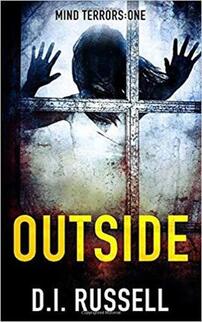
D​.I Russell  has kindly offered Outside,  the first his two novellas available in the Mind Terror series which are horror stories centered around mental disorders. as a free download to the readers of this article  via Book Funnel. '
To download your free copy simply click here 
Picture
Mixing with others never came as naturally as mixing paint to artist Samara. Troubles with classmates and family leave her alone, trapped in her struggling mind. Only the girl with dark hair understands. A spectre, watching from afar but creeping closer with every brushstroke, determined to keep Samara all to herself. As the boundary between life and art blurs, Samara knows she must finish her painting before it consumes her.
But will the finished piece keep the girl outside at bay? Or destroy everything Samara desires?
Come to the art show with Outside, the first of the Mind Terrors series by Shadows Award finalist D. I. Russell.
A thriller of obsession, confession, and the agony of art.
​
What readers are saying about D. I. Russell:
An imaginative and thoughtfully written novel loaded with clever ideas and a sly sense of humour. Horror DNA on Entertaining Demons.
A tricky balancing act that he pulls off with panache. Shroud Magazine on Samhane.
The cast is tragic, flawed, and highly believeable. Bizarre Book Review on Mother's Boys.

THE BEST WEBSITE FOR HORROR PROMOTION
my-life-in-horror-do-or-die-by-kit-power_orig

Comments are closed.
    Picture
    https://smarturl.it/PROFCHAR
    Picture

    Archives

    April 2023
    March 2023
    February 2023
    January 2023
    December 2022
    November 2022
    October 2022
    September 2022
    August 2022
    July 2022
    June 2022
    May 2022
    April 2022
    March 2022
    February 2022
    January 2022
    December 2021
    November 2021
    October 2021
    September 2021
    August 2021
    July 2021
    June 2021
    May 2021
    April 2021
    March 2021
    February 2021
    January 2021
    December 2020
    November 2020
    October 2020
    September 2020
    August 2020
    July 2020
    June 2020
    May 2020
    April 2020
    March 2020
    February 2020
    January 2020
    December 2019
    November 2019
    October 2019
    September 2019
    August 2019
    July 2019
    June 2019
    May 2019
    April 2019
    March 2019
    February 2019
    January 2019
    December 2018
    November 2018
    October 2018
    September 2018
    August 2018
    July 2018
    June 2018
    May 2018
    April 2018
    March 2018
    February 2018
    January 2018
    December 2017
    November 2017
    October 2017
    September 2017
    August 2017
    June 2017
    May 2017
    April 2017
    March 2017
    February 2017
    January 2017
    December 2016
    November 2016
    October 2016
    September 2016
    August 2016
    July 2016
    June 2016
    May 2016
    April 2016
    March 2016
    February 2016
    January 2016
    December 2015
    November 2015
    October 2015
    September 2015
    August 2015
    July 2015
    June 2015
    May 2015
    April 2015
    March 2015
    February 2015
    January 2015
    December 2014
    November 2014
    October 2014
    September 2014
    August 2014
    July 2014
    June 2014
    May 2014
    April 2014
    March 2014
    February 2014
    January 2014
    December 2013
    October 2013
    September 2013
    August 2013

    Picture

    RSS Feed

https://l.facebook.com/l.php?u=https%3A%2F%2Fmybook.to%2Fdarkandlonelywater%3Ffbclid%3DIwAR1f9y1sr9kcIJyMhYqcFxqB6Cli4rZgfK51zja2Jaj6t62LFlKq-KzWKM8&h=AT0xU_MRoj0eOPAHuX5qasqYqb7vOj4TCfqarfJ7LCaFMS2AhU5E4FVfbtBAIg_dd5L96daFa00eim8KbVHfZe9KXoh-Y7wUeoWNYAEyzzSQ7gY32KxxcOkQdfU2xtPirmNbE33ocPAvPSJJcKcTrQ7j-hg
Picture