

 The proclivity of our species to mythologise every space in which it occurs is well attested to, from the epic mythologies of antiquity to the pervasiveness of urban legends, conspiracy theories et al, humanity seeks out narrative, contriving it where there is none to be found. The internet is peculiar in this regard, being a relatively new space; a sphere of operation without much in the way of historical precedent or analogue. Being entirely abstract by nature, it is more than fertile ground for the kinds of recurring stories that litter humanity's collective sub-conscious; the faeries in the wood, the wolves at the door; all of them can be found here, in one shape or another. The proclivity of our species to mythologise every space in which it occurs is well attested to, from the epic mythologies of antiquity to the pervasiveness of urban legends, conspiracy theories et al, humanity seeks out narrative, contriving it where there is none to be found. The internet is peculiar in this regard, being a relatively new space; a sphere of operation without much in the way of historical precedent or analogue. Being entirely abstract by nature, it is more than fertile ground for the kinds of recurring stories that litter humanity's collective sub-conscious; the faeries in the wood, the wolves at the door; all of them can be found here, in one shape or another. Take the Slenderman, for example: arguably the most iconic of internet bogeymen, and one that even those not immersed in internet sub-cultures will recognise: essentially a fairy-tale changeling or bogeyman, the Slenderman is a demon of the digital age; a creature that exists in the space where physical reality and digital recording overlap, his nature, his intentions, as ambiguous as the medium itself. 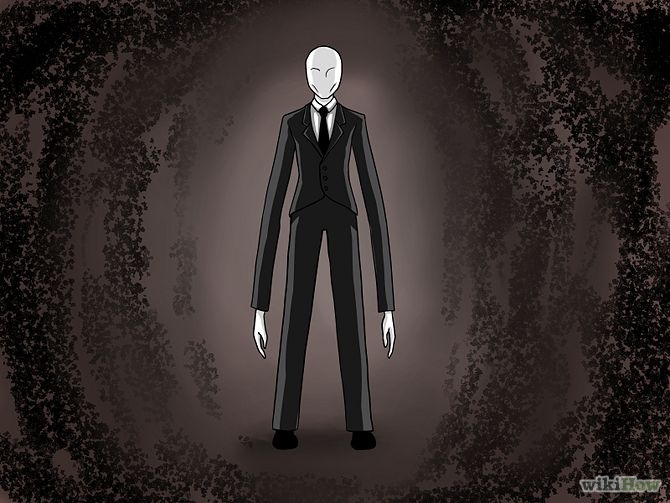 SLENDERMAN Beginning life as little more than an abstract figure digitally inserted into a series of photographs, Slenderman has become one of those iconic images that snares something essential in the human imagination; that reflects certain fundamental drives and fears. As a result, he has become much, much more than his origins would suggest; not merely some contrived image or internet meme, but something which has transcended the medium of his birth to intrude upon wider culture. There are those now that claim the Slenderman to be a “real” urban myth; those who claim to have seen or encountered the entity, despite the fact that its origins are readily traceable to only six or seven years ago on the “Something Awful” website forums. He is an example of a recurring trope within human cultures and the stories we produce: that of the outside malevolence; something so bizarre, so unknown, that there is nothing we can do to comprehend it, let alone escape or defeat it. It is a manifestation of the tribal terrors that once kept our children from wandering too far from the camp fire, too deep into the woods (woods, interestingly, being one of the many recurring environments the Slenderman seems to inhabit). Now, in the digital age, the trope has accrued new form and aspect, its superstitious qualities and irrational nature bound up with universal paranoias of paternalism and authority: the Slenderman is an Orwellian monster; he watches, always; he knows what you do, what you think and feel. Furthermore, he can actively determine those characteristics; he can affect your state of mind, your perceptions, your behaviour. Within the myths relating to Slenderman, those exposed to the entity relate periods of extreme distortion; shifts in thought and behaviour, visual and auditory hallucinations akin to the experience of schizophrenia or being under some psychotropic influence. In that, Slenderman reflects historically consistent concerns relating to authority; to parents, to governments; to the unseen forces that influence our day to day being. In that, he also acts as a reflection of the media that birthed him: Slenderman is the crystallisation of the terror that mere exposure to ideas, to images, to media, might affect one's state of mind; lay it open to malign influence and invasion. He is the internet; the digital image; the spider at the heart of the web. The fact that, in some extensions of the mythology, he is referred to by titles such as “The Operator” only serve to enhance that aspect. Digital media has provided both the seed and the soil for mythology since its earliest inception: video gaming culture is rife with such stories, arguably one of the most notorious of which is Polybius. Referring to a semi-mythical arcade cabinet purportedly seen throughout arcades in Portland, Oregon, in the year 1981, Polybius was a video game of unknown type, though most sources claim it to be a kind of geometric shooter which bombarded the player with all manner of shifting, fractal images and kaleidoscopic shapes, scattered throughout which were a variety of unspecified subliminal messages. According to the myth, players experienced a variety of strange side effects from play, including nausea, distortions in sight and sound, hallucinations, paranoia; symptoms redolent of schizophrenia. The more exotic versions of the myth even state that there were those that collapsed after play, suffered psychotic break downs and/or committed suicide.  POLYBIUS Of course, corroborating these stories is somewhat problematic, as there were accounts at the time of players of videos games that featured certain forms of visuals (flashing or shifting light sources, for example) suffering from epileptic seizures, fits etc. This is almost certainly part of what originally inspired the Polybius myth; wider culture's general apprehension at the rise of a new medium, one that many did not understand or have any interest in. Looking back at the era, the popular and mainstream media was rife with ill informed “documentaries” and speculations concerning the apparent ill effects of video games upon young minds; very much a (post) modern parroting of exactly the same “concerns” that were aimed at cinema and television during their debut. But Polybius also has somewhat more universal motifs: the myth has been extended and exaggerated over time, taking on a sinister, conspiracy like quality: following revelations such as the “MK-Ultra” scandal (in which documents were leaked to the popular press revealing the US government's apparent experimentation on its citizens with psychotropic drugs, hypnotic techniques etc, much of which was conducted with a view towards social engineering and military application), stories like Polybius became rife; very much of the same family as the later “Princess Diana murder” theories, Roswell and Area-51, 9/11 cover ups etc etc. It is a story which, like so many, reflects upon our relationships to the structures and systems in which we operate; that emphasise the dynamic of deceit and abuse inherent, but in a manner that mythologises what is otherwise fairly mundane and historically pervasive evil: Reports from arcade owners at the time (none of which are recorded or can be verified) suggest that the Polybius cabinets were regularly attended to by dark suited and masked individuals who somehow “retrieved data” from them. The technology for such being something of a science fiction fantasy of the era notwithstanding, the story suggests that governments and military powers were using Polybius as a form of Orwellian tool; to spy upon and affect the minds of its players. Very little of this seems to have any root in quantifiable fact, but dismissing the story upon this basis misses the point entirely: what Polybius and its ilk demonstrate is a need to narrativise pervasive cultural concerns; to express and explore them in arenas where they can be without fear of ridicule or reprisal; of being condemned for paranoia or absurdity. Another, more recent example of a myth born on the internet within particularly niche sub-cultures is that of “The Tails Doll.” Referring to an apparent secret character in the Sega Saturn Game, “Sonic-R,” unlocking or “summoning” the Tails Doll is said to be akin to drawing the attention of some supernatural entity; a malignant spirit somehow encoded within the game itself. Accounts of the Tails doll and its effects are rife, originating from the various “Creepy Pasta” entries that coined the concept (most of which are fairly awful in terms of their writing), now having swelled to the point that some find themselves uncertain where the fiction began and the myth ends. Like Slenderman, it seems that there are those who report encounters with the Tails Doll and describe its effects, most of which are the stuff of the most hackneyed horror stories imaginable.  TAILS DOLL Nevertheless, “Tails Doll” exercises a certain degree of influence and power within gaming sub-culture; a recent example of the types of stories that have been whispered on playgrounds and in school corridors since video gaming began: the “secret” code, the hidden level, the Easter Egg. Like all good myths, this one has enough basis in fact to evoke the illusion of possibility; programmers and video game designers do indeed code any number of secret messages, “Easter Eggs” and secrets into their work, most of which are either humorous or meaningless; esoteric nods to work place jargon or idiosyncrasies that only a handful of people could ever understand. The occasional discovery of such during the early days of video gaming tended to be met with a sense of awe and foreboding; as though what was intended as a joke or casual reference carried some deeper meaning or darker import. Entire myths have swelled from these entirely innocuous winks and nods, sometimes to the point that they eclipse or influence the original work. An excellent example of this is the Mortal Kombat series. Putting aside the for the moment the idiotic, media driven furore the game created on its release, it also generated a number of fairly pervasive myths, owing to certain “messages” that would crop up from time to time, when certain circumstances were met. Already curious thanks to the inclusion of secret characters such as Reptile, players scoured every inch of the game for the suggestion of other unlockables, eventually giving rise to the myth of “Ermac.” “Ermac” was one of many messages that would occur during the game under particular circumstances. In this instance, the word had no particular meaning and was most likely some form of error message originally. However, player speculation on how to play as the mythical “Ermac” and how to access him became rife, so much so that certain notable video game magazines ran “joke” articles providing impossibly elaborate means of accessing the “secret character.” The myth later became the proponent of its own reality later when the creators of Mortal Kombat decided to include the character in the game's sequels. Ermac is now an essential part of Mortal Kombat lore and mythos, having several incarnations throughout the series many instalments. 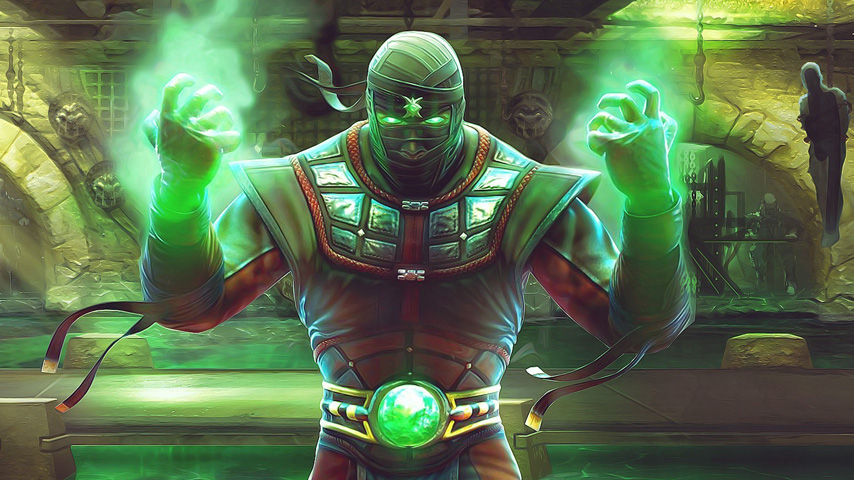 ERMAC Such myths have been a part of video gaming culture since the medium's earliest days, the stories of secret codes, hidden levels; extra “bosses,” items etc running rife, now even more so thanks to the internet. We have now come to a point whereby video gaming culture has acknowledged and internalised this aspect of itself to such a degree that entire games are designed around this very principle: games such as the Fallout series are arguably nothing but huge aggregations of reference, in joke and esoteric mythology, everything from their aesthetic and design to the style of play designed to appeal to that part of video gaming culture obsessed with exploration, secrets and conspiracy. Similarly, we have games such as The Binding of Isaac, which takes the simplistic styles and formats of “classic” video games and invests them with all of the secrets that people used to attribute to its antecedents, but which were nothing but matters of school-yard myth and Chinese whispers. Certain genres and formats of video games now include “secrets” as a matter of course; they appeal to the degree of sophistication that players of the past wanted and -fallaciously- attributed to the games they played, giving rise to the myths detailed above, as well as many more, but genuinely exhibit the depths and the mysteries that, previously, players had to conjure for themselves. Returning to the internet, we find examples of spaces where myth and reality overlap: the level of the internet popularly known as The Deep Web has become a space so occluded by stories, urban legend, that it is almost impossible to discern what is real and what is fantasy. Essentially a level of the internet which is not popularly known or accessible by usual means, The Deep Web consists of pages and places that most people would not wish to see; which are essentially invisible to normal browsers and software, where any material is available; where items and services can be purchased ranging from illegal drugs to hit men and prostitutes. It is also a space notoriously haunted by hackers, stalkers; deviants of all stripes, as well as any number of viruses, malware etc. According to myth, which may have some basis in fact, even accessing The Deep Web without the appropriate protection is a risk, opening oneself to malicious software, to hackers etc. There are entire pages of the “higher” levels of the internet devoted to stories and myths deriving from The Deep Web. For the most part, they are disturbing tales of people delving out of curiosity, only to find themselves coming to the attention of those that mean them harm. Very often in such stories, the delver will find their computers rebelling against them; chat windows opening involuntarily, web cams activating; systems refusing to shut down etc. They also generally encounter individuals that begin referring to them by name or that know personal details such as telephone numbers, home addresses etc. In the more overt or extreme stories, these violations spill over into their waking lives; letters and packages arriving at their homes, their homes themselves being invaded by those whose attentions they've unwittingly drawn. In that, these stories reflect certain classic archetypes; the same that can be found in cautionary fairy tales and folklore from numerous times and cultures: Little Red Riding Hood; don't stray from the path or allow curiosity free reign. The Big Bad Wolf. They are essentially the internet cautioning against itself; the new medium simply another wood; another forbidden realm, reflecting the pervasive concerns that those unfamiliar with it harbour, as well as serving to mythologise the space and thus make it more known; more containable and comprehensible on a cultural level. The Deep Web is the “Deep Dark Wood” of the digital age; the hackers et al are The Big Bad Wolves and you, as the innocent, are cast as Little Red Riding Hood, wandering into places that you are likely naïve of, where you cannot know the dangers. Interestingly, this is one set of myths that have some quantifiable basis in fact and whose cautionary import is more than merely metaphorical: The Deep Web actually exists, and can be quite dangerous, if only due to the material one might unwittingly access; images or accounts of actual violence, sadism, torture etc, others that are illegal or illicit. Deeper still, there are myths of even more forbidden realms; levels of the internet that no one can access, save for certain initiated individuals and institutions (again, according to myth). Known by many names, but most popular as Marianas Web (after the oceanic trench that is the deepest place on the planet's surface). Unlike The Deep Web, Marianas Web is entirely speculative; there is no evidence that anything like it actually exists, though speculation on the matter is rife (given that the layers or levels of the internet are potentially infinite, it is entirely possible that there is something analogous to the concept), as are the myths that derive from it. Interestingly, the myths concerning Marianas Web are entirely removed from those concerning The Deep Web. Whereas Deep Web stories tend towards the cautionary and the possible (concerning material and human dangers and scenarios), those concerning Marianas Web are far more abstract: it is claimed that the area contains a repository of all human knowledge; a self-updating index of all discovery, all theory, all revelation; that all the secrets and conspiracies of human history are laid bare here, including those relating to Atlantis, Samarkand; the JFK assassination etc, as well as the comparatively minor conspiracies of churches, governments, military powers etc throughout the ages. One of the most fascinating and bizarre myths concerning Marianas Web claims that it is the operating sphere of an artificial intelligence; something that is either a deliberate creation or a naturally coalesced entity which now oversees cyberspace like some virtual Gaia. In Marianas Web, technology has, far from eliminating myth from human experience, as some claim, created another space and state of operation for mythology; a repository that is itself mythological, abstract, and therefore unbounded, in the same manner that the internet itself is; the phenomena that we refer to as such revealing certain synchronicity with the phenomena of human imagination, culture; the abstracts we accrue and project into the world. Even if notions such as Mariana's Web have no basis in fact now, the nature of the internet and technology in general will conspire to make them so; digital media and the virtual space in which they operate have conspired to create one in which myths might be realised; in which the actual may become abstract and, perhaps, in time, vice versa. George Daniel LeaComments are closed.
|


Archives
April 2023

|
 RSS Feed

|

|