

 Brian Kirk's novel Will Haunt You was inspired by a couple from his neighborhood who disappeared after finding a strange book in their home. Brian witnessed this event happening live on the neighborhood website Nextdoor.com, and has provided screen grabs of the ordeal, along with his reactions to each post as he watched the drama unfold. Click the following links to get caught up before continuing with the story below. OBSIDEO: Part 1 at Inkheist Part 2 at SciFi and Scary and at Horror Talk Part 3 at Char’s Horror Corner, and Zakk’s Eyes of Madness Part 4: Night Worms The mystery deepens.... I never met Dave, but I personally know people who did. He’s still missing.  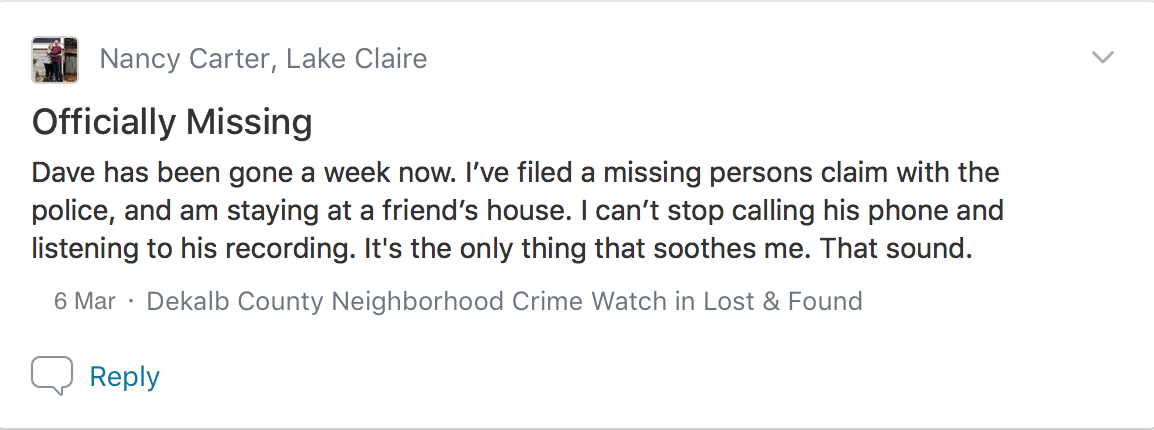 Of all the posts, this is still the most unsettling to me. Because, as far as I can tell, I don’t see what other people see. It’s like that dress some people swear is blue, and other people swear is gold. Everyone I’ve talked to says they see a set of eyes on the pages in the pictures that appear to be looking back at you, but I don’t see that. I see regular writing, like you’d see inside any book. And every time I look, the writing changes. This was the last time anyone heard from Nancy herself. Though, sadly, we saw her again.
Here is the full schedule of all the entries.
Stay tuned for the conclusion of this story tomorrow. Meanwhile, be sure to check out the novel inspired by the book OBSIDEO, by clicking here 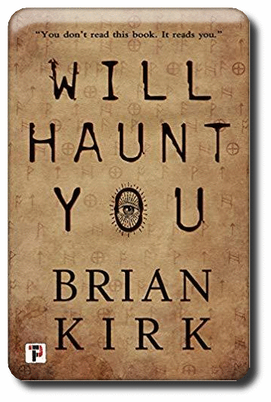 You don't read the book. It reads you. Rumors of a deadly book have been floating around the dark corners of the deep web. A disturbing tale about a mysterious figure who preys on those who read the book and subjects them to a world of personalized terror. Jesse Wheeler―former guitarist of the heavy metal group The Rising Dead―was quick to discount the ominous folklore associated with the book. It takes more than some urban legend to frighten him. Hell, reality is scary enough. Seven years ago his greatest responsibility was the nightly guitar solo. Then one night when Jesse was blackout drunk, he accidentally injured his son, leaving him permanently disabled. Dreams of being a rock star died when he destroyed his son's future. Now he cuts radio jingles and fights to stay clean. But Jesse is wrong. The legend is real―and tonight he will become the protagonist in an elaborate scheme specifically tailored to prey on his fears and resurrect the ghosts from his past. Jesse is not the only one in danger, however. By reading the book, you have volunteered to participate in the author's deadly game, with every page drawing you closer to your own personalized nightmare. The real horror doesn't begin until you reach the end. That's when the evil comes for you. 
 As a tike, I was introduced to the world of movies by my father. My earliest recollections of film are of weekend “buddy days” spent with Dad and being enthralled by those over-the-top Irwin Allen disaster flicks of the ‘70s, like Earthquake and The Towering Inferno. Populated by B-list actors (either on the way up or on the way down their respective career ladders) who struggled to survive disasters natural and otherwise amidst paper-thin melodrama and never-moving hair, these earliest cinematic experiences could very easily explain my fondness for camp. Then, at the age of 8, my father took me to see Jaws. It took four successive attempts to get through the entire movie, each time getting slightly further into the narrative before pleading with my ever-patient father to leave. I had discovered controlled fear and I was in love—even if I was petrified. Hooked on horror, I eagerly gobbled up episodes of The Night Stalker, cowered as I watched Kim Darby battle little green demons in Don’t Be Afraid of the Dark, and damn near wet the bed after watching that spectacularly creepy Zuni doll pursue poor Karen Black as she ran, stumbled, and fell through that now-classic last segment of the Trilogy of Terror anthology At the age of ten, my horror journey took a fateful turn as I sat in a darkened theater beside my devoted Dad, munching popcorn as stark piano notes heralded the arrival of John Carpenter’s Halloween. That movie-going experience was the cementing force of my devotion to all things horror and the beginning of my love affair with the slasher film (and Jamie Lee Curtis—but that’s another story for another book). Yes, I’ll openly admit it: I love slasher films—that often-cannibalized subgenre of horror that critics dismiss, actors renounce from their resumes, and the religious right once blamed for the collective ills of the world. In articulating my worship of slasher movies and their lure, it’s difficult as a gay man of a certain age to refrain from in-depth analysis of the hidden subtext of such genre fare; after all, we’re living in an age where anyone and everyone with access to the Internet is an armchair critic. But several decades of experience, inquisitive study, and accidental pop culture reconnaissance does lend a certain level of unintentional expertise in matters such as these, no? In terms of the simplest explanation, slasher films became for me what Dracula, Frankenstein, The Wolf Man and the cavalcade of other Universal monsters were to my father’s generation. They’ve come to represent that magical time of imagination and self-discovery somewhere between childhood and adulthood, when grown-up uncertainties could be explored under the protective security of adolescence. As a nascent gay cub, the slasher took on an added relevance with its conflicting depiction of sexual excess struck down by a crushing morality. Being a creature of habit, perhaps it’s the unvarying formula of the slasher film that agrees with my longstanding obsessive-compulsive tendencies and need for order. Riddled with more clichés than an old episode of Dynasty, the great slasher films of the ‘80s and beyond generally possess five basic elements. There are the stock characters—usually a stereotypical mix of teenagers that include cardboard cutout jocks, practical jokesters, bimbos, and nerds—who bumble through a formulaic plot that involves the hapless group traveling to an isolated location and being systematically picked off one-by-one by an unseen (or often glimpsed) killer. These films employ highly inventive killings that have elevated special make-up effects to an art form—creating bona fide celebrities out of the previously invisible special effects artist. The films all culminate in a prolonged chase scene in the third act between the killer and the solitary heroine, a preeminent character in slasher fare that author Carol J. Clover coins the “Final Girl” in her seminal gender exploration of the genre, Men, Women and Chain Saws: Gender in the Modern Horror Film. This heroine is generally painted as more virtuous than the rest of the group. She refrains from all immoralities like recreational drug use and sexual exploration; she is usually the one who cautions the group not to go to the location they find themselves in; and she figures out that something wicked this way comes before anyone else. Finally, slasher movies usually include the false ending element, that final jump scare following the audience’s collective sigh of relief that the on-screen horror is seemingly over. Fans will remember these cinematic moments of pure jolt as the stuff of scary film memories; cynics will dismiss this once-unexpected moment as the brainchild of studio execs who forecasted sequel dollars. Arguably, some film scholars will point to Alfred Hitchcock’s Psycho as the first modern slasher film to combine thematic sexuality, (implied) gore, the mentally disturbed killer, and an isolated setting. I would counter that cinema’s first slasher film was actually the 1945 film adaptation of Agatha Christie’s And Then There Were None, which served as a precursor to the modern slasher formula with its tale of ten people on an isolated island being manipulated and killed off one-by-one for the sins of their past by an unseen killer in inventive ways. Indeed, the best and most enduring slashers are the ones with an element of murder mystery at their core—films such as Black Christmas (1974), Friday the 13th (1980), Terror Train (1980), Happy Birthday to Me (1981), Curtains (1983), and April Fool’s Day (1986). But it was 1978’s Halloween that served as the catalyst for the slasher movement of the 1980s. Although preceded by the garishly technicolor works of Dario Argento, Mario Bava, and the popular gialli that came out of Italy in the early to mid-1970s, Halloween holds the distinction of ushering in the golden age of slasher films. Together with Friday the 13th, Carpenter’s micro-budget masterpiece would go on to span countless sequels and inspire myriad knockoffs and serial killer icons. What was it about the genre that appealed to my budding gay sensibilities? Is there a connection between slasher movies and queer culture and experience? To the naked eye, these seeming cautionary morality tales almost appear to be—on their surface—advertisements for conservative values, the Republican Party of horror films, if you will. They celebrate virtue and condemn vice with barely concealed contempt that’s visualized in graphic throat slashings, disembowelments, and beheadings. So just what is the queer appeal of films permeated by senseless violence, misogyny, and poor fashion? In retrospect, I think as a gay teen that I identified with the sense of isolation the characters in slasher films face—both literal and metaphorical. In a film like Happy Birthday to Me, for example, one can see an allegorical parallel between the mental isolation Melissa Sue Anderson’s heroine faces as she struggles to trust her unreliable memories of a past trauma amidst the carnage of her diminishing circle of friends and the social isolation LGBTQ individuals face as they grapple with the incongruence of contradictory societal views, draconian religious beliefs, and familial attitudes regarding their emerging sexual orientations and gender identities. Slasher films serve as an outlet for the societal fears LGBTQ individuals face in their everyday lives. For the LGBTQ person who’s chosen to accept and embrace their sexual orientation or gender identity, navigating in a world fraught with bigotry, discrimination, and the threat of physical harm, the characters in slasher films provide a conduit through which those fears can be examined on a subconscious level. The characters who hesitantly stumble around the unfamiliar turf of their unseen enemy in the modern slasher yarn represent us as LGBTQ members of society who must also circumspectly traverse the dangers of life in a dissimilar heterosexual world. Slasher films often cast their characters as strangers in a strange land much in the same way queer culture thrusts their young into a landscape unfamiliar to the heteronormative terrain we’re used to navigating as we come of age and enter our adult LGBTQ lives. Take the teen cheerleader out of the comfort zone of her high school hallway surrounded by friends and thrust her into a scenario where she’s alone and being pursued by an axe-wielding masked figure across the uneven terrain of a dark forest at night…in the rain…in her bra and panties. What LGBTQ person can’t relate to the fear, disorientation, physical discomfort, and vulnerability of that cinematic depiction when applied to their own coming of age in the queer culture of their generation? Even the overbearing mother trope probably held some subtextual weight in the early days of slasher film analysis in discussions of nature versus nurture—a theory often posited in research into the development of sexual orientation. Norma Bates in Psycho, Susan Tyrell’s Aunt Cheryl in Butcher, Baker, Nightmare Maker (aka Night Warning), Ike and Addley’s titular mother from Mother’s Day, and even Laurie Metcalf’s Debbie Salt in Scream 2 are all so smothering and domineering that they “turn” their sons into serial killers. Likewise, some in the psychiatric profession once blamed overly close maternal relationships for causing the "disease" of male homosexuality. Even though research since the 1950s has debunked and discarded this theory, one can see the influences of this outdated hypothesis in the stereotype of the domineering, emasculating mother figure in some slasher films, drawing yet another parallel worthy of mention here. There is also an interesting metaphorical comparison to draw between the transformation of the slasher film’s final girl and the coming out process. In the beginning of the slasher film, the heroine usually presents as weak, timid, uncertain of how to navigate through the situation she finds herself in; for the LGBTQ person, this uncertainty is the same in the coming out process. As the film progresses, the heroine transforms—she toughens and becomes confident in her abilities to overcome the malevolence stalking her. For LGBTQ people, the coming out process is similarly transformative; we develop a thicker skin and summon the necessary courage to confront the unseen enemy of homophobia waiting for us around every darkened corner. On a pop cultural level, the final girl character also holds a special appeal for the gay male community in particular, coinciding with our longstanding predilection for strong female characters in the arts. Like Bette Davis survived the male-dominated studio system of old Hollywood and Tina Turner survived Ike, so too does Jamie Lee Curtis survive her Halloween night encounter with the boogeyman and Adrienne King survive the summer camp carnage of Crystal Lake. At the end of the slasher, the final girl can go on to reinvent herself—like Cher or Madonna or Gaga—and is positioned by film’s end for a comeback. And everyone loves a comeback. For gay men, the final girl is our slasher film fag hag. She may be maimed, bleeding, and psychologically torn to bits, but she’s still Judy, Bette, and Liza rolled into one spunky toughie who will live to fight another day (or at least until the sequel). Slashers films also held queer appeal on a purely visceral level. Although these films most often focused on the female form—adding to enduring claims of rampant misogyny from detractors of the genre—slasher films intermittently gave curious gay boys a tantalizing hint of forbidden adult pleasures. What gay man who grew up on a steady diet of slasher movies in the ‘80s doesn’t have memories of nights spent with their VCR and a finger on the rewind button to make sure Kevin Bacon never stopped running across that makeshift dock in his blue speedo in Friday the 13th? Who doesn’t remember the twinge of sexual excitement when Gary, the ill-fated Gamma Delta pledge, is tied to the tree in his tighty-whities in Final Exam? Or Vincent Van Patten running around Garth Manor in his heart-speckled boxers in Hell Night? Or Johnny Depp’s crop top and exposed midriff in A Nightmare on Elm Street? For gay men of a certain age, slasher films provided the visual stimulation when we discovered self-ecstasy behind the locked doors of our bedrooms while our parents and siblings slept in adjoining rooms, long before the immediate accessibility of Internet porn. Even sitting in a darkened theater during a sold-out viewing of some random splatter flick, the toxic masculinity of straight males cheering in support of the slasher villain as he sliced and diced his way through sorority houses and summer camps gave me twinges and tingles I was just beginning to understand. Lastly, there is the recurrent theme of the duality of sexual expression in the slasher film in which acting upon one’s sexuality is seen as both emancipating and oppressive. In the world of slasher films, a suppression of natural sexual impulses—whether due to physical deformity that limits desirability, maternal emasculation, or religious admonishment—often results in the creation of a demented serial killer; yet that same suppression of sexual urges is a virtue in the final girl, one that signifies her survival. In queer culture, we refer to one who repudiates their sexual orientation as a closet case. So, logic withstanding, argument could be made that the slasher villain is also a byproduct of his repressed sexual self and a variation of a closet case. Just think about how many cinematic victims would have been spared if Jason Voorhees and Michael Myers had acted upon those teenage urges in their sleeping bags at Boy Scout camp. Sexual exploration between characters in a slasher film is almost always a harbinger of death, and in the queer culture of the 1980s, the same held true as AIDS systematically stalked and killed its victims. Sex was inherently dangerous and yielded devastating effects in both the era’s slasher films and its queer culture. As a teenager who grew up during the plague, I visualized AIDS as the gross deformity beneath Jason’s hockey mask. In those early days of ignorance and spotty information, when I found myself torn between the primal need to open up to my own sexual awakening and to abstain to protect myself, the fates of countless slasher victims were never far from mind. I recall one film scene that echoed this weird parallel that I saw between slasher films and the AIDS epidemic. In the 1981 slasher The Fan, which I saw on late-night cable a few years after it was released, Michael Biehn’s character—a record store clerk named Douglas who is obsessed with a famous stage and film actress played by the late Lauren Bacall—meets a man at a bar who cruises him for sex. The two go to the rooftop of Douglas's building, where the man begins to perform oral sex on him, but Douglas stabs him to death and burns his body. Sex equaled death—onscreen and in real life. Art reflected life. Game, set, match. The slasher—that much-maligned violent bastard of the thriller and the giallo—holds quite an unexpectedly consequential place in both the sexual development and coming out process of many LGBTQ persons. Like that first adolescent crush that both titillates and discomfits, its charm isn’t always easy to articulate. Much like we’re taught to associate sex and guilt from an early age—at least as those of us raised in some semblance of a denominational religion are—we both revere and reject the slasher. Nostalgia may keep us coming back to the genre in all its comforting predictability, but it was something else—something queer indeed—that likely hooked us in the first place.  Vince Liaguno is the Bram Stoker Award-winning editor of UNSPEAKABLE HORROR: FROM THE SHADOWS OF THE CLOSET (Dark Scribe Press 2008), an anthology of queer horror fiction, which he co-edited with Chad Helder. His debut novel, 2006’s THE LITERARY SIX, was a tribute to the slasher films of the 80’s and won an Independent Publisher Award (IPPY) for Horror and was named a finalist in ForeWord Magazine’s Book of the Year Awards in the Gay/Lesbian Fiction category. More recently, he edited BUTCHER KNIVES & BODY COUNTS (Dark Scribe Press, 2011)—a collection of essays on the formula, frights, and fun of the slasher film—as well as the second volume in the UNSPEAKABLE HORROR series, subtitled ABOMINATIONS OF DESIRE (Evil Jester Press, 2017). He’s currently at work on his second novel. He currently resides on the eastern end of Long Island, New York, where he is a licensed nursing home administrator by day and a writer, anthologist, and pop culture enthusiast by night. He is a member (and former Secretary) of the Horror Writers Association (HWA) and a member of the National Book Critics Circle (NBCC). For more information on Vince please follow the links below www.VinceLiaguno.com Goodreads  
EXPLORING THE LABYRINTH: GHOUL
8/1/2019
 In this series, I will be reading every Brian Keene book that has been published (and is still available in print) in order of original publication, and then producing an essay on it. With the exception of Girl On The Glider, these essays will be based upon a first read of the books concerned. The article will assume you’ve read the book, and you should expect MASSIVE spoilers. I hope you enjoy my voyage of discovery. 6. Ghoul Two essays back, I talked about Dark Hollow and blood on the page - the notion that one way to write great horror fiction is to not merely write about what scares you, but about the life experiences you’ve had that have scarred you - made you older, and sadder, and slower to love and trust. With Ghoul, Keene delivers a coming of age story so raw and exposed that it’s frequently painful to read. It’s also, in this readers humble opinion, his best work so far - a masterpiece on its own terms, and one of the definitive coming of age horror novels. Ghoul stars a gang of three children, Timmy, Barry, and Doug, each aged 12, and charts their experiences over a summer break in the 80’s. The three kids each come from troubled homes - Barry’s father is a physically abusive alcoholic, Timmy’s father is authoritarian and gruff, and is in constant tension with his grandfather, who lives with them, and Doug’s single mother is also an alcoholic, and sexually abusive towards him (these sequences are some of the most upsetting in the book, told unflinchingly and without the slightest hint of prurience - utterly stomach churning stuff). The impressive thing about all of the above is how well Keene balances the horror of these situations with their normality - at least, as far as the kids themselves are concerned. There’s two main aspects to this; one is the rather obvious observation that whatever we experience as children informs our perception of normality - and why wouldn’t it? We have nothing to compare it with, after all. Keene understand that we, as readers, will look at the experiences of these kids with various degrees of horror and disgust, but also that the kids themselves will not; or at least, not in the same way. Indeed, part of the horror in each case comes from the kids helpless acceptance of their situations - the psychological warping effect that comes from being harmed by the people who claim to love you, the feelings of wrongness, and the guilt that accompanies those feelings. After all, don’t our parents tell us they love us? Don’t we love them? So why do we also hate them? Why do they seem to hate us? This is elemetally dark stuff, and all the more horrific for it’s relatively commonplace feel - a feel exacerbated by the second important aspect that re-enforces this warped notion of ‘normality’ - the small town setting. Back in my Dark Hollow essay, I observed that Keene captured the small town vibe so well that it forcibly reminded me of the issues I have with that way of life, even as the book itself functionally served as a love note to it. Well, in Ghoul, that claustrophobia is a key and irreducible component of the horror. There is literally nowhere to hide, and everybody is in everyone else’s business. Doug’s abuse is secret, but Barry’s bruises are common knowledge, and yet nobody in authority shows the slightest interest in making any kind of intervention - by and large, it’s an open secret and just ‘how things are’. That shrunken horizon, and sense that there’s nowhere to run to, amplifies the horror of the tale. The children are trapped with the monsters. Which brings us to the Ghoul. By the standards of the creatures we’ve encounters so far in Keene’s work (giant man-eating worms, demon alien zombies from the gap between worlds, angels of Pestilence, cancer) the Ghoul is an altogether weaker, and in some ways pathetic creature. Cursed with immortality, and under a strict injunction to eat only rotting flesh, the Ghoul’s aversion to sunlight causes it to live underground. That said, this isn’t a sympathetic monster - cursed he may be, but he’s also irredeemably evil, committing murder in the opening chapter, and worse, kidnapping young women in an attempt to procreate (another utterly skin crawling revelation, and one made all the more potent by Keene’s decision to have the assaults themselves happen ‘off camera’, and therefore entirely in our imaginations). The decision to have sections of the book from the Ghoul’s perspective is a ballsy one, and is one of the many echos the book has with King’s IT. As with that book, Keene nails these passages, delivering a creature that has a plausible interiority and psychology, despite being supernatural. And he’s also supernaturally strong, capable of acts of extreme physical violence. The first chapter from the Ghoul’s POV is an especially fine one. It opens with a tour of the graveyard, visiting the death circumstances of several of the occupants before passing beneath to the creature below. There’s echoes in this passage of the tornado from White Fire, and also resonances with the following book in this journey, Selected Scenes From The End Of The World. It’s an incredible act of sheer imagination and storytelling which then transitions to the creature himself, who manages to give us his backstory, place in the wider Keene mythos, reason for recent reawakening, and outline of future plans with an ease and readability that suggests Keene has learned a huge amount sinse City Of The Dead. This is assured storytelling - not flashy, but goddamn it gets the job done, and done right. There’s also an interesting aspect to the creature, here, which again contains echos of IT, for me. In that novel, King’s monster is absolutely a metaphor for childhood fear and imagination… and it’s also absolutely not a metaphor at all, but a real physical thing that eats children and corrupts adults into tolerating otherwise intolerable levels of child death. Similarly, a creature that lives in the graveyard of a small town, eating the bodies of the dead and reaching out for the living, infecting and destroying their lives too, lines up neatly with the patterns of abuse that fester when the buried actions of the past are consumed rather than confronted, perpetuating the cycle of misery across generations. At the same time, as with IT, the Ghoul is really real, with agency and power, and whether or not the kids defeat this supernatural evil, they’ll still be left with the more mundane (if no less brutal) injustices they face at home. With this in mind, it’s especially telling that it’s Barry’s violent father, working as the caretaker of the graveyard, who becomes the Ghoul’s human agent in the town, aiding with body disposal and profiting from the relationship by taking the jewelry and valuables that have been buried with the dead, and which the Ghoul has no use for. The coda of the novel is absolutely shattering on this point, as Timmy revisits the town as an adult to see his old friend Barry, only to see signs of physical abuse on Barry’s son. They may have beaten the Ghoul, but it seems not all of them could beat the cycle. I haven’t talked too much about Timmy, yet. He’s a very clear authorial insert - a bright kid who likes comic books and storytelling, with a loving but difficult relationship with his father that’s partly managed through, and partly exacerbated by, his relationship with his grandfather, who lives with them. I am frankly in awe of how Keene presents the complexities of this relationship triangle, the frustrations of the father, clearly having been raised with a high level of discipline now being frustrated by his own father undermining him with his son. At the same time, it’s clear from the grandfather’s perspective that he’s trying to make good with Timmy on the mistakes he made with his own son, Timmy’s father. We’re back to the resonant themes of generational mistakes and regret, in microcosm, and what’s especially powerful here is part of the tension within the family comes from the attempts on the part of the Grandfather to fix his past mistakes. It’s the kind of thing a big L Literary novel would spend 700 pages on (and to be clear, done right, it could be a riveting 700 pages), but here, it takes up barely the first quarter of the novel, before the devastating sudden passing of the Grandfather on the first day of summer sets the tone for the descent into horror that is to form the rest of the narrative. It’s an amazing portrait of struggling blue collar small town family life, and even if the rest of the novel wasn’t some of the best storytelling I’ve so far encountered from Keene, this opening section would be worth the price of admission. Part of what makes that death so sad, beyond the impact the loss has on Timmy, is the understanding the reader has of how it will fundamentally change the dynamic at home for Timmy. It’s such a smart piece of writing, because the reader experiences the sinking feeling way before Timmy, our POV character for these sequences, does - he’s too busy trying to process the loss to realise how things have changed. And the inevitable moment when that threat is delivered on, when Timmy tells his father about the Ghoul, and his dad responds by tearing up Timmy’s comic collection (believing the malign influence of the comics to be the reason for Timmy’s dark theories) is stomach churningly awful, not least because Timmy’s father is clearly acting out of best intentions. It’s impressive that, even in a narrative where the other kids are suffering incredibly harsh physical abuse of various kinds, this sequence really holds its own. Some of that may be down to my own predictions for storytelling, I suppose - but I also think part of it is just down to how well it’s written, and how well Timmy’s perspective is captured. The apocalypse is always personal, after all - our own Hell is always a private one. So, yeah, Ghoul stands as my favourite Keene novel so far. It’s absolutely everything I enjoy about Keene’s writing in a single slim volume; brilliant characters, small town claustrophobia, a monster that’s real and monstrous, no looking away, no easy answers, no happy endings, blood not just on the page but jetting out onto the ceiling and running down the damn walls. Particularly impressive is the portrait of the kids, where again I find myself reaching back to King for a comparison, and I don’t have higher praise than that (in fact - whisper it - I might even give Keene the slight edge on that one, for Ghoul at least). There’s only one aspect I came close to snagging on during my read, which was that I felt the stated theme of ‘adults are the real monsters’ was overplayed. By which I think I mean, overstated, in the literal sense of ‘stated too many times’. It’s an observation that Timmy makes, in those exact words, at multiple points in the narrative, and it just felt a little jarring to me - not least because the book had already done such a good job in portraying that truth, which made the explicit stating of it feel redundant. Even there though, on further reflection, I realise that it’s entirely in keeping with Timmy’s character. He’s a writer, after all, and a young one. When a young writer hits on a powerful truth, no matter how obvious it might seem, it’s rare they can resist repeating that truth to themselves. And of course, it’s the power of that truth that ultimately allows Tim, alone of the three children, to find a way out of that town and into the light. Next up: Selected scenes from the end of the world. KP 2/12/18  
 Jude found the camera in the burnt room, the box somehow untouched by flame. This was a month after Nathan’s funeral and it was the first time that Jude had ventured into the spare bedroom of their Holloway flat. Cars hissed by the window and rain against the glass, but the room hoarded silence in its heart. And shadows, both within and without. The police and the landlord were hours gone, their respective reports and rants faded into half-remembered echoes. There was only Jude, his breaths and the room. And the box in his hands, which he’d carefully lifted down from the top of the charred and skeletal wardrobe. Shaking ash off his cheeks – some of it stuck there by tears – Jude wrinkled his nose at the smoky stench, wondering at the box, trembling between his hands. It’s too soon for this. Much too soon… He pushed grief away, focusing on his discovery. Smooth and black, the box was more than untouched. It looked new. The wall and the floor behind him had managed to escape the fire when his boyfriend (dead boyfriend. He pushed that away too) had torched the room, so there was that, but this side of the space was fucked. A dark, crumbling corner rising up to what he could only think of as baroque brown streaks curling across the ceiling. The intact box was a miracle, surely. A horrible one, but a miracle all the same. Jude sat down on the edge of the bed with the weight of the knowledge, his backside breaking the crust of the scorched blankets. When he opened the box, he saw the camera inside. It was an 80s model, he thought, a Polaroid Instant. Practically vintage these days. Tacky. He traced the distinctive rainbow stripe slashed down the front under the lens, culminating in the supercolor logo. A rainbow. A bloody rainbow. He felt vaguely mocked. A chunky looking pack of film rested next to the device. Otherwise, the box was empty. Frowning, because why would Nathan even have this? Why hadn’t the police noticed it? And already thinking that the camera might be evidence from Nathan’s last case, he lifted the camera out. He dropped it on the bed at once, ash puffing up. His fingers rose to his face, sticky and red. Blood? Jude was on his feet, standing stiff on the blackened floorboards with no effort or will, snapping to attention with his hand held out before him. Blood. There was no question. It was wet. How could the blood be wet after a month or longer on top of the wardrobe? The chill tapping against the window seemed to climb up his spine. Someone must’ve put it there. But who? A small clicking sound drew his attention beyond his stained fingers. He’d accidentally pressed a button. The camera was whirring, pushing out a picture, a square white tongue that seemed to scream surprise! Jude stood there, frozen, for the full five minutes it took for the picture to develop. He was no expert. He didn’t question why the film hadn’t shrivelled up in the heat or why the camera batteries weren’t dead. Not at the time, anyway. Those riddles lay buried under the moment, the untouched box and the blood. He just stood and watched the white square turning grey, the shapes and colours starting to emerge. It was a picture of Nathan, he could already tell. Nathan and somebody else. A man. Jude stood and watched. Nathan had kept a secret. We are all of us walking through the ashes of Eden. That’s what the vicar had said, commencing his eulogy at Nathan’s funeral. Jude had thought the sentiment a little tactless, considering the circumstances. Nathan’s family were all gathered and weeping, a sad line of little black hats and coats huddled before the open casket. There had been a few uniformed members of the Force. Jude had only recognised Mark, Nathan’s ex-partner, who’d acknowledged him with a small, sorrowful tip of his cap. Jude sat several rows back by a pillar in the Shacklewell church, a pale and forlorn stranger. He’d never met the family. The family didn’t know about his five-year relationship with Nathan or about the flat they’d shared in Holloway. The family didn’t know that Jude existed. There were a couple of reasons for that, which Nathan and Jude had fought over on occasion, the chief of them being Nathan’s career. Despite the changing times and the relaxed outlook of the city, Nathan saw his sexuality as irrelevant to his job. Cops and queers. They don’t mix well, Jude, he’d once said. Jude remembered the excuse like a bruise on his mind. Then there was religion, the good old family Bible, which thumped down on men sleeping with men, the dusty pages turning so fast that they raised a storm, blasting away love and liberty and lives... My Dad thinks it’s unnatural. My Mum would never speak to me again. I couldn’t face my brothers. Yes. Jude remembered all of those too. So the two of them had lived half in the shadows, out to their small circle of friends, utterly in to Nathan’s work colleagues and relatives, with Mark the trusted exception. As a result, there had never been a Facebook relationship status update. No family visits at Christmas. And no condolences at funerals. Sat by the pillar, Jude had never felt more invisible. Never more alone. Nathan lay in the coffin and the cord that had tied their love to the world had snapped, casting Jude adrift, cementing his obscurity. When the family had had their fill of grief and shuffled out of the church to the shiny black cars waiting to take them off to the wake – which Jude wouldn’t be attending – he went to the casket and looked down at his lover for the last time. Incredible that Nathan’s chest, so full of laughter, could be so silent. So still. Incredible that his eyes would stay forever closed. Incredible that his hands, having explored Jude’s body time and again, could look so useless and pale. Incredible that he’d wear his uniform until it was dust. 37 was no age at all. Ashes, Jude thought. A month later, Jude was still sleeping in the bedroom where Nathan had shot himself. While the tragedy bit at his heart like piranhas, he wasn’t yet ready to let go of the memories, the ghosts. And he’d plucked a dirty sheet and pillow cases from the laundry basket and slept on them. Ghosts had a smell, after all. Cologne. Soap. Sweat. The police had cleaned up, of course, the blood and the fragments of skull, mopping up the speckles of brain that had splattered across the wall and the floor. Jude could only think about it in remote, matter-of-fact terms. That was his armour. All he had left. But the police hadn’t removed the camera. Why? Cloth hung over the bedroom mirror, black and collecting dust. Jude’s mother – God rest her soul – was a lapsed Jew at best, but her only son still honoured her traditions and a covered glass was one of them. When we sit shiva, she’d said, we do not look at ourselves. A mirror is the opposite of life. His mother had told him this twice, once when he was twelve and his grandfather died and the second time six years ago when Dad had passed away. He’d only really understood it when Nathan… went… and it felt like the right thing to do. It also served a deeper purpose. Jude didn’t want to look at himself. He didn’t want to see the mess of his hair, the frost touching his temples, turning him from thirty to fifty overnight. He didn’t want to see his eyes, or the shadows under them, the stain of a thousand tears. Most of all, he didn’t want to see himself alone. We watched ourselves in that mirror, didn’t we? When we were very much alive. Friends told him that he should move. Go stay with them, or if he preferred, in a hotel. Why stay in the flat with all the memories? Jude knew that they meant the bedroom and the burnt room next door. He didn’t need to tell them that he was staying put precisely for the memories. The echoes of laughter. The evenings locked together on the couch. The stupid rows in the kitchen. And all the things they had done in the room in question. The most natural thing in the world, surely. But the camera. The picture. The man. Nathan and the stranger could’ve been anywhere. The background was dark, the faces close up. A bar somewhere? Jude would know that drunken smile anywhere, Nathan off duty and playing the clown. The stranger looked younger. Smiling too, but in a different way. Watchful was Jude’s impression. His features were thin. Delicate even. A fringe, glossy as a crow’s wing, was swept across his brow. His eyes were dark too, stitching his looks together. Good looks, at that. A pang of jealousy stabbed through Jude’s grief, coupled with the nausea of not knowing. When was the picture taken? Why did Nathan look so damn happy? Who the fuck was this guy? Jude reached for the camera on the bedside table, forgetting about the blood. He held it up before him, lens facing, the same way he imagined the stranger had held it up in the bar, before Nathan’s and his own smiling faces. Say cheese. Then the flash went off and Jude blinked, giving a little cry. He didn’t think he’d pressed anything. The camera clunked down on the table as he shrank back on the bed, shocked and shrivelled and hating himself for it, an instant of overlapping emotions. There was a whirr in the lamp lit room. The camera was pushing out another picture, a token of his mistake. Jude didn’t want to look at it. He ignored the protruding white square, another mirror for him to avoid. Drawing a breath, he glared at the lens, feeling betrayed. That lens, so much like an eye. Watchful. Only then did he realise his hands were dry. No blood smeared his fingers or palms and he couldn’t see any on the camera either. Had it dried up in the time he’d retreated in here from the burnt room? How had the blood stayed wet in the box? How the fuck was that even possible? ‘You imagined it. That’s how.’ His voice sounded strange in the room. Small, with no one to answer it. Post traumatic stress, his doctor whispered in his ear. Jude hadn’t planned on falling asleep. His tears were an anchor, carrying him down. The next morning, the had-to-know thing made him pick up the phone and call Mark. ‘Detective Styles.’ ‘Mark, it’s me. Sorry to call you at work, I just...’ Have to know. ‘Hang on. Let me pull over.’ The sound of London traffic filtered through the phone in the hall, the tinny business of a world that Jude had hardly set foot in since the funeral. He cursed the delay. The delay gave him time to think twice about his question. He curled the phone cord in his hands, his knuckles white by the time that Mark came back to him. ‘Jude? What’s up? Are you OK?’ ‘You know I’m.... It’s not...easy...’ ‘Shit. What a stupid thing to say. I’m so -’ It was now or never. Before Mark could finish his apology, Jude forced out the words. ‘Mark, what were you and Nathan working on before he died?’ Later, as the sun set on Holloway, Jude sat in the kitchen and considered. The photograph of Nathan and the stranger flicked between his hands, dealing out questions, doubts. Fears. Now and then, Jude glanced at a different picture, the one of Nathan and him hung on the wall under the clock. The two of them on an Amalfi beach, their bare arms wrapped around each other, the Italian sky in Nathan’s eyes. Young love. The clock above it seemed like a judgment, measuring out the moments of a stolen future. Jude kept glancing at the picture because he felt jealous of the one in his hands. It was reassurance, of sorts. He’d been loved, once. He knew that. Didn’t he? There had been several sound reasons why Mark couldn’t tell him about the case. First and foremost, it was police business. Confidential. Despite everything, Jude was a civvie who worked in a bookshop, not that Mark had put it that way. He didn’t have to. Secondly, the case wasn’t pretty, Mark said that much. Did Jude really want the gory details? At this time? Now? And by the way, are you sleeping OK? (i.e. Are you taking your pills?) You sound kind of… strange. ‘Strange,’ Jude told the empty kitchen. He’d tried his best not to cry on the phone. Mark had noticed anyway. Mark said they’d meet for coffee on Friday, if Jude was up to it. Mark, he knew, was caving in. And Jude had to know. That was the thing. A distraction, possibly. And the doctor had said he should look for distractions. Even if Jude knew full well that the doctor hadn’t meant this. Sat at the kitchen table, he wiped his eyes, flicking the photo. When he looked at it again, the picture appeared to be degrading in his hand. Heat damage? Imagination? What? Half of the picture had turned black, a blurred smudge obscuring Nathan’s face. Strange. Only the stranger was smiling up at him. That night, in the bedroom, the mirror shrouded, Jude shook out his pills, swallowed and slept as fitfully as ever. The bed was an ocean now, stretching to an infinite horizon. Once, he’d swum here in safety and sweat, with his buoy. His boy. Now he was flotsam, bobbing on the waves. The water was cold, the depths treacherous. The pills kept him afloat, just about. In the morning, the camera on the bedside table was gone. Sort of. ‘I don’t even know what this is,’ Jude told Mark over coffee in the steamy little cafe off Camden Road. He hadn’t wanted to go too far. ‘It wasn’t there this...’ He changed tack, stirring his spoon in his mug and deciding to simply tell the truth, come what may. ‘It isn’t the same camera I found in the burnt room.’ Mark, sitting opposite in a plain grey suit, looked up at this. He’d been inspecting the camera in his hands, its bulky, brown accordion length terminating in the big brass lens. He’d pushed a few buttons with no obvious results. Ran his fingers over the wooden housing, still glossy after x amount of years, and peered through the viewer at the greasy floor tiles. His curiosity faded at Jude’s admission, a frown creasing his brow. ‘So...you found two cameras?’ ‘No. I found the Polaroid Instant, set it on my bedside table, and this morning, I found this – whatever it is – in its place.’ ‘It’s a bellows camera,’ Mark said. ‘Popular in the early twentieth century, but falling out of use after the Second World War. Don’t ask me how I know that. Also, that doesn’t make any sense.’ Jude couldn’t think of anything to say to this. He took a sip of coffee. ‘I didn’t know you were an antiques expert.’ Mark shrugged. ‘I wouldn’t say expert.’ He shifted in his seat, as if his suit had become a little uncomfortable. ‘I picked up a few things when we... Look, it’s to do with the case, all right? I could lose my job just for talking to you. Shit, I could go to jail.’ ‘I understand,’ Jude said. And he did. He didn’t care though. ‘It’s highly unlikely that someone broke into your flat while you were sleeping and replaced a Polaroid camera with this one, Jude.’ ‘Did I say that?’ Mark stared at him for a moment. He looked as if he was about to say something, some inscrutable thought sliding behind his face, like a shadow over a mirror. Jude wanted to ask him what? What is that look? But then Mark was speaking again. ‘Look, I don’t mean to pry. I just want to know if -’ ‘You want to know if I’m taking my pills,’ Jude finished for him. ‘Or not taking them. Or maybe taking them too much. Yes?’ Mark was squirming now. His cheeks were turning red. ‘The camera could be evidence, that’s all I’m saying. Withheld evidence, at that. I should probably turn it in at the station.’ ‘You’re not taking the camera,’ Jude said. Silently, he thanked himself for not telling Mark about the blood. The imagined blood. ‘What happened. It was a shock to us all. Nathan seemed so...’ Happy. Healthy. Sane. Jude could’ve easily filled in the blanks for his friend. ‘It’ll take time, Jude. You have to give yourself time.’ ‘I don’t want time.’ I want answers! Jude wanted to scream in Mark’s face, without caring what the other patrons of the café thought or what it might mean for their friendship. He took a breath. ‘I want to know what Nathan was working on.’ Mark held his gaze for as long as he seemed able. Then he reached into his jacket and retrieved a folded envelope. With a sigh, he pushed the envelope and the camera back across the table. ‘You won’t thank me,’ he said. ‘And you won’t mention this meeting either.’ Jude nodded. Sighed. Understood. Jude walked for a while. He walked into the afternoon, grey inside and out. It was raining, but the weather didn’t bother him. Wet haired, he pushed through a sea of umbrellas on Holloway Road, safe in the knowledge that no one would notice if he was crying or not. For a while, he stood looking in the window of the furniture shop, remembering when he’d stood here with Nathan, hand in hand and bickering over a wardrobe, of all things. All that back and forth, both of them secretly, yet obviously, delighted at the technicalities of moving in together, at what had eventually amounted to a taste compromise and later, a charred heap of firewood. Ashes. Jude went into the pub for a drink. The Big Red was a memorial now, a black tomb with leather seats, foaming pumps and a jukebox. He sipped his beer with the ghosts sat all around him, the whisper of remembered rock music, booze-soaked kisses and slurred innuendos. The beer was practically tasteless, the place filling up with the post-lunch crowd, and Jude didn’t stay long. The ghosts followed him home, singing. Jude read the police file in the living room, while nursing a cup of tea. Mark had printed the salient details from his office computer, presenting a rough outline of the case. There were no photos of the crime scene, which, as Jude read, was a fact he felt both grateful for and frustrated by. As he read, he gripped the sheaf of paper with whitening knuckles, his breaths shallow, an ache behind his eyes like an approaching storm front. Half an hour later, he came up for air, the papers creased, his tea and his skin stone cold. There’d been a triple murder at the Dusty Gloves, a vintage clothing, antiques and glass shop on Brick Lane. That was about six weeks ago, just before... Nathan’s funeral. The proprietor, one Joseph Brown, a man with no priors, no history of mental health, marital or debt problems, had got up early one Sunday morning and presumably gone downstairs into the shop. He’d returned to his bedroom – again, presumably – to rouse his slumbering wife. The kids in the room next door couldn’t have heard her screams (if there were any) while Joseph sawed her face off with a stainless steel bayonet, borrowed from his wares. Apparently, the kids were still sleeping when Joseph paid a visit to their room. Sylvia, the nine year old, he strangled with catgut, plucked, the evidence suggested, from an old mandolin that had once held pride of place in the shop’s window display. Joseph Brown then smashed his son’s skull in with a Chinese ornamental box, an ivory treasure dating back two hundred years. Charlie, the son, hadn’t made it past six. For an encore, Joseph must’ve gone back downstairs. He soaked a worn Persian rug in petrol, wrapped it around his naked body and set it alight with a highly collectible Art Deco cigarette lighter. The report described the scene in the briefest of detail. Perfunctory, even. So much remained supposition. The flames had raged for half an hour until the fire brigade arrived. Smoke had billowed out of the shop for the rest of the morning, neighbours and passersby standing and gawping at the building’s ruined shell. All the mirrors that hung on the walls inside had melted or cracked, the glass black. Some antiques, the report read, had stayed miraculously untouched. Jude put the camera in the burnt room. He didn’t want the thing near him. Standing there in the acrid space, the chiaroscuro of smoke staining the walls, the blistered furniture and the streaked floor, he puzzled over the murders. Or rather, he puzzled over the effect they had had on Nathan. No one had said as much, but he wondered if there might be another report, a psychological evaluation drawn up by the police, with Nathan’s subsequent actions picked apart in neatly typed lines. Mentally disturbed. Emotionally unbalanced. At risk. Jude could only think in the terms provided by his doctor, from the Tuesday night when he’d come home late from the bookstore and found himself shivering in the kitchen five minutes later, police and fire fighters milling about the flat. A neighbour had reported the sound of gunshot, the smell of smoke and the alarm. Someone had prised the doctor’s number from Jude’s wet and trembling lips and he’d overheard the man when he arrived, snapping at an officer in the hall. He’s in shock, for Christ’s sake. Traumatised. All the terms fit Jude like a glove, but had they fit Nathan? Really? ‘He was in love,’ Jude said, and tried to ignore the doubt he heard in his voice. As it stood, it wasn’t much of a case. Tragic, yes, gruesome, yes, but pretty much open and shut. The only question left hanging was the why of it all. But it happened. Jude had watched enough TV and read enough papers to know that. People lost it. People killed their families and friends. Seemingly upright, decent people just… snapped. Nathan had snapped. Have I? Jude regarded the bellows camera on the scorched chest of drawers. The camera regarded him, a blank black eye. If the camera hadn’t previously been a Polaroid, then how come a Polaroid photo is still in the kitchen? How can you explain that? He cast his mind back a month, to the days before...before... trying to recall any change in Nathan’s mood, some unnoticed trajectory, a descent into despair. Madness. No. Nothing. Nathan had laughed like he’d always laughed. He’d joked around. Bought shopping, cooked and chatted. As usual, he’d left his work where it belonged. At work. He hadn’t mentioned the murders. They’d still fucked, and with a fury that belied any suspicion of cheating, or so Jude wanted to believe. But Nathan had taken something from the antiques shop, hadn’t he? One of the items untouched by the fire. A relic, of sorts. A camera, surely. He’d taken the camera to a bar somewhere and knocked back a few drinks with the dark haired stranger, immortalising the moment. Then he’d brought the camera home, put the damn thing in here on top of the wardrobe. There was no way of telling when he’d started the fire. A few days later? Straight away? Nathan had heaped his clothes on the floorboards, doused them with oil and set them alight. He’d gone into the bedroom, sat naked on the end of the bed, pulled out a gun that no one had known he owned and stuck the barrel into his mouth. Jude wiped his face, wiped off the memory of kisses and death, his fingers coming away wet. All of this was so much guesswork. It wasn’t doing him any good. Breath shuddered from his lungs, the acceptance that he’d never know. Chasing after shadows was pointless. Nathan had been the detective and Nathan was gone. No amount of answers would ever bring him back. Jude closed the door on the burnt room. The camera watched him leave. In the bedroom, the shrouded mirror stopped him in his tracks. Maybe it was time to end this stubborn, drawn out tradition. This shiva. Maybe he should tell his doctor that he was still in shock, hallucinating. That the pills weren’t helping. He went to pull the cloth from the mirror, but he found that his fingers wouldn’t obey him. It was too easy to imagine the glass under it, black like the ones he’d read about in the antiques shop, his reflection warped, smoky and dark. Ashen. An ashen version of himself; didn’t he feel that frail? Like one more sob could shake him apart, reduce him to a pile of nothing on the floorboards. ‘You’re losing it.’ Jude thought that this was true, but he still didn’t tug the cloth from the mirror. And when he slept, he dreamt about it too. He dreamt that he’d somehow climbed into the glass, a modern, mournful Alice. Each step was a mirror too, he found, a spiral reflecting him as he descended, each footfall prompting a click and a flash. His soul repeatedly captured. Trapped. Someone waited at the bottom of the mirror. A dark haired stranger with a smile. He knew this with the dread logic of dreams. He continued downwards. Drawn. Helpless. You shouldn’t keep strangers in mirrors waiting. Jude woke with a start. The taste of pills, metallic, sour, slowly dragged him back to the here and now. Blurry eyed, he looked at the walls, the half-light falling through the blinds. He made out the white square of the photograph, face down on the bedside table. The selfie he’d taken when the camera went off. He’d forgotten all about it. Or rather, he didn’t want to remember. If there was a Polaroid camera in here and a bellows camera in the burnt room, then that was something he didn’t find safe to think about. Nestling under the duvet, curled around his own warmth (only your own now), he sought sanctuary in half-sleep. Let the day start without him. Sometime later, he woke up again when an arm slipped around his waist. Jude sat at the kitchen table, spooning cereal into his mouth. He couldn’t take his eyes off the photograph, the one he’d left in here before. The one of Nathan and the stranger. Both of them were gone now, their faces rubbed out by the stain that had spread across the film, a dark smudge. A veil. The photograph had degraded completely. Jude wasn’t sure that was possible. He wasn’t up on the science and his dreams were making everything hazy, doubtful. Even the clock on the wall struck him as untrustworthy. The picture of Nathan and him on the beach, a barefaced lie. The happiness in the frame, frozen forever. The time since moving on, a river sweeping him into questions and tears, phantoms and loss. Into ash. An arm had snaked around his hip, a hand resting lightly on his stomach. He’d felt it, the arm hairs tickling his skin, the cool weight of a palm. The breath on the back of his neck, steady and warm. Legs drawn up behind him, the heat between them nudging his buttocks, seeking that soft and perfect place. Rigid, a wail behind his lips, Jude had turned. But as soon as he did so, the weight, the presence, was gone. He found the bed empty. Emptier than a grave. He’d sat up in the tangled sheets, breathing hard and sweating. Alone. The shrouded mirror on the wall was a mirror on the wall, that’s all. If the mirror knew anything at all, it wouldn’t exactly tell him. Fuck. Nathan. Where are you? What a strange thought. He’d come in here for breakfast, deciding that tonight he’d sleep on the couch. His friends were right; he shouldn’t be here at all. He was high on pills. Drunk on memories. Losing it. How could you leave me here on my own? All the same, curiosity, the plain old had-to-know, took him back into the burnt room. Then he called Mark. ‘Detective Styles.’ The phone cord was taut in Jude’s hands, his words shuddering out of him, wet bullets of air. ‘Mark! Thank God. I had to speak to… someone. Anyone. I think I’m having some kind of breakdown. I don’t know if it’s the pills or being here, but I’m not thinking straight. I’m not seeing straight. I went into the burnt room – the spare room – and the camera isn’t there anymore, you know? The camera is gone. Both of them. The cameras. They aren’t there anymore. They aren’t fucking there. Instead, there’s an… an easel. A fucking easel, set up in the middle of the room. And there’s a canvas on it. A canvas with a sketch – charcoal or something, I’m not sure.’ Ash. You know that it’s ash. ‘I know how it… how it sounds, but you have to come over. Can you come over? I need you to come over, Mark. There’s a canvas and someone’s drawn a picture.’ He caught his breath, choking back a sob. ‘I think... it’s hard to tell because it’s so faint, but... I think it’s a picture of me.’ London traffic filtered through the receiver. A car horn. Music. Someone shouting on the street. Jude waited for Mark to process what he’d said, already regretting his delivery, grasping the weight of what he’d confessed to. Madness. An episode at best. He might as well have said, ‘Come and lock me up, please. Lock me up and throw away the key’. But Mark would understand, wouldn’t he? Mark would help. Mark would help because Jude had placed the look that he’d given him in the cafe. He’d guessed the words that Mark couldn’t say. It wasn’t simply worry, oh no. There was attraction there. Mark thought Jude should give himself time and get over Nathan, get over what had happened, because maybe, just maybe, Mark thought that there was a chance for him. Yes? Jude waited for Mark to speak. He braced himself for scorn. For accusation. For concern. Panic, even. The seconds filled up the distance between them, whispering down the line. Then Mark said, ‘Who the hell is this? How did you get this number?’ Jude didn’t drink much. He did that day. He started in the Big Red, a walk down memory lane that soon became a wobble. But he didn’t want to sit among the ghosts. He wanted to get out, get away. Be the no one and nothing that was filling him up like an empty glass, the void flooding into his life. As night fell, he found himself in Soho. Adrift in neon, in smoke. He cruised the bars on Compton Street, pressing among the sea of eyes, the subtle and not-so-subtle hands that frisked his jeans as he ordered another drink. He spoke to some guys. Forgot what he was saying the minute the words were out of his mouth. Alcohol soothed him, closing over his head. He kissed a stranger in a corner, rubbing each other under the table. The sea heaved and they parted, without grief, without loss. He was no one. He was numb and it meant nothing. Nothing. The night took on a staccato beat. A camera shutter, flashing on random scenes. In a nightclub bathroom, a silhouette holding a spoon to his nose. ‘I called nine times. He didn’t answer. He didn’t know me.’ On the dance floor, no one hearing him over the beat. ‘He’d forgotten who I was. Or pretended to forget. Why?’ On the street outside, staggering into an alley with another stranger, a guy he kept calling Nathan and who was in too much of a hurry to correct him. Kisses up against rubbish bins. Flesh in his mouth, hot and hard. Sweat. Salt. And then he was alone again. ‘I’m not here anymore. Mark didn’t forget me at all. I’m not here.’ Jude was sick in the road. Violently. A taxi driver shouted at him. Drunks laughed. He couldn’t remember how he got home. The night flickered past like a flipbook, a mental zoetrope, strobing. The strangers becoming one. Then, a young man with a delicate face, watching him. Watching in a burnt room. His pale brow. His fringe like a crow’s wing. I know you. Was that the stranger or himself? I do. Grey light was filtering through the blinds when Jude fell into his bed, curling into his own stink (always your own now, yeah). Before he fell asleep, he wondered, vaguely, how long it would take to saw somebody’s face off. He wondered what kind of sound it would make. And why no one would scream. He woke up at midday, whole and untouched. Burnt, somehow, on the inside. Through raw eyes – had he been crying in his sleep? – he put the jigsaw of the now back together by marking the familiar details of the room. The crumpled sheets. The shrouded mirror. The Polaroid on the bedside table. The once-Eden. Head aching, Jude reached out and picked up the photograph. The had-to-know controlled his fingers. He screwed up his eyes, resisting. Then he opened them in surrender. He sat up slowly, the residue of booze in his veins curdling into something sharp and cold. ‘No,’ he told the empty room. It was him in the picture all right. His face, wet and wasted, was staring back at him. His surprise when the camera had gone off, frozen in the light of the flash. Say cheese. The film was already degrading, a smudge bleeding across the little square, obscuring the background, the colours and the edges of the room, turning the image into a blur. Into… Ash. Jude could make out the stranger, sitting next to him on the bed. His finely boned features. His dark shining eyes. His curious, patient smile. In the picture, the stranger had his arm around Jude’s shoulders. Something got in, didn’t it? Someone... Jude was in the burnt room. His feet had led him there, springing his body from the bed and shuffling him down the hall. Were his movements of his own volition? He wasn’t sure. The air in the flat felt thick, stale, like stagnant water. As if his tears had filled every room, eventually bubbling up to the ceiling, and now he swam through them, his hair tangled, his limbs slow. Something got in and Nathan... Nathan tried to stop it. Jude felt the distance between himself and his thoughts. His guesses. His doubts. His fears had topped out, overloading his senses. The pills had failed to dam the flood. He went washing into the burnt room like flotsam. The easel and the sketch were gone – or rather, something had replaced them. When he saw the little mirror on top of the chest of drawers, he let out a sigh, realising he’d been expecting it. The mirror looked like it was made of ivory, an elegant thing, animals of some description carved into the handle. Victorian? Jude had no idea. He could only stand there and wonder about it, the relics of people’s lives, commonplace at the time, but rendered valuable with age. Antiques that poured in and out of London’s shops, a river of bric-a-brac, their stories embellished, made up or forgotten, translated into worth or the lack of it. Nathan had brought something home from the Dusty Gloves shop on Brick Lane. In his confusion, Jude hung onto this one certainty, this one secret, without knowing what it meant. Something got in. Something hungry. The mirror lay face down on the chest of drawers. When Jude picked it up, the handle cold in his grip, he turned it around to stare at his reflection. But there was no reflection. The glass was black. Covered in ash. The shadows in the room gathered around him. The glass was bleeding in his vision; his watering eyes blending the charred wardrobe, the scorched curtains and the smoke-stained walls. Jude was going to smash the thing. This intruder in his life. Smash it into a thousand pieces. He’d succeed where Nathan had failed. The had-to-know lifted his hand from his side. Jude drew a finger through the ash on the glass. Across the cold black oval. His guts clenched as if he’d been punched. He wasn’t looking at himself, but through. Out. The clean stripe of glass revealed a room beyond, framed by an ivory eye. Impossible. The absurd perspective wheeled in Jude’s skull, the mirror trembling in his grip. Through the sliver of window, he made out a stranger sitting on the end of a bed. His bed. In the room next door. The stranger, dark haired, dark eyed, smiled. He looked calmer now. His patience rewarded. Jude staggered back, the mirror clanking down on the chest of drawers. He turned to run, but there was nowhere to run. Only shadows. Lost and alone, he closed his eyes. Come. Grief has made you ripe. Was that him or the stranger? Jude let the glass close over his head. ©James Bennett   
 Clive, Hellraiser and Me I first came across the fiction of Clive Barker, like a lot of people, back in the 1980s. I’d already been introduced to horror at a ridiculously early age, when a mate handed me a copy of James Herbert’s The Rats in the school yard and told me I’d like it; he wasn’t wrong. From that moment on, I lapped up anything by the likes of Ramsey Campbell, Stephen King, Anne Rice, Graham Masterton, Richard Laymon and so many others, as well as seeking out as many of the video nasties of that era I could get my hands on – usually lent to me by older relatives of my friends. It was little wonder then, that when I saw a copy of Books of Blood on the shelves in my local store I grinned from ear to ear and just knew I had to have it. This was the omnibus edition – we lived in quite an out of the way place, so the individual ones probably wouldn’t have made it up to us – with the Barker artwork on the cover, though I didn’t know at the time Clive drew and painted as well. Didn’t know he wrote for the theatre and acted, nor that he’d made short films either by then. The only thing I knew was the book looked awesome and all that stood between me and it was putting the pocket money I’d saved down on the counter. I ran off with it and started reading even before I got home… to be honest, I’d started reading it in the shop so I was just continuing on with it. After the glowing introduction by Clive’s fellow Liverpudlian Ramsey Campbell came the first part of the framing titular story, about a man who pretends to talk to the dead, to tell their tales, and suffers the ultimate price for it: they begin to write their stories on his skin; a human Book of Blood! Wow… Such a cool device, but there was also something that transcended the horror here – and I found this time and time again as I read those tales. ‘Midnight Meat Train’, for instance, doesn’t just present us with a psychopathic serial killer – which would have been enough for most horror writers of that time – it gives us the totally mind-blowing and mythic reason for the murders. The same was true of story after story, and even without the recommendation from King saying that Clive was the future of horror, I could see that these collections were going to be a game-changer. No two tales were the same, ranging from comedy horror in ‘The Yattering and Jack’ to rampaging monster horror in ‘Rawhead Rex’, to horror that contemplated what it was to be us, in the aptly-named ‘Human Remains’ (one of the best short stories of all time, in any genre). As you can imagine, I sat and waited patiently for more stories and books – re-reading the one I was lucky enough to have stumbled upon in the meantime. Volumes 4-6 followed, and Clive’s first novel, the utterly brilliant Damnation Game, and then…something else. Something which captured my imagination like nothing before or since has ever done. That something was The Hellbound Heart in an anthology called Night Visions, edited by George R.R. Martin – and I don’t think it’s too much of an exaggeration to say that my life would never be the same again. Immediately I fell in love with this tale of an obsessive man called Frank, who’s seeking the ultimate pleasure by opening a puzzle box, only to discover that the demons he summons – the Order of the Gash, more commonly known as Cenobites – have a very different idea of pleasure to him. At the same time, his former lover Julia has married his brother and they’ve moved into the house where Frank vanished – and where a spilt drop of blood brings him back…sort of. There was just so much to admire here, from Clive’s writing again of course, to the simple yet overwhelmingly complex story; the idea that a doorway to another world could be opened up in a house that might be down the street from us was utterly terrifying. And that’s even before you realise what the Cenobites can do to you! It was a story that made me smile as much as it sent shivers down my spine. Oddly, when I first saw Hellraiser – or maybe that should be when I first saw the video cover, because I hadn’t been old enough to see it at the cinema and still wasn’t 18 so I couldn’t rent it from out local video store – I didn’t make the connection with its source material. Perhaps it was because I was so blown away by the cover image of the guy with nails banged into his skull, or the picture on the reverse of a skinless man. However, when I finally got to see it properly, borrowing it from a friend’s brother and waiting until my folks were out shopping, I put two and two together…once I’d stopped shaking, that was. Not many horror movies frightened me back then – they still don’t – I was too desensitised; but that first encounter with the film scared the crap out of me, when I wasn’t grinning like a loon at discovering such a gem. Again, it was the thought that all this could be happening not a stone’s throw away – although I didn’t really know it back then, it was an example of British New Wave, or Kitchen Sink drama…it just happened to have sadomasochistic demons in it. From that moment on, my fate was sealed and my life would be forever linked with both Clive and Hellraiser. As the years passed, and I watched more and more of the sequels, collected the comics and everything else, I also found out more about what a creative force Clive is and kept up with his books – which still contained elements of horror, but were moving more and more towards dark fantasy. In fact, they were becoming unclassifiable in some cases, as his writing happily transcended genre categories to become – quite rightly – a genre in itself. I greedily devoured novels like The Great and Secret Show, Imajica (his masterwork in my humble opinion), Sacrament and the rest. Meanwhile, I went to art college, then university and then broke into freelance journalism, with a specialism in genre writing. I reviewed films for my local paper and started a Film Studies MA course, with an eye to maybe writing a few books on film myself. It was a no-brainer that at some point I’d write about Hellraiser – my aim being initially to do a kind of BFI style book about the first movie, like Mark Kermode’s one on The Exorcist. I couldn’t get much interest in that sadly, but after I sent some samples in to a publisher called McFarland they suggested I should write about the whole movie series – eight by that time – plus relevant comics and short films. I ummed and ahhed about doing it, because I knew it would be so much work, but my best friend Marie O’Regan – now my wife of almost 12 years – convinced me that if I didn’t do it, I’d always regret it. She was absolutely right, I would have. The book might have taken years to research and write, but it filled a much needed gap in the market and has become a sort of bible for fans of the series – even ending up being the illustration for the Hellraiser franchise Wiki page. Around the same time I’d been writing it, I became Special Publications Editor of the British Fantasy Society – an organisation Clive had been a huge part of twenty years beforehand, before his move to the States. My first project was to put together a calendar based on the Gawain and the Green Knight legend, involving some of the biggest names in SF, Fantasy and Horror. And the person we approached to do the introduction was Clive. As busy as he was, he said yes… It would take a week for the smile to fade from my face. This and the publication of Legacy were the things that put me on Clive’s radar. The things that led to our inviting him over to be a Guest of Honour at the 2006 FantasyCon – where I finally met him in person, found out that he was lovely and interviewed him live in front of an audience of about 600 fans, my grin of delight plain for everyone to see – that led to many interviews and chats on the phone, the suggestion of a Hellraiser anthology called Hellbound Hearts which I would co-edit with Marie… All of it. And, believe me when I say I still pinch myself on a daily basis. It’s not often you get to meet your heroes, let alone become friends with them, but amazingly that’s what happened here. One of my fondest memories is of being on post production for the film version of Book of Blood with Clive, and spotting a ghost-zombie walking past with one arm. “Well,” said Clive, “you don’t see that every day.” I remember smiling, then chuckling, then laughing until I cried… It’s one of the reasons I felt so comfortable sounding him out about my idea to do a Sherlock Holmes/Hellraiser crossover. I’d discovered the Conan Doyle stories around the same time as Clive’s fiction, and had watched Jeremy Brett bring the character to life in the Granada TV show at the same time I saw Hellraiser – so in my mind there was that link. The same kind of link there was now between Clive, Hellraiser and me. Thankfully he loved the sound of the novel that would become Sherlock Holmes and the Servants of Hell, loved the detailed outlines for it and sample chapter, and loved it when we found a supportive publisher in the form of Solaris. Needless to say, the critical and fan reaction to that has been beyond my wildest dreams. One kind reviewer even called it a ‘masterwork’, which is another one of those pinch yourself moments for an author. Spin on a couple of years and I also found myself being approached to do an audio drama version adaptation of The Hellbound Heart by Simon Barnard at Bafflegab. I’d never done anything like that before, but obviously said yes right away. With a bit of hand-holding we got there, and it was yet another surreal experience for me watching the recording of this in London with actors the calibre of Neve McIntosh (Doctor Who, Shetland) playing Julia, Tom Meeten (The Ghoul) playing Frank and Rory – not an easy thing to pull off – and Alice Lowe (Prevenge, Garth Marenghi) all performing a tale I’ve adored for so long. Which brings us pretty much up to date, and full circle. I’m not sure what the future will hold, not for myself, not for Hellraiser nor for Clive – but I am sure that all three of us will be always be linked now. I think we always were, really, even though none of us realised it. It’s something that, when I think about it, never fails to make me smile. * A version of this article previously appeared on the Beauty in Ruins site. Paul Kane is the award-winning, bestselling author and editor of over eighty books – including the Arrowhead trilogy (gathered together in the sellout Hooded Man omnibus, revolving around a post-apocalyptic version of Robin Hood), The Butterfly Man and Other Stories, Hellbound Hearts, The Mammoth Book of Body Horror and Pain Cages (an Amazon #1 bestseller). His non-fiction books include The Hellraiser Films and Their Legacy and Voices in the Dark, and his genre journalism has appeared in the likes of SFX, Rue Morgue and DeathRay. He has been a Guest at Alt.Fiction five times, was a Guest at the first SFX Weekender, at Thought Bubble in 2011, Derbyshire Literary Festival and Off the Shelf in 2012, Monster Mash and Event Horizon in 2013, Edge-Lit in 2014, HorrorCon, HorrorFest and Grimm Up North in 2015, The Dublin Ghost Story Festival and Sledge-Lit in 2016, plus IMATS Olympia and Celluloid Screams in 2017, as well as being a panellist at FantasyCon and the World Fantasy Convention, and a fiction judge at the Sci-Fi London festival. A former British Fantasy Society Special Publications Editor, he is currently serving as co-chair for the UK chapter of The Horror Writers Association. His work has been optioned and adapted for the big and small screen, including for US network primetime television, and his audio work includes the full cast drama adaptation of The Hellbound Heart for Bafflegab, starring Tom Meeten (The Ghoul), Neve McIntosh (Doctor Who) and Alice Lowe (Prevenge), and the Robin of Sherwood adventure The Red Lord for Spiteful Puppet/ITV narrated by Ian Ogilvy (Return of the Saint). Paul’s latest novels are Lunar (set to be turned into a feature film), the Y.A. story The Rainbow Man (as P.B. Kane), the sequels to RED – Blood RED & Deep RED – the award-winning hit Sherlock Holmes & the Servants of Hell and Before (a recent Amazon Top 5 dark fantasy bestseller). He lives in Derbyshire, UK, with his wife Marie O’Regan and his family. Find out more at his site www.shadow-writer.co.uk which has featured Guest Writers such as Stephen King, Neil Gaiman, Charlaine Harris, Robert Kirkman, Dean Koontz and Guillermo del Toro. 
 As an author and fan of horror, and a transgender man, representation is hard to find. On the rare occasions that there is a trans masculine character in a horror story, the narrative often still falls foul of certain tropes that I find personally very alienating. See, for example, me lasting all of twenty minutes into the Netflix remake of Sabrina the Teenage Witch that everyone seemed to love so much. A gender non-conforming character? Brilliant! And then, as is so often the case, that character is portrayed as being bullied for their gender identity, and the white, cis, heterosexual heroine steps in to save them. This is the biggest problem I see in current representation of trans characters. Whilst we may be slowly moving on from the days when any trans women (because it was always women) existed solely as punchlines, dramatic revelations, deceitful seductresses, or pitiful victims to be rescued by a cis character, we still have a way to go. Even the most well-meaning and inclusive narratives (often own-voices work too) tend to focus on what I call The Struggle. That is, they focus on trans characters dealing with angst, prejudice, and the hardships of transitioning, rather than presenting trans characters incidentally in a story that has nothing to do with their gender identity. A lot of stories still read like a manifesto or a trans 101, and seem to take excessive pains to explain the experiences of being trans, or what it means to be trans - suggesting that they're aimed at a cis readership. I'm not sure fiction is always the place to try and educate non-trans readers. Especially not at the expense of a trans readership who need representation and (speaking for myself) would like characters they can relate to on levels other than merely transitioning or hardship. This issue of representation is still something I’m struggling (pardon the pun) to work out how to handle myself. I’m currently working on a book of short horror stories that each has a trans protagonist. Even as a trans person myself, I’m giving a lot of thought to trying to ‘get it right’. There is a wide spectrum of trans identity (not always binary), and every trans experience is different, because every human experience is different. I’m trying to create believable, individual characters, across the variation in plot and character that short stories afford. And, more crucially, I am trying to ensure that each of these characters are defined by more than merely their gender, across the gamut of roles – heroes, villains, victims and saviours – that I’m writing. In short, I’m writing incidental trans characters. This in itself is proving a bit of a tightrope to walk. I need to show that my characters are trans, because representation necessitates visibility. However, I don’t want to do this clumsily, or to make the narrative about The Struggle. Because I write horror, there are other elements at play, too. I often worry that some of my stories will come across a bit ‘kill your gays’ – because, let’s face it, an awful lot of protagonists don’t end very well in horror stories! However, the main point is that if these characters were cisgender then they’d be part of the same stories and very probably end up exactly the same way. Even in horror, I’m a firm believer in life imitating art, and the more incidental trans characters who are written into every type of story, the more ‘de sensationalised’ the trans narrative will hopefully become, and the more accepted and integrated trans people will become in real life. In short, I am writing the characters that I want to read, in the genre that I want to read. I can only encourage other writers to do the same, and for readers of every identity to give trans writers a chance and read their work. FOR MORE INFO ON DIE BOOTH AND TO PURCHASE THEIR BOOKS PLEASE FOLLOW THE LINKS BELOWWebsite: https://diebooth.wordpress.com/ Facebook: https://www.facebook.com/dieboothauthor/ Twitter: https://twitter.com/diebooth ( @diebooth ) Sales page (Lulu): http://www.lulu.com/spotlight/diebooth List of publications and sales links: https://diebooth.wordpress.com/writing/  
|


Archives
April 2023
|

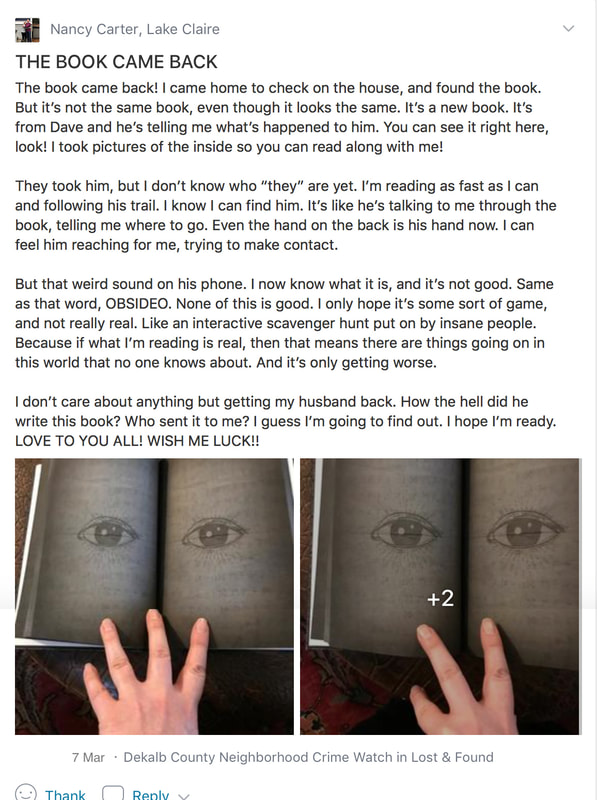



 RSS Feed

|

|