

 Childhood horrors Childhood. Such innocent times. Long, hot summer nights during holidays that seemed to last three years. Evenings spent playing in the park on swings, or mass games of British Bulldog that usually stopped when, and only when, someone broke something. The build up to Christmas where your mum makes you write Christmas cards to everyone in your class – even the Jehovah Witness kid because you have no clue what that actually means. Winters with amazing snow – three, four-foot drifts bigger than me that looked like you would disappear if you jumped into it. Feet swelling up when you got back indoors. Frost on the inside of your window on cold days. Easter holidays spent eating your body weight in chocolate. These are all good childhood memories. Less good: getting changed for PE, big lads picking on you because you happened to be clever (not that clever, but cleverer than them – and they knew it), teachers telling you off and hitting you (usually with a shoe or a stick) because they could. I was once hit by my art teacher because I was chewing in his lesson. He knew my class had PE that day, so he made everyone get their trainers out and tried them all on the table until he found the one with the hardest sole to beat me with. Over thirty-five years later, I can still remember the pain and shame of that. But are these childhood fears? Not really – everyone my age has a similar story and I hated my art teacher, but I wasn’t scared of him. Even when he hit me halfway through an exam, I still wasn’t scared of him, but man, I really, really hated him like I’ve never hated anyone before, or since. I have a vague memory of being scared of Thatcher: Thatcher, Thatcher, Milk Snatcher and thinking that she might come and personally, physically take my milk away. A quick fact-check says she let milk be for 5-7-year olds until about 1980, so I think I’m probably making that memory up. I saw one of the Christopher Lee/Peter Cushing Dracula films when I was young and slept with a scarf on for a while. I’m almost certainly misremembering that too, but it’s a funnier image than me being beaten by a sadistic 60-year-old art teacher. Recently, my entire family went away to the Cotswolds for a weekend – something we don’t get to do very often anymore. It was entirely lovely and also the opportunity for some research: I asked them all what they thought I was afraid of when I was young. Every single one of them said the same thing, without hesitation. Spiders. There’s some decent work being done on the rehabilitation of spiders in the public eye: they’ll eat the flies, earwigs, moths and other creepy crawlies in your house. They’re even being used in parts of China to control insects in rice fields. Leave them be. I don’t buy this at all. Look at them closely and then say you’re good with the things. Watch the way they crawl across the floor, with those sudden changes of pace and direction. Look at the way their legs move, especially when they’re travelling at pace. Look at the big lumpy stuff of nightmares sack things that hold all their young. Imagine them running over your body at night. Because they do. Lying in bed, think of those legs skittering across your body, looking for warm places to hunker down for the night. Think of them crawling into your mouth as you are fast asleep as I believed. There is a story that says we swallow eight spiders each, on average, in our lifetimes. Well there’s a good few people who can’t have eaten any due to the sheer number I thought I managed when I was a kid. Of course, I probably didn’t eat any at all as they allegedly don’t come near us at night as we’re too loud and our mouths too wet, but I never once believed that as a child. As a paperboy, I would often have to walk down narrow paths between houses on estates and spiders would have spun their webs across the path. I would always be late, so would have to run my round and would jog head first into these morning webs, usually with my mouth open. I would brush the strands from my face, but never manage to clear it fully and would spend the rest of the day imaging spiders crawling in my hair or across my back. Now, as a father, I try to hide my fears from my kids. We live in the country, so we get some goliaths as spiders (not actual goliath spiders –whatever you do, don’t look them up). Every time I get the glass, trap the spider and take it outside, hopefully hiding how much I’m shaking from my kids. This is not some macho thing: I’m fine with my children knowing that I’m not so tough but more because it’s so totally irrational. It’s like being scared of flies. When I started to write my first novel, The Original’s Return, I needed something to get the reader to realise that what was happening was not natural without stating that explicitly. Spiders seemed the obvious fit to me, even if I did need several showers after writing that sequence. As we drove back from the Cotswolds, we had a few hours in the car, and I brought up that I was writing this article. My youngest son said, “Are you going to write about spiders?”. He hadn’t heard any of the conversations I’d had with my parents and siblings. Guess I’m not that good at hiding my feelings. Childhood fears: who am I trying to kid? This one is very clear and present today. about david watkins David Watkins lives in Devon in the UK with his wife, two sons, dog, cat and two turtles. He is unsure of his place in the pecking order: probably somewhere between the cat and the turtles. There are two novels in The Originals' series: The Original's Return concerns an ordinary family man becoming the God of Werewolves and the follow up, The Original's Retribution, covers the immediate aftermath and consequences of Jack's actions in the first book. Both novels are highly rated on Amazon. David's latest novel is The Devil's Inn: a chilling tale set on Dartmoor during a fierce snowstorm. Has the Devil really come to Devon? He is now working on a new stand-alone novel, set in Exeter. He hates referring to himself in the third person, but no-one else is going to write this for him. David can be found on Twitter so please drop by and say hello @joshfishkins, where you'll find him ranting about horror, the British education system and Welsh rugby, but not usually at the same time. The Devil's Inn by David Watkins “I don’t want to die in a pub in Devon…” There is a pub in the heart of Dartmoor where a fire has burned every day for over one hundred and fifty years. It is said the fire never goes out. It is said that if it does, the Devil will appear and claim the souls of all inside. Tonight, seven strangers are stranded there during a fierce snowstorm. Tonight, the fire will go out… Praise for David Watkins "David Watkins writes very well: he has the ability to draw you in to his characters’ lives, which at the beginning are quite normal, and then of course you can't let go.” AMAZON "Great horror! I couldn't put the book down" 4.5*, Pamela Kinney, Ismellsheep.com read our review of The Devil's Inn here    Anyone who works in publishing – either for an independent press or one of the big (and growing) multinationals – will tell you that it’s no longer a cosy desk job. The days of Mad Men-style boozy lunches and unlimited editorial freedom are long gone. While the industry isn’t exactly in decline, it’s had to get leaner, and smarter, and more ruthless in its pursuit of sales. It’s why our bookshops are now filled with celebrity memoirs and TV tie-ins: good or bad, at least they know they’re going to sell. Which makes the survival of anything outside of this mainstream publicity machine all the more remarkable. In late 2017, I made the foolhardy and slightly naïve decision to start a new journal of weird, eerie and uncanny fiction: The Shadow Booth. Eschewing the tropes and conventions of traditional horror, I wanted to devote the bi-annual publication to the strange and the unclassifiable, unsettling tales that owed more to Robert Aickman and Thomas Ligotti than they did to Stephen King. What I found was that, a/ there is definitely a market for this kind of fiction, and quite a devoted audience at that; and b/ it is challenging, sometimes close to impossible, to market yourself to that audience. By its very nature, The Shadow Booth doesn’t appeal to the mainstream channels, doesn’t fit within the conventional genre boundaries – so how the hell do I get people to buy it? Fortunately, it also became clear that I wasn’t the only one trying to map this foggy no man’s land. There are a number of other small presses at the moment publishing within the same kind of non-genre – Undertow Publications, Nightjar Press and Gehenna & Hinnom Books, to name just three – and the more contact I had with them, the more obvious it became that we were all facing similar problems. Michael Kelly, who runs Undertow Publications, expressed it clearly and succinctly when I asked him about the challenges he faces: ‘The fact that it is a niche market is a challenge. The general reading public has no idea of, or real concept of, weird fiction. There have been inroads, of course. Jeff VanderMeer, China Mieville, to name two. But, overall, I don’t think it’s a strain of literature that will ever have mass appeal. ‘Getting the word out on our titles is the major challenge. I don’t really actively market the press as a “weird fiction” press, per se. (I know, I know – we published the Year’s Best Weird Fiction.) I’ve always felt our aesthetic was literary. And incorporating the fabulist, the uncanny, the dark, the weird, the horrific, the numinous, the surreal, the gnostic, the esoteric, and the avant-garde. Strange tales for strange times. It’s that liminal area where genre and literary fiction meet. Marketing is a huge challenge.’ Nicholas Royle at Nightjar Press faces similar challenges, which may be why the press has only remained a part-time endeavour, despite some impressive authors in their catalogue. ‘I’ve never had any illusions about making loads of money doing what I do,’ says Royle. ‘I earn my living teaching creative writing and working as a mentor and an editor. That gives me the freedom to write and publish what I’m most interested in.’ Charles Dunphey (of relative newcomer Gehenna & Hinnom Books) also pointed out the difficulties involved with finding suitable submissions to publish: ‘The most frequently encountered issue is that of authors submitting stories that aren’t weird fiction! We say in our guidelines that we don’t want anything that’s been done before, yet every call we receive tales of ancient vampires living in industrial cities, demonic possession, and werewolves attacking people in the woods. The purpose of literature is to expand the mind, hence why we only publish “original” ideas and concepts. If what people read doesn’t further their imagination, then what’s the purpose? I think weird fiction and cosmic horror are the most difficult genres to write due to this, and it definitely makes submitting difficult for authors.’ It’s a problem I’ve run into with The Shadow Booth, too. People sometimes ask what the conventions of weird fiction are – but the weird, by its very nature, defies convention, so it’s near-impossible to explain what I’m looking for. More than once, I’ve suggested to authors that they send me a story they love, but which they’ve been unable to find a home for because it’s too odd. ‘Too odd’ is about as close to a definition as I can get. I was intrigued to know which authors attracted Royle, Kelly and Dunphey to this kind of writing in the first place. ‘Kafka, Borges, M. John Harrison, Robert Aickman, Anna Kavan, William Sansom… among many others,’ was Nicholas Royle’s response. Michael Kelly came up with an impressive list of ‘Vernon Lee, Alfred Kubin, Arthur Machen, Charles Beaumont, Franz Kafka, Shirley Jackson, Ramsey Campbell, Thomas Ligotti, Kelly Link, Edgar Allan Poe, Ray Bradbury, Angela Carter, Amy Hempel, Kathe Koja, and others I’m no doubt forgetting.’ Dunphey mentioned ‘Lovecraft, and Poe’s novel The Narrative of Arthur Gordon Pym of Nantucket. For new writers, I’d definitely say T. E. Grau harpooned me into the genre with his debut collection The Nameless Dark, and authors like John Langan, Gwendolyn Kiste, and Jon Padgett have all impacted me greatly.’ My own personal list crosses all three, from Lovecraft and Machen to Carter and Aickman. It’s good to see we can at least agree on that. So, given that it’s such a difficult (non-)genre to publish, why do we all persevere with it? ‘Weird fiction tends to require a bit more out-of-the-box thinking and creative innovation,’ Dunphey responds. ‘Whereas commercial horror often finds its roots in oft-portrayed tales of murder, ghosts, demons, etc., weird fiction requires the author to depict the undefined, which requires much more skill, in my opinion. The thing I always ask myself when reading submissions is, “Have I ever read something like this before?” If the answer is no, then usually that’s a great sign. Since the genre is defined by being undefinable, it’s often the most exciting subgenre to read. The originality in this genre is widespread, and I feel that the authors who write it, and write it well, are on a different tier in comparison to authors of mainstream horror.’ Nicholas Royle’s response is similar, revelling in that which lies beyond the mainstream. ‘When I think about it, I’m not particularly into mainstream anything, but it’s not a conscious avoidance, simply a question of taste. I’ve always tended to prefer BBC2 to BBC1, and Channel 4 to ITV. (I understand there are more channels available these days.) I listen to Radio 3’s Late Junction rather than the Radio 1 Breakfast Show. In horror I’m more into suggestion than in-your-face stuff. William Trevor believed that the most important words in a story are those not on the page. I’d agree with that. I’m drawn to some of the specific elements that are believed to represent the uncanny or provoke uncanny effects: dummies, masks, dolls, simulacra, automata, doubles and Doppelgängers etc. There’s surely nothing weirder, and therefore more attractive in fiction, than the idea of encountering your Doppelgänger.’ As for Michael Kelly, his excitement at the strange and the liminal is evident in his reply. ‘Weird fiction and horror fiction, I think, are modes of fiction that, more so than any other strain of mainstream horror (ie. commercial fiction), allow for a deeper self-examination of the human psyche, even if, at times, that examination leads to uneasy or ambiguous results. Commercial, mainstream horror can go to those places, and we are seeing it more thanks to Colson Whitehead, Jordan Peele (in cinema), and others. People interest me. Weird fiction, through metaphor, mood and atmosphere, is able to gaze with an unblinking eye on societal issues. It’s the mode of fiction that opens up new vistas and isn’t restricted to genre. It’s real and unreal. At its best it elucidates my feeling that we’re living in a liminal borderland of shadows. And I enjoy the trappings of this mode of fiction, to be sure. It’s rarely prosaic, and, to me, often reaches transcendence.’ As for me, I’d have to agree with all three. I’ve just published The Shadow Booth: Vol. 3, and now that the journal is hitting its stride (and I’m getting a little more used to the murky terrain I’ve entered) I’m finding it filled with challenges, but also rich with hidden rewards. The stories I’ve published so far have stretched beyond anything I ever imagined when I started back in 2017, including selections for The Year’s Best Weird Fiction, Best British Horror and Ellen Datlow’s The Best Horror of the Year. They’ve also crossed genre boundaries in ways nobody could have foreseen, from experimental literary fiction to terrifying genre horror, from horror-sci-fi pirates to self-help books about mythical creatures. I’ve published many of my heroes, including Alison Moore, Robert Shearman, Paul Tremblay and Aliya Whiteley. Whatever you choose to call it – ‘weird fiction’, ‘strange stories’, ‘the uncanny’ – publishing these unusual, genre-defying stories is never easy. As we’ve seen, the market is small, the publicity spiel is confusing, and it’s almost impossible to tell writers exactly what you want to read. Despite that, though, I’ll be persevering with The Shadow Booth for a while yet. Because whatever else it may be, it’s never, ever boring. The Shadow Booth: Vol. 3 is available now as a paperback or ebook. It includes new stories by Robert Shearman, Verity Holloway, Tim Major, Annie Neugebauer, Richard V. Hirst, Jill Hand and many more. ABOUT DAN COXON Dan Coxon's writing has appeared in The Guardian, Salon, Unthology, The Lonely Crowd, Neon, Gutter, Wales Arts Review, The Portland Review, and many other places. He is the editor of This Dreaming Isle (Unsung Stories, 2018) and Being Dad (Best Anthology, Saboteur Awards 2016). He also edits and publishes The Shadow Booth, an international journal of weird and eerie fiction, as well as running a freelance copy-editing and proofreading business, Momus Editorial. In his few spare moments he has been known to write strange and uncanny fiction under the world's least secret pen name. Twitter: @dancoxonauthor. Website: www.dancoxon.com. -- _________________________________________________ This Dreaming Isle edited by Dan Coxon 17 stories of British folk-horror and dark fantasy - out now from Unsung Stories Freelance Editor & Proofreader www.momuseditorial.co.uk Editor, The Shadow Booth: www.theshadowbooth.com Author www.dancoxon.com The Shadow Booth: Vol. 3 Jared can feel the tower blocks looming overhead, three concrete sentinels watching as he runs. He knows he has less than a minute before his pursuers are on him, but as he rounds the corner into the alley he stops, dead. There's a strange canvas structure propped against the wall, a hand-made sign scrawled on a scrap of cardboard. Enter the Shadow Booth, it says, and you will never be the same again.” The Shadow Booth is an international journal of weird and eerie fiction, publishing emerging and established writers of the strange. Drawing its inspiration from the likes of Thomas Ligotti and Robert Aickman, The Shadow Booth explores that dark, murky hinterland between mainstream horror and literary fiction. Volume 3 includes new weird and uncanny fiction by: Nick Adams, Judy Birkbeck, Raquel Castro, Armel Dagorn, Jill Hand, Richard V. Hirst, Verity Holloway, Tim Major, Annie Neugebauer, Robert Shearman and Gregory J. Wolos.   
Creepy urban legends are known to receive plenty of attention online. If you’re a fan of a horror story, you’ll definitely enjoy taking a look at some of the most frightening folklores that have been around far longer than you’ve been alive. To celebrate the release of The Curse of La Llorona arriving in cinemas May 3rd, we’ve curated a list of some of the spookiest folktales from around the world! Read on if you dare… Silverpilen, The Ghost Train of Stockholm (1980s) Ghost trains may be a fun ride at fun fairs, but some appear to be more real than you think… A train named “Silverpilen” was built as a test unit train in Stockholm, Sweden in the 1980s, and when ominous rumours began circulating it soon became clear that the Silverpilen was no ordinary train. The rumours claimed that the infamous train would sometimes stop to pick up passengers, who would either disappear or come back weeks, or even years, later, with no recollection of where they had been and some of the cars are said to be either completely empty, or full of ghosts. Legend has it, the train is connected to an abandoned railway station named Kymling, which led to the fearsome phrase “Bara de döda stiger av i Kymling,” which roughly translates to “Only the dead get off at Kymling.” The Dandy Devil Dogs of Devon (1881) The story follows a Parson named “Dando”, who was out hunting with his friends when they ran out of alcohol in their hip flasks. The estate upon which Dando and his companions were hunting was named ‘Earth’, and so Dando joked, “Go to hell for it if you can’t find any on ‘Earth’!” At that moment a dark stranger appeared and offered Dando a swig from his flask. Dando helped himself to a sip, and was startled when the strange man rode off with some of his game. The drunken priest shouted and ran after the stranger, until the evil-being scooped him up onto his horse and galloped away. Dando was never seen again, but his dogs are often heard and seen. So if you happen to visit Devon, and are surrounded by a pack of black dogs with red eyes, howling unspeakably, Dando may be paying you a visit. Kuchisake-Onna or the Slit-Mouthed Woman (1970s) This ancient Japanese folk-tale became increasingly popular in the 1970s, and tells the story of Kuchisake-Onna. The mysterious woman is often described as wearing a surgical mask and approaches her victims asking “Am I pretty?” If your answer is “No” she he will murder you with a pair of scissors that she carries. If yes, Kuchisake-Onna will remove her mask to revealing her butchered mouth, which has been slit from ear to ear, similar to Heath Ledger's Joker and will then do the same to you. To make the story even more eerie, in 2007 a coroner found records from the 1970s of a woman with her mouth slit from ear to ear, who chased children. The Kelpie and the Nine Children From the Highlands (1900) The legend tells the story of a group of children from the Scottish Highlands, who were playing when they saw a very large and friendly horse. They saw there was room enough for all of them on its back, and so climbed up. But when the horse took off at a gallop the frightened children tried to jump off, but they were all stuck fast. Only one of the children survived, and managed to jump off whilst the horse dove straight into a loch. None of the children were ever seen again, but the next day searchers found their remains on the surface of the pond. The horse is said to have been a water-horse or a kelpie: a creature that likes to fool humans into thinking it is an ordinary horse that will drag you underwater to your doom. The Deer Woman (TBC) The story of the Deer Woman originates from Native American folklore and features in the mythology of several Native American tribes, most notably the Chippewa. The Deer Woman’s form varies between a deer and an old woman; however she favours the form of beautiful maiden with the legs and feet of the deer. Legend has it; she calls out to men who are hunting and are then lured into her trap to waste away until they die. According the Chippewa, she can be banished with the use of tobacco and chants, while some say that her spell can be broken by noticing her hooved feet. La Llorona (1519) Can you hear her cries? La Llorona, also known as the Weeping Woman is one of the oldest and most terrifying Mexican Folklores to date. La Llorona is the ghost of a beautiful woman named Maria who drowned her children in a blind rage following her husband’s infidelity. Suddenly realising what she had done, she also threw herself in the river after her children. The spirit of La Llorona is said to still haunt the riverbanks in her white robes, weeping as she walks and kidnapping children, mistaking them as her own and then drowning them. The La Llorona folk-tale has been passed on, generation after generation waiting until darkness falls to scare children before they sleep. The Curse of La Llorona arrives in cinemas May 3rd 

THE BEST WEREWOLF MOVIES OF ALL TIME
1/5/2019

There’s something bewitching about werewolves. They’re not the most beloved or prolific of horror-themed characters in film or television, but only vampires really hold our fascination more. That’s mostly down to the enduring popularity of Dracula, and the recent success of the ‘Twilight’ movies, which have left a whole new generation of horror enthusiasts fearing a nip in the neck.
Perhaps the appeal we find in both vampires and werewolves is that there's an element of tragedy about them. Neither of them asked to be as they are, they often express remorse or regret, and in the case of werewolves, they're barely even in control of their situation. They don't kill out of evil or malice; they're either driven to it by nature, or have to do so in order to survive. Wolves can sometimes be savage, but they’re also noble creatures. A wolf would struggle with containing a human element as much as a human does with containing a wolf. When we think of wolves, we tend to imagine them as they appear in the Wolf gold slot; solitary predators roaming the canyons, and howling at the moon. The wolf-theme of the online slot saw it pick up a number of ‘game of the year’ awards when it was released, with the atmospheric nature of the game’s wolf theme being partially responsible for those victories. What does that tell us about how we feel about wolves? And would players love the slot so much if the wolf suddenly turned and ran at them; no longer lupine but half-human? Is it the wolf we fear, or the human inside it? These are existential questions, and ones which some of the best werewolf movies of all time have attempted to deal with. Here’s our all-time top five. 5. Werewolf of London (1935)
We couldn’t create a top five list without mentioning this film, because this is the one that started it all; the first Hollywood movie to contain a werewolf. There was one earlier movie outing for the beasts; a 1913 silent picture called simply ‘The Werewolf,' but that was a short film that was released without a major studio backing it.
Werewolves arrived in Hollywood a little later than other traditional horror movie staples; both Dracula and Frankenstein had made silver-screen appearances by the time director Stuart Walker brought us ‘Werewolf of London' in the mid-1930s. 1941's ‘Wolf Man' gets a lot more praise from most quarters, but ‘Werewolf of London' is the better and more influential film in our eyes. The body horror and use of prosthetics in the movie are years ahead of their time, and set the tone for many werewolf films that came later. 4. The Company Of Wolves (1984)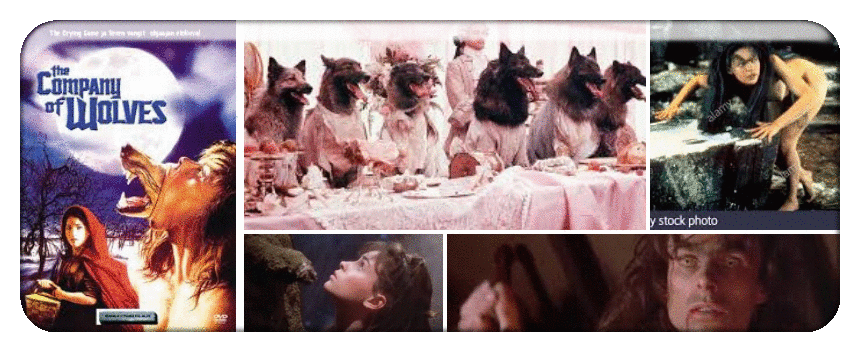
Plenty of the greatest movies of all time have used a classic story as the basis of their plot. There are films which are loose adaptations of Shakespeare plays, and folk stories. ‘The Company of Wolves’ is one of them. This is the story of ‘Little Red Riding Hood’ as you’ve never seen it done before. Director Neil Jordan wasn't entirely responsible for making the fairy tale darker and more horror-worthy; short-story author Angela Carter had already done that for him, and he just added to it to flesh out the story. ‘Flesh' is the operative word here; when the transformation scenes occur it rips, tears and goes everywhere. Ten years later, Jordan would go on to make ‘Interview With The Vampire' and secure his reputation as a capable horror helmsman. 3. Cursed (2005)
We know we’re going to get hate mail for this, but before you start typing out, let us try to explain. If you saw Wes Craven’s ‘Cursed’ in the cinemas and hated it, we’re not surprised. The version released in the cinema wasn’t good. Craven couldn’t edit his movie in a way that met the approval of censors, and ended up cutting it into pieces to get it released. Don’t watch the cinema-release, and don’t base your opinion of it on that edit.
Instead, find yourself a home-release version of the movie (which is unrated), sit back and prepare to watch a film that looks and feels almost totally different. This is the version of the tale Craven wanted you to see. Yes, some of the metaphors are ham-fisted. It’s about sex and puberty, and it isn’t subtle about it, but in its unrated form it’s visceral and vicious. And, of course, there’s that scene of a werewolf giving someone the finger. What’s not to love? 2. The Howling (1981)
Ah, ‘The Howling,' or as we like to call it, ‘Joe Dante's Werewolf Inferno.' The director took the original text from a novel by Gary Brandner and made it sharp, self-aware, ultra-cool and funny in all the right places. If you like your horror films to be serious in tone from opening to end credits, then you may not appreciate the tone, but those who like the occasional laugh in among all the gore will love it.
This film was a huge hit, and spawned sequels that were nowhere near as good, but don't let that detract from the brilliance of the original. The special effects are great for the 80s, there's a subtle message about 80s society and culture swimming along beneath the plot, but it's a werewolf movie made by people who clearly love werewolf movies, and that's why we love it, too. 1. An American Werewolf In London (1981)
Did you really expect it to see a different entry at number one on our list? Sometimes, the obvious answer is the correct one. John Landis gave us a masterpiece in ‘An American Werewolf in London,' and for so many reasons, it remains the greatest werewolf movie ever made. The script is sharp and witty, the soundtrack is incredible, the visuals are iconic, the location is perfect… we could go on.
In any werewolf movie, what makes or breaks the story for the audience is the scene in which the antagonist becomes the wolf for the first time. If it’s done badly, the film will be terrible. If it’s done right, we’re enthralled. The transformation scene in this film is horrific and heartbreaking in equal measure, and executed so convincingly it won the Oscar for ‘best makeup’ the following year. Sweeping effortlessly between comedy and horror, this is the quintessential werewolf movie, and it’s hard to imagine it ever being beaten. 
|


Archives
April 2023
|
 RSS Feed

|

|