

My Life In Horror Every month, I will write about a film, album, book or event that I consider horror, and that had a warping effect on my young mind. You will discover my definition of what constitutes horror is both eclectic and elastic. Don’t write in. Also, of necessity, much of this will be bullshit – as in, my best recollection of things that happened anywhere from 15 – 40 years ago. Sometimes I will revisit the source material contemporaneously, further compounding the potential bullshit factor. Finally, intimate familiarity with the text is assumed – to put it bluntly, here be gigantic and comprehensive spoilers. Though in the vast majority of cases, I’d recommend doing yourself a favour and checking out the original material first anyway. This is not history. This is not journalism. This is not a review. This is my life in horror. “Insanity Is Healthy” (Note: the below article was written before the shooting that took place in Plymouth on Thursday 12th August. More qualified commentators than me will speak to the appalling influence of incel 'culture' on some of our young men, and I sincerely hope that journalists will do the job of holding authorities to account for any failure in the way gun licencing laws and vetting were applied. My heart goes out to the victims, the family, and the community, all of whom will be feeling devastated right now. I hope that lessons are learned, changes are made, and further atrocities are prevented.) It’s April 21st 1999. I’ve been working in the fucking pub for five months. It sucks. I hate pretty much everything about it. Sure, it’s better than Barnstaple. I am, at least, in London. Granted, I can’t afford to do anything more than eat, sleep and work, but… it’s better. It’s alive, in a way Barnie wasn’t. There’s energy. Still. It sucks, for all the reasons outlined in the previous three essays on the subject, and I am miserable. I’ve been banished to the public bar by this point, away from the hard work of the sports bar, true, but the tradeoff is that I’m serving half a dozen (at most) hardcore alcoholics, and enduring seemingly endless conversations about what they’d like to do to Carol Vorderman, and whatever you’re imagining, I can almost guarantee it’s worse. Boredom doesn’t even begin to cover it. Things are so bad that, well, how’s his? The brewery/chain that owns the pub made a deal sometime in the new year with The Express “newspaper”, as a result of which, and no doubt in exchange for vastly inflating the purported circulation of said paper, part of my morning job involved placing a copy of that godforsaken rag on every single table in the bar before opening. And I was so fucking bored that I read it. Cover to cover. Well, okay, no, not the sport, I have my standards. Still. And this particular day, I read it with far more care and attention than normal. Because it was the day after the Columbine massacre. I can’t remember now how I first heard the news. I do remember the state of numbness, of shock. My flatmate and I. She was a few years older, working at a Uni. And, I mean, the bald, core facts are as simple and as dark as they come; two teenage boys murder a bunch of fellow teenagers before turning the guns on themselves. It’s just one of those indigestible things, a happening you can neither unsee nor really reconcile yourself to. Or at least, I couldn’t. Can’t. It feels like a negation. A black pit where reason should be. An impossible horror. But, of course, I did try to make some kind of sense out of it; alongside the millions of people who saw it on telly, and the thousands of families directly affected, and the circling news crews with hour after hour of airtime to fill, column inches to fill, and literally everybody screaming the same useless question; Why? Never mind how. Everybody knew how. In 1996, a gunman had walked into a classroom in the UK, shot thirty one children, sixteen fatally, murdered the teacher, and then took his own life. I remember that day, too; the same sick numbness, sitting with my fellow invincible teenagers in the smoking cafeteria at College, totally unable to process. But we knew something would be done, and it was. Within a very small number of months, it was functionally close to impossible to own a handgun of any real deadly power in the UK. And though there have been murders, and the odd shooting, there’s not been this kind of mass killing since. And, I mean, fuck having the gun control debate again, who the hell am I going to win over, but I think even back then I knew US “culture” was different and gun ownership far more normal, so when I say I knew how, well, that’s what I mean. As soon as it happened, shocking to the core as it was, it also felt… inevitable. Something that should never happen, and yet was absolutely definitely going to happen at some point. Because of the how. But, why? The answers were not long in coming. A picture was quickly emerging of a deeply toxic environment. Jocks that picked on goths and suspected queers. A bullied underclass of Marilyn Manson fans who sometimes wore black nail varnish, bullied beyond endurance, self describing as The Trenchcoat Mafia, adopting a hateful, mocking nickname as their own. The headline in The Express from that day was a pull quote from the Trenchcoat Mafia yearbook page (and really, that there was a yearbook page should surely have given some pause as to exactly how out there this group really was): ‘Insanity Is Healthy’. And, like, I’d seen Heathers, but more importantly, I’d somehow survived secondary school myself, and… Well, not to repeat myself, but school was a fairly hellish experience for me, for the usual banal reasons; short, over enthusiastic, bright and not good at hiding it, lonely and socially awkward, you know how this tune goes. The music I loved the most - Manson came later, but not too late for me to connect - was full of spit and fury, and I honestly think it was a big part of how I stayed sane, in an environment that felt engineered to try and break me. And I realise how pathetically hyperbolic that may look, on the page, coming from the fingertips of a 40something year old man; but we’ve come way too far for bulshit, now, haven’t we? And I tell you it’s the stone cold truth of how I felt back then. Hell, I still think it’s true. I still think it was. And I’m still pissed off about it. Anyway. The point is, sure, by the time Columbine happened I was out of school; hell, out of Devon, entirely, thank fuck; yes, sure, working a shitty job without the slightest clue what happened next, or how, but having faith, expectation, that there was a next, once I learned how to breathe and figured it out. On the other hand, I was still not out, in many important respects. I’d discovered the freedom to be not-a-lot in the place of my choosing, and of course that’s not nothing… but nor is it to be anything approaching whole. The scars were there, and they ran deep, especially when a typical workday involved bullying co-workers who’d periodically threaten violence, indifferent bosses, and regulars who hated me for Existing While Male, Young, and Long Haired. I definitely felt stronger, and more confident… but not actually in any way strong or confident, if you can dig it. The hole had been very, very deep, and though progress was being made, I was a long way from daylight. And then, this. This story of bullied kids and a bloody, pointless, destructive revenge. Like Rage or Heathers, but real. I tried to imagine it. Tried to imagine being so overwhelmed by the despair and the fury and the shit that I just.. Gave up. Just decided, fuck it, full nhilist, No Nothing, write my suicide note in the blood of other people and ride out into the black. And, well, if you’ve come this far, if you’ve read my other essays in this series or spent any length of time with my fiction, you know what I’m going to say next; I found to my crawling horror that I really, really could. Dig it; I’d had this daydream since I was twelve. And the daydream was blowing up the school. I knew just how I’d do it, too; break in at night, get to the science block, turn on every bunsen burner gas tap in every lab, close the outside doors, wait for the building to fill with flammable fumes, light fuse, retire to a safe distance… boom! Or the other version; newly minted millionaire Kit Power (millionaire movie star? Oh, probably; back then, acting was still the thing) buys outright the entire school building complex, then has it wired with dynamite and raises it to the ground. The more astute among you will have already spotted, I hope, the pretty important difference between these daydreams and what happened at Columbine (beyond the fact of them only ever being daydreams, of course, let’s not lose sight of that); though my dreams ran destructive, they never ran homicidal. I wanted to destroy the site of my humiliation, and I wanted that destruction to be a spectacle, a statement… but I didn’t want to hurt anyone, let alone everyone. Not that I didn’t also have violent fantasies, to be clear. Again, if you’ve read my fiction, you’ll know I have a certain fascination, and maybe flare, for depictions of violence. Of this fact, I am neither proud nor ashamed, but I’m pretty sure I know where it comes from. I’d rehearse fights. A lot. Almost certainly inspired by Ender’s Game, I’d imagine myself delivering absolutely brutal beatings to particular bulles that had either threatened me or harmed me. The fantasy would always start with them throwing the first punch, me, moving instinctively, avoiding the blow, countering with a fist to the nose, throat, or gut, aiming the punch for several inches behind the target area to ensure my fist was still accelerating when it hit home (we can thank The Ghost for that little bit of dark wisdom), following up immediately with one of the other spots, causing the target to drop, after which a short speech about never, ever fucking with me again, liberally itnterpsersed with kicks to the chest and gut, would complete the scene. I’d run scenarios like this over and over and over and over. Picturing different settings, different opponents. I’m not going to say it made me feel good, because it didn’t… exactly. But it didn’t not, either. The rationale was preparation, of course; to secure peace is to prepare for war, and all of that shit, and of course bullying wasn’t an abstract threat, so, you know, I came by it honestly in that sense, but still… still… Ah, hell. It is what it is, and it was what it was. And while none of the fights I got into ended up anywhere near that apocalyptic, I think the exercise did gift me a certain elevated sense of calm when the shit hit the fan; and perhaps more importantly, gave me a certain confidence that couldn’t help but project, a bit. Most bullies don’t want a fight; they want to hand out a beating, and I think the little extra swagger these constant imaginings gave me, earned or not, sent just enough of a signal that this sheep might have some bite after all to see me passed over for a softer target. So, as I read the coverage in the papers, this story of the bullied kids who snapped, and took their homemade bombs and firearms on a rampage, I felt those two vivid fantasies of my own collide in my head, and felt an awful, soul sickness. Jesus. It could have been me. Just a little less love at home, a little less support, a little less conscience, a little less self belief… if I’d actually believed that school was forever, rather than a jail term my job was to outlast… Mat and/or Trey of South Park: ‘I remember just thinking, if only I could have told those kids… man, Highschool is a funhouse mirror, it’s the opposite of real life. All those kids making your lives hell, they’ll end up working in their daddy’s garage, it’s the weirdos and freaks who will become the kings of creation…’ And that empathy wrecked me, for weeks afterwards, felt like, especially as the regulars in the bar offered their considered verdict on what had happened (‘they’re just gone! In the ‘ead!’, okay, yeah, cheers for that insight, Otis). Again, to be crystal clear, not out of sorrow for the killers, but out of horror at what they’d done, the hideous abominations they’d felt, wrongly, they’d been pushed to. The idea that the pain could get big enough to obliterate all sense, all reason; that consciousness, life itself, might start to feel like a joke; worse, a trap… and that feeling could lead to the ultimate damnation, destruction and death as a last, desperate bid to scratch your name of the face of the world. And it wasn’t until decades later that I learned what perhaps you already know; almost everything I knew about Columbine, and the killers, was bullshit. They weren't bullied. They weren't goths. They weren't Marilyn Manson fans. They didn’t snap - they’d planned the massacre for months. Columbine itself was not some Heathers style dystopia - at least, no more than any high school is. Dylan was a kid with deep seated psychological problems, impressionable, unable to regulate his emotions, prone to depression, but not bullied, nor unloved or abused. And Eric was a one-in-a-million psychopath - a kid Dave Cullen, journalist, in his excellent book about the truth of what happened that day, describes as ‘like studying a virus’ - someone impossible to relate to or empathise with, so alien was his interior. Shock fucking horror, the press had lied to me - to us. Again. To themselves, too? Oh, hell, probably, in some cases - though, given what their job is supposed to be, ask me if I give a shit. The point is, I - we - were sold a bill of goods that was completely false, and, speaking personally, I went through a wholly unnecessary bout of self doubt and loathing as a result, agonising over what now seem, at the blessed distance of a couple of decades, as nothing more or less than the utterly banal, typical thought processes of a bullied teen. And, yeah, sure, boo fucking hoo me, people actually fucking died. True. But, also true; we were all collectively gaslit in an absolutely gigantic way by people whose actual job it was to know and do better. And, check it; I am nothing approaching unique or special, especially as regard my experiences as a school child of the 90s. I strongly suspect many, many young people put themselves through the kind of mill I did; tried to process not only the trauma of the fact of what happened, but also a sickening sense of culpability, complicity, there but for the grace of… well, whoever. Like most of us, I suspect, I've got enough guilt I earned honestly to work through. I didn’t fucking need this, and if you’re nodding along as you read this, neither did you. In fiction, we don‘t have to tell the truth about monsters. We can, of course. Or, we can try to; try and reach across the empathy chasm, see inside the heart of the heartless, the mind of the mindless. Sure, we can. I think we’ll almost always fail; I think we’ll inevitably take too much of our own minds and hearts with us, and that what we come out with, whilst valuable, and ‘entertaining’ (for a given value of etc) will bear as much relation to the reality as… well, as a portrait of a person does to a virus. But, try or not, it’s fundamentally not our job, I don’t think. Journalists, on the other hand? Yeah. Yeah, I think it is their fucking job. And with a few honorable exceptions, it’s a job they're failing at. Miserably. It hurt me then, in 1999, and here and now, in 2021, it’s fucking killing us. The Columbine massacre is a scar on the minds of everyone who lived through it, whether in person, or vicariously via the global coverage. It’s trauma. The lies we were told about that day, and the way those lies have perpetuated, normalised, become history in the minds of so, so many… that piles obscenity upon obscenity, degradation upon tragedy. It victimises the dead all over again, and by telling us a false story of what happened, stereotypes are perpetuated, misunderstandings are repeated as fact, and, as the wrong lessons are learned, further such killings gain a sick inevitability. It’s 2021. The planet is burning. 71% of global carbon emissions are made by just 100 companies. And the papers are telling you that paper straws and electric cars are the only solution, and if you don’t buy them, it’s you that’s killing the planet. Or, at least, us. Not them. Us. What do these stories have in common? The refusal of those with the platform, and the responsibility, the fucking obligation, to accurately name the problem. Whether through distaste, vested interest, or investment in the false narrative we’ve built for centuries around the power of individual action (but never collective action, god forbid The Baying Mob ever manifest) to somehow resist the awesome forces of human-shaped viruses with effectively limitless resources, we are fed a line of plausible sounding, emotionally resonant bullshit. And, because we care, because of our empathy, we absorb it, we internalise it, and we try to reckon with the distorted image these false stories give us of ourselves. It’s 2021. The planet is burning. We need better stories. Truer stories. And people with the courage to write those stories, in the face of all the social and financial incentives that push towards the status quo. Good luck to us all. KP 23/7/21 Dedicated with respect and affection to the memory of Dawn Foster - A Real One who Got It. May she inspire us all to Do Better and Be Better. My Life In Horror Volume One: |
![[MY LIFE IN HORROR] “INSANITY IS HEALTHY”](../../uploads/3/4/5/1/34519054/my-life-in-horror-insanity-is-healthy-by-kit-power_orig.jpg)

 | To this day, the transformation scene reigns as one of the all-time best Hollywood special effects. And the movie was riveting: funny, gory, and wildly scary in parts. |
When I was a kid I was obsessed with special effects movie makeup. The best horror magazine at the time (and still currently, in my opinion) was Fangoria, and as an 11-year-old I had a subscription that I couldn’t wait to receive each month. The gory and bizarre stills from Friday the 13th, Halloween, Alien, The Beast Within and so many others excited my imagination and made me want to see all of these movies (which I eventually did).
The pictures that most captured my attention were from An American Werewolf in London. The issue that featured Rick Baker’s groundbreaking werewolf transformation makeup were so provocative, so damn cool, that I absolutely couldn’t wait to see it. After what seemed like an eternity, the movie finally came to my city, and in 1982, at age 12, I went to see it with my father and younger brother (who was only 8 at the time!)
I was not disappointed. To this day, the transformation scene reigns as one of the all-time best Hollywood special effects. And the movie was riveting: funny, gory, and wildly scary in parts. I had expected the gore and scares, but what I didn’t expect was the humor. It’s a horror film, yes, but it’s equal parts comedy. David (the main character) and his friend Jack are attacked by a werewolf, killing Jack and leaving David wounded – and now cursed to be a werewolf.
Except Jack isn’t dead, not entirely. He and all of the werewolf victims are now the “undead,” spirits roaming some purgatorial realm and unable to move on until the werewolf’s bloodline is broken. Jack appears to David in visions, warning David that he will change during the next full moon, but the visits aren’t played up for horror; they’re done for comedy. When Jack appears, he’s a ghastly green, decomposing corpse (“a walking meatloaf,” as David calls him), but he’s chipper and happy. He sneaks bites of David’s food and implores him to commit suicide before he makes more undead victims like himself. Each time Jack shows up, he’s more desiccated and rotten, and he’s literally falling to pieces, but he’s cheerfully making jokes (“Have you ever talked with a corpse? It’s boring!”)
That’s just a few examples of the humor in American Werewolf. This was my first encounter with horror-comedy, and the two elements blended beautifully. Of course, more movies like this soon began turning up: Gremlins, Re-Animator, Evil Dead II, Dead Alive, Parents, and so on. More recent movies like Shawn of the Dead, Tucker and Dale Versus Evil, Krampus, The Cabin in the Woods, and many others have continued and deepened the tradition. I’m talking about movies that want to scare you and make you laugh in equal parts. It’s hard to do, but well worth it.
An American Werewolf in London was an enormous influence on my writing. However, it’s not until my upcoming book that I really paid homage. My novel The Beast in Aisle 34 is also a werewolf story. Like American Werewolf, the protagonist of my novel is the monster. And like American Werewolf, my story goes for a balance of laughs and gore. The humor disarms the audience, setting the stage for even more impact when the horror elements appear. I can only hope that my novel is a fitting and entertaining descendant of the film that made me.
The pictures that most captured my attention were from An American Werewolf in London. The issue that featured Rick Baker’s groundbreaking werewolf transformation makeup were so provocative, so damn cool, that I absolutely couldn’t wait to see it. After what seemed like an eternity, the movie finally came to my city, and in 1982, at age 12, I went to see it with my father and younger brother (who was only 8 at the time!)
I was not disappointed. To this day, the transformation scene reigns as one of the all-time best Hollywood special effects. And the movie was riveting: funny, gory, and wildly scary in parts. I had expected the gore and scares, but what I didn’t expect was the humor. It’s a horror film, yes, but it’s equal parts comedy. David (the main character) and his friend Jack are attacked by a werewolf, killing Jack and leaving David wounded – and now cursed to be a werewolf.
Except Jack isn’t dead, not entirely. He and all of the werewolf victims are now the “undead,” spirits roaming some purgatorial realm and unable to move on until the werewolf’s bloodline is broken. Jack appears to David in visions, warning David that he will change during the next full moon, but the visits aren’t played up for horror; they’re done for comedy. When Jack appears, he’s a ghastly green, decomposing corpse (“a walking meatloaf,” as David calls him), but he’s chipper and happy. He sneaks bites of David’s food and implores him to commit suicide before he makes more undead victims like himself. Each time Jack shows up, he’s more desiccated and rotten, and he’s literally falling to pieces, but he’s cheerfully making jokes (“Have you ever talked with a corpse? It’s boring!”)
That’s just a few examples of the humor in American Werewolf. This was my first encounter with horror-comedy, and the two elements blended beautifully. Of course, more movies like this soon began turning up: Gremlins, Re-Animator, Evil Dead II, Dead Alive, Parents, and so on. More recent movies like Shawn of the Dead, Tucker and Dale Versus Evil, Krampus, The Cabin in the Woods, and many others have continued and deepened the tradition. I’m talking about movies that want to scare you and make you laugh in equal parts. It’s hard to do, but well worth it.
An American Werewolf in London was an enormous influence on my writing. However, it’s not until my upcoming book that I really paid homage. My novel The Beast in Aisle 34 is also a werewolf story. Like American Werewolf, the protagonist of my novel is the monster. And like American Werewolf, my story goes for a balance of laughs and gore. The humor disarms the audience, setting the stage for even more impact when the horror elements appear. I can only hope that my novel is a fitting and entertaining descendant of the film that made me.
The Beast in Aisle 34
by Darrin Doyle

Sandy Kurtz has problems. He's got a baby on the way, his wife doesn't love him, and he's struggling to find passion or purpose at his big-box retail job. And, once a month, he turns into a werewolf.
In Darrin Doyle's deft hands, Sandy's story is a tall tale for our times, an absurd and darkly comedic take on toxic masculinity, small-town America, and the terror of not knowing who you are—or who you're capable of becoming.
Join us on the trip. Feel the power of the full moon as it turns you into a carnivore capable of ruling the wilds of rural Michigan. Taste the rich blood of a pulsing animal heart; feel it cascade down your face as you transform into what you always wanted to be. Enter...the wolf.
In Darrin Doyle's deft hands, Sandy's story is a tall tale for our times, an absurd and darkly comedic take on toxic masculinity, small-town America, and the terror of not knowing who you are—or who you're capable of becoming.
Join us on the trip. Feel the power of the full moon as it turns you into a carnivore capable of ruling the wilds of rural Michigan. Taste the rich blood of a pulsing animal heart; feel it cascade down your face as you transform into what you always wanted to be. Enter...the wolf.
Darrin Doyle

Darrin Doyle is the author of the novels Revenge of the Teacher’s Pet: A Love Story (LSU Press) and The Girl Who Ate Kalamazoo (St. Martin’s), and the short story collections The Dark Will End the Dark and Scoundrels Among Us (Tortoise Books) and The Big Baby Crime Spree (Wolfson Press). He teaches at Central Michigan University and lives in Mount Pleasant, Michigan with his wife and two sons.
Website: www.darrindoyle.com
Website: www.darrindoyle.com

THE HEART AND SOUL OF HORROR FEATURES
![[FEATURE] FINDING GIGANTOPITHECUS BY ASHLEY STOKES](../../uploads/3/4/5/1/34519054/feature-finding-gigantopithecus-by-ashley-stokes_orig.jpg) | Bolam Lake in Northumbria is supposedly haunted by an eight-foot yeti with red eyes that in 2003 spooked several anglers, dog walkers and a couple having al fresco sex during a camping trip. |
Finding Gigantopithecus
by
Ashley Stokes
by
Ashley Stokes
It’s sometime in the summer of 2011, and I am a 41-year-old hard-drinking, mightily disappointed and practically unknown writer living in an ex-council flat on the outskirts of Norwich’s Golden Triangle area. Unable to sleep, as I often am, I find myself on the quiet side of midnight channel-hopping again when I should be tucked up and dreaming uneasily. I am dogged by a recurring feeling. Something still might happen tonight. I might receive a call, an email, a message that might, if not change everything, at least lessen the weight of it all, the last fifteen years of trying to make it as a working fiction writer when I could have easily become a lawyer or a journalist and not had to nail my demons to the screen every day for zero pence a year. It is in this semi-alive state of mind that I stumble upon an episode of the new Discovery Channel series, Finding Bigfoot.
It’s rubbish, obviously. The bigfoot they investigate is a dark figure filmed as it shambles behind some kids playing in a river or canoeing or something. Caught on a camera phone, it’s a smudge, a hazy blur. To use language that I’ll later become very familiar with, it’s ‘shot with a potato’, it’s ‘blobsquatch’. If it’s not someone mucking about in a bear suit, it could easily be a moderately tall man in a black parka merely out of focus. But, boy, are the team arguing the toss over this. Every disturbance in the mud, every broken twig or nick on the bark is unquestionable evidence that changes the whole course of science. How serious are these people? How earnest and needy?
It’s here the writer’s question ambushes me.
What if?
What if this phenomenon happened not only in backwoods America, in North Carolina, Oregon and Alaska, etc., but in my home town of Sutton, Surrey?
I didn’t know then that this was the beginning of a ten-year race and chase, a contest with a hairy beast that would run me ragged, lure me into the woods, have me lost in the brambles and stinging nettles – but, in the end, I would emerge blinking into the light with some sort of novel about the perils of living in your own head, as well as the more important issue of whether a gigantopithecus lives in north Surrey. It will also connect me to vast imaginative spaces, open up all sorts of storytelling possibilities that lead me back to what originally thrilled me in fiction. I will retrace my steps back to weird horror, and, though it might seem perverse, a much happier state of mind. I will recover my lost sense of self and direction.
The next day I scribble out some character sketches and ideas in my notebook. Four characters – Kevin (my true believer), Gorgo, Maxine and Derek Funnel – come to me very easily, along with the name of the legendary beast, The North Surrey Gigantopithecus. But I soon feel an idiot and shelve the idea. It’s not serious and I am supposed to be a serious writer. My last book, The Syllabus of Errors, had been laced with images of a fascism that lurks in the English suburbs ready to pounce and purge us of our better natures and instincts. It had things to say.
I give up on the Gigantopithecus idea.
Most ideas wither.
It’s good that they wither.
Fools rush in…
A few months later, The Sun and the Daily Telegraph are reporting a bigfoot sighting in Tunbridge Wells, complete with an artist’s impression that looks like a child’s drawing of Chewbacca, and supported by loads of stories of bigfoots in Kent that go back to the war.
I may be on to something after all.
The beast is amok.
A year passes and I commit to writing the story. I start it as a short story using a text-and-footnotes format I’ve used a couple of times already (in A Short Story about a Short Film, in The Syllabus of Errors collection, for example). I borrow a field report template from America’s Bigfoot Field Researchers Organization and have Maxine, the scientist and sceptic of the team, write up a new sighting. In footnotes, Kevin vigorously refutes her conclusions, using shonky reasoning, magic thinking and conspiracy logic, plus a lot of shouting and haranguing. Bigfoot guys are angry, and they don’t like being contradicted. This makes them sad in both senses of the word. I work this out early.
As Kevin’s voice starts to overwhelm the short story and push it into first novella then novel territory, three things occur to me.
Firstly, the legend of a bigfoot-style creature living in the grey suburbs where I grew up is intrinsically funny and does make me laugh (a lot), though kind of hysterically, like I’m trying not to admit something. This might sound self-congratulatory or self-indulgent, laughing at your own jokes, but if the writing doesn’t make me laugh I assume it won’t entertain anyone else.
Secondly, the idea of some ancient, reclusive, powerful and inscrutable beast living unseen and unstudied in the forests of the Earth is, at heart, both frightening and mythic. I can sense how the pursuit of it might drive someone mad. The madness of pursuit is the horror element, not the existence of the monster itself.
Then, as I design North Surrey Gigantopithecus lore for Kevin, I start to have flashbacks to my late childhood, to the sense I had of a more exciting ‘mysterious world’ being just out of reach (in my teens, I often felt I’d be much happier and involved living in the distant past or far future; satisfying this longing determined pretty much everything I read or watched until I was about sixteen).
I grew up on 2000AD, Tom Baker’s Doctor Who and Target Doctor Who novelisations, the Claremont-Byrne Uncanny X-Men run, the Armada Ghost Book series, the John Mills Quatermass, and a lot of other fantastical stuff as well. I also liked non-fiction books about ghosts, mysteries, cryptids and UFOs that presented the paranormal as certain, not contested. It strikes me, looking back at that time now, a time, of course, with relatively little TV and no internet, how the weird and strange mingled with the real and – to me, just about able to read a newspaper – boring news.
At a time when TV and newspapers had more authority, the mysterious could become the profound, the revelatory rather than the dismissably crankish. Nationwide, the current affairs programme that followed the six o’clock news regularly broadcast items on, say, the increased frequency of sightings of Satan in the south-east of England immediately after something about new traffic lights being trialled in Weybridge, as if these items were of equal resonance. You would be wise to prepare yourself for both slightly longer waiting times at junctions and a sudden manifestation of the Goat of Mendes, especially if you own an outdoor shed. The Daily Express, which my parents bought, always had reports of cigar-shaped UFOs swooping across the South Downs, or square-headed aliens winking in and out of existence in Reigate or Dorking. In the more restricted 1970s, we emerged into a world of dread and fear, where strange things lurked behind the mock-Tudor houses and in the hedgerows and coppices. I vividly remembered the 1980 ITV series, Arthur C. Clarke’s Mysterious World, with its monumental-sounding theme tune and serious discussions about unexplained phenomena. Memories of its episode ‘The Missing Apemen’ would feed directly into Kevin lore and eventually add another layer to the story. It’s not just, what if there is a bigfoot in Sutton? It’s also, what if that lost world of seventies exotica is the real world after all? The thing is: I soon work out that this lost world is not just the real world to Kevin. We are not alone.
If I thought I had invented the idea of bigfoot research teams in England, I couldn’t have been more wrong. There have been reports and sightings across the UK. There are groups and teams everywhere. There are people who not only swear blind that they’ve seen a relict hominid in England, but also that the sighting was the defining moment of their lives. There are folkloric and ancient accounts of wildmen and woodwose and the odd hairy scamperer carved on a panel in a church somewhere in the sticks, but modern sightings also proliferate. Bolam Lake in Northumbria is supposedly haunted by an eight-foot yeti with red eyes that in 2003 spooked several anglers, dog walkers and a couple having al fresco sex during a camping trip. These accounts attracted the attention of the British Hominid Research Organisation and the Centre for Fortean Zoology in Exeter. The latter reckon they saw it and it was massive and possibly made out of shadows.
Even closer to home for Kevin and me, the Surrey Hills are home to the Box Hill Ape, a sighting of which made the Daily Star in 2020. In 2012, a driver reported a ‘dark figure with no features’ that ran across the dual carriageway opposite North East Surrey College of Technology, which is where Kevin took a computer course in the late eighties and was traumatized by the girls nicknaming him the Skunky Gibbon.
The beast is real, as Kevin would say. We’ve seen it loads of times.
Some of these reported encounters have a proper comedy vibe to them, if you believe that the soul of comedy is found in truth and pain. A woman who reported seeing the Sherwood Forest Thing on the Worksop-to-Nottingham road – massive, hairy, naked and holding the hand of an infant Sherwood Forest Thing – was most offended that she’d seen its furry willy and that it was allowed to display its privates in broad daylight. She posted this anonymously, of course. She was worried about what people would think of her, that she’d lost her marbles. A more chilling undercurrent can be sensed in many reports. Someone doesn’t want to admit what they saw in case no one believes them. People can believe they’ll be sectioned, exiled, written off as demented or deluded.
There seems to me to be an essential tension between what we want to believe and what happens to us when we believe.
The idea of bigfoot must be rooted in the (overactive) imagination (a vivid fantasy life is nourishing for some people, less so for others) yet bigfoot also speaks to some lost part of us. It stands for epic freedom, of living unhindered, escaping capture, existing as part of nature rather than as an abuser and consumer of the natural world. In going all out to hunt and observe it, you are owned too by its freedom, you belong at last.
On the other hand, most accounts of sightings, from across the world, not just from the south-east of England, have the logic of a weird horror story. Something outside of nature is glimpsed. No one believes or will believe us. We are increasingly threatened and fray at our edges. There is no resolution for us, only reverberations of the eeriness that initially threw us out of kilter. We may be enlightened. We may be doomed. We may be unable to tell the difference between doom and enlightenment. This is what we should be trying to describe, even though describing it is impossible.
The modern bigfoot phenomenon in America was kickstarted in 1958 when outsized apish footprints were discovered alongside a road near to Bluff Creek, California (site of the later Paterson-Gimlin encounter that featured prominently in Arthur C. Clarke’s Mysterious World). When the discoverer of the tracks, Ray Wallace, died in 2002, his children announced that he had faked the tracks. It was, after all, ‘just a joke’.
This has me wondering still. What is more terrifying: realising that you believed and dedicated yourself to this prank, followed the prankster until his end, until the squandering of your time and life is revealed as the punchline, that the joke was on you. Or that even when the joke is over and how it works has been explained to you, you still insist that it wasn’t a joke. You still find yourself alone in the dark, in the trees, night-vision goggles on, camera ready, alert and waiting, waiting for the return of that one last great thing that made sense to you, that offered out to you an understanding paw.
Gigantic by Ashley Stokes is out now from Unsung Stories.
It’s rubbish, obviously. The bigfoot they investigate is a dark figure filmed as it shambles behind some kids playing in a river or canoeing or something. Caught on a camera phone, it’s a smudge, a hazy blur. To use language that I’ll later become very familiar with, it’s ‘shot with a potato’, it’s ‘blobsquatch’. If it’s not someone mucking about in a bear suit, it could easily be a moderately tall man in a black parka merely out of focus. But, boy, are the team arguing the toss over this. Every disturbance in the mud, every broken twig or nick on the bark is unquestionable evidence that changes the whole course of science. How serious are these people? How earnest and needy?
It’s here the writer’s question ambushes me.
What if?
What if this phenomenon happened not only in backwoods America, in North Carolina, Oregon and Alaska, etc., but in my home town of Sutton, Surrey?
I didn’t know then that this was the beginning of a ten-year race and chase, a contest with a hairy beast that would run me ragged, lure me into the woods, have me lost in the brambles and stinging nettles – but, in the end, I would emerge blinking into the light with some sort of novel about the perils of living in your own head, as well as the more important issue of whether a gigantopithecus lives in north Surrey. It will also connect me to vast imaginative spaces, open up all sorts of storytelling possibilities that lead me back to what originally thrilled me in fiction. I will retrace my steps back to weird horror, and, though it might seem perverse, a much happier state of mind. I will recover my lost sense of self and direction.
The next day I scribble out some character sketches and ideas in my notebook. Four characters – Kevin (my true believer), Gorgo, Maxine and Derek Funnel – come to me very easily, along with the name of the legendary beast, The North Surrey Gigantopithecus. But I soon feel an idiot and shelve the idea. It’s not serious and I am supposed to be a serious writer. My last book, The Syllabus of Errors, had been laced with images of a fascism that lurks in the English suburbs ready to pounce and purge us of our better natures and instincts. It had things to say.
I give up on the Gigantopithecus idea.
Most ideas wither.
It’s good that they wither.
Fools rush in…
A few months later, The Sun and the Daily Telegraph are reporting a bigfoot sighting in Tunbridge Wells, complete with an artist’s impression that looks like a child’s drawing of Chewbacca, and supported by loads of stories of bigfoots in Kent that go back to the war.
I may be on to something after all.
The beast is amok.
A year passes and I commit to writing the story. I start it as a short story using a text-and-footnotes format I’ve used a couple of times already (in A Short Story about a Short Film, in The Syllabus of Errors collection, for example). I borrow a field report template from America’s Bigfoot Field Researchers Organization and have Maxine, the scientist and sceptic of the team, write up a new sighting. In footnotes, Kevin vigorously refutes her conclusions, using shonky reasoning, magic thinking and conspiracy logic, plus a lot of shouting and haranguing. Bigfoot guys are angry, and they don’t like being contradicted. This makes them sad in both senses of the word. I work this out early.
As Kevin’s voice starts to overwhelm the short story and push it into first novella then novel territory, three things occur to me.
Firstly, the legend of a bigfoot-style creature living in the grey suburbs where I grew up is intrinsically funny and does make me laugh (a lot), though kind of hysterically, like I’m trying not to admit something. This might sound self-congratulatory or self-indulgent, laughing at your own jokes, but if the writing doesn’t make me laugh I assume it won’t entertain anyone else.
Secondly, the idea of some ancient, reclusive, powerful and inscrutable beast living unseen and unstudied in the forests of the Earth is, at heart, both frightening and mythic. I can sense how the pursuit of it might drive someone mad. The madness of pursuit is the horror element, not the existence of the monster itself.
Then, as I design North Surrey Gigantopithecus lore for Kevin, I start to have flashbacks to my late childhood, to the sense I had of a more exciting ‘mysterious world’ being just out of reach (in my teens, I often felt I’d be much happier and involved living in the distant past or far future; satisfying this longing determined pretty much everything I read or watched until I was about sixteen).
I grew up on 2000AD, Tom Baker’s Doctor Who and Target Doctor Who novelisations, the Claremont-Byrne Uncanny X-Men run, the Armada Ghost Book series, the John Mills Quatermass, and a lot of other fantastical stuff as well. I also liked non-fiction books about ghosts, mysteries, cryptids and UFOs that presented the paranormal as certain, not contested. It strikes me, looking back at that time now, a time, of course, with relatively little TV and no internet, how the weird and strange mingled with the real and – to me, just about able to read a newspaper – boring news.
At a time when TV and newspapers had more authority, the mysterious could become the profound, the revelatory rather than the dismissably crankish. Nationwide, the current affairs programme that followed the six o’clock news regularly broadcast items on, say, the increased frequency of sightings of Satan in the south-east of England immediately after something about new traffic lights being trialled in Weybridge, as if these items were of equal resonance. You would be wise to prepare yourself for both slightly longer waiting times at junctions and a sudden manifestation of the Goat of Mendes, especially if you own an outdoor shed. The Daily Express, which my parents bought, always had reports of cigar-shaped UFOs swooping across the South Downs, or square-headed aliens winking in and out of existence in Reigate or Dorking. In the more restricted 1970s, we emerged into a world of dread and fear, where strange things lurked behind the mock-Tudor houses and in the hedgerows and coppices. I vividly remembered the 1980 ITV series, Arthur C. Clarke’s Mysterious World, with its monumental-sounding theme tune and serious discussions about unexplained phenomena. Memories of its episode ‘The Missing Apemen’ would feed directly into Kevin lore and eventually add another layer to the story. It’s not just, what if there is a bigfoot in Sutton? It’s also, what if that lost world of seventies exotica is the real world after all? The thing is: I soon work out that this lost world is not just the real world to Kevin. We are not alone.
If I thought I had invented the idea of bigfoot research teams in England, I couldn’t have been more wrong. There have been reports and sightings across the UK. There are groups and teams everywhere. There are people who not only swear blind that they’ve seen a relict hominid in England, but also that the sighting was the defining moment of their lives. There are folkloric and ancient accounts of wildmen and woodwose and the odd hairy scamperer carved on a panel in a church somewhere in the sticks, but modern sightings also proliferate. Bolam Lake in Northumbria is supposedly haunted by an eight-foot yeti with red eyes that in 2003 spooked several anglers, dog walkers and a couple having al fresco sex during a camping trip. These accounts attracted the attention of the British Hominid Research Organisation and the Centre for Fortean Zoology in Exeter. The latter reckon they saw it and it was massive and possibly made out of shadows.
Even closer to home for Kevin and me, the Surrey Hills are home to the Box Hill Ape, a sighting of which made the Daily Star in 2020. In 2012, a driver reported a ‘dark figure with no features’ that ran across the dual carriageway opposite North East Surrey College of Technology, which is where Kevin took a computer course in the late eighties and was traumatized by the girls nicknaming him the Skunky Gibbon.
The beast is real, as Kevin would say. We’ve seen it loads of times.
Some of these reported encounters have a proper comedy vibe to them, if you believe that the soul of comedy is found in truth and pain. A woman who reported seeing the Sherwood Forest Thing on the Worksop-to-Nottingham road – massive, hairy, naked and holding the hand of an infant Sherwood Forest Thing – was most offended that she’d seen its furry willy and that it was allowed to display its privates in broad daylight. She posted this anonymously, of course. She was worried about what people would think of her, that she’d lost her marbles. A more chilling undercurrent can be sensed in many reports. Someone doesn’t want to admit what they saw in case no one believes them. People can believe they’ll be sectioned, exiled, written off as demented or deluded.
There seems to me to be an essential tension between what we want to believe and what happens to us when we believe.
The idea of bigfoot must be rooted in the (overactive) imagination (a vivid fantasy life is nourishing for some people, less so for others) yet bigfoot also speaks to some lost part of us. It stands for epic freedom, of living unhindered, escaping capture, existing as part of nature rather than as an abuser and consumer of the natural world. In going all out to hunt and observe it, you are owned too by its freedom, you belong at last.
On the other hand, most accounts of sightings, from across the world, not just from the south-east of England, have the logic of a weird horror story. Something outside of nature is glimpsed. No one believes or will believe us. We are increasingly threatened and fray at our edges. There is no resolution for us, only reverberations of the eeriness that initially threw us out of kilter. We may be enlightened. We may be doomed. We may be unable to tell the difference between doom and enlightenment. This is what we should be trying to describe, even though describing it is impossible.
The modern bigfoot phenomenon in America was kickstarted in 1958 when outsized apish footprints were discovered alongside a road near to Bluff Creek, California (site of the later Paterson-Gimlin encounter that featured prominently in Arthur C. Clarke’s Mysterious World). When the discoverer of the tracks, Ray Wallace, died in 2002, his children announced that he had faked the tracks. It was, after all, ‘just a joke’.
This has me wondering still. What is more terrifying: realising that you believed and dedicated yourself to this prank, followed the prankster until his end, until the squandering of your time and life is revealed as the punchline, that the joke was on you. Or that even when the joke is over and how it works has been explained to you, you still insist that it wasn’t a joke. You still find yourself alone in the dark, in the trees, night-vision goggles on, camera ready, alert and waiting, waiting for the return of that one last great thing that made sense to you, that offered out to you an understanding paw.
Gigantic by Ashley Stokes is out now from Unsung Stories.
Read a review of Gigantic by Run Along The Shelves
https://www.runalongtheshelves.net/blog/2021/9/2/gigantic-by-ashley-stokes
https://www.runalongtheshelves.net/blog/2021/9/2/gigantic-by-ashley-stokes
Gigantic by Ashley Stokes

“I wasn’t sure you would get this far, so thanks a million already. You opened the mystery bag… Inside the bag, along with this letter, is a dossier that describes the whole story.”
Kevin Stubbs is a Knower. He knows life hasn’t always treated him fairly. He knows he wants to be allowed access to his son again. But most of all, he knows that the London Borough of Sutton is being stalked by a nine-foot-tall, red-eyed, hairy relict hominid – the North Surrey Gigantopithecus.
Armed with a thermal imaging camera (aka the Heat Ray) and a Trifield 100XE electromagnetic field reader (aka the Tractor Beam), Kevin and his trusty comrades in the GIT (aka the Gigantopithecus Intelligence Team) set out to investigate a new sighting on the outskirts of Sutton. If real, it will finally prove to the world that the infamous Gartree-Hogg footage was genuine, and a British Bigfoot is living in suburban London: FACT. But what he discovers undermines everything he believes in – and forces Kevin to face up to his own failures, and the very real, very scary prospect that he might have got it all terribly wrong.
Kevin Stubbs is a Knower. He knows life hasn’t always treated him fairly. He knows he wants to be allowed access to his son again. But most of all, he knows that the London Borough of Sutton is being stalked by a nine-foot-tall, red-eyed, hairy relict hominid – the North Surrey Gigantopithecus.
Armed with a thermal imaging camera (aka the Heat Ray) and a Trifield 100XE electromagnetic field reader (aka the Tractor Beam), Kevin and his trusty comrades in the GIT (aka the Gigantopithecus Intelligence Team) set out to investigate a new sighting on the outskirts of Sutton. If real, it will finally prove to the world that the infamous Gartree-Hogg footage was genuine, and a British Bigfoot is living in suburban London: FACT. But what he discovers undermines everything he believes in – and forces Kevin to face up to his own failures, and the very real, very scary prospect that he might have got it all terribly wrong.
Ashley Stokes

Ashley Stokes was born in Carshalton, Surrey in 1970 and educated at St Anne's College, Oxford and the University of East Anglia. He is the author of Touching the Starfish (Unthank Books, 2010) and The Syllabus of Errors (Unthank Books, 2013), and edited the Unthology series and The End: Fifteen Endings to Fifteen Paintings (Unthank Books, 2016). His short fiction has appeared in, among others: Black Static, Tales from the Shadow Booth, BFS Horizons and Out of the Darkness (edited by Dan Coxon). He lives in Norwich.
TODAY ON THE GINGER NUTS OF HORROR WEBSITE
[FILM GUTTER REVIEWS] REVENGE (2017) DIR. CORALIE FARGEAT

the heart and soul of horror features
 | Laughs, gore, entirely inappropriate situations, we'll capture the Shingles magic in all its sticky, uncomfortable glory. |
From Steve Rudzinski, director of the low-budget cult hit CarousHELL, comes a ludicrous new horror project- Shingles: The Movie. Shingles is a series of comedy horror novels that delight in their tongue-in-cheek grossness, and the authors are currently campaigning to bring five of these tales to the big screen in a unique horror anthology. With stories such as Put Your Hand in My Ass and Zombies Ate My Homework, the movie promises to bring laughs, action and gore to the table in a format reminiscent of classic cheesy horror anthologies such as The Willies and Creepshow. With established horror and comedy writers such as Drew Hayes, Robert Bevan, Rick Gualtieri and John G Hartness putting their weight behind the project, they’re hoping to use indie power to make their yucky little nightmare a reality.
Crowd funder Link
https://www.indiegogo.com/projects/shingles-the-movie#/
Crowd funder Link
https://www.indiegogo.com/projects/shingles-the-movie#/

 | let’s talk about Batman. I don’t think a day goes by that I don’t talk about Batman, so it would be rude to miss him out here. |
A funny thing happened in the 1950s. An insidious enemy grew from within the heart of America, spreading out and infecting all it touched. Neighbour turned on neighbour, beloved celebrities were now the enemy and not to be trusted for the things they said. No this wasn’t an early version of Covid. This was McCarthyism. An paranoid-fulled horror whereby everyone was suspected of being a Red Spy, a Commie in disguise, leading to a period of American history so bleak that it’s been likened to the Witch Trials a couple of centuries earlier. One of the consequences of this newfound mentality of ‘seeing enemies everywhere’, was the inevitable and always awful book burning. Not just figurative, but literal. Actual piles of ‘unAmerican literature’ were burned in the streets. And the removal of such ‘threats’ went further than burning the existing pages. Like a boss monster from Resident Evil, this paranoia mutated into the worst and most horrific form imaginable: legislation.
Comic Books, the subject of this article (I’m getting there, I promise) were hit particularly hard by the new rules. Given their primary audience of such easily-influenced young minds, they were forbidden from depicting anything Un-American, such as the bad guys winning or extreme violence. Given that we’re talking about America here, just take a moment to share an Edna Krabapple-style ‘HA’ at that last statement. As you might expect, the inability to depict violence affected everything from Crime comics, to Sci Fi, to Superheroes. This is the era when Batman became a campy silly character rather than a brutal vigilante.
But arguably hit worst of all, were horror comics. For some reason, the idea of beings returning from the dead to enact revenge, was judged as UnAmerican. This was most likely because it’s judged as being Un-Christian, which is odd given that returning from the dead is exactly what their main guy does. But in any case, the inability to depict such things as vampires, zombies, mummies, ghosts or anything or the sort basically did what bullets and fire had always failed to: it killed the monsters. Horror comics weren’t just being burned in the streets, they couldn’t even be published anymore. This change also meant that not only could publishers not release titles that were solely dedicated to the tales of such things, but they couldn’t even be featured in other kinds of comics. You weren’t likely to see Superman fighting any vampires, for instance. That all changed in the 1970s.
The introduction of the Comics Code Authority had been the face behind which these impossible restrictions had hidden. Over time, this unduly-harsh legislature was relaxed repeatedly, allowing more and more things to slip through. Eventually it was decided that comics could once again feature Monsters and violence and the good guys not winning. And regarding the first point there, the comic books of the 1970s took that news and ran with it.
There’s so many full-on horror comics from the 1970s that it’s too many to list. Marvel had its Tomb of Darkness, the return of Journey Into Mystery (now a full-on horror title in itself having previously been fantasy-based, and even being the title that gave birth to Thor) and more. DC had House of Mystery, Ghosts and several others. Then there were the outliers from smaller companies, such as Boris Karloff’s Tales of Mystery, and Ripley’s Believe it Or Not. I’ve got a massive stack of all of these and more, and they’re an absolute treasure trove of horror tales. But the sudden horror invasion didn’t stop there. Oh no, it started to creep into the ‘nicer neighbourhoods’. I mean, of course you were going to get supernatural beings in graveyards and haunted houses, but in the 1970s you were about to encounter them in the centre of New York, or Gotham City.
Michael Morbius bares the oft-disputed (and even when researching this article, I found conflicting statements about this) honour of being the first vampire in comic books since the relaxation of the dreaded code. And where did he appear? On the pages of a horror comic, right? Nope. He was introduced in Spider-Man. That’s right, not even Dr Strange. Marvel’s first vampire character would face off first of all against the friendly neighbourhood Spider-Man. If that seems an add choice, I should add the context that in the 1970s, Spider-Man was used to introduce a whole gamut of new characters. Got a new villain to try out? Put him up against Spidey. New hero? Have him work alongside Spidey. There’s a whole title called Marvel Team-Up, in which every issue is basically one of the above scenarios. So whilst having Spidey fight a vampire might seem odd, it perhaps seems less so given this context.
Morbius himself was an unusual vampire, in that his origin was scientific. Ultimately he was still pale, strong, had a need to drink blood, an eastern-European accent, and was vulnerable to sunlight. But he wasn’t afraid of the cross or holy water, and his vulnerability to garlic was explained scientifically rather than being a spiritual thing. These technicalities of his origin did make him fit a little more in the colourful world of Spider-Man than you might expect, at least in his early appearances. Morbius’ popularity was such that, as the years rolled on, he’d get his own title (several of them, as they never seemed to last particularly long. Some folks are just better as support acts, I guess), and become part of the early 90s ‘Midnight Sons’ series, which was when Marvel brought together all of its darker supernatural characters in what was basically the Goth Avengers. Morbius is actually the subject of a new movie starring Jared Leto, which looks fun enough from the trailer, but I suspect it will be overshadowed by more tales of pretentious douchebag behaviour from Mr Leto off-camera.
Hot on the heels of Morbius, Marvel introduced a whole pantheon of horror characters that were much more in the line of ‘classic’ monsters. We had Dracula, Frankenstein, Zombie, The Mummy, Werewolf By Night, and others. If Morbius’s introduction had perhaps suggested that ‘real’ vampires don’t exist in the Marvel Universe, then the Tomb of Dracula title put this idea back in its coffin pretty damn quickly. Here we had the actual lord of vampires doing…..lord of vampires stuff. To be honest the quality of his title varies a lot, even from issue to issue. It’s usually either him battling another vampire who wants his title, fighting another monster, forcibly interacting with the human world (and very occasionally, actual superheroes), or else being hunted by vampire killers. An example of the latter saw the introduction of a group called the NightStalkers. These were a group of well-trained vampire hunters who each had their own reasons for stalking the undead (not in a Bella Swan way). Perhaps most famous in this group, was a young chap named Blade.
If you’re picturing the comic-book equivalent of Wesley Snipes – long leather coat, sunglasses, fangs and one-liners……you’re way off. Well, not with the one-liners. But the Blade we now know and love was a later development. In his original appearances, Blade had an afro, wore flares and a tanned suede jacket, and didn’t even have any powers. His origin (his mum was bitten by a vampire when she was pregnant with him) had only served to give him an immunity to vampire bites and mesmerism, and a vague ability to sense when they were close to the undead. Which aided with hunting them, naturally. But that was it. There was none of this ‘all of the strengths and none of the weaknesses’ DayWalker stuff. That came later. Some sources suggest that was introduced specifically for the films, but I don’t think that’s true as the Midnight Sons stuff featured Blade before the first film came out, and here he was much closer to the super-powered version we know. At the time of writing this, a new Blade film is in pre-production to bring the character into the actual MCU canon of films, so it’ll be interesting to see how that pans out.
As mentioned above, Dracula wasn’t the only classic monster to make his way into the Marvel Universe. We also had the Frankenstein Monster, The Mummy and even a Zombie. The stories featuring all of them were mediocre. There’s a reason Tomb of Dracula stuck around for years and they didn’t. Despite the oft-times ropey nature of Dracula’s stories, he managed to plant himself firmly in the Marvel world, becoming an important part of the darker side of that world’s mythology. The other ‘classic’ monsters didn’t fare quite so well. Perhaps the runner-up to Dracula was WereWolf by Night. The protagonist here was a young man named Jack Russell (apparently the writers who created him swear to this day that this name wasn’t intentionally meant to be a canine name) didn’t become a werewolf by the usual manner of being bitten, however. No, he was the bearer of a family curse that began on his 18th birthday. Long ago, one of his ancestors had messed around with a cursed book called the Darkhold (basically Marvel’s Necronomicon, and now making appearances in the MCU itself) and subsequently given his bloodline a case of the hairies. What made the Werewolf stories stand out to me, is that there was actual collateral damage from Jack’s transformations. More than once he killed or maimed actual friends and family members, and the fallout from that stuck. One of his closest friends spends the rest of his life in a wheelchair after an encounter with the werewolf, for instance, and Jack has to live with that. That was some heavy stuff for 1970s comic books. Sadly, ultimately they gave Jack the ability to control himself when he becomes a werewolf, leading to him being like any other superhero, and things went downhill from there (it’s very telling that his title was cancelled not long after this change.)
Whilst we’re still on Marvel, it’d be wrong to ignore the character who is arguably their most famous horror icon: Ghost Rider. Originally a stunt rider who made a deal with the Devil and found himself bonded with a vengeance-seeking demon, the Rider would later become an angel, an interdimensional warrior, and even a cosmic alien herald of Galactus.. All of which was just….ugh. But what do you expect; Marvel gonna Marvel. But if you want to read the proper Ghost Rider, it’s the original 1970s tales you want. Cursed and lonely Jonny Blaze, travelling down route 66(6), fighting demons and ghostly truckers and the like. Whilst both attempts at making a Ghost Rider film were pretty bad, there’s some imagery from the first one which is really great. And the more recent version of him that appeared on Marvel’s Shield series was very cool (although that was Robbie Reyes and not Johnny Blaze, but they did reference Blaze.)
Moving away from the cities and highways and into the more rural side of America, the 1970s found not one but two swamp monsters. Like The Heap from the 1950s, these guys were big, slimy and strong, yet actually served the forces of light. Marvel had the Man-Thing, and DC had Swamp Thing. The latter was introduced in House of Secrets as a one-shot horror story character, but his popularity was such that they brought him back for a full title. Well, sort of. You see that original story had Swamp Thing as being set over a century ago, which didn’t let him fit with the current DC universe. So they re-wrote his origin to fit in the modern day instead. Interestingly, a later Swamp Thing story by Alan Moore introduced the idea that Swamp Things were like Slayers in the world of Buffy, in that there was one per generation. This now meant the original Victorian-era Swamp Thing was allowed to exist in the history of the DC world, which was a nice workaround.
Both Man-Thing and Swamp thing would deal with a variety of mystical and supernatural threats, human misunderstanding and abuse, and occasionally encounters with actual superheroes. And both would go on to be part of some larger destiny. Swamp Thing became the god of the Green, the protector of the natural world. And Man-Thing would become the guardian of the Nexus of Reality, basically an interdimensional hotel lobby in the centre of the swamp with doors opening and closing to all sorts of place. Some nice, mostly not. Both of these characters have also had movies made, a common thread here, but none have been great. Swamp Thing did have a high-budget TV series made a couple of years back, which was promising, but sadly it got cancelled. This makes the experience of watching it rather annoying, because everything you see is a plot thread that will be set up and never resolved.
Finally, let’s talk about Batman. I don’t think a day goes by that I don’t talk about Batman, so it would be rude to miss him out here. When the Comics Code Authority relaxed a little, allowing violence back into comics, one of the first characters to take advantage of this was Batman. It must have upset him, not being able to punch anybody for so long. The writers at DC clearly wanted to make Batman a dark character again, surrounded by shadows and fear. But they weren’t quite sure how to do that. Frank Miller’s reinvigoration of the character as the gritty one we know today was a decade away, so what to do in the meantime? The answer, as it is to many things in life, was monsters.
If you pick up a run of Batman comics from the 1970s, you’d absolutely be forgiven for being surprised at how many damn monsters there are in them. Most notably, this era saw the introduction of Man-Bat, a scientist-turned giant bat monster. As with Morbius over at Marvel, this character would become so popular that he’d go on to get his own series, be it short-lived. The years rolled on and Man-Bat fell out of a favour a little, meaning we don’t see him all that much in the modern era, but he remains an iconic example of the time when Batman fought monsters of the literal kind. He wasn’t alone, though. Batman also faced off against Yetis, Undead creatures, and even a demonically-possessed and seemingly-immortal Adolph Hitler (yes really). Unlike the previous characters I’ve talked about, no, none of this has made it to screen yet. Although I personally think a 1970s-set Batman movie featuring supernatural threats would be a fun change of pace for the franchise, I can’t see it happening.
So there we have it. The 1970s reopened the cemetery gates onto the worlds of comic books, and they’ve never quite closed again. If you’re interested in reading any of the titles I’ve spoken about above, but don’t want to spend an absolute fortune on 50-year-old comics, may I suggest looking up the collected editions that both companies now put out in book form? Marvel’s ‘Epic Collection’ series, for instance, will give you around 10-15 comic books for less than £20, which is far less than it would cost you to buy the original comics themselves.
Comic Books, the subject of this article (I’m getting there, I promise) were hit particularly hard by the new rules. Given their primary audience of such easily-influenced young minds, they were forbidden from depicting anything Un-American, such as the bad guys winning or extreme violence. Given that we’re talking about America here, just take a moment to share an Edna Krabapple-style ‘HA’ at that last statement. As you might expect, the inability to depict violence affected everything from Crime comics, to Sci Fi, to Superheroes. This is the era when Batman became a campy silly character rather than a brutal vigilante.
But arguably hit worst of all, were horror comics. For some reason, the idea of beings returning from the dead to enact revenge, was judged as UnAmerican. This was most likely because it’s judged as being Un-Christian, which is odd given that returning from the dead is exactly what their main guy does. But in any case, the inability to depict such things as vampires, zombies, mummies, ghosts or anything or the sort basically did what bullets and fire had always failed to: it killed the monsters. Horror comics weren’t just being burned in the streets, they couldn’t even be published anymore. This change also meant that not only could publishers not release titles that were solely dedicated to the tales of such things, but they couldn’t even be featured in other kinds of comics. You weren’t likely to see Superman fighting any vampires, for instance. That all changed in the 1970s.
The introduction of the Comics Code Authority had been the face behind which these impossible restrictions had hidden. Over time, this unduly-harsh legislature was relaxed repeatedly, allowing more and more things to slip through. Eventually it was decided that comics could once again feature Monsters and violence and the good guys not winning. And regarding the first point there, the comic books of the 1970s took that news and ran with it.
There’s so many full-on horror comics from the 1970s that it’s too many to list. Marvel had its Tomb of Darkness, the return of Journey Into Mystery (now a full-on horror title in itself having previously been fantasy-based, and even being the title that gave birth to Thor) and more. DC had House of Mystery, Ghosts and several others. Then there were the outliers from smaller companies, such as Boris Karloff’s Tales of Mystery, and Ripley’s Believe it Or Not. I’ve got a massive stack of all of these and more, and they’re an absolute treasure trove of horror tales. But the sudden horror invasion didn’t stop there. Oh no, it started to creep into the ‘nicer neighbourhoods’. I mean, of course you were going to get supernatural beings in graveyards and haunted houses, but in the 1970s you were about to encounter them in the centre of New York, or Gotham City.
Michael Morbius bares the oft-disputed (and even when researching this article, I found conflicting statements about this) honour of being the first vampire in comic books since the relaxation of the dreaded code. And where did he appear? On the pages of a horror comic, right? Nope. He was introduced in Spider-Man. That’s right, not even Dr Strange. Marvel’s first vampire character would face off first of all against the friendly neighbourhood Spider-Man. If that seems an add choice, I should add the context that in the 1970s, Spider-Man was used to introduce a whole gamut of new characters. Got a new villain to try out? Put him up against Spidey. New hero? Have him work alongside Spidey. There’s a whole title called Marvel Team-Up, in which every issue is basically one of the above scenarios. So whilst having Spidey fight a vampire might seem odd, it perhaps seems less so given this context.
Morbius himself was an unusual vampire, in that his origin was scientific. Ultimately he was still pale, strong, had a need to drink blood, an eastern-European accent, and was vulnerable to sunlight. But he wasn’t afraid of the cross or holy water, and his vulnerability to garlic was explained scientifically rather than being a spiritual thing. These technicalities of his origin did make him fit a little more in the colourful world of Spider-Man than you might expect, at least in his early appearances. Morbius’ popularity was such that, as the years rolled on, he’d get his own title (several of them, as they never seemed to last particularly long. Some folks are just better as support acts, I guess), and become part of the early 90s ‘Midnight Sons’ series, which was when Marvel brought together all of its darker supernatural characters in what was basically the Goth Avengers. Morbius is actually the subject of a new movie starring Jared Leto, which looks fun enough from the trailer, but I suspect it will be overshadowed by more tales of pretentious douchebag behaviour from Mr Leto off-camera.
Hot on the heels of Morbius, Marvel introduced a whole pantheon of horror characters that were much more in the line of ‘classic’ monsters. We had Dracula, Frankenstein, Zombie, The Mummy, Werewolf By Night, and others. If Morbius’s introduction had perhaps suggested that ‘real’ vampires don’t exist in the Marvel Universe, then the Tomb of Dracula title put this idea back in its coffin pretty damn quickly. Here we had the actual lord of vampires doing…..lord of vampires stuff. To be honest the quality of his title varies a lot, even from issue to issue. It’s usually either him battling another vampire who wants his title, fighting another monster, forcibly interacting with the human world (and very occasionally, actual superheroes), or else being hunted by vampire killers. An example of the latter saw the introduction of a group called the NightStalkers. These were a group of well-trained vampire hunters who each had their own reasons for stalking the undead (not in a Bella Swan way). Perhaps most famous in this group, was a young chap named Blade.
If you’re picturing the comic-book equivalent of Wesley Snipes – long leather coat, sunglasses, fangs and one-liners……you’re way off. Well, not with the one-liners. But the Blade we now know and love was a later development. In his original appearances, Blade had an afro, wore flares and a tanned suede jacket, and didn’t even have any powers. His origin (his mum was bitten by a vampire when she was pregnant with him) had only served to give him an immunity to vampire bites and mesmerism, and a vague ability to sense when they were close to the undead. Which aided with hunting them, naturally. But that was it. There was none of this ‘all of the strengths and none of the weaknesses’ DayWalker stuff. That came later. Some sources suggest that was introduced specifically for the films, but I don’t think that’s true as the Midnight Sons stuff featured Blade before the first film came out, and here he was much closer to the super-powered version we know. At the time of writing this, a new Blade film is in pre-production to bring the character into the actual MCU canon of films, so it’ll be interesting to see how that pans out.
As mentioned above, Dracula wasn’t the only classic monster to make his way into the Marvel Universe. We also had the Frankenstein Monster, The Mummy and even a Zombie. The stories featuring all of them were mediocre. There’s a reason Tomb of Dracula stuck around for years and they didn’t. Despite the oft-times ropey nature of Dracula’s stories, he managed to plant himself firmly in the Marvel world, becoming an important part of the darker side of that world’s mythology. The other ‘classic’ monsters didn’t fare quite so well. Perhaps the runner-up to Dracula was WereWolf by Night. The protagonist here was a young man named Jack Russell (apparently the writers who created him swear to this day that this name wasn’t intentionally meant to be a canine name) didn’t become a werewolf by the usual manner of being bitten, however. No, he was the bearer of a family curse that began on his 18th birthday. Long ago, one of his ancestors had messed around with a cursed book called the Darkhold (basically Marvel’s Necronomicon, and now making appearances in the MCU itself) and subsequently given his bloodline a case of the hairies. What made the Werewolf stories stand out to me, is that there was actual collateral damage from Jack’s transformations. More than once he killed or maimed actual friends and family members, and the fallout from that stuck. One of his closest friends spends the rest of his life in a wheelchair after an encounter with the werewolf, for instance, and Jack has to live with that. That was some heavy stuff for 1970s comic books. Sadly, ultimately they gave Jack the ability to control himself when he becomes a werewolf, leading to him being like any other superhero, and things went downhill from there (it’s very telling that his title was cancelled not long after this change.)
Whilst we’re still on Marvel, it’d be wrong to ignore the character who is arguably their most famous horror icon: Ghost Rider. Originally a stunt rider who made a deal with the Devil and found himself bonded with a vengeance-seeking demon, the Rider would later become an angel, an interdimensional warrior, and even a cosmic alien herald of Galactus.. All of which was just….ugh. But what do you expect; Marvel gonna Marvel. But if you want to read the proper Ghost Rider, it’s the original 1970s tales you want. Cursed and lonely Jonny Blaze, travelling down route 66(6), fighting demons and ghostly truckers and the like. Whilst both attempts at making a Ghost Rider film were pretty bad, there’s some imagery from the first one which is really great. And the more recent version of him that appeared on Marvel’s Shield series was very cool (although that was Robbie Reyes and not Johnny Blaze, but they did reference Blaze.)
Moving away from the cities and highways and into the more rural side of America, the 1970s found not one but two swamp monsters. Like The Heap from the 1950s, these guys were big, slimy and strong, yet actually served the forces of light. Marvel had the Man-Thing, and DC had Swamp Thing. The latter was introduced in House of Secrets as a one-shot horror story character, but his popularity was such that they brought him back for a full title. Well, sort of. You see that original story had Swamp Thing as being set over a century ago, which didn’t let him fit with the current DC universe. So they re-wrote his origin to fit in the modern day instead. Interestingly, a later Swamp Thing story by Alan Moore introduced the idea that Swamp Things were like Slayers in the world of Buffy, in that there was one per generation. This now meant the original Victorian-era Swamp Thing was allowed to exist in the history of the DC world, which was a nice workaround.
Both Man-Thing and Swamp thing would deal with a variety of mystical and supernatural threats, human misunderstanding and abuse, and occasionally encounters with actual superheroes. And both would go on to be part of some larger destiny. Swamp Thing became the god of the Green, the protector of the natural world. And Man-Thing would become the guardian of the Nexus of Reality, basically an interdimensional hotel lobby in the centre of the swamp with doors opening and closing to all sorts of place. Some nice, mostly not. Both of these characters have also had movies made, a common thread here, but none have been great. Swamp Thing did have a high-budget TV series made a couple of years back, which was promising, but sadly it got cancelled. This makes the experience of watching it rather annoying, because everything you see is a plot thread that will be set up and never resolved.
Finally, let’s talk about Batman. I don’t think a day goes by that I don’t talk about Batman, so it would be rude to miss him out here. When the Comics Code Authority relaxed a little, allowing violence back into comics, one of the first characters to take advantage of this was Batman. It must have upset him, not being able to punch anybody for so long. The writers at DC clearly wanted to make Batman a dark character again, surrounded by shadows and fear. But they weren’t quite sure how to do that. Frank Miller’s reinvigoration of the character as the gritty one we know today was a decade away, so what to do in the meantime? The answer, as it is to many things in life, was monsters.
If you pick up a run of Batman comics from the 1970s, you’d absolutely be forgiven for being surprised at how many damn monsters there are in them. Most notably, this era saw the introduction of Man-Bat, a scientist-turned giant bat monster. As with Morbius over at Marvel, this character would become so popular that he’d go on to get his own series, be it short-lived. The years rolled on and Man-Bat fell out of a favour a little, meaning we don’t see him all that much in the modern era, but he remains an iconic example of the time when Batman fought monsters of the literal kind. He wasn’t alone, though. Batman also faced off against Yetis, Undead creatures, and even a demonically-possessed and seemingly-immortal Adolph Hitler (yes really). Unlike the previous characters I’ve talked about, no, none of this has made it to screen yet. Although I personally think a 1970s-set Batman movie featuring supernatural threats would be a fun change of pace for the franchise, I can’t see it happening.
So there we have it. The 1970s reopened the cemetery gates onto the worlds of comic books, and they’ve never quite closed again. If you’re interested in reading any of the titles I’ve spoken about above, but don’t want to spend an absolute fortune on 50-year-old comics, may I suggest looking up the collected editions that both companies now put out in book form? Marvel’s ‘Epic Collection’ series, for instance, will give you around 10-15 comic books for less than £20, which is far less than it would cost you to buy the original comics themselves.
Lex H Jones

Lex H Jones is a British author, horror fan and rock music enthusiast who lives in Sheffield, North England.
He has written articles for premier horror websites the ‘Gingernuts of Horror’ and the ‘Horrifically Horrifying Horror Blog’, and appeared on multiple podcasts covering various subjects such as books, films, videogames and music.
Lex’s first novel ‘Nick and Abe’, a literary fantasy about God and the Devil spending a year on earth as mortal men, was published in 2016. This was followed in 2019 by noir crime novel ‘The Other Side of the Mirror’ and illustrated children’s weird fiction book ‘The Old One and The Sea’. His latest release is a collection of ghost stories, ‘Whistling Past The Graveyard’. Lex also has a growing number of short horror stories published in collections alongside some of the greats of the genre, and in 2020 he co-created the comic strip series ‘The Anti-Climactic Adventures of Detective Vampire’ with Liam ‘Pais’ Hill.
When not working on his own writing Lex also contributes to the proofing and editing process for other authors.
His official Facebook page is:
www.facebook.com/LexHJones
Amazon author page:
https://www.amazon.co.uk/Lex-H-Jones/e/B008HSH9BA
https://www.amazon.com/Lex-H-Jones/e/B008HSH9BA/ref=dp_byline_cont_book_1
Twitter:
@LexHJones
www.facebook.com/LexHJones
Amazon author page:
https://www.amazon.co.uk/Lex-H-Jones/e/B008HSH9BA
https://www.amazon.com/Lex-H-Jones/e/B008HSH9BA/ref=dp_byline_cont_book_1
Twitter:
@LexHJones
Whistling Past the Graveyard
by Lex Jones
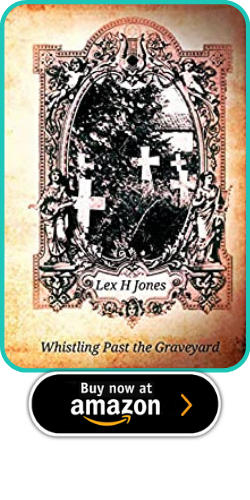
A hilltop cemetery where the dead just won’t stay sleeping. An ill-fated voyage to an uncharted region off the coast of Iceland. An English village reminded of its heritage through the discovery of ancient bones.These tales and more can be found within the first short story collection from author Lex H Jones. Light the fire, make yourself a comforting drink, make sure the doors and windows are lined with salt, and settle in to enjoy this gathering of haunts and horrors.
TODAY ON THE GINGER NUTS OF HORROR WEBSITE
[BOOK REVIEW] WE FEED THE DARK TALES OF TERROR, LOSS & THE SUPERNATURAL BY WILLIAM P SIMMONS

THE HEART AND SOUL OF HORROR FEATURES
![[FEATURE] CHILDHOOD FEARS BY CASEY J RUDKIN](../../uploads/3/4/5/1/34519054/feature-childhood-fears-by-casey-j-rudkin_orig.jpg) | Because someone out there – it could be any of you – might just need a diversion, something that fictionalizes your pain and grief and shows you that one day, it’s all gonna be okay. |
For most of my formative years, I possessed an imperfect but quite personal relationship with Death.
I was raised by my grandmother and great-grandparents, so I was constantly in the orbit of the oldest members of my family. I attended a number of funerals before I hit my teens. The pageantry, the grieving – all of it confusing and off-putting. I finally came to understand that a funeral = death, and then I hated them even more.
It wasn’t Death himself that truly scared me. I understood He was a constant and tat life was finite, but the unrestrained grief at these events felt unbearable. At each funeral, I struggled with the suffocating emotional pain washing over me, threatening to suck me down into a vortex from which I would not be able to surface. I would come home upset, confused, and unable to adjust immediately to the land of the freely breathing – the land of the living. For a little kid, I got quite morbid after each funeral, like, noticeably so. After each gathering, my grandmother would do everything she could to get me to take interest in my friends again.
Finally, around the age of 10, I put my foot down. I would not be attending any more funerals with my family. I was done.
Good people that they were, they respected my wishes.
There was still Death in my world – an elderly relative here, an elderly neighbour there – but I remained safely cocooned in my stubborn insistence to not attend funerals. I saw my grandmother cry, usually upon hearing the news of another life slipping away, but I didn’t see the raw grief on display at a public memorial of any kind. That’s the deal I struck, and it seems workable, right?
I thought I was “good” with Death right into my mid-teens. He picked off elderly folks, helping them shuffle off their mortal coils, while I went on with my life – young and immortal. My senior year of high school, however, disabused me of the notion that He and I had any détente to speak of.
I took the phone call before leaving for school one beautiful autumn morning in September of my senior year. In one month I would turn 17. I was so engrossed with my morning ritual of curling my hair and putting on makeup that I didn’t even think it strange that the phone rang at 7 am. My friend’s mom was on the line, asking to speak to my grandmother. I cajoled her, what had my friend done now? Was he in some kind of trouble? He was quite the prankster, and his parents were prohibitively strict, so I was having trouble imagining what might necessitate a call from his mom to my grandma this early in the day.
“He’s dead,” she said, then all I heard was sobbing.
Nineteen years old, playing goalie for his soccer team, and he dropped dead of a heart attack mid-game. Nothing they did could revive him, and he was gone. Just like that.
Just. Like. That.
The rest of that day is a haze. I remember handing over the phone. I vaguely remember some screaming in my bedroom, along with tears, and that familiar pull of grief from so many previous funerals. I remember going to school and hearing people openly speculate about what happened, even though none of them had spoken to his family. All of them were guessing and spinning scenarios in that particularly cruel way that teenagers in a small town will do.
I remember telling one classmate, who falsely insinuated a drug-related incident, that I hoped she never had to go through something similar with her friends. In what turned out to be a painful moment of prophecy, she lost her younger brother to a one-car DUI accident almost exactly two years later. The whisper campaign was vicious, but that’s high school, right?
I wrestled with the need to protect myself and the need to see my friend one last time. In telling my family that I would no longer go to funerals, I was also making a vow to myself, one that I was willing to break only for a chance to say goodbye to a dear friend. I finally accepted the realization that Death would not be kept at bay by my funerary quirks and going this once would not give Death any extra power over me.
Attending my friend’s funeral turned out to be a mistake. A theatrical production that combined strict religious tradition with melodramatic high schoolers, it was worse than any school play you’ve ever endured. So much performative grief, including his girlfriend of a few weeks in the star role of The Grieving Widow. His parents – father sitting stoically, mother sobering hysterically. This wasn’t who he was. This wasn’t what he would have wanted. I left the funeral home sick to my stomach. I threw up next to my friend’s car in the parking lot, a brief but untidy remembrance of a horrid day.
Draped in black crepe and smeared with ash, my 17th birthday came and went with little fanfare and even less interest. No one really felt like celebrating, least of all me, but with my increasingly cynical and sullen attitude, who would want to party, right?
Later that month, things were just beginning to return to normalcy when another classmate was murdered by his brother. I’d been bus mates with him for a few years, and he’d graduated the previous June. I didn’t know him well enough to go to his funeral, even though that didn’t stop many others with less tenuous connections from attending or from playing up their attendance when they returned to school on Monday. Again, the whole high school fell into a maudlin pantomime of grief and loss, fuelled by typically petty teenaged one-upmanship. The beginning of my senior year had all the trappings of an extended funeral, which I had the privilege of attending six hours a day, five days a week.
When November rolled around, I remember thinking now who will we lose? These things come in threes, right? I felt like Death was lying in wait, flowing through the periphery of my life, and I wondered when he would come calling again. A gentleman suitor I neither wanted nor needed, but persistent in his stubborn interest in my life and pool of friends and acquaintances.
Just after Halloween, a friend offered me a ticket to attend a symphony concert with her family at the college near our homes. She and her mom picked me up, and we enjoyed a lovely evening of Tchaikovsky. It felt so grown up to sit in a blouse and skirt and listen to classical music for a few hours. They dropped me back at my house around 10 pm, and my dad’s car was in the driveway, an unprecedented happening when he wasn’t stopping by to pick me up for the day.
Few things are more concerning than early morning or late-night calls and unexpected visits from family.
When I went inside, my grandmother was crying in the kitchen. She wouldn’t, couldn’t talk to me. My dad lead me into our living room, which we rarely used, and asked me to have a seat on the couch.
“There’s been an accident,” he started, talking tentatively, feeling his way through each word, each intonation.
I interrupted, like I often do when I am nervous, was it my great-grandmother?
No, he said quietly.
My great-grandfather?
No, he said again.
You said “accident.” Were they both killed in a car crash?
“Levi is dead.”
I remember shaking my head in the negative – my mind swimming. Or was it sinking? My baby brother Levi couldn’t be dead.
No. You’re wrong. That’s not possible. I remember repeating “no” again and again in increasingly hysterical tones, growing louder, until the word itself had been wrung dry of all meaning, my dad reaching toward me as I pulled away.
But it was possible. It had happened. Levi slipped and drown in the bathtub at the age of three years old. Far too young for Death but gone just the same.
After staying while I needed him, to let me cry and wail, to let me scream to the heavens about the unfairness of, well, everything, my dad finally left some time after midnight. My grandmother retreated to her bedroom long before, incapacitated with heartache. As soon as my dad left, I transformed into the adult in charge.
I grabbed my grandmother’s emergency credit card and bought us plane tickets to Florida for the funeral. These were pre-internet days with an airline agent on their 800 number. I kept my voice calm and low, impersonated my grandma, and arranged all of our travel. I called a friend in Florida, a true friend who took a 3 am call, and he agreed to meet us at the airport the next afternoon.
I placed a call and left a message with my high school, again impersonating my grandma. Casey is not coming in tomorrow and won’t be for the foreseeable future. There’s been a terrible accident...
The next few weeks reside in my memories in hazy way, a muted palette in monotone with splashes of colour from lucid flashes, snippets of that time.
Getting off the plane to the familiar smell of rot and humidity endemic to the subtropics, the sun blinding after so many hours of jolting awake after trying to sleep on the couch the night before and on the flight that day.
Being approached by a couple of hippie dudes as I cried on the sidewalk outside of my brother’s funeral home viewing. They stopped, and one said, “It’s gonna be okay, little sister. One day, it’s all gonna be okay,” before moving on by.
The cold, waxy feel of Levi’s forehead as I kissed him goodbye. Tucking in a favourite toy with him.
Getting out of a limousine at the graveyard and having to catch my grandmother as she collapsed with grief.
Greeting people at my mom’s house – accepting their casseroles, sandwich plates and condolences – because my mom couldn’t talk to anyone. She just sat on the couch and stared into her drink.
I picked up all the adult roles because no one else seemed capable. Besides, staying busy is a great way to avoid your feelings, right?
I flew home right after the funeral, but my grandmother stayed on to help my mom get her shit together. It was the first time I’d ever been alone in my entire life. A few of my close friends took turns staying overnight with me, and bless them for dealing with the night terrors and my middle-of-the-night screaming. It was all I could do to remember to wash my hair sometimes, eat occasionally, and show up to school Mondays through Fridays. My grades tanked. My penchant for seeing patterns where there were none grew stronger. My paranoia and anxiety ramped up like a tsunami slowly building from the ocean floor to become the towering sea monster that haunts the dreams of the coastal folk.
At the end of November, my grandmother, having recently returned home and hoping to give me a bright spot in the holiday season, offered me an early Christmas present. She’d already wrapped it. I gratefully accepted it and was excited to tear off the paper and find a Stephen King book I hadn’t read yet: Pet Sematary. I began reading it almost immediately.
Main character traumatized as a child by the death of a sibling. Toddler killed violently. Toddler returning to life violently. Toddler dying again violently. Everybody dead or broken by the end. From our collective vantage point nearly 40 years later, and as horror aficionados, I’m sure you see the problem that caused, right?
My grandmother felt so bad when I told her the plot, but I assured her it was still a welcomed gift. Fictional pain, horror, and grief were far preferable to the real thing. I was able to parse it into emotionally manageable pieces. Instead of finishing the book in just a few days, it took me a few weeks, but I did it. And it was good.
When December passed with no further visits from Death, I could have sobbed with relief. By January, I was together enough to get back to the things that reminded me how much I enjoyed life: gaming and writing. I pulled myself together enough to finish the academic year strong, but I had a new outlook. I made plans but didn’t revel in them. I worked hard but took less joy from it. Life became a series of goals, some hit and some missed, but that’s what being an adult is all about, right?
Levi’s death was really the pivot in my life. I never feared Death, but I had a healthier respect for the damage His actions wrought. Every relationship changed with the grief I endured during these months. Even my relationship with myself. My writing, a mere bud on the bush at that age, took a swift and dark turn, blooming into a crimson rose, its stem laden with thick and plentiful thorns. Fanciful and crappy teenaged poetry made way for more philosophical and thoughtful fare, and I worked hard on my writing skills to make my words and ideas live up to this tough emotional place in which I now resided.
In college, I transitioned from games like Dungeons and Dragons to Call of Cthulhu. I read less light fantasy and retreated into more hard-core horror. Fictitious horror became more and more enjoyable, the darker, the better. There was comfort to be found there, even when the bad guy didn’t always get what he deserved. Even when Death came for all the characters with varying degrees of success. That was like real life, right?
Now I write those horrible accidents. I bring Death to my worlds on the page. I drag characters through pain and grief and death and all manner of misery. For your entertainment. For catharsis. For the sake of good storytelling. For you.
Because someone out there – it could be any of you – might just need a diversion, something that fictionalizes your pain and grief and shows you that one day, it’s all gonna be okay.
And that’s all we can ask of our fiction, right?
I was raised by my grandmother and great-grandparents, so I was constantly in the orbit of the oldest members of my family. I attended a number of funerals before I hit my teens. The pageantry, the grieving – all of it confusing and off-putting. I finally came to understand that a funeral = death, and then I hated them even more.
It wasn’t Death himself that truly scared me. I understood He was a constant and tat life was finite, but the unrestrained grief at these events felt unbearable. At each funeral, I struggled with the suffocating emotional pain washing over me, threatening to suck me down into a vortex from which I would not be able to surface. I would come home upset, confused, and unable to adjust immediately to the land of the freely breathing – the land of the living. For a little kid, I got quite morbid after each funeral, like, noticeably so. After each gathering, my grandmother would do everything she could to get me to take interest in my friends again.
Finally, around the age of 10, I put my foot down. I would not be attending any more funerals with my family. I was done.
Good people that they were, they respected my wishes.
There was still Death in my world – an elderly relative here, an elderly neighbour there – but I remained safely cocooned in my stubborn insistence to not attend funerals. I saw my grandmother cry, usually upon hearing the news of another life slipping away, but I didn’t see the raw grief on display at a public memorial of any kind. That’s the deal I struck, and it seems workable, right?
I thought I was “good” with Death right into my mid-teens. He picked off elderly folks, helping them shuffle off their mortal coils, while I went on with my life – young and immortal. My senior year of high school, however, disabused me of the notion that He and I had any détente to speak of.
I took the phone call before leaving for school one beautiful autumn morning in September of my senior year. In one month I would turn 17. I was so engrossed with my morning ritual of curling my hair and putting on makeup that I didn’t even think it strange that the phone rang at 7 am. My friend’s mom was on the line, asking to speak to my grandmother. I cajoled her, what had my friend done now? Was he in some kind of trouble? He was quite the prankster, and his parents were prohibitively strict, so I was having trouble imagining what might necessitate a call from his mom to my grandma this early in the day.
“He’s dead,” she said, then all I heard was sobbing.
Nineteen years old, playing goalie for his soccer team, and he dropped dead of a heart attack mid-game. Nothing they did could revive him, and he was gone. Just like that.
Just. Like. That.
The rest of that day is a haze. I remember handing over the phone. I vaguely remember some screaming in my bedroom, along with tears, and that familiar pull of grief from so many previous funerals. I remember going to school and hearing people openly speculate about what happened, even though none of them had spoken to his family. All of them were guessing and spinning scenarios in that particularly cruel way that teenagers in a small town will do.
I remember telling one classmate, who falsely insinuated a drug-related incident, that I hoped she never had to go through something similar with her friends. In what turned out to be a painful moment of prophecy, she lost her younger brother to a one-car DUI accident almost exactly two years later. The whisper campaign was vicious, but that’s high school, right?
I wrestled with the need to protect myself and the need to see my friend one last time. In telling my family that I would no longer go to funerals, I was also making a vow to myself, one that I was willing to break only for a chance to say goodbye to a dear friend. I finally accepted the realization that Death would not be kept at bay by my funerary quirks and going this once would not give Death any extra power over me.
Attending my friend’s funeral turned out to be a mistake. A theatrical production that combined strict religious tradition with melodramatic high schoolers, it was worse than any school play you’ve ever endured. So much performative grief, including his girlfriend of a few weeks in the star role of The Grieving Widow. His parents – father sitting stoically, mother sobering hysterically. This wasn’t who he was. This wasn’t what he would have wanted. I left the funeral home sick to my stomach. I threw up next to my friend’s car in the parking lot, a brief but untidy remembrance of a horrid day.
Draped in black crepe and smeared with ash, my 17th birthday came and went with little fanfare and even less interest. No one really felt like celebrating, least of all me, but with my increasingly cynical and sullen attitude, who would want to party, right?
Later that month, things were just beginning to return to normalcy when another classmate was murdered by his brother. I’d been bus mates with him for a few years, and he’d graduated the previous June. I didn’t know him well enough to go to his funeral, even though that didn’t stop many others with less tenuous connections from attending or from playing up their attendance when they returned to school on Monday. Again, the whole high school fell into a maudlin pantomime of grief and loss, fuelled by typically petty teenaged one-upmanship. The beginning of my senior year had all the trappings of an extended funeral, which I had the privilege of attending six hours a day, five days a week.
When November rolled around, I remember thinking now who will we lose? These things come in threes, right? I felt like Death was lying in wait, flowing through the periphery of my life, and I wondered when he would come calling again. A gentleman suitor I neither wanted nor needed, but persistent in his stubborn interest in my life and pool of friends and acquaintances.
Just after Halloween, a friend offered me a ticket to attend a symphony concert with her family at the college near our homes. She and her mom picked me up, and we enjoyed a lovely evening of Tchaikovsky. It felt so grown up to sit in a blouse and skirt and listen to classical music for a few hours. They dropped me back at my house around 10 pm, and my dad’s car was in the driveway, an unprecedented happening when he wasn’t stopping by to pick me up for the day.
Few things are more concerning than early morning or late-night calls and unexpected visits from family.
When I went inside, my grandmother was crying in the kitchen. She wouldn’t, couldn’t talk to me. My dad lead me into our living room, which we rarely used, and asked me to have a seat on the couch.
“There’s been an accident,” he started, talking tentatively, feeling his way through each word, each intonation.
I interrupted, like I often do when I am nervous, was it my great-grandmother?
No, he said quietly.
My great-grandfather?
No, he said again.
You said “accident.” Were they both killed in a car crash?
“Levi is dead.”
I remember shaking my head in the negative – my mind swimming. Or was it sinking? My baby brother Levi couldn’t be dead.
No. You’re wrong. That’s not possible. I remember repeating “no” again and again in increasingly hysterical tones, growing louder, until the word itself had been wrung dry of all meaning, my dad reaching toward me as I pulled away.
But it was possible. It had happened. Levi slipped and drown in the bathtub at the age of three years old. Far too young for Death but gone just the same.
After staying while I needed him, to let me cry and wail, to let me scream to the heavens about the unfairness of, well, everything, my dad finally left some time after midnight. My grandmother retreated to her bedroom long before, incapacitated with heartache. As soon as my dad left, I transformed into the adult in charge.
I grabbed my grandmother’s emergency credit card and bought us plane tickets to Florida for the funeral. These were pre-internet days with an airline agent on their 800 number. I kept my voice calm and low, impersonated my grandma, and arranged all of our travel. I called a friend in Florida, a true friend who took a 3 am call, and he agreed to meet us at the airport the next afternoon.
I placed a call and left a message with my high school, again impersonating my grandma. Casey is not coming in tomorrow and won’t be for the foreseeable future. There’s been a terrible accident...
The next few weeks reside in my memories in hazy way, a muted palette in monotone with splashes of colour from lucid flashes, snippets of that time.
Getting off the plane to the familiar smell of rot and humidity endemic to the subtropics, the sun blinding after so many hours of jolting awake after trying to sleep on the couch the night before and on the flight that day.
Being approached by a couple of hippie dudes as I cried on the sidewalk outside of my brother’s funeral home viewing. They stopped, and one said, “It’s gonna be okay, little sister. One day, it’s all gonna be okay,” before moving on by.
The cold, waxy feel of Levi’s forehead as I kissed him goodbye. Tucking in a favourite toy with him.
Getting out of a limousine at the graveyard and having to catch my grandmother as she collapsed with grief.
Greeting people at my mom’s house – accepting their casseroles, sandwich plates and condolences – because my mom couldn’t talk to anyone. She just sat on the couch and stared into her drink.
I picked up all the adult roles because no one else seemed capable. Besides, staying busy is a great way to avoid your feelings, right?
I flew home right after the funeral, but my grandmother stayed on to help my mom get her shit together. It was the first time I’d ever been alone in my entire life. A few of my close friends took turns staying overnight with me, and bless them for dealing with the night terrors and my middle-of-the-night screaming. It was all I could do to remember to wash my hair sometimes, eat occasionally, and show up to school Mondays through Fridays. My grades tanked. My penchant for seeing patterns where there were none grew stronger. My paranoia and anxiety ramped up like a tsunami slowly building from the ocean floor to become the towering sea monster that haunts the dreams of the coastal folk.
At the end of November, my grandmother, having recently returned home and hoping to give me a bright spot in the holiday season, offered me an early Christmas present. She’d already wrapped it. I gratefully accepted it and was excited to tear off the paper and find a Stephen King book I hadn’t read yet: Pet Sematary. I began reading it almost immediately.
Main character traumatized as a child by the death of a sibling. Toddler killed violently. Toddler returning to life violently. Toddler dying again violently. Everybody dead or broken by the end. From our collective vantage point nearly 40 years later, and as horror aficionados, I’m sure you see the problem that caused, right?
My grandmother felt so bad when I told her the plot, but I assured her it was still a welcomed gift. Fictional pain, horror, and grief were far preferable to the real thing. I was able to parse it into emotionally manageable pieces. Instead of finishing the book in just a few days, it took me a few weeks, but I did it. And it was good.
When December passed with no further visits from Death, I could have sobbed with relief. By January, I was together enough to get back to the things that reminded me how much I enjoyed life: gaming and writing. I pulled myself together enough to finish the academic year strong, but I had a new outlook. I made plans but didn’t revel in them. I worked hard but took less joy from it. Life became a series of goals, some hit and some missed, but that’s what being an adult is all about, right?
Levi’s death was really the pivot in my life. I never feared Death, but I had a healthier respect for the damage His actions wrought. Every relationship changed with the grief I endured during these months. Even my relationship with myself. My writing, a mere bud on the bush at that age, took a swift and dark turn, blooming into a crimson rose, its stem laden with thick and plentiful thorns. Fanciful and crappy teenaged poetry made way for more philosophical and thoughtful fare, and I worked hard on my writing skills to make my words and ideas live up to this tough emotional place in which I now resided.
In college, I transitioned from games like Dungeons and Dragons to Call of Cthulhu. I read less light fantasy and retreated into more hard-core horror. Fictitious horror became more and more enjoyable, the darker, the better. There was comfort to be found there, even when the bad guy didn’t always get what he deserved. Even when Death came for all the characters with varying degrees of success. That was like real life, right?
Now I write those horrible accidents. I bring Death to my worlds on the page. I drag characters through pain and grief and death and all manner of misery. For your entertainment. For catharsis. For the sake of good storytelling. For you.
Because someone out there – it could be any of you – might just need a diversion, something that fictionalizes your pain and grief and shows you that one day, it’s all gonna be okay.
And that’s all we can ask of our fiction, right?
Casey J Rudkin

Casey J Rudkin is half of the writing team of JC Rudkin, along with her husband James. Fans of pulp stories, HP Lovecraft, and modern urban fantasy, they are also role-play gamers and board gamers from back when D&D came in a red box. Their previous collaborations include academic articles, pulp horror short stories, their debut novel Cthulhu: A Love Story, and two daughters. They live in the Upper Peninsula of Michigan in the United States where they often have to shovel more than 20 feet of snow each winter.
WEBSITE LINKS
Follow JC Rudkin (and sometimes their dogs) at:
JCRudkin.com
Twitter @JCRudkin
Instagram @ jcrudkin_author
Facebook @ jc.rudkin.77
Goodreads https://www.goodreads.com/author/show/21600210.JC_Rudkin
Amazon Author Page
https://www.amazon.com/JCRudkin/e/B095XFV588?ref=sr_ntt_srch_lnk_2&qid=1626021445&sr=8-2
Our short story “Christmas Cookies” will also appear December 2021 in Angela’s Recurring Nightmares, a horror anthology from the Great Lakes Association of Horror Writers http://glahw.com
Follow JC Rudkin (and sometimes their dogs) at:
JCRudkin.com
Twitter @JCRudkin
Instagram @ jcrudkin_author
Facebook @ jc.rudkin.77
Goodreads https://www.goodreads.com/author/show/21600210.JC_Rudkin
Amazon Author Page
https://www.amazon.com/JCRudkin/e/B095XFV588?ref=sr_ntt_srch_lnk_2&qid=1626021445&sr=8-2
Our short story “Christmas Cookies” will also appear December 2021 in Angela’s Recurring Nightmares, a horror anthology from the Great Lakes Association of Horror Writers http://glahw.com
Cthulhu: A Love Story: A Love Story
by JC Rudkin

I met Cthulhu in college.
In one night, I discovered his true identity, opened a portal to another dimension, banished him there, and thwarted a doomsday cult. None of this was covered during First Year orientation, but I managed. Now I must awaken him from his eternal slumber to undo a cosmic cataclysm while avoiding the prophecy foretelling my failure and the end of humanity.
Nothing in Amanda's life has ever been normal, but her college boyfriend, Ryley, was paranormal. Fifteen years after banishing him to his city beneath the waves, she needs to evoke dark magic to dispel the mounting chaos pervading the world, twisting events and people beyond madness.
Now the stars are right.
Amanda must summon Ry and save the world. But at what cost?
Cthulhu: A Love Story is a contemporary take on the Lovecraftian Mythos filled with chaos worshipping cultists, dark rituals, and cosmic horror.
In one night, I discovered his true identity, opened a portal to another dimension, banished him there, and thwarted a doomsday cult. None of this was covered during First Year orientation, but I managed. Now I must awaken him from his eternal slumber to undo a cosmic cataclysm while avoiding the prophecy foretelling my failure and the end of humanity.
Nothing in Amanda's life has ever been normal, but her college boyfriend, Ryley, was paranormal. Fifteen years after banishing him to his city beneath the waves, she needs to evoke dark magic to dispel the mounting chaos pervading the world, twisting events and people beyond madness.
Now the stars are right.
Amanda must summon Ry and save the world. But at what cost?
Cthulhu: A Love Story is a contemporary take on the Lovecraftian Mythos filled with chaos worshipping cultists, dark rituals, and cosmic horror.
TODAY ON THE GINGER NUTS OF HORROR WEBSITE
FILM GUTTER REVIEWS: FREEWAY 2: CONFESSIONS OF A TRICKBABY (1999) DIR. MATTHEW BRIGHT
the heart and soul of horror features


Archives
April 2023
March 2023
February 2023
January 2023
December 2022
November 2022
October 2022
September 2022
August 2022
July 2022
June 2022
May 2022
April 2022
March 2022
February 2022
January 2022
December 2021
November 2021
October 2021
September 2021
August 2021
July 2021
June 2021
May 2021
April 2021
March 2021
February 2021
January 2021
December 2020
November 2020
October 2020
September 2020
August 2020
July 2020
June 2020
May 2020
April 2020
March 2020
February 2020
January 2020
December 2019
November 2019
October 2019
September 2019
August 2019
July 2019
June 2019
May 2019
April 2019
March 2019
February 2019
January 2019
December 2018
November 2018
October 2018
September 2018
August 2018
July 2018
June 2018
May 2018
April 2018
March 2018
February 2018
January 2018
December 2017
November 2017
October 2017
September 2017
August 2017
June 2017
May 2017
April 2017
March 2017
February 2017
January 2017
December 2016
November 2016
October 2016
September 2016
August 2016
July 2016
June 2016
May 2016
April 2016
March 2016
February 2016
January 2016
December 2015
November 2015
October 2015
September 2015
August 2015
July 2015
June 2015
May 2015
April 2015
March 2015
February 2015
January 2015
December 2014
November 2014
October 2014
September 2014
August 2014
July 2014
June 2014
May 2014
April 2014
March 2014
February 2014
January 2014
December 2013
October 2013
September 2013
August 2013
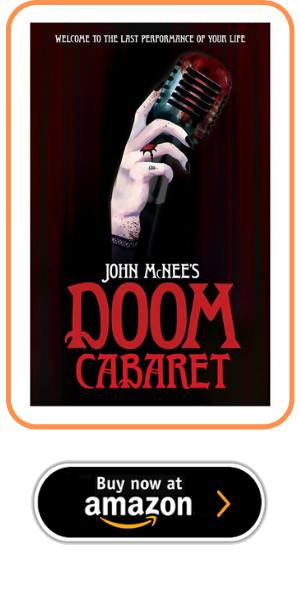
 RSS Feed

|

|