

 In order to give what we believe to be a more unbiased constructive criticism of the piece, the members of Bloodhound Pix are tackling each review as a panel of three. None of the members know the others’ thoughts on the content until after they submit their initial response. Creator: Glenn Standring Director(s): Peter Burger and Michael Hurst Writer: Glenn Standring Starring: Te Kohe Tuhaka and Darneen Christian The series features a murdered Māori warrior, Waka Nuku Rau (Te Kohe Tuhaka), who’s sent back to the world of the living to redeem his sins. But the world Waka returns to is ravaged by a breach between Life and Afterlife as the spirits of the newly dead now stalk the land and hunt the living. Initial Reaction C. I may be the only one of the three of us that has seen the movie prior to watching the series. While I try my best to go into every adaptation or remake considering it as its own work, there was hesitation based on the film’s plot. The film (also The Dead Lands) in ways could be considered the Māori version of something like True Grit. A young person hiring a great warrior to get revenge on the group that killed their father. My worry was that idea can work (ex. Blade of the Immortal) as a series but has a timeline before you find yourself repeating or getting into filler territory. I can fortunately say that while the initial premise is there, the series’ version diverts into a story that allows much more expansion worthy of multiple seasons. Maybe it’s the nostalgia of series/epics from my youth like Xena, Hercules, Lord of the Rings through the lens of the Indiginous peoples (before European influence), but I had a blast. It’s fun, brutal, doesn’t take itself too seriously, and accessible to general audiences yet doesn’t bog itself down in unnecessary exposition to explain the culture. The actors and world feel authentic and “lived-in,” avoiding the trap of many series that cast hot, young up-and-comers for international appeal. I admit it doesn’t go without criticism as there are lines and insults thrown out that probably had the intention of sounding badass but ultimately make the dialogue clunky. This also relates to the themes being on-the-nose throughout, as there’s some repetition of characters discussing freewill, breaking archaic traditions, etc. However, based on the type of show it’s easily forgivable and many won’t notice unless you’re tasked with writing a review. Actually as I look through my notes that’s really the only major critique I have. The marketing for the series is “Ash vs. the Evil Dead meets Xena,” that comparison instantly targets it’s intended audience, and I happen to be one of them to answer the call. The Dead Lands is an epic tale of honor in a land with very little left, even among the dead, and after these episodes I’ll follow their journey. J. If I had to imagine someone pitching this show it would go like this: “It’s Conan The Barbarian and Red Sonja meets The Evil Dead. That’s it folks. I don’t know how that wouldn’t be of some interest considering I’ve never heard of or seen anything that melds those classics together. I don’t want to get too much into plot stuff considering we only saw the first three episodes but the newly dead that stalk the Earth are very similar to The Deadites. Black eyes, ferocious as all hell, hard to kill and they taunt the living by imitating dead fathers. Sound familiar? Not surprisingly, only beheadings seem to do the trick. And Waka and Mehe are doing the beheadings with what essentially amounts to a goddamn spatula so that shit is bloody and takes some time! The actors are all terrific and adapt to the period setting well. I like that unlike Conan, these people all have bodies that seem to match the nutrition they must have been afforded. The perfect, pearly white teeth might be a bit much but whatever. Episodes 1-3 were all interesting and presented our heroes with new and exciting conflicts and goals and nothing was ever repeated. Yes, the dead are present in all of them and are a threat but that aspect is sort of weeded out as we moved to episode three. There’s possessions, there’s double crossing, piece of shit uncles, there’s witches, there’s a lot going on and a lot to unpack here! The relationship between Waka and Mehe is sort of been done before in that, she looks up to him but he thinks she’s annoying but we know pretty quickly that he doesn’t really feel that way about her, it’s just a tough guy front. The chemistry is well done and there’s even some mild humor in it that was well received, at least by me. I had a great time with these first episodes and when it ended I was a little sad that I would have to wait to see how the adventure plays out. If you like Conan, Red Sonja and definitely Xena mixed with Deadites, you’ll wanna check out The Dead Lands. K. I didn’t catch the film version of this series, so I came in not knowing much about the plot and the world. As Craig and Josh have already pointed out it’s a bit of a throwback to the Xena and Hercules shows from the ‘90s (which I used to watch everyday after school), but with a touch more darkness and grit. The ancient Maori culture is an interesting and fresh world to set the story in, and they waste no time getting into the action with undead warriors all over the place. The acting is solid throughout, particularly that of the two leads: Waka played by Te Kohe Tuhaka and Mehe played by Darneen Christian. As Josh mentioned their odd couple pairing is nothing new, but the chemistry between the two actors makes it work. I’d echo Craig in saying that some of the dialogue and story beats tend to be a bit on the nose, but the show moves at a quick pace so that wasn’t much of an issue. I would say being a fan of early Peter Jackson films, Taika Waititi and Flight of the Conchords, it’s difficult to hear a New Zealand accent and not expect a certain kiwi sense of humor, but sadly that was a little lacking in my opinion. So I found the Ash vs. Evil Dead comparisons to be off the mark. But if any of what we mentioned sounds like your bag, I’d dive into The Dead Lands when it hits Shudder!  Response C. I think we all came to a similar conclusion, that for its target audience The Dead Lands will work wonders. However, that audience will be fans of fantasy series from the 80s and 90s. Thanks to the culture and mythology any potential cliche plot devices play fresh. They don’t fall into the trap of making obvious throwback references to their influences that take away from the series as its own world/story/etc. I credit the series with a strong artistic voice in a genre that, while there’s major hits, can fall into campy territory quickly. As Kyle stated, it isn’t Ash vs the Evil Dead, so I wouldn’t go in expecting the over-the-top violence and gags that are associated with the iconic franchise. There are demons that share elements with the deadites but that’s about as close as you’ll get. While I understand the comparison for promotional purposes I know it may deter individuals that go in expecting the Māori version of Ash. Traditionally as we’ve done this style of reviewing, I've found I lose some excitement. Usually my initial reviews are more forgiving and filled with a sense of wonder that comes with watching something, then this section is where I get critical. My opinion hasn’t changed with this. As someone who isn’t a binger, I will follow this because I am their target audience. Hell, even younger me would prefer it over Hercules and Xena. J. The production values are pretty high, I didn’t notice or catch a lot of CGI bullshit either, so it was non-existent or too well done to notice or care. This series is another example of Shudder killin’ it and bringing something a touch familiar and also a touch different for genre fans. If you’re a fan of the big influences you’ll have fun with The Dead Lands. I’m still sad I had to stop watching after the first three episodes. K. I would agree with Craig. If you’re into old school fantasy fare with a new twist, you should definitely check it out. It’s good to see Shudder continuing to produce their own content and branching out into new genres. About Shudder AMC Networks’ Shudder is a premium streaming video service, super-serving members with the best selection in genre entertainment, covering horror, thrillers and the supernatural. Shudder’s expanding library of film, TV series, and originals is available on most streaming devices in the US, Canada, the UK, Ireland and Germany. To experience Shudder commitment-free for 7 days, visit www.shudder.com. About TVNZ TVNZ is New Zealand’s state-owned, commercially funded broadcaster. TVNZ’s all about sharing the moments that matter - whether it’s breaking news, following adventures, sharing stories or putting smiles on faces. Each day, TVNZ reaches more than 2 million New Zealanders through TVNZ 1, 2, DUKE and TVNZ OnDemand. Leading news site 1 NEWS NOW and socially-driven alternate news brand Re:connect Kiwis to the important issues throughout the day, however they chose to engage. About GFC Films GFC Films is an Auckland and Sydney based production company responsible for 18 feature films, 10 tele-features and numerous TV series and documentaries. The company’s work includes such award-winning titles as, The Dead Lands. Dean Spanley, Giselle, Beyond the Edge. McLaren. 6 Days and Capital in the 21st Century.   Bloodhound Pix is made up of: Craig Draheim, Josh Lee, and Kyle Hintz Follow them at: https://www.twitter.com/BloodhoundPix https://www.facebook.com/BloodhoundPix/ https:/www.instagram.com/bloodhoundpix/ Or be on the lookout for new episodes of the Bloodhound Pix Podcast every Sunday. Available on Itunes, Youtube, and Soundcloud.   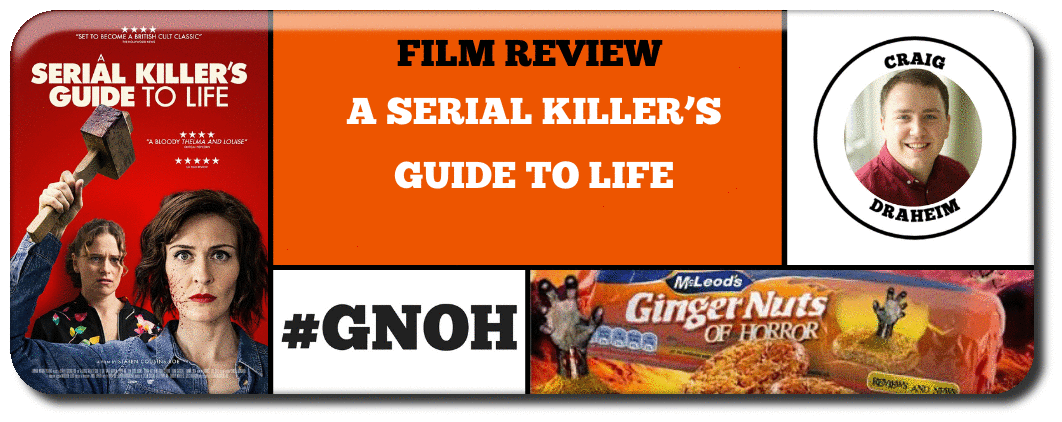
A lost-in-life self-help addict unwittingly finds herself on a killing spree with her unhinged new life coach
Directed by: Staten Cousins Roe
Written by: Staten Cousins Roe Starring: Katie Brayben, Poppy Roe, Ben Lloyd-Hughes
Have you felt lost in your life, found it hard to manage, to cope with? Have you turned to self-help programs with the hope they’ll make life easier? Let’s say a life coach promises to unlock your full potential, and all that’s required is a road trip with a slight body count, would you take it? That’s Staten Cousins Roe’s A Serial Killer’s Guide to Life.
The story follows Lou (Katie Brayben), a “self-help addict” who is aimless and desperate to take control of her own life. At a seminar, she meets Val (Poppy Roe), a life coach determined to become the greatest self-help guru that ever lived. Val invites Lou to join her on a retreat where they’ll participate in other self-help programs before she unveils her own steps to success. Lou learns that Val’s methods involve the murder of other self-help gurus and their followers, leading to a “jet-black comedy” of self-discovery. I should admit that while I try to go into everything without expectations, the promotional references to Ben Wheatley’s Sightseers and Alice Lowe’s Prevenge (both with serial killing premises) challenged me in that I’m a fan of both films. Rest assured A Serial Killer’s Guide to Life does not disappoint either. The movie offers great comedic moments in its satirizing of the self-help industry, but what sets it apart from the plethora of serial killer content lately, is its heart. While the commentary on the gurus and their exploitation of people is blatant, the movie puts a lot of care into the “victims” of these programs: People, like so many of us, trying to navigate through a chaotic world and looking for guidance along the way. 
Despite the name and potential for nihilism the movie is surprisingly tranquil and sublime, formatted like a self-help program, featuring very little violence on screen. Though one could believe the lack of “shown” violence is due to budgetary restrictions, it feels purposeful. We are seeing the series of events unfold through Lou’s eyes, which of course concedes some unstable narration within the story. As she is unaware or blissfully ignorant of Val’s methods for a good chunk of the story, allowing for great gags, this provides solid reasoning behind the lack of violence. A Serial Killer’s Guide to Life reaffirms what crowdfunding can accomplish when the people involved have a unique artistic vision and are passionate. It’s one of those projects that no matter what the budget could’ve been, it’d have the same result. 
Its success can’t go without mentioning leads, Katie Brayben and Poppy Roe. Their talent and chemistry make them compelling and relatable to the audience, which can sometimes get lost in films like these.
As an American viewer I know ultimately, with its British black comedy, mumblecore esthetic, and subject matter, A Serial Killer’s Guide to Life will probably fall into a “niche” category. Audiences looking for a comedy may not find enough jokes and people looking for a serial killer flick will want more thrills. For me, it’s right up my alley, marking an impressive end of one decade and the start of a new. Like Sightseers and Prevenge this has made it on my list of movies I’ll be championing for some time. So, check it out. Come for the jokes, kills, or whatever you want, but stay for the experience. 
A Serial Killer's Guide To Life will be available on AppleTV, Amazon Prime Video and all other UK, US and Canadian digital platforms from 13th January 2020. Staten has also stated that the iTunes version will come with a behind the scene featurette that should have more content.
For upcoming news on a Serial Killer's Guide To Life, Staten and Poppy, their company (Forward Motion Pictures), or Arrow Films, check out:
ASerialKillersGuidetoLife.com ForwardMotionPictures.co.uk Arrow Video's Facebook Page Forward Motion's Facebook Page Or follow on them Twitter at: @FMPictures, @AKillersGuide, and @ArrowFilmsVideo or by using the #aserialkillersguidetolife hashtag 

 In order to give what we believe to be a more unbiased constructive criticism of the piece, the members of Bloodhound Pix are tackling each Buried Alive Film Festival 2019 entry as a panel of three. None of the members know the others’ thoughts on the content until after they submit their initial response.  Bloodhound Pix is made up of: Craig Draheim, Josh Lee, and Kyle Hintz Follow them at https://www.twitter.com/BloodhoundPix https://www.facebook.com/BloodhoundPix/ https:/www.instagram.com/bloodhoundpix/ Mark of the Beast Director: Daniel Griffith Starring: Peter Atkins, Joe Dante, Mick Garris, John Landis, David Naughton A feature length documentary on the origins of werewolves in cinema and the legacy of the Universal Werewolf. Initial Reaction K. Mark of the Beast traces the origins of the first werewolf films ever made, then chronicles 1941’s seminal The Wolf Man starring Lon Chaney Jr., and the subsequent sequels, as well as the landmark werewolf films of the 1980s (An American Werewolf in London and The Howling). This history is charted through interviews with filmmakers like John Landis, Joe Dante and Mick Garris, along with various screenwriters and special effects makeup artists. The interviews are brought to life with archival drawings, production stills, behind the scenes photographs and footage from the films themselves. As a werewolf fan, and a fan of classic horror films, this was an enjoyable and informative journey through the cinema of horror past. I would definitely recommend it for those of you who have a particular fascination with the werewolf myth or the classic Universal Horror Cycle, you won’t be disappointed. C. The idea behind Mark of the Beast is pretty simple: It presents the evolution for what we consider the standard cinematic werewolf. The documentary spends most of its focus on the look of the werewolf, the transformation sequences, and the portrayal of the one with the curse. That’s it. It has a great dual purpose. For fans of the famed Universal Monster it acts as a brief history of the creature, and for people just getting into the character, it’s a wonderful introduction. It’s hard to put any major criticism onto the piece based on what it is, however, one does find themselves wishing for more. For myself it felt more like the special features attached to one of the main films mentioned rather than an in depth look at the subject matter of the cinematic werewolf or The Wolf Man’s legacy. We begin the documentary with the first cinematic werewolf and go from there with the discussion how most of the common werewolf lore that we use today (silver, full moon, etc.) all came from Universal’s The Wolf Man franchise. As I understand this is the focus of the documentary but you almost wish they’d spend some time discussing what werewolves were prior to those films, with the idea of lycanthropy throughout history and in folklore. I think it would have added that extra jolt to really show how important that film was, not just to werewolves in movies, but culture in general. On the other end of the timeframe, though I acknowledge the importance of films like An American Werewolf in London or The Howling, it basically ends with those close to 40 year-old films. This is not a criticism of the films but rather stating there are more recent werewolf movies that have helped expand the creature and brought up very important themes. Lastly, I am fully aware of the issues that come with trying to get people to be interviewed so I won’t try to pass too much judgement. However, despite having Joe Dante and Mick Garris, it does feel like the “John Landis Show” for most of the documentary. In the same sense of highlighting more recent projects to see how far the genre has come, it would’ve been nice to be presented with interviews from the younger generations in the field. Horror fans, and especially those interested in Universal Monsters, will find this to be the perfect companion piece to The Wolf Man. But if you’re looking for something more in depth, you may still want to pick up one of the many books on the subject matter.  J. Full transparency: when I was a kid I wanted to be a werewolf. I loved the TV show Werewolf and fell in love with the character of Eric Cord and the design of that lycanthrope. The Lost Boys changed my mind and I decided a vampire would be much more rad. Mark of the Beast is a great history lesson on the werewolf subgenre starting from the beginning and moving up through 2010’s remake of The Wolfman. The film makes a poignant observation I think, without even realizing it: it jumps from 1981 to 2010 with nothing in between more or less proving that the subgenre has all but disappeared. That’s unfortunate as all hell but it also seems to make the point that the high marks were both set in ‘81 with American Werewolf and The Howling and I’m not going to disagree. With CGI special effects taking over for practical stuff can we ever get anything as magical as 1981? Even Wes Craven tried and failed miserably so I think it’s a valid question. I wish someone would and could make another badass werewolf film but I’m not going to hold my breath because I think that magic ship has sailed which is unfortunate. There’s some great guests in the film but surprisingly both Rick Baker and Rob Bottin are absent and part of the film details the stellar make-up from each one. If you’re a fan of the subgenre or just interested in the history you’ll love this especially at a brisk run time of only 75 minutes. And for the record, The Howling is the superior werewolf film if for no other reason then Dee Wallace. This is where I would normally make a snide comment about John Landis because the guy is loved too much but I’ll show a little reserve for once. Response C. I think we all agree that Mark of the Beast is a great documentary on the legacy of Universal’s The Wolf Man and what is now considered the werewolf standard. Highlighting such films as The Howling and An American Werewolf in London are crucial as they’re constantly considered the greatest werewolf movies made. However, my issue still does lie with the gap from those 1981 films to 2010’s The Wolfman. By disregarding (almost) three decades you lose incredible movies that used the werewolf as a powerful metaphor. Key examples would be the use of the werewolf as a theme on coming into womanhood/sexuality (1984’s The Company of Wolves, 2000’s Ginger Snaps, and 2014’s When Animals Dream). There are many other great stories to have come out since 1981 but I won’t bog you down with all the different types of metaphors used. There’s also multiple discussions that could’ve been had about the shifting image of werewolves in modern culture that would offer great content for the documentary. Such as, taking on more of a supporting or servant-like role like: The Monster Squad, Van Helsing, Underworld franchise, or Twilight franchise (not the greatest examples but a presentation of them in modern day popular media). There’s the use of werewolves becoming more of a creature threatening the protagonist than being a curse upon the protagonist (Wolfen, Silver Bullet, Bad Moon, Dog Soldiers, Brotherhood of the Wolf, or Late Phases). I know that you could argue that they only wanted to focus on Universal’s The Wolf Man (as in the title) but to mention such films as The Howling opens up the discussion. And the “legacy of the Universal werewolf” does span across all studios. So it was good but in the end, with the days following since my initial response I am left in a state of “what could have been.” J. I’m not gonna beat you over the head with the same idea but the 1981 - 2010 gap is the most troubling thing for me. There’s a lot of stuff that could’ve been included and a lot of stuff that isn’t so mainstream too which would’ve been nice. I’m still a little puzzled at certain guests that were not present too but that could’ve easily been a scheduling conflict among other things. Baker and Bottin would’ve been welcome. K. I can definitely see where Craig is coming from on this and the observation that this plays like a DVD special feature. While there certainly have been werewolf films in the intervening years between the 1980s and now, I think Josh hit the nail on the head with the point that there have been no werewolf films in recent years that have been as resonant in pop culture as The Howling and An American Werewolf in London. So, I vote Craig makes a documentary on werewolves to cover all the missed opportunities here. (Also, full disclosure, I too wanted to be a werewolf. In fact, I still do, that’s why I don’t own a razor). C. Then I will! You heard it here first, folks, with enough interest and support from all of you, I (with Bloodhound Pix) will begin work on an extensive documentary about lycanthropy. It will begin with Sabine Baring-Gould’s Book of Werewolves (1865) and examine real cases and myths of lycanthropy across all continents (even Antarctica, why not?) before reaching a more universal lore created by the “cinematic werewolf.” I’ll even make it multiple episodes. If that sounds up your alley then hassle Ginger Nuts of Horror and Bloodhound Pix on social media to light a fire under my butt. Bloodhound’s average score: 3 1/2 out of 5    BURIED ALIVE FILM FESTIVAL 2019: ANTRUM
21/11/2019
 In order to give what we believe to be a more unbiased constructive criticism of the piece, the members of Bloodhound Pix are tackling each Buried Alive Film Festival 2019’ entry as a panel of three. None of the members know the others’ thoughts on the content until after they submit their initial response. Bloodhound Pix is made up of: Craig Draheim, Josh Lee, and Kyle Hintz Follow them at https://www.twitter.com/BloodhoundPix https://www.facebook.com/BloodhoundPix/ https:/www.instagram.com/bloodhoundpix/ Antrum Director: David Amito & Michael Laicini Screenplay by: David Amito / Story by: David Amito & Michael Laicini Starring: Rowan Smyth, Nicole Tompkins A young boy and girl enter the forest to dig a hole to hell. Said to be a cursed film from the late 1970s, Antrum examines the horrifying power of storytelling. Initial Reaction K. Presented as a long lost cult film responsible for the deaths of nearly everyone who’s ever seen it, Antrum is shrouded in mystery as “The Deadliest Movie Ever Made”, or so we’re told. A documentary style preamble sets up the various infamous incidents (a fire in one theater, a riot in another) that cement the film’s legendary status. Then something unexpected happens… ...we’re presented with the film itself. This transition was surprising as the film’s trailer frames it as a film about Antrum, rather than the film itself. This set the bar pretty high for the filmmakers to live up to the mystery surrounding the film. As we all know the “scariest _____” can be a very difficult title to live up to, especially when the audience’s imagination has the tendency to be much more frightening than anything fiction can conjure. That said, I believe the filmmakers succeed in creating an effectively eerie tone throughout with the music, cinematography and sound design. The documentary introduction also prepares the audience for an arthouse/exploitation experience justifying the more esoteric artistic choices made when we transition to the fictional film. The film tells the story of a young boy, Nathan (Rowan Smyth) and his older sister, Oralee (Nicole Tompkins) who dig a hole in the forest to save their recently departed dog from hell. As the two dig deeper they descend down through the various layers of hell and the forest grows ever more dangerous. The film makes great use of its limited budget and scope here by subtly crafting scares with figures that appear just on the edge of frame. The two leads, Rowan and Nicole Tompkins, do a wonderful job of grounding the film. They are relatable and believable as siblings. The aesthetic is that of a late 1970s exploitation film, like a marriage between The Texas Chain Saw Massacre and The Evil Dead, without being overly derivative. (There’s also a nice nod to Mulholland Drive -- ‘Ike behind the diner’). But, is it “The Deadliest Movie Ever Made”, you ask? No, but what could possibly live up to that title. Modern audiences are too savvy to fall for the whole lost film trick, but it is an effective prologue to the film itself and a unique way of presenting it to the world. I found it to be creepy more than scary, which is not a bad thing, and very well-acted. This made it an enjoyable and interesting watch, so I would definitely recommend it. C. In one way or another Antrum set itself up for failure because of its (for lack of a better term) gimmick. This doesn’t mean that it’s bad. On the contrary it has provided the film a lot of hype within the horror community. However, it opens itself up for certain criticisms that would have been ignored prior. First, I’ll say I enjoyed it very much by itself without the “cursed” film history or the added element that someone spliced images from a snuff film into the film print. If you took it as an homage to the cult-inspired films of the late 70s in the same vein of Ti West’s The House of the Devil it works great. I found myself at the edge of my seat, the actors were strong, solid use of imagery/symbolism on a low budget. It’s a solid piece in my opinion. But I feel you’ll only enjoy it if you’re along for the ride I just described, because a lot of the issues rely on the believability that it was shot in the 1970s. I’ll give it to you straight. It wasn’t, and even if I didn’t say it, you’d know. Across the board there are choices in terms of cinematography, filters, dialogue, style, that even your standard audience member would notice that it feels modern. In terms of the technical aspects I think they accomplished the best they could with their resources but this is where the issue of the gimmick begins to hinder the film. As I’ve already mentioned there’s two major gimmicks, the cursed film and the random snuff film spliced within the movie. Oh, and let’s not forget the countless subliminal symbols that the editor went crazy with putting in. The best way to describe the feeling I had was being in art class as a kid and you draw a decent picture. Then you start thinking, “maybe I should use markers”, then “how about adding paint?”, then “I’m going to add some collage elements.” Ultimately you find yourself wishing you stuck with the original drawing and spent time fine tuning that instead of adding all these other elements to be “extra” (as the kids say… I think). Again, I’m saying this as a person who enjoyed it a lot. Yet I can understand the problematic nature that the filmmakers put themselves in. Audiences are smarter to that stuff and unlike with the initial release of The Blair Witch Project, The Texas Chain Saw Massacre, or Cannibal Holocaust, we have the internet to quickly disprove it. Also, those films knocked it out of the park with something that (at the time) hadn’t really been seen. The other issue is the opening short documentary has one of the experts saying that the film isn’t necessarily that scary, it’s just “cursed,” so even before the film officially starts, we are basically told to lower our expectations. That means the film is based around the gimmick that you may die if you watch it and nothing more. Which is sad that even the filmmakers aren’t willing to let their piece stand on its own. Instead it may become something that will be dated and dismissed after the initial response of “you could die if you watch this.” J. Antrum: The Deadliest Film Ever Made...except that clever marketing bit set the bar a little high in my view. The film had to have cost around a hundred dollars to make and therefore doesn’t really show much of anything in terms of the supernatural. I think this works to their advantage but when we do see something, some money going into it would’ve helped things. The music and sound design go along way to making this more effective than it should be and the late 70’s aesthetic works well. There isn’t much in the way of a plot so take that however you like. It’s also somewhat confusing too which is astounding given the utterly simple nature of what’s going on. You see shots edited into the film that look like they’re from a completely different film and just kind of leaves you scratching your head as to what the intent was. At one point during the night, the kid, Nathan, has to take a piss. So what do you do, camping in the woods but go find a spot and piss. As he’s doing this, he sees a pond where there is a man and woman in a small boat. Now, it’s who-knows-what-time in the night and also, the woman is naked. What the hell is this about? We never see these people again or know if they’re even real or supernatural or what the hell. See, another thing is that the sister tells Nathan that hell will put “demons” in their way but they may look like real people. So are we to believe this is the case? I’m not really sure. There’s another bit where there is a stop motion animation squirrel that has got to be a fucking demon with how unnerviing the stop motion is. As the story goes on, there is a nice bit where we wonder how much of what is happening (the supernatural stuff) is real or imagined and it comes in a rather subtle way too which was nice. The filmmakers do what they can with how little money was used in the production and I think it all works fairly well. It just isn’t all that scary and the fact that they’re calling it “The Deadliest Film Ever Made” doesn’t help matters. Response C. I thought using the title of The Deadliest Film Ever Made was in regard to the fact that those that watched the film died and not that it was scary. Either way I agree with the other two that it isn’t that scary. I won’t say much to give anything away but there’s also very little plot involved so I don’t know if it would matter. Despite its initial symbolism-over-narrative storytelling and delving into the meandering of mumblecore, I will say that I did enjoy the realism added midway through that grounded the story a little better in the characters. Though it didn’t really have me thinking about it after or was cause for much discussion. Mainly I was conflicted on the quality of the film vs. the image for marketing purposes. In the end I’d say check it out. I think it will be one that is recommended sparingly to only those that you know would enjoy it. It definitely won’t be for the standard horror fan, which I’d back Kyle’s arthouse comment. Or maybe it will live on as something that teenagers dare each other to watch like The Ring. Either way I’m curious what the filmmakers have in store for us next. K. Yes, this is definitely not the scariest, or even the most overtly horror. I don’t think the filmmakers were trying to really convince us that it was a genuine film from the 1970s, that would easily be disproven with one’s eyes or their iPhone. It seemed like a way to justify that 1970s aesthetic which was one of the most effective things in the film. As for the marketing scheme, we’ve all noted it was setting the bar way too high (basically the highest bar you can set), so that could turn a lot of people off. But that being said, I don’t blame them given how hard it is to get people to see your film, you have to do something to stand out. Ultimately, it’s more of a mood piece with a good creepy vibe. Worth checking out if you’re into the more arthouse horror stuff. Will teenagers dare themselves to watch it? I doubt they will ever even hear of it. J. The fake documentary segments of this is the problem. It’s the stronger part of it so when you bookend the actual film, Antrum, with these documentary bits, one of them is going to suffer and in this case it’s Antrum itself. As I’m thinking about it, just having a fake documentary about the fake movie Antrum, which would be comprised of these tales of death stemming from folks watching the film sounds much better. In this scenario the audience doesn’t need to see the “movie” Antrum. Just clips would suffice, preferably the strongest ones. We just need to know how “dangerous” it is in that you will fucking die if you watch it. That sounds like a much stronger film to me. Something that would air on Travel Channel for instance. Bloodhound’s average score: 4 out of 5    FILM REVIEW : GROUPERS (2019)
19/11/2019
 Director: Anderson Cowan Writer: Anderson Cowan Starring: Peter Mayer-Klepchick, Cameron Duckett, Nicole Dambro, Jesse Pudles review by bloodhound pix Bloodhound Pix is made up of: Craig Draheim, Josh Lee, and Kyle Hintz Follow them at https://www.twitter.com/BloodhoundPix https://www.facebook.com/BloodhoundPix/ https:/www.instagram.com/bloodhoundpix/ In order to give what we believe to be a more unbiased constructive criticism of the piece, the members of Bloodhound Pix are tackling each review as a panel of three. None of the members know the others’ thoughts on the content until after they submit their initial response. The film centers around two all-American high school jocks Brad and Dylan (Peter Mayer-Klepchick and Cameron Duckett) who are out for a night on the town when they are approached by the beautiful and seductive Meg (Nicole Dambro) at a local bar. Ready for what they hope will be a night to remember, the guys are subsequently kidnapped, drugged and awaken tied up face to face in an abandoned pool in the middle of nowhere. Absurdity and insanity ensue as we learn that Orin (Jesse Pudles), Meg’s overly flamboyant brother has been the target of Brad and Dylan’s homophobic bullying and that Meg is actually a grad student who plans to perform a psychological and somewhat sadistic experiment on them as part of her thesis, which poses the question, “is homosexuality a choice”. Initial Reaction C. The premise and the opening of Groupers feels like something that could work very well on a low budget and still be inventive. However, the major issue for me came from the feeling that a theatre person wrote the film. I say this not because the film has a certain “theatricality” but rather because the movie spends the whole time telling us, rather than showing us. Not only that, but it tells us in a way that feels like the screenwriter was saying to himself the whole time, “look how smart I am.” Out of two jock, “bros,” there’s the smartish one and the dumb one. It feels like the dumb one’s purpose was to add a sense of comedic relief to the film that is supposed to deal with heavy subject matter but doesn’t show that weight. Instead the dumb one constantly asks “what is she talking about”, “huh?”, and so on, to which the other characters are forced to explain in fine detail what’s going on… and sadly it’s not that hard to understand. We are left, as the audience, spending most of the movie being fed exposition that we already gathered for ourselves. If you’re making a project that is based around a science or philosophical experiment that may need some explaining to the common audience member, there’s a way to do it. You don’t have to talk down to the audience or bog yourself down in egotistical explanations that feel like they’re coming from the screenwriter and not the character. There are countless examples of how to do it… meaning any half-decent movie with a type of science as the central focus. While we’re on the topic of science, let’s move over to Meg’s “thesis.” Her groundbreaking thesis is on if homosexuality is a choice. Did she just not do any studying? The fact that the topic has been researched and used as a thesis for many decades, how did her academic mentor not say, “hey, maybe you should expand on that idea a bit.” That thesis is basic as hell, and what kind of school would even accept that as an appropriate dissertation? She deserves to fail. There’s a saying that goes, “if you want to send a message, use Western Union.” With anything you watch you can probably find some thematic elements. Some are as broad as just love, while some could be as specific as Reaganomics (They Live). However, if you spend most of your time preaching your message over telling a decent story, it doesn’t matter how important your message is because you lose your audience. You find that the message the movie is going for feels like it’s a day late and a dollar short. Yes, most of us know that bullying and homophobia is bad. Most of us know the answer to Meg’s thesis (thanks to many years of scientific research). I get there are exceptions in the world but to be honest, those people are probably not going to watch this movie. So what does it add besides preaching to the choir? Nothing. If this is being used as demo reel content for the cast and crew then I think it’s perfect. There are solid enough spots to highlight everyone involved. As a complete piece… I don’t know what to say. J. I should preface this review by stating that before screening this, I saw what will probably end up being my film of the year. That said, if I watched Clownado again before this, it would make no difference in my opinion. Groupers is scene after scene after scene after scene of characters talking. Lots and lots of talking. And then more talking. Then even more talking. And none of the dialogue is ever that interesting. You can feel the drag in nearly every instance. I found myself thinking, is this really still going on? What the fuck? The “story” centers around a character’s grad school thesis about homosexuality being a choice or not. Nearly everyone on the fucking planet knows the answer to this “problem” unless you’re as dimwitted as everyone in this movie. The structure of the script tries to be interesting by including flashbacks to how and why certain things show up in certain scenes but the fact is, I didn’t give a shit about why any of this stuff was happening. And ultimately, just like the film itself, none of it mattered. From a logic standpoint, there are so many things that don’t add up that it would fill a goddamn novel length of material. The characters are all not only dimwitted but annoying as all hell too. The film tries to be funny and in some cases, because of the dimwitted characters, it succeeds but marginally at best. There is zero action in this ungodly one hour and forty-nine minute slog. I mean fucking zero action. It’s like watching a surveillance video of the most boring shit on the planet. This film almost broke me is what I’m trying to say. See if you can sit through it. I fucking dare you. K. Groupers starts off decently enough with a long take that leads us into a bar and up to two drunk guys trying to dance with a girl, who then leads them out to her van and abducts them. This is the best part of the film. No dialogue has been exchanged. She takes them to an abandoned house and restrains them in order to exact revenge for her brother under the guise of a social experiment to finally answer the question: is homosexuality a choice? If this sounds ill-conceived and idiotic, that’s because it is. This scenario is drawn out endlessly. They talk around things to draw out the run time to a whopping 1 hour and 49 minutes, waaaaay too fucking long for this film. Way too long. There are six editors credited and not one of them thought to cut all the unnecessary flashbacks used to introduce characters and then show them observing events we’ve already seen. A Tarantino flourish that was painful to sit through. Overall, the acting was so-so, the technical aspects were solid, but once again we’ve got a dud of a script combined with what seems to be quite a bit of dull improv which results in a torture test of a viewing experience. Response C. As I already stated, the opening and premise offered an opportunity for an early filmmaker to really allow themselves to shine. Unfortunately, they all got lost in trying to tell an “important” story that they forgot to tell a compelling story. J. Somehow, this fucker has an 8.2/10 imdb.com user ranking. That is un-fucking-real. I already said that this one almost broke me. And my tolerance level is extremely fucking high for bullshit. But this one… oh man… there was zero conflict. There was zero action. There were characters telling the audience what the movie was supposed to be about. Multiple times. It was one hour and forty-nine minutes long for fuck’s sake. Ugh, thankfully this is behind me now and Godspeed to anyone who chooses to go down this path. K. This tried way too hard to masquerade as a zeitgeist movie with the homosexuality and bullying angle. The mash-up of revenge film and black comedy failed miserably. The dialogue lacked any narrative drive or character development, instead it redundantly stated the characters’ predicament repeatedly and failed to really go anywhere, which is why this was so hard to sit through. Clearly, the filmmaker was very inspired by Tarantino, given the title sequence defining what a “Grouper” is and the many flashbacks to introduce characters and fill in unnecessary details. This is another case of competent technical aspects paired with incompetent storytelling, made all the worse by the attempt to be clever and pedantic. So...yeah, I’m gonna go ahead and recommend that you never watch Groupers. Bloodhound’s average score: 1/2 out of 5   ARROW VIDEO FRIGHTFEST HALLOWEEN EVENT 2019
16/11/2019
 If you have attended a FrightFest event at any time over the last twenty years you will know that it is about more than just the films. There is a rich sense of community to these events, a deep sense of shared experience and passion. This was certainly the case at this year’s Halloween event, at the Leicester Square Cineworld on Saturday 2nd November. Passion was very much at the heart of the opening film, Josh Hasty’s Candy Corn, made as a loving tribute to John Carpenter’s original Halloween. Hasty not only wrote and directed the film but also edited it and co-composed the beautifully atmospheric score. He even had a hand in the costume design! It is a very personal film, made for a very specific audience, perhaps reflected in its presentation of a tight community of outsiders and eccentrics working in a fairground sideshow who see the rest of the world as the ‘freaks’. The leader of this community, the deranged and diminutive ‘Doctor Death’, is forced to take drastic and diabolical action when his new employee, a mentally challenged young resident of a small town, is attacked and killed by local bullies. Dark forces are summoned to re-animate the young man as a vengeful boogeyman and set him on a path of brutal and bloody justice over the course of a hellish Halloween night. Hasty is clearly in thrall to the passages in Carpenter’s film where the camera pans along streets of houses while the strangely hypnotic ‘music box’ tones of the score suggest the menace lurking behind the daylight and domesticity. Those are some of the greatest moments of anticipation in cinema and Hasty lovingly crafts many of his own such moments here. Indeed, the leisurely opening credits work beautifully to establish a similar effect as they follow the doomed young man from his dilapidated house in the woods over a bridge and through the streets of the town, a location rich in melancholy autumn colours. The score is a clear homage to Carpenter with added richness and reflective qualities. Indeed, the quality of reflection is the most striking aspect of this film. There are wonderful moments when the local sheriff and his young assistants stand overwhelmed by shock and grief when they discover the various victims. Hasty cleverly links these boldly static scenes to glimpses of melodramatic moments in old monochrome horror films – Bela Lugosi in The Phantom Creeps and Vincent Price in The Bat. Of course we are reminded that Carpenter punctuated the original Halloween with scenes from black and white horrors, playing on televisions in various living rooms. The effect there was to heighten anticipation, to suggest classic horror creeping into the cosiness of a modern household, where nothing could be safe. Here the focus is on reflection rather than anticipation – the films are playing not on a television but on the screen of an old cinema. The meta-cinema time warp in which this film is taking place is not one of immediate terror but of heightened memory – here it is no longer just black and white films that can be considered old or classic but original, gruesome slasher films. In this world, unlike the world of Carpenter’s original, the discovery of hideously mutilated corpses can evoke a memory of film alongside any more immediate visceral response. And that is this film’s powerful statement and greatest strength – the understanding that as spectators we inevitably view so much ‘new’ horror now with reflection more than shock. The most awe-inspiring, if not perhaps the most moving, example of personal vision and passion in the day came in the form of Kevin McTurk’s 15-minute short The Haunted Swordsman, presenting one stage in the epic quest of a samurai hunting a demon. Made entirely with puppets, this was truly extraordinary, a fragment of a giant dream that may never be fully realised…which is surely the point. McTurk leaves us with the sense not just of a world and a story beyond our imaginings but also of a magnificent masterpiece yet to be discovered, a film on a mythical, magical scale far exceeding any other…and of the very real wizard who could conjure it into being if only he had an eternity in which to do it. The second full feature of the day, Marc Meyers’ We Summon the Darkness, was characterised by a gleefully dark cynicism rather than personal passion – and it was a total blast. Bursting with energy and played with wicked wit and relish by its young cast, this tells the story of a trio of girls who befriend three young men at a heavy metal concert and invite them back to a fabulous house for a night of drunken fun and games. Rumours of satanic killings inspired by heavy metal music are circulating and there is a clear sense that something is going to go terribly wrong. It does…but not in the ways one might at first expect. Once the film locates itself in this house it has huge fun finding fresh ways of exploring the classic theme of the darkness and violence that can be found behind affluent walls. In more ways than one it has echoes of Get Out as a social satire (with religious fanaticism rather than racism being the order of the day here) but it is a wilder, messier, funnier ride – one that deserves to find a mainstream audience. The third feature, Paul Davis’ Uncanny Annie, returned us to the idea of individual passion and vision, to a surprising degree given that it was not conceived as a personal project at all but was instead part of the ‘Into the Dark’ series of horror stories produced by Hulu on festive themes. The festival in question here is, appropriately enough, Halloween. A fairly typical group of college age kids are gathered in the living room of a house. They could be out partying but instead they intend to stay there and play games out of respect for one of their friends, who drowned mysteriously in very shallow water exactly a year ago. The titular board game is discovered in the basement and before long the kids fall under its very dark spell and are drawn into its nightmare world, where the house they are gathered in floats in a black void and where death is a terrifyingly real threat. There is a psychological and moral dimension to this film that lifts it beyond the ‘tricksy’ concept. The void in which the kids find themselves can be seen as a projection of the guilt, rage and painful secrets that the game ultimately forces them to reveal. The ensuing drama is played with a powerful sense of sincerity by the young cast and marshalled with a genre-literate but also very sensitive eye by Davis, who spoke very movingly in a live Q and A about the ways in which the experience and memories of making the film were juxtaposed with the recent loss of his mother and accompanying feelings of isolation and grief. Ultimately the whole communal experience of sharing, discussing and reflecting on the film became an exercise in staring into the void in more ways than one – and a powerful reminder that immersion in a horror story can be a cathartic, healthy and even beautiful way of processing death and loss. The discussion with Paul Davis brought a welcome emotional depth to the day. FrightFest’s wonderful director Paul McEvoy then continued this passionate thread in his introduction to the next film, Carlo Mirabella Davis’ miraculous Swallow. McEvoy informed us this was his favourite film of the year – in any genre. We were warned to expect an emotional gut punch…and that it would take time to process our thoughts and feelings as the end credits were rolling. He was absolutely right. At the bleeding heart of the film is a performance of quietly shattering emotional intensity by Haley Bennett as a young woman who has married into a highly controlling, wealthy family. She has become an accessory wife, expected to maintain an immaculate home and exist within it as little more than a silently breathing ornament. The young woman is already feeling trapped, defeated and suffocated by the illusion of light and space and the charade of romance when she discovers she is pregnant. Unable to establish a connection with the young life growing inside her, a life she feels is already owned by her husband’s family, she develops a warped compulsion to take back a sense of ownership and control over her body by putting other things inside her…swallowing objects such as marbles, thumbtacks and batteries. As these things are discovered and drawn out of her, other things she holds within – deep emotions and painful secrets – are also agonisingly removed and held under a harsh light, until ultimately she gives herself no choice but to seek a private catharsis. This is the kind of film mid-period Cronenberg might have made (the Cronenberg of Dead Ringers, Crash or Spider) if he was adapting and updating Ibsen. It has a coldly polished aesthetic of terrible, empty beauty, at the core of which, in powerful relief, stands Bennett, her pretty features in a constant state of tension between the soft flesh of a damaged, delicate soul and the plastic shell in which her married role is encasing her. A late scene in which she confronts her father is one of the most powerful screen duologues I have seen in a very long time. How wonderful it would have been to follow this masterpiece with a genre film that could have reached the same heights – a Roemary’s Baby or a Candyman. Unfortunately we had Patrick Lussier’s Trick, which returned us to the general Halloween theme and was trying to do something new with the slasher formula but simply ended up seeming loud, chaotic and just too busy in its relentless quest to keep throwing set-pieces and surprises at us. I hate to say it but in its concentration on concept over character or dramatic development it was all trick and no treat. Yes, I know…a lame pun – but the film deserves it. I was unfortunately unable to catch the final film of the day, Scare Package, because I had to make sure I got a train back to Sussex before midnight. One is tempted to play on the Halloween theme and make a lame joke about carriages and pumpkins. I was sorry to have to miss it as it promises to be huge fun…and indeed many of the posts on social media about this event have identified it as one of the highlights of the day. I look forward to catching up with it in due course and making sure it gets its due attention here on Ginger Nuts. And I certainly look forward to next year’s Halloween event. FrightFest really does represent the heart of contemporary horror cinema.  FILM REVIEW: ISABELLE (2019)
7/11/2019
 Director: Robert Heydon Writer: Donald Martin Starring: Adam Brody, Amanda Crew, Zoe Belkin In order to give what we believe to be a more unbiased constructive criticism of the piece, the members of Bloodhound Pix are tackling each review as a panel of three. None of the members know the others’ thoughts on the content until after they submit their initial response. review by bloodhound pix Bloodhound Pix is made up of: Craig Draheim, Josh Lee, and Kyle Hintz Follow them at https://www.twitter.com/BloodhoundPix https://www.facebook.com/BloodhoundPix/ https:/www.instagram.com/bloodhoundpix/ A young couple's dream of starting a family shatters as they descend into the depths of paranoia and must struggle to survive an evil presence that wants nothing more than their very own lives. Initial Reaction K. Larissa (Amanda Crew) and Matt (Adam Brody) are a young married couple expecting their first child. Their lives seem to be going great until they move into a new house next door to Ann Pelway (Sheila McCarthy) and her handicapped daughter Isabelle (Zoe Belkin). Soon after Larissa has a miscarriage and their son is stillborn. Then Larissa notices Isabelle creepily watching her from an upstairs window, day after day. Larissa attempts suicide and this begs the question of whether her visions of Isabelle are real or imagined. I won’t give anything else away, not that there are any surprises in store but you get the gist of it. The story recycles a lot of horror movie cliches (possession, exorcism, mystic healing, ghosts, etc), but doesn’t really do anything new with them. In comparison to some of the awful dreck we’ve been watching, this is head and shoulders above them, but that’s not saying much. Brody, Crew, McCarthy and Belkin all turn in admirable performances, they just aren’t given a whole lot to work with. There’s not a lot of subtext or nuance to their roles. It’s technically polished and looks very slick for a low budget. Unfortunately, the story wanes pretty early on and then you’re just stuck watching things unfold on screen that aren’t terribly compelling or original. C. What does a movie do when it’s about an evil spirit tormenting someone? The same thing found in every other movie of that nature. That isn’t meant to say Isabelle is horrible. It’s technically sound, has a few creepy moments, an interesting enough premise and solid acting from Adam Brody and Zoe Belkin. But it falls into a category of movies that are “there,” something that will sadly be forgotten in the sea of content just like it. A movie that tries so hard to check all boxes for (what I assume is) marketability inevitably will end up becoming generic. You will find yourself a couple steps ahead of the movie that should either be trimmed by 5 minutes or lengthened by 20 minutes to appropriately handle the subject matter it presents. Apart from the cliche issues that arise, the major problem with Isabelle comes from the emotional weight required for this premise. It intends to deal with the trauma of losing your baby in childbirth, especially having a stillbirth which would be a whole other level of devastating. However, we’re left with a grieving mother that is portrayed as crazy over dealing with her loss. Brody’s character asks a priest about his wife potentially being possessed within what seems like a week or two (if that) after their traumatic event. Then a little bit after that he’s discussing the possibility of him and his wife divorcing. These are things that could happen if we were provided more instances and a longer duration to really show how bad it’s become. This version has you wondering what kind of person he is for handling his baby’s death so well. I will admit that I’m not the biggest fan of these vengeful spirit/possession movies as of late since they have been following the same paint-by-numbers framework that is being criticized here. That doesn’t stop me from wanting to be proven wrong though. In the end, even after two viewings (as I do to get a proper assessment) I couldn’t tell you one memorable scene/line of dialogue or any reason why I was compelled to continue watching besides the requirement of writing this review. J. The film reminded me of Insidious for a while but nowhere near as good. I won’t bother pointing out the similarities but suffice it to say, that after Larissa miscarries and returns home after a stint in the hospital, the titular Isabelle just won’t leave her the fuck alone. This plays out as a kind of is-Larissa-crazy or is-she-really-experiencing-this-shit scenario. Thing is, we know damn well that it’s real because Isabelle’s mother bails and she doesn’t do this for no reason. Anyhow, we know immediately that whatever Isabelle is up to, it isn’t good. This point is hammered home by the always creepy expression on her face as she watches Larissa from an upstairs window in the neighboring house like some Peeping Tom spectre. Oh, and the CGI red eyes. Dead fucking giveaway that Isabelle is nothing like Casper. So as Larissa is continuously “haunted” I kept asking myself, why doesn’t she go over to the house and do something about it? Well, because then the movie would end sooner so she doesn’t do that but instead falls further and further into a spiral of appeared lunacy. There’s some creepy moments with the actress who plays Isabelle and she does look creepy as all hell but the look is a little too much like Sadako from Ringu. Like way too much. I had to ask myself if they were “paying homage” or if they really weren’t aware of how similar the costume design is. The film does what it can as a no budget haunted house flick and it succeeds to a certain degree. Where it doesn’t succeed is the end because apparently, Larissa and her husband Matt are stuck in some kind of time loop which literally comes the fuck outta nowhere. I could be wrong in making that assumption but that’s what I took away from it. Basically, it doesn’t make a damn bit of sense kinda like how Larissa doesn’t go to the house and throw down with that malevolent bitch Isabelle. Response C. I have to second what Josh was saying about Larissa. I think the issue with the movie comes from the fact that the protagonist (Larissa) just gets haunted and goes crazy but she really doesn’t attempt to change her circumstance, other than yelling at Isabelle’s mother once. I think the movie would have added more tension if she did try to break into the house or do… something. Hell, there could’ve been a scene where she broke in and I don’t remember at all. Or… if you’re going to put all the action on the husband at the end, then it should’ve been made from his perspective of seeing his wife being haunted and trying to “save” her. Mainly my stance hasn’t changed a whole lot. It’s a movie that’s just “there,” neither good nor bad. It’s a dry piece of toast in a time when you need flavor, something memorable to standout in the oversaturated market. J. So the heart and desire seems to be there but the end product… not so much. If you’re a connoisseur of the haunted house subgenre you may get a little bit more to chew on but then again maybe not. Especially if, like me, it made you remember things like Insidious also exist. The runtime is brisk at 81 minutes, which is a goddamn blessing. I will say that the completely out-of-left-field ending has stuck with me but I’m not sure if it's for a good reason. It’s memorable I suppose but there’s lots of memorable things you’d rather forget too. K. I have nothing to add. It exists. If you don’t see it, you’re better off, life’s too short. Bloodhound’s average score: 2 1/2 out of 5   FILM REVIEW: DR SLEEP
4/11/2019
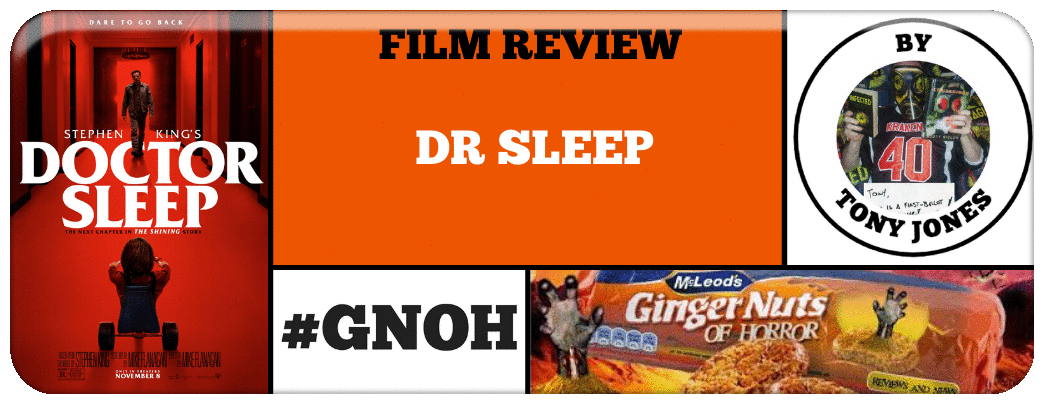 The much-hyped Dr Sleep finally arrived on our big screens just in time for Halloween and delivers an entertaining supernatural thriller rather than a genuinely scary horror film. The marketing campaign has also over-egged the strong connection the film has with Stanley Kubrick’s masterpiece The Shining, to the extent that seeing posters of Ewan McGregor (Danny Torrence) looking through the door famously smashed by Jack Nicholson (Jack Torrence) in the original film almost put me off watching this continuation at all. I found that rather tacky, but money talks. Dr Sleep does make numerous connections to The Shining, but wisely goes not genuinely overdo it, and viewers are sure to enjoy the references. It is worth pointing out that Dr Sleep makes more connections to the original than King’s book does; the overtones connecting to The Shining are bound to be a box-office ticket seller and, not surprisingly, feature heavily in the trailers. The first thing to clarify is whether this is a sequel to the Stephen King novel or the Stanley Kubrick film as they were quite different from each other? The answer is a bit of both and that creates a bit of a conflict, with the climax a definite tribute to Kubrick’s cinematic vision rather than King’s novel. As you might gather the ending of Dr Sleep is radically different from the book and I felt the conclusion of the film was very strong. At various points in the over-long 151-minute running time the book and the film veer in different directions, having said that it remains a relatively faithful adaptation and ranks as one of the better King adaptations to come along in recent years. Expectations were justifiably high once Mike Flanagan came aboard as director, having been involved in several excellent projects in recent years including The Haunting of Hill House, Gerald’s Game, Hush and Oculus. Flanagan had a tough job; marrying King’s vision of transferring his book to the big screen and respecting the wishes of those who manage the estate of the late Stanley Kubrick was never going to be an easy job, but he seems to have kept both parties admirably happy. The film opens with some brief scenes with Danny still as a boy trying to deal with the repercussions of what happened in the hotel and the death of his father, before skipping forward to 2011 when, like his father, he is a violent drunk and drifter. During these heavy drinking periods his gift, which he calls ‘the shining’ is dulled by the booze, but upon arrival in a new town he discovers Alcoholics Anonymous and turns over a new leaf. The story then makes another seven-year jump and Danny is still sober and working in a hospice. The patients call him ‘Dr Sleep’ as he uses his rediscovered ‘shining’ to ease their fears of dying and moving into the next life. The film has two other major strands which eventually connect with Danny. There is a little girl in town who has an incredibly powerful ‘shine’ called Abra who is played by the excellent Kyliegh Curran who communicates with Danny via their gift for several years before they meet face to face. The other crucial plot involves a secret group of supernatural beings, slightly like vampires, who feed off the energy of people who have ‘shine’ ability which they call ‘steam’. This ‘steam’ exists in its purest essence in children and to extract the ‘steam’ they torture and kill the kids they locate who have it. However, as the years have gone by it has become harder to find kids with special abilities and the ‘True Knot’ group are becoming hungry and soon discover Abra and begin stalking her. However, she is a tough little girl and is also hunting them as she is aware of one of their most recent kills. These cat and mouse games go on slightly too long, in the middle section of the film, and contribute to the bloated running time. ‘Rose the Hat’ (Rebecca Ferguson) leads the ‘True Knot’ and she is unlikely to be remembered as one of King’s more memorable villains, either in book or film. She smiles a lot, is very flouncy and is more talk than action and carried little in the way of threat or menace apart in the brief torture scene. She was rather dull, this was a problem as she had a lot of screen time, and we are given little or no backstory on their origins, apart from the fact that they live for a very long time. The film wisely pulled back from the child torture in the book required to produce the ‘steam’ and reduces the number of child deaths compared to the book. Apart from ‘Rose the Hat’ the rest of the ‘True Knot’ were anonymous background figures and as bad guys were forgettable. ‘Snakebite Andi’ did have a great introduction scene, but then she also sadly disappeared, even though she had the dangerous ability to make people do anything she wanted by forcing her will upon them. And in the end the majority of the ‘True Knot’ were despatched remarkably easy, probably too easily. Ewan McGregor carries the film very well and convinces as Danny Torrence, dealing with the demons of alcoholism and the responsibility of watching out for Abra when the ‘True Knot’ come knocking and the film is bolstered by a strong support cast. When Danny, Abra and Rose communicate with each other, or listen in on each other’s conversations, the film goes into fantasy mode where the listening is seen as an out of body experience. Although the special effects were very solid, it did not do much for tension and even less for adding any kind of horror. This entertaining film is hampered by its 151-minute running time and the fact that it is just not scary enough, if at all. It should be marketed as a supernatural thriller, as there is just not enough ‘horror’ to call it a genuine horror film. I do not believe I was caught out by a single scene in the entire film. In a crowd-pleasing finale we return to the Overlook Hotel and some nice cross-references with The Shining which were very respectful, and we were reintroduced to some of the ghosts from the original. In Chad Clark’s superb Tracing the Trails: A Constant Reader's Reflections on the Work of Stephen King Clark made a fascinating observation about the Dr Sleep novel. He felt that the main character in the novel need not have been Danny Torrence, as in the book there are relatively few references to The Shining, and that with a different opening 50-60 pages it might have been an entirely different kind of novel. Perhaps a clever editor saw the financial potential of shoehorning this manuscript into the storyline of King’s most famous works? I tend to agree with Chad Clark, for most of the book they have little to do with each other and the ending of Dr Sleep, the novel, could have taken place anywhere, not the burned down Overlook Hotel, the film was not the same case. This was a very solid and respectful follow-on to The Shining but is best not sold as a sequel and the director has made a fine job of merging the visions of both King and Kubrick. However, it lacked scares and although it was convincing it also lacked knockout scenes, but the return to the Overlook Hotel was a real treat. 4/5 Tony Jones   FILM REVIEW: GHOST IN THE GRAVEYARD
28/10/2019
 Director: Charlie Comparetto Writer: Charlie Comparetto Stars: Kelli Berglund, Jake Busey, Olivia Larsen, Nikki Blonsky, Jason James Richter, Royce Johnson, Joseph D’Onofrio, Shiloh Verrico, Maria Olsen, Joah Carmody The town of Mt. Moriah comes under the thumb of Martha, a ghost who comes back to haunt the teens, who witnessed her death as children, during a “game” of ‘Ghost in the Graveyard.’ So far so many other films ,the revenging ghost is hardly a new concept in horror films, from The Ring to The Woman in Black and a 1000 other films in between you can be forgiven for thinking that you may have seen this all before. And to be fair you have, Ghost in the Graveyard, riffs on countless other films throughout its run time. Childhood game leads to childhood tragedy, child at centre of the tragedy leaves town and comes back years later, murders begin again, secrets societies know the truth of what of is really going on, check, check, check , and check. Now some of you may already be closing this review down, or at least thinking to yourself, "well this is another film to avoid." Stop! While Ghost in the Graveyard, may sound exactly like the last film that disappointed you, it is in fact a somewhat charming, and effective chiller, that achieves a lot more in terms of scares and watchablity than many films with much bigger budgets. The performances of the three main leads are probably the films strongest point. Props must go to Jake Busey, I must admit I had to check with IMDB that this was in fact Jake Busey. Many of you like myself will only have ever seen him in films that require him to act like the son of Gary Busey. Who would have thought that the man behind Shasta McNasty could be capable of such a sympathetic performance. The concerned father that holds a secret that will rock the foundations of his daughter's life performance from his is both nuanced and heartbreaking at all of the right moments in the script. Kelli Berglund's and Olivia Larsen as Sally and the school bully Zoe, with whom she must join forces with to defeat the evil, are performances that both hold their own and effectively play off each other while on screen together. There is a good sense of chemistry between the two actors, and they work well with a script that at times has some cringeworthy dialogue. Overall the story is arc is satisfying, and leads to a conclusion that won't leave you screaming at the `TV screen, however, this is a film that could have done with a fair bit of either trimming of ideas, or a more centralised focus on the direction that it wants to take. There is almost a sense that the director wanted this to have been a two or three part film, and his grand magnum opus, but pressure from the studios either forced him to cut it all down into one film, or perhaps someone didn't say hold on a minute. There is a lot of great ideas, and set pieces throughout the film, and Comparetto keeps a fresh eye on many of the plot elements that we may have seen before. For example by transposing the "haunted house" theme to an outside location, in particular the titular graveyard gives the film a welcome sense of freshness. The old fashioned haunted house motif is so well worn, even the creaky floorboards have up-cycled themselves. The use of non standard locations also allows from some clever cinematography, in particular the scenes at night in the graveyard are stunning. However, like Comparetto, the camerawork at times from Reut needed some reigning in, as at times it felt like he was a kid with a new box , determined to give every camera technique a shot in the film. There is still a cohesive sense of style to the film and it does look amazing despite its limiting budgetary restraints. Both Comparetto and Reut understand that when a films budget is low, and you have a half descent script the best way to make a film watchable is ensure that the film looks good, while allowing for the story to be told, without annoying the viewer. Which in main comes down to it being that film that doesn't rely on jump scares every five, yes there are a few, but the tension, and sense of dread comes from the script and cinematography rather than the viewer waiting for the next loud bang Ghost in the Graveyard, may not the most original film, and despite its inherent flaws it also a highly enjoyable film that draws the best from both the cast and crew. And while it may not the scariest of films you will watch this year, it does mean that if you are looking for something to show to the young teenagers in your family, this will provide ample thrills, without the risk of traumatising them for life   film review: ASHES (2019)
23/10/2019
 Director: Barry Jay Writer: Barry Jay Starring: Elizabeth Keener, Jeremy Earl, Yumarie Morales and Angelique Maurnae In order to give what we believe to be a more unbiased constructive criticism of the piece, the members of Bloodhound Pix are tackling each review as a panel of three. None of the members know the others’ thoughts on the content until after they submit their initial response. Review by Bloodhound Pix Bloodhound Pix is made up of: Craig Draheim, Josh Lee, and Kyle Hintz Follow them at https://www.twitter.com/BloodhoundPix https://www.facebook.com/BloodhoundPix/ https:/www.instagram.com/bloodhoundpix/ After a family's estranged aunt passes away, they're reluctant and creeped out to receive her cremated ashes. But when a series of supernatural misfortunes beset them, they'll have to go through Hell to be rid of her angry spirit. Initial Reaction C. First I have to give credit to the cast. They were dynamic and felt like a tight-knit group with “real” people and not because the script says so. Melinda DeKay, who played Aunt Marion fits the bill as an evil spirit and there were many creepy moments. A lot of this is due to the format that most likely relies heavily on improvisation for the interview scenes. The best comparison I can come up with is the horror version of Modern Family, as most of the movie is in a narrative format but it will jump to the family members being interviewed on their couch. There was even some comedic moments that I felt helped liven the movie up. However, Modern Family works with viewers because it is 24ish minutes and has plenty of elements to move the pacing along: large cast, multiple storylines, commercials, slapstick action-driven elements, and so on. Sadly by 24ish minutes of Ashes it felt like I’d been sitting there for 90 minutes already. It doesn’t help that most of the major goals, such as the aunt’s ashes and the family realizing the ashes are what is causing their misfortune, then deciding to get rid of them is all made clear in the first 10. While attempting to make this a dread-soaked slow burn, by throwing all this information at us so quickly we are kind of left thinking, “okay… what now?” This is where every card is pulled out to keep things going to that “appropriate” feature length, with countless scenes of them sitting around basically repeating themselves with: “We need to get rid of the ashes. I had a dream that says we should.” “No, it’s disgraceful!” “Fine, then let’s come to a happy medium.” And repeat. One almost feels that if it would have been something like a webseries, its format would be more effective and the constant flashing to interviews wouldn’t cause the movie to drag so much. Big fans of possession movies will find the format enough to (hopefully) stand out from all the Possession of (insert female name here) movies, while still keeping the major tropes. The chemistry among the cast is solid and if anything comes from this it’s that these actors should get more roles. In the end the attempt at making a tension-building slow burn, with the occasional jumpscare backfired, leaving a lot of viewers finding a way to get on their phones. J. I thought the film had some well crafted chills that utilized a pretty great sound design and imagery and that’s a good thing because I felt a lot of the plot points were somewhat paint-by-the-numbers. For a haunting film you had possession hokum. Ouija hokum. Paranormal expert hokum. Seance hokum. Character death hokum that wasn’t too surprising, especially in the order that the characters were killed off. I thought the actress that played the ill fated Aunt Marion, Melinda DeKay was creepy as all hell and what made her beef with her family all the more interesting was that she wasn’t really in the wrong. They were assholes to her while she was alive and now that she’s not, you better believe she’s gonna haunt their asses from beyond the grave. There was sparse humor that I thought mostly worked in spades which was welcoming. One thing that did bother me was the creative choice to have “character confessionals” where they individually speak directly to the camera/audience. I think these sequences could be omitted and you wouldn’t lose anything other than some exposition that really wasn’t necessary to understand anything. It would also knock off some runtime minutes. Also, the inclusion of characters at various points watching Night of the Living Dead (twice!), Frankenstein and Nosferatu was a bit of overkill too. Even more so when the events in said films were almost mirroring events happening in Ashes. We get it, these films are classics but once would’ve been enough. Again, the sound design was great and the moments of Aunt Marion’s unleashing fury on her poor hapless family worked well. Nothing reinvented the wheel but effective chills and an entertaining ride to the finish is plenty to make this a good watch. Moral of the story: don't be an asshole to your family members or suffer the usual hokum involved with the inevitable haunts! K. Alright, so the actors all do a solid job in this one, even if they’re given so-so material to work with. Technically, it’s pretty sound. But the story falters left and right, and the tone is all over the place. The film relies heavily on mockumentary-style confessional interviews and it’s never explained why the family has a camera crew in their living room or why the style shifts without any narrative motivation. These confessionals seem like a good way to add humor and dispense exposition at first but they become cloying and redundant. There’s a big problem with this film: the screenplay. The central dramatic issue is what the family should do with Aunt Marion’s ashes. The problem is a non-problem. You can bury them or dump them in the ocean, or throw them away. It’s easily solved. Okay, now if it took a long time for the family to determine that the spooky happenings are caused by the ashes, then maybe you’d have something. But it’s made clear 10 minutes in that the ashes creep everyone out and are likely going to cause problems, which they do. Then there’s still senseless and poorly written debate about what to do with them, as if anyone would give a shit how they’re disposed of when their lives are in danger. This is where the suspension of disbelief is broken by false actions from the characters. Their concern for dealing with the ashes in a decorous manner outweighs their impulse for self-preservation. Sorry, but I call bullshit. There are also several attempts at shifting tone from comedy to horror to action that don’t really work. And a paranormal duo, one of which is basically Daredevil. There’s also a series of unnecessary time and date title cards that serve no purpose. But the big issue is the lack of narrative drive and characters that are subject to the nonsensical plot rather than having motivations of their own. This is another cause of technical proficiency paired with absolutely zero storytelling skill. Cool shots, I’m bored, bro. Response C. Without repeating myself or others (which I will be) I think this is another prime example of a newer filmmaker going “I want to make a feature but don’t have a lot of money. What’s a good idea that can work on a low budget? A horror movie? A possession/haunted house movie? If it’s a mockumentary I won’t have to worry about a script as much (This is not true). Wonderful!” What we’re left with is a movie with story devices that grow stale within the first 20 minutes and a plot that was not planned out well in the scripting phase to give us enough substance to last a feature length. If this was a 30 minute short you would have me and I believe all three of us fully on board. However, we live in a time where it has to be a feature and not only that but a FRANCHISE or CINEMATIC UNIVERSE or SERIES! But as the three of us got to hear Peter Farrelly state a couple years ago, “longer or continuing stories are better just like a novel is better than a short story”... Yeah? I’ll be honest, I’ve read a lot of mediocre novels but I’ve also read short stories that have impacted me for decades. Sometimes a story isn’t meant to be a feature, just as some stories don’t work well as movies. Maybe they’re better suited as a graphic novel or radio drama or painting or hell, maybe even as a fictional SnapChat story, who knows? At the end of the day there’s some great thrills and some funny moments but those parts got lost in the sea of problematic elements. J. Yeah this is a somewhat paint-by-the-numbers haunting film. With story issues. Looking back I keep thinking about how many times the family sat around a table (because of course they did), having a conversation about what they should do with Aunt Marion’s ashes. Jesus Christ! Get rid of the motherfuckers! Garbage disposal! Turn on the water full blast and dump them down the disposal. Problem solved and movie over. Thirty minutes into it. I’ll reiterate that I did think some of the scare scenes were effective and the director, Barry Jay, clearly knows what he’s doing as far as shooting that stuff. K. I have to agree with my comrades here. There are some redeeming elements, some humor, and some decent spooky elements, but overall the lack of story dragged all those things down and caused me to lose interest pretty early on. Next time they should team up with a screenwriter so they have something worthwhile to film.  |

Archives
April 2023
|
 RSS Feed

|

|