

[FEATURE] DOCTOR TERRIBLE’S HOUSE OF HORRIBLE: A RETROSPECTIVE BY DAVID COURT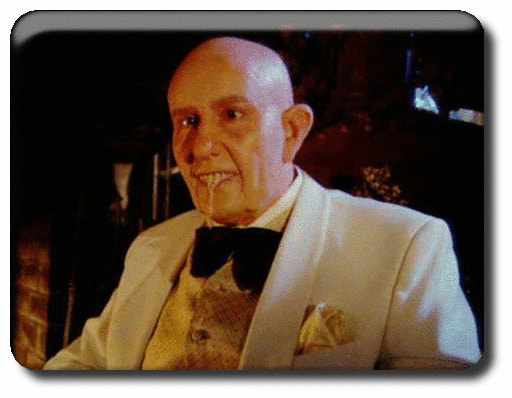 “Good evening. I’m Doctor Terrible. Welcome to my House of Horrible.” The late nineties/early 2000s were a fantastic time to be a fan of horror on Britiish Television; from Channel 4’s gritty Vampire-series-that-never-mentions-the-V-Word “Ultraviolet”, Channel 5’s Horror anthology “Urban Gothic” (discussed on these very pages at length by the awesome John McNee) through to the superlative Garth Marenghi’s Darkplace. Creeping in in the year 2001 was a series that arrived with little fanfare and achieved so few viewers that it was never recommissioned for a second series. This was despite a stellar cast, lead actor Steve Coogan’s star still being (mostly) in the ascendance, and the already proven track record of relatively newly formed production company Baby Cow Productions. That series was Doctor Terrible’s House of Horrible, and it was truly diabolical (and not to be confused with the similarly named Doctor Horrible of Sing-along-blog fame). Doctor Terrible’s House of Horrible was a satirical, yet affectionate spoof (and tribute) to the 1970s British horror films of Amicus and Hammer, consisting of a total of six episodes. Each episode was a spoof of a style of horror film, rather than a direct snipe at any film in particular. Steve Coogan portrayed the eponymous host beneath several layers of prosthetics, a creepy bald white-suited individual sat in his study, open fire blazing. He opens and closes each episode like a slightly less sinister and anti-Semitic Roald Dahl with choice words of wisdom. The concept of a horror host is more familiar to American audiences (for instance, Cassandra Peterson as Elvira) but the framing mechanism here provides a familiar continuity, much as the same technique used in the earlier series of Tales of the Unexpected – the old tradition of being read a ghost story before bedtime. He’d star in each episode as well, mostly as the lead. Well, it was half his production company, after all. Lesbian Vampire Lovers of Lust (Originally shown on BBC2 on November 12th, 2001) 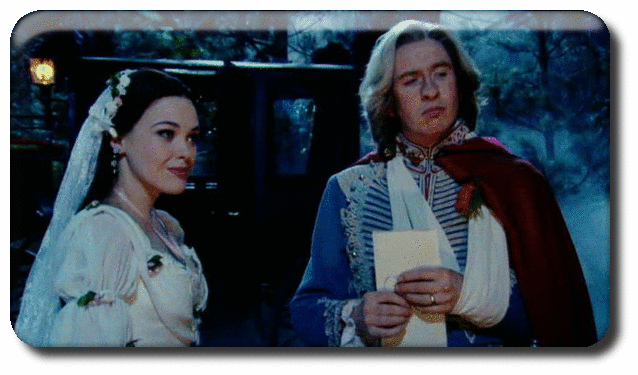 “Sappachu Vampiricism; the love that dare not spell its name. But surely, you say, there’s no such thing as vampires, or lesbians. But what’s that under the bed? And who’s that in the closet?” Setting its stall from the outset (and if that title isn’t going to attract viewers to a new and unproven series, nothing will) Lesbian Vampires of Lust is a gentle piss-take of Hammer’s late sixties and nineteen-seventies obsession with acres of pale-skinned cleavage (“The Vampire Lovers”, “Twins of Evil”, etc). It was no longer sufficient to have the star power of Christopher Lee glaring menacingly off camera – sex was needed to sell your movie as well; a perfect storm of boobs, bodices and blood. In the tale, Coogan plays the dashing Hans Brocken, a perfectly coiffured dashing Military captain whose hand is, erm, broken (That’s the level of satire, folks – and it’s all the better for it). It’s 1877 and Brocken, and his new wife, are travelling to a remote castle in (Upper) Carpathia for their honeymoon. Little does he suspect that he and his virgin bride are heading into Vampire Territory ruled by Ronni Ancona’s Countess Kronsteen. Honor Blackman (as Transeet Van Eyre) gently lampoons the type of roles she was playing in the seventies, and the episode also features a never-camper Ben Miller. It’s one of the stronger episodes in the series, and is a great introduction to the style of humour that will continue over the short-lived series. It’s of interest that this is the first transmitted episode, but it’s the fourth episode on the DVD. Frenzy of Tongs (Originally shown on BBC2 on November 19th, 2001) 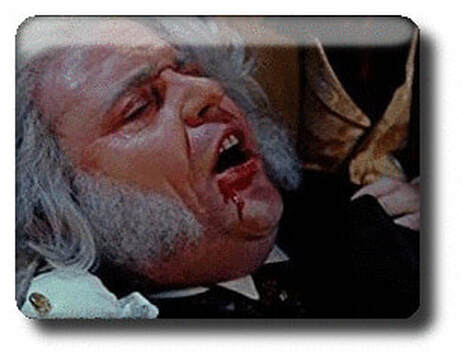 “The last time I saw you, Chang, you were dead.” “It takes more than death to kill me.” It’s easy to forget that, interspersed with his Hammer Work, Christopher Lee made six Fu Manchu films, the last of two which – “The Blood of Fu Manchu” and “The Castle of Fu Manchu” - with Jesús Franco. Fu Manchu was a villain created by the English author Sax Rohmer, featuring in fourteen of his novels between 1913 and 1959. Fu Manchu even ended up with a moustache named after him, which is no small feat. Well, Steve Coogan never forgot. “Frenzy of Tongs” is a shrewd – yet slightly offensive – look at that character, a villain created to stoke up anti-Chinese sentiment. A make-up plastered Mark Gaitiss plays Hang Man Chang, a Chinese villain attempting to get the population of London hooked on his drugs. Plastered in make-up that slants his eyes and yellows his skin, it’s not a good modern look. Coogan plays Nathan Blaze, the Peter Wyngarde-esque dashing hero (and I’m beginning to notice a theme here…) It’s one of the more forgettable episodes in the series, only really memorable for spoofing something from an era that was best left forgotten. Curse Of the Blood of the Lizard of Doom (Originally shown on BBC2 on November 26th, 2001) 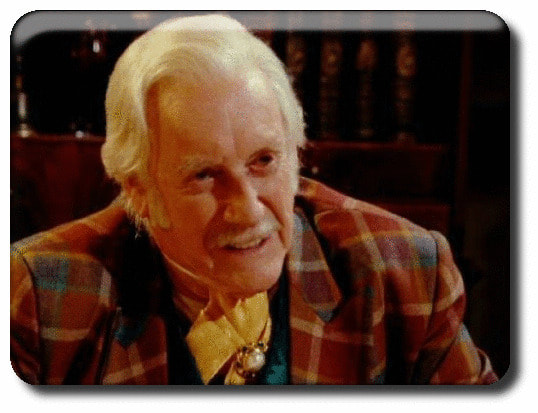 “Tell me, have you ever had the opportunity of working with those unfortunate flame-haired Celts with low skin pigmentation? Let me be frank, Miss Latimer. I’m talking about Gingers, Ginger-nuts, carrot-tops, d’ye ken? This is what I’m presenting to the board. The ultimate challenge. If I can restore the scorched skin of a ginger to its pre-singed freckled majesty, then man will be able to say – I am non-flammable.” Doctor Donald Baxter (Coogan) is trying to find a cure for skin regeneration in order to cure burns victims. Eventually, frustrated with his lack of progress, he injects himself with an experiment lizard serum and finds himself transformed himself into a giant reptile. Part “Jekyll and Hyde”, part “The Reptile” (a Hammer film starring a young Jacqueline Pierce, 12 years before she’d portray Servalan in “Blake’s 7”), it’s a loving pastiche of the “Good scientist going to evil extremes” trope. (Warning: Contains Steve Coogan and Simon Pegg doing thick Scottish accents) And Now the Fearing (Originally shown on BBC2 on December 3rd, 2001) 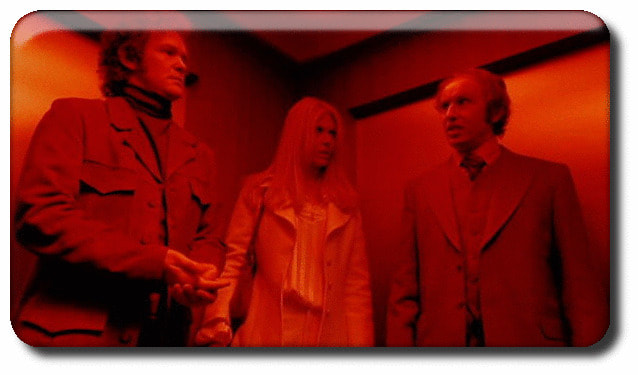 “We all have dreams from time to time. The other night, I found myself back at my old school, in the headmaster’s study. I was thwacking his naked buttocks with a triple-pronged bamboo-backed leather tawse, whilst his wife peed into a Ming vase. Later that night, I had a dream. I wish I could remember what it was.” This is the first episode on the DVD, but was transmitted as the fourth episode on the original broadcast. It’s my personal favourite of the six, containing three short stories – an anthology within an anthology. It’s a clear spoof of the portmanteau The Vault of Horror in which three people in a new high rise development (Amicus(!) Towers) end up trapped in a lift. TO pass the time until their rescue, they get chatting and end up discussing recent nightmares they’ve all been having, each segueing into one of the three tales. Coogan plays Denham Denham, the owner of the Amicus building, Julia Davis plays Stephanie Wise and Pointless Lead singer Alexander Armstrong plays Michael Masters. It’s the strongest narrative out of all six episodes, and of course ends up as one of the morality tales that all such portmanteau horror tales ended up being. Evil – be it selfishness, envy or greed - is punished, seemingly for all time. Voodoo Feet of Death (Originally shown on BBC2 on December 10th, 2001) 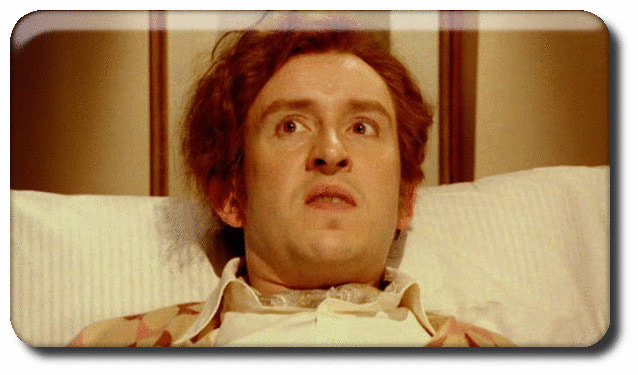 “The operation?” “It was a complete success. See for yourself.” “They’re… on the wrong way around!” “No, Darling., You’ve got your legs crossed.” In the sixties and seventies, you couldn’t move for limb transplants being carried out by unethical doctors. Legs, arms, even little fingers, the denizens of Harley Street were all at it – defying their peers to prove that their old science was dated. Little were they to know that, inevitably, and for reasons not ever fully understood, some vestige of the previous owner would remain in the transplanted part. And, invariably, the part would always have come from a psychopath (“Hands of Orlac”, etc) Voodoo Feet of Death sees Coogan play Lester Crown, a 1930s World Champion Ballroom dancer whose career is cut short when he loses both of his feet in an accident involving a freakishly large pair of scissors. Doctor Lorimer Maitland - Heads, Shoulders, Knees and Toes specialist and Europe’s pioneer in Foot Transplantation – arranges for a foot replacement, but at a terrible cost. It’s a tale of bitter jealousy that can only ever end one way. Coogan and Sarah Alexander are clearly having their time of his lives playing Crown and his ever patient girlfriend, plummy upper-class English accents and all. Scream, Satan, Scream (Originally shown on BBC2 on December 17th, 2001) 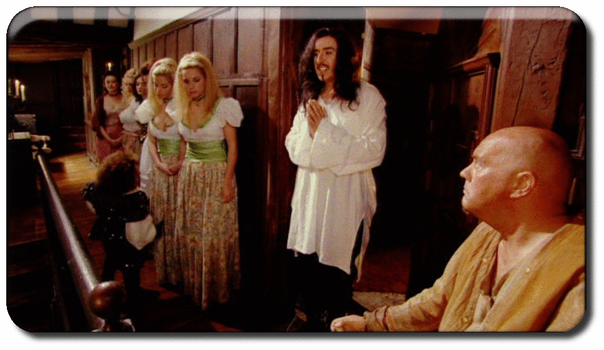 “The last recorded burning of a witch in this country was one Molly McTiernan who weas torched at Walmsley Manor House in Suffolk last Thursday. I can still hear the screams ringing in my ears. Tonight’s tale, however, does not have such a happy ending.” No series such as this would be complete without spoofing witches, a common trope amongst Hammer and its ilk. In “Scream, Satan, Scream”, Coogan plays Captain Tobias Slater, Witch Locator - clearly based on Matthew Hopkins (as portrayed by Vincent Price in the excellent “Witchfinder General”). Warwick Davies plays Tygon, his assistant (named after the production company behind that same movie). Tobias Slater is as corrupt as they come, using his position as an excuse to defile as many attractive young virgins as he can. It’s another cleavage-heavy episode, and – of course – Slater gets his just desserts. The humour feels a little more forced than the other episodes – it certainly has the feel of “Carry on” meets “Witchfinder General” - but it’s still a worthy conclusion to a series which is a loving tribute to the horror genre. If you’re a fan of the double (or in many cases, single) entendre, you’re in for a hoot. “That was truly diabolical.” – Doctor Terrible “Doctor Terrible’s House of Horrible” is an absolute steal on DVD from Amazon UK, and well worth picking up. So often it’s the case that our memories of a series are better than the actual rewatch, so it was good to see it hold up. I’d argue it’s only the Fu Manchu episode that remains the weakest, feeling somewhat like a spoof so far – the humour in it has aged badly. Generous extras too; an interesting “Making of” documentary and full audio-commentary with the cowriters and the director. Further reading/viewing: As mentioned earlier, John McNee did an excellent series of articles on the TV series Urban Gothic, the first part of which can be found here The BBC details on “Doctor Terribles House of Horrible” are limited, but can be found here – there are a few clips. About the Author  David Court is a short story author and novelist, whose works have appeared in over a dozen venues including Tales to Terrify, StarShipSofa, Visions from the Void, Sparks, Burdizzo Mix Tape Volume One and Corona-Nation Street. Whilst primarily a horror writer, he also writes science fiction, poetry, and satire. His newest collection, Contents May Unsettle, was released in 2021 and his debut comic writing has just featured in Tpub’s The Theory (Twisted Sci-Fi). As well as writing, David works as a Software Developer and lives in Coventry with his wife, three cats and an ever-growing beard. David’s wife once asked him if he’d write about how great she was. David replied that he would, because he specialized in short fiction. Despite that, they are still married.. TODAY ON THE GINGER NUTS OF HORROR WEBSITE UNBURIED: A COLLECTION OF QUEER DARK FICTION , EDITED BY REBECCA ROWLAND (BOOK REVIEW) THE HEART AND SOUL OF HORROR FEATURES
RAW HORROR KNOWS NO BOUNDARIES! |
![[FEATURE] DOCTOR TERRIBLE’S HOUSE OF HORRIBLE: A RETROSPECTIVE BY DAVID COURT](../../../uploads/3/4/5/1/34519054/feature-doctor-terrible-s-house-of-horrible-a-retrospective-by-david-court_orig.jpg)
![[HORROR NEWS] YOU WANT HORROR MOVIES? WE'VE GOT HORROR MOVIES](../../../uploads/3/4/5/1/34519054/horror-news-you-want-horror-movies-we-ve-got-horror-movies_orig.jpg)


 | Irreverently, it could be said that Antoine Wiertz was the Ed Wood among the Romantic painters because of his clumsy tech- nique, though digging a bit deeper reveals a fascinating person whose canvases now, almost two hundred years later, increasingly manage to excite the interest of enthusiasts all over the world on account of their incredibly original and almost avant-garde approach. |
The fantastic Belgian painter and sculptor Antoine Wiertz is unfortunately not very well known yet outside the circles of aficionados, although he is, with all his Romanticism, fantasy, and megalomania, almost the ideal person to spin an extremely creepy biographical and historical novel, play, or film around.
Antoine Wiertz was born in Dinant, the present French-speak- ing area of Belgium, in 1806 --barely three years earlier than the famous American author Edgar Allan Poe, with whom he has something in common--and died in Brussels in 1865, not at the age of forty and from alcohol poisoning like Poe, but in his fifty- ninth year from paint poisoning: the new method devised by Wiertz to combine the Flemish oil painting and Italian al fresco techniques with each other, and which he called peinture mate, gradually burned and destroyed his lungs.
The American writer Poe and the Belgian painter Wiertz, both products of the first, “Romantic,” half of the nineteenth century, do have something in common, although they may never have known of each other’s existence. The first bit of evidence of this could well be a book published in 2001 and which takes the wide- spread phobia from their epoch with a pinch of salt: Buried Alive! by Jan Bondeson. The back cover states the following: “Read- ers of Edgar Allan Poe’s tales may comfort themselves with the notion that Poe must have exaggerated: surely people of the 1800s could not have been at risk of being buried alive?” The front page is illustrated with a detail of a painting by Antoine Wiertz: The
Antoine Wiertz was born in Dinant, the present French-speak- ing area of Belgium, in 1806 --barely three years earlier than the famous American author Edgar Allan Poe, with whom he has something in common--and died in Brussels in 1865, not at the age of forty and from alcohol poisoning like Poe, but in his fifty- ninth year from paint poisoning: the new method devised by Wiertz to combine the Flemish oil painting and Italian al fresco techniques with each other, and which he called peinture mate, gradually burned and destroyed his lungs.
The American writer Poe and the Belgian painter Wiertz, both products of the first, “Romantic,” half of the nineteenth century, do have something in common, although they may never have known of each other’s existence. The first bit of evidence of this could well be a book published in 2001 and which takes the wide- spread phobia from their epoch with a pinch of salt: Buried Alive! by Jan Bondeson. The back cover states the following: “Read- ers of Edgar Allan Poe’s tales may comfort themselves with the notion that Poe must have exaggerated: surely people of the 1800s could not have been at risk of being buried alive?” The front page is illustrated with a detail of a painting by Antoine Wiertz: The
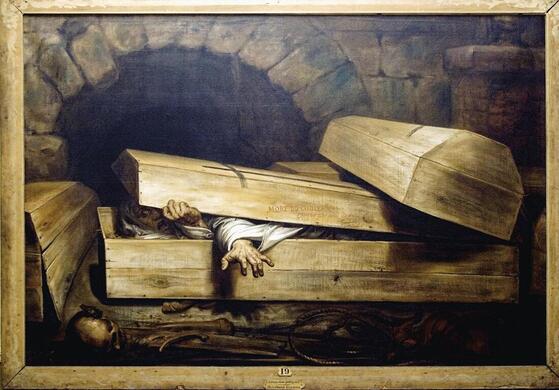
Antoine Joseph Wiertz, The Premature Burial, 1854. Oil on canvas, 160 x 235 cm. Musée Wiertz, Brussels.
Premature Burial, exactly the same title as Poe’s short story deal- ing with this obsession. So it appears that both had a tendency toward the macabre.
And yet, beside the fact that they both worshiped the arts, were blindly ambitious, and had an extremely high opinion of their own literary and artistic talents and almost gave their lives for this--alcohol and paint poisoning--they might well have not appreciated each other’s company. They were both too egocentric for that; or, to quote Poe’s very own words: “I cannot conceive of any being superior to myself.” The course of their lives was also very different, as were their characters, something that can perhaps best be demonstrated by their portraits.
An early daguerreotype of Edgar Allan Poe dates from 1849, the year in which he died, and perhaps nothing can describe his facial expression better that the phrase from Poe’s French translator, Charles Baudelaire: “Il a beaucoup souffert pour nous” (He suffered a lot for us). His life story reads almost like a night- mare--an even worse nightmare than he actually committed to paper, according to biographer Van Doren Stern: his father, an alcoholic actor, simply disappeared in Poe’s early years; his young mother, a talented actress, pining for two-year-old Edgar, suc- cumbed to tuberculosis in a musty boarding house in Richmond; he was to see his older brother, William, die of alcoholism in his early twenties; and his sister Rosalie was bordering on oligo- phrenic. The three children were placed in foster homes, Edgar in Richmond with a surly trader in tobacco, among other things, by the name of John Allan and his childless wife, who was to die of consumption before Edgar reached the age of twenty. Edgar’s relationship with this foster father was, however, very cool, unlov- ing, and problematic on account of their diverse characters, and the latter therefore never legally adopted Edgar or helped him financially with his university studies, for example, and did not even mention him in his will.
The tragic tone was set for Edgar’s future life and he was spared little misery, from the death of his niece-bride, Virginia, whom he worshiped--in his own asexual way--to severe financial prob- lems and scandals, as well as periods of chronic dipsomania and a
“death in the gutter.” And yet, despite all this adversity, he never laid down his pen, witnessed by some fifty poems, one novel, two novellas, seventy short stories, and a roughly equal volume of essays and articles.
Besides the fact that he is also dressed in black and is wearing the black cravat fashionable at that time, the contrast of Wiertz’s look and general posture in his self-portrait at the age of forty- nine could not be greater compared with that of his contem- porary Poe, who had passed away in the meantime. There he stands, his arms crossed and looking arrogantly at the viewer, the brilliant painter and sculptor who wanted to surpass Raphael and Michelangelo as well as his compatriot Rubens, who obtained the necessary funding to enable him to become proficient in his art in Paris and Italy, and Rome in particular, and could always
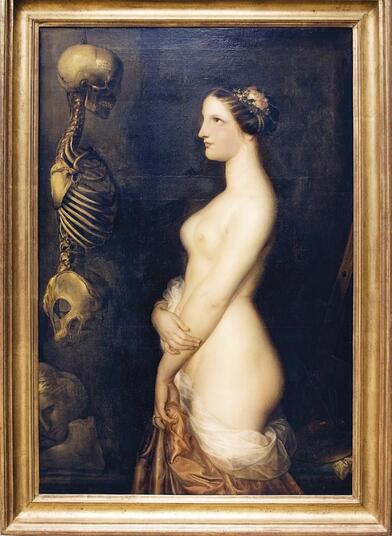
Antoine Joseph Wiertz, Two Young Girls, or The Beautiful Rosine, 1847. Oil on canvas, 140 x 100 cm. Musée Wiertz, Brussels.
count on the necessary political and financial support during his further career. Later in his life he got the Belgian state to go as far as building a studio and adjoining house for him in Brussels, which had to be transformed into a museum after his death in his honor. The museum is one of the least visited in the European capital.
And yet, he has something endearing, this Antoine Wiertz. He adored women and was certainly not averse to the carnal, whether paying for love with them or not, in contrast to Poe, who did not even consummate his marriage and possibly had homosexual ten- dencies. Wiertz, however, regarded his artistic vocation as being so important that he never wanted to marry so as not to be dis- tracted. Furthermore, his view of women is, in a way, denigrating. Two quick examples of this: a beautiful young girl is initiated as a witch (the phallic aspect of the broom handle is striking); and a voluptuous lady is handed forbidden books by the devil which prompt her to indulge in indecent acts.
Antoine Wiertz was also socially committed. When he was around forty, he must have realized his own mediocrity all too painfully, especially compared with his heroes, Raphael, Rubens, and Michelangelo, and then proceeded to lead his life as a bene- factor of mankind, denouncing various social injustices with his canvases. Two quick examples of this are Hunger, Madness, Crime, featuring a widow who cannot pay her taxes, whose breasts do not contain any more milk for her infant child, and who is so hungry that she cuts off her baby’s leg to make soup from it. The Suicide concerns a young man who has read rather too many writings by the communist and atheist Karl Marx--notice the book entitled Materialism --and writes in his farewell letter, “Il n’y a point d’âme, il n’y a point de Dieu” (there is no soul, there is no God), and then puts a bullet through his head in the presence of his guardian angel and a devil.
The most endearing aspect of Antoine Wiertz’s personality is, however, that he is now remembered for a very different reason from what he might have imagined: no, compared with the Renais- sance and Baroque masters, he became a wretched dauber, though his extravagant and macabre choices of subject, from Napoleon in Hell to the Visions of a Guillotined Head among others, have turned him into a well-known figure in those circles preoccupied with horror and the fantastic.
The Parisian poet Charles Baudelaire translated many of Poe’s short stories into French during his stays in Brussels, and it was also during one of his stays there that he visited the studio of Antoine Wiertz. It is generally known that he regarded Poe as a genius, a poète maudit, while he dismissed Wiertz as a charla- tan and profiteer. And yet, Wiertz and Poe might have had more in common than Baudelaire may have realized. What follows is a comparison between three of Poe’s short stories and three of Wiertz’s paintings.
Being buried alive: this has been a death penalty and one of the most controversial and intense phobias through the centuries.
Sigmund Freud may well have argued that this fear was nothing more or less than the unconscious desire to return to the safety of the womb; but, in the era of Poe and Wiertz, the terror of being buried alive--i.e., prematurely--took on obsessive proportions. In his standard work L’Homme devant la mort (Man before death), historian Philippe Ariès provides a scientific basis for this age-old fear and explains why this anxiety had taken on psychotic forms precisely at the time of Poe and Wiertz. His finding is that, in an increasingly secular society, there was a tendency to pay increas- ingly less heed to the rituals surrounding death, as these were sometimes ignored completely during the Industrial Revolution with its depersonalization, population growth, and epidemics. According to the author, these rituals served precisely to avert the risk of premature burial.
Poe’s shortstory entitled“The Premature Burial”has an umber of surprising aspects. The narrator cites, by way of introduction, a number of historical examples, then describes how he, as a well- to-do hypochondriac, has more than sufficient financial resources at his disposal to renovate his family crypt and have a cozy coffin tailor-made for himself so as to be able to reappear effortlessly among the living in the case of a possible premature burial, but then ends with a decidedly humorous “twist” that shows his per- sonality in a quite different light. After first describing with an accumulation of frightening expressions how he arrived at the most dreadful conclusion during the slow awakening that he had been lowered into the ground in a coffin while still very much alive--the smell of earth, a cloth around his head, a really eerie place--he manages to let out a loud cry, a primal scream that is answered immediately in a rather facetious manner by a trio of male voices asking what in the devil’s name is wrong with him. The narrator is, in fact, quite simply lying in an extremely narrow bunk in the cabin of a cutter transporting earth. The experience appears to have the effect of a catharsis on the narrator: he is henceforth forever cured of his catalepsy attacks, stops wallowing in macabre fantasies about death, and decides to lead a healthier and more active life.
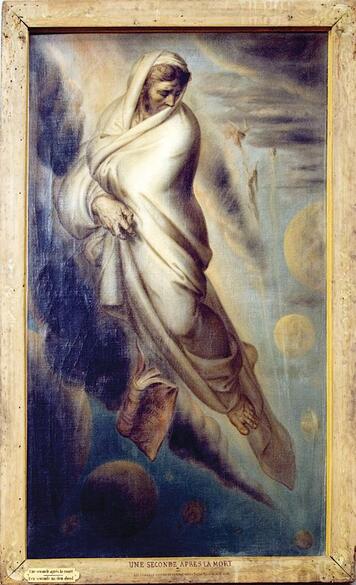
Antoine Joseph Wiertz, One Second After the Death. Oil on canvas. Musée Wiertz, Brussels.
Wiertz was, in contrast to Poe, a bothersome do-gooder who believed in “progress,” as evidenced by the way he treated the topic: there is no question of humor or perspective or of depicting the expensive funeral “touches” that Poe describes so charmingly. No, the coffin the possibly indigent, apparently dead person is trying to crawl out of is hammered together hurriedly, with a cross painted on the lid in a rudimentary manner, the floor covered with some straw, and lowered into an anonymous catacomb in an equally hasty manner, without any pomp. The direct provocation for Wiertz’s creation was the cholera outbreak that occurred in Antwerp in 1853, with the epidemic then spreading across the other towns and cities of Belgium and claiming thousands of vic- tims who had to be hurriedly buried (still alive?) in order to stem further disease. Wiertz leaves no doubt with regard to his reason for painting this canvas as the following can be clearly read on the coffin: “Mort du choléra, certifié par nous Docteurs Sans Doute” (dead by cholera as pronounced by doctor Without Any Doubt), including stamp--thus an open indictment of the physicians.
In Poe’s very short story entitled “The Oval Portrait,” a traveler retreating at night to a deserted castle in the Italian Apennines is fascinated to read the comments on a virtually lifelike painting of a young girl. According to this observation, the poor painter was, with each stroke of his brush, actually drawing, like a vampire, the life from his young bride and model, who grew increasingly weak until he found her dead on her chair when applying the final touch and uttering the words “This is indeed Life itself!”
The definitive version of “The Oval Portrait” --which initially bore the title “Death in Life” and had a longer introduction con- cerning the effects of opium on the mind--dates from 1842, the year of Virginia’s first hemorrhage due to tuberculosis. Besides the underlying theme that art can therefore, so to speak, overcome or
“avert” physical death and can make a person “eternal,” Poe also inadvertently reveals two other intimate, and asexual, aspects of his marriage to his cousin: firstly, he portrays the painter as some- one who gives priority to his artistic vocation over his love, which he therefore cannot or does not want to experience physically; and secondly, he admits with the necessary feelings of guilt how this vocation does not even enable the painter to feed and clothe his loved one and will eventually rob her of her life. All that is pre- served of their relationship for posterity is a literally lifelike oval portrait...an oval portrait in the “vignette” style, so typical of the time, and which, in Poe’s imagination, must have had much more of the features of his very own and perhaps virginally deceased child bride than those of his late mother, Eliza, or his late foster- mother, Frances Allan. Ironically enough, however, Poe was never able to gather together the financial resources to hire an artist with a view to producing a genuine likeness of his young wife, with the result that only one portrait of his cousin-bride remains preserved, painted a few hours after her death. Truly macabre...
Wiertz’s best-known painting is La belle Rosine, a model that is much more bare, as well as less virginal and asexual, than the model from “The Oval Portrait” by Poe. And yet, it deals with the same theme in an almost identical way, namely that art can overcome or “avert” physical death and can make a person “eter- nal.” Rosine, in contrast to many of Poe’s female personages, is indeed a girl of flesh and blood, as Wiertz had painted her a few years previously while she was doing her makeup, proof that they were lovers and had carnal contact with each other on more than one occasion.
And the skeleton here? For the sake of convenience, the canvas could be completed as an illustration for “vanitas” in the form of “Death and the Maiden” if it were not for Rosine assisting in anything but a chaste manner and a small detail lending a “twist” to the picture, i.e., with a label bearing the words “La belle Rosine” stuck to the skull. In this way, Wiertz makes the model stare into the hollow eyes of her own cranium, i.e., a chronologically impos- sible situation, though this did receive much acclaim among the later Symbolists and Surrealists such as André Breton and Salva- dor Dalí.
However, what does Wiertz actually mean by this brutal “state- ment”? La belle Rosine is perhaps both a hymn to her earthly beauty and a firm refusal to make her his wife: Rosine will shortly lose this earthly beauty she has and turn into a skeleton, with the result that Wiertz will prefer to devote the time allocated to him on this earth to painting “eternal” canvases rather than loving a transient woman. And yes, Poe’s Virginia and Wiertz’s Rosine do continue to live in their short story and canvas--Virginia as the heavenly beautiful girl and wife of a destitute artist, Rosine as the volup- tuous model of a painter who treats this evidently well-to-do lady almost like a prostitute.
One of the lesser-known short stories by Edgar Allan Poe, “The Power of Words,” is a philosophical jewel. A self-assured “Oinos” (Greek for wine, although the Norton Critical Edition suggests that it refers to the Hebrew word for “man”) flies toward the immeasurable universe for a moment after his death and, in all his confusion, is immediately welcomed by a spirit named “Agathos” (Greek for “good”), who explains the theories of the universe to him. Very briefly, it could be argued that, according to these theories, God created the world and humans, who then continue to create with their thoughts and words, prompting actions that will, however, remain ad infinitum. Because the universe is thus so dynamic and endless and “restless,” it is not omniscience that brings supreme happiness but, rather, the gathering of further knowledge. The only thing that the Creator does not know, according to Agathos, is that he is omniscient. In order to illustrate this power of words at the end, Agathos points to a planet with the most beautiful flowers and volcanoes belching the most lava and, half crying, tells Oinos that this planet was created by a passionate love poem he jotted down three centuries earlier for a beloved.
“Its brilliant flowers are the dearest of all unfulfilled dreams, and its raging volcanoes are the passions of the most turbulent and unhallowed of hearts.”
This is a splendid vision of the universe, a vision in which not one single thought, word, or action is lost but can, on the con- trary, bring about a “butterfly effect,” as it were, and also a vision in which Poe praises the immortality of the soul. In this story, he depicts himself after his death as “a spirit new-fledged with immortality!” which, with his poems--Poe regarded himself pri- marily as a poet --created the most exotic planets. Was he aware that his work would become such a source of adoration and study after his death?
Wiertz’s painting Une seconde après la mort or Les grandes choses de la terre vues à 500,000 kilomètres de ce globe (One second after death or the great things on the earth seen from a distance of 500,000 kilometres) depicts the same scene as Poe’s narrative in a virtually identical manner: a man in a shroud flies into the immea- surable universe and will be met by another soul. As optimistic and profound as Poe’s version is, however, the picture painted by Wiertz during the latter years of his life is equally pessimistic and embittered. The man --a self-portrait perhaps --looks back nostalgically at his planet earth, which now has the importance of a shriveled pea, and lets a thick book slip from his hands --“Gran- deurs humaines” (Human greatness). This is the “statement” of an artist who feels he has failed (he could never be the equal of a Rubens or Raphael or Michelangelo), who realizes that he could never achieve his grandiose ambitions (he has doubts about the “eternal value” of his work and has not even been responsible for bringing any children into this world), and who then bids a bitter farewell to his life of failure. Indeed, one of his last utterances on his deathbed reads: “A quoi me sert mon imagination à présent. On se détache facilement des misères humaines” (To what good is my imagination now, one grows so quickly indifferent to human misery)...Grandeurs humaines, actually, or Sic transit gloria mundi...
Antoine Wiertz. Edgar Allan Poe. Contemporary artists of their time on either side of the big pond. Poe always saw himself as an aesthete and a poet, though he is nowadays mainly revered for his macabre and frenetic short stories published in inferior magazines of the time. Wiertz wanted to be the equal of the great painters, though he only arouses interest now on account of his rather bizarre and macabre pictures and, as already explained, these do have something in common with Poe’s stories in terms of the associated themes and shock effects.
Irreverently, it could be said that Antoine Wiertz was the Ed Wood among the Romantic painters because of his clumsy tech- nique, though digging a bit deeper reveals a fascinating person whose canvases now, almost two hundred years later, increasingly manage to excite the interest of enthusiasts all over the world on account of their incredibly original and almost avant-garde approach.
In Poe’s very short story entitled “The Oval Portrait,” a traveler retreating at night to a deserted castle in the Italian Apennines is fascinated to read the comments on a virtually lifelike painting of a young girl. According to this observation, the poor painter was, with each stroke of his brush, actually drawing, like a vampire, the life from his young bride and model, who grew increasingly weak until he found her dead on her chair when applying the final touch and uttering the words “This is indeed Life itself!”
The definitive version of “The Oval Portrait” --which initially bore the title “Death in Life” and had a longer introduction con- cerning the effects of opium on the mind--dates from 1842, the year of Virginia’s first hemorrhage due to tuberculosis. Besides the underlying theme that art can therefore, so to speak, overcome or
“avert” physical death and can make a person “eternal,” Poe also inadvertently reveals two other intimate, and asexual, aspects of his marriage to his cousin: firstly, he portrays the painter as some- one who gives priority to his artistic vocation over his love, which he therefore cannot or does not want to experience physically; and secondly, he admits with the necessary feelings of guilt how this vocation does not even enable the painter to feed and clothe his loved one and will eventually rob her of her life. All that is pre- served of their relationship for posterity is a literally lifelike oval portrait...an oval portrait in the “vignette” style, so typical of the time, and which, in Poe’s imagination, must have had much more of the features of his very own and perhaps virginally deceased child bride than those of his late mother, Eliza, or his late foster- mother, Frances Allan. Ironically enough, however, Poe was never able to gather together the financial resources to hire an artist with a view to producing a genuine likeness of his young wife, with the result that only one portrait of his cousin-bride remains preserved, painted a few hours after her death. Truly macabre...
Wiertz’s best-known painting is La belle Rosine, a model that is much more bare, as well as less virginal and asexual, than the model from “The Oval Portrait” by Poe. And yet, it deals with the same theme in an almost identical way, namely that art can overcome or “avert” physical death and can make a person “eter- nal.” Rosine, in contrast to many of Poe’s female personages, is indeed a girl of flesh and blood, as Wiertz had painted her a few years previously while she was doing her makeup, proof that they were lovers and had carnal contact with each other on more than one occasion.
And the skeleton here? For the sake of convenience, the canvas could be completed as an illustration for “vanitas” in the form of “Death and the Maiden” if it were not for Rosine assisting in anything but a chaste manner and a small detail lending a “twist” to the picture, i.e., with a label bearing the words “La belle Rosine” stuck to the skull. In this way, Wiertz makes the model stare into the hollow eyes of her own cranium, i.e., a chronologically impos- sible situation, though this did receive much acclaim among the later Symbolists and Surrealists such as André Breton and Salva- dor Dalí.
However, what does Wiertz actually mean by this brutal “state- ment”? La belle Rosine is perhaps both a hymn to her earthly beauty and a firm refusal to make her his wife: Rosine will shortly lose this earthly beauty she has and turn into a skeleton, with the result that Wiertz will prefer to devote the time allocated to him on this earth to painting “eternal” canvases rather than loving a transient woman. And yes, Poe’s Virginia and Wiertz’s Rosine do continue to live in their short story and canvas--Virginia as the heavenly beautiful girl and wife of a destitute artist, Rosine as the volup- tuous model of a painter who treats this evidently well-to-do lady almost like a prostitute.
One of the lesser-known short stories by Edgar Allan Poe, “The Power of Words,” is a philosophical jewel. A self-assured “Oinos” (Greek for wine, although the Norton Critical Edition suggests that it refers to the Hebrew word for “man”) flies toward the immeasurable universe for a moment after his death and, in all his confusion, is immediately welcomed by a spirit named “Agathos” (Greek for “good”), who explains the theories of the universe to him. Very briefly, it could be argued that, according to these theories, God created the world and humans, who then continue to create with their thoughts and words, prompting actions that will, however, remain ad infinitum. Because the universe is thus so dynamic and endless and “restless,” it is not omniscience that brings supreme happiness but, rather, the gathering of further knowledge. The only thing that the Creator does not know, according to Agathos, is that he is omniscient. In order to illustrate this power of words at the end, Agathos points to a planet with the most beautiful flowers and volcanoes belching the most lava and, half crying, tells Oinos that this planet was created by a passionate love poem he jotted down three centuries earlier for a beloved.
“Its brilliant flowers are the dearest of all unfulfilled dreams, and its raging volcanoes are the passions of the most turbulent and unhallowed of hearts.”
This is a splendid vision of the universe, a vision in which not one single thought, word, or action is lost but can, on the con- trary, bring about a “butterfly effect,” as it were, and also a vision in which Poe praises the immortality of the soul. In this story, he depicts himself after his death as “a spirit new-fledged with immortality!” which, with his poems--Poe regarded himself pri- marily as a poet --created the most exotic planets. Was he aware that his work would become such a source of adoration and study after his death?
Wiertz’s painting Une seconde après la mort or Les grandes choses de la terre vues à 500,000 kilomètres de ce globe (One second after death or the great things on the earth seen from a distance of 500,000 kilometres) depicts the same scene as Poe’s narrative in a virtually identical manner: a man in a shroud flies into the immea- surable universe and will be met by another soul. As optimistic and profound as Poe’s version is, however, the picture painted by Wiertz during the latter years of his life is equally pessimistic and embittered. The man --a self-portrait perhaps --looks back nostalgically at his planet earth, which now has the importance of a shriveled pea, and lets a thick book slip from his hands --“Gran- deurs humaines” (Human greatness). This is the “statement” of an artist who feels he has failed (he could never be the equal of a Rubens or Raphael or Michelangelo), who realizes that he could never achieve his grandiose ambitions (he has doubts about the “eternal value” of his work and has not even been responsible for bringing any children into this world), and who then bids a bitter farewell to his life of failure. Indeed, one of his last utterances on his deathbed reads: “A quoi me sert mon imagination à présent. On se détache facilement des misères humaines” (To what good is my imagination now, one grows so quickly indifferent to human misery)...Grandeurs humaines, actually, or Sic transit gloria mundi...
Antoine Wiertz. Edgar Allan Poe. Contemporary artists of their time on either side of the big pond. Poe always saw himself as an aesthete and a poet, though he is nowadays mainly revered for his macabre and frenetic short stories published in inferior magazines of the time. Wiertz wanted to be the equal of the great painters, though he only arouses interest now on account of his rather bizarre and macabre pictures and, as already explained, these do have something in common with Poe’s stories in terms of the associated themes and shock effects.
Irreverently, it could be said that Antoine Wiertz was the Ed Wood among the Romantic painters because of his clumsy tech- nique, though digging a bit deeper reveals a fascinating person whose canvases now, almost two hundred years later, increasingly manage to excite the interest of enthusiasts all over the world on account of their incredibly original and almost avant-garde approach.
JAN VANDER LAENEN

Jan Vander Laenen (° 1960) lives in Brussels, Belgium, where he works as an art historian and translator (Dutch, French, Italian, English). He is also the author of numerous collections of short stories, plays, and screenplays which have attracted keen interest abroad.
A romantic comedy, "Oscar Divo", and a thriller, “The Card Game”, have been optioned in Hollywood, while his short fiction collections, "The Butler" and "Poète maudit", and his horror play "A Mother's Revenge" are eliciting the requisite accolades in Italy.
His most recent publication are the tales “A Glass of Cognac” in “Bears: Gay Erotic Stories” (Cleis Press), “Epistle of the Sleeping Beauty” in the Bram Stoker Award winning “Unspeakable Horror” (Dark Scribe Press), “Fire at the Chelsea Hotel” in “Best Gay Love Stories 2009” (Alyson Press), “The Stuffed Turkey” in “Best Gay Erotica 2010 (Cleis Press),“The Corpse Washer” in Best S/M III (Logical Lust), “Lise” in “Strange Tales of Horror” (NorGus Press), the E-Books “Skilfully and Lovingly” (Sizzler Edition) and “The Centrefold and other Stories of working Men” (Silver Press), and the Dutch and French version of his novel “The housekeeper and other scabrous tales” (‘t Verschil, Antwerp (Belgium) - Textes gais, Paris (France)), the weird tale “The bat” in the anthology “A Darke Phantastique” (Cycatrix Press), “Petit papa Noël” in the anthology “Un cadeau de noël pour le refuge” (Textes gais, Paris), and the essay “The monstrous and the fantastic in the short stories of Poe and the paintings of Wiertz” (Weird Fiction Review).
Jan is a member of the Horror Writers Association and the Poe Studies Association. He presented his paper "Hypotheses on Poe's homosexuality" at the Bicentennial Congress in Philadelphia in October 2009 and “Poe as a latent homosexual, as suggested by Marie Bonaparte” at the New York Conference in February 2015. He has also given lectures on Baudelaire, Wiertz, Andersen, Guy de Maupassant, Grand Guignol and the guillotine at the universities of Porto (Portugal), Ghent (Belgium), Louisville (Kentucky), Madrid (Spain), and the Paris Sorbonne and Diderot universities.
Jan performed in the successful “Gala” by French choreographer Jérôme Bel in theatres in Brussels in May 2015 and December 2017, and he is taking acting classes to study as an author “the other side” of the written page.
Jan is currently working on a play/screenplay around the life of the Romantic Belgian "horror" painter Antoine Wiertz (1806-1865), a novel called "The Psychomanteum" around the practice of mirror gazing, and a screenplay around the life of Lucida Mansi. In July 2020 he finished his scandalous trilogy "Paulo or the obscene life of a gay escort" (240.000 words). He has also written recently three 30 minutes episodes for a series "Horror without frontiers", ten others are in the make.
Readers on "Epistle of the Sleeping Beauty
The stand out story for me was clearly "Epistle of the Sleeping Beauty" by Vander Laenen, quite possibly the most brilliant horror short story I have ever read. If for no other reason, reading this story is worth picking up a copy of the anthology. Yes, it's that good.
“Epistle of the Sleeping Beauty” by Jan Vander Laenen is a truly delightful tale reporting an unusual erotic adventure on the gay side taking place in the famous pineta (pinewood) of Viareggio, Italy.
Belgian writer Jan Vander Laenen's “Epistle of the Sleeping Beauty” was translated into English for the anthology, and is among the most unsettling of the stories: a man on holiday, hiding his homosexual cravings from his wife and children, seeks risky public sex and discovers a naked, dying, young man in the woods. This like many of the tales in the collection divulges the horrifying lengths some will go to fulfill lust, and is more cutting and critical than celebratory of many gay lifestyles.
"Epistle of the Sleeping Beauty" by Vander Laenen was ...disturbing but isn't that what horror is supposed to do?
A romantic comedy, "Oscar Divo", and a thriller, “The Card Game”, have been optioned in Hollywood, while his short fiction collections, "The Butler" and "Poète maudit", and his horror play "A Mother's Revenge" are eliciting the requisite accolades in Italy.
His most recent publication are the tales “A Glass of Cognac” in “Bears: Gay Erotic Stories” (Cleis Press), “Epistle of the Sleeping Beauty” in the Bram Stoker Award winning “Unspeakable Horror” (Dark Scribe Press), “Fire at the Chelsea Hotel” in “Best Gay Love Stories 2009” (Alyson Press), “The Stuffed Turkey” in “Best Gay Erotica 2010 (Cleis Press),“The Corpse Washer” in Best S/M III (Logical Lust), “Lise” in “Strange Tales of Horror” (NorGus Press), the E-Books “Skilfully and Lovingly” (Sizzler Edition) and “The Centrefold and other Stories of working Men” (Silver Press), and the Dutch and French version of his novel “The housekeeper and other scabrous tales” (‘t Verschil, Antwerp (Belgium) - Textes gais, Paris (France)), the weird tale “The bat” in the anthology “A Darke Phantastique” (Cycatrix Press), “Petit papa Noël” in the anthology “Un cadeau de noël pour le refuge” (Textes gais, Paris), and the essay “The monstrous and the fantastic in the short stories of Poe and the paintings of Wiertz” (Weird Fiction Review).
Jan is a member of the Horror Writers Association and the Poe Studies Association. He presented his paper "Hypotheses on Poe's homosexuality" at the Bicentennial Congress in Philadelphia in October 2009 and “Poe as a latent homosexual, as suggested by Marie Bonaparte” at the New York Conference in February 2015. He has also given lectures on Baudelaire, Wiertz, Andersen, Guy de Maupassant, Grand Guignol and the guillotine at the universities of Porto (Portugal), Ghent (Belgium), Louisville (Kentucky), Madrid (Spain), and the Paris Sorbonne and Diderot universities.
Jan performed in the successful “Gala” by French choreographer Jérôme Bel in theatres in Brussels in May 2015 and December 2017, and he is taking acting classes to study as an author “the other side” of the written page.
Jan is currently working on a play/screenplay around the life of the Romantic Belgian "horror" painter Antoine Wiertz (1806-1865), a novel called "The Psychomanteum" around the practice of mirror gazing, and a screenplay around the life of Lucida Mansi. In July 2020 he finished his scandalous trilogy "Paulo or the obscene life of a gay escort" (240.000 words). He has also written recently three 30 minutes episodes for a series "Horror without frontiers", ten others are in the make.
Readers on "Epistle of the Sleeping Beauty
The stand out story for me was clearly "Epistle of the Sleeping Beauty" by Vander Laenen, quite possibly the most brilliant horror short story I have ever read. If for no other reason, reading this story is worth picking up a copy of the anthology. Yes, it's that good.
“Epistle of the Sleeping Beauty” by Jan Vander Laenen is a truly delightful tale reporting an unusual erotic adventure on the gay side taking place in the famous pineta (pinewood) of Viareggio, Italy.
Belgian writer Jan Vander Laenen's “Epistle of the Sleeping Beauty” was translated into English for the anthology, and is among the most unsettling of the stories: a man on holiday, hiding his homosexual cravings from his wife and children, seeks risky public sex and discovers a naked, dying, young man in the woods. This like many of the tales in the collection divulges the horrifying lengths some will go to fulfill lust, and is more cutting and critical than celebratory of many gay lifestyles.
"Epistle of the Sleeping Beauty" by Vander Laenen was ...disturbing but isn't that what horror is supposed to do?
TODAY ON THE GINGER NUTS OF HORROR WEBSITE
[BOOK REVIEW] TRENCH MOUTH BY CHRISTINE MORGAN
the heart and soul of horror features
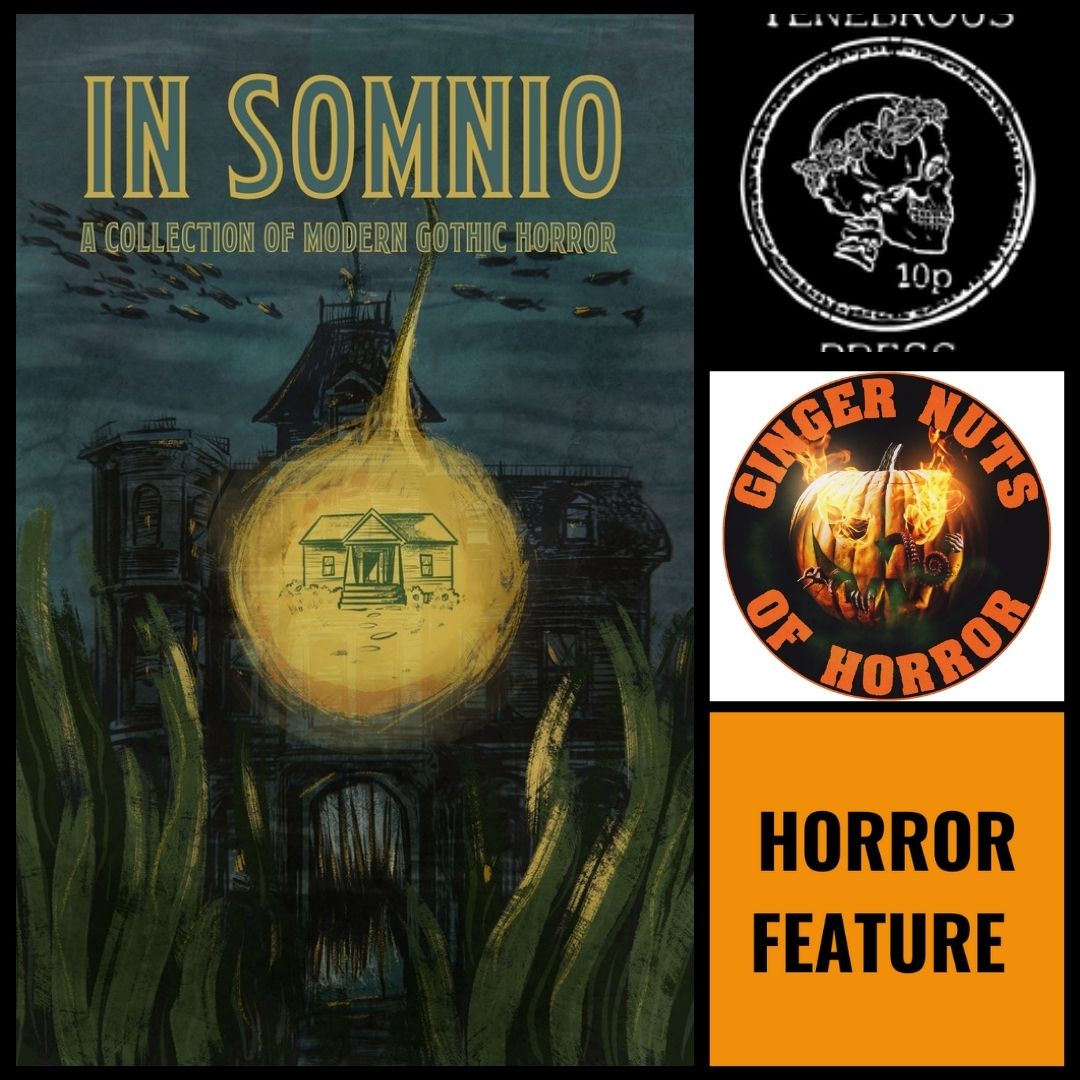 | Drawing inspiration from these original Gothmothers, IN SOMNIO takes those familiar themes and recasts them in a modern light! |
Tenebrous Press returns with its next highly anticipated Horror anthology, IN SOMNIO: A Collection of Modern Gothic Horror!
Nineteen fearless authors—and some of today’s finest illustrators—cut to the heart of classic Gothic Horror and drag it into modern times, sculpting it into an altogether sleeker beast.
In the hands of Mary Shelley, Daphne Du Maurier, and Shirley Jackson, Gothic Horror often explored the bleak shadows of our very homes and the darkest corners of the human mind. It focused on themes of madness, personal transformation, phantoms, and the occult.
Drawing inspiration from these original Gothmothers, IN SOMNIO takes those familiar themes and recasts them in a modern light!
Within the walls of an arcane modern art gallery; upon the shores of a hostile but compelling sea; into the blackest burrows of the animal kingdom; tableside at the world’s last restaurant on the eve of the apocalypse; from the deep deep South to a Lovecraftian Steampunk theatre, a cornucopia of disturbing vignettes await you.
In the hands of Mary Shelley, Daphne Du Maurier, and Shirley Jackson, Gothic Horror often explored the bleak shadows of our very homes and the darkest corners of the human mind. It focused on themes of madness, personal transformation, phantoms, and the occult.
Drawing inspiration from these original Gothmothers, IN SOMNIO takes those familiar themes and recasts them in a modern light!
Within the walls of an arcane modern art gallery; upon the shores of a hostile but compelling sea; into the blackest burrows of the animal kingdom; tableside at the world’s last restaurant on the eve of the apocalypse; from the deep deep South to a Lovecraftian Steampunk theatre, a cornucopia of disturbing vignettes await you.
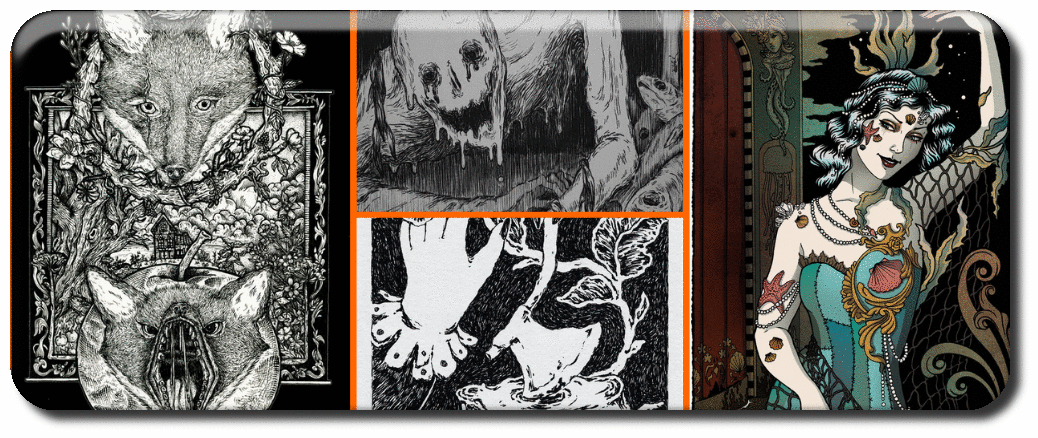
Fans of twisted takes on the classics such as Sense and Sensibility and Sea Monsters; Netflix’s The Haunting of Hill House/Bly Manor; moody, secretive novels like Night Film and A House at the Bottom of the Lake; and traditional Gothic Horror and ghost stories in general will all find something to chill their bones in IN SOMNIO.
This collection features nineteen vibrant, unique stories ranging from deeply intimate one-room settings to sprawling fantasy worlds; from the depths of darkness to comedy and adventure. Each story brings a new perspective on our inherent love of Gothic Horror and what those vital elements of terror still have to say today!
This collection features nineteen vibrant, unique stories ranging from deeply intimate one-room settings to sprawling fantasy worlds; from the depths of darkness to comedy and adventure. Each story brings a new perspective on our inherent love of Gothic Horror and what those vital elements of terror still have to say today!
the heart and soul of horror features
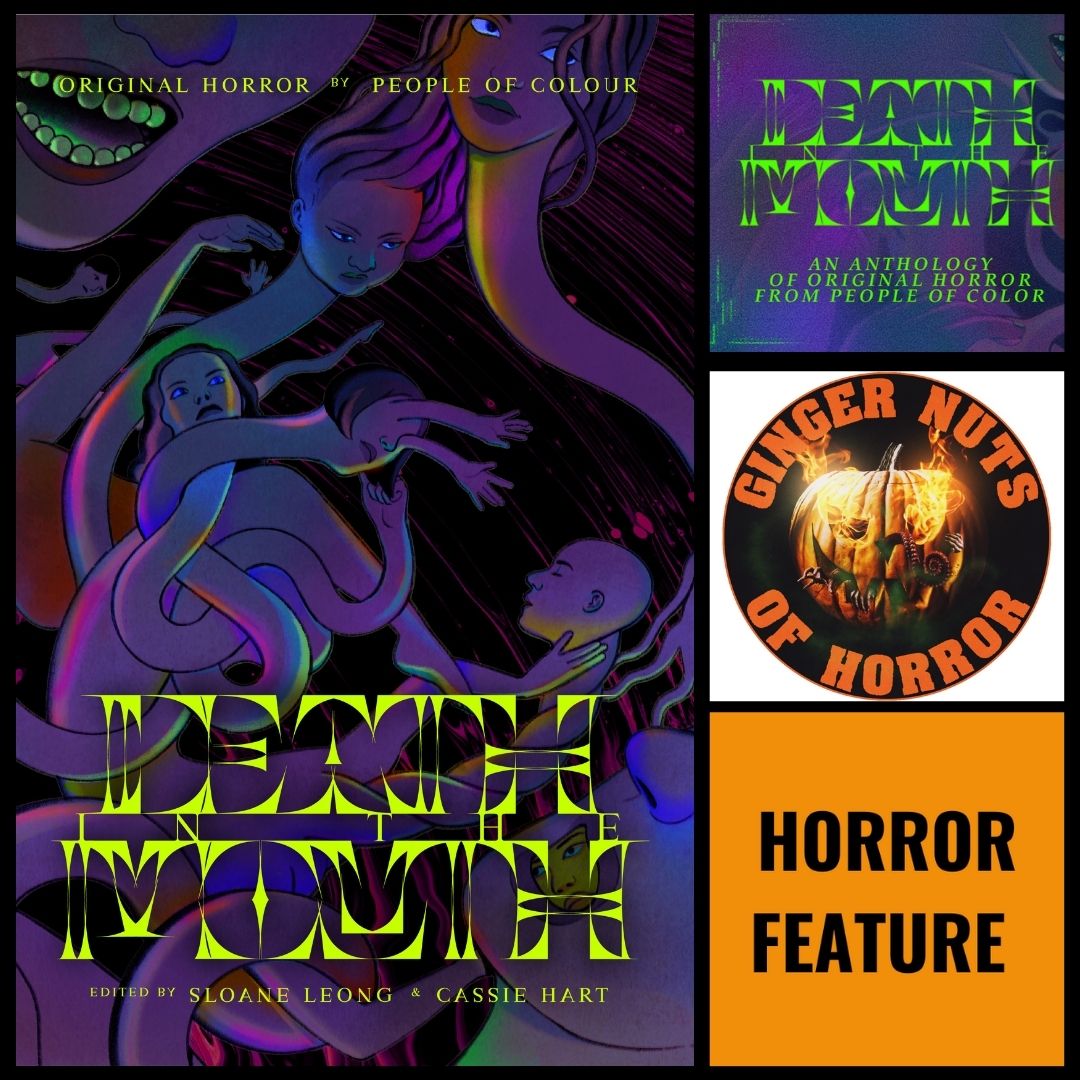 | We're both voracious readers and authors with a knowledge and taste for stories outside the cultural mainstream. We’re running this campaign so that we can provide support to BIPOC authors and artists |
DEATH IN THE MOUTH: ORIGINAL HORROR FROM AROUND THE WORLD
click here to pre-order a copy
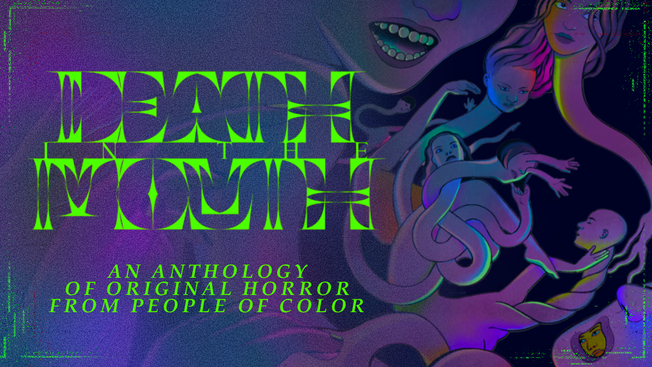
Cartoonist and writer Sloane Leong and writer Cassie Hart have partnered to launch a Kickstarter campaign for DEATH IN THE MOUTH, a horror anthology showcasing BIPOC and other ethnically marginalized writers and artists from around the world. It will feature twenty prose stories spanning the distant past to the far future, real and fictive worlds, all while exploring new and unique manifestations of horror. Each story will also be accompanied by an original black and white illustration by a unique artist. We've invited authors like C Pam Zhang (How Much of These Hills Is Gold), Darcie Little Badger (Elatsoe), Jewelle Gomez (The Gilda Stories), An Owomoyela (Abandonware), Karin Lowachee (Warchild), Jahra Wasasala (MOTHER/JAW), K- Ming Chang (Bestiary), Rachel & Sean Qitsualik- Tinsley (The Raven and the Loon), and more to contribute stories.
Artists you can look forward to seeing illustrate these tales include
Michael Deforge, Joy San, Jabari Weathers, Makoto Chi, Allissa Chan, Pinchas Segal, Alicia Feng, and Natalie Hall.
Artists you can look forward to seeing illustrate these tales include
Michael Deforge, Joy San, Jabari Weathers, Makoto Chi, Allissa Chan, Pinchas Segal, Alicia Feng, and Natalie Hall.
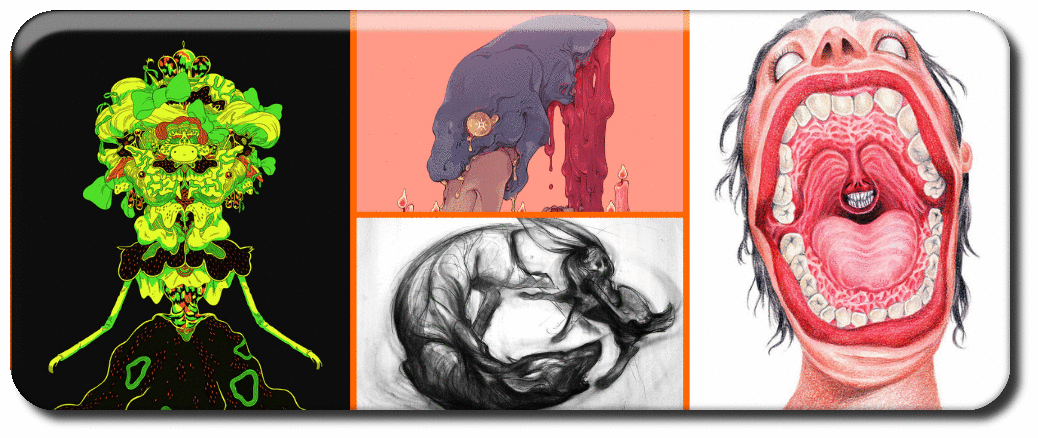
We also anticipate welcoming many new and underrepresented authors and artists through our open call. “Like many other creative fields, the horror scene in the Western world has been overwhelmingly white for a long time. Because of this, not all editors are attuned to non-Western narratives and haven't necessarily cultivated an appreciation for stories from those traditions,” said Sloane Leong, editor of Death in the Mouth. “That's where we–Sloane and Cassie–come in. We're both voracious readers and authors with a knowledge and taste for stories outside the cultural mainstream. We’re running this campaign so that we can provide support to BIPOC authors and artists while also getting this book directly to the wonderful readers we know are out there, who crave unique and entrancing stories from writers all over the globe.” Death in the Mouth is now available for preorder on Kickstarter.
DEATH IN THE MOUTH: ORIGINAL HORROR FROM AROUND THE WORLD
CLICK HERE TO PRE-ORDER A COPY
the heart and soul of horror features
 | “I cannot wait for audiences to see the creativity and talent. These filmmakers packed so much story and scares into one minute,” said Lisa Kröger, Festival Co-Producer. |
Nyx Horror Collective is a community of diverse women creators who develop, celebrate, and elevate original, women-led horror content for film, TV, and new media.
What began as a simple 60-second film challenge in January 2021 blossomed quickly into the little festival that could. Garnering top notch judges from the horror genre and securing Shudder as its official streaming platform, Nyx Horror is proving itself to be a creative force of nature.
One of the missions at Nyx Horror and with 13 Minutes is to give women horror filmmakers of all identities and backgrounds greater exposure and more opportunities through strategic partnerships with established industry professionals. With that in mind, the Festival has garnered support from production companies and film incubators that include Blood Oath (Starry Eyes, Satanic Panic) and Squid Farm Productions (Shudder Original Shook), as well as from development executives at Blumhouse [Get Out, The Invisible Man (2020)].
“I cannot wait for audiences to see the creativity and talent. These filmmakers packed so much story and scares into one minute,” said Lisa Kröger, Festival Co-Producer.
“Our drive to keep generating incredible opportunities for this festival really speaks to our tenacity and passion, as individuals and as a team, to dispel the myth of ‘no women, LGBTQIA+ or people of color working in the genre.’ We’re right here; you can’t say you don’t know any. Not anymore.” – Mo Moshaty, Festival Co-Producer
“The messages that Nyx has received from women and non-binary filmmakers since launching 13 Minutes have been overwhelming in the most amazing way. This is why we do what we do—to share in the joy of so many talented creators is beyond rewarding.” – Kelly Krause, Festival Co-Producer
“We wanted to give these wonderful up-and-coming writers and directors the opportunity to have their work seen. The fact that Shudder is hosting us on their platform is a testament to their growing support of BIPOC and women-driven work and we’re eager for the world to see more of this kind of content.” - Melody Cooper, Festival Co-Producer
Nyx Horror Collective’s 13 Minutes of Horror Film Festival will air for 32 days on Shudder from August 13 – September 13, 2021.


Archives
April 2023
March 2023
February 2023
January 2023
December 2022
November 2022
October 2022
September 2022
August 2022
July 2022
June 2022
May 2022
April 2022
March 2022
February 2022
January 2022
December 2021
November 2021
October 2021
September 2021
August 2021
July 2021
June 2021
May 2021
April 2021
March 2021
February 2021
January 2021
December 2020
November 2020
October 2020
September 2020
August 2020
July 2020
June 2020
May 2020
April 2020
March 2020
February 2020
January 2020
December 2019
November 2019
October 2019
September 2019
August 2019
July 2019
June 2019
May 2019
April 2019
March 2019
February 2019
January 2019
December 2018
November 2018
October 2018
September 2018
August 2018
July 2018
June 2018
May 2018
April 2018
March 2018
February 2018
January 2018
December 2017
November 2017
October 2017
September 2017
August 2017
June 2017
May 2017
April 2017
March 2017
February 2017
January 2017
December 2016
November 2016
October 2016
September 2016
August 2016
July 2016
June 2016
May 2016
April 2016
March 2016
February 2016
January 2016
December 2015
November 2015
October 2015
September 2015
August 2015
July 2015
June 2015
May 2015
April 2015
March 2015
February 2015
January 2015
December 2014
November 2014
October 2014
September 2014
August 2014
July 2014
June 2014
May 2014
April 2014
March 2014
February 2014
January 2014
December 2013
October 2013
September 2013
August 2013

 RSS Feed

|

|