

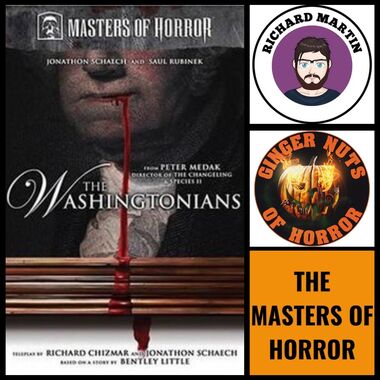
 We are living in a golden age of horror on TV. Shows like ‘The Walking Dead’, ‘Supernatural’ and ‘American Horror Story’ have effectively taken the genre mainstream, offering weekly doses of gore and mayhem to the masses. Go back a decade or two however, and genre fans had far fewer options to choose from. Anthology shows, like ‘Tales From the Crypt’, ‘Monsters’ or ‘Tales From the Darkside’ were king during the horror heyday of the 1980s, providing cheesy and cheerful tongue in cheek horror in half hour bites. It wasn’t until 2005 that the TV horror anthology show got serious, and delivered arguably the most consistent, memorable and scary anthology show to date. The brainchild of horror legend Mick Garris, the show’s title is no hyperbole. ‘Masters of Horror’ brought together the best horror talent Hollywood (and beyond) had to offer. Episodes directed by undisputed genre luminaries such as John Carpenter, Tobe Hooper, Dario Argento and Stuart Gordon were like hour long movies brought to your TV screen. High production values, A-List talent and a free reign to do whatever they pleased resulted in some truly unforgettable work from a group of horror legends let off their leash. These are stories that have stayed with me in the fifteen years since many initially aired and, in this series, I’ll be revisiting all twenty-six episodes, one at a time, to shine a light on a fondly remembered and undeniably influential moment in horror TV history. Join me as I take a look back at The Washingtonians Directed by: Peter Medak Starring: Johnathon Schaech, Myron Natwick, Saul Rubinek, Venus Terzo Original Air Date: 26 January 2007 Synopsis: When clearing out the home of his recently deceased grandmother, a family man discovers some shocking correspondence that suggests that Americas founding father, George Washington, was a cannibal. REVISITING THE MASTERS OF HORROR: THE WASHINGTONIANS, DIRECTED BY PETER MEDAKBy 2007, when ‘The Washingtonians’ aired, I was already a massive Bentley Little fan. I was reading any novels of his I could get my hands on after picking up my first one not too long before (I believe it was ‘The Association, for anyone who’s curious, and it’s still one of my favourites of his). His novels were always dark and bizarre, weird and shocking, with a social commentary underlying them, and I couldn’t get enough. That fact alone made this episode (based on one of his short stories of the same name) one of my most anticipated. I do, however, believe this was the first thing I had watched that was directed by Peter Medak. Fast forward to today, and I think ‘The Changeling’ is an underrated genre classic, but in 2007, I hadn’t even watched ‘Species II’ yet. Shame on me, right? We meet the Franks family at the beginning of the episode as they are travelling to the father, Mike’s (Johnathon Schaech) late grandmother’s house in order to attend her funeral and begin the process of packing up her belongings. When they arrive, they are met by Samuel (Myron Natwick) who is there to let them into the house. He seems genial and friendly enough, at first, A little eccentric maybe, but we won’t hold that against him. Still, something about him seems a little… off. He seems to spend an awful lot of time talking to Mike’s young daughter Amy (Julia Tortolano) and when, after Samuel has left, Mike assures her that “Not everyone’s gonna reach out and bite ya”, you do wonder whether Samuel may be the exception that proves the rule. The Franks have an incredible work ethic because no sooner are they in the house but they get straight to clearing it out. Amy is startled by a huge portrait painting of George Washington down in the basement, knocking it over in her panic. Mike doesn’t seem too fazed. He confesses that he too found the painting a little creepy when he used to visit his grandmother as a kid. Turns out he had very good reason to as when he notices a rip in the corner of the painting, he spots something hidden behind it. A letter. Most viewers will know at this point whether they are going to enjoy this episode or not. The big reveal is that the letter was seemingly written by George Washington himself (he was born in the town the Franks grew up in). The letter begins by stating “I will skin your children and eat them” before proclaiming that he will “fashion utensils out of their bones”. A somewhat surprising turn of events for the United States first president, and the founding father of America. If you think this is a silly development, then you ain’t seen nothing yet. If (like me) you found the concept hilarious, then you are in for a real treat. 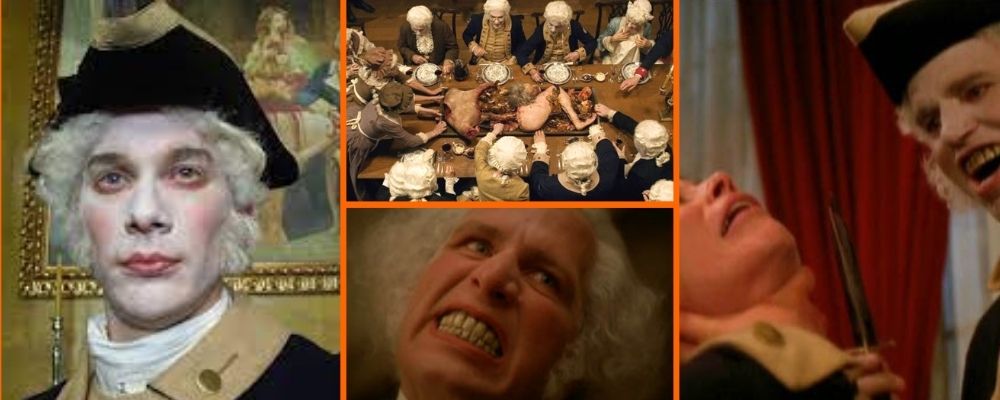 I’m going to address the elephant in the room. Mysterious messages left by long-dead presidents, secret societies, clues left behind to find in present-day… It sounds an awful lot like a mix between ‘The Da Vinci Code’ and ‘National Treasure’. If you thought either of those films could have been improved with graphic cannibalism (I’m not sure I could handle seeing Tom Hanks messily chowing down on somebody’s spleen, but Nicholas Cage? Wouldn’t even crack his top ten weird movie moments) then ‘The Washingtonians’ is right up your alley. Those strange vibes we got from Samuel? Turns out he is a Washingtonian. A member of an elite society who is not only aware of George Washington’s child eating proclivities but also keep the tradition alive in the modern-day. The Franks even get a late-night visit from a couple of them, dressed in powdered wigs and sporting some awful wooden false teeth. They bang on the door and demand the letter, to which Mike responds (rather reasonably for a horror movie) by calling the police. We get a lot of exposition on the Washingtonians from a local Professor (Saul Rubinek, who totally steals the show), who urges Mike to leave before the Washingtonians take the letter from him by force. It proves to be too little too late however as the Washingtonians return later than night in force, breaking into the house and kidnapping the Franks. While the Bentley Little short is darkly humorous, the script for this episode (penned by another immensely talented horror author, Richard Chizmar) dials up the humour and embraces the ridiculousness inherent in the concept. I personally think it was a wise choice because, while the more serious tone totally works on the page in the Little original, I’m not convinced it would have translated to the screen quite so well if there weren’t a more overt nod to the outlandish nature of it all. Fun fact; Richard Chizmar also penned an unproduced screenplay for Stephen Kings ‘From a Buick 8 (one of my favourites). Based on this episode, it is a shame it never made it to screen, because I think he would be a great fit. So far, the episode has been mostly build-up and very little action. It’s been a lot of fun, but I’m about ready to see what the deal is with these Washingtonians. I certainly get my answer, and it's crazier than I ever dreamt it could be. The Franks are brought into a lavish dining room by Samuel, where dozens of locals are dressed up in 17th-century get-up, getting ready to have their evening meal (someone who tells the Franks that they are “thrilled to have them for dinner” gets a rousing cheer from the room). A veritable feast is brought out for them, consisting of a large platter of people parts. It is not the best episode to be watching when you are eating a meal of your own. The Washingtonians are pretty messy eaters. Ambitious too, when somebody with a plate full of intestines declares that they’ll be eating Mike and his wife next, and saving Amy for dessert, I can’t help but wonder if they have eyes bigger than their bellies. Overall, this is a pretty faithful adaptation of the Bentley Little short, but there is one change that was made that I wish hadn’t come to pass. In the filmed version, the Washingtonians are taken down by the police, but in the Little story, it was the redcoats. Maybe the budget didn’t quite stretch to the uniforms, or maybe it was just a little too out there, but I do think that would have been a pretty great ending. I have gravitated towards the lighter, more fun episodes of Masters of Horror throughout this series, and ‘The Washingtonians’ strikes a really fine balance between the comedy and the horror. The Washingtonians spend much of the episode being a whispered rumour, and they don’t disappoint when they finally appear on screen. The ending more than makes up for a slow build-up with a lavish and grand scale set-piece that is certainly not for the squeamish. It’s a great finale to a very enjoyable episode. Speaking of finales… Join me next time as I’ll be wrapping up this series with a look back at the final episode of the second season, Norio Tsurta’s ‘Dream Cruise’. See you then! If you missed any of Richard's previous Revisting The Masters of Horror articles, you can find links to them all here on our handy landing page THE MASTERS OF HORROR  Richard is an avid reader and fan of all things horror. He supports Indie horror lit via Twitter (@RickReadsHorror) and reviews horror in all its forms for several websites including Horror Oasis and Sci Fi and Scary TODAY ON THE GINGER NUTS OF HORROR WEBSITE ONCE UPON A FANG IN THE WEST BY JOHN DOVER (BOOK REVIEW) THE HEART AND SOUL OF HORROR FEATURES
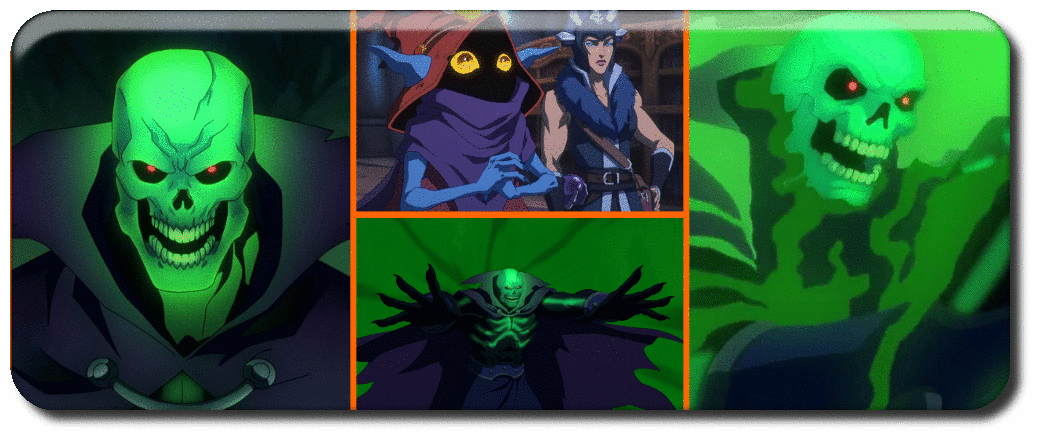
Masters of The Universe: Revelation, The Brilliance of Scareglow |
![[FEATURE ARTICLE] MASTERS OF THE UNIVERSE: REVELATION, THE BRILLIANCE OF SCAREGLOW](../../../uploads/3/4/5/1/34519054/feature-article-masters-of-the-universe-revelation-the-brilliance-of-scareglow_orig.jpg)
 | This is emphatically not Jaws set in the deep dark woods, but James Tynion IV does tap some similar sensibilites: vulnerable people vanishing, periods of uneasy tension both built and shattered by a trail of bodies, |
Comic-books are a medium, not a genre; they can tell any story and suit any palate. You want horror? I've got bottles of the stuff. Welcome to 'Splashes of Darkness.'
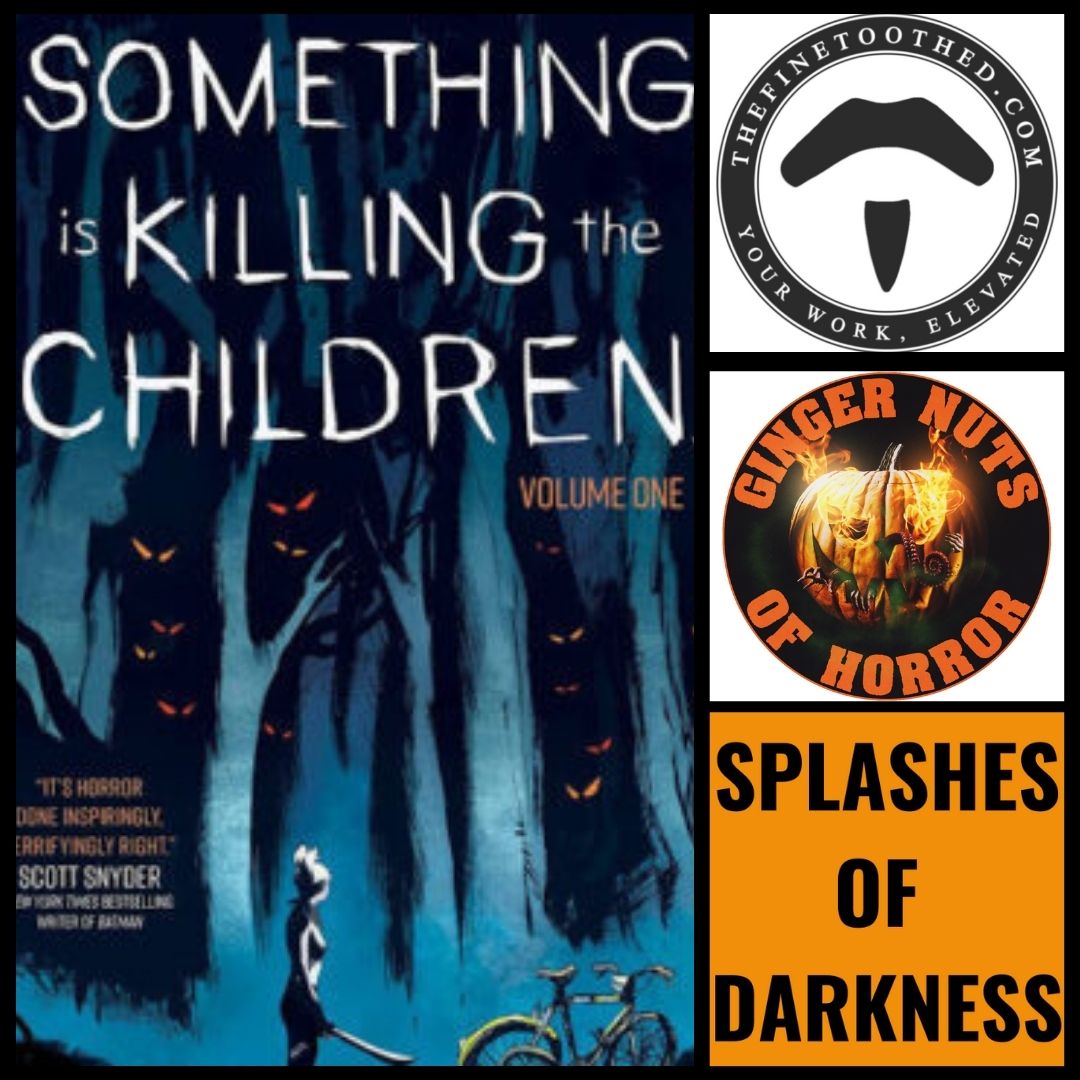
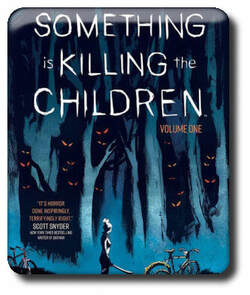
SOMETHING IS KILLING THE CHILDREN VOL. 1
(COMIC REVIEW BY DION WINTON-POLAK)
You get inured, sometimes. The sheen goes out of the world. All you see is the grim and the gritty, the sour and the shitty. Times like that, you don't want something fancy laid out on the bar; you just want a hit of something raw to match the horror and hollow you out awhile. What you've got here is simple, hard-hitting, and straight down the line: Something is Killing the Children. You gonna just sit there and take it?
When the children of Archer's Peak begin to go missing, everything seems hopeless. Most children never return, but the ones that do have terrible stories of terrifying creatures that live in the shadows. Their only hope of finding and eliminating the threat is Erica Slaughter, a mysterious stranger who believes the children and claims to see what they can. She kills monsters. That's all she does. She bears the cost because it must be done.
I took a bit of time away from the world of comics while I was setting up my editing business, so I had no idea what this little beauty was when it dropped through the door. It sat there for a couple of days before I cracked the cover. There was something unsettling about the scratchy white lettering, the...directness of the title, the shadowy menace of the cover. It held a promise (and a memory) of fear that I wasn't quite ready to face. Ridiculous I know, but true horror is a visceral experience; it bypasses rationality.
When the children of Archer's Peak begin to go missing, everything seems hopeless. Most children never return, but the ones that do have terrible stories of terrifying creatures that live in the shadows. Their only hope of finding and eliminating the threat is Erica Slaughter, a mysterious stranger who believes the children and claims to see what they can. She kills monsters. That's all she does. She bears the cost because it must be done.
I took a bit of time away from the world of comics while I was setting up my editing business, so I had no idea what this little beauty was when it dropped through the door. It sat there for a couple of days before I cracked the cover. There was something unsettling about the scratchy white lettering, the...directness of the title, the shadowy menace of the cover. It held a promise (and a memory) of fear that I wasn't quite ready to face. Ridiculous I know, but true horror is a visceral experience; it bypasses rationality.
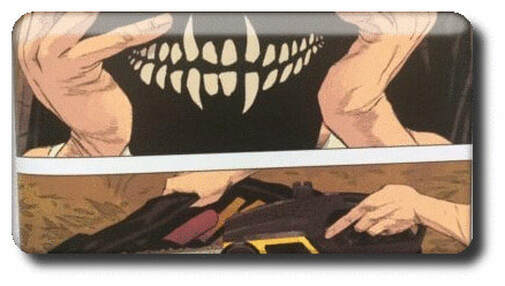
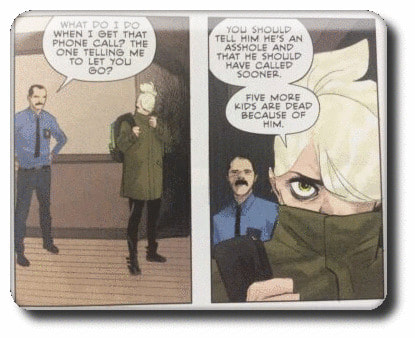
This is emphatically not Jaws set in the deep dark woods, but James Tynion IV does tap some similar sensibilites: vulnerable people vanishing, periods of uneasy tension both built and shattered by a trail of bodies, an expert haunted by long experience (yet widely disbelieved), and a creature which remains invisible or only half-seen for much of the story. The focus shifts neatly between the panicking populace whose fear sparks our own, and the (ambiguously) heroic hunter we cling to for comfort. Erica Slaughter kicks all kinds of ass, but she's probably not the kind of person you want to hang out with. She's more Blade than Buffy, and I have a sneaky suspicion there's some kind of demonic pact going on with that weird-looking toy octopus she lugs around with her.
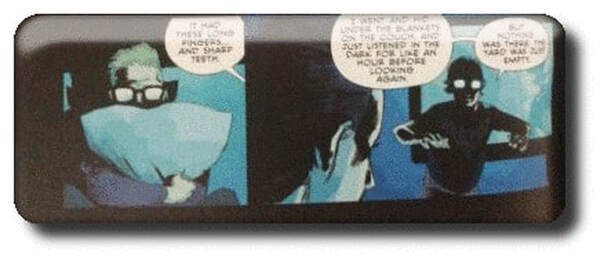
It's not enough to have a cool character, though; presentation is everything. Fortunately for us, Tynion is a *cracking story-teller with a deep understanding of the craft. Fuck, it's all right there from the start, at the heart of this book: monsters may be shaped by a skilled hand, but it takes an audience to bring the shadows to life - animated by our shared imagination. The first issue **alone is a densely-packed masterclass that gives us the themes, the world, tone, characters to root for, plot seeds for the future, and a monster that will mess up your pants.
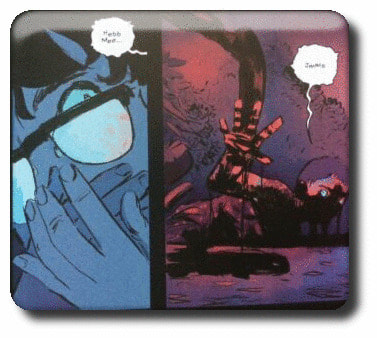
Bringing this vision to life is the partnership of Werther Dell'Edera, an excellent illustrator, and Miquel Muerto, whose subtle colour-work adds essential depth and highlights to the world. The cool blues, greens and autumnal browns have a chilling effect, helping to evoke the atmosphere of quiet dread in town, raising goosebumps with every shadow and breeze in the woods. There is a starkness to the artwork - the expressions on the characters' faces, the pacing of the ***panels, the long-shot perspectives of the town, dwarfing its sparse population - all of which suits perfectly the mood of Tynion's story.
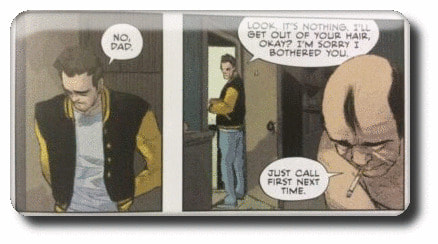
Dell'Edera uses delicate fine-liners which allow for sharper detail and greater nuance of expression: anger, fear, aggression, suspicion - scratched into the canvas with every twitch and wrinkle. These feel real to me. Human beings. Captured in moments of quiet vulnerability, emotional pain, and day to day life, rather than those familiar comic-book heroes who live in perpetual extremis. That said, the action - when it comes - is furious, painting devastation without excess. Both artists and writer understand that the result of an attack is far more impactful than the set-up (particularly when it comes to the monster), giving us the sense of terrifying speed and a helplessness to do anything about it. Quite the trick really, when you consider that all we ever see in comics are static images, perused at our own damned time.
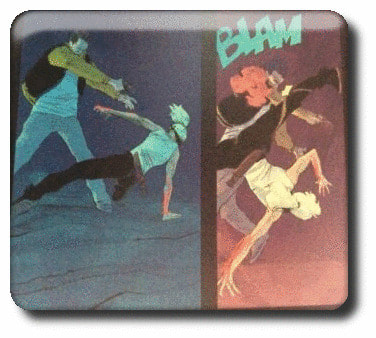
I was hooked by it. This book ticked every box for me in terms of emotional investment, gripping plot, a world to admire and explore, and a whole bunch of questions begging to be answered. If I have any criticisms at all, it's that it is occasionally hard to know whether the panels crawl across the double-page spread or should be worked down individually. I understand why it required so many panels and so many pictures for pacing and tone, but flow is an essential part of the comic-reading experience. Can I recommend it? Abso-damned-lutely. Will I be buying the next volume? Hell yeah! I don't know if this is a limited run or an ongoing series, but if the quality of story-telling remains this high, and the artwork this compelling, I'm in it for the long haul. Now...where’s volume 2?
Written by https://tinyonionstudios.com/
Illustrated by Werther Dell'Edera
Coloured by Miquel Muerto
Lettered by Andworld Design
Published by Boom! Studios
Available now!
Reading experience: 4.5/5
Reviewer: Dion Winton-Polak
Illustrated by Werther Dell'Edera
Coloured by Miquel Muerto
Lettered by Andworld Design
Published by Boom! Studios
Available now!
Reading experience: 4.5/5
Reviewer: Dion Winton-Polak
* In point of fact, he's just won the esteemed Eisner Award for Best Writer, 2021.
** And happily, we get 5 issues in this volume. Savour them!
*** Numerous, capturing small moments, giving us time to think and to empathise.
** And happily, we get 5 issues in this volume. Savour them!
*** Numerous, capturing small moments, giving us time to think and to empathise.
TODAY ON THE GINGER NUTS OF HORROR WEBSITE
MASTERS OF THE UNIVERSE: REVELATION, THE BRILLIANCE OF SCAREGLOW
the heart and soul of horror comic reviews
 | “The greatest taboo among serious intellectuals of the century just behind us, in fact, proved to be none of the ‘transgressions’ itemized by postmodern thinkers: It was, rather, the heresy of challenging a materialist worldview.” |
Today we welcome Yi Izzy Yu and John Yu Branscum to Ginger Nuts of Horror to mark the release of their fantastic collection. Zhiguai: Chinese True Tales of the Paranormal and Glitches in the Matrix (read our review here), with an amazing article:-
SOME OF OUR FAVORITE HORROR STORIES ARE NOT FICTION: THOUGHTS ON HORROR CREATIVE NONFICTION BY YI IZZY YU AND JOHN YU BRANSCUM
Some of our favorite horror stories are not fiction, but rather creative nonfiction.
Take Joy Williams’ short memoir “Hawk,” for example. Published in Granta in 1999, it weaves together meditations on the life of Slaughterhouse-Five composer Glenn Gould with the narrative of Joy William’s sudden, shocking mauling by her German Shepherd, Hawk. Hawk’s attack is a bloody one, in a story that’s also shadowed by disease, casual cruelty, the ultimate unknowability of other living beings, and Joy William’s decision to have Hawk put down.
The story even seemingly leaps into the paranormal when Williams presents an ominous dream visit by Hawk, who is as much totem as flesh-and-blood being, the night before the attack:
“In my sleep, in the strange bed in the old farmhouse, I saw a figure at the door. It was waiting there clothed in a black garbage bag and bandages. Without hesitation, I got up and went to the door and opened it and Hawk came in [ . . . ]. ‘Oh there are ghosts in that house,’ our friends said later.”
“Hawk” is a fabulous if unsettling achievement. It’s Cujo filtered through Kelly Link. And our students are all googly-eyed when we cover it in class to talk about the moves it makes as animal, illness, and relational memoir. But it is also an example of several notes of horror too—ranging from dread to the grotesque, the weird, and the uncanny.
In this, “Hawk” is emblematic of a stream of literature that’s just starting to get wide recognition—horror creative nonfiction.
This subgenre is powerfully illustrated by longer memoirs like Carmen Maria Machado's Dream House and Melanie and Steve Rasnic Tem’s The Man on the Ceiling. One finds shorter examples all over the modern literary landscape too. These range from the brief memoirs in Granta’s horror issue (#117) and the Hippocampus Magazine’s 2015 possession-by-trailer story “Things in the Shapes of Trailers” to our current obsession, the autobiographical genre of “glitch-in-the-matrix tales”—short but harrowing first person-accounts about encounters with strange entities and dimensions of reality which, when it comes to artistic polish, run the gamut from told-in-the-rush social media posts to reflective personal essays.
Of Monstrous Children
While horror creative nonfiction might seem like the latest flavor of pomo genre-crossing, it goes back to horror’s beginnings in early religious accounts. Such tales detail encounters with demonic spirits and angelic OTHERS, alternate states of consciousness, psychic phenomena, divine interventions, and of course confrontations with evil. In addition to their distinctive subject matter, these accounts are habitually marked by striking liminality too. This is to say that they gleefully violate the boundary between our material, everyday world and various spiritual planes, as well as the boundaries drawn between myth and history, narrative and philosophy, and the literal and the symbolic.
Far from disappearing with the secularization of literature, this liminality profoundly influenced the moves made by creative nonfiction early in its history and set important precedents for later creative nonfiction, effectively giving it permission to be highly experimental in form and speculative in content despite its fidelity to mimetic reality.
Take the work of Michel de Montaigne, for example, who is credited with popularizing the literary essay. In his 1580 "Of A Monstrous Child,” Montaigne narrates an encounter with a conjoined set of twins, whose aunt, father, and uncle are carrying them around to display for money.
Montaigne begins his short piece by graphically describing the twins in vivid, proto-scientific detail. The description is the textual equivalent of a display in a museum of medical anomolies. We see a breast forced into the twins’ shared mouth (they have only one head between them). We learn that their cry is odd. We are given a detailed physiological map of their fusion to one another. Montaigne then shifts gears to offer us a meditation that is both religious and philosophical on the twins’ metaphorical meaning, while also moving the reader to question who the real monsters are in the piece: the twins or their parasitic relatives who exploit them. Along the way, he delivers lines so powerful that they inspire centuries of horror writers to come:
“Those that we call monsters are not so to God, who sees in the immensity of His work the infinite forms that He has comprehended therein.”
East Asian Strange
The deep roots of horror creative nonfiction are by no means consigned solely to the West. In the Chinese tradition, one finds just as many—if not more—early examples.
Want a predecessor to Andy Muschietti’s 2013 Mama, in which two abandoned children are cared for by a ghost? Then check out the Soushen Ji, a collection of strange, historical narratives assembled by the famous imperial historian Gan Bao (286−336 CE) in order to demonstrate “shendao,” the way of spirits. It’s filled with such stories. And Gan Bao’s decision to compile the Soushen Ji was motivated by his own own experiences—as recorded in the Tang dynasty historical chronicle, the Jinshu. One such experience concerns a maid who Gan Bao’s mother sealed inside his father’s tomb alongside his father’s body, after discovering an affair between the two. This by itself is shocking enough in a “The Cask of Amontillado” way. But then it is revealed how ten years after this cruel act of revenge, the tomb is opened and the maid is discovered alive—having been fed this whole time, according to her, by the ghost of Gan Bao’s father.
Closer to our own century, and more sophisticated in their narrative moves, are the creative nonfictions of Ji Yun (1724−1805), most recently collected in The Shadow Book of Ji Yun. Ji Yun was Special Advisor to the Emperor, Head of the Departments of War and Public Works, Imperial Librarian, and one of the most brilliant scholars and writers in Qing dynasty China. He was also, incredibly, an investigator and artful teller of true weird and supernatural tales. These he assembled into five volumes, alongside urban legends, parables, and satires.
Far from being outdone by their more fictional siblings, Ji Yun’s autobiographical and biographical accounts are just as, if not more, disturbing and chilling than his more fictional inclusions in these collections. He details encounters with ghost cities, and explores unsettling reincarnations, Tibetan black magic, sentient fogs, and even an early alien abduction. There are less supernatural horrors in abundance too—from accounts of unnatural human appetites and criminal depravity to darkly comic experiments with aphrodisiacs.
The Horrors of Childhood
When you think about it, the long, global history of horror creative nonfiction is to be expected. Horror is perhaps the most primal of genres, and one finds its tropes not just in horror literature itself but in that which came before and gave rise to horror literature: children’s play and dreams.
As the scholar Jonathan Gottschall points out in his 2013 The Storytelling Animal, at the center of children’s play is trouble. Citing a study of 360 stories told by preschoolers, he lists some of these typical troubles: “trains running over puppies and kittens; a naughty girl being sent to jail; a baby bunny playing with fire and burning down his house; a little boy slaughtering his whole family with a bow and arrows; a hunter shooting and eating three babies; children killing a witch by driving 189 knives into her belly.” The predisposition of children for horror storytelling is so strong in fact that it led educator and play theorist Vivian Paley, who won a MacArthur Foundation “genius award” for her work, to refer to children’s play as “the stage on which bad things are rehearsed.” Such rehearsal, mind you, adds to an already existing proclivity in children for occult thinking, which expresses itself in everything from a fascination with psychic powers and magical objects to habitually, in an animistic manner, attributing consciousness to toys, imaginary friends, etc.
Children’s dreams continue the pattern of serving as stages for bad things and occult thought, as well as serving as stages for giving misshapen bodies to fears and anxieties. As such, they too are wonderful sources for proto-horror stories, as are adult dreams (over a 70-year lifespan, btw, a person has around 60,000 scary REM dreams according to a 2009 study by Katja Valli and Antti Revonsuo in The American Journal of Psychology). Our young daughter, Frankie, for example, has taken to naming her dreams, especially those whose themes repeat. Among these are “Log Monster I” and “Log Monster 2.” And don’t even get us started on her evil bunny pictures.
Of Abject Genres and Forbidden Philosophies
Given all this, you would expect horror creative nonfiction to be a fairly robust subgenre today. However, most horror outlets don’t recognize this Frankenstein’s monster. Sure, you’ll see calls for horror nonfiction, but once you read about what a given award or magazine is looking for, generally you’ll discover that the call is for articles about horror, not for horror creative nonfiction (although there are notable exceptions, such as Nightmare magazine, which recently featured E.K. Wagner’s brilliant memoir piece, “Let Me Be Clear”). The same holds true for publishing categories. Horror narrative prose is generally assumed to be fictional, and horror nonfiction is generally assumed to be scholarly.
It’s even worse in the field of creative nonfiction itself. Mention horror creative nonfiction, and most colleagues will flash you a look no less shocked than if you’d pulled a dead ferret out of your underpants and flopped it in the middle of a café table during a business meeting.
Why is the very concept of this subgenre so abhorrent? After all, our lives are full of all kinds of horrors.
A major reason is of course the ever-continuing misrepresentation of horror’s range and potential sophistication in many literature departments, where the field of creative nonfiction is largely situated.
We’ve yet to teach a single horror class where the majority of literature and writing students aren’t shocked by the genre’s range. This is largely due to their being taught that hoary old fallacy that genre lit sacrifices everything—from thematic depth to artistic skill—at the altar of plot and titillation, while literature with a capital L hits on all the higher notes of what it is to be human.
But there are less discussed reasons as well.
For one thing, horror is, let’s face it, a bad fit for some universities—which, for good reasons and bad, are devoted to taming, ordering, and taxonomizing the irrational and the emotional; and dedicated to generalizing, defanging, and depilating the sensual. Even when sex is discussed, it is discussed in a peculiarly sexless and disembodied way—largely divorced from personal experience, idiosyncratic perversions, and the description of liquids and flecks—the conversational equivalent of a naked barbie doll. As far as violence or darker human impulses are concerned, they almost always conveniently belong to someone else. In other words, the unspoken general rule of academia (although, thankfully, there are many exceptions) is the fewer smells, teeth, and sticky hairs the better. When it comes to the mind/body split, it is usually very much on the side of the mind.
But perhaps the biggest reason of all for the frequent non-recognition of horror creative nonfiction in both the university and the wider world is the most interesting.
At the end of the day, horror—even though much of it revolves around the non-supernatural—is nevertheless strongly associated with the supernatural and the occult (one perhaps sees this, for example, in the fact that the name of the Horror Writers Association was originally the Horror and Occult Writers League). Because of this, horror is also strongly connected in many people’s minds with a supernatural model of reality amidst an ongoing, centuries-old culture war between that model and a materialist one.
Writer and scholar Victoria Nelson (following in the footsteps of critics like Kathryn Hume, Rosemary Jackson, and Robert Scholes) lays out the connection between genre and models of reality exceptionally well in The Secret Life of Puppets.
On the surface, Nelson argues, most moderns seem wedded to a “Neo-Aristotelian” view of existence: a materialist, deterministic, and mechanistic model that privileges empirical [Western] rationalism and that holds that the world is the result of material properties and their interactions. In this view—which is replicated in the front-page news—nature is de-spirited and the subjective and objective are distinct, as are mind and matter.
But scratch this surface Nelson goes on to say, and you see people also commonly entertain another model of reality on the downlow: the “neoplatonic,” even if they’re often too embarrassed to talk about it in public or in professional circles.
This model is basically the opposite of the first. It sees the world not as the product of dead matter but as the product of consciousness. Furthermore, it holds that our material reality is but one plane of existence among many and espouses the belief that we reside in “a living [and animistic] cosmos in which all things in the world exist in a hierarchy of interconnections with one another and with a timeless, invisible world.” In this model, mind and matter interact, the subjective and the objective entangle, and our identities are multiple and multidimensional. It has room for astrological beliefs, signs, omens, precognitive dreams, spirits, magic, exotic physics, weird biology, astral and virtual realities, and all that good stuff.
In a nutshell then, the genre of horror is a major place where this second model can be safely explored. Or, as Nelson puts it: “Art and religion have reversed roles in the last several centuries. Whereas art and literature once took their content from religion, we came increasingly to seek religion [and taboo occult and metaphysical ideas of the non-religious variety], covertly, through art and entertainment.”
Nelson’s claim certainly seems borne out in the playing field of our classrooms.
In addition to teaching creative nonfiction, we both also teach speculative fiction. In such classes, we typically begin the semester by asking students why they read horror or fantasy.
Inevitably, their first response is “escapism,” largely because that’s what they’ve been taught to say.
Certainly, escapism is a wonderful use for literature, and we embrace this literary function nearly every night when we hit Netflix or Kowaca. But, as the semester goes on, it becomes obvious through further conversations and student work that students are not just seeking to “escape” from reality through horror and other speculative literature. They are also seeking a deeper engagement with reality by exploring other models of it and other ways of understanding their own experience in the world. Our students love anime like Airbender and Mushishi, and authors like Tang Fei, Chen Qiufan, and H.P. Lovecraft because of the space they provide for all kinds of metaphysical speculation about the nature of qi, the cosmos, beauty, identity, nature, mind-matter interaction, you name it.
This holds true even when exclusively non-Western horror is being discussed. Because while Nelson frames her materialism/idealism argument via drawing upon Western schools of thought, similar divisions of worldview can be found in the differences between Taoism and Confucianism or between other schools of thought—because, really, what we’re ultimately talking about are ancient and primary ways of interacting with, and conceptualizing, reality—ways that furthermore are not mutually exclusive but interdependent and mutually defining.
Out of the Dark
Victoria Nelson makes a final observation in The Secret Life of Puppets that we find useful to think about—as both writers and teachers of horror:
“The greatest taboo among serious intellectuals of the century just behind us, in fact, proved to be none of the ‘transgressions’ itemized by postmodern thinkers: It was, rather, the heresy of challenging a materialist worldview.”
While “greatest” is certainly an arguable modifier here, it’s hard to deny some measure of validity to Neslon’s point after even a cursory glance at syllabi, essays, and reading lists, or after paying attention to the preconceptions and assumed premises of hallway conversations between faculty. In short, it seems likely to us that this unspoken taboo is at least partially responsible for horror creative nonfiction striking many as a shocking proposition. At the same time, however, this taboo is also one reason that horror creative nonfiction is such a valuable and necessary subgenre, one whose time has come. No matter how scary the idea may be.
Take Joy Williams’ short memoir “Hawk,” for example. Published in Granta in 1999, it weaves together meditations on the life of Slaughterhouse-Five composer Glenn Gould with the narrative of Joy William’s sudden, shocking mauling by her German Shepherd, Hawk. Hawk’s attack is a bloody one, in a story that’s also shadowed by disease, casual cruelty, the ultimate unknowability of other living beings, and Joy William’s decision to have Hawk put down.
The story even seemingly leaps into the paranormal when Williams presents an ominous dream visit by Hawk, who is as much totem as flesh-and-blood being, the night before the attack:
“In my sleep, in the strange bed in the old farmhouse, I saw a figure at the door. It was waiting there clothed in a black garbage bag and bandages. Without hesitation, I got up and went to the door and opened it and Hawk came in [ . . . ]. ‘Oh there are ghosts in that house,’ our friends said later.”
“Hawk” is a fabulous if unsettling achievement. It’s Cujo filtered through Kelly Link. And our students are all googly-eyed when we cover it in class to talk about the moves it makes as animal, illness, and relational memoir. But it is also an example of several notes of horror too—ranging from dread to the grotesque, the weird, and the uncanny.
In this, “Hawk” is emblematic of a stream of literature that’s just starting to get wide recognition—horror creative nonfiction.
This subgenre is powerfully illustrated by longer memoirs like Carmen Maria Machado's Dream House and Melanie and Steve Rasnic Tem’s The Man on the Ceiling. One finds shorter examples all over the modern literary landscape too. These range from the brief memoirs in Granta’s horror issue (#117) and the Hippocampus Magazine’s 2015 possession-by-trailer story “Things in the Shapes of Trailers” to our current obsession, the autobiographical genre of “glitch-in-the-matrix tales”—short but harrowing first person-accounts about encounters with strange entities and dimensions of reality which, when it comes to artistic polish, run the gamut from told-in-the-rush social media posts to reflective personal essays.
Of Monstrous Children
While horror creative nonfiction might seem like the latest flavor of pomo genre-crossing, it goes back to horror’s beginnings in early religious accounts. Such tales detail encounters with demonic spirits and angelic OTHERS, alternate states of consciousness, psychic phenomena, divine interventions, and of course confrontations with evil. In addition to their distinctive subject matter, these accounts are habitually marked by striking liminality too. This is to say that they gleefully violate the boundary between our material, everyday world and various spiritual planes, as well as the boundaries drawn between myth and history, narrative and philosophy, and the literal and the symbolic.
Far from disappearing with the secularization of literature, this liminality profoundly influenced the moves made by creative nonfiction early in its history and set important precedents for later creative nonfiction, effectively giving it permission to be highly experimental in form and speculative in content despite its fidelity to mimetic reality.
Take the work of Michel de Montaigne, for example, who is credited with popularizing the literary essay. In his 1580 "Of A Monstrous Child,” Montaigne narrates an encounter with a conjoined set of twins, whose aunt, father, and uncle are carrying them around to display for money.
Montaigne begins his short piece by graphically describing the twins in vivid, proto-scientific detail. The description is the textual equivalent of a display in a museum of medical anomolies. We see a breast forced into the twins’ shared mouth (they have only one head between them). We learn that their cry is odd. We are given a detailed physiological map of their fusion to one another. Montaigne then shifts gears to offer us a meditation that is both religious and philosophical on the twins’ metaphorical meaning, while also moving the reader to question who the real monsters are in the piece: the twins or their parasitic relatives who exploit them. Along the way, he delivers lines so powerful that they inspire centuries of horror writers to come:
“Those that we call monsters are not so to God, who sees in the immensity of His work the infinite forms that He has comprehended therein.”
East Asian Strange
The deep roots of horror creative nonfiction are by no means consigned solely to the West. In the Chinese tradition, one finds just as many—if not more—early examples.
Want a predecessor to Andy Muschietti’s 2013 Mama, in which two abandoned children are cared for by a ghost? Then check out the Soushen Ji, a collection of strange, historical narratives assembled by the famous imperial historian Gan Bao (286−336 CE) in order to demonstrate “shendao,” the way of spirits. It’s filled with such stories. And Gan Bao’s decision to compile the Soushen Ji was motivated by his own own experiences—as recorded in the Tang dynasty historical chronicle, the Jinshu. One such experience concerns a maid who Gan Bao’s mother sealed inside his father’s tomb alongside his father’s body, after discovering an affair between the two. This by itself is shocking enough in a “The Cask of Amontillado” way. But then it is revealed how ten years after this cruel act of revenge, the tomb is opened and the maid is discovered alive—having been fed this whole time, according to her, by the ghost of Gan Bao’s father.
Closer to our own century, and more sophisticated in their narrative moves, are the creative nonfictions of Ji Yun (1724−1805), most recently collected in The Shadow Book of Ji Yun. Ji Yun was Special Advisor to the Emperor, Head of the Departments of War and Public Works, Imperial Librarian, and one of the most brilliant scholars and writers in Qing dynasty China. He was also, incredibly, an investigator and artful teller of true weird and supernatural tales. These he assembled into five volumes, alongside urban legends, parables, and satires.
Far from being outdone by their more fictional siblings, Ji Yun’s autobiographical and biographical accounts are just as, if not more, disturbing and chilling than his more fictional inclusions in these collections. He details encounters with ghost cities, and explores unsettling reincarnations, Tibetan black magic, sentient fogs, and even an early alien abduction. There are less supernatural horrors in abundance too—from accounts of unnatural human appetites and criminal depravity to darkly comic experiments with aphrodisiacs.
The Horrors of Childhood
When you think about it, the long, global history of horror creative nonfiction is to be expected. Horror is perhaps the most primal of genres, and one finds its tropes not just in horror literature itself but in that which came before and gave rise to horror literature: children’s play and dreams.
As the scholar Jonathan Gottschall points out in his 2013 The Storytelling Animal, at the center of children’s play is trouble. Citing a study of 360 stories told by preschoolers, he lists some of these typical troubles: “trains running over puppies and kittens; a naughty girl being sent to jail; a baby bunny playing with fire and burning down his house; a little boy slaughtering his whole family with a bow and arrows; a hunter shooting and eating three babies; children killing a witch by driving 189 knives into her belly.” The predisposition of children for horror storytelling is so strong in fact that it led educator and play theorist Vivian Paley, who won a MacArthur Foundation “genius award” for her work, to refer to children’s play as “the stage on which bad things are rehearsed.” Such rehearsal, mind you, adds to an already existing proclivity in children for occult thinking, which expresses itself in everything from a fascination with psychic powers and magical objects to habitually, in an animistic manner, attributing consciousness to toys, imaginary friends, etc.
Children’s dreams continue the pattern of serving as stages for bad things and occult thought, as well as serving as stages for giving misshapen bodies to fears and anxieties. As such, they too are wonderful sources for proto-horror stories, as are adult dreams (over a 70-year lifespan, btw, a person has around 60,000 scary REM dreams according to a 2009 study by Katja Valli and Antti Revonsuo in The American Journal of Psychology). Our young daughter, Frankie, for example, has taken to naming her dreams, especially those whose themes repeat. Among these are “Log Monster I” and “Log Monster 2.” And don’t even get us started on her evil bunny pictures.
Of Abject Genres and Forbidden Philosophies
Given all this, you would expect horror creative nonfiction to be a fairly robust subgenre today. However, most horror outlets don’t recognize this Frankenstein’s monster. Sure, you’ll see calls for horror nonfiction, but once you read about what a given award or magazine is looking for, generally you’ll discover that the call is for articles about horror, not for horror creative nonfiction (although there are notable exceptions, such as Nightmare magazine, which recently featured E.K. Wagner’s brilliant memoir piece, “Let Me Be Clear”). The same holds true for publishing categories. Horror narrative prose is generally assumed to be fictional, and horror nonfiction is generally assumed to be scholarly.
It’s even worse in the field of creative nonfiction itself. Mention horror creative nonfiction, and most colleagues will flash you a look no less shocked than if you’d pulled a dead ferret out of your underpants and flopped it in the middle of a café table during a business meeting.
Why is the very concept of this subgenre so abhorrent? After all, our lives are full of all kinds of horrors.
A major reason is of course the ever-continuing misrepresentation of horror’s range and potential sophistication in many literature departments, where the field of creative nonfiction is largely situated.
We’ve yet to teach a single horror class where the majority of literature and writing students aren’t shocked by the genre’s range. This is largely due to their being taught that hoary old fallacy that genre lit sacrifices everything—from thematic depth to artistic skill—at the altar of plot and titillation, while literature with a capital L hits on all the higher notes of what it is to be human.
But there are less discussed reasons as well.
For one thing, horror is, let’s face it, a bad fit for some universities—which, for good reasons and bad, are devoted to taming, ordering, and taxonomizing the irrational and the emotional; and dedicated to generalizing, defanging, and depilating the sensual. Even when sex is discussed, it is discussed in a peculiarly sexless and disembodied way—largely divorced from personal experience, idiosyncratic perversions, and the description of liquids and flecks—the conversational equivalent of a naked barbie doll. As far as violence or darker human impulses are concerned, they almost always conveniently belong to someone else. In other words, the unspoken general rule of academia (although, thankfully, there are many exceptions) is the fewer smells, teeth, and sticky hairs the better. When it comes to the mind/body split, it is usually very much on the side of the mind.
But perhaps the biggest reason of all for the frequent non-recognition of horror creative nonfiction in both the university and the wider world is the most interesting.
At the end of the day, horror—even though much of it revolves around the non-supernatural—is nevertheless strongly associated with the supernatural and the occult (one perhaps sees this, for example, in the fact that the name of the Horror Writers Association was originally the Horror and Occult Writers League). Because of this, horror is also strongly connected in many people’s minds with a supernatural model of reality amidst an ongoing, centuries-old culture war between that model and a materialist one.
Writer and scholar Victoria Nelson (following in the footsteps of critics like Kathryn Hume, Rosemary Jackson, and Robert Scholes) lays out the connection between genre and models of reality exceptionally well in The Secret Life of Puppets.
On the surface, Nelson argues, most moderns seem wedded to a “Neo-Aristotelian” view of existence: a materialist, deterministic, and mechanistic model that privileges empirical [Western] rationalism and that holds that the world is the result of material properties and their interactions. In this view—which is replicated in the front-page news—nature is de-spirited and the subjective and objective are distinct, as are mind and matter.
But scratch this surface Nelson goes on to say, and you see people also commonly entertain another model of reality on the downlow: the “neoplatonic,” even if they’re often too embarrassed to talk about it in public or in professional circles.
This model is basically the opposite of the first. It sees the world not as the product of dead matter but as the product of consciousness. Furthermore, it holds that our material reality is but one plane of existence among many and espouses the belief that we reside in “a living [and animistic] cosmos in which all things in the world exist in a hierarchy of interconnections with one another and with a timeless, invisible world.” In this model, mind and matter interact, the subjective and the objective entangle, and our identities are multiple and multidimensional. It has room for astrological beliefs, signs, omens, precognitive dreams, spirits, magic, exotic physics, weird biology, astral and virtual realities, and all that good stuff.
In a nutshell then, the genre of horror is a major place where this second model can be safely explored. Or, as Nelson puts it: “Art and religion have reversed roles in the last several centuries. Whereas art and literature once took their content from religion, we came increasingly to seek religion [and taboo occult and metaphysical ideas of the non-religious variety], covertly, through art and entertainment.”
Nelson’s claim certainly seems borne out in the playing field of our classrooms.
In addition to teaching creative nonfiction, we both also teach speculative fiction. In such classes, we typically begin the semester by asking students why they read horror or fantasy.
Inevitably, their first response is “escapism,” largely because that’s what they’ve been taught to say.
Certainly, escapism is a wonderful use for literature, and we embrace this literary function nearly every night when we hit Netflix or Kowaca. But, as the semester goes on, it becomes obvious through further conversations and student work that students are not just seeking to “escape” from reality through horror and other speculative literature. They are also seeking a deeper engagement with reality by exploring other models of it and other ways of understanding their own experience in the world. Our students love anime like Airbender and Mushishi, and authors like Tang Fei, Chen Qiufan, and H.P. Lovecraft because of the space they provide for all kinds of metaphysical speculation about the nature of qi, the cosmos, beauty, identity, nature, mind-matter interaction, you name it.
This holds true even when exclusively non-Western horror is being discussed. Because while Nelson frames her materialism/idealism argument via drawing upon Western schools of thought, similar divisions of worldview can be found in the differences between Taoism and Confucianism or between other schools of thought—because, really, what we’re ultimately talking about are ancient and primary ways of interacting with, and conceptualizing, reality—ways that furthermore are not mutually exclusive but interdependent and mutually defining.
Out of the Dark
Victoria Nelson makes a final observation in The Secret Life of Puppets that we find useful to think about—as both writers and teachers of horror:
“The greatest taboo among serious intellectuals of the century just behind us, in fact, proved to be none of the ‘transgressions’ itemized by postmodern thinkers: It was, rather, the heresy of challenging a materialist worldview.”
While “greatest” is certainly an arguable modifier here, it’s hard to deny some measure of validity to Neslon’s point after even a cursory glance at syllabi, essays, and reading lists, or after paying attention to the preconceptions and assumed premises of hallway conversations between faculty. In short, it seems likely to us that this unspoken taboo is at least partially responsible for horror creative nonfiction striking many as a shocking proposition. At the same time, however, this taboo is also one reason that horror creative nonfiction is such a valuable and necessary subgenre, one whose time has come. No matter how scary the idea may be.
About Yi Izzy Yu

In 2011, Yi Izzy Yu left Northern China for the US, with nothing but $500 in her pocket and a love of Chinese horror and paranormal stories that she'd inherited from her grandmother. Since then, she has acquired a PhD in Applied Linguistics, taught Chinese and English in high schools and universities, DJ'ed a radio show on K-pop, and married John Yu Branscum. Her work has appeared in such magazines as Strange Horizons-Samovar, New England Review, Passages North, Dusie, and Cincinnati Review, been nominated for awards ranging from the Year's Best Microfiction to Sundress Publications' Best of the Net, and has placed as a finalist for the international [Gabriel García Márquez] "Gabo" Award for Translation and Multilingual Literature. Currently, she lives outside of Pittsburgh, where she teaches and translates Chinese and investigates shadows. She loves so many things.
John Yu Branscum
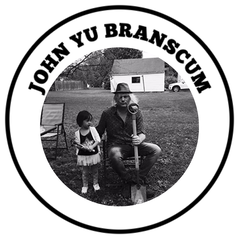
Egregore, writer, and translator John Yu Branscum has published book-length work with Sarabande Books, Argus House Press, and Empress Wu Books. His short form work has appeared in journals ranging from New England Review and Apex Magazine to Passages North, Samovar, and Cincinnati Review. He is a past recipient of the Ursula Le Guin Award for Imaginative Literature, the Linda Bruckheimer Award for Literature, the Appalachia/Affrilachia Award for Poetry, and the Gabo Award for Translation and Multilingual Literature (as a finalist). He enjoys family rave night, durian fruit, lucid dream vacations, and roaming around his neighborhood in a werewolf costume during full moons. Currently, he is in the middle of a long-term performance art project that involves working as an English professor.
ZHIGUAI: CHINESE TRUE TALES OF THE PARANORMAL AND GLITCHES IN THE MATRIX: 1

In this collection, award-winning writers and translators Yi Izzy Yu and John Yu Branscum share paranormal and glitch in the matrix tales from across present-day China. Confided by eyewitnesses, these true stories uncannily echo Western encounters with chilling dimensions of reality and supernatural entities. At the same time, they thrillingly immerse the reader in everyday Chinese life and occult beliefs.
Zhiguai: Chinese True Tales of the Paranormal and Glitches in the Matrix includes such accounts as:
*The reincarnation of a teenager whose fate eerily mimics his predecessor’s
*A girl who dies in the womb but nevertheless continues to communicate with her twin
*Terrifying shifts into demonic parallel universes
*Walls desperately painted with blood to save a family from tragedy
*Huge populations that disappear into thin air
*The revenge-seeking ghosts of murdered cats
*Weird temporal shifts
*Occult murders
From the terrifying to the uncanny, this collection will not only change your understanding of China but of reality itself.
Zhiguai: Chinese True Tales of the Paranormal and Glitches in the Matrix includes such accounts as:
*The reincarnation of a teenager whose fate eerily mimics his predecessor’s
*A girl who dies in the womb but nevertheless continues to communicate with her twin
*Terrifying shifts into demonic parallel universes
*Walls desperately painted with blood to save a family from tragedy
*Huge populations that disappear into thin air
*The revenge-seeking ghosts of murdered cats
*Weird temporal shifts
*Occult murders
From the terrifying to the uncanny, this collection will not only change your understanding of China but of reality itself.
TODAY ON THE GINGER NUTS OF HORROR WEBSITE
[BOOK REVIEW] VIOLENT VIXENS: AN HOMAGE TO GRINDHOUSE HORROR, EDITED BY ARIC SUNDQUIST
[BOOK REVIEW] PATHS BEST LEFT UNTRODDEN BY KEV HARRISON

the heart and soul of horror features


Archives
April 2023
March 2023
February 2023
January 2023
December 2022
November 2022
October 2022
September 2022
August 2022
July 2022
June 2022
May 2022
April 2022
March 2022
February 2022
January 2022
December 2021
November 2021
October 2021
September 2021
August 2021
July 2021
June 2021
May 2021
April 2021
March 2021
February 2021
January 2021
December 2020
November 2020
October 2020
September 2020
August 2020
July 2020
June 2020
May 2020
April 2020
March 2020
February 2020
January 2020
December 2019
November 2019
October 2019
September 2019
August 2019
July 2019
June 2019
May 2019
April 2019
March 2019
February 2019
January 2019
December 2018
November 2018
October 2018
September 2018
August 2018
July 2018
June 2018
May 2018
April 2018
March 2018
February 2018
January 2018
December 2017
November 2017
October 2017
September 2017
August 2017
June 2017
May 2017
April 2017
March 2017
February 2017
January 2017
December 2016
November 2016
October 2016
September 2016
August 2016
July 2016
June 2016
May 2016
April 2016
March 2016
February 2016
January 2016
December 2015
November 2015
October 2015
September 2015
August 2015
July 2015
June 2015
May 2015
April 2015
March 2015
February 2015
January 2015
December 2014
November 2014
October 2014
September 2014
August 2014
July 2014
June 2014
May 2014
April 2014
March 2014
February 2014
January 2014
December 2013
October 2013
September 2013
August 2013
 RSS Feed

|

|