

Tales from Beyond the Pale – The Podcast
13/11/2019
 There cannot be a discussion on independent genre films without acknowledging Larry Fessenden and his company, Glass Eye Pix. Created in the 1980s so Fessenden could copyright his own work, Glass Eye shifted their focus on new directors by the mid-2000s to produce lean budgeted, auteur-driven works: Wendigo, I Sell the Dead, The House of the Devil, Stake Land, The Comedy, and Late Phases are a few titles to come from Glass Eye Pix or as Fessenden describes it, “Larry Fessenden’s School of Cinematic Arts.” However, over the last few years Glass Eye has ventured into another medium, one considered archaic only several years ago, a radio drama titled, Tales from Beyond the Pale. Created in 2010 by Fessenden and Glenn McQuaid, Beyond the Pale came about from their love of classic 1930s radio dramas and as a response to the current state of the indie film world. It used to be an independent company could make some profit from the limited theatrical run, DVD sales, and selling to a network. Now with streaming services the movie will reach more viewers but will be bought for one lump sum that won’t (in some cases) provide residuals, leaving many just breaking even. * This is an amateur explanation of how the business works. * With that in mind, Fessenden and McQuaid asked their filmmaker friends if they had any unused scripts that could be cut to around 30 minutes and minimized for an audio format. You may be asking why I’d discuss something that debuted in 2010. Originally the only way to listen to the episodes would be if you were in the live audience, heard it through other outlets, or if you purchased an episode. Starting this month Tales from Beyond the Pale – The Podcast has released a past episode each week for Shocktober, that can be downloaded/streamed for free on Android or IOS. Let’s begin: Anthologies have a stigma about them that the segments within the piece will be “hit or miss,” but how they’re received isn’t known until an audience views them. However, by releasing past episodes that proved successful, Beyond the Pale has beat the odds in a way that only a “live” show could do. Like many of the most famous anthologies, Beyond the Pale has Fessenden bookending the stories. Nostalgically closer to the Cryptkeeper than Rod Serling, Fessenden’s charismatic showmanship offers an entertaining approach to the host role that the live audience appears to relish. Let’s get this out of the way: Yes, the episodes you’re listening to are the same ones recorded for a live audience, which comes with its own baggage (for better or worse). For me, this knowledge primarily makes me want to see their show live. Knowing that the actors, music, foley (sound effects), are all done on the spot in front of an audience, showcases a well-rehearsed machine of immense talent. I understand there must be some postproduction done to improve the quality but having it so smooth is incredibly outstanding. It works better than the majority of audio horror that is made specifically for the podcast medium. However, on the other end, this can create a separation between the viewer and the source material. No matter how great it is to view/listen to the recording of a live theatrical play, concert, comedy special, or even sports event, it creates a “you had to have been there” mentality. This being “maybe the joke would have landed better” or “I wish I was able to see that goal in person,” a live event has a communal effect whose power diminishes through transferring to another medium. The audience also has the potential to take you out of the story even when you hear them laugh at an intended joke to lighten the mood. So, I can understand why someone would feel that if it’s for a podcast then why not rerecord or make new content specifically to enhance the medium. As an anthology we have to check out each segment to see how the piece works as a whole. Ep. 1: Reappraisal – Written and Directed by Glenn McQuaid – 31 minutes – Performed live April 29th, 2017 A man trying to sell his home and uproot his family is visited by a mysterious buyer. Even though it’s one of the more recent, Reappraisal has grown to become a series’ fan-favorite. Traditionally audio drama is known for using a character as a narrator to add exposition or describe scenes that are too difficult to convey through the audio format. Reappraisal doesn’t use that. Instead it flows like a one-act stage play between two characters. McQuaid provides possibly the most suspenseful of the four, thanks to his tension-building, rapid-fire dialogue and musical accompaniment. Though it could be considered the most generic of the four, with a well-known “devil’s contract” plot, but that doesn’t mean it lacks an artistic voice. McQuaid gives us an interesting perspective from an Irish immigrant’s POV who wishes to return home due to the current state of the US. No matter how extreme these anxieties may be, we can empathize with the character… just maybe not how he goes about achieving his goal. As I explained before with the understanding that a majority of these were originally unused scripts condensed and minimized for an audio format, this works the best as a complete story. I’ll get into it more below but the others (though great in their own way) have elements that feel like it should’ve been longer. Ep. 2: In the Wind – Written and Directed by Larry Fessenden – 24 minutes Winged creatures descend from the sky to terrorize a snow-bound mountain resort. Fessenden has become the unofficial spokesperson for environmentalist horror and the Wendigo (a mythological man-eating creature originating from the Algonquian tribes). He’s created many projects across different mediums that utilize the creature in some incarnation. So, it comes as no surprise that the first tale of his to enter the podcast version of Beyond the Pale is one that has a creature comparable to the Wendigo and has themes of mother nature striking back against humanity’s greed. This is the highest concept of the four and requires a lot of narration from the main character to really get some of the scenes and imagery across. It’s also the one that feels the most like a it was meant to be a screenplay or even adapted to prose, because of how visual it is. And none of this means it isn’t a fun listen nor done with the same technical quality as the others. I found it reminiscent of when I was read to as a child. If you couldn’t tell from the previous paragraphs, Fessenden is in his element with this segment, an intimate character-piece that’s also a snow-drenched monster story. Right up my alley. Ep. 3: The Crush – Written and Directed by Glenn McQuaid – 37 minutes – Performed live October 16th, 2012 Loretta will stop at nothing to own a successful vineyard, but when the wine finally flows, it comes at a price. A greedy person/narrator who gets their comeuppance, elements of dark comedy, affairs, over-the-top southern characters, this is Beyond the Pale’s EC Comics-inspired segment. For those that don’t know, EC Comics have inspired or adapted into many anthologies over the decades, with some of the more well-known ones being Tales from the Crypt or Creepshow. Plenty of the stories revolved around an individual who kills their spouse and then is punished by some (possibly) supernatural element. The thing with EC Comics that works in this podcasts favor is they are best when they’re short. It’s difficult to sustain an evil character doing evil things and trying to get away with it after a certain point. Achievable? Yes. But difficult to keep audiences invested still. As the longest of the four, Crush comes tauntingly close to that point. The first 20 minutes are slow and not in a building of tension way, but slow in a setting up the scene and exposition way. Again, like Reappraisal, McQuaid can take a standard plot and make it unique. To not spoil anything, I will only say that once they discover delicious grapes for making a wine that alters whoever drinks it, is when the story picks up. I wish that portion of the tale was larger, but I realize inevitably you need that set up in order for the rest to play out as beautifully as it does. It falls into that weird length where it is too long to just tell a simple, in-and-out tale but too short to provide the much-needed character arcs. In the end you’ll be satisfied but, haunted in knowing it could have been so much more. Ep. 4: Caper – Written and Directed by Larry Fessenden – 32 minutes – Performed live October 23rd, 2012 Four burglars are trapped in a fantasmagoric nightmare when they discover the abandoned mansion, they break into is shapeshifting. The last segment for Shocktober is also the one I’d consider the “odd one out” in terms of this collection. It feels like it should have been in the middle, allowing In the Wind or even Reappraisal to close out the month. It’s also a change in style for Fessenden, whose strength lies in his intimacy and sympathy of the monsters. I hate to call Caper safe (because it isn’t) but it is the most mainstream or marketable (which isn’t a bad thing) segment for this month’s collection. As described in my praise of McQuaid’s segments, he was able to take a plot we’ve seen many times before and make it entirely his own. Though entertaining and great in its own right, I didn’t feel that for Caper. Like The Crush, Caper spends a lot of time setting up the scene/relationships, which is necessary but when the crew finally gets into the mansion it seems to go by in a blur, leaving you wanting more. I say all this as a fan of his work. Hopefully others listen to the episode and are more than happy, because it’s a good story with a superb sound design that builds to a heart-pounding climax. Final Thoughts Any issues I may have brought up didn’t deter me from finding each episode incredibly enjoyable. As I stated above, like any anthology, there’s going to be the segments that you’re drawn to more than others based on your personal tastes and they provide a wide range of stories so hopefully at least one grabs your attention. At the end of the day you should remember that this is an anthology series and podcast so there are storytelling barriers, but that doesn’t seem to stop them from putting their all into each segment. The major draw and what sets this apart from other audio dramas is the undeniable talent across the board utilized to make this show happen. It’s a project that leaves me not only wanting to experience it live but also be a part of it, which is possibly the best compliment I can give. Maybe my recommendation is influenced more by their creative process, making the stories that much better. Whatever it is I am here recommending Tales from Beyond the Pale, so it must’ve worked. *The 5th episode titled; H.P. Lovecraft’s The Hound will be available by the time this is posted. * 4 ½ OUT OF 5   EXPLORING THE LABYRINTH: DEAD SEA
12/11/2019
 In this series, I will be reading every Brian Keene book that has been published (and is still available in print) in order of original publication, and then producing an essay on it. With the exception of Girl On The Glider, these essays will be based upon a first read of the books concerned. The article will assume you’ve read the book, and you should expect MASSIVE spoilers. I hope you enjoy my voyage of discovery. 10. Dead Sea On his podcast, The Horror Show with Brian Keene, Keene has mentioned more than once his friendship with George Romero. A story he particularly enjoys telling is one about how, upon hearing that Keene’s novel The Rising featured “zombies” (actually, as we’ve discussed, corpses possessed by intradimensional nasties) that had fairly decent motor control and were capable of running, Romero said to Keene, with a good natured smile, “Fast zombies suck!” The phrase became somewhat of a touchstone between the two men, appearing in items they transcribed for each other, and indeed Keene wrote a short movie, currently available on YouTube, that used the phrase for the title. I bring this up because Dead Sea sees Keene revisiting the zombie apocalypse, but this time, the zombies are not the Siquissim of The Rising series; instead we have the Romero article, shambling, mindless corpses, drawn by sound, mainly, and motivated entirely by appetite. Though with a customary Keene wrinkle, whatever is causing the zombification affects mammals as well as humans. So it starts with rats in New York City. The novel’s protagonist is Lamar Reed, a black gay man from Baltimore, whose life was just beginning to slide into dangerous waters when the end of the world arrived. As we join him, it’s several weeks in, and he’s living (platonically) with his male neighbour, making occasional raids out to local stores to stock up on supplies. Keene does his usual masterful job of bringing us up to speed with the events so far, establishing the status quo, and then gleefully blowing it up, when his neighbour is killed during a forage, with Lamar left fleeing through the streets of Baltimore, indiaquetely armed, with zombies close behind, and the city in flames. The first third of the novel is an action tour de force as Lamar finds two children, Tasha and Malik, living alone in their apartment, rescues them, and then is forced to take them through the hellscape of the city streets while zombie hordes roam and fire creeps ever closer. All of the stuff Keene does so well comes into play here - breakneck pacing, brilliantly realised action horror sequences, and excellent visualisation that propelled me through the book, desperate to know what would happen next. As an exercise in sustained action horror and cinematic storytelling, it’s as good as anything Keene has written to date; which is to say, pretty fucking good. Obviously the pacing changes a bit once the survivors make it on board the boat, and they manage to make sail, leaving Baltimore burning behind them. Here the narrative shifts, too, into a more claustrophobic, survival horror mode, as the nineteen survivors are forced to adjust to the reduced circumstances, and to each other. It’s an absolutely classic horror situation, and Keene allows it to play out well, gathering the group for a briefing from the ship’s captain, and using that plausible setting to introduce the cast of characters. There’s so much potential here for issues - the slowdown in pacing, the sheer number of people Keene now needs us to get to know - but Keene handles the whole thing with a sure touch that looks effortless, and I found myself drawn in, eager to know more about these people, and their lives before the fall. Of course, it’s a Keene novel, so part of you is also wondering who is going to die, and how. After a shore excursion to gather supplies that goes horribly wrong (incorporating an encounter with a pleasingly deranged man of the cloth), the situation on board deteriorates further once the crew discover that the infection has spread to the fish. From there, following another superb claustrophobic action sequence, a handful of the cast end up in a lifeboat, heading for an offshore oil platform with zombie dolphins hard on their heels. This may seem a little hypocritical after I praised Keene’s range in the last essay, but I have to say that I really enjoyed the return to pure pulp action horror that Dead Sea represents. There’s a rush to it, done well, that’s all - adrenaline, thrills, spills, and some lovely, unfussy, note perfect character work that kept me engaged with the story throughout. I’m sure there’s a debate to be had about a straight white author writing a black gay lead, but; well, two things - one, in principle, I’m profundly queasy about unilaterally saying that should be off limits - if representation matters (and it fucking does), then white authors, should, maybe must, engage (with care, sensitivity and humilty) with and write charicters from backgrounds and life experiences other than their own (I mean, shit, if we’re not doing that, what the fuck are we doing, anyway?). But/and/also secondly, being also straight and white, I am acutely aware that I’m not best placed to spot any issues there may be with the way Lamar is portrayed, so I’ll leave that there, I think. Fucking hell, though, this is fun. I’ve mentioned it before, but one of the things this project is really reinforcing for me is my love of top drawer pulp horror; done right, it really is a thing of considerable grace, joy, and beauty. Those may sound like odd words to describe a novel as viscerally nasty and psychologically and emotionally bleak as Dead Sea, but if you’ve come this far, I suspect, as a fellow pulp horror fan, you know exactly what I’m talking about. And Keene does this stuff about as well as anyone out there. Next Up: Shades, in collaboration with Dave Cooper. KP 6/9/19   I’m a horror writer, and my favorite characters to develop are the villains. But when researching female villains, I’ve noticed concerning trends that I hope to illuminate and discuss. Let’s talk clichés. It has long been established that females are the gentler gender. Apparently, we are the nurturing, soft gender that are deemed weaker, both physically and emotionally, than our male counterparts. It’s not natural for filmmakers to take this view of womanhood and manifest it in a villain that stabs someone in the eye. Well, unless that someone is a cheating husband. Think of some great female villains. What is the inciting incident that causes them to turn evil? In Fatal Attraction (1987), Glen Close plays an obsessed mistress who seeks revenge by stalking her ex-lover. Notice how Close’s villainous character sticks well within the confines of femininity? She’s a scorned woman, who falls in love with a man, and can’t handle rejection. In the end, Michael Douglass’s character actually wins sympathy from viewers, even though he’s just as guilty for the affair. The woman is villainized, the man is the victim. Shocker. Or how about the original iconic Friday the 13th (1980) movie. A little boy dies due to neglectful camp counselors and the mother avenges his death. It’s the mother-son connection that leads to her murder spree, once again confining the female villain to stereotypical female tendencies. We’re the maternal guiding lights to our children, therefore our horror must exist within that realm. Same with Carrie (1979) and her mother. Let’s talk jealousy and revenge Not only does our evil seem to be stuck in a world of female tendencies, we’re also typecast to villains with little emotional range. We’re jealous. We want revenge. The 2009 flick Obsessed plays off this trope, but it can be traced further back. Look at Disney fairytales. Ursala is jealous of Ariel and steals her voice in The Little Mermaid. Cinderella has three jealous stepsisters and an evil stepmother who want to take away Cinderella’s happily ever after. Did you notice a trend? The women are jealous of other women. Another cliché we could probably do without. Let’s talk sex But it’s not just our maternal or female instincts that are exploited when developing our evil personalities. It’s our sexuality. Think Megan Fox in Jennifer’s Body (2010) or Uma Therman in Batman and Robin (1997). I’d just like to say, in case anyone needs to hear this, women were not put on this Earth to “look good” for men. Portraying our “power” in this sort of light truly diminishes our worth and humanity. The femme fatale trope is nothing new, but surely, we can retire it. We can create deeper characters whose bodies don’t play a role in luring prey. Now, let’s talk solutions. All I want are well-rounded female villains, just as there are well-rounded male villains. I recently saw The Joker (2019), which I could argue is one of the most haunting and brilliant portrays of a villain in cinema. Why can’t we take all the things film makers did right with that movie and apply it to a female villain? The key to any good villain is depth and fear. Readers want to know the backstory, the spark that started the insanity and evil. They want to know the villain’s internal and external fears and see how that manifests into darkness. Look at Lupita Nyong’o as Adelaide Wilson/ Red in Us (2018). She’s brilliant, and her character is one of the best female villains of all time. Her trauma isn’t sparked by her femininity. It’s a universal fear that haunts her and leads to revenge. I’m not suggesting that a female villain can never again wear high heels or have a backstory that’s derived from the loss of a child. I’m suggesting that we challenge ourselves to push beyond these stories. Create new female villains that we haven’t seen before. Nico Bell is a horror author and book reviewer. She's had several short stories published, and her debut novel Food Fright is available March 2020. You can find her at www.nicobellfiction or @nicobellfiction on twitter and instagram.   American adults aren't going to the movies as much as they used to. In fact, nearly half of U.S. adults visit a movie theatre only once a year or less. Maybe they just haven't been to Oklahoma City. Believe it or not, there are plenty of movie theatres to choose from in Cinderella City with something for everyone. Here's a list of some of the best movie theatres in Oklahoma City any film fan should check out.  AMC Theatre Part of one of the largest movie chains in the U.S., the AMC Theatre located in the Quail Springs Mall has a whopping 24 screens that show everything from blockbusters to independent releases. Like all AMC locations, this one features cushy reclining chairs, Dolby sound, IMAX, and reserved seating. Seniors, students, and military members are eligible for discounted tickets. When you're done watching your flick, spend the rest of the afternoon or evening trying to break free from an escape room at Breakout Games, located in the same mall. Harkins Bricktown Cinemas 16 Reviews consistently rave about the cleanliness and affordable ticket prices of Harkins Cinema located in the trendy Bricktown neighbourhood. Sixteen screens show a mix of the latest mainstream releases and independent productions. One standout feature is the Cine Capri screens which deliver an immersive experience via an expansive screen and Dolby 3D object-based sound. A bonus of visiting this theatre is that it's within walking distance to plenty of Bricktown restaurants, so a dinner and movie date is never a problem. Rodeo Cinema As one of the oldest movie theatres in town, Rodeo Cinema, opened during the Roaring Twenties to show silent films. Today, this art-house theatre focuses on independent movies that you won't see at the bigger chains. It also boasts generous legroom and free flavoured sprinkles for your popcorn. Moore Warren Technically located in nearby Moore which is just south of Oklahoma City, the Warren is worth getting in the car for. This theatre bridges the gap between old school and modern technology by pairing huge screens and state-of-the-art sound with memorabilia and a nostalgic feel. Adults age 21+ can enjoy cocktails and full meals before or during a showing. Grab a seat in the balcony for the ultimate viewing experience. Cinemark Tinseltown and XD Affordable prices, comfy leather seating, and plenty of parking draw movie fans to Cinemark Tinseltown and XD. Matinees are only $4 before 6 PM and buying a loyalty tub will earn you discounts on popcorn. This theatre also houses a Starbucks so you can get your caffeine fix before or after a showing. It's also less crowded even on a movie's opening day compared to other theatres in town. Check Out These Movie Theatres in Oklahoma CityWith so many movie theatres in Oklahoma City to choose from, you're sure to find your next favourite cinema. It may just entice you to see a movie in the theatre more often. Before you head to the theatre, read up on our reviews of the latest horror films. 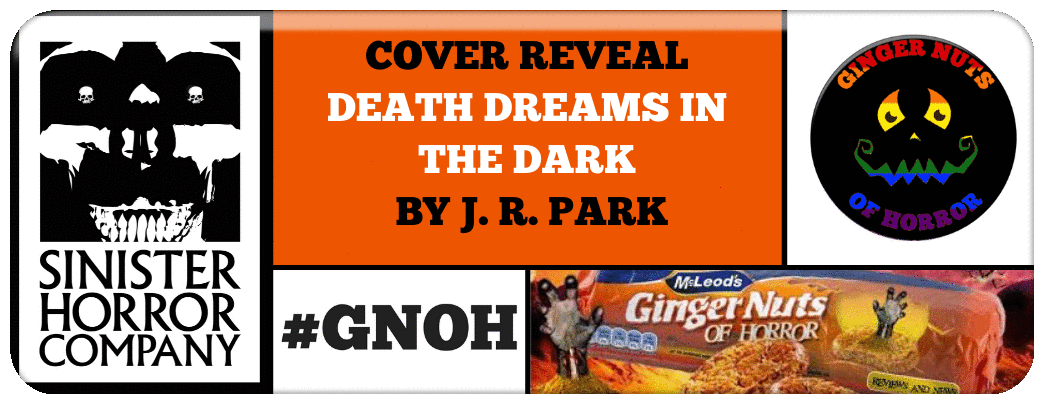  The Sinister Horror Company are proud to reveal the cover of our forthcoming title Death Dreams In The Dark by J. R. Park which will be released on the 22nd November 2019. J. R. Park began his short story collections, the Death Dream series, with Death Dreams In A Whorehouse and followed up by Death Dreams At Christmas. Death Dreams In The Dark is his third collection, bringing together nine stories all themed around the dark. The collection is a mixture of original stories and reprints, with each story revised and reworked. Death Dreams In The Dark is a collection that shows a subtle shift in Park’s writing. If the four books Terror Byte, Punch, Upon Waking and The Exchange was his first phase, then this collection showcases his further development in a second phase as his influences have widened, incorporating a host of modern-day horror writers. The cover artwork was created by Jorge Wiles. Jorge has created the art for the previous instalments of the Death Dreams series as well as the art for Kit Power’s Breaking Point, Stuart Park’s Marked and the Sinister Horror Cards. 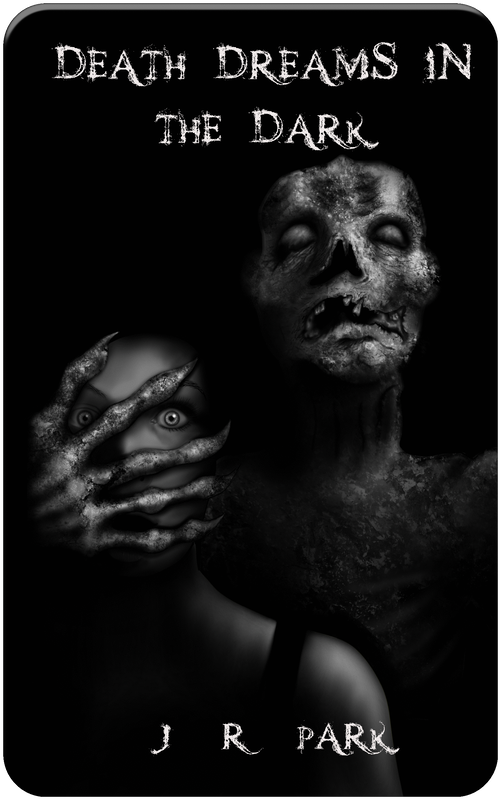 J. R. Park has this to say about the new release: “Death Dreams In The Dark is my third short story collection. The Death Dream series started when I wanted to collect together some of my short stories. At the time I was unsure what to call the book, then one idle day driving to the shops I played a game of trying to think about the most reprehensible title. The title Death Dreams In A Whorehouse sprang to mind. As I thought about the number of stories in the first collection that featured the world’s oldest trade I thought it was a good fit. When I began collecting together and writing Christmas themed stories, the title Death Dreams At Christmas seemed a natural progression, and from there the Death Dreams series was born. Jorge Wiles is my cousin; a fantastic guitarist, we used to chat a lot about music, which is both a shared passion. Early on he was an advocate of my books, and we grew even closer as we used to talk about horror. A few years ago Jorge decided to draw some pictures for his daughters, and realised that he wasn’t too bad at art. That’s an understatement, and it’s unbelievable that he’s only been doing it for such a relatively short timeframe, but his results are down to his hard work and determination. Since his original epiphany he has learnt from friends and YouTube videos, improving as he goes. Seeing his work, I asked him to draw the art for Death Dreams In A Whorehouse, and since then he’s been the artist for the whole series. With the artwork, I come up with the basic concept, but I always let Jorge indulge himself with the creature design. It’s something I think he enjoys, as he gets to fire up his imagination and let it flow onto the page. The stories in Death Dreams In The Dark are a mix of originals and reprints from anthologies that have been good enough to feature my tales, although every story has been looked over and revised. Some have had a minor alteration of the language in order to improve the flow, whilst others have had some bigger changes. The Darkling is a good example of this; a story that when I re-read I came up with a new ending. This then required some re-work of the main story for all the elements and themes to fit. The whole collection is themed around the dark and each story, one way or another, has a stygian mood shrouded over its words. Mood and atmosphere are something very much front and centre in all these stories, incorporating the uncanny and an attempt to hold that lingering feeling of dread in the reader after the story has finished. You’ll still find me experimenting with story structure and form, as I find the short story such a natural environment to play with these things. It wouldn’t be a Death Dreams book if I didn’t.” 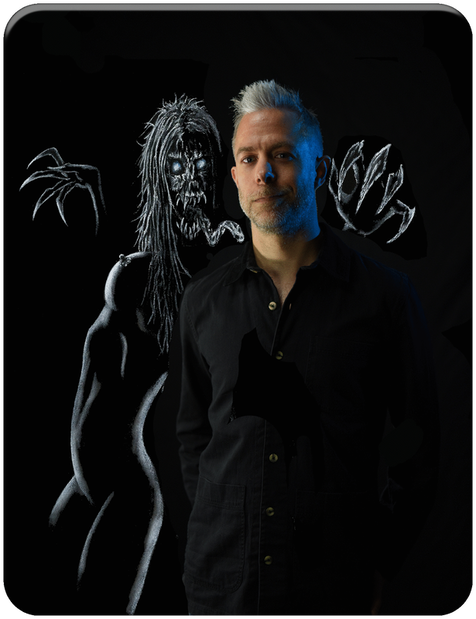 Death Dreams In The Dark blurb: “There’s a whole underground ‘Candyman’ (1992) style vibe whispered throughout the story. Something that taunts you. Plays with your senses and sets your imagination loose to explore darkened passages you may not wish to travel down,” writes DLS Reviews on the short story The Ugly, just one of nine tales from Death Dreams In The Dark: a collection of haunting stories that seep from the darkness of J. R. Park’s imagination. The third in the Death Dream series, this volume explores the horrors that lurk after hours; the nightmares made real; the awful truth of the things that go bump (and hack, slash, cackle and sigh) in the night. This collection includes the stories Nunight, Halloween Night, The Darkling, Late Night Caller, Mary, Do What Thou Wilt, The Ugly, Diamond In The Rough and The Last Horror Story. Death Dreams In The Dark will be available on Kindle and Paperback from Amazon and the Sinister Horror Company website from the 22nd November 2019. Pre-orders to go live on Amazon and the Sinister website in due course. Cover art by Jorge Wiles. Facebook.com/JWilesIllustrator Twitter: @j_illustrator   In some ideal little backwater alternative reality, the Wachowskis never made a sequel to The Matrix. (“It doesn’t matter how much money you throw at us. The movie is perfectly self-contained; He’s virtually a God at the end. What more can we say?”) In this Goldilocks paradigm the Chocolate Lime was never invented, Bowie is busy working on his twenty-eighth studio album – which features a rumoured collaboration with Prince - and they only made a single Creepshow movie. Creepshow (1982) is - along with Dead of Night (1945), Amicus’s Tales from the Crypt and The Vault of Horror (1972 and 1973 respectively) and The Twilight Zone (1983) - one of the better anthology movies. The first collaboration between the sadly missed George A. Romero and Stephen King (who would later go on to work together again on a decidedly lacklustre adaptation of King’s “The Dark Half”), it’s a loving tribute to the old EC Horror comics of the nineteen-fifties. 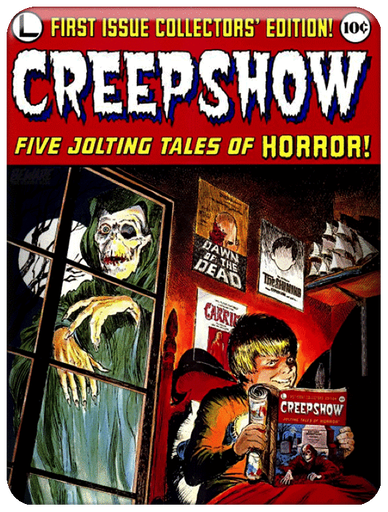 To those of you unfamiliar with EC’s comics, the most notorious of their output could be found in their horror books, namely The Haunt of Fear, The Vault of Horror and Tales from the Crypt. These tales frequently saw morally dubious protagonists having poetic justice meted out to them, often drawn in gruesome and grisly detail. As a result of this, the comic book industry became the target of mounting public criticism, with American Psychiatrist Dr Fredric Wertham campaigning against them due to their “influence on corruptible young minds”. As a result, horror comics dropped in popularity and many publishing companies were forced out of business. The aforementioned Amicus movies featured direct adaptions of some of the EC titles from the day (of which “Drawn and Quartered”, featured in Vault of Horror and starring Tom Baker is a particular highlight). 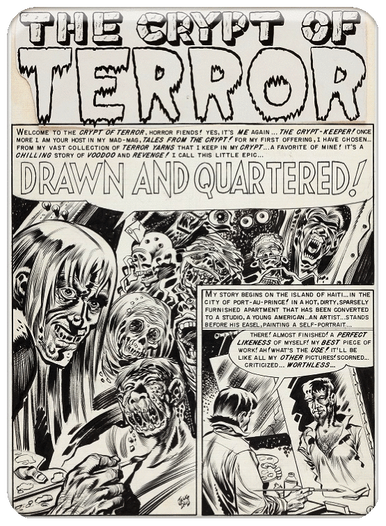 Creepshow doesn’t feature any direct adaptations of EC horror tales, but instead features stories directly influenced by the feel and theme of those stories from the fifties. All but one of the five tales follow the traditional EC theme of bad things happening to bad people, with the other – The Lonesome Death of Jordy Verrill – mostly acting as a cautionary tale/comic relief segment. The cautionary warning being “Don’t get meteor shit on your hands. And if you do, don’t suck your fingers”. What made Creepshow a particular standout, even at the time, was the expert direction of George A. Romero. The comic motif features heavily throughout, many of the shots framed by borders with expositional text, or filmed at angles mimicking comic panels. Lighting is used cleverly throughout, scenes often lit with bold, garish colours – aping the basic four colours from old comics. Scene to scene transitions are often done as though the viewer is flicking from one comic page to the next, each story introduced by a comic panel which morphs into live action. It also features an excellent cast; Hal Holbrook, Ted Danson, a never more chilling Leslie Nielsen, Ed Harris and Adrienne Barbeau (at the time still married to John Carpenter). Stephen King himself also stars (and does an excellent job) as Jordy Verrill in his eponymous segment, and his son Joe Hill (credited as Joe King) stars in Creepshow’s memorable prologue and epilogue sequences. Joe Hill would later return to Creepshow, albeit in a dramatically different way. 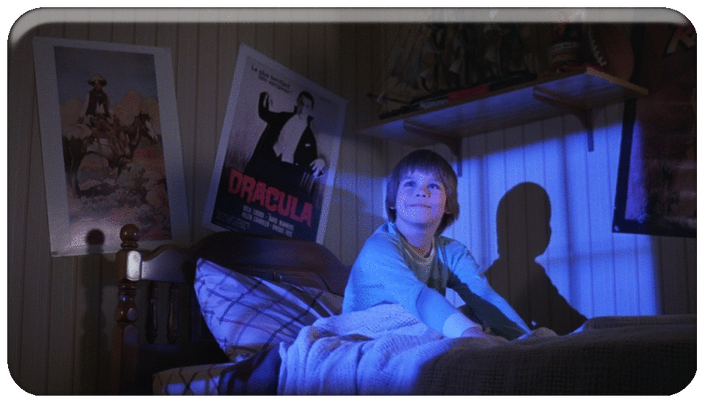 Creepshow 2 was made in 1987, but is a considerably weaker movie than the first. Featuring two fewer segments than its predecessor, it looks cheap and clearly didn’t have the same lavish care and attention given to it. “The Raft” is the standout story, but only because it’s the only one you’ll remember once the end credits roll. It feels like a rushed cash-in, and is barely worthy of the name. However, Creepshow 2 would only hold the accolade of worst Creepshow movie for a mere nineteen years. Creepshow 3 (2006) is an abomination of a movie that shares little with its predecessors other than the title. It’s barely worthy of being called a movie, let alone being commendable enough of sharing any association with the Creepshow brand. The only interesting thing about Creepshow 3 was that it took a similar approach to Tarantino’s Pulp Fiction in that all the stories are linked. They’re linked in two ways; one, in that characters from each story interact with each other during the film. Secondly, in that every segment is utter dogshit. It was announced in 2018 that Creepshow would be revived at a TV series, directed, supervised and produced by Walking Dead producer and special effects guru Greg Nicotero. Of course, since the days of the first movie, the anthology format has been replicated successfully (and sometimes less successfully) on TV on numerous occasions. Even Romero himself had revisited the format with his TV series Tales from the Darkside (1983–1988) and the hugely successful HBO’s Tales from the Crypt which vomited out several spin-off movies, and ran between 1989 and 1996. Being a huge fan of the original but not having not quite erased the ghastly memory of Creepshow 3 from my cerebral cortex, I was understandably nervous when the opening credits for the TV series for episode 1 of Creepshow appeared. The cheap animatronics on display for the silent cackling host, The Creep, didn’t fill me with confidence. 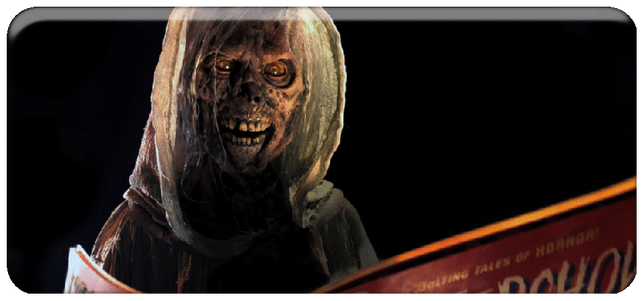 He honestly looks like a battery-operated decoration you’d pick up from the shelves of Poundland. Sometimes the animatronic Creep is replaced by a cartoon animation but that fares little better, with the quality resembling the cheap cartoon knock-offs of Disney films (“The Not-quite-as-little Mermaid”, “Frozened”) you’d find on the shelves of the same Poundland. Perhaps we’ve all just been spoiled by John Kassir’s excellent (and genuinely funny and charismatic) Crypt Keeper from Tales from the Crypt. Indeed, some people seem incapable of telling Creepshow apart from Tales from the Crypt.  All The Creep can seemingly do is cackle. You can’t shut him up for the reams of dialogue in his speech bubbles with the title and closing page of each episode, but he’s oddly stage-struck when you stick a camera in front of him. It’s probably for the best because even when he does cackle, his jaws clicks up and down like that particular unconvincing zombie with visible wires from Return of the Living Dead. An effect so bad they used it twice. The series kicks off with Gray Matter by Stephen King, in which the most memorable quality is the fact it stars both Adrienne Barbeau and Tobin Bell (of “Do you want to play a game?”/Jigsaw fame). The tale itself, based on a 1973 short story by Stephen King, is an icky and gruesome enough story of body horror with some impressive effects work, but is fairly mediocre. The ending feels abrupt and at odds with the rest of the story with some jumps in logic that feel as though you’ve dropped off to sleep and missed three or so minutes of explanatory dialogue. The House of the Head by Josh Malerman is infinitely better, being perhaps one of the single best episodes from a horror anthology I’ve ever seen. Focusing on what can only be described as a haunting in microcosm, it’s brilliantly original and genuinely chilling. Overall impressions after the first episode were, on the whole, good. The important thing was that – Unlike the abhorrence that was Creepshow 3 - it felt like Creepshow. The comics’ vibe was ever-present, including the familiar panel changes, lighting and shot framing – and a decidedly average episode was lifted up by a phenomenal second one, so lasting memories were good. The quality dips in Episode 2, which brings us two tales – Bad Wolf Down by Rob Schrab, and The Finger by David J Schow. Bad Wolf Down is an average WWII Werewolf story livened up by both the appearance of the ever-excellent scenery chewing Jeffrey Combs and some impressive flick-book style transformation effects; a special effects cost-cutting exercise with an effective (and thematically consistent) solution. The Finger is a somewhat more entertaining tale of regenerating monsters and dwindling sanity, shot like a stage play with fourth-wall breaking narration directly to camera, much like The Lonesome Death of Jordy Verrill from 35 years previous. Episode 3 sustains the unexpected trend of a weak first episode propped up the second in the form of All Hallows Eve by Bruce Jones and The Man in the Suitcase by Christopher Buehlman. All Hallows Eve quickly moves from being unnerving to annoying, with a signposted unsurprising ending. The Man in the Suitcase is considerably more interesting, feeling like it wouldn’t have been out of place in Tales of the Unexpected. It’s filled with the blackest of humour, and satisfies both the EC traditions of “careful what you wish for” and “You’ll get what you deserve.” 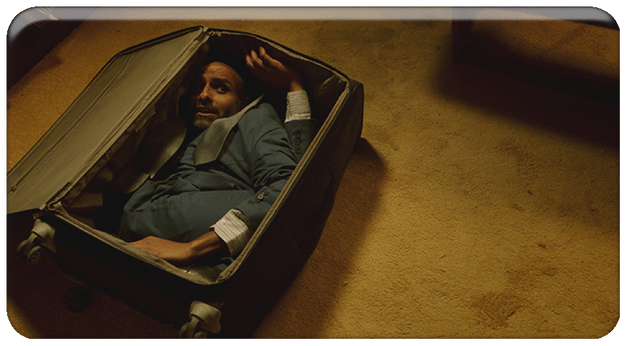 Episode 4 is the weakest episode yet by far, which is disappointing considering that the first story (The Companion) is by the usually reliable Joe R. Lansdale. It’s well directed and beautifully lit, but – like its monster - ultimately hollow. Lydia Layne’s Better Half fares little better, basically being nothing but a good excuse to see Tricia Helfer in something again after Galactica. However, it achieves little more than squandering an intriguing premise. We revisit the archaic territory of the classic supernatural tale “The Monkey’s Paw” in Episode 5 with another visit to what must surely be a familiar horror trope by now. They must be giving away enchanted wish giving monkey paws in Aldi by now, surely? They seem ten-a-penny. Night of the Paw feels longer than the other episodes, given a bit of time to breathe. Bruce Davison seems to be thoroughly enjoying himself as an ill-fated mortician, but an excellent set-up (and some wonderful performances) end abruptly at a conclusion that makes little sense to what has come before. Times is Tough in Musky Holler is more successful, dropping us into an alternate zombie infested world with little explanation, culminating in some gruesome practical effects work. Creepshow seems to be work best when it’s not trying too hard – Times is Tough… is a simple story with a simple premise that doesn’t outstay its welcome. 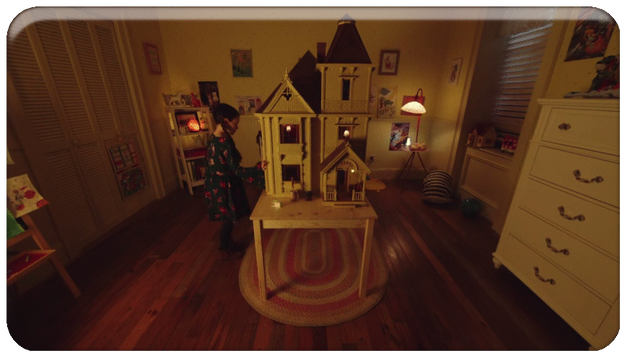 The final episode – conveniently released for Halloween – comprises of Creepshow’s final two tales. Skincrawlers by Paul Dini (of Batman the Animated Series fame) & Stephen Langford, and By the Silver Water of Lake Champlain by Joe Hill (and, interestingly, directed by Tom Savini). Skincrawlers is a fun bit of throwaway body horror with a simple premise and some cracking gore effects – proper Creepshow fun. By the Silver Water… is an odd one. Considering it’s the final episode of the first season, you’d expect the series to go out with a bang, but this is more of a half-hearted whimper. It’s an interesting enough story – the family aftermath of a lost fathers pursuit of a mythical creature – but it barely even feels like horror, let alone Creepshow. Considering Joe Hill’s pedigree, I expected a lot, lot more. As I’d intended to allude to in my Ginger Nuts of Horror Tales of the Unexpected article, this kind of anthology format is very forgiving for a couple of reasons. If there’s a particular story that doesn’t appeal, there’s only a short wait for another one. Secondly, because of the brevity of each tale, you’re willing to forgive a lot of what came before if a story has a half-decent ending. The quality control in the Creepshow TV series seems considerably better than that of Tales from the Darkside, but it’s still far from perfect. That said, even at its worst, it’s still eminently watchable and I’m eagerly looking forward to the next series – which, given Creepshow’s success on Shudder, is a foregone conclusion. Creepshow has a lot in its favour, namely in the some of the excellent writers that have worked on it. I’d love for some brave showrunner to begin to mine the excellent short stories from the Borderlands book series, but until then, the weirdness and unpredictability of Creepshow will suffice. And anything that banishes the memory of the poorly acted and directed travesty that was Creepshow 3 can only be a good thing. Recommended viewing/reading:
 Grave-id Court is a short story author and novelist, whose works have a-fear-red in over a dozen venues including Tales to Terrify, StarShipSofa, Visions From the Void, Fear’s Accomplice and The Voices Within. Whilst night-marily a horror writer, he also writes science fiction, poetry and satire. His last kill-ection, Scenes of Mild Peril, was released by Stitched Smile Publications and his debut comic rite-ing has just featured in Tpub’s The Theory (Twisted Sci-Fi). As well as writing, David works as a Software Developer and lives in Coven-try with his wife, three cats and an ever-growing beard. David’s wife once axed him if he’d write about how great she was. David replied that he would, because he specialized in short fiction. Des-bite that, they are still married. Until the next time, boils and ghouls, pleasant screams. Hahahahahahahaha! Website: www.davidjcourt.co.uk Twitter: @DavidJCourt Check out David's other excellent articles on the Site by clicking on the links below DARKER DAHL: TALES OF THE UNEXPECTED BY DAVID COURTBAYOU BEWARE; THE SAGA OF THE SWAMP THING BY DAVID COURT BIFF! POW! TAKE THAT, CTHULHU! – OF SUPERHEROES AND ELDER GODS DAVID COURT THE CRIME ISSS LIFE – THE SSSENTENCE ISSS DEATH!!! BY DAVID COURT  |


Archives
April 2023
|
 RSS Feed

|

|