

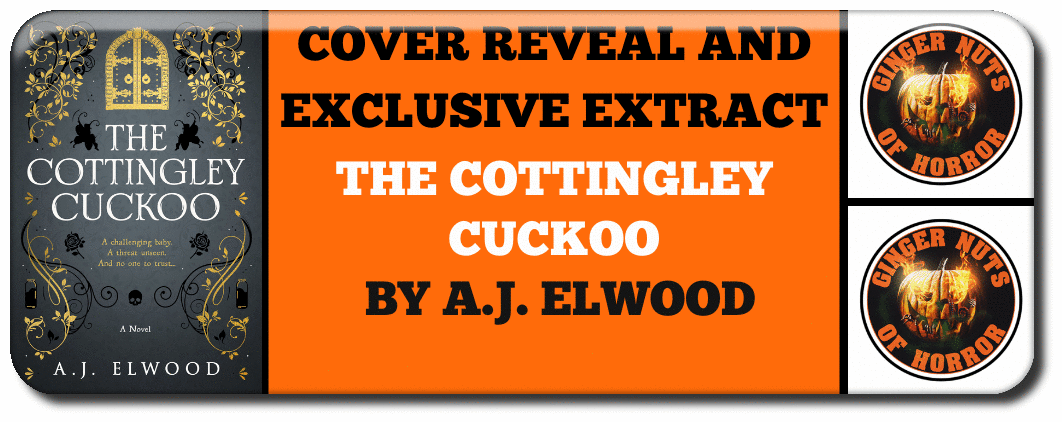
 Rosemary's Baby meets Laura Purcell's Bone China in this dark British fairytale... Rose dreams of a life away from the confines of the care home where she works. A resident shows her an old stack of letters about the Cottingley Fairies, the photographs dismissed as a hoax. The letter writer insists he has proof that the fairies exist. Rose falls pregnant, and with the letters growing more menacing, Rose begins to entertain dark thoughts about her baby. The Cottingley Cuckoo is a gripping and disturbing gothic in the vein of Stacey Halls, Laura Purcell and Andrew Michael Hurley. Elwood combines an eerie past with prescient modern-day concerns about pregnancy and childbirth in this atmospheric tale; one that will gradually creep it's way inside your soul... Captivated by books and stories, Rose dreams of a more fulfilled life, away from the confines of the Sunnyside Care Home where she works to support herself and her boyfriend. She hopes the situation will be short term. Charlotte Favell, an elderly resident, takes a strange, sinister interest in Rose, but offers an unexpected glimpse of enchantment. She has a mysterious and aged stack of letters about the Cottingley Fairies, the photographs made famous by Arthur Conan Doyle, but later dismissed as a hoax. The author of the letters insists he has proof that the fairies exist; Rose is eager to learn more, but Charlotte only allows her to read on when she sees fit. Discovering she is unexpectedly pregnant, Rose feels another door to the future has slammed. The letters’ content grows more menacing, inexplicable events begin to occur inside her home, and Rose begins to entertain dark thoughts about her baby and its origins. Can this simply be depression? Or is something darker taking root? The Cottingley Cuckoo, extract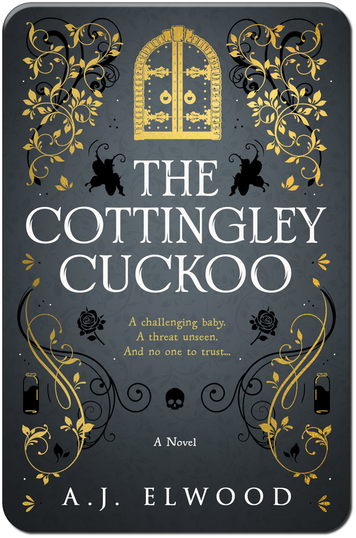 I know when it is time to read to Mrs Favell by the look she gives me from across the residents’ lounge. She turns and walks out of the door and I know I’m supposed to follow. There’s no point in putting it off and so I obey, keeping my eyes fixed on the stairs in front of my feet. I find her waiting with her back to me, the cold autumn light limning her hair. The book is already held in her hand, her thumb marking the place. It has a worn cloth binding with a title printed on the spine, though I can’t read it from here. Without turning, she holds it out. Once I’d rebelled against the way she treats me like a servant, but now I don’t care. I take the book, carefully so as to keep her place, and see the page she’s chosen for me. I wonder if it’s out of spite, but of course it is. She won’t report me or say anything about prying into her private things, but she will take her revenge. I refuse to let her see that it bothers me. Anyway, there’s not enough emotion inside me to protest or to cry. I tell myself I’m a shell, blank on the outside, empty inside. I won’t rise to any of it – let that be my revenge. The poem is by William Blake. It’s from his Songs of Innocence and Experience – this one, I seem to think, is from Experience. It can’t really be anything else. ‘“The Sick Rose”,’ I begin. ‘O Rose thou art sick. The invisible worm, That flies in the night In the howling storm: Has found out thy bed Of crimson joy: And his dark secret love Does thy life destroy.’ When I look up at Mrs Favell, her shoulders are shuddering. What I can see of her expression is blank but it’s all spilling out from behind the mask, mirth trying to burst free, and as I watch, it does. It floods from her; she makes high-pitched sounds and tears spring from her eyes. ‘Oh, Rose,’ she says. ‘Oh, Rose!’ She pulls a lace handkerchief from her lemon-yellow blouse, placed in the pocket for just such a moment, and wipes her eyes. ‘He’s taking everything from you, isn’t he? And you – you give and you give.’ She moves suddenly and grasps my arm, her fingers digging in deep, wrapping about the bone. I offer no resistance as she pulls me in front of the mirror. My hair is longer these days, no time to cut it, and it’s pulled back into a tight ponytail that doesn’t help hide how lifeless it is. My tunic, supposedly correctly fitted, sags from my frame. My face is thin – when did my cheeks sink like that? When did my skin get so dry and insipid, my eyes so dull? When did I last really look? It’s as if someone’s sucked the life from me. Is that what she’s showing me? For a second I feel my baby’s teeth grinding into my breast. Is that what’s happening – he’s draining me? I jerk my head as if I can escape the thought. Is that really how I see my own child: consuming my flesh, stealing my life away so that only a withered husk – a shell – remains? ‘You look like a consumptive, Rose.’ It’s an old-fashioned way of putting it but she’s right, I do. I don’t have the energy to protest. I can’t even bring myself to move. ‘He’s hungry,’ she says. ‘He always will be. He’ll drink and he’ll eat.’ Something tugs inside me, a pull inescapable and deep. I want to cry, but damn it, I’m not going to. I won’t. Besides, if I let her see that, I’m done for. I don’t know why I should think so, but it’s true. I try to tell myself she’s nothing but a bitter old woman who had something terrible happen to her once, that she should be pitied, not feared. I tell myself I’m not as exhausted, as denuded as I look, but it isn’t any use. Right at this moment, she’s stronger than I am. Her will is keener. I can tell myself what to believe or not to believe, I can tell myself not to listen, but her stories are better than mine. It will get easier, I tell myself for the hundredth, the thousandth time. Of course it will. She cuts in. ‘Oh dear,’ she says, and there’s sympathy in her voice. It’s worse than the mockery had been. ‘So very tired.’ I swallow down the lump that rises to my throat. She draws something from her sleeve, a length of silk, like a stage conjuror at an outmoded end-of-pier show. It’s another handkerchief, this one smelling of the rosewater I used to make in my mother’s garden, crushing petals into a delicate scent that never would last. She raises it to her lips, touches it with her tongue. She can’t be, but I’m unable to move as she steps closer, tilting her head, considering my reflection. She raises the handkerchief and I shut my eyes as she strokes my eyelids, twice each, with the damp fabric. I hear her voice by my ear, a soft whisper. ‘We don’t need you any more, Rose.’ I’m not certain if I imagined it. What does she mean, we? Maybe she means the baby too. I sway on my feet, thinking of her little sleeping face, so perfect. In my mind’s eye she opens her mouth, but when she screams, it’s my baby’s voice I hear. My eyes snap open but I can’t see. There’s no room, no mirror, no reflection. There’s nothing and I reach for my eyes, trying to open them, pulling at the lids, but I think they’re open already-- ‘Goodness, what a fuss.’ Mrs Favell’s voice is distant again. She’s moved away from me. My eyes snap open and the room is just as it always was. Was I dreaming on my feet? I’m still standing before the mirror and it tells me the truth. I look a mess, my hair dishevelled, my face pasty. I could never be the heroine of any story. I look like nothing more than a confused child. ‘Perhaps you really should stay away from here,’ she says. Her tone is softer, warmer, honeyed. It snags at something deep inside me, the place where a mother’s love should be. Still I know that her voice is poison, and other words come to me, from another time: And there I shut her wild wild eyes with kisses four. It’s her poem, La Belle Dame sans Merci. Is that what she just did to me with her handkerchief? But she won’t close my eyes again. I won’t be blind. It strikes me what an inadequate word ‘fairy’ is, or has become. She is something more, something for which I have no name, but still I recognise her for what she is. I won’t forget again. And she doesn’t get to win. ‘You’re not going to make me leave,’ I tell her. Then I walk out of the door and close it behind me. There’s no need to slam it. If she really can see right through me, into me, she already knows that I mean it.   Comments are closed.
|


Archives
April 2023
|
 RSS Feed

|

|