

 *Warning: This article contains foul language and scenes of unimaginable horror in the form of violence, rape, incest, cannibalism and anything else I can think of to offend your delicate sensibilities. Do not read if you have: · PTSD · Anger management issues · Depression · Headaches · Erectile dysfunction · sweet tooth · lack of common sense · no sense of humour Okay, so the above trigger warning was silly, and I am in no way making light of the above conditions, but it helps to illustrate a point. Trigger warnings in general are ridiculous. Humour me for a moment whilst I talk about one of the most successful book series in history, Game of Thrones, written by George R.R. Martin. Like many of you, I am a huge Game of Thrones fan. Admittedly, I’ve never read the books, but I’m currently on my second round of binge-watching the show. I’ve been told that the books are far worse than the show when it comes to violence, sex, foul language, and all the other things people complain about For those who have never seen GoT, each episode begins with a trigger warning, telling audiences what’s in store for them during the hour that follows. Despite that, in a series 5 show called, “Unbowed, Unbent, and Unbroken.” audiences got upset because Sansa’s husband, Ramsay Bolton raped her on their wedding night. The camera wasn’t on Sansa during the rape scene. Ramsay tore the back of her dress, and bent her over the bed, and made Theon watch. That’s what we saw – Theon’s face as he witnessed Sansa’s rape. We knew what was happening, but audiences weren’t subjected to the actual rape. 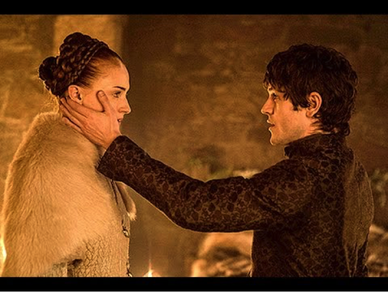 Shortly after the episode aired, the backlash began. People were appalled that a violent rape appeared (even when it technically didn’t) on a show where killing people by beheading, setting them on fire, and slashing their throats is the norm. Even those familiar with Ramsey’s character were shocked and claimed the show went too far. Honestly, with everything GoT has done in the last 5 years, it could’ve been a hell of a lot worse. Now, let’s switch gears and drive this discussion toward some of today’s horror books. In Graeme Reynolds’ High Moor 2: Moonstruck, Steven Wilkinson is a werewolf hunter who shoots an 8-year-old girl in the head. “Megan had reverted to her human form and looked up at the approaching hunter with tear-filled eyes. ‘Please, Mister. Please don’t hurt me. I just want to go home. I just want to …’ The hunter paused and appeared uncertain, then shook his head, aimed the pistol at the young girl and shot her between the eyes.” In Matt Shaw’s Sick B*stards, Mother, Father, Sister and Brother gather around the dinner table to have their first meal since waking up after the nuclear blast destroyed their world. “Father didn’t say anything else nor did he wait for us to argue with him. He simply took the knife and cut a slice of meat from the dead girl’s arm.” “I heard my father bite into the first piece of flesh from the remains.” Text Message is William Malmborg’s tale of a deranged man who kidnaps teenage girls in a mall. This time, he captures a young girl whose sister is with her. He sends the sister awful demands via text message and claims that if the sister does as she’s told, he will not harm the younger sibling. “When I was a young man, my mother would wash my mouth out with soap for swearing. Now I will do the same to you.” Mallory waited. Sure enough a message with instructions arrived. Go to the Body Works store and ask the lady which soap would be the best for washing your mouth out. Buy it and do it right in front of her.” Jasper Bark writes in Stuck on You, “Ricardo took a deep breath and put his lips to the cold cartilage of Consuela’s ear. He scooped the pork into his mouth with his tongue. It tasted of rancid meat and bile. He chewed and swallowed it anyway.” These are just a few examples of the extreme side of horror, and of course, these snippets are not in any way the worst of what these books have to offer. (I wouldn’t want to offend anyone so I’ve left them out) Matt Shaw writes graphic scenes of incest, some of which involve using “parts” of victims. The villain in Text Message makes the girl perform graphic sex acts in the mall, and In High Moor 2, there is a scene of unimaginable violence toward a specific character and her unborn baby. Stuck on You is just – well, let’s just say you don’t want to read that book whilst eating.  Most readers who pick up a horror novel are smart enough to expect the worst, even if the cover isn’t filled with trigger warnings. I mean, they are horror novels after all. Why then do these authors receive reviews like:
 Even novels that lack scenes of a grotesque nature come under attack for being offensive. Take Iain Rob Wright’s The Final Winter, for example. This unique tale of the end of the world receives reviews like: “I thought the premise of this book sounded interesting. However, the book was absolutely full of cursing, obscene slang, and just generally disgusting language.” “I do like how this author writes, but this one was a miss for me. I'll just say this was a little religious at the end.” I certainly can’t speak for everyone, but I can tell you, with utmost certainty, that if the end of the world were upon us, I would curse like a sailor (Okay, so I do that already) and might even start to believe in some kind of religion, but that’s beside the point. Although it’s true that authors can’t please everyone, well-respected authors like Richard Laymon, Chuck Palahniuk, Stephen King and many others have been writing books designed to turn our stomachs and give us nightmares for years. So, why does it seem that more people get offended now more than ever? If you buy a horror novel, especially one with a trigger warning written on the cover, and take offence to it, you absolutely forfeit your right to complain, because common sense dictates that parts of the book will not be pleasant. Matt Shaw writes in several different genres, but my favourites are his extreme horror books. On the cover of these black-cover books, (Hint No.1 that the book won’t be filled with puppies and flowers) he graciously includes a trigger warning (in bright lettering) that reads, “Warning. This is an extreme horror novel. It is not intended for those who are easily shocked or offended.” (Nope. No puppies and flowers here) Shaw isn’t the only one to include trigger warnings, and as much as they annoy me and others, many claim they are a necessity. They are there for the sensitive people among us. We wouldn’t want their feelings to get hurt, after all.  In many horror films, despite having a rating system in place, the camera will pan away from scenes of extreme or disturbing violence, leaving what happens to the audience’s imagination. You rarely see things like animal or child abuse - two subjects that often make people cringe. If you’ve seen 2013’s Carrie, you know exactly what I’m talking about. In the scene where the teens collect the pig blood to dump on Carrie’s head during prom, audiences didn’t see anything and heard only the pig’s squeal when it was hit with the sledgehammer. Horror novels tend to take a different approach. Although many stay away from vivid descriptions of animal or child abuse, most horror authors don’t hold back, nor should they have to. High Moor 2 is the perfect example of this. In one particular messy scene about halfway through the book, a werewolf named Connie is on a mission to kill everyone she can to avenge the death of her daughter. She hunts down Olivia, a pregnant police officer and a fight ensues. I won’t go into detail about what happens, but I will say that even I was shocked at how that scene played out. However, looking back on it, had the author done anything differently, it would have changed the whole book, and not in a good way. Since any good narrative centers on some kind of conflict and characters readers can relate to, it’s not surprising that many books deal with real-life issues such as rape, war, disease, eating disorders, alcoholism, drug abuse and a number of other things people find disturbing. Try to imagine a horror novel without conflict or without characters who haven’t been through a lot of shit throughout their lives. That would be a damn boring novel. Readers who want a book without such things should stick to colouring books. In a perfect world, readers would have enough common sense to stay away from horror if horrific things bother them. Sadly, we do not live in a perfect world and one wrong phrase or taboo subject will bring the whiners out of the woodwork. Authors cannot anticipate, nor should they be expected to anticipate what scene(s) will disturb a reader. It’s not that they don’t care, it’s that they’re not mind readers. In my opinion, it’s not the writer’s responsibility to censor his or her work. It’s the reader’s responsibility to shield him/herself from things they know could set them off. 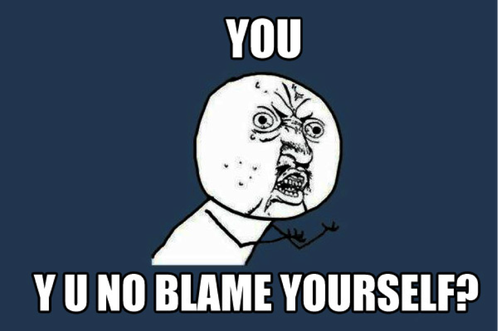 Unfortunately, until things change, which probably won’t happen anytime soon, trigger warnings will remain a necessity for certain books, and people will still get their feelings hurt by something they shouldn’t have chosen to read in the first place. What absolutely needs to change is people leaving bad reviews based on content. When a reader gets his feelings hurt by a book, then slams it in a review, it’s not helpful to anyone, especially the author. It’s a horror book. Get over it and don’t ruin an author’s livelihood and reputation or spoil the book for other readers just because you have delicate sensibilities. How do you feel about trigger warnings? Do you agree that they are a necessary evil, or should authors be free to write what they want, sensitivities be damned? If you disagree with my little rant, let me know in the comments. I’m not sensitive. I can take it. DAWN "ANGRY PUPPY" CANO
Adrian Shotbolt
4/8/2015 05:00:09
I don't really care too much about trigger warnings. I think that people should forfeit their right to post a bad review if they are basing the review on the graphic content. It's nonsense. It's like buying an album by the Wu-Tang Clan, listening to it then complaining about the foul language. There is nowt as queer as folk, unfortunately. 4/8/2015 05:03:09
Thank you for the spirited defence and general common sense approach Dawn. I don't think I'd read the review you quote, but have read others like it. I personally hate trigger warnings, but they are also a sales tool like 'Parental Advisory' labels on rap records, they help the readers search you out sometimes. Personally I try and use as much humour as possible when applying them, but humour is a big element of my work, and, I'm pretty sure, Matt and Graeme's work too.
Dawn Angry Puppy
4/8/2015 13:28:28
I instantly got angry when I read the review of "Stuck On You" that I posted a snippet of above. Why? Because if the cover didn't tell this person that the book would be somewhat uncomfortable, nothing would. That said, your book literally made me sick. I loved it. :) 4/8/2015 05:32:52
That is an excellent article, Dawn, and I'm honoured to get a mention. I always find it weird that some people can read about the most horrific scenes of violence, yet get offended by bad language or sexual content. I've never had one bad review over the scene you mentioned, but a whole lot of people complaining about the bad language. Another example that springs to mind was last seasons The Walking Dead. That scene in the revolving doors was one of the most harrowing I've seen in quite some time, but what really got people up in arms was the fact that two men kissed on screen.
Dawn Angry Puppy
4/8/2015 08:57:20
It's no secret how much I love the HM series, but I've got to say that although it takes a lot to shake me, that one particular scene I speak of above hit me hard. However, if I would have found that scene offensive, I could not have blamed you for it. That's nothing more than shirking my responsibility onto you and I don't think that's fair. 4/8/2015 10:47:01
If it makes you feel any better, that was a very difficult scene to write. I almost bottled it at the last moment and had to take a bit of a break from writing afterwards because it took so much out of me. I know full well that it was too much for a lot of people. Even some other horror authors I know almost put the book down at that point because it went right up to what they considered "too far". Like Jasper said in his response, both he, Matt and I use a lot of humour in our writing. It's a good counterpoint to the terror, can ease the tension and sometimes you can have a laugh then drop the reader off a cliff emotionally, and its so much further to fall. That said, while I don't consider myself an extreme horror author like Matt or Shane Mckenzie, I do write some extreme scenes. Those I treat with the utmost solemnity.
Frankie Yates
4/8/2015 06:18:08
I always find myself drawn to a book if it has a trigger warning, it intrigues me. I also find them pretty useful, being a recovered bulimic, to prepare myself if there is anything graphic about someone with an eating disorder. It would never put me off a book, it's just nice to be prepared because it's not very nice to read and is probably the only thing that bothers me. So yeah, either way I definitely agree with them being there. People definitely don't take them seriously though.
Dawn Angry Puppy
4/8/2015 08:44:45
Thank you for your comment. I tend to gravitate toward novels with a trigger warning too, simply because they pique my curiosity. :)
Paul M. Feeney
4/8/2015 08:00:24
I don't think any writer should censor themselves, nor should they bow down to the pressure to do so. As soon as you start trying to write in order to please people, you've lost the reason for writing in the first place.
Dawn Angry Puppy
4/8/2015 08:51:47
Hi, Paul. First of all, thank you for all your help when I was starting this article. You gave me a lot to think about and I hope you like the finished product. :)
Paul M. Feeney
4/8/2015 09:14:19
Absolutely I get what you're saying, and I'm not saying you're wrong, merely that this is how a lot of people are. they confuse having an opinion with being fundamentally right. Well, if that's the case, back it up with reasoning. Most Amazon 'reviews' are barely even an opinion, we all know this, but I also think most people don't really pay all that much attention to them. It's the star rating which affects whether the book gets promoted or highlighted, not the review. This applies to the five-star reviews as well. Saying 'I love this book' is no better or worse than saying you hated it. It's entirely irrelevant to any discussion. Examining why is far more interesting, but most people can't tell why, and they also can't separate their personal feelings about a work from the objective flaws or otherwise. So it becomes about entitlement, and ego, and this mad notion that somehow the writer has deceived you by not entertaining you. I saw some comment on a thread once where some idiot had posited that Stephen King makes all these promises but never delivers. Subjectivity about delivering aside, where, exactly, are writers making these promises? I don't ever remember doing that, and I don't know any writer that does. It's nonsense and it somehow creates the illusion that the reader's opinion is sacrosanct. Bullshit. Unless you can properly critique and dissect that which you are praising or decrying, your opinion is virtually worthless. Criticism is not itself free from the potential to be also criticised, as long as you can assert why, cogently and coherently.
Paula Limbaugh
4/8/2015 08:08:35
Great rant! I don't mind the trigger warnings as there are so many self-righteous prigs out there just looking to find something to complain about. Actually when I do see a trigger warning it gets me curious and then I want to read the book to see why I was "warned."
Dawn Angry Puppy
4/8/2015 09:02:50
Thanks, Paula! I'm the same way. I'll pick up a book with a trigger warning just to see what the fuss is about. :) 4/8/2015 08:17:10
I feel left out none of my books were mentioned lol.
Dawn Angry Puppy
4/8/2015 08:42:12
I think you hit the nail on the head, Tim. People can handle mainstream horror films, and are then shocked when they read about babies being eaten or werewolves dismembering someone. Thanks for chiming in. :) 4/8/2015 08:24:31
While I don’t write to offend people, I also very rarely consider censoring myself. Horror fiction is (like life) unpleasant, violent, unfair and full of pain and blood. Problem is we’re all so concerned with being called offensive that trigger warnings are seen as the norm when they’re simply a result of a society that can’t face up to just how horrific life can be. We either learn to incorporate all of real life’s shittiness into the good stuff or we’re buried by it. Basically, we don’t get a trigger warning when we get out of bed each day, so why should we demand one from our fiction?
Dawn Angry Puppy
4/8/2015 08:46:29
Brilliant. Couldn't have said it better myself. (And obviously didn't. ) :p 4/8/2015 08:54:40
Ha. What you said was first rate. I feel a blog post about this coming on...
Dawn Angry Puppy
4/8/2015 13:14:43
Exactly. :)
Well - we're damned if we do and we're damned if we don't. A great article which I see is being shared a lot on social media, which is great in itself. Hopefully the people who NEED to read it will find it ;)
Dawn Angry Puppy
4/8/2015 13:25:15
Since there are so many Indie authors and small presses out there that rely on word of mouth and reader reviews, it bothers me to think that one person's review, like those I listed above could potentially damage a writer's career, if even in some small way. Many, like you, can rise above it, but I'm sure there are some who can't. Then, they either feel the need to censor their writing or stop writing all together. 5/8/2015 11:55:27
I don't really agree with very much of this. Reviews help other readers to know if they'll like a book or not, and a review that says a book was too violent for their liking will be helpful to other readers that would find it too violent as well - while alerting readers who do like violence that it might be the right book for them. The effect on the writer's career doesn't come into it. You put a book out there, it's going to get reviewed and rated by fans, casual readers and people who read it because they ran out of books on holiday.The overall argument in the blog post comes pretty close to saying that you should only review the kind of books that you know you'll like, but I don't think that's true, and I don't think authors should be told to expect that. People can review whatever they want to. I gave a book one star on Goodreads recently, some supposedly factual guff about children using crystals to enhance their magical psychic powers. (It came into the house as a freebie with some gems one of the children wanted to buy.) This post suggests I was wrong to rate it because I knew in advance that I wouldn't like it. That doesn't make any sense to me. If we all did that, no one would ever read books that don't fit neatly into genre slots. As a reader and a reviewer, you have to take chances on things you might not like, and report back to other readers on what you find.
Dawn Angry Puppy
5/8/2015 12:23:58
Hey, Stephen. 6/8/2015 11:49:27
I think you're treating reviews as customer complaints, i.e. arguing that we don't have the right to complain if the product does exactly what it says on the box. But reviews are directed at other consumers, not the supplier (in this case the author or publisher). It doesn't matter if a book has a trigger warning about something on the cover (though I don't think that's very common), I still have the right to say in a review that I didn't like those elements. They are still there, the book doesn't get a pass on them just because it warned readers up front.
Steph
6/8/2015 07:15:58
I feel like two very different things are being conflated here. Content warnings and trigger warnings aren't the same. A 'trigger' is specifically related to disorders such as PTSD and extreme anxiety and is a recognised psychological phenomenon (explained here: http://psychcentral.com/lib/what-is-a-trigger/) So for example, a rape survivor might find that a graphic rape scene 'triggers' a PTSD response - it's entirely involuntary and not about being offended or upset. it's something the person cannot help or control. PTSD and other related disorders are hugely complex and can't be stripped down to a simplistic 'this person is easily offended' conclusion. Comments are closed.
|


Archives
April 2023
|
 RSS Feed

|

|