

 Stop everything. I cannot express the depth or intensity of my joy that internet horror sensation Don't Hug Me, I'm Scared is making a return to laptop and mobile phone screens across the world. To call the infamously distressing YouTube series a phenomenon would be to do it a gross disservice: just go watch the six existing episodes, check out the view count and then do a casual search for videos and essays and articles exploring the subtle, symbolic horror of the show, the ambiuous implications of its metphors and allegories, which are so subtly played that casual viewers won't even notice them. The show stands as a rare, rare example of the natural evolution of horror into the digital age, utilising not only its subjects and symbolism to convey ideas but also the medium upon which it occurs: Originally airing as an extremely brief short, the show garnered an immediate audience via its relative sophistication (tricking the audience into believing they're watching an independent children's show in the style of Rainbow, Look and See, Sesame Street et al before gradually escalating its disturbing elements until the episode collapses into a state of insanity in its closing moments), the questions it deliberately left hanging. The next step came in the form of a Kickstarter campaign which saw another, much more disturbing video which incorporated more of the show's iconic symbolic elements, in which the protagonists (Red Guy, Yellow Guy and Duck) have seemingly been kidnapped and are threatened by an inarticulate, rattish character who growls demands for money at the audience. Following the campaigns truly enormous success, five more episodes were produced which ran with the ideas, symbolism and implications of the original episode but expanded them massively, resulting in a body of work that has been discussed in internet circles with the same obsession and intensity as, say, Twin Peaks in the 1980s and Lost in the early 2000s and for much the same reasons: Don't Hug Me, I'm Scared is a rare example of what not only horror, but media in general can accomplish when creativity isn't reliant upon financial gain or pleasing investors. By all accounts, the creators of the show so impressed with their output that they were even offered funding by Channel 4 and other outlets, but turned them down so as to maintain complete creative freedom. 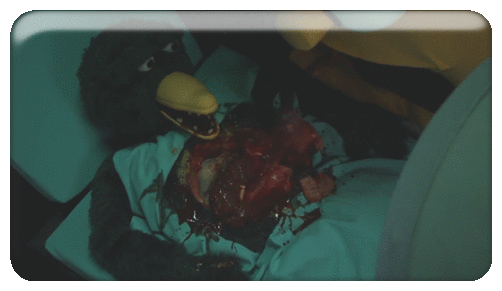 And it's only with complete creative freedom that horror can be what it essentially and ideally must. Don't Hug Me, I'm Scared has overtones of Stephen Volk's Ghostwatch, in the sense that it deliberately tricks its audience (a technique that mainstream media rarely utilise, for fear of exposing themselves to inevitable audience lashback): ostensibly, the show comes in the guise of an extremely British children's TV show, complete with bright colours, puppets, songs and life lessons that are standard for the medium. However, it soon becomes clear that something is terribly, terribly wrong in this world. And “world” is the appropriate term: whilst it makes no song and dance about it (there are no expository scenes in which the characters discuss their states or conditions), the show's world unambiguously exists to the characters that operate in it: they are not actors in costumes or puppeteers, but living entities that abide by the bizarre and disturbing rules of the TV universe. In order to fully appreciate Don't Hug Me, I'm Scared, this factor, along with numerous others, must be identified by the audience and engaged with. Just as the show treats its audience with enough sophistication to assume that they'll notice and interpret its consistent symbolism (recurring dates, numbers, items, colours and statements), it also allows them to make up their own minds about what is happening, leaving it up to them to realise that this children's TV show is an entire reality in and of itself, and that the characters abide by its rules and restrictions in the same manner that we do our own waking conditions (very deliberately treating its audience with far more in the way of respect than the children's TV it apes). 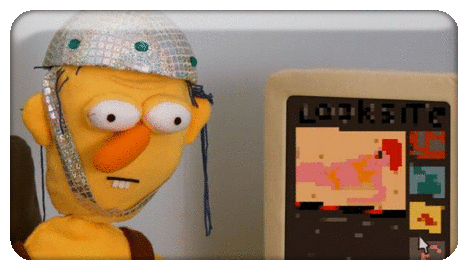 Therein lies the core, existential horror of Don't Hug Me, I'm Scared: These characters have no control over their own reality; everything is proscribed and directed and shifted around them, whether they want it or not, whether the “lessons” they learn have any true meaning or relevance or not. In that, the show stands as a trenchant and vicious assault upon children's media and media in general (hence why, I imagine, the creators turned down funding and support from more traditional, mainstream outlets). The show dares to throw into question the media we unthinkingly subject our children to and the agendas that inform and infest it, from marketing and product placement to ideological conditioning, to the point whereby, in the final episode, the show's weakest and most vulnerable character becomes prey to an obscene attempt to invade and coerce him on the most intimate level: in his own dreams and imagination, which, the show states, those forces it calls into question would happily subvert and undermine if they had the power to do so. It's a cruel, nihilistic and brilliant assault upon not only children's media (its observations so accurate, they often wound those of us that have been prey to exactly those influences since we were born), but also in a far wider, more distressing sense: the show calls into question the status of children themselves in family units, in our cultures and our relationships to them. The show dares to suggest that society treats its children as little more than cattle, to be marketed to, conditioned, subverted and mutilated as traditional forces see fit, then to be disposed of when they become problematic, useless or corrosive to the status quo. None of this is stated outright, nor is it overt: it is merely one interpretation of ostensibly hundreds, as the show does not do its audience the disservice of interpreting itself or proscribing significance to its audience (again, an extremely subtle but powerful dig at the children's media it lampoons, which all too often feels inclined to outright explain the myopically moral significance of its weak-as-dish-water narratives). The horror of Don't Hug Me, I'm Scared functions on multiple depths and levels, from the superficial visual elements that draw stark -and often shocking- contrast between the familiar, cutesy, primary coloured aesthetic of the show (the first episodes features very brief snippets of visuals such as a human heart being covered in glitter, a cake that, when sliced, contains raw and bleeding meat and one of the characters spelling out “Death” when asked to engage in a creative painting exercise) to the darker, more oblique implications of its symbolism that linger and echo long, long after the episodes themselves have finished. Repeat viewing becomes essential, so as to catch the small details that are often inserted into the background or occur ambiently. But perhaps the most brilliant and poignant element of the show is when it doesn't engage in any overt or obvious horror at all: when it simply recreates the situations and dynamics of a children's TV show and silently asks the audience to consider the innate horrors and perversities of that medium: For example, the format of the show involves something that's extremely common in children's media: domestic items and objects coming to life in order to impart morals, cautionary tales or life-lessons via the medium of song. 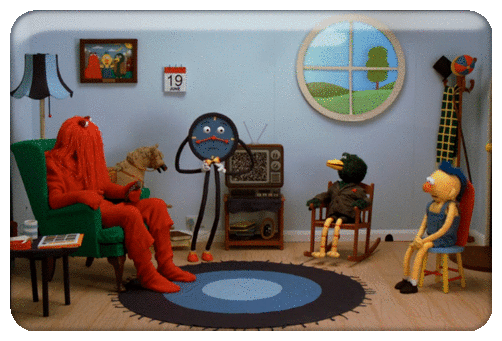 However, the show dares to question this phenomena in and of itself, by having the core characters often react with distress and disturbance to these “invaders,” whom they have not invited into their homes and do not know. This tension escalates when the core cast begin to question or criticise the apparent “lessons” the invaders have to impart, in which the invaders often become shrill, aggressive and outright abusive, inflicting ridicule or actual harm on the cast when they don't fall into line and comply. Furthermore, the “lessons” they impart are universally muddled, contradictory and unrealistic, echoing the moral simplicity and myopia that children's media so often struggles under, as a result of the various different pressures and agendas acting upon it. Children's media, Don't Hug Me, I'm Scared seems to suggest, is a microcosm of the manner in which we treat and regard our children and young people generally within society, and that microcosmic reflection is far from flattering. This interpretation is enhanced by the many overt digs the show hurls at factors such as product placement, corporate and marketing agendas -that all too often influence and inspire children's media, much to the detriment of its content-, religious and ideological indoctrination (episode 3 stands as an allegory for how religious programming attempts to terrify and brow-beat children into submission), not to mention the relationships between parents and children (Yellow Guy's father, Roy, is a consistent supporting character, and can often be seen in the background or lurking on the set if the audience takes the time to look). These abstract factors, along with the immediate, in-universe horror the characters face as part of the TV show world, conspire to create a product that is surprisingly disturbing and has enormous and distressing depths. The characters, having no particular control over their own environments, lives or actions, find themselves prey to the malign influences of the various invaders, not to mention whatever shady and unspoken powers have authority over the show itself. As such, they experience abuses, atrocities and tortures that are not merely the products of consciously malign influence (though there's plenty of that) but also as a result of the nature of the medium: Notice in episode five how the Duck character reacts to cuts and edits in the televisual reality around him as though they're actually occurring, a factor that also escalates in the final episode when the Yellow Guy is “punished” for denying the invader's lesson. The result is a mutable -and eminently abusable- status quo in which reality itself can be altered and manipulated by outside influences that have nothing but the worst intentions for both the characters and the audience. This escalates from episode to episode, to the last in the series, in which Yellow Guy is driven half mad by the unrelenting assault of the invaders and their insensible songs. 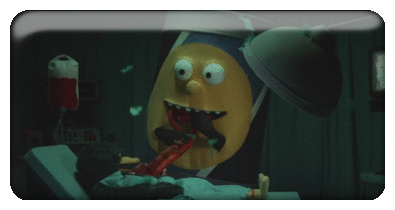 There's very little in the show that isn't immediately recognisable to those of us that used to be children in the UK, that were exposed to shows that weren't a million miles away from Don't Hug Me, I'm Scared, and the show preys upon that familiarity to subvert something that we might entertain misguided sentiment or nostalgic affection towards, but which was, in reality, condescending, disjointed, contradictory and borderline abusive in the manner it attempted to reduce us to the status of cattle and less. This is the core of the show's conceit but also the heart of its horror: the dawning realisation that we are and have been victims of culture at large from the moment we were born, and that we make our own children victims in their turn. Subversive, disturbing, powerfully intelligent, Don't Hug Me, I'm Scared is a seminal example of internet horror but also of 21st century horror as a whole: whereas the genre has a tendency towards market-driven stagnation in the mainstream, independent outlets (which are proliferating rampantly, thanks to platforms such as YouTube, Twitch and Steam) are producing material that is new, novel and fittingly distressing, that isn't self-censoring out of fear of alienating potential audiences, that actively attacks certain beloved presumptions and institutions (in this specific case, the children's TV we all loved growing up, not to mention our own relationships to our elders). Don't Hug Me, I'm Scared is how horror and media in general should, ideally, be evolving: away from the restrictions and parameters that traditional avenues of funding and distribution necessitate, towards a condition of creative freedom where messages and ideas can be conveyed with all the subtlety, weight or brutality that they need to be, without fear of alienation, censure or eliciting offence. Now, with the announcement of a second season of the show, hopes and fears are raised equally high. Can it possibly be as subversive and surprising as it initially was, now that the audience know what to expect from it, and can any follow up possibly equal the “lightning in a bottle” sensation of the original? Time (like a merry-go-round, spinning around like a merry-go-round) will most certainly tell. 
Comments are closed.
|


Archives
April 2023
|
 RSS Feed

|

|