

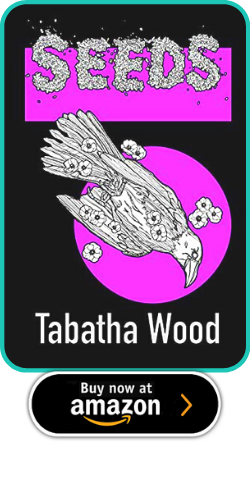
 As I have declared many times before, “writing for mental health is not the same as writing about mental health.” My own Black Dog is still with me—all the fictional horror in the world could never rid me of them for good—but horror has got me, and will continue to get me, through the very worst of days. How do you begin an essay on a subject you have written so much about before? How can you possibly say something new about a topic you feel you have exhausted? Worse, what if you have worn out your readers by continuing to hark back to old words? These were the questions I asked myself when Jim McLeod invited me to write, once again, about mental health for Ginger Nuts of Horror. In January 2020, when I wrote about the TAO OF THE BLACK DOG for the site, I talked at length about how depression had affected my creativity and how people treated me when I was honest about my struggles. I spoke about how losing a friend to suicide drove my urge to be more open about mental illness and how we can better support those in need. I concluded that essay by explaining how, “I write to make myself feel better, and I believe that writing for mental health is not the same as writing about mental health.” In February of that same year, I spoke with fellow New Zealand horror author and Bram Stoker winner, Lee Murray, for an interview entitled STARING DOWN THE DARKNESS. We discussed how we thought writing horror stories was ultimately beneficial to our mental health. How embracing the reality of how we felt gave us the strength to tame our Black Dogs. Two years later, after editing a canine-themed charity anthology benefiting the Mental Health Foundation of New Zealand, and somehow surviving a worldwide epidemic, what could I possibly say about mental health and horror that wasn’t a re-hash of what had come before? The thing about sequels, good ones that is, that they always give a brief nod to the original before they go off on their own path and do their own thing… I realised, while ruminating on how to continue talking about mental health, I needed to acknowledge how a truly staggering number of us are feeling right now, and address a real-life horror taking place on a worldwide scale. So anyway, about that plague. Unless you have been in a coma or under a rock for the past two years, you have lived through one of humanities’ greatest horrors. Many of you may not have come out unscathed. Some may even be suffering from its effects (and after-effects) right now. Yet, I have seen surprisingly little creative media that addresses it in depth. Sure, there is the Netflix “mockumentary” DON’T LOOK UP, which is not a horror movie, but is a horror movie. (Kit Power has already written at length about it in his brilliant response on GNOH) and also on Netflix is THE BUBBLE, which also isn’t a horror movie, it’s just a bad one. There’s a few other offerings that either address the COVID outbreak or take place during, like SONGBIRD, LOCKED DOWN and THE END OF US, but horror movies seem pretty thin on the ground. Where are the zombie movies, the contagion movies, the it’s-the-end-of-the-world-and-there’s-a-heckin-monster movies? I’ve been told that THE SADNESS, a Taiwanese zombie film by Canadian director Rob Jabbaz is probably one of the best at depicting the real gut punch of the pandemic (although I’ve admittedly not yet seen it) while anthology movies like RABID and ISOLATION weave together terrifying tales themed around, unsurprisingly, isolation and anxiety. I’m certainly not saying there are no cinematic responses to the virus, but there are not as many as I expected. The lack of pandemic-themed horror movies is even more surprising because the history of horror movies is strongly entwined with history itself. Specific trends in horror genres tend to arise as a response to societal unease. Horror has a knack for drawing upon what we are afraid of, and that fear changes across different eras. There has been a far bigger response in literature, as writers use their words to process their experiences and make sense of the trauma they’ve endured. Lee Murray’s award-winning anthology BLACK CRANES: TALES OF UNQUIET WOMEN and Silvia Cantón Rondoni’s pandemic poetry collection INFECTIOUS HOPE: POEMS OF HOPE & RESILIENCE FROM THE PANDEMIC are just two very fine examples of this. There is also the LOCKDOWN HORROR series from Black Hare Press, PANDEMIC: HORRORS WRITTEN IN LOCKDOWN by Matt Shaw and LOCKDOWN: STORIES OF CRIME, TERROR, AND HOPE DURING A PANDEMIC from Polis Books, all of which were released as the first wave of the virus hit. I am sure there are many more I could add. Pre-2020, there was a range of plague novels to choose from that dove headfirst into imaginary pandemic realities. Titles such as Chuck Wendig’s WANDERERS, Paul Trembley’s SURVIVOR SONG, and Stephen King’s THE STAND amongst others. In fact, it felt like pre-pandemic, writers were far more eager to explore the germy subject. Perhaps because if we could imagine it, we could solve it. Something we don’t seem to have been able to do in real life. But I digress. I imagine by this point you are asking, “Hold up, wasn’t this essay supposed to be about mental health and horror, not a critique of pandemic horror?” I hear you, and yes, it is. But the pandemic part is relevant because what I really want to address is our resilience to real-life nightmares, and most importantly, how horror itself helps us build that impressive mental strength. A study of 322 participants conducted in early 2020 claimed that, “fans of horror films exhibited greater resilience during the pandemic and that fans of ‘prepper’ genres (alien-invasion, apocalyptic, and zombie films) exhibited both greater resilience and preparedness.” (Scrivner, et al.) This wasn’t exactly news to any of us who had been micro-dosing ourselves on a steady diet of gore and dread well before we had to deal with it in the real world. Those critical of the horror genres have tried to equate love of the nasty stuff with people more likely to act sadistically, show a lack of empathy or even turn a blind eye to real suffering. Barring a tiny minority of assholes (and there are always a tiny minority of assholes) psychological studies have shown that the reverse is true. Horror fiction can actually make us more sensitive to injustice, inequality and general unkindness Consuming fictional horror allows us to experience feelings of fear in a safe and controlled environment. Consequently, frequent consumption allows us to develop personalised strategies that help us regulate our emotions. These strategies can lead to stronger and more improved coping skills when faced with real-world trauma. Like I said, micro-dosing. Yum, yum… None of this means that horror fans were immune to the emotional effects of COVID, any more than they were to the physical, but it meant they were perhaps in a stronger place mentally to deal with such a cataclysmic event. I wrote about how horror could be cathartic for The Spinoff New Zealand (an online magazine and news website) in WHAT YOU NEED RIGHT NOW IS A NICE SOOTHING HORROR STORY, where I also asked other antipodean authors to share why they thought people were turning to horror to help them cope with lockdown anxiety. Suggestions ranged from consuming horror media acted as a release valve that reduced tension; fictional horrors provided distractions from the real ones; and that the best kind of horror was also seeded with hope. Rather than losing ourselves in a pit of despair, horror lifts us out of the darkness by offering us solutions, potential weapons and ways to fight back. The Scriver study surmised that, “Fiction allows the audience to explore an imagined version of the world at very little cost. Through fiction, people can learn how to escape dangerous predators, navigate novel social situations, and practice their mind-reading and emotion regulation skills.” As incredible as it sounds, horror fiction can help prepare us for scenarios we hope we will never have to face. Thus, the genre is not only confronting, it is comforting too. We have lived with (although I hate to use the phrase) COVID-19 for over two years. I want to be optimistic and hope that perhaps in the not too distant future we will get it under complete control. But who really knows? It would be remiss of me to talk about mental resilience and not acknowledge the insurmountable loss the entire world has faced in terms of both human lives and quality of life. I also need to mention burnout, Zoom fatigue, long-COVID and government gaslighting. These things contribute to our mental loads on a constant, daily basis, and they are a LOT. There have been many days when I have fought the terrible urge to go out to the ocean, put my head underwater and scream… As I have declared many times before, “writing for mental health is not the same as writing about mental health.” My own Black Dog is still with me—all the fictional horror in the world could never rid me of them for good—but horror has got me, and will continue to get me, through the very worst of days. Whether that has been returning to old, nostalgic favourites from my youth, or exploring brand new cherry-flavoured frighteners, micro-dosing fictional terror helps keep my own at bay. Just as writing about how the pandemic has affected me has helped me process the emotional trauma and strengthen my resilience, immersing myself in imaginary horrors helps me explore my anxieties so that I can find ways to overcome them. Whatever you’re going through, however you’re feeling, I hope the same can be true for you too. T.L. (Tabatha) Wood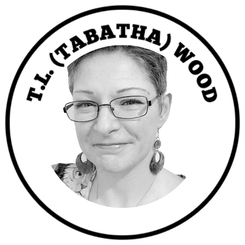 T.L. (Tabatha) Wood is an Australian Shadows award-winning author of weird, dark horror fiction and uplifting poetry from Aotearoa, New Zealand. They like strong coffee, cats and spending time by the sea. You can read more of their stories, essays and blog posts at tabathawood.com. Seeds |
 |  |
the heart and soul of horror
Comments are closed.


Archives
April 2023
March 2023
February 2023
January 2023
December 2022
November 2022
October 2022
September 2022
August 2022
July 2022
June 2022
May 2022
April 2022
March 2022
February 2022
January 2022
December 2021
November 2021
October 2021
September 2021
August 2021
July 2021
June 2021
May 2021
April 2021
March 2021
February 2021
January 2021
December 2020
November 2020
October 2020
September 2020
August 2020
July 2020
June 2020
May 2020
April 2020
March 2020
February 2020
January 2020
December 2019
November 2019
October 2019
September 2019
August 2019
July 2019
June 2019
May 2019
April 2019
March 2019
February 2019
January 2019
December 2018
November 2018
October 2018
September 2018
August 2018
July 2018
June 2018
May 2018
April 2018
March 2018
February 2018
January 2018
December 2017
November 2017
October 2017
September 2017
August 2017
June 2017
May 2017
April 2017
March 2017
February 2017
January 2017
December 2016
November 2016
October 2016
September 2016
August 2016
July 2016
June 2016
May 2016
April 2016
March 2016
February 2016
January 2016
December 2015
November 2015
October 2015
September 2015
August 2015
July 2015
June 2015
May 2015
April 2015
March 2015
February 2015
January 2015
December 2014
November 2014
October 2014
September 2014
August 2014
July 2014
June 2014
May 2014
April 2014
March 2014
February 2014
January 2014
December 2013
October 2013
September 2013
August 2013
 RSS Feed

|

|