

 It can hardly have escaped anyone's notice that we're currently in the midst of a survival horror renaissance. Thanks to the runaway -and entirely unanticipated- success of last year's Resident Evil 2 remake, video game developers are suddenly looking to yester-millennium for inspiration, to a sub-genre of horror that has been all but dead since the early 2000s, but that dominated the entire field during its ascendence. Whilst Capcom's iconic Resident Evil series is certainly noteworthy in this regard -surely the quintessential survival horror title, that even those not immersed in video game culture recognise-, there are numerous siblings, cousins and offshoots born from the appetite for horror it originally sparked, many of which take the sub-genre in novel and unexpected directions. 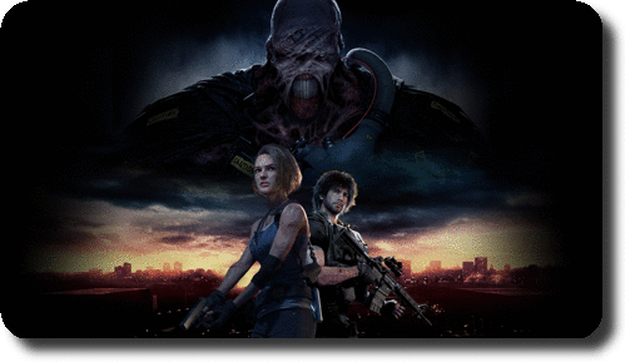 Recently, there have been rumblings that none other than Sony have been attempting to coordinate with video gaming giant Konami in an effort to subject the Silent Hill franchise to the same rejuvenate treatment. This is monstrously exciting to fans of horror; Silent Hill is not only considered to be the most legitimate sibling of Resident Evil in the survival horror lineage, it also marks a point at which video game horror began to grow up and take itself more seriously. Whilst Resident Evil was always the popcorn-munching, jumpscare-laden, mainstream B-movie of the bunch, Silent Hill took the format in entirely other directions, drawing inspiration from the likes of David Lynch and Cronenberg, Clive Barker and H.P. Lovecraft. Whereas Resident Evil is the horror of the immediate and the visual, Silent Hill delves deep into atmosphere, ethos and psychology. It is one of the most sincere examples of the uncanny in video games, eliciting an ill-defined dread and disturbia with little more than its environment, its soundscape, rarely attempting to explain the surreal imagery it subjects the player to. Despite these factors, the original games are obviously dated at this point, and not only in terms of their graphics: hailing from the days of the original Sony Playstation, the first two entries in the Silent Hill series are obviously limited in terms of what they could render. This also factors into their gameplay, which is, at this, point, rather tired and clunky. The prospect of a present day remake or remastering for the current or next generation of consoles is therefore tremendously exciting; to have Silent Hill stand alongside Resident Evil once again feels ineffably right, if only because they demonstrate the varying shades of horror that similar formats of video game can exhibit. 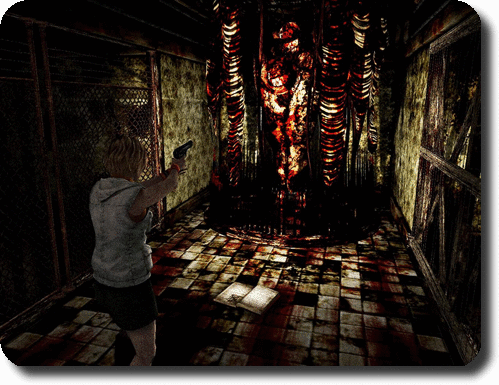 That said, there are sincere concerns: given the wholesale success of the Resident Evil remakes -such that creators Capcom put all effort into developing the third entry for this year-, the temptation will be to emulate those games much too closely. Whilst there have always been superficial similarities in their mechanics, structures and visuals, the style and ethos of the two franchises could not be more different: Silent Hill must necessarily be subtle, quiet and slow-burning in order to work. Whilst Resident Evil is all about classic horror set-pieces, derived from a number of iconic sources that range from cinema to novels, Silent Hill is less specific, much more problematic to render, in that its horror doesn't derive from immediate threat or classic scenarios: it is pervasive, ineffable and disturbing. Much of the time, experiencing the best entries in the Silent Hill franchise (games 1 to 3) leaves the player uncertain as to what they're even afraid of, as the games provide little but situations and atmosphere, imagery that, whilst wholly disturbing, often presents no immediate threat in the same way as Resident Evil's zombies and biologically-engineered beasties. In order for any remake or new entries in the series to work, they have to capture that essence; that nightmare-quality that is so, so difficult to evoke with any sincerity. Assuming that the creators comprehend this and take time to understand what makes the original games so iconic, Silent Hill still has the raw power to horrify and disturb beyond measure. Given the setting's back mythology, there are potentially infinite stories to be told within its bounds, all of which might be removed from the others in distinct and interesting ways. Part of what separates Silent Hill from most of its contemporaries is its insular, psychological quality: the various monsters, plights and traps the player encounters are often products of their own diseased and wounded psychologies, reflections of inner trauma or turmoil that the eponymous town reshapes itself to reflect. 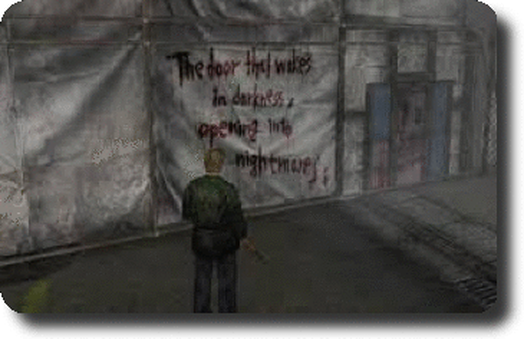 In that regard, there is not only potential to evoke nostalgia here, but to create a work that is morbidly artistic, that makes a virtue of material most would consider to be disturbing and repellant. Again, the series distinguishes itself amongst the annals of survival horror by its ambiguity; very often, player characters are mysterious and unknown to the player. Part of the nature of Silent Hill games is the inner-journey, a Dante-esque descent through myriad levels of psychological Hell to uncover some sublimated truth. This doesn't have to be some pandering or fan-pleasing retrograde piece, but could use what has been learned and developed over the last few decades of horror video gaming to make the franchise what it was always meant to be, that technological limitations of its era might have denied. Not to beat a dead horse, but removing the franchise from parent company Konami can only be a positive thing: the company has demonstrated time and again in recent years that it either doesn't understand the significance of the iconic franchises it maintains or doesn't care about the truly historic status they hold not only in the experiences of gamers but in video game history. Allowing fresh imaginations to reshape the material and perhaps eke out new and unexpected elements is the only way forward for the franchise, especially if those imaginations have pre-existing passion for the material. Another problem that will inevitably face the developers is innate to the franchise itself: unlike Resident Evil, which is clearly codified in terms of its ethos, formula and the type of horror traditions it belongs to, Silent Hill is a far more protean beast. To say that it belongs to a specific “type” of horror limits it in a way that would smother its essential spirit. Rather, Silent Hill, at its best, has always been wildly experimental, playing with visuals, situations, various types of horror trope and technique to evoke a sense of disturbance in its audience. This makes any attempt to render new entries in the series problematic, as, should those entries fall into the trap of formula, they have arguably failed from the outset. This is doubly true of any attempt to remake entries in the franchise, as any such effort must simultaneously exercise enough fidelity to the originals in order to be recognisable whilst also maintaining enough new and surprising elements to maintain emotional engagement. It is a thankless and extremely unenviable task, but has the potential to revolutionise horror video gaming as the originals did back in the late 1990s.  Somewhat more cult in terms of significance -but certainly no less beloved- is the original Shadowman. Another title from the mid-PS1 era, the game was a loose adaptation of a series of comic books based on Voodoo lore that followed the metaphysical escapades of the eponymous anti-hero; a Spawn-like figure whose purpose was to maintain a balance between the living and the dead, facing down threats from both sides and unravelling the mysteries of his undead nature in the process. The original game is a largely self-contained story that derives certain key-elements from the comics but generally creates its own unique universe and metaphysics. Following the exploits of the current incumbent of the Shadowman mantle, Michael Lerois, the player must explore the moribund wastes and expanse of “Deadside,” the metaphysical desolation where all living things go when they die. The game explores elements of Voodoo lore and mythology as well as paying homage to the likes of Clive Barker's Hellraiser, the Hannibal Lecter books and films and numerous other horror media. A highly unusual title, rather than utilising the engines and mechanics familiar to survival horror titles, it instead adopted a more Legend of Zelda approach, creating a vast and sprawling world, filled with realms, scenarios, enemies and secrets that the player must explore, upgrading themselves with various items, powers and enhancements in order to progress. The sprawling, adventure-game style of the title meant that its longevity was far and beyond those of its survival horror contemporaries and its co-mingling of various lores and horrific subjects made it somewhat unique in their company. Whilst not as widely influential or well regarded as the likes of Silent Hill, it maintains a dedicated fanbase to this day who still praise the game's uniquely morbid and oppressive atmosphere (the hinterlands of Deadside, the industrial disturbia of The Asylum and its inner-recesses maintain a sumptuously bleak and disturbing atmosphere, the mythology that the game cultivates also wonderfully nihilistic). 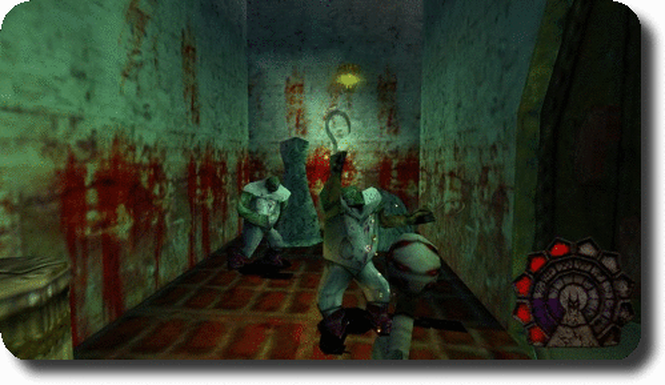 No doubt hoping to capitalise on the recent surge of enthusiasm for horror titles of its era, an up-to-date remaster of the title was recently announced. Of all of the horror titles of which there are current rumblings, this is perhaps the most unexpected: whilst fervent, its surviving fanbase is incredibly small, the franchise itself long forgotten to the vast majority of video game culture. Even so, the announcement is welcome; a potential fresh dimension to the survival horror renaissance that may undo some of the technical limitations and problems that bedevil the original (whilst a fun and atmospheric title, the game suffers from akward controls, graphical glitches and some truly woeful voice acting). In terms of its horror, Shadowman is a fascinating title, combining supernatural dread with more immediate, action-oriented scares and chills. The eponymous anti-hero is not exactly a super hero, in the classic sense of the term. Rather, he is an avatar of Voodoo metaphysics, “...the Lord of Deadside,” as he himself puts it. His actions aren't necessarily heroic or positive for the vast majority of humanity; he is simply the lynchpin that holds a crumbling mythological state together. This ethos of morbidity and nihilism runs throughout the game, which simultaneously celebrates the decaying, corrupted nature of Deadside whilst extolling the utter horror of it. This is, after all, a place where saints and serial killers are on an equal footing; there is no eschatology in Shadowman's metaphysics, no judgement, no reflection of worth: all of humanity is equally foetid here, and it is the Shadowman's job to preserve that status quo. Like Silent Hill, in order to work, any present-day rendition of the game must capture those essential, unspoken elements, that certain feeling the game evokes at its strongest moments, which is a horror far beyond any that the likes of Resident Evil even attempt. Interestingly, there are formats and templates that have developed in video gaming since the original game's era that would be perfect for a reimagining of Deadside: “Open world” experiences such as The Legend of Zelda: The Breath of The Wild or the slightly more contained realms provided by the likes of Dark Souls and Bloodborne would be perfectly suited, allowing for a natural evolution of the game's technical elements whilst also naturally capturing the morbidity and bleakness inherent. That the game has been optioned for a remake at all is nothing short of a minor miracle, and seems more than ample evidence that the survival horror renaissance seems set to gather more steam as time goes on. 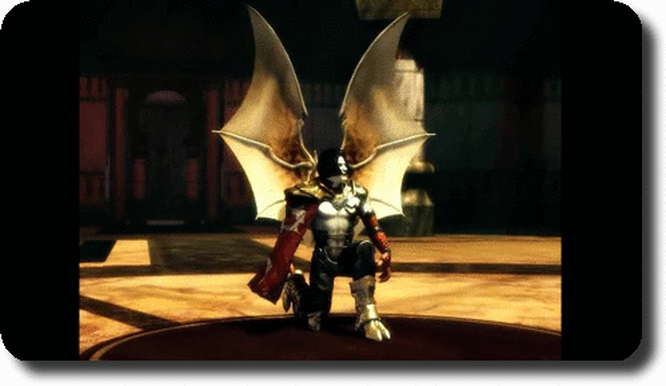 Whilst the rights to the franchise might be a tangled, legalistic nightmare, another contemporary of the era that might potentially see resurrection is the much- beloved Legacy of Kain series. Similar to Shadowman in tone and structure, the series is a gothic fantasy adventure that borrows the basic format of Zelda and marries it to a mythology involving vampires, ghosts, demons, religious zealotry, ruminations on the nature of fate, dark, Lovecraftian gods and an apocalypse that may or may not be inevitable, depending on which way the coin decides to fall. Like Shadowman, despite the increasing degeneration of the games towards the early 2000s, The Legacy of Kain series maintains a fervent and passionate fanbase, largely owing to the sumptuous world-building of the fantasy-realm of Nosgoth in which events take place, some superlative character design, writing and voice acting, not to mention a mythology that would shame certain long-running novel series in its concepts and complexity. Whilst certainly veering more towards fantasy than horror, the series is usually cited in conjunction with Shadowman as a peculiar form of horror video gaming that achieved a limited success during the PS1 era (dying a slow death with later instalments as the games degenerated in quality and the factors that made them so initially attractive were drained from them). Given the resurgance in popularity of such titles, a new instalment or remake of its most iconic instalments (such as the original Soul Reaver) seems possible, maybe even likely. However, once again, there are certain factors of this series that must be realised in order to make any present day incarnation successful: 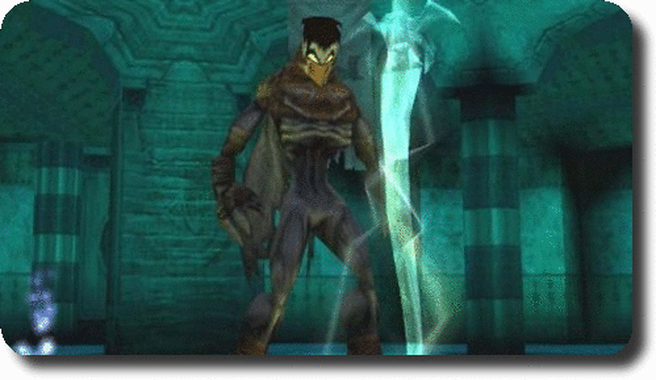 Beyond the inevitable graphical and technical updates, the games need to retain a certain fidelity to the ethos and lore that defined the originals. Whilst the games themselves degenerated massively, the lore and mythology kept players enraptured and clamouring for more. The writing more than anything is key to this franchise, the note of gothic horror and metaphysical fantasy it hits difficult to emulate with any sincerity. Likewise, the complex character dynamics that make the series so intriguing must be retained and emphasised: the ever-shifting antagonism and comaradery between protagonists Kain and Raziel in particular is the dramatic core of the entire franchise. The world of Nosgoth emphasises a certain moribund quality similar to that evoked by Shadowman's Deadside. A post-apocalyptic fantasy-realm, the original Soul Reaver (following on from the archaic Blood Omen) sees the consequences of a decision made by Kain himself that has reduced the world to a cataclysmic desolation, a wasteland predominated by monstrous degenerations of vampire clans that have become grotesque and bestial down the decades. The game maintains the ethos of a story already told, of a mythology on the verge of crumbling under its own corruption. The world of The Legacy of Kain feels actively dead or dying, which is something any remake will have to realise in order to be successful. With remakes and/or sequels to other classic horror titles such as System Shock, Amnesia: The Dark Descent and others already announced, it seems as though the renaissance is set to cascade far into the future, perhaps even sprouting some as-of-yet unknown offshoots along the way. 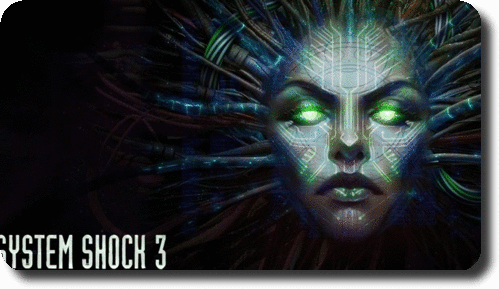   Comments are closed.
|


Archives
April 2023

|
 RSS Feed

|

|