

 After experimental success in the 1970’s, a commercial push in the 1980’s, an underground existence in the 1990’s, and a contemporary revival in the 2000’s, the contemporary horror film industry has demonstrated a consistent rise and growth over the past several decades. No longer is horror something you watch every now and then, and only if you’re a buff. Horror has become mainstream in an entirely unprecedented form that would never have been dreamed of when it first filled our square-shaped television screens. And while this continued rise is fantastic, the film industry tends to marginalise genre movies, providing limited releases that often doesn’t reach as many countries as mainstream films would. However, over the past few years, a metamorphosis has begun, and a new type of genre has reinvented horror to comment on society, a genre subverting mainstream fear in a meta-satirical form that’s just as or even more terrifying than stereotypical axe-murderers: the horror of humanity. So, what does this mean for the future of horror on screen? And what can we expect for the future of marginalisation within horror? Jordan Peele is one of the best examples of a director destabilising semantics to create an effective and truly terrifying viewing experience. His films have been praised for their cognitive and reflective mechanisms to reveal society’s truest and deepest flaws and are an excellent example of how to successfully activate a distinct embodied response of fear from the viewer without having to visually show torturous or violent scenes on screen. This phenomenon often allows the viewer to connect more deeply with the underlying themes of the story and draws our attention to the director’s commentary. In Peel’s ‘Get Out,’ his satirical commentary on the duality of human nature, the continuity of systematic racism, and the ramifications of ignoring privilege and the plight of minorities are intertwined within the seemingly basic horror trope of body snatching/swapping. The storytelling device has been used in so many ways; it’s most prominent form usually within comedies. However, ‘Get Out’ subverts this trope in a way many other films don’t. Instead of the annoying antics of a teenage girl stuck in her mum’s body, it illustrates class, segregation, and racism in a wry and satirical form. 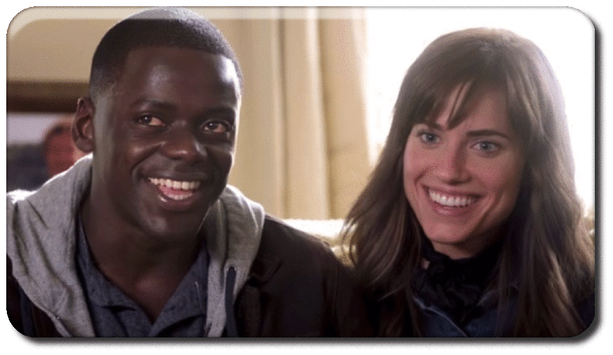 ‘Get Out’, directed by Jordan Peele. But marginalisation in horror doesn’t end with Peele. ‘Dark Place,’ a little-known Australian Indigenous horror anthology, is another example of using real contemporary fears to terrify audiences. With outback zombies, supernatural housing projects, sleep deprivation, female revenge, and Gothic spookiness, the collection of shorts shine a light on Indigenous fears in the same way Peele does with African American segregation. Kodie Bedford’s Scout turns female oppression into a howl of revenge; an insomniac discovers a terrifying portal inside herself in Liam Phillips’ unsettling Foe; and a witch changes the fortunes of a young public housing resident in Rob Braslin’s Vale Light. Meanwhile, Gothic horror reigns in Perun Bonser’s The Shore, about a young girl in the woods with her father; and Bjorn Stewart’s Killer Native turns first contact between British settlers and Aboriginal peoples into a comedic zombie tale. These dark trips into the heart of terror nullius explore postcolonial fantasies and contemporary Australian Indigenous fears through satirical macabre horror.  Dark Place Perhaps the most pervasive horror is truth? The truth about the purgatorial life many minorities lead. ‘Night of the Living Lead’ and ‘The Stepford Wives’ both illustrated the truth of cold-war thinking and the fears of second-wave feminism. More recently, ‘The Purge,’ perhaps one of the most successful current media franchises, illustrates a dystopian Twilight Zone-esque commentary on American politics. These are our real fears – the truth of our everchanging socio-political landscape which continues to reward the corrupt and marginalise and punish the undeserving. 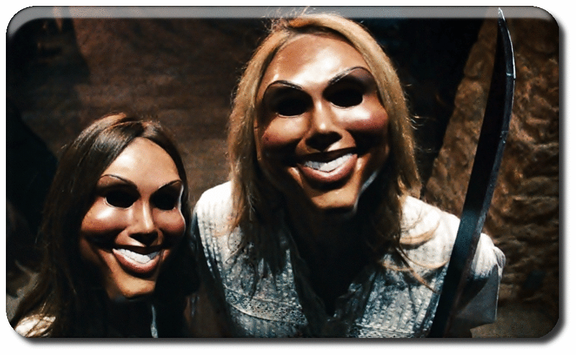 The Purge Marginalised groups exist everywhere. They exist in a world where, for whatever reason, they are denied involvement in mainstream economic, political, cultural, and social activities. The idea of co-existing has now become almost perverse, and with our current socio-political climate, things will only get worse. Perhaps that’s why these movies are so poignant, so hard-hitting? Because they remind of us of what kind of society we have become, a society so warped that reality has become more terrifying than any horror film. We are the sharks, the snakes, the aliens of our world. We are the slimy hands reaching for our throats from under the bed. We are the people who are watching our society implode before our very eyes and do nothing. We have become the terrifying parallel universe where the monsters don’t need to step through our mirrors to enter our bedrooms – they’re already there. Horror is its most effective when it reflects real-world problems and current events. And as our reality grows darker, the future of horror blooms brighter. When horror is about something, when it says something, that’s when it shines. When horror details the consequences of maintaining repression, that’s when viewers think. When it does not deny the monster, and actively calls it out, that’s when we see it for what it truly is – a reflection of our own self-righteous and self-fulfilling prophecies. 2020 is a new year, a new decade, a new landscape of opportunities. And if the world, and society, continues as it has – which it undoubtedly will – 2020 will also be, most importantly, a new era of cinematic horror. Bring it on.  Claire Fitzpatrick is an award-winning author of speculative fiction and non-fiction. She won the 2017 Rocky Wood Award for Non-Fiction and Criticism. Called ‘Australia’s Queen Of Body Horror’ and ‘Australia’s Body Horror Specialist,’ she enjoys writing about anatomy and the darker side of humanity. Her debut collection ‘Metamorphosis,’ hailed as ‘simply heroic,’ is out now from IFWG Publishing. She’s currently studying a Masters degree at the University of Queensland. She lives with her partner, her daughter, and her cat Cthulhu somewhere in Queensland. Visit her at www.clairefitzpatrick.net/. Facebook: https://facebook.com/witch.of.eldritch Instagram: wetoo.arestardust Twitter: CJFitzpatrick1991 Website: www.clairefitzpatrick.net/ 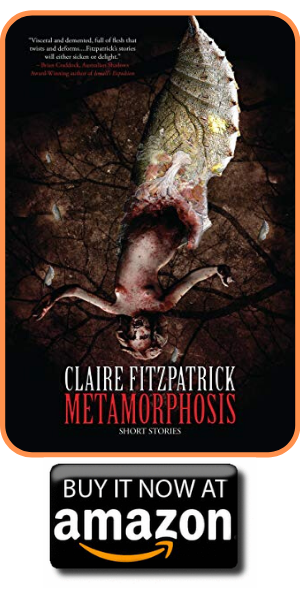 Madeline will never become a woman. William will never become a man. Does June deserve to be human? Does Lilith deserve a heart? Seventeen stories. Seventeen tales of terror. If imperfection is crucial to a society’s survival, what makes a monster? "Visceral and demented, full of flesh that twists and deforms...Fitzpatrick's stories will either sicken or delight." - Brian Craddock, Australian Shadows Award-Winning Author. [On Scents] “One of the creepiest stories I have read in a long time.” – Jeani Rector, editor of The Horror Zine   Comments are closed.
|


Archives
April 2023
|
 RSS Feed

|

|