

 Out of the Darkness collects together brand new stories by Jenn Ashworth, Alison Moore, Nicholas Royle, Laura Mauro, Aliya Whiteley, Tim Major, Simon Bestwick, Eugen Bacon, Gary Budden and many more. They all deal with mental health in some way, and many are written by people who have first-hand experience of the challenges mental illness can present. They tackle the topics of anxiety, depression, obsessive–compulsive disorder and other issues, as well as the pressures mental illness can place on family members and friends – sometimes obliquely, sometimes head-on. At times that can make for challenging reading, but the authors have all actively engaged with the central philosophy of this book: that with support and open discussion, those who are suffering from mental health problems can move out of the darkness and into the light. In addition, all the authors are donating their fees and royalties to Together for Mental Wellbeing. Over the next few weeks we will be highlighting some of the authors involved in this great anthology. Alison Moore on ‘Seabound’ In 2017, two fine writers I know were published in a regular anthology of strange and eerie stories. I shared a link, and someone responded with the suggestion that I submit a story myself. I said I would put my thinking cap on, and in fact an idea did arrive overnight. I made thorough notes, but didn’t get round to writing the story for nearly two years. The story was called ‘The Rock Garden’, and involved a young woman tasked with scattering her father’s ashes at sea, but due to a complicated relationship with her father she resists making the journey and instead ends up digging his ashes into the flower beds within a rock garden. The soil and the plants that grow there end up being consumed by children who, one by one, act on a compulsion to take themselves to the seaside, delivering the ashes that they have ingested to the sea, ‘like something owed’. One child is last seen ‘walking to the end of the pier’; another is reported to have been seen ‘swimming purposefully out to sea’. The story didn’t quite work though, and not being sure how to fix it, I put it aside. A few months later, at the beginning of February 2020, we were visiting friends in Leeds when Dan Coxon sent me what he called ‘a wing-and-a-prayer sort of email’, asking if I might be able to contribute a story to a charity anthology on the theme of mental health. I had one story that didn’t have a home, and that was ‘The Rock Garden’. It even fitted the mental health theme. We went with our friends for a blustery walk and I had a think about the essential elements of the story and how I might go about re-engineering it. Meanwhile, my friend made the very pleasing point that if I could take this story that wasn’t working and make it work, that in itself had an apt mental health aspect. Back home, I set about dismantling the story. I changed the focus and the setting, and rebuilt it as ‘Seabound’. A handful of my stories come out pretty much in one go, and just feel right; others don’t, and the fact that I struggled with this short story, and that it only exists because a series of people showed an interest or expressed encouragement, makes me really glad it has a home in Out of the Darkness, supporting Together for Mental Wellbeing. CHECK OUT ALISON'S BOOKS ON AMAZON https://smarturl.it/l9h66y Verity Holloway on ‘The Forlorn Hope’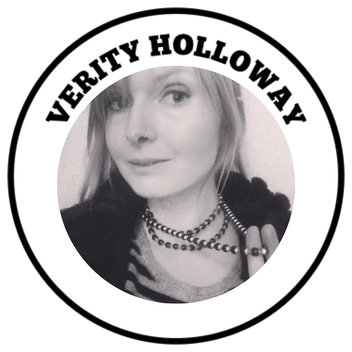 So much of my writing circles back to mental health and its murky boundaries. Studies show that children of armed forces families are more likely to experience mental ill-health than their peers with civilian parents. It’s little wonder. Service children cope with frequent moves, shoulder anxiety about absent family members, and learn not to get too attached to friends. As a navy brat and only child myself, I found solace in horror and fantasy from a young age. Monsters were far easier to deal with than new schools, lost friends, and Saddam Hussein. After all, if I could win the love of the monsters in the cupboard, they would protect me. In ‘The Forlorn Hope’, I’ve harvested a little of that service child anxiety. Matilda Cross is a soldier, all too keen to be sent far from her home and troubled past. She finds it easier to fight in a war against supernatural creatures than dwell on her mother’s paranoia and eventual disappearance, and the mounting fear that her mother’s destiny will be her own. All the while Matilda is rallying her troops and keeping her rifle clean, she isn’t thinking about the letters piling up from Lady Amelia Fitzmichael, the old flame who watches her from afar ‘with a million eyes’. ‘The Forlorn Hope’ is about the noise we pursue to block out our thoughts, and that relentless drive to prove ourselves to some nebulous ‘other’, who usually turns out to be some scion of our own psyches. For more info on Verity, check out her website here https://verityholloway.com/ Eugen Bacon on ‘Still She Visits’ The Covid-19 pandemic and lockdowns have been truly rough. Melbourne has seen the worst of lockdowns when measures came in to curb a second wave, resulting in more than four months in a state of emergency. People take family and friends for granted and, as a migrant in Australia, this was one of the hardest times of my life. I am a single mum, and my son was staying with his father—I could only steal masked visits, as the drive was further than the 5km restriction. I can be an introvert but craved people. The worst thing we can do is normalise the pandemic and float over the trepidation, suffering and grief, especially for those who have experienced the disease first-hand, even lost loved ones. I worry about my son’s mental health – he’s a teenager, and his life fell apart in the past year. He went through his last year of secondary school in remote learning. He was isolated from his friends. A part of me thinks he missed me, his mum, but maybe he didn’t. I did what I could to nurture my body and mental health. I tried to eat right, walked around Melbourne’s Tan, engaged in Zoom chats, was active on the writerly front, and wrote as though my life depended on it. Perhaps it did. Writing is cathartic, and I now recognise a lot about lockdowns and pandemics and bad politics (following the US elections, which inevitably rubbed off its ugliness on the rest of the world) in my short stories and prose poetry. I’m working with an illustrator on a graphic collection of microlit named d1V0C. Go figure. I still feel the effects of the past year… Recently, I went through some of the biggest highlights of my writing career, with Ivory’s Story shortlisted in the 2020 British Science Fiction Association (BSFA) awards, and a new publisher acquisition of Danged Black Thing, yet, still, I felt strangely depressed. It steals in, just like that. Our world has been a horror – I must recognise this, and allow myself to go through the stages of grief. I was deeply moved when Dan Coxon approached me for permission to use ‘Still She Visits’ in the charity anthology. He had only to say ‘mental health’, and I understood. The Story behind ‘Still She Visits’: I was in Melbourne, Australia, when my elder sister Flora died of AIDS in Tanzania. Amid tearing my hair in lone anguish, I crawled to a computer and started typing out a self-reflective cathartic narrative that drew from my own personal feeling of discontinuity and an awareness of being between worlds as an African Australian migrant. Later, as I focused on the self-knowledge that emerged from the act of writing the short fiction in the wake of grief, it surprised me that my primary emotion was rage. In mirroring into the creative fiction aspects of my own loss, I understood that my relationship with Segomotsi was symbiotic. I needed her as much as she needed me. As I developed her character and transferred to her my direct experiences, she responded. Without answering all my questions, Segomotsi came along with new meaning that helped me understand and process my grief. For more information on Eugene, check out her website https://eugenbacon.com/ Check out Eugene's books on Amazon https://smarturl.it/4jowlu 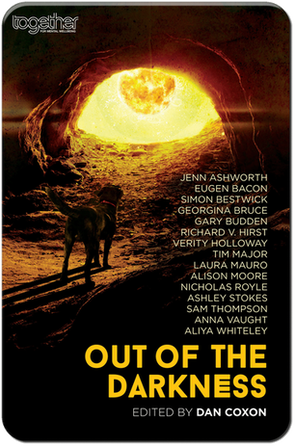 Out of the Darkness challenges some of the most exciting voices in horror and dark fantasy to bring their worst fears out into the light. From the black dog of depression to acute anxiety and schizophrenia, these stories prove what fans of horror fiction have long known – that we must understand our demons to overcome them. In the wake of the Covid-19 pandemic, what began as a mental health crisis has rapidly become an unprecedented tsunami. The Centre for Mental Health has estimated that 10 million people will need mental health support in the UK as a direct consequence of Covid-19, with a staggering 1.5 million of those being under eighteen. Edited by Dan Coxon (This Dreaming Isle) and featuring exclusive stories by Alison Moore, Jenn Ashworth, Tim Major and Aliya Whiteley, this collection harnesses the power of fiction to explore and explain the darkest moments in our lives. Horror isn’t just about the chills – it’s also about the healing that comes after. Back the kickstarter by here https://www.kickstarter.com/projects/unsungstories/out-of-the-darkness-an-anthology-of-horror-and-dark-fantasy related articlesA LIGHT IN THE DARKNESS BY DAN COXONOUT OF DARKNESS, ALIYA WHITELEY, TIM MAJOR, AND ANNA VAUGHT DISCUSS THEIR STORIES   Comments are closed.
|


Archives
April 2023

|
 RSS Feed

|

|