

 The popular internet phrase “I cant even” was made for Pathologic 2. A remake of an independent video game from fifteen years ago that failed to make any kind of impact -save in the most cult circles-, the game has recently started to gain traction owing to a number of high profile YouTube creators and personalities (most conspicuously, Hbomberguy, SulMatul etc) who have not only rhapsodied on its qualities but created hours-long theses dissecting its many interpretations, symbolism, allegories and mythic references. Pathologic 2 isn't just another independent video game. It is to the format what House of Leaves was to the novel, what Twin Peaks was to the prime time TV show; a quantum leap in video game narrative, divorced from popular trends and big-budget studio concerns of popular appeal; a labour of the darkest love, whose creators maintained such fidelity in their vision, it is actively alienating to mainstream or popular audiences. This game. . .the experience of it is unlike anything else. There is no analogue in video games, no analogue anywhere. It is its own strange, idiosyncratic entity that has managed to become a unique species. It's impossible to describe to those who haven't played it quite what it's like as a narrative or interactive experience; the emotions it evokes, the sense of urgency and dread and desperation that hounds every second, every step. The way in which the game upsets every expectation you might have of narrative or genre or character. It is, without exception, the most sublimely written, comprehensively conceived, amazing experience I have ever had in the medium. There is nothing that compares, nothing that even comes close. This is the equivalent of discovering the great Russian novel for the first time, encountering that work that entirely upends any prior context. Video games are not made like this, not in mainstream circles or markets, nor are they written with such supreme ambiguity, beautiful uncertainty, strange confusions. And some would certainly say that's for the best. Because, as much as I might add my voice to those small and obscure choirs singing its praises, my recommendation of the game comes with sincere caveats. But, before that, what is it? That's one of the core problems with selling Pathologic 2 to the uninitiated; it is an esoteric artefact that can only be described by extremely vague and tangential comparisons, none of which are entirely apt.  So, in the spirit of mainstream games journalism, Pathologic 2 is a survivalist horror game with elements of RPG and first-person shooter. I suppose. Maybe. Sort of. Not at all, actually. It is all of those and none of them. If you approach the game with the assumptions of those genres in mind, it will defeat you utterly. It will chew you up and spit you out and set you alight for good measure. The only way to understand what this game is is to play. And, therein lies part of the problem: The game is actively malevolent. It's one of those rare titles that hates its audience, that punishes them at every juncture, throwing in unexpected twists and turns, often altering its own rules and mechanics on the fly. Players often find themselves rail-roaded into no-win scenarios very early on, where the game's punishing survival elements are impossible to balance (and that just gets harder. Keeping player avatar Artemy Burakh fed and watered and rested is one of the most punishing elements of the entire game, and the bastard-work does everything in its power to compound that difficulty with every passing day). The combat is a nightmare of oblique steps and strange, street-brawl elements that are impossible to entirely master, most encounters that require violence better avoided altogether (even when the game's many missions demand them). Disease infests the setting of the game in the first few days of play (the game structure is itself bizarre and bizarrely punishing; split into ten separate days, the various interlinked quests and intrigues that fill each one are massively difficult to fulfil and, even if they are all tackled, it is often the case that scenarios have multiple varying outcomes, some or all of which have negative ramifications later down the line), making traversing certain areas treacherous in the extreme or even lethal. Certain dialogue options, which are not sign-posted for the player (such would undermine the spirit of the work) have profoundly negative connotations for later days and interactions, though the player won't be aware of this until they have attempted multiple play-throughs in multiple different ways. Even the base mechanics of simply keeping Artemy Burakh alive are monstrously dificult to balance, especially since the game constantly bombards the player with urgent calls for aid, for attendance, for engagement with quests many of which turn out to be dead ends or are harmful to Burakh's designs.  Beyond that, the game will often alter its own rules and status quo just as the player has achieved some level of comfort; upending the many micro-economies and trading systems that MUST be mastered in order to survive (the setting consists of multiple different cultures and economies of commerce, trade and prid pro quo, all of which require a certain degree of engagement. It becomes apparent very quickly that merely attempting to purchase items from the various shops and stores is not efficient, especially when the town is cordoned off from the outside world owing to the eruption of a particularly vicious plague, which has the economic effect of causing hyper-inflation, rendering standard currency almost worthless). The traditing systems, as with every element of the game, are fraught, unexplained and difficult to understand without simply diving in headfirst and engaging with them. It quickly becomes apparent that various different peoples within the setting have different trade systems; the tribal people of The Steppe (known colloquially as The Kin), for example, tend to favour herbalistic and traditional items such as potions, tinctures, icons, fetishes etc, and will deal in the same, whereas the more urbane folk of the inner-town generally trade in more functional items and apparel. The children of the town, who are their own distinct sub-culture, also operate their own economy, in which each child trades depending on their own strange interests and will likely have different items they are willing to part with from day to day. Mastery of these systems, understanding of who is likely to have what type of items to hand at any one time and what they are willing to trade in, is absolutely essential to survival: You will find yourself, at various points, in desperate need of food, medication, sundry odds and ends that, ostensibly, have no value at all, but which may be used in crafting or very specific transactions. Knowing where to find the people who trade in these items and what they are willing to accept becomes a pivotal and abiding part of the game. But don't get comfortable; don't ever think the game will allow that. Just as you think you might have mastered crafting, alchemy, the bartering systems, the game throws you a curveball. One intended to knock you flat on your arse again: The economies change. As well as the aforementioned hyper-inflation caused by the blockading of the town, certain events alter and transform the economies and markets in profound and devestating ways. For example, the arrival of outside agencies to investigate and contain events within the town (an Inquisitor, the military) transforms the economy in such a way that money becomes next to useless. All of that loot you've been hoarding and buying and selling? Worthless. Now, the official economy occurs in government-provided coupons, that can only be gained by completion of certain tasks and trading with certain individuals and which are as rare as hen's teeth. Thus, the player must start to rely on other means to get by. Then later, when the military arrive, blockade the town and start shooting and burning plague victims; they ship out a goodly portion of the town (ostensibly for their own protection), including most of the children who formed the basis of your working economy. Suddenly, you're left with next to nothing; only the rarest and most pared-down possibilities for trade, which slowly dwindle as time wears on. Starvation, thirst, infection. . .all become far more likely as chaos and fire and plague consumes the streets, and you as the player, you as Artemy Burakh, start to panic, start to dread every step and decision, which could be your last.  It is a sublime exercise in escalating desperation, what some have described sincerely as a “plague simulator,” in that it genuinely emulates what it's like to be in a town under siege, ravaged by infection, starvation and violence. In terms of dread and panic, there's very little like it. Along with the time mechanism, in which days pass regardless of what you've achieved or not, often stealing the chance from you, the player finds themselves in a constant state of anxiety, moving from point to point, trying to keep an eye on their own health, that of other essential parties, all the while avoiding the myriad dangers of the town and trying to work out the mystery of where the plague comes from and how to combat it. Oh, and speaking of violence: there's plenty on display, here. The town is a naturally hostile environment with plenty of thieves, muggers and, later, infected individuals and violent military-types infesting the streets. Whilst the violence is kept to a minimum in early chapters -thak Mother Bodho for that!-, later sees the town descend into almost total chaos, as thieves and looters ravage plagued districts, as the desperate and the starving are driven mad, as the soldiers rebel against their commanders and establish their own brutal “order.” The latter portions of the game feel like being in a warzone, skipping from hiding place to hiding place, hoping to God you haven't been spotted or that you can avoid the plague and myriad other hazards whilst going about your duties. 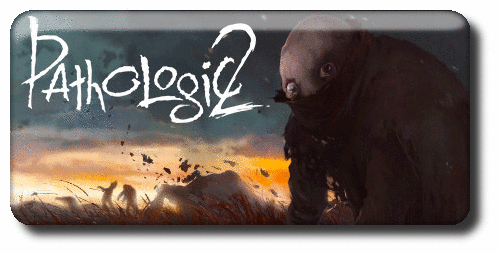 The combat system is, for many, one of the game's sticking points: dirty, awkward, unforgiving, it's an ungainly and inelegant sprawl of feints, blocking and counter-attacks that is incredibly difficult to get used to, emulating the true lack of finesse of a street brawl. The player character, Artemy Burakh, is no soldier or brawler, but a Doctor, a learned man who largely abhors violence and isn't terribly good at it. Combat usually results in a quick death or a condition of health that is so desperate as to make little difference. This is not a bug or a design flaw; it's supposed to be this way. The game is supposed to portray violence in all of its weight and lack of elegance, all of its futility and pointlessness. And boy, does it do that. Most situations requiring combat are best avoided; ducking into a nearby house or around a likely corner can usually throw off potential assaillants. But, even in this, the game demonstrates its ambiguity: whilst violence has a whole host of consequences -should you continue to assault an enemy that surrenders or runs away, your reputation will plummet. If you kill someone who is unarmed, even if they are attacking you, your reputation will plummet-, it is also a superb way of gathering necessary items and keeping yourself stocked for the next period of privation. Likewise, Artemy being a surgeon, you can become rather ghoulish and perform autopsies on those you kill -and even those simply lying dead in the street owing to plague or the violence of others-, harvesting organs that allow you to both make more effective tinctures and tonics but also to trade on the highly dubious black market that deals in human blood and organs (highly lucrative and an excellent sub-economy, if you are willing to take the hit in morality and reputation). Likewise, certain areas and certain quests require violence. The player must therefore make an active decision as to whether they conduct certain quests and take the consequences of either doing so or not. All of this, all of this, is before we even touch upon the setting, the story, the narrative that are, without exception, amongst the most sublimely ambiguous, complex and beautiful I have ever encountered in a video game. The strange Steppe town in which the action takes place is Artemy Burakh's place of birth; a setting that is simultaneously very real and very much in the realm of dreams and metaphor. Its reality derives from its grimness, its desperate and darker elements; the grit and privation, the industry and politics, whilst its fantastical qualities derive from its place upon the Steppe, where a complex traditional mythology holds sway amongst the native peoples, from which Burakh himself is descended. This interplay of the industrial and the mythic, the post-modern and the traditional, is a key part of what makes this story so engaging, as it is a reflection of the same dichotomy that tears Artemy himself in two. Whilst wandering the town, players might well find themselves startled by seemingly supernatural occurences: Certain buildings appear impossible, particularly the spectacularly fantastical constructions of The Kains, one of the dominant families within the town who represent Utopian idealism, whose dreams of architecture defy not only the restrictions and traditions of the land, but those of physics itself. Amonst the Steppe people occur strange entities known as Odonghs, that are lumpen, humanoid creatures who are simply accepted as part of the town's culture, but who are closer in nature and spirit to the earth and the Steppe itself than the more post-modern townsfolk. Spiritual visions, spectres, talking bulls, deities, miracles, an earth that literally bleeds. . .these are just some of the phenomena that Burakh encounters, which his rationality and time in the outer world has conditioned him to revolt against. Even the plague itself, which descends on day three, has a notably supernatural quality; where it strikes, the air fills with a black, soot-like substance that swirls and dances to its own currents. Likewise, a bizarre, tribal chanting fills the air in the districts it infests. Buildings in which the plague proliferates generate visible sores and rashes, as though they are alive and organic. Later, when the nature of the plague is revealed to be entirely metaphysical, the player can even take the option to have themselves infected with it, which will then allow the plague itself to talk to them. 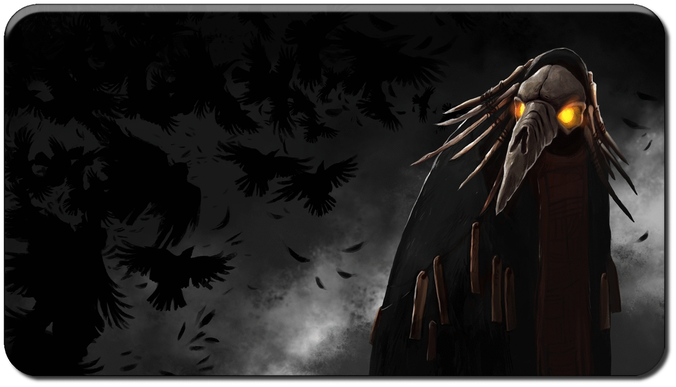 Clara, one of the key characters in the game, seems to know everything that is going to happen before it does, perhaps because of some strange precognition or maybe owing to the theatrical, staged nature of the story (it is suggested at some points that her character has access to “the script” for the play that is being lived beyond anyone else). A second, far more sinister incarnation of the character turns up at variuos points, taunting Artemy Burakh with suggestions of the future; a Changeling that seems to be entirely supernatural and wholly disturbing. Throughout the game, the Steppe people insist again and again that the town, the Steppe, the Earth itself are somehow living, that they are organic and vital and require respect from the townsfolk, many of whom have wounded and corrupted the soil with their industry and their architecture. It comes as something of a shock when this turns out to be literally true; the town, the Steppe upon which it is set, are indeed alive, and wounded by the Utopian and industrial efforts of the townsfolk, which has resulted in the plague as an expression of the Earth's pain. But even this is a matter of great ambiguity; the game never, never allows the player off with easy choices or clear cut moral decisions. This is part of what makes the experience so enticing and frustratingly brilliant for those used to more two dimensional morality systems; there are often no obvious or good choices here. Even those that seem obvious are often proven to be mistakes down the line. Some quests are even best left undone entirely, given the consequences, but the game will give no indication of that until those consequnces come about. Entire story lines can be left undone, entire character arcs not even broached upon, almost necessitating replay. The setting. The town, the Steppe, are amongst the most brilliantly realised, beautifully atmospheric in any video game. Bleak, sumptuously filthy, dark, grimey and desperate, even before the plague hits, the overall air of desolation is contrasted by incredible beauty: the wide open plains and mires and mountains of the Steppe itself, the incredibly incongruous architecture of The Kains and their children. Every step in this game drips with atmosphere, a factor that enhances and emphasises the sense of immersion that is so essential for the atmosphere it evokes. Wandering the Steppe at night, traversing the swirling black streets of a plague district, climbing the impossible, origami-like structure of The Polyhedron. . .all are sincere joys, and part and parcel of the experience. Walking and traversing the environment are core elements of the game's appeal; it becomes quickly essential for the player to understand the town's layout and how to traverse it in the most efficient manner. For some, this is a problem, but I see it as an essential element of the game's abiding atmosphere of oppression and desperation; you do find yourself wandering the streets in a state of confusion, trying to find the next safe house, the next meal, the next respite from the plague, all the while drinking in the architecture, immersing yourself in the nature and culture of the town in a way very few video games actively require. It is an evironment that is charged with narrative and mythology; the setting is a living, breathing part of the story, and therefore exercises a very particular influence upon the play itself. Narratively, I don't even know where to begin: the game starts at its own end: in the theatre at the centre of town, where a play is about to reach its conclusion that is the story of the town and the game itself, whilst those same events are actually unfolding outside. Burakh is simutaneously a real man and a contrived character played by an actor (you, the player), who operates in a setting that is both tragically real and farcically contrived. The player is allowed to wander through the last hour of the last day, seeing the consequences of failure: the town in flames, the still-living rounded up and shot or burned by an out-of-control military engine, an immense cannon waiting to shell the town to rubble around you, the plague running rampant. Then, the clock is rewound, the script is flipped back to the first page, and Artemy has a chance to start again, the play can recur with a certain benefit of hindsight, the ultimate and worst end already known. This simutlaneous reality and contrivance is part of the bizarre tensions that inform the entire mythology: throughout the game, the player is reminded that they are a character in a play, to the point whereby it is possible to meet the next actor who will play Artemy Burakh at the theatre, for some truly mind-screwing existential chicanery. At points, characters the player interacts with will have strange, spindly figures in black leotards and featureless masks appear around them, who are theatre-players who represent their internal conflicts and monologues: talking to them often reveals secrets that they won't actively speak, for fear of reprisal or a desire to deceive. Likewise, returning to the theatre at particular junctures will often reveal a new facet of the play which may presage what is going to happen or might happen at a particular point. Even death in this game is entirely ambiguous. When the player dies, they are transported to the theatre, where the Director, Mark Immortel, often harangues or chides them obliquely for not paying the part as he intends or has predicted. Immortel is one of many characters in the game who seems to operate outside of the normal laws of time and physics and seems to be an inhuman force of some description; a meddling god or spirit who is intrigued by how his “play” will turn out. Death also has other effects, as Mark will introduce penalties into the game for the player's continued “failure.” This is essential to experiencing the full content of the game and appreciating its metaphysical strangeness (certain things will only happen if the player allows themselves to die and takes certain options from Mark Immortel). Later in the game, characters the player has failed to save will turn up in the theatre and will recount what they symbolically represent and what they might have been within the story, had they been allowed to live. Despite this, the game simutlaneously insists on the reality of what is happening: Burakh himself defies Mark Immortel's insistance of the play being all-important and of his own fictional nature. The truth is neither one thing nor the other; everything is simultaneously fictional and not, just as everything is simultaneously metaphysical and wholly grounded in brute reality. There are no easy answers here. It's impossible to describe or comprehensively examine every allusion, allegory, metaphor, tension, conflict and complexity this story raises without writing a literary thesis on it (and, believe me, it is entirely possible). Suffice to say, it is one of the most complex and complete video game narratives, one of the most enaging and beautiful mythologies, that exists within the medium. It is a quantum leap in video game narrative, making most other examples look like children's crayon scrawls by comparison. There is very little like it, very little that even comes close to matching its completeness, complexity and unending intrigue. Even after completion, it continues to haunt and beg questions, seethe with mystery that invites the player to turn back to page one of the play, to read it again and see, perhaps, if they can alter the script even further this time around (entirely possible; the game is so structured as to make every play-through resoundingly different). Conversely, I must warn that many, many people will not like this game. Many, many people will loathe this game: it is unfinished, buggy, borderline broken in places, so punishingly difficult as to be alienating. It is so, so easy to find oneself in a no-win situation, in which there are no options or resources available, in which Artemy is a second away from starving or succumbing to plague, requiring a reload that might hurtle the player back several days or more. It is an exercise in sincere desperation, tension and anxiety, in which it is actively impossible to be “safe” or many steps away from catastrophe, which may defeat certain video game player's assumptions or desires of the format. You can never work yourself into a place of relative safety or stability in this game; it actively defies that perfectionism. Nor is it possible to satisfy “completionist” tendencies (there isn't enough time or resources in any given day to complete every available quest or story arc, meaning that completion-runs are impossible, and contrary to what the game wants to provide). That said, if you can tolerate or forgive these elements (or even take pleasure in them as active and deliberate elements of the game design), then Pathologic 2 will leave you in sincere awe, as an experience that has no equal or analogue in the medium.   Comments are closed.
|


Archives
April 2023
|
 RSS Feed

|

|