

 PLAYGROUNDS ENOUGH FOR EVERYONE: A DISCUSSION ON GENRE FICTION AND ASSUMED DEFINITIONS.Discussions of genre specification and parameter have a tendency to devolve into participants talking past one another, especially in the age of the internet, where so much of the physical nuance of discussion is absent. Most often, participants tend to launch arguments from the platforms of their own idiosyncratic assumptions, rather than taking time to define terms and understand where each individual is coming from in terms of their unique understandings, definitions and interpretations. When it comes to speculative genres such as horror, science fiction and fantasy, the discussion often starts ineluctably complex and spirals out into hideous, clotted abstraction from that point. The key problem tends to arise from proscribed and enshrined assumptions of what those terms mean, and the almost religious hostility that can occur against those who dare try to refute them. Part of the contention derives from a sincere lack of concrete definition. There are arguably as many definitions of “horror” or “fantasy” as there are minds that consume or create them, depending on individual influence, bias, circumstance and a whole host of contexts far too elaborate to even begin detailing. In that, there are inevitably frictions between individual definitions: what legitimately qualifies as “horror” for one may not for another. What trespasses into the realms of science fiction or dark fantasy to one may be more rigidly and exclusively defined for others. The Star Wars franchise is an excellent example: To many, because it is their principle or primary reference point, Star Wars is the very epitome of science fiction, despite the fact that, in rigidly academic terms, it does not qualify as science fiction by any measure beyond the purely aesthetic: classically, science fiction does exactly what the label implies; it uses the potentials of science and future conditions to make commentary on currently-existing social, philosophical and political situations. In that, Star Wars bears little or no resemblance to what would be classically deemed science fiction; rather, it is a form of mythological narrative more sincerely akin to fantasy works such as The Lord of the Rings or The Chronicles of Narnia. It is the mythological archetype of “the hero's journey,” which we find in human oral traditions ranging back into the depths of pre-history. The fact that it happens to occur on alien worlds and has space ships and laser guns et al is incidental. That said, if Star Wars is one's only exposure even to the aesthetics of science fiction, then for that individual, science fiction it sincerely is. Now, that definition and set of assumptions may change over time, depending on individual consideration, epiphany and influence, but that doesn't stop it being true in that moment or that set of contexts. Another sterling example would be Mervyn Peake's epic, Gormenghast: Alongside Tolkien's The Lord of The Rings, Gormenghast is generally regarded as one of the pivotal texts that informs the assumptions of post-modern fantasy fiction. Whilst not as overtly popular as its contemporary, the tropes and DNA of Gormenghast are prevalent throughout the genre, from the rambling architecture and proscribed cultures of the likes of Hogwarts to the political conflicts that define A Game of Thrones. And yet, Gormenghast itself includes absolutely nothing that most would automatically cite as redolent of the fantasy genre: there are nor wizards, no other worlds, no magic or curses or gods or dragons or divinely proscribed destinies. Strangely, for its ilk, it contains absolutely no supernatural, magical or fantastical elements at all, barring the fact that it is set in an imaginary kingdom at some ill-defined moment in what might be an imaginary history in an imaginary world. The characters, setting and situations of the book are rooted in a strange and secular reality, which refutes pervasive assumptions of what fantasy is and provides social and political commentary that most would assert as more redolent of science fiction. 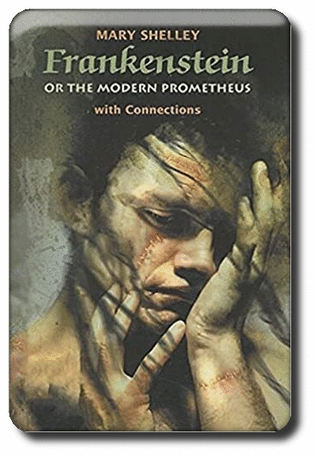 The parameters and assumptions that inform horror are, traditionally, even more contentious: where does horror itself actually begin, for example? Many would cite Mary Shelley's epoch-making work Frankenstein as the point at which what we now recognise as horror began to crystallise. However, what does that say of earlier works or traditions in which the tropes and themes of horror are already present? Many of our mythological and oral traditions contain the stuff of horror, certainly material that might be defined as patently horrific, as do many of our proscribed religious narratives. Is the ancient Greek tale of Theseus and the Minotaur not one of absolute and sublime horror?; The story of human sacrifice, divine curses, cruel destinies and a human-eating monster, stalking the bone-littered darkness of an ancient and terrible labyrinth? What of Perseus and the Gorgons, the sublime tension in which Perseus cannot look directly at the divinely-twisted abominations for fear of being turned to stone? What of folkloric and fairy tale traditions which, in their original forms, are often replete with images of dread and atrocity designed to scare the credulous into a semblance of obedience and conformity? The fundamental question begged by these ruminations ultimately reduces to: what exactly is horror, can it be clearly and universally defined and is it wise to even make the attempt? Arguably moreso than its contemporaries, horror might be more sincerely defined by the emotional reactions of its audience: whereas fantasy and science fiction can evoke anything from inspiration to despair, beatification to abjection, it can be argued that, in order to qualify as “horror,” a piece of work must legitimately evoke at least one of a certain spectrum of emotions (e.g. fright, dread, disgust, despair, disturbance etc). But that, far from helpfully reducing the problem, actually conflates and complexifies it beyond any sane ability to define: subjective human reaction is a poor basis for defining anything in these arenas, as said reactions tend to vary wildly depending on whole hosts of factors: our fear responses are often determined and informed by so many factors, from uncontrollable evolutionary, biological influences to formative input and trauma, that said responses are often so idiosyncratic as to appear bizarre or absurd to others. Those of us who suffer particular forms of phobia know this well; what is terrifying or repulsive for one may be nothing at all or even pleasant for the other. Whereas some evince no strong reactions to spiders, snakes or the dark, to some they are antithetical to the point of maddening. This is doubly true when it comes to media or fiction, regardless of how it is marketed or intended: it is often highly difficult to pre-empt emotional response or to predict how people are going to respond to any given image, circumstance or subject. What some find ineffably disturbing, others find beautiful or entrancing, what some find aesthetically pleasing, others find repulsive. This is intrinsically true of horror: how many of us have found ourselves mired in discussions of the “beauty” to be found in the genre, only for those we are engaging with to furrow their brows in confusion and incomprehension? It is often the case that what disturbs or distresses us in fiction or created media is almost uncanny; it doesn't necessarily have to be something created with the intention to do so, nor anything marketed under the label of horror specifically. Many of us recall having strange and abstruse reactions to children's films or cartoons when we were young, not even to moments or scenes that were overtly intended to do so, but because particular sets of circumstances and abstruse, indefinable contexts informed the reaction. Yet, we would not culturally label those works as horror, per se, even when the reaction is extremely pervasive (take the children's film, Chitty-Chitty, Bang-Bang as an example: a certain generation of children almost universally express a sense of profound disturbance at a particular sequence in the film involving a highly theatrical, goblinoid “child-catcher,” who stalks around kidnapping children in giant butterfly nets and whisking them away to dungeons. Yet, the film itself can scarcely be described as one of horror). This, in turn, leads to a natural questioning of the assumptions upon which the discussion operates: whilst subjective reaction and emotional response is -arguably- significant to the classification of any given work as this or that, is its significance perhaps over-emphasised or assumed too naturally and pervasively, given its highly subjective nature and innate lack of definition? Do we perhaps overestimate the significance of subjective response in these matters, even when it comes to genres that, ostensibly, rely on certain suites of reactions in order to qualify themselves? Attempting to unknot that peculiarly tangled ball of complexities and contradictions is an exercise to potentially fill lifetimes, and one that has no clear or defined conclusion, given its abstract nature. 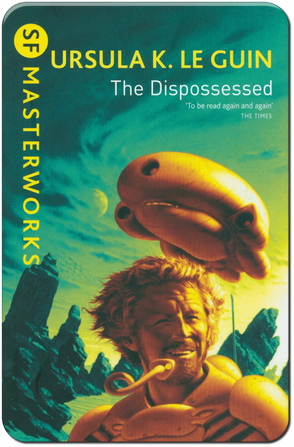 Most often, texts that are labelled or marketed under any given genre tend to be more complex than pervasive assumptions or proscribed parameters allow for. At what point, for example, do Frankenstein or The Strange Case of Dr. Jekyll and Mr. Hyde stop being horror and become science fiction, given that they contain elements classically redolent of both? At what point does Stephen King's IT evince the same, given that it essentially involves invasion by a parasitic, extra-dimensional alien? How about the works of H.P. Lovecraft? Or Ursula K. Le Guin? Does Orwell's 1984 classically qualify as science fiction and/or horror, given that it contains marked elements of both? Arguments that operate from absolute assumptions of genre parameters are doomed to failure, as are any works that occur from within those assumptions. Proscribed parameters of genre cannot help but produce weak and compromised work; rather than allowing stories or artwork to be what they want or can be, such synthetic restrictions have the effect of strangling and smothering. Not only some of the most seminal works, but also those that are often cited as emblematic of certain genres -such as many already refered to- conform to no such assumptions, instead serving to expand what is understood of by any given label (or, more progressively, to corrode the boundaries and definitions between them altogether). This, in turn, has the effect of elevating the conversation (which should be our intention and imperative in any interaction): rather than being a fruitless, subjective argument between particular sets of assumptions, we necessarily begin to discuss what the genres in question can be, what their natures and purposes are, what they might be used to effect on a wider, ideological or philosophical scale. Certain creators understand this implicitly, and attempt to express it through their work, whereas others take a more conservative approach and extol the existence of defined boundaries and definitions (needless to say, my own bias WILL necessarily shine through, here, as they lie passionately and unambiguously with the former). Elevating the conversation is essential. But, for that to occur, we must necessarily elevate -and transcend- our own assumptions. It is not uncommon for certain kinds of reader to reject work labelled as one genre or another under assumptions regarding its essential subjects, tropes and qualities. This is a sad and corrosive phenomena, in that it has the effect of coralling us within our own heads; we experience only the familiar, only the known and the assumed, which has the effect of diminishing us; of coddling and reinforcing us rather than challenging. Rejecting individual works on the basis of genre label or specification actively limits the breadth and scope of our input, which in turn stunts the fodder on which our imaginations, our interior and abstract lives, swell and expand. We might, as a result of that rejection, miss work that might otherwise enliven and invigorate, that might inspire and teach us ways of imagining and rendering we might not otherwise be familiar with. For writers, it is absolutely essential for our creative health that we expand beyond the known, if only to prevent ourselves from becoming pale parodies of those we admire. It's only through exposure to wider works, to other sets of tropes, themes, subjects and assumptions, that we are able to transcend that; to cultivate the voices and interests that insulate us against the all-too-common trap. For readers, the trap is arguably even more insidious, in that it locks us into certain prejudices and withers our ability to cope with or process new input, even when it is nutritious to the soul. 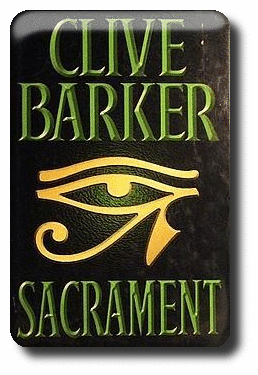 Realising that most genre labels occur primarily as marketing tools is key to this process; there is very little innate to any given work that relegates it to this genre or that. As already discussed, where does one place work such as, for example, Stephen King's Dark Tower series? Does it sit alongside his other works on the horror shelves or alongside Tolkien in fantasy, Phillip K. Dick and Isaac Azimov in science fiction? None of these are illegitimate labels, nor do the works actively refute their placement in any given one. Likewise, Lovecraft: At The Mountains of Madness is generally considered one of the formative texts in post-modern horror, yet contains elements equally redoldent of science fiction, including ruminations on the extra-dimensional nature of reality, human evolution, alien biology and eco-systems, the nature of organic life etc etc. In many respects, there is sincere worth in the argument that, other than for the sake of marketing and buyer convenience, it may be time to actively abandon those age-old labels and the assumptions that inform them; to take texts and creators on an individual basis rather than with reference to some proscribed coda or checklist (another factor which has the effect of synthetically limiting our engagement with and enjoyment of any given work). Within the horror genre, Clive Barker often occurs as the seminal example of this phenomena (and often not without contention): it is often the case that those who derive from more conservative schools of thought tend to bemoan his apparent transition (and, indeed, transgression) from the more classically-identifiable works of horror that defined his early career (e.g. The Books of Blood, The Damnation Game, The Hellbound Heart etc) to the more overtly mythological, fantastical species that predominated later (Weaveworld, Imajica, The Books of the Art etc). They claim that a clear distinction can be drawn between “periods” or eras of Barker's work, and often bemoan the fact of his transition away from what they consider quintessential. What those who operate from such positions don't seem to understand is that: the imperative to do so was always there, from Barker's earliest published works, not only inherent to the stories themselves (which actively flout any and all assumptions of what horror might be, but also actively lampoon certain pervasive or predominant assumptions of the era), but also in Barker's own expressed intentions. He has always actively endeavoured to operate beyond any impositions or parameters of genre, whilst simultaneously exulting and understanding what those genres essentially are in a way many contemporaries spectacularly fail to. He is principly concerned with the potential of fiction in all its forms, regardless of what book-sellers might classify it as. In that regard, transition and transgression are baked into his work; it was inevitable that he would move on from creating and expressing the familiar to something new and abstruse. Bizarrely, what many who lament that epehemeral, protean nature fail to see is: that this is entirely the point of his work as a whole: not to be static and familiar and comforting, as much horror -obscenely and self-defeatingly- is, but to transcend what that term implies and elevate to other arenas of operation and understanding. The essential qualities found in The Books of Blood are still remarkably present in Weaveworld and Imajica; the same tropes and subjects, the same themes and significances. The difference is one of scope and the manner of their exploration: whereas, in his earlier works, Barker ers towards a more ambiguous, almost nihilistic approach to matters such as culture, politics and even metaphysics -a nihilism for which the stuff and structures of horror are perfectly suited to expressing-, he later shifts into a far more expansive, potent suite of assumptions: gone is the open-ended darkness of stories such as The Midnight Meat Train, Only Sinners Bleed and The Hellbound Heart, giving way to far more potent, revolutionary gospels and parables in the forms of Weaveworld, Imajica and The Books of the Art. Even given that transition, the tropes and subjects of horror are still remarkably apparent in each and every one; from Weaveworld's Magdalene and her monstrously malformed, abortive offspring to the remarkable, extra-dimensional abominations of Imajica, the men-made-demi-gods of The Great and Secret Show, there is more than enough in both imagery, subject and tone in these latter works for them to qualify as works of horror, as much as they are flights of metaphysical fantasy or science fiction explorations of transgressive ideas. Barker -amongst many others- has a capacity and inclination for elevating subjects beyond rote or assumed parameters, and thereby forcing the conversation around those subjects to transcend weary or well-trodden rounds. In Sacrament, rather than providing a standard screed for LGBTQ rights on a political or socio-cultural level, he instead rips that comversation out of the hands of those who would mire it within the familiar and takes it into far more potent, metaphysical arenas. He considers the nature of assumed and proscribed narrative, traditional assumptions of gender identity, self-definition and what it means to identify as LGBTQ on a wholly spiritual level (whereas the proscribed parameters of those conversations fail to even acknowledge or outright refute that there is a spiritual or abstract dimension to consider). Likewise, in Imajica, Barker provides discussions on every subject from gender politics to Abrahamic tradition, from gender identity to cultural revolutions. Yet, on every step of that messianic journey, he inverts or subverts the reader's expectations of what those subjects generally or traditionally consist of. In that, writers and creators like Barker haul us up from the mire. They provide contexts and examples whereby we might escape the -often maddening- wheels in which we run inside our own heads and in engagements with others (not to mention through our own work). To insist that the conversation remain trammelled within those parameters is to impose a form of bondage, even slavery upon oneself; to be content with the familiar and the assumed when the subject matter, by its very nature -and at its very best-, attempts to undermine that phenomena. Furthermore, it does us all a disservice: it means that we constantly circle the same sad, weary rounds, without referencing potential alternatives or considering where the subject might take us tomorrow, how and in which directions it might evolve. There is a pervasive, fundamental denial to the notion of fiction and its genres evolving to reflect new and developing socio-cultural and political contexts, which is antithetical to the nature of art and fiction themselves. 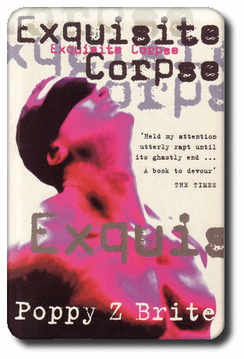 Barker's legacy -amongst other luminaries such as Ursula K. Le Guin, Billy Martin (AKA Poppy Z. Brite), Patrick Suskind and myriad, myriad others, has allowed for the efflorescence in recent years of entirely new forms of horror, fantasy and science fiction; those not beholden to assumptions of tradition or the proscriptions of those that fancy themselves their gatekeepers. Now, there are entire sub-genres of all three that explore issues salient to demographics that have -traditionally- been denied access to them, certainly in mainstream markets and popular arenas. In certain respects, it is that apparent -and entirely necessary- dissolution that is being railed against when we insist that horror is thus and thus and that fantasy is thus and thus: it is a fear response to the erosion of privilege and entitlement, in which demographics for whom these genres have particular relevance and potential -but have, traditionally been kept from informing or influencing them- have slowly broken down the fences, worn through the barricades and found that, against the infantile protestations of the gatekeepers, there is infinite space in the gardens beyond, and playgrounds enough for everyone. BY GEORGE DANIEL LEA  Comments are closed.
|


Archives
April 2023
|
 RSS Feed

|

|