

 I wasn’t known for my bravery as a kid. It was something of running joke in my family that you could get me running scared from any given room with the slightest hint of anything eerie, dangerous, or mysterious. Even now, all grown up with two kids and a pregnant wife, I’m still the butt of regular laughs between my parents when they remember me fleeing the television set when the minor chords of Sesame Street’s Alphabet Jungle theme song began. Or doing the same at the start of Teenage Mutant Ninja Turtles, Power Rangers, or even screaming in terror to go home while watching The Goofy Movie and Pocahontas in theaters. With a familial reputation as easily frightened throughout my childhood, it would be a reasonable inference to assume I stayed away from all things horror for a good, long while. And yet, I was drawn to it. Often unsupervised with a TV/VCR combo and an extensive collection of movies on good ol’ VHS, I have a formative memory of putting in Poltergeist at the way-too-young-age of six. I scared myself senseless watching Are You Afraid of the Dark? before my parent’s decreed it time for light’s out. I was a glutton for punishment, playing The Ring and The Haunting in my personal DVD player’s built in screen, playing the movies on mute while reading the subtitles and wearing headphones in an effort not to tip my parents off to the fact that I wasn’t bold enough to face these films with any volume. Despite my skittishness, I continued devouring horror content because somewhere in me I understood the underlying premises to be fiction. I knew, at the end of the day, I would not be encountering Freddy, Chucky, or Jason as I laid vulnerably underneath my Batman sheets trying to fall asleep. In those moments, my thoughts never drifted to worrying about being murdered by Michael Myers or tormented by the same Leprechaun who terrorized Jennifer Aniston. No, in those moments I was petrified about the boogeymen my father had led me to believe were real. See, my dad was raised as a Jehovah’s Witness—that pesky sect of Christian-flavored zealots that show up at your front door from time-to-time. If you don’t know, the Witnesses are pretty heavy on fearing the devil and all things “Satanic Panic.” While my dad never brought me to a weekend religious service or took me around door-knocking for Jesus, he did subscribe to their worldview and taught me of a world that took their theological belief system as equally factual and fundamental as anything I’d be tested on in school. Anxiously, I recall asking my father at a young age, “can demons, or satan himself, get me while I’m sleeping?” Instead of putting me at ease, my dad nodded at what he took to be a poignant question and affirmed, “they may want to target you while you’re alone, and without my protection, yes. But if that were ever to happen to you, just call on the name of God and command them out.” Now, this was of no great comfort to me, because in addition to painting a picture of a universe with a particularly nasty adversary, the Jehovah’s Witnesses taught of an angry, judgmental God who would one day put the world through The Great Tribulation before He annihilated the entire world—sparing only the faithful and baptized believers within the world’s only true religion, the Jehovah’s Witnesses, naturally. I worried about being among the enemies of God during those final days. I had once asked my father if I could know I would be safe if that time came about during my own life, which I had been repeatedly told was a pretty sure bet. My dad had responded with something along the lines of, “well, let’s hope we can get you baptized before that day comes. But none of us will ever truly know until the end passes and by God’s mercy, we don’t.” So, I would lie sleeplessly in bed a quivering wreck. Not afraid of monsters or murderers, but of both the devil and the hero I was supposed to rely on to rescue me. I’d pray for protection while fearing I wasn’t righteous enough for those prayers to work. Or, worse, I’d be getting the attention of a God who was even more powerful than the devil, but that hated me just as much. By the time was around 9 or 10, I was mercilessly made fun of by my parents for putting my fingers in my ears while in a public screening of 1999’s X-Men, during a particularly tense scene where Sabretooth could pop out at any moment to attack Wolverine. This was a sort of one-two punch with the opening night of Harry Potter and the Sorcerer’s Stone, in which I tapped out and asked to go home after Voldemort slayed Harry’s parents in a flashback sequence. The ruthless mockery finally struck a nerve, and maybe my pride, and I vowed to stop letting movies and TV shows that had me spooked get the better of me. It worked. Like magic, I never found myself so much as startled by a jump scare or squeamish over gore again. That fingers-in-the-ears-fight-or-flight feeling never returned. And while it wasn’t too long after that when I let go of the beliefs I had been taught by the Witnesses, courtesy of my dad (who would follow suit a decade or so later), I can’t say the all-consuming dread of unseen terrors brought upon by those beliefs similarly made a permanent exit from life. There were two scenarios since in which I felt the familiar existential panic of an invisible antagonist. The first was during sleep paralysis, a propensity towards which I developed as a teenager and still endure occasionally. In this state, I would wake up trapped in a body I could not move with visions of hellish creatures populating my bedroom or sitting on the foot of my bed, often prodding at me, and hearing murmurs of other-worldly voices ridiculing me or wishing me harm. The second was during a quintessentially “bad trip” after dropping acid as a twenty-something and walking around the streets of Philadelphia (which, honestly, is already a bit of a harrowing experience while sober). Both my night terrors and drug-induced psychotic episode shared a common theme: my rational brain understood an underlying cause for what I was witnessing. I was either caught between a dream-state and consciousness or experiencing the (as-advertised) effects of a psychedelic substance. It should be a straight-forward, open-and-shut case of dismissing my perception of reality, and yet, in both situations I could not convince myself I was witnessing something manufactured by my own brain. While I apprehended it was the most likely, perhaps even the only plausible explanation for what was happening, I still found myself panicking that my altered state would never end. That I was undergoing a real-life, mystical event. I could attempt to describe in vivid detail some approximation of what I saw and heard and felt, but it would do no good. The obvious assumption would—and should—be that I am relaying something of no more significance than a nightmare. I even grasp that as the truth in the most rational part of myself. Yet, both experiences brought me back to feeling like that scared little boy awake in bed, hoping tonight was not the night that either the devil or his creator decided to act upon their contempt of me, that tomorrow would come, and that things would eventually continue on as normal. These experiences are something that cannot be transmitted from person to person through a story. They can hardly even be relayed through a common understanding of shared experiences. They are as unique as the individual going through it. Like death, it can happen with others, but it is experienced truly alone and exclusively within one’s self. Yet, what I can do is paint a picture of a feeling. This is exactly what I attempted with my feature film debut, The Great and Terrible Day of the Lord: an existential horror thought-experiment of a movie that tries to make you as unsure of what you’re witnessing as I was during one of my many bouts of sleep paralysis or at the peak of my bad acid trip. In this film, a young woman’s boyfriend suddenly claims to be channeling God during a remote weekend get-away intended to be romantic. As God, the man claims his girlfriend is going to die before the end of the trip and she’s destined for hell unless she believes what is happening and worships the entity claiming to be in conversation with her through the vessel of her partner. The boyfriend repeatedly slips in and out of this persona, begging her (as himself) to run from him and get him help but pleading with her (as God) to stay and accept what appears to be happening. The Great and Terrible Day of the Lord doesn’t ask you to be afraid of a slasher or a monster or a cataclysm. It doesn’t try to startle you with loud noises or make you avert your eyes with scarring imagery. That’s not what lingers with me or keeps me up at night. Those are childhood fears that I’ve put away. This film tries to get you to experience the grown-up dread of not knowing which way is up, what is true, or why you’re feeling a sense of impending doom. It tries to nag you with “what if you’re in danger?” while making sure you’re fully aware that you have no rational reason to believe that to be so. It wants you to recall a time in your life where all signs point to there being nothing to worry about, yet something in you is hyperaware that you don’t have the information or perspective to truly let your guard down and feel at ease. It’s not the fear of corporal harm that brings about my insomnia. It’s the omnipresent sense of “something’s not right” during moments that should reasonably appear safe that I can’t shake. I’m not trying to scare your conscious, animalistic self. I’m trying to unsettle your soul. I want you to watch the entire movie, unsure of where I even got the audacity to call this a horror film, only for the next time your roommate or spouse is out for the night, you to find yourself unable to shake an oncoming existential crisis brought on by moments we’ve depicted on screen replaying in your head. Yes, I used a framing device familiar to me and I want to take a look at something I grew up intimately familiar with that can either be infinitely beautiful or truly terrifying depending on where you are and what you believe when you’re exposed to it. But the ominous feeling I’m trying to invoke should be universal for everyone who’s had that human moment of doubt that they’ve missed something vital to their security or anyone who has had to make a decision with too big of a consequence for how little information they feel like they have. As someone who grew up afraid, I’ve learned that much of our fear is a choice. We have to make the decision to move forward believing that there is nothing hiding under our bed, and it’s ridiculous to live in the dread of such nonsense. And while that is something I feel I’ve accomplished, I am often reminded that when it comes down to it, the decision to let go of fear is just that: a choice. The one anxiety I worry is impossible to vanquish is the lingering question that repeats itself every so often while I’m making that choice to believe that there’s nothing out there to actually fear: “But what if I’m wrong?”  BIO: Jared Jay Mason received his Bachelor’s degree in Psychology from Albright College in Reading, Pennsylvania, which now sits collecting dust somewhere in his parents’ house. Since abandoning his academic pursuits, Jared has been a performer, stand-up comedian, produced playwright, award-winning screenwriter, Nicholl Fellowship semi-finalist, and feature filmmaker. He now resides on the outskirts of Los Angeles with his wife, son, daughter, and cat. THE GREAT AND TERRIBLE DAY OF THE LORDLINKS: The Great and Terrible Day of the Lord is now available to rent or own on iTunes, Amazon, VUDU, Google Play, The Microsoft/XBox store, YouTube, and on DVD. GENIUS LINK TO VARIOUS PLATFORMS: https://geni.us/GreatAndTerribleDay RENT ON YOUTUBE: https://www.youtube.com/watch?v=nlYoIKKvafc BUY ON DVD: https://www.amazon.com/Great-Terrible-Day-Lord-DVD/dp/B09NSZBPGP/ref=sr_1_3?crid=2ZX73PNCC2RH3&keywords=the+great+and+terrible+day+of+the+lord&qid=1640668163&s=movies-tv&sprefix=the+great+and+terrible+day+of+the+lord%2Cmovies-tv%2C136&sr=1-3 You can follow The Great and Terrible Day of the Lord on: Facebook: https://www.facebook.com/thegreatandterriblemovie/ Instagram: https://www.instagram.com/thegreatandterriblemovie/ Twitter: https://twitter.com/DogAndPonyPics Or Jared Jay Mason personally at: https://twitter.com/jaredjaymason TODAY ON THE GINGER NUTS OF HORROR WEBSITE
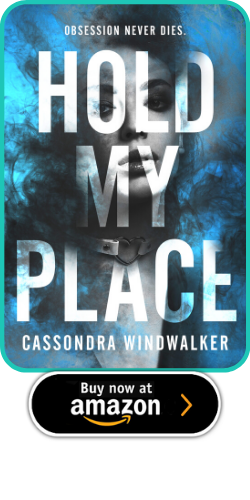
the heart and soul of horror features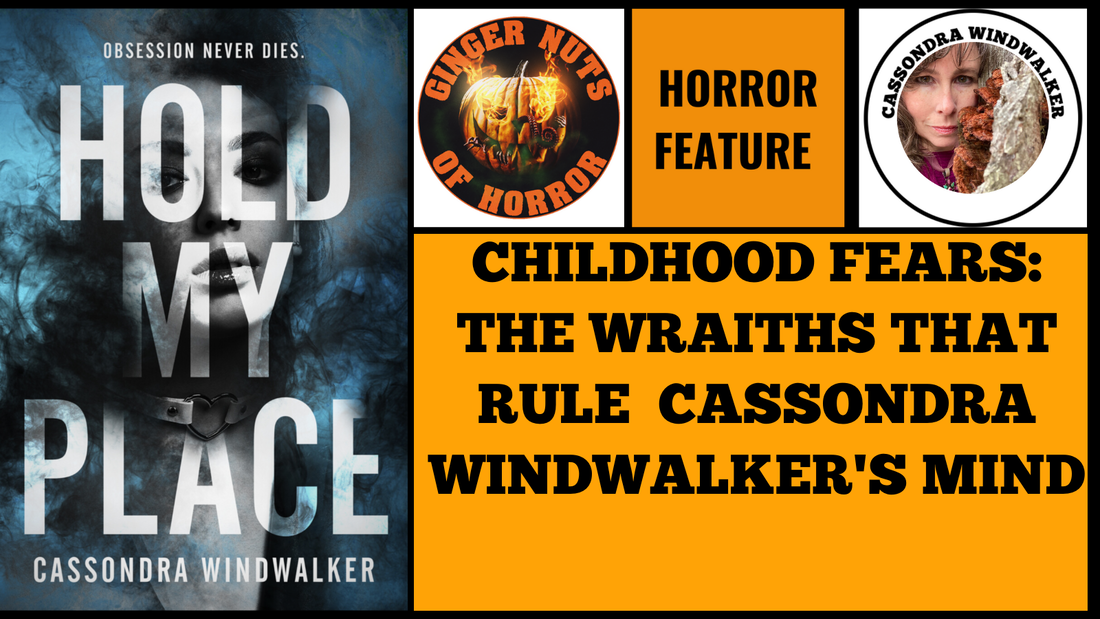 I’m probably the most fearful person you’ll never realize you’ve met. As far back as I can remember, I’ve been scared of pretty much everything. The only way to survive that sort of psychology is to plough head-on into the nightmares. And of course, never let the monsters see fear in your eyes. My big bogeymen, even before I got to grade one, were death and solitude. I was fascinated by death, giving him a form and a gait and a voice and finding that he accompanied me everywhere. Sometimes I even thought him a friend of sorts. But being alone filled me with unmitigated terror. It was as if the whole universe was a malevolence waiting to catch me unattended so it could collapse in on me. I devoured ghost stories and mysteries. My sister and I would read Scary Stories to Read in the Dark aloud to each other. At night, I would huddle under the covers with my flashlight and devour ragged copies of Alfred Hitchcock and Ellery Queen magazines rescued from thrift store bookshelves. Then I’d build a wall of pillows, burrow deep into the mattress, sweat through a tiny little blowhole made of blankets, and dream. I dreamed of death often. Of finding my entire family, lifeless, dangling from hangers in my closet, their bodies flaccid as old clothes. Of my mother sitting dead in the hallway, and when I went to kiss her goodbye, her mouth fell open and became a black abyss that swallowed me whole. Of midnight storms sweeping down from the stars to devour us. As I grew older, I encountered other sorts of monsters and learned that not only did they look like ordinary people, they thought and felt like ordinary people, too – except for when they didn’t. The same hands that might rescue a kitten so tenderly could smash a cheekbone to smithereens. I found the mysteries of human nature utterly enthralling, even when they repulsed me. I wanted to understand, to unravel, to follow the thread back to its beginning. What went wrong, and what went right? In my writing, I still walk every page with death as my constant comrade. How we interact with him defines so much of our character. And the horror I find compelling is never external. I’m bored by beasties. But the wraiths that rule our own minds, the spectres that rise in our veins, chill me to the bone. The uncertainty between which is the reality I perceive and which is the reality I create shivers me timbers. All stories are ghost stories, if we tell them long enough. Cassondra Windwalker Cassondra Windwalker just released the gothic romantic horror Hold My Place, published by Black Spot Books. She’s the author of the novels Idle Hands, Preacher Sam, and Bury the Lead, in addition to the full-length poetry collections The Almost-Children and tide tables and tea with god. Her short-form work regularly appears in literary journals and wins the odd award, including the Helen Kay Chapbook Award for her poetry chapbook, The Bench. She has lived in the South, the Midwest, and the West, and presently writes full-time from the Frozen North. She keeps company mostly with ghosts, literary characters, unwary wild animals, and her tolerant husband. Get your copy of Hold My Place in print or ebook on Amazon and across all platforms: https://www.amazon.com/Hold-My-Place-Cassondra-Windwalker-ebook/dp/B092BG6WW5. Cassondra enjoys interacting with readers on social media: www.twitter.com/WindwalkerWrite www.instagram.com/CassondraWindwalker www.facebook.com/CassondraWindwalkerWrites www.cassondrawindwalker.com Hold My Place |

 |  |
THE HEART AND SOUL OF HORROR FEATURES
North Carolina, 1949. When agricultural inspector Charlie Danwitter is sent on a special assignment to bucolic Ashe County, he expects an easy job cataloging heirloom apple varieties. However, when the local farmers grow suspicious of his motives, Charlie finds himself in far more trouble than he bargained for. In an attempt to salvage his assignment, he follows a mysterious woman deep into the beating heart of the Blue Ridge Mountains to a long-forgotten village where harvest rituals are rooted in bizarre Old World customs—and discovers that some traditions are better left in the past.
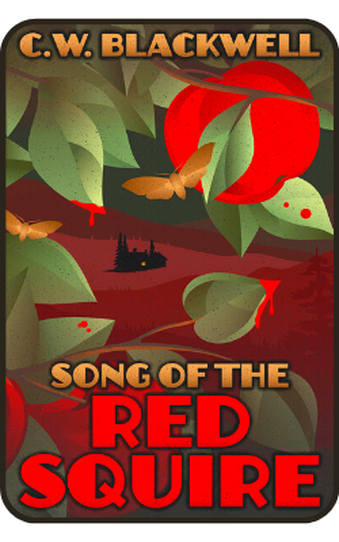
Nosetouch Press continues to cultivate its folk horror offerings with the addition of C.W. Blackwell’s novella, SONG OF THE RED SQUIRE.
The novella, set in North Carolina in 1949, follows the agricultural inspector, Charlie Danwitter, to Ashe County, where he encounters menacing local farmers and a mysterious woman deep within the Blue Ridge Mountains in a forgotten village rooted in bizarre and terrifying harvest rituals.
“I’d often take weekend trips out to the Blue Ridge Mountains,” said Blackwell. “I was captivated by the eerie beauty and Old World charm I found there. When Nosetouch Press shared an article on Twitter about an heirloom apple hunter searching for Old Appalachian orchards, I quickly realized it was the premise of a book I always wanted to write.”
C.W. Blackwell is an American author from the Central Coast of California. His recent work has appeared with Down and Out Books, Shotgun Honey, Tough Magazine, and Fahrenheit Press. He is a 2021 Derringer Award winner, and his Southern Gothic short story, “John Wellington,” was featured in the Asterisk Anthology: Volume 2 (Nosetouch Press, 2018).
“We’re thrilled to be working with C.W. Blackwell again,” said Dave Neal, editor-in-chief and co-publisher of Nosetouch Press. “His distinctive neo-noir literary style and enthusiasm for both psychological and folk horror will make for an unforgettable read!”
Nosetouch Press is an independent book publisher tandemly based in Chicago and Pittsburgh, with a commitment to bringing classical book design and excellent fiction to readers everywhere.
The novella, set in North Carolina in 1949, follows the agricultural inspector, Charlie Danwitter, to Ashe County, where he encounters menacing local farmers and a mysterious woman deep within the Blue Ridge Mountains in a forgotten village rooted in bizarre and terrifying harvest rituals.
“I’d often take weekend trips out to the Blue Ridge Mountains,” said Blackwell. “I was captivated by the eerie beauty and Old World charm I found there. When Nosetouch Press shared an article on Twitter about an heirloom apple hunter searching for Old Appalachian orchards, I quickly realized it was the premise of a book I always wanted to write.”
C.W. Blackwell is an American author from the Central Coast of California. His recent work has appeared with Down and Out Books, Shotgun Honey, Tough Magazine, and Fahrenheit Press. He is a 2021 Derringer Award winner, and his Southern Gothic short story, “John Wellington,” was featured in the Asterisk Anthology: Volume 2 (Nosetouch Press, 2018).
“We’re thrilled to be working with C.W. Blackwell again,” said Dave Neal, editor-in-chief and co-publisher of Nosetouch Press. “His distinctive neo-noir literary style and enthusiasm for both psychological and folk horror will make for an unforgettable read!”
Nosetouch Press is an independent book publisher tandemly based in Chicago and Pittsburgh, with a commitment to bringing classical book design and excellent fiction to readers everywhere.
TODAY ON THE GINGER NUTS OF HORROR WEBSITE
 |  |
the heart and soul of horror promotion

Top Ten Resident Evil Monsters
A lot of corpses have floated under the bridge since the original Resident Evil first splattered our screens with vitae - “You Died”- way, way back in the nigh-mythic year of 1996, but the franchise is far from down and out (no exploded heads or burnt corpses here, thank you very much). Whilst it certainly looked as though it was finally going to lurch and groan its last at one point (I'm sure we all recall the confused embarrassments that were entries 5 and 6), parent company Capcom have performed a minor miracle in recent years in their wholesale reinvention of the franchise:
With the scintillatingly successful remakes of the first three games in the series -all of which surpass the originals by (predatory bio-weapon) leaps and bounds-, the descent into psychological and Cronembergian body horror that was Resident Evil 7: BioHazard and the luridly gothic, werewolf-infested fairy-tale of Resident Evil 8: Village, the series has experienced a renaissance that so many of its contemporaries -Silent Hill, Parasite Eve, System Shock- sadly can't boast:
Like the zombies and genetically-engineered bio-weapons that infest its myriad environments -from the Night of the Living Dead claustrophobia of the original's Arklay Manor to the underground, science fiction laboratories common to practically all entries-, the series just will not be put down, no matter what stumbles and lurches it might make along the way.
As long time-fans are aware, even the weakest entries boast bestiaries and menageries to shame most other horror franchises. The sheer variety, fluidity and inventiveness of creatures like The Tyrant, William Birkin, Nemesis, The Chimeras, The Leech Man and far, far too many to comfortably list is truly staggering, as are the belovedly traumatic memories many of us boast of our original encounters with them. Unlike contemporaries such as Silent Hill, which takes a more sedate, disturbing approach to its horror, Resident Evil is, was and will always be about THE MONSTERS.
In this series, we're going to dive deep into ten of my personal favourites from the franchise. Please note, that this list is entirely subjective, and based on my own experience of these creatures (experience being the watchword; rather than look at them exclusiely in aesthetic or technical terms, we'll be focusing on the emotional responses they elicit and the lingering disturbia and perverse fascination they exercise).
So, without further ado, let's lope and slouch our way to the first entry in our gribbly and grotesque bestiary:
With the scintillatingly successful remakes of the first three games in the series -all of which surpass the originals by (predatory bio-weapon) leaps and bounds-, the descent into psychological and Cronembergian body horror that was Resident Evil 7: BioHazard and the luridly gothic, werewolf-infested fairy-tale of Resident Evil 8: Village, the series has experienced a renaissance that so many of its contemporaries -Silent Hill, Parasite Eve, System Shock- sadly can't boast:
Like the zombies and genetically-engineered bio-weapons that infest its myriad environments -from the Night of the Living Dead claustrophobia of the original's Arklay Manor to the underground, science fiction laboratories common to practically all entries-, the series just will not be put down, no matter what stumbles and lurches it might make along the way.
As long time-fans are aware, even the weakest entries boast bestiaries and menageries to shame most other horror franchises. The sheer variety, fluidity and inventiveness of creatures like The Tyrant, William Birkin, Nemesis, The Chimeras, The Leech Man and far, far too many to comfortably list is truly staggering, as are the belovedly traumatic memories many of us boast of our original encounters with them. Unlike contemporaries such as Silent Hill, which takes a more sedate, disturbing approach to its horror, Resident Evil is, was and will always be about THE MONSTERS.
In this series, we're going to dive deep into ten of my personal favourites from the franchise. Please note, that this list is entirely subjective, and based on my own experience of these creatures (experience being the watchword; rather than look at them exclusiely in aesthetic or technical terms, we'll be focusing on the emotional responses they elicit and the lingering disturbia and perverse fascination they exercise).
So, without further ado, let's lope and slouch our way to the first entry in our gribbly and grotesque bestiary:
The Cerberus
Whilst it might seem absurd to those born into eras where horror is an established and prominent sub-genre, at the time of the original Resident Evil's release, horror was still a massively contentious and highly niche subject in video games. Certain platforms -such as the more adult-oriented Commodore Amiga- boasted dedicated horror studios and series (most notably the RPGs and point-and-click adventures of Sierra and Horrorsoft), the vast majority of home consoles were marketed to a younger demographic, making the very concept of horror highly problematic. This arguably reached a head with the release of Night Trap, a horror-comedy for the long-dead Sega CD system, which, despite its comedic absurdity, became a bone of contention for the British gutter-press, which published any number of ludicrously misguided, exaggerated and patently false claims about the game, stirring up a moral panic that resulted in the estbalishment of the ESRB advisory board, whose business is to rate and classify games according to content, in the same manner as the BBFC for film and cinema.
However, the transition from the 16-bit era consoles (the Sega Megadrive and Nintendo's SNES) also saw an evolution in taste and potential audiences: whereas previous generations had always squarely targeted children and teenagers, suddenly, video games expanded to encompass any number of subjects and audiences, including genres that would have been considered taboo or verboten before.
The original Resident Evil dropped with all the force and calamity of a genetically-engineered super-bio-weapon into mainstream markets: a horror game the like of which had never been seen before, that entirely threw out all of the parameters and proscriptions that applied to the medium in previous generations. For those of us who were children and teenagers at the time, who'd grown up within those parameters, it was an event that had all the prurient allure of the forbidden; a horror game that echoed the films lining our parent's VHS collections, that included all of the gore, violence, horror set-pieces and atmosphere that we'd come to expect from TV or cinema.
It may seem cheesy, absurd, ludicrously dated at this point, but I and so many others of my generation have beloved memories of sitting in cold bedrooms on birthdays or Christmas mornings, bent double and trembling as we searched the claustrophobic confines of the Arklay Manor, terrified of what was obscured beyond the fixed camera's eye, just around the corner.
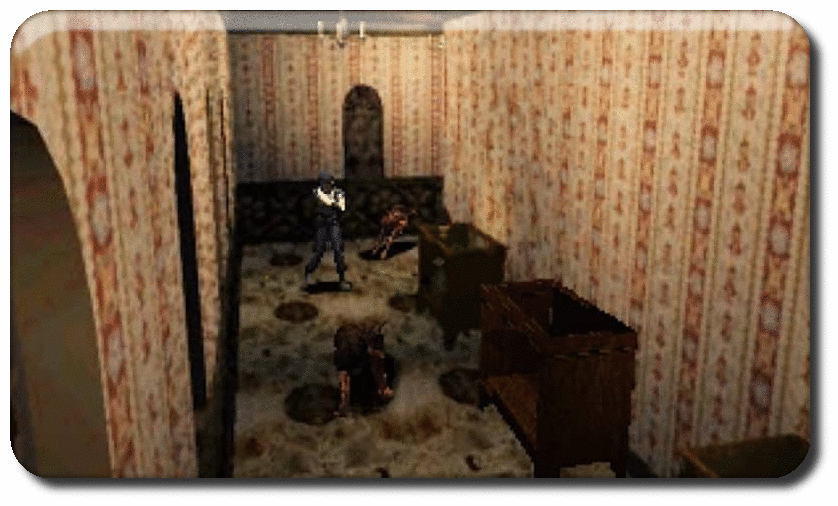
The Cerberus is the very first creature we ever encountered in the Resident Evil franchise; the monster that started it all, and so deserves a spot somewhere on this list, even though the franchise would evolve far, far beyond them in titles to come:
However, the transition from the 16-bit era consoles (the Sega Megadrive and Nintendo's SNES) also saw an evolution in taste and potential audiences: whereas previous generations had always squarely targeted children and teenagers, suddenly, video games expanded to encompass any number of subjects and audiences, including genres that would have been considered taboo or verboten before.
The original Resident Evil dropped with all the force and calamity of a genetically-engineered super-bio-weapon into mainstream markets: a horror game the like of which had never been seen before, that entirely threw out all of the parameters and proscriptions that applied to the medium in previous generations. For those of us who were children and teenagers at the time, who'd grown up within those parameters, it was an event that had all the prurient allure of the forbidden; a horror game that echoed the films lining our parent's VHS collections, that included all of the gore, violence, horror set-pieces and atmosphere that we'd come to expect from TV or cinema.
It may seem cheesy, absurd, ludicrously dated at this point, but I and so many others of my generation have beloved memories of sitting in cold bedrooms on birthdays or Christmas mornings, bent double and trembling as we searched the claustrophobic confines of the Arklay Manor, terrified of what was obscured beyond the fixed camera's eye, just around the corner.
The Cerberus is the very first creature we ever encountered in the Resident Evil franchise; the monster that started it all, and so deserves a spot somewhere on this list, even though the franchise would evolve far, far beyond them in titles to come:
Having landed in the forests outside of the fictional Raccoon City, the specialist police unit, S.T.A.R.S Alpha team discover the crashed helicopter of their compatriots Bravo Team, only to find evidence of a vicious and bloody attack; bodies, blood, strewn viscera. No sooner are they shocked by the carnage than something hurtles towards them through the trees and mists; a mob of growling, slathering monsters, that fall on the incidental members of the team and graphically tear them apart. The survivors fire bullets into the scabrous animals but to little effect, other than to antagonise them. As they do so, they (and we) are provided an unenviable view of their conditions:
A pack of guard dogs suffering some form of lepros disease, their bodies riddled with sores and cankers, their flanks and bellies ripped open, exposing muscle and organ, their heads likewise sloughing away, revealing the skulls beneath.
The beasts pause momentarily to gorily feast on those they've already killed before setting after the surviving S.T.A.R.S members. Given no choice, they flee, finding dubious sanctuary in a nearby mansion.
And this, ladies and gentleman, was our introduction to Resident Evil.
Whilst the franchise is now so embedded in video game culture and general public consciousness, everyone and their dogs (a ha!) know that it's essentially a video game riff on horror and science fiction cinema of yesteryear, involving genetically-engineered monsters, zombie-viruses and flesh-hungry, lab-cultured mutants, it's worth bearing in mind, this was during the days when the internet was in its infancy; most homes did not have access to it, and even those that did found the experience severely limited. As such, many of us playing Resident Evil at the time had no context for these zombie-dogs (later revealed to be classified as “Cerberus” by their creators). For all we knew, the malady affecting them might have been supernatural, occult or Lovecraftian. The lack of context or explanation, the nature of their framing in these early chapters, made for a terrifying experience, and set the tone for the rest of the game.
Unlike most later entries, Resident Evil 1 is all about atmosphere; a sincere experiment in translating horror tropes from passive mediums to the interactivity of video games, it is a quiet, isolated experience, in which even the occurrence of a single enemy is terrifying. Each beasty has its own peculiar, introductory set-piece, as well as general environment.
The Cerberus dogs -effectively experiments in which the zombifying “T-Virus” was administered to dogs instead of human beings- recur throughout:
If one is quixotic enough to brave peeking out of the front door of the mansion, one is terrified out of one's seat by a Cerberus that pokes its head through the door, howling in hunger for flesh. One of the most keenly-remembered jump-scares in the game comes when (and if) the player attempts to traverse a particular corridor, off from the main hallway. Whilst ostensibly quiet and peaceful, the camera is placed to take in the arrays of windows lining its walls, which look out over foreboding darkness. Should the player make it a particular distance, a musical chord sounds, the windows burst in and a pair of Cerberuses leap through, hounding the player through the narrow confines until they make it out the door on the other side. Unless they put the dogs down, this transitional area now becomes a zone of extreme threat and menace, through which they will be obliged to pass several times in order to complete the game.
Encounters with the Cerberus then become exceedingly rare, as the game slowly reveals the other monsters and beasties infesting the Arklay Manor. However, their threat remains omnipresent: it's made clear through various journals and diary entries that they prowl the surrounding grounds in packs, making any venture outside a risky exercise. In the outdoors areas of the mansion -which consist of various patios, porches and gardens-, they can be heard howling and sloping around in the distance, sometimes visible through wire fencing or in the distance. This renders them not only an omnipresent threat, but also a significant driver for the main story (the characters can't risk leaving the mansion when they'll almost certainly be set upon and torn apart by undead doggos).
Should they catch the player in a state of ill health, they will be treated to a particularly gruesome death animation in which the dogs bear them to the ground, violently tearing out their throats before beginning to feast on their carcass.
The Cerberus certainly becomes less of a threat as the main game progresses and newer, more elaborate monsters come to take its place, but, for those of us who were there at the very beginning, they will always hold an especial place in the bestiaries of video game horror.
A pack of guard dogs suffering some form of lepros disease, their bodies riddled with sores and cankers, their flanks and bellies ripped open, exposing muscle and organ, their heads likewise sloughing away, revealing the skulls beneath.
The beasts pause momentarily to gorily feast on those they've already killed before setting after the surviving S.T.A.R.S members. Given no choice, they flee, finding dubious sanctuary in a nearby mansion.
And this, ladies and gentleman, was our introduction to Resident Evil.
Whilst the franchise is now so embedded in video game culture and general public consciousness, everyone and their dogs (a ha!) know that it's essentially a video game riff on horror and science fiction cinema of yesteryear, involving genetically-engineered monsters, zombie-viruses and flesh-hungry, lab-cultured mutants, it's worth bearing in mind, this was during the days when the internet was in its infancy; most homes did not have access to it, and even those that did found the experience severely limited. As such, many of us playing Resident Evil at the time had no context for these zombie-dogs (later revealed to be classified as “Cerberus” by their creators). For all we knew, the malady affecting them might have been supernatural, occult or Lovecraftian. The lack of context or explanation, the nature of their framing in these early chapters, made for a terrifying experience, and set the tone for the rest of the game.
Unlike most later entries, Resident Evil 1 is all about atmosphere; a sincere experiment in translating horror tropes from passive mediums to the interactivity of video games, it is a quiet, isolated experience, in which even the occurrence of a single enemy is terrifying. Each beasty has its own peculiar, introductory set-piece, as well as general environment.
The Cerberus dogs -effectively experiments in which the zombifying “T-Virus” was administered to dogs instead of human beings- recur throughout:
If one is quixotic enough to brave peeking out of the front door of the mansion, one is terrified out of one's seat by a Cerberus that pokes its head through the door, howling in hunger for flesh. One of the most keenly-remembered jump-scares in the game comes when (and if) the player attempts to traverse a particular corridor, off from the main hallway. Whilst ostensibly quiet and peaceful, the camera is placed to take in the arrays of windows lining its walls, which look out over foreboding darkness. Should the player make it a particular distance, a musical chord sounds, the windows burst in and a pair of Cerberuses leap through, hounding the player through the narrow confines until they make it out the door on the other side. Unless they put the dogs down, this transitional area now becomes a zone of extreme threat and menace, through which they will be obliged to pass several times in order to complete the game.
Encounters with the Cerberus then become exceedingly rare, as the game slowly reveals the other monsters and beasties infesting the Arklay Manor. However, their threat remains omnipresent: it's made clear through various journals and diary entries that they prowl the surrounding grounds in packs, making any venture outside a risky exercise. In the outdoors areas of the mansion -which consist of various patios, porches and gardens-, they can be heard howling and sloping around in the distance, sometimes visible through wire fencing or in the distance. This renders them not only an omnipresent threat, but also a significant driver for the main story (the characters can't risk leaving the mansion when they'll almost certainly be set upon and torn apart by undead doggos).
Should they catch the player in a state of ill health, they will be treated to a particularly gruesome death animation in which the dogs bear them to the ground, violently tearing out their throats before beginning to feast on their carcass.
The Cerberus certainly becomes less of a threat as the main game progresses and newer, more elaborate monsters come to take its place, but, for those of us who were there at the very beginning, they will always hold an especial place in the bestiaries of video game horror.
TODAY ON THE GINGER NUTS OF HORROR WEBSITE
| |  |
THE HEART AND SOUL OF HORROR FEATURES

THE CREEPER by A.M. Shine
About the book
The Creeper is a masterful tale of horror and suspense by one of Ireland's most talented emerging authors.
Superstitions only survive if people believe in them...
Renowned academic Dr Sparling seeks help with his project on a remote Irish village. Historical researchers Ben and Chloe are thrilled to be chosen – until they arrive...
The village is isolated and forgotten. There is no record of its history, its stories. There is no friendliness from the locals, only wary looks and whispers. The villagers lock down their homes at sundown. A nameless fear stalks the streets...
Nobody will talk – nobody except one little girl. Her story strikes dread into the hearts of the newcomers. Three times you see him. Each night he comes closer...
That night, Ben and Chloe see a sinister figure watching them. He is the Creeper. He is the nameless fear in the night. Stories keep him alive. And nothing will keep him away...
The Creeper is a masterful tale of horror and suspense by one of Ireland's most talented emerging authors.
Superstitions only survive if people believe in them...
Renowned academic Dr Sparling seeks help with his project on a remote Irish village. Historical researchers Ben and Chloe are thrilled to be chosen – until they arrive...
The village is isolated and forgotten. There is no record of its history, its stories. There is no friendliness from the locals, only wary looks and whispers. The villagers lock down their homes at sundown. A nameless fear stalks the streets...
Nobody will talk – nobody except one little girl. Her story strikes dread into the hearts of the newcomers. Three times you see him. Each night he comes closer...
That night, Ben and Chloe see a sinister figure watching them. He is the Creeper. He is the nameless fear in the night. Stories keep him alive. And nothing will keep him away...

Publisher : Head of Zeus -- an Aries Book (15 Sept. 2022)
Language : English
Hardcover : 320 pages
ISBN-10 : 1801102171
ISBN-13 : 978-1801102179
Pre-Order a copy here
Language : English
Hardcover : 320 pages
ISBN-10 : 1801102171
ISBN-13 : 978-1801102179
Pre-Order a copy here
Interview with A.M. Shine
Which was the first horror story you read that made you want to write in the same vein? (Was it another type of story that first made you want to write?)
It all began with a picture book for 3-5 year olds called FUNNY BONES by Janet and Allan Ahlberg. It follows a skeleton family with a skeleton dog, and though not officially a horror per se, it’s full of fleshless, reanimated corpses, all smiling as if they’re happier in death than they ever were in life.
After that, I was a teenager, and the book was Lovecraft’s third omnibus – THE HAUNTER OF THE DARK. My older brother borrowed it off a friend of his, and then fate found its way into my hands. Stories like THE OUTSIDER and THE THING ON THE DOORSTEP opened my eyes to a style of writing that I would read obsessively for over a decade.
Had that book not crept into my house, I wonder how different my life would be now.
How has the landscape of Ireland inspired your work? Have you visited anywhere that particularly inspired THE CREEPER?
The landscape here is a character in its own right.
Aside from those few days of sunshine in the summer, the west of Ireland is a beautifully bleak place. It’s a horror writer’s dream, if said horror writer likes their settings dark, damp, and dismally cold.
Nothing stirs the literary mind quite like a good blast of horizontal rain.
I walked many a wet woodland when I was writing THE WATCHERS. And the village in THE CREEPER is actually based on the village I grew up in as a child. It’s a maze of narrow country lanes, with flooded fields, and ruined cottages.
It certainly helps to capture the landscape on paper when you’ve stood there in person.
You have mentioned the influence of Poe and the Gothic horror tradition on your work. Has modern horror had any impact on your writing and if so, which authors/books?
The quality of writing and the originality of ideas are a constant source of inspiration and envy.
They’re the reason the genre is so fresh and exciting in 2022. There’s such variety to the themes and characters that now, more than ever, readers who may have avoided horror for whatever reasons are being lured in.
And it’s a trap, of course. Once we have them in that cage, they’re never getting out.
To name but a few:
Simone St. James blends horror and mystery together beautifully in the likes of THE BROKEN GIRLS and THE SUN DOWN MOTEL. Michelle Paver’s DARK MATTER is a masterclass in isolation and possibly the coldest book I’ve ever read. Jonathan Aycliffe (one of my personal favourites) is a pro at the slow build, making sure that shiver hits the right spot on the spine; NAOMI’S ROOM and THE LOST, to name but two. I also adore writers who pay homage to any Gothic influences such as Nicole Willson’s TIDEPOOL, which was one of my favourite books of last year.
The list is endless.
How do you like to write? Do your plots come to you fully formed or do you start with a character or scenario and work from there?
A generous tumbler of absinthe during a full moon usually does the job.
I think it’s crucial to understand what your ‘horror’ is, and then build the story around that. But coming up with something original is easier said than done. That involves a lot of staring into space.
I’ll play around with characters, fears, scenarios and locations, and try to approach it from as many angles as possible. Often, the final plot is woven from many threads that could have been individual short stories in their own right.
THE WATCHERS was a rare exception in that I wrote Mina before the plot. I knew that I was sending her to the coop, but that’s all. Only when she was safely locked inside did I plan out the rest.
With THE CREEPER, I had the plot and then designed the character of Ben to best complement the horror of the story.
How has Irish culture and tradition impacted your writing?
I’ve embraced my country’s culture in the same way I did with my baldness.
Impacted? Yes.
Any choice in the matter? Maybe some subtle cries.
I owe so much to Ireland for providing me with the parts I need to assemble something fresh for the horror genre.
Even our better-known folk tales are open for interpretation. Reworking and updating old horrors is a great way to keep them interesting, otherwise there’d be no surprises.
This was the case with THE WATCHERS, which was a reimagining of a very particular character in Irish folklore. And THE CREEPER toys with Ireland’s love affair with old superstitions and how they survive to this day.
The horror at their core of both novels is quintessentially Irish.
So, I count myself lucky to have been born on this little island and to be surrounded by so much spooky shit all the time.
Do you ever model your characters on yourself?
There are definitely a few personal traits and foibles that I’ve put into Mina (THE WATCHERS) and Ben (THE CREEPER). But I’ll never tell you which ones. I’m like a parasite inside my characters that no one can see.
I think every author puts bits of themselves into their work. But I’d also be guilty of “borrowing” personalities from people I know, mixing up whatever cocktail I need for the narrative.
Which other genres do you particularly like to read? Do they have an influence on your work?
I rarely stray too far from the horror genre. It’s become an addiction that I’m happy to live with.
But science fiction and horror are so closely linked that often they’re one and the same. I still enjoy books grounded in reality but what I really look for are elements outside the ordinary – a concept or idea that ‘ve never encountered before.
I really enjoyed Blake Crouch’s Pines trilogy. The twists, horror and pacing were sublime.
Stuart Turton’s SEVEN DEATHS OF EVELYN HARDCASTLE was also wonderful. Applying a concept like body-swapping to a murder mystery was genius, and I’m in awe of how he managed to map it out.
And the occasional thriller is always welcome, especially if they’re twisty. The last one I loved was THE SILENT PATIENT by Alex Michaelides.
If you weren’t writing horror what other literary projects would you like to pursue?
There’s only horror.
Even if I tried my pen at sci-fi, it would always read like a horror.
It’s both a blessing and a curse.
Which two of the following characters would you rather have dinner with: Carmilla, C. Auguste Dupin, Frankenstein’s monster, Count Dracula, Cthulhu, Roderick Usher?
Frankenstein’s monster – eloquent and an absolute gent. But would I enjoy my dinner sitting across from a mismatch of stitched together body parts? Probably not.
Cthulhu – he’s a fair size, so I’ll put his invite aside until I’m having a summer barbeque.
Dupin would probably talk too much, and poor old Roderick too little.
So, I guess it’s got to be the Count and Carmilla. Vampires – good conversationalists, snappy dressers. With some bottles of wine and a few carafes of blood, we could quite happily natter by the fire until the dawn.

About the author
A.M. Shine writes in the Gothic horror tradition. Born in Galway, Ireland, he received his Master's Degree in History there before sharpening his quill and pursuing all things literary and macabre. His stories have won the Word Hut and Bookers Corner prizes and he is a member of the Irish Writers Centre. His debut novel, The Watchers, has been critically acclaimed. The Creeper is his second full-length novel.
A.M. Shine writes in the Gothic horror tradition. Born in Galway, Ireland, he received his Master's Degree in History there before sharpening his quill and pursuing all things literary and macabre. His stories have won the Word Hut and Bookers Corner prizes and he is a member of the Irish Writers Centre. His debut novel, The Watchers, has been critically acclaimed. The Creeper is his second full-length novel.
Pre-order link
Amazon: https://amzn.to/3h06OLY
Follow AUTHOR
Twitter: @AMShineWriter
Instagram: @nocturn_al_shine
Facebook: @amshinewriter
Website: www.amshinewriter.com
Follow Aries
Twitter: @AriesFiction
Facebook: Aries Fiction
Website: http://www.headofzeus.com
Blog Tour Hashtag
#TheCreeper
Amazon: https://amzn.to/3h06OLY
Follow AUTHOR
Twitter: @AMShineWriter
Instagram: @nocturn_al_shine
Facebook: @amshinewriter
Website: www.amshinewriter.com
Follow Aries
Twitter: @AriesFiction
Facebook: Aries Fiction
Website: http://www.headofzeus.com
Blog Tour Hashtag
#TheCreeper
TODAY ON THE GINGER NUTS OF HORROR WEBSITE
 | |
The Heart and soul of horror features


The truth hides in plain sight: Detective John Ashton Excerpt:
“Sixty-two bedrooms,” said the cabbie. He was explaining to Ashton the Francon Mansion’s history. “Every brick was imported from all over Europe. Right down to the marble tile.” He added, “From Italy.” Ashton surmised the cabbie was Italian by the prideful way he expressed “Italy”.
They were driving down a barren road lined with red cedar trees. Every so often they passed a gate and driveway leading to a house or mansion tucked back off the main road.
“It’s the biggest house on the block,” said the cabbie as he eyed Ashton in the rearview mirror. “We’re almost there.”
“You seem to know a lot about the house.”
“Lived here most of my life. One tends to pick up history as the years go by.”
“Have you ever been inside?”
He shook his head. “Not at all. A guy like me has trouble getting invites.” He laughed. Then a moment later, “Here we go.”
Ashton perked up. The gate was old steel and wide open attached to two stone pillars on either side. The cab stopped outside the gate and Ashton looked up the long winding drive to the house that stood in darkness. Colossal, was Ashton’s first thought, his eyes wide taking in the sheer volume and size. A single light flickered in the mansion as if a candle had been lit in the foyer.
“No party tonight,” said the cabbie. “Your luck must have run out.”
Ashton caught the cabbie’s smile.
“You’re not gonna drive up?”
He clucked his tongue and shook his head. “No,” he said. “This is as close as I get.”
“Superstitious?”
“You might say that. I don’t invite devils into my life, detective. That’s your job.”
“Indeed,” Ashton breathed staring at the long walk to the house.
The cabbie added, “I feel like I’m dropping off Rhenfield to meet his doom. Be careful in there, detective. Evil spirits are everywhere around this place.”
“Rhenfield?”
The cabbie eyed him in the rearview. “You don’t read, do you?”
Ashton shook his head. “No time.”
“You should. Great books are like a blueprint…a survival manual disguised as fiction. As folklore. Because the truth hides in plain sight and those that see have to hide and those that can’t see…well, they’re just a part of the plan.”
“Sixty-two bedrooms,” said the cabbie. He was explaining to Ashton the Francon Mansion’s history. “Every brick was imported from all over Europe. Right down to the marble tile.” He added, “From Italy.” Ashton surmised the cabbie was Italian by the prideful way he expressed “Italy”.
They were driving down a barren road lined with red cedar trees. Every so often they passed a gate and driveway leading to a house or mansion tucked back off the main road.
“It’s the biggest house on the block,” said the cabbie as he eyed Ashton in the rearview mirror. “We’re almost there.”
“You seem to know a lot about the house.”
“Lived here most of my life. One tends to pick up history as the years go by.”
“Have you ever been inside?”
He shook his head. “Not at all. A guy like me has trouble getting invites.” He laughed. Then a moment later, “Here we go.”
Ashton perked up. The gate was old steel and wide open attached to two stone pillars on either side. The cab stopped outside the gate and Ashton looked up the long winding drive to the house that stood in darkness. Colossal, was Ashton’s first thought, his eyes wide taking in the sheer volume and size. A single light flickered in the mansion as if a candle had been lit in the foyer.
“No party tonight,” said the cabbie. “Your luck must have run out.”
Ashton caught the cabbie’s smile.
“You’re not gonna drive up?”
He clucked his tongue and shook his head. “No,” he said. “This is as close as I get.”
“Superstitious?”
“You might say that. I don’t invite devils into my life, detective. That’s your job.”
“Indeed,” Ashton breathed staring at the long walk to the house.
The cabbie added, “I feel like I’m dropping off Rhenfield to meet his doom. Be careful in there, detective. Evil spirits are everywhere around this place.”
“Rhenfield?”
The cabbie eyed him in the rearview. “You don’t read, do you?”
Ashton shook his head. “No time.”
“You should. Great books are like a blueprint…a survival manual disguised as fiction. As folklore. Because the truth hides in plain sight and those that see have to hide and those that can’t see…well, they’re just a part of the plan.”
Read the first extract here
Golem Hardcover
by PD Alleva

"An extraordinary psychological horror book. Excellently written, with a twisted, spiraling, unexpected end that will leave you speechless." ~ TBM Horror Experts
Detective. Angel. Victim. Devil.
A haunting tale of suspense, loss, isolation, contempt, and fear.
On November 1, 1951, war hero John Ashton was promoted to detective. His first assignment: find the district attorney's missing daughter. But his only lead is Alena Francon, a high society sculptor and socialite committed to Bellevue's psychiatric facility.
Alena has a story for the new detective. A story so outlandish John Ashton refuses to heed the warning. Alena admits to incarnating Golem, a demonic force, into her statue. A devil so profound he's infiltrated every part of New York's infrastructure. Even worse, he uses children to serve as bodily hosts for his demonic army, unleashing a horde of devils into our world.
When Alena's confidant, Annette Flemming, confirms the existence of Golem, John is sent on a collision course where fate and destiny spiral into peril, and the future of the human race hangs in the balance.
The Devil Is In The Details!
Fans of The Silence of the Lambs, Clive Barker, John Connolly, old Stephen King, and Anne Rice will be fascinated by this edge of your seat psychological horror thriller with a story that rips out the heart of humanity and throws it on a slab to be feasted on.
Detective. Angel. Victim. Devil.
A haunting tale of suspense, loss, isolation, contempt, and fear.
On November 1, 1951, war hero John Ashton was promoted to detective. His first assignment: find the district attorney's missing daughter. But his only lead is Alena Francon, a high society sculptor and socialite committed to Bellevue's psychiatric facility.
Alena has a story for the new detective. A story so outlandish John Ashton refuses to heed the warning. Alena admits to incarnating Golem, a demonic force, into her statue. A devil so profound he's infiltrated every part of New York's infrastructure. Even worse, he uses children to serve as bodily hosts for his demonic army, unleashing a horde of devils into our world.
When Alena's confidant, Annette Flemming, confirms the existence of Golem, John is sent on a collision course where fate and destiny spiral into peril, and the future of the human race hangs in the balance.
The Devil Is In The Details!
Fans of The Silence of the Lambs, Clive Barker, John Connolly, old Stephen King, and Anne Rice will be fascinated by this edge of your seat psychological horror thriller with a story that rips out the heart of humanity and throws it on a slab to be feasted on.
THE HEART AND SOUL OF HORROR PROMOTION


Archives
April 2023
March 2023
February 2023
January 2023
December 2022
November 2022
October 2022
September 2022
August 2022
July 2022
June 2022
May 2022
April 2022
March 2022
February 2022
January 2022
December 2021
November 2021
October 2021
September 2021
August 2021
July 2021
June 2021
May 2021
April 2021
March 2021
February 2021
January 2021
December 2020
November 2020
October 2020
September 2020
August 2020
July 2020
June 2020
May 2020
April 2020
March 2020
February 2020
January 2020
December 2019
November 2019
October 2019
September 2019
August 2019
July 2019
June 2019
May 2019
April 2019
March 2019
February 2019
January 2019
December 2018
November 2018
October 2018
September 2018
August 2018
July 2018
June 2018
May 2018
April 2018
March 2018
February 2018
January 2018
December 2017
November 2017
October 2017
September 2017
August 2017
June 2017
May 2017
April 2017
March 2017
February 2017
January 2017
December 2016
November 2016
October 2016
September 2016
August 2016
July 2016
June 2016
May 2016
April 2016
March 2016
February 2016
January 2016
December 2015
November 2015
October 2015
September 2015
August 2015
July 2015
June 2015
May 2015
April 2015
March 2015
February 2015
January 2015
December 2014
November 2014
October 2014
September 2014
August 2014
July 2014
June 2014
May 2014
April 2014
March 2014
February 2014
January 2014
December 2013
October 2013
September 2013
August 2013
 RSS Feed

|

|