

Today we welcome Yi Izzy Yu and John Yu Branscum to Ginger Nuts of Horror to mark the release of their fantastic collection. Zhiguai: Chinese True Tales of the Paranormal and Glitches in the Matrix (read our review here), with an amazing article:- SOME OF OUR FAVORITE HORROR STORIES ARE NOT FICTION: THOUGHTS ON HORROR CREATIVE NONFICTION BY YI IZZY YU AND JOHN YU BRANSCUM Some of our favorite horror stories are not fiction, but rather creative nonfiction. Take Joy Williams’ short memoir “Hawk,” for example. Published in Granta in 1999, it weaves together meditations on the life of Slaughterhouse-Five composer Glenn Gould with the narrative of Joy William’s sudden, shocking mauling by her German Shepherd, Hawk. Hawk’s attack is a bloody one, in a story that’s also shadowed by disease, casual cruelty, the ultimate unknowability of other living beings, and Joy William’s decision to have Hawk put down. The story even seemingly leaps into the paranormal when Williams presents an ominous dream visit by Hawk, who is as much totem as flesh-and-blood being, the night before the attack: “In my sleep, in the strange bed in the old farmhouse, I saw a figure at the door. It was waiting there clothed in a black garbage bag and bandages. Without hesitation, I got up and went to the door and opened it and Hawk came in [ . . . ]. ‘Oh there are ghosts in that house,’ our friends said later.” “Hawk” is a fabulous if unsettling achievement. It’s Cujo filtered through Kelly Link. And our students are all googly-eyed when we cover it in class to talk about the moves it makes as animal, illness, and relational memoir. But it is also an example of several notes of horror too—ranging from dread to the grotesque, the weird, and the uncanny. In this, “Hawk” is emblematic of a stream of literature that’s just starting to get wide recognition—horror creative nonfiction. This subgenre is powerfully illustrated by longer memoirs like Carmen Maria Machado's Dream House and Melanie and Steve Rasnic Tem’s The Man on the Ceiling. One finds shorter examples all over the modern literary landscape too. These range from the brief memoirs in Granta’s horror issue (#117) and the Hippocampus Magazine’s 2015 possession-by-trailer story “Things in the Shapes of Trailers” to our current obsession, the autobiographical genre of “glitch-in-the-matrix tales”—short but harrowing first person-accounts about encounters with strange entities and dimensions of reality which, when it comes to artistic polish, run the gamut from told-in-the-rush social media posts to reflective personal essays. Of Monstrous Children While horror creative nonfiction might seem like the latest flavor of pomo genre-crossing, it goes back to horror’s beginnings in early religious accounts. Such tales detail encounters with demonic spirits and angelic OTHERS, alternate states of consciousness, psychic phenomena, divine interventions, and of course confrontations with evil. In addition to their distinctive subject matter, these accounts are habitually marked by striking liminality too. This is to say that they gleefully violate the boundary between our material, everyday world and various spiritual planes, as well as the boundaries drawn between myth and history, narrative and philosophy, and the literal and the symbolic. Far from disappearing with the secularization of literature, this liminality profoundly influenced the moves made by creative nonfiction early in its history and set important precedents for later creative nonfiction, effectively giving it permission to be highly experimental in form and speculative in content despite its fidelity to mimetic reality. Take the work of Michel de Montaigne, for example, who is credited with popularizing the literary essay. In his 1580 "Of A Monstrous Child,” Montaigne narrates an encounter with a conjoined set of twins, whose aunt, father, and uncle are carrying them around to display for money. Montaigne begins his short piece by graphically describing the twins in vivid, proto-scientific detail. The description is the textual equivalent of a display in a museum of medical anomolies. We see a breast forced into the twins’ shared mouth (they have only one head between them). We learn that their cry is odd. We are given a detailed physiological map of their fusion to one another. Montaigne then shifts gears to offer us a meditation that is both religious and philosophical on the twins’ metaphorical meaning, while also moving the reader to question who the real monsters are in the piece: the twins or their parasitic relatives who exploit them. Along the way, he delivers lines so powerful that they inspire centuries of horror writers to come: “Those that we call monsters are not so to God, who sees in the immensity of His work the infinite forms that He has comprehended therein.” East Asian Strange The deep roots of horror creative nonfiction are by no means consigned solely to the West. In the Chinese tradition, one finds just as many—if not more—early examples. Want a predecessor to Andy Muschietti’s 2013 Mama, in which two abandoned children are cared for by a ghost? Then check out the Soushen Ji, a collection of strange, historical narratives assembled by the famous imperial historian Gan Bao (286−336 CE) in order to demonstrate “shendao,” the way of spirits. It’s filled with such stories. And Gan Bao’s decision to compile the Soushen Ji was motivated by his own own experiences—as recorded in the Tang dynasty historical chronicle, the Jinshu. One such experience concerns a maid who Gan Bao’s mother sealed inside his father’s tomb alongside his father’s body, after discovering an affair between the two. This by itself is shocking enough in a “The Cask of Amontillado” way. But then it is revealed how ten years after this cruel act of revenge, the tomb is opened and the maid is discovered alive—having been fed this whole time, according to her, by the ghost of Gan Bao’s father. Closer to our own century, and more sophisticated in their narrative moves, are the creative nonfictions of Ji Yun (1724−1805), most recently collected in The Shadow Book of Ji Yun. Ji Yun was Special Advisor to the Emperor, Head of the Departments of War and Public Works, Imperial Librarian, and one of the most brilliant scholars and writers in Qing dynasty China. He was also, incredibly, an investigator and artful teller of true weird and supernatural tales. These he assembled into five volumes, alongside urban legends, parables, and satires. Far from being outdone by their more fictional siblings, Ji Yun’s autobiographical and biographical accounts are just as, if not more, disturbing and chilling than his more fictional inclusions in these collections. He details encounters with ghost cities, and explores unsettling reincarnations, Tibetan black magic, sentient fogs, and even an early alien abduction. There are less supernatural horrors in abundance too—from accounts of unnatural human appetites and criminal depravity to darkly comic experiments with aphrodisiacs. The Horrors of Childhood When you think about it, the long, global history of horror creative nonfiction is to be expected. Horror is perhaps the most primal of genres, and one finds its tropes not just in horror literature itself but in that which came before and gave rise to horror literature: children’s play and dreams. As the scholar Jonathan Gottschall points out in his 2013 The Storytelling Animal, at the center of children’s play is trouble. Citing a study of 360 stories told by preschoolers, he lists some of these typical troubles: “trains running over puppies and kittens; a naughty girl being sent to jail; a baby bunny playing with fire and burning down his house; a little boy slaughtering his whole family with a bow and arrows; a hunter shooting and eating three babies; children killing a witch by driving 189 knives into her belly.” The predisposition of children for horror storytelling is so strong in fact that it led educator and play theorist Vivian Paley, who won a MacArthur Foundation “genius award” for her work, to refer to children’s play as “the stage on which bad things are rehearsed.” Such rehearsal, mind you, adds to an already existing proclivity in children for occult thinking, which expresses itself in everything from a fascination with psychic powers and magical objects to habitually, in an animistic manner, attributing consciousness to toys, imaginary friends, etc. Children’s dreams continue the pattern of serving as stages for bad things and occult thought, as well as serving as stages for giving misshapen bodies to fears and anxieties. As such, they too are wonderful sources for proto-horror stories, as are adult dreams (over a 70-year lifespan, btw, a person has around 60,000 scary REM dreams according to a 2009 study by Katja Valli and Antti Revonsuo in The American Journal of Psychology). Our young daughter, Frankie, for example, has taken to naming her dreams, especially those whose themes repeat. Among these are “Log Monster I” and “Log Monster 2.” And don’t even get us started on her evil bunny pictures. Of Abject Genres and Forbidden Philosophies Given all this, you would expect horror creative nonfiction to be a fairly robust subgenre today. However, most horror outlets don’t recognize this Frankenstein’s monster. Sure, you’ll see calls for horror nonfiction, but once you read about what a given award or magazine is looking for, generally you’ll discover that the call is for articles about horror, not for horror creative nonfiction (although there are notable exceptions, such as Nightmare magazine, which recently featured E.K. Wagner’s brilliant memoir piece, “Let Me Be Clear”). The same holds true for publishing categories. Horror narrative prose is generally assumed to be fictional, and horror nonfiction is generally assumed to be scholarly. It’s even worse in the field of creative nonfiction itself. Mention horror creative nonfiction, and most colleagues will flash you a look no less shocked than if you’d pulled a dead ferret out of your underpants and flopped it in the middle of a café table during a business meeting. Why is the very concept of this subgenre so abhorrent? After all, our lives are full of all kinds of horrors. A major reason is of course the ever-continuing misrepresentation of horror’s range and potential sophistication in many literature departments, where the field of creative nonfiction is largely situated. We’ve yet to teach a single horror class where the majority of literature and writing students aren’t shocked by the genre’s range. This is largely due to their being taught that hoary old fallacy that genre lit sacrifices everything—from thematic depth to artistic skill—at the altar of plot and titillation, while literature with a capital L hits on all the higher notes of what it is to be human. But there are less discussed reasons as well. For one thing, horror is, let’s face it, a bad fit for some universities—which, for good reasons and bad, are devoted to taming, ordering, and taxonomizing the irrational and the emotional; and dedicated to generalizing, defanging, and depilating the sensual. Even when sex is discussed, it is discussed in a peculiarly sexless and disembodied way—largely divorced from personal experience, idiosyncratic perversions, and the description of liquids and flecks—the conversational equivalent of a naked barbie doll. As far as violence or darker human impulses are concerned, they almost always conveniently belong to someone else. In other words, the unspoken general rule of academia (although, thankfully, there are many exceptions) is the fewer smells, teeth, and sticky hairs the better. When it comes to the mind/body split, it is usually very much on the side of the mind. But perhaps the biggest reason of all for the frequent non-recognition of horror creative nonfiction in both the university and the wider world is the most interesting. At the end of the day, horror—even though much of it revolves around the non-supernatural—is nevertheless strongly associated with the supernatural and the occult (one perhaps sees this, for example, in the fact that the name of the Horror Writers Association was originally the Horror and Occult Writers League). Because of this, horror is also strongly connected in many people’s minds with a supernatural model of reality amidst an ongoing, centuries-old culture war between that model and a materialist one. Writer and scholar Victoria Nelson (following in the footsteps of critics like Kathryn Hume, Rosemary Jackson, and Robert Scholes) lays out the connection between genre and models of reality exceptionally well in The Secret Life of Puppets. On the surface, Nelson argues, most moderns seem wedded to a “Neo-Aristotelian” view of existence: a materialist, deterministic, and mechanistic model that privileges empirical [Western] rationalism and that holds that the world is the result of material properties and their interactions. In this view—which is replicated in the front-page news—nature is de-spirited and the subjective and objective are distinct, as are mind and matter. But scratch this surface Nelson goes on to say, and you see people also commonly entertain another model of reality on the downlow: the “neoplatonic,” even if they’re often too embarrassed to talk about it in public or in professional circles. This model is basically the opposite of the first. It sees the world not as the product of dead matter but as the product of consciousness. Furthermore, it holds that our material reality is but one plane of existence among many and espouses the belief that we reside in “a living [and animistic] cosmos in which all things in the world exist in a hierarchy of interconnections with one another and with a timeless, invisible world.” In this model, mind and matter interact, the subjective and the objective entangle, and our identities are multiple and multidimensional. It has room for astrological beliefs, signs, omens, precognitive dreams, spirits, magic, exotic physics, weird biology, astral and virtual realities, and all that good stuff. In a nutshell then, the genre of horror is a major place where this second model can be safely explored. Or, as Nelson puts it: “Art and religion have reversed roles in the last several centuries. Whereas art and literature once took their content from religion, we came increasingly to seek religion [and taboo occult and metaphysical ideas of the non-religious variety], covertly, through art and entertainment.” Nelson’s claim certainly seems borne out in the playing field of our classrooms. In addition to teaching creative nonfiction, we both also teach speculative fiction. In such classes, we typically begin the semester by asking students why they read horror or fantasy. Inevitably, their first response is “escapism,” largely because that’s what they’ve been taught to say. Certainly, escapism is a wonderful use for literature, and we embrace this literary function nearly every night when we hit Netflix or Kowaca. But, as the semester goes on, it becomes obvious through further conversations and student work that students are not just seeking to “escape” from reality through horror and other speculative literature. They are also seeking a deeper engagement with reality by exploring other models of it and other ways of understanding their own experience in the world. Our students love anime like Airbender and Mushishi, and authors like Tang Fei, Chen Qiufan, and H.P. Lovecraft because of the space they provide for all kinds of metaphysical speculation about the nature of qi, the cosmos, beauty, identity, nature, mind-matter interaction, you name it. This holds true even when exclusively non-Western horror is being discussed. Because while Nelson frames her materialism/idealism argument via drawing upon Western schools of thought, similar divisions of worldview can be found in the differences between Taoism and Confucianism or between other schools of thought—because, really, what we’re ultimately talking about are ancient and primary ways of interacting with, and conceptualizing, reality—ways that furthermore are not mutually exclusive but interdependent and mutually defining. Out of the Dark Victoria Nelson makes a final observation in The Secret Life of Puppets that we find useful to think about—as both writers and teachers of horror: “The greatest taboo among serious intellectuals of the century just behind us, in fact, proved to be none of the ‘transgressions’ itemized by postmodern thinkers: It was, rather, the heresy of challenging a materialist worldview.” While “greatest” is certainly an arguable modifier here, it’s hard to deny some measure of validity to Neslon’s point after even a cursory glance at syllabi, essays, and reading lists, or after paying attention to the preconceptions and assumed premises of hallway conversations between faculty. In short, it seems likely to us that this unspoken taboo is at least partially responsible for horror creative nonfiction striking many as a shocking proposition. At the same time, however, this taboo is also one reason that horror creative nonfiction is such a valuable and necessary subgenre, one whose time has come. No matter how scary the idea may be. About Yi Izzy Yu In 2011, Yi Izzy Yu left Northern China for the US, with nothing but $500 in her pocket and a love of Chinese horror and paranormal stories that she'd inherited from her grandmother. Since then, she has acquired a PhD in Applied Linguistics, taught Chinese and English in high schools and universities, DJ'ed a radio show on K-pop, and married John Yu Branscum. Her work has appeared in such magazines as Strange Horizons-Samovar, New England Review, Passages North, Dusie, and Cincinnati Review, been nominated for awards ranging from the Year's Best Microfiction to Sundress Publications' Best of the Net, and has placed as a finalist for the international [Gabriel García Márquez] "Gabo" Award for Translation and Multilingual Literature. Currently, she lives outside of Pittsburgh, where she teaches and translates Chinese and investigates shadows. She loves so many things. John Yu Branscum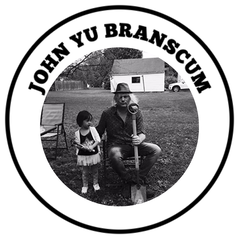 Egregore, writer, and translator John Yu Branscum has published book-length work with Sarabande Books, Argus House Press, and Empress Wu Books. His short form work has appeared in journals ranging from New England Review and Apex Magazine to Passages North, Samovar, and Cincinnati Review. He is a past recipient of the Ursula Le Guin Award for Imaginative Literature, the Linda Bruckheimer Award for Literature, the Appalachia/Affrilachia Award for Poetry, and the Gabo Award for Translation and Multilingual Literature (as a finalist). He enjoys family rave night, durian fruit, lucid dream vacations, and roaming around his neighborhood in a werewolf costume during full moons. Currently, he is in the middle of a long-term performance art project that involves working as an English professor. ZHIGUAI: CHINESE TRUE TALES OF THE PARANORMAL AND GLITCHES IN THE MATRIX: 1 In this collection, award-winning writers and translators Yi Izzy Yu and John Yu Branscum share paranormal and glitch in the matrix tales from across present-day China. Confided by eyewitnesses, these true stories uncannily echo Western encounters with chilling dimensions of reality and supernatural entities. At the same time, they thrillingly immerse the reader in everyday Chinese life and occult beliefs. Zhiguai: Chinese True Tales of the Paranormal and Glitches in the Matrix includes such accounts as: *The reincarnation of a teenager whose fate eerily mimics his predecessor’s *A girl who dies in the womb but nevertheless continues to communicate with her twin *Terrifying shifts into demonic parallel universes *Walls desperately painted with blood to save a family from tragedy *Huge populations that disappear into thin air *The revenge-seeking ghosts of murdered cats *Weird temporal shifts *Occult murders From the terrifying to the uncanny, this collection will not only change your understanding of China but of reality itself. TODAY ON THE GINGER NUTS OF HORROR WEBSITE[BOOK REVIEW] VIOLENT VIXENS: AN HOMAGE TO GRINDHOUSE HORROR, EDITED BY ARIC SUNDQUIST[BOOK REVIEW] PATHS BEST LEFT UNTRODDEN BY KEV HARRISON the heart and soul of horror features
Werewolves on the Run: Nosetouch Press Releases Norm, the Finale to the Wolfshadow TrilogyNosetouch Press announces the third and final volume of the Wolfshadow Trilogy in the horror-thriller, Norm. “Norm picks up where The Happening left off, only eight years later,” said D. T. Neal, author of the series. “I wanted to get back to this story and wrap things up for the characters. With the pandemic and lockdown going on, the time felt right to get this story out there.” “It’s been ten years since the first of the series, Saamaanthaa, came out, and we’re excited to see where Norm takes us,” said Christine Scott, creative director and co-publisher of Nosetouch Press. “Since Saamaanthaa was the first book we published at Nosetouch back in 2011, we’re looking forward to revisiting that world again.” “I am a big fan of werewolves,” Neal said. “They’re inherently fun to write about, even though they’re always messy, both in terms of how they behave and also in terms of trying to keep them alive in a story. Not easy. I’d like to think that Norm will bring readers of the series satisfying closure on that world and the characters within it.” “The Wolfshadow Trilogy follows several characters over the course of eight years since the start of the series with Saamaanthaa,” said D.T. Neal, author of the series. “The Happening ended on a cliffhanger and I felt an obligation to get to a satisfying conclusion for readers of the series.” “We’re thrilled to be doing new cover designs for the books,” said Christine Scott, creative director and co-publisher of Nosetouch Press. “I’m confident that readers will understand and appreciate the werewolves in this trilogy. There are a lot of new characters, as well as ones from the first two books. And the new designs really bring out the werewolf aspect of the fiction.”  It’s been eight years since Zooey’s lycanthropic insurrection—known as the Happening—broke out across the country. Werewolves are everywhere and nowhere at once, ignored and disregarded by the media and officially denied by the government. Norm Stockwell, an elite, paranormal counterinsurgency agent, is desperate to reclaim his former life in the face of the ongoing lycanthropic epidemic. Working with members of the secret society of the Synowie Srebra, Norm hunts down the ever-elusive Ansel Rupino in an effort to put an end to the Happening once and for all. All that stands in his way are highly organized pack-gangs of Lupines who prowl the bloody streets of Chicago by the light of the moon, in their relentless, instinctive search for prey. The Wolfshadow Trilogy by D.T. Neal features three werewolf novels, SAAMAANTHAA, THE HAPPENING, and NORM. Starting with a fateful interaction with the werewolf, Ansel Rupino, the title character of SAAMAANTHAA becomes infected with lycanthropy, which she eventually sees as a means of unique artistic expression. This view causes chaos, bloodshed, and death in her life, particularly among her closest friends. It also leads to the infection of Zooey Hummel, who gleefully starts a lycanthropic insurrection in THE HAPPENING. Her infectious revolution tears through both Chicago and the country at large, eventually reaching a climax in NORM, where vicious lycanthropic factions secretly vie for power and influence in a world ravaged by the Lupine epidemic, and Ansel fights for redemption for all the trouble he’s caused, while the title character seeks to end the lycanthropic epidemic for good. The Wolfshadow Trilogy runs wildly in a world of darkly comic horror, scathing social commentary, pop-cultural references, and horror-thriller territory that will dazzle both casual readers and thrill fans of werewolf fiction everywhere.  Nosetouch Press is an independent book publisher tandemly based in Chicago and Pittsburgh, with a commitment to bringing classical book design and excellent fiction to readers everywhere. the heart and soul of horror features
Demonic is the first feature film from renowned genre director Neill Blomkamp since 2015’s Chappie. Acclaimed director and writer Blomkamp exploded onto the film world with District 9 in 2009, which was produced by Peter Jackson and nominated for four Academy Awards™ including Best Picture. Between those two releases came 2013’s hit science fiction epic Elysium starring Matt Damon. Demonic is a supernatural possession horror which follows a young woman who unleashes a terrifying demon as she enters the mind of her comatose, serial killer mother. The much anticipated new feature stars Carly Pope (Elysium), Chris William Martin (The Vampire Diaries), Nathalie Boltt (District 9) and Michael J. Rogers (Beyond the Black Rainbow). Signature Entertainment’s Demonic opens FrightFest 26th August and is at UK Cinemas, Premium Digital 27th August and Blu-ray & DVD 25th October INTERVIEW WITH NEILL BLOMKAMPDemonic is an innovative mix of supernatural horror and science fiction. What was the inspiration for that? It was really a combination of things. When the pandemic occurred and my other projects were put on hold, I wanted to do something we could control and just go out and shoot. References for that were films like The Blair Witch Project and Paranormal Activity, so I decided to do something in the horror realm. I also had this idea of using a new technology called volumetric capture, which lent itself more to science fiction. So it became a case of how do you create a story with those elements. Some of your best-known films, including District 9, Elysium and Chappie, have had a science fiction component. What is it that draws you to that genre? I’m not trying to make something overtly science fiction, I’m just following ideas that interest me. The concept of the brain as a computational device for external senses, and the idea that those inputs can come from your body but could also be connected to other sources, was something I found fascinating. On the horror side, did you do research into traditions regarding demons or did you invent the film’s mythology? It’s a combination of both. I did read a lot about the beliefs in different cultures having to do with demons, which was pretty fascinating. But the one in our film is synthetic. Carly Pope, who plays Carly, is in virtually every scene and it’s through her eyes that we experience the film’s varied realms: simulations, nightmares, hallucinations and supernatural events. How did you cast her and what qualities did she bring to the role?  I think Carly Pope is really likeable, and if you have an actor who’s likeable, the audience will go on a journey with her. Plus I had cast her in a bunch of projects for my company, Oats Studios, and she also had a small role in Elysium and I’ve always enjoyed working with her. When I was writing the script I pictured someone similar to Carly and I could see her executing it well. She turned out to be awesome. The simulation scenes are stunning and also quite unnerving. Can you explain how they were created? We used an extremely new technology called volumetric capture, which I don’t believe has been used in a film to this extent before. It’s basically three-dimensional video, where you’re turning your actors into geometry. You need about 260 cameras arranged in some sort of grid or dome that can see the actors from all points of view. So the actors are in a controlled environment with all these cameras, and then the background is added in later? Yes, it’s all these independent elements. On our stage where we had our 260-camera volumetric setup, the only thing we were gathering was the actors. They were in a very difficult nonconducive-to-acting environment where there was scaffolding and cameras everywhere they looked. And the only elements we got out of those sessions were the actors in that volume. Then separately we photographed the environments they would be put into, which are turned into 3D objects. And then you drop your actor captures into those 3D environments. Once they’re combined, you can set up the shot exactly as you want to see it in the movie and film that with your virtual digital camera. Probably one of the scariest scenes in the film is when Sam (Kandyse McClure) drops by Carly’s house in the middle of the night and says she’s going to show Carly a trick she can do. How was that sequence achieved? Was it CGI? What’s interesting about the scene with Sam is that there were absolutely no visual effects whatsoever. It’s all down to one amazing performer. His name is Troy James and he’s just highly flexible. So that whole sequence was just him doing what he does, and we just filmed it normally, and it was amazing. What kind of conversations did you have with your DP, Byron Kopman, about the look of the film? I hate how in a lot of horror films the dark environments feel overly lit and synthetic. So the main discussion with Byron was about how much light we could not have in there, in order for it to feel real. For instance, we have scenes that are illuminated only by car headlights or flashlights the actors are holding — none of this giant moonlight with smoke going through the air. The idea was that it would be more believable and hopefully create more of a sense of fear in the audience. Where and when was Demonic filmed? We shot the film in the early summer of 2020 in British Columbia in an area called the Okanagan. We did volumetric capture in July and it took another eight months to put the simulation scenes together. Composer Ola Strandh is probably best known for his acclaimed music for the video game TomClancy’s The Division. Why did you select him to write the score for Demonic? Music is a huge wealth of inspiration for me; I’m listening to music pretty much all the time. So whenever I come across new artists I really like, I make a note of them. I had heard Ola’s videogame scores and thought they were really amazing. They didn’t automatically make me think of a horror film, I just liked what he was doing with a lot of the electronic sounds. So I contacted him to see if he was interested. It ended up being an awesome collaboration. I love the score and think he did a fantastic job.  THE HEART AND SOUL OF HORROR FEATURES We are living in a golden age of horror on TV. Shows like ‘The Walking Dead’, ‘Supernatural’ and ‘American Horror Story’ have effectively taken the genre mainstream, offering weekly doses of gore and mayhem to the masses. Go back a decade or two however, and genre fans had far fewer options to choose from. Anthology shows, like ‘Tales From the Crypt’, ‘Monsters’ or ‘Tales From the Darkside’ were king during the horror heyday of the 1980s, providing cheesy and cheerful tongue in cheek horror in half hour bites. It wasn’t until 2005 that the TV horror anthology show got serious, and delivered arguably the most consistent, memorable and scary anthology show to date. The brainchild of horror legend Mick Garris, the show’s title is no hyperbole. ‘Masters of Horror’ brought together the best horror talent Hollywood (and beyond) had to offer. Episodes directed by undisputed genre luminaries such as John Carpenter, Tobe Hooper, Dario Argento and Stuart Gordon were like hour long movies brought to your TV screen. High production values, A-List talent and a free reign to do whatever they pleased resulted in some truly unforgettable work from a group of horror legends let off their leash. These are stories that have stayed with me in the fifteen years since many initially aired and, in this series, I’ll be revisiting all twenty-six episodes, one at a time, to shine a light on a fondly remembered and undeniably influential moment in horror TV history. Join me as I take a look back at; Dream Cruise Directed by: Norio Tsuruta Starring: Daniel Gillies, Ryo Ishibashi, Miho Ninagawa, Ethan Amis Original Air Date: 2 February 2007 Synopsis: A young lawyer suffering crippling nightmares linked to a trauma in his childhood boards a rich clients ship to spend time with the man’s wife, with whom he is having an ill-advised affair. Revisiting the Masters of HorroR: Dream Cruise |

![[COVER REVEAL] WITH THE RELEASE OF NORM, NOSETOUCH PRESS SERVES UP A TERRIFYING FINALE TO THE WOLFSHADOW TRILOGY](../../uploads/3/4/5/1/34519054/cover-reveal-with-the-release-of-norm-nosetouch-press-serves-up-a-terrifying-finale-to-the-wolfshadow-trilogy_orig.jpg)



 | Coming this summer, feast your eyes on Zombie Date Night, a 32-page comic book that tells the story of: |
Last year we interviewed Steve Urena about his amazing comic book creation Slow Pokes, a brilliantly funny and violent comic about killer psychotic Sloths. Yeas you read that right. Today we are excited to brig you news of Steve's latest project which if Slow Pokes is anything to go by will be a must read for horror fans.
Zombie Date Night: A Zombie Romance Horror Comedy
What makes a first date even more awkward? Zombies of course!
What makes a first date even more awkward? Zombies of course!

From the messed-up brain of Steve Urena, the guy who brought you fast killer sloths, (Slow Pokes) comes a romance horror-comedy that is full of zombies, romance and even a grandmother fighting a horde with a chancleta.
Drawn by Sergi Domènech, colored by Joe Jensen and edited by Allegra Calderaro, this unforgettable reimagining of the zombie genre is a hilarious action-packed thrill ride that will sink its teeth into you while leaving you on the edge of your seat.
“I want to give my take on a zombie story while doing something a little different than what people are used to”, says Urena.
“We’ve all been on awkward first dates. But what if you were trying to put your best foot forward and a zombie outbreak happened? What would you do? Zombie Date Night helps me answer that question in the craziest and most fun way possible.”
If you like Zombies, over-the-top-violence, and a love story for the current age then…
SWIPE RIGHT FOR ZOMBIE DATE NIGHT!
Click the link and pre-order now!
https://www.kickstarter.com/projects/steveurena/zombie-date-night-a-zombie-romance-horror-comedy
Follow us on this crazy comic journey on Instagram and Twitter for more updates and bonus content!
@TheSteveUrena
@ZombieDatenight
@Sergi_Domenech_comic
Or you can email us at Zombiedatenight@gmail.com
https://www.kickstarter.com/projects/steveurena/zombie-date-night-a-zombie-romance-horror-comedy
Follow us on this crazy comic journey on Instagram and Twitter for more updates and bonus content!
@TheSteveUrena
@ZombieDatenight
@Sergi_Domenech_comic
Or you can email us at Zombiedatenight@gmail.com
the heart and soul of horror features


Archives
April 2023
March 2023
February 2023
January 2023
December 2022
November 2022
October 2022
September 2022
August 2022
July 2022
June 2022
May 2022
April 2022
March 2022
February 2022
January 2022
December 2021
November 2021
October 2021
September 2021
August 2021
July 2021
June 2021
May 2021
April 2021
March 2021
February 2021
January 2021
December 2020
November 2020
October 2020
September 2020
August 2020
July 2020
June 2020
May 2020
April 2020
March 2020
February 2020
January 2020
December 2019
November 2019
October 2019
September 2019
August 2019
July 2019
June 2019
May 2019
April 2019
March 2019
February 2019
January 2019
December 2018
November 2018
October 2018
September 2018
August 2018
July 2018
June 2018
May 2018
April 2018
March 2018
February 2018
January 2018
December 2017
November 2017
October 2017
September 2017
August 2017
June 2017
May 2017
April 2017
March 2017
February 2017
January 2017
December 2016
November 2016
October 2016
September 2016
August 2016
July 2016
June 2016
May 2016
April 2016
March 2016
February 2016
January 2016
December 2015
November 2015
October 2015
September 2015
August 2015
July 2015
June 2015
May 2015
April 2015
March 2015
February 2015
January 2015
December 2014
November 2014
October 2014
September 2014
August 2014
July 2014
June 2014
May 2014
April 2014
March 2014
February 2014
January 2014
December 2013
October 2013
September 2013
August 2013
 RSS Feed

|

|