

The book that’s been 8 million downloads in the making. The inaugural, limited edition, “Best of” collection from the twisted minds behind The Other Stories podcast. Since 2016, The Other Stories podcast has released weekly horror/sci-fi/WTF fiction every Monday to people’s podcast feeds. In the span of 5 years, the podcast has accrued over 8 million downloads. To celebrate this milestone, Hawk & Cleaver—the team behind the podcast—are releasing the definitive “Best of” anthology in hardback, paperback, and ebook formats worldwide. Pre-orders for a limited edition, signed hardback (only 100 available) will be available from 1st July, with the public release of the paperbacks and ebooks going live on August 1st. “We’re beyond excited to bring our infamous brand of world-class horror to our avid listeners in this sleek new collection. After almost six years of working together on The Other Stories podcast, what better way to showcase the stories that have taken the podcast world by storm?” —Daniel Willcocks Bio Hawk & Cleaver is the independent story studio behind the hit podcast, The Other Stories. Originally a humble podcast driven by four writers, the studio has since grown to dozens of writers, narrators, and producers worldwide who work tirelessly to bring audiences the greatest horror/sci-fi/WTF fiction on this side of the apocalypse. 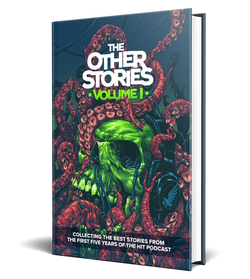 The Other Stories Best-Of Collection features 30 of the show’s best stories, featuring gristly horror, mind-bending sci-fi, and thrilling gut-rippers with a foreword by modern horror extra-author-naire, Michael David Wilson. With honest intentions, on April 4th 2016, a humble gathering of writers decided to put out a weekly short story podcast featuring the best horror, sci-fi, and thriller stories this side of the apocalypse. Within the space of four short years, the show went on to amass 5-million downloads, build up a multinational creative team, and recently sold the film/TV option, and continues to feast on the ears of many thousands of listeners each and every week. The writers didn’t plan on the show growing into the beast that it is today, but like all good beasts it was born by accidence and is now hell-bent on consuming the world. Not content with just the ears, now the beast wants your eyes. Please, if you’re reading this, the writers are very sorry. Try not to let your eyeballs get sucked into the pages. That’s what it wants. Website: www.theotherstories.net FEATURING STORIES BY Joanne Askew Richard Beauchamp Matthew C. Butcher Andy Conduit-Turner John Crinan Jon Cronshaw Josh Curran Ben Errington Elana Gomel Ali Habashi Kev Harrison Dan Howarth A.L. King Luke Kondor Grant Longstaff Ellis Marsh J.T. Shields Matthew Stott Daniel Willcocks Michael David Wilson AND ARTWORK BY Pye Parr Luke Spooner Review copies available To request additional review copies or an interview with any of The Other Stories creators, please contact the Hawk & Cleaver team at keztheeditor@gmail.com #bestoftos #theotherstories #theotherstoriespodcast 
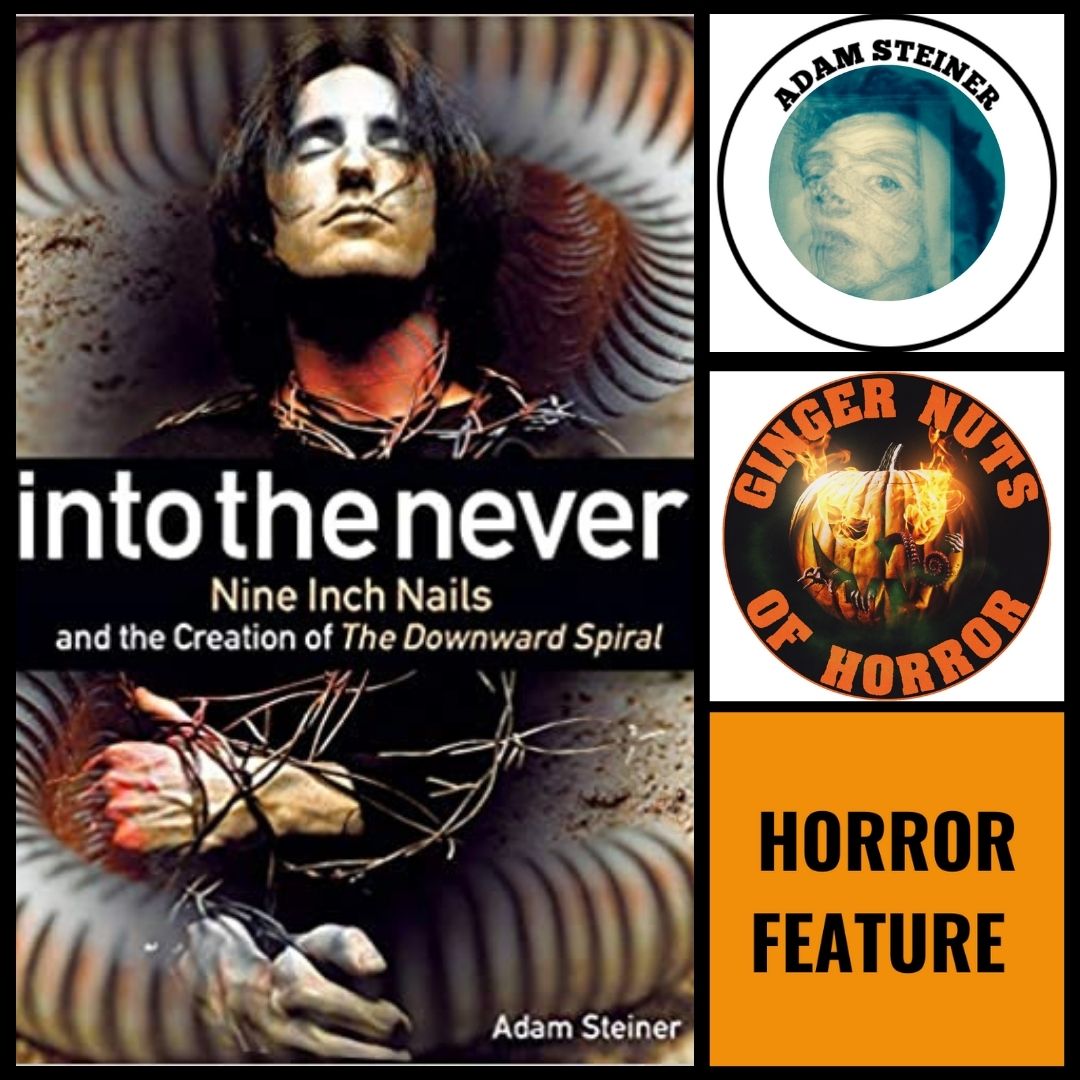
the REAL HORRORSHOW: INFLUENCE OF SNUFF/SCHLOCK/HORROR ON THE MUSIC OF TRENT REZNOR BY ADAM STEINERWhen filming the video for Down In It a camera attached to a weather balloon suddenly slipped its moorings and drifted hundreds of miles away from Chicago to a cornfield in Michigan. A local farmer reported the find to the local police. After seeing the footage FBI investigators were called in to begin a manhunt for a murderer, and launched an appeal to find the body of the victim dressed all in black, from his leather jacket to the combat boots on his feet. This “lost scene” from the music video for the first single from 1989’s Pretty Hate Machine shows a young Trent Reznor lying face down in the dirt, like a corpse, playing dead for the camera. The subsequent media storm and poster campaign appealing for witnesses became a classic example of (accidental) guerilla marketing. This was Nine Inch Nails’ first brush with the world of ‘found’ footage, beginning a long strand of movie-world influences that runs through the DNA of Trent Reznor’s various musical projects. Running across visual and sonic aesthetics of Reznor’s multi-million-selling one-man band; to his career as renaissance soundtrack artist alongside close collaborator Atticus Ross. The duo has now won two OST Oscars, for The Social Network in 2011 and ten years later, almost inexplicably, for a Disney Pixar movie about life, loss and the afterlife, Soul. Since Pretty Hate Machine’s first use of samples Reznor has applied sound design techniques across his music. For The Downward Spiral Reznor referred to himself as a “director”, charging his collaborator Chris Vrenna to scour through hundreds of rented laserdisc movies. The band were recording in a home studio at 10050 Cielo Drive, the site of the notorious Manson murders of 1969, which included the death of Roman Polanski’s pregnant wife, actor Sharon Tate. Channeling the bleak spirit of the house where the dream of Californian sunshine got turned upside down, the stark and relentless atmosphere of The Downward Spiral album was built upon numerous sci-fi and horror films, Robot Jox, Leviathan, and most notably the savage dystopia of George Lucas’ first feature, THX1138. Reznor took the sound of a prisoner being mercilessly beaten from the film to establish the tone of album opener Mr Self-Destruct. Vrenna noted that removing sound from the prescriptive context of its image could sharpen its impact in new and unexpected ways: “You find great little ambiences. Movies are just trying to recreate some sort of space, whether it be outer-space or a creepy hallway, they’re recreating that falsely on film. You just listen to them; they don’t sound like anything.” The process turned into a full foley project; for Vrenna and Reznor a drum sound became a car door slamming, or a swarm of insects merging into a wild haze of densely-layered guitars. Elsewhere on The Downward Spiral we hear voices of blurring pain and ecstasy crying out in the background of “The Becoming”, halfway between an orgy and massacre it becomes the expression of overkill, of things having reached their limit and somehow slipping over the edge. We hear a looped and layered sample from a terrified crowd in the movie Robot Jox as a giant mecha-war robot falls onto a stand of spectators, cruchshing, killing and maiming as other scatter to escape. While the original film clip can seem slightly comical now Reznor conjures up a roiling pit of hell from vintage 80’s sci-fi, amplifying the explosion fear and suffering which feeds the toxic shock of shredded guitar and screaming in the chorus of The Becoming. Raised on many of the established horror films of his teenage years Reznor was in 1994 what kind of movies he might rent: “Normally, real depressing, sad, violent kind of movies, you know?” His list ran: “from The Exorcist and through all the Freddy and Jason shockers” long-running franchises which would come to define classic horror cinema with new sequels running beyond the decade. Reznor’s passion for horror films, and his taste for BDSM power relationships, particularly as the masochist ‘victim’ or submissive object, would feed into his musical expressions of aggression, violence and control, exploiting the dynamics of horror, schlock and snuff movie genres. Reznor’s self-awareness of his own aesthetic tastes, and their extremities, put him in the mindset of an audience hungry for darker material. On 1995’s MTV Superock show Reznor was asked what film he would like to re-score: “probably the first two Hellraiser films”. Some years earlier it was his friend/collaborator/inspirations, Peter “Sleazy” Christopherson and John Balance of the band Coil, who produced original music for Hellraiser, only for it to be rejected as too frightening – in spite of the film’s rich body horror content. Reznor also expressed an interest in soundtracking a David Cronenberg film, such as Scanners, Dead Ringers or Crash, all of which reflected Reznor’s use of body-horror; particularly a fixation on abject horror of fluids spilt or ejected from the body, along with psycho-sexual perversity and mutilation aesthetics, in both his music and videos. Reznor would later complete one aspect of this ambition by producing a cover version of the theme music from John Carpenter’s Halloween. The nod to Hellraiser is interesting, skipping its more obvious ‘goth’ overtones, the presence of black leather, chains, pleasure/pain S&M behaviours make the Hellraiser films fit hand-in-glove with Nine Inch Nails' early-90s imagery and musical themes. In the liner notes of Pretty Hate Machine Reznor credited author Clive Barker: “for sounds and ideas [with all due respect]” suggesting a deeper connection beyond surface sounds. Barker told S&M magazine Skin Two he used the film adaptation of Hellraiser to advance the idea of consensual S&M practices: “these are images of liberation, not of repression”. Speaking to the Guardian many years later, Barker explained his “emotional inspiration” came from his time as hustler in 1970s New York, delving into the straight-edge underworld of S&M club, Cellblock 28. With Hellraiser, he said: “I was validating a lifestyle. It was a celebration of the beauty of these strange secret rituals.” All of this would speak to Reznor’s continued interest in the power dynamics of control as consensual, sometimes grotesque, violence against the sanctity of the body, aligning with the idea of BDSM acts as the performance of freedom and choice, what Michel Foucault called “the eroticization of power”. Reznor’s film interests are present in a series of music videos as boundary-testing art-films that were combined into the ‘Broken Movie’. The film uses the framework of a kidnapped torture victim forced to watch a compilation of Nine Inch Nails music videos to create a looping meta-narrative, with one track “Help Me I Am In Hell” a nod to Hellraiser. The Broken Movie is extremely graphic, directed by Peter “Sleazy” Christopherson of Throbbing Gristle-fame, who based it upon the docu-film Henry: Portrait of a Serial Killer. The first-person hand-held camera perspective and rough-cut snuff intimacy of the film establishes the audience as equal parts voyeur, victim and spectator. It is perhaps not without some pride that Reznor described the film as: “The most horrific thing you’ll ever see. I said ‘Let’s just take it as far as we think is right. Forget that it’s a music video, forget standards and censorship. Fortunately, or unfortunately, depending how you look at it, it’s unplayable.” The music video for “Happiness In Slavery, stars masochist performance artist Bob Flanagan who suffered from cystic fibrosis, and put himself through extreme physical situations as if to project the unseen physical suffering of his condition to the audience. R In the film Flanagan’s body is vivisected by machines, literally taken apart, he sacrifices flesh and survival for pleasure as a kind of spiritual exorcism. In this video he acted as the figurehead of Reznor’s belief in making the pleasure principle an act of sacred self-expression. The Broken Movie was never properly screened on television and in the pre-internet age became an underground phenomenon with Reznor handing out tapes to a close circle of friends after which pirate copies were inevitably passed around. Speaking to Rolling Stone about the early-90s censorship of explicit imagery, Reznor said: ”I think the back room could represent anything that an individual might consider taboo yet intriguing, anything we're conditioned to abhor. Why do you watch horror films? Why do you look at an accident when you drive past, secretly hoping that you see some gore? I shamefully admit it – I do." Reznor has stated that his music cannibalized America’s obsession with its own culture of violence, and the hypocrisy within that, in part driven and hyped-up by the media: “If that didn’t exist, we [Nine Inch Nails] probably wouldn’t exist”. Reznor told Kerrang in 1994: “Natural Born Killers is an almost surreal kinda film that really starts to attack the American media for its glamorization of crime, and the way news is becoming entertainment.” Blurring the lines between snuff voyeurism: film as a record of genuine acts of murder, torture or suicide, sometimes framed within a documentary framework, begging the question of tension authenticity between reality; fake and creative interpretation, and the explitative self-awareness of the schlock film’s cheap and nasty production. Though the shock of “Henry…” is immediate, the murky truth of its reality, where many of the murderer’s confessions were never proven, sucks away at its hold on the viewer. The now iconic music video of Closer certainly aspires to the music promo as art, accomplished in edgy but painterly scenes. Rolling Stone observed: “Closer is a grainy meditation on the great fetish photography of Joel-Peter Witkin, shot partially on supersaturated 1920s film stock, overlaid with the scratchy patina of early surrealist shorts and shot through with indelible images: crucified monkeys; sneering industrialists straight out of a German expressionist print; siblings with their hair braided together.” The film’s aesthetic would be echoed in the presentation of Se7en, rough cut and jagged edges; the look of decay carried over into the vintage film stock used in shooting. This was horror with added nous and subtlety. Dusty gothic Victoriana, man-and-machine, compressed into an ageless self-contained space, existing outside of time. Reznor compared the relative slickness of Closer to his earlier ‘unwatchable’ videos: “I think it's more challenging to work with something that's more accessible yet is interesting, different, subversive.” From the planning stage, Romanek had been nervous of going too far and for MTV to reject the video outright, such was the network’s power, to re-shoot and make changes would take 3 weeks, and cost around $10,000 in production costs. Some shots of “naked pussy” and medical illustrations of genitalia were inevitably cut, Reznor perhaps overplaying his hand from the start so he could fall back to protect the rest of the video. He chose to self-censor swapping contentious graphic material for ironic ‘scene missing’ cards. Carol Siegel noted that Reznor is often the more passive, masochist ‘victim’ in his videos, less the sadistic dominator, in keeping with the lyrics of The Becoming, he is a being designed to absorb pain, this ‘defect’ becomes his hidden strength. In Closer Reznor is strapped to a chair wearing a ball-gag surrounded by S&M ‘tools’, then bound shirtless by the wrists wearing a blind visor, inspired by a Man Ray photograph, a Saint Sebastian flesh-cushion waiting to be stuck-full with arrows that never come, penetration threatened, but delayed. Although the lyrics would suggest that Reznor/the song’s narrator is the threatening partner, the video itself throws-off this paradigm of absolute control, instead embracing the power-play of role swapping he takes back control in choosing to be a submissive victim, although the song’s lyrics suggest otherwise. Reznor’s most extreme experiment of the Broken film pushed boundaries of graphic music video, and in his music both the lyrical content and the sound design merged body horror, the fear of the abject; spilling your guts, bleeding out, ejaculation, was brought directly to the listeners attention and brought transgressive themes to the heart of middle America. In testing the limitations of his musical audience Reznor inadvertently opened the door for more extreme forms of music that chased the fetishization of sex and violence; edging in and out of parody. Elsewhere the horror film industry shifted on its own axis, with the next generation of violent shockers focussing less on scares and screams than with forms of torture, from (self)mutilation and brutal psychological punishment. In Reznor’s earliest music videos we often see people in various forms of bondage, and within that, caged, trapped, or boxed-in a room, all these forms of enclosure kick-off the prisoner dynamic. The body horror of The Downward Spiral’s mental collapse and the physical transformations wrought between man-machine evolution and self-harm would spill over into what became pejoratively termed “torture porn”. The next generation of horror franchises, Hostel, Human Centipede, and the ongoing Saw series (all scored by ex-NIN keyboard player Charlie Clouser) would focus upon the disfigurement and abuse of victims, not just plain old murder. The more sadistic the action; the more entertaining for audiences, shocks were delivered in inevitable disgust not surprise. More recently this has evolved into the revenge-porn genre with a number of female-led films where a protagonist experiences the worst kinds of sexual abuse and after being left for dead returns to reclaim some of their lost control through taking revenge on whoever has wronged them. Again the genre is turned on its head, though the damage has already been done to the victim, they at least seem to redress the balance. Although in this process, muc like the vigilante justice of Marvel’s The Punisher, the act of revenge often causes the victim to become more like very people that they wish to destroy. On The Downward Spiral Reznor’s narrator is splintered by internal division, he dances with addiction, lost faith in God, extreme rough sex, abuse and self abuse, where the voices inside your head have become a deafening scream, his nightmare is the echo chamber of his greatest fears, as in fight Club, trying to overcome his inner nemesis he has become his own worst enemy. Adam Steiner Adam Steiner is the author of Into The Never: Nine Inch Nails and The Creation Of The Downward Spiral – the book explores the making-of the album and how Trent Reznor brought transgressive themes of mental health, suicide, and body horror to the mainstream. https://adamsteiner.uk/nine-inch-nails-into-the-never/ https://twitter.com/burndtoutward https://www.instagram.com/adamsteinerauthor/ Into The Never: Nine Inch Nails And The Creation Of The Downward Spiral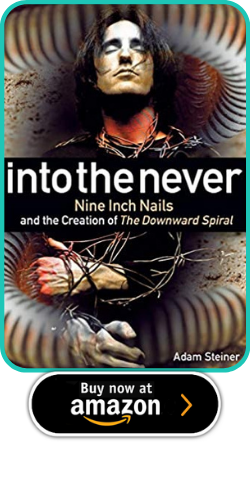 Ushering in a new era of confessional music that spoke openly about experiences of trauma, depression, and self-loathing, Nine Inch Nails' seminal album, The Downward Spiral, changed popular music forever bringing transgressive themes of heresy, S and M, and body horror to the masses and taking music technology to its limits. Released in 1994, the album resonated across a generation, combining elements of metal, industrial, synth-pop, and ambient electronica, and going on to sell over four million copies. Now, Into the Never explores the creation and cultural impact of The Downward Spiral, one of the most influential and artistically significant albums of the twentieth century, or ever. Inspired by David Bowie s Low and Pink Floyd's The Wall, the album recounts one man's disintegration as he descends into nihilism and nothingness. Blurring the lines between autobiography and concept album, creation and decay, it is also the story of Trent Reznor (the man who is Nine Inch Nails) as he pushed himself to the edge of the abyss, trapped in a cycle of addiction and self-destruction. The Downward Spiral also presents a reflection of America and a wider culture of violence, connecting the Columbine High School shooting, the infamous Manson family murders, and the aftermath of Vietnam and the Gulf War. TODAY ON THE GINGER NUTS OF HORROR WEBSITEENCYCLOPEDIA SHARKSPLOITANICA BY SUSAN SNYDER (BOOK REVIEW) the heart and soul of horror features
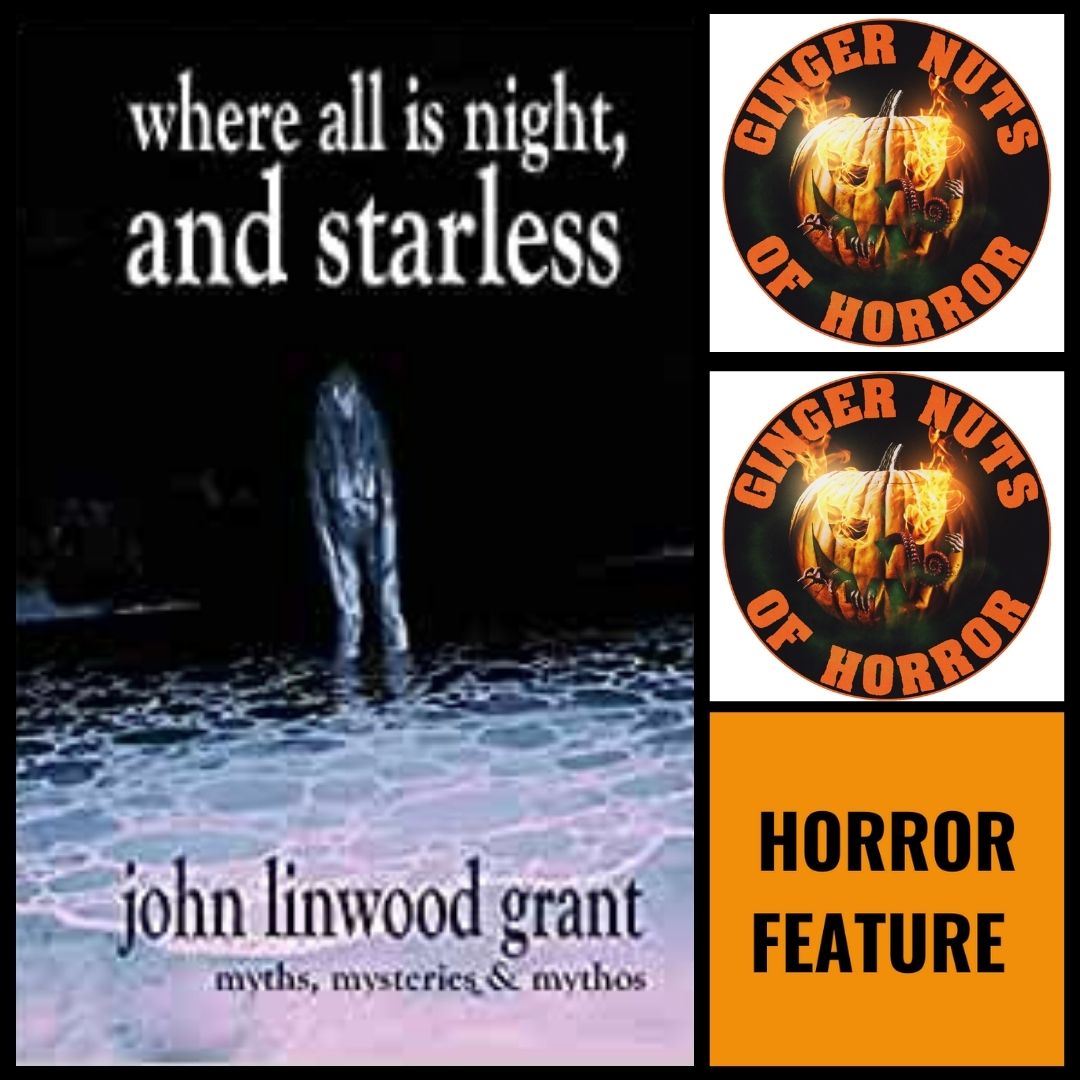
WHERE ALL IS NIGHT, AND STARLESS Trepidatio Publishing 286pp PB and e-format 9th July 2021 Where All is Night, and Starless gathers seventeen unsettling stories of our fears and weaknesses, and of our often unreliable strengths: stories of monstrosity and the occasional hope, deliberately themed across three aspects of weird fiction. The section ‘On Mythos’ covers re-interpretations and subversions of themes from H P Lovecraft’s Mythos; ‘On Mysteries’ looks into strange transformations, and ‘On Myth’ delves into the realms of folklore and folk horror, each with a dark twist. From the churning hell of World War One to the quiet English suburbs, from contemporary Alaska to colonial Africa, these are weird tales of the decisions we make when faced with something strange, with turns wry, ironic, and dark. Some horrors are found not outside, but in the mirror before us. “A cornucopia of dark delights, this collection is highly imaginative, extremely well written, and a delight to read. Weird fiction at its finest!” – Tim Waggoner, Bram Stoker Award Winner and author of Your Turn to Suffer. “With ‘Where all is Night, and Starless’, Grant has crafted a far-reaching collection, imbued with beautifully deft prose, where dark humour, melancholy and ghoulishness effortlessly share the same space as though in cosmic alignment with the fates. A truly magnificent achievement by an incredibly gifted wordsmith.” – Dave Jeffery, author of A Quiet Apocalypse and Cathedral. 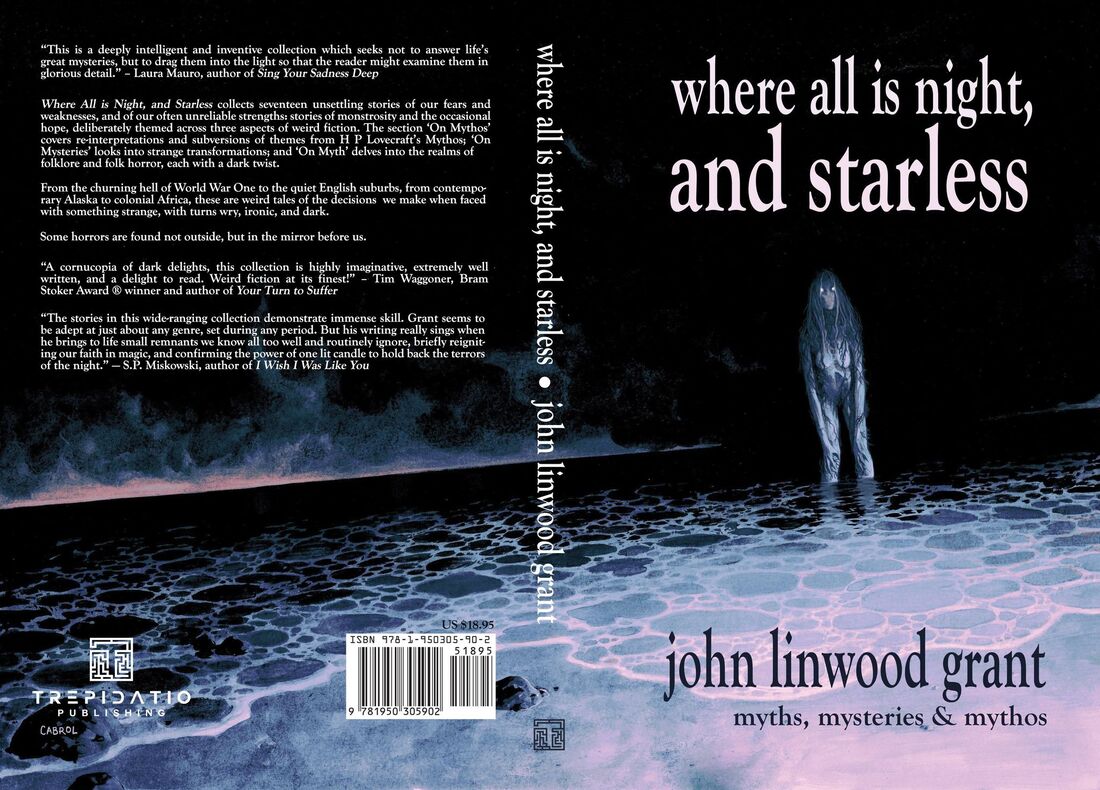 John Linwood Grant is a professional writer/editor from Yorkshire, UK, with some seventy short stories published during the last few years in magazines and several award-winning anthologies, plus a novel, novella and two collections. He writes dark contemporary fiction and period supernatural tales. He is also the editor of Occult Detective Magazine and various anthologies, and can be found on FB and at his eclectic website http://greydogtales.com/blog/ TODAY ON THE GINGER NUTS OF HORROR WEBSITETOO NEAR THE DEAD BY HELEN GRANT (BOOK REVIEW) the heart and soul of horror features
  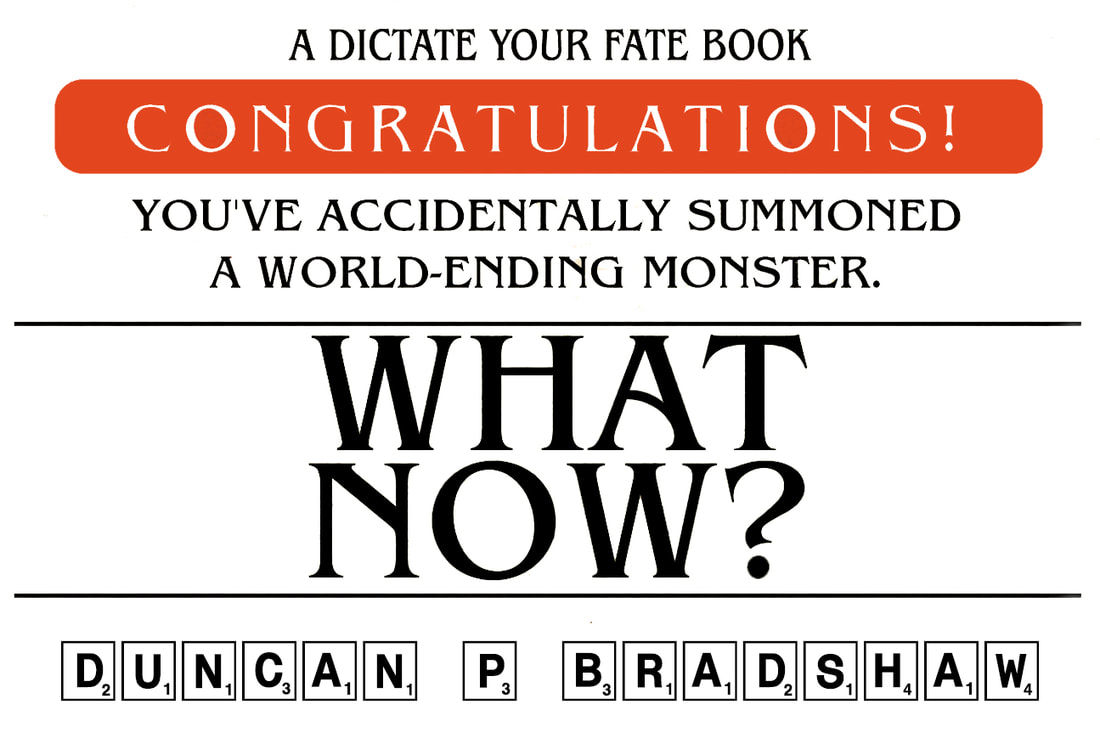 The Sinister Horror Company once again team up with EyeCue Productions and welcome back Duncan P. Bradshaw after his stellar success of Cannibal Nuns from Outer Space, and this time round he’s getting even weirder. Don’t believe us? Well, this time Bradshaw has channelled his creative exuberance into a choose-your-own-adventure style book called Congratulations! You’ve Accidentally Summoned A World-Ending Monster. What Now? The book will be released on 24th September 2021, coinciding with the planned first day of FCON, happening in Birmingham UK. The cover was designed by Matthew Revert, an artist who works regularly with Bradshaw, and who designed his book covers for Mr Sucky, and Don’t Smell the Flowers! They Want to Steal Your Bones! 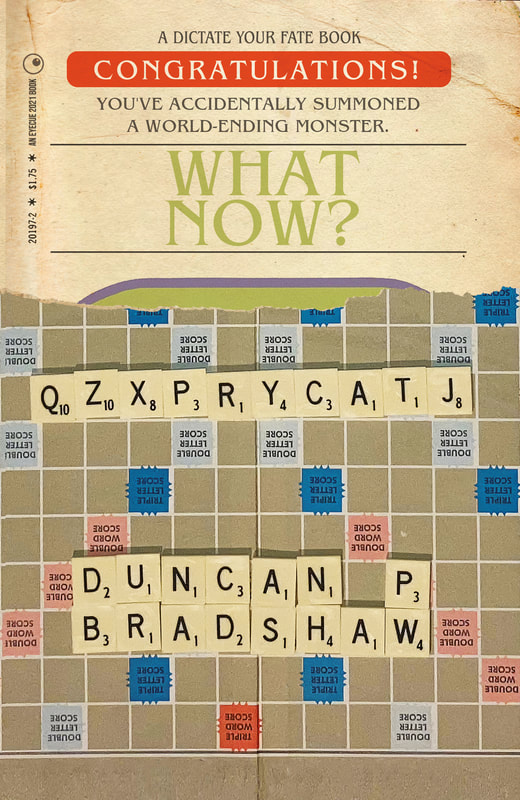 For those not familiar with the author: Duncan P. Bradshaw is home to vast tracts of arable land. Among the many varied animal species that call him home, there are three kinds of Bloatfly which are only found within his frigid hinterland. At night, when the second sun sets, he dreams. Visions of weirdness and horror merge together, plaguing the inhabitants of this land. No rest is possible when these ruinous portents are beamed directly into the brain pods of the residents of this land. Then, one day, Gretchen Inno found that these visions could be captured and translated into the written word, and lo… his books were born, and the populace found peace. Known initially for his books on zombies, Duncan is better known for his GoreCom series of books, which marry this heady blend of bizarro, comedy and horror. This, the fourth book in this series of unconnected books, has been five years in the making. Is it any good? Pick it up and find out! 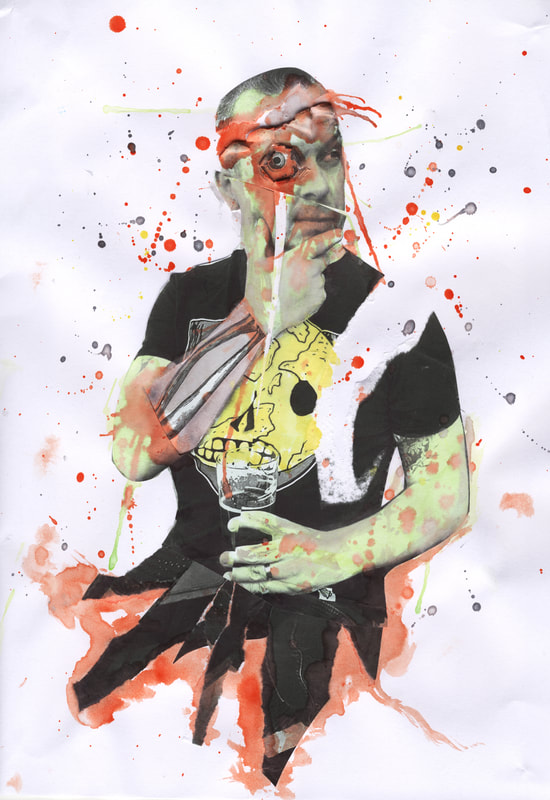 Dunk has this to say about the book: Hey, I get it, you want some information on what this book is about, huh? Here you go: Are you frustrated with your mundane existence? Fed up spending day-after-day drinking hot, milky beverages, endlessly pressing ‘refresh’, and chowing down on copious amounts of biscuits and/or cake? Do you yearn for a world (or even a taste) of excitement and wonder? Then you’re in luck! With this ‘ere book, you’ll be transported to a fantastic world (well, the majestic city of Salisbury), where a rather pissed-off monster (hellbent on devouring everyone on the planet), has been summoned completely out of the blue. On a Wednesday, of all days, AND it’s sunny outside! Hence, instead of enjoying the uncharacteristically wonderful weather, you find yourself armpit-deep in mild-to-moderate peril. Have you pictured that in your brain? Got it? Good. Because the ending is completely up to you. Does humanity stand, or does it fall? Do disasters happen, beyond all mortal comprehension, or do you opt for a more traditional approach? What devilish secrets have I hidden away? Do I have any more tedious and not even terribly inventive questions to ask you? Why yes, yes I do! Are you still reading this? If so, then stop right there at the end of this sentence so you can jump in and find out for yourself, as you get to… dictate your fate. What? Why? How? Just explain yourself! Friday 25th March, 2016. A nondescript day for most, way before global pandemics, murderous vacuum cleaners and hungry alien nuns. I had just started writing a book simply called ‘Summoned’, and at that point in time, it was the silliest thing I had ever written. The idea for the book came about, when I saw this picture posted on Facebook: 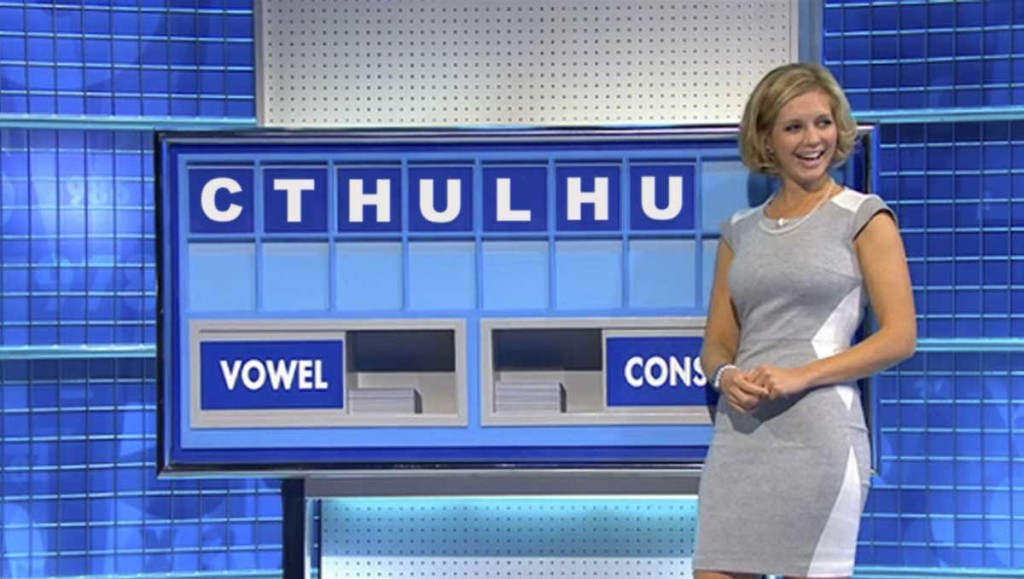 For those who don’t know, this is Rachel Riley from UK show Countdown, where contestants get given random letters and have to come up with words from it. The idea that Cthulhu, or any other world-ending monster, could be summoned accidentally via a gameshow, really appealed to me. I figured that would be a good setup, but instead of a gameshow, I opted to use the medium of a harmless game of Scrabble. With the setup in place, my brain then did its usual and went into overdrive. I love trying to do different things with books and whether that’s the presentation or flipping tropes around, it’s interesting to me to try and do something different. As a kid, I loved the choose-your-own-adventure books and thought it might be fun to do that with this. But… there were a number of bizarro CYOA books already out there (Ocean of Lard for example), and merely copying this format was not something that interested me. So, I decided on a multi-story book, where you choose which path you take, without the granular decisions usually associated with CYOA books. I finished the first draft in August 2016, and sent it off to Garrett Cook to run through it and give me some feedback on what I could do to make it POP. Due to various reasons, that wasn’t forthcoming until late in 2017, but the things he said really helped to shape the final book. One entire chapter, for example, is as a result of Garrett’s input, and a number of other little changes really helped to get it closer to how it would be. But by then, I was writing other things, and Summoned took a back seat for another year or so. I think it was only when I finished Cannibal Nuns that I went back to it, determined to finally finish it up and get it ready for release. By then, I had also found my bloody marvellous editor, Linda Nagle, and she went through the manuscript with her usual vim and vigour. I think getting back those edits, was when I knew I actually had something that might work. The book itself is set in Salisbury, where I was born and lived for nigh on a decade. A number of places are either genuine, or based on reality, but with a twist to make it work better in the book. There’s even an appearance by me in one chapter, as a nameless character. For me, going back through it recently as I put it together, ‘Summoned’ showcases what my writing is about, and I can see the old me and the new me, joined by a bridge which is Linda’s eagle eye and excellent editing. It’s something different to the other books I’ve written, and with ten different endings, and one MASSIVE secret contained within its papery innards, it serves as a good marker of the progress I’ve made as a writer since I started. I hope you enjoy it! Congratulations! You’ve Accidentally Summoned A World-Ending Monster. What Now? will be available on Kindle & Paperback from Amazon and the Sinister Horror Company website from the 24th September 2021. Kindle and physical pre-orders are available right now on Amazon. Head here to snag your copy: smarturl.it/Summoned Dunk’s novel, Cannibal Nuns from Outer Space, is available via the Sinister Horror Company: https://www.sinisterhorrorcompany.com/cannibal-nuns-from-outer-space For any enquiries or further information visit: SinisterHorrorCompany.com  THE HEART AND SOUL OF HORROR FEATURES
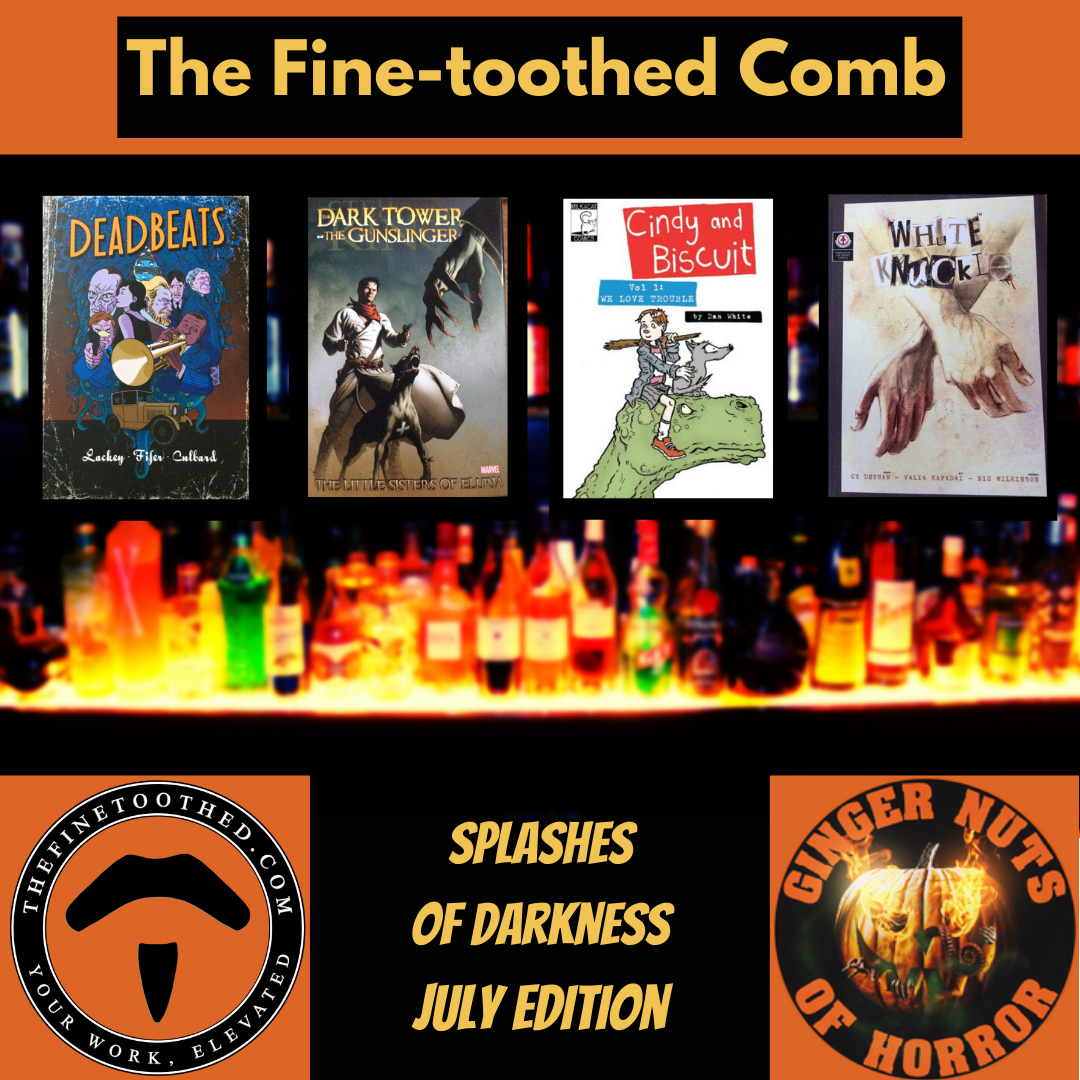
 Comic-books are a medium, not a genre; they can tell any story and suit any palate. You want horror? I've got bottles of the stuff. Welcome to 'Splashes of Darkness.' Everything known, felt, or wondered about by humanity finds its expression in art - interrogated, explored, and flung against the wall of our shared psyche in vivid splashes. The mediums are many and varied, but the purpose is singular: to encapsulate and share the intangible. In Splashes of Darkness, a new weekly column from Dion Winton-Polak [The Fine-toothed Comb], we're taking a look at horror comics in all their shades and glory. Here's a peek at what he's reviewing in July: 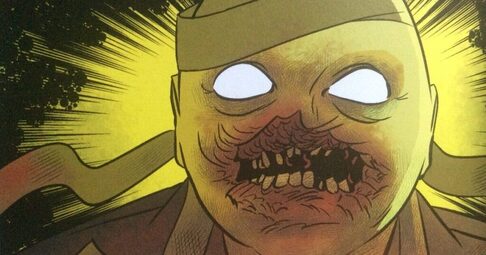 Deadbeats - Lovecraftian shenanigans from Chris Lackey, Chad Fifer, INJ Culbard It's all about the hustle. Keep moving, and you just might stay afloat. Hell, you could even have some fun along the way; that's jazz! When Lester Lane flattens the wrong fella, he has to get out of town in a hurry. He scores a desperate gig for his band - a midnight funeral in the backwoods of Illinois. There's a particular piece the preacher wants them to play, but there's just one problem: he can't read sheet music. Now, caught between an undead sorceror, a troublesome dame, some relentless revenants and an apocalyptic god-monster, it's time for the trio to do some serious improvisation. 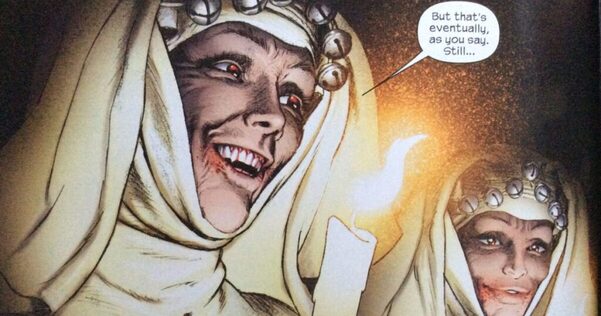 Little Sisters of Eluria - Stephen King novella, lushly adapted by Peter David, Luke Ross, Richard Isanove The world has moved on but Roland, last of the legendary Gunslingers, will not be left behind. Badly shaken but dogged, he rides out from the ashes of Gilead seeking the Dark Tower...and vengeance for his fallen friends. He comes now - on a dying nag - to the festering town of Eluria and a deadly trap. The monstrous nuns encamped there hold him in the balance between life and death. Webbed up and gunless, Roland will need to use all of his wits and his courage to escape the bloody embrace of The Little Sisters and resume his quest. 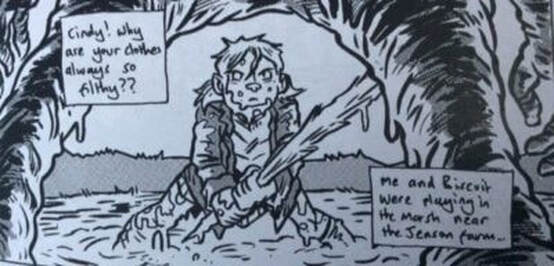 Cindy and Biscuit - Sassy and imaginative fun from Dan White. It's a weird world out there. Most people are so wrapped up in their dull little lives, they don't even notice it. Luckily for us, Cindy is keeping watch - ever vigilant - with her faithful hound by her side and a whacking-great stick to hand. It's not easy being a hero when grown-ups keep hassling you to tidy your room or sit some boring test. Still, if anyone can protect the planet from alien invaders, cryptids, killer robots, haunted dolls and living snowmen, it's this girl. White Knuckle - a dark and desperate character piece by Cy Dethan and Valia Kapadai White Knuckle is a complex psychological thriller, reframing the 'retired gunslinger' motif into a modern tale of violent drives, degeneration and damnation. Forty years ago, the Gripper was a man to be feared - a serial strangler with a string of victims. Now nearly seventy, Seth Rigal lives on the verge of poverty, waiting for the death he knows he deserves. Tortured and confused, he finds himself stalking the daughter of his final victim - only to find himself rescuing her son. The last thing he needs is attention, but when a local reporter gets him in his sights, Seth loses his grip entirely.  If you have any recommendations for comics you'd like Dion to read and review - or perhaps you're a comics creator yourself - why not drop us a line? You can request reviews by following the usual Ginger Nuts Of Horror [submission guidelines here.] We look forward to seeing what you've got! TODAY ON THE GINGER NUTS OF HORROR WEBSITE RICHARD MARTIN REVISITS THE MASTERS OF HORROR: PRO-LIFE, DIRECTED BY: JOHN CARPENTER the heart and soul of horror comic reviews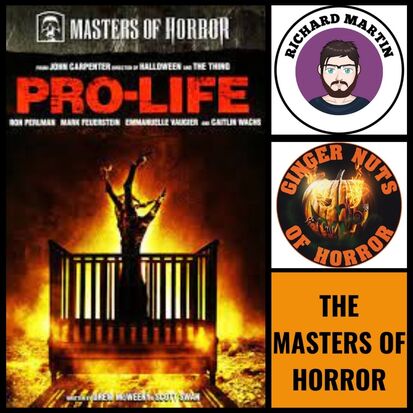 We are living in a golden age of horror on TV. Shows like ‘The Walking Dead’, ‘Supernatural’ and ‘American Horror Story’ have effectively taken the genre mainstream, offering weekly doses of gore and mayhem to the masses. Go back a decade or two however, and genre fans had far fewer options to choose from. Anthology shows, like ‘Tales From the Crypt’, ‘Monsters’ or ‘Tales From the Darkside’ were king during the horror heyday of the 1980s, providing cheesy and cheerful tongue in cheek horror in half hour bites. It wasn’t until 2005 that the TV horror anthology show got serious, and delivered arguably the most consistent, memorable and scary anthology show to date. The brainchild of horror legend Mick Garris, the show’s title is no hyperbole. ‘Masters of Horror’ brought together the best horror talent Hollywood (and beyond) had to offer. Episodes directed by undisputed genre luminaries such as John Carpenter, Tobe Hooper, Dario Argento and Stuart Gordon were like hour long movies brought to your TV screen. High production values, A-List talent and a free reign to do whatever they pleased resulted in some truly unforgettable work from a group of horror legends let off their leash. These are stories that have stayed with me in the fifteen years since many initially aired and, in this series, I’ll be revisiting all twenty-six episodes, one at a time, to shine a light on a fondly remembered and undeniably influential moment in horror TV history. Join me as I take a look back at; Pro-Life Directed by: John Carpenter Starring: Ron Perlman, Caitlin Wachs, Emmanuelle Vaugier, Mark Feuerstein Original Air Date: 24 November 2006 Synopsis: A young woman seeks shelter from her judgemental family in a local clinic, as she wishes to abort her unborn demon child. RICHARD MARTIN REVISITS THE MASTERS OF HORROR:PRO-LIFE, DIRECTED BY: JOHN CARPENTERJohn Carpenter’s first season episode, ‘Cigarette Burns’, is probably the most fondly remembered and widely beloved episode of the entire twenty-six episode run, so his season two offering (‘Pro-Life’) had an awful lot to live up to, both when I first watched this episode back in 2006, and fifteen years later on my re-watch. The set-up is an interesting (and controversial one) and it boasts an outright movie star in its lead, Ron Perlman having suited up for the first time as Hellboy just two years prior, but does Carpenter steal the spotlight in season two as he did the year prior? Let’s find out! The episode opens with Alex (Mark Feuerstein) and Kim (Emmanuelle Vaugier) carpooling on their way to work. Their light back and forth played alongside scenes of Angelique (Caitlin Wachs) as she desperately stumbles through the forest, desperately fleeing… something. She staggers out into the road just as Alex and Kim drive-by, narrowly missing her. Worried that she may be in shock, the couple get Kim safely into the car so that she can be checked out at the clinic they work at. When they arrive, however, they learn two troubling things in quick succession. That Angelique is pregnant, and that she is the daughter of a local militant, Dwayne Burcell (Ron Perlman) who has both a strong anti-abortion stance and an inkling of where his missing daughter may be… The cast is a relatively big one in this episode, and by and large, are all pretty good, but when you’re vying for screen-time with Ron Perlman and a demon baby, I think it’s fair to say that it’s the latter two that make the most impact. If I were to call anyone out for managing the impossible, and being a memorable screen presence besides Hellboy himself, I thought Caitlin Wachs did a commendable job of playing Angelique, who goes through the wringer in this episode. Wachs, perhaps best known for kid-friendly, straight to TV movies at this stage (most featuring dogs. Think ‘Shiloh 2’, two ‘Air Bud’s’ and ‘My Dog Skip’) only revisited horror once after this episode, as the titular ‘Mary’ in 2008’s ‘Bloody Mary’ and it’s a shame because she has a knack for the material if this episode is anything to go by. What follows is a tense stand-off between Dwayne and the staff working at the clinic. It seems Dwayne has a long and no so friendly history with them and is banned from entering the premises. He spends the first half of the episode outside the gates, making demands and generally being a threatening and dangerous screen presence. Meanwhile, inside the clinic, Angelique’s pregnancy is demonstrating some unusual symptoms, to say the least, when, during a routine scan, a hand presses up from her stomach and crushes the machine before anyone can proudly announce her baby to be a boy, girl, or demon spawn. Her story of an unpleasant encounter with a denizen of hell, and the fact that she’s gone from barely showing to heavily with child in the space of a few hours, send everyone inside into a bit of a panic and, when Dwayne hears a message from ‘God’ commanding that he save the baby, things get a whole lot worse. I specifically wanted to call out the effects in this episode, because there are so many of them, and they look pretty great for the most part, particularly the practical ones. I was surprised at just how action-packed this episode got, just because of the budget and time constraints that must be present on a TV show from back in 2006, and I was impressed at how ‘big’ the episode felt at times. There are some smaller VFX shots, including some especially graphic gunshots to the head, alongside some great practical effects, like Kim’s undulating, demonic pregnancy belly, or the baby itself once it makes its appearance. There are some much bigger effects though, namely the demon fathers’ grand entrance when it bursts through the floor, that really give this episode the ‘movie’ vibe that Masters of Horror strove for. The action kicks into high gear as a heavily armed Dwayne and his sons break into the clinic by force, shooting and killing anyone who gets in their way, determined to get to Angelique by any means necessary. As they are shooting their way in, Angelique goes into labour, and Alex and Kim do what they can to deliver the baby. When two pairs or crab legs begin to leverage their way out of poor Angelique, the sound of gunshots in the background, the pair make a hasty and undignified exit. This gross-out body-horror scene is cut alongside one that is, if anything, even worse! Dwayne and his sons finally get inside the office of the clinic manager and, seeing his office adorned with historic tools of the trade, decide that there is just enough time for a quick lesson in what it feels like to be on the receiving end of the ‘evils’ of what the clinic is doing. I cannot stress this last part enough... Do not watch this scene while eating! One thing I loved about this episode as, not only a horror fan but specifically a John Carpenter fan, is the fun references to his other movies that are sprinkled throughout the episode. The demon baby will no doubt remind many of a particularly memorable scene from the director’s sci-fi horror masterpiece, ‘The Thing’ and the episode, in general, gives off strong ‘Assault on Precinct 13’ vibes, particularly in the finale. There are probably a ton I missed too, but it was a lot of fun seeing Carpenter include these little nods to fans. 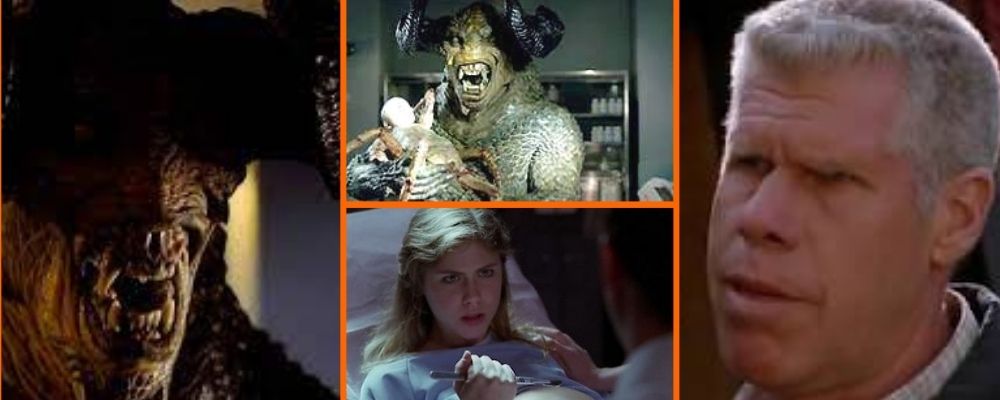 The closing ten minutes or so are all action, as Dwayne continues his rampage, Angelique’s demon baby is born, looking like the result of a nightmarish coupling of a scorpion and a baby doll and, just in case things weren’t bad enough for everyone, the father decides to pay the new mother a visit in pretty spectacular fashion. Dwayne’s face when he realises who it was who was imploring him to save the baby, and why, is priceless, and Angelique doesn’t take to motherhood quite as expected, and the episode ends in an abrupt, but satisfying way as the viewer is left shell-shocked from the pure spectacle and madness of the third act. Was it ‘Cigarette Burns’ level good? To be fair, that is a very high bar. Was it a great episode? Absolutely! A lot of the budget is right up there on the screen and for a fifteen-year-old cable network TV show, the effects are surprisingly big scale in places and look fantastic throughout. The episode tackles some controversial subject matter, with the episode being almost entirely set in an abortion clinic and featuring characters with some militant religious views, and as a social commentary, its stance is pretty clear, but Carpenter does wrap up his statement in a very entertaining and impressive looking package, making this a memorable episode for all manner of reasons. Speaking of memorable episodes… Join me next time as I’ll be looking at episode six of the second season, Dario Argento’s ‘Pelts’. See you then! If you missed any of Richard's previous Revisting The Masters of Horror articles, you can find links to them all here on our handy landing page THE MASTERS OF HORROR  Richard is an avid reader and fan of all things horror. He supports Indie horror lit via Twitter (@RickReadsHorror) and reviews horror in all its forms for several websites including Horror Oasis and Sci Fi and Scary TODAY ON THE GINGER NUTS OF HORROR WEBSITE SPLASHES OF DARKNESS: A PREVIEW OF A NEW REVIEW COLUMN FROM DION WINTON-POLAK THE HEART AND SOUL OF HORROR FEATURES |


Archives
April 2023
|

 RSS Feed

|

|