

REVISITING HALLORANN: THE DOUBLE KILLING OF DICK HALLORANN IN STANLEY KUBRICK’S THE SHINING
1/11/2022
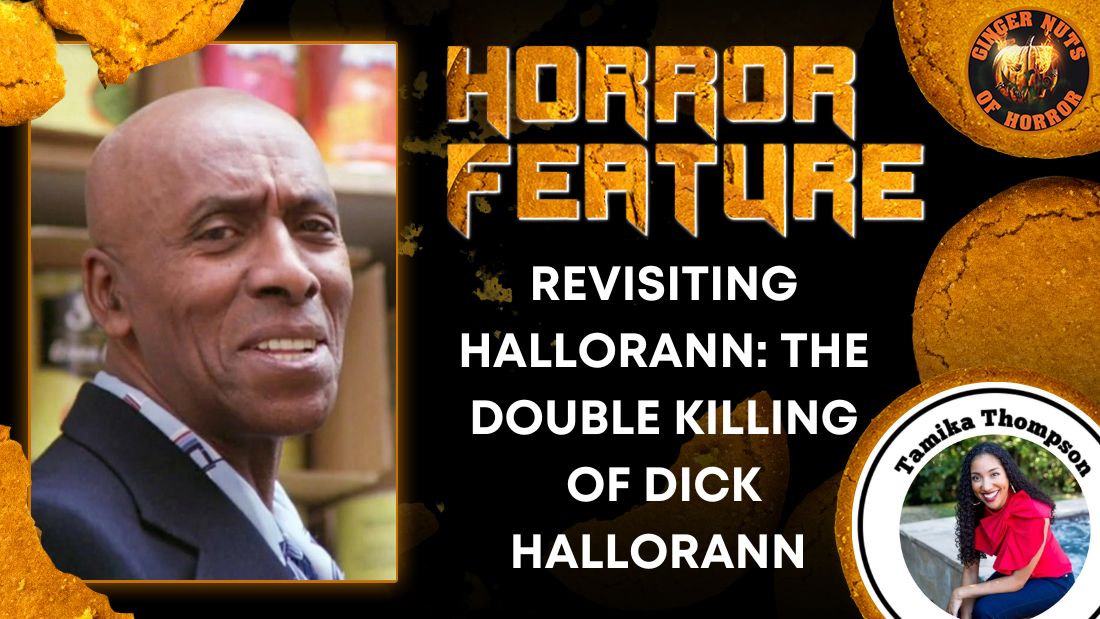 If you are going to kill the man, fine, drive that ax through his heart. But Kubrick first stripped him of his wit and wisdom, made him care about this white family more than he cared about his own (whom we never seem to learn about), and had him sacrifice himself without hesitation. Revisiting Hallorann: The double killing of Dick Hallorann in Stanley Kubrick’s The Shining By Tamika Thompson The first time I watched Stanley Kubrick’s The Shining with its on-screen killing of Dick Hallorann, I felt deeply offended. So offended I shouted at the screen, “Give me a break,” as I sat cross-legged in my dark living room. The 1980 adaptation of Stephen King’s novel by the same name is regarded as a classic of American cinema as well as a masterful horror story. It follows the disintegration of the Torrance family—Jack (Jack Nicholson), Wendy (Shelley Duvall), and son Danny (Danny Lloyd)—at an isolated Colorado hotel. Jack, a recovering alcoholic and aspiring writer becomes the off-season caretaker of the Overlook Hotel and settles in with his wife and supernaturally gifted son for the winter. Jack learns of the hotel’s previous caretaker who slaughtered his wife and daughters before taking his own life, and Danny makes a connection with the hotel’s chef, Richard “Dick” Hallorann (Scatman Crothers), who shares the same psychic and telepathic gifts, and introduces the concept of “The Shine” before heading to Florida for the season. As the hotel’s evil spirits slowly mesmerize Jack, and Danny’s premonitions go from unsettling visions to violent paranormal attacks, Danny telepathically sends for Hallorann. Traversing snow-packed terrain in freezing temperatures, Hallorann is undeterred in his quest to help. Meanwhile, the family splinters into hunter and hunted. With Jack determined to kill Wendy and Danny, the pair desperately attempts to escape the snowed-in resort. As many horror lovers, I came to the film before I arrived at the text upon which it is based. Stanley Kubrick was a celebrated director, producer, and screenwriter, regarded as one of the greatest American filmmakers, and his version of The Shining has held a higher place in the cultural zeitgeist than its source material. It remains the most popular adaptation of the story, and justifiably so. It is visually stunning and disturbing, as are many of Kubrick’s films like 2001: A Space Odyssey, A Clockwork Orange, and Full Metal Jacket. In Kubrick’s hands, the evil forces possessing the very walls of the lodgings are well rendered and frightening. But as much as I enjoy the spooky girls at the end of the hall, blood gushing from elevator doors, and Wendy discovering that Jack has been writing “All work and no play makes Jack a dull boy” repeatedly for the seemingly endless weeks she’s seen him tapping away on his typewriter, the on-screen killing of Hallorann in the hallway of The Overlook shortly after he is telepathically called back has always been an assault to my senses and not in a way that I enjoy when watching horror films. The “Magical Negro” In the early 2000s, acclaimed film director Spike Lee, well known for Do the Right Thing and Malcolm X among other celebrated films, popularized the term “magical negro,” thereby calling out Hollywood’s misuse of black characters. Lee explains that magical negroes often possess supernatural abilities and sentimental or obsequious personalities, and their sole purpose is to help the white characters. The magical negro is a plot device, not a full-fledged person, and can be found throughout American cinema and television. From Morpheus and The Oracle in The Matrix, Bagger Vance in The Legend of Bagger Vance, to more recently Anthony Mackie’s Steve in Synchronic, these characters are useful only inasmuch as they are compassionate, patient, and eager to inexplicably sacrifice their safety, well being, time, and resources to provide opportunities for the white characters—the “real” characters—to survive or become actualized. Many have argued that Stephen King has this blind spot as well, as several of his book’s black characters, including Hallorann, fall into this category--The Green Mile’s John Coffey, and The Stand’s Mother Abigail, come to mind. “The Black Guy Dies First” In addition to the magical negro, there is a trope specific to the horror genre sometimes referred to as “black guy dies first” in which a black character is introduced and killed off for the purpose of establishing the high stakes for the white characters. Think Glynn Turman’s Roy Hanson in Gremlins. Whether they are offed early or halfway through the film, the insult is not necessarily that they are killed. For a horror movie, kills are among the features audiences tune in for, and white supporting characters die as well. The problem is that black characters are flat and underdeveloped compared to the white characters, and, until recently, supporting roles were typically the only parts available to black actors. Kubrick’s Dick Hallorann embodies both of these tropes, and the ill feelings about how he is rendered are exacerbated by the fact that—Spoiler Alert!—Hallorann survives in the book and becomes a father-figure to Danny. Not only does Dick Hallorann survive, but he also appears in the sequel, Doctor Sleep, very much alive. Which brings me to my biggest complaint. Kubrick’s Hallorann is really killed twice In both the text and film, Hallorann is well aware of the evil forces at The Overlook. He is the person who firmly warns Danny to stay away from Room 237 (Room 217 in the book). So, when he arrives to help Danny, he knows the danger, not only because he has “The Shine,” but also because the man, a military veteran, who when he was young could hold entire conversations with his grandmother without ever opening his mouth, has common sense. Yet Hallorann’s appearance during this suspenseful scene is illogical. He clomps through the empty hallway unarmed, calling out, “Anybody here! Hello!” repeatedly. Notice his bow-legged gait, parted lips, open, limp palms, arms dangling at his sides, his broad back in that winter coat. Listen to his accent as he shouts. He is the fourth main character in the film, and yet he is apart. He is an “other.” And apparently foolish. By his own admission, he can see the hotel’s past and future. He knows about the hotel’s homicides. He is aware that Danny is distressed. Compare the death of Hallorann to that of Sheriff Buster in Rob Reiner’s Misery (1990), also adapted from a King novel. The premise is that bestselling author Paul Sheldon (James Caan) gets into a serious car accident and is rescued by his self-proclaimed biggest fan, Annie Wilkes (Kathy Bates), who holds him hostage inside her home and forces him to rewrite the final novel in his series to keep the main character Misery Chastain alive. To the outside world, Sheldon is missing. The supporting character of Sheriff Buster (Richard Farnsworth) is a small-town officer whose banter with his wife Virginia, Sheldon’s New York agent, and other characters in rural Sidewinder, Colorado, endears him to the audience. He is tasked with finding Sheldon, becomes suspicious of Wilkes, and arrives at her home to poke around. During the search of her home, he never lets down his guard. It is a tense nine-minute sequence as he peeks around corners, ventures upstairs to check a bedroom, and refuses the cocoa she prepares for him. She has a ready answer for each of his questions, and he doesn’t find Sheldon in the home. After leaving, and while descending her front steps, Buster hears a loud noise inside the house he’s just left. He turns and runs back inside, but the thing that makes it clear he’s no bumbling fool is that he shouts, “Ms. Wilkes? Ms. Wilkes? Are you all right?” Which is why when he rushes back in and doesn’t draw his gun, it makes total sense. He doesn’t think he’ll find Paul Sheldon. He thinks Ms. Wilkes is hurt. The audience knows the truth—that Sheldon has been drugged, hidden in the basement, and has just come to—but we can still fill in the thoughts in Buster’s mind: Perhaps she’s tumbled down the stairs? Perhaps she tripped and bumped her head? When he is caught off-guard inside and shot to death from behind, it is shocking, and the audience feels for him because he was a smart character outwitted by a calculating evil. That’s why I yelled, “Give me a break,” on my initial viewing of the Hallorann death scene. If you are going to kill the man, fine, drive that ax through his heart. But Kubrick first stripped him of his wit and wisdom, made him care about this white family more than he cared about his own (whom we never seem to learn about), and had him sacrifice himself without hesitation. “Magical negro” and “black guy dies first” tropes aside, this removal of Hallorann’s common sense and agency is the first killing of the character. And Hallorann’s double killing is not an oversight. It is deliberate. Seen through the lens of modern horror cinema, with centralized black characters in Jordan Peele’s Oscar-winning film Get Out, this moment in which Hallorann is caught flat-footed in the hallway, where Jack can spring from the shadows and surprise him—surprise a psychic man—remains an offense, an unforgivable one at that. A future for Hallorann? There might be a way for Hollywood to make amends. To me, at least. I’ve always felt King’s character would make for a great film or television lead. And it seemed for a while the production would happen, with Doctor Sleep director Mike Flanagan at the helm of a prequel and spinoff centering Hallorann. The plans were reportedly scrapped, but I remain hopeful the production will be resurrected, and that I will one day see Hallorann’s back story, his future story, his untold story. A film or series with Hallorann fully rendered, and wielding all of his natural and supernatural abilities just might be magical. But this time, I’m here for it. Tamika Thompson Tamika Thompson is a writer, producer, and journalist. She is the author of Unshod, Cackling, and Naked (Unnerving Books, 2023) and Salamander Justice (Madness Heart Press, 2022). She is co-creator of the artist collective POC United and fiction editor for the group’s award-winning anthology, Graffiti. Her work has appeared or is forthcoming in several speculative fiction anthologies as well as in Interzone, Prairie Schooner, The New York Times, and the Los Angeles Review of Books, among others. Thompson also has producing credits at Clear Channel Media and Entertainment, as well as with NBC and ABC News. She received a Bachelor of Arts in Political Science from Columbia University and a Master of Arts in Journalism from the University of Southern California. She lives in the San Francisco Bay Area. Find her online at www.tamikathompson.com. Website www.tamikathompson.com https://twitter.com/tamikathompson https://www.instagram.com/tamikadthompson/ Slasher https://slasher.tv/tamikathompson Salamander Justice Veda is a successful public relations director who recently relocated to Kauai where she is grieving the murder of her ex-boyfriend Michael. Sam is a self-proclaimed vegan-pacifist who is searching for his life’s purpose despite being supported by his wealthy family. The salamanders that populate the Hawaiian island, that sneak into homes, and scurry across footpaths are simply an afterthought. Believing that Veda is “the one,” Sam introduces her to his family in the hopes that he can turn their friendship into something more, but his plan is thwarted when Veda becomes smitten with his older brother Adam. Strange occurrences befall the trio on the anniversary of Michael’s murder, and as Veda chooses Adam, and as Sam becomes increasingly resentful, the love triangle spirals into a jealousy and anger so strong they begin to question reality. Is the human-like salamander that Veda sees real or imagined? Is the leathery, yellow stripe growing on Sam's chest just in his head? Salamander Justice asks, Which creatures deserve to live? The answer will prove to be deadly. Unshod, Cackling, and Naked. A beauty pageant veteran appeases her mother by competing for one final crown, only to find herself trapped in a hand-sewn gown that cuts into her flesh. A journalist falls deeply in love with a mysterious woman but discovers his beloved can vanish and reappear hours later in the same spot, as if no time has passed at all. A cash-strapped college student agrees to work in a shop window as a mannequin but quickly learns she’s not free to break her pose. And what happens when the family pet decides it no longer wants to have “owners?” In the grim and often horrific thirteen tales collected here, beauty is violent, and love and hate are the same feeling, laid bare by unbridled obsession. Entering worlds both strange and quotidian, and spanning horror landscapes both speculative and real, Unshod, Cackling, and Naked asks who among us is worthy of love and who deserves to die? CHECK OUT TODAY'S OTHER ARTICLES BELOW  THE HEART AND SOUL OF HORROR PROMOTION WEBSITES
0 Comments
 Rarely, if ever, has there been a work of satire so niche, so poorly understood and represented on its initial broadcast, but which is recalled with such incredible fondness by those who experienced it. Garth Marenghi's Dark Place: A Retrospective by George Daniel Lea During my early twenties, as a student barely able to keep mind and body together, I recall happening across a late-night broadcast of a show that hooked me almost from the first instant: Crude, poorly shot, ludicrously acted, edited and conceived, I couldn't help but be intrigued enough to not only keep watching, but tune in for every broadcast thereafter. It was only with further exposure to the show I began to realise that, not only were its various technical crudities part of a sophisticated series of running gags (essentially a loving lampoon of crude televisual tropes and shortcomings of 1980s broadcast television), the show knows its subject matter so intimately (in this instance, mass-published horror media of the same era), its various spoofs, satires and show-ups are some of the most trenchant in all of comedy. Purported to be a genuine TV production (albeit one that was never officially aired or even commissioned), Garth Marenghi's Dark Place is a scalpel-sharp satire of genre TV, horror fiction and the cults of personality that so often predominate such phenomena. Marenghi himself is a brilliantly Frankensteinian creation, marrying characteristics from the likes of Stephen King, Dean Koontz, James Herbert, Clive Barker, Shaun Hutson and numerous others fans of the genre will instantly recognise, suffusing the resultant “monster” with a vein of pretentious ignorance that makes itself plain every time he pontificates on subjects he has no business speaking about (everything from horror as a genre and the craft of writing to politics and philosophy are -according to the man himself- part of Marenghi's dubious purview). The genius of the character is how lightly the satire is played; writer and creator Matthew Holness manifests Marenghi with such straight-laced pomposity and narcissistic self-importance, it's almost possible to become inveigled into the mythos of high art that he spins around the show, no matter how ludicrous or absurd it actually gets (indeed, I recall speaking to those who'd perhaps only glimpsed the show or not taken the time to appreciate its satirical nature before switching channels who believed its sincerity).  Alongside his rogue's gallery of supporting cast, Marenghi comes across as a clueless, self-important, irascible individual who comprehends little, yet has somehow managed to cobble together a self-sustaining industry around himself in a manner akin to the legendary Tommy Wisseau. Part of the show's sincere genius is its painting of a world as hapless in its assumptions as Marenghi himself. Parodying pompous, self-mythologising documentaries on similar creative endeavours, the various “talking head” interviews that intersperse the episodes of Dark Place treat entirely risible material as high art, weaving a mythology around the show so sincerely communicated -in its ignorance-, it's hard not to get swept up in the self-congratulatory bravura of it all. Marenghi, alongside his editor (night-club owner, pimp, director, editor, cast-mate and general raconteur, Dean Learner) and actor Todd Rivers (magnificently played by the legendary Matt Berry) provide dubious elucidations throughout each episode, commenting not only on the diastrously under-qualified, chaotic (and purportedly lethal, in one or two instances) creation of the show, but also procrastinations on writing, art, acting, direction, philosophy, politics, all of which seem to be derived from 1980s US serials and day-time TV shows (Quantum Leap, The A-Team etc) that were imported onto UK screens. The ego, assumption and general lack of intelligence on display is played with just enough sincerity to lend it a patina of seriousness. Were those performances a molecule more absurd, were the statements they make an inch more extreme, the show would lose something essential to its integrity, i.e. the contrast between these moments of -often quite solemn- speculation and the ill-conceived ridiculousness of Dark Place itself. The dichotomy lends the show a certain complexity of flavour, leavening the sillier moments and sequences of visual or slapstick comedy with a delicious quality of audience doubt. Despite how ridiculous the show gets, the constant insistence that one is experiencing high and forbidden art leaves the audience in a constant quandary: Is this indeed some satirical take on genre television and fiction, as conceived by a genius who wholly apprehends the tropes and conventions of those phenomena? The answer is yes and no; Marenghi himself is totally oblivious to any irony that derives from the show's short-comings. He and his fellows take their work incredibly seriously, and will brook no suggestion that it is anything less. Matt Holness, on the other hand, is acutely aware of that which he satirises, and has a great love of the various genres and mediums the show sends up.  This is nowhere more evident than in the realisation of Marenghi himself: the beats that he hits are extremely niche, the references he manifests esoteric to the point of obsurity. Yet, for those of a similar frame of obsession, the references chime profoundly, and reveal that Holness is as much a horror and science fiction buff as he is someone who perceives the short-comings inherent to their popular manifestations. Who would, for example, note Marenghi's deployment of highly idiosyncratic and abstruse terms such as “The Fantastique,” which is a sly dig at Clive Barker's early interviews and TV appearances, or visual elements such as his leather jacket which echo the manner in which James Herbert often appeared in public? Who but horror fans would get the joke of Marenghi himself setting up an institute to harness the apparent psychic potential of children (an overt reference to Stephen King's fascination in his fiction with the same subject)? This is not a cruel or mean-spirited piece of work; trenchant and merciless as it can sometimes be, it also has an incredible love for its subject matter. The sadly limited run of six episodes each revolve around tropes, story structures and subjects familiar to any fan of genre fiction, referencing everything from Doctor Who to the body-horror works of David Cronenberg, TV classics such as Day of the Triffids, Planet of the Apes, the various works of H.P. Lovecraft and Edgar Allen Poe, as well as -stylistically- numerous US TV shows, whose tropes and style of storytelling, cinematography etc the show shamelessly cribs from. Expect absurdities such as exploding ambulances, fast-action (and deliberately poorly shot) chase sequences, horror-comedy segments involving telekinetically-animated office furniture, guns, guns, guns and more guns (bearing in mind the show is ostensibly set in a British hospital) and even a musical sequence in the final episode that is as incongruous as it is hilarious.  In terms of the landscape of British comedy at the time of its airing, Dark Place stands as one of the most idiosyncratic and unusual works in the arena. At a time when British comedy was pervaded by political satire and social commentary (owing to the cultural upheavals of the invasions of Iraq and Afghanistan, the various broken promises and atrocities committed by the Blair administraton etc), Dark Place dared to derive comedy from an extremely niche subject, playing to an audience whose erudition and intelligence it had to assume in order to make any kind of impact. Despite Channel 4's frankly baffling marketing and shunting of the show to a graveyard slot on weekday evenings, it only found its audience, but has sustained a mythic status all these years later, such that calls for a return to Dark Place in one medium or another are de rigeur in horror and genre fiction circles. Garth Marenghi himself has become cemented as an ironic figure within the echelons of popular horror writers, such that fans spin their own satires around him and his body of work, from essays, interviews and articles to Twitter stories and blog posts exploring -in fittingly wry fashion- the impact that Marenghi's writing has had on various creators. A significant factor of the show's success is the aforementioned respect it has for its target audience: at a time when focus-grouped and written-by-committee, edited-by-test-audience projects were producing the most bland, inoffensive work imaginable, Dark Place remained steadfastly true to its core spirit and foundational conceits, relying on its audience to be literate and intelligent enough to understand its satire and the molecular detail that pervades every performance, sequence and episode. It might seem strange to the casual viewer to state, but appreciation of Dark Place in its totality requires a sincere degree of background in horror, science fiction and genre media in general, not to mention an understanding of 1970s/1980s TV trends and tropes. This makes the show an incredibly unique project with a deliberately targeted and exclusive core audience. Rather than attempting to dilute itself in order to appeal to a wider demographic (always death to any sincere creative project), Dark Place doubles down at every instance, throwing out references and visual gags that only those immersed in such topics will even perceive, much less understand. For all the overt silliness and -aesthetic- crudity of the show, the subtlety of its comedy cannot be over-emphasised: For every slapstick gag or cleverly masked joke, there are a hundred visual details, felicities of performance, writing and direction that aren't laugh out loud funny, but feed into the ethos of the show and make it an environment where humour foments. This is even evident in the physical editing; scenes are deliberately choppy and poorly constructed, continuity is a gaff-laden nightmare and framing is naïve as only something produced by those with no background, training or experience in film can be. Performance-wise, this factor is particularly acute with regards to Dean Learner, ably played by Richard Ayoade, whose “performance” as Thornton Reed is bad in a way that only a truly great actor could conceive: Learner constantly misses his marks, doesn't know where to stand, glances at the camera, mugs, runs through his lines without emphasis or emotion and interacts woodenly with the props on set. It's a genuinely brilliant performance that identifies everything that an actor can do wrong and goes for it with gusto. This factor is complemented by various sequences in which rushed and poorly-dubbed voice-overs have been used to communicate exposition or back story. Catching these sequences in isolation, audiences might be forgiven for wondering what in blue Hell they've discovered, how any product airing on TV could be quite so bad. However, as part of the whole, they are sincerely brilliant details that serve to complexify the final product, layering in shades and levels of humour it might not otherwise possess. Nothing here is arbitrary, from line-readings to framing, from the physical performances of actors to the jerky, often baffling editing decisions. Dark Place thereby provides a satire not only of genre fiction, but of televisual media itself: Marenghi and his team are effectively presumptuous ignorami who have no idea what they're doing or the protocols and processes of production, but do it anyway, driven by an unshakeable belief in the apparent artistry of their project that's as oddly admirable as it is bone-headedly, obsessively masochistic (whilst there's little elucidation regarding the untimely end of the project, Marenghi, Rivers and Learner provide subtle suggestions of a disastrous conclusion, which -purportedly- resulted in the deaths of crew members, the suspicius disapprearance of lead actress Madelaine Wool and various unspecified criminal investigations). The apparent “salvaging” of the legendary TV show some twenty years later is treated like a renaissance, an event that has almost spiritual significance for television and wider fiction, despite the evidence of the audience's eyes and ears. Dark Place's presumptuous inneptitude is ignored in favour of a self-inflating mythologisation, that talks about all involved as though they're operating on a level that general culture and more humdrum mortals can't begin to conceive. The delivery of these assessments is played so straight, it's possible to often miss the subtle linguistic jokes and references the cast crack, as well as to be sincerely drawn into the narrative oneself. Rarely, if ever, has there been a work of satire so niche, so poorly understood and represented on its initial broadcast, but which is recalled with such incredible fondness by those who experienced it. If you're an aficionado of horror media -or genre works in general-, Garth Marenghi's Dark Place is essential viewing. To paraphrase the man himself, if you're yet to experience the phenomena: “...put conventional logic to one side, and enjoy. Well, I say enjoy...” Garth Marenghi’s TerrorTome |






 |  |
THE HEART AND SOUL OF HORROR PROMOTION WEBSITES

From conception to design, from narrative to atmosphere, American McGee's Alice is a work of profound passion; a game designed to express so much more than its technical elements and medium might suggest. Nowhere is that more apparent than in the score, which is a thing of disturbing, ambient beauty,
A strange and obscure beasty this time around, my loves, but one with a fervent and abiding cult following, of which I happily count myself a part:
American McGee's Alice hit the PC in the latter 1990s/early 2000s, back when PC gaming was flourishing, becoming not only a viable platform, but one where innovation, wild experimentation and revolutions in the medium were the norm. Marketed as a bleakly psychological sequel to Lewis Caroll's Alice in Wonderland, the game finds an older, teenage Alice confined to a Victorian insane asylum following a fire that destroyed her home and claimed the lives of her family. Catatonic since the event, she recedes deeper and deeper into a version of Wonderland that is slowly warping and decaying as her mind turns in on itself. Familiar settings and characters become Jungian metaphors for aspects of her psyche; components of the mental disease slowly corrupting her mind. Once the manifestation of her childhood imagination, Wonderland is now a place of bizarre horrors and arbitrary cruelties. Shattered, broken “...careening on the jagged edge of reality,” Alice must navigate the distorted dreamscapes in order to defeat those parts of herself that are slowly poisoning her, and restore some semblance of sanity to a world on the edge of collapse.
The game distinguished itself not through revolutionary technicals -though it was graphically impressive for the era-, but via its conception, atmosphere and design, all of which conspire to create a Wonderland quite unlike anything that had been seen before. A place of inconstant, twisting, hallucinogenic horrors, the subtle wit of the game lies in its taking of familiar characters, tropes and archetypes and suffusing them with disturbing thematic qualities. The Mad Hatter, for example, beloved by fans of the original books and Disney cartoon adaptation, is here an obsessive and unpredictable lunatic, fascinated with clockwork, time and mechanical contrivances. He himself is a distorted grotesque; gigantic, spindle-limbed, clockwork augmentations protruding from his back and limbs, he accuses Alice of “dawdling” and never having a grasp on time. Likewise, the Jabberwock, manifestation of Alice's guilt over the fire that claimed her parents, is a steampunk, bio-mechanical monstrosity; a draconic horror that assaults Alice emotionally as well as with its fiery breath, snarling accusations that see her collapse in near-total abjection.
The game is well remembered for its delirious settings, that are as sincere a manifestation of a diseased dreamscape as might be found in a video game, and the lustrously gothic flourishes in its design. Whilst incongruously cute, it's also twisted, nightmarish and disturbing, that dichotomy escalating and escalating to the game's eventual climax, when Alice finds the very heart of her malady in the body-horror hellscape of The Queen of Heart's realm. A palace of living flesh and bone, it is here that Alice encounters the face of her insanity, and finds that it is her own.
Whilst the game is visually impressive and vividly recalled for incredible visual work and visionary design, Chris Vrenna's score is equally worthy of note. Without it, the disturbia of the game would be much reduced, as would the sense of urgency that escalates as the story progesses and Alice's mind tangibly collapses around the player.
Beginning with distortedly jaunty, warped nursery-rhyme tunes, the score soon descends into distressing, industrial tones that wouldn't be out of place on a Nine Inch Nails album. Throughout, Vrenna flourishes the soundtrack with moments of discord and incongruous cries, moans; voices in lament or pain. It's a truly beautiful, unsettling piece of work that more closely echoes the likes of Silent Hill or Shadow Man than other fantastical contemporaries.
American McGee's Alice hit the PC in the latter 1990s/early 2000s, back when PC gaming was flourishing, becoming not only a viable platform, but one where innovation, wild experimentation and revolutions in the medium were the norm. Marketed as a bleakly psychological sequel to Lewis Caroll's Alice in Wonderland, the game finds an older, teenage Alice confined to a Victorian insane asylum following a fire that destroyed her home and claimed the lives of her family. Catatonic since the event, she recedes deeper and deeper into a version of Wonderland that is slowly warping and decaying as her mind turns in on itself. Familiar settings and characters become Jungian metaphors for aspects of her psyche; components of the mental disease slowly corrupting her mind. Once the manifestation of her childhood imagination, Wonderland is now a place of bizarre horrors and arbitrary cruelties. Shattered, broken “...careening on the jagged edge of reality,” Alice must navigate the distorted dreamscapes in order to defeat those parts of herself that are slowly poisoning her, and restore some semblance of sanity to a world on the edge of collapse.
The game distinguished itself not through revolutionary technicals -though it was graphically impressive for the era-, but via its conception, atmosphere and design, all of which conspire to create a Wonderland quite unlike anything that had been seen before. A place of inconstant, twisting, hallucinogenic horrors, the subtle wit of the game lies in its taking of familiar characters, tropes and archetypes and suffusing them with disturbing thematic qualities. The Mad Hatter, for example, beloved by fans of the original books and Disney cartoon adaptation, is here an obsessive and unpredictable lunatic, fascinated with clockwork, time and mechanical contrivances. He himself is a distorted grotesque; gigantic, spindle-limbed, clockwork augmentations protruding from his back and limbs, he accuses Alice of “dawdling” and never having a grasp on time. Likewise, the Jabberwock, manifestation of Alice's guilt over the fire that claimed her parents, is a steampunk, bio-mechanical monstrosity; a draconic horror that assaults Alice emotionally as well as with its fiery breath, snarling accusations that see her collapse in near-total abjection.
The game is well remembered for its delirious settings, that are as sincere a manifestation of a diseased dreamscape as might be found in a video game, and the lustrously gothic flourishes in its design. Whilst incongruously cute, it's also twisted, nightmarish and disturbing, that dichotomy escalating and escalating to the game's eventual climax, when Alice finds the very heart of her malady in the body-horror hellscape of The Queen of Heart's realm. A palace of living flesh and bone, it is here that Alice encounters the face of her insanity, and finds that it is her own.
Whilst the game is visually impressive and vividly recalled for incredible visual work and visionary design, Chris Vrenna's score is equally worthy of note. Without it, the disturbia of the game would be much reduced, as would the sense of urgency that escalates as the story progesses and Alice's mind tangibly collapses around the player.
Beginning with distortedly jaunty, warped nursery-rhyme tunes, the score soon descends into distressing, industrial tones that wouldn't be out of place on a Nine Inch Nails album. Throughout, Vrenna flourishes the soundtrack with moments of discord and incongruous cries, moans; voices in lament or pain. It's a truly beautiful, unsettling piece of work that more closely echoes the likes of Silent Hill or Shadow Man than other fantastical contemporaries.

Arguably one of the most notable tracks accompanies the lacrimose “Veil of Tears” area; a fog-shrouded realm of Autumnal streams and rivers fed by the tears of crying statues, it is the manifestation of Alice's grief over her lost family and the life she once led, but also the fey and dallying childhood that no longer exists, the Wonderland that can never be again.
Here, the score dips into slow and resonant elegies; strains of slow violins accompanying voices that weep and moan exclamation, suffusing the entire area with a palpable sense of oppressive despair.
Later, in the Mad Hatter's clockwork, industrial realm (where Alice's subconscious experiences of the asylum itself have melded with her imaginary world, creating a condition that is neither waking reality nor the realm of her dreams), the score's industrial elements ramp up; sounds of clockwork, cogs, steaming engines married to distorted musical boxes, broken instruments and fizzing, hissing electricity. This is arguably the point where the true extent of Alice's malady becomes apparent in both the score and setting, both of which paint a picture of a fractured mind slowly falling apart under the weight of its own grief.
When Alice finally breaches the gates and labyrinths that protect The Queen of Heart's land, the score swells into a bleakly epic state, choral yet cancerous, celebratory yet horrific. Here, Alice walks the depths of her subconscious mind, where the very darkest of her drives and impulses have congealed and become manifest in The Queen of Hearts.
Whilst undoubtedly horrific in design, the score accompanying Alice's confrontation with her inner-self is a masterwork of sublime horror; a throbbing, arterial strain that incorporates motifs from all of the game's prior environments and encounters, communicating without ambiguity that here is the heart of all darkness, the very root of the sentient cancer spreading throughout her imaginary world and slowly unraveling her sanity.
From conception to design, from narrative to atmosphere, American McGee's Alice is a work of profound passion; a game designed to express so much more than its technical elements and medium might suggest. Nowhere is that more apparent than in the score, which is a thing of disturbing, ambient beauty, that elevates the final work into the condition of a delirious fever-nightmare, as obsessively engaging as it is bizarre, and more than worthy of the abiding passion it receives from its advocates, all these many years later.
Here, the score dips into slow and resonant elegies; strains of slow violins accompanying voices that weep and moan exclamation, suffusing the entire area with a palpable sense of oppressive despair.
Later, in the Mad Hatter's clockwork, industrial realm (where Alice's subconscious experiences of the asylum itself have melded with her imaginary world, creating a condition that is neither waking reality nor the realm of her dreams), the score's industrial elements ramp up; sounds of clockwork, cogs, steaming engines married to distorted musical boxes, broken instruments and fizzing, hissing electricity. This is arguably the point where the true extent of Alice's malady becomes apparent in both the score and setting, both of which paint a picture of a fractured mind slowly falling apart under the weight of its own grief.
When Alice finally breaches the gates and labyrinths that protect The Queen of Heart's land, the score swells into a bleakly epic state, choral yet cancerous, celebratory yet horrific. Here, Alice walks the depths of her subconscious mind, where the very darkest of her drives and impulses have congealed and become manifest in The Queen of Hearts.
Whilst undoubtedly horrific in design, the score accompanying Alice's confrontation with her inner-self is a masterwork of sublime horror; a throbbing, arterial strain that incorporates motifs from all of the game's prior environments and encounters, communicating without ambiguity that here is the heart of all darkness, the very root of the sentient cancer spreading throughout her imaginary world and slowly unraveling her sanity.
From conception to design, from narrative to atmosphere, American McGee's Alice is a work of profound passion; a game designed to express so much more than its technical elements and medium might suggest. Nowhere is that more apparent than in the score, which is a thing of disturbing, ambient beauty, that elevates the final work into the condition of a delirious fever-nightmare, as obsessively engaging as it is bizarre, and more than worthy of the abiding passion it receives from its advocates, all these many years later.
Check out Part One of Thirteen for Halloween here
HORROR SOUNDTRACKS - SHADOW MAN
THIRTEEN HORROR SOUNDTRACKS: THE MIST
HORROR SOUNDTRACKS - SHADOW MAN
THIRTEEN HORROR SOUNDTRACKS: THE MIST
CHECK OUT TODAY'S OTHER ARTICLES BELOW

THE HEART AND SOUL OF HORROR PROMOTION WEBSITES
It is an empty elegy; profound in its redundancy, epic in its vacuity.
Have you ever wondered what the elegy for a dying world would sound like? What must've echoed throughout Heaven following the war that split it in two, the ultimate failure of all creation?
That's pretty much what you get with the soundtrack to Frank Darabont's big-screen adaptation of Stephen King's Lovecraftian, apocalyptic novella, The Mist.
Darabont is the perfect director to adapt King's material; not only does he understand it on an intimate level, he also understands when it needs to be reworked, altered or re-imagined for the format of cinema. In The Mist, he takes the story's Lovecraftian horror and suffuses it with painfully self-destructive, human tribal stupidity; the inclination on behalf of desperate humanity to try anything, any means, to save itself from impending doom, even if it means returning to the old days of blood-sacrifice and scapegoating.
Taking that misanthropy and essential nihilism as its thesis, the cinema adaptation of The Mist is an exercise in excoriatingly human horror. Whilst the extra-dimensional monsters that descend on the small, mid-western town that is the story's setting are treated in the manner of some arbitrary, apocalyptic disaster, the true horror derives from the desperate, foolish, terrified cluster of human beings barricaded in the local supermarket (a nice thematic nod to George A. Romero's Dawn of the Dead). As one of the key characters notes, it takes less than three days before they start turning on one another in scapegoating violence, grimly inspired by the sickest, most deranged and depraved amongst them, who they turn to as a beacon of certainty -however lunatic- as the world around them falls apart.
The soundtrack, for the most part, is minimalist and incidental; a perfectly functional horror-film score that serves to emphasise tension, compound the horror occurring both inside and out. It isn't until the apocalyptic scale of the event becomes apparent that the score swells and transforms, becoming a celestial mourning for lost creation with The Host of Seraphim:
That's pretty much what you get with the soundtrack to Frank Darabont's big-screen adaptation of Stephen King's Lovecraftian, apocalyptic novella, The Mist.
Darabont is the perfect director to adapt King's material; not only does he understand it on an intimate level, he also understands when it needs to be reworked, altered or re-imagined for the format of cinema. In The Mist, he takes the story's Lovecraftian horror and suffuses it with painfully self-destructive, human tribal stupidity; the inclination on behalf of desperate humanity to try anything, any means, to save itself from impending doom, even if it means returning to the old days of blood-sacrifice and scapegoating.
Taking that misanthropy and essential nihilism as its thesis, the cinema adaptation of The Mist is an exercise in excoriatingly human horror. Whilst the extra-dimensional monsters that descend on the small, mid-western town that is the story's setting are treated in the manner of some arbitrary, apocalyptic disaster, the true horror derives from the desperate, foolish, terrified cluster of human beings barricaded in the local supermarket (a nice thematic nod to George A. Romero's Dawn of the Dead). As one of the key characters notes, it takes less than three days before they start turning on one another in scapegoating violence, grimly inspired by the sickest, most deranged and depraved amongst them, who they turn to as a beacon of certainty -however lunatic- as the world around them falls apart.
The soundtrack, for the most part, is minimalist and incidental; a perfectly functional horror-film score that serves to emphasise tension, compound the horror occurring both inside and out. It isn't until the apocalyptic scale of the event becomes apparent that the score swells and transforms, becoming a celestial mourning for lost creation with The Host of Seraphim:
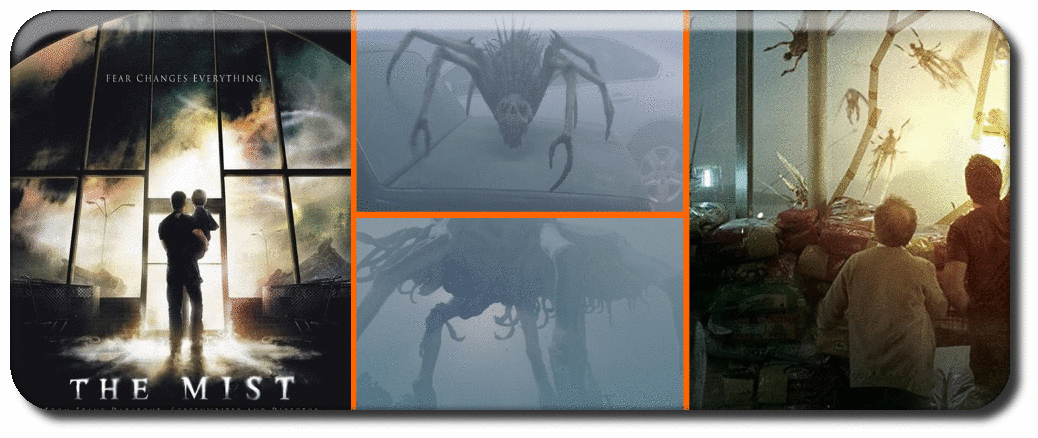
Beginning with an atonal, hymn-like chord of organ music, the piece erupts into vocal bravura that has all of the resonance of a Mother goddess lamenting the murder of her children. It is the very essence of despair and loss; the cosmos weeping for humanity where there are no angels left to do so. The event that has been unleashed on Earth -which may or may not be the result of human military science tampering in extra-dimensional technology- has much wider significance for the universe and reality as a whole: There's no saying, by the film's end, if the event can be reversed or if the disease-like invasion of another reality, entirely antithetical to our own, will continue to spread and spread until it subsumes or collapses creation itself.
Like Lovecraft before him (whose work is an obvious thematic inspiration), King revels in emphasising the cosmic insignificance of humanity, and exposing how what we consider most sacred in our lives is ultimately ephemeral nothing, swept away by accidents and vicissitudes of reality that we can barely perceive, much less comprehend or predict. All of human history is undone within a matter of days here, swept away by an alien reality that seems entirely animal; an extra-dimensional wilderness that, the story even dares suggest, might be better than what we've created with our endless war, pollution, man-made extinctions etc.
Unlike in the vast majority of King's work, there is no salvation here; nothing that can save even the most innocent of us. Reality does not care; there is no god, no angels (or, if there ever were, they are impotent or long, long dead).
This lends the film's score a note of hideous irony; the eponymous “Host of Seraphim” might mourn, but they either did nothing to prevent the tragedy or were impotent in the face of it. In point of fact, faith itself is painted as powerfully negative throughout; a source of enshrined neurosis that leads to nothing less than scapegoating murder and the lionisation of lunatics.
Those that sing for dying creation here do so in the full knowledge that there's no one and nothing to hear, no one and nothing that will mark the passage of humanity or the world itself. It is an empty elegy; profound in its redundancy, epic in its vacuity.
And it is one of the most soul-shudderingly beautiful soundtracks in horror cinema history.
Like Lovecraft before him (whose work is an obvious thematic inspiration), King revels in emphasising the cosmic insignificance of humanity, and exposing how what we consider most sacred in our lives is ultimately ephemeral nothing, swept away by accidents and vicissitudes of reality that we can barely perceive, much less comprehend or predict. All of human history is undone within a matter of days here, swept away by an alien reality that seems entirely animal; an extra-dimensional wilderness that, the story even dares suggest, might be better than what we've created with our endless war, pollution, man-made extinctions etc.
Unlike in the vast majority of King's work, there is no salvation here; nothing that can save even the most innocent of us. Reality does not care; there is no god, no angels (or, if there ever were, they are impotent or long, long dead).
This lends the film's score a note of hideous irony; the eponymous “Host of Seraphim” might mourn, but they either did nothing to prevent the tragedy or were impotent in the face of it. In point of fact, faith itself is painted as powerfully negative throughout; a source of enshrined neurosis that leads to nothing less than scapegoating murder and the lionisation of lunatics.
Those that sing for dying creation here do so in the full knowledge that there's no one and nothing to hear, no one and nothing that will mark the passage of humanity or the world itself. It is an empty elegy; profound in its redundancy, epic in its vacuity.
And it is one of the most soul-shudderingly beautiful soundtracks in horror cinema history.
CHECK OUT TODAY'S OTHER ARTICLES BELOW

THE HEART AND SOUL OF HORROR PROMOTION WEBSITES


Archives
November 2022
October 2022
September 2022
August 2022
July 2022
June 2022
May 2022
April 2022
March 2022
February 2022
January 2022
December 2021
November 2021
October 2021
September 2021
August 2021
July 2021
June 2021
May 2021
April 2021
March 2021
February 2021
January 2021
December 2020
November 2020
October 2020
September 2020
August 2020
July 2020
June 2020
May 2020
April 2020
March 2020
February 2020
January 2020
December 2019
November 2019
October 2019
September 2019
August 2019
July 2019
June 2019
May 2019
April 2019
March 2019
February 2019
January 2019
December 2018
November 2018
October 2018
September 2018
August 2018
July 2018
June 2018
May 2018
April 2018
March 2018
February 2018
January 2018
December 2017
November 2017
October 2017
September 2017
August 2017
June 2017
May 2017
April 2017
March 2017
February 2017
January 2017
December 2016
November 2016
October 2016
September 2016
August 2016
July 2016
June 2016
May 2016
April 2016
March 2016
February 2016
January 2016
December 2015
November 2015
October 2015
September 2015
August 2015
July 2015
June 2015
May 2015
April 2015
March 2015
February 2015
January 2015
December 2014
November 2014
October 2014
September 2014
August 2014
July 2014
June 2014
May 2014
April 2014
March 2014
February 2014
January 2014
December 2013
October 2013
September 2013
August 2013
 RSS Feed