

 As has been explored in previous articles, the seminal Super Nintendo horror Clock Tower never received an official release in its original, 16-bit incarnation in most Western markets, owing to Nintendo primarily appealing to an adolescent demographic throughout the 1980s and 1990s. At the time, horror and explicit material in video games was still relatively taboo, especially here in the UK, where we were still suffering the after-shocks of an excessive right-wing clamp down on any media considered to be “corrosive” or perverse (the so-called “Video Nasty” scare, primarily facilitated by Mary Whitehouse and her brigade of professional whiners). The game has, however, since developed something of a cult following on the internet, largely owing to its sheer novelty at a time when horror in video games was largely relegated to particular systems and occurred in the most limited fashion. Not only that, but it is a remarkably sophisticated and novel piece of work, marrying elements of occultism and supernatural phenomena to classic “slasher film” motifs, boasting technical elements such as a randomised play area (the house in which most of the action occurs restructuring itself every new play through), multiple routes, events and endings (thirteen conclusions in all) as well as a shear-wielding, deformed killer who stalks the house and can occur at almost any moment, leaving the player in a state of almost constant tension. There are numerous moments within the game that would warrant further discussion here, such as the random scream that occurs when Jennifer, the player character, is wandering through a darkened hallway, leaving the player with the choice to either carry on or look out through the window. If they choose the former, then the game continues and certain events don't occur until much later on. If they choose the latter, however, they will see one of their lost and terrified friends plunge through a window in one of the adjacent manor wings, down into the pool below. Likewise, one of the many endings to the game involves repairing and starting up an old car in the garage. If the player manages to do so, then the ending sequence consists of Jennifer driving away, glancing back at the manor in the rearview mirror in utter terror. Just before she can make her getaway, however, a pair of open shears rises over the back seat, the screen cutting to black with a scream. Given that the game is fairly limited in terms of its graphics and by the technological constraints of the 16-bit era, it's truly incredible the degrees of invention and innovation the game designers went to in order to evoke atmosphere and cultivate a genuine sense of threat and disturbance. Much of that derives from the game's amazing sound design, which can set the player on edge with nothing more than a creaking open door, a telephone ringing, footsteps in the corridor ahead. But perhaps one of the most terrifying moments, and certainly the one that springs most readily to mind, occurs very early on in the game:  Following the introduction sequence, in which the various victims are gathered in the main hall of the house, player character Jennifer decides to head off in search of their host, who has been absent for quite some time. Venturing into a darkened corridor, she manages only a few steps before a scream sounds in the hall behind. Rushing back, she finds the lights out, the hall in disarray, her friends gone, with no sign as to what happened or why. It's at this point that control is handed over to the player, allowing them to explore the manor in various ways and by various different routes. One of the most common takes the player back out into the corridor into which they previously ventured, past a series of doorways most of which are sealed against trespass. However, occasionally wandering past one door will trigger a strange event in which an eerie chord of music starts to play, a watery drip, drip, drip emanating from within. Should they choose to investigate, they will find a bathroom wreathed in steam, as though someone has recently enjoyed a very hot bath or shower. And, though there's no evident source, that drip, drip, dripping continues. Should the player venture over to the sink, several scripted events may or may not occur: they might turn on the tap and find nothing but water running out. Or sometimes, blood pulses until it fills the sink or sometimes the tap sprays living maggots onto the horrified Jennifer's hands. Whilst distressing, none of these experiences are particularly lethal. Should the player continue to explore, however, they will likely find the bath-tub, around which a curtain is drawn. 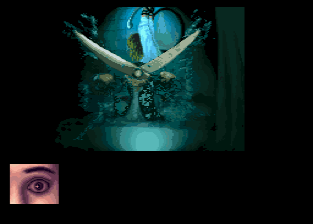 Should they pull it back, occasionally they'll find nothing untoward (depending on what structure the game is following at the time). However, often they will discover the slaughtered and strung up body of one of Jennifer's friends, the girl horrendously mutilated and quite decisively dead. This isn't the end of Jennifer's trauma, however, as from beneath the murky water pooling around her friend's legs erupts a hunched, deformed figure bearing a pair of rusted shears. Slumping to the wet tiles, the “Scissor Man” (as he has become known), slowly advances on her, until Jennifer breaks and runs. Control is then returned to the player, who must find a way of throwing off or hiding from the Scissor Man before he runs them down. The tension of the moment combined with the excessively distressing imagery, the suggestively creepy soundtrack, induces a state of blind panic, especially for players new to the game, who will often wander through corridors and into rooms randomly, seeking some hiding place or weapon, finding themselves cornered by Scissor Man, at which point it's game over. Bear in mind, this is long before more recent developments in horror video games led to the invention of the randomised stalker or environment, Clock Tower proving itself massively ahead of its time in many and varied ways. Experiencing this moment now, it's clear to see why this game never got a release in western markets, as those of us that were their primary demographics at the time would have likely had heart attacks or weeks worth of sleepless nights following the encounter. Given the cultural climate of the era, it's highly likely Clock Tower would have sparked an enormous backlash not only against Nintendo but video games in general. The consistent cant from the censurious back in those days was always “Think of the children!” and this went double for video games, which were then a fairly new and burgeoning format, regarded with extreme suspicion by older generations and by society at large. Even I, being a child at the time, can recall the excessive hysteria that marked the era, from documentaries concerning the apparent neurological health issues concerning video games to the more abstract paranoia that they served to introduce children to violent and disturbing material long before they were able to process it. Given how ludicrous the overreaction to the likes of Night Trap, Mortal Kombat and Doom were, Clock Tower could well have marked a backlash against the industry that might have seen it brought under very real legal and political censure in the UK. However, ironically owing to its lack of release on these shores, the game as come to be regarded as something of a retrograde classic, a heretofore unmarked piece of video game history, replete with moments that deserve to be as iconic as any other in this series.   Comments are closed.
|


Archives
April 2023

|
 RSS Feed

|

|