

 Good God. Good, sweet Azathoth, Baphomet; whatever demon and/or divinity you hold dear... To think I'd be sitting here now, about to sing the unambiguous praises of a new Resident Evil title...barely a year ago, I would have proclaimed it an impossibility, the franchise one of the many beloved dead littering the wastelands of video gaming's murdered from within, by their own creators, no less. Arguably since Resident Evil 4, the series has arguably been in decline; a victim of the constant, corporate desire to cater to the widest possible demographics, thereby alienating established audiences and diluting their own product and reputation. The urge to draw in the “Triple-A,” Call of Duty crowd finally culminated in the chimeric, frictionless abomination that was Resident Evil 6, what many believed (and even more hoped) would be the final nail in this zombie's coffin. Then, sometime mid last year, the first trailers hit. Not only the first trailers, but a playable demo. To say that we perked up and cocked our heads like wolves scenting blood is an understatement. Stylistically, what the trailers and demos betrayed were a far, far cry from anything that had gone before. In terms of atmosphere, this was not the hokey, B-movie japery we'd come to expect from the franchise. In their place, a dingy, depressive, foetid atmosphere; a sense of decay and genuine threat more suited to the franchise's contemporary and long-time counterpart, Silent Hill. A first person gaming perspective, imagery more redolent of films like 7 or Jacob's Ladder than Night of the Living Dead. A genuine spark of excitement, of hope. Then, the revelation that the game would be one of the first to utilise the new VR technology; a peripheral tailor made for horror. Hope becoming fervent, almost desperate; a new Resident Evil, the benchmark for a new and burgeoning state of video game immersion; perhaps, perhaps the title that would lift mainstream video gaming horror from its doldrums and set it high once more. Then, at last, release, first exposure. 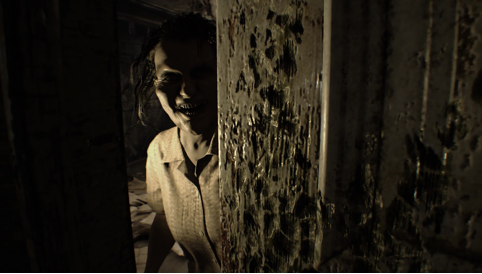 For the purposes of this review, I must make it plain that I'm writing from the perspective of someone who experienced this game via the Playstation's VR helmet; a factor that is far from essential to appreciate it (at least, according to the testimonies of those who've played it without) but that enhanced the experience so much for me, it was almost virginal: for the first time in as long as I can recall, a piece of media made me genuinely scared; tense and trembling and paranoid, heart racing, hands slick with sweat...all this in the first few scenes and chapters. First of all, the VR experience, which could have so easily been just another empty gimmick like so many similar efforts before it. I find it difficult to describe how much this adds to the experience; the degrees of depth and shade and dirt; the shadows you feel you could tumble into, the dust and grime in the air, the physical, adrenal terror you experience when something lurches out of them wielding knives or chainsaws or their own severed arms. It is, potentially, the way forward for horror; nothing after this will do that doesn't provide the same facility; the same depth and range of immersion, the same heart-bursting sense as of being sealed off and alone in this dismal, hideous world with some of the most threatening characters and creatures I've ever encountered in a video game. There is more here than a mere 3D effect; the helmet has a capacity for isolating you as the player; locking you off from waking reality, tricking your mind into projecting you into the virtual world you are exploring. In the case of Resident Evil VII, that world is a dismal, cockroach-infested, polluted, cannibalistic Hell-hole populated by characters and creatures that, unlike in previous titles, are no longer confined to their particular areas: it is no longer a case of working your way through this set of rooms and corridors, avoiding the familiar patterns of zombies and Hunters and chimeras; most of the entities in the game can and will follow you, the more human able to open doors and windows, to burst through walls, to come up through floors and manipulate the environment in all manner of insane and lunatic ways. Others are randomised, appearing according to their own peculiar algorithms in places that might have previously been safe or secure. Unlike previous Resident Evils, the familiar “safe rooms” are gone, deliberately undermined throughout the game so as to keep the player in an almost constant state of tension (a side note on this: playing the game in the VR made me so tense, I had to take very regular breaks in which I could physically feel myself trembling, my joints aching with stress, temples throbbing with anxiety. I would advise anyone wishing to experience the same to take regular breaks, and to avoid the experience altogether if you happen to have heart conditions or nervous issues). 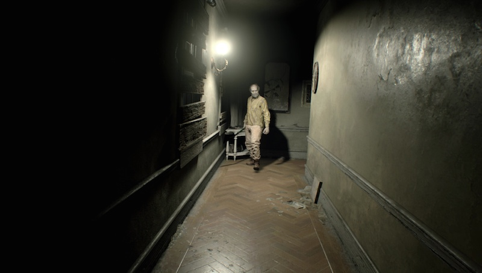 It is terrifying. Absolutely, gut-wrenchingly, soul-shudderingly terrifying, and not in any way that I've ever encountered in a video game before: even in the likes of System Shock 2 or Silent Hill 2 (two of the most distressing titles in existence), I never felt as though I did not want to open doors or explore particular corridors; the horror and tension were always of a more distant kind, no matter how intense, outweighed by the knowledge that I was playing a video game, and therefore was obliged to explore the environment or simply stop. Resident Evil VII, at least via VR, is a different beast: I did not want to open doors, to leave whatever temporarily safe little hidey holes I found; I did not want to go and explore that noise or that shadow glimpsed out of the corner of my eye, that flicker of movement. The immersion of the VR headset inflamed my animal sense of self-preservation, tricking my imagination into making the world and its threats more real than I imagined it ever would or could. If you ever wanted experience a semblance of what it would actually be like to be trapped inside a horror story; to wake and find yourself physically immersed in a nightmare, this is it. The game itself is immediately a far cry from anything else under the Resident Evil banner, so much so that you'd be forgiven for thinking that this is a reboot of or alternative to the established universe (it isn't; there are some loose connections to the original games and their mythology, though the game is more than capable of standing on its own, story wise). The tone, the focus, the rhythms of storytelling...all different; more redolent of certain contemporaries and competitors of Resident Evil whose parent companies have recently embarassed themselves by undermining and potentially aborting through their incompetence, their lack of understanding of the material they have in their hands (rest in peace, Silent Hill). This is a highly deliberate and necessary move; in order to thrive again, Resident Evil had to necessarily divorce itself from what had gone before; to reinvent itself with close reference to the quantum leaps that have occurred in independent video game horror since its last instalment. Thus, the game boasts certain familiar elements (enough to make it very much a part of the franchise) but is sufficiently removed from all predecessors to be its own, unique entity: all of the faintly silly, overly baroque lock and key puzzles are here (finding certain emblems and icons to unlock doors, solving puzzles to open secret passageways etc etc), but the environment that frames them is entirely unique, as is the sense of atmosphere in which they occur: no longer expansive mansions and unlikely, secret research complexes, much of the action takes place within a single household (albeit suitably expansive): a derelict, seemingly-but-not-quite abandoned plantation manor in the depths of what look to be dense swamplands as one might find in certain locations in Louisiana. The “Resident” portion of Resident Evil had long since ceased to have any significance whatsoever in the franchise's last instalment, but here is restored and revitalised, arguably more significant than it ever was before: not only is much of the game set within the same, small location, but much of its threat and central tensions derive from a single, consistent source: The Family. If you've read or heard anything of this game, you may have come across quite a few tales concerning these guys: a Texas Chainsaw Massacre inspired family of inbred cannibals (keep an eye out for those horror movie references, by the way: everything from Alien to The Blair Witch Project has its moment), they make their debut in the game's early chapters as the denizens of this Hell hole; not only unpredictably insane and uniquely violent, they also seem to have the unusual capacity to survive the most unlikely traumas, such that an early dinner scene (The Texas Chainsaw Massacre all over) sees the patriarch of the family sawing off his own son's forearm as though it's nothing, the boy reacting as though he's doing nothing more than pinching him. Not much later, the true extent of their immunity to harm not only do you bury axes in shoulders, impale and burn and blow their brains out, they still keep coming back, and, after a few set pieces and appearances, become randomised, active entities within the house: they can appear almost anywhere, they follow and stalk you, giving their own little clues as to their proximity (most often fleeting glimpses; sounds, stray chords of music), the player having to learn the lay out of the house in order to lead them astray; to find hiding spots in which to curl so that the family members grow bored and wander away. These moments are the most hideously tense in the entire game, especially since the classic gameplay of Resident Evil has been turned on its head: barring a few story-essential set pieces, the game does not expect you to stand and fight; it wants you to run, run and hide; to practice stealth, to use the environment to your advantage. This is a far cry from how the original games were played and the nature of their horror, which relied upon a similar sense of vulnerability, but encouraged you to fight your way through; that increasingly equipped your character to the point whereby early enemies became almost redundant. That is not the case, here: whilst the house contains numerous other genetically modified monstrosities, the family are the ones who will keep coming, no matter what you do to them: they will follow and chase and harass until you are dead or they can no longer find you, requiring the player to get used to the lay out of the house; to keep in mind certain safe spots and hidey-holes (none of which are completely effective; all of them can be violated, depending on a variety of factors in game). This makes the entire experience one of escalating tension; you don't know what is going to be waiting behind any given door or down any given corridor, even if you've walked it before. Sound plays as much a part in this as the game's visuals (which are gorgeous, by the by); the player has to pay attention to ambient and environmental cues, to the minimalist soundtrack (which only kicks in when something significant is in the offing; another removal from the original games), attempting to pre-empt what is going to happen; which direction threat is likely to strike from. Even then, the game still surprises, with characters and creatures bursting out from beneath the floors, seeping through walls, falling from the ceiling...every effort has been made to avoid any particular area within the house from becoming “safe;” to give you time to catch you breath or calm your nerves. 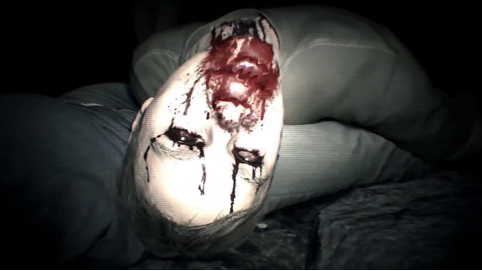 This is, perhaps, the point at which the game differs so markedly from its predecessors, all of which were based around similar structures of reaching particular “safe points” from which to procede or spread out and explore. That is not the case, here; spaces you might assume to be safe are not, or become areas of activity and threat in short order. You must be constantly aware, active and dynamic in order to survive, and be able to utilise your environment in ways never seen in a Resident Evil title before. Certain familiar mechanics are still in place; the menu and item system is a refined version of that from previous Resi titles, with similar mechanics of examination, combination; minor puzzle solving, utilising the right item at the right juncture etc. Most of the logic puzzles that Resi fans havve become familiar with are still very much in evidence; pleasant callbacks to a somewhat more innocent time, that serve to enhance the horror of the situation by contrast rather than detracting from it. The most significant changes refer to how you conduct yourself as the player; before, Resi titles relied upon a certain degree of familiarity; you would wade through the same corridors and rooms and hallways over and over until you'd gotten the placement of enemies, traps, doors and hide-aways down pat, rendering those spaces somewhat less threatening or impassable than they previously were. Nullifying those areas usually consisted of wasting the enemies that occurred there, with variations on that theme found throughout the series as it progressed. Here, the emphasis is entirely different: though some enemies occur in pre-determined places and patterns (mostly for the sake of initial introduction), they are no longer confined to those areas, able to either open doors and climbs ladders etc (in the case of the more human enemies) or seep through walls, vents, ceilings and floorboards in the instance of the more...abstruse monstrosities. They are also all far, far more threatening than most enemies in previous Resi games; it is no longer a matter of emptying a set number of bullets into an enemy and watching its head explode: here, standing and shooting will get you murdered very, very quickly. More akin to Silent Hill, Amnesia and any number of independent titles (from which Resi VII draws more than a little inspiration), the most effective way of dealing with most enemies is by not dealing with them at all; running and hiding, making use of the environment, mapping out the house and its surrounding environs so as to make use of “safe spaces,” hidey-holes and the like...there is a greater sense of immersion and natural occurrence when it comes to the enemies in this game; they are not merely presented as roadblocks to progress or even as potential hazards, but as parts of the environment itself. In order to succeed, the player is going to have to familiarise themselves with how the environment works; to know where they are running and into what, so as not to flee one terror only to hurl themselves headlong into the arms of another or a dead end. Combined with the natural tension of the situation, the shock of enemies bursting through walls, doors and falling from the ceiling, this is heart-attack material of an entirely other order, especially with the enhanced immersion provided by VR equipment. Again, I cannot emphasise enough how visceral and evocative this experience is in VR; the sense of depth and dirt, of darkness, decay and physical grime is uniquely oppressive; you imagine you can almost smell the dank and rotting wood, the filth in the air, feel the cockroach carcasses crunching beneath your feet. It is a dirty, filthy, moribund and nihilistic piece of work, enjoyment of which will largely derive from the player's ability to appreciate those elements. For those who find such things too oppressive, who like a promise of hope or potential redemption in their horror, this is not the game for them. Flaws? Like all Resi games, it does tend to run out of steam in its latter chapters; when everything is finally established, the mysteries of the setting plot, characters and the mechanics of play unravelled, it loses some of its ability to shock or surprise; as is a consistent flaw in every Resi game to this point, the latter sections of the game are somewhat unsatisfying, as it doesn't quite go where you'd hope it would and the actual mechanics that have been established up to that point are almost entirely abandoned for something much more generic and familiar. 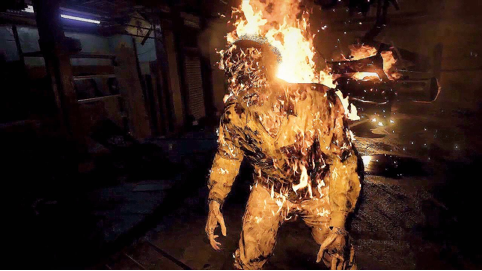 That said, the experience as a whole and for the majority of its play time is so novel, so tense and fascinatingly unpleasant, these are the most minor flaws in an otherwise sublime resurrection. Resident Evil, riding high in (arguably redefining) the echelons of horror once more. Who would have ever believed?   Comments are closed.
|


Archives
April 2023

|
 RSS Feed

|

|