

 The experience of Visage has to be engaged with directly to be fully understood; whilst you might get a passing echo of the same dread and hideous tension by watching a “Let's Play,” direct engagement with the game is unlike any other experience in horror. If nothing else, current global circumstances have been an excellent imperative for discovering new media. Literature, TV series, YouTube projects and video games have all had a hand in maintaining whatever collective sanity we might assume, the latter proving particularly fruitful (interestingly, several games I have either encountered or revisited reflect said circumstances in a manner that might be regarded as uncanny, not least of which the seminal Bloodborne and Pathologic 2). Visage stands not only as an encapsulation of pervasive anxieties, paranoias and despairs, but also as one of THOSE works that comes along maybe a handful of times in any given lifetime that utterly redefines the zeitgeist; that makes works of a similar vein look as though their creators are asleep at the wheel. Originally inspired by PT, the “Playable Trailer” released by Konami as a means of presaging the now-cancelled Silent Hills, Visage takes the situation, mechanics, tropes and atmosphere of that -comparatively short- piece and extends them into a full narrative. In order to understand the incredible ambition -and phenomenal success- that Visage represents in horror video gaming, one needs to examine PT a little more closely: dropping with the force of an atom bomb early in the Playstation 4's life, the “trailer” (which is essentially a small, self-contained game in itself) garnered incredible audiences thanks to its proliferation amongst Twitch streamers and “let's players,” for whom the trailer presented perfect fodder, given the overt shrieks and whimpers of dread it inspired. As a marker of how horror video games might potentially evolve in the then-new console generation, it represented a quantum leap; subtle, ambiguous, deeply melancholic, the trailer seems to suggest a wander through a mind broken by trauma and past misdeeds, resulting in an escalatingly bleak and surreal waking nightmare, where nothing is certain, everything -from the most banal household items to simple doorways- seethes with threat and there is genuinely no way of predicting what might be waiting around the next corner (or, as has been discovered in the years since, what lingers behind the player). Conflated by the raw furore of the gaming public upon discovery that it served as a trailer for a new Silent Hill game -a franchise that is canonical, almost gospel-like, in the annals of video game horror-, excitement could not be higher. People bought PS4 consoles on the promise of this game's release alone. 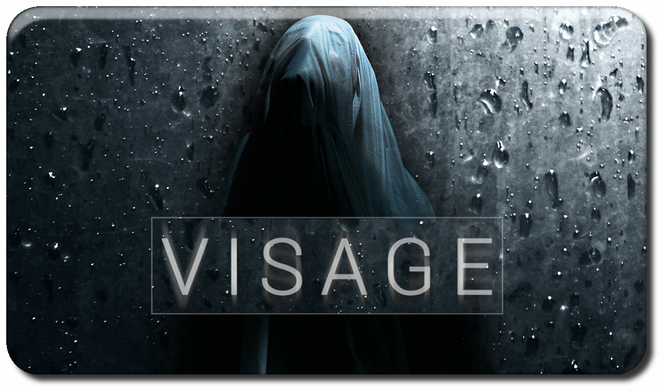 Then, of course, it got cancelled (because, as the saying goes: “Konami is Konami and Konami is shit” - Jim Sterling). The disappointment, the abjection, following that announcement, was palpable. One of the key reasons to own a PS4 at that time had been taken away, and a game that promised so much to horror fans now had no hope in Hell of ever being born. Fast forward a few years, and we have several attempts to recreate the tensions and horrors of PT from the independent market, most of which vary in quality, but rarely reach that exquisite point of absolute and abject dread that defines the experience. Then, Visage. Another independent project, unabashed in its inspiration and intentions, but arguably the most complete, coherent and competent of any, it's arguable that this game is more effective than anything Konami could have ever produced, being unhampered by the pressures and expectations of mainstream markets, corporate vicissitudes etc. Visage. A horror video game experience that, despite being inspired by a pre-existing product, is unlike any other; an exercise in dread, tension and disturbia that genuinely makes the player reluctant to play it. The experience of Visage has to be engaged with directly to be fully understood; whilst you might get a passing echo of the same dread and hideous tension by watching a “Let's Play,” direct engagement with the game is unlike any other experience in horror. Whereas most horror video game titles maintain a certain distance from the player, relying on the insulation of the TV screen and their own contrived natures to dilute whatever traumas they might inflict, Visage does away with that, creating an experience so immersive, so immediate, it's almost impossible not to be drawn into its hideous embrace, to become mesmerised by the various species and styles of horror it incorporates. No two moments in this game are ever quite alike. No two “scares” ever follow the same beats or patterns. Misdirection and variety are key techniques the game utilises to either unsettle the player or lull them into a false sense of security. If you think you know horror, if you assume to understand how horror video games work, that will not help you here; the game is a masterclass in how to play on assumption to elicit not only shock but profound discomfort. Many of its set-pieces are quiet, subtle and have extremely low-key pay offs that serve to elicit mild shudders, the sheer profusion of which slowly accrue to leave the player perpetually on edge, sincerely not knowing what the next second will bring. You may, at times, believe that you've got the “formula” down, that you know what the game wants of you and thereby how to tame it (given the nature of horror video games heretofore, you'd be forgiven for falling into that trap). But this game, this damn game, will not let you get away with that. Prepare to have the rug powerfully yanked from under you at every step. Prepare to be confronted by images and situations that leave you shuddering in your seat. Prepare to have a cardiovascular workout the like of which no exercise routine or regime can match. Because this game is so far beyond even the most competent and ambitious of its contemporaries, it will utterly and unapologetically ruin you for the genre as it stands. 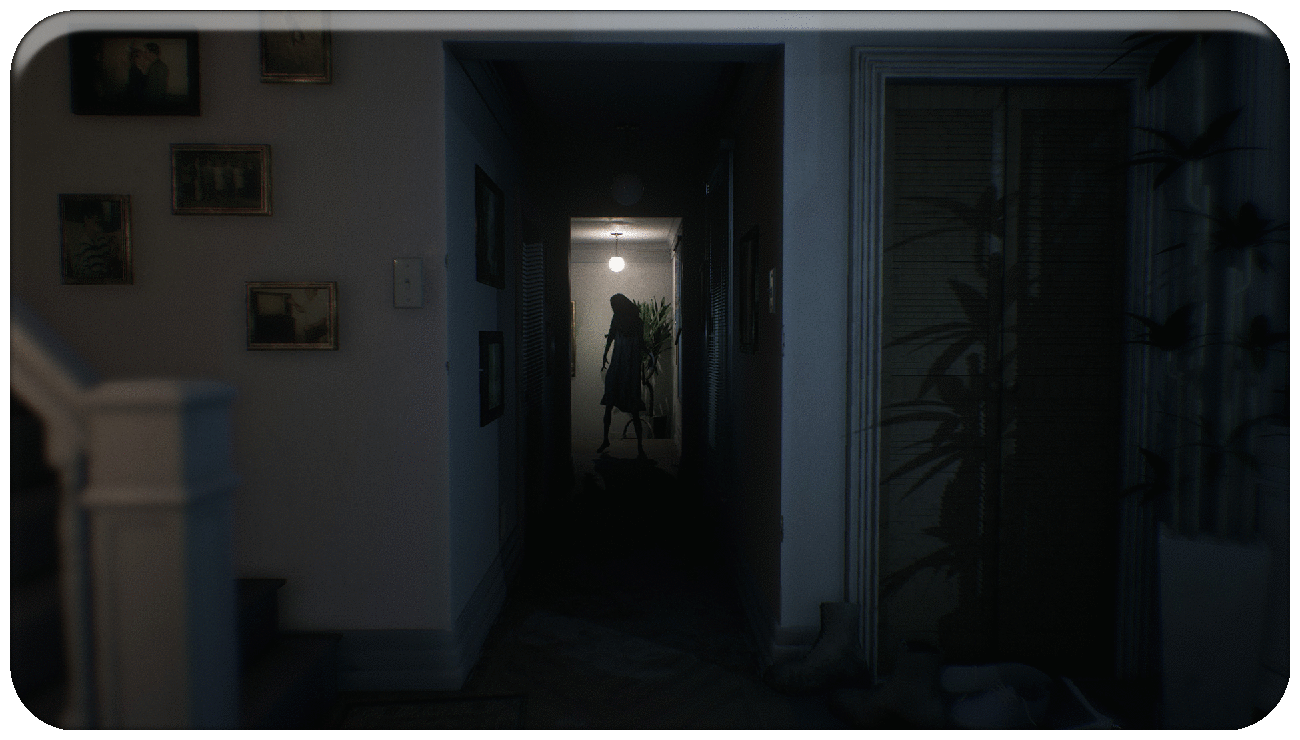 Beginning at the end, the opening sequence is a marker of how bleak and brutal the tone is going to be: seeing through the eyes of our protagonist, we sit in a dark, grimey basement room, a gun set on a bare table before us. Picking up the gun, we check that it is loaded, then find our attentions turning to the writhing, bound and gagged figures in the dark (our wife and two children, presumably). In a moment of the most sublime cruelty, the game forces us to interact with a scene over which we have no control, beyond quitting the game itself or turning off the console: we have to execute each family member before the game begins, a sequence that is beyond horrific, and leaves us in no doubt as to what kind of story we're in for. Echoing PT, we then wake in the same room, finding no evidence of the atrocity we might, might have merely dreamed or hallucinated. Or perhaps remembered. Leaving the room, we find ourselves on a stairwell landing in a perfectly domestic house, no clues given as to what we're doing there, though there is something about its structure and dimensions that seem. . .indefinably off. From here, we are free to wander, exploring the main house as we see fit, engaging with its brick-a-brack and ephemera, which paint the picture of a family home, now strangely abandoned, our nameless and mysterious protagonist seemingly as confused as we are. Passing the phone on the wall, we are treated to a telephone call from a “concerned” neighbour, who seems to be fretting over having not seen our family in some time. It's here that we learn the name of our protagonist -Dwayne-, though even that seems uncertain, at this point. Exploring the house yields subtle clues and provides minor examples of the kinds of scares we might expect; lights turn off arbitrarily, leaving us in the dark, doors close seemingly of their own accord and radios and televisions turn off and on without any apparent agency, sometimes providing scraps of song or broadcast, most often distressing, static-garbled nonsense. It's also here that we discover the game functions based on “sanity” -a fairly standard mechanic in horror games these days, but here implemented in anything but a standard fashion-; there is no health, only a metre that determines how stable Dwayne is at any given moment. This is where the game most immediately demonstrates its lack of standardisation: whilst the obvious phenomena -darkness, images of surrealism and strangeness, strange sounds etc- are enough to affect the metre, there are also numerous idiosyncratic triggers that serve to symbolically suggest Dwayne's backstory (for example, the chiming of the grandfather clock at the end of the primary landing is enough to drastically decrease his sanity. Likewise, any attempt to venture into what is clearly a boy's bedroom has a similar effect). The resultant effects of sanity loss are also highly bizarre and often idiosyncratic from one instance to the next; as sanity diminishes, phenomena increase, but their nature and frequency vary depending on a host of factors (e.g. where in the house Dwayne actually is, what chapter he is currently playing etc). Sometimes, Dwayne will find himself lost in a darkness that has nothing to do with mere absence of light. Sometimes, environments warp and shift, doors that were there one moment disappearing the next, corridors stretching off into eternity or contracting as he traverses them. Others, he might see flickering, spectral phenomena at the edges of sight, phantoms lingering at the foots of stairways, peering from behind doorways or around corners. At the apex of madness, spectres of various stripe and species manifest, shattering sanity and dragging Dwayne into oblivion. The house itself also provides any number of both random and orchestrated set-pieces. These change and vary depending on numerous factors, such as Dwayne's progress into the plot, how many of particular items have been collected and how many chapters have been completed. Beginning fairly innocuously, they quickly escalate into reality-warping insanity, in which the house becomes conflated with the condition of Dwayne's own mind (in a nod to classic horror staples such as The Fall of the House of Usher, The Haunting of Hill House, The Shining etc). The sophistication of the game's horror in this regard cannot be overstated; whilst there are plenty of -pristinely pitched- jump scares, there are also extremely subtle examples of disturbia, which range from environments changing both subtly and profoundly in the blink of an eye, momentary glimpses of something awful in reflective surfaces, phantom sounds and voices, drawings and scrawlings on the walls and a thousand more besides. And this is before we even dive into the specific chapters. 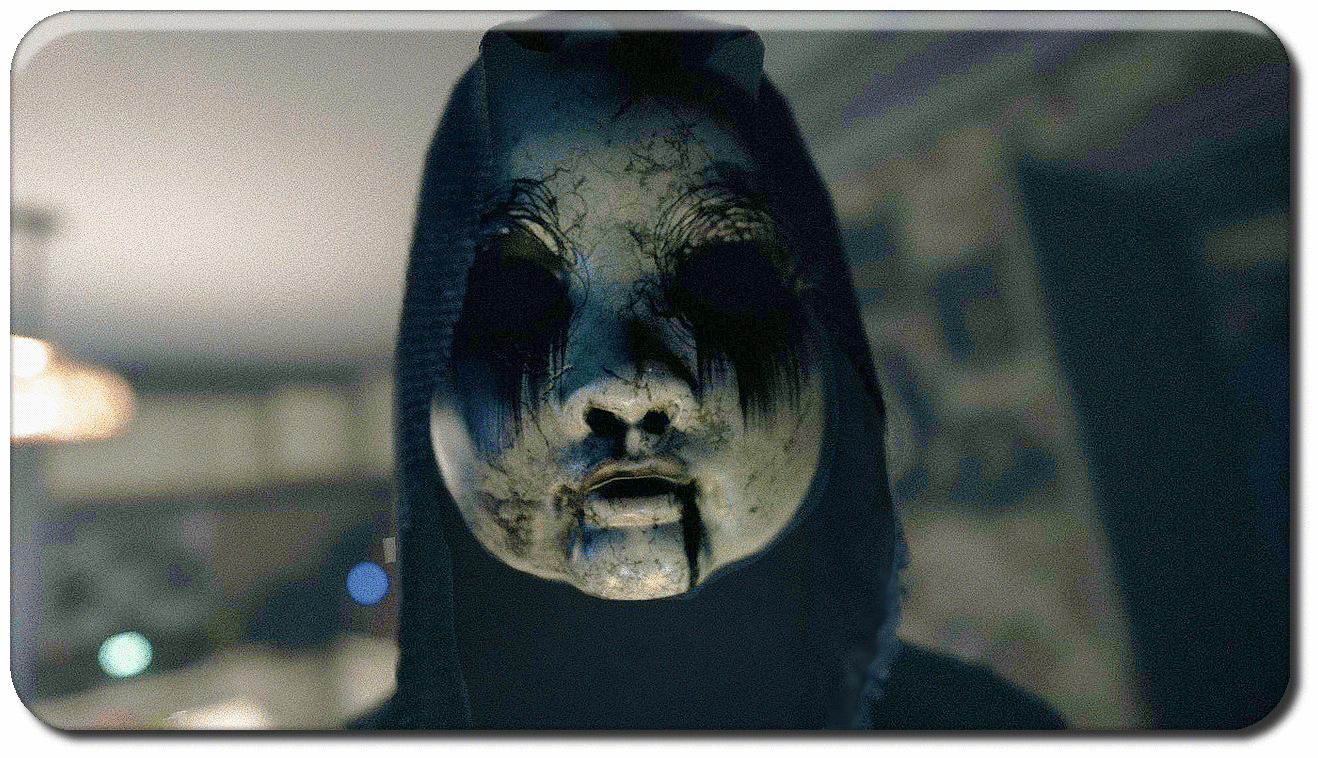 Whilst the game provides almost nothing in the way of instruction or explanation -making it, as the title screen promises, a tough SOB to crack-, it quickly becomes apparent that, structurally, it operates from a “hub world” -i.e. the main house-, in which various key items can be picked up which then initiate specific chapters. Each chapter is remarkably removed from the other, emphasising different types and sub-genres of video game horror (many of which are clear homages to other franchises. Lucy's chapter, for example, is obviously inspired by Japanese horror, right down to the “young girl” ghost and her lank, long hair, skittering movements and pitiless demeanour. The franchise Fatal Frame is a clear inspiration, given the prevalence of a camera whose flash becomes the primary means of “seeing” and repulsing the spectres. Rakan's chapter, meanwhile, is a surreal descent through a mind broken by schizophrenic delusions and paranoia, its setting, themes and imagery more than a little redolent of the independent horror hit Outlast). The game does not tell the player that this is the case, nor does it specifically signal or signify the dynamic in-game; for the most part, the player will only become aware that a chapter has begun when phenomena start to occur, the house changes around them and, ultimately, the relevant spectres become apparent. Each chapter can be tackled in any order (though they do vary wildly in style and difficulty, each one requiring a different approach and a reorganising of the player's assumptions in order to tackle), with the hub-world providing its own particular quests and story lines that interweave throughout (the storytelling is sublimely subtle, suggesting relationships between ostensibly unrelated characters, not to mention Dwayne himself), culminaing in one of several different endings, the criteria for each of which range from the mysterious to the esoteric. The sheer variety on display here in terms of types of horror, style of gameplay and even atmosphere is unbelievable. Visage attempts to not merely include but exemplify more images, concepts, techniques, aesthetics, story arcs and scares in a single chapter than most horror video games attempt in their entire runs. Nor is it afraid of distressing its audience to the point of repulsion; besides the bleakly sumptuous despair that pervades every chapter -each one a story of a broken and tragic life-, there are also descents into hallucinogenic mania that make the influence of Silent Hill overt. In Dolores's chapter, for example, the player will find the house “haunted” by strange mirrors that crop up throughout, each one a copy of a broken mirror found in the upstairs bedroom. The discovery of a sledgehammer reveals the dynamic of the chapter: each mirror must be broken, the arenas beyond navigated, the puzzles solved, all the while avoiding the murderous ghost of Dolores, a woman who purportedly lived in the house long before Dwayne and killed herself after murdering her husband. Rakan's chapter, meanwhile, slips in and out of an escalatingly decrepit and infested house into hospital corridors; the same institution where Rakan himself was committed and suffered all manner of abuses and manias (watch for references to Jacob's Ladder throughout). Lucy's chapter, meanwhile, changes the pace by making the eponymous ghost highly active and hostile; after the discovery of an archaic camera in the house's basement, it becomes necessary to utulise its flash every so many steps to not only see Lucy's disturbing, child-like scrawls on the walls but also the ghost herself. Every moment of Visage is an exercise in sublime and uncanny tension. Owing to the faintly distorted, first-person perspective, the subtle exaggeration of certain angles, lighting etc, the game excites an odd and abiding state of anxiety in the player, which is compounded by the sheer unpredictability of the game itself. Whenever the player allows themselves the luxury of assumption, whenever it appears the game is finally descending into formula, it deliberately inverts and upends itself, throwing new and unexpected situations into the mix, along with horrors the like of which have never been encountered or even suggested before. These range from the extremely subtle dread of piecing together a comic whose pages are scattered around the house, but which slowly reveals the back-story of the “concerned” neighbour who continually calls throughout to the far more overt descents into other environments and conditions, many of which are the sincere stuff of schizophrenic nightmares. Whilst the game is worthy of all praise, and deserves to be experienced by anyone who has a taste for this subject matter, there are a number of caveats that must be made: First of all, the game is HARD. In fact, at times, it is evil to the point of alienating. Providing little in the way of clues or explanation, it becomes a matter of trial and error, often under the panic and duress of being stalked by some deranged phantasm. Many players concede defeat before completing even a single chapter, let alone perservering with the whole game. Secondly, the game is disturbing with a capital “D.” This is NOT some B-movie, ghost-train ride frolick a la Resident Evil; the subjects it contains range from genuine psychological disturbance to self-harm, from drug-abuse to suicide, along with a whole host of other unpleasant and near-the-knuckle subject matter that it makes no bones about portraying. In that, it might prove profoundly triggering for some players. Beyond that, it is arguably one of the most competent, unabashed, brilliant examples of video game malevolence ever conceived, and it's going to be very, very difficult finding alternatives that even approach its genius.    Comments are closed.
|


Archives
April 2023

|
 RSS Feed

|

|