

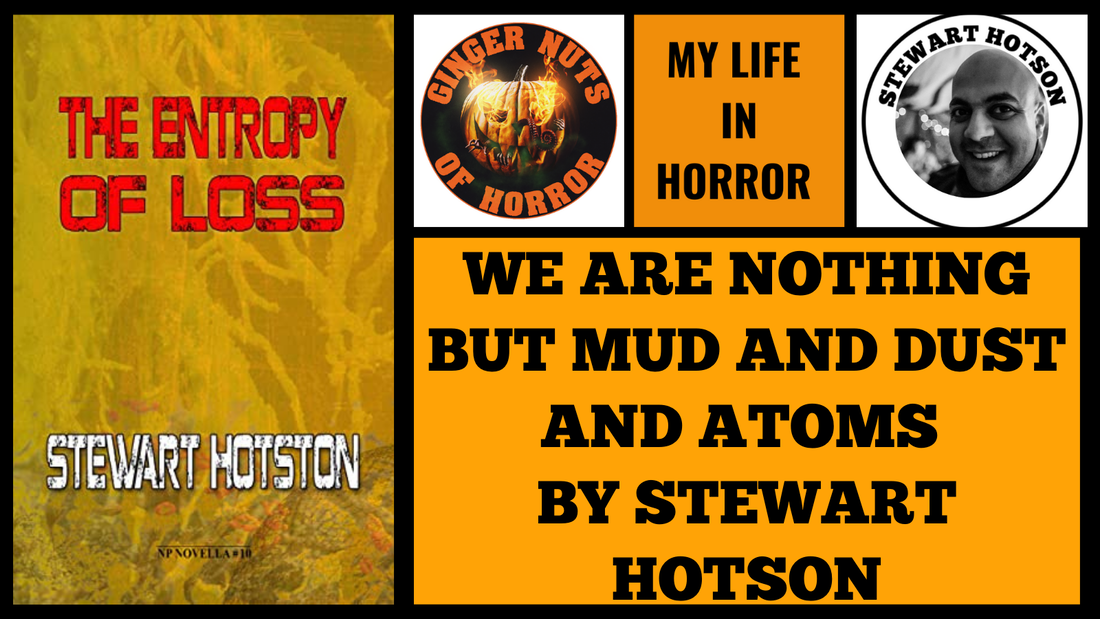
 CHILDHOOD FEARS I’ve never been afraid of gore or jump scares. The monster that’s on the screen didn’t bother me. As a kid, I found it was easy to sneer at Freddie Kruger or Jason Vorhees. The reason being that the kinds of things which made me frightened as a younger person (and certainly remain emotive for me now) are not the things my friends found frightening. I’m a person with multiple heritages in my background. In other words I have brown skin. Growing up in the eighties it meant I had NF written on my pencil case by classmates and was called paki in any day with the word ‘day’ in it. My fears were not of rampaging monsters because my real life was full of them and, frankly, they were more present and in my face than any thought of a smug imbecile with knives for fingers. Worse still, from my point of view, someone like Candyman or Freddie was, in many ways, more identifiable for me because I suffered at the hands of the majority. What was uncomfortable in those tales is that their suffering, no matter how intolerable, was seen as a motive force for their evil. Which seemed to be the wrong way around for me. What scared me wasn’t what my friends found terrifying. The reason I didn’t care about gore or extremes was because they supposed some safe place from which you could be pulled, whose sanctity could be overturned. The biggest assumption was that, except for these cases real life was a place of calm and safety. Instead, what grabbed me and what continues to grab me, were the fears that hid just out of sight. If I could keep racist bullies and teachers in sight I could control the scenario. If I couldn’t see them? Shit. I don’t mean jump scares. I mean the fear of the hidden, of the creeping dread, of the fingers slowly grasping the edge of the door and pushing it open to reveal nothing but shadows. Noises which can’t be located, whispers of words which seem like dreams. I’ve got three tales to tell of my childhood fears. The first of them was Jaws. You might laugh because Stephen Spielberg’s Jaws is pretty in your face. For me what was terrifying about Jaws was my bedroom carpet. It was blue. And I was scared a shark would come up from underneath the floor and bite my legs off. So scared I wouldn’t get out of bed unless my bladder was going to do something out of control. That fear didn’t last long – perhaps a few months at most – but the fear of something lurking just out of sight, waiting for me to let my guard down, was enough to have my parent’s let me sleep with the hall light on. I still remember the scene with the three of them in the boat, alone at sea, getting drunk and talking while outside the shark circles, draws closer and weighs up its prey. That sense of feeling safe when the truth was they were anything but? That foreshadowing of just how wrong their assumptions were? It still taps into something deep in my gut. The template of my fears was well founded by Jaws. And, truth be told, since I was a teenager there’s been almost nothing in fiction which had frightened me. Lots has left me wincing or uncomfortable but actual fear? That is an uncommon response. I put that partly down to my experience as an outsider growing up but my next tale adds a certain other element which I hope explains a bit more. As a seven year old I lived in an old house. It was a terrace, probably built in the late 1800s. We lived there for maybe six years, moving out when I was eleven. My room was at the back of the house. I don’t remember much about this time in my life except that room had a presence in it. I would wake at night and see a bright skull in the corner of the room by the built-in wardrobe. It wasn’t out to get me, but it was terrifying. It happened enough that I told my parents what I was seeing and they ‘got people in’. Given my father was a devout atheist I must have been quite convincing. Those people, whether charlatans or otherwise, confirmed something grim was going on and did whatever people like that do (I believe they were Catholics) and, weirdly, I never saw the skull floating in my room again. Yet that sense of something hovering, just the other side of what I could see was there in my life all over again. I have no idea what that experience was about. I don’t know what my parents explained to whoever came to sort it and I don’t know what those people did which resulted in me never seeing it again. I do know I never met the people who came to the house to sort it, so it wasn’t anything they did to me. I’ve a doctorate in physics. I’m not given to flights of fancy (other than writing) but to this day I will not tell you that all we are is mud and dust and atoms. The last of my childhood fears came a bit later. I was a proper teenager (which feels young to the now forty something me). For various reasons I was doing youth work with a church up in the North East of England. We were staying in a church building. We, as a group, started seeing things. Feeling chills and sudden changes in temperature. We heard odd noises – especially at night. We were there a week and it was thrilling. We did research, discovered the church had been built on a plague pit, discovered it had been founded by Freemasons. That’s right, count the tropes. I didn’t really understand the concept of the ‘bad place’ as a kid. I do now. I look back on that and reflect about the centrality of the ‘bad place’ in horror and, in particular, my love of horror. I’m a sucker for ghost stories, of people finding themselves in the bad place. If the bad place is really one of those locations with thin walls between here and there then even better. In my own writing I’m drawn back again and again to these ideas of the creeping dread, of the fight that potentially can be won but often only by escaping. I love the idea that the dread, the fear we feel is in part driven by an unacknowledged recognition that we don’t know what it is we’re facing. That mystery is awful – that double edged word which means both to be terrified and thrilled, to be full of awe. I think of how angels arrive and their first words have to be ‘do not be afraid’ because crikey they’re alien and other and beyond and of course we’re afraid. As I get older I find I’m also drawn to what that fear does to our sense of identity. As I reflect on my childhood fears I find that much horror, whether it’s body horror or the fear of losing our faculties is a fear of losing the self, of being driven out or taken over. The bad place, the lurking other, they threaten our sense of who we are. They threaten it because they promise that what we believe about ourselves and our place in the world is a lie to be exposed by the painful peeling back of skin. For me this is horror: to learn I am not who I thought I was, but the lie isn’t that I’m someone else, it’s that there might be nothing coherent behind my eyes at all. That I might simply be something small crawling on the skin of a giant hoping it doesn’t notice me. That someone else may come along and erase me and after they’re done everything I wanted, everything I hoped and everything I loved will be gone. The Entropy of Loss |

 |  |
THE HEART AND SOUL OF HORROR Promotion Websites
Comments are closed.


Archives
April 2023
March 2023
February 2023
January 2023
December 2022
November 2022
October 2022
September 2022
August 2022
July 2022
June 2022
May 2022
April 2022
March 2022
February 2022
January 2022
December 2021
November 2021
October 2021
September 2021
August 2021
July 2021
June 2021
May 2021
April 2021
March 2021
February 2021
January 2021
December 2020
November 2020
October 2020
September 2020
August 2020
July 2020
June 2020
May 2020
April 2020
March 2020
February 2020
January 2020
December 2019
November 2019
October 2019
September 2019
August 2019
July 2019
June 2019
May 2019
April 2019
March 2019
February 2019
January 2019
December 2018
November 2018
October 2018
September 2018
August 2018
July 2018
June 2018
May 2018
April 2018
March 2018
February 2018
January 2018
December 2017
November 2017
October 2017
September 2017
August 2017
June 2017
May 2017
April 2017
March 2017
February 2017
January 2017
December 2016
November 2016
October 2016
September 2016
August 2016
July 2016
June 2016
May 2016
April 2016
March 2016
February 2016
January 2016
December 2015
November 2015
October 2015
September 2015
August 2015
July 2015
June 2015
May 2015
April 2015
March 2015
February 2015
January 2015
December 2014
November 2014
October 2014
September 2014
August 2014
July 2014
June 2014
May 2014
April 2014
March 2014
February 2014
January 2014
December 2013
October 2013
September 2013
August 2013
 RSS Feed

|

|