

 Today we have an interview and a guest post from Kevin G. Bufton. Kevin G. Bufton is a thirty-something father, husband and horror writer (in that approximate order) from Birkenhead, on the Wirral.He has dreamed of being a full-time, professional, published writer since he was in primary school and, in January 2009, he took his first faltering steps towards making his dream a reality, when he submitted his first story, 'In the Darkness' for publication. It was accepted and published that same month, in the now-defunct e-zine, Micro 100 and Kevin has not looked back since. His stories have appeared in numerous websites, magazines and anthologies across the globe. Kevin also edits horror anthologies for Cruentus Libri Press. Words of Inspiration by Kevin G. Bufton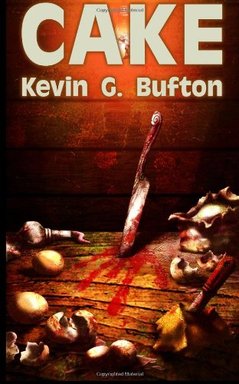 This year saw the release of my first book, Cake, published by Cruentus Libri Press. It marks a major milestone in my writing career, without question – appearances in anthologies, magazines, and websites are all very well and good, but nothing compares to seeing a book that is all yours. Cake is my maybe, the result of six weeks worth of hard work, and, sink or swim, it’s all mine! But that’s not what I’m hear to talk about today. You see, like most writers, my career did not begin with the release of my first book. It didn’t begin when I had my first piece of fiction accepted and published in the sadly defunct e-zine Micro 100. It didn’t even begin when I first put pen to paper, and composed the first sentence of my debut story. No, no, gentle reader. My writing career, such as it is, began many moons ago, not with anything that I wrote, but with something that I read. I believe that very few writers simply fall into this game. I imagine that, like me, most were inspired to pen their own fiction, thanks to somebody else’s work – something that they read, which truly affected them, and made them want to try their hand and stirring similar emotions in someone else. I can point to five books that did it for me, and, with your indulgence, I’m going to discuss the influence that each of them had on me. ‘Salem’s Lot by Stephen King is the first one that comes to mind. I read it when I was an impressionable youth and, whilst it was not the first horror novel I had ever laid eyes on, it remains one of a very few books that scared me – I mean really scared me. I’m not too proud to say that, having finished it in a single sitting, around three in the morning, I didn’t dare turn off my light, when I went to sleep. That’s power, right there. If I achieve nothing else as a horror writer, I hope one day to receive an e-mail from a reader telling me that one of my books had the same effect on them. The next book is a bit of a cheat, as it’s Books of Blood by Clive Barker, which is a six-volume set, but I’m including them all in here, as I can’t imagine anyone finishing a single volume, and not wanting to plough through the others. Whereas ‘Salem’s Lot scared me at a gut level, at that point where rationality goes out of the window, and I couldn’t face the darkness on my own, Barker’s series of short fiction collections affected me in a completely different way. They showed me the potential of horror, that it wasn’t all vampires, werewolves, and things that go bump in the night. Anything, they seemed to tell me, can be horrific, so long as you put the right spin on it. It was a revelation. Before Books of Blood I’d read mostly mainstream horror – mutant rats, killer slugs, serial killers, giant crabs, haunted hotels, and the like – some of them were great, others not so much, but none of them had overly stretched my imagination. Barker did that for me, giving my mind’s eye a workout, the likes of which it had never experienced before. Sentient human hands detaching themselves from their hosts, people skinned alive, their flayed hides exacting revenge on their killer, unspeakable monstrosities trapped in a piece of knotted cord. Wonderful, grotesque, and beautiful in equal measure, they proved to me that the only limitations in a horror story are in the mind of the writer. So those are two books, by two acknowledged master of the genre, and they showed me both the power and the versatility of horror as a medium. My next book, James Herbert’s Sepulchre, took things one step further and made me want to be more than just a consumer of this sort of fiction, but to create it as well. I was fourteen or fifteen when I first read, and I already knew that I could string a sentence together, but I wasn’t sure if it was something I wanted to do as a career. Sepulchre changed all of that. To this day, if anyone asks for a book recommendation, this is the one I tell them to read. It is a sublime piece of work. It manages to be both epic in scale, and intimate in its execution. The ultimate threat is easily as fanciful as any of Barker’s creations, but the setting and the main protagonist are so resolutely grounded that it feels more real, and hence more threatening. Herbert’s writing was so tight, with not a single word wasted, that I was hooked from the beginning. It was another book that I couldn’t bear to put down. It’s a cliché, I know, but back then I had he stamina to read into the wee hours, without it affecting me the following day, so I did it. I knew, having finished it, that this was what I wanted to do. It was clear as day in my head. I knew I could tell a story, and drag it along the necessary points to get from A to B, and I also know that I could scare people if given a chance, but Sepulchre crystallised my dream for me. It was an epiphany, but it was not accompanied by a blare of heavenly trumpets, because I knew that, if I was going to do this thing, that Sepulchre was the standard that I would have to hold myself to. I haven’t made it yet, but that will always be my yardstick. I was a little older when I read the next book on my list – The Chosen Child by Graham Masterton. Eighteen years old, and studying hard for my A-Levels, I was not a little kid any more, but neither was I ready to call myself a man. I had, however, picked up some tools in the intervening years that allowed me to be more critical of the works I was reading. I came to appreciate foreshadowing, plot structure, character development, and all those little intricacies of the written form. Instead of just being swept away by the plot, I would find myself dissecting the method of delivery. I soon learned that the difference between a good novel and a great novel was a yawning abyss, filled with mediocrity. It was a depressing thought that this passion of mine, this genre that I loved, could be home to such unmitigated crap, and it bothered me that this was exactly where my work would be headed (little did I know it would take another twelve years for my stories to see print!). The Chosen Child gave me hope. It was beautiful, a veritable lesson in the fine art of constructing a novel. As I read it, I could sense Masterton lining up all of his little tricks like a street magician, ever ready to pull another one out of the bag. It gave me chills, as a good book should, but it also showed me the way. “This is how you build tension,” it seemed to say. “This is how you create sympathy.” More importantly, “this is how you break a heart.” I think it’s safe to say that I learned more from reading this book three or four times, than I ever did at a Creative Writing seminar. My last book is not like the others. My last book just doesn’t belong. The Woodsman by Michael Falconer Anderson is, to date, the worst horror novel that I have ever read. Amateurish writing, linear plot, stock characters and woeful dialogue result in a book that can best be described as an utter abomination. I’m a fairly positive guy, and I’m not one to disparage the work of my fellow authors, but this novel made me angry. It wasn’t just that I had wasted a few hours of my life wading through Anderson’s sub-standard prose, but the very notion that something like this could not only be written, but also published by an actual publishing company, with a proper cover, and everything else, wound me up beyond measure. I made a vow, that day, to become a published author, on the grounds that nothing I produced could be worse that this piece of literary flotsam. And there you have it – five books that inspired me, for good or ill. Wherever I go in the world of horror fiction, these books will be my landmarks, from the bejewelled sun-kissed shores of Sepulchre, to the treacherous iceberg of The Woodsman, they have marked my journey in advance, and all I have to do is set my compass appropriately. I’d like to thank Jim for allowing me space on his website to have this little chat with you, and I’d like to thank you for taking the time to read my thoughts on these books. I would recommend the first four, without hesitation, to anyone who has never read them before. As for The Woodsman – just say no. Seriously, read something else, anything else. Perhaps you might consider Cake, by up-and-coming (not to mention devilishly handsome) horror writer, Kevin G. Bufton. Fucking shameless. Comments are closed.
|


Archives
April 2023
|


 RSS Feed

|

|