

ASH AND I DIDN'T ALWAYS GET ALONG
4/1/2016
The first two Evil Dead movies blew my mind. By the time I'd gotten around to watching them the first film had already been out for 15 years, but they still felt fresh and fun, and were gory as hell. Evil Dead (1981) was campy, dark and surprisingly emotional: a journey straight into hell that gave rise to the popular "cabin in the woods" horror trope, and was made on a shoestring budget. Its camerawork (done by Tim Philo, who went on to shoot Evil Dead II and not much else) was inventive, always keeping the viewer uneasy and on edge, particularly during the shaky-cam POV shots of the woods nicknamed “The Force” or “The Evil Force” by the crew. Its editing by Ruth Edna Paul (who, again, did not do much beyond this film) used intercutting and jarring cuts to build tension. Looking back on the first movie now, it feels very much like a student film, which is likely why director Sam Raimi virtually remade it with Evil Dead II: Dead by Dawn, rehashing many of the same plot points, while cranking up the gore and humor to eleven. Most of the movie was carried by Bruce Campbell's balls-to-the-wall acting during scenes where Ash battled his own Deadite-possessed hand while struggling to hold onto sanity as the Necronomicon Ex Mortis and its minions used him as both a chew toy. The SFX crew literally splattered buckets of blood on the actors and The Cabin.  I was in college for Film Studies (I know…) when I first saw these two movies, and the sheer amount of raw talent poured into them inspired me to attempt similar feats in my own short films and writing. Naturally, when I heard about a midnight showing of the third installment in the Evil Dead series, Army of Darkness, I was psyched. Unfortunately, what was initially titled Bruce Campbell vs. Army of Darkness took everything I loved about the first two movies and threw them out the window of Ash's '73 Delta 88. Director Sam Raimi cut out all the true horror, psychological or otherwise, and replaced it with intentional camp (which to me is a crime far worse than unintentional camp), slapstick humor, and witty one-liners. It was goofy. It took the wildly original concept of the first two films (this is not Lovecraft’s Necronomicon), and twisted it into a spoof of itself. I had no idea what I was expecting, but I didn't get it from Army of Darkness. It took me a while to figure out what Raimi and co. had been attempting. They saw what the majority of their audience enjoyed about Dead by Dawn (the more successful of the two movies), and gave it to them by the bucket. For me, Dead by Dawn was less about the scene where Ash battles tiny, obnoxious versions of himself (reminiscent of The Gate, and the “Sorcerer’s Apprentice” scene from Fantasia), and more about the lengthy, harrowing sequence where “The Evil Force” Ash unwittingly let loose in the woods tries to drive him insane. Because of this, Army of Darkness was a huge letdown. I've since come to realize the problem wasn’t the movie, it was my expectations. Having played and enjoyed the video games, having watched Army of Darkness again (and again), I understand now that the story was never about Ash fighting evil. Ash was the story. I've grown accustomed to, if not outright grown to love, Ash's sardonic wit. And what Ash vs Evil Dead does perfectly from the get-go is put his massive ego and one-liners front and center. 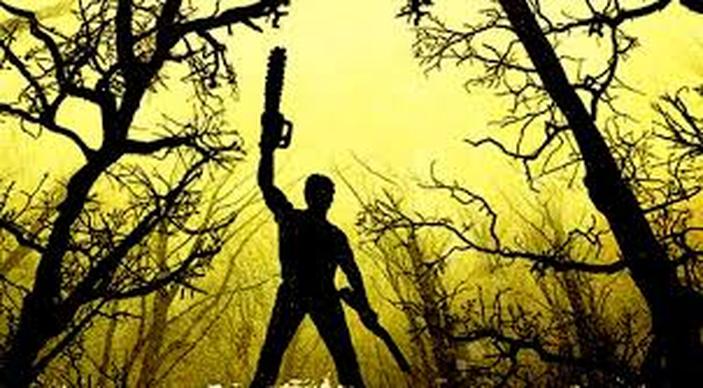 From the very first minute, AvED is a joyride—a return to form for Raimi, who after the critical failure of Spiderman 3 had me wondering if the writer/director still had “it.” But it’s a different beast (or demon) from the originals. We reunite with Ash Williams as he's getting ready for an evening out, strapping himself into a man girdle and psyching himself up in front of the mirror in his sleazy trailer home. It's classic Ash, amped up for 2015. He's brasher and bolder than he's ever been, desperate to be seen as a hero, using make-believe stories of how he got his missing hand to pick up women (and its rosewood replacement to spank them), while drowning his demons—literal and metaphorical—in booze and various recreational drugs. He suffers from survivor guilt due to his previous run-ins with the Deadites, but the series (wisely) forsakes mention of anything from Army of Darkness due to lack of rights (no longer is Ash a weary S-Mart employee, "Shop smart, shop S-Mart"; instead he works at the more generically named Value Stop). The first major difference between this Evil Dead and those that have come before it: Adult Content (read: sex and nudity), Adult Language, and Graphic Violence. Since it’s produced by Starz, the American cable channel that brought us Kelsey Grammer's sexually charged Boss and the blood-spattered dong-fest that was Spartacus, this should come as no surprise. And lest we forget this is the film series that brought us Tree Rape before Tree Rapes became a thing (some of us may want to forget that, perhaps most of all Raimi, who has stated the scene was “unnecessarily gratuitous and a little too brutal”; some may argue that aspect of the movie is exactly what made Evil Dead so powerful), self-mutilation with a chainsaw, and Ash being forced to cut off his fiancé’s head, put it in a table vice, and subsequently split it with an ax. The second and most important difference is it's no longer just Ash versus the Evil Dead. Where in the films he fought them single-handed (literally and figuratively), here he unwittingly enlists the help of fellow employees Pablo (Ray Santiago) and Kelly (Dana DeLorenzo). Despite his constant assertions that everyone he cares about dies and later reanimates as a demonic sock puppet, he's no longer a "lone wolf," and much of the fun comes from his interaction with his two new sidekicks. Pablo is desperate to treat Ash as a hero, seeing him as the “el Jefe” his shaman uncle spoke about when Pablo was young. Kelly tags along reluctantly, at first believing Ash is a psycho—until a return home ends with unexpected bloodshed. The interplay between these characters is hilarious; Pablo’s hero worship of a man who constantly berates and/or undervalues him, and Kelly’s sarcastic disapproval of Ash’s actions and “plans,” such as they are, make for some really great scenes not just in early episodes, but throughout the first season’s ten episodes. Despite his wish to stay a “lone wolf,” Ash can’t help but connect with them. They mesh. We begin to suspect he cares about them, a hard concept to swallow for a man who’s thus far had to decapitate everyone he loves. 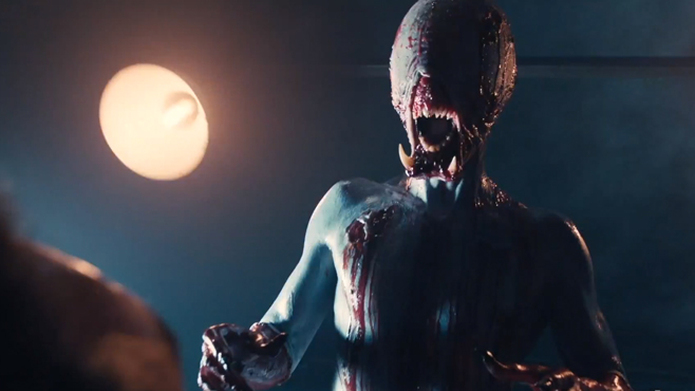 What hasn't changed is the amount of blood, although in the pilot much of that blood is digital. This can be annoying for purists, but since NBC's Hannibal proved digital blood can be done well (the effects crew painted masterpieces in crimson), and Starz’s own Spartacus was practically one of its originators, it didn't bother me. And it maintains a lot of its predecessors’ originality. Unlike other translations of features films to TV (like Robert Rodriguez’s From Dusk Til Dawn, which simply rehashes plot points of the film, dragging out every minute of the original into each excruciating episode, and 12 Monkeys, a safe and mostly bland unpacking of Terry Gilliam’s brilliant 1995 film), Ash vs. Evil Dead uses the originals as a springboard to tell fresh, funny stories that faithfully continue a storyline we know and love, filling out the backstory of the Necronomicon, the cabin, and Ash. We see the Kandarian dagger, demons with actual names summoned directly from the book, and badass Ruby Knowby (Lucy Lawless), the niece of Professor Knowby, whose study of the Necronomicon is heard in the first two films on an old tape player. Just like the originals, the show crackles with inventive camerawork and editing—some of the best in TV, actually, although horror series in general seem to be at the forefront of creative visual storytelling currently. The soundtrack is superb as well, utilizing classic tunes of the ‘70s—symbolic of Ash’s inability to grow beyond his adolescence—along with a great score from the composer of the first two films, Joseph LoDuca, whose blaring 10-second theme song over the title splattering the screen with blood sets the tone for what’s to come. The show does have its flaws. Amanda Fisher (Jill Marie Jones) plays a police officer whose partner dies and becomes a Deadite in the first episode, and she takes far too long to transition beyond her Scully I’m-still-a-skeptic-despite-all-the-shit-I’ve-seen schtick, which makes for a pretty thankless role in her early scenes. In later episodes she’s terrific, and I hope we’ll see her again in Season 2. The tonal shifts can be a bit jarring as well, mostly when transitioning from an emotional moment, like Ash having to deal with the trauma of his dead fiancé, straight into slapstick splatter; or a jokey pick-up line during an extremely tense monster attack, derailing any sense of dread. The short length of the episodes also hurts it at times. Ash vs. Evil Dead runs approximately 28 minutes; a handful of episodes are longer. Without commercials, the time breezes by, sometimes to the point where you might think, “Is that it?” Usually, though, the episodes are wall-to-wall twists, jokes and visual gags. One of the things I like most about it is the constant surprises. It’s rare for me not to have an inkling about what’s coming next in a movie or show, which is why I enjoyed series like True Detective (season one), Twin Peaks, Lost, Hannibal, etc. With this continuation of Evil Dead, it can sometimes feel like they’re throwing plot points at a wall to see what sticks, but it’s almost never a disservice to the story. In the end, Ash vs. Evil Dead is all about its star. Ash grows. Not a lot, granted, but he proves he’s not exactly the misanthrope he claims to be. No matter how you feel about its deliberate misogyny, over-the-top gore, and sometimes cartoonish characters, Ash vs Evil Dead made horror on TV fun again. It takes a lot for a show to hold my attention these days, but I’m looking forward to spending many more hours watching Ash bumble and blast his way through Deadite hoards with his “Ghostbeaters” crew at his side. DUNCAN RALSTON |

Archives
April 2023
|
 RSS Feed

|

|