

 The experience of Visage has to be engaged with directly to be fully understood; whilst you might get a passing echo of the same dread and hideous tension by watching a “Let's Play,” direct engagement with the game is unlike any other experience in horror. If nothing else, current global circumstances have been an excellent imperative for discovering new media. Literature, TV series, YouTube projects and video games have all had a hand in maintaining whatever collective sanity we might assume, the latter proving particularly fruitful (interestingly, several games I have either encountered or revisited reflect said circumstances in a manner that might be regarded as uncanny, not least of which the seminal Bloodborne and Pathologic 2). Visage stands not only as an encapsulation of pervasive anxieties, paranoias and despairs, but also as one of THOSE works that comes along maybe a handful of times in any given lifetime that utterly redefines the zeitgeist; that makes works of a similar vein look as though their creators are asleep at the wheel. Originally inspired by PT, the “Playable Trailer” released by Konami as a means of presaging the now-cancelled Silent Hills, Visage takes the situation, mechanics, tropes and atmosphere of that -comparatively short- piece and extends them into a full narrative. In order to understand the incredible ambition -and phenomenal success- that Visage represents in horror video gaming, one needs to examine PT a little more closely: dropping with the force of an atom bomb early in the Playstation 4's life, the “trailer” (which is essentially a small, self-contained game in itself) garnered incredible audiences thanks to its proliferation amongst Twitch streamers and “let's players,” for whom the trailer presented perfect fodder, given the overt shrieks and whimpers of dread it inspired. As a marker of how horror video games might potentially evolve in the then-new console generation, it represented a quantum leap; subtle, ambiguous, deeply melancholic, the trailer seems to suggest a wander through a mind broken by trauma and past misdeeds, resulting in an escalatingly bleak and surreal waking nightmare, where nothing is certain, everything -from the most banal household items to simple doorways- seethes with threat and there is genuinely no way of predicting what might be waiting around the next corner (or, as has been discovered in the years since, what lingers behind the player). Conflated by the raw furore of the gaming public upon discovery that it served as a trailer for a new Silent Hill game -a franchise that is canonical, almost gospel-like, in the annals of video game horror-, excitement could not be higher. People bought PS4 consoles on the promise of this game's release alone. 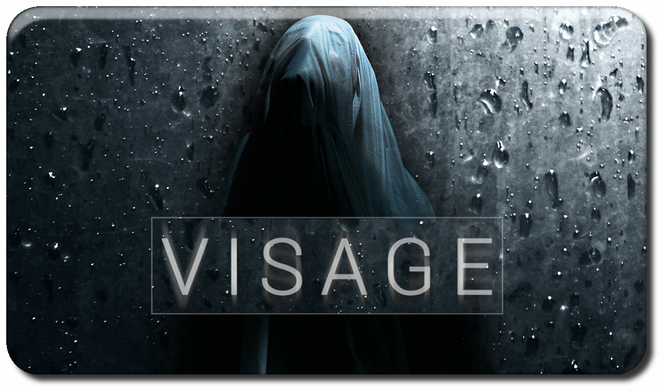 Then, of course, it got cancelled (because, as the saying goes: “Konami is Konami and Konami is shit” - Jim Sterling). The disappointment, the abjection, following that announcement, was palpable. One of the key reasons to own a PS4 at that time had been taken away, and a game that promised so much to horror fans now had no hope in Hell of ever being born. Fast forward a few years, and we have several attempts to recreate the tensions and horrors of PT from the independent market, most of which vary in quality, but rarely reach that exquisite point of absolute and abject dread that defines the experience. Then, Visage. Another independent project, unabashed in its inspiration and intentions, but arguably the most complete, coherent and competent of any, it's arguable that this game is more effective than anything Konami could have ever produced, being unhampered by the pressures and expectations of mainstream markets, corporate vicissitudes etc. Visage. A horror video game experience that, despite being inspired by a pre-existing product, is unlike any other; an exercise in dread, tension and disturbia that genuinely makes the player reluctant to play it. The experience of Visage has to be engaged with directly to be fully understood; whilst you might get a passing echo of the same dread and hideous tension by watching a “Let's Play,” direct engagement with the game is unlike any other experience in horror. Whereas most horror video game titles maintain a certain distance from the player, relying on the insulation of the TV screen and their own contrived natures to dilute whatever traumas they might inflict, Visage does away with that, creating an experience so immersive, so immediate, it's almost impossible not to be drawn into its hideous embrace, to become mesmerised by the various species and styles of horror it incorporates. No two moments in this game are ever quite alike. No two “scares” ever follow the same beats or patterns. Misdirection and variety are key techniques the game utilises to either unsettle the player or lull them into a false sense of security. If you think you know horror, if you assume to understand how horror video games work, that will not help you here; the game is a masterclass in how to play on assumption to elicit not only shock but profound discomfort. Many of its set-pieces are quiet, subtle and have extremely low-key pay offs that serve to elicit mild shudders, the sheer profusion of which slowly accrue to leave the player perpetually on edge, sincerely not knowing what the next second will bring. You may, at times, believe that you've got the “formula” down, that you know what the game wants of you and thereby how to tame it (given the nature of horror video games heretofore, you'd be forgiven for falling into that trap). But this game, this damn game, will not let you get away with that. Prepare to have the rug powerfully yanked from under you at every step. Prepare to be confronted by images and situations that leave you shuddering in your seat. Prepare to have a cardiovascular workout the like of which no exercise routine or regime can match. Because this game is so far beyond even the most competent and ambitious of its contemporaries, it will utterly and unapologetically ruin you for the genre as it stands. 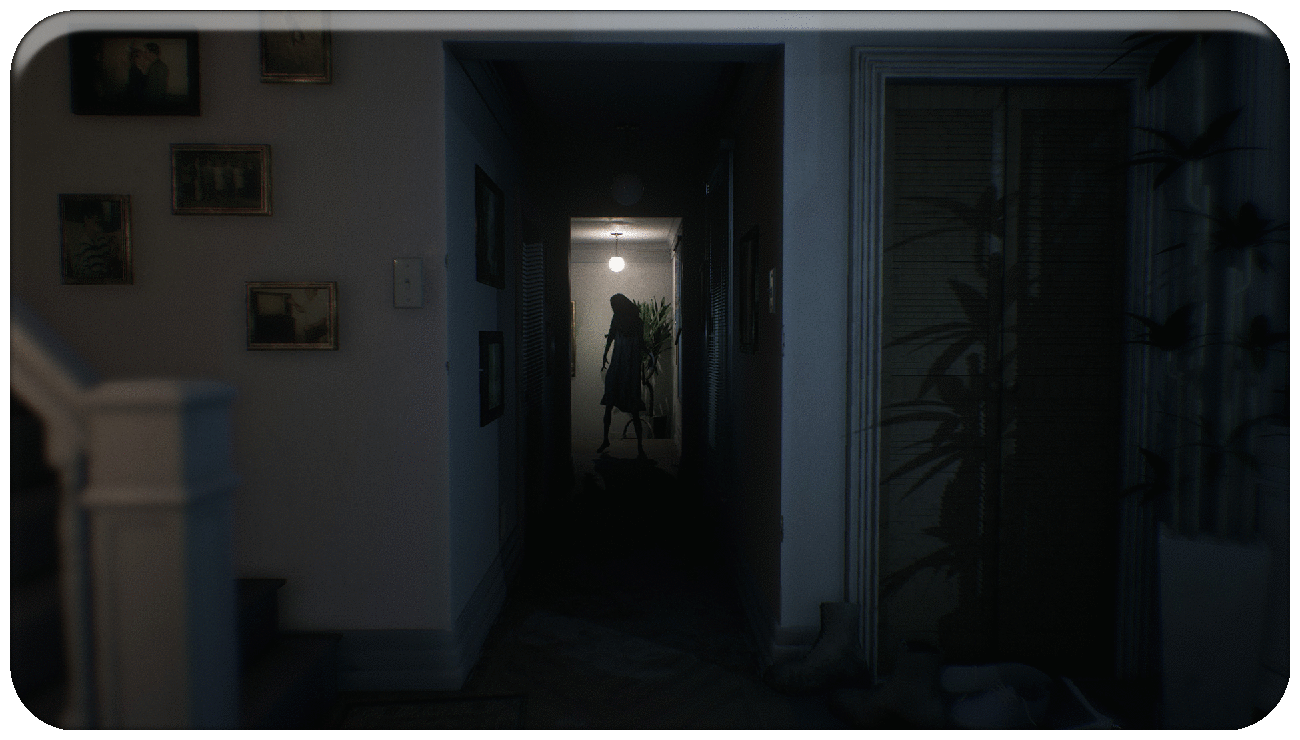 Beginning at the end, the opening sequence is a marker of how bleak and brutal the tone is going to be: seeing through the eyes of our protagonist, we sit in a dark, grimey basement room, a gun set on a bare table before us. Picking up the gun, we check that it is loaded, then find our attentions turning to the writhing, bound and gagged figures in the dark (our wife and two children, presumably). In a moment of the most sublime cruelty, the game forces us to interact with a scene over which we have no control, beyond quitting the game itself or turning off the console: we have to execute each family member before the game begins, a sequence that is beyond horrific, and leaves us in no doubt as to what kind of story we're in for. Echoing PT, we then wake in the same room, finding no evidence of the atrocity we might, might have merely dreamed or hallucinated. Or perhaps remembered. Leaving the room, we find ourselves on a stairwell landing in a perfectly domestic house, no clues given as to what we're doing there, though there is something about its structure and dimensions that seem. . .indefinably off. From here, we are free to wander, exploring the main house as we see fit, engaging with its brick-a-brack and ephemera, which paint the picture of a family home, now strangely abandoned, our nameless and mysterious protagonist seemingly as confused as we are. Passing the phone on the wall, we are treated to a telephone call from a “concerned” neighbour, who seems to be fretting over having not seen our family in some time. It's here that we learn the name of our protagonist -Dwayne-, though even that seems uncertain, at this point. Exploring the house yields subtle clues and provides minor examples of the kinds of scares we might expect; lights turn off arbitrarily, leaving us in the dark, doors close seemingly of their own accord and radios and televisions turn off and on without any apparent agency, sometimes providing scraps of song or broadcast, most often distressing, static-garbled nonsense. It's also here that we discover the game functions based on “sanity” -a fairly standard mechanic in horror games these days, but here implemented in anything but a standard fashion-; there is no health, only a metre that determines how stable Dwayne is at any given moment. This is where the game most immediately demonstrates its lack of standardisation: whilst the obvious phenomena -darkness, images of surrealism and strangeness, strange sounds etc- are enough to affect the metre, there are also numerous idiosyncratic triggers that serve to symbolically suggest Dwayne's backstory (for example, the chiming of the grandfather clock at the end of the primary landing is enough to drastically decrease his sanity. Likewise, any attempt to venture into what is clearly a boy's bedroom has a similar effect). The resultant effects of sanity loss are also highly bizarre and often idiosyncratic from one instance to the next; as sanity diminishes, phenomena increase, but their nature and frequency vary depending on a host of factors (e.g. where in the house Dwayne actually is, what chapter he is currently playing etc). Sometimes, Dwayne will find himself lost in a darkness that has nothing to do with mere absence of light. Sometimes, environments warp and shift, doors that were there one moment disappearing the next, corridors stretching off into eternity or contracting as he traverses them. Others, he might see flickering, spectral phenomena at the edges of sight, phantoms lingering at the foots of stairways, peering from behind doorways or around corners. At the apex of madness, spectres of various stripe and species manifest, shattering sanity and dragging Dwayne into oblivion. The house itself also provides any number of both random and orchestrated set-pieces. These change and vary depending on numerous factors, such as Dwayne's progress into the plot, how many of particular items have been collected and how many chapters have been completed. Beginning fairly innocuously, they quickly escalate into reality-warping insanity, in which the house becomes conflated with the condition of Dwayne's own mind (in a nod to classic horror staples such as The Fall of the House of Usher, The Haunting of Hill House, The Shining etc). The sophistication of the game's horror in this regard cannot be overstated; whilst there are plenty of -pristinely pitched- jump scares, there are also extremely subtle examples of disturbia, which range from environments changing both subtly and profoundly in the blink of an eye, momentary glimpses of something awful in reflective surfaces, phantom sounds and voices, drawings and scrawlings on the walls and a thousand more besides. And this is before we even dive into the specific chapters. 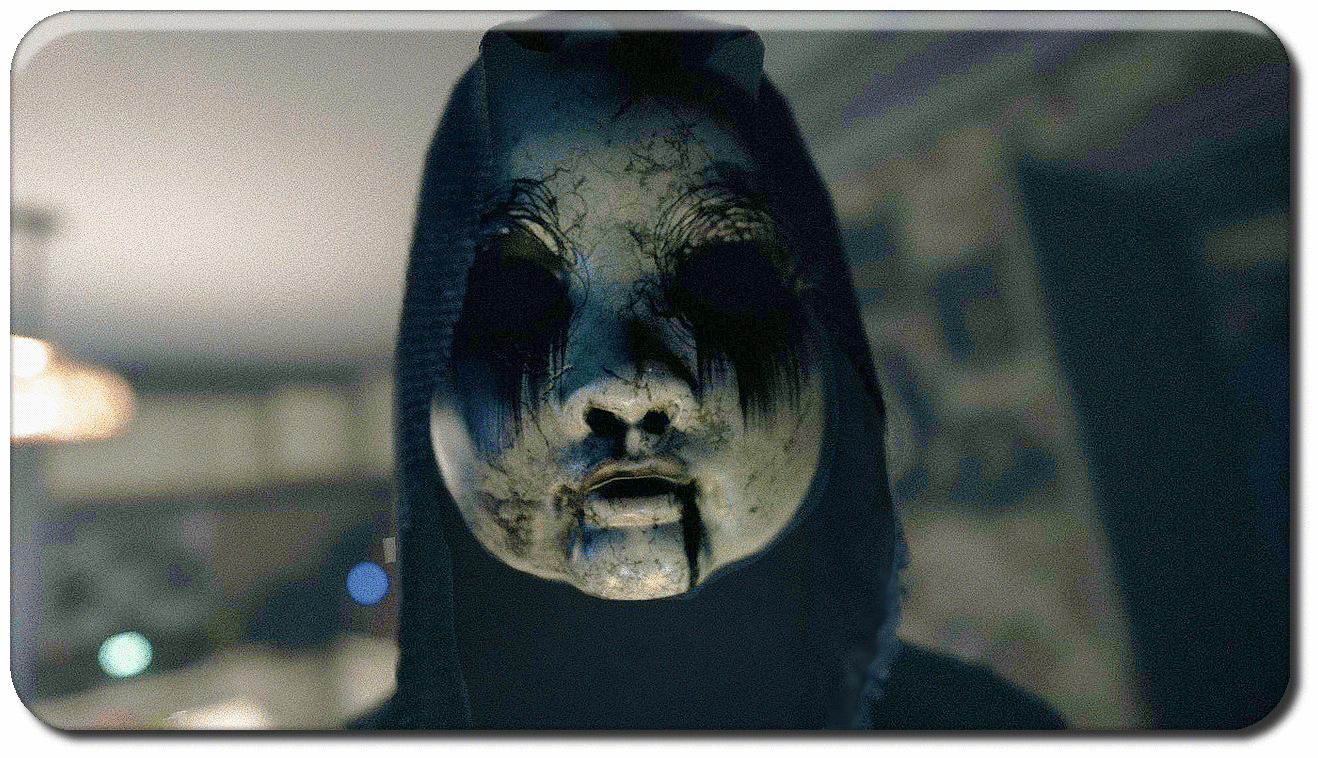 Whilst the game provides almost nothing in the way of instruction or explanation -making it, as the title screen promises, a tough SOB to crack-, it quickly becomes apparent that, structurally, it operates from a “hub world” -i.e. the main house-, in which various key items can be picked up which then initiate specific chapters. Each chapter is remarkably removed from the other, emphasising different types and sub-genres of video game horror (many of which are clear homages to other franchises. Lucy's chapter, for example, is obviously inspired by Japanese horror, right down to the “young girl” ghost and her lank, long hair, skittering movements and pitiless demeanour. The franchise Fatal Frame is a clear inspiration, given the prevalence of a camera whose flash becomes the primary means of “seeing” and repulsing the spectres. Rakan's chapter, meanwhile, is a surreal descent through a mind broken by schizophrenic delusions and paranoia, its setting, themes and imagery more than a little redolent of the independent horror hit Outlast). The game does not tell the player that this is the case, nor does it specifically signal or signify the dynamic in-game; for the most part, the player will only become aware that a chapter has begun when phenomena start to occur, the house changes around them and, ultimately, the relevant spectres become apparent. Each chapter can be tackled in any order (though they do vary wildly in style and difficulty, each one requiring a different approach and a reorganising of the player's assumptions in order to tackle), with the hub-world providing its own particular quests and story lines that interweave throughout (the storytelling is sublimely subtle, suggesting relationships between ostensibly unrelated characters, not to mention Dwayne himself), culminaing in one of several different endings, the criteria for each of which range from the mysterious to the esoteric. The sheer variety on display here in terms of types of horror, style of gameplay and even atmosphere is unbelievable. Visage attempts to not merely include but exemplify more images, concepts, techniques, aesthetics, story arcs and scares in a single chapter than most horror video games attempt in their entire runs. Nor is it afraid of distressing its audience to the point of repulsion; besides the bleakly sumptuous despair that pervades every chapter -each one a story of a broken and tragic life-, there are also descents into hallucinogenic mania that make the influence of Silent Hill overt. In Dolores's chapter, for example, the player will find the house “haunted” by strange mirrors that crop up throughout, each one a copy of a broken mirror found in the upstairs bedroom. The discovery of a sledgehammer reveals the dynamic of the chapter: each mirror must be broken, the arenas beyond navigated, the puzzles solved, all the while avoiding the murderous ghost of Dolores, a woman who purportedly lived in the house long before Dwayne and killed herself after murdering her husband. Rakan's chapter, meanwhile, slips in and out of an escalatingly decrepit and infested house into hospital corridors; the same institution where Rakan himself was committed and suffered all manner of abuses and manias (watch for references to Jacob's Ladder throughout). Lucy's chapter, meanwhile, changes the pace by making the eponymous ghost highly active and hostile; after the discovery of an archaic camera in the house's basement, it becomes necessary to utulise its flash every so many steps to not only see Lucy's disturbing, child-like scrawls on the walls but also the ghost herself. Every moment of Visage is an exercise in sublime and uncanny tension. Owing to the faintly distorted, first-person perspective, the subtle exaggeration of certain angles, lighting etc, the game excites an odd and abiding state of anxiety in the player, which is compounded by the sheer unpredictability of the game itself. Whenever the player allows themselves the luxury of assumption, whenever it appears the game is finally descending into formula, it deliberately inverts and upends itself, throwing new and unexpected situations into the mix, along with horrors the like of which have never been encountered or even suggested before. These range from the extremely subtle dread of piecing together a comic whose pages are scattered around the house, but which slowly reveals the back-story of the “concerned” neighbour who continually calls throughout to the far more overt descents into other environments and conditions, many of which are the sincere stuff of schizophrenic nightmares. Whilst the game is worthy of all praise, and deserves to be experienced by anyone who has a taste for this subject matter, there are a number of caveats that must be made: First of all, the game is HARD. In fact, at times, it is evil to the point of alienating. Providing little in the way of clues or explanation, it becomes a matter of trial and error, often under the panic and duress of being stalked by some deranged phantasm. Many players concede defeat before completing even a single chapter, let alone perservering with the whole game. Secondly, the game is disturbing with a capital “D.” This is NOT some B-movie, ghost-train ride frolick a la Resident Evil; the subjects it contains range from genuine psychological disturbance to self-harm, from drug-abuse to suicide, along with a whole host of other unpleasant and near-the-knuckle subject matter that it makes no bones about portraying. In that, it might prove profoundly triggering for some players. Beyond that, it is arguably one of the most competent, unabashed, brilliant examples of video game malevolence ever conceived, and it's going to be very, very difficult finding alternatives that even approach its genius.     When I saw 1958’s The Fly for the first time, I thought it was fine for what it was, a horror flick emblematic of the decade it was made…until I saw spider web scene. In that scene, male protagonist Andre Delambre, played by David Hedison, his head and left arm permanently transfigured onto that of a common housefly, finds himself caught in a spider web. As his older brother Francois and Police Inspector Charas watch, a large brown spider approaches Andre, who screams in high-pitched terror for help as the spider bears down upon him, intent on making him his meal. You can watch the scene in question here: https://www.youtube.com/watch?v=Up6g0SDMJ7A That scene terrified me more than the rest of the movie combined. And even though I followed up The Fly with something I found much lighter, I still went to bed that night hearing that high-pitched cry for help. Later, I would have a nightmare of that spider crawling through my bed. I was not a child when I saw The Fly for the first time. In fact, I saw it on February 27th, 2021, at the age of 27. And I pride myself with being able to sit through repeat viewings of films like Hereditary with ease, feats that other horror fans need mental preparation to do. Yet the spider web scene, even watching it again for this article, causes my stomach to knot and my muscles to tighten in terror. So why do I find this scene so scary? To be sure, even in 1958 people found it laughable. Even back then, the spider looked fake, you can see more than just Hedison’s head and left arm sticking out of a poorly made fly body, and I’m sure that high-pitched voice has brought many a viewer to tears. In fact, Vincent Price, who played Francois, mentioned that it took twenty takes to get that scene right because the high-pitched screaming set everyone laughing. And yet there is something undeniably terrifying with the spider web scene that even gave this seasoned horror fan and writer nightmares. Something more than just the spider itself, which I will discuss below. And I’ve been pondering what that could be since I first saw the film. Here are my conclusions as to why the spider web scene in The Fly, despite how campy and dated it may be, is so disturbing to watch. BODY HORROR While David Cronenberg’s adaptation of The Fly is the one known for body horror (and yes, I just saw that one recently as well. And while it didn’t terrify me as much as the original did, I did find it to be effective as a Shakespearean romantic tragedy told through the lens of a science horror story), there is a sort of body horror here. And what both films do very well is portray the body horror aspect becoming gradually worse until the human is nearly annihilated. While the term “body horror” generally brings to mind images of gore and gross mutations, a major aspect of the subgenre is loss of control. We find that our relationships with our bodies aren’t as firm or as friendly as we thought, that in a moment, the flesh could change on us, inhibit us, or even betray us. In The Fly, the body horror is first seen when Andre’s attempt to teleport himself go wrong and his molecules become entangled with that of a fly. His head and left arm become that of a fly, while the fly gains his head and left arm. This exchange of body parts not only provides for a startling visual when first revealed but shows how fragile our bodies are with a single change. Andre becomes unable to speak, he must eat carefully, and he cannot leave his lab. Later on, his own consciousness begins to fade as the fly’s instincts take over, leading to him committing suicide with the assistance of his wife. As bad as that is, though, the truly horrific moment is when Andre’s consciousness transfers to the fly’s body and he becomes trapped in the web. At least prior to that, he had most of his human strength and could utilize his intelligence, albeit with difficulty. However, as a fly he has no strength, and his intelligence is practically useless. A nightmare for any proud scientist, to be sure, but here it is deadly. And as death looms above him in the form of a hungry predator, Andre, trapped in a weak body and unable to utilize his intelligence, does the only thing he can: plead for help. COSMIC HORROR While cosmic horror generally deals with extraterrestrial, extradimensional, or sea entities of massive size and proportion, the essence of it is giant, indifferent forces either ignoring humans, treating them as playthings, or eating them. As I often tell people unfamiliar with the work of HP Lovecraft and the Cthulhu Mythos, we never think of ants unless we think of them as pests or we want to hold a magnifying glass over their nests. We do not concern ourselves with how the ants might appraise humanity, if they are aware of humanity, and we would think the idea of them worshipping us or calling us gods laughable. In cosmic horror, the positions are changed. Humans occupy the spot of the tiny, insignificant pests, and something else occupies the spot of the dominant creature, hopefully indifferent but quite capable of destroying the civilization built by the insignificant ones. And in terms of metaphor, the fly is not too far off from the ant. So in the spider web scene, a human man, one who previously held power over his whole domain and the forces of science and matter and space, finds himself literally reduced to an insignificant pest. And he is about to be devoured by a larger, much more powerful entity. One with multiple eyes and legs. One for whom its decision to kill the fly is not motivated by rage or greed or desire. It merely sees a convenient meal as it bears down upon the hapless human caught in its web. A god that is a god not because it desires to be worshipped or needs appeasing. A god that is a god because it is a primal force who controls the lives of all who falls into its web. Cosmic horror playing out through ordinary, everyday circumstances. I’m sure if Howard Philip Lovecraft had lived to see this movie, he would have understood exactly what Andre Delambre was feeling in the spider web scene. After all, it’s the exact sort of feeling he tried to evoke in his own stories. THE SPIDER I think we all have arachnophobia to some degree. However, whether a piece of media, such as a movie or TV show, can draw out that arachnophobia depends on how convincingly the makers of the media can reproduce, if not a realistic spider, then the idea of a spider. A good contrast to The Fly is the 1974 Doctor Who serial Planet of the Spiders. Except for maybe small children, the spiders here wouldn’t elicit fear in anyone. Their legs don’t have the careful, stylized movements of spider legs, their pedipalps don’t move, and their eyes are merely bumps on their plastic noggins. Occasionally they skitter or jump in ways like a jumping spider, but it’s not very convincing. Add in that they’re the size of small dogs, and you would be hard-pressed to find them terrifying. However, the spider in The Fly is terrifying. Yes, it is as fake as the ones in the Doctor Who serial, but even if you can tell it is artificial, it moves like a spider. The fangs and pedipalps, as well as the legs, move in a very spider-like fashion. In close-ups of the spider’s face, you can almost detect a curiosity from its eyes and head movements, as if it does indeed sense something different about this meal. Not in any way that matters, it would go forward with its plans to devour its prey whether that prey be a man/fly hybrid or a praying mantis. It just senses somehow that this one is different. And finally, the spider isn’t stopped before it can catch its prey. Director Kurt Neumann and his crew made the decision to have the spider actually catch, wrap its pedipalps around, and nearly bite the trapped Andre before Inspector Charas brings the rock down on them both. Even as we see him pick up and bring down that rock, there’s still a split second when we see the spider almost hugging the screaming Andre, allowing us to feel what he feels for just a little while until the mercy killing is fulfilled. This is every arachnophobe’s worst fear, to find themselves at the mercy of a spider. No matter the size difference, to the arachnophobe the spider is always big enough to make a meal out of them. It is a slow, horrifying and probably painful way to die, and seeing the protagonist nearly live out this dreaded scenario can bring out the fear of spiders in even those who believe they aren’t afraid. CONCLUSION The entire spider web scene in The Fly is not even a minute long. And while the effects can be laughable to one viewer, to another it is the very essence of horror. The helplessness and loss of control of body horror; the indifferent universe and the powerful entities in all their maddening terror of cosmic horror; and the basic fear of spiders, all wrapped into one disturbing moment of cinema. I went into this movie thinking that I knew what horror was, that I had a strong grasp of what could shake me and what would shake an ordinary audience member. And yet that one minute taught me fear anew and reminded me just how much I still had to learn about both my craft and my beloved genre. I’m sure Kurt Neumann, who died just a few weeks after his final masterpiece was released, would be delighted to know that his film has not only held up as a horror film over the decades, but that it is even teaching the experienced something new. And I would hope he would be happy to know that, having learned my lesson, I plan to apply it with my storytelling from here on out. With any luck, I’ll have more than a fly’s chance in a spider web of doing him justice. *** Rami Ungar is a novelist from Columbus, Ohio. He has self-published two books, The Quiet Game: Five Tales to Chill Your Bones and Snake, as well as traditionally published a novel, Rose, as well as several short stories in various publications. This includes his upcoming ebook exclusive story Agoraphobia, releasing March 16th through Amazon. Rami enjoys being afraid and making others afraid, and tries to accomplish that through his writing. When not telling his own stories, Rami enjoys reading, watching horror movies and anime, and giving his readers the impression that he’s not as human as he appears. Amazon Author Page: https://www.amazon.com/Rami-Ungar/e/B00J8PLKDY?ref=sr_ntt_srch_lnk_1&qid=1614740326&sr=8-1 Blog/Website: https://ramiungarthewriter.com/ Facebook: https://www.facebook.com/RamiUngarWriter Twitter: https://twitter.com/ramiungarwriter?lang=en Instagram: https://www.instagram.com/rami_ungar_writer/?hl=en YouTube: https://www.youtube.com/channel/UCP1kPr9_snmT5annJ55eYZQ?  Rose Taggert awakens in a greenhouse with no clear memory of the past two years and, to her horror, finds her body transformed into an unrecognizable form. Paris Kuyper has convinced Rose that they are lovers and as Paris could not bear for her to die, he has used an ancient and dark magic to save her from certain death. But the dark magic Paris has used comes at a price. A price which a terrible demon is determined to extract from Rose. As Rose struggles to understand what is happening to her, she must navigate Paris’s lies and secrets; secrets that Paris will do anything to protect.   Exclusive new stories by Jenn Ashworth, Alison Moore, Aliya Whiteley, Tim Major, & many more All royalties and fees from this anthology are being donated to the mental health charity Together for Mental Wellbeing. 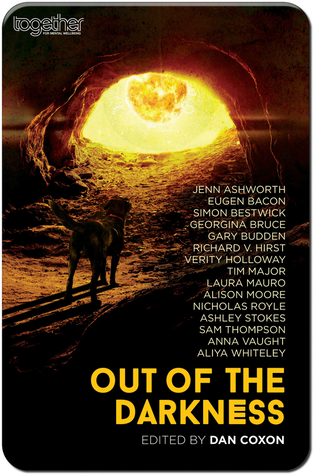 Out of the Darkness, a brand new anthology from award-winning independent press Unsung Stories, challenges some of the most exciting voices in horror and dark fantasy to bring their worst fears out into the light. From the black dog of depression to acute anxiety and schizophrenia, these stories prove what fans of horror fiction have long known – that we must understand our demons to overcome them. In 2019, it was estimated that one in four people in the UK will experience mental health issues every year, ranging from schizophrenia to mild depression. Since then, the Centre for Mental Health has estimated that 10 million people will need mental health support in the UK as a direct consequence of Covid-19, with a staggering 1.5 million of those being under eighteen. Out of the Darkness will be funded by a Kickstarter campaign that launches on Tuesday, 9 March 2021. Speaking about the anthology, Dan Coxon, Editor at Unsung Stories, said, “Britain was facing a mental health crisis before Covid-19 struck, but that trend has now become a tsunami. The coronavirus struck a blow not only to our physical health, but also to our mental wellbeing. “People who had never before experienced anxiety attacks have found themselves nervous at the prospect of leaving the house; those who stayed at home have found themselves isolated and scared. “By exploring the dark recesses of the human psyche, these stories help illuminate and make sense of the world for those suffering from mental health problems – a world of anxiety, and despair, and fear. Horror isn’t just about the chills – it’s also about the healing that comes after.” The Kickstarter will be live at www.unsungstories.co.uk/out-of-the-darkness from 9 March 2021. The full contributor list is: Jenn Ashworth, author of Fell, Cold Light and more Alison Moore, Booker Prize-shortlisted author of The Lighthouse, Missing and more Aliya Whiteley, Arthur C. Clarke Award-shortlisted author of The Beauty, Greensmith and The Loosening Skin Nicholas Royle, author of Ornithology, First Novel and more Laura Mauro, British Fantasy Award-winning author of Sing Your Sadness Deep Tim Major, author of Snakeskins and Hope Island Sam Thompson, Booker Prize-longlisted author of Communion Town Eugen Bacon, author of The Road to Woop Woop and Claiming T-Mo Simon Bestwick, author of Wolf's Hill and more Richard V. Hirst, co-author of The Night Visitors Ashley Stokes, author of Gigantic (forthcoming from Unsung Stories) Verity Holloway, author of Pseudotooth Gary Budden, author of Hollow Shores and London Incognita Anna Vaught, author of Saving Lucia and Famished Georgina Bruce, author of This House of Wounds Out of the Darkness – An anthology of fifteen horror and dark fantasy stories (ISBN: 978-1-912658-11-4, RRP: £9.99) Details of other titles published by Unsung Stories can be found at www.unsungstories.co.uk/allbooks  Dan Coxon is an editor and writer based in London. His anthology This Dreaming Isle was shortlisted for both a Shirley Jackson Award and a British Fantasy Award, while his fiction has appeared in Black Static, Nightscript, The Lonely Crowd, Unthology, Not One of Us, Humanagerie and Bram Stoker Award-nominated anthology Nox Pareidolia, among others. His non-fiction has appeared everywhere from Salon to The Guardian, and a collection of his short fiction, Only The Broken Remain, was published by Black Shuck Books in November 2020.    Submissions for UNDER HER SKIN (April 2022) are open to all poets who are women (cis and trans) and non-binary femmes. Submissions open March 2021 and will close May 30, 2021, with decisions made on a rolling basis. The theme of the inaugural collection is body horror. This is a broad spectrum and poets are welcome to interpret the prompt in their own vision--so long as it's dark, unsettling, an on-theme. Full submission information are here: https://blackspotbooks.submittable.com/submit/84da3a8a-f00e-4bf1-8f11-cdde4b6edbc1/under-her-skin-a-black-spot-books-women-in-horror-poetry-showcase#facebook The showcase will feature a cover with hand-drawn illustration by respected horror artist Lynne Hansen and will be distributed globally in both print and ebook through IPG with a full marketing complement. Toni Miller , a co-founder of the Ladies of Horror Fiction is one of our acquisition judges and will also be writing a foreword for the collection. Poems must be previously unpublished, though published poets are, of course, welcome. We accept submissions of poems up to fifty lines. Free verse preferred (please, no forced rhyme or clichés). We accept up to three poems per poet. Submissions should be submitted along with a brief bio. Each poem chosen for publication will be paid $5 and each poet will receive a copy of the collection upon publication. Poet will retain rights to any accepted poem, with first right of publication by Black Spot Books. Showcase Judges: For the 2022 collection the judges will be Black Spot Books president and award-winning author/editor, Lindy Ryan, and Toni Miller, a founding member of the Ladies of Horror Fiction (LOHF). Lindy Ryan is the president and publisher of Black Spot Books, an imprint of Vesuvian Media Group. She is an award-winning and bestselling author and editor. Lindy currently serves on the board of directors for the Independent Book Publishers Association (IBPA) and was recognized as one of Publishers Weekly's Star Watch Honorees in 2020. Toni Miller is one of the co-founders of the Ladies of Horror Fiction and the host of the Ladies of Horror Fiction Podcast. She also reviews horror and dark fiction at The Misadventures of a Reader and has published several non-fiction pieces in Aphotic Realm Magazine. Toni lives in the Sonoran desert with her husband, son, and the spotted one. THIS WEEK'S HORROR NEWS
6/3/2021
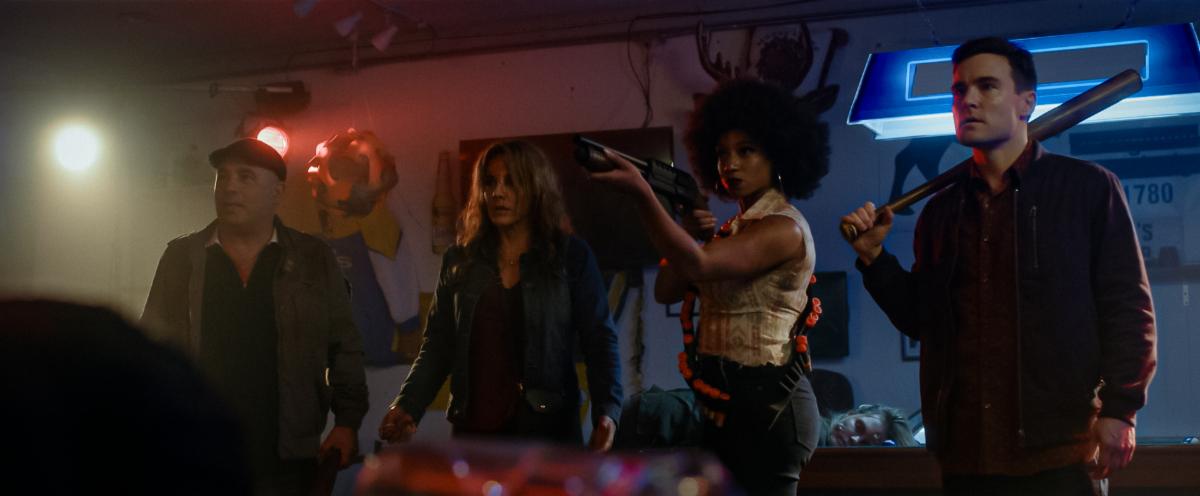
Welcome to our occasional horror news round up. This week you will find news about the new horror comedy Slaxx from Shudder.
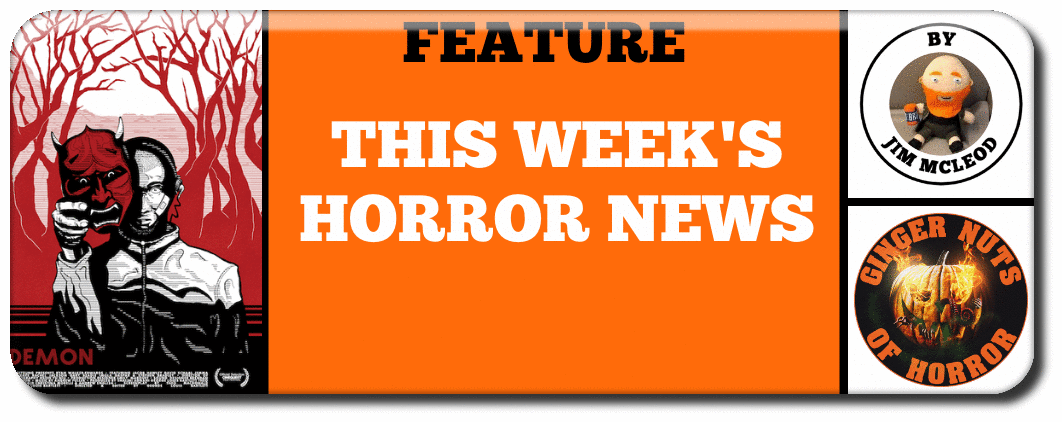
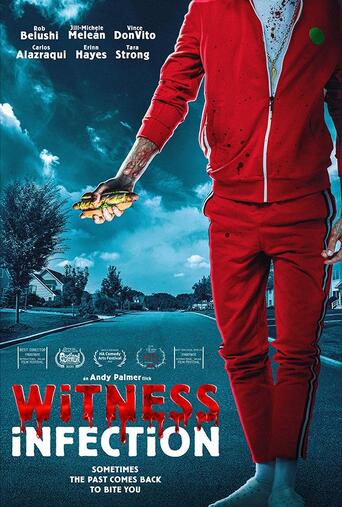
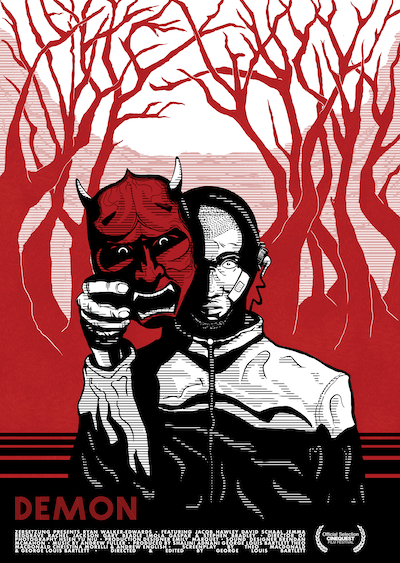
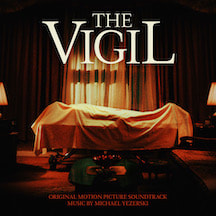
News of the British line-up of EE Rising Star Award nominees for 2021: Bukky Bakray, Conrad Khan, Kingsley Ben-Adir, Morfydd Clark and Ṣọpẹ́ Dìrísù, for their performances in some of this years best horror films. Apple TV+'s new genre-bending, immersive original series “Calls”. Amazon's original six-part thriller series The Devil’s Hour, produced by Hartswood Films, penned by Tom Moran and executive produced by Steven Moffat (Doctor Who, Dracula, Sherlock), Tom Moran and Sue Vertue (Dracula, Sherlock). Witness Infection a new horror comedy with an impressive voice cast. The first look at the trailer and poster for the mind-bending British thriller Demon. And news about The Vigil's Original Motion Picture Soundtrack - Music by Michael Yezerski BLOODY HORROR-COMEDY SLAXX DROPS TRAILER AHEAD OF MARCH 18TH RELEASE ON SHUDDER
|


Archives
April 2023
|



 RSS Feed

|

|