• HOME
  • CONTACT / FEATURE
  • FEATURES
  • FICTION REVIEWS
  • FILM REVIEWS
  • INTERVIEWS
  • YOUNG BLOOD
  • MY LIFE IN HORROR
  • FILM GUTTER
  • ARCHIVES
    • SPLASHES OF DARKNESS
    • THE MASTERS OF HORROR
    • THE DEVL'S MUSIC
    • HORROR BOOK REVIEWS
    • Challenge Kayleigh
    • ALICE IN SUMMERLAND
    • 13 FOR HALLOWEEN
    • FILMS THAT MATTER
    • BOOKS THAT MATTER
    • THE SCARLET GOSPELS
GINGER NUTS OF HORROR
  • HOME
  • CONTACT / FEATURE
  • FEATURES
  • FICTION REVIEWS
  • FILM REVIEWS
  • INTERVIEWS
  • YOUNG BLOOD
  • MY LIFE IN HORROR
  • FILM GUTTER
  • ARCHIVES
    • SPLASHES OF DARKNESS
    • THE MASTERS OF HORROR
    • THE DEVL'S MUSIC
    • HORROR BOOK REVIEWS
    • Challenge Kayleigh
    • ALICE IN SUMMERLAND
    • 13 FOR HALLOWEEN
    • FILMS THAT MATTER
    • BOOKS THAT MATTER
    • THE SCARLET GOSPELS
GINGER NUTS OF HORROR
horror review website ginger nuts of horror website

​ THIRTEEN FOR HALLOWEEN: THE MAGDALENE (AKA “MAMMA PUS”)

21/10/2020
​ THIRTEEN FOR HALLOWEEN 2020: THE MAGDALENE (AKA “MAMMA PUS”)
The Magdalene is, after all a Mother figure, and in that, she is arguably more monstrous and antithetical than anything else attributed to her:

Conceptual nightmares are Clive Barker's millieu; he is a natural and sublime master at encapsulating elements that disturb or unsettle in the the various monstrosities he conjures.
 
The novel Weaveworld is not generally noted in this regard, tending to be catalogued alongside Barker's flights of phantasmagorical fantasy rather than the horror he is most iconically associated with.
 
However, the book includes some of the most disturbing and monstrous creations he has ever conceived, and some of the most disturbing and monstrous scenes in which to parade them:
 
An inversion of the classic mythological “triune Goddess” (i.e. “Maiden,” “Mother,” “Crone”), the antagonist Immacolata and her sisters are wry and horrific subversions of those labels and the assumptions they encapsulate: Immacolata, representing “The Maiden,” is no thing of soft sighs and proscribed virginity; far from it. She is, rather, a thing of terrible purity; a creature that cannnot be borne because her contempt for creation is so utterly pure, nothing can withstand it. She is lethal virginity; a concept of “purity” that is self-authored and murderous, in her hands. As a result, even her breath, gaze and shadow are lethal; the desire she excites in those around her nothing less than an invitation to suicide.
 
The “Crone” of this unholy trinity initially appears much closer to her mythological roots than her sisters, conforming to the thanatic and deathly qualities of her inspiration. However, here, the inversion comes from her status as midwife to her perpetually-pregnant sister; she is not merely a harbinger of death and decay, but something that eases the passage of monstrous births, a thing of strange vitality that lends her a certain innate ambiguity.
 
But the most distressing and overtly monstrous of the sisters is “The Mother,” The Magdalene, as she is most commonly refered to:
 
Classically, “The Mother” of the trinity represents exactly what her title implies; fecundity, ripeness, birth and affection. However, Barker sublimely and horrifically lampoons that status by making this particular “Mother” an undead rapist and a creator of monsters:
 
According to Immacolata herself, her two sisters are long dead; they were never given the chance to be born, as she strangled them in the womb. Despite this original betrayal, they now follow and do her bidding, slavishly devoted to their sister and murderer. As a result of this circumstance, they have become ghostly perversions of what they might have been, and none more overtly than The Magdalene:
 
Like her inspiration, she is indeed a thing of ripeness and fecundity, but she is also a thing of death: a hideous spectre that marries the monstrously sexual and lustful to the surreal and horrific:
 
Appearing as a spectral column of vapour and ectoplasmic  matter, she is a shifting, uncertain thing that one moment boasts the form of a ripe and gleaming woman, a vision of overt sensuality and sexual intent, the next a stitched-together, not-quite-coherent mass of limbs, a pregnancy-swollen belly and a sex that endlessly disgorges monstrous young. As grotesque and disturbing as her physical appearance is, it's nothing compared to the perversity of her nature:
 
The Magdalene is no slave to men and their ideologies of proscribed reproduction, like her namesake: rather, she is an assaillant and rapist of men, her back mythology, in this regard, intermingled with that of Lillith, the first bride of Adam, queen of Hell and Mother of all demons. Throughout the story, she assaults several men, sometimes to the point of death, the experience that Barker describes a sublime inversion of the manner in which female rape is all too often portrayed in similar fiction; detailed, sensory and repulsive, The Magdalene swathing her victims in dreams and glamours that are not only sensual, but which reduce them to children in their own minds. Those that survive her assaults are often left weeping in horror at the violation, Barker playing on male power fantasies and narratives of female domination to invert those premises, to make the reader shudder and recoil at the sheer wrongness of it. It's an excellent example of how Barker uses his creations to turn the tables on standardised or enshrined traditions; to bring into question pervasive tropes, assumptions and stock-narratives that even incredibly lauded and acclaimed authors fall prey to.
 
But that is far from the worst of it:
 
The Magdalene is, after all a Mother figure, and in that, she is arguably more monstrous and antithetical than anything else attributed to her:
 
Being dead herself, what “life” she creates is necessarily hideous, her undead body incapable of crafting whole or healthy babes from the seed she steals from her victims. Instead, Barker paints explicit and horrific scenes in which the entity gives birth, the children that slope from her smouldering, distorted body not truly alive, but not truly dead either; malformed mockeries of their parent, they often boast certain features and characteristics of the men that unwillingly sired them, rendered hideous and deformed so as to present the most horrific parody of parental pride imaginable.
 
Conceptually, the notion is one most horror writers wouldn't go near, certainly not at the time of writing, and that fewer still could make fly in the manner that Barker does. The sensory detail of the Magdalene's assaults, the hideous atrocity of the births that follow, are at least as brilliantly repulsive as anything in Barker's more horror-oriented works. That they are framed in a book that also includes such transcendental imagery and subject matter only serves to emphasise them by contrast; the fantastical and inspiring lends the images of horror and grotesquery that much more weight, since the book also does not allow the reader to get away with such simple distinctions; the two are often one and the same, and nowhere is that more true than in Immacolata and her sisters:
 
They are monsters, undoubtedly; creators of horror, sewers of death and trauma, but they are also semi-divine, other-worldly entities that operate in states of being that humanity can only realise in its dreaming imagination. Even The Magdalene, as monstrous as she is, is also strangely beautiful, certainly in terms of the elegance of her rendering; Barker himself clearly adores this creature, and relishes any instant in which he gets to introduce her to the reader and expand upon her mythology. In that, we cannot help but relish her company, as much as we might lament her rapine embrace.

By George Daniel Lea 
THIRTEEN FOR HALLOWEEN 2020 PART TWO: THE LIX​
​THIRTEEN FOR HALLOWEEN: THE BODY POLITIC
the-best-website-for-horror-promotion-orig_orig
LOST SOULS (1992) BY POPPY Z. BRITE (BILLY MARTIN)

Thirteen For Halloween 2020 Part Two: The Lix

20/10/2020
THIRTEEN FOR HALLOWEEN 2020 PART TWO: THE LIX
The Lix are not only physically and constitutionally repulsive, but represent something psychologically vile (a characteristic quirk of almost all of Barker's monsters, even these lesser species): they are as much Freudian entities as anything else, reflecting certain neuroses and fears, morbid disgusts and self-loathings we have regarding the essential, animal processes of our own bodies: 
Fair warning before we proceed: 

Barker is a creator whose name has become synonymous with images of bodily mutilation, elaborate gore and the elasticity of anatomy. Many of his most beloved creations -some of whom will be featuring in this series a little later- are products of this principle obsession; a desire to test the boundaries of form and blow apart preconceptions of anatomy. In most examples, that factor is as glorious and evocative as it is horrific, treading a fine line between the monstrous and the miraculous. 

However, the man also has a singularly unashamed love of the down and dirty, the shockingly disgusting and grotesque. From the portrayal of barely-formed, skinless Uncle Frank from the Hellraiser franchise to the eponymous Son of Celluloid (more on that particular specimen later), Barker's imagination for the repulsive, the execrable, the nausea-inducingly vile is almost unequalled. 

And nowhere is this more apparent than in The Lix. 

I know for a fact that those of you familiar with The Books of The Art (The Great and Secret Show and Everville) just suppressed an involuntary retch. The Lix. In a series infested with phantasmagoria, in which it's a rare chapter that doesn't include imagery of the metaphysical, the Blake-like in its hallucogenia, The Lix bring the reader crashing down from their flights of fancy, their considerations of the impossible and transcendental by exemplifying how “magic” in this mythology can be put to the most obscene use as well as the ascended. 

Entities summoned by particular sorcerers through the most unclean of rites (in this instance, the mad and hermetic occultist Kissoon, one of the series' many, many antagonists), The Lix initially appear as masses of strangely featureless snakes that vary massively in size and shape, that swamp their intended victims in their grotesque masses and murder them either by strangulation, suffocation or by biting them to death with their many-fanged mouths. 

In that, they might seem like fairly standard horror/fantasy monstrosities; the kind of creature that wouldn't be out of place in even more innocent or infantile fantasy. 

However, when we learn of their constituents and the means of their making, we come to appreciate just how earnestly Barker wishes to appall us by their conception: 

To quote one of the victims of The Lix themselves, Kissoon creates the creatures from “. . .his shit and semen,” defecating and masturbating the creatures into existence. They are, by nature and by aspect, entities of waste; things born of shit and ejaculate, combining both the elemental potential for life with the sincere, morbid lack of it. 

In that, The Lix are not only physically and constitutionally repulsive, but represent something psychologically vile (a characteristic quirk of almost all of Barker's monsters, even these lesser species): they are as much Freudian entities as anything else, reflecting certain neuroses and fears, morbid disgusts and self-loathings we have regarding the essential, animal processes of our own bodies: 

They are the religiously-conceived and afflicted-on-us “sin” of Onanism, the bodily-dismorphic disgust of our own waste processes made manifest, animate and actually lethal; their demeanours animalistic and aggressive, their repulsive lengths coiling and twitching with  obscene and murderous energy. 

Given their creator's peculiarly misanthropic ideologies (Kissoon has nothing but loathing for the human animal, which he regards as a waste of its own evolution, and intends to wipe clean from the face of the Earth, leaving life to arise in a perhaps more suitable form at some point in the distant future), they are also expressions of profound contempt for humanity; the species own rot and wasted potential turned upon it, which is a consistent theme throughout the series (note how Kissoon's Lix and The Jaffe's Terata both dynamically exhibit similar traits and qualities and are born through similarly occult procedures). 

But the true power of The Lix lies in the visceral reaction they provoke. The Books of the Art are pervaded by Barker's peculiar brand of metaphysics; even their more horrific visions and entities tend towards the semi-divine or near-infernal, all of them transcendental to some degree (keep an eye out later in the series for some especial specimens). The Lix provide a contrast to that, by providing a horror that is unambiguous, base and grounded in our most neurotic, atavistic animal processes. In that, they also represent a sly nod to Barker's own back catalogue, the creatures highly reminiscent of many to be found within The Books of Blood, that tend towards the similarly fleshy and repugnant in aspect. 

There are plenty of entities in Barker's bestiaries of more significance, of greater profundity and complexity than these squirming, Freudian grotesqueries, but there are very, very few that excite quite the same degree of repulsion. 
THIRTEEN FOR HALLOWEEN: THE BODY POLITIC
the-best-website-for-horror-promotion-orig-orig_orig
TRUTH SEEKERS- PEGG AND FROST HIT GOLD YET AGAIN

Thirteen For Halloween: The Body Politic

19/10/2020
the-best-website-for-horror-promotion-orig_orig

​Thirteen For Halloween (2020):
 
Part One: The Body Politic

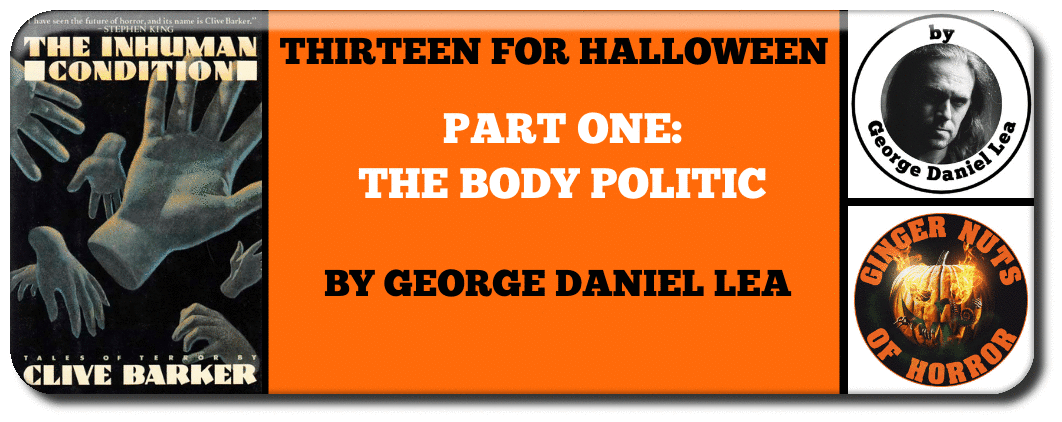
The Body Politic is maybe one of Barker's strangest stories, and one that is the least classically “Barker-esque.”. Not only does it not feature any particularly abstruse monstrosities or elaborate metaphysics, it is one of a rare, rare stable in which Barker provides an implied political commentary, alongside its more direct statements on the nature of humanity itself.
Welcome, welcome and thrice-times welcome, my dearies, my darlings, to this semi-annual affair in which we celebrate in our oh-so-pagan manner the darker days of the year, when the subjects of horror are never far from our minds and we revel in the morbid, macabre and monstrous.
 
In previous years, we've taken a look at horror video games, toylines, video game monsters and all manner of esoteric morbidities. This year, given that it has provided plenty of waking life atrocities, we're going to be familiarising ourselves with the florid creations of an icon of the genre; a monster-maker unlike any other, whose nightmarish children are amongst the most inventive, abstruse and affecting of any who dare rake the darker realms and recesses of humanity's collective sub-consciousness:
 
Clive Barker.
 
Clive Barker, the man behind the iconic Cenobites of Hellraiser fame, the eponymous Candyman (soon to be resurrected on the cinema screen thanks to the stylings of Jordan Peele and Nia DaCosta) and the wildly malformed Nightbreed, to name but a few.
 
For the purposes of this first instalment, let's leave behind the waking horrors of 2020 and drift back, into the earliest days of the man's career, when his short story collections, The Books of Blood, made waves in burgeoning horror genre of the late 1980s, thanks to endorsements from Stephen King as well as their own unparalleled inventiveness.
 
Whilst the books themselves provide numerous subjects that might make this list (look out in later entries for some particularly strange and notable examples), one that sticks with me since my earliest reading isn't necessarily a monster at all; rather one of a significant number in which Barker looks for the monstrosity in us.
 
The Body Politic is maybe one of Barker's strangest stories, and one that is the least classically “Barker-esque.”. Not only does it not feature any particularly abstruse monstrosities or elaborate metaphysics, it is one of a rare, rare stable in which Barker provides an implied political commentary, alongside its more direct statements on the nature of humanity itself.
 
The story is a strangely simple concept, but one handled with incredible depth, wit and profundity:
 
The hands of humanity rebel against the anatomies that “imprison” and enslave them, sparked by a particularly unlikely man's appendages, who have been secretly plotting the rebellion for years. The hands have their own peculiar sentience, and talk in a coded language of gestures and motions, sewing conspiracies on his stomach whilst he sleeps, much to his wife's escalating disturbance.
 
The story is so drawn that, at this point, the reader might believe that the apparent sentience of the hands is nothing but a delusion, that their strange personalities (“Left” and “Right” embodying characteristics of those particular political and ideological wings, but here relying on one another as a means of mutual emancipation) are merely delusions of some diseased mind. Even when they set about murdering their enslaver's wife -choking her while the man sleeps-, the reader might easily believe that the sleeping homicide is an act of sub-conscious aggression.
 
However, following the event, the hands literally set about freeing themselves from the whole. Rather, “Right” aids in “Left's” emancipation by hacking it free with a meat cleaver, leaving the enslaver bleeding and wretched on his kitchen floor. This act of apparent self-mutilation reveals the metaphysics behind the story, in that “Left” does not end up a redundant piece of severed meat, but is now actively its own agent, scurrying along like a spider, silently urging the hands of first the murdered wife and then of anyone it encounters to similarly rise up. In a matter of hours, there is a full blown -and excessively murderous- rebellion in full swing, as Barker paints grimly comic and morbidly slapstick images of people strangling and mutilating themselves, crashing their cars, clawing their own eyes out and hacking at their wrists with scalpels, chainsaws and whatever comes to -a ha- hand.
 
In this respect, the story is far removed from almost anything that would become synonymous with Barker's peculiar brand of metaphysical disturbia thereafter; a wry and subtly political tale in which the metaphysics remains unexplained (the phenomena of the rebellious hands is explored no futher than through the hand's own ruminations on their own existence, which, fittingly enough, tends towards the utilitarian, when not consumed by the Utopian and vengeful visions of the pontificating “Right”). There are no grand movers or designers behind the scenes, no extra-dimensional or other-worldly monstrosities; the rebellion is of an exceedingly familiar sort, especially during the late 1980s, in which Thatcherite ideology had reduced much of the UK to such states of desperate privation, demonstrations and violent uprisings were commonplace.
 
The hands themselves are a peculiar form of “monster,” in that they are not monsters at all; they are, in many respects, examples of the familiar horror trope of taking the familiar and rendering it alien or hostile. In this instance, Barker has hit upon a masterstroke, encapsulating the very essence of “body horror;” i.e. an expression of the -generally unspoken- fear that our bodies will, one day, rebel against us. In that, the hands not only lead the reader to regard their own anatomies with suspicion, but also reflect certain escalating concerns of the era (developing medical technology and genetic understanding allowed human beings to comprehend more about their own bodies than they ever had before, not to mention the pervasiveness of news media providing more in the way of medical information -not to mention hyperbole and distortion- than any previous generations had enjoyed). Phenomena such as escalating public understanding of Cancer and its causes, the AIDs epidemic and numerous other examples are all metaphorically reflected here, lending the story a certain resonance with other forms and works of horror that were becoming vogue at the time (e.g. Cronenbergian body horror, gore and mutilation pieces such as The Evil Dead, Cannibal Holocaust etc).
 
Part of the point of the hands and their rebellion against humanity is that they are not monsters, no matter how we might perceive them or media might well have portrayed them in the aftermath; they are us: living, breathing and, it transpires, sentient entities that have grown weary of our casual neglects and abuses and have finally found the means and opportunity to rise up against their oppressors.
 
Whilst Barker himself has since gone on to largely abandon any conscious or concerted examination of politics in his work – regarding it as “. . .the arena of dead men,”-, The Body Politic is fairly overt in its implications, given the era of its publication and the social ills that it metaphorically reflects: hands are, by their very natures, “working class” organs; they are the slaves of the body entire but upon which the entire depends for its survival. They are organs that scrub and clean and feed and dress and wipe and wipe the arse of the rest, whilst the more privileged (e.g. eyes, tongues, nostrils) serve far more specific, specialised functions that we tend to romanticise far beyond their genuine conditions or the benefit they provide to the wider whole.
 
In that, the hands are far more than the mere slapstick and body horror images they might superficially present; there is a sincere depth of metaphor here that might not be immediately apparent from a surface or initial reading. A grounding in certain examples of philosophy and political ideology -Marxism not least amongst them, alongside a healthy dose of psychoanalytic theory- is essential to understanding Barker's uniqe form of commentary, especially given that the story contains enough grim irony in and of itself to satisfy the casual reader.
 
A rare example of a Marxist monster in Barker's work, The Body Politic's hands are one of numerous commentaries on the human condition that The Books of Blood contain, and one of the least remarked upon -but metaphorically intriguing- of Barker's menageries.
 
By George Daniel Lea 
the-best-website-for-horror-promotion-orig_orig
Picture

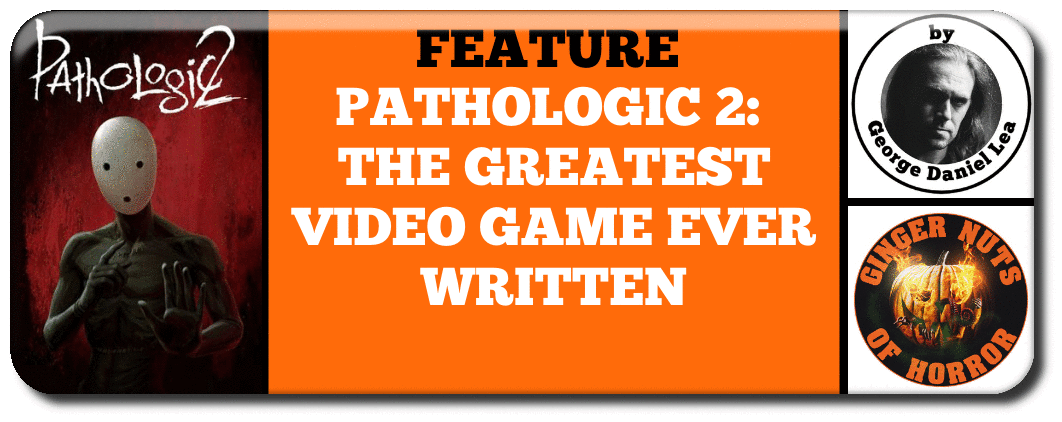
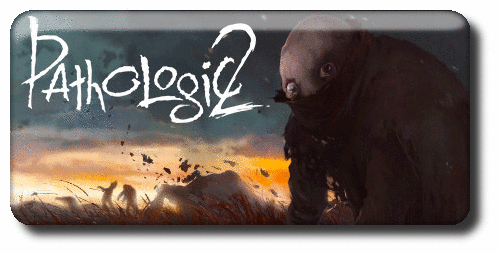
PATHOLOGIC 2: THE GREATEST VIDEO GAME EVER WRITTEN.

16/10/2020
Picture
​The popular internet phrase “I cant even” was made for Pathologic 2. A remake of an independent video game from fifteen years ago that failed to make any kind of impact -save in the most cult circles-, the game has recently started to gain traction owing to a number of high profile YouTube creators and personalities (most conspicuously, Hbomberguy, SulMatul etc) who have not only rhapsodied on its qualities but created hours-long theses dissecting its many interpretations, symbolism, allegories and mythic references.

Pathologic 2 isn't just another independent video game. It is to the format what House of Leaves was to the novel, what Twin Peaks was to the prime time TV show; a quantum leap in video game narrative, divorced from popular trends and big-budget studio concerns of popular appeal; a labour of the darkest love, whose creators maintained such fidelity in their vision, it is actively alienating to mainstream or popular audiences.

This game. . .the experience of it is unlike anything else. There is no analogue in video games, no analogue anywhere. It is its own strange, idiosyncratic entity that has managed to become a unique species. It's impossible to describe to those who haven't played it quite what it's like as a narrative or interactive experience; the emotions it evokes, the sense of urgency and dread and desperation that hounds every second, every step. The way in which the game upsets every expectation you might have of narrative or genre or character.

It is, without exception, the most sublimely written, comprehensively conceived, amazing experience I have ever had in the medium. There is nothing that compares, nothing that even comes close. This is the equivalent of discovering the great Russian novel for the first time, encountering that work that entirely upends any prior context. Video games are not made like this, not in mainstream circles or markets, nor are they written with such supreme ambiguity, beautiful uncertainty, strange confusions.

And some would certainly say that's for the best.

Because, as much as I might add my voice to those small and obscure choirs singing its praises, my recommendation of the game comes with sincere caveats.

But, before that, what is it?

That's one of the core problems with selling Pathologic 2 to the uninitiated; it is an esoteric artefact that can only be described by extremely vague and tangential comparisons, none of which are entirely apt.
Picture
​So, in the spirit of mainstream games journalism, Pathologic 2 is a survivalist horror game with elements of RPG and first-person shooter. I suppose. Maybe. Sort of. Not at all, actually. It is all of those and none of them. If you approach the game with the assumptions of those genres in mind, it will defeat you utterly. It will chew you up and spit you out and set you alight for good measure. The only way to understand what this game is is to play. And, therein lies part of the problem: 

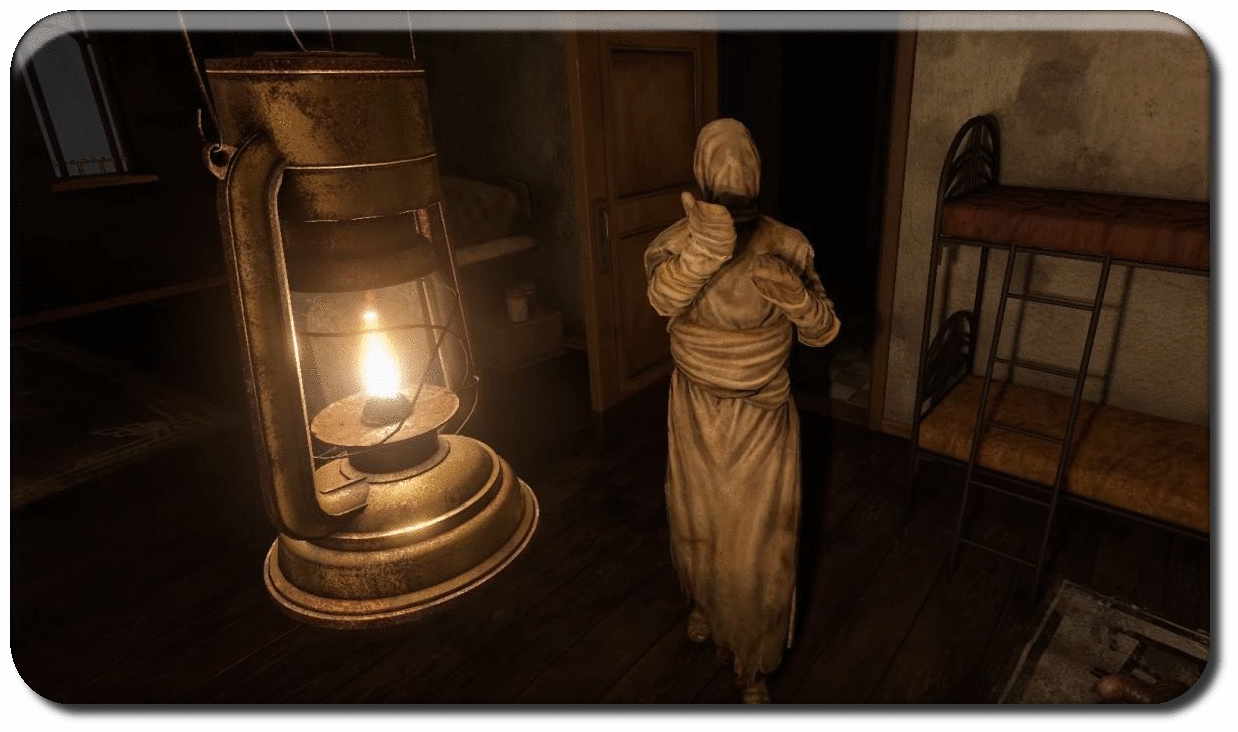
The game is actively malevolent. It's one of those rare titles that hates its audience, that punishes them at every juncture, throwing in unexpected twists and turns, often altering its own rules and mechanics on the fly. Players often find themselves rail-roaded into no-win scenarios very early on, where the game's punishing survival elements are impossible to balance (and that just gets harder. Keeping player avatar Artemy Burakh fed and watered and rested is one of the most punishing elements of the entire game, and the bastard-work does everything in its power to compound that difficulty with every passing day). The combat is a nightmare of oblique steps and strange, street-brawl elements that are impossible to entirely master, most encounters that require violence better avoided altogether (even when the game's many missions demand them). Disease infests the setting of the game in the first few days of play (the game structure is itself bizarre and bizarrely punishing; split into ten separate days, the various interlinked quests and intrigues that fill each one are massively difficult to fulfil and, even if they are all tackled, it is often the case that scenarios have multiple varying outcomes, some or all of which have negative ramifications later down the line), making traversing certain areas treacherous in the extreme or even lethal. Certain dialogue options, which are not sign-posted for the player (such would undermine the spirit of the work) have profoundly negative connotations for later days and interactions, though the player won't be aware of this until they have attempted multiple play-throughs in multiple different ways. 

Even the base mechanics of simply keeping Artemy Burakh alive are monstrously dificult to balance, especially since the game constantly bombards the player with urgent calls for aid, for attendance, for engagement with quests many of which turn out to be dead ends or are harmful to Burakh's designs. 
Picture
Beyond that, the game will often alter its own rules and status quo just as the player has achieved some level of comfort; upending the many micro-economies and trading systems that MUST be mastered in order to survive (the setting consists of multiple different cultures and economies of commerce, trade and prid pro quo, all of which require a certain degree of engagement. It becomes apparent very quickly that merely attempting to purchase items from the various shops and stores is not efficient, especially when the town is cordoned off from the outside world owing to the eruption of a particularly vicious plague, which has the economic effect of causing hyper-inflation, rendering standard currency almost worthless). The traditing systems, as with every element of the game, are fraught, unexplained and difficult to understand without simply diving in headfirst and engaging with them. It quickly becomes apparent that various different peoples within the setting have different trade systems; the tribal people of The Steppe (known colloquially as The Kin), for example, tend to favour herbalistic and traditional items such as potions, tinctures, icons, fetishes etc, and will deal in the same, whereas the more urbane folk of the inner-town generally trade in more functional items and apparel. The children of the town, who are their own distinct sub-culture, also operate their own economy, in which each child trades depending on their own strange interests and will likely have different items they are willing to part with from day to day. Mastery of these systems, understanding of who is likely to have what type of items to hand at any one time and what they are willing to trade in, is absolutely essential to survival: 

You will find yourself, at various points, in desperate need of food, medication, sundry odds and ends that, ostensibly, have no value at all, but which may be used in crafting or very specific transactions. Knowing where to find the people who trade in these items and what they are willing to accept becomes a pivotal and abiding part of the game. 

But don't get comfortable; don't ever think the game will allow that. 

Just as you think you might have mastered crafting, alchemy, the bartering systems, the game throws you a curveball. One intended to knock you flat on your arse again: 

The economies change. As well as the aforementioned hyper-inflation caused by the blockading of the town, certain events alter and transform the economies and markets in profound and  devestating ways. 

For example, the arrival of outside agencies to investigate and contain events within the town (an Inquisitor, the military) transforms the economy in such a way that money becomes next to useless. All of that loot you've been hoarding and buying and selling? Worthless. Now, the official economy occurs in government-provided coupons, that can only be gained by completion of certain tasks and trading with certain individuals and which are as rare as hen's teeth. Thus, the player must start to rely on other means to get by. 

Then later, when the military arrive, blockade the town and start shooting and burning plague victims; they ship out a goodly portion of the town (ostensibly for their own protection), including most of the children who formed the basis of your working economy. Suddenly, you're left with next to nothing; only the rarest and most pared-down possibilities for trade, which slowly dwindle as time wears on. Starvation, thirst, infection. . .all become far more likely as chaos and fire and plague consumes the streets, and you as the player, you as Artemy Burakh, start to panic, start to dread every step and decision, which could be your last.
Picture
It is a sublime exercise in escalating desperation, what some have described sincerely as a “plague simulator,” in that it genuinely emulates what it's like to be in a town under siege, ravaged by infection, starvation and violence.

In terms of dread and panic, there's very little like it. Along with the time mechanism, in which days pass regardless of what you've achieved or not, often stealing the chance from you, the player finds themselves in a constant state of anxiety, moving from point to point, trying to keep an eye on their own health, that of other essential parties, all the while avoiding the myriad dangers of the town and trying to work out the mystery of where the plague comes from and how to combat it.

Oh, and speaking of violence: there's plenty on display, here. The town is a naturally hostile environment with plenty of thieves, muggers and, later, infected individuals and violent military-types infesting the streets. Whilst the violence is kept to a minimum in early chapters -thak Mother Bodho for that!-, later sees the town descend into almost total chaos, as thieves and looters ravage plagued districts, as the desperate and the starving are driven mad, as the soldiers rebel against their commanders and establish their own brutal “order.” The latter portions of the game feel like being in a warzone, skipping from hiding place to hiding place, hoping to God you haven't been spotted or that you can avoid the plague and myriad other hazards whilst going about your duties.
Picture
The combat system is, for many, one of the game's sticking points: dirty, awkward, unforgiving, it's an ungainly and inelegant sprawl of feints, blocking and counter-attacks that is incredibly difficult to get used to, emulating the true lack of finesse of a street brawl. The player character, Artemy Burakh, is no soldier or brawler, but a Doctor, a learned man who largely abhors violence and isn't terribly good at it. Combat usually results in a quick death or a condition of health that is so desperate as to make little difference. This is not a bug or a design flaw; it's supposed to be this way. The game is supposed to portray violence in all of its weight and lack of elegance, all of its futility and pointlessness.

And boy, does it do that. Most situations requiring combat are best avoided; ducking into a nearby house or around a likely corner can usually throw off potential assaillants.
But, even in this, the game demonstrates its ambiguity: whilst violence has a whole host of consequences -should you continue to assault an enemy that surrenders or runs away, your reputation will plummet. If you kill someone who is unarmed, even if they are attacking you, your reputation will plummet-, it is also a superb way of gathering necessary items and keeping yourself stocked for the next period of privation. Likewise, Artemy being a surgeon, you can become rather ghoulish and perform autopsies on those you kill -and even those simply lying dead in the street owing to plague or the violence of others-, harvesting organs that allow you to both make more effective tinctures and tonics but also to trade on the highly dubious black market that deals in human blood and organs (highly lucrative and an excellent sub-economy, if you are willing to take the hit in morality and reputation).

Likewise, certain areas and certain quests require violence. The player must therefore make an active decision as to whether they conduct certain quests and take the consequences of either doing so or not.

All of this, all of this, is before we even touch upon the setting, the story, the narrative that are, without exception, amongst the most sublimely ambiguous, complex and beautiful I have ever encountered in a video game.

The strange Steppe town in which the action takes place is Artemy Burakh's place of birth; a setting that is simultaneously very real and very much in the realm of dreams and metaphor. Its reality derives from its grimness, its desperate and darker elements; the grit and privation, the industry and politics, whilst its fantastical qualities derive
​from its place upon the Steppe, where a complex traditional mythology holds sway amongst the native peoples, from which Burakh himself is descended. This interplay of the industrial and the mythic, the post-modern and the traditional, is a key part of what makes this story so engaging, as it is a reflection of the same dichotomy that tears Artemy himself in two. Whilst wandering the town, players might well find themselves startled by seemingly supernatural occurences: 

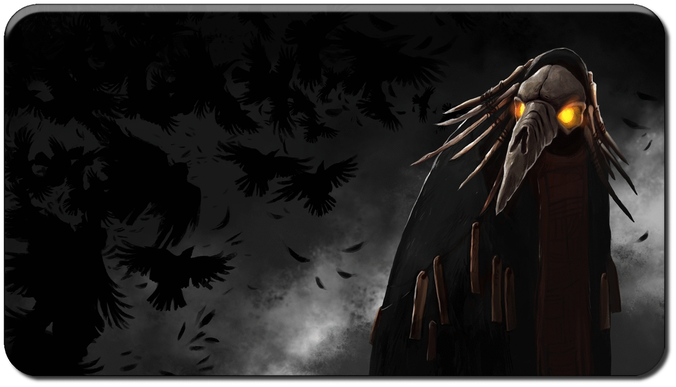
Certain buildings appear impossible, particularly the spectacularly fantastical constructions of The Kains, one of the dominant families within the town who represent Utopian idealism, whose dreams of architecture defy not only the restrictions and traditions of the land, but those of physics itself. Amonst the Steppe people occur strange entities known as Odonghs, that are lumpen, humanoid creatures who are simply accepted as part of the town's culture, but who are closer in nature and spirit to the earth and the Steppe itself than the more post-modern townsfolk. Spiritual visions, spectres, talking bulls, deities, miracles, an earth that literally bleeds. . .these are just some of the phenomena that Burakh encounters, which his rationality and time in the outer world has conditioned him to revolt against. Even the plague itself, which descends on day three, has a notably supernatural quality; where it strikes, the air fills with a black, soot-like substance that swirls and dances to its own currents. Likewise, a bizarre, tribal chanting fills the air in the districts it infests. Buildings in which the plague proliferates generate visible sores and rashes, as though they are alive and organic. Later, when the nature of the plague is revealed to be entirely metaphysical, the player can even take the option to have themselves infected with it, which will then allow the plague itself to talk to them.
Picture
Clara, one of the key characters in the game, seems to know everything that is going to happen before it does, perhaps because of some strange precognition or maybe owing to the theatrical, staged nature of the story (it is suggested at some points that her character has access to “the script” for the play that is being lived beyond anyone else). A second, far more sinister incarnation of the character turns up at variuos points, taunting Artemy Burakh with suggestions of the future; a Changeling that seems to be entirely supernatural and wholly disturbing. 

Throughout the game, the Steppe people insist again and again that the town, the Steppe, the Earth itself are somehow living, that they are organic and vital and require respect from the townsfolk, many of whom have wounded and corrupted the soil with their industry and their architecture. 

It comes as something of a shock when this turns out to be literally true; the town, the Steppe upon which it is set, are indeed alive, and wounded by the Utopian and industrial efforts of the townsfolk, which has resulted in the plague as an expression of the Earth's pain. 

But even this is a matter of great ambiguity; the game never, never allows the player off with easy choices or clear cut moral decisions. This is part of what makes the experience so enticing and frustratingly brilliant for those used to more two dimensional morality systems; there are often no obvious or good choices here. Even those that seem obvious are often proven to be mistakes down the line. Some quests are even best left undone entirely, given the consequences, but the game will give no indication of that until those consequnces come about. Entire story lines can be left undone, entire character arcs not even broached upon, almost necessitating replay. 

The setting. The town, the Steppe, are amongst the most brilliantly realised, beautifully atmospheric in any video game. Bleak, sumptuously filthy, dark, grimey and desperate, even before the plague hits, the overall air of desolation is contrasted by incredible beauty: the wide open plains and mires and mountains of the Steppe itself, the incredibly incongruous architecture of The Kains and their children. Every step in this game drips with atmosphere, a factor that enhances and emphasises the sense of immersion that is so essential for the atmosphere it evokes. Wandering the Steppe at night, traversing the swirling black streets of a plague district, climbing the impossible, origami-like structure of The Polyhedron. . .all are sincere joys, and part and parcel of the experience. 

Walking and traversing the environment are core elements of the game's appeal; it becomes quickly essential for the player to understand the town's layout and how to traverse it in the most efficient manner. For some, this is a problem, but I see it as an essential element of the game's abiding atmosphere of oppression and desperation; you do find yourself wandering the streets in a state of confusion, trying to find the next safe house, the next meal, the next respite from the plague, all the while drinking in the architecture, immersing yourself in the nature and culture of the town in a way very few video games actively require. It is an evironment that is charged with narrative and mythology; the setting is a living, breathing part of the story, and therefore exercises a very particular influence upon the play itself. 

Narratively, I don't even know where to begin: the game starts at its own end: in the theatre at the centre of town, where a play is about to reach its conclusion that is the story of the town and the game itself, whilst those same events are actually unfolding outside. Burakh is simutaneously a real man and a contrived character played by an actor (you, the player), who operates in a setting that is both tragically real and farcically contrived. The player is allowed to wander through the last hour of the last day, seeing the consequences of failure: the town in flames, the still-living rounded up and shot or burned by an out-of-control military engine, an immense cannon waiting to shell the town to rubble around you, the plague running rampant. 

Then, the clock is rewound, the script is flipped back to the first page, and Artemy has a chance to start again, the play can recur with a certain benefit of hindsight, the ultimate and worst end already known. 

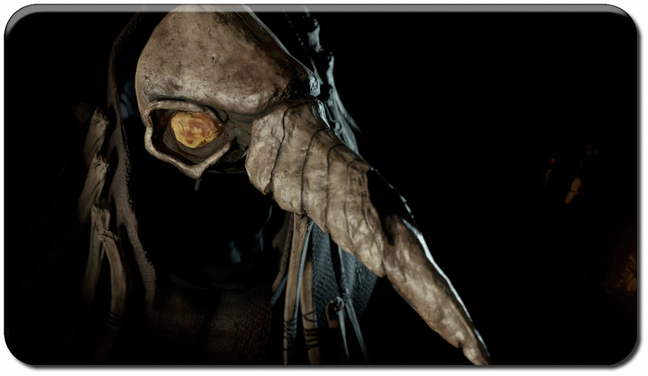
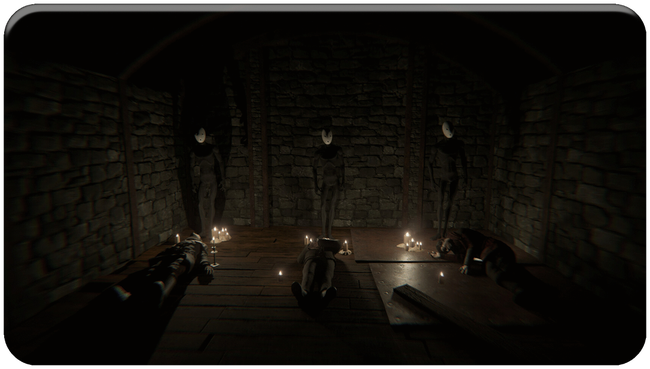
This simutlaneous reality and contrivance is part of the bizarre tensions that inform the entire mythology: throughout the game, the player is reminded that they are a character in a play, to the point whereby it is possible to meet the next actor who will play Artemy Burakh at the theatre, for some truly mind-screwing existential chicanery. At points, characters the player interacts with will have strange, spindly figures in black leotards and featureless masks appear around them, who are theatre-players who represent their internal conflicts and monologues: talking to them often reveals secrets that they won't actively speak, for fear of reprisal or a desire to deceive. Likewise, returning to the theatre at particular junctures will often reveal a new facet of the play which may presage what is going to happen or might happen at a particular point. 

Even death in this game is entirely ambiguous. When the player dies, they are transported to the theatre, where the Director, Mark Immortel, often harangues or chides them obliquely for not paying the part as he intends or has predicted. Immortel is one of many characters in the game who seems to operate outside of the normal laws of time and physics and seems to be an inhuman force of some description; a meddling god or spirit who is intrigued by how his “play” will turn out. Death also has other effects, as Mark will introduce penalties into the game for the player's continued “failure.” This is essential to experiencing the full content of the game and appreciating its metaphysical strangeness (certain things will only happen if the player allows themselves to die and takes certain options from Mark Immortel). 

Later in the game, characters the player has failed to save will turn up in the theatre and will recount what they symbolically represent and what they might have been within the story, had they been allowed to live. 

Despite this, the game simutlaneously insists on the reality of what is happening: Burakh himself defies Mark Immortel's insistance of the play being all-important and of his own fictional nature. The truth is neither one thing nor the other; everything is simultaneously fictional and not, just as everything is simultaneously metaphysical and wholly grounded in brute reality. There are no easy answers here. 

It's impossible to describe or comprehensively examine every allusion, allegory, metaphor, tension, conflict and complexity this story raises without writing a literary thesis on it (and, believe me, it is entirely possible). Suffice to say, it is one of the most complex and complete video game narratives, one of the most enaging and beautiful mythologies, that exists within the medium. It is a quantum leap in video game narrative, making most other examples look like children's crayon scrawls by comparison. There is very little like it, very little that even comes close to matching its completeness, complexity and unending intrigue. Even after completion, it continues to haunt and beg questions, seethe with mystery that invites the player to turn back to page one of the play, to read it again and see, perhaps, if they can alter the script even further this time around (entirely possible; the game is so structured as to make every play-through resoundingly different).  

Conversely, I must warn that many, many people will not like this game. Many, many people will loathe this game: it is unfinished, buggy, borderline broken in places, so punishingly difficult as to be alienating. It is so, so easy to find oneself in a no-win situation, in which there are no options or resources available, in which Artemy is a second away from starving or succumbing to plague, requiring a reload that might hurtle the player back several days or more. It is an exercise in sincere desperation, tension and anxiety, in which it is actively impossible to be “safe” or many steps away from catastrophe, which may defeat certain video game player's assumptions or desires of the format. You can never work yourself into a place of relative safety or stability in this game; it actively defies that perfectionism. Nor is it possible to satisfy “completionist” tendencies (there isn't enough time or resources in any given day to complete every available quest or story arc, meaning that completion-runs are impossible, and contrary to what the game wants to provide). 

That said, if you can tolerate or forgive these elements (or even take pleasure in them as active and deliberate elements of the game design), then Pathologic 2 will leave you in sincere awe, as an experience that has no equal or analogue in the medium. 
the-best-website-for-horror-promotion-orig_orig
what-hides-within-by-jason-parent-book-review_orig

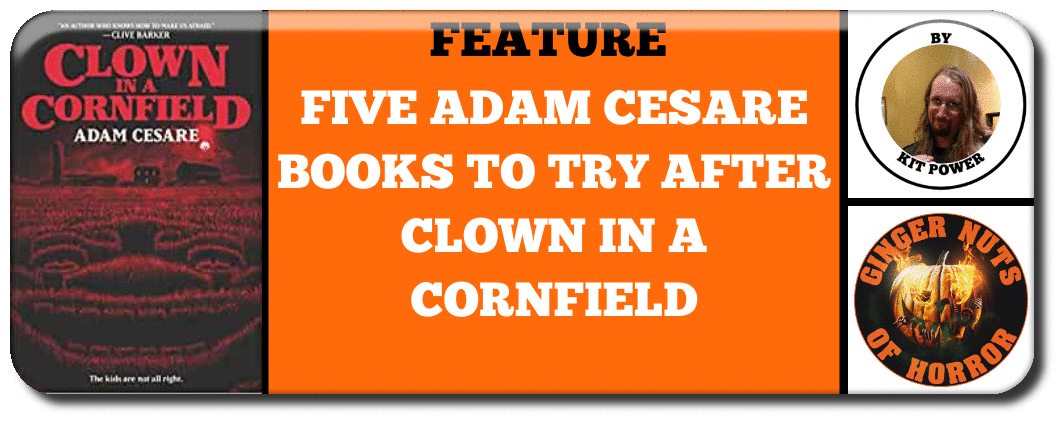
Five Adam Cesare Books To Try After Clown In A Cornfield

13/10/2020
FIVE ADAM CESARE BOOKS TO TRY AFTER CLOWN IN A CORNFIELD
One of the great things about an established author having a breakout success is getting to immediately dive into their back catalog to find out what other goodies they have in store for you. With Adam Ceasre’s new YA novel Clown In A Cornfield proving a smash hit with readers everywhere, including Gingernuts own YA horror expert Tony Jones, and following our interview with the author, here are five recommendations of where to go next for more Cesare goodness.
 
●      Tribesman
 
If you’re looking for more of a video nasty/grindhouse vibe, and you have a strong stomach, we can’t recommend Tribesmen enough; a genuinely smart, gory thrillride that manages to both be exploitation horror and comment on that genre. Breakneck pacing, bloody setpieces, and utterly thrilling.
 
●      Video Night
 
For more of a sci-fi tinged horror (with a distinct 80’s/Stranger Things vibe, though worth noting this was published before that show had popularised the approach) there’s also some genuinely sweet/awkward coming of age drama cooking alongside the gleeful escalating horror. Cesare blends the elements seamlessly, crafting an assured and compelling read.
 
●      The Summer Job
 
Taking in more of a cult/folk horror vibe, this one feels like another genre classic, albeit with Cesare’s masterful grasp of character and pace. Clare is an inspired, well-rounded Final Girl, and Cesare really shows off his mastery of tension in this novel, with events ratcheting up to screaming pitch before the inevitable explosion in the final act.
 
●      Zero Lives Remaining
 
Set in a haunted video arcade, there’s more nods to 80’s cinematic horror here, but yet again Cesare brings his talent for character, populating a pulp narrative with people that have a level of realisation and interiority the source material often sorely lacked. And in doing so, he elevates both the narrative and the horror in what is still, at its core, an absolutely glorious B-Movie Pulp Horror tale of the very highest order.
 
●      The First One You Expect
 
Rounding out our list of five, this novella takes in zero-budget horror filmmaking, conventions, a plausibly flawed narrator, and a series of perfectly executed twists on some well loved tropes. As with all these recommendations, the story highlights Cesare’s love of genre, and showcases his talent for gentle interrogation and subversion.
 
We hope you enjoy exploring more of Cesare’s work - and if you have any favourites we didn’t mention, please sound off in the comments, we’d love to hear from you.
 
KP
 ​
the-best-website-for-horror-promotion-orig_orig
book-review-trickster-s-treats-4-coming-buried-or-not-book-review_orig

the heart and soul of horror promotion 

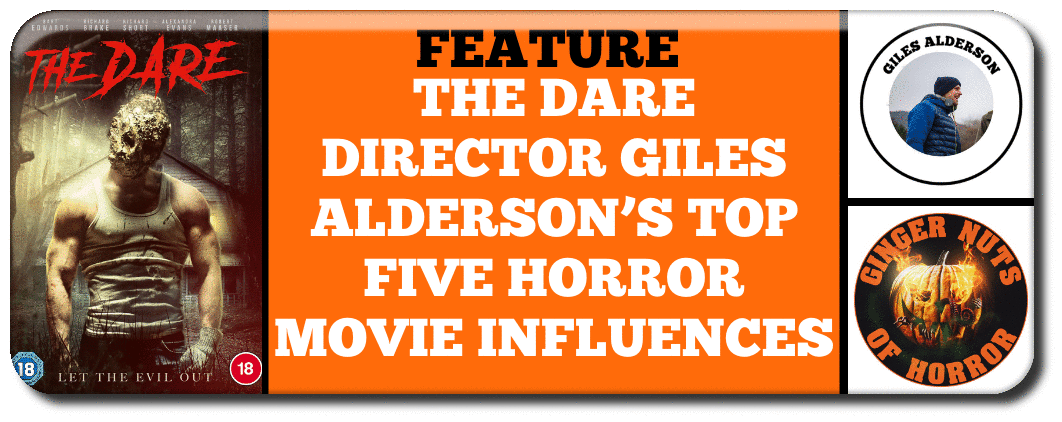
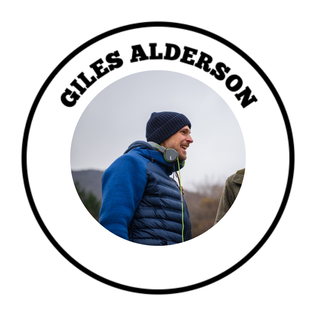
THE DARE DIRECTOR GILES ALDERSON’S TOP FIVE HORROR MOVIE INFLUENCES

10/10/2020
Picture
Unleashed in time for Halloween, The Dare is on Digital Download 5 October and DVD 12 October, so what better time for Giles to give us a run-down of his top five horror movie influences. Read on for chills, thrills and bloody kills!

​​THE OTHERS (2001)


It’s amazing to think that the fantastic gothic movie The Others is often overlooked as an incredible horror film. Most people remember ‘Nicole Kidman in a scary movie’ but this is so much more than that. Even though this thrilling ghost story is one of her best performances, The Others is a stunningly shot, atmospherically haunting film that gets better with each viewing. The way the camera lingers, the pacing and the whole she-bang of that twist are a real inspiration on The Dare. Director Alejandro Amenábar should be much more of a household name.

​THE MOTHMAN PROPHECIES (2002)


When I was still acting and thinking about the possibility of making films back in the early 2000’s this Richard Gere and Laura Linney starring feature really had an effect on me. I love that this was based on a true story and the fact it wasn’t billed as a ‘horror’ film per say made it even more frightening. The tension built up like a ratchet and it stuck with me. It was also the first time I had seen Richard Gere in a performance like this too and it felt very real. Mixing fact and fantasy has always made horror movies more intriguing and unsettling for me and The Mothman Prophecies, which takes place in the town where a number of real-world sightings of a mysterious creature known as the Mothman were reported, is no exception. The best bit for me is that the truth behind the Mothman sightings remains a mystery leaving us the viewer to fill in the blanks. Classic story-telling and filmmaking.

​CABIN FEVER (2002)

Eli Roth was a big inspiration for The Dare. He has real bollocks. To go out on a limb (sometimes literally) and be an incredibly brave filmmaker is to be admired. Eli and torture porn are often hand in hand but he is much more than that. It's the deeply unsettling dramas, that happen to be soaked in blood, that get you. And the ‘this could happen to you’ vibe makes his films stand out. He became known with the Hostel franchise, but his directorial debut is my favourite. He takes the ‘teenagers go to a cabin in the woods’ formula in Cabin Fever and ramps up the tension to claustrophobic extremes, with great ideas executed extremely well... I’m looking at you Mr. Flesh-eating Virus! It was made on a tiny budget and still holds up with it’s gross but often hilarious set pieces.
​

​HOUSE OF 1000 CORPSES (2003)

It’s great to think about debut films from directors you admire and when you look back at Rob Zombie's House of 1000 Corpses you can see his influences and his clear film-making ability. Similar to The Dare it took a few years to be released and it’s director went on to work with the great Richard Brake many times, who stars in The Dare, so it’s easy to see why Rob Zombie and House of 1000 Corpses would be an influence. The movie is disturbing, bat-shit crazy and has quite rightly become a cult favourite.

​SE7EN (1995)

Another film that isn’t billed as a horror is this gem from David Fincher. This got so under my skin that the first time I attempted to watch it I had to walk out of the cinema I felt so sick! It took me years to re-watch it and when I did, I loved it! I mean, this is real horror, horrific horror… the kind that permeates your dreams and lives in there for years! Big movie stars doing what they do best and that ending..! It really should be talked about more. Seven delves deep into psychopathic insanity and we, following the film through the characters eyes, are always a step behind making us feel terrified he could ‘already be in the room’ ready to pounce. It’s a masterclass in acting and filmmaking all tied up in a game of the seven deadly sins. Clever, thought-provoking and it left me with cinema-leaving scars that will never go away! Quite simply a masterpiece.
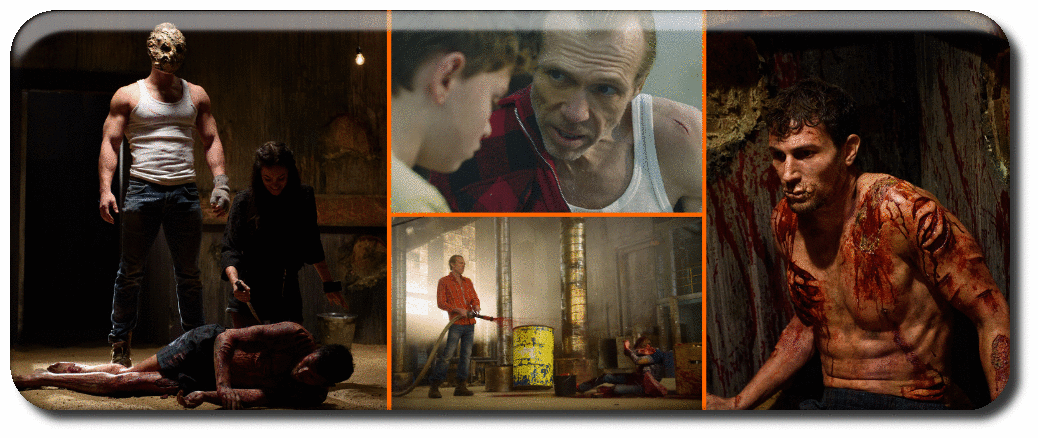
A twisted tale of torture and bloody revenge from director Giles Alderson (Arthur & Merlin: Knights of Camelot, A Serial Killers Guide to Life), The Dare slashes onto screens this Halloween.

A rare family night for Jay (Bart Edwards) takes a brutal twist when he is kidnapped, waking up chained to the wall of a squalid basement with three other prisoners. When their sadistic captor emerges, his face hidden under a gruesome skin mask, Jay soon realises their time is quickly running out. Jay must engage in a twisted battle of survival to solve the puzzle of his imprisonment, unmask their tormentor and save the lives of his family.
Picture
The Dare is available on Digital Download now and DVD 12 October from Lionsgate UK

The Dare DVD Amazon: https://amzn.to/31qfmot
Picture
Giles Alderson has recently locked picture on his directed historical action feature Arthur & Merlin: Knights of Camelot for Signature Ent and Picture Perfect. Starring Richard Short (Macbeth) Stella Stocker (The Good Liar) and Richard Brake (Game of Thrones). His directed, written & produced psychological horror feature film ‘The Dare’ made for Nu-Image (Expendables, Hellboy) and B2Y Productions starring Richard Brake (31, Batman Begins), Alexandra Evans ((Redistributors), Bart Edwards (Fantastic Beasts), Richard Short (Vinyl, Public Enemies), Robert Maaser (M.I 5 Rogue Nation) will be available on 3rd March 2020 through The Horror Collective. The film was been picked up Millennium Films (Hellboy, The Hitman’s Bodyguard, Expendables) and is available now is the US and Canada through The Horror Collective.

His feature Documentary World of Darkness that he produced and directed is a profile of the cult role-playing games 'World of Darkness' and 'Vampire: The Masquerade' that created a phenomenon in the 90s - a zeitgeist that helped shape and define film, literature, fashion and club culture. They influenced everything from the TV series 'True Blood' and the 'Underworld' film franchise to club fashions but perhaps their biggest impact was on the fans. had its world premiere at Sitges Film Festival before it’s international release earlier this year.

He is currently filming Food For Thought, the feature length documentary presented and narrated by actor, Born Free Foundation ambassador and animal conservationist, Dan Richardson, who also produces and co-directs alongside Giles. With a positive and inclusive tone throughout, Food For Thought documentary will deliver a relatable version of the plant-based message to the non-vegan majority, aiming to inspire and encourage them as we explore the driving forces behind the fastest growing lifestyle choice in the world. 

Producing Giles has recently produced Staten Cousins-Roe’s debut feature A Serial Killers Guide to Life starring Ben Lloyd Hughes (Divergent) Poppy Roe and Katie Brayben (Dr. Who).

Previous
Forward
    Picture
    https://smarturl.it/PROFCHAR
    Picture

    Archives

    April 2023
    March 2023
    February 2023
    January 2023
    December 2022
    November 2022
    October 2022
    September 2022
    August 2022
    July 2022
    June 2022
    May 2022
    April 2022
    March 2022
    February 2022
    January 2022
    December 2021
    November 2021
    October 2021
    September 2021
    August 2021
    July 2021
    June 2021
    May 2021
    April 2021
    March 2021
    February 2021
    January 2021
    December 2020
    November 2020
    October 2020
    September 2020
    August 2020
    July 2020
    June 2020
    May 2020
    April 2020
    March 2020
    February 2020
    January 2020
    December 2019
    November 2019
    October 2019
    September 2019
    August 2019
    July 2019
    June 2019
    May 2019
    April 2019
    March 2019
    February 2019
    January 2019
    December 2018
    November 2018
    October 2018
    September 2018
    August 2018
    July 2018
    June 2018
    May 2018
    April 2018
    March 2018
    February 2018
    January 2018
    December 2017
    November 2017
    October 2017
    September 2017
    August 2017
    June 2017
    May 2017
    April 2017
    March 2017
    February 2017
    January 2017
    December 2016
    November 2016
    October 2016
    September 2016
    August 2016
    July 2016
    June 2016
    May 2016
    April 2016
    March 2016
    February 2016
    January 2016
    December 2015
    November 2015
    October 2015
    September 2015
    August 2015
    July 2015
    June 2015
    May 2015
    April 2015
    March 2015
    February 2015
    January 2015
    December 2014
    November 2014
    October 2014
    September 2014
    August 2014
    July 2014
    June 2014
    May 2014
    April 2014
    March 2014
    February 2014
    January 2014
    December 2013
    October 2013
    September 2013
    August 2013

    Picture

    RSS Feed

https://l.facebook.com/l.php?u=https%3A%2F%2Fmybook.to%2Fdarkandlonelywater%3Ffbclid%3DIwAR1f9y1sr9kcIJyMhYqcFxqB6Cli4rZgfK51zja2Jaj6t62LFlKq-KzWKM8&h=AT0xU_MRoj0eOPAHuX5qasqYqb7vOj4TCfqarfJ7LCaFMS2AhU5E4FVfbtBAIg_dd5L96daFa00eim8KbVHfZe9KXoh-Y7wUeoWNYAEyzzSQ7gY32KxxcOkQdfU2xtPirmNbE33ocPAvPSJJcKcTrQ7j-hg
Picture