

You will bring, Joy to the Nowhere King, When He sees the light, Leaving your eyes. 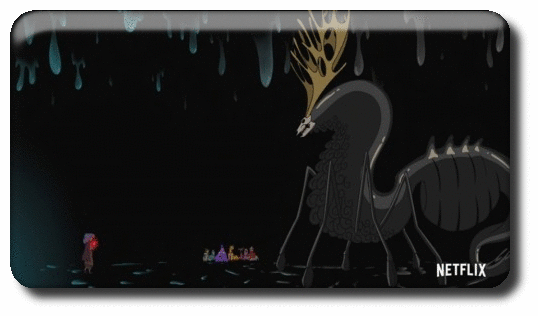 For the most part, Netflix's Centaurworld is the animated equivalent of getting pocket money as a child and spending it all on the sweetest, sharpest, most artifically-coloured confections you can imagine. It's a giant bag of Skittles, sherbert and chewy, soft, synthetic sweetness that bypasses all reason and goes straight for the childhood soul. A zany cartoon of elastic characters whose antics aren't a million miles away from those of classic Looney Tunes, Centaurworld is a breathless comedy that barely pauses before cramming more sugary insanity into the audience's eyes. From frequent musical numbers to expressions of earnest affection, the show is a great, big visual hug that won't be satisfied until you are bursting at the seams with confections, singing along with its endlessly endearing cast and weeping rainbows with laughter. So, why the hell are we discussing it here? Well, as the opening sequence demonstrates, the show is a masterwork of contrasting tones and atmospheres; far from the cotton-candy and rainbow-coloured carnival that comprises the majority of its runtime, the opening is a dour, dark and despairing look at a world ravaged by war, desolated by a conflict that has left little-to-no survivors. Even the animation style and character designs are different here; sharper, sterner, more angular. We are introduced to our protagonist Horse as they bear their Rider through barren wastelands and burning villages, engaging in conflicts with faceless and disturbing creatures whose entire demeanour is one of murderous violence. This is the first time the show pulls a particular trick that will become quite familiar to the audience before its conclusion: every beat of the opening is designed to bluff the audience into making certain assumptions, i.e. that this is a dark fantasy series in the vein of Avatar: The Last Airbender, that's going to lead the viewer through the wartorn history of a world on the brink of devastation. However, this sequence is less than five minutes long; it establishes the core relationship between Horse and Rider, which becomes the driving imperative of the narrative, then violently pulls the rug out from under us. Delivered into another world by magical accident, Horse finds herself in the eponymous Centaurworld: a transition not unlike that Eddie Valiant experiences in Who Framed Roger Rabbit when he travels from waking reality to Toon Town; a world that runs on cartoon physics and logic. Taken in by a rag-tag band of centaurs (all of whom are familiar cartoon archetypes), she embarks on a journey to open the gateway between worlds and reunite with her Rider; a quest that carries her across the face of Centaurworld and introduces her to the various offbeat and zany cultures, creatures and settings it hosts in the manner of Dorothy's journey through Oz (which it echoes in many key ways; Horse follows a rainbow road in contrast to Dorothy's yellow-brick variety) or Alice's descent into Wonderland. Throughout, the show shifts between tones and states of emotion in the blink of an eye, one moment engaging in Looney Tune slapstick, the next diving deep into its character's emotional traumas and neuroses. Fantastical threats and looming dangers are part and parcel; the first time we get a taste of how dangerous Centaurworld can be is when a storm in the party's path mutates into a giant, sentient “Taur-nado;” a Centaur made of hurricane winds. At this point, the tone of the show shifts, even its colour palette growing mute and dismal. Part of the show's peculiar strength is its ability to seamlessly marry different tones and conditions without seeming patchwork or contradictory; Horse's desperate yearning to be back with her Rider, in her own world, combined with the various conflicts she shares with her allies, the enmities and connections she makes along the way, form a surprisingly various and compelling back story, contrasting significantly with the light and frothy tone that is the most consistent, but also a mask for underlying depths. Moments of portent and omen are rare but occur as a means of lending weight and intrigue to the confection; from the beginning, there is a growing sense that, like Alice, what Horse is experiencing may not be entirely literal, but a by-product of some trauma or descent into herself. Rarely, the show cuts away from Horse and her “herd” to introduce moments of cryptic backstory; there is another visitor in Centaurworld; a ragged and bitter-seeming human, who follows them along their path and makes ominous portents as to what disaster might occur should they succeed in opening the way home. A strange nursery-rhyme/lullaby occurs at the conclusion of an early episode; sentient plants and flowers lining the rainbow-road sing of The Nowehere King, a creature or entity we have yet to encounter (though Horse has the somewhat cryptic line: “I know this song,” suggesting developments to come). This is the first instance of suggestive dread in the show; the song has the superficial quality of a nursery rhyme or lullaby, but a tainted one: it becomes clear upon listening to the lyrics that, like all the best nursery rhymes, it describes something rather disturbing, and entirely at odds with the candy-coated shenanigans that comprise most of the episode: 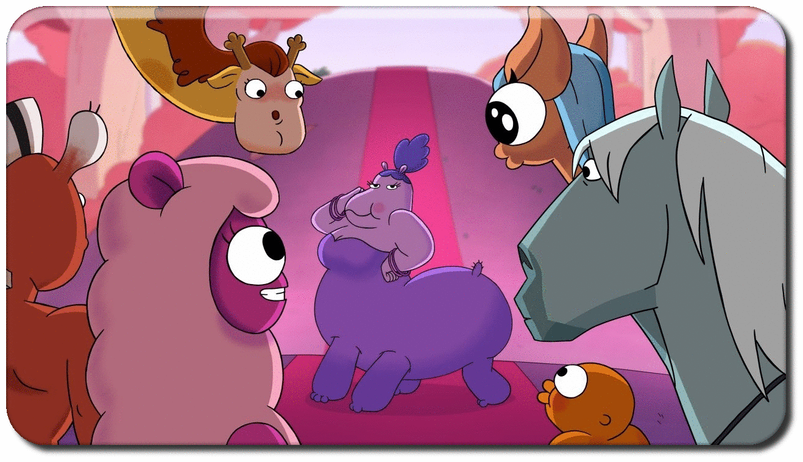 Hush now, hide, all you little ones Rush now, into the middle of nowhere Singing and laughter will die In a land filled with whimsy, hope and endless optimism, The Nowhere King is a breath of despair and desolation whose influence we already feel: whilst superficially frothy and fun, there is an abiding quality to Centaurworld that something has already happened; some history or calamity that preceded Horse's coming and our own introduction to it: something that has rendered the various cultures and creatures of the world apart and paranoid of one another, where once they might have been more. For all of its contrast to the world we find in the opening sequence, there is also a sense that it has more in common with Centaurworld than we initially understand: Fragmentary references to a forgotten history reveal that the Centaurs once fought against the same creatures that bedevil Horse's reality. For all their clownish antics, it's hard to shake an underlying dread and despair that escalates as the show reaches its final chapters. Then, we meet The Nowhere King. 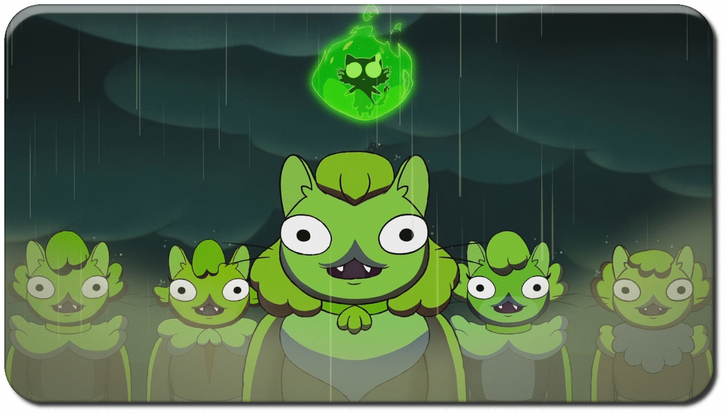 Dreamless sleep, follows the Nowhere King When his kingdom comes, darkness is nigh. Dreamless sleep, follows the Nowhere King When his kingdom comes, darkness is nigh. In the nowehere between realms, Horse is reunited with Rider, but also trapped by the interference of the anonymous human who has been following them the entire way. As the Centaurs plead with her to open the way again, she snarls: “You know what's trapped in there.” And soon, so do we: This is the moment in which Centaurworld reveals its horror chops: in a sequence rendered all the more stark and disturbing by the colour and frolics that surround it, The Nowhere King reveals himself: an entity of black, sentient muck and manifest despair, he rises from an expanding pool of his own effluent, his body shaping and forming into a groteque chimera of elk, wasp and reptile. An antlered skull is all that remains of his face, its eye-sockets burning with green light as it regards Horse and Rider with malevolent curiosity. For those who haven't seen the show or are not expecting it, this moment is one of breathless shock: there is nothing prior that even begins to approach the dread and disturbia of it, nothing that has the same bleak weight and dire import of The Nowhere King. The creators of the show have succeeded in capturing an entity that is not merely a physical threat, but also a spiritual one; The Nowhere King, as his name implies, is utter despair, in stark contrast to Horse and her “Herd,” who are light and colour and conviviality. Even at this early stage, the writers cleverly pepper in suggestions of a backstory that has yet to be unravelled (upon seeing Horse and Rider for the first time, the creature cocks its skull-head in curiosity and proclaims “You,” as though it recognises one or both of them). 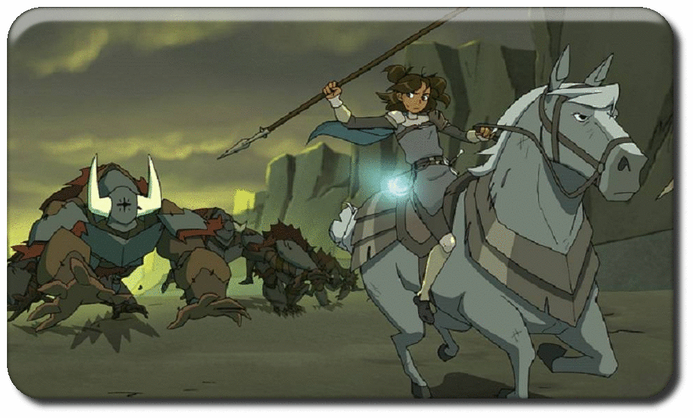 Quiet, crawl to the in-between Silent, secretive feeling Of fearsome hatred that reaches the skies. The conflict that follows is rendered all the more weighty by the incredible sense of threat pervading it; The Nowhere King has been trapped between worlds for so long, it doesn't care which world it escapes into, only that it does, and that it might begin to spread its corrupting despair as soon as possible. The show also takes great pains to emphasise the raw power of this entity; for all of the magics and miracles that the Centaurs evince (even the various Shamans that Horse meets) are nothing against it; it sweeps away every effort to fight against it, ultimately coming to fill and consume the nowhere it presides over with its own glutinous, polluted body. Even more than the overt horror of The Nowhere King (which is more than a little Lovecraftian), there is what the entity implies: as it faces off against the anonymous human that attempted to contain it, the creature bows its head to her, inviting the deathblow, but she can't bring herself to do it. As one of the core cast comments, there is clearly a backstory here that we do not learn in this first season, but the dynamic between the anonymous human and The Nowhere King is eerily similar to that between Horse and Rider. As to where the show will go from here, who can say? But it's clear that, in the style of Steven Universe, Adventure Time and others whose DNA it shares, Centaurworld's superficial cartoonishness is exactly that: aesthetic only. Beneath are numerous, troubling depths and it's clear we've seen very little of the various shades of darkness it has to offer. 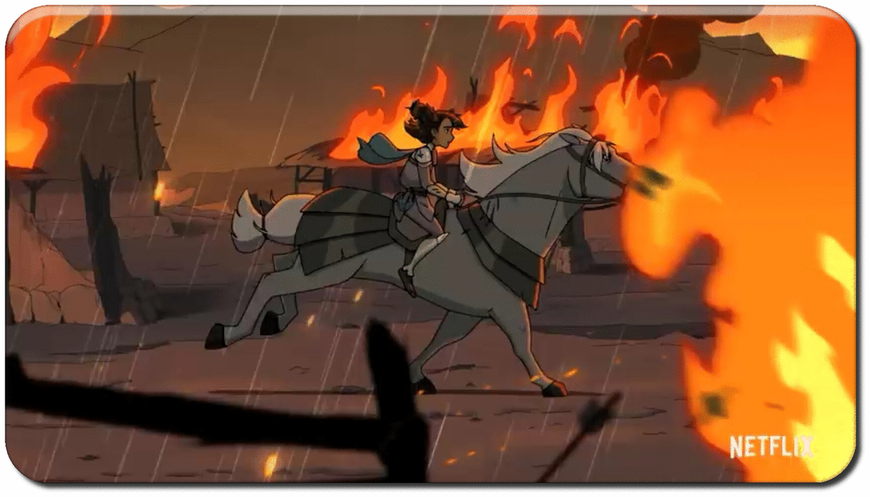 You will bring joy to the Nowhere King When he sees the light leaving your eyes. TODAY ON THE GINGER NUTS OF HORROR WEBSITE [THE HORROR OF HUMANITY] |


Archives
April 2023
|


 RSS Feed

|

|