

ON WRITING GRIEF BY RYAN LA SALA
22/8/2022
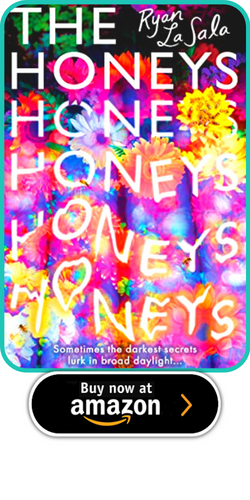
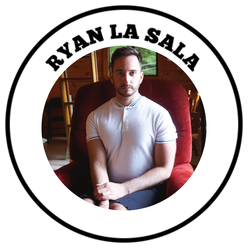
 For me, grief was an inescapable brightness lighting up my world in a new, awful way. Normal things became horrific in its strange illumination. Setting the table, singing happy birthday, taking photos -- everyday life becomes its own monster, yet no one but you can see it. I didn’t want to write THE HONEYS. I had to. I’ve had the idea for THE HONEYS since before I was even an author. It was always horror, but it felt wrong from the start. It wasn’t dark and spooky, like the movies and stories I loved. Instead, I could feel it as this lovely, unsettling brightness far off in my future. The book always centered on a character trying to make sense of a recent death in their life, but the strangeness of it all made it hard to start. And then my sister died. Very suddenly. Grief recolored everything in my life. Time and space felt warped by this new heaviness I embodied. And suddenly the idea for this book--this far-off brightness--was immediate and burning me up from within. Those who have dealt with death will know this: you must get it out. I wrote mine out into the horror that is The Honeys. The book opens with Mars awakening to his sister attacking him, and in the ensuing fight they fall from the second story of their house. Together, embraced. Mars survives because he lands on his sister, crushing her, and she dies instead (this is not a spoiler, this is page six). It’s an accident, a horrible fluke, but Mars can’t shake the sense that everything about what just happened was planned. And so, in his grief, he develops obsession: relive his sister’s final days and figure out what it all means. Grief in horror isn’t new or anything, in fact it’s an ancient and common fuel for many horrors, but like light through a prism, it splits into all sorts of dimensions when it passes through a storyteller. For me, grief wasn’t a ghost, or inky shadows. A ghost would have been a comfort, and shadows would have been nice to hide within. For me, grief was an inescapable brightness lighting up my world in a new, awful way. Normal things became horrific in its strange illumination. Setting the table, singing happy birthday, taking photos -- everyday life becomes its own monster, yet no one but you can see it. That’s why I decided to write a story in which the monsters don’t lurk in shadows; they simply stand before you in the bright of day, convincing you that you’re the crazy one for wondering why no one else is running away. Mars links his sister’s gruesome death with her clique of campmates known as the Honeys--beautiful, cunning, inexplicably terrifying, and named for the mysterious beehives they tend to behind their cabin. Mars witnesses one such honey coax a living bee from his sister’s ear at the open-casket wake. He follows them back to camp, where his late sister lived her final few weeks, immersing himself in a setting that should be lit with an almost juvenile nostalgia. But it’s wrong. It all feels very off to Mars. This is where the bright, inescapable nature of my grief makes its nest. The journey leads Mars right up to the Honeys and their hives, and then into their perfumed world, where he may finally find answers about his sister’s death. But that’s only if he can remember what he’s searching for. The Honeys are not what they seem. And grief isn’t an obvious monster. It doesn’t lurk under beds or spring out of shadows. It doesn’t pass through populations like an infection. It doesn’t zombify. You can’t stake it in the heart. So how is it defeated? Connection. Sensitivity. That was my discovery, at least. It isn’t Mars’s. I won’t spoil much, but in a book about girls who keep bees, it’s not hard to imagine there is something to be learned from the tiny animal, the mind that lives in millions of bodies all at once; something further to be learned about the divine power in letting down one’s guard and giving all your pain over to a larger system. A hive, perhaps. I myself have had to redevelop my own connection with the world these last few years, and I now understand the power that such sensitivity bestows. Unlike Mars, however, there’s nothing supernatural waiting for me to open up and let it in. At least not that I know of. But if there was, and if it was already within me, would I know? The blaze of summer bleaches all color from convictions, I find, and it can be tempting to give oneself over to the sweet embrace that the Honeys--the girls and their cottagcore camouflage--use to entreat their prey. Acceptance, I think is the term, from all those self-help books people kept quoting to me. I appreciate the sentiment--really, I do--but this is a horror story. That’s why The Honeys has a sixth stage. Because some of us need a bigger finale to our suffering than simple acceptance. Some of us, like Mars, will find they require a bit of sweet, sweet revenge. The Honeys: The Hottest New Queer YA Horror |
 |  |
THE HEART OF HORROR REVIEW WEBSITES

Mitzi Szereto and Mango Publishing Group are pleased to announce the upcoming publication of The Best New True Crime Stories: Unsolved Crimes & Mysteries, the sixth volume in Mitzi’s highly praised true crime franchise. The title features award-winning writers including Dean Jobb, Joan Renner, Cathy Pickens, Lindsey Danis, Janel Comeau, Anya Wassenberg, David Breakspear, Mitzi Szereto, and many others. The Best New True Crime Stories: Unsolved Crimes & Mysteries contains true crime cases from around the world written exclusively for this volume. “As always, the focus is on variety,” says Mitzi. “The book has particular relevance right now, since a number of stories cover gender-based violence as well as cultural attitudes toward women and disenfranchised communities.” Please read on for more details about this thrilling new anthology.
THE BEST NEW TRUE CRIME STORIES:
UNSOLVED CRIMES & MYSTERIES
by Mitzi Szereto
Publisher: Mango Publishing Group USA
Publication date: Sept. 13, 2022
Genre: True Crime/Nonfiction
Formats: trade paperback, digital
Pages (print edition): 240
US list price (print): $18.99
UK list price (print) £14.99
Canada list price (print) $27.99
ISBN: 978-1642509410
Purchase a copy here
UNSOLVED CRIMES & MYSTERIES
by Mitzi Szereto
Publisher: Mango Publishing Group USA
Publication date: Sept. 13, 2022
Genre: True Crime/Nonfiction
Formats: trade paperback, digital
Pages (print edition): 240
US list price (print): $18.99
UK list price (print) £14.99
Canada list price (print) $27.99
ISBN: 978-1642509410
Purchase a copy here
About the book:
Who did it? It’s the question every true crime enthusiast wants to know when they hear about a case. But some cases are never closed, the answers seemingly just out of reach. For the individuals involved—from the victims and their families to police investigators—this is the most frustrating and heartbreaking part of all. The Best New True Crime Stories: Unsolved Crimes & Mysteries examines a fascinating assortment of unsolved crimes from around the globe. A schoolgirl disappears from a bus stop in Rome. Two women are murdered in a national park. A British diplomat vanishes after leaving an inn. A Hollywood actor dies in bizarre circumstances. Indigenous Canadian women are abducted from the streets of Edmonton. A Swedish au pair is brutally murdered in Boston. These and other true crime accounts can be found in this exciting new collection of true crime stories.
Advance praise:
“Haunting and heartbreaking, The Best New True Crime Stories: Unsolved Crimes & Mysteries lives up to its title, and is a must-read for true crime aficionados.… I can’t stop thinking about these stories, and I highly recommend.”--Alex Finlay, author of Every Last Fear and The Night Shift
“If you love history and mystery, you’ll love this book.”--David Bushman, author of Murder at Teal’s Pond: Hazel Drew and the Mystery That Inspired Twin Peaks
“An unusually moving read.”--Linda Stratmann, author of thirty true crime and crime fiction books, including her new series featuring a young Sherlock Holmes
“This is a must-read book for all those interested in true crime.”--Christopher Berry-Dee, criminologist
“A truly fantastic anthology!”--Dan Zupansky, author and host of True Murder
About The Best New True Crime Stories series:
The Best New True Crime Stories is an original anthology series containing never-before-published nonfiction accounts of crime cases written for these volumes by writers hailing from the worlds of true crime, journalism, and crime fiction. “The Best New True Crime Stories is the first truly international and multicultural concept anthology series,” says Mitzi Szereto. “I’m committed to offering readers brand-new true crime accounts from an international and diverse group of writers. I’m pleased to have given a voice to those not only from the USA, Canada, the United Kingdom, Europe, and Australia, but from the Indian subcontinent, Asia, and the West Indies, as well as Indigenous and LGBTQ communities. Readers will discover cases they may never have heard of, including those that have involved or have had a personal impact on the writers themselves.”
Previous books in the series:
The Best New True Crime Stories: Partners in Crime
The Best New True Crime Stories: Crimes of Passion, Obsession & Revenge
The Best New True Crime Stories: Well-Mannered Crooks, Rogues & Criminals
The Best New True Crime Stories: Small Towns
The Best New True Crime Stories: Serial Killers
Mitzi Szereto (mitziszereto.com) is an author and anthology editor whose books span multiple genres. Her series The Best New True Crime Stories features the volumes Unsolved Crimes & Mysteries; Partners in Crime; Crimes of Passion, Obsession & Revenge; Well-Mannered Crooks, Rogues & Criminals; Small Towns; and Serial Killers. Aside from her numerous books, she has the added distinction of being the editor of the first anthology of erotic fiction to include a Fellow of the Royal Society of Literature. Mitzi has appeared internationally on radio and television and at literature festivals, and taught creative writing around the world. She produced and presented the London-based web TV channel Mitzi TV and portrays herself in the pseudo-documentary British film, Lint: The Movie. The seventh volume in her true crime franchise, The Best New True Crime Stories: Crimes of Famous & Infamous Criminals, will be published in 2023. Follow her on Twitter, Instagram, TikTok, and Facebook.
Who did it? It’s the question every true crime enthusiast wants to know when they hear about a case. But some cases are never closed, the answers seemingly just out of reach. For the individuals involved—from the victims and their families to police investigators—this is the most frustrating and heartbreaking part of all. The Best New True Crime Stories: Unsolved Crimes & Mysteries examines a fascinating assortment of unsolved crimes from around the globe. A schoolgirl disappears from a bus stop in Rome. Two women are murdered in a national park. A British diplomat vanishes after leaving an inn. A Hollywood actor dies in bizarre circumstances. Indigenous Canadian women are abducted from the streets of Edmonton. A Swedish au pair is brutally murdered in Boston. These and other true crime accounts can be found in this exciting new collection of true crime stories.
Advance praise:
“Haunting and heartbreaking, The Best New True Crime Stories: Unsolved Crimes & Mysteries lives up to its title, and is a must-read for true crime aficionados.… I can’t stop thinking about these stories, and I highly recommend.”--Alex Finlay, author of Every Last Fear and The Night Shift
“If you love history and mystery, you’ll love this book.”--David Bushman, author of Murder at Teal’s Pond: Hazel Drew and the Mystery That Inspired Twin Peaks
“An unusually moving read.”--Linda Stratmann, author of thirty true crime and crime fiction books, including her new series featuring a young Sherlock Holmes
“This is a must-read book for all those interested in true crime.”--Christopher Berry-Dee, criminologist
“A truly fantastic anthology!”--Dan Zupansky, author and host of True Murder
About The Best New True Crime Stories series:
The Best New True Crime Stories is an original anthology series containing never-before-published nonfiction accounts of crime cases written for these volumes by writers hailing from the worlds of true crime, journalism, and crime fiction. “The Best New True Crime Stories is the first truly international and multicultural concept anthology series,” says Mitzi Szereto. “I’m committed to offering readers brand-new true crime accounts from an international and diverse group of writers. I’m pleased to have given a voice to those not only from the USA, Canada, the United Kingdom, Europe, and Australia, but from the Indian subcontinent, Asia, and the West Indies, as well as Indigenous and LGBTQ communities. Readers will discover cases they may never have heard of, including those that have involved or have had a personal impact on the writers themselves.”
Previous books in the series:
The Best New True Crime Stories: Partners in Crime
The Best New True Crime Stories: Crimes of Passion, Obsession & Revenge
The Best New True Crime Stories: Well-Mannered Crooks, Rogues & Criminals
The Best New True Crime Stories: Small Towns
The Best New True Crime Stories: Serial Killers
Mitzi Szereto (mitziszereto.com) is an author and anthology editor whose books span multiple genres. Her series The Best New True Crime Stories features the volumes Unsolved Crimes & Mysteries; Partners in Crime; Crimes of Passion, Obsession & Revenge; Well-Mannered Crooks, Rogues & Criminals; Small Towns; and Serial Killers. Aside from her numerous books, she has the added distinction of being the editor of the first anthology of erotic fiction to include a Fellow of the Royal Society of Literature. Mitzi has appeared internationally on radio and television and at literature festivals, and taught creative writing around the world. She produced and presented the London-based web TV channel Mitzi TV and portrays herself in the pseudo-documentary British film, Lint: The Movie. The seventh volume in her true crime franchise, The Best New True Crime Stories: Crimes of Famous & Infamous Criminals, will be published in 2023. Follow her on Twitter, Instagram, TikTok, and Facebook.

THE HEART OF HORROR REVIEW WEBSITES
I’ll be honest, knowing now the differences between British and European horror, it served as a perfect gateway for a kid my age. Of course, it was slightly macabre and no one would forget that hideous faced, iconic greyish zombie, but it was all just so British.
THE HORROR OF MY LIFE BY MAREK Z. TURNER
THE FIRST HORROR BOOK I REMEMBER READING
When I was a kid, I used to love reading the Point Horror books, but that was so long ago that I wouldn’t be able to tell you a single title. Then, as I entered my mid-teens, reading became displaced as a hobby by other things, and it wasn’t until a far few years later that I picked up fiction books again.
When I did, I was devouring anything to do with zombies, and I remember picking up The Zombie Survival Guide by Max Brooks. This obviously didn’t follow your average narrative structure, nor is it strictly horror, but its uniqueness in the genre certainly made it stand out and provided something different to get me back on the reading wagon.
THE FIRST HORROR FILM I REMEMBER WATCHING
As a kid, I was obsessed with horror and the more ghoulish shows. I imagine everyone reading this was the same, and I remember being about ten and getting my mum to tape any late night horror off the TV. One of these, in fact the one I remember first and the most, was the Hammer Horror film Plague of the Zombies.
Everything about it was perfect and I’ll be honest, knowing now the differences between British and European horror, it served as a perfect gateway for a kid my age. Of course, it was slightly macabre and no one would forget that hideous faced, iconic greyish zombie, but it was all just so British.
Maybe a year later, once I had progressed from taping whatever was on the TV to actually having films bought for me, I remember my mum brought back two video tapes from the store - Wolf, with Jack Nicholson. No thank you, and a random Jean Rollin film put out by Redemption Films. Which one it was, I have no idea. I watched it once and thought, ‘what the fuck is this’. Nowadays, though, it would be a different response.
THE GREATEST HORROR BOOK OF ALL TIME
Well, it is a clear cop-out answer, but the Necronomicon release of tales by H.P. Lovecraft, which contains around 36 tales I think. Because of this, it’s a fantastic contender for the greatest horror book simply because of the amount of quality it contains within.
If I had to pick one particular book, then I would go with Slugs by Shaun Hutson, which for me is just a proper slice of humerous British horror and helped inform me in what sort of horror I wanted to write.
THE GREATEST HORROR FILM OF ALL TIME
This is something where my opinion has, understandably, changed over time, depending on where I was in life. But one film has constantly remained in my top three and I’ll stick my neck out and say probably (although using that qualifier word probably negates my claim) is the greatest horror of all time - Zombie Flesh Eaters.
The film is a testament to everyone involved in that film, not least Lucio Fulci, for which I would argue it gave a fresh shot of life to his career.
It is also ironic that a film that set out to cash in on the success of Romero’s Dawn of the Dead would in many ways surpass it. For me, this is because it doesn’t rip off Romero in the way you would expect. Sure, it pretends to be a sequel of sorts, hell just look at the Italian title, but in reality, the story has its basis more in the Tex Willer adventure comics and somehow Fulci (and De Rossi) push the gore and violence resulting in an irresistible combination.
Not to mention there’s a zombie vs a shark. WTF!
THE GREATEST WRITER OF ALL TIME
Actually, I’m going to have to go off-piste here and name the French crime writer Jean Patrick-Manchette. During my long-lasting zombie obsessed phase, I tried my hand at writing some short stories, with no luck, but it was only when I first read Manchette it truly inspired me to write.
There is something about his style, his cynicism, and his social awareness that draws me in and lifts him above others for me. I always believe that the purpose of art, with writing and film being a part of that, is like a triangle. In the bottom two corners, you have entertainment and intellectual stimulation (be that social commentary, posing a question, etc.) while at the apex of the triangle, where the lines of the two corners converge, you have the combination of the two. This is where the fantastic books, films, artworks that truly inspire in life. For me, Manchette completes the triangle.
That said, not everything seeks to make this type of art. The Italian b-movie director, Bruno Mattei is quoted as saying “movies are supposed to be entertaining. So, they have to be made with that kind of spirit.”
In that vein, two of my favourite reads do just this extremely well - and perhaps this is because they only set out to entertain. These books are Slugs and Breeding Ground by Shaun Hutson. It was his style I had in mind when I wrote Killerpede.
THE BEST BOOK COVER OF ALL TIME
Quite frankly if you don’t see the cover for John Christopher’s The Little People and immediately try to find a copy of it, well I don’t know what’s wrong with you. It immediately screams…’what the?’
More recently, the cover of Pupille by Luigi Musolino that was put out by the Italian publisher Zona 42 was fantastic. The use of red on black was striking and the book cover just had a nice, perhaps slightly raised feel that really impressed me.
THE BEST FILM POSTER OFF ALL TIME
The Ghanaian poster for Jurassic Park is pretty special, and certainly keeps in line with my love of the creature feature sub-genre, but I would have to go with something trashy like The Nail Gun Massacre which perfectly embodies the violent promise and sleazy nature of that style of film. It might even be better than the film, as was often the case (I’m looking at you Mardi Gras Massacre and The Toolbox Murders).
THE MOST UNDERRATED FILM OF ALL TIME
I’m not entirely sure underrated is the right word, but Dellamorte Dellamore aka The Cemetery Man deserves a lot more love and recognition than it gets. Based on the Dylan Dog comics, this film runs the gamut of human emotions from love and loss, to camaraderie, humiliation, friendship and jealousy.
Everett is simply fantastic in his role as Francesco Dellamorte, and it really was worth the producers time holding out for their man rather than taking the first bit of money that was offered and compromising (rumours of Matt Dillon being in place for the original proposed investors).
However, Creatures from the Abyss aka Plankton by Al Passari is an underrated gem, and considering you can watch it for free on YouTube or pick up the DVD for only a couple of quid it deserves more people, who like gross out creature feature horror comedy, checking it out. I was fortunate to speak to the director a few years ago, and he seemed a bloody nice man, too.
THE MOST UNDERRATED BOOK OF ALL TIME
Well, from a non-horror perspective, it is either S.F.W. by Andrew Wellman (which was turned into one of the ultimate 90s slacker films alongside Mallrats), or No Room at the Morgue by Jean-Patrick Manchette. Both have UK releases but I think they must have been short run (S.F.W.) or muted (No Room…) as I don’t think either have had much impact.
However, if I had to pick a horror novel that I feel was never given the wider love or attention it merited (I didn’t even know it was put out on Verotik), then I would choose Header by Edward Lee. This story should have received more lasting coverage and achieved more widespread acclaim (outside of the immediate community - where, in fairness, it is always held up as an example).
Also, I sound like a stuck record would like to give a quick shout out to Breeding Ground, by Shaun Hutson, which is the sequel to Slugs. I never see it get talked about on its own merits, but along with the first, it was instrumental in my love for fun animal horror/creature features.
THE MOST UNDERRATED AUTHOR OF ALL TIME
Well, it’s clearly the delightfully named Jonathan Gash who penned the Lovejoy mysteries. Gash created a terrific bastard of a character and some inventive stories (which then spawned a toned-down but equally terrific TV series), even winning the John Creasey Award in 1977 for The Judas Pair, the debut in the Lovejoy series.
In reality, Mr Gash was a doctor specialising in tropical medicine, so to find the time to pen around 24 Lovejoy novels along with several other series is humbling. Back on topic, however, I picked him because he draws you into this bastard’s world with humour and a touch of mystery, and that is where Lovejoys charm lies. The characters are both recognisable and exaggerated and clearly put on the page to entertain us. Which they do.
We should talk about Thomas Ligotti a lot more too, and so should the more mainstream press.
THE BOOK / FILM THAT SCARED ME THE MOST
As a young kid, it was Poltergeist and even to this day my mind has taken what I saw and amplified it so much that I still say that this film is the one that scared me the most. Although the Turkish film Baskin comes a close second, and so far is the only film that has left me slack jawed in the cinema.
In terms of books, I would like to give another shout out to the disquieting and eerie Pupile by Luigi Musolino which slowly built up the tension and creeped me out more and more as I read.
THE BOOK / FILM I AM WORKING ON NEXT
I am currently working on two projects. The first is another creature feature novella, this one with a single monster and set in a beautiful Italian location. I’m hoping this will be out by the start of next summer. The second is a historical noir that is in the final stages of editing (finally) but will probably be completed after the creature feature.
When I was a kid, I used to love reading the Point Horror books, but that was so long ago that I wouldn’t be able to tell you a single title. Then, as I entered my mid-teens, reading became displaced as a hobby by other things, and it wasn’t until a far few years later that I picked up fiction books again.
When I did, I was devouring anything to do with zombies, and I remember picking up The Zombie Survival Guide by Max Brooks. This obviously didn’t follow your average narrative structure, nor is it strictly horror, but its uniqueness in the genre certainly made it stand out and provided something different to get me back on the reading wagon.
THE FIRST HORROR FILM I REMEMBER WATCHING
As a kid, I was obsessed with horror and the more ghoulish shows. I imagine everyone reading this was the same, and I remember being about ten and getting my mum to tape any late night horror off the TV. One of these, in fact the one I remember first and the most, was the Hammer Horror film Plague of the Zombies.
Everything about it was perfect and I’ll be honest, knowing now the differences between British and European horror, it served as a perfect gateway for a kid my age. Of course, it was slightly macabre and no one would forget that hideous faced, iconic greyish zombie, but it was all just so British.
Maybe a year later, once I had progressed from taping whatever was on the TV to actually having films bought for me, I remember my mum brought back two video tapes from the store - Wolf, with Jack Nicholson. No thank you, and a random Jean Rollin film put out by Redemption Films. Which one it was, I have no idea. I watched it once and thought, ‘what the fuck is this’. Nowadays, though, it would be a different response.
THE GREATEST HORROR BOOK OF ALL TIME
Well, it is a clear cop-out answer, but the Necronomicon release of tales by H.P. Lovecraft, which contains around 36 tales I think. Because of this, it’s a fantastic contender for the greatest horror book simply because of the amount of quality it contains within.
If I had to pick one particular book, then I would go with Slugs by Shaun Hutson, which for me is just a proper slice of humerous British horror and helped inform me in what sort of horror I wanted to write.
THE GREATEST HORROR FILM OF ALL TIME
This is something where my opinion has, understandably, changed over time, depending on where I was in life. But one film has constantly remained in my top three and I’ll stick my neck out and say probably (although using that qualifier word probably negates my claim) is the greatest horror of all time - Zombie Flesh Eaters.
The film is a testament to everyone involved in that film, not least Lucio Fulci, for which I would argue it gave a fresh shot of life to his career.
It is also ironic that a film that set out to cash in on the success of Romero’s Dawn of the Dead would in many ways surpass it. For me, this is because it doesn’t rip off Romero in the way you would expect. Sure, it pretends to be a sequel of sorts, hell just look at the Italian title, but in reality, the story has its basis more in the Tex Willer adventure comics and somehow Fulci (and De Rossi) push the gore and violence resulting in an irresistible combination.
Not to mention there’s a zombie vs a shark. WTF!
THE GREATEST WRITER OF ALL TIME
Actually, I’m going to have to go off-piste here and name the French crime writer Jean Patrick-Manchette. During my long-lasting zombie obsessed phase, I tried my hand at writing some short stories, with no luck, but it was only when I first read Manchette it truly inspired me to write.
There is something about his style, his cynicism, and his social awareness that draws me in and lifts him above others for me. I always believe that the purpose of art, with writing and film being a part of that, is like a triangle. In the bottom two corners, you have entertainment and intellectual stimulation (be that social commentary, posing a question, etc.) while at the apex of the triangle, where the lines of the two corners converge, you have the combination of the two. This is where the fantastic books, films, artworks that truly inspire in life. For me, Manchette completes the triangle.
That said, not everything seeks to make this type of art. The Italian b-movie director, Bruno Mattei is quoted as saying “movies are supposed to be entertaining. So, they have to be made with that kind of spirit.”
In that vein, two of my favourite reads do just this extremely well - and perhaps this is because they only set out to entertain. These books are Slugs and Breeding Ground by Shaun Hutson. It was his style I had in mind when I wrote Killerpede.
THE BEST BOOK COVER OF ALL TIME
Quite frankly if you don’t see the cover for John Christopher’s The Little People and immediately try to find a copy of it, well I don’t know what’s wrong with you. It immediately screams…’what the?’
More recently, the cover of Pupille by Luigi Musolino that was put out by the Italian publisher Zona 42 was fantastic. The use of red on black was striking and the book cover just had a nice, perhaps slightly raised feel that really impressed me.
THE BEST FILM POSTER OFF ALL TIME
The Ghanaian poster for Jurassic Park is pretty special, and certainly keeps in line with my love of the creature feature sub-genre, but I would have to go with something trashy like The Nail Gun Massacre which perfectly embodies the violent promise and sleazy nature of that style of film. It might even be better than the film, as was often the case (I’m looking at you Mardi Gras Massacre and The Toolbox Murders).
THE MOST UNDERRATED FILM OF ALL TIME
I’m not entirely sure underrated is the right word, but Dellamorte Dellamore aka The Cemetery Man deserves a lot more love and recognition than it gets. Based on the Dylan Dog comics, this film runs the gamut of human emotions from love and loss, to camaraderie, humiliation, friendship and jealousy.
Everett is simply fantastic in his role as Francesco Dellamorte, and it really was worth the producers time holding out for their man rather than taking the first bit of money that was offered and compromising (rumours of Matt Dillon being in place for the original proposed investors).
However, Creatures from the Abyss aka Plankton by Al Passari is an underrated gem, and considering you can watch it for free on YouTube or pick up the DVD for only a couple of quid it deserves more people, who like gross out creature feature horror comedy, checking it out. I was fortunate to speak to the director a few years ago, and he seemed a bloody nice man, too.
THE MOST UNDERRATED BOOK OF ALL TIME
Well, from a non-horror perspective, it is either S.F.W. by Andrew Wellman (which was turned into one of the ultimate 90s slacker films alongside Mallrats), or No Room at the Morgue by Jean-Patrick Manchette. Both have UK releases but I think they must have been short run (S.F.W.) or muted (No Room…) as I don’t think either have had much impact.
However, if I had to pick a horror novel that I feel was never given the wider love or attention it merited (I didn’t even know it was put out on Verotik), then I would choose Header by Edward Lee. This story should have received more lasting coverage and achieved more widespread acclaim (outside of the immediate community - where, in fairness, it is always held up as an example).
Also, I sound like a stuck record would like to give a quick shout out to Breeding Ground, by Shaun Hutson, which is the sequel to Slugs. I never see it get talked about on its own merits, but along with the first, it was instrumental in my love for fun animal horror/creature features.
THE MOST UNDERRATED AUTHOR OF ALL TIME
Well, it’s clearly the delightfully named Jonathan Gash who penned the Lovejoy mysteries. Gash created a terrific bastard of a character and some inventive stories (which then spawned a toned-down but equally terrific TV series), even winning the John Creasey Award in 1977 for The Judas Pair, the debut in the Lovejoy series.
In reality, Mr Gash was a doctor specialising in tropical medicine, so to find the time to pen around 24 Lovejoy novels along with several other series is humbling. Back on topic, however, I picked him because he draws you into this bastard’s world with humour and a touch of mystery, and that is where Lovejoys charm lies. The characters are both recognisable and exaggerated and clearly put on the page to entertain us. Which they do.
We should talk about Thomas Ligotti a lot more too, and so should the more mainstream press.
THE BOOK / FILM THAT SCARED ME THE MOST
As a young kid, it was Poltergeist and even to this day my mind has taken what I saw and amplified it so much that I still say that this film is the one that scared me the most. Although the Turkish film Baskin comes a close second, and so far is the only film that has left me slack jawed in the cinema.
In terms of books, I would like to give another shout out to the disquieting and eerie Pupile by Luigi Musolino which slowly built up the tension and creeped me out more and more as I read.
THE BOOK / FILM I AM WORKING ON NEXT
I am currently working on two projects. The first is another creature feature novella, this one with a single monster and set in a beautiful Italian location. I’m hoping this will be out by the start of next summer. The second is a historical noir that is in the final stages of editing (finally) but will probably be completed after the creature feature.
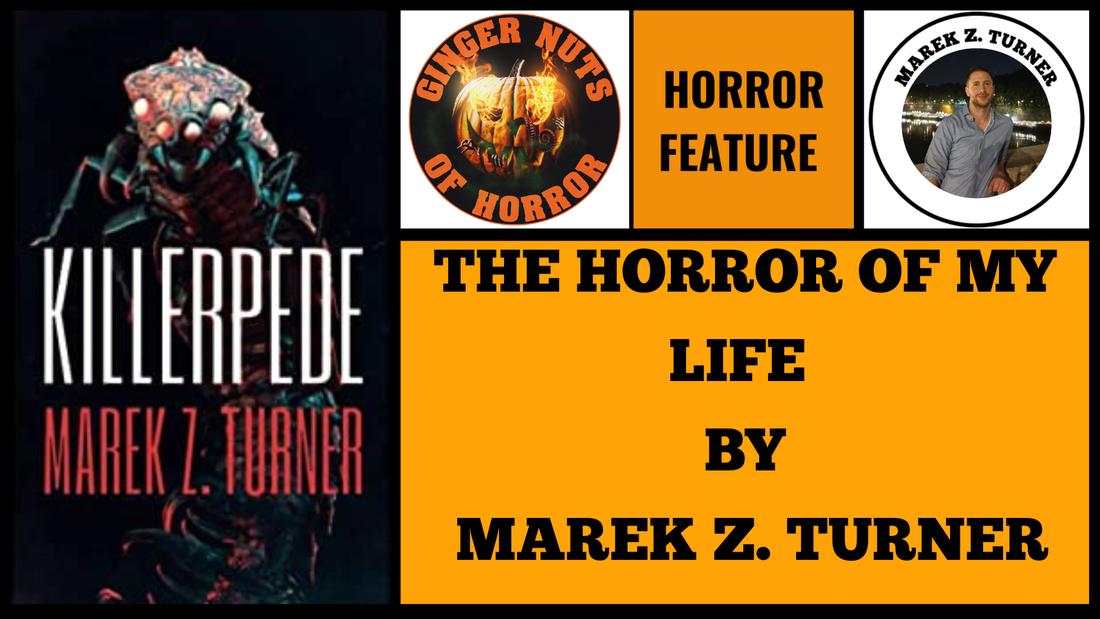
Killerpede
by Marek Z. Turner

When mutant centipedes kill a lonely septuagenarian’s dog, he joins forces with a plucky female reporter to uncover the truth behind the putrid creatures and their connection to the recently opened local quarry.
Ignored by the community, our unlikely duo joins up with a shady environmental activist and soon find themselves in a race against time and hundreds of tiny legs in order to stop the menace before it devours the entire village and beyond.
Ignored by the community, our unlikely duo joins up with a shady environmental activist and soon find themselves in a race against time and hundreds of tiny legs in order to stop the menace before it devours the entire village and beyond.
Marek Z. Turner
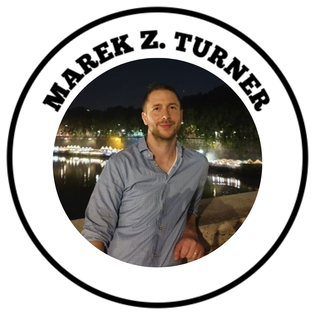
Marek Z. Turner is a writer of crime and horror fiction based in the United Kingdom. He was a finalist in the Amazon Publishing (UK)/ Capital Crime New Voices Awards 2021 for the opening of his historical Noir 'The Venom of the Snake', and has previously had non-fiction articles on horror and Italian cinema published by Diabolique, Scream Magazine and Weng's Chop magazine, as well as in booklets released by 88 Films and Tetrovideo.
His debut release, the animal horror, Killerpede, is available now in e-book and paperback from Amazon.
Marek Z. Turner’s creature feature, Killerpede is out now from Severed Press and available in ebook and paperback.
You can follow him on Twitter or view his author page on Amazon.
WEBSITE LINKS
Twitter: https://mobile.twitter.com/poliziotturner
Killerpede UK Amazon page: https://www.amazon.co.uk/Killerpede-Marek-Z-Turner-ebook/dp/B0B6198Y86/
Killerpede USA Amazon page: https://www.amazon.com/Killerpede-Marek-Z-Turner-ebook/dp/B0B6198Y86/
Twitter: https://mobile.twitter.com/poliziotturner
Killerpede UK Amazon page: https://www.amazon.co.uk/Killerpede-Marek-Z-Turner-ebook/dp/B0B6198Y86/
Killerpede USA Amazon page: https://www.amazon.com/Killerpede-Marek-Z-Turner-ebook/dp/B0B6198Y86/

THE HEART OF HORROR REVIEW WEBSITES

Today our scientific methods are more advanced. We also have documented proof of post-mortem consciousness in hospital rooms, and that points to some form of life after death. Will anyone find a way to ethically repeat MacDougall’s experiment? Probably not, but if they do, I’ll be waiting on the results. I bet I can work them into a DEMON DAGGER sequel.
Unsettled Science - The Search for the Soul
By Russell James
By Russell James
I love history. As a writer, I try and weave as much of it into my novels as possible. My latest horror/thriller DEMON DAGGER is about demons escaping from Hell, bodily possession, and the selling of souls. Believe it or not, some interesting history ended up even in a story like this. Many believe the souls my fictional demon craves exist, but back in 1907, one man in Haverhill, Massachusetts tried to prove it.

Dr. Duncan MacDougall
Duncan MacDougall wasn’t a religious zealot or an obsessive spiritualist. He was a certified medical doctor. His theory was that if a soul (or “continuing personality after death” as he put it) existed as an individual thing tied to a specific person, that soul had to be physically part of that person, and that soul would have mass. If the soul continued to exist post-mortem, it would be possible to see a loss of mass after the moment of death. Some of his reasoning was wrapped up in the concept of “ether”, a common scientific misconception of the time, but the logic behind his experiment design was solid.
MacDougall approached his experiment with the soundest of contemporary scientific methods. He built a delicate scale accurate to two-tenths of an ounce that included his subject’s deathbed. He carefully calibrated the apparatus and was certain to account for a host of potential losses like post-mortem voided waste and exhaled final breaths. Then, as subjects, he used individuals on the verge of death with diseases that kept them immobile during their last moments on Earth, lest their movements upset the sensitive scale.
Starting in 1901, he began to conduct his experiments. How he got voluntary participants for them is not documented, but he must have been quite a salesman. Over about a year, he performed the experiment six times. Two of the experiments he discounted because of measuring errors or in one instance “interference by people opposed to our work.”
The four experiments in which he had faith all showed near-immediate losses of mass at the moment of death. This amount varied by individual but was less than an ounce, averaging out to 21 grams.
Coincident with his last set of human experiments, he performed the same experiments on twelve dogs with a variety of weights, using scales with a higher accuracy of a sixteenth of an ounce. In every instance, there was no weight loss for the dogs after death. The phenomenon he was observing only occurred in humans, and if other animals showed the same post-mortem results, his conclusion was that only humans had souls.
MacDougall approached his experiment with the soundest of contemporary scientific methods. He built a delicate scale accurate to two-tenths of an ounce that included his subject’s deathbed. He carefully calibrated the apparatus and was certain to account for a host of potential losses like post-mortem voided waste and exhaled final breaths. Then, as subjects, he used individuals on the verge of death with diseases that kept them immobile during their last moments on Earth, lest their movements upset the sensitive scale.
Starting in 1901, he began to conduct his experiments. How he got voluntary participants for them is not documented, but he must have been quite a salesman. Over about a year, he performed the experiment six times. Two of the experiments he discounted because of measuring errors or in one instance “interference by people opposed to our work.”
The four experiments in which he had faith all showed near-immediate losses of mass at the moment of death. This amount varied by individual but was less than an ounce, averaging out to 21 grams.
Coincident with his last set of human experiments, he performed the same experiments on twelve dogs with a variety of weights, using scales with a higher accuracy of a sixteenth of an ounce. In every instance, there was no weight loss for the dogs after death. The phenomenon he was observing only occurred in humans, and if other animals showed the same post-mortem results, his conclusion was that only humans had souls.

April 1907 Newspaper Article
With his experiments far from complete, a reporter got wind of what he was doing. In April 1907, The New York Times published an article about his work that was subsequently picked up by other newspapers across the country. MacDougall was appalled. The story contained some factual inaccuracies, but worse, having his work reported by the press, instead of in an academic journal, sapped it of any scientific credibility.

MacDougall’s paper in a 1907 research journal
MacDougall went right to work and by May of 1907 had an article published concurrently in both the journals American Medicine and the Journal of the American Society for Psychical Research. In the article he described his experiments in detail and even concluded with saying the results were preliminary. He encouraged other doctors to perform similar tests to prove or disprove his theories.
MacDougall took an immediate pounding from the medical establishment, often dismissing the theory he was researching without looking at the research itself. Others raised questions about his protocols that were already answered in his journal articles. In the end, no other doctors performed any experiments to validate or invalidate his work. To his own frustration, all his research became a dead end. MacDougal later died at the early age of 54.
In DEMON DAGGER, the demon feeds on the offered souls of the living. Bereft of the divine spark and moral compass the soul provides, these people become dangerous sociopaths. MacDougall’s experiment gave me a framework for that idea, and while no one else built on his work, I had someone do so in the novel. In my fictional experiment, a skeptical doctor performs the same experiments using Texas death row inmates. He debunks MacDougall since none of the dead lose any mass. But the demon hunters know the tests actually validate MacDougall, because the Texas experiments were on soulless sociopaths.
Today our scientific methods are more advanced. We also have documented proof of post-mortem consciousness in hospital rooms, and that points to some form of life after death. Will anyone find a way to ethically repeat MacDougall’s experiment? Probably not, but if they do, I’ll be waiting on the results. I bet I can work them into a DEMON DAGGER sequel.
(First two images copied from the Wikimedia Commons website. Journal image copied from Google Books.)
MacDougall took an immediate pounding from the medical establishment, often dismissing the theory he was researching without looking at the research itself. Others raised questions about his protocols that were already answered in his journal articles. In the end, no other doctors performed any experiments to validate or invalidate his work. To his own frustration, all his research became a dead end. MacDougal later died at the early age of 54.
In DEMON DAGGER, the demon feeds on the offered souls of the living. Bereft of the divine spark and moral compass the soul provides, these people become dangerous sociopaths. MacDougall’s experiment gave me a framework for that idea, and while no one else built on his work, I had someone do so in the novel. In my fictional experiment, a skeptical doctor performs the same experiments using Texas death row inmates. He debunks MacDougall since none of the dead lose any mass. But the demon hunters know the tests actually validate MacDougall, because the Texas experiments were on soulless sociopaths.
Today our scientific methods are more advanced. We also have documented proof of post-mortem consciousness in hospital rooms, and that points to some form of life after death. Will anyone find a way to ethically repeat MacDougall’s experiment? Probably not, but if they do, I’ll be waiting on the results. I bet I can work them into a DEMON DAGGER sequel.
(First two images copied from the Wikimedia Commons website. Journal image copied from Google Books.)
DEMON DAGGER
BY RUSSELL JAMES

“A thrilling game of supernatural cat and mouse.” — Publishers Weekly
“A hugely entertaining story of all-too-human heroes battling soul-devouring demons.
James' best novel yet!" — Tim Waggoner author of We Will Rise
“Demons. Possession. Stolen souls. And a body count that’s rising. Demon Dagger delivers all this and more as novice demon hunter Drew Price must stop one of Hell’s most powerful archdemons before the creature destroys Drew’s family. Russell James doesn’t pull any punches as this story races to a thrilling climax.”
– JG Faherty, author of The Wakening and Sins of the Father
Drew Price has a gift, or perhaps a curse.
When a demon possesses a person, Drew can see the horrific-looking demon that dwells within. This ability has made him a demon hunter, armed with the one weapon that can send these fiends back to Hell; the demon dagger.
A demon named Nicobar sets its sights on punishing this hunter. It starts by taking the soul of Drew’s son, condemning the boy to life as a psychopath.
This fast-paced, chilling novel follows Drew’s attempt to save his son’s soul and then use the blade to end Nicobar’s time on Earth.
“Demon Dagger is an immensely enjoyable page-turner that wastes no time and will keep you engrossed right from the beginning. I hold out hope that there will be a sequel or two from James in the world of Demon Dagger, as he planted the seeds to follow it up with many more stories.” — Grimdark Magazine
DEMON DAGGER
Flame Tree Press — August 16, 2022
288 pages
Hardcover: $26.95 Paperback: $16.95, Kindle: $4.99
ISBN: 978-1-78758-693-2
FLAME TREE PRESS is the imprint of long-standing independent Flame Tree Publishing dedicated to full-length original fiction in the horror and suspense, science fiction & fantasy, and crime / mystery / thriller categories. The list brings together fantastic new authors and the more established; the award winners, and exciting, original voices. Learn more about Flame Tree Press at www.flametreepress.com and connect on social media @FlameTreePress
“A hugely entertaining story of all-too-human heroes battling soul-devouring demons.
James' best novel yet!" — Tim Waggoner author of We Will Rise
“Demons. Possession. Stolen souls. And a body count that’s rising. Demon Dagger delivers all this and more as novice demon hunter Drew Price must stop one of Hell’s most powerful archdemons before the creature destroys Drew’s family. Russell James doesn’t pull any punches as this story races to a thrilling climax.”
– JG Faherty, author of The Wakening and Sins of the Father
Drew Price has a gift, or perhaps a curse.
When a demon possesses a person, Drew can see the horrific-looking demon that dwells within. This ability has made him a demon hunter, armed with the one weapon that can send these fiends back to Hell; the demon dagger.
A demon named Nicobar sets its sights on punishing this hunter. It starts by taking the soul of Drew’s son, condemning the boy to life as a psychopath.
This fast-paced, chilling novel follows Drew’s attempt to save his son’s soul and then use the blade to end Nicobar’s time on Earth.
“Demon Dagger is an immensely enjoyable page-turner that wastes no time and will keep you engrossed right from the beginning. I hold out hope that there will be a sequel or two from James in the world of Demon Dagger, as he planted the seeds to follow it up with many more stories.” — Grimdark Magazine
DEMON DAGGER
Flame Tree Press — August 16, 2022
288 pages
Hardcover: $26.95 Paperback: $16.95, Kindle: $4.99
ISBN: 978-1-78758-693-2
FLAME TREE PRESS is the imprint of long-standing independent Flame Tree Publishing dedicated to full-length original fiction in the horror and suspense, science fiction & fantasy, and crime / mystery / thriller categories. The list brings together fantastic new authors and the more established; the award winners, and exciting, original voices. Learn more about Flame Tree Press at www.flametreepress.com and connect on social media @FlameTreePress
RUSSELL JAMES

Russell James grew up on Long Island, New York and spent too much time watching Chiller, Kolchak: The Night Stalker, and The Twilight Zone, despite his parents’ warnings. Bookshelves full of Stephen King and Edgar Allan Poe didn’t make things better. He graduated from Cornell University and the University of Central Florida.
After a tour flying helicopters with the U.S. Army, he now spins twisted tales best read in daylight. He has written the paranormal thrillers Q Island, Dark Inspiration, The Playing Card Killer, The Portal, Lambs Among Wolves, and both the Grant Coleman and Ranger Kathy West adventure series. He has four short story collections, Tales from the Beyond, Outer Rim, Forever Out of Time, and Deeper into Darkness.
CONNECT WITH RUSSELL ONLINE
Website: russellrjames.com
Facebook: Russell James - Author
Meet Russell at an upcoming convention in 2022!
CHECK OUT TODAY'S OTHER ARTICLES BELOW
 | |
THE HEART OF HORROR REVIEW WEBSITES
AYVIANNA SNOW CONTINUES TO EMBRACE HER DARK SIDE
STARRING IN TWO EXCITING NEW FILMS SCREENING AT FRIGHTFEST:
LOLA & ORCHESTRATOR OF STORMS
STARRING IN TWO EXCITING NEW FILMS SCREENING AT FRIGHTFEST:
LOLA & ORCHESTRATOR OF STORMS
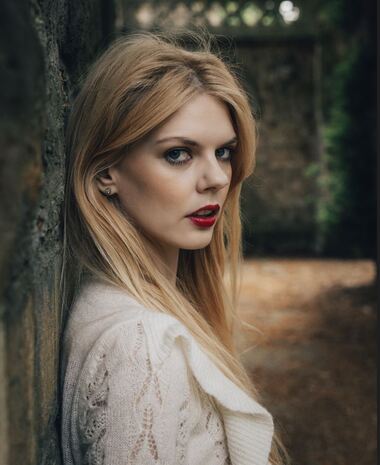
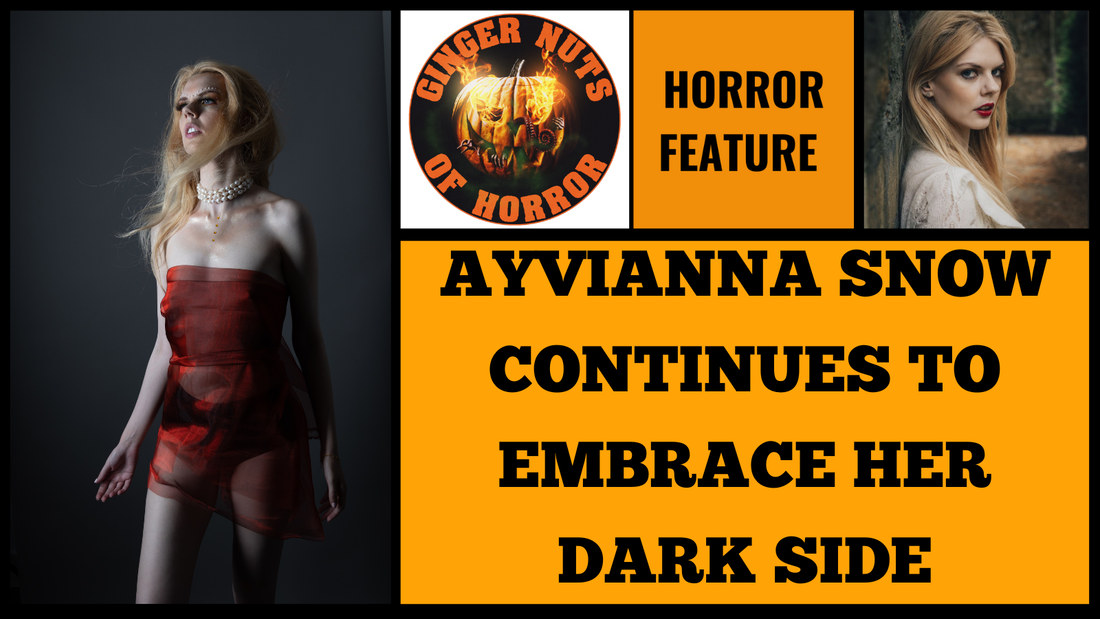
Ayvianna Snow (White Colour Black, Black Lake, Barun Rai And The House On The Cliff, Hollow, The Lockdown Hauntings) continues to embrace her dark side with two exciting new film releases. She says, “I have always been drawn to the dark side; Sci-Fi and horror are such versatile genres; there really are no limits”.
LOLA, directed by Andrew Legge and also starring Emma Appleton and Stefanie Martini, is a sci-fi film set in 1941. Two sisters create a time machine, allowing them to explore the punk generation before it even existed. But with World War II escalating, they decide to use the machine as a weapon of intelligence, with world-altering consequences. Ayvianna plays the character Rebecca Cavendish who works as a reporter; she says, “I love that LOLA centres the relationship between two women and explores female solidarity in exceptional circumstances. I am thrilled to have worked with such an exciting creative team”.
LOLA, directed by Andrew Legge and also starring Emma Appleton and Stefanie Martini, is a sci-fi film set in 1941. Two sisters create a time machine, allowing them to explore the punk generation before it even existed. But with World War II escalating, they decide to use the machine as a weapon of intelligence, with world-altering consequences. Ayvianna plays the character Rebecca Cavendish who works as a reporter; she says, “I love that LOLA centres the relationship between two women and explores female solidarity in exceptional circumstances. I am thrilled to have worked with such an exciting creative team”.
LOLA was shot on location in Kildare and Dublin features songs composed for the film by acclaimed singer/songwriter Neil Hannon of The Divine Comedy. LOLA will premiere at the 75th anniversary of the Locarno Festival, followed by Edinburgh Film Festival in August, as well as a London screening at FrightFest on 27th August.
Ayvianna also brings her talents to Orchestrator of Storms, narrating a fascinating documentary about the life and work of Eurocult director Jean Rollin. The film recently premiered at Fantasia. From a struggling artist with an unconventional upbringing to the purveyor of New Wave surrealist fantastique via distinctive and unique films such as The Rape of The Vampire, The Iron Rose, Fascination, Lips of Blood and The Living Dead Girl. Sex and nudity, innocence and perversity, stunning visuals and rule-breaking became Rollin trademarks - and you’ll find out why in this provocative, moving and enlightening look at his myth and magic -as friends, critics and actors tell all. Orchestrator of Storms will screen at FrightFest, UK, on 26th August.
Ayvianna also brings her talents to Orchestrator of Storms, narrating a fascinating documentary about the life and work of Eurocult director Jean Rollin. The film recently premiered at Fantasia. From a struggling artist with an unconventional upbringing to the purveyor of New Wave surrealist fantastique via distinctive and unique films such as The Rape of The Vampire, The Iron Rose, Fascination, Lips of Blood and The Living Dead Girl. Sex and nudity, innocence and perversity, stunning visuals and rule-breaking became Rollin trademarks - and you’ll find out why in this provocative, moving and enlightening look at his myth and magic -as friends, critics and actors tell all. Orchestrator of Storms will screen at FrightFest, UK, on 26th August.

Ayvianna says: "As an actress who works mainly in the horror genre, I am thrilled to narrate Orchestrator of Storms, as Jean Rollin is, in many ways, the father of modern horror. His influence on horror has been so far-reaching."
Ayvianna's showreel: https://vimeo.com/262585099
Instagram: www.instagram.com/ayviannasnow/
Spotlight: https://www.spotlight.com/5817-5640-0092
IMDb: https://www.imdb.com/name/nm6757384/
Ayvianna's showreel: https://vimeo.com/262585099
Instagram: www.instagram.com/ayviannasnow/
Spotlight: https://www.spotlight.com/5817-5640-0092
IMDb: https://www.imdb.com/name/nm6757384/
THE HEART OF HORROR REVIEW WEBSITES
THE HORROR OF MY LIFE: RUSSELL MARDELL
11/8/2022
Russell Mardell
BIO
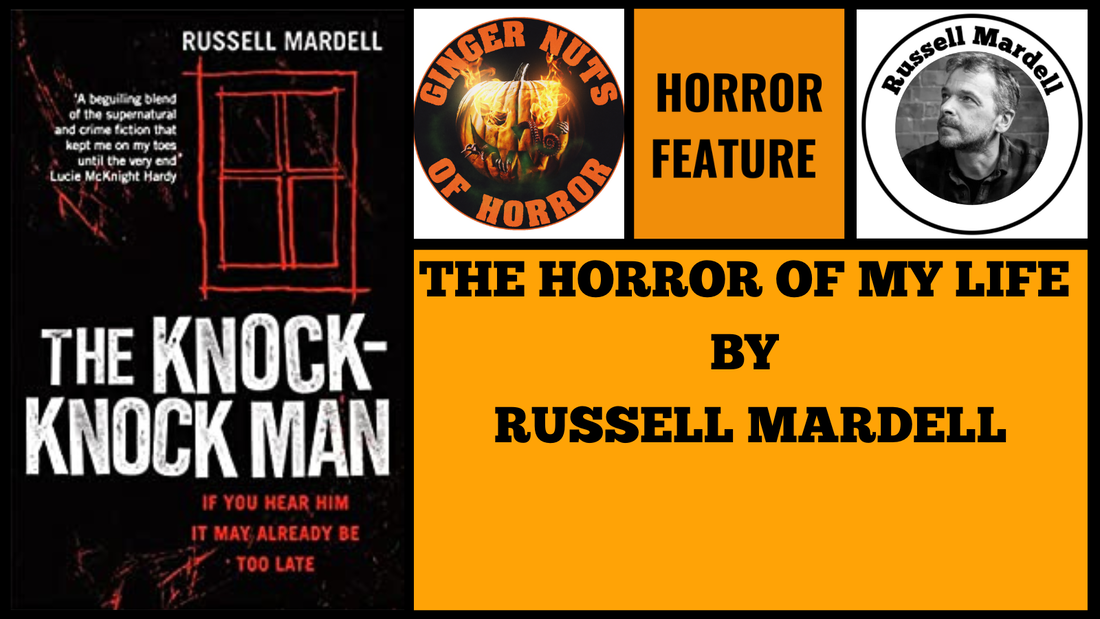
Russell Mardell is a novelist, playwright, and producer based in the South West of England. He is the author of the novels, Stone Bleeding, Bleeker Hill, Darkshines Seven and Cold Calling, and the short story collection, Silent Bombs Falling on Green Grass. His new novel, The Knock-Knock Man, was published in May 2022.
Having studied film production in London he has also worked on various short films and is an associate producer on the award-winning documentary, ‘Rise: The Story of Augustines’.
He works at The Rocketship Bookshop in Salisbury, an independent bookshop for children and young people, and is also one of the founders of The Salisbury Literary Festival.
Russell Mardell is a novelist, playwright, and producer based in the South West of England. He is the author of the novels, Stone Bleeding, Bleeker Hill, Darkshines Seven and Cold Calling, and the short story collection, Silent Bombs Falling on Green Grass. His new novel, The Knock-Knock Man, was published in May 2022.
Having studied film production in London he has also worked on various short films and is an associate producer on the award-winning documentary, ‘Rise: The Story of Augustines’.
He works at The Rocketship Bookshop in Salisbury, an independent bookshop for children and young people, and is also one of the founders of The Salisbury Literary Festival.
WEBSITE LINKS
www.russellmardell.co.uk
www.twitter.com/russellmardell
www.reddoorpress.co.uk/collections/fiction/products/the-knock-knock-man
www.russellmardell.co.uk
www.twitter.com/russellmardell
www.reddoorpress.co.uk/collections/fiction/products/the-knock-knock-man
The first horror book I remember reading
I have vivid memories of being fascinated, as a young child, by The Devil Rides Out and Dracula on my dad’s bookshelf, and being a little freaked out by the covers (the glorious Arrow issues) and I remember feeling there was something very adult and forbidden about them. The first one I remember daring to read from that shelf was The Day of the Triffids, and it really did feel a little dangerous to me at the time. The TV show had scared me senseless, pure nightmare fuel, and I remember it feeling like a test of bravery. I was far too young to appreciate it at the time, but I got through it and it felt like a big achievement. Technically it’s a sci-fi novel, but to me it will always be a horror novel first and foremost.
The First Horror Film I remember watching
I can blame my dad for this one too. He’s a big Hitchcock fan, so I’m pretty sure it would have been Psycho. I also remember him returning from the video shop one evening with a copy of the original Friday the 13th, I’d not asked for it, I’m not sure I’d even heard of it, and have no idea why he rented it – certainly wasn’t his sort of horror film – and I was far too young to watch it. I like to think he had no idea what he was renting, and it was all a happy accident. But I always look back on that as the starting point to what would become a lifelong love of horror films (I have a real fondness for the Friday films, I think for that reason) Many years later I ended up working in that video shop (the best job in the world!) and I absolutely devoured every horror film on the shelves.
The Greatest Horror Book of All Time
The impossible question! I could make an argument for quite a few, for many different reasons but I would say, simply because of what it means to me, it would be ‘Salem’s Lot. It was my first Stephen King novel, and like so many people, his books were a gateway to so much more, and a large part of why I wanted to write. It’s also a magnificent novel too!
The Greatest Horror Film of all time
It’s pretty hard to look past The Exorcist for that accolade. I first watched it, way too young, when a friend managed to get hold of a pre-cert copy and I sneaked downstairs very early one Sunday to watch it, sound turned low (so, of course, I hadn’t really experienced it at all) I knew the stories, the myths, all the talk of pea soup and spinning heads but for me the horror, the absolute dread, has always been the first three quarters of the film. It’s uncomfortable, at times unbearable, and paced to perfection. It’s a perfect storm of writer and director, the genius of Owen Roizman behind the camera and one of the greatest performances in film by Ellen Burstyn. It’s not a film I can return to very often. It’s never been a film I can settle with.
THE BEST BOOK COVER OF ALL TIME
Simply because of the fear it instilled in me as a young child, the Arrow edition of The Devil Rides Out is probably the one that means the most to me. More recently, I think all three of Andrew Michael Hurley’s novels have gorgeous covers, and I think the one for Stephen Volk’s Dark Masters trilogy is outstanding. I do have a fondness for really simple covers though too and I adore the reissue cover for William Peter Blatty’s, Legion, it’s deceptively simple but I think, really beautiful.
THE BEST FILM POSTER OFF ALL TIME
A coin toss between Jaws and Alien. Both are perfect. Maybe Alien has the edge for me because of the tagline.
THE BEST BOOK / FILM I HAVE WRITTEN
I probably need to say the most recent one here, don’t I? I really don’t like looking back on past books, and if I’m forced to I only ever see the faults anyway, so I would always say whatever was newest. The Knock-Knock Man is a novel I’m hugely proud of though. It is exactly the book I wanted to write, and that’s not always the case. It had lived in my head for so long, I’m so happy to get it out and trap it on the page. That said, Bleeker Hill is also a novel I’m immensely proud of, and for much the same reason. They will probably both end up being my most divisive books, but so be it.
THE MOST UNDERRATED FILM OF ALL TIME
There’s a couple. I think that Werner Herzog’s remake of Nosferatu doesn’t get the credit it deserves. It’s stunning. I also adore Session 9, and think it deserves to be much better known than it is. It’s a beautiful, slow burn horror – my favourite kind – and genuinely scary. Plus it’s got Peter Mullan in it and he makes everything worth watching.
THE MOST UNDERRATED BOOK OF ALL TIME
Not so much underrated, but I think MG horror is often overlooked by some adults. One of the joys of working in a children’s bookshop is that I’ve really had my eyes opened to how many fantastic MG horror books there are out there at the moment – Lockwood & Co, The Aveline Jones series and Monsters of Rookhaven, are up amongst the best books I’ve read in a long time. There’s so much talent and imagination at work in that world. Also, it would be hard to say she’s underrated as she’s a bit of a legend, and maybe it’s just me, but I don’t hear enough people talking about Michelle Paver’s adult ghost stories – Thin Air and Dark Matter – and I think they are absolute masterpieces. She’s such a wonderful writer and a bit of a hero.
THE BOOK / FILM THAT SACRED ME THE MOST
No writer creates nightmares that get right to my horror sweet spot quite like Adam Nevill. He’s an absolute master of the genre, and is consistently good. Without question, Adam’s No One Gets Out Alive is the book that has unnerved me, freaked me out and generally horrified me the most. In a good way. Mostly. The first three quarters of the novel is relentless, suffocating, brutal and unforgiving. As a sustained exercise in terror, I’ve read nothing like it, and doubt I will again. It will never be comfort horror and, much like The Exorcist, I’m not sure I can go back there too often, and that is probably the biggest compliment I can pay.
I have vivid memories of being fascinated, as a young child, by The Devil Rides Out and Dracula on my dad’s bookshelf, and being a little freaked out by the covers (the glorious Arrow issues) and I remember feeling there was something very adult and forbidden about them. The first one I remember daring to read from that shelf was The Day of the Triffids, and it really did feel a little dangerous to me at the time. The TV show had scared me senseless, pure nightmare fuel, and I remember it feeling like a test of bravery. I was far too young to appreciate it at the time, but I got through it and it felt like a big achievement. Technically it’s a sci-fi novel, but to me it will always be a horror novel first and foremost.
The First Horror Film I remember watching
I can blame my dad for this one too. He’s a big Hitchcock fan, so I’m pretty sure it would have been Psycho. I also remember him returning from the video shop one evening with a copy of the original Friday the 13th, I’d not asked for it, I’m not sure I’d even heard of it, and have no idea why he rented it – certainly wasn’t his sort of horror film – and I was far too young to watch it. I like to think he had no idea what he was renting, and it was all a happy accident. But I always look back on that as the starting point to what would become a lifelong love of horror films (I have a real fondness for the Friday films, I think for that reason) Many years later I ended up working in that video shop (the best job in the world!) and I absolutely devoured every horror film on the shelves.
The Greatest Horror Book of All Time
The impossible question! I could make an argument for quite a few, for many different reasons but I would say, simply because of what it means to me, it would be ‘Salem’s Lot. It was my first Stephen King novel, and like so many people, his books were a gateway to so much more, and a large part of why I wanted to write. It’s also a magnificent novel too!
The Greatest Horror Film of all time
It’s pretty hard to look past The Exorcist for that accolade. I first watched it, way too young, when a friend managed to get hold of a pre-cert copy and I sneaked downstairs very early one Sunday to watch it, sound turned low (so, of course, I hadn’t really experienced it at all) I knew the stories, the myths, all the talk of pea soup and spinning heads but for me the horror, the absolute dread, has always been the first three quarters of the film. It’s uncomfortable, at times unbearable, and paced to perfection. It’s a perfect storm of writer and director, the genius of Owen Roizman behind the camera and one of the greatest performances in film by Ellen Burstyn. It’s not a film I can return to very often. It’s never been a film I can settle with.
THE BEST BOOK COVER OF ALL TIME
Simply because of the fear it instilled in me as a young child, the Arrow edition of The Devil Rides Out is probably the one that means the most to me. More recently, I think all three of Andrew Michael Hurley’s novels have gorgeous covers, and I think the one for Stephen Volk’s Dark Masters trilogy is outstanding. I do have a fondness for really simple covers though too and I adore the reissue cover for William Peter Blatty’s, Legion, it’s deceptively simple but I think, really beautiful.
THE BEST FILM POSTER OFF ALL TIME
A coin toss between Jaws and Alien. Both are perfect. Maybe Alien has the edge for me because of the tagline.
THE BEST BOOK / FILM I HAVE WRITTEN
I probably need to say the most recent one here, don’t I? I really don’t like looking back on past books, and if I’m forced to I only ever see the faults anyway, so I would always say whatever was newest. The Knock-Knock Man is a novel I’m hugely proud of though. It is exactly the book I wanted to write, and that’s not always the case. It had lived in my head for so long, I’m so happy to get it out and trap it on the page. That said, Bleeker Hill is also a novel I’m immensely proud of, and for much the same reason. They will probably both end up being my most divisive books, but so be it.
THE MOST UNDERRATED FILM OF ALL TIME
There’s a couple. I think that Werner Herzog’s remake of Nosferatu doesn’t get the credit it deserves. It’s stunning. I also adore Session 9, and think it deserves to be much better known than it is. It’s a beautiful, slow burn horror – my favourite kind – and genuinely scary. Plus it’s got Peter Mullan in it and he makes everything worth watching.
THE MOST UNDERRATED BOOK OF ALL TIME
Not so much underrated, but I think MG horror is often overlooked by some adults. One of the joys of working in a children’s bookshop is that I’ve really had my eyes opened to how many fantastic MG horror books there are out there at the moment – Lockwood & Co, The Aveline Jones series and Monsters of Rookhaven, are up amongst the best books I’ve read in a long time. There’s so much talent and imagination at work in that world. Also, it would be hard to say she’s underrated as she’s a bit of a legend, and maybe it’s just me, but I don’t hear enough people talking about Michelle Paver’s adult ghost stories – Thin Air and Dark Matter – and I think they are absolute masterpieces. She’s such a wonderful writer and a bit of a hero.
THE BOOK / FILM THAT SACRED ME THE MOST
No writer creates nightmares that get right to my horror sweet spot quite like Adam Nevill. He’s an absolute master of the genre, and is consistently good. Without question, Adam’s No One Gets Out Alive is the book that has unnerved me, freaked me out and generally horrified me the most. In a good way. Mostly. The first three quarters of the novel is relentless, suffocating, brutal and unforgiving. As a sustained exercise in terror, I’ve read nothing like it, and doubt I will again. It will never be comfort horror and, much like The Exorcist, I’m not sure I can go back there too often, and that is probably the biggest compliment I can pay.
My new novel, The Knock-Knock Man is out now in paperback and eBook (US release soon) and is available in bookshops and online. A limited number of signed copies are available from The Rocketship Bookshop – www.rocketshipbookshop.co.uk/product/the-knock-knock-man-signed-by-the-author/
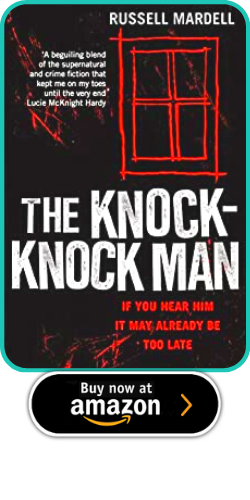
Who is The Knock-Knock Man? A ghost, a killer, or the figment of a frightened boy’s imagination?
It is a question that continues to haunt disgraced New Salstone police officer, Ali Davenport, fifteen months after the devastating case that changed the course of her life. Now, after the death of her former colleague, Ernie, Ali has returned home to face a past that won’t stay buried.
Found in the disused office building where he worked as night security, Ernie’s death has been ruled as a suicide. But not everyone is convinced. Wild stories are circulating about a supernatural presence in the building, an entity that might have attacked Ernie that fateful night. With the sale of the building about to go through, Ali is hired by its owner to work Ernie’s remaining night shifts and debunk the potentially damaging story. An easy enough job, if you don’t believe in ghosts. But then Ali meets Will, a teenage ghost hunter who claims to have evidence on film…
Forming an unlikely partnership, Ali and Will soon fall headlong into a mystery that takes them through New Salstone’s macabre history and into Ali’s own dark past. As the pieces of the puzzle come together, Ali is forced to face the question of The Knock-Knock Man one last time. But what Ali doesn’t know is The Knock-Knock Man has already been watching her for a very long time…
It is a question that continues to haunt disgraced New Salstone police officer, Ali Davenport, fifteen months after the devastating case that changed the course of her life. Now, after the death of her former colleague, Ernie, Ali has returned home to face a past that won’t stay buried.
Found in the disused office building where he worked as night security, Ernie’s death has been ruled as a suicide. But not everyone is convinced. Wild stories are circulating about a supernatural presence in the building, an entity that might have attacked Ernie that fateful night. With the sale of the building about to go through, Ali is hired by its owner to work Ernie’s remaining night shifts and debunk the potentially damaging story. An easy enough job, if you don’t believe in ghosts. But then Ali meets Will, a teenage ghost hunter who claims to have evidence on film…
Forming an unlikely partnership, Ali and Will soon fall headlong into a mystery that takes them through New Salstone’s macabre history and into Ali’s own dark past. As the pieces of the puzzle come together, Ali is forced to face the question of The Knock-Knock Man one last time. But what Ali doesn’t know is The Knock-Knock Man has already been watching her for a very long time…

THE HEART OF HORROR REVIEW WEBSITES


Archives
April 2023
March 2023
February 2023
January 2023
December 2022
November 2022
October 2022
September 2022
August 2022
July 2022
June 2022
May 2022
April 2022
March 2022
February 2022
January 2022
December 2021
November 2021
October 2021
September 2021
August 2021
July 2021
June 2021
May 2021
April 2021
March 2021
February 2021
January 2021
December 2020
November 2020
October 2020
September 2020
August 2020
July 2020
June 2020
May 2020
April 2020
March 2020
February 2020
January 2020
December 2019
November 2019
October 2019
September 2019
August 2019
July 2019
June 2019
May 2019
April 2019
March 2019
February 2019
January 2019
December 2018
November 2018
October 2018
September 2018
August 2018
July 2018
June 2018
May 2018
April 2018
March 2018
February 2018
January 2018
December 2017
November 2017
October 2017
September 2017
August 2017
June 2017
May 2017
April 2017
March 2017
February 2017
January 2017
December 2016
November 2016
October 2016
September 2016
August 2016
July 2016
June 2016
May 2016
April 2016
March 2016
February 2016
January 2016
December 2015
November 2015
October 2015
September 2015
August 2015
July 2015
June 2015
May 2015
April 2015
March 2015
February 2015
January 2015
December 2014
November 2014
October 2014
September 2014
August 2014
July 2014
June 2014
May 2014
April 2014
March 2014
February 2014
January 2014
December 2013
October 2013
September 2013
August 2013
 RSS Feed

|

|