

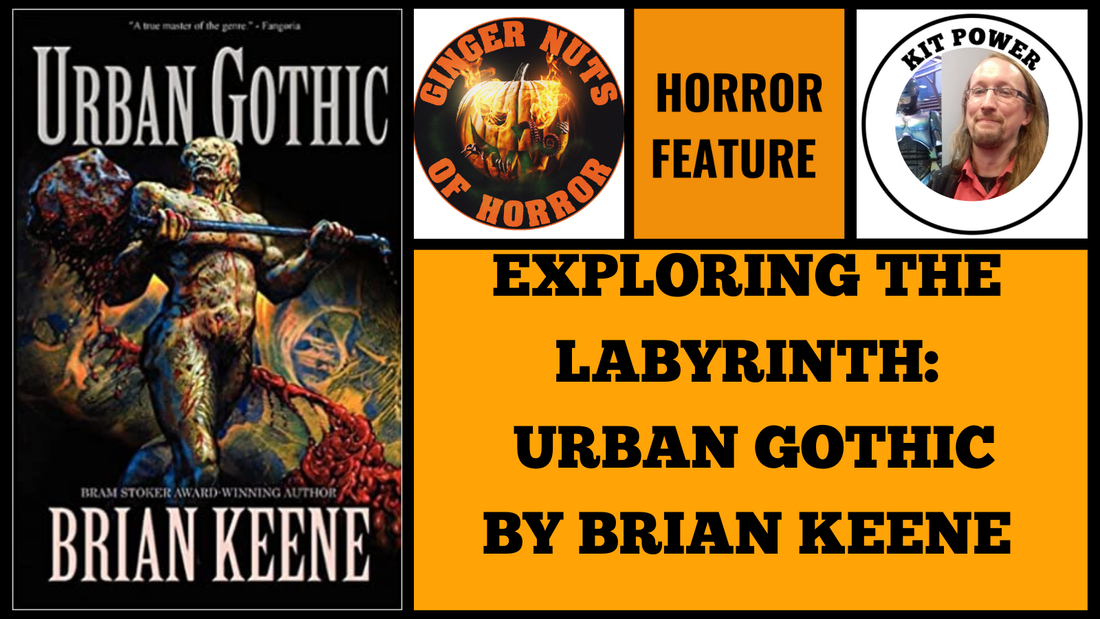
 Keene’s execution (pun, I guess, intended) of that trope is pretty much flawless. The Tribe/Family/Creatures that inhabit the house of Urban Gothic are absolutely fucking terrifying and grotesque; humanoid in some aspects, but also clearly Others both in appearance and behaviour. Exploring The Labyrinth In this series, I will be reading every Brian Keene fiction book that has been published (and is still available in print), and then producing an essay on it. With the exception of Girl On The Glider, these essays will be based upon a first read of the books concerned. The article will assume you’ve read the book, and you should expect MASSIVE spoilers. I hope you enjoy my voyage of discovery. 18: Urban Gothic Content note: discussion of extreme violence, including sexual violence So, I mean, firstly, holy fucking shit. Urban Gothic is a staggering novel. I mean that literally. Several times, as I was reading, I felt a sinking dread; a sense of escalation that led me to ask, not infrequently, why I was putting myself through reading it. Not, to be clear, because it’s in any way badly written - quite the reverse - but because, like the experiences of the unfortunate protagonists of the story, the novel frequently felt like an endurance test; the horrors unfolding remorselessly, descending ever deeper into hellish environments populated with increasingly deranged monsters. This fucker is dark. The setup is, as the title suggests, both classic and contemporary. A small gang of white teenagers, friends since elementary school, now paired off (Kerri and Tyler, Stephanie and Brett, Javier and Heather), returning from a Hip-Hop concert that sounds pretty fucking great, take a detour on the way home to score some drugs. After a road closure throws the driver off his route to Camden, NJ, their car breaks down ‘in the middle of the hood’. They are approached by a group of black youths (Markus, Leo, Chris and Jamal), and, after a tense standoff, one of the white kids (Brett) drops the N-bomb. At which point, the white kids abandon their car and flee into The Last House On The Left The House At The End Of The Street. So, okay, there’s clearly an essay worth of stuff to unpack there, and I do want to spend some time on the carnage (because hoo, boy, is there some carnage), so let’s get into it. The first chapter does feel… difficult. Keene is showing us the black teens through the white teens' eyes, and the white teens are scared, and the fear comes from at least partly a place of prejudice. The way Keene builds to the moment, describing the increasing deterioration of the neighbourhood as the car gets more and more lost, has already built up an almost dreamlike sense of menace. We see versions of this across horror fiction, hell, genre fiction in general; I was powerfully reminded of Kings ‘You Know They Got One Hell Of A Band’, where the bickering married couple get hopelessly lost, before discovering the small town with the greatest live show of all time, but I suspect only because that’s where I saw it done first; and while, with Keene, the environment is a city, rather than an increasingly narrow country road, the message is the same; the teens are Crossing Over, and where they end up, the rules aren’t going to work the same. And the problem with that is, or seems to be in chapter one, that the ‘new territory’ is not a fantasy realm, but one that actually exists. ‘The hood’ is not something made up by movie and TV execs to sell adverts and soundtrack albums; most US cities of any great size have areas of severe deprivation, often, because of historical and ongoing racial injustices, disproportionately populated by people of colour. So I’ll admit to a feeling of escalating tension at how the first half of chapter one was playing out that had little to do with the narrative per se. The tension I was feeling was, essentially, trying to figure out how the hell this scene was going to play out without, at best, falling into some pretty troubling stereotypes. And the characters themselves are wise to this, which in and of itself should have given me the hint that Keene had a handle on what he was doing. When they’re approached by the teens, Javier actually says, in so many words, ‘you guys automatically assume that just because they’re black, they’re gonna mug us?’ - and his sense of outrage at Brett’s racist outburst is palpable. Nonetheless, Keene is canny enough to let the reader sit with the situation, and examine their own discomfort. And it is, finally, the prejudices within the white teen group that leads to them all fleeing into the apparently abandoned house at the end of the street. One of the black teens even tries to warn them off, but of course, by then, it’s too late. By the end of the first chapter, we’re left under no illusions that the fleeing teens are about to pay a very, very heavy price for their idiocy. I was about to type that what happens to them in the house isn’t a suprise, but I think that’s not entirely fair; or rather, like saying the sea is wet, is at least inadequate. It’s a horror novel, and it’s the House At The End Of The Dead End Street, so of course, I was expecting Bad Things, and I was very much not disappointed. At the same time, the scale and depth of the violence and horror were of a level of invention and depravity I found tough to stomach, even eighteen books into a Keene read. The execution of Tyler that closes out the first chapter is sudden, brutal, and shocking on its own terms; but as a signifier for what’s to come, it’s really A Lot; Keene is not fucking around, here. A far more welcome surprise comes at the start of Chapter Two, where we unexpectedly-for-me rejoin the black teens outside the house, opening the novel out into the duel narrative that persists for the rest of the story. It’s a smart choice by Keene for several reasons; firstly, by opening up a new perspective, we can see for sure what was hinted at in chapter one - not only were Leo and his friends no threat, they were just about to offer to repair the car and put the teens back on their way, when Brett’s outburst triggered the White Flight. It’s smart, too, having Leo replay the scene in his head, wondering if there was anything he could have done that would have led to things playing out differently; not because he was at fault, but just because he’s a thinking human being trying to find a way through. Another big advantage the duel narrative gives us is that we’re provided a deeper insight into the landscape painted with such garish colours in the opening chapter; the history of the neighbourhood, and in particular how abject neglect in terms of basic infrastructure and support (slim chance of getting an ambulance to turn up after dark, let alone a tow truck) creates a vicious cycle for the residents. We also, as the chapters unfold, get some of the history of the house at the end of the street, though here, Keene keeps his cards closer to his chest, letting rumour and inference paint a murky picture. Of course, there’s a way in which the house is a metaphor, a personification of the neighbourhood it’s hidden in - a death trap, or suicide rap, if you will - but there’s also the fact that such a house can only exist in a place that the wider world has abandoned. In that sense, then, it personifies the evil that creates such neighbourhoods, making the moment at the end when the residents decide to take the power into their own hands and burn it to the ground all the more poignant. A third reason I found myself profoundly grateful for this duel narrative is that it provided occasional respites from seeing what was going on inside the house. Because, and I really can’t emphasise this enough, fucking hell. The kids trapped in the house undergo a descent into hell that I can’t immediately think of parallels for. Part of that will be because I don’t have a huge amount of experience of either Splatterpunk or extreme horror, despite having co-edited two award-winning anthologies of the former… but I don’t think it’s all that. Like, the only Rob Zombie film I’ve seen is House Of 1000 Corpses, and that’s the only real point of reference I have. I am aware opinions differ, but, for me, that movie did an excellent job of creating a sense of escalating, nightmarish dread, and I had a similar sinking feeling throughout Urban Gothic. The opening murder is brutal, of course, but far more disturbing to me was the fact of the exits being sealed by metal doors, and an increasing sense that the layout of the house itself was irrational and shifting. The discovery of crawl spaces and the discussion of a possible escape route via the basement added to the feeling that our plucky teens had wandered into an environment almost precision-engineered for escalating terror and torment. And yet Keene sells it well; at no point did I feel like the environment veered from irrational to outright impossible, for example. Part of that is the vivid description, and part comes from the pacing, I think. There are many scenes of visceral, brutal horror as the novel progresses, but Keene does a great job of pacing these out, and as much tension comes from the breaths taken between the explosions of violence, as the survivors' situation and mentality deteriorate, and the environments they move through become ever more hostile. Part of the attraction of horror fiction, for me, is examining what characters will do in situations where there are no good options, and Urban Gothic is in some ways an exemplar of the form. Except that’s not quite right, is it? We know the teens are trapped inside of a Brian Keene horror novel death trap. They only know that they want to survive. Really, the best option would just be to find a relatively painless suicide method, but you’d have to know what you were in for, wouldn’t you? And, of course, they don’t. So, I realise, this is where a lot of that sick sense of dread comes from; the knowledge that these kids are almost certainly not going to make it, and that all the house has to offer them is a terminal downward spiral; the harder they struggle, the deeper they sink. The house/narrative weaponises their own survival instinct against them… and as readers, we see what they cannot, and that’s where a lot of the dread comes from. And, with one more content note for discussion of sexual violence, that brings us neatly to why they’re so doomed, and who/what is trying to kill, fuck, and eat them (and, like the gag goes in Firefly, with no real fuss about in what order). Back in my Castaways essay, I talked a little about the problematic history of the horror trope of the Hostile Tribe, but also the inherent attraction of it, especially when it comes to survival horror and splatterpunk. Well, here, for my money, Keene’s execution (pun, I guess, intended) of that trope is pretty much flawless. The Tribe/Family/Creatures that inhabit the house of Urban Gothic are absolutely fucking terrifying and grotesque; humanoid in some aspects, but also clearly Others both in appearance and behaviour. They reminded me of some of Barker’s more nightmarish creations, in some ways, but whereas Barker's creations in such circumstances tend towards the bestial, here there are often human levels of both intelligence and sadism. The fact that the victims are, amongst other things, eaten, means the entire house exists as a kind of venus fly trap for humans (though there are hints that some of the denizens also use the terrifyingly expansive underground tunnel system to hunt throughout the city), and that did trigger some initial questions for me about the sustainability of the houses ecosystem. But the duel narrative fills this in neatly, letting us know how the house serves as a shelter of last resort from those unaware of the legends, or too desperate to care. In this sense, then, the house and its denizens represent… what? Suicide? Drug addiction? Chronic depression? For sure, a pit of suffering, typified by sadism, suffering, and an absence of any hope of salvation. If you end up there, your only remaining worth is measured in your entertainment value, and the calories carried in your meat and bones. And the fact that the tribe is a Family, complete with a patriarch, siblings, and an absolutely stomach-churning nursery feels suggestive, too; the nuclear family is often portrayed in American culture as the standard unit and idea of society, after all. Here? This lot make the Manson Family look like the Partridge Family. And, recall, located in the heart of the city's most deprived neighbourhood, the only place such an obscenity could plausibly survive; because the wider social structures, the alleged ‘civil’ society propaganda would have you believe is benevolent and all-encompassing, are either absent or antagonistic to the neighbourhood, and all who live there. And in a story chock full of horrific imagery, incident, and circumstance, this may have been, for me, the darkest point of all. Because the tribe of Urban Gothic are evil monsters, if that phrase has any meaning; delighting in violence, rape, and murder, treating such things as recreation, delighting too in consuming the flesh of their victims… and yet, also, they are recognisable as a family. There can be no coexistence with these creatures. The house must be burned to the ground, and if it were at the end of my street, I’d salt the earth into the bargain. But. But. They’re a family. I have no idea if, somewhere down the line, I’m going to get more information about where they came from. They’re clearly not ‘human’... but they’re also clearly sentient. It’s like they’ve been… poisoned, somehow. A poison that acts on the mind (and, if such a thing exists, the soul) as well as their bodies. Is there something a little bit squicky here about equating deformity and evil? Oh, sure, I guess, but/and this, here, is why. Are they human? Clearly not. Not… exactly. But they’re not exactly not, either. This is a novel that by the end of the first chapter leaves the reader neck-deep in grime, and by the end, I felt, honestly, in over my head. It is, absolutely, one of the darkest and most profoundly unpleasant narratives I have ever read. I would not recommend it to anything like everyone; strong stomachs and stronger nerves will be needed. But I think, I think, this is also a truly great Splatterpunk novel. Certainly, with the best part of a month's distance, the contents of this book, and the movie it projected into my mind, feel uncomfortably close. And that’s Urban Gothic. Next up: An Occurrence In Crazy Bear Valley. KP 28/4/22 Urban Gothic |
 |  |
THE HEART OF HORROR REVIEW WEBSITES

I learned about the power of creative fiction to tell us a lie that speaks a larger truth, and in the end, storytelling itself has created a new high, one of understanding, insight, and compassion.
Five Things I learned While Editing
Orphans of Bliss and the Addiction Horror Anthologies
by Mark Matthews
Orphans of Bliss and the Addiction Horror Anthologies
by Mark Matthews
Orphans of Bliss, the follow up to the Shirley Jackson Award nominated, Lullabies for Suffering, is now out of the womb and breathing on its own. This is the third and final ‘addiction horror’ themed anthology, and as the editor and a contributing writer to all three, it’s been an exhausting, amazing, and cathartic experience. Here are Five Things I’ve learned about Horror, Editing, Writing, Addiction and Recovery:
Horror Can Be the Best Vehicle to Take You Where You Need to Go
The best way to tell the truth is through a story, and dark truths require a dark work of fiction. The horror in these anthologies are true, even if they didn’t even happen. During the time it takes to read the works, hundreds will die from overdoses, while hundreds more had their first taste of a drug they will soon become addicted to. They will crave the substance as much as a drowning man craves to breathe, and as much as a vampire craves blood.
And their parents will stand by feeling as helpless as Regan’s mother in the Exorcist watching their daughter become possessed.
Writers in the three addiction-themed anthologies show the range and reach of horror to capture these terrifying states. Horror understands our fragile nature with extreme empathy, and even compassion, and that is what I set out to create in the trio of anthologies. There are stories of Lovecraftian creatures who feed off discarded bodies of addicts, and then become addicted themselves. Tales of addicts who go to extreme lengths to find their fix, and those who fight the affliction same as a family might fight off a poltergeist, trying to excise the demons. Settings range from dystopian landscapes, to deep space, to rural woods, to virtual reality treatment centers, but they also take place squarely in the reality of human existence.
Speculative fiction—whether it be sci-fi, horror, or fantasy—tells a larger truth versus a big fat lie.
Editing is Far From Just Prose
How utterly intimidating to edit other writers with such refined skills and fabulous, unique voices. The prose of the likes of Cassandra Khaw or Kealan Patrick Burke or the voice of SA Cosby. But my life experience within the subculture of addiction gave me something of value. I’ve done every substance that I’ve even seen (and I’ve seen most) and picked up a command of the language; the vernacular, the rituals. I know the things we love, like the ding of the liquor store door as we walk inside to get our pint of vodka for breakfast, or the feeling of drainage down our throat after we snort white lines off a mirror, or the comfort of patting the front pocket of our jeans to make sure the next pack of dope is still safely inside. What I offered as editor was to make the addiction component speak with verity and power.
This is not to say the other writers didn’t, because each of their unique tales offered a different perspective and voice, but by combining the skills of writers with my experience to tweak the addiction component, the result was some magical pieces of fiction.
And since my aim was not to stigmatize addiction, but rather shine a light into its darkness, I wanted to make certain the stories were infused with empathy and even compassion for those afflicted. What I learned is this empathy comes natural to horror writers. This was not some sort of gleeful sadism or addiction torture porn, but a finger on the pulse of what true horrors we face.
“Write from the Scar, not from the Wound”
While I dipped into my own demons to help guide these stories, I would not have been able to write or edit on this subject without the passing of time and therapeutic work of 25 years of sobriety to offer perspective. “Write from the scar, not from the wound” is how I heard it on a Glennon Doyle podcast. As she put it, you need to work through things and develop insight before simply pouring things out into an emotional puddle for others to bear witness. If the wound is still bleeding out, or if you’re still inflicting the trauma on yourself, there is no wisdom within the writing, only confusion and suffering.
It’s not difficult for me to summon cravings for drinking and drugging. They bubble in my gut on command, and editing and writing works in this state is both harrowing and cathartic. It’s digging in the marrow and then donating plasma to readers, but had there not been the growth to learn to deal with these cravings, the results could have been disastrous. While it’s cathartic to write it out, the writing itself can’t be the meat of the healing, but perhaps just a sign that you’ve learned something and are in a better spiritual state.
Everyone has been touched by substance abuse and addiction
If there is someone out there who feels they have not been impacted by addiction, I suspect they just don’t realize it’s been right under their nose. The bike that was stolen from their garage was the work of a desperate addict who needed money to buy their next bag of dope. The uncle who seems to have aged and decayed and often is a no-show is sitting at home drinking himself to death.
And the stories in these anthologies demonstrate that. There are first person accounts of addiction, as well as loved one’s point of view, and even addiction towards things other than substances itself, such as the obsession for material consumption or the cathartic but devastating rush of self-harm.
Whether we are personally in recovery from addiction, or have witnessed a family member struggle with it, it affects us all. Since I started publishing these anthologies, I’ve received countless private messages from those who’ve been impacted, who have lost a loved one to an overdose, or lost them by degrees over years of addiction. Each time that happened, I share the truth that the human spirit can learn to face addiction and find recovery, but the tragedy is so few do. The body count is real, and the body count is high, and it’s everywhere you look.
Writers want to write what matters
Sure, horror writers want to have fun speculating about bizarre premises, but give us works that address universal truths of the terrifying world we live in, both micro and macro, and showcase real horrors the readers must face. Creative, speculative fiction is most memorable when it entertains but also speaks to some universal conflict, the way Hunger Games address poverty and power structures, the way Bird-Box address motherhood. Memorable, speculative settings, and conflicts that resonate, creating stories where tragic events happen. Where “Monsters are real, they live inside us, and sometimes they win” (Stephen King). When we guide readers to live through a fictional trauma, and after we’ve done so, after we’ve lived through the trauma together, we all actually feel less alone, more understood.
That is what I learned, and as each story showed up in my inbox, I was so excited and eager to read what the talented mind come up with to address this issue that has been part of my life. It was such a pleasure, and I learned how horror writers can understand our traumas, not through a statistic, but a character who experiences these real-life horrors. I learned about the power of creative fiction to tell us a lie that speaks a larger truth, and in the end, storytelling itself has created a new high, one of understanding, insight, and compassion.
Horror Can Be the Best Vehicle to Take You Where You Need to Go
The best way to tell the truth is through a story, and dark truths require a dark work of fiction. The horror in these anthologies are true, even if they didn’t even happen. During the time it takes to read the works, hundreds will die from overdoses, while hundreds more had their first taste of a drug they will soon become addicted to. They will crave the substance as much as a drowning man craves to breathe, and as much as a vampire craves blood.
And their parents will stand by feeling as helpless as Regan’s mother in the Exorcist watching their daughter become possessed.
Writers in the three addiction-themed anthologies show the range and reach of horror to capture these terrifying states. Horror understands our fragile nature with extreme empathy, and even compassion, and that is what I set out to create in the trio of anthologies. There are stories of Lovecraftian creatures who feed off discarded bodies of addicts, and then become addicted themselves. Tales of addicts who go to extreme lengths to find their fix, and those who fight the affliction same as a family might fight off a poltergeist, trying to excise the demons. Settings range from dystopian landscapes, to deep space, to rural woods, to virtual reality treatment centers, but they also take place squarely in the reality of human existence.
Speculative fiction—whether it be sci-fi, horror, or fantasy—tells a larger truth versus a big fat lie.
Editing is Far From Just Prose
How utterly intimidating to edit other writers with such refined skills and fabulous, unique voices. The prose of the likes of Cassandra Khaw or Kealan Patrick Burke or the voice of SA Cosby. But my life experience within the subculture of addiction gave me something of value. I’ve done every substance that I’ve even seen (and I’ve seen most) and picked up a command of the language; the vernacular, the rituals. I know the things we love, like the ding of the liquor store door as we walk inside to get our pint of vodka for breakfast, or the feeling of drainage down our throat after we snort white lines off a mirror, or the comfort of patting the front pocket of our jeans to make sure the next pack of dope is still safely inside. What I offered as editor was to make the addiction component speak with verity and power.
This is not to say the other writers didn’t, because each of their unique tales offered a different perspective and voice, but by combining the skills of writers with my experience to tweak the addiction component, the result was some magical pieces of fiction.
And since my aim was not to stigmatize addiction, but rather shine a light into its darkness, I wanted to make certain the stories were infused with empathy and even compassion for those afflicted. What I learned is this empathy comes natural to horror writers. This was not some sort of gleeful sadism or addiction torture porn, but a finger on the pulse of what true horrors we face.
“Write from the Scar, not from the Wound”
While I dipped into my own demons to help guide these stories, I would not have been able to write or edit on this subject without the passing of time and therapeutic work of 25 years of sobriety to offer perspective. “Write from the scar, not from the wound” is how I heard it on a Glennon Doyle podcast. As she put it, you need to work through things and develop insight before simply pouring things out into an emotional puddle for others to bear witness. If the wound is still bleeding out, or if you’re still inflicting the trauma on yourself, there is no wisdom within the writing, only confusion and suffering.
It’s not difficult for me to summon cravings for drinking and drugging. They bubble in my gut on command, and editing and writing works in this state is both harrowing and cathartic. It’s digging in the marrow and then donating plasma to readers, but had there not been the growth to learn to deal with these cravings, the results could have been disastrous. While it’s cathartic to write it out, the writing itself can’t be the meat of the healing, but perhaps just a sign that you’ve learned something and are in a better spiritual state.
Everyone has been touched by substance abuse and addiction
If there is someone out there who feels they have not been impacted by addiction, I suspect they just don’t realize it’s been right under their nose. The bike that was stolen from their garage was the work of a desperate addict who needed money to buy their next bag of dope. The uncle who seems to have aged and decayed and often is a no-show is sitting at home drinking himself to death.
And the stories in these anthologies demonstrate that. There are first person accounts of addiction, as well as loved one’s point of view, and even addiction towards things other than substances itself, such as the obsession for material consumption or the cathartic but devastating rush of self-harm.
Whether we are personally in recovery from addiction, or have witnessed a family member struggle with it, it affects us all. Since I started publishing these anthologies, I’ve received countless private messages from those who’ve been impacted, who have lost a loved one to an overdose, or lost them by degrees over years of addiction. Each time that happened, I share the truth that the human spirit can learn to face addiction and find recovery, but the tragedy is so few do. The body count is real, and the body count is high, and it’s everywhere you look.
Writers want to write what matters
Sure, horror writers want to have fun speculating about bizarre premises, but give us works that address universal truths of the terrifying world we live in, both micro and macro, and showcase real horrors the readers must face. Creative, speculative fiction is most memorable when it entertains but also speaks to some universal conflict, the way Hunger Games address poverty and power structures, the way Bird-Box address motherhood. Memorable, speculative settings, and conflicts that resonate, creating stories where tragic events happen. Where “Monsters are real, they live inside us, and sometimes they win” (Stephen King). When we guide readers to live through a fictional trauma, and after we’ve done so, after we’ve lived through the trauma together, we all actually feel less alone, more understood.
That is what I learned, and as each story showed up in my inbox, I was so excited and eager to read what the talented mind come up with to address this issue that has been part of my life. It was such a pleasure, and I learned how horror writers can understand our traumas, not through a statistic, but a character who experiences these real-life horrors. I learned about the power of creative fiction to tell us a lie that speaks a larger truth, and in the end, storytelling itself has created a new high, one of understanding, insight, and compassion.

About the Author
Mark Matthews is a graduate of the University of Michigan and a licensed professional counselor who has worked in behavioral health for over 20 years. He is the author of On the Lips of Children, All Smoke Rises, and Milk-Blood, as well as the editor of Lullabies for Suffering, Garden of Fiends, and Orphans of Bliss. In June of 2021, he was nominated for a Shirley Jackson Award. His newest work, The Hobgoblin of Little Minds, was published in January, 2021. Reach him at WickedRunPress@gmail.
Find Orphans of Bliss at all major outlets including:
Amazon: https://tinyurl.com/4vevyssj
Barnes & Noble: https://tinyurl.com/4v3hdc9e
IndieBound: https://tinyurl.com/4bwcmbp7
Lullabies for Suffering on Amazon: https://tinyurl.com/bdcurffy
Mark Matthews is a graduate of the University of Michigan and a licensed professional counselor who has worked in behavioral health for over 20 years. He is the author of On the Lips of Children, All Smoke Rises, and Milk-Blood, as well as the editor of Lullabies for Suffering, Garden of Fiends, and Orphans of Bliss. In June of 2021, he was nominated for a Shirley Jackson Award. His newest work, The Hobgoblin of Little Minds, was published in January, 2021. Reach him at WickedRunPress@gmail.
Find Orphans of Bliss at all major outlets including:
Amazon: https://tinyurl.com/4vevyssj
Barnes & Noble: https://tinyurl.com/4v3hdc9e
IndieBound: https://tinyurl.com/4bwcmbp7
Lullabies for Suffering on Amazon: https://tinyurl.com/bdcurffy
Orphans of Bliss
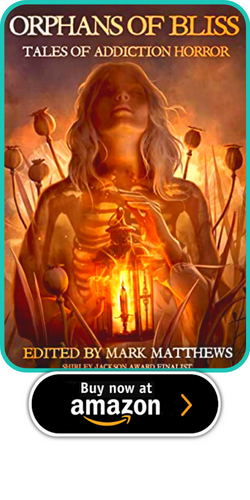
"Triumphant—A must add to all collections" ~The Library Journal, Starred Review
Addiction is the perpetual epidemic, where swarms of human moths flutter to the flames of hell. Because that warm blanket of a heroin high, that joyful intoxication of a pint of vodka, that electric energy from a line of cocaine, over time leaves you with a cold loneliness and a bitter heart. Relationships destroyed, bodies deteriorate, loved ones lost, yet the craving continues for that which is killing us—living, as the title suggests, like an Orphan of Bliss.
Welcome to the third and final fix of addiction horror and the follow up to the Shirley Jackson Award Finalist, Lullabies For Suffering. A diverse table of contents brought together for an explosive grand finale-an unflinching look at the insidious nature of addiction, told with searing honesty but compassion for those who suffer.
Addiction is the perpetual epidemic, where swarms of human moths flutter to the flames of hell. Because that warm blanket of a heroin high, that joyful intoxication of a pint of vodka, that electric energy from a line of cocaine, over time leaves you with a cold loneliness and a bitter heart. Relationships destroyed, bodies deteriorate, loved ones lost, yet the craving continues for that which is killing us—living, as the title suggests, like an Orphan of Bliss.
Welcome to the third and final fix of addiction horror and the follow up to the Shirley Jackson Award Finalist, Lullabies For Suffering. A diverse table of contents brought together for an explosive grand finale-an unflinching look at the insidious nature of addiction, told with searing honesty but compassion for those who suffer.
Lullabies for Suffering
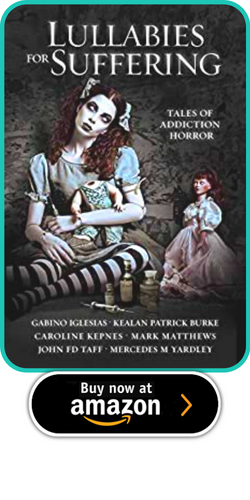
"Chilling and thought-provoking" ~The Library Journal (Starred Review)
Shirley Jackson Award Nominee for Best Anthology of the Year
'This Is Horror Award' Nominee for Best Anthology of the Year
Includes the Bram Stoker Award Finalist story: 'Beyond the Reef'
Addiction starts like a sweet lullaby sung by a trusted loved one. It washes away the pains of the day and wraps you in the warmness of the womb where nothing hurts and every dream is possible.
Yet soon enough, this warm state of bliss becomes a cold shiver, the ecstasy and dreams become nightmares, yet we can't stop listening to the lullaby. We crave to hear the siren song as it rips us apart.
A powerful list of talent has woven tales featuring the insidious nature of addiction--damaged humans craving for highs and wholeness but finding something more tragic and horrific on the other side. You're invited to listen to these Lullabies for Suffering.
Shirley Jackson Award Nominee for Best Anthology of the Year
'This Is Horror Award' Nominee for Best Anthology of the Year
Includes the Bram Stoker Award Finalist story: 'Beyond the Reef'
Addiction starts like a sweet lullaby sung by a trusted loved one. It washes away the pains of the day and wraps you in the warmness of the womb where nothing hurts and every dream is possible.
Yet soon enough, this warm state of bliss becomes a cold shiver, the ecstasy and dreams become nightmares, yet we can't stop listening to the lullaby. We crave to hear the siren song as it rips us apart.
A powerful list of talent has woven tales featuring the insidious nature of addiction--damaged humans craving for highs and wholeness but finding something more tragic and horrific on the other side. You're invited to listen to these Lullabies for Suffering.
CHECK OUT TODAY'S OTHER ARTICLES BELOW
 | |
THE HEART OF HORROR REVIEW WEBSITES

the Tyranids not only reflect Lovecraft's more profound, cosmic horror, but also those that are intimate and human: they evoke phobic response to creatures that might cause us harm. Snakes, spiders, reptiles; all and many more examples from within nature have been used as fodder for the various strains of alien horror represented by the Tyranid race.
Back in its earliest days, the now-iconic grim-dark, science-fiction dystopia of Games Workshop's Warhammer 40 000 universe was a veritable grab-bag of idea and influences. Whatever the then-fledgling setting could assimilate, subtly reimagine and make its own, it did, its inspirations ranging from comic books (most notably the likes of 2000 AD) to cinema, from horror and science fiction literature (Lovecraft, Moorcock, Azimov, Le Guin, Dick are but a few of the notables whose influence can be felt throughout the universe, its various species, cultures and wider metaphysics) to cinema.
Aesthetically, one of the most pervasive and influential artists of the era was the creator of eponymous xenomorph from the Alien franchise, the zeitgeist-defining H.R. Giger. Already massively influential in cinema and video games (one of the most revolutionary franchises of the era, Nintendo's Metroid, was a direct result of efforts to bring Giger's peculiar aesthetic to a video game format), it was only a matter of time before his work became cannibalised and reinvented as a source of alien horror within the 41st millennium.
The first and most notable manifestation of this phenomena came in the universe's own incarnation of the “xenomorph” itself: The “Ymgarl Genestealers.” Originally an attempt to craft a similarly gribbly, parasitic alien horror for the game setting, they were notably removed from both the race that would eventually become The Tyranids and also from their later incarnations. A number of tertiary boardgame systems (the mass-produced Space Crusade and tense, horror-action game Space Hulk) massively reinvented the Genestealers, making them aesthetically much closer to their Giger-conceived inspiration but also tying them closer to the Tyranid race that, up until that point, were little more than a scattershot entry in a number of rule and background books, with little to note or distinguish them. In the sub-system Tyranid Attack, a full background was detailed for the Tyranid species for the first time, as well as their more defined aesthetics and recognisable iconography established:
A pan-galactic biological horror, the Tyranids drew inspiration from not only Giger's “xenormorph,” but a number of science-fiction horror sources, including John Carpenter's The Thing, Predator, the body-horror works of David Cronenberg and more Lovecraftian horror than can be comfortably catalogued.
A mysterious, animalistic species from beyond the fringes of the known galaxy, the Tyranids were described as the ultimate end of all things: a swarming, locust-like mass of monsters that spread from planet to planet, galaxy to galaxy, stripping worlds bare of their biological matter (even down to stripping minerals from rocks and microbial matter from the atmosphere) before moving on to the next apocalypse. The biological matter they consumed was used in the wombs and bellies of their titanic, living vessels (whale-like leviathans capable of traversing the void of space in the manner that titanic ocean life swims the seas of Earth) to produce more and more varied organisms, which gestate until the “Hive Fleets” enter orbit around a likely world. The process repeats and repeats and repeats endlessly, without any apparent wider goal other than mindless, animal consumption and the extinction of all non-Tyranid life. With every world consumed, every species devoured, the Tyranids exhibit new strains of hyper-evolution, developing new sub-species and strains of creature based on requirement or evolutionary experiment.
And thus, the Tyranids evolved to become what they are today: An established species within the many and varied menageries of the 40K universe, and one that manifests a particular kind of cosmic horror:
Aesthetically, one of the most pervasive and influential artists of the era was the creator of eponymous xenomorph from the Alien franchise, the zeitgeist-defining H.R. Giger. Already massively influential in cinema and video games (one of the most revolutionary franchises of the era, Nintendo's Metroid, was a direct result of efforts to bring Giger's peculiar aesthetic to a video game format), it was only a matter of time before his work became cannibalised and reinvented as a source of alien horror within the 41st millennium.
The first and most notable manifestation of this phenomena came in the universe's own incarnation of the “xenomorph” itself: The “Ymgarl Genestealers.” Originally an attempt to craft a similarly gribbly, parasitic alien horror for the game setting, they were notably removed from both the race that would eventually become The Tyranids and also from their later incarnations. A number of tertiary boardgame systems (the mass-produced Space Crusade and tense, horror-action game Space Hulk) massively reinvented the Genestealers, making them aesthetically much closer to their Giger-conceived inspiration but also tying them closer to the Tyranid race that, up until that point, were little more than a scattershot entry in a number of rule and background books, with little to note or distinguish them. In the sub-system Tyranid Attack, a full background was detailed for the Tyranid species for the first time, as well as their more defined aesthetics and recognisable iconography established:
A pan-galactic biological horror, the Tyranids drew inspiration from not only Giger's “xenormorph,” but a number of science-fiction horror sources, including John Carpenter's The Thing, Predator, the body-horror works of David Cronenberg and more Lovecraftian horror than can be comfortably catalogued.
A mysterious, animalistic species from beyond the fringes of the known galaxy, the Tyranids were described as the ultimate end of all things: a swarming, locust-like mass of monsters that spread from planet to planet, galaxy to galaxy, stripping worlds bare of their biological matter (even down to stripping minerals from rocks and microbial matter from the atmosphere) before moving on to the next apocalypse. The biological matter they consumed was used in the wombs and bellies of their titanic, living vessels (whale-like leviathans capable of traversing the void of space in the manner that titanic ocean life swims the seas of Earth) to produce more and more varied organisms, which gestate until the “Hive Fleets” enter orbit around a likely world. The process repeats and repeats and repeats endlessly, without any apparent wider goal other than mindless, animal consumption and the extinction of all non-Tyranid life. With every world consumed, every species devoured, the Tyranids exhibit new strains of hyper-evolution, developing new sub-species and strains of creature based on requirement or evolutionary experiment.
And thus, the Tyranids evolved to become what they are today: An established species within the many and varied menageries of the 40K universe, and one that manifests a particular kind of cosmic horror:

Not only are the various beasts and monsters manifested by the Hive Fleets horrific in form and behaviour, but collectively, the Tyranids manifest a species of horror that fans of Lovecraft and his particular strain of cosmic, unknowable dread might well recognise: Of all the species in the Warhammer 40 000 universe, the Tyranids are arguably the most alien in terms of their natures and motivations. Whereas others -such as the humanoid Aeldari and football hooligan-inspired Orks- are archetypes derived from the fantasy settings Games Workshop originally operated in -and are therefore recognisably emblematic of certain human concerns and preoccupations-, the Tyranids are as far removed from such concepts as can be rendered in fiction and the associated model range:
In terms of nature and motivation, they are an insolulable mystery. Deriving from areas of space beyond human exploration or understanding, their origins are unknown, as is their ultimate agenda (if, indeed, they even boast such). Certain figures both within the universe itself (most notably those xeno-biologists given to study such matters) and who are fans thereof have provided any number of speculations on the matter (one theory states that they are literally biological weapons run amok; efforts by some race far more ancient than humanity to wipe out the factors that feed the metaphysical evils of the universe, but that have expanded far beyond any such restraint or control). Whatever the truth, the mystery of the Tyranids is one of their most abiding and attractive characteristics: no one knows where they come from or why they operate as they do. Even were such matters to become known, they are so utterly alien both in form and nature, it likely wouldn't make sense to any but the Tyranids themselves. That lack of knowing, that inability to understand or comprehend, is part and parcel of the horror that makes the Tyranids so fascinating. All other species in the 40K universe, no matter how alien or abstruse, boast fairly identifiable interests and agendas (from the Aeldari's desperate struggle to avoid the extinction they brought upon themselves to the Tau's dubious idealism and Utopian ideals). The Tyranids do not; their only conceivable interest is animal; that is, to mindlessly hunt, murder and consume. In and of itself, this is terrifying in its simplicity; a single-minded, animal myopia whose purity is beyond the ken or reason of humanity.
But it does nothing to explain their wider purpose or what drives them:
A notable phenomena that marks a Tyranid invasion has become known as “The Shadow in the Warp.” In the 40K universe, almost all sentient species are psychically bound to an alternative dimension; a chaotic, miasmic reality of utter abstraction and potential, where ideas and emotions are as significant and material as meterological phenomena in the waking world, where every experience of sentient beings has a corresponding echo. Most entities are dully unaware of this connection, or only experience it in the most unconscious manner. Those dubbed “psykers” by humanity are generally those who boast some genetic mutation that makes them more keenly attuned to the Warp and able to channel or shape its energies to some degree. The Tyranids have the peculiar effect of smothering The Warp itself, rendering it disturbingly inert, which renders those otherwise connected to it paranoid, anxious, unreasonably afraid. In extreme cases, they begin to hallucinate and experience physical symptoms (that can range from mild to nigh lethal). Psykers are affected most powerfully, the Shadow not only separating them from the source of their power and extended senses but also manifesting truly hideous phenomena such as the chattering of unseen insects, which can drive those unprepared to madness and worse.

The Shadow itself is evidence of a wider power that drives the Tyranids in their insatiable swarms across the cosmos: a gestalt intelligence that makes them so much more than mere animals: Whilst the nature of this intelligence is a matter of much debate, it is generally accepted that it manifests amongst the Tyranids themselves via certain more complex “synapse” entities; larger, more evolutionarily costly creatures that serve as lynchpins within the swarms, psychically directing lesser entities that might otherwise revert to their animal instincts. This phenomena, generally referred to as “The Hive Mind” isn't some distant puppet-master or unseen god, but the collective intelligence of the Tyranids themselves: each individual entity within the Tyranid swarms is but a cell or organ of the wider beast, manifested within the Hive Fleets, and of which The Hive Mind is the guiding intelligence. Quite what this mysterious force's intentions are remains unknown -and likely unknowable-, but it is certainly inimical to the existence of humanity and every other species within the 40K universe.
Echoing cosmic and extra-dimensional phenomena in Lovecraft's canon of short stories and novellas, The Hive Mind is an unknowable and ineffable alien force that neither cares for humanity nor even acknowledges its significance, save as something to be consumed, rendered down and, ultimately, digested into extinction. Within the Tyranid purview, humanity is just another reservoir of biological matter and information. It exists to be drained dry, discarded and forgotten, along with every other species that fancies itself the prime mover on the galactic stage. This echoing, cosmic insignificance is part and parcel of the truly soul-shuddering horror Lovecraft attempted to express through his writings, and is a perfect subject to be explored and expressed within the Warhammer 40 000 universe, where every force, system and phenomena is designed to emphasise the utter insignificance not only of individual humanity, but of entire cultures and species. The Tyranids are evolutionary purity in a manner that is terrible to conceive of; Darwinian principle manifested and set loose to endlessly demonstrate the lack of poetry or wider meaning to life itself. Whereas other species within the universe are coloured by tensions and contradictions, the Tyranids are not: there is no doubt or uncertainty, no conflicting ideologies or philosophies within the Tyranid race. They are supreme concentration of interest and agenda, in a way that's almost inconceivable to human beings, who are born to confusion and largely die in the same condition. They are simultaneously the answer to all of the galaxy's ills -a Tyranid victory in the known galaxy means an end to wars and atrocities and genocides that have spanned millennia, and fed the abstract horrors of The Warp such that they have begun to spill into waking reality en masse- but also an answer that no one can countenance; living engines of extinction whose victory will not only mean the sterilisation of material reality, but also of the Warp itself. They are the death of gods, daemons and angels; the end of myth and poetry, fear and wonder.
In that, they are more terrible and epically horrifying than almost anything yet encountered or conceived within the setting, rendering more mundane horrors almost impotent by comparison. Even the Chaos Powers -dark gods coalesced from all the worst and most extreme drives of sentient species- fear The Shadow in the Warp more than anything, as it is antithetical to the broiling turbulence and extremes of emotion on which they rely to sustain themselves. Gods fear the Tyranids, as well they should.
Echoing cosmic and extra-dimensional phenomena in Lovecraft's canon of short stories and novellas, The Hive Mind is an unknowable and ineffable alien force that neither cares for humanity nor even acknowledges its significance, save as something to be consumed, rendered down and, ultimately, digested into extinction. Within the Tyranid purview, humanity is just another reservoir of biological matter and information. It exists to be drained dry, discarded and forgotten, along with every other species that fancies itself the prime mover on the galactic stage. This echoing, cosmic insignificance is part and parcel of the truly soul-shuddering horror Lovecraft attempted to express through his writings, and is a perfect subject to be explored and expressed within the Warhammer 40 000 universe, where every force, system and phenomena is designed to emphasise the utter insignificance not only of individual humanity, but of entire cultures and species. The Tyranids are evolutionary purity in a manner that is terrible to conceive of; Darwinian principle manifested and set loose to endlessly demonstrate the lack of poetry or wider meaning to life itself. Whereas other species within the universe are coloured by tensions and contradictions, the Tyranids are not: there is no doubt or uncertainty, no conflicting ideologies or philosophies within the Tyranid race. They are supreme concentration of interest and agenda, in a way that's almost inconceivable to human beings, who are born to confusion and largely die in the same condition. They are simultaneously the answer to all of the galaxy's ills -a Tyranid victory in the known galaxy means an end to wars and atrocities and genocides that have spanned millennia, and fed the abstract horrors of The Warp such that they have begun to spill into waking reality en masse- but also an answer that no one can countenance; living engines of extinction whose victory will not only mean the sterilisation of material reality, but also of the Warp itself. They are the death of gods, daemons and angels; the end of myth and poetry, fear and wonder.
In that, they are more terrible and epically horrifying than almost anything yet encountered or conceived within the setting, rendering more mundane horrors almost impotent by comparison. Even the Chaos Powers -dark gods coalesced from all the worst and most extreme drives of sentient species- fear The Shadow in the Warp more than anything, as it is antithetical to the broiling turbulence and extremes of emotion on which they rely to sustain themselves. Gods fear the Tyranids, as well they should.

Beyond their vast and expansive cosmic horror, the Tyranids also manifest various microcosmic atrocities: hyper-evolved to be perfect killing machines, they sport exaggerations of characteristics demonstrated by various forms of terrestrial animal, from bugs and insects to birds and reptiles. In that, they trigger primal, arguably genetically-encoded responses in human beings, most notably those parts of us that have learned to fear scurrying, slithering, arachnid, insectile or reptilian creatures. Combining aspects of all of these, the Tyranids are all and none: spiders, snakes, jellyfish, squids, bats and even dinosaurs lend something to their many and varied anatomies. In truth, there's little in biology or anatomy that hasn't been mined to provide the present-day Tyranids with their peculiar aesthetic. Even their weapons aren't crafted artefacts but cultivated symbiotes, entities in and of themselves that bond with their bearer, each exhibiting not only hideous body-horror effects (the “Flesh Borer” rifles carried by many Tyranid organisms, for example, shoot streams of fast-growing carniverous beetles that either spatter and acidically dissolve flesh and armour or chew through and parasitically infest their targets) but also their own natures, imperatives and impulses (in extreme cases, such as with regards to the living artillery of the “Exocrine,” it's the weapon-symbiote whose intelligence guides the partnership, as the immense beast itself is little but a living weapons platform and transport system).
In this, the Tyranids not only reflect Lovecraft's more profound, cosmic horror, but also those that are intimate and human: they evoke phobic response to creatures that might cause us harm. Snakes, spiders, reptiles; all and many more examples from within nature have been used as fodder for the various strains of alien horror represented by the Tyranid race. From insects whose parasitic life-cycles are manifest body-horror mythologies to predators whose myriad stings, bites, venoms and other weaponry are horrific in terms of their effects, the Tyranids are reflections and exaggerations of them all.
Perhaps most pertinently, the Tyranids represent the animal horror of being outdone in evolutionary terms: the horror of nature itself. Unlike the status quo in waking life, where humanity's various expansions and industries pose a marked and evident threat to other lifeforms (and, indeed, the very eco-systems of this planet), the Tyranids are a fictional representation of cosmic repercussion: the Tyranids disregard all notions of ecology save their own. They do not exhibit technology or industry in any understandable form. They cannot be reasoned or bargained with: they have all of the unstoppable purity of predatory beasts but also the uncanny intelligence and acumen of a sapient creature. Beyond that, they are evolved to a point that any industrialised or technological form of military response is all but meaningless against them: even in the science fiction setting of the 41st Millennium, where technology has advanced to the point that it may as well be magical or miraculous (and, in some instances, is treated as such), very little can equal or effectively defend against the biological onslaught of the Tyranids in all of their horror.
They are manifest evidence of evolutionary redundancy: in purely Darwinian terms, the true inheritors of this universe, so far beyond other species in terms of evolutionary advancement as to make them seem stagnant and redundant by comparison. The ultimate, horrific irony is: in that advancement, they are also spiritually empty and corrosive. The Tyranid victory is a difficult thing to imagine or comprehend, as it seems as though the species would continue to advance and consume until there is literally nothing left in creation but its own seething bio-mass, every world in reality stripped bare of matter, leaving the composite, pan-galactic entity that is the species no choice but to either burn itself out, starving for want of more biomass, or to evolve further; becoming a species that seeds its own eco-systems and cannibalises its own creations for want of survival. Part of what makes the Tyranids so terrifying is the lack of an end-game. Almost all other species in the 40K universe boast some identifiable ideology or agenda, some ideal -however warped or twisted- they are fighting to maintain or realise.
The Tyranids boast nothing of the sort, other than the animal imperative to consume, consume, consume. That vaccuum, more than their forms or aesthetics, renders them alien and unknowable in the most Lovecraftian way, the abstract abyss at their core perhaps the most profoundly terrifying aspect of their existence.
In this, the Tyranids not only reflect Lovecraft's more profound, cosmic horror, but also those that are intimate and human: they evoke phobic response to creatures that might cause us harm. Snakes, spiders, reptiles; all and many more examples from within nature have been used as fodder for the various strains of alien horror represented by the Tyranid race. From insects whose parasitic life-cycles are manifest body-horror mythologies to predators whose myriad stings, bites, venoms and other weaponry are horrific in terms of their effects, the Tyranids are reflections and exaggerations of them all.
Perhaps most pertinently, the Tyranids represent the animal horror of being outdone in evolutionary terms: the horror of nature itself. Unlike the status quo in waking life, where humanity's various expansions and industries pose a marked and evident threat to other lifeforms (and, indeed, the very eco-systems of this planet), the Tyranids are a fictional representation of cosmic repercussion: the Tyranids disregard all notions of ecology save their own. They do not exhibit technology or industry in any understandable form. They cannot be reasoned or bargained with: they have all of the unstoppable purity of predatory beasts but also the uncanny intelligence and acumen of a sapient creature. Beyond that, they are evolved to a point that any industrialised or technological form of military response is all but meaningless against them: even in the science fiction setting of the 41st Millennium, where technology has advanced to the point that it may as well be magical or miraculous (and, in some instances, is treated as such), very little can equal or effectively defend against the biological onslaught of the Tyranids in all of their horror.
They are manifest evidence of evolutionary redundancy: in purely Darwinian terms, the true inheritors of this universe, so far beyond other species in terms of evolutionary advancement as to make them seem stagnant and redundant by comparison. The ultimate, horrific irony is: in that advancement, they are also spiritually empty and corrosive. The Tyranid victory is a difficult thing to imagine or comprehend, as it seems as though the species would continue to advance and consume until there is literally nothing left in creation but its own seething bio-mass, every world in reality stripped bare of matter, leaving the composite, pan-galactic entity that is the species no choice but to either burn itself out, starving for want of more biomass, or to evolve further; becoming a species that seeds its own eco-systems and cannibalises its own creations for want of survival. Part of what makes the Tyranids so terrifying is the lack of an end-game. Almost all other species in the 40K universe boast some identifiable ideology or agenda, some ideal -however warped or twisted- they are fighting to maintain or realise.
The Tyranids boast nothing of the sort, other than the animal imperative to consume, consume, consume. That vaccuum, more than their forms or aesthetics, renders them alien and unknowable in the most Lovecraftian way, the abstract abyss at their core perhaps the most profoundly terrifying aspect of their existence.
CHECK OUT TODAY'S OTHER ARTICLES BELOW
 | |
THE HEART AND SOUL OF HORROR REVIEW WEBSITES

But the bit which frightens me and still keeps me up at night, is the realization that what really helped wasn’t love or perseverance or even understanding. What really helped me was luck, pure and simple.
For as long as I can remember, I have tried to control the world around me.
Not in a Lex Luthor, conquer the world sort of way, but in a way where maybe things wouldn’t hurt so much and that the world would start making sense.
I have tried pacing and I have tried humming.
I have scraped my heels against the ground.
Cracked my knuckles.
Clicked my teeth.
Blinked.
Overeaten.
Knocked wood.
And chirped.
Always in even numbers, never odd.
None of it helped, unfortunately, try as I might. It didn’t stop me from getting bullied as a child or as a teenager, or even as an adult at work. In fact, it only made things worse.
My rituals, all of my little obsessions, have never prevented me from sinking into depression, quelled my nightmares or stopped me from breaking down crying at my desk. And to me, this is where all of horror truly begins. With the mundane little unpleasantries we’ve all been trained to regard as normal.
I think all of us, at one time or another, have found ourselves trapped in a ‘team meeting’ with people we don’t trust, and been forced to listen to coworkers argue because one can never let anything go and the other can never be wrong.
During one such meeting, my supervisor, in an attempt to stave off an argument that could have gone on forever, turned to me and asked what I thought would solve the problem. Now, I cannot for the life of me remember what they’d been arguing about. but I do remember the effort it took to not only speak, but to keep from saying what I was really thinking. Which was that anything, even killing myself, would have been preferable to their company.
In the years since that meeting, which was not all that long ago, I have learned a lot. I’ve learned to talk about my deep, black thoughts and to write everything down no matter how ugly it got. I have learned to manage and to not push myself when I can feel those black thoughts starting to return.
But the bit which frightens me and still keeps me up at night, is the realization that what really helped wasn’t love or perseverance or even understanding. What really helped me was luck, pure and simple.
Being lucky enough to find a therapist who took my insurance. Having the sort of good fortune where medication actually did something, the way it doesn’t for some. Possessing family and friends who were willing to support me and give me the space I needed to crawl out of the black.
Now, I don’t want to say that I am better now, because better implies that I’m cured and there is no cure for who I am. I am still obsessive and depressed. I still check my locks ten times and blow the exact same number of kisses to my daughter while she sleeps, and while objectively I know that none of this really helps, a part of me has grown to find comfort in a world that makes little sense.
I might not see any concrete results from my efforts, but that has never stopped me breathing a little easier, all the same. My rituals are a part of me and though my depression is prone to strike at a moment’s notice, I am at least better armed against it. I know what to do to keep myself going.
But the part of me that accepts this, is also the exact same part which never fails to remind me of how close I once came...and how close I could still come, if I’m not careful. For absolutely no reason at all.
Not in a Lex Luthor, conquer the world sort of way, but in a way where maybe things wouldn’t hurt so much and that the world would start making sense.
I have tried pacing and I have tried humming.
I have scraped my heels against the ground.
Cracked my knuckles.
Clicked my teeth.
Blinked.
Overeaten.
Knocked wood.
And chirped.
Always in even numbers, never odd.
None of it helped, unfortunately, try as I might. It didn’t stop me from getting bullied as a child or as a teenager, or even as an adult at work. In fact, it only made things worse.
My rituals, all of my little obsessions, have never prevented me from sinking into depression, quelled my nightmares or stopped me from breaking down crying at my desk. And to me, this is where all of horror truly begins. With the mundane little unpleasantries we’ve all been trained to regard as normal.
I think all of us, at one time or another, have found ourselves trapped in a ‘team meeting’ with people we don’t trust, and been forced to listen to coworkers argue because one can never let anything go and the other can never be wrong.
During one such meeting, my supervisor, in an attempt to stave off an argument that could have gone on forever, turned to me and asked what I thought would solve the problem. Now, I cannot for the life of me remember what they’d been arguing about. but I do remember the effort it took to not only speak, but to keep from saying what I was really thinking. Which was that anything, even killing myself, would have been preferable to their company.
In the years since that meeting, which was not all that long ago, I have learned a lot. I’ve learned to talk about my deep, black thoughts and to write everything down no matter how ugly it got. I have learned to manage and to not push myself when I can feel those black thoughts starting to return.
But the bit which frightens me and still keeps me up at night, is the realization that what really helped wasn’t love or perseverance or even understanding. What really helped me was luck, pure and simple.
Being lucky enough to find a therapist who took my insurance. Having the sort of good fortune where medication actually did something, the way it doesn’t for some. Possessing family and friends who were willing to support me and give me the space I needed to crawl out of the black.
Now, I don’t want to say that I am better now, because better implies that I’m cured and there is no cure for who I am. I am still obsessive and depressed. I still check my locks ten times and blow the exact same number of kisses to my daughter while she sleeps, and while objectively I know that none of this really helps, a part of me has grown to find comfort in a world that makes little sense.
I might not see any concrete results from my efforts, but that has never stopped me breathing a little easier, all the same. My rituals are a part of me and though my depression is prone to strike at a moment’s notice, I am at least better armed against it. I know what to do to keep myself going.
But the part of me that accepts this, is also the exact same part which never fails to remind me of how close I once came...and how close I could still come, if I’m not careful. For absolutely no reason at all.
A Man in Pieces: An American Nightmare
by Henry Corrigan

Driven by bad choices and worse options, a desperate father-to-be must battle his abusive boss for the last slot at a dead-end job, but the fight may lead one of them to murder.
Mike Harper would like nothing more than to burn his dead-end job to the ground. But with a wife on bed rest and a son on the way, discovering that the company is downsizing couldn’t come at a worse time. Now, struggling to stay afloat, Mike is forced to fight for the last remaining spot to secure his family’s future. It’s too bad that Tom, his obnoxious boss, is in the same boat.
Tom Downes is a man with few friends and even fewer prospects, but the aging veteran has never gone down without a fight. Now, with his health failing and his marriage falling apart, Tom is willing to do whatever it takes to keep his job.
With a blinding snowstorm closing in, these two desperate men will battle each other on a long and twisted road fraught with heartbreaking losses – and murder.
For when it comes to staying afloat, the American Dream can break anyone…
Mike Harper would like nothing more than to burn his dead-end job to the ground. But with a wife on bed rest and a son on the way, discovering that the company is downsizing couldn’t come at a worse time. Now, struggling to stay afloat, Mike is forced to fight for the last remaining spot to secure his family’s future. It’s too bad that Tom, his obnoxious boss, is in the same boat.
Tom Downes is a man with few friends and even fewer prospects, but the aging veteran has never gone down without a fight. Now, with his health failing and his marriage falling apart, Tom is willing to do whatever it takes to keep his job.
With a blinding snowstorm closing in, these two desperate men will battle each other on a long and twisted road fraught with heartbreaking losses – and murder.
For when it comes to staying afloat, the American Dream can break anyone…
Henry Corrigan

Henry Corrigan is a bisexual, omnivore author, poet and playwright who writes every kind of story. Whether it’s horror or science fiction, erotica or poetry, high fantasy or children’s books, he writes it all because every story matters to him. They’re what keeps him going. Always an avid reader, Henry started writing poetry in middle school but it wasn’t until he started writing erotica in high school that he really learned the mechanics of writing. What started out as private stories and love letters, soon became publications in anthologies.
To date, his horror novel A Man in Pieces is due out from Darkstroke Books on 7/29/22. He has the rough drafts of two science fiction books, one horror novella, one play, four children’s books, numerous poems and several song lyrics waiting in the wings. Above all, he wants to be known for not staying where he’s been put. To always surprise people, especially himself. Because that’s what makes it fun. The feeling that even he doesn’t know what he’s going to do next.
To date, his horror novel A Man in Pieces is due out from Darkstroke Books on 7/29/22. He has the rough drafts of two science fiction books, one horror novella, one play, four children’s books, numerous poems and several song lyrics waiting in the wings. Above all, he wants to be known for not staying where he’s been put. To always surprise people, especially himself. Because that’s what makes it fun. The feeling that even he doesn’t know what he’s going to do next.
Follow me on Twitter: https://twitter.com/HenryCorrigan
Amazon:
https://www.amazon.com/HenryCorrigan/e/B09QLF8CCJ/ref=dp_byline_cont_pop_ebooks_1
Check out my latest articles on Medium:
https://medium.com/@HenryCorrigan
Friend me on Facebook:
https://www.facebook.com/henry.corrigan.35
Subscribe to my website:
https://henry-corrigan-y0m6k8.mailerpage.com/
Blog:
henrycorrigan.blogspot.com
Amazon:
https://www.amazon.com/HenryCorrigan/e/B09QLF8CCJ/ref=dp_byline_cont_pop_ebooks_1
Check out my latest articles on Medium:
https://medium.com/@HenryCorrigan
Friend me on Facebook:
https://www.facebook.com/henry.corrigan.35
Subscribe to my website:
https://henry-corrigan-y0m6k8.mailerpage.com/
Blog:
henrycorrigan.blogspot.com
CHECK OUT TODAY'S OTHER HORROR ARTICLES
 | |
THE HEART AND SOUL OF HORROR PROMOTION

“Mike’s arse gushes blood” - the filming of Matt Shaw’s new horror, GPK:
I write horror for a living. Over 300 publications, in fact. My imagination is a dark place. Just when I think I can’t have any thoughts blacker than the last, something else comes into my life and I realise - things can always be worse. The weekend just gone also showed me that, sometimes, other people and their actions can trouble my mind.
Justin Park and I (Matt Shaw) make up Purgatory Pictures LTD. Whilst killing time ahead of our feature film next year, Justin said we should do a found footage film because it will be “quick” and “easy”. On paper he is right but in reality, he was very wrong. Unfortunately this was only realised once we started shooting but - that’s another, far less interesting story.
Last Saturday we had a number of people descend to my house. I had covered a room in plastic sheets (much like a kill-room from Dexter) and we were ready to film a few gore scenes for the found footage film Justin and I set our minds to: GPK.
To give quick insight, GPK is a feature film found footage film which follows a successful applicant to the GPK show. (GPK = Go Pro Killers). The company itself offers applicants the opportunity to come to one of the company’s Kill-Rooms so as to kill a person of their choosing. All the show “asks” is that applicants wear a Go-Pro camera whilst they perform their kill and, a camera is also put on the victim. A third camera hangs from the ceiling and a free-moving cameraman comes in the room too - so all angles of the kill are covered. The company then streams the films to the paying viewers, watching from the Dark Web. There is a lot more to the story than that but - that is it in a nutshell. Think Hostel, crossed with Maniac, mixed with Starship Troopers and you’re close… Kind of.
Anyway - Saturday.
During the film, various adverts come up asking who YOU would kill. These adverts are made up of my readers, and people who’ve pledged to appear in the film via the Kickstarter campaign. In one such advert, a lady describes how she would like to kill her ex with a “big, fuck off strap-on. Covered in razors.” It is this scene that we’re here to film. Kitty Kay is our model and Mike Butler is the poor ex. Both are fine with nudity and both are fine with the content so - we’re all soon in position having done a quick “dry run” with them both fully clothed. All good and the clothes are stripped off and Mike is bent over the horse, spread for the world to see. My eyes are already burning through. Kitty is behind him - poor girl - and has the strap-on in position. The toy itself wrapped in barb-wire. She moves into position and nudges the tip against a surprisingly clenched Mike. We pause the action so as to cover his arse in blood, along with the toy. But it’s still missing something. I call out to Louis and tell him we need the mince meat from my fridge. The idea being that the mince itself looks like tatters of flesh. Some are put on the toy and…. And this is where my life changed forever… Some more is put…. Well, Mike grabbed a handful and he’s feeding it up his arse so that it looks like his arsehole is hanging in tatters. I can’t say it looked good but it did look effective at least…
Kitty put the Go-Pro on her head and filmed looking down to the toy so, in the shot we have her breasts, the toy and Mike’s arse. A Killer POV shot, which is the idea behind the film; we’re putting the audience in the position of being both killer and victim. With the shot done, we geared up for the second one… I wanted to see blood gushing out of Mike’s arse. So… We got the syringe with the long tube… Mike fed the tube through and… Action. Kitty pulls away and “wanks” her toy off to get rid of the meat and blood while, at the top of the shot, Mike’s arse gushes blood.
For the rest of the weekend, whenever I shut my eye’s, all I saw was Mike’s arse. The scary thing was, this was the first shot of the day. We still had to “snap” his erect penis off and have the stump ejaculate 500ml of blood straight into Kitty’s face. It was going to be a long day… But… For the sake of the film, it was entirely worth it! The scary thing is; this is the opening of the film. We have naked people, butt’s exploding claret, cocks being snapped off, tongues ripped off, labia ripped away, teeth pulled and a whole host of other disgusting scenes and - worryingly - we keep adding to them!!!
You can learn more about GPK here, along with various ways to appear in the film too:
https://www.kickstarter.com/projects/thegpk/gpk-a-feature-length-horror-film
I write horror for a living. Over 300 publications, in fact. My imagination is a dark place. Just when I think I can’t have any thoughts blacker than the last, something else comes into my life and I realise - things can always be worse. The weekend just gone also showed me that, sometimes, other people and their actions can trouble my mind.
Justin Park and I (Matt Shaw) make up Purgatory Pictures LTD. Whilst killing time ahead of our feature film next year, Justin said we should do a found footage film because it will be “quick” and “easy”. On paper he is right but in reality, he was very wrong. Unfortunately this was only realised once we started shooting but - that’s another, far less interesting story.
Last Saturday we had a number of people descend to my house. I had covered a room in plastic sheets (much like a kill-room from Dexter) and we were ready to film a few gore scenes for the found footage film Justin and I set our minds to: GPK.
To give quick insight, GPK is a feature film found footage film which follows a successful applicant to the GPK show. (GPK = Go Pro Killers). The company itself offers applicants the opportunity to come to one of the company’s Kill-Rooms so as to kill a person of their choosing. All the show “asks” is that applicants wear a Go-Pro camera whilst they perform their kill and, a camera is also put on the victim. A third camera hangs from the ceiling and a free-moving cameraman comes in the room too - so all angles of the kill are covered. The company then streams the films to the paying viewers, watching from the Dark Web. There is a lot more to the story than that but - that is it in a nutshell. Think Hostel, crossed with Maniac, mixed with Starship Troopers and you’re close… Kind of.
Anyway - Saturday.
During the film, various adverts come up asking who YOU would kill. These adverts are made up of my readers, and people who’ve pledged to appear in the film via the Kickstarter campaign. In one such advert, a lady describes how she would like to kill her ex with a “big, fuck off strap-on. Covered in razors.” It is this scene that we’re here to film. Kitty Kay is our model and Mike Butler is the poor ex. Both are fine with nudity and both are fine with the content so - we’re all soon in position having done a quick “dry run” with them both fully clothed. All good and the clothes are stripped off and Mike is bent over the horse, spread for the world to see. My eyes are already burning through. Kitty is behind him - poor girl - and has the strap-on in position. The toy itself wrapped in barb-wire. She moves into position and nudges the tip against a surprisingly clenched Mike. We pause the action so as to cover his arse in blood, along with the toy. But it’s still missing something. I call out to Louis and tell him we need the mince meat from my fridge. The idea being that the mince itself looks like tatters of flesh. Some are put on the toy and…. And this is where my life changed forever… Some more is put…. Well, Mike grabbed a handful and he’s feeding it up his arse so that it looks like his arsehole is hanging in tatters. I can’t say it looked good but it did look effective at least…
Kitty put the Go-Pro on her head and filmed looking down to the toy so, in the shot we have her breasts, the toy and Mike’s arse. A Killer POV shot, which is the idea behind the film; we’re putting the audience in the position of being both killer and victim. With the shot done, we geared up for the second one… I wanted to see blood gushing out of Mike’s arse. So… We got the syringe with the long tube… Mike fed the tube through and… Action. Kitty pulls away and “wanks” her toy off to get rid of the meat and blood while, at the top of the shot, Mike’s arse gushes blood.
For the rest of the weekend, whenever I shut my eye’s, all I saw was Mike’s arse. The scary thing was, this was the first shot of the day. We still had to “snap” his erect penis off and have the stump ejaculate 500ml of blood straight into Kitty’s face. It was going to be a long day… But… For the sake of the film, it was entirely worth it! The scary thing is; this is the opening of the film. We have naked people, butt’s exploding claret, cocks being snapped off, tongues ripped off, labia ripped away, teeth pulled and a whole host of other disgusting scenes and - worryingly - we keep adding to them!!!
You can learn more about GPK here, along with various ways to appear in the film too:
https://www.kickstarter.com/projects/thegpk/gpk-a-feature-length-horror-film
CHECK OUT TODAY'S OTHER HORROR ARTICLES
 | |
the heart and soul of horror promotion websites

After the successful inaugural VIPCO VAULTS OF TERRORFEST world renowned video label VIPCO are once again open for festival submissions for the next online film festival VIPCO VAULTS OF TERRORFEST 2023.
For VIPCO VAULTS OF TERRORFEST 2023 they are looking for short and feature length horror submissions to be showcased in the event.
New up and coming directors are welcome to show them what they’re made of and bring their terrifying visuals to the screens.
The festival will have a panel of judges featuring Horror Screams Video Vault Founder Peter ‘Witchfinder’ Hopkins, with others to be announced, reviewing your submissions, and not only will the winning short film have the option of being showcased on the official VIPCO Youtube channel, but the winning feature film will also have the option for a DVD & VOD release from VIPCO!
Awards will be given out for the following:
Best Feature Film
Best Short Film
Best Director (Feature)
Best Director (Short)
Best Lead in a feature
Best Lead in a short
Best Sound Design
Best SFX
The festival has begun accepting submissions with entries being FREE up to the Regular Deadline of 30th September 2022 after this date there will be a small fee to pay to submit your film.
The event is scheduled to take place online on 25th February 2023.
For more details on the festival and how to submit your films go to:
https://filmfreeway.com/VipcoVaultsofTerrorFest
For VIPCO VAULTS OF TERRORFEST 2023 they are looking for short and feature length horror submissions to be showcased in the event.
New up and coming directors are welcome to show them what they’re made of and bring their terrifying visuals to the screens.
The festival will have a panel of judges featuring Horror Screams Video Vault Founder Peter ‘Witchfinder’ Hopkins, with others to be announced, reviewing your submissions, and not only will the winning short film have the option of being showcased on the official VIPCO Youtube channel, but the winning feature film will also have the option for a DVD & VOD release from VIPCO!
Awards will be given out for the following:
Best Feature Film
Best Short Film
Best Director (Feature)
Best Director (Short)
Best Lead in a feature
Best Lead in a short
Best Sound Design
Best SFX
The festival has begun accepting submissions with entries being FREE up to the Regular Deadline of 30th September 2022 after this date there will be a small fee to pay to submit your film.
The event is scheduled to take place online on 25th February 2023.
For more details on the festival and how to submit your films go to:
https://filmfreeway.com/VipcoVaultsofTerrorFest
Keep up to date with all things VIPCO by following them on social media and via their website. Links below:
WEBSITE
FACEBOOK
TWITTER
INSTAGRAM
YOUTUBE
WEBSITE
YOUTUBE
CHECK OUT TODAY'S OTHER HORROR ARTICLES
 | |
THE HEART AND SOUL OF HORROR PROMOTION


Archives
April 2023
March 2023
February 2023
January 2023
December 2022
November 2022
October 2022
September 2022
August 2022
July 2022
June 2022
May 2022
April 2022
March 2022
February 2022
January 2022
December 2021
November 2021
October 2021
September 2021
August 2021
July 2021
June 2021
May 2021
April 2021
March 2021
February 2021
January 2021
December 2020
November 2020
October 2020
September 2020
August 2020
July 2020
June 2020
May 2020
April 2020
March 2020
February 2020
January 2020
December 2019
November 2019
October 2019
September 2019
August 2019
July 2019
June 2019
May 2019
April 2019
March 2019
February 2019
January 2019
December 2018
November 2018
October 2018
September 2018
August 2018
July 2018
June 2018
May 2018
April 2018
March 2018
February 2018
January 2018
December 2017
November 2017
October 2017
September 2017
August 2017
June 2017
May 2017
April 2017
March 2017
February 2017
January 2017
December 2016
November 2016
October 2016
September 2016
August 2016
July 2016
June 2016
May 2016
April 2016
March 2016
February 2016
January 2016
December 2015
November 2015
October 2015
September 2015
August 2015
July 2015
June 2015
May 2015
April 2015
March 2015
February 2015
January 2015
December 2014
November 2014
October 2014
September 2014
August 2014
July 2014
June 2014
May 2014
April 2014
March 2014
February 2014
January 2014
December 2013
October 2013
September 2013
August 2013
 RSS Feed

|

|