

 THE SLOTH HORROR-SEQUEL OF THE SUMMER STEVE URENA’S SLOW POKES 2 IS LIVE ON KICKSTARTER Who's Ready for A #HotSlothSummer? The follow-up to the critically-acclaimed sloth-horror-comedy-comic is finally here. Welcome to Slow Pokes 2: The Sloth-Horror-Sequel of The Summer! From the screwed up mind of Steve Urena (Slow Pokes, Zombie Date Night, X-Maschina) comes a new 24-page Slow Pokes story filled with more action, more laughs, and spine tingling scares from these slaughterous, sped up, sloths. Drawn and colored by Juan Romera (IDW, Monkeybrain, Comics Experience) with Letters by Sean Rinehart (Grief, The V-Card, Dead End Kids), Slow Pokes 2 will take you on another fun horror thrill ride. " I can't wait to show fans of Slow Pokes what I have in store for them in the second issue,” says Urena. “I thought Slow Pokes was the craziest thing I've ever done, but #2 tops it. The fact that I got to kill ten people who supported the Kickstarter during the first campaign is a dream come true." This time around, main characters London, Charity, Karate Carlos and Hurricane are trying to get home, but their school bus breaks down and the gang have no choice but to fend for themselves in the heavily forested weight loss summer camp, Camp Pocomoke. How will our heroes fare when the habitat heavily favors their attackers? 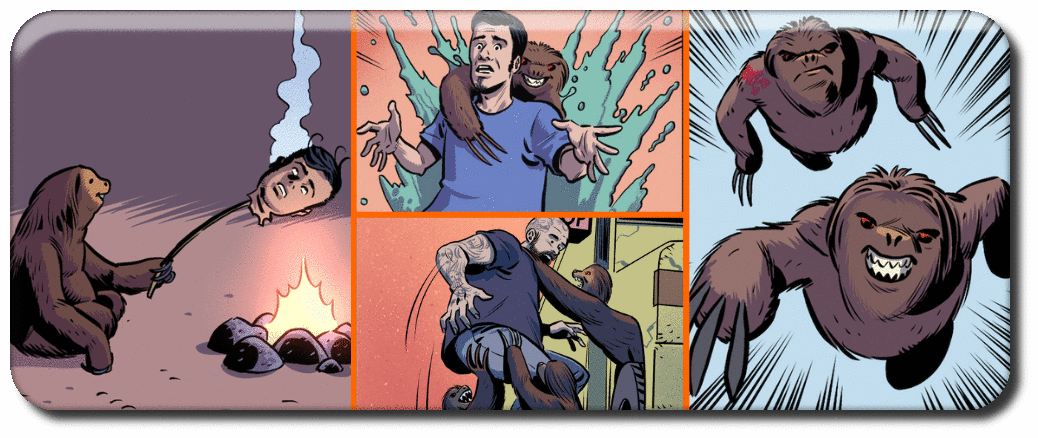 It's Friday the 13th meets Heavyweights in this sloth summer slasher! Click the link below to Order now! We got shirts. We got posters. You can even get killed in the next issue if the project reaches its funding. Link: https://www.kickstarter.com/projects/steveurena/slow-pokes-2-the-sloth-horror-sequel-of-the-summer Follow us on this crazy comic journey by adding Slow Pokes on Instagram and Twitter for more updates and bonus content! @TheSteveUrena @SlowPokescomic CHECK OUT TODAY'S OTHER ARTICLES BELOW
THE HEART OF HORROR REVIEW WEBSITES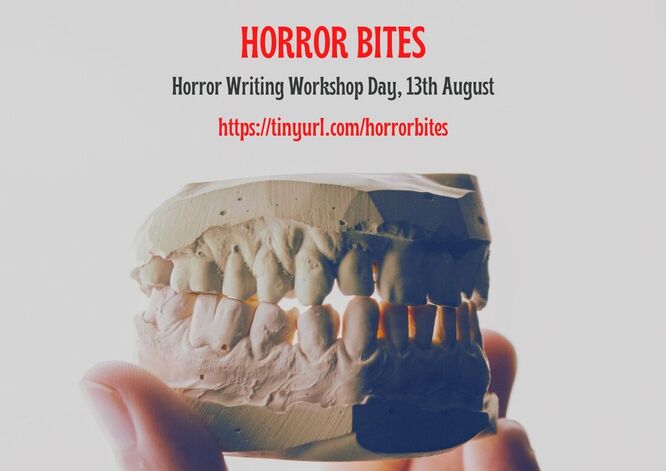 On Saturday August 13th, HORROR BITES presents a day of online writing workshops with tutor and lecturer Alex Davis. The event offers a series of sessions on different aspects of horror fiction, taking in atmosphere, pacing, the use of violence, characterisation and horror publishing. For more information on the event, visit https://www.eventbrite.co.uk/e/horror-bites-tickets-378568046217 And Ginger Nuts of Horror has two tickets to give away to this event, valued at £30 each – all you need to do is answer the question below, and send your answer to alexdavisevents@hotmail.co.uk to be in with a chance of winning. The competition closes Sunday 31st July at 11:59pm, with winner contacted and confirmed on Monday 1st August. And here’s your question… Stephen King’s horror novel concerning a dog had plenty of bites – but what was it called? A) Cujo B) Lassie C) Spot and send your answer to alexdavisevents@hotmail.co.uk Good luck to all entrants, and check our Horror Bites and the other exciting horror activities forthcoming from Alex Davis Events at https://www.eventbrite.com/cc/horror-events-2022-924939 Please note that entrants’ email addresses will not be retained or added to any marketing/mailing lists. Only winners will be contacted on Monday 1st August – unsuccessful entrants will not be notified. Two winners will each receive one ticket to the Horror Bites online event. 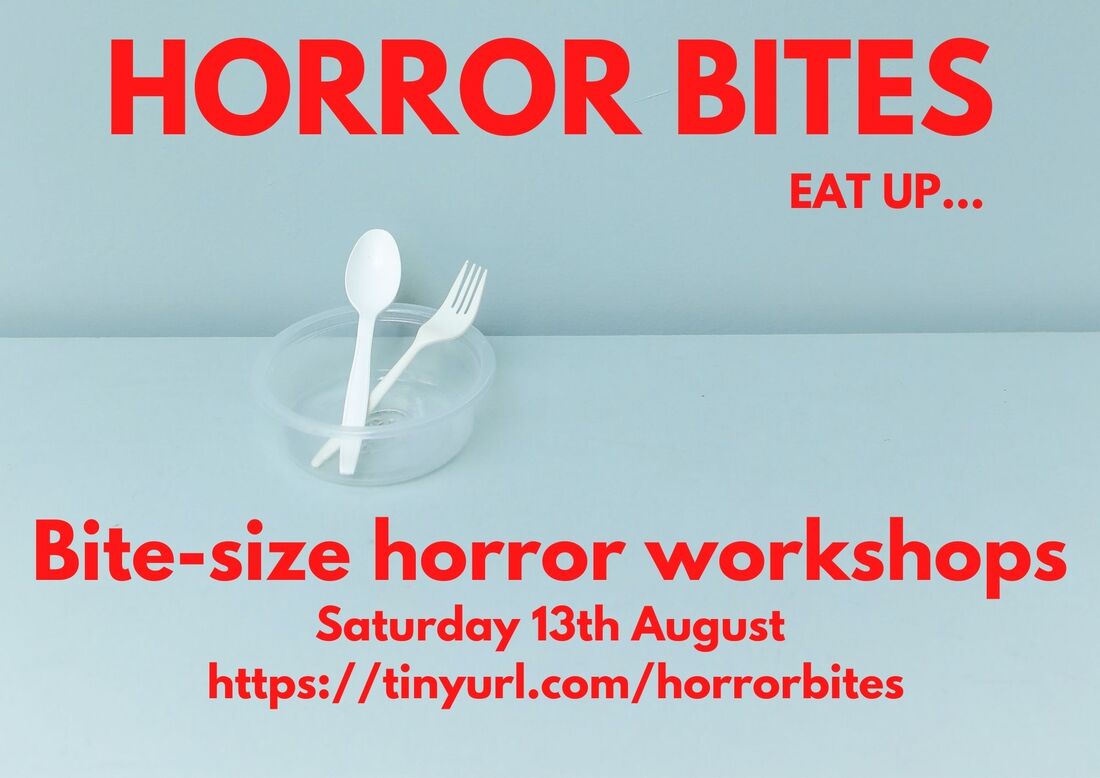  Event organiser, tutor and lecturer Alex Davis will be launching three new online horror events this August and September, giving aspiring horror authors the chance to access an exciting range of workshop sessions, one-to-ones and more. The season begins with HORROR BITES on the 13th August, offering a day of bite-size one-hour horror sessions, looking at many of the fundamentals of the genre. With a great price day ticket available, as well as tickets for individual workshops, this event offers numerous ways to get involved and expand your horror knowledge and writing. Starting on the 8th September, SHADOW SEASONS is the second running of the online horror writing school, following on from the successful First Fears event this summer. Over six weeks First Fears will present an exciting range of horror writing workshops with guest speakers, with Peter Laws, Laura Mauro, Kit Power, Francine Toon and Ally Wilkes already confirmed for the event to discuss numerous facets of the genre. There are also ticket packages to take in weekly feedback sessions, written comment on your work, one-to-one slots and more. Tickets have already been selling well for this event, so we suggest early booking. Finally, the 10th September sees the first running of DARKNESS IN THE FIELDS, a day of folk fiction horror writing, with guest speakers Stephanie Ellis, Tracy Fahey and Coy Hall. With the subgenre enjoying an exciting revival in 2022, this event is already proving popular and will be ideal for anyone looking to find out more about the area as well as how to craft stories within it. Alex Davis said: ‘I’m thrilled to be bringing these three new horror events to the online environment, and it’s fantastic to be able to open them up to a national and international audience. Horror is a genre that is really flourishing right now, and it’s a pleasure to be able to work with such an incredible range of talent on events like these.’  Tickets for HORROR BITES cost £7 per workshops or £28 for the full day and are available from https://www.eventbrite.com/e/horror-bites-tickets-378568046217  Tickets for SHADOW SEASONS range from £65 to £165, with a variety of ticket packages available from https://www.eventbrite.com/e/shadow-seasons-autumn-horror-writing-school-tickets-380260197487  Tickets for DARKNESS IN THE FIELDS cost £30 for the full day from https://www.eventbrite.com/e/darkness-in-the-fields-folk-horror-day-tickets-378524285327 For any queries, email alexdavisevents@hotmail.co.uk CHECK OUT TODAY'S OTHER ARTICLES BELOW
THE HEART OF HORROR REVIEW WEBSITES For those of us who made Pride -and for whom Pride is made-, there is no overnight on/off switch; we do not emerge from our rainbow-hued daze and revert to straight standards of respectability: we are who we are, to the bone, the cells, the soul. Whatever "deviances," transgressions and perversions we are "allowed" to evince during Pride are still with us, still part of us, and still worthy of expression and celebration, regardless of the day, season or expectations of our straight counterparts. Pride month has drawn to a close for another year, and here am I, exhausted and bereft after what has arguably been the most important iteration of my lifetime. For too long, Pride has been marketed as a happy-clappy carnival; a come-all day-trip for any that fancy attending. That one space, one time of the year proscribed by straight culture in which we can collectively be ourselves (but, of course, only in a manner that accords with particular parameters, as we see every year in discourses regarding the presence of "kink" and other inalienable factors of our queerness that straight culture finds unsavoury). The point is: Pride was, is and should always be a protest: a place where conformity, authoritarianism and proscription are flouted and lampooned to the Nth degree. It was, is and should never be a safe, family-friendly carnival of accommodating queerness; day trip for your kids to enjoy. For those of us who made Pride -and for whom Pride is made-, there is no overnight on/off switch; we do not emerge from our rainbow-hued daze and revert to straight standards of respectability: we are who we are, to the bone, the cells, the soul. Whatever "deviances," transgressions and perversions we are "allowed" to evince during Pride are still with us, still part of us, and still worthy of expression and celebration, regardless of the day, season or expectations of our straight counterparts. The ironic point of Pride is something conservative ideologues and flapping-heads love to emphasise and demonise as another one of their many, many, many cultural bogeymen, i.e. an expression of the innate tendency on behalf of we queers to push traditional parameters to their limits (and, when it suits us, to vandalise them entirely). In a strange way, they are correct in that assessment; it is indeed our inborn natures and our natural purpose to breach taboos, bring into question cultural standards and assumptions that have no meaningful or rational basis or that serve to stunt, restrict and straight-jacket us all. Where they go wrong is in their perpetual demonisation of that phenomena: the standards and traditions they neurotically enshrine and defend aren't worth protecting; are, in fact, generally sources of human abuse, atrocity based on falsehoods and misapprehensions to begin with. By our existence, we amongst the LGBTQ community call those assumptions and systems into question. We challenge proscriptions of gender, of sex, of relationship dynamics; institutions that involve ownership over other human beings and neurotic control of their bodies, emotions and relationships to others. And none of that stops once Pride is over. "who believe that our straight counterparts and heternormative culture in general will only ever allow us space and legitimacy if we amputate, chop and change ourselves; cut out and abandon those parts that are deemed distasteful or problematic and smile as we go about our days as respectable living lies." There is a related phenomena occurring in LGBTQ discourses of late; one that revolves around art, literature etc by LGBTQ creators: a frankly bizarre, self-mutilating call for accommodation and puritanism not only in the work we produce, but in our lives. Within our own communities, a number of cancerous voices have arisen from those that desperately wish to be subservient; who believe that our straight counterparts and heternormative culture in general will only ever allow us space and legitimacy if we amputate, chop and change ourselves; cut out and abandon those parts that are deemed distasteful or problematic and smile as we go about our days as respectable living lies. The language of the discourse, -as that of polite oppression so often does in its early stages- involves matters of "taste," "dignity" and "appropriateness," all, of course, deriving from straight assumptions and contexts of thereof. That it arises from within our own communities demonstrates how superficial, largely centrist notions of "acceptance" or "tolerance" are corrosive to not only our essential natures but also truth itself: If the intention is to operate in culture and society as they currently stand, then the effort is a wasted one; accommodation with the current status quo is accommodation with corruption and atrocity; it is allowing for and accepting states of humanity antithetical to not only who and what we are, but which are also demonstrably corrosive to our straight siblings, too (go check out the attempted suicide rates amongst straight men over the last twenty years in the UK, particularly in arenas where cultures of proscribed masculinity are at their most dense and toxically prohibitive. If you aren't already aware, prepare to be horrified). Our purpose, ingrained in our natures, our identities, our very beings, is to be the tonic to those toxic standards. Not to accept them, not to accommodate and allow for them. We represent alternative ways of being, in all that we are and everything we do. And we should revel and celebrate in that condition, that capacity, not dissemble about it because it might damage our standing in the eyes of those who despise us anyway. The current puritanical discourse arising with regards to LGBTQ artistic output largely centres around the more stark or ribald subjects or areas of our experience. The common cant basically states: "we want to be accepted as normal, by normal society, yet we continue to exhibit ourselves as freaks and perverts in our work." I won't belabour the matter by detailing the highly problematic assumptions of the argument (such as it is, and all of which derive from highly heternormative proscriptions of "normalcy" and "deviance"). Rather, it's more productive to look at what the exploration -and, indeed, indulgence- of our ostensibly "darker" arenas of experience serves and why that exercise is worthy of celebration, not moraistic finger-wagging: First of all, pleasure. Sex, drugs and rock 'n' roll. Sensual pleasure is certainly pervasive and quintessential in LGBTQ quarters and discourses, arguably moreso than in straight spaces. This is not due to any innate difference between us; rather that, through being traditionally excluded from the meta-narratives of culture and society, we are not prey to their restrictions and parameters in quite the same way. Sex-positivity and acceptance of pleasure as a natural part of our discourses and experience is extremely common amongst LGBTQ communities, to the point that our relationship structures tend towards the more fluid and transformative. Sex and pleasure are also multi-dimensional in LGBTQ circles, evincing an added dimension of protest, as well as human connection and raw sensuality. Speaking anecdotally, we LGBTQ siblings tend to build family structures and communities outside of our biological family units (not universally, not exclusively, but generally). These structures can operate on numerous complex levels from purely physical and sensual to exclusively emotional and platonic. Sexual contact is generally more common amongst such structures, as are close bonds between same sex friends as a result. That we express and explore such matters in our art and fiction is not only essential to our own understanding, it also allows "straight" and heteronormative readers a more sincere window into the truth of our lives and experiences (such explorations also serve as examples of how traditional and proscribed narratives human relations have bedevilled us collectively down the centuries, stunting and severing us emotionally, making us afraid of intimacy and vulnerability to the point that entire generations of men -in particular- do not know how to relate to their sons and siblings). Beyond that, delving into the more intense areas of our experience helps us to ratify them, not with reference to the proscribed narratives they often flout, but on intensely personal levels, as examinations of our own drives, assumptions and relations to others. Art and literature have, traditionally, always been the few spaces -outside of the bedroom- such explorations can take place (not to mention communication between different LGBTQ demographics and generations). Stunting or limiting those explorations based on assumptions of traditional propriety is a grand error; an accomodationist trick that reinforces certain pervasive mores of "taste" and decency that have never been anything but enshrinements of harmful neurosis. As Clive Barker expresses in his LGBTQ epic, Sacrament: we have no place, role or mythology in society as it stands. Even those cultures that have made some -always grudging and reluctant- accommodation of LGBTQ rights do so under an auspices of heternormativity as default: All too often, the "rights" that are afforded only occur under especial and highly restrictive criteria, to wit: that we emulate our straight counterparts to the Nth degree, that we contain and amputate our own sincere desires, loves, joys, general states of being, in accordance with traditional dictate, as demonstration that we are not "deviant" or "transgressive;" that we are not extant challenges to cultural meta-narrative by the very fact of our beings. And it is wrong. It enjoins us to be complicit in a socio-cultural phenomena that not only leads, inevitably, to our own shacking, smothering and inevitable extermination, but also reinforces those states and assumptions that so sicken our straight brothers and sisters, that turn them so profoundly upon one another and themselves, self-abuse and even suicide become atrociously commonplace. We, as queer entities, ideally manifest challenges to historical proscription. By our art, by our stories; by our loves, delights and despairs, we present alternative ways of being. This is -and, ideally, should be- as true in the work we produce as the lives we live. To turn on our ourselves and one another out of accomodationist puritanism is self-mutilation; expression of a neurotically internalised homophobia/transphobia that not only sets us at odds with one another; it turns us in upon our selves. Beyond that, actively censoring ourselves from exploring the full spectrum of our experience, emotion etc is to deny our essential humanity in all the ways our enemies demand. It is to make ourselves timid, anxious and afraid of raising our voices, even in exuberant denial of the myriad boots poised to stamp down on our heads. We do not bow before the bigot, we do not accommodate the fascist or the censor, even amongst our own. On a wider note, didactically wagging one's finger and proscribing parameters of what another can imagine or express through their art is surely the very height of imposition; a tyrannical assumption that implies the censor has sincere territorial claim over another's internal worlds. The same species of polite, well-spoken oppression that would have our exuberance and celebration contained to Pride parades (and even then only with explicit license from straight society in terms of content) is also the same that would corral and dictate in terms of our artistic and creative output. They operate under a sterile delusion of human reality; a proscriptive child's drawing of our true, ambiguous, fluctuating and endlessly various natures. They would have us be safe, be simple; be identifiable in accordance with what traditional power structures demand, if they are to afford us continuing standards of humanity and, in extremis, basic survival. To make such demands and promote such restrictions within the realms of horror, fantasy and science fiction are absurd to the Nth degree: speculative fiction is the arena for exploring what we cannot in waking life, owing to physical impossibility, moral restrictions etc. It is the playground of the subconscious, where every one of us, regardless of demographic or identity, can express and explore ourselves without restriction or restraint. It is where our most secret, sacred selves swim, devour and give birth to new iterations. It is where we expand our contexts, shed weary and old assumptions and communicate the agony and ecstasy of that process to others. To demand that we limit those explorations based on assumptions of taste and morality, particularly those imposed upon us by evidently sick and amoral systems, is not only absurd, it is self-mutilating. It actively inhibits a means of the most intimate and profound communication, where we meet mind to mind, soul to soul, and understand one another in ways we never could, separate in our own skins and skulls. That there are voices raised from within certain -bafflingly puritanical- sub-sets of queer communities chiding those of us that explore the darker, more ambiguous and intense areas of our experience is not merely puzzling; it is sickening in its accommodationist self-mutilation. These voices ape and parrot the same rote talking points as those who fancy themselves our enemies; they seek to pacify and deflect criticism and negative attention by aligning with the dubious, hypocritical masks of morality sported by those who would, ultimately, see us all not only silenced, but extinct. In that, they hope to somehow avoid being subject to the same oppressions and abuses (entirely ignorant of the fact that their inalienable natures makes them intolerable to such systems). They think that they'll be spared a place on the trains if they just emulate their straight "betters" hard enough, not understanding that their continued tolerance is commensurate with their usefulness (the moment they stop being useful is the moment they stop being acceptable, and will be herded aboard along with those they condemned, all the while bleating and protesting how they were “one of the good ones.”). Beyond any significance to us as queer individuals, the imposition inherent is frightening in its presumption: we are effectively being corralled and curtailed in our own imaginations, admonished -via proxy- for daring to explore and express what is most intense and essential to us. Furthermore, we are being attacked in areas and mediums which have, traditionally, been our only recourse: the places and states of imagination where we have been able to operate and communicate uninhibited, beyond the impositions of systems intent on our silence. It is an extremely subtle and insidious means of unravelling us from within, by not only attacking our fundamentals and foundations, but inveigling, coercing and conning those from amongst our own into self-sabotage. If we are not "permitted" to explore who and what we are in our totality, in all our complexities, ambiguities and problematics, then we have no hope of realising and expanding our assumptions of self; of discerning our own damage and disease and formulating means of healing. Furthermore, this moral hand-wringing species of censorship severs us from one another, atomising and slowly degrading our communities, our abilities to empathise and organise. Younger queer people, particularly those in isolated or conservative communities, will find themselves more isolated, without reference to the fictional frameworks that might speak to their internal experience and make them realise they are not alone. This is, of course, all part and parcel of the same repulsive defence mechanism: Just as conservative systems are currently doing all in their powers to separate us from our trans siblings, they are also very hard at work attempting to divide the "acceptable" queers from the bad and degenerate ones (the former, of course, consisting of those who are more willing to deny their fundamental selves and emulate templates of heteronormativity). This serves to leave us squabbling amongst one another and dividing our communities rather than allowing us to organise under common banners, but also allows conservative forces avenues into and authority over our sacred spaces. This is what we see occurring in the puritanical calls for self-censorship from amongst our own, as well as the annual "discussions" regarding the presence of kink and sexual display at Pride events: Underneath the mask of moral concern frowns a fascist face, an agenda to see Pride become a corral rather than a protest. If we allow that corrosion to escalate, then that's exactly what will happen: it will become a sanitised shadow of all it is at its most ideal. Not a protest, not a celebration of counter-culture and free expression, but a nice, safe little carnival where the queers can be colourful and entertaining for a little while before shedding their rainbow panoplies and becoming safe, sedate and toothless once again. This is what lies behind every puritanical finger-wagging, every "moral discussion" aimed at or focusing on our condition as queers: not a sincere desire for consideration, but a veiled attack, designed to make us quiet, complicit and defenceless in the face of our own oppression. So, as essential as Pride is (arguably moreso than ever in recent years, given the escalating assaults on our trans siblings), this is an earnest plea to my queer siblings to not let it become the only sanctioned arena in which we feel free to express who and what we are, at our most complex, corrosive and transgressive. For us, Pride should not end; its spirit should be present in all that we are, all that we do, and certainly all that we create. If our work; our art and stories, cannot be protests by their sincerity and unwillingness to be censored, then we die together in the dark and silence, and much to our enemy's self-satisfied delight. Born in Blood Volume Two |


 |  |
THE HEART OF HORROR REVIEW WEBSITES
Black Spot Books will publish its second Women in Horror Poetry Collection in November 2023 in recognition of the International Day for the Elimination of Violence Against Women. This collection is open to all poets who identify as women (cis and trans) and non-binary femmes. Submissions open July 2022 and will close August 31, 2022, with decisions made on a rolling basis. All submissions will receive a response.
The theme of the second collection is domestic horror. This is a broad spectrum and poets are welcome to interpret the prompt in their own vision, so long as poems support the theme of domestic horror -- the fear that we might not be safe in our own homes. We have partnered with The Pixel Project, a global, volunteer-run non-profit for this showcase, and will be donating a portion of proceeds to support ending violence against women. More information on The Pixel Project can be found at: https://www.thepixelproject.net/
The showcase will feature a cover with hand-drawn illustration by respected horror artist Lynne Hansen and will be traditionally and globally distributed in both trade print and ebook. Featured poets include Bram Stoker Award®-winning poet Stephanie M. Wytovich and nominee Jessica McHugh, as well as Science Fiction & Fantasy (SF&F) Poetry Association Grand Master and recipient of the Horror Writers Association (HWA) Lifetime Achievement Award winner Marge Simon.
Poems must be previously unpublished, though published poets are, of course, welcome. We accept submissions of poems up to fifty lines. Free verse preferred (please, no forced rhyme or clichés). Please, no simultaneous submissions.
We accept one poem per poet, but up to three poems are allowed for submission. Submissions should be submitted along with a brief bio.
Each poem chosen for publication will be paid $5 and each poet will receive a copy of the collection upon publication--US-based authors will receive print and digital, and non-US based authors will receive digital copies*. Poets will retain rights to any accepted poem, with first right of publication by Black Spot Books.
*international shipping pending
Showcase Judges:
For the 2023 collection the judges will be Black Spot Books president and award-winning author/editor, Lindy Ryan, and Bram Stoker Award®-winning author/poet, Lee Murray.
Lindy Ryan is the president and publisher of Black Spot Books. She is an award-winning and bestselling author, editor, and short-film director. Lindy is the co-chair of the HWA Publishers Council and was recognized as one of Publishers Weekly's Star Watch Honorees in 2020. Her debut horror novel, BLESS YOUR HEART, will release from Minotaur books in Fall 2023.
Lee Murray is an author, editor, screenwriter, and poet from Aotearoa-New Zealand. A USA Today bestselling author, multiple Bram Stoker® and Shirley Jackson Award winner, Lee is the curator-editor of eighteen volumes of dark fiction, among them Black Cranes: Tales of Unquiet Women (with Geneve Flynn). Lee’s first poetry collection, Tortured Willows, a collaboration with Angela Yuriko Smith, Christina Sng, and Geneve Flynn was released in October 2021.
The theme of the second collection is domestic horror. This is a broad spectrum and poets are welcome to interpret the prompt in their own vision, so long as poems support the theme of domestic horror -- the fear that we might not be safe in our own homes. We have partnered with The Pixel Project, a global, volunteer-run non-profit for this showcase, and will be donating a portion of proceeds to support ending violence against women. More information on The Pixel Project can be found at: https://www.thepixelproject.net/
The showcase will feature a cover with hand-drawn illustration by respected horror artist Lynne Hansen and will be traditionally and globally distributed in both trade print and ebook. Featured poets include Bram Stoker Award®-winning poet Stephanie M. Wytovich and nominee Jessica McHugh, as well as Science Fiction & Fantasy (SF&F) Poetry Association Grand Master and recipient of the Horror Writers Association (HWA) Lifetime Achievement Award winner Marge Simon.
Poems must be previously unpublished, though published poets are, of course, welcome. We accept submissions of poems up to fifty lines. Free verse preferred (please, no forced rhyme or clichés). Please, no simultaneous submissions.
We accept one poem per poet, but up to three poems are allowed for submission. Submissions should be submitted along with a brief bio.
Each poem chosen for publication will be paid $5 and each poet will receive a copy of the collection upon publication--US-based authors will receive print and digital, and non-US based authors will receive digital copies*. Poets will retain rights to any accepted poem, with first right of publication by Black Spot Books.
*international shipping pending
Showcase Judges:
For the 2023 collection the judges will be Black Spot Books president and award-winning author/editor, Lindy Ryan, and Bram Stoker Award®-winning author/poet, Lee Murray.
Lindy Ryan is the president and publisher of Black Spot Books. She is an award-winning and bestselling author, editor, and short-film director. Lindy is the co-chair of the HWA Publishers Council and was recognized as one of Publishers Weekly's Star Watch Honorees in 2020. Her debut horror novel, BLESS YOUR HEART, will release from Minotaur books in Fall 2023.
Lee Murray is an author, editor, screenwriter, and poet from Aotearoa-New Zealand. A USA Today bestselling author, multiple Bram Stoker® and Shirley Jackson Award winner, Lee is the curator-editor of eighteen volumes of dark fiction, among them Black Cranes: Tales of Unquiet Women (with Geneve Flynn). Lee’s first poetry collection, Tortured Willows, a collaboration with Angela Yuriko Smith, Christina Sng, and Geneve Flynn was released in October 2021.
Black Spot Books use Submittable to accept and review our submissions.
Submit your story below
https://blackspotbooks.submittable.com/submit/211059/under-her-eye-a-black-spot-books-women-in-horror-poetry-showcase
Submit your story below
https://blackspotbooks.submittable.com/submit/211059/under-her-eye-a-black-spot-books-women-in-horror-poetry-showcase
CHECK OUT TODAY'S OTHER ARTICLES BELOW
 | |
THE HEART OF HORROR REVIEW WEBSITES
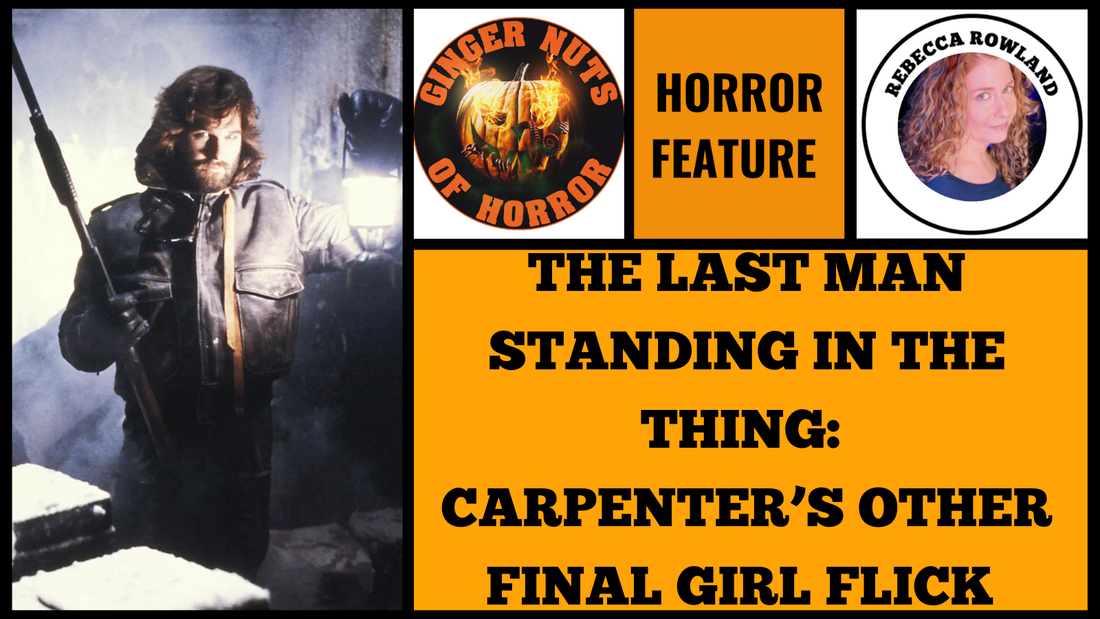
The Last Man Standing in The Thing: Carpenter’s Other Final Girl Flick
by Rebecca Rowland
by Rebecca Rowland
John Carpenter’s The Thing (1982) may be completely absent of women, but it successfully produces a final survivor character with which all viewers may identify, proving that terror, in fact, knows no gender.
The Final Girl is a well-known film trope originating in Carol J. Clover’s 1992 book Men, Women, and Chain Saws: Gender in the Modern Horror Film to describe the sole survivor of a slasher movie’s predator. According to TVTropes.org, a Final Girl must “remain fully clothed, avoid [sex], and probably won't drink alcohol, smoke tobacco, or take drugs, either,” and a Final Girl is also “more intelligent and resourceful than the other victims…[and] is usually but not always brunette.” Although the gender of The Final Girl seems inherent in its name, in a film comprised only of male characters, John Carpenter’s The Thing boasts its own Final Girl. R.J. MacReady, played by Kurt Russell, fulfills all of the Final Girl requirements, even those that are seemingly implausible given the constraints of the 1982 film’s plot. Moreover, it is the film’s motif of growing isolation that firmly grounds MacReady as the sole survivor who manages to escape the predator all the way until the movie’s final frame.
The Final Girl remains fully clothed.
The Thing takes place at an outpost in Antarctica, and at the time of the film’s main action, a storm is ravaging the camp: no one is removing their clothing. In fact, the only cases where clothing is shed is after The Thing has killed and impersonated one of the quickly dwindling crew. Despite the red herring in a piece of jacket torn and partially burned to suggest otherwise, MacReady seems only to add layers of clothing to his frame as the story progresses (including, of course, a particular jaunty—and inexplicably enormous—campaign hat during outdoor explorations).
The Final Girl avoids sex.
Much to the chagrin of those who are drawn to slashers specifically for the requisite shot of T and A, no one is having sex in The Thing. In addressing this absence, screenwriter Bill Lancaster has explained, “I remember thinking as a kid that the obligatory love scenes in horror movies interrupted the action.” None of the twelve men appear to be even remotely attracted to one another, and their only interaction with anything vaguely female is with the come-hither voice of a Chess Wizard computer program, of which MacReady disposes within the first fifteen minutes of the film. When he becomes frustrated by a loss, he opens the machine’s circuit board and pours the remains of his drink onto it, temper-tantrum-style, thereby erasing the last vestige of sensuality anywhere in the camp and symbolically eschewing sex as only a Final Girl can.
The Final Girl does not drink alcohol, smoke tobacco, or take drugs.
On the surface, one requirement MacReady seems not to fulfill is a Final Girl’s avoidance of mind-altering substances. In fact, he embraces the very polar opposite of this mandate, guzzling Scotch whiskey in a number of scenes. Although other characters indulge in alcohol and marijuana, none do it so gluttonously as MacReady. After the discharge of The Thing in the dog kennel, MacReady notes, “I just wanna get up to my shack and get drunk,” and in the closing scene of the film, he huddles among the burning remnants of the base camp, swigging gulps of Scotch directly from the bottle. However, this is merely a mirror image of the Final Girl trope: those who do not indulge in these substances are picked off earliest by The Thing. It is not until the crew is halfway decimated that Palmer, seen earlier smoking a joint, is revealed to be infected by The Thing, and an autopsy of the Norwegian crew members who invaded the American camp in pursuit of the dog reveals “no drugs, no alcohol” in their system, and they are the first to die.
The Final Girl is more intelligent and resourceful than the other victims.
In his 2011 Atlantic article on the remake of The Thing, Noah Berlatsky proposes that “MacReady is heroic precisely because he is the most paranoid and the least subject to emotional attachments.” However, MacReady is the Final Girl because he is the most reliable and quick-thinking of the group. He leads the expedition to the Norwegians’ camp not just because of his helicopter piloting skills but because of his commitment to getting a job done: when the men first arrive at the partially damaged facility, it is MacReady who enters first, gun drawn, calling out for survivors. When Copper discovers the remains of the partially transformed crew there, he calls out to MacReady to witness it. As soon as he hears the commotion coming from Clark in the dog kennel, MacReady pulls the alarm and leads the group to investigate; he quickly organizes the defense, instructing Childs to “burn [The Thing]…dammit, Childs, torch it!”
Like his counterpart Laurie Strode (Halloween, 1978), who is saddled with watching the children while her friends plan and participate in romantic escapades, MacReady is often looked at to shoulder the responsibility of the group’s leadership. After the scuffle between Garry and the other men, the former nominates Norris to be in charge, but when the latter declines, stating he isn’t “up to it,” it’s MacReady who takes over, disarming Clark and devising a plan to safely imprison the irrational Blair. When Bennings runs out into the snow, revealing himself to not be Bennings at all but The Thing, it is MacReady who takes immediate action, dumping the nearest barrel of fuel onto him and tossing a flare to set the creature ablaze while the other men look on, stunned.
Echoing the resourcefulness of fellow Final Girls Nancy Thompson (A Nightmare on Elm Street, 1984) and Erin Harson (You’re Next, 2011), MacReady devises a plan to thwart The Thing’s possible infection of the planet. While Nancy and Erin set up booby traps to catch their predators, MacReady sets up explosives to burn down the camp, thereby preventing The Thing from hibernating in the cold, despite knowing it will more than likely erase his own chance at survival. He tells Garry, Nauls, and Childs, “We’re not getting out of here alive, but neither is that Thing.” In Friday the 13th, part VII (1988), Final Girl Tina Shepard douses Jason Voorhees with gasoline and ignites him, intending to kill him; throughout The Thing, MacReady burns the creature in order to destroy it, and he tries to burn the entire base “right down to the ice” in an attempt to contain it. And of course, unlike Tina Shepard, R.J. MacReady is also brunette, the final Final Girl requirement.
The growing sense of isolation in MacReady’s environment mimics the Final Girl’s inability to receive outside assistance against her threat. Carpenter makes clear from the beginning that there is no way to reach help even before the crew is in danger when Windows, the communications officer, tells the base’s doctor that “I haven’t been able to reach anyone in two weeks.” Later, Windows conveys to Garry—and thus, to the audience—that they are “a thousand miles from nowhere.” Therefore, when Blair destroys both the communications system and the helicopter, it ensures no one will be coming to the crew’s aid, and no one will be able to escape. True to a Final Girl’s reliance on her own abilities to rescue herself, MacReady makes the only chess move that remains: sacrificing his likelihood of long-term survival to avoid the even worse fate of releasing—or becoming—The Thing.
While Childs is also present in the final scene of The Thing, is it is arguable that MacReady is the only true survivor of the creature as Carpenter hints that this Childs is an impersonation of the base’s mechanic. When Nauls and Garry accompany MacReady to test Blair, Childs remains behind to guard the main gate. However, he mysteriously abandons his post, later claiming to have followed Blair into the snow. At the same time, Blair, as mimicked by The Thing, accosts Garry and kills him. Although the audience never sees Childs taken over by The Thing, the filmmaker sets up his absence as a possible opportunity for infection whereas MacReady is never unaccounted for at any point after his negative blood test.
TVTropes proposes that it is through the Final Girl that “the males in the audience are forced to identify with a woman in the climax of the movie. In practical terms, the makers of a horror film want the victim to experience abject terror in the climax and feel that viewers would reject a film that showed a man experiencing such abject terror.” John Carpenter’s The Thing (1982) may be completely absent of women, but it successfully produces a final survivor character with which all viewers may identify, proving that terror, in fact, knows no gender.
Like his counterpart Laurie Strode (Halloween, 1978), who is saddled with watching the children while her friends plan and participate in romantic escapades, MacReady is often looked at to shoulder the responsibility of the group’s leadership. After the scuffle between Garry and the other men, the former nominates Norris to be in charge, but when the latter declines, stating he isn’t “up to it,” it’s MacReady who takes over, disarming Clark and devising a plan to safely imprison the irrational Blair. When Bennings runs out into the snow, revealing himself to not be Bennings at all but The Thing, it is MacReady who takes immediate action, dumping the nearest barrel of fuel onto him and tossing a flare to set the creature ablaze while the other men look on, stunned.
Echoing the resourcefulness of fellow Final Girls Nancy Thompson (A Nightmare on Elm Street, 1984) and Erin Harson (You’re Next, 2011), MacReady devises a plan to thwart The Thing’s possible infection of the planet. While Nancy and Erin set up booby traps to catch their predators, MacReady sets up explosives to burn down the camp, thereby preventing The Thing from hibernating in the cold, despite knowing it will more than likely erase his own chance at survival. He tells Garry, Nauls, and Childs, “We’re not getting out of here alive, but neither is that Thing.” In Friday the 13th, part VII (1988), Final Girl Tina Shepard douses Jason Voorhees with gasoline and ignites him, intending to kill him; throughout The Thing, MacReady burns the creature in order to destroy it, and he tries to burn the entire base “right down to the ice” in an attempt to contain it. And of course, unlike Tina Shepard, R.J. MacReady is also brunette, the final Final Girl requirement.
The growing sense of isolation in MacReady’s environment mimics the Final Girl’s inability to receive outside assistance against her threat. Carpenter makes clear from the beginning that there is no way to reach help even before the crew is in danger when Windows, the communications officer, tells the base’s doctor that “I haven’t been able to reach anyone in two weeks.” Later, Windows conveys to Garry—and thus, to the audience—that they are “a thousand miles from nowhere.” Therefore, when Blair destroys both the communications system and the helicopter, it ensures no one will be coming to the crew’s aid, and no one will be able to escape. True to a Final Girl’s reliance on her own abilities to rescue herself, MacReady makes the only chess move that remains: sacrificing his likelihood of long-term survival to avoid the even worse fate of releasing—or becoming—The Thing.
While Childs is also present in the final scene of The Thing, is it is arguable that MacReady is the only true survivor of the creature as Carpenter hints that this Childs is an impersonation of the base’s mechanic. When Nauls and Garry accompany MacReady to test Blair, Childs remains behind to guard the main gate. However, he mysteriously abandons his post, later claiming to have followed Blair into the snow. At the same time, Blair, as mimicked by The Thing, accosts Garry and kills him. Although the audience never sees Childs taken over by The Thing, the filmmaker sets up his absence as a possible opportunity for infection whereas MacReady is never unaccounted for at any point after his negative blood test.
TVTropes proposes that it is through the Final Girl that “the males in the audience are forced to identify with a woman in the climax of the movie. In practical terms, the makers of a horror film want the victim to experience abject terror in the climax and feel that viewers would reject a film that showed a man experiencing such abject terror.” John Carpenter’s The Thing (1982) may be completely absent of women, but it successfully produces a final survivor character with which all viewers may identify, proving that terror, in fact, knows no gender.
Rebecca Rowland

Rebecca Rowland is an American dark fiction author and curator of five horror anthologies, the most recent of which is Generation X-ed. She delights in creeping about Ginger Nuts of Horror partly because it’s the one place her hair is a camouflage instead of a signal fire. For links to her latest work, social media, or just to surreptitiously stalk her, visit RowlandBooks.com.
Shagging the Boss
by Rebecca Rowland

Lesson number one: don't get attached to anyone. Being a cannibal is the only way to truly succeed in this business."
He placed one hand on the door handle, then thought a moment and smiled to himself. "The problem is, once you take a bite, it will never be enough."
After a fortuitous encounter at a local book convention, a liberal arts graduate accepts a position at a flashy publishing company under the tutelage of its charismatic owner only to learn that the press is led, and fed, by a literal boogeyman.
He placed one hand on the door handle, then thought a moment and smiled to himself. "The problem is, once you take a bite, it will never be enough."
After a fortuitous encounter at a local book convention, a liberal arts graduate accepts a position at a flashy publishing company under the tutelage of its charismatic owner only to learn that the press is led, and fed, by a literal boogeyman.
CHECK OUT TODAY'S OTHER ARTICLES BELOW
 | |
THE HEART OF HORROR REVIEW WEBSITES


Archives
April 2023
March 2023
February 2023
January 2023
December 2022
November 2022
October 2022
September 2022
August 2022
July 2022
June 2022
May 2022
April 2022
March 2022
February 2022
January 2022
December 2021
November 2021
October 2021
September 2021
August 2021
July 2021
June 2021
May 2021
April 2021
March 2021
February 2021
January 2021
December 2020
November 2020
October 2020
September 2020
August 2020
July 2020
June 2020
May 2020
April 2020
March 2020
February 2020
January 2020
December 2019
November 2019
October 2019
September 2019
August 2019
July 2019
June 2019
May 2019
April 2019
March 2019
February 2019
January 2019
December 2018
November 2018
October 2018
September 2018
August 2018
July 2018
June 2018
May 2018
April 2018
March 2018
February 2018
January 2018
December 2017
November 2017
October 2017
September 2017
August 2017
June 2017
May 2017
April 2017
March 2017
February 2017
January 2017
December 2016
November 2016
October 2016
September 2016
August 2016
July 2016
June 2016
May 2016
April 2016
March 2016
February 2016
January 2016
December 2015
November 2015
October 2015
September 2015
August 2015
July 2015
June 2015
May 2015
April 2015
March 2015
February 2015
January 2015
December 2014
November 2014
October 2014
September 2014
August 2014
July 2014
June 2014
May 2014
April 2014
March 2014
February 2014
January 2014
December 2013
October 2013
September 2013
August 2013

 RSS Feed

|

|