


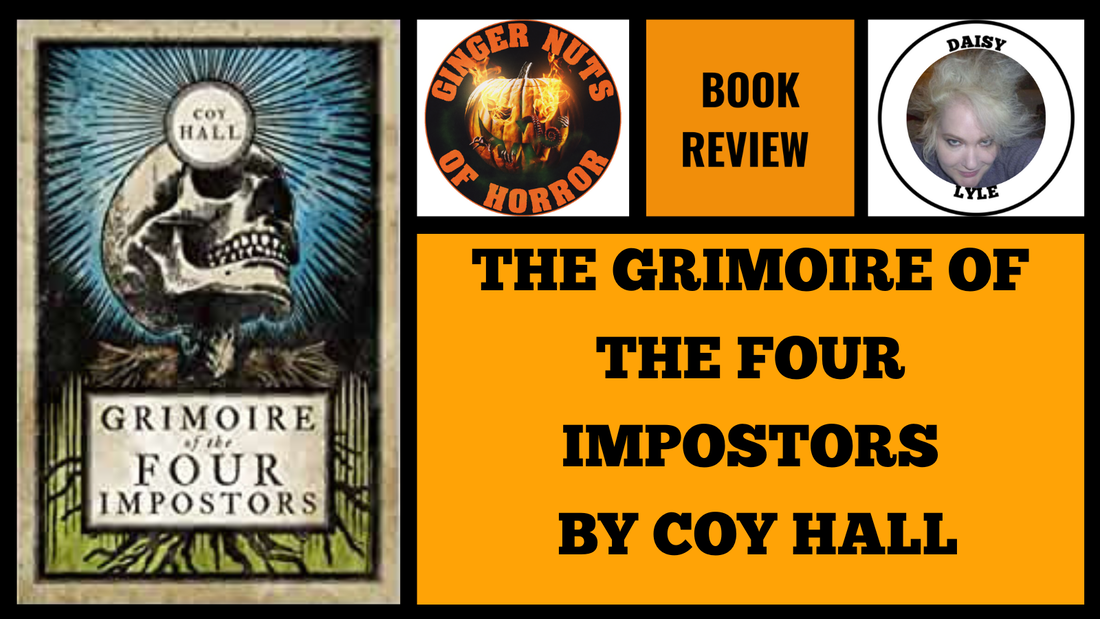
 It forms a satisfying end to a collection that is so readable it is easy to forget the impressive amount of scholarship that has gone into it, with a well-pitched writing style that has some of the patina of bygone days without being mummified by strenuous attempts at replicating the parlance of the time and place Hall’s Grimoire is a bit more “meta” than your average spellbook. It’s a book about a book – an ancient anthology of stories weaponized by magical code embedded into their prose - but also is that book, since it consists of these four stories along with two framing tales. Unless, of course, it’s an imposter itself... Hall’s poker-faced introduction is a scholarly warning to the curious and reveals that the stories change Mezzotint-style over time to keep pace with the reader, so we’re on unsteady ground even before we jump into An Encounter in 1690. This first framing story introduces us to the Toths, a family of Rom with occult leanings, and their quest for the Grimoire. Narrated by an embattled courtier of Lady Willoughby, a charismatic 17th-century noblewoman with a taste for the dark side, it stars a great pair of sinister automata and has plenty of travelogue appeal as the reader is carried off across Eastern Europe and into a Rom encampment and a Hungarian village crackling with suspicion. Its briskly-paced, with a narrator who is likeable but not too perfectly detached from the prejudices of his day. And then it’s onto the Grimoire’s bloody core. The Orb of Wasp and Fly, Being A Psalm of the Malformed Mind is a maggoty mouthful set in Germany at the time of the Landsknechts, savage mercenaries who devastated the country in-between the various religious wars of the 17th century. It starts with an example of their handiwork, a monastery razed to the ground leaving only a handful of survivors, all but one of whom are incurably mentally ill. With the only sane man grievously injured, things are looking bleak, and they get worse. Historian Hall is always happy to remind us what accidents were like before penicillin and proper hygiene, and there’s a hefty dose of body horror to go with the sylvan dread. Hall grasps the nettle of depicting several characters on the psychotic end of the mental illness spectrum and he pulls it off pretty well, giving them each a convincing backstory and individuality. He also avoids stumbling into the trope of the Magical Nutter whose quaint folksy lunacy saves the day, though undoubtedly this is the kind of narrative where full sanity isn’t much of an advantage. Next comes The Nightshade Garden, my personal favourite of the collection. Dorin (Son of Toth) is an upwardly mobile scholar who is called upon to visit the occultist Madame Sarkozy at her unsettling family estate, complete with poison garden and servants who laugh in the face of physiology. Although it feels less rounded-off and complete than some of the tales here, I loved the way aristocratic elegance and charm hide a weird and rotten heart, like a scented pomander heaving with worms. Toth, a man with a foot in at least two worlds, is another engaging narrator along with his faithful greyhound Vinegar Tom. Hall casts his net a bit wider with The Brine And Bone Alchemy, a Conrad-dark story of marooned sailors in the French West Indies and the avalanche of trouble they draw down on themselves for messing with a local known only as The Carib. I consider this the weakest story because the more spectacularly weird element doesn’t get properly started until it’s almost over, and it has little new to add by way of insight into the dynamics between colonizer and colonized. It does, however, work well as a character study of a bunch of really screwed men, whose grim fate always remains present in the mind of the reader. Sire of the Hatchet takes us back to Merrie England, where we find a travelling executioner rolling into a woodland village to despatch a woman accused of burying her baby, only to find that the roots of the matter are more tangled than they appear. This story appeared in Fiends In The Furrows and in my review of that collection I described it as “decent” with a touch of Blood From Satan’s Claw. It actually improves on the second reading since you get a chance to properly savour the atmosphere, which is heavy, sylvan and sweaty, with the possibility of disease and hysteria bubbling away whenever the foliage parts long enough for humans to be seen. These stories are all set in a time when wood was much more present in peoples’ lives than it is today, and by the end man and tree feel truly enmeshed in a visceral way that seems more Ramsey Campbell than Arthur Machen. In a book preoccupied with inherited culture it also delivers a gentle warning to those who hope to find the key to their own natures in a dutiful search for their “roots”. As one character remarks, Who, here knows their mother? Who else has severed a piece of their body to learn their heritage? This is also a more overtly erotic story than the others, with maybe-murderess Rosamond given to purring and mumbling darkly about wood while the men around her swell with horror and confusion. Finally we come to the second framing story, An Encounter in 1724. We’ve now reached Bela Toth, Son of Son of Toth, who joins forces with a Cambridge student to track down the Grimoire and is soon caught up in the toils of a powerful witch who doesn’t let her recent public hanging get in the way of her activities. Hall’s evocation of life in the warrens of the ancient castle city of Nottingham is vivid and horrendous, a true descent into the Abyss where dog eats dog and often a bunch of other stuff dog shouldn’t be eating at all. It forms a satisfying end to a collection that is so readable it is easy to forget the impressive amount of scholarship that has gone into it, with a well-pitched writing style that has some of the patina of bygone days without being mummified by strenuous attempts at replicating the parlance of the time and place. In a weird fiction market crumbling under the weight of Victorian and Edwardian settings it offers the reader a fascinating glimpse of a less familiar period in history, while hinting at the shifting, unsteady nature of history itself. The old joke about history being “one damn thing after another” certainly applies here, with damnation of all kinds afflicting the Toths and their fellow seekers of knowledge, but the ones who come off best are those who remember that the past is a constantly writhing, many-headed serpent always poised to strike those who want to catch it by the tail. Grimoire of the Four Impostors |
 |  |


May 2023
April 2023
March 2023
February 2023
January 2023
December 2022
November 2022
October 2022
September 2022
August 2022
July 2022
June 2022
May 2022
April 2022
March 2022
February 2022
January 2022
December 2021
November 2021
October 2021
September 2021
August 2021
July 2021
June 2021
May 2021
April 2021
March 2021
February 2021
January 2021
December 2020
November 2020
October 2020
September 2020
August 2020
July 2020
June 2020
May 2020
April 2020
March 2020
February 2020
January 2020
December 2019
November 2019
October 2019
September 2019
August 2019
July 2019
June 2019
May 2019
April 2019
March 2019
February 2019
January 2019
December 2018
November 2018
October 2018
September 2018
August 2018
July 2018
June 2018
May 2018
April 2018
March 2018
February 2018
January 2018
December 2017
November 2017
October 2017
September 2017
August 2017
July 2017
June 2017
May 2017
April 2017
March 2017
February 2017
January 2017
December 2016
November 2016
October 2016
September 2016
August 2016
July 2016
June 2016
May 2016
April 2016
March 2016
February 2016
January 2016
December 2015
November 2015
October 2015
September 2015
August 2015
July 2015
June 2015
May 2015
April 2015
March 2015
February 2015
January 2015
December 2014
November 2014
October 2014
September 2014
August 2014
July 2014
June 2014
May 2014
April 2014
March 2014
February 2014
January 2014
December 2013
November 2013
October 2013
September 2013
August 2013
July 2013
June 2013
May 2013
April 2013
March 2013
February 2013
December 2012

|

|
 RSS Feed