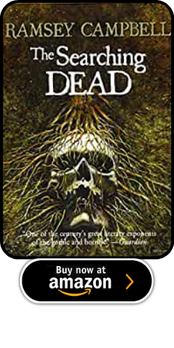
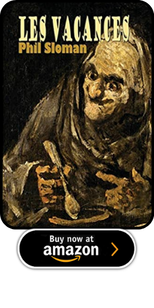
MY BEST OF A SHIT YEAR BY DAVID WATKINS
24/12/2020
Compiling any ‘best of’ list is always tricky and usually scorn inducing; how can he put that on there when this is so much better? If that’s you when you finish reading this, well, you can always make your own damn list. A couple of caveats before I begin.
Locke and Key – Joe Hill and Gabriel Rodriguez |
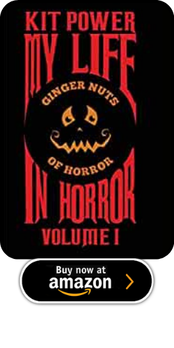
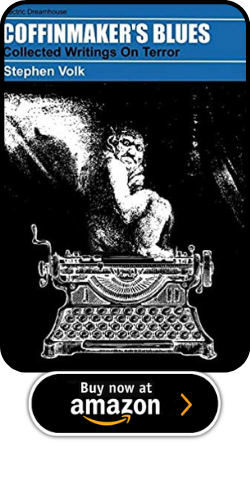
| Easy – an equal tie between Kit Power’s My Life In Horror and Stephen Volk’s Coffinmaker Blues. Both contain superb essays and are entirely honest about what it means to be a writer. Power’s are recollections of his favourite films, books and albums but also touches on events such as Hillsborough and Live Aid. Volk’s essays are brutally honest accounts of his professional life as a screenwriter. The thing both books have in common is the honesty and humanity within them. Essential reading. |
David Watkins lives in Devon in the UK with his wife, two sons, dog, cat and a couple of turtles. He is unsure of his place in the pecking order: probably somewhere between the cat and the turtles.
Read more: www.david-watkins.com
Buy more: author.to/DavidWatkins
the devil's inn
There is a pub in the heart of Dartmoor where a fire has burned every day for over one hundred and fifty years.
It is said the fire never goes out.
It is said that if it does, the Devil will appear and claim the souls of all inside.
Tonight, seven strangers are stranded there during a fierce snowstorm.
Tonight, the fire will go out…
Praise for David Watkins
"...gut twisting scenes...” 4* Joe X Young, Gingernuts of Horror
"..a damn entertaining read.." - DLS Reviews
"Great horror! I couldn't put the book down" 4.5*, Pamela Kinney, Ismellsheep.com
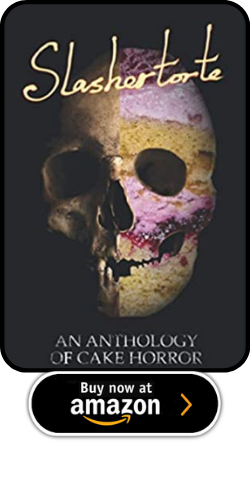
The book opens with a story short and compact enough to be flash fiction, introducing us to the proprietor of a bakery that sells rather more gruesome fare than pain au chocolat. Thankfully it immediately explains that Tres Leches is a kind of cake, as being more of a savoury man myself I had no idea and wondered if this would be a story about leeches. And in a way it is, given the ingredients of this particular bakery’s finest of delicacies…
Like a small and delicately sweet confection, this story is light on the palate and leaves you wanting more. It’s not entirely filling or satisfying on its own, short as it is and light on story; it comes across more as a backstory for a character from another tale. Hopefully Castro will revisit this character and her bakery in a story with a fuller narrative, as this has barely scratched the surface of the character’s potential. Her writing here drips with blood and lust, and I want more. That said, it serves as a perfect first story to a collection on culinary terror – it certainly whet my appetite!
Glut by E. Seneca
Oh my. This was my favourite of the ones I read. It’s written in the second-person, tough to pull off but a delight to read here. Does anyone in the UK remember the Lynx advert with the man who was made of chocolate? His fixed smile, his staring eyes – and how a woman just takes a big ol’ bite out of him at the end and it’s played off for fun? Well. Imagine your lover lying in your arms and inviting you to carve him open and sample his delicious insides… which you happily do…
Because he is made of cake.
This premise should feel silly in the wake of the ‘everything is secretly cake’ meme that ran round Twitter not too long ago. But thanks to Seneca’s effortless writing, it’s horrifying and weirdly arousing in equal measures. That’s right, I’m not afraid to admit it: this story made the idea of devouring your actually-a-cake boyfriend sexy. Cannibalistic sex acts aren’t normally my thing, I hasten to add, but he just sounds so delicious that honestly I want to break off a chunk of him and gulp it down too. Of course, I’m not quite as sure I’d be up for the consequences...
The Tea Party by Stephanie Yu
6th Grade is a strange time for kids, caught between the immaturity of fantasy play and the maturity of social play. Protagonist Liyan (who goes by Leah because no one can pronounce her name) lives in the shadow of her friend Alison, who is popular and conventionally pretty where Liyan is overlooked. The cakes in question are the mud cakes Alison takes joy in making, the secret pleasure of a girl who ought to be above such things, according to societal norms at least. Liyan reluctantly plays along, but it’s Alison’s other tea party guest that perhaps should have gone uninvited…
This was an interesting one. A more thoughtful piece than the other two, less gruesome, more measured in its approach. The focus was on the horror of loneliness, of being the other and of being eclipsed by at a time when you’re meant to be growing and blooming. Liyan’s secret delight in knowing Alison’s imperfection is perfectly relatable to anyone who’s found themselves resenting a friend for being more accomplished or better-looking. This story is a quiet pause for breath, a sip of delicious but bitter tea between servings of blood-layered cake.
Sam Kurd
The tea party is a tale of an uneasy, uneven childhood friendship; borne of circumstance and highly conditional, Liylan’s ‘friend’ Allison is the pretty, popular girl who has a strange if harmless secret. The story does a superb job sketching out an uneven power dynamic that will be familiar to anyone who survived high school; likewise, the drawing out of Allison’s secret preoccupation is brilliantly realised, with a passage describing Liylan’s unease that is a beautiful piece of genuinely rich, eerie, compact writing.
The whole story is elegantly told, and ends with what I found to be a very satisfying ambiguity. Lovely work.
Grind your Bones by Douglas Ford
Ajet-black fairy tale, Grind Your Bones utilises the child voice of it’s narrator to strong effect, allowing simplistic language and tone to create a sense of dread in the reader from the first sentence. As the short tale develops, Ford does a good job weaving in the mythology of a known fairy tale with a new figure of menace. The timelessness of the tale’s setting also creates a pleasingly claustrophobic atmosphere, reinforcing the essential powerlessness of the child protagonist, and their acute vulnerability. A real creeper of a story with a gut punch final line.
by Kit Power
Despite its rather silly premise, I don't know how long a bakery would stay in business before offering the products that they do, before being shut down, or at least being subjected to a investigation on BBC 1 by some old has been TV personality, The Perfect Bite still manages to deliver and effective and creepy slice of body horror. Brown, sets up the story well, with a light and easily accessible narrative, then shifts gear into full on Cronenberg slimy, gross out horror. Just don't listen to the Slomanites when they say that's what happens when you eat a coffee cream flavoured cupcake.
An Old Fashioned Type of Girl by R.J. Joseph
One of my most hated phrases in reviewerdom, is "I wish this story was longer" it suggests that the reviewer knows more than the author, beta readers and editors, however, here i am saying this exact thing. Joseph's supper creepy tale of a picture perfect suburban life, with a domestic Goddess searching for love and the one true man to fill the hole in life, is wonderful example of those stories that begin with a innocent feel, yet slowly prove into a nasty, creepy tale that will leave you wondering if you will ever dare go to a bake sale again, I'll certainly be doing background checks on anyone who bakes me a cake from now on.
This is a great story, however the potential for expanding it into a a lager story, from more fully exploring her "gift", or from moving the ending on to less open ended one, really left me hankering for some more of it's tasty treats.
Authentic Experience by Risa Wolf
Risa Wolf's, takes a twisted and almost revenge take on the classic European fairy tale, instead of the villagers being terrorised by some mythical monster, the ones here have taken to literarily bite back at the creatures of the forest. With a guide to creating the most delicious cake, Authentic Experience is an disturbing read, with Wolf managing to elicit a sense of sorrow and pity for the creatures who have been feeding of the village folk. With a tight narrative, and a fantastic sense of ye olde worlde, Authentic Experience was a highly enjoyable read
Reviews by Jim Mcleod
Cake at a funeral receives a surprisingly welcome reception from one guest. Despite its low word count, I did find the pace of this story a little slow. There’s virtually no action and most of it is abstract thought. However, the story is short enough that it doesn’t get dull. Refreshingly, I had no idea where this story was heading while I was reading it, and I found the ending both nicely explanatory yet subtle; what has gone before is not fully explained but enough is given away to make sense.
The Crumb Reader by Jackson Nash
Lisa Carter has to make her own 18th birthday cake so her fortune can be told by Grandpa Noah, but her failure to take the whole thing seriously has dire consequences. This story drew me in immediately. The family conflicts were instantly relatable and carried me through the weird central concept that fortunes can be told in cake crumbs. The build-up was steady, and I liked how the ending delivered a promise of brutality rather than making us watch the horror ourselves.
by Charlotte Bond
Hogan’s tale has an absurdity which is reminiscent of Nikolai Gogol’s The Nose, albeit with a baked goods twist. The story is well woven and has a distinct voice which somehow makes it all so believable. The ironic twist at the end is the cherry on the metaphorical cake.
Belinda Ferguson’s Tiers treads a more sombre and somewhat ethereal path through the bakery section. As a woman works to create a wedding cake, the detail given as she prepares the confection hints that all is not well. There underlying mystery creates a perfect layer of tension, although the reason and potential outcome are well concealed.
As the tale unfolds, little by little the purpose of the baker is revealed, and yet even so when the story reaches its climax there is something of an element of surprise. Even as the outcome unfolds, it is told in such a way as to create a feeling of unease in the reader.
A growing number of horror writers are moving toward stories which suggest something dark yet to come, and Eater of Universes by Madison McSweeney is one of these. It starts off as a simple tale, and when the protagonist meets the antagonist, it all seems to be a little coincidental. The deliverer of the ominous news comes across as an irritating old man more than a harbinger of doom, and that’s clearly what McSweeney has set out to deliver.
The story is all set-up, again by design, but for me it lacked something in the open ending. I don’t know why, but I got the feeling the story was supposed to be an anti-climax, which I don’t mind one little bit, but I would have preferred something which slapped me around the face, even it if was the realisation I’d been had!
The concept of cake-related horror might make some people smile. It might even make some laugh, and laugh I did at One Year Anniversary by Red Lagoe. The story opens with Gary clutching the askes of his recently deceased bride, wishing he could consume her. As their first anniversary approaches, he digs out the remaining piece of wedding cake from their nuptials, the cake they’d agreed to eat on their first anniversary. It’s almost a given he’ll end up mixing the ashes with the cake. This isn’t a spoiler: the first few paragraphs spell it out.
However, as the story unfolds, it grows increasingly frantic, but to the level that it becomes comedic. The visualisation of Gary doing what he does had me laughing at the utter insanity, the pathos and ultimately the inner misery of his situation. I loved this story, and what made it better was the awkward feeling I shouldn’t be laughing.
Nicole M Wolverton’s The North American Guide to Animal Slaughter is a well-woven tale of unknown longings and misunderstood cravings. When an elderly neighbour dies, Violet inherits her house and belongings. In the freezer she finds a piece of the lady’s homemade Almond Cake, a cake which she was aware of but never allowed to taste, despite her close relationship with the woman. She knows she’s going eat it, despite dire warnings of foo poisoning from her friend. What she gets as a result isn’t a mere case of the shits or a gyppy stomach.
The prose is fast-paced and action-based, and this places something of a stressed feel to the story, which fits the content quite well. Although many will see the eventual ending coming, it is delivered well and as such doesn’t spoilt the anticipation.
One story which follows a well trodden theme in horror, but which reinvents the trope in an interesting way, is Mrs Betty Briggs and the Angel Food Cake from Hell by Kelly Robinson. If you’ve ever lived in a small town or village where baking competitions and horticultural shows are the source of much rivalry and even malicious actions, then this story will appeal! Well written, with a 1950s feel to the narration, the story outlines Betty briggs and her repeated wins in the baking competition with a simple – and always the same recipe – Angel Food Cake.
When her so-called friends and neighbours set out to find her secret, what they discover isn’t quite hat they expect. However, with the lure of first prize being so hard to resist, the real question is how they will use the knowledge they gain.
The final take in the anthology is nothing if not whimsical. It’s a short, sweet ending to an unusual and enjoyable collection of cake-related horror stories. The Ritual by Benjamin Franke is well crafted, and while it does, to some degree, telegraph its ending, it matters not. It wraps things up well and delivers the final stroke to what is an unusual collection of stories.
Peter Caffrey
collections
Charlotte Bond – The Watcher in the Woods
The collection opens with Hessian Sky and a young woman, Petra, driving across a remote part of Iceland when she gets car trouble in an isolated part of the island. Stressed and unable to speak the language, she chances upon a pub which has one room available to rent, however, the landlord is reluctant to let it to her, gruffly mumbling about a curse. Petra, of course, does not believe in the local superstition and thinks that the only thing that awaits in the room is a good night’s sleep. I am not going to say what goes on in the room, but it was very entertaining with a sharp ending. I really liked Petra and the lengths she was prepared to go to save her own bacon was both cunning and industrious.
The collection closes with The Watcher in the Woods which is framed around a guy called Fergus who is about to write a memoir. However, Fergus is not writing a normal book, by day he works as a mechanic, but before and after his shift in the garage he works as a ‘Watcher’ who guards the local forest which is rumoured to be haunted. This was a terrific meditation on loneliness, which reveals its secrets quite slowly and had a nice mix of the old and the new, as the reader slowly realises where and when the story is set.
With short story collections the temptation of often to pile in as many stories as possible, digging out old rejects or other pieces, Bond does not do this and as a result presents a well-rounded and balanced collection. The author does not go for ‘BOO!’ scares, violence or shock horror, instead her stories are framed around convincing and varied settings, strong characterisation and a deep respect for the fairy tales of yesteryear which she references in her informative endnotes.
Gary Budden - London Incognita
I have now read the centrepiece of the collection, the eighty-page Judderman twice and if you were to ask me to reveal what the ‘Judderman’ was in a single sentence I would struggle to nail it. Perhaps he is best described as a mythical being which lurks in the London shadows and becomes real to those who believe in him, effectively attracted to those who inhabit the darkness and the alleyways. Set in 1972, the story is framed around Gary who is looking for his brother, who he suspects is a victim of the Judderman. Interestingly, this supernatural being vibrates throughout the collection, in memories, whispers, dreams and graffiti on walls.
Having lived in London since 1994 I connected strongly with the central London theme of London Incognito and the cool musical vibe which is also threaded through some stories. One of my favourite, I Precede Myself, was about a guy obsessively trying to track down a rare vinyl of a band called ‘Scarp’ which he once owned but later sold when he was strapped for cash. The collection features multiple snapshots of pub life, streets, journeys, conversations and has a deep sense of melancholy threaded throughout proceedings. Another outstanding example was Sky City, about a guy (Mick) who works at evicting people from their properties and enjoys his work until he suffers a seismic shift of thought after finding something in a flat he forced entry into.
There is much to admire in London Incognito and although I doubt it will have tourists flocking to Blackheath, Morden or New Cross Gate, the way in which it documents London is refreshing and from a perspective which is both slightly off-kilter and unnerving. Is there genuinely a story lurking behind every dustbin or memory behind every boarded-up pub? Who knows, but Gary Budden does a fine job at bringing an alternative version of this great city of London to life but watch out for the Judderman!
Dan Coxon - Only the Broken Remain
Considering many of the stories were built around isolation, two of my favouries slightly broke this mould, as they both featured more than one character. Baddavine was both a beautiful and ultimately very sad tale, the locals in a rural community begin to hear weird noises in the wind, which they suspect to be a creature they then begin to hunt. Even though the main character is a family man, the feeling of isolation which threads the collection is instead connected to the creature. The sheer variety of the tales on offer is highly impressive and the final story, All the Letters in his Van was surely one of the strangest and quirkiest. A couple out walking lose track of the time and find themselves stranded in a remote village where nobody wants them to leave and even give them a cottage to live in. This was classic weird horror at its finest.
Stanislav in Foxtown was another highlight, an immigrant with poor English skills fantasising about murdering the mean Mr Sharples, the owner of the fried chicken shop where he works. After feeding scraps to a few stray foxes, events take a highly unexpected turn when he becomes drawn to the animals, leading to a terrific ending. The dark humour continues in the excellent Roll Up, Roll Up, in which unemployed Robbie (he would have undoubtedly loved a job in the chicken shop!) ends up working for a circus, even though he is clumsy and has no skills. But he is desperate for a job and will try his hand at anything. You will find yourself quickly poor Robbie all the way as things escalate, including an unforgettable trip to the highwire and an ending which nail’s Coxon’s style, in which not everything is explained, but it remains a satisfying experience.
2020 will not provide many better collections than Only the Broken Remain, so let this author take you by the hand into some very strange and isolated places. Many are unconventional snapshots of the uncanny and although there were a few which really left me hanging, wishing for a few pages more, it was a great collection. If you have never tried Coxon before, he has a distinctive literary voice which is well worth tapping into and this is the perfect place to start.
ADAM NEVILL – WYRD AND OTHER DERELICTIONS
I would suggest reading the stories gradually, and not necessarily back-to-back, to allow the varied atmospheres from each tale to permeate fully into your thoughts. Along the way you’ll journey along broken coastlines, beaches, swimming pools, burial sites, abandoned villages, deserted holiday resorts and the final outstanding entry Holding the World in My Arms for Three Days and All Will Be Changed, which was perhaps my favourite, as it features more immediacy than many of the other stories with the reader a helpless bystander to a strange supernatural event.
With Wyrd and Other Derelictions Adam Nevill leads his readers down a literary sideroad, an experiment which many will enjoy, particularly if they appreciate that these are not traditional short stories. There are no twist endings, characters, or snappy dialogue and that will not be everybody’s cup of tea. If Wyrd is Nevill’s literary version of music’s dreaded ‘concept album’, then I am sure long-term fans are going to enjoy it tremendously and then mull over how it compares to his other work. Ultimately, I thought it was terrific and like all great concept albums is undoubtedly a work the artist felt he needed to get out of his system, and in releasing this Nevill’s already unmatchable back catalogue just got stronger.
DIMAS RIO - WHO’S THERE: A COLLECTION OF STORIES
The Wandering was probably my favourite of the bunch. The setting of this piece was outstanding; a deserted office block after most of the staff have gone home. This story features another rather unlikable and slightly sleazy young man, Badrun, who works as a night security guard patrolling the various floors. Early in the action we realise the 28-year-old cannot be trusted and is responsible for a series of petty thefts in the buildings. Whilst on the prowl for his next booty to steal he reads a letter he finds lying on the floor, which leads to another letter. Bizarrely, the letters then seem to have some eerie resemblance to some circumstances in his own life. This was a very clever slow burner, which also features revenge as a theme, and once again, guilt is never far away.
I was also a fan of the rather melancholic Voice Canal which features a homesick young Indonesian man studying in my home city of Aberdeen, Scotland. The simple, but moving story, is built around the student Gio who routinely fixes his flatmate Anggi’s computer and spends much of the story on a telephone call back to his father in Indonesia, who does not want him to return home until after his final exams. However, when the story moves to a group of other Indonesian students, we find out something startling about Gio’s family circumstances. This story also had a slightly abrupt ending, but the tone was pitch perfect and the finish nailed it.
There was much to enjoy in Dimas Rio’s Who’s There? collection and if you are looking to dip into an up-and-coming author with an international flavour or just want to try something slightly different this is worth closer inspection. The strong Indonesian sense of time of place, the importance of family and honour, weaved with convincing supernatural elements make this a worthwhile reading experience.
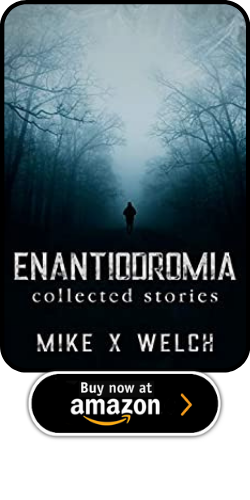
Mike X Welch – Enantiodromia
How often do you read a ghost story set in Madagascar? This strange little story opens in 1947 with the ‘rebel’ soldiers fighting the invading French forces. The story is told, in the first person, from a rebel fighter who is captured and killed in the early stages. I looked up some of the terms used in Turning of the Bones, which utilises Madagascar mythology and folklore, and found this obscure subject fascinating. If the dead are not buried in the correct manner, there is a funeral tradition called ‘famadihana’, and if this is not honoured the dead may return as ghosts. But things can get worse; if someone is buried in an unmarked grave and their family do not tend it, then the dead may come back as ghosts, or ‘angatra’, especially if they died violently. This very moving story is built around this cultural philosophy, with the ghost of the dead rebel fighter trying to reconnect his lost body with his surviving family who have no idea where the mass grave is. This was a beautiful meditation on both loss and tradition, and I felt for the descendants who never gave up trying to find where the bones lay hidden.
The final story Peta Bebkama Luruba was also outstanding. This time out Welch abandons Madagascar and takes us to Babylon 4,000BC where a slave recounts the supernatural events which led to both her emancipation and revenge on her cruel masters. The slave is around ten years old when her first-person narration begins, where she recounts a death a couple of years earlier which had a profound impact upon her life. Jumping forward three years one of her owners begins to take an interest in her when she hits puberty and the story follows her personal trials of rape and domestic abuse until she discovers a way to connect with her past and the spirits, which refers to the title “Peta Bebkama Luruba” which is translated as “open the gate for me.” This was another thoughtful and clever tale, which like Turning the Bones had a great ending.
Readers might think twice about buying a collection from an unknown author, but Enantiodromia is a read with many highlights; featuring a great blend of horror, dark sense of humour and cleverly selected five stories. Where else can you jump thematically from Babylon 4000BC, to Madagascar 1947 with three contemporary stories sandwiched between them? Highly recommended.
ANTHOLOGIES
Paul Finch – Terror of the Home Counties
The anthology opens with a corker, Steve Duffy’s In the English Rain, which is about a 16-year-old-boy who lives next door to a house supposedly owned by famous Beatle John Lennon. He uses this musical tip-bit to impress his best friend Sally Holden “so what’s it like living next door to a Beatle?” she asks, and they make the big mistake of breaking into the house. Paul Finch’s The Doom was another of my favourites, which asks interesting questions about faith. Reverend Bilks and his wife work at St Brownwyn’s Priority church and enjoy a cosy village existence where the Church of England is all about fayres, bake sales and raffles. However, whilst the church is being restored a brutal and horrific Middle Ages mural is uncovered and its depiction of Hell and punishment is incredibly graphic. It quickly becomes a tourist attraction, and the Reverend gets into an uncomfortable conversation with a visitor who has something nasty on his conscience who asks him questions of faith he struggles to answer.
Love Leaves Last by Mick Sims was an absolute blast and has a very quirky concept at its centre. Two couples, head to a stately home to secure a business property deal and when they meet their hosts are given a key rule which they must follow at all costs: no sex in the house! Of course, rules are there to be broken, are they not? The anthology closes with another beauty, and I cannot say I was prepared for a dystopian(ish) style story set in Stevenage! with Jason Gould’s clever The old Man in Apartment Ninety. A mother tells her kid whatever you do, never go to Apartment 90, as there is a weird shimmering light coming from under the door. Of course, kids being kids, you know where he is heading.
There was much to enjoy in the many other stories of Terror of the Home Counties and if you are a fan of short stories, especially the British variety, then this anthology is well worth closer inspection.
Jonathan Maberry – Don’t Turn Out The Lights
My three personal favourite stories were those by Madeleine Roux (The Tall Ones), Amy Lukavics (The Neighbor) and Christopher Golden (The Open Window). Roux’s story closes the anthology in some style, a small town has its own weird local myth, when strange chalklike signs appear in the local community this is a warning that creatures called the ‘Tall Ones’ are shortly going to visit. Although nobody knows what they look like, everybody follows the rules and leaves out offerings of food and gifts. The story is seen from the point of view of a little girl called Estrella who befriends a new boy, whose family do not believe in the myth and pay the price. Amy Lukavics is one of my favourite YA authors and she comes up trumps once again in The Neighbor, Dennis wakes up and sees a little boy across the street staring at him, they quickly become friends and go wandering in the encroaching forest which Dennis is usually forbidden to play in. This was also a slightly longer story, with a slightly deeper and impressive twist and a great description of a boy digging himself out of a grave, this is a story permeated with a deep sense of melancholy. Christopher Golden’s crazy The Open Window features a little boy who has a nightmare night when he is stalked by multiple doppelganger versions of his dad, to the extent that he does not know who the real one is. It does not end well.
Don’t Turn Out the Lights is a fitting tribute to Alvin Schwartz and there is much fun to be had within these pages. This anthology will undoubtedly mean much more to American readers than UK readers, however, it remains highly entertaining and am sure lots of kids will be really taken by it. Potentially, it is a lovely gateway book into more mature horror for many kids.
Azzurra Nox - Strange Girls: Women in Horror Anthology
Rebecca Rowland’s Extinguishing Fireflies was one of the stronger inclusions which shrouds its direction nicely; a little girl Lea and her mother have a very close relationship, but other things often end up dead or maimed around her, with the family cat playing a major role. It might just put you off having pets forever. Jude Reid’s Sideshow was another of my top picks. This was a fascinating tale concerning consent, a young woman (Sylvia) is at an old-fashioned carnival with her boyfriend (Richie), although it never says when it is, it has a 1950s feel to it. She does not really like Richie, but struggles saying ‘no’, and soon the tables shift when something strange happens at one of the attractions.
Revival by Madison Estes was one of the strongest and sneakiest included, as it playfully takes its time laying its cards on the table, whilst retaining a certain amount of ambiguity. It opens with the murder of a young woman, Sara, which was witnessed by the narrator, but then jumps to sometime later when this death has become an obsession and the memory of the killing impossible to shake off. Alyson Faye’s The Doll’s House is also worth a closer look. This was an impressive tale about a deaf little girl, Sophie, sent to live with her aunt after her mother is imprisoned for killing her abusive husband. The story centres upon a very old doll’s house which has been passed down the generations and have figurines which seem to be real and which the deaf little girl can hear.
There is much fun to be had here and although the anthology lacks star names, there are plenty of authors featured who will undoubtedly move onto bigger and better things and from the informative interviews which close obviously love the genre. Azzurra Nox has done a fine job of bringing together a large collection of stories loosely themed around women and showcasing authors who we are sure to hear more of in future.
BY TONY JONES
“This forest eats people”
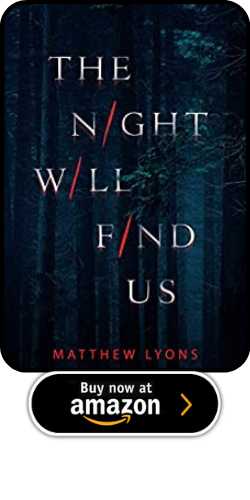
The day school breaks up for summer recess Parker, Chloe, Adam, Nicky, Josh, and Nate head into the massive New Jersey forest the Pine Barrens for a night of drinking, hanging out, campfire antics and fun. Much of what you think of The Night Will Find Us will depend on how you connect to these six characters and until the plot moves on it took me sometime to separate them out as they came across as samey and whiney. Along the way they make some very dumb decisions, which does not make them any easier to like, but I guess this is not any different from any slasher/stalker horror film. Although they are there to have fun, there was considerable tension in the group as Parker has been acting out of character since his father disappeared the previous year. Since then he has had emotional problems and been very violent, which the other five have struggled to deal with, particularly Nate who is incredibly unpleasant to Parker, and does not act like he is his friend at all.
Parker is also the only one of the six who knows the Pine Barrens forest and is particularly antagonised by Nate, who is the least likable of the group (he is a complete s**t). Does anyone really watch porn on their phone when there are girls present? A fair bit of the story is also seen from Chloe’s point of view, who is also the cousin of Parker and supports him when he is being would up by Nate. The rest of the group is made up of Adam, who is portrayed as a likable sportsman and relatively recent couple, Nicky, and Josh. Although the characters could have been more fully fleshed out, Chloe and Nicky grew on me, as they had to make some hard choices as things go south.
The dynamics of the novel shift tremendously as the plot develops. In the first half, no spoilers, there is a horrific incident which results in a death and the collapse of the group which then splinters. I was not sure how believable this was, however, was invested enough to go with the flow, even though no real justification for the tragedy is given. Around this time strange, eventually supernatural, things begin to happen. Again, it is questionable how well this part of the novel is blended with the story of six teenagers who have a party which ends in a disaster. At one point they wake up and realise the path (straight out of Evil Dead 2) has disappeared and slowly (way too slowly) begin to get stressed but make no genuine attempt to get away.
The second half takes us into survival and supernatural horror, although it was never dull, I found myself getting confused over what the ‘evil’, or whatever you choose to call it, really was. A variety of different scenarios are thrown at the reader, including ghosts, weird dreams, 200-year-old flashbacks, dangerous fruit, hidden villages, and characters morphing into monsters. I am happy to see the imagination run wild, but within the context of the story it came across as both disjointed, muddled, and out of focus. Even though the violence is ramped up significantly in the second half its impact is lessened by the fact that I was not too invested in any of the characters. Not to mention their ability to recover from a horrific stomach wound in a few hours. This girl was not Bruce Campbell!
As I have already said The Night Will Find Us will remind you of lots of other books with forests, final girls, and ancient unnamed evils. Considering most of the novel was set in the forest it lacked the threatening atmosphere of, say, Adam Nevill’s The Ritual, where the encroaching and threatening trees are described in extra detail and instead came across as rather superficial. In was also reminiscent of a couple of Nick Cutter novels, especially The Troop for the body horror and Little Heaven for the ancient evil. However, the evil is genuinely brought to life as a character in the Cutter novel, this was lacking from The Night Will Find Us and I would have liked more questions answered about the source.
The Night Will Find Us moves along at a decent pace and although Chloe is not quite a Final Girl she carries the novel as it moves through the gears, changing from a mousy background character to a fighter with spunk and grit which plays a big part in the cool and rather melancholic ending. Even though it was frustrating in parts, I enjoyed this novel and will be interested to see what Matthew Lyons produces next.
Tony Jones
School’s out for summer and that means one thing to Parker, Chloe, and their four friends: a well-deserved camping trip in the Pine Barrens, a million-acre forest deep in the heart of New Jersey. But when old grudges erupt, an argument escalates into the unthinkable, leaving one of them dead and the killer missing. As darkness descends and those left alive try to determine a course of action, the forest around them begins to change…
In the morning, more of the group has vanished and the path that led them into the woods is gone—as if consumed by the forest itself. Lost and hungry, the remaining friends set out to find help, only to realize that the forest seems to have other plans—a darker, ancient horror lies dead and dreaming in a lake in the center of the woods. And it’s calling to them.
Meanwhile, deep in the trees, the killer is still at large, and one of the group’s own has started to transform and warp into something other. Something inhuman. Something that wants to feast.
Banding together to survive, the friends soon begin to understand the true nature of the horror waiting for them in the Pine Barrens—and that not all of them will make it out alive.
Durra's struggle and unfortunate lot in life has transformed her into a clever, perceptive protagonist. While Emily has plenty of cheek, she's quite rash and impetuous. For someone who was a slave, she comes across as spoiled and a bit bratty. Leida, the farmer's daughter, is quite bland in comparison, and while kindhearted, is easily swayed by Emily. Although the trio each come from very different backgrounds and experiences, finding themselves in the same predicament, they form somewhat of a sisterly bond almost from the start.
The convent is a dark and terrible place at odds with the friendliness of the nuns and experiencing it from Durra's eyes makes it larger than life. It's an eerie place where the walls are permeated with cryptic carvings and bloody tapestries of gruesome creatures joined in battle. The sisters, while seemingly friendly, are curiously all vegetarians, eschewing any type of meat, and they are strangely all young and pleasing to the eye. As St. Gertrude is the patron saint of cats, within the convent they also find a multitude of cats that the sisters themselves are charged with caring for. To add to the strangeness, the girls are told to be inside their rooms before nightfall and so they do not leave, their door is barred. Not the only ones to be locked inside, the Sisters' room is perplexingly bolted shut as well. Outside the convent lurks darkness filled with howling creatures and unknown dangers.
At only 250 pages, Sisters of the Moon is a speedy read. Chimerical in nature, claiming a decided genre for this one is difficult. While there are obvious horror elements, there are also elements of fantasy, suspense, mystery, and yes, even a historical morsel intertwined throughout. More than just a fable of sisterhood and triumph of the feminine, this good-versus-evil plot is a slow-burning shifter horror tale at heart. Don't let the YA appearing cover deceive you—there are shadowy secrets around every corner and a much darker side of the Sisters of St. Gertrude to discover.
On an island in Lake Obersee, where The Sisters of St. Gertrude abide, a destitute Moor named Durra arrives. Sold for taxes, she and her two companions tend to the nuns and their collection of cats. At night, she combs the library for details on the order, the remote island, and the beasts howling outside her window.
But when a prank reveals the sisters’ gruesome secret, Durra is forced to accept a new fate. Bestowed an unearthly power, she must choose between life as a nun or living among the monsters beyond the convent walls.
Her path is about to change the tide in the ultimate war. The war between good and evil.
A dead Doomsday cult leader calls to his flock from beyond the grave
With all this cool stuff already on the market could there possibly be space for yet more cult focused fiction? Hell, yes! Pulling in at a lean and slick 136-pages Thomas Vaughan’s trippy mindbender The Ethereal Transit Society wisely treads a slightly different path, throws the supernatural out the window and gives us a Doomsday cult which has more of a science fiction than demonic twang to it. Hell, if Mulder and Scully popped up, I would not have batted an eye! Admittedly, you might be scratching your head at the essence of what goes on, but it was still a well-constructed and beautifully crafted self-contained story which might make a cool episode of The Twilight Zone, other anthology show or short film.
Novella length fiction give writers the opportunity to be as wild and off-the-wall as possible and, in that regard, The Ethereal Transit Society ticks every box. It is strange, oddly hypnotic, and is all the better for it. The action opens in deepest/darkest Arkansas with a group of three Californians looking for what they refer to as “Mecca”, however, the Mecca they are searching for is the grave of the (relatively) recently deceased cult leader Quintessence (shortened to Quint) whom they all refer to as “the greatest man I’ve ever known”. Quint died in a mass suicide, which was partially botched by the narrator Simon who now has a metal plate on one half of his face where he shot himself. When asked by a checkout girl why he is wearing a mask, his matter of fact response is “Because last year I shot half my face off”.
Simon narrates the tale in the first person and since he is addicted to Oxycodone you might wonder whether he is the most reliable of storytellers, however, the reader quickly gets the vibe he is telling the truth, or at least believes it himself. As Simon was the most-high profile of the survivors he was hounded by both the police and media before dropping out of sight and hooking up with the other two travellers. However, we quickly find out that the Ethereal Transit Society (nicknamed ‘ETs’) was exceptionally well known, even if most people saw them as “just another bunch of dead, suicidal nuts” who preached about UFOs and the end of days, much of what is revealed in partial flashbacks.
Much of the story takes the form of a road trip with Simon, Astra and Xi driving to Boatwright Cemetery, the remote location where the cult leader wanted his corpse returned to, which is also the area where he grew up. The three cannot believe their ‘Saviour’ spent his childhood in this backwater hillbilly dump and it is presented as an unpleasant and semi-threatening dump disconnected from the rest of the world. The deadbeat narration really does no favours for the Arkansas tourist board! Along the way, Simon reveals the innerworkings of the cult through his self-reflection and flashbacks, from the point Quint took him on as a disciple, to the unexplained cosmic energy Quint seemingly wielded which was a key part of the story.
We quickly realise that the three are not following a traditional road map, instead they believe the dead body of Quint is radiating a ‘Transit Frequency’, a sound which is guiding them close to his grave. Why you may ask? This was a Doomsday cult, so you should not require too many guesses! This weird sound echoes throughout the local area and even unsettles the hillbilly non-believers, making them do irrational things such as drown newly born babies in buckets, with animals also going crazy. Although this was not a long read, you will be quickly pulled into the quest of the three to track down Quint’s final resting place and unlock the mysteries of the coming apocalypse before they become victims of it, throwing in a large dollop of undiagnosed cosmic horror. Some of it might not a lot of scene, but that does not matter, go with the flow, and follow the frequency!
Part of the charm of The Ethereal Transit Society is the fact that every character is completely messed up, but my favourite was Caleb Starnes whom helps the three with directions before tagging along, and also knew Quint as a kid, revealing he was originally called Cody and notes in discussion: “you know how it is with messiahs. It’s hard to work miracles in your hometown” which I thought was a particularly funny quote. I had a lot of fun with this quirky and off-the-wall novella and cults aside I am not what it might be compared to, perhaps the works of Kirk Jones, author of the equally weird Aetherchrist. If you are after ‘weird’, Thomas Vaughan, an author I had not previously read before, is worth closer investigation.
Tony Jones
Believing their late mentor is calling them from the grave, the last surviving members of a modern doomsday cult travel across the country to reclaim his body in preparation for the end-times he preached about. Tracing their leader's echo through a cosmic signal known to them as the Transit Frequency brings them to the rural outback of Arkansas, where its presence has drastic and dangerous effects on anything living. Time, though, is running out for the last of the remnants of the Ethereal Transit Society as they attempt to track down his final resting place and unlock the mysteries of the coming apocalypse before they become victims of it.
The Ethereal Transit Society is the debut novella from Arkansas writer Thomas Vaughn, and brings readers a tense and authentic dive into the philosophies of modern doomsday and UFO cults while delivering a strong dose of cosmic horror fiction.
BOOK REVIEW: TOME BY ROSS JEFFERY
I could read a thousand books set in Juniper. Hey, Ross Jeffery – can you please write a thousand books set in Juniper? Show us a school, or a corner shop, or… I don’t care where - I just love it there. It’s bleak and horrible and brings dry hot dust sticking to the back of your throat to mind. It’s got that good Old Testament biblical feel to it – you know, the doom and gloom stuff. The end of the world stuff. There’s an evil undercurrent twisting everything and it’s so great.
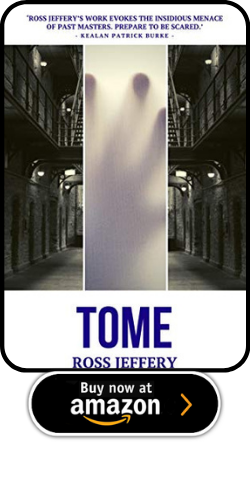
Tome is the second book set in a town called Juniper, from Ross Jeffery. I recently reviewed the first book, Juniper, giving it 4.5 out of 5 stars. I couldn’t put that one down and I was excited to pick up the second one.
The first chapter in Tome had me hooked… I mean… what is going on here?! What is this book?! What’s going on in this prison?! It sounds snake-like… is it Satan?! THE DARK LORD?! All of this was going through my head as I feasted my eyes on the carnage unfolding. It’s hard to talk about this book without going into spoilers, so I’ll go ahead with spoiler-free comments first and then warn you (for those who don’t want to read them) when the spoiler section starts.
After that first chapter, I found the book a bit harder to get into than I expected. Perhaps it’s because I loved Juniper so much that I went in with sky-high expectations. I spent a couple of chapters thinking ‘uh oh, I don’t know if I like it’. But I was wrong, because as I went along, I found myself obsessed. I’m not sure when it happened, but it did.
When I reviewed Juniper, I said that it was much more character-centric than plot-based, which was a compliment as I much prefer it that way around. I think that Jeffery’s character work is excellent. Tome is the opposite, in that it is very plot-focused. Turns out that Jeffery can do both equally well. Tome has a plot comprised of… oh, I don’t know… a thousand elements, and they all seamlessly come together with perfect placement and timing. I was about two thirds of the way through when it occurred to me that I was really REALLY enjoying the plot, and thus came the worry that I always get with Stephen King books. ‘This story is great… but will he land the ending?’
As a quick aside, I have to say I AM NOT slagging off Stephen King. He is my favourite writer and I think this ‘he can’t write endings’ thing is a load of poppycock. Generally speaking, he does a good ending. However, he’s written over 60 books and so now and then, you come across an ending that makes you want to throw the novel you so loved up until that point out of the window. Hey – nobody hits a home run every single time.
PS. Stephen, I love you, please be my friend.
So, which way did it go in Tome? Great ending, or great disappointment? Well, let me tell you, this was the ending of endings. The resolutions of resolutions. It was ending royalty. I wanted to crown it King.
My boyfriend kept looking over curiously as I read because I kept uttering things like, ‘awwww shiiiit, son!’ and ‘holy flirkin schnit!’
As expected, the characters were great. Mostly detestable, but man was I interested in how everything was going to go down for them.
I’d love to read the book the characters were reading, but I don’t know what that says about me.
I could read a thousand books set in Juniper. Hey, Ross Jeffery – can you please write a thousand books set in Juniper? Show us a school, or a corner shop, or… I don’t care where - I just love it there. It’s bleak and horrible and brings dry hot dust sticking to the back of your throat to mind. It’s got that good Old Testament biblical feel to it – you know, the doom and gloom stuff. The end of the world stuff. There’s an evil undercurrent twisting everything and it’s so great.
I’m going into spoilery specifics now so skip ahead to the last paragraph if you don’t want details ruined for you!
……………………..
SPOILER SECTION
Cynthia… oh, poor Cynthia! I knew Fleming was a dickhead but I never imagined he was THAT much of a dickhead. The earlier mentions of Cynthia from his perspective made me think he was a sour about a relationship between them that she ended. When it’s revealed that there was never a relationship, that he was reading what he wanted to read in every little thing she did and said, I was horrified. I was so scared for her, even though the very nature of her fate being told in memory was a clue to how things went. The way that Jeffery wrote Fleming’s thought process was so real and highlighted that in any given situation, there are always multiple perspectives (even if some of them are totally messed up and insane). This part of the story, for me, was outstanding.
I started getting very worried for Dolores. There were some subtle hints that she may meet the same fate as poor Cynthia. I was so worried that she’d end up alone with Fleming somewhere that I was totally misdirected and forgot to worry about her in the present. When she was killed, I was surprised, and laughing at myself for being surprised because, of course, I should have seen it coming.
Also, nice Labyrinth reference.
END OF SPOILER SECTION
I could go on about this book for so much longer, forever probably, but you get my point. It’s great and I loved it. You don’t need to read Juniper to understand this – it works as a standalone, but I recommend you do because both books are great and they compliment each other. The plot is great and unfolds in ways that are both satisfactory and surprising. The characters are brilliantly written, unique, each with their own voice. The greater evil is fascinating. There are multiple layers of horror, something for everyone, I think.
Tome gets 5 stars out of 5 for sure, and Ross Jeffery has now made the list of “writers whose books I will automatically buy without even reading the synopsis because I know I’ll love it”, alongside Stephen King, Adam Nevill, and Kit Power.
The balance between science and the supernatural was nicely handled, with much of the former being presented in the first two thirds of the book and then evolving into a different direction in the final third.
The prolific Christopher Golden returns with the third book in the ‘Ben Walker’ series which began in 2017 with Ararat and was followed in 2019 with The Pandora Room. I had read the former, which I enjoyed, but not the sequel and did not feel I lost a huge amount as the stories are clearly standalone thrillers, which take in the supernatural. This is nicely balanced with science, secret agencies, action, and a heavy dollop of the unexplained. Ararat is a supernatural spin on the discovery of what scientists believe to be Noah’s Arc in a remote part of Turkey with the sequel concerning the discovery of an underground city which after the initial excitement leads to a world of pain.
Main character Ben Walker connects the books; he is best described as a ‘weird science expert’ who is the go-to-guy whenever the government uncovers something unsavoury, sinister, otherworldly, or unexplainable. The government do not call Ghostbusters, 999, or 911, they call this Ben Walker dude whom you might compare to a modern-day Indiana Jones because of his unusual skill set. When Red Hands opens Ben is about to take his son away for a weekend camping and the usual 999 call comes in and he is forced to drop everything and goes running. Tough luck on the distraught little boy. There are several obscure government bodies mentioned in this novel and on this occasion, he finds himself employed by the Global Science Research Coalition, which featured in the earlier stories.
Why does Ben Walker get the 999 call? Red Hands has a terrific opening, which unfortunately it failed to maintain this high level of intrigue for the duration of a novel which was just a tad too long. Ultimately, keeping most of the story restricted to a remote mountain area stopped the action from going wild or truly apocalyptical. We head to the small town of Jericho Falls and a July 4th parade where a car ploughs through the shocked crowd, deliberately killing many people. The driver exits the car and touches as many of the crowd as he possibly can, others retaliate and attack him, which they quickly regret. Within seconds everybody he touches dies, except for a young woman called Mae Sinclair, whose hands slowly turn red. Distraught, in mourning as family members are amongst the casualties, and realising she is infected, goes on the run and flees into the local mountains. Mae is struggling with her own grief, confusion, and the dawning realization that she might not be able to touch another human being again and tries to come to grip with the infection, which was one of the stronger strands of the novel.
The story never strays far from this mountain and I found this slightly underwhelming, the author obviously decided to keep Ben Walker’s investigation local and it never becomes a worldwide pandemic, which might have been interesting, but would have obviously drastically changed the shape of the novel. As Red Hands develops it takes in beefs between different government organisations, soldiers, mercenaries, and all the paranoia you might expect in the discovery of a powerful bioweapon which everybody wants to get their hands on.
Although there are many characters in the story, most of the military types come across as rather samey and one dimensional, but Mae Sinclair and her family were nicely drawn and keep the plot moving forward. Also, considering the series bears the name of Ben Walker his character was not engaging enough to carry the novel and even though he was no slouch lacked the same deadliness or wise cracking humour as Jonathan Maberry’s Joe Ledger, who has starred in over ten novels which are not dissimilar to this. Comparing Red Hands with Maberry’s special-ops superhero is worth doing as they tread the same ground; although Walker is not a soldier, he possesses many of the same skill’s as Ledger, but Joe was infinitely more likeable. By the time I got to the end of Red Hands, considering this is book three, I thought the character development of Walker was very limited and for the series to progress your main character must grow. Thinking back, I remember precious little about him and so the book could have done with a stronger lead.
The balance between science and the supernatural was nicely handled, with much of the former being presented in the first two thirds of the book and then evolving into a different direction in the final third. Connected to that, those who are infected feel a need to pass the disease on as it grows stronger, this internal conflict or hunger, was very nicely portrayed via Mea Sinclair who is being hunted and the main carrier of the infection. I liked Mea and she was sympathetically drawn and pleasant company as her life quickly spiralled horribly out of control.
Red Hands was solid entertainment, however, there is a lot of this type of fiction around and although it was an easy enough read, I found it slightly jaded and dreamt of what else could have been done with the ‘red hand’ virus other than isolate a young woman on a mountain in the middle of nowhere where the damage she could inflict was relatively limited.
Review by Tony Jones
When a mysterious and devastating bioweapon causes its victims to develop Red Hands, the touch of death, weird science expert Ben Walker is called to investigate.
A car plows through the crowd at a July 4th parade. The driver climbs out, sick and stumbling, reaching out...and everyone he touches drops dead within seconds. Mae Sinclair watches in horror as people she loves begin to die and she knows she must take action. But in the aftermath of this terror, it's Mae Sinclair who possesses that killing touch. Fleeing into the mountains, Mae is struggling with her own grief, confusion, and the dawning realization that she will never be able to touch another human being again.
Weird s**t expert" Ben Walker is surprised to get a call from Alena Boudreau, director of the newly restructured Global Science Research Coalition. There's an upheaval in the organization and she needs to send someone she can trust to Jericho Falls. Whoever finds Mae Sinclair first will unravel the mystery of her death touch, and many are willing to kill her for that secret. Walker's assignment is to get her off the mountain alive. But as Mae searches for a safe hiding place, hunted and growing sicker by the moments, she begins to hear an insidious voice in her head, and the yearning, the need... the hunger to touch another human being continues to grow. When Walker and Mae meet at last, they will unravel a stunning legacy of death and betrayal, and a malignant secret as old as history.
Archives
May 2023
April 2023
March 2023
February 2023
January 2023
December 2022
November 2022
October 2022
September 2022
August 2022
July 2022
June 2022
May 2022
April 2022
March 2022
February 2022
January 2022
December 2021
November 2021
October 2021
September 2021
August 2021
July 2021
June 2021
May 2021
April 2021
March 2021
February 2021
January 2021
December 2020
November 2020
October 2020
September 2020
August 2020
July 2020
June 2020
May 2020
April 2020
March 2020
February 2020
January 2020
December 2019
November 2019
October 2019
September 2019
August 2019
July 2019
June 2019
May 2019
April 2019
March 2019
February 2019
January 2019
December 2018
November 2018
October 2018
September 2018
August 2018
July 2018
June 2018
May 2018
April 2018
March 2018
February 2018
January 2018
December 2017
November 2017
October 2017
September 2017
August 2017
July 2017
June 2017
May 2017
April 2017
March 2017
February 2017
January 2017
December 2016
November 2016
October 2016
September 2016
August 2016
July 2016
June 2016
May 2016
April 2016
March 2016
February 2016
January 2016
December 2015
November 2015
October 2015
September 2015
August 2015
July 2015
June 2015
May 2015
April 2015
March 2015
February 2015
January 2015
December 2014
November 2014
October 2014
September 2014
August 2014
July 2014
June 2014
May 2014
April 2014
March 2014
February 2014
January 2014
December 2013
November 2013
October 2013
September 2013
August 2013
July 2013
June 2013
May 2013
April 2013
March 2013
February 2013
December 2012


RSS Feed