


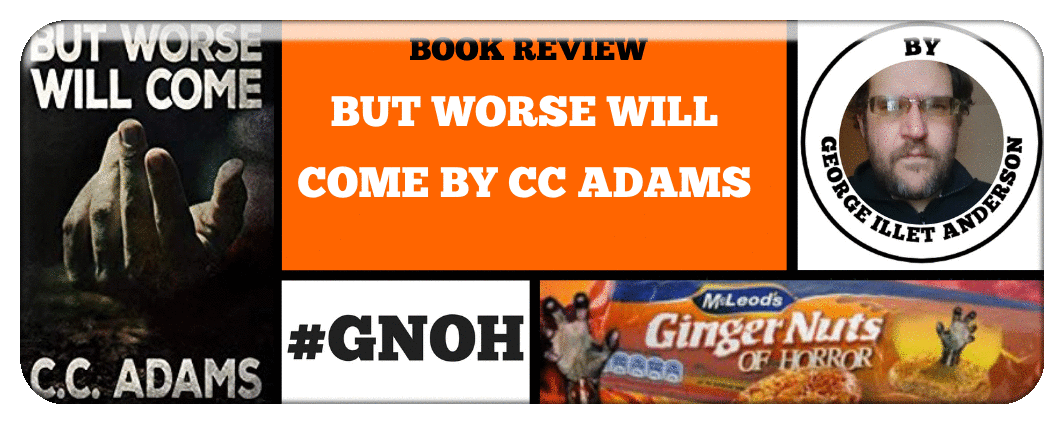
 If you are in the market for a novella with which to while away a couple of hours then the debut from CC Adams, “But Worse Will Come” might just be the ticket. A tense story of the hunter and the hunted, it doesn’t cover much in the way of fresh ground but it is an engaging and solid read nonetheless. Set in modern day London, the plot is centred on Theo Papakostas who as a boy escaped the clutches of a creature he met in a cemetery. Thirty years later, his luck finally runs out and he finds himself in an increasingly desperate game of cat and mouse as it hunts him down. From that description, you’d assume the plot is rather slight and to be honest it does feel like a short story idea that has been stretched to fit a longer format. The first half of the novella, concentrating on Theo and his life, moves along with a slightly clunky and awkward air to proceedings. The slow and uncomfortable pace emphasizes key aspects of Theo’s character in relation to maintaining close relationships, a plot point that will get an extended workout in the latter half of the story as he is thrust into a high stakes game of jeopardy. Whilst this does work to an extent, there are certain key characters in which a lot of time is invested in only for them to ultimately feel rather inconsequential. This comes to the fore in the latter half of the novella as the noose around Theo’s neck tightens and characters that appeared important suddenly disappear without a trace, never to be seen again. It’s somewhat disconcerting when it happens but this is probably the effect that Adams is attempting to elicit from the reader, a sense of the familiar becoming strange and threatening in the blink of an eye. This is a story where manipulation and the fear that results from experiencing the unknown are of crucial importance I must concede that there is a gnawing sense of dread that permeates the latter stages of the novella as Theo is reeled in by the creature’s machinations. However that feeling is tempered by a curious sense of restraint to proceedings. There were a few moments where I thought the beast might have been unleashed and allowed to let rip but the emphasis here is more on subdued pursuit and psychological torment than visceral horror. In retrospect, I can’t really say that the points I’ve taken issue with in “But Worse Will Come” are seriously detrimental. This is a solid tale of a predator stalking its prey and in all fairness it’s certainly one of the more readable creature feature stories that have been served up this year. However, much like a dish you’ve never eaten before this one wasn’t quite seasoned to my own personal taste. Probably best if you sample its flavour and decide for yourself.    BOOK REVIEW: ANONYMA BY FARAH ROSE SMITH
27/3/2019
 “Men write songs about girls like me, and then they kill them.” For all the vivid descriptions and poetic turns of phrase within Farah Rose Smith’s 2019 novel Anonyma—and they are legion—this line, appearing on the very first page, is chief among those that linger the longest. Why? Because of the simple, brutal truth of it. Reducing the meat of this particular book to a plot synopsis feels almost criminal. In any case, here goes: the eponymous Anonyma is part of a small circle of artists obsessed with the occult-infused philosophies of enigmatic hermit G.E Von Aurovitch. The figurehead of said circle, narcissistic celebrity renaissance-man Nicholas Bezalel, is also Anonyma’s lover—though she herself frequently wonders if what she and Bezalel have could in any way be described as “love.” In truth their relationship is poisonous, a dehumanizing grind of abuse and subjugation occasionally interrupted by fits of passionate lust; nevertheless, Anonyma struggles to see any way out except death. A sharp blade and a splash of blood later, Anonyma finds herself transported to the Afterworld, a darkly surreal realm she read about in an ancient text central to Von Aurovitch’s work. Navigating various encounters with ghouls, demons, throngs of suffering women, and the sadistic god-king known only as The Doom Artist, Anonyma confronts in death all the questions she could not answer in life. Is it too late for her to put the revelations she unearths to use, though, or is there still time for second chances? Sure, skinned down to the bare bones like that, Anonyma’s story seems plenty interesting. Smith, however, takes this skeleton and necromances it into a great, beautiful, undead beast, a monster with more mysteries tattooed onto its flesh than one might even think possible. Foremost, although Smith’s plot is powerful and engaging, her focus is less on linear, cause-and-effect, exterior storytelling and more on emotionally complex, chronally kaleidoscopic, interior storytelling. Seemingly inspired by authors of the Symbolist and Decadent movements, Smith’s style does not merely tell readers about her main character, but actually acts as an extension of said character; as Anonyma experiences different emotions, the prose reflects her mindscape. For instance, at times the text is deliberately nebulous, mirroring Anonyma’s slippery understanding of herself and her situation. Likewise, there are times when differing time periods from across Anonyma’s life seem to bleed into one another, making it difficult to decipher whether what’s on the page is supposed to be happening now or previously. It’s confusing but the effect is an evocation of the way memories similarly bleed into the present for survivors of serious trauma. The result of this approach, of course, is that Anonyma is certainly not for everyone. The difference between this and commercial genre fiction is like the difference between ambient or noise music and straight-up rock ‘n’ roll. The value here does not come from an adherence to traditional forms, but rather in the individual notes themselves, in their atmosphere and their feeling. Smith’s prose is intensely lyrical and full of striking imagery—one memorable scene takes place in a gallery of mangled female bodies encased in glass, all of them still conscious, unable to live but unable to die. There is not a single word throughout all of Anonyma’s 121 pages that doesn’t feel carefully weighed and measured. Even divorced of context, just reading individual sentences by themselves is a pleasure. Still, this is not an easy or casual read; it is, in many ways, an unapologetic challenge. Like any challenge, there will be those who relish it and those who reject it. But also like any challenge, those who see it through will find reward in the experience. Vacillating between self-reflection and self-loathing, Anonyma reads like a marriage of Thomas Ligotti’s jet-black thoughtfulness and Tanith Lee’s lush gothic fantasy, all set against a mythic, mesmerizing backdrop that calls to mind H.P. Lovecraft’s Dreamlands and Robert W. Chambers’ Carcosa. Though a slender volume, Anonyma is densely packed, a rare work that both benefits from and lends itself to numerous revisitations. In recent years, editors and publishers of weird fiction have increasingly made conscious efforts to seek out more female voices, noting that a greater diversity among authors leads to a greater diversity of ideas which likewise leads to a greater diversity of stories; the genre as a whole is therefore enriched, made more imaginative and less formulaic. Some have questioned this logic, suggesting that intentionally seeking out female-driven fiction and female-driven viewpoints is itself sexist. Good writing is good writing, after all. What does it matter who wrote it? One need only point to works like Anonyma to invalidate such arguments. Though the book meditates on a number of themes—obsession, loss, loneliness, and, ultimately, transcendence—its most meaningful ruminations are those which relate specifically to the meaning of womanhood in its various facets, from motherhood to sisterhood to daughterhood to, most vitally, pure unadorned personhood. “What is it for a young girl to see someone rotting before her? I would rear her up as though she were myself without pain, without memory, but she has horrors of her own, no doubt, even by that age. In the end, she will be as dark as me, though tougher. This is the privilege of womanhood—to be so strong and so densely hidden within that there can be nothing but endurance. There is no pleasure in such a life, or very little of it.” Make no mistake, Anonyma is as deeply feminine as it is deeply personal. No man could have written this book. What’s more, no other person could have written it but Farah Rose Smith. 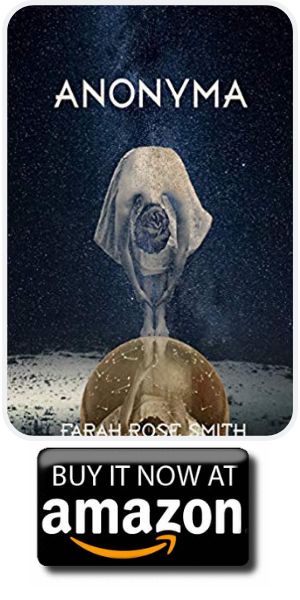 The history of art is littered with Great Men and the Muses they use as stepping stones to brilliance. In this shockingly lyrical, endlessly rich and luxurious nightmare of a novel, the Muse turns. Yet, it is not so much a tale of vengeance or comeuppance as it is a heroine's journey, as Anonyma survives doomscapes almost beyond imagination and the transgressions of mere men, mere artists, survives the horrors imposed upon the feminine to rediscover her own magic and power. Anonyma, novel and narrator, holds up a dark mirror to our paradigm of art as a kind of device for reducing women to Platonic ideals while staging theophanies for men. But she also holds the mirror to herself, her sisters, even, daring to hope, a daughter. ANONYMA is a novel full of blood and love and despair and courage.   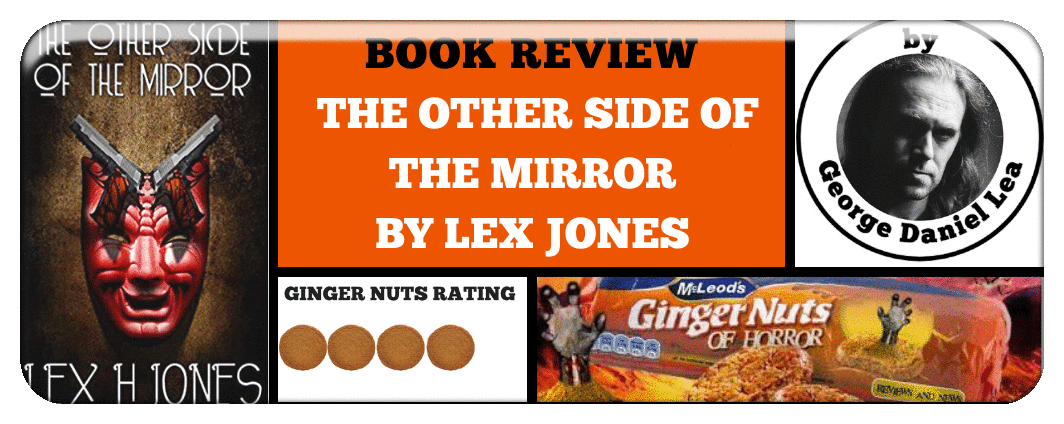 Duality is a theme that runs through noir fiction like veins through a body; innate to the very concept, expressed through its characters (that almost universally reveal hidden faces and agendas as their narratives unfold), its aesthetics (noir cinema in particular has traditionally exhibited a chiaroscuro quality, playing with light and shadow in a manner that is overtly theatrical; heightened and contrived rather than realistic, as a means of emphasising mood and atmosphere) and its morality (traditional archetypes are undermined in noir fiction; characters split and shed themselves, revealing facets that the audience might be shocked by, a willingness to transgress that defeats assumption and expectation). In that, the genre has much in common with the likes of horror, science fiction and some forms of fantasy, all of which not only utilise similar means, explore similar themes, but are also as densely -and often bafflingly- codified. Fortunately, Lex Jones's novel, The Other Side of the Mirror, demonstrates an understanding of this that delves far beyond the mere surface level: From the first instance, duality is everywhere, from the setting (a cleverly nameless, monolithic “City” that is bisected into not only two halves but two distinct and contrasting cultures by a river whose name also expresses the duality between life and death, memory and forgetting) to the characters, most of whom are simultaneously sympathetic and repugnant, morally grey whilst also expressing certain absolutisms. This fascination with contrast and contradiction runs throughout the novel, from the cultural divides that exist between the east and west sides of the river to those between characters who conflict on almost every level (the casually homophobic police detective, the domestic gay housemate, the moral serial killer, the corrupt city officials and so on and so forth). It's a tricky tightrope act in context with the down-and-dirty, gritty reality that the novel paints, to maintain degrees of verisimilitude that allow the reader to feel connected to the world and its characters but to also revel in the archetypes they represent. Lex Jones manages that by simply not making a muchness of the issue: as with all of the book's central themes, everything is sub-textual (a factor that arguably defines noir fiction in its essence): there are no moments whereby the narrator attempts to explain to the reader what they should be taking from any of the dualities or contrasts that the book paints, no moment in which characters attempt to nudge the reader towards certain interpretations of the material: it simply provides the setting, the characters, the circumstances in which they operate and then allows the reader to draw their own conclusions. Which is a breath of fresh air (or, in this instance, polluted, stagnant, stinking city funk). It's a struggle to find genre fiction of any description that doesn't condescend to its audience, that treats its readers with a degree of respect and intellectual courtesy. That this work takes the pains to do so is immediately endearing, as is the luridly hideous reality it concocts: Here, Jones's horror influences are on full display, alongside clear input from various other sources: the anonymous “City” is not only a place of extremes and dualities, but also a stinking, foetid hive of human filth, of -often unspoken- atrocity, in which most characters are merely struggling to survive in the face of poverty, abuse and normalised violence. The “City” itself becomes a kind of character as the plot progresses; some heaving, barely conscious beast that the characters are merely fleas and parasites to scratch out of existence. Its hostility takes on a conscious malevolence that, once again, is entirely implied, never made overt, but which pervades the entire narrative, no moment of resolution without its ambiguity, no mystery resolved without some fresh cruelty or deceit or level of human degeneracy being revealed. In the wrong hands, such consistent grime and filth can alienate a reader, the trudge through the sewer of the sub-conscious too foul and poisonous, too toxic to endure. Fortunately, Jones knows his audience well and is aware that anyone who sticks with the novel likely does so for that very reason: there is a kind of masochistic appeal here, as there often is in such material: noir, police procedurals, horror and murder mysteries (all of which this piece comprises to greater or lesser degrees) arguably maintain their audience on the basis of their willingness to explore what other forms of fiction will not, to rake the sub-conscious muck of humanity and hold it up to the moonlight. Here, that factor is evident on every page, even the most casual or domestic moment providing reminders of how stark and unpleasant life is within The City (not to mention how cheap). Violence, abuse and cruelty are par for the course in this world; the vulnerable are preyed upon, chewed up and ground down whilst the most sociopathic rise to positions of predatory influence and power. Even the book's protagonist, Detective Carl Duggan, is hardly an attractive or even likeable character (violent, cynical, casually cruel), which, again, runs the risk of alienating certain readers, but works extremely well in context with the setting and its unspoken mythology: Duggan might be a foul-mouthed, cruel, often bigoted piece of work (his misogyny and casual homophobia shine through on numerous occasions) but he's also resolute and fair minded, far less corrupt and immediately harmful than many of the superiors and societal mechanisms he's forced to deal with (all of whom boast their own particular shades of rot). The world Duggan operates in is innately cruel, callous and hostile: in order to maintain what thin veneer or delusion of stability -let alone justice- exists, he has no choice but to be as uncomprising, to do what others in his station will not. This lends him a degree of autonomy and freedom that others don't enjoy, not to mention insularity against the filth that clogs the engine of The City and its culture. He is the classic incorruptible: a kind of foul-mouthed puritan who regards himself as entirely apart from the cesspit he's been born to and forced to clean up. In that, he reflects not only a kind of inverse saint but also classical mythological figures such as Sisyphus (an allusion to Ancient Greek mythology that, in context with certain other elements of the text, suggests sub-textual layers of interpretation and resonance). Furthermore, Duggan is entirely in-keeping with the style of fiction Jones is attempting to reference: a classic trope of noir is for the protagonist (very often a reporter or private detective) to run afoul of some plot or illegality only to reveal their own depths of corruption (usually at the hands of a femme fatale archetype). Duggan simultaneously reflects that trope and inverts it: he is down and out, he is callous and cruel and often desperate but does not compromise his own ideals, no matter how earnestly The City enjoins him to. If he reflects any character in popular media, it would be Detective Gene Hunt from the UK TV series, Life on Mars and Ashes to Ashes: not a “real” police detective but an exaggeration of one drawn from fiction, removed from reality by several shades of separation but also intimately bound to the equally exaggerated one in which he operates. Another subtle parallel with those series lies in the book's suggestion of an underlying metaphysics (again, not unusual for noir fiction; just like the hyperbolic, highly poetic modes of dialogue characters in such work tend to utilise, noir narratives often incorporate references to religion, mythology and other abstractions, which they explore via ostensibly more mundane, realist settings, characters and circumstances). Again, part of the strength of the book is that nothing is made overt: there is no grand, revelatory moment in which the distorted hyper-reality of The City is peeled back and the characters (and reader) get to see the hidden celestial mechanisms, the hand of God at work. Rather, they remain largely ignorant of that factor in their lives, so much parts and products of the setting, they are no more aware of its theatricality and contrivance than characters in a play are. Instead, Jones opts for a far more subtle form of suggestion and implication; The City itself operates as a kind of limbo or upper-circle-of-Hell, in which the characters are forced to confront uncomfortable truths about themselves owing to the circumstances occurring around them, the natural violence and dirt and desperation of their reality. That death and murder are so commonplace in this setting hardly comes as a surprise when one considers that the river bisecting The City in two is named “The Styx.” It's no coincidence that the first body recovered washes up on its shores, nor that the situation mirrors other classic TV shows of a similar stripe (most notably, of course, Twin Peaks). The reader is left to infer these elements without characters -or the narrator- attempting to explain them overtly. There are no moments in which characters start to suspect the underlying workings of this world, no revelatory visions or moments of blinding clarity. The closest the book comes are the occasional hallucinatory moments (which often, conspicuously, occur around the river) in which Detective Duggan sees the faces of murder victims he has yet to provide closure for, which are painted in an overtly psychological rather than metaphysical light. This factor lends the story a degree of metaphorical freight it might have otherwise lacked: the moment the reader begins to suspect or sense this underlying layer of interpretation, everything takes on shades of metaphor that elevate the piece and make it a far more engaging work. Without that, it would have been a well-written, grim and gritty, noir detective drama with some vaguely horror-flavoured moments. Engaging, fun, but fun only. With that, it becomes something else: it accrues meaning and poetry in the manner of, say, Frank Miller's Sin City (which it resembles tonally and aesthetically to certain degrees). The comic-book element is worthy of note, in that it is an extremely visual, painterly novel: scenes and characters are rendered in a highly aesthetic style, the grime and murkiness of The City's streets counterpointed by the lurid lighting and exaggerated décor of up-market casinos and hotels, manors and apartments. It wouldn't be at all surprising to see this rendered in a comic book form at some point, which format the story would lend itself to beautifully. Whilst there is definitely an over-arching narrative, the story consists of several loose “episodes,” all of which function on their own terms but also feed into the wider tale. These episodes generally consist of bodies that Duggan is invited to assess, murders that The City's more conventional police forces are reluctant or ill-equipped to handle. This may not appeal to some readers, as most of these sub-plots are quite neatly structured and contained (again, very much resembling the episodes of a TV show), whereas others will no doubt enjoy the shifts in pace, tone and focus that occur. Duggan is the consistent element, along with The City itself, both of whom increasingly reflect one another in their intensity, simultaneously expressions of one another and counterposed in terms of their aspects. In context with the aforementioned underlying metaphysics, Duggan takes on the quality of a grizzled angel, weary of the wars against Hell and its forces, sick with the mire and muck of humanity in a way few others can comprehend. Those that do not have a background in noir fiction and cinema may find certain elements of the stoy difficult to digest: like the form that it emulates, The Other Side of the Mirror incorporates exaggerations and distortions, theatrical dialogue and situations that may be puzzling to those that don't already have a grounding in the genre. Likewise, they may find some of the caricatures and stereotypes the book deals in off-putting or problematic, as this is the manner in which noir fiction classically operates: characters are not necessarily characters as they might be in other forms of fiction; they are larger-than-life exaggerations and distortions that work on an almost mythological level rather than in psychological reality. That said, Jones takes pains to invest them with just enough in the way of ambiguity and shading to make them interesting to a post-modern palate; they are nowhere near the stark simplicity one might find in a Raymond Chandler story, for example: here, the archetypes are muddied by influence from other forms, most notably gritty police-procedurals and murder mysteries, which lends the entire novel a quality and texture not unlike the film Se7en or similarly grim works. Engagingly and economically written, atmospheric and stylish, a work that not only knows its own influences but how to play with and subvert them, The Other Side of the Mirror is an examination of human filth and unbending morality, of civilisation on the verge of collapsing into chaos and the suffering that order requires. A more than worthy example of the evolution of its core traditions. 4 out of 5 Gingernuts. THE OTHER SIDE OF THE MIRROR BY LEX JONES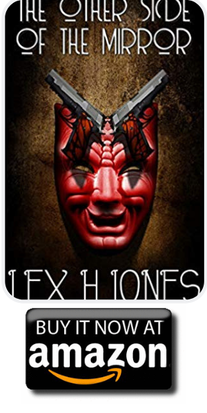 Carl Duggan has worked as a Detective in the city for a long time. The kind of long where you’ve seen everything, and seen it twice. With that in mind, it comes as no surprise to him when a pregnant nineteen-year-old girl washes up on the banks of the Styx. But something about this one is different, and before Carl gets any answers, two more bodies join the pile - a corrupt Judge and a big-shot lawyer. Carl’s gut tells him there’s a connection. There are the little things, the tiny details that others would ignore. The bodies keep on coming, then a second case rears its head: three young men with nothing in common except their sexuality, each murdered in their own home. Gaining little assistance from his fellow officers, Carl goes it alone into the darker regions of the City. Along the way, he makes acquaintances and enemies of the City’s more colorful residents, including the beautiful sister of the first dead girl, a Catholic hit-man dubbed ‘His Holiness’, and a shady casino owner named Dice. The closer he gets to the truth, the more Carl’s life is put in danger, forcing him to move further and further away from the rule of law. Never once does he suspect that the two cases are so intimately linked, or that the truth could be so close to home.    John Langan returns with eight new tales of horror The author notes in his informative endnotes that the theme of betrayal that threads through his latest anthology was purely coincidental and a surprise discovery he made whilst mulling over potential future releases. Although the stories are not connected betrayal does indeed dominate “Sefira and Other Betrayals” bubbling and permeating throughout the stories like a cancer waiting to strike. Spread over 350 pages, there were only eight stories included with Sefira opening proceedings at 120 pages and At Home in the House of the Devil concluding the collection at just over forty pages. These were the only two inclusions which had not been previously published in magazines ranging from “Black Wings” to “Shadows Edge”. Coincidently, the two new stories were probably my favourites of the bunch. Occupying the literary end of the horror spectrum, there was much to admire and enjoy in this anthology, from complex narratives to the slow deliberate build-up of atmosphere. However, on a personal level, when I read short stories I do enjoy a good scare or an unpleasant twist ending and this collection came up short in those departments. There was many stylishly well-crafted stories, but a few lacked the magic ingredient (or bite) to make them outstanding. Stories which are truly striking linker long in the memory and most of these are already fading from memory. Langan writes his short fiction in a similar style to his novels, so if you were a fan of the much lauded “Fisherman” you’ll probably enjoy this anthology. Sefira was the closest in structure to “The Fisherman” with a narrative set over two time period which are relatively close together, both featuring a woman called Lisa. In the first she is chasing after someone (or something) after realising her husband Gary has been cheating on her. The second narrative deals with the circumstances in how the infidelity came around. This was an engaging novella, with lovely pacing, revealing its secrets deliciously slowly with a great pay-off. Cheating on your spouse is one thing, but make sure they’re human first and ask yourself whether you’re willing to stump up the price they charge. Lisa, however, is not a woman to be messed with and you’ll have fun as she hunts down Sefira. Don’t mess with a woman scorned! At Home in the House of the Devil closes the anthology in some style and they say every man meets the Devil once before he dies. This is the story of a young man who strays away from his Christian upbringing whilst studying at university and after finding a new girlfriend, Sonya, tries heroin for the first time with her. She likes it way too much and spirals into addiction, whilst the Devil lurks around the corner, with this story deals with guilt as much as betrayal. The Devil, indeed, can manifest himself in many ways and lapsed Christians are easy pickings for Old Nick. When you read single author anthologies the reader can pick up stylistic similarities which would probably go unnoticed if they were read episodically in their original magazine source. In Paris, in the Mouth of Kronos and The Third Always Beside You were two of the most obvious examples. In the former a dodgy couple, possibly agents, are hired to track down a target, not realising they are pawns in a bigger game, and in the latter two adult siblings realise there is a third person in their parent’s marriage which nobody ever speaks about, but whose presence is always felt. Although the plots are completely different, the supernatural reveal in the final both stories was done in a very similar fashion and with no major surprises. Bloom was one of my favourites, a couple find a cooler on side of the road whilst driving home and are unsure what to do with it, or what might be inside it? It was a quirky read and I enjoyed the journey and the direction the story took. The three other inclusions did not make a huge impression. However, it was nice to read a story set in my homeland of Scotland in Renfrew’s Course, and The Unbearable Proximity of Mr. Dunn’s Balloons was in its own way quite striking and Bor Urus features weird reality bending storms and a man with complex personal problems. None of the three truly grabbed me though. Recently I’ve read and reviewed a number of single anthologies and in comparison to Alexander Zelenyj and JR Hamantaschen “Sefira and Other Betrayals” was solid but unspectacular. It’s undoubtedly personal taste, I like to be shocked, surprised, disgusted and left shaking my head at bizarre or unfathomable endings. I enjoy being forced to reread an ending asking myself “what the f-happened there?” I also love starting a new short story, the completely unpredictable Zelenyj or Hamantaschen are good examples, in the knowledge that I have no idea where it is going to take me and even if they write a few misfires it’s a risk worth taking. On the other hand, this John Langan collection was a very safe and solid anthology which I’m sure his many admirers will enjoy, as it’s more of the same. 3/5 SEFIRA AND OTHER BETRAYALS BY JOHN LANGAN 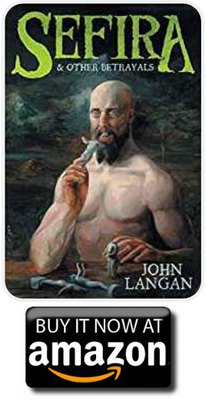 "This book is a treasure trove for lovers of literary horror fiction."—Publishers Weekly (Starred Review) From the award-winning writer of The Fisherman comes a new collection of stories. A pair of disgraced soldiers seek revenge on the man who taught them how to torture. A young lawyer learns the history of the secret that warped her parents’ marriage. A writer arrives at a mansion overlooking the Hudson River to write about the strange paper balloons floating through its grounds. A couple walks a path that shows them their past, present, and terrible future. A woman and her husband discover a cooler on the side of the road whose contents are decidedly unearthly. A man driving cross country has a late-night encounter with a figure claiming to be the Devil. And in the short novel that gives the collection its title, a woman chases a monster in a race against time.   BOOK REVIEW: NINGEN BY LAURA MAURO
18/3/2019
 Darker Worlds have been putting out a few of these, lately; long short stories/novelette/novella length tales with a distinctive black white and red cover art design. I’m literally the millionth person to observe that the Kindle seems to have single handedly revived this format, which is excellent for a short horror tale you can read in an hour or two, but hey, it’s still true, so. Ningen is a story that that takes place entirely under the sea, as an international rescue team (no, not them) works to try and salvage a russian sub that has sunk under mysterious circumstances, and if possible rescue any survivors. Our POV character is Mike - a fascinating character who has always felt at most at home in the depths of the ocean. He’s a very insular character, thoughtful, but pragmatic and not especially imaginative or expressive. It makes him a canny choice for protagonist, because that pragmatism, and insider perspective on the process of walking the sea bed at colossal depths, serve to highlight the alien nature of the environment - his very matter-of-fact perspective imbuing his surroundings with an eeriness that more purple prose might have rendered absurd, or overwrought. Instead, Mauro, through her narrator, allows the eeriness of his surroundings to speak for themselves. Given the length of the tale, I don’t want to get too much into how the plot develops; not least because I think you’ll get more out the less you know going in. But the evocation of this extraordinary setting has thematic resonances with the developing story, and the choices Mike ultimately faces. There’s a sense of murk, pressure, and oppressive cold, alongside an uneasy, weird beauty that is brilliantly realised. This is utterly assured writing from an author whose work still seems to be growing in poise and stature almost story to story. Between this, Naming The Bones, and Letters From Elodie from New Fears 2, Mauro is fast becoming a must-read voice in the horror genre. NINGEN BY LAURA MAURO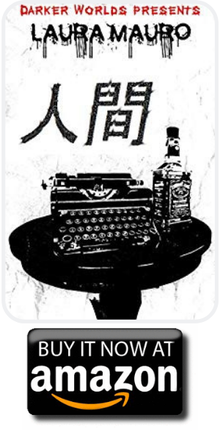 Tragedy has befallen the Russian submarine, Ussuri. Without explanation, the vessel has been lost to the depths of the ocean, all hands aboard presumed lost. A team of deep-sea divers has been dispatched to investigate. What they will discover is the infinity of depths and landscapes that become only more alien to them. And as the team themselves are stricken by yet another tragedy, they must face the increasing reality of the possibilities that lay below. That what awaits them could be the ultimate truth. Or madness. Or both.   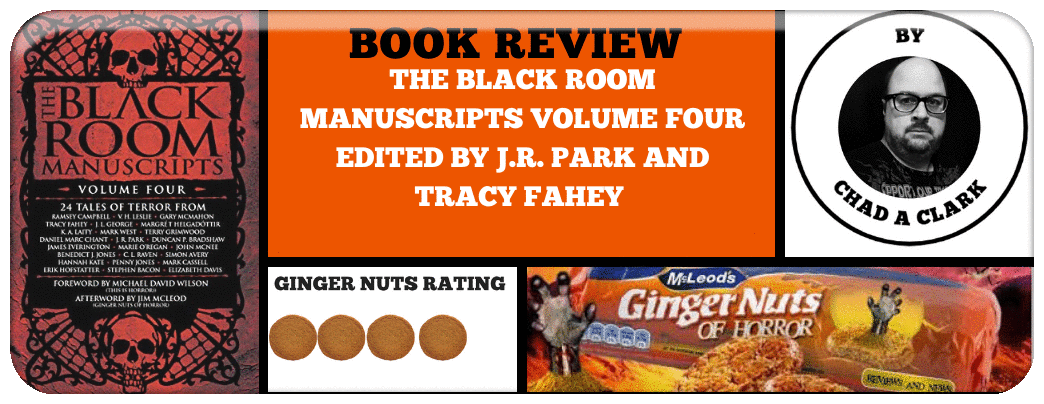 The Sinister Horror Company has long since established itself as a source for outstanding fiction. I have been introduced to a number of fantastic authors, courtesy of their releases and they are one publisher in particular that I always keep a close eye on to see what might be coming next. The handling of the books has consistently been of the utmost care and respect and I always feel confident that my purchasing dollars are going to a good place whenever I support their authors. One major centerpiece of the Sinister tabletop has been the anthology series, the Black Room Manuscripts. Having run over multiple editions and years, more amazing fiction than I could keep track of has graced the pages of these books, with a hefty amount of money going to charity on the back of the work of so many spectacular authors. This year, the Black Room series has come to an end with volume four, the final installment. And Sinister Horror laid down a collection of great stories to go out in fine form. Overall, I found them to range from entertaining to staggering and it reminded me of what I have loved about the series (that I have read), that the stories contained in these collections make a point of straying from the convention and striking out into narrative territory that is maybe a bit less tackled by other authors and publishers. I have always held that there isn’t really that much new to be done out there and that the important issue is the talent of the writer. Despite my holding to this conviction, this book still manages to feel at moments like writing I have never seen before. If I had any critical comments to make about the book, it would be that some of the stories felt a bit on the ambitious side for the length they had to work with. There were a number of stories where, when I reached the end I was kind of surprised and disappointed to find that there weren’t a few more pages to contexualize everything. But even taking this issue into consideration, even those stories where I wished the ground felt a little firmer underneath me, I still found plenty in the prose to enjoy. The journey of words in all of these stories were enjoyable to experience. I think it’s normal and should be expected with any anthology that some stories aren’t going to work as well for you as others. It’s just the nature of the beast. A story that I might not respond to could be the one that splits the skies open for someone else. You never know. So with those prefacing statements, I felt it would be appropriate in recognition of this great achievement from Sinister that I go through the book and offer up my thoughts on each individual story. And I want to make sure it is clear how much I would like to pass along my compliments to all the individual contributors to this book. You are of a quality we all should aspire to and the work you contributed here is well deserving of all praise and honor. THAT THING I DID TRACY FAHEY This was about as powerful an opening to an anthology as I may have seen. It’s the kind of story where you aren’t really sure where things are going until the last few moments when all you can do is bask in the heightened tragedy of the whole thing. It’s a perfect example of how you don’t have to have stereotypical horror elements to make a story terrifying. You don’t need monsters or ghosts. Sometimes the horror is found in the circumstances. This story is short but it uses the small space to build a ton of character history and emotional punch. The pacing is perfect and there are just enough crumbs to indicate what’s about to happen. And there is a perfect moment where you almost unconsciously say to yourself, “No, this isn’t going there, is it?” Of course it’s going there. EATING THE DREAM K.A. LAITY This one was more of a mixed bag for me. On one hand, I thought the concept of the story was interesting and that a lot of history was packed into a small amount of space. On the other hand, though, I also had a harder time engaging in the story and I kind of wish certain narrative parameters had been more clearly established, earlier on. The language of this piece is incredibly gorgeous. The tactile imagery and sensations in the story were about as intense and effective as I have seen in a book in a long time. Passages like "The lights of a small town are just right, a bouquet of neon, headlights, and flickering fluorescence. Makes me feel pretty" or "The main transaction is between loneliness and cash". Lines like that just take me off my feet and remind me about what language can be and why I love doing this in the first place. So many turns of phrase that are just awesome and the poetry of the setting is so powerful, I might just be happy reading it off into the horizon, like the longest Tom Waits song ever written. All that aside, I did find it harder to pick up on what was going on in the story and where things were going. And please don't let this arbitrary note deter you from reading this because it's entirely possible that the problem is with my dumb brain. All I can say is that I think the story could have been stronger if we had known a little more concrete information about not just this universe but also the narrator. It's a tough challenge here because while using the first person cuts us off from a lot of potentially useful information that a third-person narrative voice could provide, being able to hear the character's train of thought is really important. Perhaps a hybrid between the two would have worked. In all, an interesting story that I found compelling for what it seemed to be offering. I just would have liked it to have been executed slightly differently. A CLEAR DAY IN A SEASON OF STORMS SIMON AVERY This was a cool story with a premise that really rattled around in my brain pan for some time after reading it. And sadly, there is very little I can say about it without spoiling the details of the plot. I shall do the best I can. The story is centered around a married couple who have clearly seen better times in terms of their relationship. As we open, we see them having seemingly reached the realization that even their fairly extreme ideas to try and improve their marriage have failed and as the reader, my immediate assumption was that they were likely finished with each other. The table is upturned by the introduction of a stranger (I know, cue Ms. Agatha Christie with the sudden thunderstorm and a dark visitor in the rain slicker). If you can look past the superficial, you will find a story that is unique in its scope and execution. I was fascinated by this new character and with how quickly he took on a tone of familiarity with this couple. I'm a sucker for any kinds of stories about the sea and as with the previous tale in this volume, the atmosphere and setting of this is phenomenal. Great characterization, plot and description. And a great reminder that just because a story has supernatural elements, it doesn't necessarily have to be horrific. THE HANGING BOY GARY MCMAHON This was a fun story. I really enjoy it when an author allows a narrative to thrive on a surrealistic landscape and doesn't make a ton of effort to explain away or justify it. This tale is definitely an example of that, a normal, average day that quickly transitions to anything but. It was a situation for a character of which I had no understanding but was definitely engaged in wanting to know more. Some of the language and dialogue really reinforced the idea with me that this was a kind of modern day fable. I think it casts an interesting light on the subject of perspective and how our mind can sometimes allow us to see the world in times of stress. In other words, maybe we can't always trust our own senses if, on a subconscious level we are trying to shield ourselves from what's really happening. Plenty of stories will take the tactic of shifting and changing your perspective on everything but I found this one to be particularly clever about it. An interesting and enjoyable read. MAM’S GIRL J.L. GEORGE I’ll be completely honest and admit that this one went past me a little. But I definitely enjoyed the intrigue of the tale and in trying to unravel what was going on. And perhaps more importantly, the story got me thinking. It made me ponder the experience of getting old and how we can end up retreating into our own consciousness, to the point where maybe we interact with our own memories. Could those memories actually be self-aware as they swirl around us in the ether? Is it possible that the moment of our death is that in which all those disparate elements are finally brought back together? Not to do with the story. But it’s the mental journey I was sent on. TEARS OF HONEY JOHN MCNEE With an opening line like, "For what is pleasure, but an evolution of pain?", it's hard for me to not go in with my brain in a Clive Barker kind of mindset. And this is a completely unfair standard to set for a story but unfortunately, that was what was colored expectations from the start. I was thrilled to find that the story completely delivers on this implied expectation that I had created for myself. l loved the notion of this group of individuals coming together for the purposes of exploring paranormal phenomenon. It isn't clear at first what they are going to be doing but the tone of the piece kept me engaged throughout. And for me, what sets Clive Barker aside is how he weaves his dramatic visual canvas on which to draw. This carries over nicely as McNee delivers some imagery that is profoundly disturbing. If I had any critical note, I would say that the story at the start steps aside from the main narrative to offer up backstory. It provides some insight into the characters that I didn't think was necessary. I wasn't really sure where things were going at that point and I thought that section could have been condensed quite a bit. DECIPHER DANIEL MARC CHANT I think what I found really cool about this was the shifting in time and perspective and how, while narrative modes like this could have created more confusion around the mystery of the plot, Chant manages to layer everything perfectly. I loved the interaction between this couple and seeing how the relationship became so fractured. Chant does a good job getting into the minds of the characters and using them to craft an engaging story. He did a good job showing the increasing obsession of the wife and demonstrating how this leads to her revelation about her husband that drives the drama underlying in the piece. It all works up to a brilliant ending, one of the stronger ones in the collection, in my opinion. The questions aren't all necessarily answered and maybe we aren't left really knowing which one of the couple is more of the monster but I kind of like how that is left open-ended. While some stories leave making me feel like there needs to be more filler to the core of the plot, this moves quickly and is compelling enough to make me really love it in the form it is in. TAP, TAP MARIE O'REGAN This one had a beautifully creepy atmosphere to it. While dolls aren't exactly new when it comes to the content of horror fiction, there always exists the possibility of taking something routine and making it great. I think that is what O'Regan has done here, in brilliant form. The pacing of was near perfect as I had no desire to put it down at any point while I read it. The tension is real and palpable as the story moves along, which isn't easy in any kind of story length. I don't want to give too much away but the experiences of this woman and her mother quickly escalate from curious to simply terrifying. I'm not generally bothered by horror fiction but some of the imagery in my head at the end of this piece definitely had me feeling unsettled. It's a perfect example of a creative drive that we should all aspire to. It's a fantastic idea, delivered with tremendously talented writing. This was one of my favorites from the collection. BLACK SILK BENEDICT J. JONES Benedict Jones has long since demonstrated his abilities as a great storyteller and he brought his full game to bear in this finale for the Black Room Manuscripts. After a quick start, Jones does a superb job developing tension in this with a great sense of movement to the plot, foreshadowing something terrible yet to come. I loved the mystery behind this character as she learns more about herself and her past. And the situation she has to live with is pretty sympathetic, a sympathy which Jones will challenge as the story goes on. Everything winds down to a turn at the end that I didn't see coming and I thought worked extremely well. This story is a perfect example of how things aren't always what they seem and before you pass judgment on anyone, it's important to work your way through, all the way to the end. DRAGGED DOWN RAMSEY CAMPBELL This was a cool little tale that seemed to be going for a number of different angles at the same time. On one hand, I liked the creepy vibe around the nature of a local tunnel and the various stories that the characters come up with, surrounding it. Is this just a case of characters being asked to mine their own imaginations and making something more than it really is? Or does the tunnel in question actually bear some darker aspects that we can't really understand? I have seen a number of stories over the years about the phenomenon of tunnels that have the power where you can be affected somehow if you dare to venture through to the other side. Doing great horror is often about taking something mundane and making it into something unsettling and I think Campbell does this well. I also appreciated how the dynamics between classmates was represented here. I think it takes a bit more work and guts to portray children as the bullies they can be and demonstrating how a hostile environment can swell into something horrifically worse. In all, very entertaining and I'm glad I got the chance to read this. PLACE OF THE DAMNED C.L. RAVEN This was a fun story that managed to pack a lot of action into a short amount of time and space. The premise of exploring a long vacant castle is certainly nothing new, responsible for so much of the gothic imagery we associate with horror anymore. The vibe I felt in this was really similar to what I got from Dusk ‘til Dawn in which there is a definitive line that separates two starkly different aspects of the story. To start out, we have a fairly light-hearted sort of ghost story but this quickly descends into something much more serious. Once the action kicks in, it doesn't let go. If I had any complaint it would probably be that I didn't think the whole ghost hunters angle was needed for the story. It didn't really add anything crucial to the overall vibe of the piece and if anything, it felt slightly more like ground I have walked a few too many times. Still, while these aspects may have been present, I still found the execution of the story to be top rate, a good, fun read. BROOKS POND MARK WEST I'm always grateful for anthologies like this for opening my experience to new authors but obviously I also like seeing what work the names I'm familiar with have laid down. I have been a fan of Mark West for several years now and I think he excels at crafting beautiful atmosphere and characters. His work on Brooks Pond is no exception. We have come to expect it anymore that in stories like this, our expectations will be played on a little and that by the end of the story, we get to see how misled we had been throughout. West does a great job in spinning the tables around and giving all the characters a grim turn in terms of how we see them. And after all of that, he manages somehow to give one character in particular an even darker turn than he had already. Not really a double twist but certainly a clarification of just how dark and depraved some characters can be. PLANNING PERMISSION HANNAH KATE Write a horror story involving urban planning. I feel a bit ridiculous even writing that out but somehow this is what Hannah Kate managed to accomplish with this one. And I think it’s a great example of how you can take narrative devices that have been used often and freshen them by putting them into a new context. Despite being fairly heavy-handed with the exposition at times, I found the mystery to be engaging and interesting. And even though I had an inkling of where things were going, the quality of the prose and skill in the crafting kept me hanging on to the last paragraph. SHRIVELED TONGUES OF DEAD HORSES ERIK HOFSTATTER I really loved this one, despite the fact that for the first half or so I hadn’t a clue what the hell was going on. Still, the imagery was incredibly vivid so I hung tight. Then, about halfway through, the story came together and began to actually make sense. And then with the final line, we get the rug pulled out and we are once again floundering without a tether. I suspect I could read this six times and come away with six different interpretations. DEATH WISH MARGARÉT HELGADÓTTIR Mixed feelings somewhat on this. On one hand, I love that we are dropped right into the middle of things and the heart of the story is almost immediately present. On the other, I also would have liked to have had a little more information on the universe this takes place in, of traumas experienced by the protagonist that seem to weigh heavily but are maybe sketched a bit lightly. Beyond this minor issue, the execution of the story works really well. I liked the sense of confused familiarity between the narrator and the girl he chooses to help. From the start you have a sense that something beyond the obvious is going on and the story does a good job layering the plot out ahead of you. I kind of wanted more at the end but it closes with a solid last line and some creepy imagery to go along with it. SIZE ISNT EVERYTHING JAMES EVERINGTON I enjoyed this story, mostly for the atmosphere and the description. I felt like I was sitting in that car for most of the time, the writing was so vivid and evocative. I also would have liked a little more clarity at the ending, just tilting the narrative cards down a little bit more so we can get a better look at them. That aside, the atmosphere and creeping dread that is present throughout the story is brilliantly done. There’s an intriguing pace to the story as the protagonist finds himself exploring the confines of an abandoned apartment. Tons of dark foreshadowing, which I am a fan of. And also an incredibly inventive monster, if you want to call it that. Quite Lovecraftian in its design but with maybe even more sci-fi kind of aspects. PAIN HAS A VOICE STEPHEN BACON Really brilliant. A great examination of the emotional struggles of a child who has to come to terms with the death of a parent as well as the introduction of a new parental figure who may be quite a bit less suited as a parent. As a writer and a lover of books who also has kids, I appreciated the notion of books being used as a conduit that can connect kids to their parents. And although the story is pretty grim in the details of the plot, I also found it a nice way of demonstrating a child’s development of inner strength, possibly to the point of standing up to his abusive step-father. Of course, it’s also possible that we are seeing the origin story for a psychopath. And the ultimate irony here is that both of those statements could easily be true. The reality of great fiction is that just because a character is sympathetic, it doesn’t inherently make them a good person. This story really hammered home that point for me. SWIMMING OUT TO SEA PENNY JONES This one spoke to me as it took place in an environment that felt comfortable to me. It reminded me of summers at Lake Michigan and wading out into deeper waters than we probably should have been allowed. I’ve felt the uncertain pressure under my feet and around my ankles as they are sucked into the sand, always wondering about the fabled rip-tide that could drag you out to sea. This story is pretty bonkers as it unfolds and it’s a brilliant examination of a persons state of mind and how perceptions can be warped or misled. Jones does a great job leading the reader along, right there with the protagonist, only to have the floor yanked out in due course. This was a cool sequence of events as this character’s peril just seems to increase with each passing moment. And it leaves you in a powerful moment at the ending. REANIMATION CHANNEL MARK CASSEL Probably another one of my favorites from the book. The premise of this is incredibly inventive and crafted out to a high degree. And just when I thought I couldn’t get more impressed with the concept behind the plot, it just went and got even crazier and more creative. Somehow, he has managed to take a fairly grizzly monster story and fused it with a kind of tech-y, almost science-fiction feel to it. The mystery is effective and the plot is laid out perfectly to create just the right level of action, mystery and suspense. It all builds up to an ending that is probably one of the more emotionally satisfying ending points I’ve seen in a story. I would have loved to have been a fly on the wall as the concept for this was worked out because I was really impressed with the level of skill that went into crafting a story such as this. Give it a read. And keep it in the back of your mind the next time you go online to do some serious gaming. CRAFT AIL DUNCAN BRADSHAW This was an incredibly fun and entertaining story. I have read a number of Bradshaw’s works, from his books to his shorter stories and I am always impressed with the breadth of content in his writing. By no means is this a writer who takes on the same subject matter time and time again. And yet, despite the difference in subject, the style always seems to be uniquely his. It’s hard to strike a totally unique tone in your writing but I think Duncan Bradshaw has done quite a bit in this regard. This story is bonkers, right out of the gate and with very little exclamation you are dumped into the middle of the craziest situation you could probably imagine in a story. And somehow, without giving a ton of backstory, he still manages to make all of this craziness seemed completely normal. I had a lot of fun trying to disentangle what was going on and what direction the story was going in. Bradshaw exercises a deft slide in perspective in this, moving from one character to a completely new one at about the midpoint of the story. And while, by all rights this shouldn’t have worked, it serves to function in the story perfectly. The dark and violent notes of the opening are only smoothed over by the humor and absurdity of the second half. Definitely one of the high points of the collection for me. DR. ZWIGLI’S LAST PAPER ELIZABETH DAVIS I’m feeling a fair amount of guilt when it comes to this one and it is for this story that I think I have had the most difficult time phrasing how I feel about it. Because I think it’s clear how much time and attention and craft that went into the construction of this story. This is not some paper-thin narrative that someone threw together and patched up with some packing tape. I can only imagine the Herculean effort it would have taken to both conceive of and execute this. It just isn’t for me. Ultimately, I just feel like there isn’t enough context for the story, told in a mostly epistolary fashion. The mode of the narrative made me think quite a bit about Lovecraft’s At The Mountain Of Madness, or even Mary Shelly’s Frankenstein. The problem for me was that I didn’t understand what was happening around the existence of these writings. I didn’t really know why I was reading it or what this person had done to warrant the collection of her writings. Ultimately, there was just too much work for me to engage with this and I was not successful. And I take full responsibility for this. The failing here is mine, not the author. I would strongly encourage you to give the story a go. Plenty of people will be able to find a connection here that I have not. LAUREL TERRY GRIMWOOD This was a well paced and written piece of historical fiction. It’s a skill set I have never had and I’m always impressed with writers who can do such a good job putting a narrative so authentically into an era lost to all of us. It’s easy to just say that a story is set in the past, it’s another entirely to avoid the anachronistic and make a piece feel like it’s oozing the time period it’s set in. It was an exciting read. It’s also an example of what I have said of the book overall, that this was one that I would have liked to have seen with a slightly more firm ending to it. The frame story in this felt less successful to me and I’m not really sure why, other than it seemed to not function as well as a part of a coalesced work of fiction. Still, a fantastically layered story. Kind of a mashup of Lovecraft and the Great Escape. TIDE WILL TELL V.H. LESLIE This is a beautifully written piece with a lot of great descriptions. I felt like the tactile descriptions of the environment of the story was done to near perfection and this river sounded like one that I might be walking or jogging along. I also liked the glimpses we got at the relationship of the married couple in this story as I know first-hand how stressful it can become in a relationship when going through the process of trying to have a child. I don’t know if this was something intended by the author. I kind of doubt it but this is one aspect I took away from it. Centered around a man who comes across a sack floating in the river, sure for a moment that he sees something moving in there. Or did he? I’m not really sure. I would have liked to have seen a little more context for these characters. But even though I suspect the heart of the story went over my head a little, the reading was quite pleasurable, in a fictional landscape that felt familiar and comfortable. THE LAST HORROR JR PARK Great tale to close out the collection. The layering of the story was a joy to try and read through, with perspectives shifting and dropping out brilliantly. In this, we have a writer trying to figure out a story about a writer who is also trying to write a story. And while on the surface, this may seem destined for disaster, the vibe of the story is brilliant. At times I found myself wondering if any of this was real or if the narratives I was seeing merely existed in the middle layers of a sort of literary nesting doll. How many more layers are there, both above and below? To take that even further into the rabbit hole, in some higher level universe is there someone reading a book about me reading a book about a writer writing about a writer? Like a great Lynch film, this is a story best experienced driving through without a roadmap. Setting your preconceptions too firmly would likely only serve to detract from the experience. It was a narrative that had me thinking for long after I got to the final lines and for much longer after. And that’s a wrap on both this review as well as this series of fantastic anthologies. I would like to extend my thanks to the folks at Sinister Horror for the outstanding work they continue to put out and for being a bright and tragically underappreciated light in this industry. This has been a great series and the world of horror fiction has only served to benefit from them, all four volumes. Do yourself a favor and give some of your time for a deep and heavy book that will entertain and open your mind to narrative possibilities you may have never considered before. The Black Room Manuscripts Volume Four 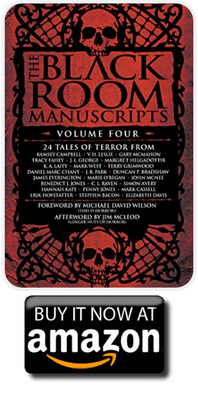 Some words are born in shadows. Some tales told only in whispers. Under the paper thin veneer of our sanity is a world that exists. Hidden just beyond in plain sight, waiting to consume you should you dare stray from the street-lit paths that sedate our fears. For centuries the Black Room has stored stories of these encounters, suppressing the knowledge of the rarely seen. Protecting the civilised world from its own dark realities. The door to the Black Room has once again swung open to unleash twenty four masterful tales of the macabre from the twisted minds of a new breed of horror author. The Black Room holds many secrets. Dare you enter… one final time? 
 The Blood Red Experiment edited by Jason Michel and Craig Douglas is an anthology of six stories that try to capture the bizarre magic of Giallo Horror. It is a very intriguing concept to put on paper, considering most Giallo movies are heavy on style and lite on substance. For the most part I believe the authors and editors did a wonderful job delivering beautiful scenes of murder and mystery. But in the end, I found myself wishing there was more plot and less focus on creating interesting visuals. I don’t think you need to have a deep understanding of the concepts that come with a Giallo movie to appreciate the anthology. Though, we are given a brief introduction that covers the idea of mystery, murder, and erotic nature of these films. It’s a nice way to set the stage for what’s to come, letting us know that we are going to be seeing themes of a mysterious black gloved killer, the targeting of women, the outlook on religion and those that sit at the fringe of society. Personally, Giallo movies are something of a blind spot for me. I’ve seen and own Suspiria, as well as caught bits and pieces of other Dario Argento films, but that is about it. I do know that they are more focused on the style and visuals as opposed to delivering a rich story. Usually, a bunch of strange things happen, with moments of gruesome imagery and murder. And these six stories give us exactly that. There’s a main character that might be an art student(Impermanence Of Art and Madonna Of The Wasps), a reporter(Canvas Of Flesh and Blood Of The Lamb), or a linguistics expert(Quaenum In Illis), then we have a mysterious murderer that we might have met, the two intersect, and then the story is done. Out of the six stories, I’d say three of them follow the traditional concepts of beginning, middle, and a somewhat satisfying conclusion. Two of the stories seem to be a bunch of things happening that end just when they are getting good. And one is a stream of conscious story in the style of William Burroughs, which has some amazing imagery, but for the life of me I couldn’t tell you what happened. I was never disappointed while in the middle of them. There are some great descriptions and ideas at work here. They truly captured the spirit of Giallo, with gory kills, interesting locations, and unique characters. But, if you were looking for characters with meaningful arcs, they you might find yourself disappointed. They end the story the same person as they were at the beginning, unless of course they are killed. It felt like the last chapter for a number of the stories was missing. We never see the wrap up or bow on the end of the story. Each one almost reads like a slice of life, which is fun, but also not as satisfying when you reach the final word. This doesn’t mean I didn’t enjoy the stories, I just wanted more. The Blood Red Experiment is truly an experiment in storytelling. The challenge of taking the visual style of a film and trying to make it work on paper is a tough one. But, overall, I believe the authors in this anthology succeeded. Even with the few hangups, I enjoyed each story for what they were, a journey into the sick and twisted world of a murderer finding unique ways to create art with a straight razor and black gloves. The imagery you’ll find in here will stick with you long after you are done. If you are a Giallo fan, I think this will hit all the right buttons, and if you are more of a fan of mystery and creative murders, this will definitely fill that bucket. THE BLOOD RED EXPERIMENT EDITED BY JASON MICHEL AND CRAIG DOUGLAS Inspired by the genius of Hitchcock and his films, latin luminaries such as Argento and Bava directed macabre murder-mystery thrillers, that combined the suspense with scenes of outrageous violence, stylish cinematography, and groovy soundtracks. This genre became known in their native Italy as giallo. Giallo is Italian for yellow, inspired by the lurid covers of thrillers, in the way that pulp fiction was derived from the cheap wood pulp paper of the crime stories, or Film Noir came from the chiaroscuro of the German Expressionistic lighting. Craig Douglas and Jason Michel bring gialli-inspired stories together from some of the best crime writers on the scene today to a wider audience, giving birth to a new literary movement in crime writing, NeoGiallo, and drag this much maligned genre screaming and slashing its way into the 21st Century.    “Chad Lutzke unpacks his skateboard and takes us back to 1990" Chad Lutzke had a stellar 2018 with three outstanding releases after reading both “Skullface Boy” and “Out Behind the Barn” (co-written with fellow Ginger Nuts reviewer John Boden) I found myself backtracking through Chad’s back-catalogue and also rated “Stirring the Sheets” equally highly. Published within six months of each other, these diverse works show an author on a real hot streak and worth serious investigation should you not have come across him. On a personal level I ranked “Skullface Boy” at the top of the pile, mainly because the internal voice was so genuine, hilarious and moving, coupled with a very quirky story it was a real winner with expletive fuelled charm. I also included it in my top ten releases of the year over at HorrorTalk.Com, which has now been rebranded HorrorDNA.Com. Lutzke is equally skilled at writing supernatural stories (“Out Behind the Barn”) as he is with the extraordinary circumstance life may happen to throw up (“Skullface Boy” or “Stirring the Sheets”) and his latest release “The Same Deep Water as You” falls into this latter category. It tells a sort-of coming-of-age story of 19-year-old Jez, who is bumming around town whilst deciding what to do with his life. The story drifts along with his various friends, casual relationships, music, alcohol and his main interest, skateboarding. There were a lot of musical references, which I enjoyed, a music fan may date the setting to around 1990 as the leading characters attends an album release party at a record shop for the release of Jane’s Addiction, second album “Ritual De Lo Habitual”. There are lots of other musical references, particularly to The Cure, and influential hardcore band Minor Threat. I do enjoy identification to music in literature, especially stuff I grew up with and will never forget the first time I heard the debut Jane’s Addiction album as a teenager. It blew me away and it still holds a special place in my heart. This novella brought back some of those memories and the general feeling of both recklessness and restlessness which comes with being a teenager and the disregard of consequences. Although “The Same Deep Water as You” features themes which appear in other works by Ludtke such as isolation, alienation and loneliness this particular novella falls short of the great heights of the other releases I’ve mentioned above. It’s certainly a moody and evocative piece of fiction which ultimately tackles some major themes, but to be blunt, not enough happened in the story for my taste. The author should certainly be applauded for trying something different, but the story needed something more than a group of directionless teens floating around town with some serious issues shoe-horned into the latter part of the story. I don’t want to provide any spoilers, but I did not find some of this especially convincing. Other reviews have compared this work to films such as “Razor’s Edge”, “Kids” and “Dazed and Confused” and there is something in that, with a parentless vibe flowing through the novella. If you’re a fan of Chad Lutzke you’ll enjoy “The Same Deep Water as You” and appreciate an author moving away from traditional horror and experimenting with his fiction. Who knows, there might also be some autobiographical material threaded into the teenagers who do not yet know what to do with their lives. If you have never read Chad before, even though this novella has a lot going for it, I would recommend one of the three other releases previously mentioned as a better introduction to his work. After placing “Skullface Boy” in my HorrorDNA.Com top ten of 2018 I’ve had correspondences with a couple of readers who read and loved that work before backtracking, as I did, through his other material and were equally impressed. I’m sure “The Same Deep Water as You” will have its fans, and the alienation felt by the characters will resonate with many, but for myself it felt a little flat. Tony Jones The Same Deep Water as You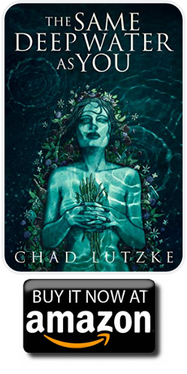 Music, beer, skateboarding, and tragedy star in this coming-of-age lesson on love and lust and the line that divides them, as 19-year-old Jex experiences a life that meets River’s Edge and Kids with Dazed & Confused––a parentless indie yarn with the dark heart Lutzke is known for. I’ll show up for anything this author writes. ~Sadie Hartmann, Cemetery Dance Lutzke has a way with words that merges horror and compassion in a single sentence. Reminiscent of Robert McCammon. ~Joe Mynhardt, Crystal Lake Publishing Lutzke is writing on an entirely different level than any other small press/indie author. ~Edward Lorn, author of Bay’s End   |


Archives
May 2023
|

|

|
 RSS Feed