• HOME
  • CONTACT / FEATURE
  • FEATURES
  • FICTION REVIEWS
  • FILM REVIEWS
  • INTERVIEWS
  • YOUNG BLOOD
  • MY LIFE IN HORROR
  • FILM GUTTER
  • ARCHIVES
    • SPLASHES OF DARKNESS
    • THE MASTERS OF HORROR
    • THE DEVL'S MUSIC
    • HORROR BOOK REVIEWS
    • Challenge Kayleigh
    • ALICE IN SUMMERLAND
    • 13 FOR HALLOWEEN
    • FILMS THAT MATTER
    • BOOKS THAT MATTER
    • THE SCARLET GOSPELS
GINGER NUTS OF HORROR
  • HOME
  • CONTACT / FEATURE
  • FEATURES
  • FICTION REVIEWS
  • FILM REVIEWS
  • INTERVIEWS
  • YOUNG BLOOD
  • MY LIFE IN HORROR
  • FILM GUTTER
  • ARCHIVES
    • SPLASHES OF DARKNESS
    • THE MASTERS OF HORROR
    • THE DEVL'S MUSIC
    • HORROR BOOK REVIEWS
    • Challenge Kayleigh
    • ALICE IN SUMMERLAND
    • 13 FOR HALLOWEEN
    • FILMS THAT MATTER
    • BOOKS THAT MATTER
    • THE SCARLET GOSPELS
GINGER NUTS OF HORROR
horror review website ginger nuts of horror website
Picture

ZHIGUAI:CHINESE TRUE TALES OF THE PARANORMAL AND GLITCHES IN THE MATRIX TRANSLATED BY YI IZZY YU & JOHN YU BRANSCUM

29/7/2021
ZHIGUAI:CHINESE TRUE TALES OF THE PARANORMAL AND GLITCHES IN THE MATRIX TRANSLATED BY YI IZZY YU & JOHN YU BRANSCUM
Reading this book was surprisingly scary and moving. I found myself thinking about the stories for days afterwards and told my mates a few of them in the pub. I couldn’t help but wonder what effect the events described would have on a person.

Zhiguai:Chinese True Tales of the Paranormal and Glitches in the Matrix
Translated by Yi Izzy Yu & John Yu Branscum
(Book review by David watkins)

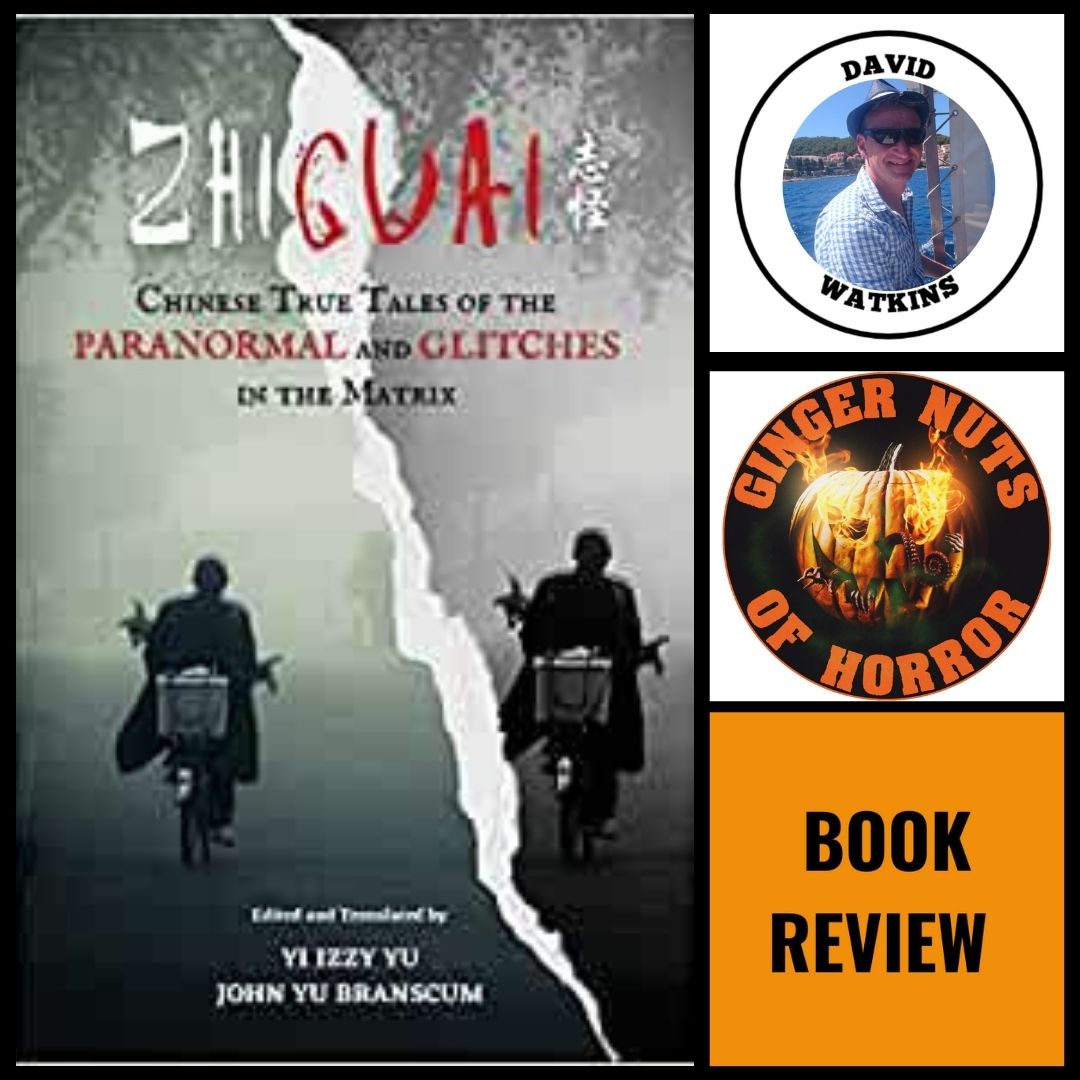
‘Zhiguai’ roughly translates as ‘true weird tales’ and that is exactly what you get in this book. Fifteen tales of real encounters with the unexplained – the titular ‘glitches in the matrix’. The stories contained here vary massively from spooky precognition dreams, strange visions and trips to other worlds right through to more standard hauntings.

I have to admit I’m a massive sceptic about this sort of stuff. Nothing remotely weird has happened to me personally – unless you count coincidental meet ups with friends – and I take ghost stories and the like with a massive pinch of salt. However, people I know and trust are adamant these things happen so perhaps I should keep more of an open mind.

Reading this book was surprisingly scary and moving. I found myself thinking about the stories for days afterwards and told my mates a few of them in the pub. I couldn’t help but wonder what effect the events described would have on a person. This book doesn’t go into any of that, but rather just presents the barest bones to get you to the meat of the story.

The matter of fact way the tales are told help ground them in reality and make them feel all the spookier as a result. It also allows the reader to draw their own conclusions as to what might have happened. This style might grate on some, but for me it added to the stories and made them far more credible. From the kid who finds a different version of his mum, through to the kid who regresses three years overnight, each story had more than enough to make me shiver. There’s one about a baby that made me cry – it’s pretty grim reading. The only story that left me cold was about some cats, but then I had no sympathy for the teller of that tale: the little shit got what he deserved.

I’m not sure the book did enough to cure me of my sceptism, but it definitely put a dent in that armour. It is surprising how relatable these tales are – this could easily have happened in the UK. That’s the overall point of the book, of course: despite our differences, our experiences of the supernatural are very similar. I could go into more detail about each of the stories, but I don’t want to spoil anything. This is an excellent read, guaranteed to unnerve and unsettle you.

Highly recommended.

Zhiguai: Chinese True Tales of the Paranormal and Glitches in the Matrix: 1 

Picture
In this collection, award-winning writers and translators Yi Izzy Yu and John Yu Branscum share paranormal and glitch in the matrix tales from across present-day China. Confided by eyewitnesses, these true stories uncannily echo Western encounters with chilling dimensions of reality and supernatural entities. At the same time, they thrillingly immerse the reader in everyday Chinese life and occult beliefs.

Zhiguai: Chinese True Tales of the Paranormal and Glitches in the Matrix includes such accounts as:
*The reincarnation of a teenager whose fate eerily mimics his predecessor’s
*A girl who dies in the womb but nevertheless continues to communicate with her twin
*Terrifying shifts into demonic parallel universes
*Walls desperately painted with blood to save a family from tragedy
*Huge populations that disappear into thin air
*The revenge-seeking ghosts of murdered cats
*Weird temporal shifts
*Occult murders
From the terrifying to the uncanny, this collection will not only change your understanding of China but of reality itself.

Picture
My Bio
David Watkins lives in Devon in the UK with his wife, two sons, dog, cat and two turtles. He is unsure of his place in the pecking order: probably somewhere between the cat and the turtles. 
​

He has currently released three novels, (The Original’s Return, The Original’s Retribution and The Devil’s Inn) and has a short story in the werewolf anthology Leaders of The Pack.  
 Website: www.david-watkins.com 
Twitter: @joshfishkins 
Amazon: author.to/DavidWatkins 

TODAY ON THE GINGER NUTS OF HORROR WEBSITE

FILM GUTTER REVIEWS: THE COLLECTION (2012) DIR. MARCUS DUNSTAN

Picture

the heart and soul of horror fiction reviews 

CURSED BUNNY BY BORA CHUNG, TRANSLATED BY ANTON HUR,  2021 (BOOK REVIEW BY JONATHAN THORNTON)

28/7/2021
CURSED BUNNY BY BORA CHUNG, TRANSLATED BY ANTON HUR,  2021 (BOOK REVIEW BY JONATHAN THORNTON)
Chung’s Cursed Bunny heralds a bold new voice in dark fiction, one that English-reading afficionados of horror and the Weird will be excited to welcome into the fold.
“Grandfather used to say, “When we make our cursed fetishes, it’s important that they’re pretty.”"

CURSED BUNNY BY BORA CHUNG, TRANSLATED BY ANTON HUR,  2021 (BOOK REVIEW BY JONATHAN THORNTON)

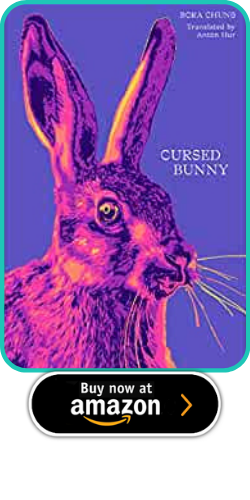
Cursed Bunny is Korean author Bora Chung’s first book to be translated into English. Over the course of the ten short stories included in this book, Chung effortlessly mixes elements of horror and fantasy, science fiction and surrealism, to create a fresh and unique take on Weird fiction. Frequently focusing on the perspectives of women, Chung’s stories use the Weird to paint the horrors of living in a patriarchal, late-period capitalist society in lurid and disturbing detail. The stories are not relentlessly grim though. Chung’s understanding of the ghastliness of modern existence is married to a wry, sardonic humour which helps to make these stories so striking and unforgettable. Publishers Honford Star have done another fantastic job with this collection. The stories are wonderfully translated by Anton Hur, who ensures that the English versions retain Chung’s sharp wit and vivid prose, and the striking cover art by Jaehoon Choi is a good indicator of the mind-twisting, psychedelic delights contained within. As a reader excited about advances in the Weird, I can only hope that more of Chung’s work becomes available to read in English soon.

Cursed Bunny opens with ‘The Head’, Chung’s first published short story which won the 1998 Yonsei Literature Prize and immediately sets out Chung’s aesthetic stall. The story is a surreally humorous yet oddly upsetting tale of a woman who is plagued by a head made out of all the shit, piss and blood collected in her toilet. The story is funny, but all the more effective because Chung plays the bonkers premise entirely straight. What could have been just a goofy gross out story becomes a thoughtful meditation on the abject and our attitude towards it, effectively making the reader consider when the ageing body itself becomes abject in our youth-fixated culture. Chung’s exploration of the messiness of bodies recurs throughout her stories, but particularly in ‘The Embodiment’, in which periods and pre-marital pregnancy shift from being a societal site of shame to being visceral body horror for the unfortunate protagonist, and ‘Frozen Finger’, in which a woman dying in a car accident is led through a nightmare world of darkness and sludge by a malevolent spirit.

A reader may assume that they have the measure of Chung as a writer from these thematically linked opening stories, but then the collection leads the reader on a series of strange and disorienting turns, showing the full range of Chung’s creative voice. The title story ‘Cursed Bunny’ is a good example of how Chung uses absurdist humour to accentuate her horror. Telling the story of a family who professionally create cursed fetish objects in a small town, the narrative takes in the unthinking brutality of corporate greed, generational revenge and the price of one’s soul to build a chilling, multi-layered ghost story. Like the grandfather who narrates much of the story, Chung manages to imbue a kitsch lamp in the shape of a bunny with real horror. ‘Home Sweet Home’ is an almost realist exploration of wage slavery and crushing debt, in which the female protagonist is trapped in debt by her irresponsible cheating husband, in which the supernatural element forms a dark undercurrent but also a means of escape. ‘Reunion’ is a lyrical ghost story that explores the generational trauma of war, in which the children of those who survived the war are the recipients of the pent up anxieties, fears and horrors experienced by their parents. ‘Goodbye, My Love’ is a science fictional exploration of loneliness and disposability culture, in which a brilliant engineer’s robot creations rebel against being replaced with newer models. These stories engage in powerful and moving ways with the anxieties of our present day, with a visceral power available only to horror and the Weird.

Other of Chung’s stories are more like darkly twisted fairy tales. She is particularly well suited to this medium, as these stories make good use of her strange characters, lyrical writing and knack for vivid and surreal imagery. ‘Snare’ is a sadistic variation on the goose who laid the golden egg, telling the story of a farmer who discovers a fox trapped in a snare who bleeds gold. From the familiar beginning, the story spirals out into a visceral and bloody tale of abuse that draws on folk tales and vampire mythology. ‘Ruler Of The Winds And Sands’ tells the story of a princess who marries a prince cursed with blindness and sets out to cure him, but completely subverts the fairy tale motif of the just and good royals by revealing them to be vicious warmongers. The story is full of beautiful dreamlike imagery, from giant fish buried in the desert to the beautiful ship made of golden gears. ‘Scars’, the longest story in the collection, is perhaps the most powerful and disturbing of Chung’s reworkings of fairytale motifs. Working on the motif of the child sacrificed to the monster to ensure the safety of the whole village, Chung uses the story to meditate on monstrousness, othering and the people that society excludes. Throughout the story, the protagonist faces various horrors and abuses, first at the hand of the monster, then at a society that hates and fears him for the moral complicity that he represents. In keeping with Chung’s dark worldview, it is perhaps appropriate that in order to win his own freedom, the character must destroy not just the monster but the society that cast him out in the first place.

Chung’s Cursed Bunny heralds a bold new voice in dark fiction, one that English-reading afficionados of horror and the Weird will be excited to welcome into the fold. Full of striking imagery and dark humour, the stories make an excellent case for how horror and the Weird help us understand the alienation of the world around us. I very much look forward to more of Chung’s work being brought into publication in English; on the strength of this collection we have been missing out on a masterful voice in horror for too long.

Cursed Bunny 
by Bora Chung, translated by Anton Hur

Picture
Cursed Bunny is a genre-defying collection of short stories by Korean author Bora Chung.

Blurring the lines between magical realism, horror, and science-fiction, Chung uses elements of the fantastic and surreal to address the very real horrors and cruelties of patriarchy and capitalism in modern society.

Anton Hur's translation skilfully captures the way Chung's prose effortlessly glides from being terrifying to wryly humorous.


TODAY ON THE GINGER NUTS OF HORROR WEBSITE

REVISITING THE MASTERS OF HORROR THE BLACK CAT, DIRECTED BY: STUART GORDON

Picture

THE HEART AND SOUL OF HORROR FICTION REVIEWS 

SPLASHES OF DARKNESS WHITE:  KNUCKLE (COMIC REVIEW)

27/7/2021
SPLASHES OF DARKNESS WHITE:  KNUCKLE (COMIC REVIEW)
Cy Dethan is a fucking genius. I hate him. The sympathetic monster is not a new trope, but *rarely have I seen it handled so deftly, nor with such emotional force.
Comic-books are a medium, not a genre; they can tell any story and suit any palate. You want horror? I've got bottles of the stuff. Welcome to 'Splashes of Darkness.'
Picture

 WHITE:  KNUCKLE
​(COMIC REVIEW BY DION WINTON-POLAK)

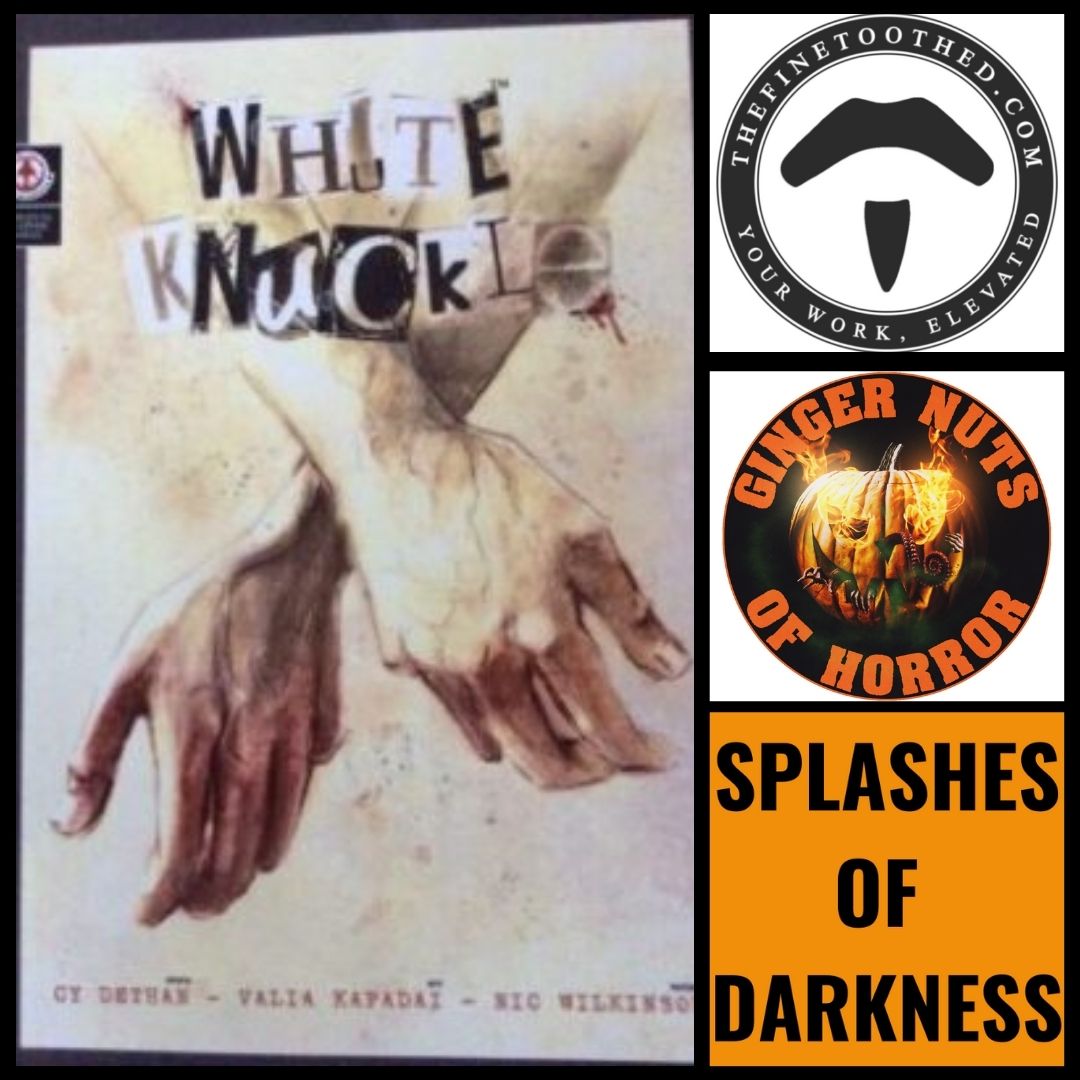
White Knuckle is a murky cocktail brought over by a grinning bar shark at a stag do who fucking dares you you down it. They won't tell you what's in there, but it looks septic somehow. There are milky lumps floating about in it; swirls of brown and yellow turn your stomach. You feel unclean just looking at it but - well - you came here to drink, after all. Try not to choke on it.
White Knuckle is a complex psychological thriller, reframing the 'retired gunslinger' motif into a modern tale of violent drives, degeneration and damnation. Forty years ago, the Gripper was a man to be feared - a serial strangler with a string of victims. Now nearly seventy, Seth Rigal lives on the verge of poverty, waiting for the death he knows he deserves. Tortured and confused, he finds himself stalking the daughter of his final victim - only to find himself rescuing her son. The last thing he needs is attention, but when a local reporter gets him in his sights, Seth loses his grip entirely.
​

Cy Dethan is a fucking genius. I hate him. The sympathetic monster is not a new trope, but *rarely have I seen it handled so deftly, nor with such emotional force. The key lies, I think, in Rigal's vulnerability. He's a man haunted by the darkness inside, weakened by age and infirmity, caught up in events he has no control over. That helplessness ellicits our empathy despite ourselves, with a copy-cat killer adding further contrast to the Gripper of old and the broken soul that's left before us.

Picture
The heart of the story is Michelle Brooks - last living remnant of Seth's muderous past. She is damaged by trauma, struggling to live a normal life, but her ex-husband is a piece of shit. The simple light she brings to the comic - and to Seth's life - is wonderful and painful to behold because we know it cannot last. Her hesitant attempts to form a human connection with Rigal make redemption feel tantalisingy possible and damnation almost inevitable, whichever way the chips fall.

Picture
I was not an instant fan of Valia Kapadai's art, but my appreciation has grown with each reading. There's a rough, sketchy quality to the lines, and the colouring is watery - washes of drab and greasy tones that make your fingers feel dirty. The more we crawl inside Dethan's story though, the more appropriate this creative partnership seems. Both writer and artist have a deep interest in small, telling details that help to round out a real, fallible human being, whether it be the self-delusion of Michelle's husband, or the gleam in her kid's eyes as he describes his own grandmother's murder.

Picture
Kapadai's art well evokes the killer's bleak despair; his face is so sad, his lank hair, sunken shoulders and hunched posture so pathetic; the action scenes are filled with angry scratches and fierce glares - all pulling us inexorably into his mindscape. Kapadai reserves her most startling images and the brightest colours for the ghosts of the past: the hallucinations and hauntings that intrude upon Seth, begging for release or cursing his name, and the psychodelic excesses of the 'Laser Crypt' where Rigal loses all sense of reality. It's powerful stuff, well used, and helps to differentiate the psychological layers for the reader in a way that feels quite natural.

Picture
This is an absolute killer. It's a tough read, no doubt - dark, brutal, emotionally tangled and surprisingly painful by the end - but it's well worth your time
Picture
Written by Cy Dethan 
Illustrated by Valia Kapadai
Lettered by Nic Wilkinson
Published by Markosia
Available now!


Reading experience 5/5
Reviewer - Dion Winton-Polak


* The closest parallel I can think of is a criminal called Angus Thermopyle - in The Gap series by SF author, Stephen R. Donaldson - trapped and screaming in the prison of his mind.


Check out Dion's other comic book reviews here 

TODAY ON THE GINGER NUTS OF HORROR WEBSITE

INTERVIEWING ERICA WATERS: A POWERFUL NEW VOICE IN YA HORROR FICTION

Picture

THE HEART AND SOUL OF HORROR FICTION REVIEWS 

THE DAMOCLES FILES: VOLUME ONE: RAGNAROK RISING (BOOK REVIEW)

22/7/2021
THE DAMOCLES FILES: VOLUME ONE: RAGNAROK RISING (BOOK REVIEW)

If you are looking for a novel that masterfully mixes spies, nazi wizards, bookworms, werewolves, Viking warriors, gigantic golems, and...

THE DAMOCLES FILES: VOLUME ONE: RAGNAROK RISING (BOOK REVIEW by Jim Mcleod) 

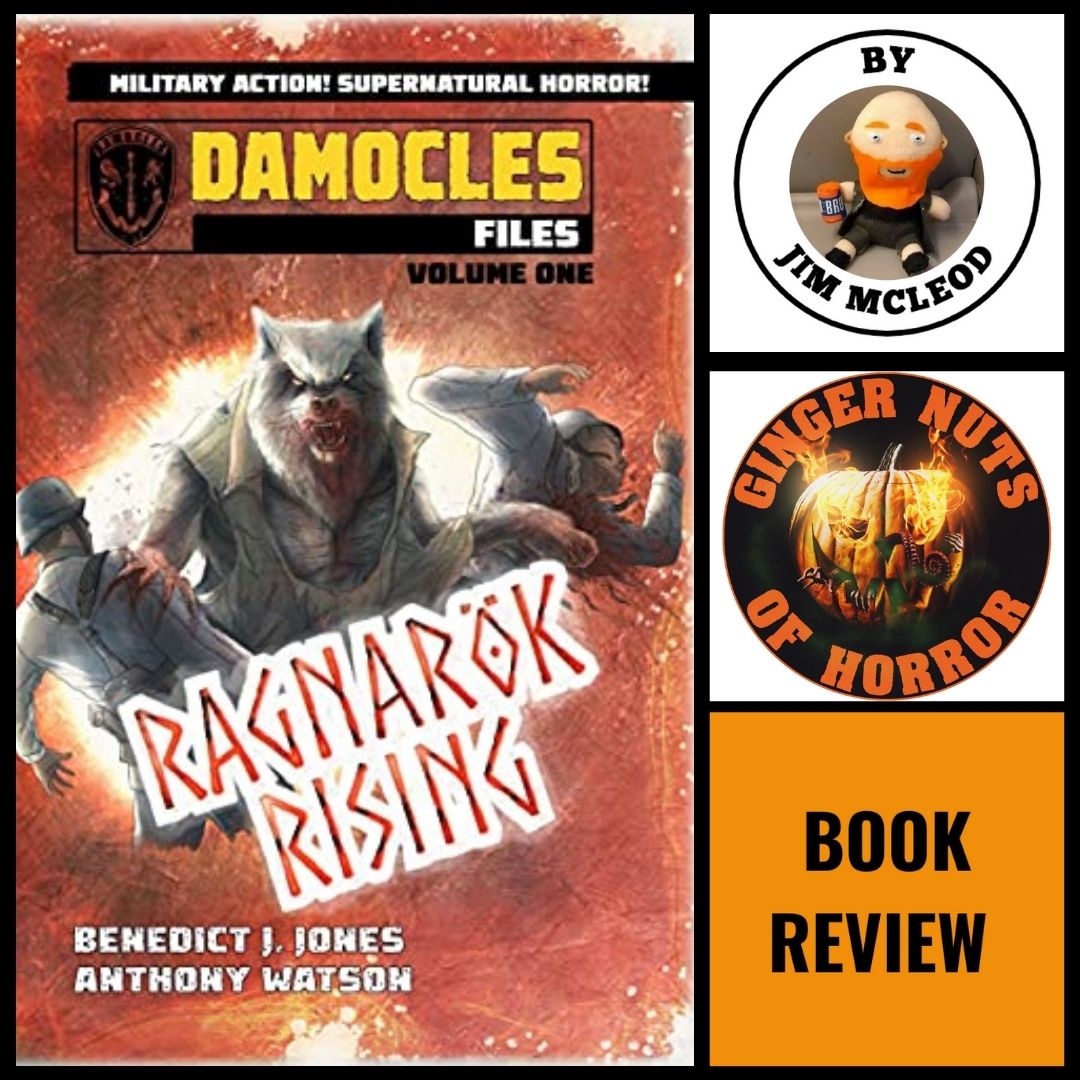
Considering how ripe the second world war is for inspiration for horror/supernatural stories, it is a theme that has been relatively underused over the years. You could probably count on the fingers of one hand the number of horror novels produced over the last decade that have looked to this for inspiration. Apart from the two authors of The Damocles Files, I can only think of, other than the two authors of this novel, Mark West's The Exercise, in recent years, that has used this period of history as the backbone for a story. This is surprising as the Occult was so deeply rooted in the war with the Nazis obsession with gathering so-called occult weapons and how to use them to defeat the Allies. You would think authors would be clamouring over each other to mine the subject for a story.  


Considering that The Damocles Files is written by two authors who have previously dabbled in this area, Benedict Jones with Hell Ship and Anthony Watson with Witnesses, you would like to think that The Damocles Files is going to be the novel that kicks some life into this subgenre of horror.  


Taking some inspiration from Brian Lumleys' The Necroscope, The Damocles Files pits The Ministry of Information, a group of spies, soldiers and academics, against the forces of darkness who wish to bring about Ragnarok, pitted against Nazis and a mysterious ancient cult, can the brave boys and girls of the Ministry save the world from destruction.   


Those expecting a traditional novel narrative structure, be warned The Damocles Files, eschews this in favour of a series of short stories and novelettes, linked together by an overarching plot device. It is a brave move by the authors as novels like this always run the risk of feeling disjointed and fractured. However, this approach works perfectly for this book, as it lends the narrative a punchy, fast-paced feel that also makes it seem as though you are reading the story through the reports of those involved. But unlike say World War Z, you never feel bogged down by a slow and repetitive story. These vignettes hit hard and fast, rarely allowing the reader a moment to breathe, as the action tears along at a breakneck pace. If I had one complaint about this approach, it would be that I had a slight problem with keeping tabs on who was who during the initial chapters of the book. It could have done with keeping the pace slightly more restrained, to allow the reader to find their footing, rather than dropping the reader straight into what felt like a massive mythos, where you felt like you had just parachuted into the middle of a firefight. All the action left you feeling a little shell shocked.  


However, once you find your bearings, The Damocles Files, it doesn't disappoint in the slightest. One of the biggest problems with historical novels is a lack of a sense of time and place. Anachronisms are a blight for the historical novel; I despise them; whenever I see them, I get thrown out of the story, and I find it hard to get back into it. There is nothing worse than having a character sound nothing like they should. It's lazy writing, thankfully Jones and Watson have taken great care to ensure that doesn't happen here while still managing to be respectful of the fact that we aren't living in the 1940s, with regards to using language that wouldn't be acceptable today.  The Damocles Files is a triumph in terms of time and place; you will feel that you are right there in the middle of the action as it happens.  


I loved how all the separate threads of the story slowly came together, to an amazing climatic battle; it would be fascinating to know precisely how the two authors went bout creating the novel, especially how they achieved what would feel like an impossible task of ensuring that these individual stories felt like an utterly coherent story. To the point where the mythos of the story feels so much greater than the story presented within its pages, it is a rare treat to read a story that hints at so much more.   


The mix of intrigue, action, and character development is spot on, with cinematic action sequences that explode of the page, balanced perfectly with the more subtle passages dedicated to the spies and academics of the novel; of course, there will be red herrings and double-crosses aplenty, it wouldn't be a brilliant spy novel if there weren't, but they never feel forced and more importantly they are never signalled.  


If you are looking for a novel that masterfully mixes spies, nazi wizards, bookworms, werewolves, Viking warriors, gigantic golems, and... (I'm going to keep that one to myself, suffice to say wait until you get to an amazing sea battle during the novels dramatic climax, trust me you ae in for a treat). In that case, this is the book for you. I'd be hard pushed to think of a recent novel that had such a thrilling and compelling narrative, and I could smell the woodbines and hear the glorious roar of Spitfires ringing in my ears as I devoured this spiffingly fantastic novel of derring-do. 


I may despise the song, but in the words of Dame Vera Lynn, I hope that with regards to The Damocles Files. 


I hope and pray 
"We'll Meet Again
Don't know where don't know when," 

The Damocles Files: Volume One: Ragnarok Rising (The Damocles Files. Book 1) 
by Benedict Jones & Anthony Watson 

Picture
The World is at War.The Senate House in London: home to the Ministry of Information but also the organisation known as Damocles whose mission is to combat the occult machinations of the Axis powers.Using the combined skills of academics and psychics with military support, Damocles uncover evidence of a plot to bring about the end of the world and the race is on to prevent a deadly foe from carrying out their apocalyptic plans.Ragnarok Rising is an epic tale that spans the entirety of the Second World War; a thrilling combination of action and supernatural horror


TODAY ON THE GINGER NUTS OF HORROR WEBSITE

FILM GUTTER REVIEWS: TETSUO II: BODY HAMMER (1992) DIR. SHIN’YA TSUKAMOTO

Picture

the heart and soul of horror fiction reviews 

SPLASHES OF DARKNESS: WE LOVE TROUBLE: CINDY AND BISCUIT VOL. 1 (COMIC REVIEW)

20/7/2021
SPLASHES OF DARKNESS: WE LOVE TROUBLE: CINDY AND BISCUIT VOL. 1 (COMIC REVIEW)
Horror belongs to everybody. Chances are, you were a nipper when you first found something to love within an object of fear. That's a gift that keeps on giving.
Comic-books are a medium, not a genre; they can tell any story and suit any palate. You want horror? I've got bottles of the stuff. Welcome to 'Splashes of Darkness.' ​

​  We Love Trouble: Cindy and Biscuit vol. 1 
​(COMIC REVIEW BY DION WINTON-POLAK)

Picture
Cindy and Biscuit is a sweet and frothy affair with a surprisingly tart undercurrent which cuts through the blend and stops it from cloying. You'll knock back a couple without blinking, confident that it won't affect your judgement. (How could it? It's kid's stuff after all.) Pretty soon you'll find yourself sitting there, grinning like a loon. Ignore those bitter people over there, tutting and shaking their heads. Why shouldn't you enjoy yourself once in a while, eh? Eh? (Ahem.) Barman? Hit me again...

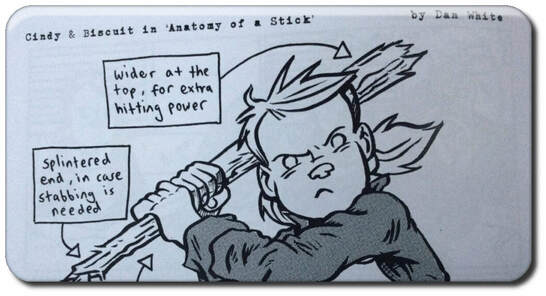
It's a weird world out there. Most people are so wrapped up in their dull little lives, they don't even notice it. Luckily for us, Cindy is keeping watch - ever vigilant - with her faithful hound by her side and a whacking-great stick to hand. It's not easy being a hero when grown-ups keep hassling you to tidy your room or sit some boring test. Still, if anyone can protect the planet from alien invaders, cryptids, killer robots, haunted dolls and living snowmen, it's this girl.

Dan White's Cindy and Biscuit is a freaking delight. There's no real *overarching story at play, no tragedy haunting our heroine's past, and no grand destiny. Why would there be? She's not some 'chosen one', she's just a regular, energetic little kid, trying to get by. Cindy can't help it if the world is full of interesting things. Why do people have to make such a fuss about where she is at night, or why she's got all those cuts and bruises on her legs, or how her clothes got covered in all that ick? I mean, come on! ​
Picture
Children internalise expectations from a very early age, so I bought this collection for my daughter as an antidote to all the schmaltz, gender stereotypes and commodification pumped into her through pop culture. I wanted her to see that girls could be inquisitive and adventurous, silly and fierce, as well as all the usual loving, kind, nurturing stuff. I wanted my child to grow up braver than me, for her to develop an indomitable spirit and a sense of wonder - and praise be, that's **exactly what's happened. ​
Picture
The art in We Love Trouble is all monochrome - ink lines, stippling - but I note that the two follow-up volumes both use full-colour artwork, which will add that extra hug of warmth to Dan White's wonderful world. The character design is simple but effective - one of those you could recognise by silhouette. The lack of pupils in the eyes is disconcerting at first, ***but White gets away without them, bringing Cindy vividly to life with his use of posture and expressive faces. 
​
Picture
As you can see, Cindy is hella-cute, but one of the things I love about this comic is the way White contrasts quiet moments of pure innocence - such as sitting side by side with a yeti - with kinetic action and scenes that imply astonishing violence. It's cartoon-like in its extremity, provoking laughter rather than horror, but there are some fascinating layers hinting at the core of her psyche - her classmates think she's an oddball, for instance, excluding her on a school trip; she dreams of throwing a rock at planet Earth, blowing it all up with a smile; she endures the screaming skull in her room, because it'll only be gone by the time mum arrives anyway.
Picture
There are also one or two scenes which are pretty creepy: the boy with half a face who warns her to keep away from the pond is one. The broken (absolutely-not-a-)Transformer in the junkyard is another. With the expression on its face, I'm surprised the freaky mermaid didn't give my nipper nightmares, but then the horror on display is generally kept low-key. Its closest analogue would be the adventures of Calvin and Hobbes, where boundaries are crossed but there's never any real danger. All it takes for Cindy to win through is a bit of bravery, an open heart, and a ruddy big stick when it's called for.

So why the kid's stuff on here? This is supposed to be a serious horror website, right?

Nah. Horror belongs to everybody. Chances are, you were a nipper when you first found something to love within an object of fear. That's a gift that keeps on giving. We all get something different from the genre, but one of its most powerful aspects is to remind us that fear alone can't stop us. Mustn't stop us. There may be monsters out there, but they can be fought - and they should be.

Not a bad lesson to pass on. 

Picture

Written by Dan White
Illustrated by Dan White
Published by Milk the Cat
Available now!
Reading experience: 4/5
Reviewer: Dion Winton-Polak
You can snag digital downloads of all three volumes right now for a mere £10.
So what are you waiting for?


* Or at least, no evidence of one in this first volume.
​

** Of course, I can't credit Cindy and Biscuit with that entirely, but I reckon they played their part.
​

*** The mouse-like nose and pointy ears? Yeah, I don't know. We may learn more about her in later volumes. I'm not sure it matters, though. She may not strictly be human, but it's easy to think of her as one of us.

Purchase all three volumes now https://milkthecat.bigcartel.com/

Check out Dion's other comic book reviews here ​

TODAY ON THE GINGER NUTS OF HORROR WEBSITE

KATERI STANLEY WONDERS IF YOU FORGIVE ME (AUTHOR INTERVIEW)

Picture

THE HEART AND SOUL OF HORROR COMIC REVIEWS ​

WHERE ALL IS NIGHT, AND STARLESS BY JOHN LINWOOD GRANT (BOOK REVIEW)

19/7/2021
Picture
Not just a great piece of botanical horror, but one of the best stories I’ve read in the last ten years, in any category.
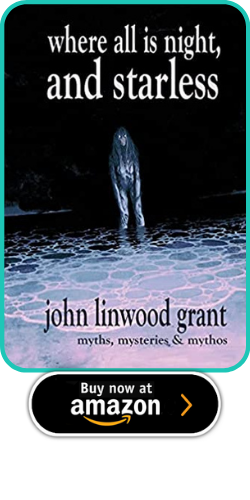
John Linwood Grant’s new collection is very much a game of three halves. I know, you can’t have three halves of anything – or maybe you can, since the first section “On Mythos” is full-on Lovecraftian, and we all know what he used to do to maths.  And the opening story pitches us straight into all that non-Euclidian angst. “Strange Perfumes of a Polar Sun” considers the emergence of a city under the Antarctic as posited by Lovecraft’s At The Mountains of Madness. However, it feels very modern with its deep-state political antics, data leaks and hikkikomori narrator, an obsessive builder of 3D scale models driven by obscure imperatives. This is a fun story that should appeal to fans of Charles Stross’ Lovecraftian incursions, but really stands out by virtue of its heroine, who gets up to a lot of hi-tech mischief and is a curmudgeonly social recluse to boot. This may not sound like a big deal - deliberate attempts to overturn gender stereotypes are common in weird fiction nowadays, and modern shelves are groaning with relentlessly plucky Victorian governesses, punk witches, girl ninjas and all sorts. But this one is actually a lifelike, convincing character, and that’s a lot rarer.

Turning stereotypes on their head is something that happens a lot in Grant land. In “Messages”, which benefits from a taut crime-thriller style, a woman and her daughter jack in their abusive pater familias and take up with a strange god who offers them permanent residence in Insania, which they both seem to greatly enjoy. “With the Dark and the Storm” is an ethnically-flipped piece of Lovecraftiana with a Nigerian tribesman as the protagonist and a Heart of Darkness-style white preacher cast as the deranged alien threat. “Lines of Sight” explores an inter-racial and inter-generational friendship between two neighbours who share an interest in transcendence and self-mutilation. These are all good stories with a lot more going for them than just their progressive politics, but for me the “best in section” was definitely the title story. “Where All…” is set among the ranks of a company of WWI tunnel engineers whose heroic burrowing activities remain largely unsung to this day. The underground world is brought vividly to life, and the way the sense of cosmic terror snags repeatedly on tiny mundane details (which must have involved a lot of historical research!) only increases its impact. If you liked The Keep by F. Paul Wilson you’ll love this!

The second section, “On Mystery”, was to my mind the weakest of the three. “Where the Thin Men Die” is the best story here, set in the smoky, sleazy world of stand-up comedy in the 1970s (and even further back) and starring a haunted comedian, Black Harry. In vibe and setting it’s pleasantly reminiscent of Victor LaValle’s The Ballad of Black Tom. All we need now is a story about a guy called Black Dick to complete the trio.

In a way, it’s Grant’s preoccupation with the past that is the undoing of this section. One of the stories (“Marjorie Learns To Fly”) got into my bad books by being an avowed homage to big-in-the-70s writer Ronald Chetwynd Hayes, a writer I hate, and several of the others have a similar vibe. Grant is just too successful at channelling the suffocating luncheon-meat-and-Terylene alienation dripping from much of the fiction of that era, stories in which women with helmet hair are always pondering how to dispose of the tyrannical ageing relatives they are forced to live with.  I can never seem to identify with these trapped-in-amber characters (who somehow seem far more alien than Victorians or Edwardians) just as I could never eat the dishes in those unsettling 70s Weight Watchers recipe cards.

The final section, “On Myths”, is folk horror corner, much of it with a twist of comedy. “A Farewell To Worms” is a dark and hilarious jaunt down an obscure byway of Greek mythology with a pagan sensibility the equal of Saki and plenty of cutting but warm humour. “Sanctuary” and “The Horse Road” reminded me a lot of John Whitbourne’s excellent Binscombe Tales complete with a roster of numinous villagers, beleaguered clergymen and savage pets, and “The Horse Road” in particular is a lovely, touching and amusing story for anyone who’s into horses.

I also found the darker fare much more relatable than in the previous section. “Slow Remembered Tide”, about a village’s odd seaside ritual, should please fans of the Cathi Unsworth novel Weirdo, and “At Vrysfontein…”, an unrelentingly black story in the vein of Steve Duffy’s ‘The Clay Party’, offers a swaying Jenga tower of colonial misery from the second Boer War (because somehow one wasn’t enough).

“For She is Falling”, however, is a cut above the other material here. It’s an incredible fairy story – if that’s what the peculiar character Jump-Nancy is – sharing the beautiful, weird floral dynamism of Richard Dadd’s painting ‘Crazy Jane’. It’s an elusive but vivid high-speed caper in which the boundless transformative power of the botanical kingdom is pitted against the urban institutions that exist to process the insane and the socially damned. A lot is left unexplained in practical terms, and yet so much is expressed. Not just a great piece of botanical horror, but one of the best stories I’ve read in the last ten years, in any category.
​
This is one of those collections that really does offer something for everyone, with real versatility of style as well as content. Whether you like classic tales of terror, 70s macabre or gritty urban horror, you will be doing yourself a favour by getting hold of this book.

WHERE ALL IS NIGHT, AND STARLESS BY JOHN LINWOOD GRANT 

Picture
Where All is Night, and Starless collects seventeen unsettling stories of our fears and weaknesses, and of our often unreliable strengths: stories of monstrosity and the occasional hope, deliberately themed across three aspects of weird fiction. The section 'On Mythos' covers re-interpretations and subversions of themes from H P Lovecraft's Mythos; 'On Mysteries' looks into strange transformations, and 'On Myth' delves into the realms of folklore and folk horror, each with a dark twist.


TODAY ON THE GINGER NUTS OF HORROR WEBSITE

THE BODY OF THE STATE: CLIVE BARKER, POLITICS AND THE NOBLE TAPEWORM BY ALAN POWER

Picture

THE HEART AND SOUL OF HORROR fiction REVIEWS 

BOOK REVIEW: SOMEBODY’S VOICE BY RAMSEY CAMPBELL

14/7/2021
Picture
The importance of ‘truth’ is explored when a ghost writer is accused of embellishing the truth in a memoir about surviving abuse
In recent years horror maestro Ramsey Campbell has been on a fine run of form, finding a regular berth for his fiction at Flame Tree Press, who have also rereleased a selection of his older work. Once in a while Campbell sidesteps horror and turns his pen to thriller writing and Somebody’s Voice is a highly entertaining blend of family secrets from behind the curtain and shrouded hidden truths. I am not sure how long-ago Campbell wrote this latest novel, but it felt contemporary to 2021, with much to say about the current wave of ‘cancel culture’ in the mass media and wider society, which can see careers ruined by a single tweet or ill-advised comment. The novel does not make any moral judgements, but you may find yourself comparing main character Alex Grand to various figures from the current news who has found themselves in hot water for saying something out of step.


In 2003 James Frey published a huge bestselling memoir, A Million Little Pieces of his time in an addiction treatment centre and later found his reputation to be tarnished when it was revealed that some of it was fabricated. The book is often now sold as fiction and Frey currently focusses on children’s books written under a pseudonym. Much further back in time Alex Haley also ran into trouble with his American Twentieth Century classic Roots which blurred the boundary between memoir and fiction, particularly with the accuracy of his research into his family history going back before the Civil War period. David Pelzer is yet another author who has had a highly successful career in lecturing and as a self-help guru, but the child abuse he writes about in his bestselling memoir A Child Called It has been contested by others in his family. In Somebody’s Voice Ramsey Campbell blends a cocktail of these types of scenarios, throws in a tarnished ghost writer, and takes the reader on a journey where it is very difficult to figure out who is telling the truth. Subtlety asking the question whether a memoir really should tell the truth 100%?


However, authors such as Frey, Haley and Pelzer wrote their aforementioned works in the days before the truly vicious modern version of cancel culture, which can see the literary equivalent of a lynch mob destroy them on social media. Massively popular authors with controversial views, such as JK Rowling, will rise above the pitch-forked mob, but many other names will be abandoned as roadkill on the roadside. Alex Grand, from Somebody’s Voice, is a convincing example of an author who puts his foot in his mouth, with his publisher’s help, tries to rebrand himself and save his career, but still gets caught up in a Twitter wave of discontent.


Alex Grand is a reasonably successful author of detective thrillers which have a recurring character and at the start of the latest entry in the series gets heavily criticised and widely condemned for the insensitive way he portrays victims of abuse. He then comes off second-best in a book signing event in which he has a heated argument with a survivor of abuse who uses this as a platform for his own agenda. Before long, the book is in trouble and his publisher quickly distance themselves from him and his back catalogue sales is also hit by the backlash. Grand’s publishing team played a key role in proceedings and gave a fascinating backroom look at the dynamics behind how they gage public opinion via Twitter and other social media. This would have not been possible in the days of Haley, Frey and Pelzer when the news moved at a different pace.


With his latest thriller in trouble and his publisher already cooling towards accepting his next book they offer Alex a rather different proposal, which should be seen as a charm offensive to save his career, ghost writing a memoir of abuse on behalf of a survivor, Carl Batchelor. Initially reluctant, Alex accepts the job and interviews Carl extensively and Somebody’s Voice is ultimately about the fallout of what happens when the memoir is published. If Alex thinks he had a hard time over his misjudged thriller, that was nothing compared to the dropped bombs which follow the release of the memoir.


Somebody’s Voice has a fascinating narrative which interchanges predominately between ‘Carla’ and ‘Alex’ but then blends in slightly different versions of these key characters, such as ‘Alexander’, ‘Carly’, ‘Carl’ and eventually ‘Mr Grand’ with the point being that the truth is either being blurred, misremembered or embellished to provide the ‘truth’ with a more striking narrative. The ‘Alex’ narrative, written in the third person, is the most straight forward, however, the ‘Carla’ section, written in the first person, is considerably more striking as this takes in the abuse suffered by Carla at the hands of her stepfather. None of these characters are traditional unreliable narrators, but neither are they trustworthy and the uncertainty is a great strength of the novel.


I found the voice of the little girl Carla to be considerably more sympathetic that that of Alex, although they balanced each other well. Alex was not particularly likable, was forever tetchy and seemed to repeatedly answer questions with other questions, but this was rebalanced with the adult version of Carla who had lost the charm of her child voice, with the reader having fun trying to figure out her genuine agenda beyond the smoke and mirrors of having her name in print.


You might find yourself asking how accurate a ‘memoir’ must be? Should a survival memoir, such as both Pelzer’s A Child Called It and Carl Batchelor’s book be more accountable than any other autobiography? Inaccuracies in any type of memoir are often pointed out by wronged third parties, but more generally, is there anything wrong with ghost writers fictionalising a memory so that it reads better? Surely this is part of their job and what they are paid for? Somebody’s Voice very cleverly explores these questions and throws in several others.


Thankfully, the novel is tasteful when it comes to the physical abuse and as the plot thickens Campbell drops in clever plot developments and it had me on the hook right to the end on how things might play out. Somebody’s Voice was a quality thriller and shows the versatility and range of one of the giants of the horror world.


Tony Jones
Picture
“An absolute master of modern horror. And a damn fine writer at that” - Guillermo del Toro

Alex Grand is a successful crime novelist until his latest book is condemned for appropriating the experience of victims of abuse. In a bid to rescue his reputation he ghostwrites a memoir of abuse on behalf of a survivor, Carl Batchelor. Carl’s account proves to be less than entirely reliable; someone is alive who shouldn’t be. As Alex investigates the background of Carl’s accusations his grasp of the truth of the book and of his own involvement begins to crumble. When he has to testify in a court case brought about by Carl’s memoir, this may be one step too far for his insecure mind…

FLAME TREE PRESS is the new fiction imprint of Flame Tree Publishing. Launched in 2018 the list brings together brilliant new authors and the more established; the award winners, and exciting, original voices.


today on the ginger nuts of horror website 

RICHARD MARTIN REVISITS THE MASTERS OF HORROR: VALERIE ON THE STAIRS, DIRECTED BY MICK GARRIS

horror website uk the best

the heart and soul of horror fiction review websites 

SPLASHES OF DARKNESS: THE LITTLE SISTERS OF ELURIA (COMIC REVIEW)

13/7/2021
SPLASHES OF DARKNESS: THE LITTLE SISTERS OF ELURIA (COMIC REVIEW)
Adaptation is a tricky thing to pull off though, particularly when it involves the written word. Strip away too much, and you can lose the authorial tone. Keep too much in, and you can overwhelm the imagery
Comic-books are a medium, not a genre; they can tell any story and suit any palate. You want horror? I've got bottles of the stuff. Welcome to 'Splashes of Darkness.'

 SPLASHES OF DARKNESS: THE LITTLE SISTERS OF ELURIA
​(COMIC REVIEW by DION WINTON-POLAK)

Picture
The Little Sisters of Eluria is a row of shots in a grimy saloon on a bleak, baking-hot day. Every glass knocked back leaves you gasping for air, eyes wide, lips twisted, but you'll reach for another. And another. The slugs are cruel, creepy, tense, harrowing, and heartbreaking by turn. They won't quench your thirst, but there's an aftertaste on your tongue that might just be hope.

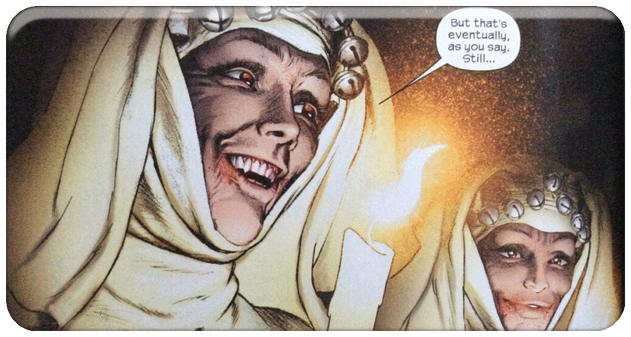
The world has moved on but Roland, last of the legendary Gunslingers, will not be left behind. Badly shaken but dogged, he rides out from the ashes of Gilead seeking the Dark Tower...and vengeance for his fallen friends. He comes now - on a dying nag - to the festering town of Eluria and a deadly trap. The monstrous nuns encamped there hold him in the balance between life and death. Webbed up and gunless, Roland will need to use all of his wits and his courage to escape the bloody embrace of The Little Sisters and resume his quest.

The Dark Tower is Stephen King's magnum opus - the central spoke around which the wheel of his writing career has spun. For those of you new to the world, it's a post-apocalyptic melange of spaghetti western, Arthurian legend, brutal horror and a deep, throbbing tragedy.
​

Marvel began a chronological adaptation of The Dark Tower back in 2007, guided by Robin Furth. Though currently incomplete, it remains a stunning set of books, vividly depicting Mid-World and its denizens in ways that both honour and expand upon King's magnificent world. The Little Sisters of Eluria began life as an offshoot from the main series, a novella written for the Legends anthology which finds new life and a new audience here, in comic form.
Picture
I must begin with the artwork, because it draws me back to this series time and again. That in its self is remarkable because - in reading for pleasure - my tendency is usually to focus on the words, with the images a secondary, swiftly glimpsed bonus. Richard Isanove's colours are arresting though, bursting with warmth yet using subtle gradations for depth and intensity. His skies are particularly effective, whether lit by sun or moon, and his firelight is dazzling. He is one of the finest exponents I've seen in the field of comics.

Picture
The fact that he has Luke Ross' fine penmanship to embellish only ups the ante. This man can draw, and no mistake! He seems equally adept at towering landscapes and the intracacies of the flesh, using a combination of linework and hatching techniques for those ever-important shadow. His Little Sisters manage to be just as terrifying in their looming human forms as their vampiric alter-egos but, perhaps strangely, I found myself most impressed by the fingers he draws. They are elegant and mobile - taloned or otherwise - captured in all sorts of configurations, and it is their physicality which helps to sell the rest of Roland's living nightmare.

Picture
The script on this story arc is by Peter David, perhaps best known for his seminal run on The Incredible Hulk. He captures King's folksy narrative voice well (d'ya kennit) so it's an easy slide into Mid-World for the constant reader. Adaptation is a tricky thing to pull off though, particularly when it involves the written word. Strip away too much, and you can lose the authorial tone. Keep too much in, and you can overwhelm the imagery. David manages the balance pretty well throughout, but I felt there were a few occasions in The Little Sisters of Eluria when I'd have preferred to be shown rather than told, trusting the reader to infer Roland's feelings, keeping the gunslinger inscrutable like his spaghetti-western forebears.
​

I've been a fan of The Dark Tower books since I was a school lad, and I've greedily gathered up the complete hardback collection of these comics, delighted at the chance to revisit the world and see it through new eyes. I've chosen The Little Sisters of Eluria to discuss today because it's a corner of King's creation that you may not have encountered yet. It does have one or two flaws, not least of which is a certain lack of clarity in the ending (Ed. hark at this hypocrite reader who wanted to be trusted in the previous paragraph) but the story stands up on its own.

THE LITTLE SISTERS OF ELURIA

Picture
Written by Peter David
Illustrated by Luke Ross
Coloured by Richard Isanove
Published by Marvel
Republished by Gallery 13
Available now!


I'd give this adaptation 4/5
but the series as a whole gets full marks.
I can only pray it's completed one day...
Reviewer - Dion Winton-Polak


Check out Dion's other comic book reviews here 

TODAY ON THE GINGER NUTS OF HORROR WEBSITE

THE HORROR OF MY LIFE: A.I. WINTERS

horror website uk the best

THE HEART AND SOUL OF HORROR COMIC REVIEWS ​

Previous
    Picture
    Picture

    RSS Feed

    Archives

    May 2023
    April 2023
    March 2023
    February 2023
    January 2023
    December 2022
    November 2022
    October 2022
    September 2022
    August 2022
    July 2022
    June 2022
    May 2022
    April 2022
    March 2022
    February 2022
    January 2022
    December 2021
    November 2021
    October 2021
    September 2021
    August 2021
    July 2021
    June 2021
    May 2021
    April 2021
    March 2021
    February 2021
    January 2021
    December 2020
    November 2020
    October 2020
    September 2020
    August 2020
    July 2020
    June 2020
    May 2020
    April 2020
    March 2020
    February 2020
    January 2020
    December 2019
    November 2019
    October 2019
    September 2019
    August 2019
    July 2019
    June 2019
    May 2019
    April 2019
    March 2019
    February 2019
    January 2019
    December 2018
    November 2018
    October 2018
    September 2018
    August 2018
    July 2018
    June 2018
    May 2018
    April 2018
    March 2018
    February 2018
    January 2018
    December 2017
    November 2017
    October 2017
    September 2017
    August 2017
    July 2017
    June 2017
    May 2017
    April 2017
    March 2017
    February 2017
    January 2017
    December 2016
    November 2016
    October 2016
    September 2016
    August 2016
    July 2016
    June 2016
    May 2016
    April 2016
    March 2016
    February 2016
    January 2016
    December 2015
    November 2015
    October 2015
    September 2015
    August 2015
    July 2015
    June 2015
    May 2015
    April 2015
    March 2015
    February 2015
    January 2015
    December 2014
    November 2014
    October 2014
    September 2014
    August 2014
    July 2014
    June 2014
    May 2014
    April 2014
    March 2014
    February 2014
    January 2014
    December 2013
    November 2013
    October 2013
    September 2013
    August 2013
    July 2013
    June 2013
    May 2013
    April 2013
    March 2013
    February 2013
    December 2012

https://l.facebook.com/l.php?u=https%3A%2F%2Fmybook.to%2Fdarkandlonelywater%3Ffbclid%3DIwAR1f9y1sr9kcIJyMhYqcFxqB6Cli4rZgfK51zja2Jaj6t62LFlKq-KzWKM8&h=AT0xU_MRoj0eOPAHuX5qasqYqb7vOj4TCfqarfJ7LCaFMS2AhU5E4FVfbtBAIg_dd5L96daFa00eim8KbVHfZe9KXoh-Y7wUeoWNYAEyzzSQ7gY32KxxcOkQdfU2xtPirmNbE33ocPAvPSJJcKcTrQ7j-hg
Picture