


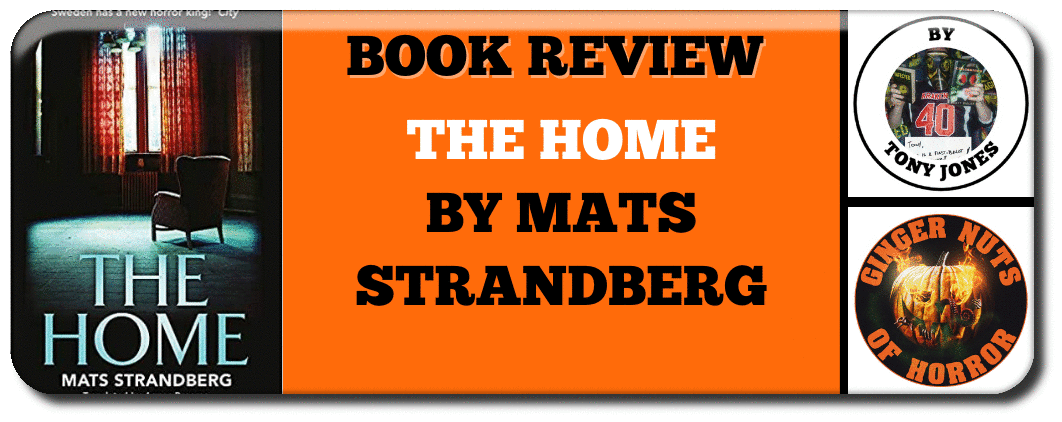
 The horror of dementia is explored in slow moving Swedish novel Amazon’s by-line for The Home is “a brilliantly creepy novel about possession, friendship and loss: good characters, clever story, plenty of scares – admit yourself to The Home now” (according to John Ajvide Lindqvist) is an enticing one, from an author who is making a name for himself across Scandinavia and has been hyped as one of the next big things in the horror world. In 2018 Blood Cruise sailed into translation, with much fanfare, but I found it rather underwhelming and I am not sure whether it made any impact in the international horror world. However, it’s worth noting that Swedish author Mats Strandberg, also co-wrote the bestselling YA supernatural fantasy trilogy Engelsfor which although it’s relatively unknown in the UK is an excellent read and it’s easy to see why it’s popular in the Nordic countries. Successfully writing for adults and a YA audience is not easy, so Strandberg needs to be applauded for his range. The Home is a different beast from Blood Cruise, and it is great to see the author produce a follow-up which is miles apart from its predecessor. Although this book will not be to all tastes, for the most it kept my attention and I was invested in how events were going to pan out, but I am not certain the pay-off was genuinely worth the wait. Why will The Home not be to all tastes? This is a big question and answering it revolves around the pacing and setting of the novel. The primary location is a care home for the elderly suffering from dementia and the novel pulls no punches in making clear this is the final pitstop for those who are residents there. It was very realistically presented; perhaps too grim with the golden oldies regularly pissing and shitting themselves, whilst struggling to cope with day to day life without assistance. As the story involves the nursing staff, the long night shifts and the loneliness of the geriatrics lost in their memories, combine all these factors together it made a very depressing read which provided little respite from the fog of dementia. Whether readers who are after a horror novel want this realistic but painful stuff rammed down their throats is open to question and many will judge the success of this novel in how they take to this level of realism. Although The Home was only 322-pages it felt much longer, and it took an age (over half the novel) for anything supernatural to happen. Unless you have an interest in the Swedish care home system, I suspect many readers will have given up by the midway point and not experience the rather uninspiring spooky stuff. When the novel opens 72-year-old Monika is about to be committed (against her wishes) to Pineshade care home by her son Joel. Seventy-two is very young to develop dementia but Joel is struggling to cope with his mother wandering off in the middle of the night and has a whole host of other problems. The story is partially told from Joel’s point of view, who feels guilty about committing his mother, but has many personal problems of his own which are key to the plot. Joel was not the most likable or sympathetic of characters, and like everybody else in the book he was miserable almost all the time, which was in tune with an overall mood which was very downbeat. The novel is also seen from the point of view of Nina who works in the Pineshade care home and lives a quiet life with a distant teenage son and is in a marriage which lacks spark. Twenty years earlier she and Joel were best friends and after leaving school hoped for a successful career in the music business. Some of The Home concerns their reacquaintance and the reason for their rift two decades earlier, all of this was very underwhelming and there was zero spark between the two characters who are brought closer together when Monika’s health worsens. Interestingly, there was also a third person narrative which allowed part of the story to be told from Pineshade, which took in both other staff, the residents, and their daily trials with their illnesses. This was a plus point as it gave the reader a break from both Joel and Nina. What of the horror element of the novel? As I have already said zero happens in the first half and things develop at a very slow pace in the second. If you are after head-spinning Exorcist style possession action it is not that kind of novel, it was very subdued, loaded with ambiguity with a few vaguely unsettling scenes. I enjoyed the second half of the book much more than the first, but felt it took too long getting there and many readers will find this frustrating and will have given up on Monika by the time things begin to heat up. I am sure The Home will have its fans but plenty of others will have their patience tested by too many descriptions of old people eating soup, sagging breasts, the smell of shit in the air, and nappies being changed at the expense of serious scares. Its cause was not helped by the fact that both Nina and Joel were incredibly dull characters who lived completely unfulfilled lives and there was nothing positive for the reader to latch onto. When the supernatural element entered the story, it was little too late. Perhaps something was lost in translation? Tony Jones  Once inseparable, Joel and Nina haven't spoken in twenty years. When Joel's mother Monika develops dementia, he has no choice but to return to his home town. Monika needs specialist care, and that means Pineshade - which also means Joel is going to have to deal with his one-time best friend, for Nina works there. It's not long before Monika's health deteriorates - she starts having violent, terrifying outbursts, and worse, she appears to know things she couldn't possibly know. It's almost as if she isn't herself any more . . . but of course, that's true of most of the residents at Pineshade. Only Nina and Joel know Monika well enough to see the signs; only by working together can they try to find answers to the inexplicable . . . The Home is an eerie story about love, friendship and the greatest fear of all: losing control of ourselves . . .   the heart and soul of horror fiction reviews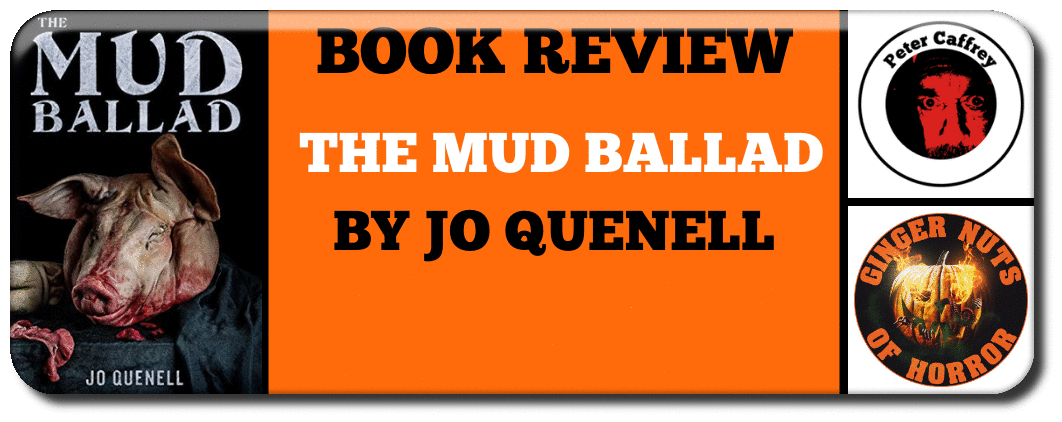 Loneliness, or more precisely the desire to not be lonely ever again, is at the core of the story, and that gives it a certain humanity which is easy to understand and empathise with. This balances so well with the brutality of the locations and its inhabitants, and Quenell’s style adds an appropriate voice to the story. It’s fair to say that for many of us, 2020 has been a bit crap. It started with continual rain and floods (well, it did in my part of the world) and by the time the sun sneaked out we were thrown into lockdown. A summer of cancelled events, postponed trips and avoiding ignorant people led to a smudge of reality in early autumn, before the idiots went wild and pushed us back into another lockdown, this time accompanied by rain, dark nights and monotony. As if all that wasn’t bad enough, we seem to have lost more of the stars of my era, people I grew up watching and listening too. I’ve also seen so many friends suffer, overwhelmed with the stress and isolation which 2020 has brought. What we need – what I need – is something to lift the gloom, to shine brightly as 2020 staggers towards its unimpressive conclusion. And what did I get? Mud Ballad, that’s what. Mud Ballad is bleak, miserly, woeful, shameful and brimming with drudgery. Set in the town of Spudsville, a dreary unforgiving town where the rain seldom stops pissing down on people and the streets are awash with mud, it charts the misery and deception of Jonathon and Daniel Crabb, conjoined twins who – due to the selfish decision of Jonathon – end up going it alone. Aided by a cast of disreputable characters – a disgraced surgeon whose cow-part transplants didn’t wok out as he’d planned, an uppity mime who has forgotten his clown roots, a bar-man with abject hygiene and an old couple breeding fighting hogs - the narrative sets out to prove that, sometimes, not wanting to be lonely is the worst possible position to be in. So, you might be thinking, it seems that Mud Ballad isn’t going to be the book to inject a little joy into the smothering inanity of 2020, but here’s the rub: Mud Ballad is utterly glorious. From the misery and depravation of Spudsville, the self-pity and shame of Jonathon Crabb, the manipulative ways of both Crabb twins, the forlorn loveless mess that is a shamed doctor and the arrogance of the reinvented mime, Mud Ballad hooked me in and dragged me along on a strangely uplifting and joyous journey. I laughed, I groaned, I felt the tension, and I even winced at one point, which for me is something very rare. Putting the main plot aside, there is so much about Spudsville which is wrong, but ultimately right. From the hog fights to the excessively high suicide rate, the deserted streets and closed down shops, the rundown dirty pub and the train tracks smeared with gore and carrion, Mud Ballad is a story which could only be set in the town. Add to the heady atmosphere the surgeon’s inability to reject manipulation or the forget his unrequited love, a grimoire left in the pub by passing magicians, and a whole heap of hellish shenanigans, and Mud Ballad ultimately explodes into a carnival of chaos which cannot help but push the reader into the very heart of the madness. Loneliness, or more precisely the desire to not be lonely ever again, is at the core of the story, and that gives it a certain humanity which is easy to understand and empathise with. This balances so well with the brutality of the locations and its inhabitants, and Quenell’s style adds an appropriate voice to the story. I read Mud Ballad in one sitting. I did put it down at one point to go to sleep, but in less than a minute I’d picked it up again. I was hooked on Spudsville, and I dare say a fair few others will be too. 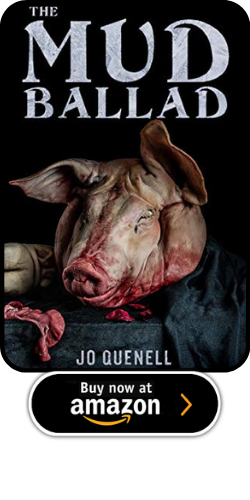 NEVER BE ALONE AGAIN In a dying railroad town, a conjoined twin wallows in purgatory for the murder of his brother. A disgraced surgeon goes to desperate ends to reconnect with his lost love. When redemption comes with a dash of black magic, the two enter a world of talking corpses, flesh-eating hogs, rude mimes, and ritualistic violence.  Peter Caffrey is a writer of tales with an absurdist bent. A born and bred Londoner, he currently lives in the middle of nowhere with nothing but the North Sea and fog for company. Introduced to horror as a small child by a Mother who was too scared to watch films on her own, he has a fondness for demonic possession, crucifixion and impalements. His novels, The Devil’s Hairball and Whores Versus Sex Robots are available from Amazon. He drinks too much, exercise too little and is unlikely to change. http://petercaffrey.com  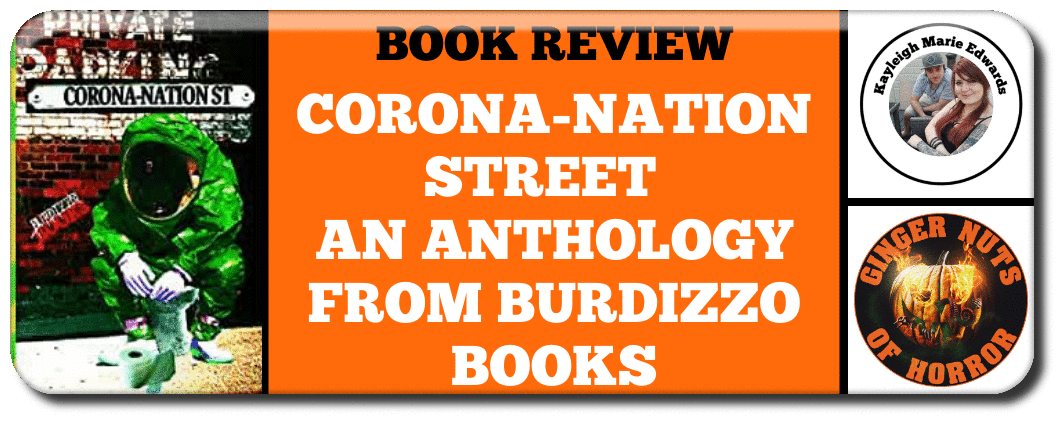 “Way back in the mists of early 2020, we began to hear reports of a DEADLY VIRUS that originated in China. This new virus soon ripped its path through the world, like an INVADING HORDE killing without prejudice until it finally found its way to our door. This book is inspired by our experiences of GLOBAL LOCKDOWN, isolation and how we might navigate the new, post-covid world. Is this the beginning of the end, or just the end of the beginning? When Matty-Bob asked if I wanted to take a look at this anthology, my mouth said ‘yes’ but my mind screamed ‘OH GOD NOOOOO NO KAYLEIGH WHY WHAT ARE YOU DOING NOOOOOOOOO’. That is, in no way, a reflection of how I feel about Burdizzo, Matty-Bob, Em, or any of the writers featured. It’s just that I’ve barely left the house since March. Like the majority of you, I have found this year… challenging. For some reason, now more than ever before, I am so sick of seeing/reading/hearing about the pandemic, lockdown, etc. Just the other night, I was watching TV and even seeing someone in a mask on an advert had the power to ruin my entire night by sending me into an anxiety spiral, because I just don’t want to think about any of this anymore. Reviewing a themed anthology about the very thing I’m desperately trying to escape from just seemed like an absolute nightmare, but apparently I’m a people-pleaser because I agreed to do it anyway. And do you know what? I’m really glad I did. For one thing, I got a real laugh out of the cover and the title. This made me feel better about entering into the book itself, since the spirit in which the anthology was compiled seemed to have an air of “tongue-in-cheek” about it. It’s a mix of almost 30 short stories and poems and there’s real variety in the pages. I often find with themed anthologies that the stories can get a bit samey. This includes anthologies that I have contributed stories to. Oh, the times I’ve been convinced that I’ve found an original way to use a theme, only to find when I receive my contributor copy that I had the same genius basic idea as everyone else…. It’s difficult to keep a theme fresh when more than 20 people are using it as a base, is what I’m saying. Corona-nation St doesn’t suffer from this problem as everyone somehow managed to find a different aspect of the theme to draw from. I read the book in one sitting and found despair, loneliness, paranoia, anger, and all manner of other glorious emotions from which one can draw real horror. As I went from story/poem to story/poem, I found myself nodding along in understanding. Instead of struggling with being reminded of all that is currently wrong, I found the reading experience cathartic. No matter which writer I was reading, or the kind of tale they were telling, I found that there was a deep sincerity between the lines, a purging of anxieties that was not only relatable, but also comforting. I felt connected to each and every writer in this anthology in a way I never have when reading a collection before, and I can’t imagine I will again. The subject matter is grim, but the feeling of solidarity and group empathy really did a lot to raise my spirits. Besides all of that, which I had to talk about because I think it’s a very special and unique aspect to this book, I really enjoyed the stories. There wasn’t a single one that I didn’t like, and rating-wise I’d say they range from 3.5 to 5 out of 5 stars. It’s taken me days to decide which ones to make special mention of, but my three favourites are as follows: Everything Blue by Dani Brown. I loved this. Oh the horror, the anxiety, the paranoia! Dani accomplished a hell of a lot in a very short space of time with this story. I got the same feeling from this as I got from Charlotte Perkins Gilman’s The Yellow Wallpaper. I really can’t give it higher praise than that – TYW is one of my favourite horror shorts and I’ve never read anything else that even comes close to filling me with the precise sort of dread and claustrophobia it elicits. Until now, obviously. Dani knocked this story out of the park. Dead Meat by James Jobling. Holy ‘Rec vibes’ Batman! Oh man, do I love me a good quarantine story, and this was a beast of one. It seems like, you know, your sort of average concept, but James trickles these hints and details out so expertly you don’t even realise you’re picking up on all that is awry in this tale. He masterfully unfolds what’s happening, distracting you with seemingly unimportant details, and then hits you in the face with pure depravity. It was so satisfying to read. It’s bloody brilliant is what it is. I really really love this one. Housebound by John Prytherch. Dude. My man. John, if you’re reading this, then visualise me in Wayne’s World fashion, bowing. I’m not worthy! This story would be at home in any anthology – it’s effing great. The fact that it’s in this particular anthology gives it context that elevates it from merely brilliant to ‘holy shit balls, this is genius’. This story is about inner conflict, inner turmoil, fear of others, fear of being a danger to others, fear of an outside threat that is somehow also inside, isolation, detachment – honestly, it captures all of this so effectively, and it does it in an unexpected way. This story is something really special under the concept of the anthology as a whole, and is a real pleasure to read. I’ll be thinking about it for a long time. Overall, Corona-nation St is thoroughly enjoyable and definitely worth buying. It somehow gives you the feeling of having a pandemic support network whilst simultaneously (and ironically) taking your mind off the real world for a bit. Viewing these particular stresses through the lens of fiction was a welcome change, and it was a pleasure to read these stories. 4/4.5 stars. Bye. Reviewed by K. M. Edwards 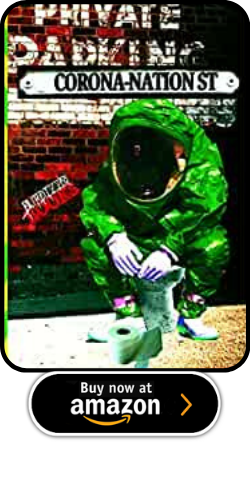 Way back in the distant mists of February 2020, we began to hear reports of a deadly virus that originated in China. But this new virus soon ripped its path through the world, like an invading hoarde, killing without prejudice until it finally found its way to our door. This book is inspired by our experiences of the UK lockdown, and how we might navigate the new, post-covid world. Is this the beginning of the end, or just the end of the beginning? Join us for a trip down Corona-Nation Street, with stories and poetry that are horrifying, haunting, hilarious, horny, heartfelt and hopeful. All proceeds from the sale of this book will go to the NHS.   I feel the same way about Ari Aster’s Midsommer, which I love. You know exactly where that film is going but the point isn’t to be surprised at every turn, it’s just to enjoy every turn. This story was like that. It gets pretty creepy pretty quickly, and then you’re just along for the ride as things get progressively stressful and descend into darker and darker places, all the while with the feeling, ‘ah shit, Sophie’s f***ed.’ Or maybe I just read it that way because I’m eternally pessimistic Mr. Sandman is a novella due to be released in December by Absinthe Books, written by SJI Holliday. It is a quick read (in fact, short enough to also work well as part of a thick short story collection), which always appeals to me because I love breaking up longer reads with something I like to call ‘bite-size’ horror. This review is mostly spoiler-free (I have to discuss some elements but I will not reveal the ending or main story beats after the initial set-up). Sophie and Matthew have been seeing each other for a few months, and Sophie isn’t all that thrilled about it. Matthew is fine, but there’s no spark, no spontaneity, no oomph in the relationship. You gotta have the oomph. They take a day trip together and Sophie is drawn in by the bom bom bom bom of a familiar song, where she meets an unfamiliar man, who is able to make her an unusual promise. Sophie makes a wish, and then things go awry. This story is your classic “be careful what you wish for” scenario. It’s Leprachaun without a shrieking Jennifer Aniston. I jest, actually, it’s more original than that. I just couldn’t resist the opportunity to remind you all that Leprachaun exists, and I hope you’re all now thinking about Warwick Davis in that outfit. Sophie is, in my opinion, a bit of an asshole but she’s infinitely relatable. I read her thoughts about Matthew and simultaneously thought, ‘oh man, just cut the poor boy loose!’ and, ‘oh man, I’ve been in this exact situation.’ I think I might have just inadvertently called myself an asshole there, but oh well. The guilt of breaking up with someone and knowing they’ll be hurt by it, when they’ve done nothing in particular to warrant being dumped, is just terrible. Stringing someone along out of the sheer reluctance to look like a dickhead isn’t cool, but it’s an understandable predicament. So I was in from those first few paragraphs. Holliday writes well, and she writes characters well. There’s nothing more boring to me than blank slate characters, and none of Holliday’s were like that. I got a full sense of personality from each of them, even Matthew, who is such a boring person but still somehow great to read. My favourite thing about the story however, was the way the “wish gone bad” situation came about. I love zombies. LOVE them. Everyone who knows me knows that. I do enjoy the flesh-eating undead most of all, but I love them in all their forms, and it’s very rare these days that you get to enjoy a Haitian Voodoo story. It’s actually always been hard to “enjoy” films, for example, about voodoo zombies because when the sub-genre was popular, these movies were being churned out in past decades that were rife with ignorance and racism. Cue terrible racial stereotypes, a deep fear of the “other”, and insulting, demonising depictions of “foreign” people. I don’t mind telling you that I got to this aspect of the story and bristled a bit because of the worry that I was about to read something of that ilk. However, much to my relief, the character wasn’t presented this way (even unintentionally, which I’ve seen many a time from well-meaning writers who got it wrong). He’s more of a harbinger than a menace, and he does warn Sophie repeatedly to be careful about what she asks of him, which in effect rests the consequences squarely on her shoulders. From this point on, I wasn’t really surprised by anything in the story because of the type of story it is. That’s not a criticism – I feel the same way about Ari Aster’s Midsommer, which I love. You know exactly where that film is going but the point isn’t to be surprised at every turn, it’s just to enjoy every turn. This story was like that. It gets pretty creepy pretty quickly, and then you’re just along for the ride as things get progressively stressful and descend into darker and darker places, all the while with the feeling, ‘ah shit, Sophie’s f***ed.’ Or maybe I just read it that way because I’m eternally pessimistic and I always assume the protagonist is done for. I think I secretly hope for it most of the time. As mentioned at the start of this review, I might be an asshole. Maybe Sophie is done for…maybe it doesn’t go that way for her, you’ll have to read it yourself to find out. Nothing about the story let me down really, but I wish there’d been a bit more something. I feel like Holliday could have pushed it a bit further, made it a bit more visceral. You know… made her characters suffer even more. I’m not one for grisly descriptions usually but I was sat there reading away with a smile on my face, hoping for something that would make me sick. Or maybe it is stomach-churning but I’m a desensitized sicko so it went over my head. Overall, I enjoyed Mr. Sandman, and I give it 3.5 out of 5 stars. A bit more originality in the concept would have pushed it higher but a 3 star rating for me means I really liked it and I recommend it. Up until now I’ve been unfamiliar with Holliday’s work but I’ll definitely be looking for more of her books to cosy up with from now on. Awkwardly trying to end this thing here so… Bye. A review by K. M. Edwards  SYNOPSIS Sophie is bored with her perfectly nice but deathly dull boyfriend Matthew. Sensing he’s about to lose her, Matthew takes her on a last-ditch attempt trip to the seaside, hoping to rekindle their dying flames. But things take a dark turn when Sophie visits Mr Sandman, a Haitian priest, who claims that he can change Matthew into the boyfriend that she wants. But does Sophie really know what she wants? Never has the phrase “be careful what you wish for” been more apt. Because Matthew does change...just not in the way that anyone could’ve predicted. BIO SJI (Susi))Holliday is the author of seven crime novels and numerous short stories. By day, she works as a statistician in the pharmaceutical industry, and by night she cooks up murderous plots and writes them down so that others can share her warped mind. Her bestselling books have been described as deliciously dark and twisted and “clever, cutting and addictive” and she loves to blend elements of psycho-logical thriller, mystery, horror and sci-fi. She also works as a writing coach, helping aspiring crime writers to get their words on the page. You can find her on twitter @sjiholliday and on her website www.sjiholliday.com.  She has crafted a brilliantly grounded tale, full of raw humanity and the grime of precarious existence, and woven it through with a beautiful and haunting mythlore in such a way that both seemingly disparate, clashing elements actually serve and enhance each other: in doing so she has created a tale that is as achingly beautiful as it is bruised, and as hopeful as it is angry… and one of the best things I’ve read this year.  On The Soldiers Of Octova follows a small unit of the Women’s Red Guard during the Finnish civil war of 1918. The story blends historical fiction with folk horror to create an intensely personal narrative that nonetheless communicates the weight of the wider moment with great fluency. Through the third person close perspective of Siiri, Mauro gives us a ground level insight into the real women who made up these bands of soldiers. Mauro has always had a talent for exquisite character work, but here she excels herself; with incredible efficiency she breathes life into a diverse cast of women facing extraordinary circumstances. The characters live on the page such that I found myself immediately, painfully invested in them all - even the ones I didn’t like very much. The historical moment helps, of course, in that there is an inherent sense of threat, of danger, that permeates the entire narrative. Mauro is incredibly canny in how she makes best use of this, allowing the readers imagination to do almost all the work, trusting that the simple facts of the time and place of the story will carry its own weight. In doing so, she demonstrates a level of understanding of craft, and of the writer/reader relationship, that is both extraordinary and thrilling. I felt from the first page that I was in the hands of a powerful talent, and that feeling only grew as the narrative developed. With such a vivid cast of characters the narrative feels incredibly organic, the story naturally flowing from the situation, and the way the unfolding events play on the different personalities of the group. The sense of place is also evoked brilliantly by way of well crafted descriptions of landscape and an eye for a telling detail (ill-fitting uniforms, for example) that allow the imagination of the reader to build a crisp sense of the environment of the story. The story pivots midway in a more personal and immediate direction; Mauro’s clear love and respect for folklore bringing an unfamiliar-to-me but either meticulously researched or exquisitely crafted legend into a desperate survival situation. That said, the weight of the wider history maintains a pressure throughout, on the minds of the characters and of the reader; and for me, one of the themes, as well realised as I can immediately recall reading anywhere, is that of the harshness of existence for the flesh and blood unfortunates who find themselves snarled up in the gears of history. Mauro avoids any easy answers here; there are no straight-up ‘goodies’ and ‘baddies’, and the violence and flaws on both sides of the conflict are described even handedly. Nevertheless, Mauro clearly does have sympathy for these women soldiers, and their plight, and the warmth (and prickliness) of their humanity serves as a constant contrast to the harsh cold of their environment. On The Shoulders Of Octova feels like yet another step change from Mauro, in terms of both ambition and realisation. She has crafted a brilliantly grounded tale, full of raw humanity and the grime of precarious existence, and woven it through with a beautiful and haunting mythlore in such a way that both seemingly disparate, clashing elements actually serve and enhance each other: in doing so she has created a tale that is as achingly beautiful as it is bruised, and as hopeful as it is angry… and one of the best things I’ve read this year. Highly recommended. KP 30/10/20 Mauro’s writing throughout is excellent, whether through the establishment of the setting or the characters or the pace and the tension at a number of key moments in the text. It’s skilfully expertly plotted, and the balance between reality and folklore is skilfully handled.  Two things I knew little about before reading Laura Mauro’s fabulous novella, ‘On the Shoulders of Otava’: The Finnish Civil War of 1918 and Finnish mythology. Both are key parts of the novel. The wartime setting means conditions are awful, resources are scarce and danger is everywhere. Alongside this brutal reality sits the folklore of Finland which leaves the reader with a constant questions about what is real and what is imagined, whether there is a rational explanation for the strange events or if they truly are something supernatural. Our protagonist, Siiri is part of the Women’s Guard who have been stationed in a remote Finnish village. They struggle to receive the same respect and responsibility as their male counterparts, despite it being established early on that many of the men are drunks and few could be described as competent. Strangeness is present in the novella from the very beginning when one of the male soldiers becomes sick. Osku stops sleeping and wanders, staring, unable to recognise those before as if they’re even human. Then he snaps and attacks the Squad Leader. Rumours spread that he’d been out in the woods and he’d seen something, a light. Siiri’s close friend Elina loves her stories of folklore, and she suggests the light may be a Liekkio, a spirit of a dead that dances in the trees like a lantern to lead people astray. The Women’s Guard become split, leaving Siiri to part with Elina and set off with Mirva and Ester to travel towards the front-line to join the fighting. Mirva has taken on the role of leader, and Ester is arrogant and something of an antagonist, always making comments designed to irritate Siiri. The relationship between Siiri and Ester is of great importance to the novella. They are somewhat dependent upon each other for survival but in many ways are very different, and the conflict between the two ramps the tension right up, particularly in the middle of the novel when Siiri has an important decision to make. Both characters have their own personalities, their own motivations, ideologies, wants and desires, and the both can’t possibly get what they want. The characterisation is very strong throughout and their conflict a real highlight. As they get ever closer to the enemy the presence watching from the woods takes on an even greater significance and this is where the conflict between the rational idea that an enemy soldier is hunting them and the irrational but growing possibility of it being something spiritual or supernatural. Siiri falls back on the stories of folklore that Elina shared with her, but remains rational at heart. It’s a dynamic that kept me thoroughly engaged in the story. Another feature is the cold. This novella will have you reaching for you dressing gown ad donning a pair of gloves. The freezing conditions are a constant in the story and are so well described that the cold gnaws you down to the bone. You understand the way it saps the stamina from the characters and feel like you’re trudging through the snow with them. Mauro’s writing throughout is excellent, whether through the establishment of the setting or the characters or the pace and the tension at a number of key moments in the text. It’s skilfully expertly plotted, and the balance between reality and folklore is skilfully handled. I do enjoy folklore, and especially that which I previously had little to no knowledge of. Mauro seems to be aware that many of her readers will not be knowledgeable about the folklore of Finland and manages to weave the tales into her narrative smoothly. I was left with more than enough to understand its implications to the story and a taste for more. I thoroughly recommend this novella. If you’re looking for an example of folklore brought to life and played off against a very real setting, you’d struggle to find a better example. 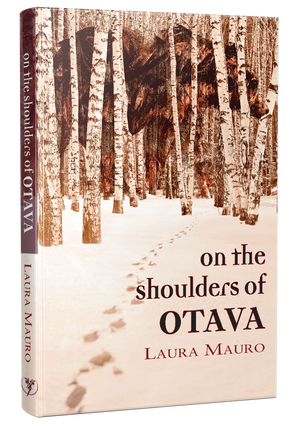 Siiri Tuokkola takes up arms for the Women’s Guard during Finland’s 1918 Civil War along with her comrades. Stationed in a remote village outpost, rumours of strange things in the woods come to a head when Siiri’s comrade Mirva goes missing in a blizzard. Determined to find her, Siiri braves the deep forest, where mysterious lights weave through the trees, and those who look upon them for too long may find themselves afflicted by a strange madness. But there are worse things in the forest than lights, and Siiri must face them if she is to find Mirva before it’s too late. BIO Laura Mauro was born and raised in London and now lives in Essex under extreme duress. Her short story 'Looking for Laika' won the British Fantasy award for Best Short Fiction in 2018, and 'Sun Dogs' was shortlisted for the Shirley Jackson award in the Novelette category. Her debut collection, Sing Your Sadness Deep is out now from Undertow Books. She likes Japanese wrestling, Finnish folklore and Russian space dogs. She blogs sporadically at lauramauro.com 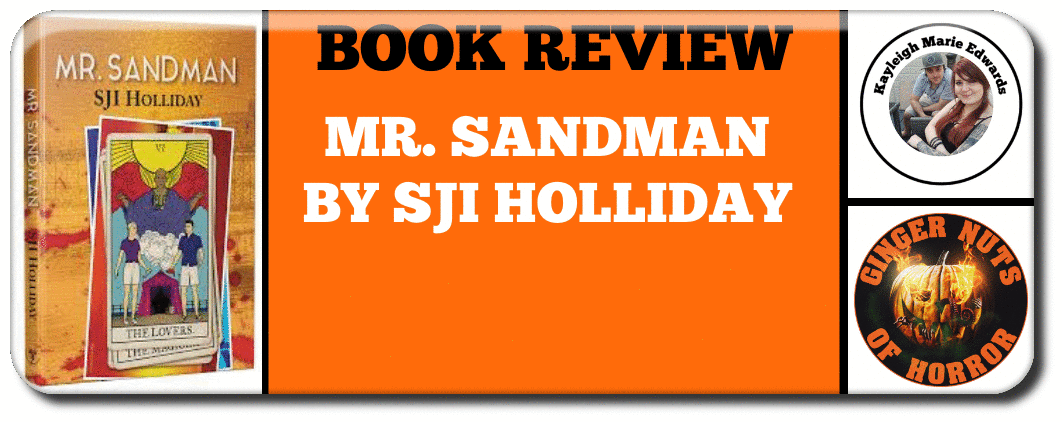 |


Archives
May 2023
|

|

|
 RSS Feed