

THE HORROR OF MY LIFE: JAMES COOPER
4/5/2022
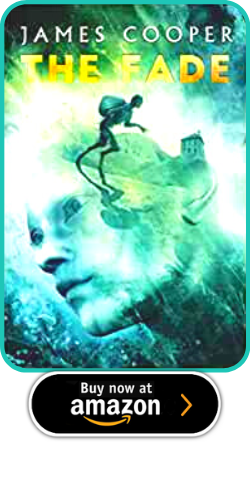
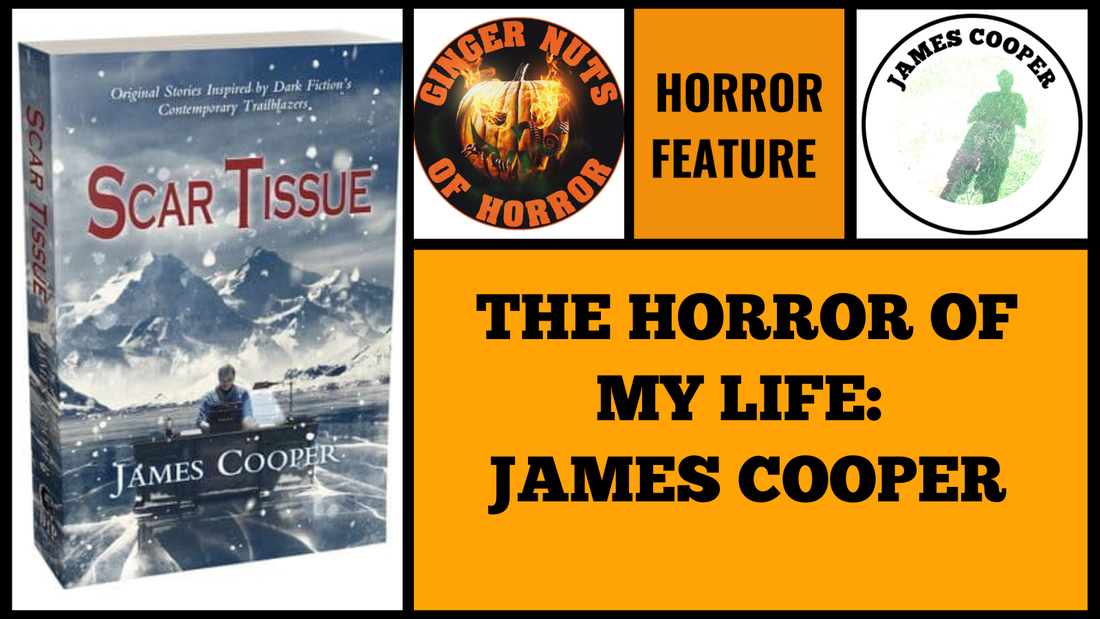 This is article series allows horror creators to discuss the films and books that helped to shape their love for the horror genre. Today we welcome James Cooper to Ginger Nuts of Horror to tell us about the Horror of His Life. If you would like to take part in this series you can download the template here THE FIRST HORROR BOOK I REMEMBER READING: The Rats by James Herbert. I was twelve years old. I told my parents it was a book I had to read for school. They should have known better. In truth, the giant, blood-soaked rat on the cover was a bit of a giveaway. I remember being both traumatized and aroused by it, and understood neither feeling particularly well. My abiding memory of it is realising I had stumbled upon something forbidden, something with the power to change my interest in books for life. This part turned out to be true. I recall being blown away by Herbert’s uncanny ability to capture the voice of a character in no more than a page or so before said character had his face bitten off by a rat. It was bold, brutal stuff and I loved it. Herbert had tapped into a winning formula and the key to it lay in its savage simplicity. It was a formula that proved hugely successful for him over the next forty years or so. On the surface that formula seems ludicrously easy to imitate. Let me tell you, dear reader: it’s not. THE FIRST HORROR FILM I REMEMBER WATCHING: Hitchcock’s The Birds. I remember watching it late at night with my mum on an old Ferguson black & white TV in the ’70s. Christ knows how old I was. Just a kid. I only recall it because I often sat with my mum on Saturday nights watching all kinds of stuff, and The Birds seemed like pretty tame stuff at the start. Then the seagulls turn up. And the damn ravens. Tippi Hedren looked just like my mum at the time—same hair and disdainful expression—and when she comes under attack in the phone booth I remember running close to tears. The Birds has haunted me for a long time. It’s the flapping of the wings; and the beaks; and the soulless eyes that understand every wretched frailty you possess . . . THE GREATEST HORROR FILM OF ALL TIME: Psycho. Another obvious choice, but, again, it happens to be true. The ephemeral beauty and bird-like fragility of Anthony Perkins disguises one of horror cinema’s most ambiguous monsters. The character of Norman Bates is at once appalling and sympathetic, a man abandoned to his own trauma at a very young age. The image of Bates in Mother’s dress and wig wielding a carving knife has become as embedded in our consciousness as one of the horror genre’s most iconographic visuals, no less powerful or disturbing than Jason’s mask or Freddie’s glove . . . THE GREATEST HORROR WRITER OF ALL TIME: This honour probably goes to Clive Barker. He redefined the horror genre with The Books of Blood and, as a young man, wrote like a man possessed. His prose is fuelled by the kind of demented poetry and amped-up creativity that few have ever been able to match. He is the master of the horror set-piece and there is something transformative and wholly original about everything he writes. Nothing ever stays as it is. He is the kind of writer who comes along once in a generation. Every glorious sentence is dripping with blood . . . 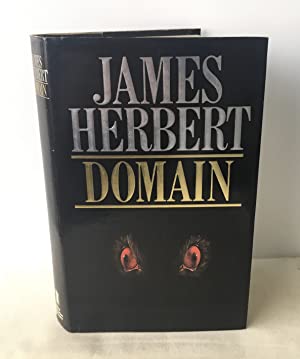 THE BEST HORROR BOOK COVER OF ALL TIME: A hundred different candidates for this one. I adore many of the ’80s pulp covers, but have a real soft spot for James Herbert’s UK hardback edition of Domain. Glossy black backdrop; silver by-line and gold title filling the top half of the cover; the bottom half displaying two menacing red rat eyes peering from the darkness. This was also the very first hardback I ever bought. The simplicity of it and the striking combination of colours—silver, gold, red—are incredibly eye-catching. A stroke of genius in terms of marketing. And creepy as hell . . . 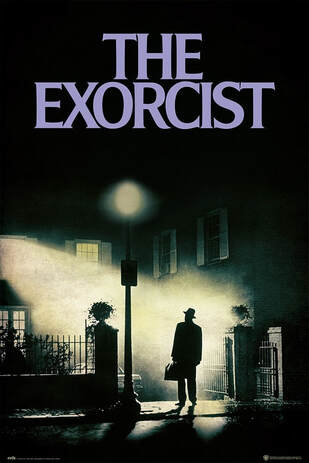 THE BEST HORROR FILM POSTER OF ALL TIME: The Exorcist is pretty hard to beat. You can all picture it, I’m sure: monochrome image of a silhouetted man in a trilby holding a valise, standing at the entrance of a large house, and gazing up at a window from which pours a flood of illumination. The beauty of the poster lies in the interplay of light and shadow, delivering an iconic image that evokes a real sense of unease in the viewer. The man seems reluctant to enter the house; he, along with the viewer, knows instantly that what awaits inside cannot be good. The poster brilliantly invites us to join him on his journey into the darkness that inhabits the light . . . THE BEST BOOK I HAVE WRITTEN: My new novella, The Man in the Field (June 2022), from Cemetery Dance and my new collection, Scar Tissue (May 2022), from PS Publishing, are both books I’m incredibly enthusiastic about. Whether they’re my best books or not is really for others to decide, but they’re certainly books I’m immensely proud of. The Man in the Field is a folk horror tale about a woman challenging the forces that oppress her community; Scar Tissue is a collection of stories inspired by the some of the field’s greatest writers. I think it contains some of my best work. You can find out more about it here: https://www.pspublishing.co.uk/scar-tissue-signed-hardcover-by-james-cooper-5715-p.asp THE WORST BOOK I HAVE WRITTEN: Revealing that would be a little like cutting my own throat: messy and utterly unproductive! My debut novel The Midway back in 2007 could have been better, though . . . THE MOST UNDERRATED HORROR FILM OF ALL TIME: John Carpenter’s In the Mouth of Madness. A smart distillation of Lovecraftian horror that shows just what can be achieved with a tight script and a strong, directorial vision. The sense of reality slipping during the course of the film is deeply unnerving. Scenes linger, like the cop beating up a tramp in an alley. Insanity spreads. The forces of cosmic horror reach out to us in every single frame of the film . . . THE MOST UNDERRATED HORROR NOVEL OF ALL TIME: Carrion Comfort by Dan Simmons. An epic ’80s horror novel that doesn’t often get a mention when we consider the complex evolution of genre fiction. Simmons has a blast telling a story about psychic vampires, drawing on his knowledge of Hollywood, Nazi Germany and American history to create a narrative that leaves a lasting impression on the reader. If you haven’t read it yet, consider yourself a failed horror aficionado and go out and correct the error immediately. THE MOST UNDERRATED HORROR AUTHOR OF ALL TIME: Let me throw a name at you from left-field: Jack Ketchum. Deceased now, God bless him, but Ketchum was a writer who had been ploughing a dark furrow in the field of genre fiction for years, often without getting the credit he was due. The guy knew horror, no doubt about it, but more importantly, he knew people, understood the dark forces that moved them, took great delight in the psychology of fear. His writing is visceral, the language throbbing with violent potential, and his sense of style is almost intuitive. His characters operate within a strong moral framework, the boundaries of which are often breached, resulting in profound trauma and bloodshed. Ketchum was—and still is—a force of nature in the horror field. Read The Girl Next Door; I defy you to look me in the eye and tell me I’m wrong . . . THE BOOK I AM WORKING ON NEXT: I’m about 160 pages into the first draft of my own epic ’80s-style horror novel, provisionally entitled The Chase. I don’t anticipate finishing it any time soon. I’ve also written half a dozen or more original stories for a new collection I’m developing that I’m thinking of calling Glass Shatters Fist. There’s also a very special project I’ve completed that I’m currently waiting to hear back on. That one could be a real humdinger. I’m praying to the moonlit horror gods that it gets picked up . . . JAMES COOPER James Cooper is the author of the short story collections You Are The Fly and The Beautiful Red. His novella Terra Damnata was published by PS Publishing in 2011 and was shortlisted for a British Fantasy Award. His novella Strange Fruit and his novel Dark Father were both published in 2014 to critical acclaim. More recently, PS Publishing released his third short story collection, Human Pieces, while the collection Head Space & Other Uncomfortable Surroundings was published in a beautiful leather-bound edition by Cemetery Dance in 2019. Forthcoming is the novel Little Boy and the novella The Man in the Field, both from Cemetery Dance, as well as a major new project from PS Publishing entitled Scar Tissue , due in May 2022. He is currently working on an epic 80s-style horror novel and a new short story collection, tentatively entitled Glass Shatters Fist. WEBSITE LINKS: www.jamescooperfiction.co.uk https://www.pspublishing.co.uk/scar-tissue-trade-paperback-by-james-cooper-5716-p.asp https://www.amazon.co.uk/Fade-James-Cooper/dp/1587677989/ref=sr_1_1?crid=3N9R9EKV7X3G9&keywords=the+fade+james+cooper&qid=1648791354&sprefix=the+fade+james+cooper%2Caps%2C50&sr=8-1 https://www.goodreads.com/book/show/21850377-dark-father Scar Tissue by James Cooper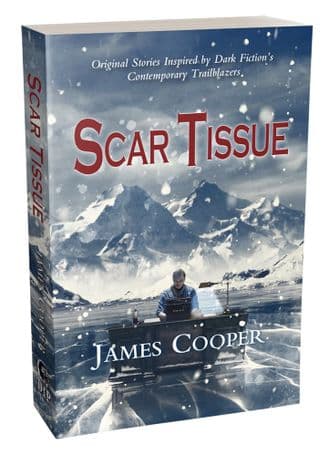 Original Stories Inspired by Dark Fiction’s Contemporary Trailblazers: Clive Barker, Ray Bradbury, Shirley Jackson, Stephen King, Joe Lansdale, Daphne du Maurier, Robert McCammon & Peter Straub. James Cooper, one of Britain’s finest exponents of contemporary dark fiction, invites you to reflect upon the work of some of the world’s most distinguished authors. In this masterful new collection, you will discover a range of extraordinary stories, each of which will hack into your heart and make you bleed, leaving its mark—a scar, if you will—a smooth reminder of how deeply we are all drawn to horror’s edge . . . Prefaced with insightful introductory essays, this fascinating new collection resonates with familiar narratives, blurring the lines and triggering an exquisite synthesis of the imagination. So immerse yourself in the art of superior storytelling with a book that shines a light on the mechanics of genre fiction, exploring in the process how the very best in the business produce tales that are memorable, always inventive and utterly original. The Fade |




 |  |
THE HEART AND SOUL OF HORROR PROMOTION WEBSITES

BLACK SHUCK BOOKS IS PROUD TO ANNOUNCE THE FORTHCOMING RELEASE OF TWILIGHT’S LAST SCREAMING, THE NEW NOVEL FROM ACCLAIMED AUTHOR AND FILMMAKER SEAN HOGAN.
Paths cross.
What is the relationship between Senator Greg Stillson and murderous preacher Harry Powell?
How did sweet Alice Spages meet Roman and Minnie Castavet?
What happens when Laura Mars gets into Travis Bickle’s taxi?
Stories entwine.
What links Michael Myers to the strange town of Twin Peaks?
How is Clint Eastwood’s nameless Stranger connected to ‘Dirty’ Harry Callaghan?
What Paranormal Activity goes on in the shadows of Hill House?
What is the relationship between Senator Greg Stillson and murderous preacher Harry Powell?
How did sweet Alice Spages meet Roman and Minnie Castavet?
What happens when Laura Mars gets into Travis Bickle’s taxi?
Stories entwine.
What links Michael Myers to the strange town of Twin Peaks?
How is Clint Eastwood’s nameless Stranger connected to ‘Dirty’ Harry Callaghan?
What Paranormal Activity goes on in the shadows of Hill House?
In the follow-up to his acclaimed England’s Screaming, Sean Hogan acts as your guide through the liminal spaces of North American horror, down Nightmare Alleys and across High Plains, following the Lost Highway all the way to the Bates Motel. At once fiction and criticism, Twilight’s Last Screaming masterfully examines how our experience of cinema takes on an imaginative life of its own. It deconstructs and reassembles genre film into unfamiliar but recognisable shapes, mapping the history of the American horror movie and, ultimately, the dark heart of America itself.
Praise for ENGLAND’S SCREAMING
“…written with skill and a zealous intensity”
—Financial Times (named one of the five best genre novels of the year)
“England’s Screaming is a British horror film connect-the-dots portrait of frightening times in our recent history… and says a lot about the horrible things happening just now. Massively recommended.”
—Kim Newman
“…a brilliant brilliant book…I can’t wait to see where a follow-up novel will go…”
—Kendall Reviews
“A very special and unique tribute to British horror. Clever and mesmerising.”
—Stephen Volk
“…a beautiful experiment full of surprises and nerdy strokes of genius wonder”
—Diabolique Magazine
“…creates an alternative fantastical history of post-war Britain that is both thrilling in its audacity and ingenuity and chillingly plausible”
—Ghosts & Scholars
––––––––––––––––––––
Sean Hogan is an award-nominated writer and filmmaker based in the UK. He has published several books of cinema metafiction, including England's Screaming, Three Mothers, One Father, a monograph on Gary Sherman's Death Line, and the forthcoming That Fatal Shore.
His feature film credits include the critically-acclaimed The Devil’s Business, The Borderlands, and the documentary Future Shock! The Story of 2000AD. In addition, he has written several other produced screenplays, and also co-created the anthology plays The Hallowe’en Sessions and its follow-up, The Ghost Train Doesn’t Stop Here Anymore, directing both their London runs. He is currently developing a number of new film and television projects.
––––––––––––––––––––
Twilight’s Last Screaming will be released 28/05/22 For more details, and to pre-order, visit www.blackshuckbooks.co.uk/TLS
“…written with skill and a zealous intensity”
—Financial Times (named one of the five best genre novels of the year)
“England’s Screaming is a British horror film connect-the-dots portrait of frightening times in our recent history… and says a lot about the horrible things happening just now. Massively recommended.”
—Kim Newman
“…a brilliant brilliant book…I can’t wait to see where a follow-up novel will go…”
—Kendall Reviews
“A very special and unique tribute to British horror. Clever and mesmerising.”
—Stephen Volk
“…a beautiful experiment full of surprises and nerdy strokes of genius wonder”
—Diabolique Magazine
“…creates an alternative fantastical history of post-war Britain that is both thrilling in its audacity and ingenuity and chillingly plausible”
—Ghosts & Scholars
––––––––––––––––––––
Sean Hogan is an award-nominated writer and filmmaker based in the UK. He has published several books of cinema metafiction, including England's Screaming, Three Mothers, One Father, a monograph on Gary Sherman's Death Line, and the forthcoming That Fatal Shore.
His feature film credits include the critically-acclaimed The Devil’s Business, The Borderlands, and the documentary Future Shock! The Story of 2000AD. In addition, he has written several other produced screenplays, and also co-created the anthology plays The Hallowe’en Sessions and its follow-up, The Ghost Train Doesn’t Stop Here Anymore, directing both their London runs. He is currently developing a number of new film and television projects.
––––––––––––––––––––
Twilight’s Last Screaming will be released 28/05/22 For more details, and to pre-order, visit www.blackshuckbooks.co.uk/TLS
The Heart and Soul of Horror Promotion Websites

Exploring familial relationships in new horror analysis pocketbook
Mums + Sons in The Babadook, Hereditary and Psycho
From Rebecca McCallum, Assistant Editor at Ghouls Magazine, contributor to Rue Morgue, Moving Pics Film Club, Dread Central and Grim Magazine
Pre-order available from 15th April 2022 Publish date 6th May 2022
Pre-order available from 15th April 2022 Publish date 6th May 2022
Mums + Sons: An Examination of the Child/Parent Relationship pocketbook
New horror analysis pocketbook from Rebecca McCallum available from 15th April
A new, fresh and intellectual perspective on the relationships between mothers and sons in some of the most popular horror films comes from author Rebecca McCallum in her pocketbook Mums + Sons: An Examination of the Child/Parent Relationship.
This analysis stands apart for its scope, breadth and detailed look at the often-overlooked familial relationships in three landmark films that span across five decades. The pocketbook is available in a slickly designed format with artwork from Ken Wynne (Editor-in-Chief at Attack from Planet B).
Using three stages of life reflected in The Babadook (childhood), Hereditary (teenage years) and finally Psycho (adulthood) to highlight both the difference and similarities of the mother /son dynamic. The work is split into eight chapters that each seek to shine a light on a series of themes. This includes family trauma, the damaging nature of secrets, notions of doubling and duality and, the ultimate taboo, the horror of motherhood.
Published by independent press house, Plastic Brain Press and with accompanying eye-catching artwork by the talented Ken Wynne, Mums + Sons is a must for horror enthusiasts across all platforms and more broadly to anyone with an interest in film analysis.

About the Author
Mums and Sons is the first feature length publication by Rebecca McCallum, writer of horror think pieces which have a feminist leaning and take an analytical approach. She is also Assistant Editor at Ghouls Magazine. Rebecca has a four part series on the Women of the Jack the Ripper films with Women of the Jack the Ripper Films with Rue Morgue and has been published with Dread Central, Evolution of Horror, Jumpcut Online as well as several essays in print on women in horror for Grim Journal and for Hear Us Scream-Horror Anthology, Volume 1. She also has an ongoing series on the Women in Hitchcocks' Films with Moving Pictures Film Club and has written several articles for Ghouls Magazine and Zobo with a Shotgun.
Mums and Sons is the first feature length publication by Rebecca McCallum, writer of horror think pieces which have a feminist leaning and take an analytical approach. She is also Assistant Editor at Ghouls Magazine. Rebecca has a four part series on the Women of the Jack the Ripper films with Women of the Jack the Ripper Films with Rue Morgue and has been published with Dread Central, Evolution of Horror, Jumpcut Online as well as several essays in print on women in horror for Grim Journal and for Hear Us Scream-Horror Anthology, Volume 1. She also has an ongoing series on the Women in Hitchcocks' Films with Moving Pictures Film Club and has written several articles for Ghouls Magazine and Zobo with a Shotgun.
Advance praise for Mums + Sons:
“Mums and Sons explores the idea that motherhood doesn't always smell of roses through the medium of three well-known horror films. It is an interesting and fresh look at a topic that is not spoken about enough - what if the bond between mother and son is broken, or fails to exist at all? Combining an academic approach with knowledge of these classic horror narratives, McCallum offers an insight into the phenomenon that not all women were born with maternal instincts.”
Janine Pipe - author of Sausages - The Making of Dog Soldiers
"If you think you know all there is to know about The Babadook, Hereditary, and Psycho, think again. In Mums and Sons, Rebecca McCallum examines the relationships between mothers and their sons, taking readers on a journey through three stages of complex emotional development: childhood, teenhood, and adulthood. Crafted with the voice of someone who is deeply reverent to horror's psychological intricacies, and with gorgeous illustrations by Ken Wynne, McCallum proves herself an essential voice in the realm of horror scholarship."
Mae Murray, Freelance writer and Editor of The Book of Queer Saints Horror Anthology
“Insightful, inquisitive and forensic - Rebecca McCallum is an important emerging voice in horror criticism, and Mothers and Sons represents some of her best work to date.”
Tim Coleman, Editor Moving Pictures Film Club
'Mums and Sons is a stunningly cohesive analysis of three of horror’s most devastating and disturbing takes on the terrifying institution of family. Rebecca's passion for genre cinema is palpable in every word of this well- crafted and thoughtful piece. Rebecca has woven relevant thematic strands from all three films into a poignant tapestry that tackles the difficult topics of parental grief and oft-fraught relationships between mothers and sons with sensitivity and detailed understanding.'
Amber T -Ghouls Magazine
“Mums and Sons explores the idea that motherhood doesn't always smell of roses through the medium of three well-known horror films. It is an interesting and fresh look at a topic that is not spoken about enough - what if the bond between mother and son is broken, or fails to exist at all? Combining an academic approach with knowledge of these classic horror narratives, McCallum offers an insight into the phenomenon that not all women were born with maternal instincts.”
Janine Pipe - author of Sausages - The Making of Dog Soldiers
"If you think you know all there is to know about The Babadook, Hereditary, and Psycho, think again. In Mums and Sons, Rebecca McCallum examines the relationships between mothers and their sons, taking readers on a journey through three stages of complex emotional development: childhood, teenhood, and adulthood. Crafted with the voice of someone who is deeply reverent to horror's psychological intricacies, and with gorgeous illustrations by Ken Wynne, McCallum proves herself an essential voice in the realm of horror scholarship."
Mae Murray, Freelance writer and Editor of The Book of Queer Saints Horror Anthology
“Insightful, inquisitive and forensic - Rebecca McCallum is an important emerging voice in horror criticism, and Mothers and Sons represents some of her best work to date.”
Tim Coleman, Editor Moving Pictures Film Club
'Mums and Sons is a stunningly cohesive analysis of three of horror’s most devastating and disturbing takes on the terrifying institution of family. Rebecca's passion for genre cinema is palpable in every word of this well- crafted and thoughtful piece. Rebecca has woven relevant thematic strands from all three films into a poignant tapestry that tackles the difficult topics of parental grief and oft-fraught relationships between mothers and sons with sensitivity and detailed understanding.'
Amber T -Ghouls Magazine
Early copies are available on request (please note limited) for reviews. To request a copy please contact Rebecca McCallum at pumpkinpendle@gmail.com.
Pre Order from 15th April 2022 https://linktr.ee/plasticbrainpress
Publish Date 6th May 2022 retailing at £7.00
Contact and links:
Rebecca McCallum | pumpkinpendle@gmail.com
Twitter: https://twitter.com/PendlePumpkin
Instagram: https://www.instagram.com/pendlepumpkin/ Linktree: @PendlePumpkin | Linktree
Pre Order from 15th April 2022 https://linktr.ee/plasticbrainpress
Publish Date 6th May 2022 retailing at £7.00
Contact and links:
Rebecca McCallum | pumpkinpendle@gmail.com
Twitter: https://twitter.com/PendlePumpkin
Instagram: https://www.instagram.com/pendlepumpkin/ Linktree: @PendlePumpkin | Linktree
CHECK OUT TODAY'S OTHER ARTICLES ON GINGER NUTS OF HORROR
 | |
THE HEART AND SOUL OF HORROR FICTION REVIEW WEBSITES


Archives
April 2023
March 2023
February 2023
January 2023
December 2022
November 2022
October 2022
September 2022
August 2022
July 2022
June 2022
May 2022
April 2022
March 2022
February 2022
January 2022
December 2021
November 2021
October 2021
September 2021
August 2021
July 2021
June 2021
May 2021
April 2021
March 2021
February 2021
January 2021
December 2020
November 2020
October 2020
September 2020
August 2020
July 2020
June 2020
May 2020
April 2020
March 2020
February 2020
January 2020
December 2019
November 2019
October 2019
September 2019
August 2019
July 2019
June 2019
May 2019
April 2019
March 2019
February 2019
January 2019
December 2018
November 2018
October 2018
September 2018
August 2018
July 2018
June 2018
May 2018
April 2018
March 2018
February 2018
January 2018
December 2017
November 2017
October 2017
September 2017
August 2017
June 2017
May 2017
April 2017
March 2017
February 2017
January 2017
December 2016
November 2016
October 2016
September 2016
August 2016
July 2016
June 2016
May 2016
April 2016
March 2016
February 2016
January 2016
December 2015
November 2015
October 2015
September 2015
August 2015
July 2015
June 2015
May 2015
April 2015
March 2015
February 2015
January 2015
December 2014
November 2014
October 2014
September 2014
August 2014
July 2014
June 2014
May 2014
April 2014
March 2014
February 2014
January 2014
December 2013
October 2013
September 2013
August 2013
 RSS Feed

|

|